This is the company that my daughter helps to run. She is Maija and together with Polly and Chloe they run Sound UK. This is what Maija said in her recent email:
ooOOoo
20 years of extraordinary music
We hope the New Year finds you and your family well.
2021 is special for Sound UK as we celebrate 20 years of bringing you extraordinary music. We’re marking this milestone throughout the year. This includes 20 Artists for 20 Years, which shines a spotlight on key artists in Sound UK’s life. First up is the incredible Elaine Mitchener later this month…
To kick off our 20th birthday celebrations, we hope you enjoy this 60 second film about our work. You can watch it on the link below.
Keep well,
Polly, Maija and Chloe
20 years of extraordinary music. sounduk.net
Music credit: Landing – Collectress
Film edit by: Lee Matthews, iconic image
ooOOoo
I find it a brilliant short video and I hope some of you out there will also watch it.
I wasn’t going to post anything today but then in response to Val Boyco’s comment: “Good stuff Paul. Thank you! Please do more research and share here 💛 My gut will thank you!” I did do some more research and quickly came upon another article that was published recently and is worth of a read!
ooOOoo
How to prepare and protect your gut health over Christmas and the silly season
Disclosure statement
Claus T. Christophersen receives funding from NHMRC and WA Department of Health. He is a co-author of The Gut Feeling Cookbook linked in this article – all proceeds from sales of this cookbook go directly back into supporting our research, no personal financial interest.It’s that time of year again, with Christmas parties, end-of-year get-togethers and holiday catch-ups on the horizon for many of us — all COVID-safe, of course. All that party food and takeaway, however, can have consequences for your gut health.
Gut health matters. Your gut is a crucial part your immune system. In fact, 70% of your entire immune system sits around your gut, and an important part of that is what’s known as the gut-associated lymphoid tissue (GALT), which houses a host of immune cells in your gut.
Good gut health means looking after your gut microbiome — the bacteria, fungi, viruses and tiny organisms that live inside you and help break down your food — but also the cells and function of your gastrointestinal system.
We know gut health can affect mood, thanks to what’s known as the gut-brain axis. But there’s also a gut-lung axis and a gut-liver axis, meaning what happens in your gut can affect your respiratory system or liver, too.
Here’s what you can do to bolster your gut microbiome in the coming weeks and months.
How do silly season indulgences affect our gut health?
You can change your gut microbiome within a couple of days by changing your diet. And over a longer period of time, such as the Christmas-New Year season, your diet pattern can change significantly, often without you really noticing.
That means we may be changing the organisms that make up our microbiome during this time. Whatever you put in will favour certain bacteria in your microbiome over others.
We know fatty, sugary foods promote bacteria that are not as beneficial for gut health. And if you indulge over days or weeks, you are pushing your microbiome towards an imbalance.
For many of us, Christmas is a time of indulgence. Shutterstock
Is there anything I can do to prepare my gut health for the coming onslaught?
Yes! If your gut is healthy to begin with, it will take more to knock it out of whack. Prepare yourself now by making choices that feed the beneficial organisms in your gut microbiome and enhance gut health.
That means:
eating prebiotic foods such as jerusalem artichokes, garlic, onions and a variety of grains and inulin-enhanced yoghurts (inulin is a prebiotic carbohydrate shown to have broad benefits to gut health)
eating resistant starches, which are starches that pass undigested through the small intestine and feed the bacteria in the large intestine. That includes grainy wholemeal bread, legumes such as beans and lentils, firm bananas, starchy vegetables like potatoes and some pasta and rice. The trick to increasing resistant starches in potato, pasta and rice is to cook them but eat them cold. So consider serving a cold potato or pasta salad over Christmas
choosing fresh, unprocessed fruits and vegetables
steering clear of added sugar where possible. Excessive amounts of added sugar (or fruit sugar from high consumption of fruit) flows quickly to the large intestine, where it gets gobbled up by bacteria. That can cause higher gas production, diarrhoea and potentially upset the balance of the microbiome
remembering that if you increase the amount of fibre in your diet (or via a supplement), you’ll need to drink more water — or you can get constipated.
For inspiration on how to increase resistant starch in your diet for improved gut health, you might consider checking out a cookbook I coauthored (all proceeds fund research and I have no personal interest).
Good gut health is hard won and easily lost. Shutterstock
What can I do to limit the damage?
If Christmas and New Year means a higher intake of red meat or processed meat for you, remember some studies have shown that diets higher in red meat can introduce DNA damage in the colon, which makes you more susceptible to colorectal cancer.
The good news is other research suggests if you include a certain amount of resistant starch in a higher red meat diet, you can reduce or even eliminate that damage. So consider a helping of cold potato salad along with a steak or sausage from the barbie.
Don’t forget to exercise over your Christmas break. Even going for a brisk walk can get things moving and keep your bowel movements regular, which helps improve your gut health.
Have a look at the Australian Guide to Healthy Eating and remember what foods are in the “sometimes” category. Try to keep track of whether you really are only having these foods “sometimes” or if you have slipped into a habit of having them much more frequently.
The best and easiest way to check your gut health is to use the Bristol stool chart. If you’re hitting around a 4, you should be good.
If you’re hitting around a 4, you should be good. Shutterstock
Remember, there are no quick fixes. Your gut health is like a garden or an ecosystem. If you want the good plants to grow, you need to tend to them — otherwise, the weeds can take over.
I know you’re probably sick of hearing the basics — eat fruits and vegetables, exercise and don’t make the treats too frequent — but the fact is good gut health is hard won and easily lost. It’s worth putting in the effort.
A preventative mindset helps. If you do the right thing most of the time and indulge just now and then, your gut health will be OK in the end.
ooOOoo
That book that Claus refers to, the one on the gut Gut feeling: Mindful menus for the microbiomeis here. It looks a very good book.
Well Val (and many others), did you find this interesting? It was a rhetorical question because I know that you did.
I will continue to republish these posts and, especially, the one on exercise. Because as I have often said: Diet and exercise are key!
Now this has nothing to do with dogs. Well not directly but the longer we humans live the longer we can have dogs as pets.
I was having an email ‘conversation’ with Jon over in England and he pointed me to Professor Tim Spector. Prof. Spector writes on his website that he:
Tim Spector is a Professor of Genetic Epidemiology and Director of the TwinsUK Registry at Kings College, London and has recently been elected to the prestigious Fellowship of the Academy of Medical Sciences. He trained originally in rheumatology and epidemiology.
In 1992 he moved into genetic epidemiology and founded the UK Twins Registry, of 13,000 twins, which is the richest collection of genotypic and phenotypic information worldwide. He is past President of the International Society of Twin Studies, directs the European Twin Registry Consortium (Discotwin) and collaborates with over 120 centres worldwide.
He has demonstrated the genetic basis of a wide range of common complex traits, many previously thought to be mainly due to ageing and environment. Through genetic association studies (GWAS), his group have found over 500 novel gene loci in over 50 disease areas. He has published over 800 research articles and is ranked as being in the top 1% of the world’s most cited scientists by Thomson-Reuters.
He held a prestigious European Research Council senior investigator award in epigenetics and is a NIHR Senior Investigator. His current work focuses on omics and the microbiome and directs the crowdfunded British Gut microbiome project.
Together with an international team of leading scientists including researchers from King’s College London, Massachusetts General Hospital, Tufts University, Stanford University and nutritional science company ZOE he is conducting the largest scientific nutrition research project, showing that individual responses to the same foods are unique, even between identical twins.
You can find more on https://joinzoe.com/ He is a prolific writer with several popular science books and a regular blog, focusing on genetics, epigenetics and most recently microbiome and diet (The Diet Myth). He is in demand as a public speaker and features regularly in the media.
That is quite a CV!
Then I came across an essay on The Conversation website about being healthier in one’s old age.
Read it!
ooOOoo
Keen to be healthier in old age? Tend your inner garden
Professor of Genetic Epidemiology, King’s College London
January 29, 2016
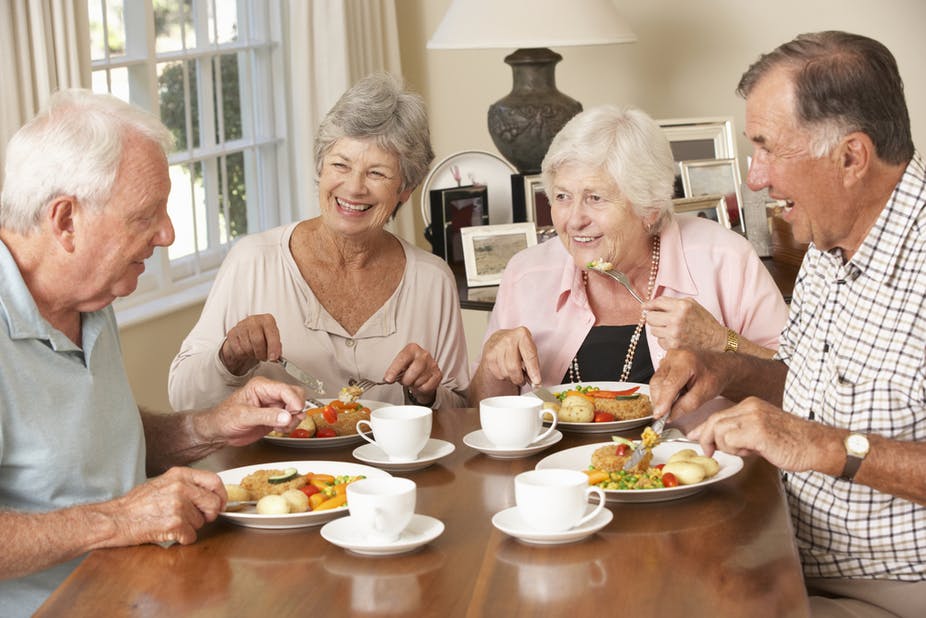
Grub’s up. Lunch by Shutterstock
The world’s oldest man, Yasutaro Koide recently died at the age of 112. Commentators as usual, focused on his reported “secret to longevity”: not smoking, drinking or overdoing it. No surprises there. But speculation on the basis of one individual is not necessarily the most helpful way of addressing this human quest for the Philosopher’s Stone.
The “very old” do spark our interest – but is our search for a secret to longevity actually misguided? Wouldn’t you rather live healthier than live longer in poor health? Surely, what we really want to know is how do we live well in old age.
Clearly as scientists we try to illuminate these questions using populations of people not just odd individuals. Many previous attempts have approached this question by looking for differences between young and old people, but this approach is often biased by the many social and cultural developments that happen between generations, including diet changes. Time itself should not be the focus – at least, in part, because time is one thing we are unlikely to be able to stop.
Yasutaro Koide made 112. Kyodo/Reuters
The real question behind our interest in people who survive into old age is how some manage to stay robust and fit while others become debilitated and dependent. To this end, recent scientific interest has turned to investigating the predictors of frailty within populations of roughly the same age. Frailty is a measure of how physically and mentally healthy an individual is. Studies show frailer older adults have an increased levels of low grade inflammation – so-called “inflammaging”.
New research published in Genome Medicine by Matt Jackson, from our group at King’s College London, investigated this question in an unlikely place – poo. Recent evidence indicates that our immune and inflammatory systems are trained and educated in our gut, through key interactionswith gut bacteria. So we asked if changes in our gut bacteria could be part of the process of inflammation driving frailty.
Our recent work found that the frailer an individual, the lower the diversity of gut bacteria they have. We looked at stool samples from more than 700 healthy British twins and found that a group of bacteria belonging to the species with a tricky and slightly unpleasant name, Faecalibacterium prausnitzii, were found in higher amounts in the healthier twins. This is a particularly interesting microbe as it has been linked with good health in many other diseases such as inflammatory bowel disease and is believed to reduce inflammation of the gut. Could this bug help protect against frailty?
Putting in the research. Paper by Shutterstock
There were other microbes seen in increased amounts within the frailer twins. One was Eubacterium dolichum, which has been seen to increase in unhealthy Western diets. We found the same picture when comparing frailer, more elderly, individuals from the ELDERMET study, by the University of Cork. This suggests that dietary changes might be an easy way to encourage healthy ageing.
Our study does not yet clarify whether the changes to the gut bacteria are a cause of poor ageing itself or are just a consequence of frailty – longitudinal studies that follow people over several years will be needed to sort this out. But these results are exciting for researchers in the ageing field and suggest that if you want to age well you should perhaps do fewer crosswords and spend more time looking after your microbial garden, for example by eating plenty of plant fibre, for example in a Mediterranean-type diet.
ooOOoo
Well this essay was published nearly 5 years ago and one wonders if more information has come to light.
Certainly Jeannie and me are heavily into a plant-based diet with a small selection of fish from time to time.
I will do more research and see if there are any updates that may be published.
In the meantime stay as healthy and as happy as you can be!
Senior Lecturer in Politics and International Relations, Aston University
At 3pm UK time on Christmas day, the Queen’s Christmas message is broadcast across the Commonwealth. Each year the format is largely the same, with the Queen giving her own account of the main personal, national and international events of the year and reflecting on the meaning of Christmas. As such, it has become an important part of the festivities for many families in the UK and beyond.
With the COVID-19 pandemic still raging, fresh restrictions imposed and Brexit rapidly approaching, this year’s broadcast has taken on new significance as a source of stability and comfort, a constant in these difficult and uncertain times. Therefore, it is worth examining how the language used in the broadcast creates this sense of reassurance.
Since 1952, the Queen’s Christmas message has performed three ideological functions through rhetorical appeals based on faith and family.
Identification
The Queen shares personal anecdotes, which she often links to ordinary people’s experiences through the pronouns “we” and “us”.
On Christmas Day 1964, for instance, she told viewers that: “All of us who have been blessed with young families know from long experience that when one’s house is at its noisiest, there is often less cause for anxiety”. As most new parents would recognise this truism, it conveys the message that – in this respect at least – the royals are like any other family.
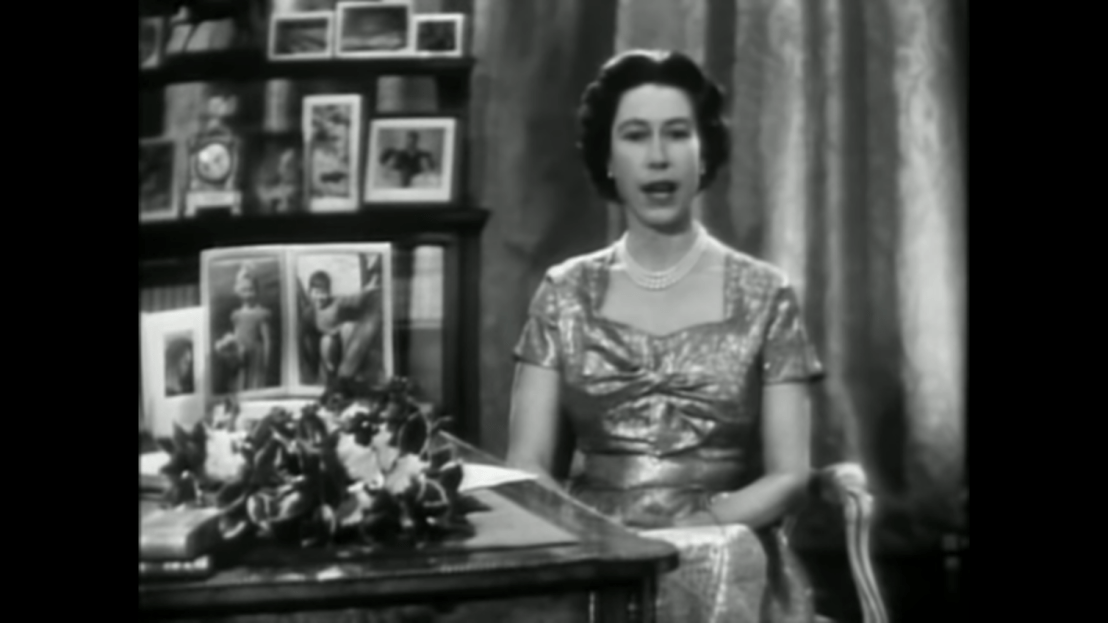
The first televised Royal Christmas message, 1957. The Royal Family/YouTube
The Queen is also aware that some families will be separated during the festive season and regularly expresses empathy for them. As she said in 1956: “I would like to send a special message of hope and encouragement to all who […] cannot be with those they love today: to the sick who cannot be at home”.
This message is made more poignant because of COVID-19, as the Queen recognised in her special address on April 5 2020. Indeed, it is almost inevitable that this year’s Christmas broadcast will include similar words of consolation for those who have been separated from their loved ones during the pandemic.
Continuity
Uncertainty is another recurring theme in the Queen’s Christmas broadcast, as she tries to make sense of the year’s events for the benefit of her audience. She gives her personal responses to national and global problems, which frequently involve the enactment of supposedly timeless (but predominantly Christian) values. On Christmas Day 1980, amid issues such as the Soviet-Afghanistan war and UK unemployment, she said:
We know that the world can never be free from conflict and pain, but Christmas also draws our attention to all that is hopeful and good in this changing world; it speaks of values and qualities that are true and permanent and it reminds us that the world we would like to see can only come from the goodness of the heart.
Among these values are faith, charity and compassion and, by praising them as a source of stability and the means for creating a better world, the Queen is perhaps seeking to strengthen adherence to them. Not only that, her appeals to Christian values and her emphasis on the family provide a sense of security for those who are disoriented by the rapid pace of social change. In turn, this sustains the monarchy by establishing the Queen as “a permanent anchor, bracing against the storms and grounding us in certainty”, as former British prime minister David Cameron said in 2012, marking her Diamond Jubilee.
Unity
The Queen’s rhetoric of unity is based primarily on the metaphor of the Commonwealth as a family, which recurs throughout the Christmas broadcasts. In 1956, for instance, she observed that:
We talk of ourselves as a “family of nations”, and perhaps our relations with one another are not so very different from those which exist between members of any family. We all know that these are not always easy, for there is no law within a family which binds its members to think, or act, or be alike.
Despite these differences, in 2011 the Queen described the Commonwealth as “a family of 53 nations, all with a common bond, shared beliefs, mutual values and goals”. As the head of the Commonwealth, it is perhaps no exaggeration to say that the Queen is the matriarch of this family of nations, whose primary role is to keep the unit together and uphold its values. Indeed, the Christmas broadcast has been an important source of soft power since the end of Empire. As Sonny Ramphal, a former Commonwealth secretary general, put it: “without her presence, the Commonwealth will feel it is missing the captain from the bridge”.
With the UK government having tightened Christmas COVID-19 restrictions, as well as the introduction of bans on UK travel in numerous countries, this festive season will be very different. Perhaps more than ever, as families face separation or the disruption of their traditional plans, people will seek solace in the ritual of the Queen’s Christmas broadcast.
ooOOoo
I can’t find a copyright-free photograph of the Queen’s Corgis but this one will do. It is from Pexels.
Photo by Nataliya Vaitkevich from Pexels
So her Majesty The Queen is 94! Wow!
That makes her the oldest monarch to have reigned in Britain. Ever!
Queen Victoria was Queen of the United Kingdom and Ireland from 20 June 1837 until her death, in 1901. That makes Queen Victoria the second longest monarch to have reigned.
Yesterday’s post about the loyalty of dogs brought to mind a post that I published way back in 2013. Let me take an extract from yesterday’s post:
It’s no secret that domesticated dogs are descendants of wolves. Even today, modern dogs continue to share similar genes to wolves that live in the wild. The idea of “the loyal dog” is both a cultural and biological construct, as humans have created the dog over years of selective breeding and domestication to be this way. Essentially, humans picked and chose the wolf characteristics that would best serve their own benefit, transforming a wolf’s hierarchical structure and social bond to their packs into obedience and loyalty to humans.
The fact that is key is that dog packs are hierarchical. They have three status roles and the rest of the pack are all pack members. The three roles are Alpha dog, always a female, the Beta dog, always a male, and the Omega dog that could be either male or female.
The role of the alpha dog is to have first pick of the eligible males and to move the whole pack if in her analysis the territory becomes unsuitable for the pack. The role of the beta dog is to keep the pack under control and not to let fights get out of hand. The omega dog is to keep the pack happy and playful.
So to the post that was first published on the 10th April, 2013.
ooOOoo
Yearnings for a new start!
You may wonder about the title of this post? Stay with me for a moment.
As has been written before on Learning from Dogs, when dogs were living in the wild just three animals had pack roles. The leader of the pack, always a female animal, was the alpha dog. Second in command was the beta dog, always a dominant male, and the third role was the omega or clown dog. The wild dog pack was thought to have consisted, typically, of about 50 animals.
The wisdom of thousands of years showing clearly in Pharaoh’s eyes, our very own beta dog. Beloved Pharaoh. Born: June 3rd., 2003 – Died: June 19th., 2017. A very special dog that will never be forgotten.
As leader of her pack an alpha dog had two primary functions . One was having first choice as to the male dog she was going to mate with – thus demonstrating how women always choose! 😉
Her second important duty was deciding that her pack’s home range was insufficient for the needs of her ‘family’. As wolves still do, wild dogs lived within small, well-defined territories when food was abundant. When food became less abundant then it was time to move to more fertile grounds. As an aside, research in South Africa as to the area requirements for a small pack of African wild dogs (Lycaon pictus) shows they require from 65 square kilometers (25 square miles) to 150 sq. km. (58 sq. mi.). (See footnote.)
Dogs, like all wild animals, instinctively live in harmony with nature. So the call from the alpha dog to find a new range didn’t mean they left their old one as a barren disaster area. You can see where this is heading!
Wild dogs were in contact with early man at least 50,000 years ago. (Just reflect for a moment on the length of that relationship between man and dog.) So each specie has had plenty of time to learn from the other.
Thus, as mankind is on the verge of discovering that our existing ‘territory’ is becoming unsustainable for the healthy life of the species, one fundamental learning point from dogs appears to have escaped us: Mankind doesn’t have a new range available to our species.
This preamble came to mind when I recently read a short but powerful essay on Alex Jones’ blog The Liberated Way. The essay was called A global leaky bucket. Alex has very kindly given me permission to republish it.
A global leaky bucket
Global weather extremes will force people to hard choices.
Nature will have the last word in the debate over sustainability.
I write this in despair, it is snowing again here in Colchester UK. I admit envy for those of you who live in California or Hong Kong area, I see your photographs where the seasons always seem to be warm and sunny. The northern Jet Stream refuses to move, Greenland enjoys growing strawberries as the lambs die in the fields of Britain from the winter that refuses to let go.
The extremes of weather are noted in the South of the world as well as the North. Argentina has had the worst floods in decades last week. The cause is that the systems such as the Jet Stream are paralysed in one place, thus everyone suffers flood, drought or winter in excess. Nobody is sure why this paralysis is going on with systems like the Jet Stream, some say it is climate change, the point is that we are experiencing this, and it appears to be more than a temporary issue.
My opinion is that these weather extremes are here to stay for the long duration. One is then left with a harsh reality of does one seek to control the weather or adapt to the weather? How does one control the weather, a chaotic energy system where even a small change can have great consequences? Perhaps adaptation is the better option, but does one know how huge those adaptations will have to be where drought and flood could be lasting decades?
Lets say food, water and energy are all contained in a bucket. We take a jug and scoop out from the bucket what we need. There is a tap that is constantly running filling the bucket with the food, water and energy. We waste those resources so the bucket leaks. We disrupt or destroy the renewal systems in the ecosystems so the tap is no longer running as fast as it should. We are greedy consumers so we take more than we need from the bucket with our jug. How will the bucket look now? Is this a sustainable future to you?
If our global weather extremes continue as they are it will be like a storm rocking the bucket spilling its contents, will our bucket future look even less sustainable? Extreme weather destroys harvests, kills animals, sends already distressed ecosystems into the abyss. What happens when the bucket is so empty that people can no longer enjoy their lifestyle of wasteful excess, or worse that people grow cold, hungry and thirsty? Do they sit there and do nothing but die? Will they fight? Who will fight who? As the bucket contents get ever smaller, who will win in the fighting for what is left?
Copyright (c) Alex Jones 2011-2013.
Colchester has a place in my past as I started and ran a business there between the years of 1978 to 1986. More about that some other day.
Back to Alex’s essay. It strongly resonated with a recent item on Peter Sinclair’s excellent blog Climate Denial Crock of the Week which I will refer to tomorrow.
So I will leave you with this tragic, emotional thought – where, oh where, is our alpha dog?
Footnote: The figures for the ranges of wild dogs were taken from a fascinating paper published by Lindsay, du Toit and Mills that may be read here.
ooOOoo
One thing that has become clearer over the years and with the advent of DNA analysis is that the process of wolf and man coming together, and wolf becoming dog, was in the timeframe of 25,000 to 40,000 years ago. It’s a very wide band of time but there’s no scientific method, certainly at the moment, to refine the years down to a shorter number.
But even taking the lower limit, 25,000 years ago, it is still an indescribably long time back in the past.
I had a particularly uncomfortable 24 hours Monday afternoon through Tuesday morning.
I went to upload an update to my iMac early on Monday afternoon but for some reason it all went wrong. As in the iMac became unresponsive and continuously showed the Apple icon for about 10 minutes and then went blank for another 10 minutes, and went on repeating itself.
On Tuesday morning I spent several hours on the phone to Apple support and finally the third adviser told me to turn everything off and do a cold reset. That fixed it and I didn’t have to go down to Medford and leave the machine with Connecting Point Computers. Plus I saved $99!
So I am very grateful to be able to share this post with you all! It’s an article on Treehugger, Why Are Dogs So Loyal?
Enjoy!
ooOOoo
Why Are Dogs So Loyal?
There’s a scientific explanation to what makes them “man’s best friend”
Any dog owner will tell you that there’s something indescribable and unique about their loyal companions. Dogs wait for their humans patiently by the door when they leave, act like they’ve been given the world when their dinner bowls are filled, and express a sense of devotion that is rare in many other pets. Where does this trait, the trait that makes dogs “man’s best friend,” come from? Why are dogs so innately loyal? The obvious explanation would be that their owners provide them with food and shelter, but the deeper answer actually comes down to science.
It’s no secret that domesticated dogs are descendants of wolves. Even today, modern dogs continue to share similar genes to wolves that live in the wild. The idea of “the loyal dog” is both a cultural and biological construct, as humans have created the dog over years of selective breeding and domestication to be this way. Essentially, humans picked and chose the wolf characteristics that would best serve their own benefit, transforming a wolf’s hierarchical structure and social bond to their packs into obedience and loyalty to humans.
Selective Breeding
Throughout history, long-term domestication has resulted in hundreds of different dog breeds designed to fulfil specialized functions in society, many with significant behavioral differences. Early humans likely participated in selective breeding without even knowing they were doing so, by killing off the dogs who attacked or bit a member of their family or community. Additionally, dogs who were naturally gifted as loyal hunters would have been better cared for, upping the chances of successful and repeated reproduction. Dogs that contributed to society were kept for longer, while aggressive or unskilled dogs weren’t. And, as humans promoted dogs with tame or friendly characteristics, physical attributes began to change as well.
The early domesticated dogs intelligent enough to associate their owners with things like food and shelter in exchange for obedience (think: “don’t bite the hand that feeds you”) were more likely to survive longer. In a reliance comparison between dogs and cats, for example, studies show that dogs attempt tasks before looking at their owners while cats do not.
While it may have started with a simple exchange of food and shelter for animal-assisted guarding or hunting, humans eventually began to favor dogs that were more docile and sociable. As humans evolved to hunt less and moved on to more secure lifestyles, the domestication process eventually began to encourage companionship.
Pack Behavior
Dogs, like their wolf ancestors, are pack animals at their core. In order to survive in the wild, members of a pack have to be trusting and cooperative. A wolf leader, or alpha, is in charge until it becomes too sick or old to perform at its highest abilities and is eventually challenged by a stronger wolf for the betterment of the entire pack. This suggests that wolves are motivated by the good of the group rather than pure loyalty to its leader. This is exactly what a 2014 study in Vienna found when researchers examined lab-raised dog and wolf packs, concluding that the relationship between dogs and humans is hierarchical (with their owner at the top) rather than cooperative. As wolves were slowly domesticated into modern dogs, the study suggests, they were bred for their loyalty, dependance on human masters, and ability to follow orders.
Social Bonding
Oxytocin, the peptide hormone released when people hug, snuggle, or bond socially, also has a part to play. Gaze-mediated bonding, as well as petting and talking, increases oxytocin levels in both humans and dogs. This is a human-like mode of communication, since wolves rarely make eye contact with their handlers, meaning that the fact that you and your dog like to lock eyes is a trait likely picked up during the domestication process. Oxytocin is linked to feelings of attachment and confidence, which in turn facilitate the establishment of loyalty and love in emotional relationships. The fact that oxytocin increases in both humans and dogs — but not wolves — while engaging in eye contact and communicating social attachments may have supported the evolution of human-dog bonding.
Are Some Breeds More Loyal Than Others?
The domestic dog, or Canis lupus familiaris, is the first and only large carnivore ever to have been domesticated by humans. Mostly within the last 200 years or so, dogs have undergone a rapid change characterized by maintaining breeds through selective breeding imposed by humans. Compared to other wild and domestic species, modern dogs display incomparable genetic diversity between breeds, from a 1-pound poodle to a 200-pound mastiff.
We’ve all heard stories of individual dogs known for fierce loyalty, like Hachiko, the Japanese Akita who waited for his master every day by the Shibuya Station in Tokyo even after he passed away at work. A 2018 study on the genomic make-up of the Czechoslovakian wolfdog found that a common German shepherd crossed with a wild wolf has the same tameness and loyalty to its master as a fully domesticated dog.
There isn’t much scientific evidence of certain breeds being more loyal than others, though one could certainly argue that dogs bred for specific jobs like hunting and herding would have a higher chance of staying loyal to their owners. Breeds that are known for specific tasks may not check all the boxes depending on qualities preferred by the owner. The dependency on human guidance desired in companion dogs may get in the way of a rescue dog’s ability to function successfully in situations when its handler isn’t around, for example. There is a “nature vs. nurture” aspect to consider as well. It isn’t all about genes, though they do play a critical role, but a dog’s individual environment and history can also greatly affect its lifetime behavior.
ooOOoo
There, the science behind a dog’s loyalty.
Despite having spent a number of years writing and learning about dogs there were still a few points mentioned in this essay that were news to me.
Despite the gloom and real stress for many people it’s not wall-to-wall pessimism.
The reason I was prompted to write about this was a couple of connections made in the last few days and the power they have to keep this elderly chap still bouncing along.
Recently on the forum Ugly Hedgehog there was a gentleman who posted some photographs of some dogs that he had seen at the dog park. It was in a post called Today at the dog park.
They were lovely and I thought what a good idea it would be if I was able to republish them for next week’s Picture Parade. So I asked!
Well I was not disappointed and indeed said gentleman emailed me with a short bio and a photograph of him and his dog by way of an introduction. This is what he wrote:
I was born on Long Island and spent the first 60 years of my life there except for my Naval service for four years during the Vietnam war. I was a Naval Aviator, and after my active duty was over I returned to Long Island and got into a career in law enforcement that lasted 31 years. I made thousands of arrests during my career and many of those who were incarcerated threatened to “get me” some day, so I would prefer that you don’t use my real name.
When I retired at age 60 I moved to Tampa, FL because my daughter lived there and I have two granddaughters and now my son lives here too. It’s great for photographing flora and fauna all year round. My love for dogs has worn off on my kids as my daughter has two of them and my son three! Photography has been a hobby of mine for over 60 years. Here is a casual photo of me and my buddy Ollie (a three year old golden doodle).
Ollie and Nimbushopper
You will have to wait until Sunday to view his photographs!
At the end of November Jean and I wanted to join the local camera club. It was clear that I had a camera, a Nikon D750, that was way more advanced than I thought and, frankly, I didn’t know my way around it.
So we joined the Caveman Camera Club in Grants Pass, Oregon. Although at the moment the pandemic puts a halt on physical meetings, twice a month ‘zoom’ meetings are held. Also mentors were available. I took advantage of the opportunity to work under a mentor and last week I went the short distance of nine miles to meet with Gene. Gene had so much knowledge and had regularly taught photography for a number of years. I came away very inspired and very motivated to become better in my photographic and composure skills. Gene’s area of interest is landscapes.
What was clear was that for my whole life, and I have been taking photographs for a very long time, I had been taking pictures and not composing photographs.
It’s going to be a long journey but one that fills me with delight
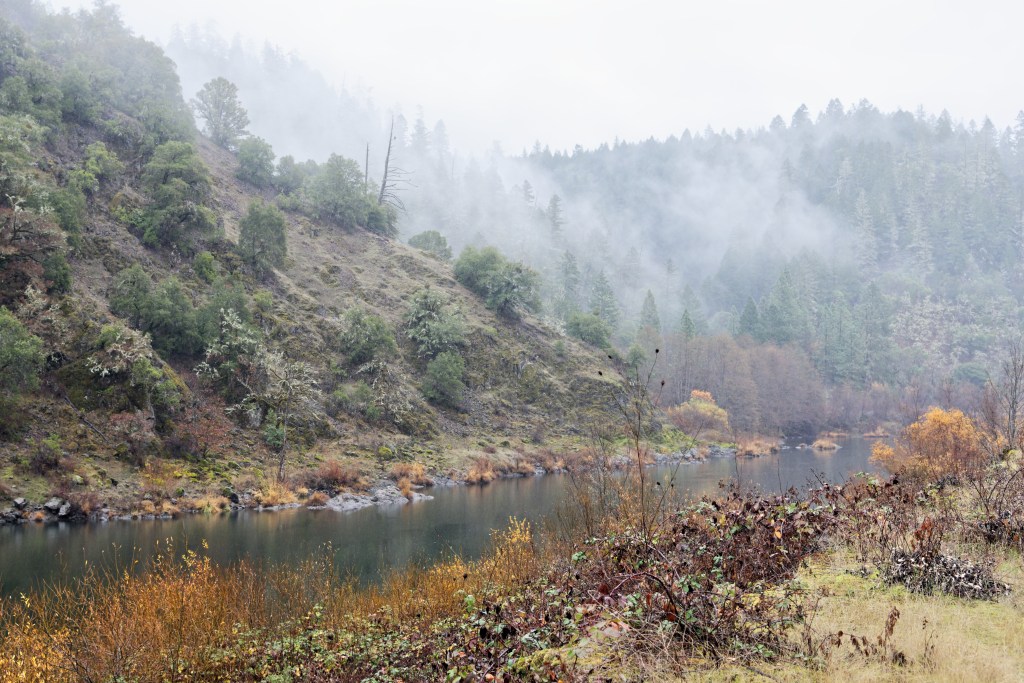
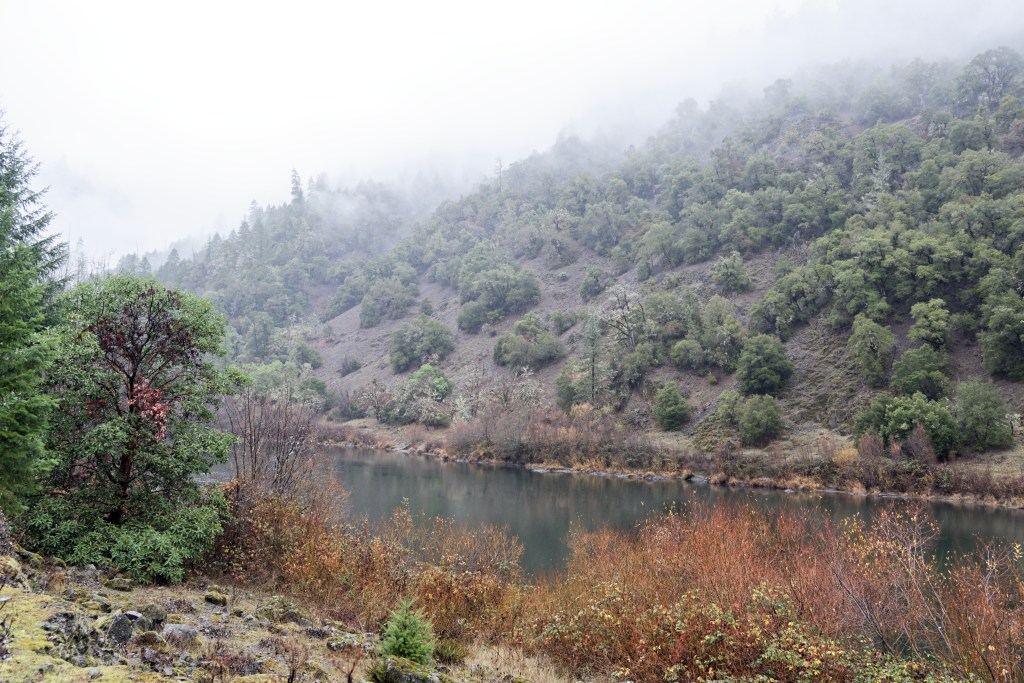
Here are some of my very first attempts, taken yesterday along the Rogue River in the rain and mist.
The Rogue River looking downstream.
oooo
The Rogue River looking upstream from the same point.
oooo
Looking towards the top of the opposite bank.
oooo
Trees in the mist.
Well it’s a start!
But I just wanted to reiterate that staying local both literally and virtually is very rewarding.
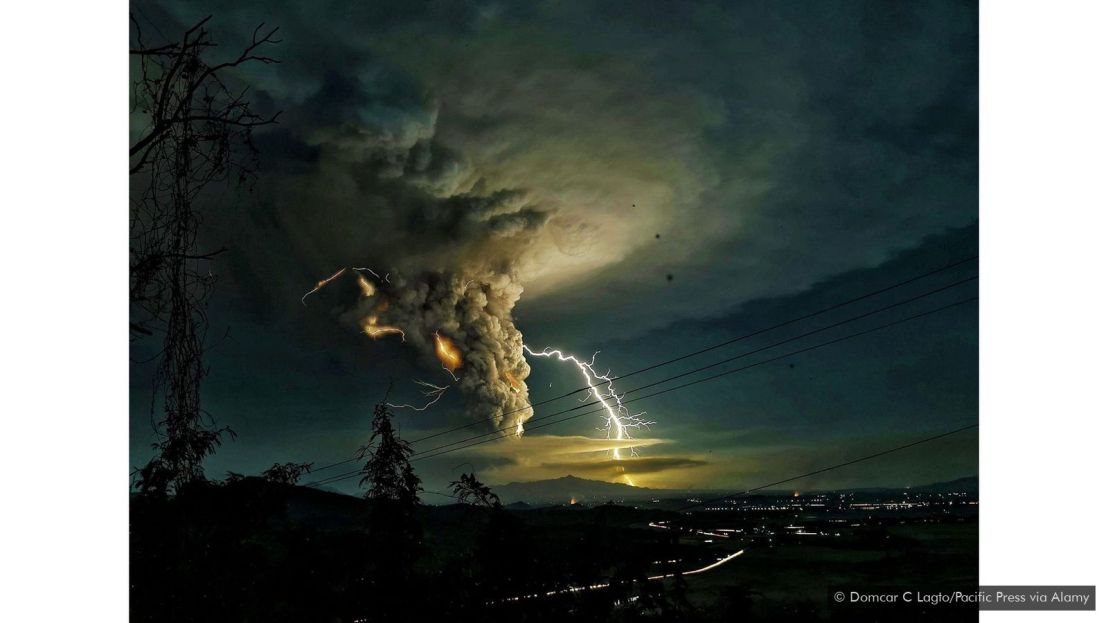
A lightning strike over the province of Batangas during the eruption of the Taal volcano in Philippines, January 2020 (Credit: Domcar C Lagto/Pacific Press via Alamy)
Eruption of Taal Volcano in Philippines, January 2020
Volcanic lightning occurs when fragments of propelled ash (including glass, ice, and rock) spark against each other in the violent plume that rises above an erupting volcano. The First-Century Roman writer Pliny the Younger is credited with recording the earliest-extant account of a so-called ‘dirty thunderstorm’ after witnessing the eruption of Mount Vesuvius in 79 AD. “A dreadful black cloud,” Pliny observed in a letter to Tacitus, “was torn by gushing flames and great tongues of fire like much-magnified lightning.” Photos taken in January 2020 of a similar display near Manila, Philippines when Taal Volcano erupted captured the world’s attention. The intense gnashing of darkness and light preserved by the images recalls the cataclysmic beauty of The Destruction of Pompei and Herculaneum, the Romantic artist John Martin’s 1822 painterly recreation of the ancient dirty thunderstorm that Pliny the Younger saw with his own eyes.
This is a copyrighted photograph and I may have to remove it pretty damn quickly.
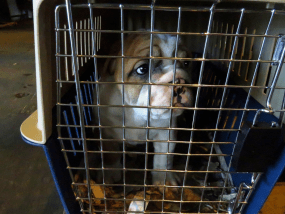
Jean and I had the radio on, BBC Radio 4, yesterday morning and were listening to You and Yours. They had an item on puppies and the fact that at this time of the year, and especially this year, the number of puppies being brought in was very high.
There’s been a surge in puppies coming into the UK from oversees and animal welfare charities are worried about it. The Eurotunnel has put limits on the amount of dogs that can come through in one vehicle. We look at how puppies are advertised on social media and bred in countries like Russia and the Ukraine.
The former boss of Skybet, Richard Flint, reacts to the government announcement of a review of gambling laws. What can online betting companies do to make gambling fairer and safer?
We’ve been hearing how students have been struggling with their courses and accomodation in the pandemic – we hear from a father worried about his daughter in her first year, and she joins us too.
And, the number of house sales falling through because mortgage companies have downgraded valuations is rising. Are buyers just offering too much in the housing market boom?
The rules for bringing your dog into the United States depend on where you are coming from. Written or oral statements and any documents must be in English or have an English translation.
Different types of rabies exist in many mammals, but CDC focuses on importing dog rabies into the United States from certain high-risk countries. CDC experts collect and analyze rabies information around the world to determine a country’s risk for rabies.
Dog rabies was eliminated in the United States in 2007 and is under control in some other countries. However, many others do not have it controlled, and dogs coming from these countries can import this disease into the United States.
Dogs coming from a high-risk country will need a rabies vaccine certificate. High-risk countries have the greatest chance of importing dog rabies into the United States.
Photo credit: Audilis Sánchez, CDC
Example: Your adult dog lived in the United States (no-known–risk country) and visited Ghana (high-risk country) for any period of time. Before returning to the United States, your dog must have a valid rabies vaccine certificate. Be sure to get your dog vaccinated before you travel and take the papers with you.
Example: You are purchasing a puppy from Russia (high-risk country) on the Internet. Before entering the United States, your puppy must have a valid rabies vaccine certificate.
Dogs coming from a low-risk or no-known rabies risk (free of dog rabies) are NOT required to have a rabies vaccination certificate to enter the United States. However, when you enter the United States, you must provide written or oral statements that the dogs lived in a country with low or no risk for at least 6 months or since birth.
Photo credit: Michelle Decenteceo, CDC
Example: Your adult dog lived in the United States (no-known–risk country) and visited Mexico (low-risk country). This dog does NOT require a rabies certificate, because Mexico is low risk for dog rabies.
Example: Your puppy has lived in Germany since birth and is coming to the United States. This dog does NOT require a rabies certificate, because Germany has no-known risk for dog rabies.
Going back to that item on BBC Radio there was reference to a YouTube video of an illegal import from Russia.
Here it is:
Last week Love Island’s Molly Mae and Tommy Fury posted photos of their new pomeranian puppy from Russia, Mr Chai. But just a few days later they announced the devastating news that Mr Chai had died following health complications and it’s an all too common problem, when dogs from puppy farms are sold to unsuspecting families. Vet Dr Scott Miller joins us to make sure you know how to spot the signs of a reputable breeder if you’re thinking of getting a pet, alongside Sadee Slater – the victim of an irresponsible breeder.
Staying safe is more than luck; it requires research and care, and a whole lot more!




















 Learning from Dogs