Category: Culture

Facebook: You can do better than this!

I’m voting with my feet and cancelling my Facebook account; here’s why.

Like tens of thousands of other people, I use social media: Facebook, Linked-In and Twitter.  In my own case primarily for promoting my blog writings.

It was another blogger who drew my attention to something so terrible, so despicable, that it pains me to even think about it, let alone write about it.

Let me explain.

I subscribe to The Liberated Way published by Alex Jones.

Last Sunday, Alex published a post called Caring about animal welfare. Here’s a short extract:

For six months I have been experimenting with a Facebook account in order to stay in contact with the creative industry in my town of Colchester. This experiment came to an end today when I closed my Facebook account due to Facebook allowing content associated with the torture of animals.

The word torture, highlighted by me, included a link to an article in the UK Daily Mail newspaper.  The link to that Daily Mail article is here. BUT PLEASE do not click on that link if you are not prepared to be hurt, shocked and made to feel VERY ANGRY!  To reinforce my warning, the headline of that article reads thus:

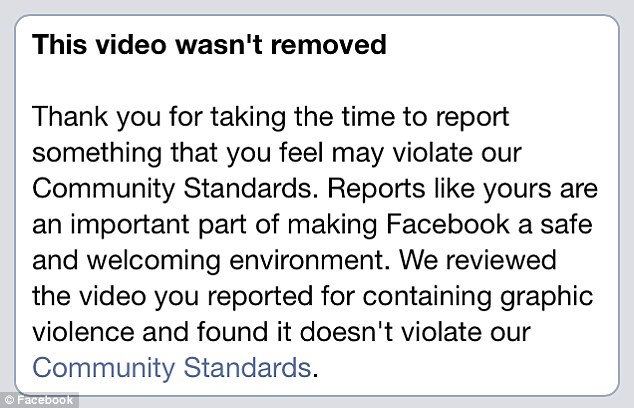
Facebook refuses to remove video of kitten being doused in petrol and set on fire ‘because it doesn’t breach any rules’

I can’t even bring myself to include the two photographs of the poor, tortured kitten who was killed by the bastards concerned.  However, I will reproduce one image carried by the Daily Mail:

FB standards
Response: After reporting the video, which was not thought to have uploaded by either of the men in the video, and carries a warning message, Mr Dunwel was told the video would not be removed.

Facebook’s Community Standards may be read here.

But frankly any standards that regard the burning to death of a kitten as not being ‘graphic violence’ are incorrect standards.

So this coming Friday, I shall be cancelling my Facebook account.  Why not immediately?  Because my blog posts are themselves promoted on Facebook and I hope other Facebook subscribers who read today’s post  are motivated to do the same over the intervening three days.

If you are still uncertain of the merits of my action, and you have a very tough stomach, then the link to the video in question is here.

I have not watched the video for the simple reason that the details of the video were more than enough for me. These are those details:

Published on Sep 9, 2014
Cruel man douses kitten in full

Facebook has refused to take down a video of a kitten being covered in petrol and set on fire.

The web giant reportedly said the shocking footage does not breach any of its rules.

The footage shows two men pushing the animal into a bucket and pouring liquid on it.

The kitten is then set alight.

It can then be seen escaping from the bucket and running away still on fire.

The kitten rolls around in obvious distress but one of the men pours on more fuel as it burns.

When the flames are extinguished a plastic bag can be seen being placed over the animal.

The clip has caused disgust online, with thousands of Facebook commenting on it – but the social networking site has refused to take it down.


PLEASE, PLEASE if you are a Facebook user consider cancelling your account.

Our animals deserve our support.

I will close by asking Facebook to reconsider: Facebook you truly can do better than this.

And thank you Alex.

A world at peace.

Never say never!

Next Monday, the 21st September, is going to be the most important day this year.  No! The most important day ever!

Because next Monday is the date of the People’s Climate March in New York.  It is predicted to be the largest climate march in history. Well over 100,000 are expected to attend.  I shall write more about this event during the coming week.

But also the 21st September will be International Day of Peace. That coincidence strikes me as highly significant. For a world at peace would cause the most massive reduction in our use of carbon-based fuels.

Thus without any embarrassment, I intend to republish in full [Ed: but see my comment] a recent item on the Permaculture News website: Seven Reasons Why World Peace is Possible.

Do I mention dogs?  Read through to the end to find out! (Probably not difficult to guess the answer!)

ooOOoo

Seven Reasons Why World Peace is Possible

Introduction

The 21st of September will be International Day of Peace. It may seem a little premature to declare that world peace is due to break out by the end this month. I do not deny that the amount of killing and death and war and torture and death and coercion and abuse and death all over everywhere can be overwhelming. Nor do I deny that considering this, it is a natural assumption to believe people are sinners, destined for extinction. However, I do argue that compassion is as much a part of human nature as cruelty.

There is evidence that humankind did not always live violent lives. In fact, I assume most people reading this article are not habitually violent, and do not desire to watch someone suffer. All animals have the capacity to enrich the lives of others. We have the capacity to be both selfish and kind. What matters is which quality we chose to focus on; bringing that quality into focus within ourselves, the world, and our children.

Here I have collected an array of research demonstrating that there is a positive potential within each social group and person. I argue that humans can learn to build societies which are not founded on the expectation of organised violence. Here are seven reasons why world peace is possible. You won’t believe your own strength of belief: There is at least some hope.

aadsdas
National Peace Academy’s Peace Spheres

Experimental prototypes

The balance of this powerful and fascinating article may be read here.

ooOOoo

How many links did you follow?  Most of them are wonderful links to organisations that many readers, including me, may not have come across before.

So to close.

I was about half-way through arranging today’s post when I realised that dogs have evolved without the need to have their own police forces or armies.  It’s not as silly as it first sounds. Of course, dogs fight and some fights can be brutal and, occasionally, fatal to one or more of the participants.  But they have a keen sense of their locality, of their tribal space; so to speak.  Even as domestic animals, they are fiercely protective of what is their own place.  Before dogs were domesticated, like the wolves from whence dogs evolved, the pack size was around fifty animals with just three animals having any form of status; something that has been mentioned many times before in this place.

The point is that dogs are creatures that have evolved to live in a local community and to live peacefully; by and large.  My sense is that ancient man also evolved to be most complete within a community environment.

This is the end of the era of huge federal and national social constructions.

We must return to locally run and managed communities, which is the pathway to peace across this planet.

Picture parade sixty-one

More naughtiness courtesy of Chris Snuggs.

IMG_175618786339116

oooo

IMG_175615041118805

oooo

IMG_175606994640631

oooo

IMG_175603801643132

oooo

IMG_175598653820166

oooo

IMG_175595011160688

oooo

IMG_175589583320481

oooo

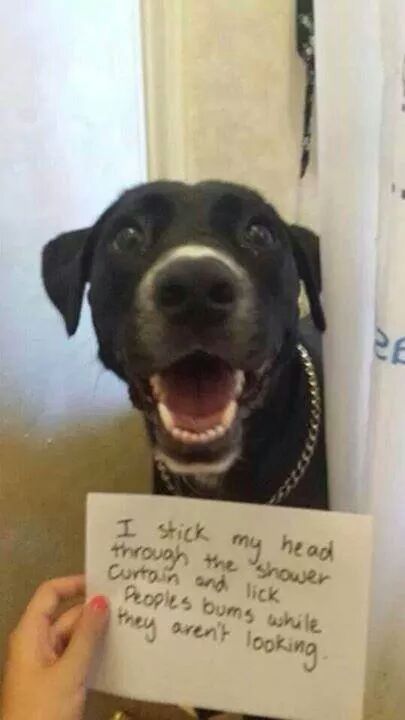
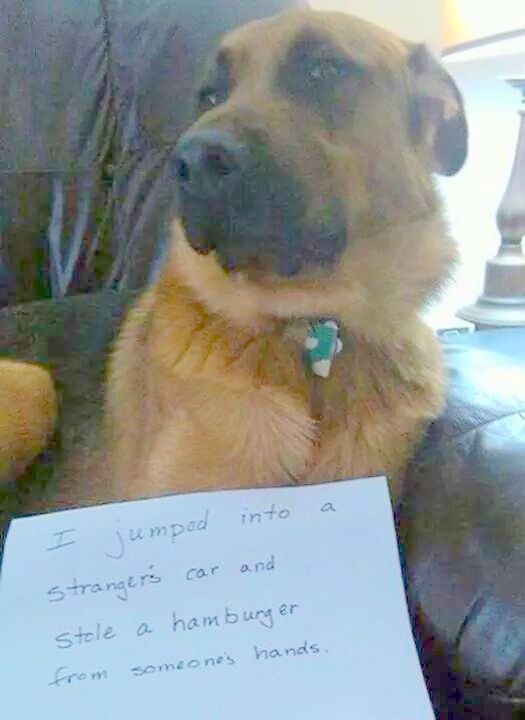
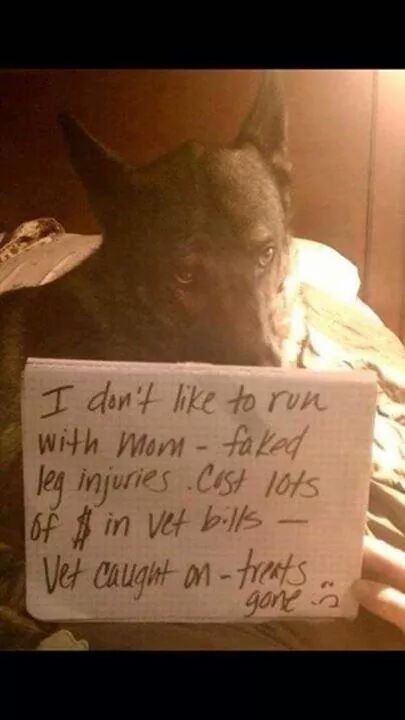
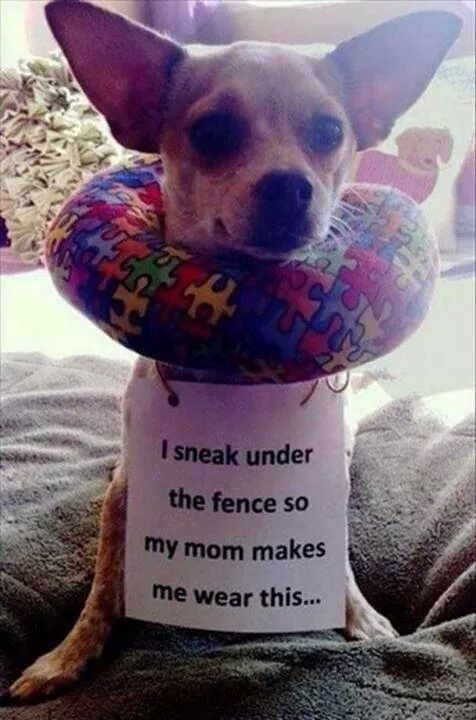
Difficult to pick out a favourite but the dog that poops rainbows is a close front-runner for me.

How about you?

Inspiring transformation everywhere.

The second of George Monbiot’s essays on Scotland.

In yesterday’s post Alba an Aigh or Scotland the Brave, I closed it by saying, “Since preparing this post, I see that George Monbiot has published a second essay on the subject of the Scottish referendum. I’m pondering republishing that second essay next Monday.”

Upon further reflection, it struck me that Mr. Monbiot’s second essay was better appreciated being republished in this place the following day; i.e. today.

Thus with no further ado, here it is.

ooOOoo

England the Brave

September 9, 2014

The rest of the UK doesn’t need to be rescued by Scottish votes: independence could inspire transformation everywhere.

By George Monbiot, published in the Guardian 9th September 2014

Of all the bad arguments urging the Scots to vote no – and there are plenty – perhaps the worst is the demand that Scotland should remain in the Union to save England from itself. Responses to last week’s column suggest that this wretched, snivelling, apron-strings argument has some traction among people who claim to belong to the left.

Consider what it entails: it asks a nation of 5.3 million to forgo independence to exempt a nation of 53 million from having to fight its own battles. In return for this self-denial, the five million must remain yoked to the dismal politics of cowardice and triangulation which have caused the problems from which we ask them to save us.

“A UK without Scotland would be much less likely to elect any government of a progressive hue”, the former Labour minister Brian Wilson claimed in the Guardian last week(1). We must combine against the “forces of privilege and reaction” (as he lines up with the Conservatives, UKIP, the LibDems, the banks, the corporations, almost all the rightwing columnists in Britain and every UK newspaper except the Sunday Herald) – in the cause of “solidarity”.

There’s another New Labour weasel word to add to its dreary lexicon (other examples include reform, which now means privatisation, and partnership, which means selling out to big business). Once solidarity meant making common cause with the exploited, the underpaid, the excluded. Now, to these cyborgs in suits, it means keeping faith with the banks, the corporate press, cuts, a tollbooth economy and market fundamentalism.

Here, to Wilson and his fellow flinchers, is what solidarity meant while they were in office. It meant voting for the Iraq war, for Trident, for identity cards, for 3,500 new criminal offences(2), including the criminalisation of most forms of peaceful protest(3). It meant being drafted in as political mercenaries to impose on the English policies to which the Scots were not subject, such as university top-up fees and foundation hospitals(4,5). It meant supporting every destructive and injust proposition advanced by their leaders: the brood parasites who hatched in the Labour nest then flicked its dearest principles over the edge. It’s no surprise that the more the Scots see of their former Labour ministers, the more inclined they are to vote for independence.

So now Better Together has brought in Gordon Brown, scattering bribes in a desperate, last-ditch effort at containment. They must hope the Scots have forgotten that he boasted of setting “the lowest rate in the history of British corporation tax, the lowest rate of any major country in Europe and the lowest rate of any major industrialised country anywhere”(6). That he pledged to the City of London “in budget after budget I want us to do even more to encourage the risk takers”(7). That, after 13 years of Labour government, the UK had higher levels of inequality than after 18 years of Tory government(8). That his government colluded in kidnapping and torture(9). That he helped cause the deaths of hundreds of thousands through his support for the illegal war on Iraq.

He roams through Scotland, still badged with blood, promising what he never delivered when he had the chance, this man who helped unravel the social safety net his predecessors wove; who marketised and dismembered public services; who enriched the wealthy and shafted the poor; who pledged money for Trident but failed to reverse the loss of social housing(10); whose private finance initiative planted a series of timebombs now exploding throughout the NHS and other public services(11); who greased and wheedled and slavered his way into the company of bankers and oligarchs while trampling over the working people he was elected to represent. This is the progressive Prester John who will ride to the rescue of the No campaign?

Where, in Scotland’s Labour party, are the Keir Hardies and Jimmy Reids of our time? Where is the vision, the inspiration, the hope? The shuffling, spineless little men with whom these titans have been replaced offer nothing but fear. Through fear they seek to shove Scotland back into its box, as its people rebel against the dreary, closed future mapped out for them – and the rest of us – by the three main Westminster parties.

Sure, if Scotland becomes independent, all else being equal, Labour would lose 41 seats at Westminster and Tory majorities would become more likely(12). But all else need not be equal. Scottish independence can galvanise progressive movements across the rest of the United Kingdom. We’ll watch as the Scots engage in the transformative process of writing a constitution. We’ll see that a nation of these islands can live and – I hope – flourish with a fully elected legislature (no House of Lords), with a fair electoral system (proportional representation), and with a parliament in which only representatives of that nation can vote (no cross-border mercenaries).

Already, the myth of political apathy has been scotched by the tumultuous movement north of the border. As soon as something is worth voting for, people will queue into the night to add their names to the register(13). The low turn-outs in Westminster elections reflect not an absence of interest but an absence of hope.

If Scotland becomes independent, it will be despite the efforts of almost the entire UK establishment. It will be because social media has defeated the corporate media. It will be a victory for citizens over the Westminster machine, for shoes over helicopters. It will show that a sufficiently inspiring idea can cut through bribes and blackmail, through threats and fearmongering. That hope, marginalised at first, can spread across a nation, defying all attempts to suppress it. That you can be hated by the Daily Mail and still have a chance of winning.

If Labour has any political nous, any remaining flicker of courage, it will understand what this moment means. Instead of suppressing the forces of hope and inspiration, it would mobilise them. It would, for example, pledge, in its manifesto, a referendum on drafting a written constitution for the rest of the United Kingdom.

It would understand that hope is the most dangerous of all political reagents. That it can transform what appears to be a fixed polity, a fixed outcome, into something entirely different. That it can summon up passion and purpose we never knew we possessed. If Scotland becomes independent, England – if only the potential were recognised – could also be transformed.

www.monbiot.com

References:

1. http://www.theguardian.com/commentisfree/2014/sep/04/scottish-independence-nationalism-progressive-george-monbiot-uk

2. http://www.dailymail.co.uk/debate/article-1205676/Paranoid-suspicion-obsessive-surveillance–land-liberty-destroyed-stealth.html

3. http://www.legislation.gov.uk/ukpga/2005/15/contents#pt4-pb1-l1g125

4. http://news.bbc.co.uk/1/hi/scotland/3432767.stm

5. http://news.bbc.co.uk/1/hi/scotland/3054562.stm

6. http://www.parliament.the-stationery-office.co.uk/pa/cm199899/cmhansrd/vo990309/debtext/90309-06.htm

7. http://www.theguardian.com/politics/2004/jun/17/economy.uk

8. http://www.poverty.org.uk/09/index.shtml

9. http://www.theguardian.com/politics/2013/dec/19/mi5-mi6-questions-torture-terrorism-rendition

10. http://data.gov.uk/dataset/house-building-dwellings-completed-total

11. http://www.theguardian.com/news/datablog/interactive/2012/jun/26/health-nhs-trusts-pfi-interactive-map

12. http://www.bbc.co.uk/news/uk-politics-27129813

13. http://www.bbc.co.uk/news/uk-scotland-scotland-politics-29024311

ooOOoo

By this day next week, we shall know the outcome.

Alba an Aigh or Scotland the Brave.

My hope for a ‘yes’ vote for Scottish Independence.

Alba an Aigh” is Scottish Gaelic for the Scottish patriotic song, Scotland the Brave. It was one of several songs considered an unofficial national anthem of Scotland.

Before the main purpose of today’s post, I want to republish three comments to a recent post from Patrice Ayme, Free Scotland From Thieves.

First Alex Jones, he of The Liberated Way, commented:

I hope that “yes” is the outcome in the Scottish vote. I believe Scotland is part of a trend away from globalism and centralism to a new devolved form of localism.

To which I added:

Delighted to agree with Alex and for exactly the reasons he offers. All around the globe we are seeing countless examples of the failure, to put it mildly, of BIG GOVERNMENT.

Just as much in my new home country as it was in my old one.

On Sunday evening, neighbours Janell and Larry threw a short-notice BBQ. Thirty minutes after Larry’s phone call, we walked across our fields to their place, to join three other neighbours. It was a wonderful evening and the majority of the talk was about local issues: when is it going to rain, we are all short of hay, that sort of stuff.

Towards the end, there was a general rant about the state of the world. I hesitated, aware of my ‘new boy’ status, and then quietly remarked that Jean and I were overwhelmed by the friendship and cooperation of all those living nearby. And went on to add that the contrast between how our community worked and how the American government failed to work was stark.

Everyone signalled by grunts, words and body language their agreement.

Bon chance, New Scotland.

Patrice then offered:

Dear Paul: 100% agree. The strength of the USA is that the average state is 6 million people. The state of Massachusetts has excellent results on the PISA tests, in stark distinction with most of Euramerica. That’s entirely due to localism.

In my more or less native Bay Area, governance is extremely local, and there is the secret of Silicon Valley: most deals are made with handshakes, or people who argue with each other, while knowing they will have to keep on living with each other. Silicon Valley exists, because it’s 3,000 miles from Washington and New York.

They signaled with grunts and body language because of these low PISA tests, but, right now in the Bay Area, the PISA rising movement is engaged (having a 4 year old, I am in the middle of it).

Bonne Chance Scotland, indeed. Independence (from London’s plutocracy) ought to be easy as pie for Scotland.

BTW, the “City” is technically a plutocracy: voting there depends upon the money…

So it’s already clear where I stand!

As is the stance from The Automatic Earth Please Scotland, Blow Up The EU.  Or try The London School of Economics: The ‘domino effect’ from Scotland’s referendum is increasing demands for independence in Italian regions. Then The Daily Telegraph weighs in with Britain faces storm as giant global investors awaken to break-up dangers.  All great fun!

However, the most eloquent and powerful argument read in recent days comes from George Monbiot in his essay Someone Else’s Story.  It is republished here with Mr. Monbiot’s kind permission.

ooOOoo

Someone Else’s Story

September 2, 2014

Scots voting no to independence would be an astonishing act of self-harm

By George Monbiot, published in the Guardian 3rd September 2014

Imagine that the question was posed the other way round. An independent nation is asked to decide whether to surrender its sovereignty to a larger union. It would be allowed a measure of autonomy, but key aspects of its governance would be handed to another nation. It would be used as a military base by the dominant power and yoked to an economy over which it had no control.

It would have to be bloody desperate. Only a nation in which the institutions of governance had collapsed, which had been ruined economically, which was threatened by invasion or civil war or famine might contemplate this drastic step. Most nations faced even with such catastrophes choose to retain their independence – in fact will fight to preserve it – rather than surrender to a dominant foreign power.

So what would you say about a country that sacrificed its sovereignty without collapse or compulsion? That had no obvious enemies, a basically sound economy and a broadly functional democracy, and chose to swap it for remote governance by the hereditary elite of another nation, beholden to a corrupt financial centre?(1)

What would you say about a country that exchanged an economy based on enterprise and distribution for one based on speculation and rent?(2) That chose obeisance to a government which spies on its own citizens, uses the planet as its dustbin, governs on behalf of a transnational elite which owes loyalty to no nation, cedes public services to corporations, forces terminally ill people to work(3) and can’t be trusted with a box of fireworks, let alone a fleet of nuclear submarines? You would conclude that it had lost its senses.

So what’s the difference? How is the argument altered by the fact that Scotland is considering whether to gain independence, rather than whether to lose it? It’s not. Those who would vote no – now, a new poll suggests, a rapidly diminishing majority(4) – could be suffering from system justification.

System justification is defined as the “process by which existing social arrangements are legitimised, even at the expense of personal and group interest”(5). It consists of a desire to defend the status quo, regardless of its impacts. It has been demonstrated in a large body of experimental work, which has produced the following surprising results.

System justification becomes stronger when social and economic inequality is more extreme. This is because people try to rationalise their disadvantage by seeking legitimate reasons for their position(6). In some cases disadvantaged people are more likely than the privileged to support the status quo. One study found that US citizens on low incomes were more likely than those on high incomes to believe that economic inequality is legitimate and necessary(7).

It explains why women in experimental studies pay themselves less than men, why people in low status jobs believe their work is worth less than those in high status jobs, even when they’re performing the same task, and why people accept domination by another group(8). It might help to explain why so many people in Scotland are inclined to vote no.

The fears the no campaigners have worked so hard to stoke are – by comparison to what the Scots are being asked to lose – mere shadows. As Adam Ramsay points out in his treatise Forty-Two Reasons to Support Scottish Independence, there are plenty of nations smaller than Scotland which possess their own currencies and thrive(9). Most of the world’s prosperous nations are small: there are no inherent disadvantages to downsizing(10).

Remaining in the UK carries as much risk and uncertainty as leaving. England’s housing bubble could blow at any time. We might leave the EU. Some of the most determined no campaigners would take us out: witness Ukip’s intention to stage a “pro-Union rally” in Glasgow on September 12(11). The Union in question, of course, is the UK, not Europe. This reminds us of a crashing contradiction in the politics of such groups: if our membership of the EU represents an appalling and intolerable loss of sovereignty, why is the far greater loss Scotland is being asked to accept deemed tolerable and necessary?

The Scots are told they will have no control over their own currency if they leave the UK. But they have none today. The monetary policy committee is based in London and bows to the banks. The pound’s strength, which damages the manufacturing Scotland seeks to promote, reflects the interests of the City(12).

To vote no is to choose to live under a political system that sustains one of the rich world’s highest levels of inequality and deprivation. This is a system in which all major parties are complicit, which offers no obvious exit from a model that privileges neoliberal economics over other aspirations(13). It treats the natural world, civic life, equality, public health and effective public services as dispensable luxuries, and the freedom of the rich to exploit the poor as non-negotiable.

Its lack of a codified constitution permits numberless abuses of power. It has failed to reform the House of Lords, royal prerogative, campaign finance(14) and first-past-the-post voting (another triumph for the no brigade). It is dominated by a media owned by tax exiles, who, instructing their editors from their distant chateaux, play the patriotism card at every opportunity. The concerns of swing voters in marginal constituencies outweigh those of the majority; the concerns of corporations with no lasting stake in the country outweigh everything. Broken, corrupt, dysfunctional, retentive: you want to be part of this?

Independence, as more Scots are beginning to see, offers people an opportunity to rewrite the political rules. To create a written constitution, the very process of which is engaging and transformative. To build an economy of benefit to everyone. To promote cohesion, social justice, the defence of the living planet and an end to wars of choice(15).

To deny this to yourself, to remain subject to the whims of a distant and uncaring elite, to succumb to the bleak, deferential negativity of the no campaign; to accept other people’s myths in place of your own story: that would be an astonishing act of self-repudiation and self-harm. Consider yourselves independent and work backwards from there, then ask why you would sacrifice that freedom.

www.monbiot.com

References:

1. http://www.theguardian.com/commentisfree/2011/oct/31/corporation-london-city-medieval

2. http://www.theguardian.com/commentisfree/2014/jul/29/rich-wealth-good-inequality-green-party

3. http://www.theguardian.com/society/2014/feb/28/minister-apologise-woman-coma-find-work

4. http://www.theguardian.com/politics/2014/sep/02/scottish-independence-yes-campaign-poll-boost

5. John T. Jost and Mahzarin R. Banaji, 1994. The role of stereotyping in system-justification and the production of false consciousness. British Journal of Social Psychology, 33, 1–27.

6. John T. Jost, Mahzarin R. Banaji and Brian A. Nosek, 2004. A Decade of System Justification Theory: Accumulated Evidence of Conscious and Unconscious Bolstering of the Status Quo . Political Psychology, Vol. 25, No. 6, 2004. http://www.psych.nyu.edu/jost/Jost,%20Banaji,%20&%20Nosek%20%282004%29%20A%20Decade%20of%20System%20Justificati.pdf

7. John T. Jost et al, 2003. Social inequality and the reduction of ideological dissonance on behalf of the system: evidence of enhanced system justification among the disadvantaged. European Journal of Social Psychology, 33, 13–36.

8. John T. Jost, Mahzarin R. Banaji and Brian A. Nosek, 2004, see above.

9. http://commonwealth-publishing.com/?p=255

10. http://www.english.plaidcymru.org/uploads/downloads/Flotilla_Effect_-_Adam_Price_and_Ben_Levinger.pdf

11. http://www.bbc.co.uk/news/uk-scotland-scotland-politics-29003017

12. See also, on these questions, the Common Weal report by the Jimmy Reid Foundation: http://reidfoundation.org/wp-content/uploads/2013/05/The-Common-Weal.pdf

13. http://www.theguardian.com/commentisfree/2014/aug/05/neoliberalism-mental-health-rich-poverty-economy

14. http://www.theguardian.com/politics/2014/jul/01/-sp-tory-summer-party-drew-super-rich-supporters-with-total-wealth-of-11bn

15. There’s more on all this at http://commonwealth-publishing.com/?p=255

ooOOoo

Since preparing this post, I see that George Monbiot has published a second essay on the subject of the Scottish referendum. I’m pondering republishing that second essay next Monday.
Support Net Neutrality

Please be aware of the threat to the original concept of the Internet.

As received from WordPress at 14:30 PDT today; September 9th, 2014.

(Even if you are not a ‘blogger’, please read the following and sign by using the link right at the end of the post.)

ooOOoo

Join Us in the Fight For Net Neutrality

by Paul Sieminski

“Net Neutrality” is the simple but powerful principle that cable and broadband providers must treat all internet traffic equally. Whether you’re loading a blog post on WordPress.com, streaming House of Cards on Netflix, or browsing handcrafted tea cozies on Etsy, your internet provider can’t degrade your connection speed, block sites, or charge a toll based on the content that you’re viewing.

Net neutrality has defined the internet since its inception, and it’s hard to argue with the results: the internet is the most powerful engine of economic growth and free expression in history. Most importantly, the open internet is characterized by companies, products, and ideas that survive or fail depending on their own merit — not on whether they have preferred deals in place with a broadband service provider. Unfortunately, the principle of net neutrality, and the open internet that we know and love, is under attack.

Net Neutrality under attack

The Federal Communications Commission has proposed rules that would, for the first time, expressly allow internet providers — like Comcast, Verizon and AT&T — to charge internet companies like Automattic, Netflix or Etsy for access to their subscribers. This means there could be “fast lanes” for companies who are able to pay providers for preferred internet access, while everyone else gets stuck in the “slow lane”…which means applications won’t perform as quickly, webpages will load slowly, and of course, buffering. A slow “still loading” spinner will be an unfortunate, but common sight on the new, closed internet that the big providers want.

Unsurprisingly, the large telecom companies who stand to benefit from the FCC’s proposed rules fully support their passage. They have nearly unlimited funds and hundreds of lobbyists in Washington to promote these harmful new rules.

But what they don’t have is you.

What can we do to fight back?

Automattic strongly supports a free and open internet. After all, WordPress.com, and the WordPress open source project are living examples of what is possible on an unthrottled internet, open for creation, collaboration, and expression. Over the last few months, we’ve joined 150 major tech companies in sending a letter to Washington in support of net neutrality, and met with FCC Chairman Tom Wheeler to urge him to preserve the internet we’ve always known.

Now it’s your turn.

Automattic, along with many other companies and digital rights organizations, is proud to participate in the Internet Slowdown on September 10. For this day of action, we’ve built a “Fight for Net Neutrality” plugin that you can enable now on your WordPress.com blog to show support for this important cause.

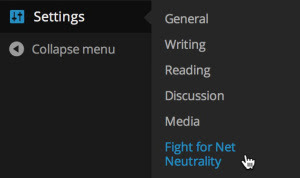
You can turn the plugin on by going to your Dashboard, Settings → Fight for Net Neutrality.

Net1

When you enable the plugin, we’ll replace a few of the posts on your site with a “Still Loading” spinner…to show what life will be like on an internet that features dreaded slow lanes.

Net2

The plugin will also display a banner that shows your support for Net Neutrality, and links to battleforthenet.com, where visitors to your site can sign a letter to the FCC about this important issue.

Please take a few minutes to enable the Fight for Net Neutrality on your site today, and visit battleforthenet.com to send a message to Washington that net neutrality must be preserved. Together we can make a difference, and we hope you’ll join us in this important battle for the open internet!

ooOOoo

Note: When I turned on the plugin and ran the preview for this new post, it made it very confusing in my opinion.  Thus as much as I support the campaign, and have signed accordingly, I have turned off the plugin for the time being.

So please all readers and followers of Learning from Dogs go to the BattleForTheNet website and sign to indicate your support for this important campaign.

Oh, and please click Like if you support the campaign.  Thank you very much.

Wisdom, nature and philosophy.

The hidden gifts of nature.

I have been a follower of Alex Jones’ blog The Liberated Way for many months; possibly much longer. Frequently, I republish one of Alex’s posts here.

Nearly six months ago, I read a lovely essay of his and made a mental note to republish that in the next few days.  Then the world overtook me and now April 30th, when Alex published this piece, has become September 8th!

Yet it hasn’t lost a heartbeat of meaning.

Read on and you will agree.

ooOOoo

The hidden gifts of nature.

The western education system ignores nature.

Nature is all around us with its gifts of philosophy, wisdom and creativity; qualities the West devalues at its loss.

The holidays are over in the UK, the students return to school, some to their exams. I reflect upon the sad treatment of creativity, wisdom, nature and natural philosophy in education, and in Western society as a whole, treated as worthless and unworthy of consideration.

On most days I walk past the former home of William Gilbert, some consider the father of electricity and magnetism. Born to a wealthy merchant family in my town of Colchester, Gilbert invested his personal wealth in an extensive study of magnetism with view to assisting the explorers of the Elizabethan age when Britain was building an empire in a period of great prosperity and confidence. Gilbert invented the term electricity. Gilbert wrote De Magnete, considered possibly the first work using the scientific method. In addition to being a scientist, a doctor to Elizabeth I, Gilbert was also a natural philosopher who used the empirical method of observation, demonstration and experience of nature to form his theories.

Each day I watch and interact with nature, like Gilbert I am a natural philosopher, and this forms the basis of my business ideas, my scientific understanding and my personal philosophies. Rather than a worthless study nature opens the door to the philosophy of the understanding of self, the world, and the relationship of self to the world. Wisdom is born of action and experience, the interactions with nature gives birth to wisdom. Nature encourages people to do new things in new ways, so rerouting electric signals in the brain causing new connections to form of creativity. The philosophy emerges from nature by causing the mind to question, observe and experiment, the basis of science and success in any discipline.

ooOOoo

Colchester, in the English county of Essex, goes way back to Roman times when the town was called Camulodunon (which was latinised as Camulodunum). That name is believed to date back to the Celtic fortress of “Camulodunon”, meaning Stronghold of Camulos. It served as the first capital of Roman Britain making a claim to be the oldest town in Britain.

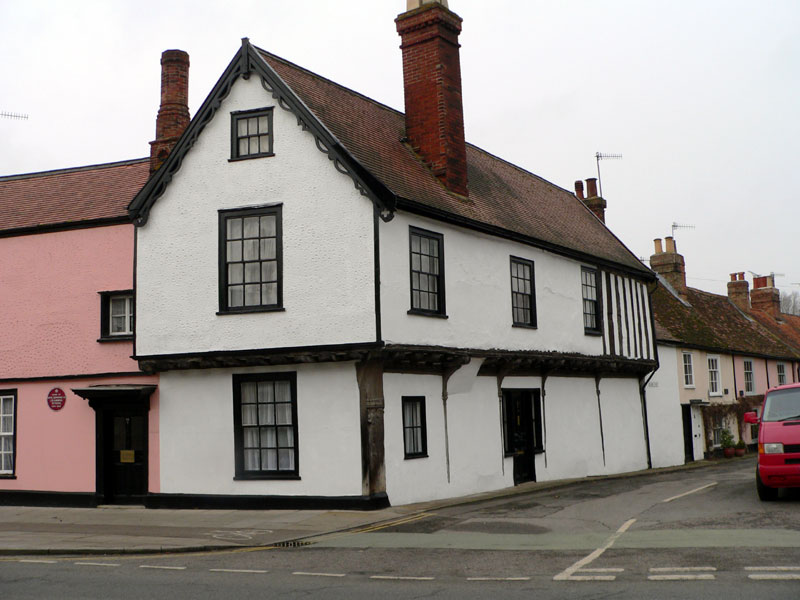
It is where Alex Jones lives, the author of The Liberated Way, and where during the 1980’s I ran a business under the name of Dataview Ltd.  In fact, the business was located in a very old, listed building known as The Portreeve’s House.  It was at the bottom of town near Hythe Quay on the River Colne and the name “Portreeve” is old English for harbour master, i.e. it was originally the harbour master’s house.

The timber-framed building at 1–2 East Bay, Colchester, known as the Portreeve’s House (TM00552525), is situated on the main eastern approach to the town centre. The building is on the junction of Brook Street and East Bay (FIG. 1) and is 375 metres east of the former position of East Gate and 150 metres west of East Bridge, the river Colne and East Mill.
The timber-framed building at 1–2 East Bay, Colchester, known as the Portreeve’s House is situated on the main eastern approach to the town centre. The building is on the junction of Brook Street and East Bay and is 375 metres east of the former position of East Gate and 150 metres west of East Bridge, the river Colne and East Mill.  The building is believed to date back to the 16th Century.

All seems a long way from Southern Oregon!

Picture parade sixty.

It’s good to be naughty from time to time!

(Thanks to Chris Snuggs for the following.)

IMG_175650802497333

oooo

IMG_175638591409422

oooo

IMG_175634390112965

oooo

IMG_175631485161924

oooo

IMG_175627971570155

oooo

IMG_175624869607082

oooo

Wonderful.  More from Chris in a week’s time.

Thank you, Ben!

A thank you to all those that work so hard to stop fires from getting out of control.

I am drafting this post at a little after noon on the 4th., i.e. early afternoon yesterday.

It is yet another dry, hot day in a long run of hot, dry days. Our local online weather service, GrantsPassWeather.com, informs me that the temperature this afternoon (i.e. yesterday) is forecast to be a high of 93 deg F. or 34 deg C.  We last had monthly rain totals of more than an inch back in March.  At the top of the home page of Grants Pass Weather is a bold red banner proclaiming a Red Flag Warning for three counties: Jackson, Josephine and Eastern Curry.  We live in Josephine County and clicking that banner reveals:

Details:

…RED FLAG WARNING REMAINS IN EFFECT UNTIL 10 PM PDT THIS EVENING FOR COMBINATION OF STRONG WINDS AND LOW RELATIVE HUMIDITIES FOR FIRE WEATHER ZONES 280…281…617…619…620…621…622 AND 623…

* AFFECTED AREA: FIRE WEATHER ZONES 80…281…617…619…620…621…622 AND 623.

* HUMIDITY…MINIMUM RELATIVE HUMIDITY AT 10 TO 20 PERCENT FOLLOWED BY RECOVERIES TONIGHT AT 20 TO 40 PERCENT.

* WIND…NORTHEAST TO EAST WINDS 10 TO 20 MPH THROUGH THIS EVENING THEN 5 TO 15 MPH OVERNIGHT.

* IMPACTS…POSSIBLE PLUME DOMINATED BEHAVIOR ON ACTIVE FIRES AS STRONG WINDS AND LOW RELATIVE HUMIDITIES THROUGH THIS EVENING WILL CAUSE FIRES TO SPREAD VERY RAPIDLY.

* VIEW THE HAZARD AREA IN DETAIL AT HTTP://GO.USA.GOV/ZYV5

Information:

STRONG WINDS AND LOW RELATIVE HUMIDITIES WILL CAUSE FIRES TO SPREAD VERY RAPIDLY.

Little after 7am a few weeks ago - looking out to North-East.
Little after 7am a few weeks ago – looking out to North-East. Picture taken from the rear deck of our house near Merlin, Oregon.

Does this focus the mind?  You bet! The trees in the foreground of the above photograph are within our property. Our house is surrounded by tall oaks, pines and fir trees.

Now stay with me through what, at first, may seem like a disconnected change of topic.

Long, long time ago Jean met Ira Weisenfeld, a young vet making his way in the world.  Jean’s passion for rescuing feral street dogs meant that she was a more active user of a vet’s services than the average pet owner.  Jean and Ira became very good friends.

Earlier on this year, we had the pleasure of the company of Ira’s daughter, Amber, who came to see us with the man in her life, Ben Elkind.

Fast forward to the 1st September and Amber sent us the following email:

Hello Paul and Jean!

Hope you guys are doing well. Here is a BBC story about smokejumpers in Redding, CA where Ben works, he is interviewed too. Thought you might like it! Hope you had a wonderful summer. I just finished the boundary water canoe trip with Dad, it was very good.
Take care,
Amber

That BBC story explains:

Forest fires kept at bay in US by elite ‘smokejumpers’

26 August 2014 Last updated at 00:48 BST

The drought that has gripped much of the American West shows no sign of abating – yet despite the tinder-box conditions, so far less land in the region has been lost to wildfires in 2014 than in recent years.

That is partly due to an aggressive strategy to stop smaller forest fires before they become too big to handle.

At the frontline of this effort are the smokejumpers, airborne firefighters who parachute into the wilderness to get the blazes under control.

It’s a dangerous job for an elite group of highly-trained men and women. The BBC spoke to three smokejumpers – Ben Elkind, Gretchen Stumhofer and Luis Gomez – at their base in Redding, California.

Produced by the BBC’s Jack Garland.

Additional footage courtesy of Ben Elkind and Tye Erwin

Here is that film report.

More yawning!

This time from dogs

Two days ago, I wrote a post Empathy and bonding that revolved around some recent science about yawning in wolves.  The crux of the post was an essay in the Smithsonian by Helen Thompson. The article was called Yawning Spreads like a Plague in Wolves.

In my research for that post, I came across another Smithsonian article regarding the contagious nature of yawning in dogs.  I wanted to republish that here as a follow-up to the yawning in wolves piece.

ooOOoo

Dogs Yawn Contagiously Too

Like humans, dogs are prone to yawning when they see someone else do it—and a new study shows that they yawn most frequently in response to their owner.

By Joseph Stromberg
smithsonian.com
August 7, 2013

dog-1
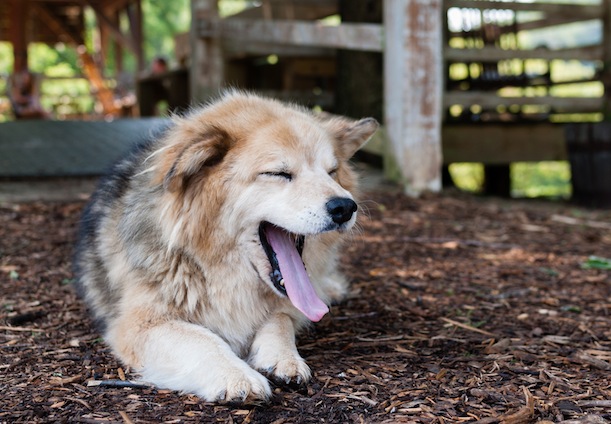
New research shows that, like humans, dogs are prone to yawning when they see someone else do it—and they yawn most frequently in response to their owner. Image via Flickr user The Eggplant

Animals: they’re just like us. They have unique, individual personalities. They remember their friends after years apart.

And now, in one of the most groundbreaking scientific discoveries of the decade—and perhaps even the century—researchers from the University of Tokyo have discovered that, like humans, dogs yawn contagiously.

Okay, we kid. But in all seriousness, the finding does shed a bit of light on that most mysterious of behaviors, the yawn. Despite years of research, scientists still don’t understand why we do it in the first place. Most believe we yawn to help cool down when our brains are overheated. The fact that yawning is contagious in 60 to 70 percent of people, many argue, is a function of empathy, as people who score higher on empathy tests are more likely to experience contagious yawning.

In the new study, published today [Ed. August 7th, 2013] in PLOS ONE, the researchers found that more than half the dogs they tested yawned contagiously—and, most interesting, they were more likely to yawn after watching their owner yawn than seeing it done by an unfamiliar human. If empathy truly is at the heart of contagious yawning, these findings could suggest that canines, too, are capable of true empathy.

dsds
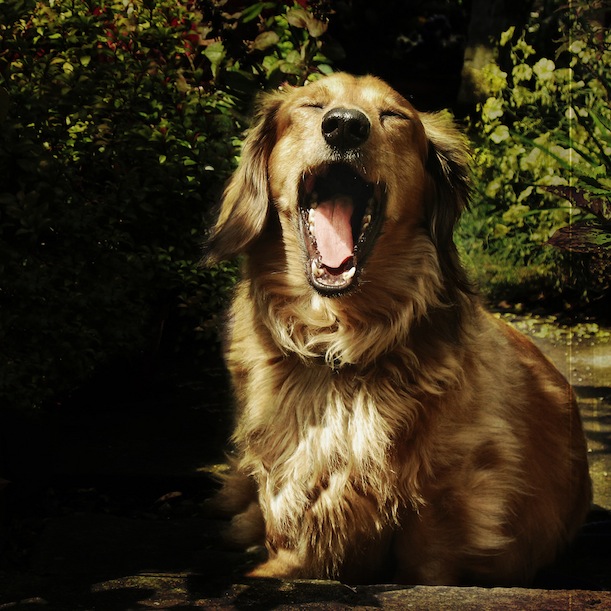
Image via Flickr user The hills are alive

This isn’t the first study to show that dogs yawn contagiously, but it is the first to get the dogs’ owners involved. The researchers visited the homes of 25 dogs from different breeds (ranging from golden retrievers to labs to chihuahuas) and had their owners sit in front of them, call their name, and then yawn. For a control, they also had their owners simply open and close their mouths, without a yawn’s characteristic jaw-stretching, deep inhalation or long sigh. As a comparison, they also had people that the dogs had never met before perform both actions. (Incidentally, the paper is vague on how they got the owners and strangers to yawn—although, as you might have discovered since starting this post, simply reading about yawning might have done the trick.)

In total, the 25 dogs yawned 22 times after seeing people yawn, and just 5 times after seeing people open and close their mouths. They were nearly three times more likely to yawn contagiously after seeing their owner yawn as compared to seeing a random person do it. This last finding, they say, provides further evidence for the role of empathy in yawning, as dogs are presumably more likely to empathize with their owners than another person.

Why would empathy be the explanation for why yawns are contagious? As social animals, humans often inadvertently copy the emotions and behaviors of those around them, whether it’s a smile or a frown.

Yawns, presumably, are no exception. And if the underlying function of yawning is to dissipate heat and cool the brain down, mimicking the yawns of others would make a lot of sense. “If I see a yawn, that might automatically cue an instinctual behavior that if so-and-so’s brain is heating up, that means I’m in close enough vicinity, I may need to regulate my neural processes too,” Steven Platek, a psychology professor at Georgia Gwinnett College, told my colleague Marina Koren in her recent post on the science of yawning.

Other work has found that chimpanzees yawn contagiously. That research, along with the new finding, suggests that to some extent, chimps and dogs operate based on the same sorts of social cues as we do.

ooOOoo

What more can I add!

Especially with a yawn coming up! (A younger version of me, you do understand!)

man-yawning