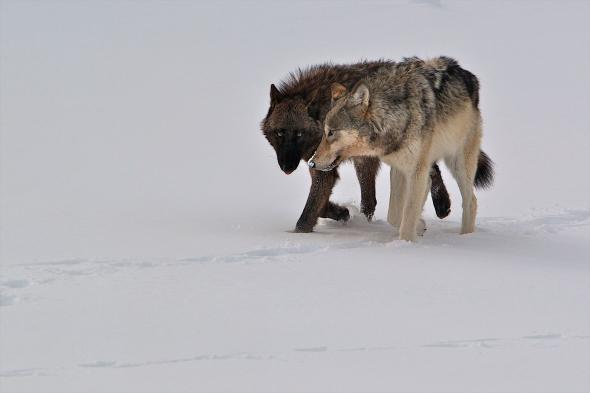
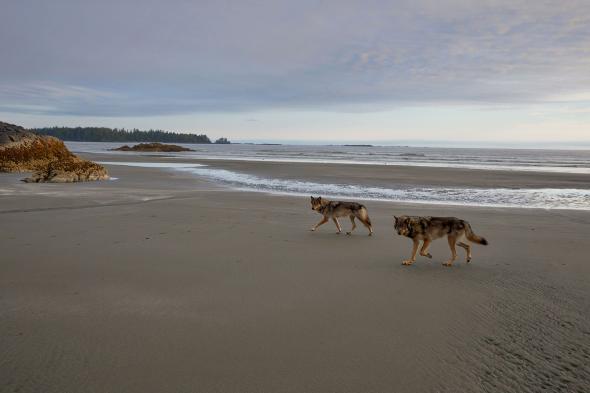
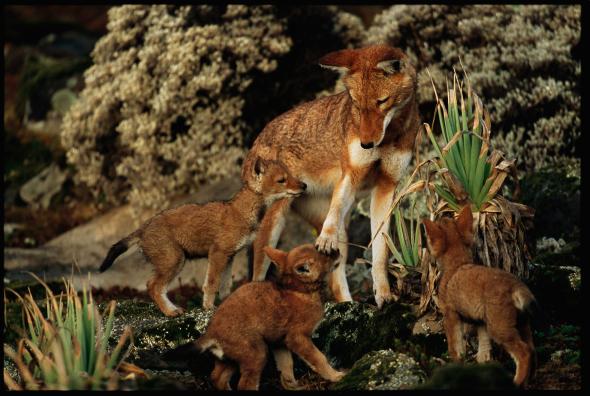
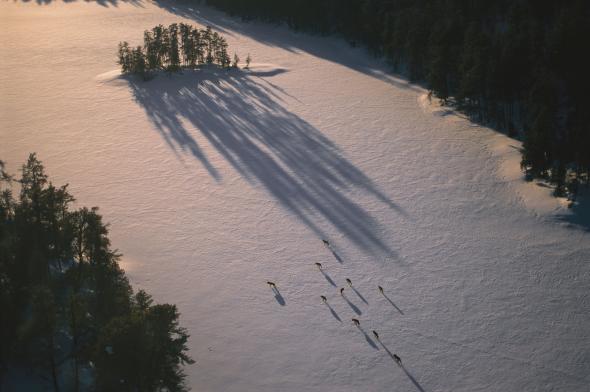
In further recognition of our wonderful wolves.
The background to these photographs, and the first set of six, was a week ago.

oooo
oooo
oooo
oooo
oooo

oooo
You all have a great week.
Dogs are animals of integrity. We have much to learn from them.
Category: Culture
In further recognition of our wonderful wolves.
The background to these photographs, and the first set of six, was a week ago.
oooo
oooo
oooo
oooo
oooo
oooo
You all have a great week.
With grateful thanks to neighbour, Dordie, who sent this to me.
Test Your Brain
This is really cool.
Count every “F” in the following text:
Finished?
HOW MANY ‘F’s?
What incredible, beautiful animals they are!
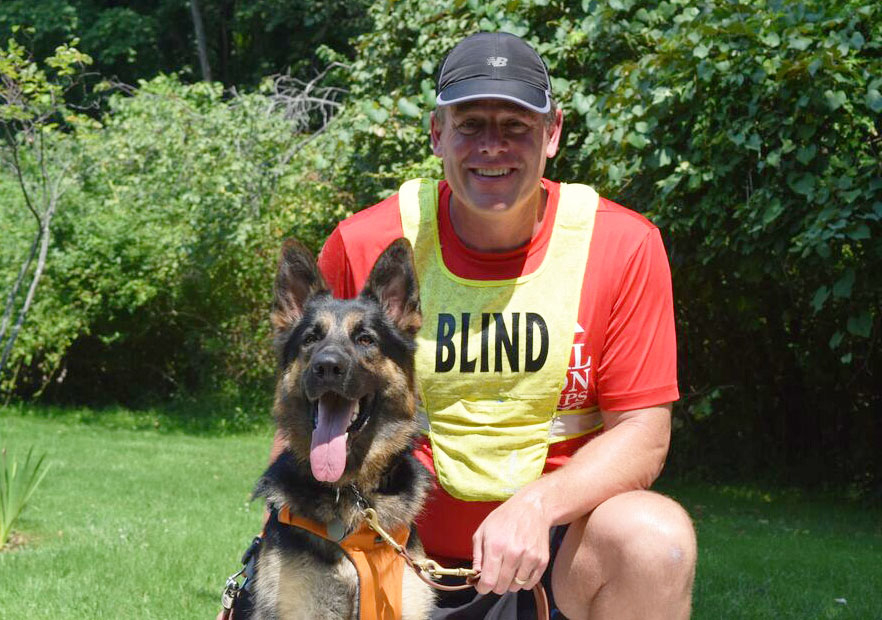
Close neighbour, Dordie, sent me an email with a link to a recent item that was broadcast on CBS.
Published on Oct 1, 2015
For thousands of blind athletes across the country, just setting foot out the door can be a huge challenge. Now one special dog is helping his owner not just walk out the door, but run. Only on “CBS This Morning,” Barry Petersen reports on the extraordinary story of one man’s journey to find the perfect running mate.
Richard and Klinger, and all those who made it happen, Jean and I salute you!
A good philosophical “coating of thought”.
In yesterday’s Part One, I focused on the hugely damaging effects of inequality in society. Reinforced only last Monday by an article by Professor Adam Levitin, a Professor of Law at Georgetown Law School. (Who also recently served on the Consumer Financial Protection Bureau’s Consumer Advisory Board and was Special Counsel to the Congressional Oversight Panel for the Troubled Asset Relief Program.) Levitin’s article was published by Naked Capitalism and opened with this statement:
A lot of Americans — right and left — are frustrated with what has happened to the middle class. The gap between the superrich and the rest of the country has widened, and it seems like everyone is having to work harder just to stay in place: wages have been stagnant, two-incomes are nearly mandatory (creating a subsidiary child care issue), and millions have lost their home equity in foreclosures. While there are a lot of people who bemoan the fate of the middle class, and even some want to do something about it, they don’t or can’t do the heavy lifting necessary to figure out why the system is broken and who wants to ensure it remains that way.
(I strongly encourage you to read the rest of the article.)
Trust me, as a good middle class Brit (albeit now living in America), it’s not just Americans who are frustrated!
However, one happening in this modern world is wonderful. I’m speaking of the ways that ideas can circulate around the world.
Better than that, the wonderful way we can “listen in” on the reflections of others in a manner that would have been impossible twenty years ago.
A few days ago, Patrice Ayme (PA) published a post called Human Kind, Yet Evil Rule. As so frequently happens, it attracted a clutch of fascinating responses. One of those responses came from a PA reader who writes under the name of EugenR. EugenR offered in his response a fascinating dialogue between a group of persons, and I saw that dialogue as promoting the value of philosophising about the more challenging aspects of present life.
Eugene explained, “It was edited from a conversation in the past. I found it to be a relevant response to the essay.” It matters not the names of the people described by the initials, what matters so much more is the value of an introspective “coating of thought”.
ooOOoo
EugenR: The worst rule the world, because they are the worst.
GD: Not for long
EugenR: For ever
GD: What about Non Violent Civil Disobedience ?
EugenR: At the end the “Non Violent Civil Disobedience” is a human organization, and as such it will either die out, or in worse case will have an organizational structure in which the worst bullies will be on the top. There is nothing new under the sun.
GD: At the end the truth, that at the age of internet is a simple finger click away, will win.
EugenR: At the end the truth wins, the question is when and at what price. In between the lie and cruelty celebrates. Just remember the last century events (Hitler, Stalin, Mao Zedong, Pol Pot, Mugabe i mean Dr Mugabe, etc.). All of them are gone (except the least evil Dr Mugabe). Did you know Pol Pot studied in Paris? Don’t be upset by history but learn from it. And now you have the Islam fundamentalism, that is all about cultural and religious non tolerance, racism (Sudan, Darfur, etc.), legitimization of enslavement of the non Muslims, intellectual degradation of women, death penalty for apostasy (Under current laws in Islamic countries, the actual punishment for the apostate (or murtadd مرتد) ranges from execution to prison terms. Islamic nations with sharia courts use civil code to void the Muslim apostate’s marriage and deny child custody rights, as well as his or her inheritance rights for apostasy. Twenty-three Muslim-majority countries, as of 2013, additionally covered apostasy in Islam through their criminal laws.), etc.
GD: The real question is do we have less fear because we have more access to knowledge? Or more fear because the media has portrayed fear as the new normal? I am not sure that mass herd mentality works in modern society anymore. And that is how dictators ruled. The new fear is forced acceptance. It is worse. Or should I say financially forced acceptance.
AH: I believe that unarmed truth and unconditional love will have the final word in reality. This is why right, temporarily defeated, is stronger than evil triumphant. Take the example of Martin Luther King, Jr.
EugenR: Yes, they were in history few good leaders who won. Martin Luther King is among them, others are N.Mandela, M. Gandhi, V. Havel all of them won, but at what personal price. Two of them murdered, two served years in jail. And anyway after them came some scoundrels destroyed anyway their achievements. Still the strife for self evident justice (that’s what these leaders were after) must go on. But who are the new Mendelas, Gandhis, Kings or Havels? In the best case those who came after them are at the best Obamas.
AH: It is a process. In the last 500 years from time of Galileo (who was threatened by his Church for telling the truth about the nature of the planets) to today there has been tremendous progress on a global scale. We with progressive values and committed to the path of love, must remember that darkness is also part of human nature (perhaps an essential part) and remain vigilant — and hopeful.
EugenR: I assume you never lived in a country where the government terrorizes its citizens. Try to express your truth in one of the terror countries, like Saudi Arabia, Iran, Afghanistan, Pakistan, etc. Try to say there, it is wrong not to let women to have education (about 50% of them are illiterate). Try to say something about freedom of faith. Communism was wiped out only 20 year ago, its leftovers are regimes like the one in N. Korea but also Cuba. You say, ……darkness is also part of human nature…. The question is not if darkness is part……..it definitely is and nobody can deny it, but how do you fight it. In most of the cases the fight is with even more darkness.
AH: I have never lived in a terrorizing country. I did have terrorizing parents and an entrenched belief in a terrorizing Pentecostal God. I am a racial minority in a world that devalues everything I do because of my skin colour. We all have our challenges. In the end, it is arrogant for me to think you can make (force) people do what I think they should do or feel what I think they should feel. This is exactly the mindset of the dictator and I reject that thinking completely. The best I can do is look at my inner signaling. I seek to elevate my own consciousness and change myself for the better. The next step is the social conversation. I share my thinking and values with others in the hope that they too will be inspired to change themselves for the better.
Darkness cannot drive out darkness: only light can do that.
Hate cannot drive out hate: only love can do that.
― Martin Luther King, Jr.
EugenR: Sorry Alexi, this time M.L.King had it wrong. The Nazis were defeated by Stalin, just because his cruelty did not have limits, while the Nazis limited their cruelty only to the non Germans. Without Stalin the Western powers would never stand against the Nazis.
AH: If you think about it carefully, the darkness of Hitler was replaced by the darkness of Stalin. This was true for the USSR, East Germany, East Berlin and most of East Europe. So Stalin did not drive out darkness, he just replaced it with his own dark shadow.
Alexi: Stalin was in control by 1923, ten years before Hitler (Lenin tried to stop him at the end of his life).
PA: The French started the nuclear bomb program in 1938. Nobel Laureate Irene Curie was certain that a bomb could be made. The program went to Manhattan, in total secret to the Nazis, and total opening to Stalin. Hitler would have been nuclear bombed into submission.
EugenR: If we speak about destiny probably Hitler would survive even the nuclear bomb, as he survived about 30 assassination attempts. If to believe in God here you have him. God is against humanism and humanity, and mainly against his “chosen people”. As he misled His Own People, some Jewish rabies made a trial of God in some extermination camp, and their verdict was, Death penalty. But then after the verdict they went to the next ceremonial pray. The religion is not about morality (mostly in contrary), not about reality or evidence, not about belief in truth (I know many skeptic believers), not even about tribalism since there are religious newcomers, who did not grow in the tribal tradition.
It is all this about some false answers to questions of eternal life? It can be right for some, but not for everyone. So tell me, what it is all about? The faith in communism did not include even belief in eternal life, and still it has so many followers. It seems religion or faith is a need of the human spices to believe in some fundamental dogma, be it even an obvious lie, all it needs is enough followers, and supporters of a false idea. In a way to be a football club fun is also a religion.
ooOOoo
As I said, I found the dialogue a compelling example of thinking ideas through.
This is not some intellectual exercise; far from it!
As often happens, a number of seemingly disconnected articles and reports seem to have provided a common theme. A theme that has previously been aired on Learning from Dogs yet a theme that always needs to be in the front of our faces: integrity.
Here are some of those articles.
Firstly, I presented recently in this place an essay from George Monbiot that proposed (my italics):
The revelation that humanity’s dominant characteristic is, er, humanity will come as no surprise to those who have followed recent developments in behavioural and social sciences. People, these findings suggest, are basically and inherently nice.
Patrice Ayme, however, pointed out in a reply:
Saying that “people are good, while tolerating bad things” is an ineffective morality. The crux, indeed, is the moral nature of institutions, controlled by a few, not whether humans are kind or not.
That struck me as central to the theme: it is the terrible lack of integrity that we see in those who hold positions of power that totally overrides the premise that people are fundamentally good.
The next article read was an essay by Professor Michael Perelman published on Naked Capitalism. Perelman is a professor of economics at California State University. He also writes at Unsettling Economics. Here is a little from that essay:
The architecture of inequality must be carefully constructed. As the founding fathers of the United States clearly understood, democracy must be kept in check. For this purpose, they invented the Electoral College to prevent the president from being elected by popular vote.
To ensure an effective electoral system, an obsequious media must be skilled in drowning the public with a flood of misinformation to maintain a constant level of fear to make them more likely to side with the CS (corporate system).
If there is ever one example of how that lack of integrity manifests itself in our world it is through inequality. Professor Perelman’s essay is clearly written “tongue-in-cheek” but that doesn’t lessen the impact of his essay. Try his closing paragraphs: (CES = a subset of CS; WEM = The Wondrous Efficiency of Markets)
Regulators are not the only ones to see the benefits of working with the CES. Politicians who resign or are defeated are almost inevitably destined to enjoy the benefits of their dedication to the WEM with the returns from taking a rewarding position with a major corporation, lobbying, or even a lucrative contract to write a book that virtually no one would want to read.
When done correctly, this system works magnificently, although it periodically it seems to fall apart until the detested government apparatus rescues it. In the meantime, huge amounts of wealth and income fall into the hands of the top 1%, the people of greatest importance, while the rest of the public can enjoy watching the spectacular performance of the CES, a reward worthy of their place in society especially because envy of the wealthy brethren will obviously make them work harder to succeed, adding to WEM.
All power to WEM!
Does this have anything to do with dogs?
Yes!
Let me steal a little from Chapter 16: Community from my forthcoming book:
When dogs lived in the wild, their natural pack size was about fifty animals and there were just three dogs that had pack status: the mentor, minder and nanny dogs, as described in Chapter 5. [Pharaoh: the Teaching Dog] As was explained in that chapter, all three dogs of status are born into their respective roles and their duties in their pack are instinctive. There was no such thing as competition for that role as all the other dogs in that natural pack grouping would be equal participants with no ambitions to be anything else.
Anyone who has had the privilege of living with a group of dogs will know beyond doubt that they develop a wonderful community strength. Let’s reflect on the lessons being offered for us in this regard by our dogs.
To reinforce the fact that this is not a new phenomena, at the time I was drafting my book last November, a new report was issued by the Center of Economic Policy Research (CEPR) on the latest (American) Survey of Consumer Finances. It painted a picture very familiar to many: the rich becoming richer while those with less wealth are falling further and further behind.
David Rosnick of the CEPR, and one of the report co-authors, made this important observation:
The decline in the position of typical households is even worse than the Consumer Finances survey indicates. In 1989, many workers had pensions. Far fewer do now. The value of pensions isn’t included in these surveys due to the difficulty of determining what they are worth on a current basis. But they clearly are significant assets that relatively few working age people have now.
Sharmini Peries, of The Real News Network, in an interview with David Rosnick, asked:
PERIES: David, just quickly explain to us what is the Consumer Finance Survey. I know it’s an important survey for economists, but why is it important to ordinary people? Why is it important to us?
ROSNICK: So, every three years, the Federal Reserve interviews a number of households to get an idea of what their finances are like, do they have a lot of wealth, how much are their house’s worth, how much they owe on their mortgages, how much they have in the bank account, how much stocks do wealthy people own. This gives us an idea of their situations, whether they’re going to be prepared for retirement. And we can see things like the effect of the housing and stock bubbles on people’s wealth, whether they’ve been preparing for eventual downfalls, how they’ve reacted to various economic circumstances, how they’re looking to the long term. So it’s a very useful survey in terms of finding out how households are prepared and what the distribution of wealth is like.
PERIES: So your report is an analysis of the report. And what are your key findings?
ROSNICK: So, largely over the last 24 years there’s been a considerable increase in wealth on average, but it’s been very maldistributed. Households in the bottom half of the distribution have actually seen their wealth fall, but the people at the very top have actually done very well. And so that means that a lot of people who are nearing retirement at this point in time are actually not well prepared at all for retirement and are going to be very dependent on Social Security in order to make it through their retirement years.
PERIES: So, David, address the gap. You said there’s a great gap between those that are very wealthy and those that are not. Has this gap widened over this period?
ROSNICK: It absolutely has. As, say, the top 5 percent in wealth, the average wealth for people in the top 5 percent is about 66 percent higher in 2013, the last survey that was completed, compared to 1989. By comparison, for the bottom 20 percent, their wealth has actually fallen 420 percent. They basically had very little to start with, and now they have less than little.
PERIES: So the poorer is getting poorer and the richer is getting extremely richer.
ROSNICK: Very much so.
To my way of thinking, if in the period 1989 through to 2013 “the average wealth for (American) people in the top 5 percent is about 66 percent higher” and “for the bottom 20 percent, their wealth has actually fallen 420 percent” it’s very difficult not to see the hands of greed at work and a consequential devastating increase in inequality.
In other words, the previous few paragraphs seemed to present, and present clearly, the widening gap between the ‘haves’ and the ‘have-nots’, comparatively speaking, and that it was now time for society to understand the trends, to reflect on where this is taking us, if left unchallenged, and to push back as hard as we can both politically and socially.
I wrote that shortly before another item appeared in my email ‘in-box’ in the middle of November (2014), a further report about inequality that, frankly, emotionally speaking, just smacked me in the face. It seemed a critical addition to the picture I was endeavouring to present.
Namely, on the 13th October, 2014, the US edition of The Guardian newspaper published a story entitled: US wealth inequality – top 0.1% worth as much as the bottom 90%. The sub-heading enlarged the headline: Not since the Great Depression has wealth inequality in the US been so acute, new in-depth study finds.
The study referred to was a paper released by the National Bureau of Economic Research, Cambridge, MA, based on research conducted by Emmanuel Saez and Gabriel Zucman. The paper’s bland title belied the reality of the research findings: Wealth Inequality in the United States since 1913.
As the Guardian reported:
Wealth inequality in the US is at near record levels according to a new study by academics. Over the past three decades, the share of household wealth owned by the top 0.1% has increased from 7% to 22%. For the bottom 90% of families, a combination of rising debt, the collapse of the value of their assets during the financial crisis, and stagnant real wages have led to the erosion of wealth. The share of wealth owned by the top 0.1% is almost the same as the bottom 90%.
The picture actually improved in the aftermath of the 1930s Great Depression, with wealth inequality falling through to the late 1970s. It then started to rise again, with the share of total household wealth owned by the top 0.1% rising to 22% in 2012 from 7% in the late 1970s. The top 0.1% includes 160,000 families with total net assets of more than $20m (£13m) in 2012.
In contrast, the share of total US wealth owned by the bottom 90% of families fell from a peak of 36% in the mid-1980s, to 23% in 2012 – just one percentage point above the top 0.1%.
The report was not exclusively about the USA. As the closing paragraphs in The Guardian’s article illustrated:
Among the nine G20 countries with sufficient data, the richest 1% of people (by income) have increased their income share significantly since 1980, according to Oxfam. In Australia, for example, the top 1% earned 4.8% of the country’s income in 1980. That had risen to more than 9% by 2010.
Oxfam says that in the time that Australia has held the G20 presidency (between 2013 and 2014) the total wealth in the G20 increased by $17tn but the richest 1% of people in the G20 captured $6.2tn of this wealth – 36% of the total increase.
I find it incredibly difficult to have any rational response to those figures. I am just aware that there is a flurry of mixed emotions inside me and, perhaps, that’s how I should leave it. Nonetheless, there’s one thing that I can’t keep to myself and that this isn’t the first time that such inequality has arisen; the period leading up the the Great Depression of the 1930s comes immediately to mind.
What on earth is coming down the road this time!
If only we truly could learn from our dogs!
In recognition that a week ago National Wolf Awareness Week started.
The photographs were seen here but the original source of both the text and photographs is the National Geographic website.
ooOOoo
Intelligent and highly social, wolves fascinate us as the untamed predecessors to Man’s Best Friend. But the relationship between humans and wolves has not always been so reverential, especially in the United States.
Through the early 1900s, populations of Canis lupus, the gray wolf, shrank from estimated historical highs of 2 million to near-extinction in the lower 48 states, largely a result of expanded human settlement in the western U.S. and large-scale poisonings meant to protect livestock.
In 1973, the gray wolf was classified as endangered under the Endangered Species Act, and after decades of conservation efforts, wolves are doing well in the U.S. Current estimates peg the gray wolf population in the lower 48 at around 5,500—with at least 7,000 more in Alaska. In fact, a pack of wolves recently planted roots in Siskiyou County, California, the first wolfpack in modern Californian history.
“The gray wolf is in no danger of being endangered, biologically,” says Dave Mech, a senior research scientist with the U.S. Geological Survey.
But controversy still swirls around the gray wolf’s conservation status. In 2013, the U.S. Fish and Wildlife Service proposed removing the gray wolf from the federal list of endangered species, a move it says reflects the wolves’ rebound. But animal rights groups and environmental organizations have decried the very thought, unsuccessfully petitioning the Service to maintain national protections for the gray wolf. Meanwhile, ranchers in the northwestern United States have pushed for rollbacks to state-level wolf protections.
In fact, the U.S. Fish and Wildlife Service declined to comment about the gray wolf, due to ongoing litigation with conservationists over the Mexican gray wolf, a rare subspecies. And given the wolf’s status as both a possible scourge to ranchers and an ecological marvel to environmentalists, the debate is “always going to be contentious,” says Mech.
Yet the allure of the wolf will endure, as it always has in the public’s imagination. “I think there’s a certain aesthetic beauty to [wolves],” says Mech, that defines “their charismatic nature.”
In honor of National Wolf Awareness Week, which begins October 11, we take a closer look at the fascinating ways in which wolves around the world eke out a living.

oooo

oooo

oooo

oooo

oooo

oooo
There are another six photographs that I will offer you in next Sunday’s Picture Parade.
George Monbiot offers some surprising ideas.
The title to today’s post is an old British expression that harks back to the days when “queer” meant strange. This blog has published no shortage of posts giving many examples of how “queer” we humans can be at times.
So the latest essay from Mr Monbiot is rather refreshing. I’ll say no more, apart from confirming that Monbiot’s post is republished with his kind permission.
ooOOoo
14th October 2015
Fascinating new lines of research suggest that we are good people, tolerating bad things.
By George Monbiot, published in the Guardian 14th October 2015
Do you find yourself thrashing against the tide of human indifference and selfishness? Are you oppressed by the sense that while you care, others don’t? That because of humankind’s callousness, civilisation and the rest of life on earth are basically stuffed? If so, you are not alone. But neither are you right.
A study by the Common Cause Foundation, due to be published next month, reveals two transformative findings. The first is that a large majority of the 1000 people they surveyed – 74% – identify more strongly with unselfish values than with selfish values. This means that they are more interested in helpfulness, honesty, forgiveness and justice than in money, fame, status and power. The second is that a similar majority – 78% – believes others to be more selfish than they really are. In other words, we have made a terrible mistake about other people’s minds.
The revelation that humanity’s dominant characteristic is, er, humanity will come as no surprise to those who have followed recent developments in behavioural and social sciences. People, these findings suggest, are basically and inherently nice.
A review article in the journal Frontiers in Psychology points out that our behaviour towards unrelated members of our species is “spectacularly unusual when compared to other animals”. While chimpanzees might share food with members of their own group, though usually only after being plagued by aggressive begging, they tend to react violently towards strangers. Chimpanzees, the authors note, behave more like the Homo economicus of neoliberal mythology than people do.
Humans, by contrast, are ultra-social: possessed of an enhanced capacity for empathy, an unparalleled sensitivity to the needs of others, a unique level of concern about their welfare and an ability to create moral norms that generalise and enforce these tendencies.
Such traits emerge so early in our lives that they appear to be innate. In other words, it seems that we have evolved to be this way. By the age of 14 months, children begin to help each other, for example by handing over objects another child can’t reach. By the time they are two, they start sharing things they value. By the age of three, they start to protest against other people’s violation of moral norms.
A fascinating paper in the journal Infancy reveals that reward has nothing to do with it. Three to five-year-olds are less likely to help someone a second time if they have been rewarded for doing it the first time. In other words, extrinsic rewards appear to undermine the intrinsic desire to help. (Parents, economists and government ministers, please note). The study also discovered that children of this age are more inclined to help people if they perceive them to be suffering, and that they want to see someone helped whether or not they do it themselves. This suggests that they are motivated by a genuine concern for other people’s welfare, rather than by a desire to look good. And it seems to be baked in.
Why? How would the hard logic of evolution produce such outcomes? This is the subject of heated debate. One school of thought contends that altruism is a logical response to living in small groups of closely related people, and evolution has failed to catch up with the fact that we now live in large groups, mostly composed of strangers. Another argues that large groups containing high numbers of altruists will outcompete large groups which contain high numbers of selfish people. A third hypothesis insists that a tendency towards collaboration enhances your own survival, regardless of the group in which you might find yourself. Whatever the mechanism might be, the outcome should be a cause of celebration.
So why do we retain such a dim view of human nature? Partly, perhaps, for historical reasons. Philosophers from Hobbes to Rousseau, Malthus to Schopenhauer, whose understanding of human evolution was limited to the Book of Genesis, produced persuasive, influential and catastrophically mistaken accounts of “the state of nature” (our innate, ancestral characteristics). Their speculations on this subject should long ago have been parked on a high shelf marked “historical curiosities”. But somehow they still seem to exert a grip on our minds.
Another problem is that – almost by definition – many of those who dominate public life have a peculiar fixation on fame, money and power. Their extreme self-centredness places them in a small minority, but, because we see them everywhere, we assume that they are representative of humanity.
The media worships wealth and power, and sometimes launches furious attacks on people who behave altruistically. In the Daily Mail last month, Richard Littlejohn described Yvette Cooper’s decision to open her home to refugees as proof that “noisy emoting has replaced quiet intelligence” (quiet intelligence being one of his defining qualities). “It’s all about political opportunism and humanitarian posturing,” he theorised, before boasting that he doesn’t “give a damn” about the suffering of people fleeing Syria. I note with interest the platform given to people who speak and write as if they are psychopaths.
The consequences of an undue pessimism about human nature are momentous. As the Common Cause Foundation’s survey and interviews reveal, those who have the bleakest view of humanity are the least likely to vote. What’s the point, they reason, if everyone else votes only in their own selfish interests? Interestingly, and alarmingly for people of my political persuasion, it also discovered that liberals tend to possess a dimmer view of other people than conservatives do. Do you want to grow the electorate? Do you want progressive politics to flourish? Then spread the word that other people are broadly well-intentioned.
Misanthropy grants a free pass to the grasping, power-mad minority who tend to dominate our political systems. If only we knew how unusual they are, we might be more inclined to shun them and seek better leaders. It contributes to the real danger we confront: not a general selfishness, but a general passivity. Billions of decent people tut and shake their heads as the world burns, immobilised by the conviction that no one else cares.
You are not alone. The world is with you, even if it has not found its voice.
ooOOoo
Speaking of nice, happy souls, there’s only one way to close off this post.

You all have a very happy, loving weekend.
The vastness of the seas and the immensity of their influence over all of us.
This is an introduction, a rather long one I’m warning, to a republication of a recent post by Patrice Ayme. An introduction that offers a deeply personal memory of the Atlantic ocean.
Many years ago, I spent 5 years living on a boat; a wonderful heavy-displacement ocean-going yacht of a type known as a Tradewind 33.
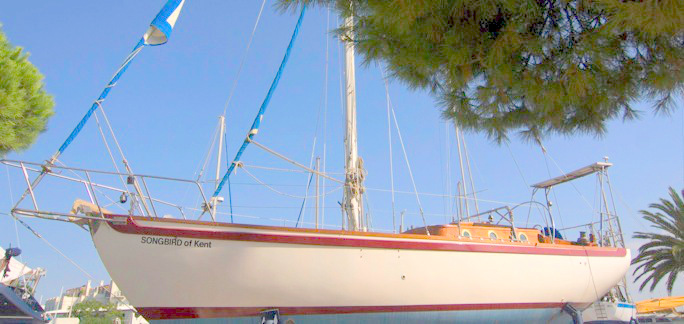
There is a place in my mind to which I can so easily travel; a memory of a dark night out in the Atlantic ocean one time in the Autumn of 1969. But first let me set the scene from almost fifty years ago.
The call of the open ocean
Those first few hours were utterly absorbing as I went through the whole business of clearing the yacht harbour at Gibraltar and heading out to the South-West hugging this unfamiliar coastline of Southern Spain. It was tempting to move out to deeper waters but the almost constant flow of large ships through the Straights of Gibraltar soon quashed that idea. Thankfully, the coastal winds were favourable for me and my single-masted sailing yacht.
After such a long time sailing in the relatively confined waters of the Mediterranean, it was difficult for me to imagine that in a few hours time the southern-most point of Spain would pass me by and the vastness of the Atlantic ocean would be my home for the next few weeks.
Soon the city of Tarifa was past my starboard beam and the Spanish coastline was rapidly disappearing away to the North-West. The horizon ahead of me was already approaching 180 degrees of raw, open ocean. There was just a flicker of a thought that whispered across my mind: “Oh Paul, what have you gone and done” as slowly but persistently the coastlines of Spain to the North and of Africa to the South became more and more distant and fuzzy. It was at 15:30 that I made an entry in my yacht’s log: “No land in sight in any direction!”
Now was the time to make sure that my bunk was made up, flashlights to hand, and my alarm clock ready and set. Alarm clock? Set to go off every twenty minutes during the night! For this was the only way to protect me and my yacht from being hit by one of those gigantic container ships that seemed to be everywhere. It took at least twenty minutes from the moment a ship’s steaming lights appeared above the horizon to crossing one’s path!
It was in the early hours of my first morning alone at sea, when once again the alarm clock had woken me and I was looking around an ocean without a single ship’s light to be seen that more of Les’ words (see footnote) came to me. I remembered asking Les: “What’s the appeal of sailing?” Les replied without a moment’s hesitation: “It’s the solitude. When you’re out at sea on your own, there’s no government or bankers to worry about. You’re not responsible to anyone but yourself.”
Yes, I could sense the solitude that was all around me but it was an intellectual sense not an emotional one. That would come later. Inside, I was still afraid of what I had let myself in for.
Remarkably quickly however, the pattern of solo life aboard a thirty-three-foot yacht became my world. Frankly, it staggered me as to how busy were my days. Feeding myself, navigating, trying to forecast the winds, staying in touch with other yachties via the short-wave radio, keeping the boat tidy and a zillion other tasks meant the first few days and nights just slipped by.
But it was a sight on my fourth night at sea that created the memory that would turn out to remain with me for all my life. The memory that I can go to anytime in my mind.
That fourth night I was already well into the routine of waking to the alarm clock, clipping on my harness as I climbed up the three steps that took me from my cabin into the cockpit, scanning the horizon with my eyes, checking that the self-steering had the boat at the correct angle to the wind and then, if no ships’ lights had been seen, slipping back down into my bunk and sleeping for another twenty minutes. Remarkably, I was not suffering from any long-term tiredness during the day.
It was a little after 3am that fourth night when the alarm clock had me back up in the cockpit once again. Then it struck me.
Songbird was sailing beautifully. There was a steady wind of around ten knots from the south-east, almost a swell-free ocean, and everything set perfectly. Not a sign of any ship in any direction.
Then I lifted my eyes upwards. There was not a cloud in the night sky, not a single wisp of mist to dim a single one of the million or more stars that were above my head. For on this dark, moonless night, so far removed from any shore-based light pollution, the vastness, yet closeness of the heavens above was simply breath-taking. I was transfixed. Utterly unable to make any rational sense of this night splendour that glittered in every direction in which I gazed. This dome that represented a vastness beyond any meaning other than a reminder of the magic of the universe.
This magic of the heavens above me that came down to touch the horizon in all directions. Such a rare sight to see the twinkling of stars almost touching the starkness of the ocean’s horizon at night. A total marriage of this one planet with the vastness of outer space.
I heard the alarm clock go off again and again next to my bunk down below. But I remained transfixed until there was a very soft lightening of the skyline to the east that announced that another dawn was on its way.
I would never again look up at the stars in a night sky without being transported back to that wonderful night and the memory of a lonely sea and sky.
I did warn you it would be a long introduction!
ooOOoo
The reason life survived on Earth for so long, and blossomed into animals, and now mind, is that the planet is equipped with homeostatic mechanisms (homeo means similar in Greek, and stasis, standing still). However, those mechanisms tend to be geological.
Human civilization is now having an impact on the biosphere of a violence probably never seen before. The changes are faster than what geology, or even life, can accommodate.
Some will brandish the impact of the Yucatan asteroid, and claim that was worse; however that’s just a theory: the biosphere was clearly under stress at the time from the Deccan Traps eruptions, and had been under that stress for hundreds of thousands of years, if not millions. At its worst, the Asteroid was just the straw which broke the Camel’s back.
2015 will be the warmest year since the end of the Eemian, 115,000 years ago. So why are record low temperatures appearing just south of Iceland? Yes, record lows, lower than ever recorded.
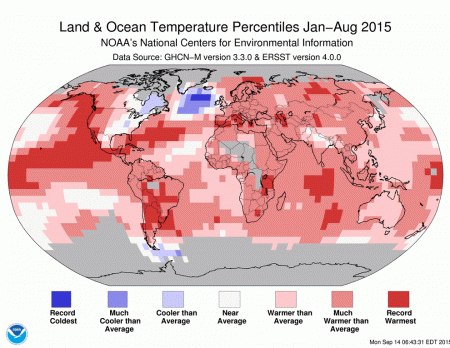
That was fully expected, and a demonstration of Non-Linearity of the incipient global warming. A phenomenon is linear when it looks like a line. Global warming is not going up like a line, as some places are warming at a rate ten times higher than the average, and some regions are cooling (and some are cooling spectacularly, off Iceland and some seas around Antarctica, for reasons related to warming).
The Dryas events were extremely fast and pronounced cooling events which happened several times during the period 10,000 years to 15,000 Before Present. Some lasted around a millennium, others, just a century. They vanished as fast as they came. They are named after a tundra flower, the Dryas. In Scandinavia forests were replaced by tundra graced with Dryas (hence the name). In Britain, average temperature collapsed to minus 5 degree Celsius, and glaciers formed at elevation.
These spastic events of drastic cooling, while, overall, de-glaciation was going on, long remained a mystery. Overall, the great glaciation which had brought glaciers down to New York, was on its way out, the planet was globally, irresistibly warming. So why would temperatures collapse in some places around Greenland by 15 degrees Celsius? The solution to the Dryas events’ spastic glaciation riddle? The same as always! Warming is non-linear.
What’s the theory? The details are uncertain, but we know that the Gulf Stream (aka the North Atlantic “Conveyor”) shorted, literally: analyses of deep sea sediments have shown this. The conveyor sends an enormous current of warm tropical waters northward.
When the warm tropical waters become very cold between Iceland and Spitzbergen, they sink to the bottom of the sea, and head south. This sinking, plus the pushing by trade winds in the tropics, is what provides the energy of the Gulf Stream.
However, if the warm tropical waters are capped by a very cold, but light sweet(er) water lid, they will get cold early, and sink before Iceland. This is what happened in the Dryas events.
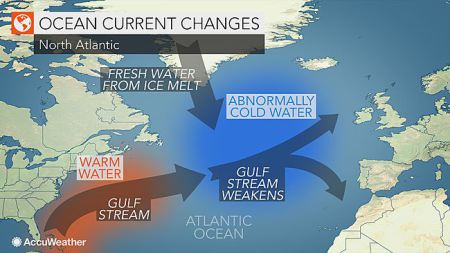
Was it in response to a sudden influx of fresh water from Lake Agassiz and deglaciation in North America, and Greenland? Sudden freezing there would have removed the freshwater lid, hence the brutal switchback to warming after the brutal cooling. By the way, the sea level rising speed responded quickly, by a factor of three. After the typical Dryas cooling, oceanic rise rebounded to 18 millimeter per year right away (this shows that those who expect a slow rise of sea level rise are deluding themselves, or, more to the point, are trying to delude us!)
Nowadays a Dryas-like mechanism would have to rest on the melting of Greenland alone (that’s the only place with significant ice). This is, of course, insufficient, but summer 2015, cool and rainy over the northern North Atlantic is evidence that the effect is on. Scientific analysis confirms it. See: “Exceptional Twentieth Century Slow Down of Atlantic Ocean Overturning Circulation” (Nature, 23 March, 2015).
The exact nature of what is going on at this point is a matter of debate among experts. What is sure is that something is going on.
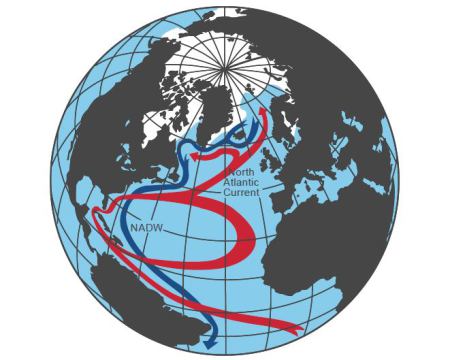
A similar situation beckons in Antarctica, where ice shield melting creates a freshwater lid all around which in turn freeze, extending the ice cap in the Austral winter.
When considering nonlinearity, subtlety and surprises are of the essence. This is true in physics, as it is in psychology, history, or politics.
And the morality in all this? The USA has played god. The European Union made a honest to goodness effort to reduce CO2 emission, while the USA, paying lip service to the opposite of what it was doing went right ahead, with its factory, the Plutocratic Republic of China, to use and abuse fossil fuels as never before.
So now what? Is god still American, as usual? At first it seems so: the USA started to frack massively and massive amounts of fossil fuels were extracted from the USA’s generous soil. When American companies tried the same in Poland, it failed: the underground god (Pluto?) did not cooperate: Polish soil is adverse to fracking.
Here comes the punchline: sea level has been rising fast along the Eastern seashore of the USA. Actually, three to four times faster than the world average. That’s more than one centimeter per year.
Why? Imagine a traffic jam. Or rather a crash ahead: things come to a halt, cars, water piles up behind. Maybe the Washington politicians will soon have to learn to swim, and not just against the tide of world public opinion.
The USA is going to be punished with its own instruments. Meanwhile 20 countries formed the V20, a group of twenty countries whose existence is immediately threatened by global warming, although they caused it not.
A Two Degree Celsius rise of temperature is indeed way too much: nonlinearity is upon us. Evil is always nonlinear.
Patrice Ayme’
ooOOoo
Footnote: The Les referred to is Les Powells, the yachtsman who sailed solo three times around the world. He and I became good friends when we met up at Larnaca Marina in Cyprus.

How time flies!
Last Monday, Jean and I had been living here in Merlin, Oregon for three years.
Why I am explaining this is because my day yesterday ended up being so busy that I ran out of time to focus on writing a fresh new post for you good people.
Thus, I decided to repost something that I published that first week we moved in to our Merlin home. Namely, a post published on the 16th October, 2012 under the heading of The death of the USA?.
So my apologies for you dear readers that recall this from three years ago, and welcome to the many new followers of this place that have signed up since then.
ooOOoo
“The reports of my death are greatly exaggerated!” Mark Twain.
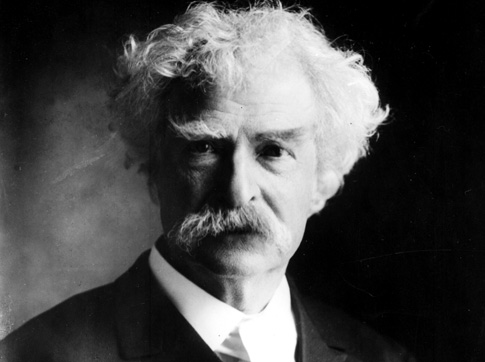
The Mark Twain quotation after hearing that his obituary had been published in the New York Journal.
Mistaken publications of obituaries aren’t as rare as you might expect. A recent example is of Dave Swarbrick, the British folk/rock violinist, who was killed off mistakenly by the Daily Telegraph in April 1999 when they reported that his visit to hospital in Coventry had resulted in his death. He did at least get the opportunity to read a rather favourable account of his life, not something we all get to do, and to deliver the gag “It’s not the first time I have died in Coventry”.
So why have I opened with this quote from Mark Twain? Read on and I hope all will be clear.
A little under a week ago, I published a couple of posts that proposed that the United States of America is an empire in decline. The first was What goes up? and the second Might just come down! As a Brit, I well know that aspect of British history!
However a recent conversation with a friend of many years back in England, who has also been a shrewd and wise entrepreneur for longer than I care to remember, argued that the evidence for the ‘end of the USA’ could be challenged.
He cited five reasons why he thought the USA would remain, more or less, in its dominant position. They were:
So let me expand on each of those points.
Spirit of innovation
Let me quote from an article in TIME Magazine of the 5th June, 2011,
Innovation is as American as apple pie. It seems to accord with so many elements of our national character — ingenuity, freedom, flexibility, the willingness to question conventional wisdom and defy authority. But politicians are pinning their hopes on innovation for more urgent reasons. America’s future growth will have to come from new industries that create new products and processes. Older industries are under tremendous pressure. Technological change is making factories and offices far more efficient. The rise of low-wage manufacturing in China and low-wage services in India is moving jobs overseas. The only durable strength we have — the only one that can withstand these gale winds — is innovation.
Now there are plenty who would argue both ways in terms of the future innovation potential for the USA, as a recent article in The Atlantic does, see American Innovation: It’s the Best of Times and the Worst of Times. But the spirit of innovation will, nonetheless, be a powerful economic potential for the USA for many years to come.
Relaxed labour laws.
Definitely an area that I have little knowledge of except for the subjective notion that compared to many other nations, the laws in the USA are much less of a restraint on economic productivity than elsewhere.
The importance of Mexico.
The importance in the context of providing the USA with a source of cheaper manufacturing facilities. My English friend thought that this was a significant competitive advantage for the USA. Now, as it happens, we had a couple staying with us over the week-end of the 6th/7th October. The husband is a senior manager of Horst Engineering, an American firm based in Guaymas, Sonora County, Mexico. Here’s a picture from their website,

We are a contract manufacturer of precision machined components and assemblies for aerospace, medical, and other high technology industries. Our core processes include Swiss screw machining, turning, milling, thread rolling, centerless grinding, and assembly. Our extensive supply chain offers our customers a full service logistics solution for managing their precision product requirements. We are ISO9001:2008 and AS9100 registered and proud of our 66 year, three-generation legacy of quality and performance.
I was told that many American and British firms were using Mexico rather than China for a number of reasons. Not least because Chinese suppliers require full payment before shipment. Plus that taking into account that financial aspect together with shipping costs and other logistical issues, China wasn’t as ‘cheap’ over all. Here’s a recent announcement from Rolls Royce,
Rolls-Royce plans new Sonora hub
The burgeoning aerospace industry in Guaymas had its efforts validated recently when the venerable Rolls-Royce chose it as the site for its newest global purchasing office.
Surrounded by several of its aerospace manufacturing suppliers, London-based Rolls-Royce will move into a Guaymas industrial park owned by Tucson-based The Offshore Group to develop a supply hub for commercial jets and military aircraft around the globe.
“Rolls-Royce has very robust booking orders for the next 10 years,” said Joel Reuter, director of communications for Rolls-Royce in North America. “We need to double our production.”
Because a number of Rolls-Royce suppliers already operate in Guaymas, the city was a logical choice, Reuter said.
The uncertainty of China in terms of the next ’empire’
The point made in terms of China taking over ’empire’ status from the USA, as Simon Johnson argues over at Baseline Scenario, is countered by the fact that politically China is an unknown quantity. Until China endorses some form of democratic process, that unknowingness is not going to disappear.
The likely energy self-sufficiency for the USA in the near-term.
I can’t do better than to ask you to watch this video! Just 27-minutes long, it is a very interesting review of the energy future of the USA.
As the TED website suggests in terms of why you should listen to Amory Lovins,
Amory Lovins was worried (and writing) about energy long before global warming was making the front — or even back — page of newspapers. Since studying at Harvard and Oxford in the 1960s, he’s written dozens of books, and initiated ambitious projects — cofounding the influential, environment-focused Rocky Mountain Institute; prototyping the ultra-efficient Hypercar — to focus the world’s attention on alternative approaches to energy and transportation.
His critical thinking has driven people around the globe — from world leaders to the average Joe — to think differently about energy and its role in some of our biggest problems: climate change, oil dependency, national security, economic health, and depletion of natural resources.
More on Reinventing Fire may be found here.
So, don’t know about you, but I found those five points deeply convincing. How about you? Are the reports of the death of the USA greatly exaggerated? Do leave a comment.
ooOOoo
Now some three years later on, these five factors still seem to be valid.
Back to learning from our wonderful dogs.
Last week, on the 9th to be exact, I published a post under the title of What a funny lot we all are! The thrust of that post was the republication of a recent Tom Dispatch essay by Michael Klare: Tipping Points and the Question of Civilizational Survival. Professor Michael T. Klare is professor of peace and world security studies at Hampshire College and the author, most recently, of The Race for What’s Left. Those who read his essay will have found it a gloomy report on the future of mankind on this planet.
Back to my sub-title.
One of the golden pieces of advice for all of us who succumb to a fear of the future is to live in the present. Living in the now, in the present, is what our dogs do so very well, and it is a fabulous example for us humans. Because there is such a volume of news about so many things going wrong in our world, that it is easy to become overly negative, possibly to the point of causing us ill health, for there is strong link between mind and body.
When circumstances actually do change then dogs are incredibly quick to adapt to those changed times. Dogs, however, do not worry about the future.
All of which is my preamble to an essay that was published under The Conversation header on Sunday. It was an essay by Melanie Randle, and the link goes to a page that offers:
Melanie is an Associate Professor of Marketing in the School of Management, Operations and Marketing in the Faculty of Business at the University of Wollongong. Her primary research areas are social and non-profit marketing, particularly in the areas of volunteering and foster care. Other research interests include marketing to children, obesity and gambling.
That profile doesn’t give much of a heads-up to the theme of her essay. That theme, to my way of thinking, is that right now change is underway. A change in the awareness of people that change has to take place.
Which is why I chose part of a saying attributed to Plato for the title to this post. The full saying being:
“We can easily forgive a child who is afraid of the dark; the real tragedy of life is when men are afraid of the light.“
So to Melanie’s essay.
ooOOoo
Melanie Randle, October 11, 2015
A new, four-nation study has found people rate the risks of global threats to humanity surprisingly high. These perceptions are likely to be important, socially and politically, in shaping how humanity responds to the threats.
The study, of more than 2000 people in the US, UK, Canada and Australia, found:
Perceptions of risks to way of life and humanity by country

The study also asked people about different responses to the threats. These responses were categorised as nihilism (the loss of belief in a social or moral order; decadence rules), fundamentalism (the retreat to certain belief; dogma rules), or activism (the transformation of belief; hope rules). It found:
Findings were similar across countries, age, sex and other demographic groups, although some interesting differences emerged. For example, more Americans (30%) believed the risk of humans being wiped out was high and that humanity faces a final conflict between good and evil (47%). This presumably reflects the strength in the US of Christian fundamentalism and its belief in the “end time”, a coming Apocalypse.
Perceptions of risk to way of life and humanity by generation

A world of threats coming to a head
There is mounting scientific evidence and concern that humanity faces a defining moment in history – a time when it must address growing adversities or suffer grave consequences. Reputable journals are canvassing the possibilities; the new study will be published in a special issue of Futures on “Confronting catastrophic threats to humanity”.
Most focus today is on climate change and its many, potentially catastrophic, impacts. Other threats include depletion and degradation of natural resources and ecosystems; continuing world population growth; disease pandemics; global economic collapse; nuclear and biological war and terrorism; and runaway technological change.
Many of these threats are not new. Scientists and other experts have warned of the dangers for decades. Nevertheless, the evidence is growing stronger, especially about climate change, and never before have actual events, including natural disasters and calamities, and their sustained and graphic media coverage so powerfully reinforced the possible impacts.
Not surprisingly, then, surveys reveal widespread public pessimism about the future of the world, at least in Western countries. This includes a common perception of declining quality of life, or that future generations will be worse off.
However, there appears to have been little research into people’s perceptions of how dire humanity’s predicament is, including the risk of collapse of civilisation or human extinction. These perceptions have a significant bearing on how societies, and humanity as a whole, deal with potentially catastrophic futures.
How does loss of faith in the future affect us?
People’s responses in our study do not necessarily represent considered assessments of the specific risks. Rather, they are likely to be an expression of a more general uncertainty and fear, a loss of faith in a future constructed around notions of material progress, economic growth and scientific and technological fixes to the challenges we face.
This loss of faith is important, yet hardly registers in current debate and discussion. We have yet to understand its full implications.
At best, the high perception of risk and the strong endorsement of an activist response could drive a much greater effort to confront global threats. At worst, with a loss of hope, fear of a catastrophic future erodes people’s faith in society, affecting their roles and responsibilities, and their relationship to social institutions, especially government.
It can deny us a social ideal to believe in – something to convince us to subordinate our own individual interests to a higher social purpose.
There is a deeply mythic dimension to this situation. Humans have always been susceptible to apocalyptic visions, especially in times of rapid change; we need utopian ideals to inspire us.
Our visions of the future are woven into the stories we create to make sense and meaning of our lives, to link us to a broader social or collective narrative. Historians and futurists have emphasised the importance of confidence and optimism to the health of civilisations and, conversely, the dangers of cynicism and disillusion.
Despite increasing political action on specific issues like climate change, globally the scale of our response falls far short of matching the magnitude of the threats. Closing this gap requires a deeper understanding of how people perceive the risks and how they might respond.
This article was co-authored by Richard Eckersley, founding director of Australia21.
ooOOoo
Now there’s nothing in the essay from Randle and Eckersley to say that these are not critically important times for all of humanity. Yet, I detect that among the many people one meets on a day-to-day basis there is a growing understanding that we can’t just lie down and let the future ride on over us. That living in the present and responding to the world around us here and now is the healthiest way to be, and the most effective. No more powerfully expressed than by Thich Nhat Hanh
“Fear keeps us focused on the past or worried about the future. If we can acknowledge our fear, we can realize that right now we are okay. Right now, today, we are still alive, and our bodies are working marvelously. Our eyes can still see the beautiful sky. Our ears can still hear the voices of our loved ones.”

