Category: Core thought

Magic and the Machine

Living in an American Age of Techno-Wonder and Unreason

Introductory note from yours truly!

It’s becoming a regular item in the agenda of Learning from Dogs to republish essays that appear on Tom Engelhardt’s blog, Tom Dispatch.  But as the following was, in turn, a republication by Tom of a very interesting essay by Lewis Lapham, I took the precaution of asking Mr. Lapham’s office for permission to republish.  It showed the standing in which Tom is held by the very prompt reply from Michelle Legro, Associate Editor of Lapham’s Quarterly who confirmed, “If you have permission from Tom Englehart to republish the piece, than it is fine with us.

So it’s more than important that today I include Tom’s plea that headed up Lewis Lapham’s article, as follows,

[Note for TomDispatch readers: The 30,000 of you who get email notices whenever a new piece is posted, as well as the tens of thousands who bookmark TD or read its pieces reposted elsewhere, can support this site by encouraging new readers to sign on. TomDispatch spreads mainly thanks to word of mouth, a formidable force in the online world. For those of you already hooked, I urge you to lend the site a little more of that word-of-mouth power. I hope you’ll consider putting together a modest list of friends, colleagues, relatives, or, for that matter, people you like to argue with who might benefit from getting TomDispatch regularly. Urge them to go to the “subscribe” window to the right of the main screen, put in their e-mail addresses, hit “submit,” answer the confirmation letter that will quickly arrive in email boxes (or, fair warning, spam folders), and join the TD crew. Many thanks in advance for your efforts. They do matter! Tom] 

So please do subscribe to Tom’s deeply interesting blog.  The home page is here and the ‘subscribe’ window is slightly down on the right-hand side of the ‘home’ page.  You will not be disappointed.

OK, now on to Nick Turse’s introduction to Lewis Lapham’s article.

It is said, Lewis Lapham tells us, that Abbot John Trithemius of Sponheim, a fifteenth-century scholar and mage, devised a set of incantations to carry “messages instantaneously… through the agency of the stars and planets who rule time.”  In 1962, Lapham adds, Bell Labs “converted the thought into Telstar, the communications satellite relaying data, from earth to heaven and back to earth, in less than six-tenths of a second.”  Magic had become science.  Today, the Pentagon is picking up the centuries old gauntlet, asking the brightest minds in academe — through its far-out research arm, the Defense Advanced Research Projects Agency or DARPA — to come up with a means for a 20-something-kid-cum-lieutenant or perhaps the military’s much-lauded “strategic corporal” to be wired into unprecedented amounts of information beamed down from the heavens above.

At some level, even the language of DARPA’s solicitation for its SeeMe program seems to conjure up the visions that danced in Trithemius’s head.  Its goal, we are told, “is to provide useful on-demand imagery information directly to the lowest echelon warfighter in the field from a very low cost satellite constellation launched on a schedule that conforms to DoD [Department of Defense] operational tempos.”  Those heavenly-sounding constellations are, however, tempered by the reality of what the Pentagon is really after.

Yesterday’s future of high-tech satellites that would allow our thoughts to slip “the surly bonds of Earth,” while connecting the far reaches of the planet and linking minds globally in ways even Trithemius couldn’t imagine, is now being exchanged for a low-bid, low-rent system of military satellites.  These will be capable of allowing a kid just out of high school to more efficiently target a kid who probably never went to high school — all courtesy of a well-educated university scientist who never bothered to think of the implications of his tenure-producing, tax-payer-funded research.  This can’t be what Trithemius had in mind.  And yet, that’s where we’re at.

If the Pentagon has its way, SeeMe will eventually fill the skies with cheap, disposable “satellites at very low altitudes, networked to existing fielded communications systems and handheld platforms.”   So much for the “the high untrespassed sanctity of space.”  But let Lewis Lapham explore further the borderlands of science and magic that have somehow been fused into the very center of our lives.   The famed former editor of Harper’s Magazine now edits Lapham’s Quarterly, which, four times a year, brilliantly unites some of the most provocative and original voices in history around a single topic. (You can subscribe to it by clicking here.) TomDispatch thanks the editors of that journal for allowing us to offer an exclusive online first look at Lapham’s elegant history of unreason in this techno-age of ours. Nick Turse

oooOOOooo

Magic and the Machine
Living in an American Age of Techno-Wonder and Unreason
By Lewis H. Lapham

[A longer version of this essay appears in “Magic Shows,” the Summer 2012 issue of Lapham’s Quarterlyand is posted at TomDispatch.com with the kind permission of that magazine.]

As between the natural and the supernatural, I’ve never been much good at drawing firm distinctions. I know myself to be orbiting the sun at the speed of 65,000 miles per hour, but I can’t shake free of the impression shared by Pope Urban VIII, who in 1633 informed Galileo that the earth doesn’t move. So also the desk over which I bend to write, seemingly a solid mass of wood but in point of fact a restless flux of atoms bubbling in a cauldron equivalent to the one attended by the witches in Macbeth.

Nor do I separate the reality from the virtual reality when conversing with the airy spirits in a cell phone, or while gazing into the wizard’s mirror of a television screen. What once was sorcery maybe now is science, but the wonders technological of which I find myself in full possession, among them indoor plumbing and electric light, I incline to regard as demonstrations magical.

This inclination apparently is what constitutes a proof of being human, a faculty like the possession of language that distinguishes man from insect, guinea hen, and ape. In the beginning was the word, and with it the powers of enchantment. I take my cue from Christopher Marlowe’s tragical drama Doctor Faustus because his dreams of  “profit and delight,/Of power, of honor, of omnipotence,” are the stuff that America is made of, as was both the consequence to be expected and the consummation devoutly to be wished when America was formed in the alembic of the Elizabethan imagination. Marlowe was present at the creation, as were William Shakespeare, the navigators Martin Frobisher and Francis Drake, and the Lord Chancellor Francis Bacon envisioning a utopian New Atlantis on the coast of Virginia.

It was an age that delighted in the experiment with miracles, fiction emerging into fact on the far shores of the world’s oceans, fact eliding into fiction in the Globe Theatre on an embankment of the Thames. London toward the end of the sixteenth century served as the clearinghouse for the currencies of the new learning that during the prior 150 years had been gathering weight and value under the imprints of the Italian Renaissance and the Protestant Reformation in Germany. The Elizabethans had in hand the writings of Niccolò Machiavelli and Martin Luther as well as those of Ovid and Lucretius, maps drawn by Gerardus Mercator and Martin Waldseemüller, the observations of Nicolaus Copernicus, Johannes Kepler, Giordano Bruno, and Paracelsus.

The medieval world was dying an uneasy death, but magic remained an option, a direction, and a technology not yet rendered obsolete. Robert Burton, author ofThe Anatomy of Melancholy, found the air “not so full of flies in summer as it is at all times of invisible devils.” To the Puritan dissenters contemplating a departure to a new and better world the devils were all too visible in a land that “aboundeth with murders, slaughters, incests, adulteries, whoredom, drunkenness, oppression, and pride.”

Think Tanks of the Sixteenth and Twentieth Centuries

In both the skilled and unskilled mind, astronomy and astrology were still inseparable, as were chemistry and alchemy, and so it is no surprise to find Marlowe within the orbit of inquisitive “intelligencers” centered on the wealth and patronage of Henry Percy, “the Wizard Earl” of Northumberland, who attracted to his estate in Sussex the presence of Dr. John Dee, physician to Queen Elizabeth blessed with crystal showstones occupied by angels, as well as that of Walter Raleigh, court poet and venture capitalist outfitting a voyage to Guiana to retrieve the riches of El Dorado.

The earl had amassed a library of nearly 2,000 books and equipped a laboratory for his resident magi, chief among them Thomas Hariot, as an astronomer known for his improvement of the telescope (the “optic tube”), and as a mathematician for his compilation of logarithmic tables. As well versed in the science of the occult as he was practiced in the study of geography, Hariot appears in Charles Nicholl’s book The Reckoning as a likely model for Marlowe’s Faustus.

During the same month last spring in which I was reading Nicholl’s account of the Elizabethan think tank assembled by the Wizard Earl, I came across its twentieth-century analog in Jon Gertner’s The Idea Factory: Bell Labs and the Great Age of American Innovation. As in the sixteenth century, so again in the twentieth: a gathering of forces both natural and supernatural in search of something new under the sun.

The American Telephone and Telegraph Company undertook to research and develop the evolving means of telecommunication, and to that end it established an “institute of creative technology” on a 225-acre campus in Murray Hill, New Jersey, by 1942 recruiting nearly 9,000 magi of various description (engineers and chemists, metallurgists, and physicists) set to the task of turning sand into light, the light into gold.

All present were encouraged to learn and borrow from one another, to invent literally fantastic new materials to fit the trajectories of fanciful new hypotheses. Together with the manufacture of the laser and the transistor, the labs derived from Boolean algebra the binary code that allows computers to speak to themselves of more things in heaven and earth than were dreamed of in the philosophies of either Hamlet or Horatio.

Gertner attributes the epistemological shape-shifting to the mathematician Claude Shannon, who intuited the moving of “written and spoken exchanges ever deeper into the realm of ciphers, symbols, and electronically enhanced puzzles of representation” — i.e., toward the “lines, circles, scenes, letters, and characters” that Faustus most desired. The correspondence is exact, as is the one to be drawn from John Crowley’s essay, “A Well Without a Bottom,” that recalls the powers of the Abbot Trithemius of Sponheim, a fifteenth-century mage who devised a set of incantations “carrying messages instantaneously… through the agency of the stars and planets who rule time.” Bell Labs in 1962 converted the thought into Telstar, the communications satellite relaying data, from earth to heaven and back to earth, in less than six-tenths of a second.

Between the 1940s and the 1980s, Bell Labs produced so many wonders both military and civilian (the DEW line and the Nike missile as well as the first cellular phone) that AT&T’s senior management was hard put to correct the news media’s tendency to regard the Murray Hill estate as “a house of magic.” The scientists in residence took pains to discount the notion of rabbits being pulled from hats, insisting that the work in hand followed from a patient sequence of trial and error rather than from the silk-hatted magician Eisenheim’s summoning with cape and wand the illusions of “The Magic Kettle” and “The Mysterious Orange Tree” to theater stages in nineteenth-century Paris, London, and Berlin.

The disavowals fell on stony ground. Time passed; the wonders didn’t cease, and by 1973 Arthur C. Clarke, the science-fiction writer believed by his admirers to be the twentieth-century avatar of Shakespeare’s Prospero, had confirmed the truth apparent to both Ariel and Caliban: “Any sufficiently advanced technology is indistinguishable from magic.”

As chairman of the British Interplanetary Society during the 1950s, Clarke had postulated stationing a communications satellite 22,300 miles above the equator in what is now recognized by the International Astronomical Union as “The Clarke Orbit,” and in 1968 he had co-written the film script for 2001: A Space Odyssey. The opening sequence — during which an ape heaves into thin air a prehistoric bone that becomes a spaceship drifting among the stars — encompasses the spirit of an age that maybe once was Elizabethan but lately has come to be seen as a prefiguration of our own.

The New World’s Magical Beginnings (and Endings)

New philosophies call all in doubt, the more so as the accelerating rates of technological advance — celestial, terrestrial, and subliminal — overrun the frontiers between science, magic, and religion. The inventors of America’s liberties, their sensibilities born of the Enlightenment, understood the new world in America as an experiment with the volatile substance of freedom. Most of them were close students of the natural sciences: Thomas Paine an engineer, Benjamin Rush a physician and chemist, Roger Sherman an astronomer, Thomas Jefferson an architect and agronomist.

Intent upon enlarging the frame of human happiness and possibility, they pursued the joy of discovery in as many spheres of reference as could be crowded onto the shelves of a Philadelphia library or a Boston philosophical society. J. Hector St. John de Crèvecoeur, colonist arriving from France in 1755, writes in his Letters from an American Farmer to express gratitude for the spirit in which Benjamin Franklin’s invention of the lightning rod — “by what magic I know not” — was both given and received: “Would you believe that the great electrical discoveries of Mr. Franklin have not only preserved our barns and our houses from the fire of heaven but have even taught our wives to multiply their chickens?”

A similar approach to the uses of learning informed Jefferson’s best hopes for the new nation’s colleges and schools, and for the better part of the last two centuries it has underwritten the making of America into what the historian Henry Steele Commager named “the empire of reason.” An empire that astonishes the world with the magnificence of its scientific research laboratories, but one never safe from frequent uprisings in the rebel provinces of unreason.

Like England in the late sixteenth century, America in the early twenty-first has in hand a vast store of new learning, much of it seemingly miraculous — the lines and letters that weave the physics and the metaphysics into strands of DNA, Einstein’s equations, Planck’s constant and the Schwarzschild radius, the cloned sheep and artificial heart. America’s scientists come away from Stockholm nearly every year with a well-wrought wreath of Nobel prizes, and no week goes by without the unveiling of a new medical device or weapons system.

The record also suggests that the advancement of our new and marvelous knowledge has been accompanied by a broad and popular retreat into the wilderness of smoke and mirrors. The fear of new wonders technological — nuclear, biochemical, and genetic — gives rise to what John Donne presumably would have recognized as the uneasy reawakening of a medieval belief in magic.

We find our new Atlantis within the heavenly books of necromancy inscribed on walls of silicon and glass, the streaming data on an iPad or a television screen lending itself more readily to the traffic in spells and incantation than to the distribution of reasoned argument.  The less that can be seen and understood of the genies escaping from their bottles at Goldman Sachs and MIT, the more headlong the rush into the various forms of wishful thinking that increasingly have become the stuff of which we make our politics and social networking, our news and entertainment, our foreign policy and gross domestic product.

How else to classify the Bush administration’s invasion of Iraq if not as an attempt at alchemy? At both the beginning and end of the effort to transform the whole of the Islamic Middle East into a democratic republic like the one pictured in the ads inviting tourists to Colonial Williamsburg, the White House and the Pentagon issued press releases in the voice of the evil angel counseling Faustus, “Be thou on earth as Jove is in the sky,/Lord and commander of these elements.”

Charles Krauthammer, neoconservative newspaper columnist and leading soloist in the jingo chorus of the self-glorifying news media, amplified the commandment for the readers of Time magazine in March 2001, pride going before the fall six months later of the World Trade Center: “America is in a position to reshape norms, alter expectations, and create new realities. How? By unapologetic and implacable demonstrations of will.”

So again four years later, after it had become apparent that Saddam Hussein’s weapons of mass destruction were made of the same stuff as Eisenheim’s projection of “The Vanishing Lady.” The trick had been seen for what it was, but Defense Secretary Donald Rumsfeld emerged from the cloud of deluded expectation, unapologetic and implacable, out of which he had spoken to the groundlings at a NATO press conference in 2002: “The message is that there are no ‘knowns.’ There are things we know that we know. There are known unknowns… but there are also unknown unknowns… The absence of evidence is not evidence of absence.”

“Perform What Desperate Enterprise I Will”

The Rumsfeldian message accounts not only for what was intended as a demonstration magical in Iraq, but also for the Obama administration’s current purpose in Afghanistan, which is to decorate a wilderness of tribal warfare with the potted plant of a civilized and law-abiding government that doesn’t exist. Choosing to believe in what isn’t there accords with the practice adopted on Wall Street that brought forth the collapse of the country’s real-estate and financial markets in 2008.

The magnitude of the losses measured the extent to which America assigns to the fiction of its currency the supernatural powers of a substance manufactured by a compensation committee of sixteenth-century alchemists. The debacle was not without precedent.  Thomas Paine remarked on the uses of paper money (“horrid to see, and hurtful to recollect”) that made a mess of America’s finances during its War of Independence, “It is like putting an apparition in place of a man; it vanishes with looking at, and nothing remains but the air.”

Paine regarded the “emissions” of paper money as toxic, fouling the air with the diseases (vanity, covetousness, and pride) certain to destroy the morals of the country as well as its experiment with freedom. A report entitled “Scientific Integrity in Policy Making,” issued in February 2004 by the Union of Concerned Scientists, advanced Paine’s argument against what it diagnosed as the willed ignorance infecting the organism of the Bush administration.

Signed by more than 60 of the country’s most accomplished scientists honored for their work in many disciplines (molecular biology, superconductivity, particle physics, zoology), the report bore witness to their experience when called upon to present a federal agency or congressional committee with scientific data bearing on a question of the public health and welfare. Time and again in the 40-page report, the respondents mention the refusal on the part of their examiners to listen to, much less accept, any answers that didn’t fit with the administration’s prepaid and prerecorded political agenda.

Whether in regard to the lifespan of a bacteria or the trajectory of a cruise missile, ideological certainty overruled the objections raised by counsel on behalf of logic and deductive reasoning. On topics as various as climate change, military intelligence, and the course of the Missouri River, the reincarnations of Pope Urban VIII reaffirmed their conviction that if the science didn’t prove what it had been told to prove, then the science had been tampered with by Satan.

The report spoke to the disavowal of the principle on which the country was founded, but it didn’t attract much notice in the press or slow down the retreat into the provinces of unreason. The eight years that have passed since its publication have brought with them not only the illusion of “The Magic Kettle” on Wall Street, but also the election of President Barack Obama in the belief that he would enter the White House as the embodiment of Merlin or Christ.

To the extent that more people become more frightened of a future that calls all into doubt, they exchange the force of their own thought for the power they impute to supernatural machines. To wage the war against terror the Pentagon sends forth drones, robots, and surveillance cameras, hard-wired as were the spirits under the command of Faustus, “to fetch me what I please,/Resolve me of all ambiguities,/Perform what desperate enterprise I will.”

Wall Street clerks subcontract the placing of $100 billion bets to the judgment of computer databanks that stand as silent as the stones on Easter Island, while calculating at the speed of light the rates of exchange between the known unknowns and the unknown unknowns.  By way of projecting a federal budget deficit into both the near and distant future, the season’s presidential candidates float cloud-capped towers of imaginary numbers destined to leave not a rack behind.

The American body politic meanwhile dissolves into impoverished constituencies of one, stripped of “profit and delight” in the realm of fact, but still sovereign in the land of make-believe. Every once and future king is possessed of a screen like the enchanted mirror that Lady Galadriel shows to Frodo Baggins in the garden at Caras Galadhon; the lost and wounded self adrift in a sea of troubles but equipped with the remote control that once was Prospero’s; blessed, as was the tragical Doctor Faustus, with instant access to the dreams “of power, of honor, of omnipotence.”

Lewis H. Lapham is editor of Lapham’s Quarterly. Formerly editor of Harper’s Magazine, he is the author of numerous books, including Money and Class in AmericaTheater of WarGag Rule, and, most recently, Pretensions to Empire. The New York Times has likened him to H.L. Mencken; Vanity Fair has suggested a strong resemblance to Mark Twain; and Tom Wolfe has compared him to Montaigne. This essay, shortened for TomDispatch, introduces “Magic Shows,” the Summer 2012 issue of Lapham’s Quarterly.

Follow TomDispatch on Twitter @TomDispatch, join us on Facebook, and check out the latest TD book, Terminator Planet: The First History of Drone Warfare, 2001-2050.

Copyright 2012 Lewis Lapham

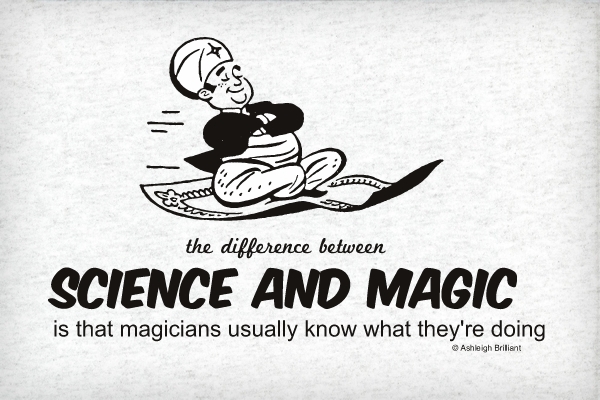
I haven’t a clue as to how to close this post after that – so I will just fade away ……. and leave you with this rather tongue-in-cheek cartoon.
Looking down the wrong end of the telescope.

Trying to make sense of the utter nonsense of the Rio+G20 summit.

I share the deep frustration that must be felt by millions around the globe at the outcome of the Rio summit meeting, if outcome is the appropriate word!  Martin Lack summarised his anger in a post last Friday and I’m going to publish an extract from his writings because they so perfectly reflect not only his anger but, I suspect, the anger of millions of others.

Adam Vaughan’s blog from Rio for the Guardian newspaper is not for the faint-hearted.  At 2:07 pm today, [Friday 22 June 2012 12.23 EDT, Ed] he quoted David Nussbaum (WWF-UK) as follows:

“It would have been naïve to pin too many hopes on a single conference, but undeniably we expected more from the outcome document. Entitled ‘The Future We Want’, the text doesn’t live up to the aspirations of the title – it’s more a case of ‘The Future We’ll Get If We Rely On Politicians’. Full of weak phrases, and re-confirmations of previous aspirations which they haven’t realised, the text fails to commit governments to actions, targets, timeframes and finance to which we can hold them accountable….What we have is an agreement within the bounds of what they thought politically possible; what we needed was an agreement to address what is scientifically necessary. This is no way to manage our planet!”

Neither would I recommend George Monbiot’s column today – Rio+20 draft text is 283 paragraphs of fluff; unless you are feeling brave:

“World leaders have spent 20 years bracing themselves to express ‘deep concern’ about the world’s environmental crises, but not to do anything about them…Several of the more outrageous deletions proposed by the United States – such as any mention of rights or equity or of common but differentiated responsibilities – have been rebuffed. In other respects the Obama government’s purge has succeeded, striking out such concepts as “unsustainable consumption and production patterns” and the proposed decoupling of economic growth from the use of natural resources.”

I would like to be able to dismiss this as facile criticism from the liberal left. However, in reality, to do so would be to second-guess the scientists who have been telling us for decades that we need action not words. Our children and grandchildren will not forgive us for failing to act.

BUT a conversation I had with Lew L. here in Payson last Friday afternoon helped crystalise some thoughts that I would like to share with you.

Representative democracy a la British House of Commons

The first is about democracy, or more accurately representative democracy.  Lew pointed out that some US Towns still employ direct democratic processes where all the people who attend a Town meeting vote in person for or against the motion.  The challenge for a representative democratic process is that those elected representatives are vulnerable to a wide range of influences and between elections may be taking decisions that the people would neither support nor approve of.

The idea of direct democracy goes back a very long time, as Wikipedia reveals,

The earliest known direct democracy is said to be the Athenian Democracy in the 5th century BC,

So it could be argued that the fundamental flaw in the Rio+G20 meeting was not the lack of any real progress by our ‘leaders’, but in our expectations, as in the expectations of ‘you and me’, all across the world.  The money and power that must be intertwined in such games of international politics doesn’t bear thinking about.  It was Lord Acton, the British historian, who said: ‘Power tends to corrupt, absolute power corrupts absolutely‘.

So rather than expecting our representatives and leaders to do what we what them to do and being bitterly disappointed, time and time again, there is another equally valid way of bringing about change – create the change you desire by changing yourself.

As my friend Jon Lavin expressed in a very recent email,

People like something solid to relate to in such changing and unpredictable times and a dogs view is brilliant because dogs just are because they are in the present. All that matters is the ‘now’. Most of our problems can be traced back to our lack of ability to be in the ‘now’. Driven by regrets about the past, and a fear of what the future holds, we carry on hoping that all our problems can be solved by amassing material possessions.

Oh, well. The best way to save the world is to work on our selves.

So that leads on to my second thought, the urgency in tackling what is happening to the Earth’s climate.  In Martin’s second angry post over at Lack of Environment, he writes,

Here in the UK, the weather is literally unbelievable. 100mm of rain falling in one day. At the end of June. It’s ridiculous. Just one problem: It is exactly what the climate models predicted.

Global average temperatures are rising. Since the 1980s, every decade has been warmer than the last. 1998 was a very warm year, but global warming has not stopped; it has morphed into Anthropogenic Climate Disruption (ACD). Some even suggest we should call it Human Induced Rapid Global Overheating (HIRGO) but I prefer ACD, because that is what we are experiencing: It will be decades before it becomes obvious that HIRGO is happening and, if we wait for it to be obvious, there will be no way to stop it.

We need to accept that ACD is a reality; it is an inevitable consequence of a warming atmosphere; one with more moisture in it more of the time and – as I said – it is exactly what the climate models have being tell us would happen for decades. That being the case, how is it that our politicians – seemingly led by members of a supposedly left-of-centre Democratic Party administration in the USA – can have such monumental tunnel vision as to offer up the planet itself as a sacrifice upon the altar of the god of Growth?

But do you see the fundamental error?  The idea that our leaders have to create change: “.. how is it that our politicians …. can have such monumental tunnel vision as to offer up the planet itself as a sacrifice upon the altar of the god of Growth?

As Jon Lavin revealed in his email to me, the agency of change is within each of us. It is not a “thing.” There’s a huge amount of information revealed by a simple Google search on change, the change process, change management process, etc., etc., so I’m not going to add to the noise by quoting the experts.  It’s as simple as Jon wrote:

“The best way to save the world is to work on our selves.”

OK, moving on to my second thought, and for this I want to play a little mind-game.

That is what would be the impact if 50% of the combined populations of North America and Europe decided to save the power of one 60-watt lamp, or equivalent, for 36 hours a year, i.e. turning off one 60-watt lamp for less than one hour a day for a year!

Let’s take this a step at a time.

The combined population of the USA, Canada and Europe is 1,090,487,000 people, i.e. a little over 1 billion.

Thus half that population is 545,243,500 persons.

Saving 60 watts for 36 hours a year is 60 X 36 = 2,160 watts.

Thus 545,243,500 people times 2,160 watts = 1,177,725,960,000 watts.  Which is 1.178 trillion watts. (rounded up)

 I say again: 1.178 trillion watts.

How can one get any notion of what that means?  The best I could find from a web search was this:

The U.S. electric power industry’s total installed generating capacity was 1,119,673 megawatts (MW) as of December 31, 2009—a 1.0-percent increase from 2008.

Ergo, in 2009 the USA had the capability of generating 1,119,673 megawatts.  A megawatt is one million watts so 1,119,673 megawatts is 1,119,673,000,000 watts, or 1.119 trillion watts.

Wow! switching off a 60-watt lamp for less than an hour a day would save 1.178 trillion watts, more than the combined generating capacity of the entire USA in 2009 of 1.119 trillion watts.

I suspect that the current USA generating capacity isn’t that much different and, of course, one can’t run away with the idea that all of that is generated by fossil fuels.

But if I have done my mathematics correctly (and do please check my sums), the simple expediency of turning off one 60-watt lamp for 36 hours a year, if done by just half the populations of North America and Europe, would be the equivalent of saving 105% of the total US generating capacity!

So think about the change you want in your life, and  the lives of your children and grandchildren, and get on with it.  Turn out that light!

“The best way to save the world is to work on our selves.”

And I can do no better in terms of reflecting on the power of our minds, than courtesy of this fabulous video which Christine of 350orbust had last Saturday:

Remembering Fred Rogers.

Final thought!  If one thinks of the way that we trust the Internet for so much these days, and the huge number of people that are now ‘wired’, it doesn’t seem to be beyond the wit of man to come up with a reliable, secure method of direct voting electronically.  Wonder why that hasn’t caught on?

Something to Make your Day!

Another gem sent to me by dear friend, Bob D.

While the C-5 was turning over its engines, a female crewman gave the G.I.s on board the usual information regarding seat belts, emergency exits, etc.

Finally, she said, ‘Now sit back and enjoy your trip while your captain, Judith Campbell, and crew take you safely to Afghanistan

An old Master Sergeant sitting in the eighth row thought to himself, ‘Did I hear her right? Is the captain a woman? ‘

When the attendant came by he said ‘Did I understand you right? Is the captain a woman?

‘Yes,’! said the attendant, ‘In fact, this entire crew is female.’

My God,’ he said, ‘I wish I had two double scotch and sodas. I don’t know what to think with only women up there in the cockpit.’

That’s another thing, Sergeant,’ said the crew member, ‘We No Longer Call It The Cockpit

It’s The Box Office.’

oooOOOooo

Quote for today:

‘Whatever you give a woman, she will make greater. If you give her sperm, she’ll give you a baby. If you give her a house, she’ll give you a home. If you give her groceries, she’ll give you a meal. If you give her a smile, she’ll give you her heart.  She multiplies and enlarges what is given to her. So, if you give her any crap, be ready to receive a ton of shit.’


An insight into health

What we can learn about healthy lifestyles.

I am indebted to Schalk Cloete who has been leaving some very thoughtful comments on Learning from Dogs.  Schalk writes the blog, One in a Billion and more information about him can be learned here.  One of the very generous aspects of Schalk’s Blog is that his material is free from copyright, so I gratefully offer the following from his blog.

oooOOOooo

Perfect health the traditional way

There are a number of very special traditional communities around the world that enjoy amazing health and longevity completely without the help of modern medicine. People still contribute actively to their communities in their 80′s and 90′s and often surpass the magical age of 100 sometimes without ever visiting a doctor.

The most well-documented of these communities is the Okinawa islands in Japan, but a number of other such communities also exist. These include the region of Abkhasia in the Soviet Union, the Symi island in Greece, the Italian village Campodimele, and the mountain communities of Hunza in Pakistan, Vilcabamba in Ecuador and Bama in China.

So, what are the secrets of these amazingly healthy people? Well, I don’t really think we can call them “secrets”, but here they are: these people simply eat a healthy, nutrient dense and predominately plant-based diet (Okinawan food pyramid given below), they never over-eat, they live very active lifestyles and they have a very strong sense of community.  Basically, they live the polar opposite of the modern western lifestyle.

These healthy lifestyle choices have some pretty impressive results. One fun statistic about Okinawa is that they boast 15% of the world’s confirmed super-centenarians (those over 110) while having only 0.0002% of the worlds people, thereby giving them a concentration of super-elders close to 100,000 times greater than the rest of the world. Wow…

In John Robbins’ excellent book “Healthy at 100″, he discloses a lot of well documented research on Okinawa, stating that they are about 15% as likely to die of heart disease and cancer as Americans. They also live 5 years longer on average.

When it comes to healthcare spending, Okinawa has the lowest healthcare costs in all of Japan, which already has a three times smaller per-capita healthcare expense than the USA. Thus, they have about a 7 times smaller chance of dying from degenerative disease and live 5 years longer, all while incurring about 5 times fewer healthcare expenses. Not bad, I’d say.

Unfortunately, the younger generation of Okinawans are rapidly screwing up these awesome stats by succombing to the American lifestyle brought by the US troops stationed on Okinawa.  It really is quite sad how many grandparents have to bury their grandchildren in Okinawa nowadays.

But this just shows how alluring our modern consumerist lifestyle really is. These young Okinawans saw the vibrant health of their parents and grandparents first hand, but still chose to consume their bodies into oblivion. Unthinking consumerism is indeed a very powerful enemy…

oooOOOooo

Fascinating article from Schalk, as I’m sure you will agree.

End Fossil Fuel Subsidies NOW!

It’s rare for me to post a second item on the same day but this warrants it!

The full copy of this recently issued Press Release now available on the End Fossil Fuels Subsidies website is republished in full below.

PASS IT ON!

oooOOOooo

PRESS RELEASES

MIDDAY TWITTERSTORM REPORT
June 18, 2012

Call to #EndFossilFuelSubsidies at Rio+20 Tops Twitter

EU Commissioner for Climate Action Connie Hedegaard, celebrities Mark Ruffalo,
Stephen Fry, and Robert Redford, journalist Nicholas Kristof, and more join global push

RIO DE JANEIRO — The push to end fossil fuel subsidies at Rio+20 became the #2 most talked about topic worldwide on Twitter this morning.

The social networking site, which has 100 million active users, tracks discussions by hashtag and #endfossilfuelsubsidies ranked #2 globally and #2 in United States and Australia. 350.org, the global climate campaign coordinating the effort, estimated that the hashtag was being tweeted at least once a second, reaching millions of people around the world.

A number of politicians, journalists, celebrities, and high-profile activists joined in the campaign, helping catapult it into the spotlight:

British actor Stephen Fry tweeted, “Let’s green $1 trillion with a plan to save the planet. Sign the petition & RT: http://j.mp/endFFS #endfossilfuelsubsidies #G20 #RioPlus20.”

American actor Mark Ruffalo, who recently played the Hulk in the box-office sensation The Avengers, tweeted, “Good Morn! Can you help us end fossil fuel subsidies? Pls tweet #endfossilfuelsubsidies TODAY to help us send a msg & spread the word.!!!”

The EU Commissioner for Climate Action Connie Hedegaard, who is expected to play a key role at the Rio+20 negotiations,tweeted, “Fossil fuels subsidies have no place in today’s world . They must be phased out as the G20 pledged. #EndFossilFuelSubsidies #Rioplus20.”

Journalist and New York Times columnist Nicholas Kristof tweeted, “A twitterstorm underway calling on leaders to #EndFossilFuelSubsidies at Rio summit: http://yfrog.com/1qamv1j.”

350.org founder Bill McKibben tweeted, “$1 trilllion is a lot of money–tired of the fossil fuel industry laughing at us, so joining the twitterstorm #endfossilfuelsubsidies.”

Activists with 350.org are projecting tweets in cities around the world, including Sydney, London, New Delhi, and New York, as well as inside the Rio+20 negotations.

Yesterday, 350.org and Avaaz unfurled a giant $1 trillion bill on the Copacabana beach in Rio, producing some spectacular photos. The global campaign Avaaz.org is delivering a petition with 750,000 signatures calling for an end to fossil fuel subsidies to G20 leaders in Los Cabos, Mexico this afternoon. Over a million people have signed different petitions calling for action on subsidies in the last two weeks.

The current draft of the Rio+20 agreement released on Saturday includes a paragraph on ending fossil fuel subsidies, but negotiations now hang in the balance as oil exporting countries led by Saudi Arabia and Venezuela attempt to delete any references to the proposal. The final decision is likely to come down to Brazil, who hold sway as the host country.

The Twitterstorm can be tracked at endfossilfuelsubsidies.org. Supporting organizations for endfossilfuelsubsidies.org include: 350.org, Avaaz, Climate Reality Project, Earth Day Network, Friends of the Earth International, Global Exchange, Green For All, Greenpeace International, Greenpeace New Zealand, Natural Resource Defense Council, Oil Change International, Quercus, SumOfUs, Wild Aid, WWF

###

CONTACT: In the US, Daniel Kessler, dk@350.org, +1 510-501-1779; In Rio, Jamie Henn, jamie@350.org, +55(0)2181061948

NOTE TO EDITORS:

1. Information on the $1 Trillion in fossil fuel subsidies: http://priceofoil.org/wp-content/uploads/2012/05/1TFSFIN.pdf

##

PRESS ADVISORY/PHOTO CALL

‘Twitterstorm’ gathers speed before Monday’s Global Cyberaction to #EndFossilFuelSubsidies at Rio+20

RIO, 15 June 2012 — Momentum is building for this Monday’s 24-hour “Twitterstorm,” a massive international online action to increase pressure on world leaders to cut nearly $1 trillion in fossil fuel subsidies at the upcoming Rio+20 Earth Summit.

For 24 hours between June 18th and 19th, as world leaders gather at the G20 summit and prepare for Rio+20, hundreds of thousands of people around the world will tweet with the same hashtag — #EndFossilFuelSubsidies — at celebrities and politicians, flooding the popular social network with their demand. Over 1 million people have already signed a petition calling on leaders to act.

Recent developments on the Twitterstorm include:

• Confirmation of tweet projections in Sydney, London, New Dehli, and Rio (see Notes section for times and locations) (1)
• A new website with fact sheets, a tool to tweet at celebrities and Heads of State, and more resources for activists: http://www.endfossilfuelsubsidies.org
• A new Facebook event that has registered over two thousand “Tweet Team” members to recruit participants for the day of action. (2)
• Support from over a dozen civil society groups, including 350.org, Greenpeace International, Oil Change International and WWF. (3)

WHAT: A 24-hour Twitterstorm to #EndFossilFuelSubsidies at Rio+20

WHEN: The 24-hour clock will begin at 8:00 UTC (6 PM local time in Sydney) when activists will flock to Twitter with messages that will be projected in iconic locations in Sydney, New Delhi, London, and Rio. In recent weeks campaigning groups have collected over 1 million signatures demanding that leaders act now.

WHY: According to figures compiled by Oil Change International, countries are spending as much as $1 trillion USD combined annually on fossil fuel subsidies. (4) The International Energy Agency estimates that by cutting these subsidies, the world can cut global warming causing emissions in half and significantly contribute to preventing a 2 degree temperature rise, the limit most scientists say we need to stay under to prevent runaway climate change. (5)

In May, leaders of the G20 again pledged to eliminate fossil fuel subsidies. They first made the commitment in 2009 but have yet to implement the policy change at the country level.

While global warming emissions rise and gas prices spike, fossil fuel companies continue to make massive profits, which brings into doubt the need for subsidies. ExxonMobil, for example, made $41.1 billion USD in profit in 2011.

###

CONTACT: In the US, Daniel Kessler, 350.org, dk@350.org, +1 510-501-1779; In Rio, Jamie Henn, jamie@350.org, +55(0)2181061948

NOTE TO EDITORS:

1. June 18 projection events

• Sydney
◦ Summary: Sydney will launch the Twitter Storm from the Sydney Opera House.  Local supporters are invited to send a photo or video message to world leaders with the Sydney Opera House and Sydney Harbour Bridge as a backdrop.  Projection of the Twitter feed will continue late at night around Sydney’s CBD.
◦ 6 PM (UTC+10) Sydney Opera House Boardwalks
◦ 9 PM (UTC+10) Sydney CBD
◦ CONTACT: Abi Jamines abigail@350.org, +61 403278621

• New Delhi
◦ Summary: There will be two projections in New Delhi.
◦ Projection 1: 6 PM – 9 PM, Moonlighting, An indoor projection while the Twitter feed is projected to an invited audience along with a speaker to discuss the issue of fossil fuel subsidies in the Indian context. (Will share speaker details soon, yet to be confirmed).
◦ Projection 2: 6PM – 11 PM An outdoor projection at a local mall called DLF Saket.
◦ CONTACT: Chaitanya Kumar, chaitanya@350.org, +91-9849016371

• London
◦ Summary: There will be 3 events in London–a petition delivery at 10 Downing Street in the morning, followed by two projections.
◦ Petition delivery: 10:30am GMT+1, Number 10 Downing Street, London.
◦ Projection 1: 1:30pm GMT+1, Houses of Parliament, London
◦ Projection 2: Approximately midnight GMT+1 (Tuesday 19th June), Nelson’s Column, Trafalgar Square, London
◦ CONTACT: Emma Biermann, emma@350.org, +44 (0) 78 3500 4720,

• Rio
◦ Summary: Tweets will be displayed in the Rio Centro conference center all day.
◦ CONTACT: Jamie Henn, jamie@350.org, +55(0)2181061948

2.  https://www.facebook.com/events/304496622975461/

3. Supporting organizations include: 350.org, Avaaz, Climate Reality Project, Earth Day Network, Friends of the Earth International, Global Exchange, Green For All, Greenpeace International, Greenpeace Australia, and Greenpeace New Zealand, League of Conservation Voters, Natural Resource Defense Council, Oil Change International, Oxfam, Quercus, SumOfUs, Wild Aid, World Wildlife Fund

4. http://priceofoil.org/wp-content/uploads/2012/05/1TFSFIN.pdf

5. http://www.iea.org/files/energy_subsidies_slides.pdf

##

‘Twitter Storm’ Planned to Pressure Leaders to End Fossil Fuel Subsidies at Rio+20

Environmental conference ideal place to end wasteful giveaways to corporate polluters, says civil society groups

Oakland, 7 June 2012 — Campaigning organizations from around the world will join forces on June 18 for a 24-hour ‘Twitter storm’ in which tens of thousands of messages will be posted on the social networking site demanding that world leaders use Rio+20 to agree to end fossil fuel subsidies.

The 24 hour clock will start at 6PM local time in Sydney (8AM UTC), when activists will begin to flock to Twitter with messages that will also be projected in iconic spots in Sydney, New Delhi, London, Rio, and other locations. In recent weeks campaigning groups have collected over 1 million signatures demanding that leaders act now to end subsidies and start to invest in clean energy solutions. (1)

According to figures compiled by Oil Change International, countries together are spending as much as $1 trillion dollars annually on fossil fuel subsidies. (2) The International Energy Agency estimates that by cutting these subsidies, the world can cut global warming causing emissions in half and significantly contribute to preventing a 2 degree temperature rise, the number most scientists say we need to stay under to prevent runaway climate change. (3)

“We are giving twelve times as much in subsidies to fossil fuels as we are providing to clean energy, like wind and solar. World leaders shouldn’t be subsidizing the destruction of our planet, especially since these subsidies are cooking our planet,” said Jake Schmidt, International Climate Policy Director at the Natural Resources Defense Council.

In May, leaders of the G20 again pledged to eliminate fossil fuel subsidies. They first made the commitment in 2009 but have yet to implement the policy change at the country level.

While global warming emissions rise and gas prices spike, fossil fuel companies continue to make massive profits, which brings into doubt the need for subsidies. ExxonMobil, for example, paid an effective US federal tax rate in 2010 of 17.2 percent, while the average American paid 28 percent.

Participating organizations include 350.org, Avaaz, Greenpeace. Oil Change International, Natural Resources Defense Council, and others.

###

CONTACT: In the US, Daniel Kessler, 350.org, +1 510 501 1779, daniel@350.org

NOTE TO EDITORS:

1.http://endfossilfuelsubsidies.org/

2. http://priceofoil.org/wp-content/uploads/2012/05/1TFSFIN.pdf

3. http://www.iea.org/files/energy_subsidies_slides.pdf

Planet Earth is just one world!

A very simple, fundamental message to the G20+ Conference in Rio.

We live on one planet.  It is the solemn duty of everyone living on this planet to protect it from harm.  So to all those at Rio claiming to represent a Nation, or more accurately the people living in that Nation, act not only on behalf of that Nation but on behalf of the planet, the only planet, we all live on.

The only life-sustaining planet we have!

In response to the Age Gap!

Too easy to take a blanket view on life!

Yesterday, the Post was a humourous interlude on the week and, hopefully, it raised a smile on many faces.  But it was, nonetheless a dig at young people so if felt appropriate to present one of the finest examples of endeavour and professionalism of young persons, courtesy of a recent major production by the BBC.

A couple of weeks ago, on Sunday, June 3rd, came the final of a contest to find a singing ‘superstar’.  It was called The Voice UK and as the website explains,  “Four of the biggest names in music are looking for incredible singing talent to compete for the title of The Voice UK. They will be chosen purely on the quality of their voice.”  Many of the contestants were young persons.

Young persons singing their hearts out.

The four ‘biggest’ names were, indeed, very big names: Danny O’Donoghue, Jessie J, will.i.am and Sir Tom Jones.

So let me leave you with a reminder of the young person who won!  The fabulous Leanne Mitchell.

and if you want to hear (and see) the stunning performance that won it for Leanne, here it is,

The art of relaxation

Yesterday’s article reminds me of something fundamental!

In Patricia’s guest post of yesterday, she wrote about Chloe, her dog,

Chloe was born knowing. She knows about joy. She knows about living a life in balance. She knows about forgiveness, trust, exuberance, a passion for learning and the power of a good nap.

I was speaking with Jon Lavin a few days ago about the effect of anxiety on memory.  Jon confirmed that as we get older even low levels of anxiety can play games with our mental focus.  He described what many of us know – of walking into a room, for instance, and suddenly realising that you didn’t have a clue as to why you had come into the room!  In a very real sense anxiety is the body’s manifestation of fear.

Jon went on to say that practicing ‘letting go’ for a couple of 10-minute sessions a day is wonderfully therapeutic for the mind.  In fact, when Jon was a guest author for Learning from Dogs he touched on the subject of fear in a post almost two years ago to the day; Dealing with the fear of the known.  Indeed, I’m going to reproduce that article in full – here it is,

Jon Lavin

Can we ever conquer fear?

In a recent article I discussed the fear of the unknown, linked to the down-turn, redundancies, etc.

Per Kurowski, a great supporter of this Blog, posed the following question. “Great advice… but how do we remove the fear of what is known?”  A simple, and slightly flippant answer would be, “Develop a different relationship with it.”

What I’m saying is that when we are facing the known, and I’m assuming that it’s something unpleasant, our choices are limited. It’s going to happen, so the only thing we can do is change the way we view it.

This brings us back full circle to developing a different relationship with it. Let’s take the word, ‘fear’.

All fear is an illusion, walk right through“. I heard Dr David Hawkins say on a CD. Granted, a great trick if you can do it!

Here’s another description of fear: Fear = False Evidence Appearing Real

Fear is generally future-based. We tend to use the past as a learning reference to inform us of what to be afraid of in the future. So human beings live their lives trying to predict and prepare for the future, limited by their past experiences.

Unfortunately, the only way to work with fear of the known is to live in the present!

Our whole society is geared up to look into the future. We are forever worrying about or planning something for the future.

To begin focussing on the present, try this.

Simply, to start off, become aware of the breath and sensations in the body. This will slowly start to remind us to be present, or embodied, in our own body. Problems, fear and spiral thinking, often at 3 or 4 in the morning, are generated in the mind. Thoughts occur randomly, although we call them, “Our thoughts“, and refer to, “Our mind“.

By dropping out of the thought processes into the awareness of our breath and our body, the noise stops, even if only for a moment.  Here’s the rub: So very few people in the world will have even the slightest inkling what these words mean!

If more of us got used to coming out of the mind before making an important decision, and simply sat with the question for a while, the answer would probably present itself.

This will probably raise more questions than it answers but that’s not a bad thing.

By Jon Lavin

Difficult to add anything to that very sound advice save to try it out yourself, and if you own a dog or have one as a friend, just look much more closely at how he or she behaves and remember why this blog is called what it is!  Or as Trish wrote,

Chloe was born knowing. She knows about joy. She knows about living a life in balance. She knows about forgiveness, trust, exuberance, a passion for learning and the power of a good nap.

Ah, the power of a good nap!

Puppy Cleo enjoying a good nap!

And now for something completely different!

Keeping a balance on one’s state of mind.

Don’t know about you but I find that it is all too easy to get wound up by so much that is going on in this crazy world.  That’s not to marginalise the threats to society that are all around us and there are some powerful writers out there who work so hard to inform the world as to the truth of those threats.  (As an aside, one of my favourite authors is this context is Patrice Ayme, just see this recent Post of his as an example of his depth of analysis.)

But my dear friend of over 40 years, Dan Gomez, recently sent me a link to a video of the 10 most extreme airports in the world.  That stirred some memories from my own flying days.

First settle back and enjoy 7 minutes of reasons why you don’t want to think about flying! 😉

The YouTube video has this information, which I republish below,

Pictures and videos of the top 10 most extreme airports in the world!

San Diego: Busy airspace lots of buildings on approach
Madeira: Difficult approach and did have a short runway
Eagle Vail: High altitude, short runway & mountainous approach & departure
Courchevel: Short runway, bumpy runway, high altitude
Kai Tak: Difficult approch, fly through tall buildings, short runway
Gibraltar: Short runway, building on approach, winds from the Gibraltar rock
St Maarten: Short runway, has to fly over the beach with alot of people on there, steep takeoff because of mountains
St Barts: Short runway, has to dive.
St Barts: To land, the low approach on that hill thingy
Toncontin: Difficult approach, short runway
Lukla, short runway, only was cemented a few years ago, no go around, if land too low you land into a cliff

First song: La Perla by Kobojsarna

Second song: Feel It – Explicit Album Version by Three 6 Mafia vs Tiesto with Sean Kingston and Flo Rida

Now to a personal recollection.

I was a private pilot for many years, first learning to fly at the Suffolk Aero Club at Ipswich Airport in Suffolk, England.  My first lesson was on the 3rd March, 1984!

Some twenty years later, on the 13th August 2004 to be exact, I was checked out to land at Courchevel Airport in an aircraft type known as a TB20, a French-built aircraft.  Here’s the page from my log book with the necessary authorisation stamp affixed.

Cleared to land at Courchevel, LFLJ!

The following year, 19th July, 2005, I added my wonderful Piper Super Cub to that authorisation.  (See here for a part picture of the aircraft.)

So thanks to YouTube as someone has uploaded a film of a light aircraft operating into Courchevel.  It really is rather thrilling!

Finally, back to Dan.  Here’s his recollections included in the email that he sent with that first film.

Just found this.  I’ve landed at two of these.  Eagle Vail was a piece of cake compared to Toncontin as Marty and Bruce know. BAE146 and small Boeing jets.  I flew in and out of Toncontin 5 times in the 90’s and had no idea it was as scary as it was.  That is to say, I knew it was scary because my palms sweated and heartbeat was about 140 but when I look at it now I go “what was I thinking?”

Take offs were like Orange County, Full brake power straight up. The big difference was you were shuttling along the runway and then down the runway and finally, up the runway to get the wheels up.

One time, on a connecting flight from Medellin, we taxied in, were boarded by military police with drug dogs who sniffed their way through the aisle.  Bags were searched while everyone waited in intense heat. It took about 2 hours, three time longer than necessary. Then the interior was fumigated with everyone aboard. All the big machine guns too. Nobody said a word!

There’s one thing about flying a light aircraft, especially into ‘interesting’ airfields, you don’t have a moment to worry about the state of the world!

I feel a headache coming on!

A bit of a personal rant about complacency!

But before I get my blood up, let me reflect on a small passage of time.  I first started writing this Blog on July 15th, 2009, coming up to three years ago.  The idea came from a previous conversation with Jon Lavin of The People Workshop when we were chatting about Dr. David Hawkins’ Map of Consciousness and Jon pointed out that dogs had a ‘score’ of about 210, i.e. were positively above the boundary between truth and falsehood.  As I wrote here,

Dogs:

  • are integrous ( a score of 210) according to Dr David Hawkins
  • don’t cheat or lie
  • don’t have hidden agendas
  • are loyal and faithful
  • forgive
  • love unconditionally
  • value and cherish the ‘present’ in a way that humans dream of achieving
  • are, by eons of time, a more successful species than man.

That’s why the blog is called Learning from Dogs!

Stay with me just a little longer.

The picture of Pharaoh on the Home page, this one:

Dogs know better, much better! Time again for man to learn from dogs!

is a picture of a ‘beta’ dog.  The beta dog is the second-in-command, so to speak, in a wild dog pack.  A dog pack, about 40 to 50 dogs in the wild, has three dogs of special rank, although rank is not really the correct word, role is a better one.  The leader of the pack is the alpha dog; always a female dog.  The next role dog is the beta; always a male.  The third role dog is the ‘clown’ dog and can be either sex.

In reverse order, the clown dog is there to keep the pack happy (in dog terms), the beta dog’s role is to break up fights within the pack and to ‘teach’ the puppies their social skills (which is why a beta dog is always a dominant male) and the alpha’s primary role is to ensure that the pack’s territory is not compromised by other animals and that there is plenty of food for the pack.

Ergo, the single most important decision of the alpha dog is to move the pack to a new territory when she judges that the present one is unsustainable!

OK, to my ‘rant’!

Why isn’t mankind learning from dogs and realising that our present ‘territory’, Planet Earth, is not capable of sustaining mankind for very much longer.

I don’t believe that man is intrinsically stupid!  Many know the famous quotation from Einstein, “Insanity: doing the same thing over and over again and expecting different results.”  So if most of us ‘nod’ our heads when we read that quote, why are most of us seemingly content to keep doing the same thing?  Why isn’t there such a huge outpouring of anger at the complacency of the world’s leaders?  How far does the collapse of the conditions, both social and physical, as in biosphere, have to go before we get real, urgent change?

Last Thursday, in a post I called Denialists standing up for insanity, I quoted Tom Engelhardt in his introduction to an article by Bill McKibben thus,

It’s true that no single event can be pinned on climate change with absolute certainty.  But anyone who doesn’t think we’re in a fierce new world of weather extremes — and as TomDispatch regular Bill McKibben has suggested, on an increasingly less hospitable planet that he calls Eaarth – is likely to learn the realities firsthand soon enough.  Not so long ago, if you really wanted to notice the effects of climate change around you, you had to be an Inuit, an Aleut, or some other native of the far north where rising temperatures and melting ice were visibly changing the landscape and wrecking ways of life — or maybe an inhabitant of Kiribati.  Now, it seems, we are all Inuit or Pacific islanders.  And the latest polling numbers indicate that Americans are finally beginning to notice in their own lives, and in numbers that may matter.

Well it’s good that Americans are starting to get the picture but it’s all too gentile – we all have to get much more excited about making our leaders understand that we want action to curb CO2 emissions, and we want action NOW!

Just look at this chart from NOAA as seen on the Climate Central website:

Year-to-Date divisional temperature rankings from NOAA.

More about that tomorrow!

OK, only a short rant!  Which is immediately followed by an apology!  Because you will have to wait 24 hours before reading my next Post about fracking, about how some ‘leaders’ expect the CO2 emissions in the earth’s atmosphere to stabilise at 650 ppm and how very close we are to losing control!

Think I need to go and lie down!