Category: consciousness

Change out of hope.

Making a difference is the only way forward!

Don’t worry, this is not going to be some chest-banging Post!  I leave those for Monday to Friday. 😉  No, I just wanted to offer a couple of examples of the power of goodness and how making a positive difference is no more than wanting it.  As Perfect Stranger commented last Tuesday, “A single candle may light a thousand others and they in turn many thousands more” – Buddha

The first example is about how a group of upstanding citizens rescue a school of dolphins that became stuck on a beach in Brazil.

The second example comes from closer to home.  Ginger I. is a Board Member of the Humane Society of Central Arizona and is based at Payson.  Jean has been a volunteer at the Society’s Thrift Store for some time and has got to know Ginger well.

Ginger recently emailed me this; it has already done the rounds of the WWW, and quite rightly so.  It reminds me of the book Dogs Never Lie About Love, written by Jeffrey Masson, from which comes the following,

This ambiguity, which includes a certain ambivalence as well, has been memorialized in our speech, in our sayings, and in our tributes to and about dogs. Sir John Davies, in his epigram In Cineam (written in 1594), observed:

Thou sayest thou art as weary as a dog,
As angry, sick, and hungry as a dog,
As dull and melancholy as a dog,
As lazy, sleepy, idle as a dog.
But why dost thou compare thee to a dog?
In that for which all men despise a dog,
I will compare thee better to a dog.
Thou art as fair and comely as a dog,
Thou art as true and honest as a dog,
Thou art as kind and liberal as a dog,
Thou art as wise and valiant as a dog.

Ever since Madame Roland said in the eighteenth century “Plus je vois les hommes, plus j’admire les chiens” (The more I see of men, the more I admire dogs), generally what has been written about dogs tends to be positive. Sometimes it is even wonderful, as in William James’s statement “Marvelous as may be the power of my dog to understand my moods, deathless as is his affection and fidelity, his mental state is as unsolved a mystery to me as it was to my remotest ancestor.” Or it may be delicious, like Ambrose Bierce’s definition in his Devil’s Dictionary, “Dog, n. A kind of additional or subsidiary Deity designed to catch the overflow and surplus of the world’s worship.” Samuel Coleridge, in Table-Talk (May 2, 1830), was one of the first to note that “the best friend a man has in the world may turn against him and become his enemy. His son or daughter … may prove ungrateful. Those who are nearest and dearest to him … may become traitors to their faith…. The one absolutely unselfish friend that man can have in this selfish world, the one that never deserts him, the one that never proves ungrateful or treacherous, is his dog.”

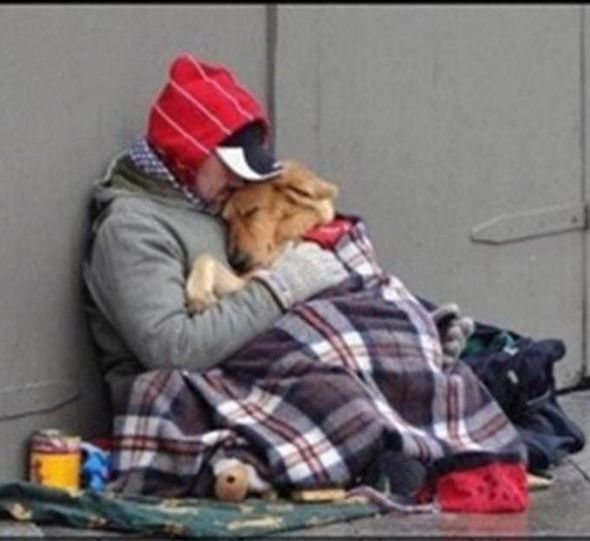
Just read that last sentence again from Samual Coleridge as you look at the photograph below, “The one absolutely unselfish friend that man can have in this selfish world, the one that never deserts him, the one that never proves ungrateful or treacherous, is his dog.


The joys of a cup of hot tea!

Taking a bit of a breather.

A'hhh!

All my life, well all the years that I have appreciated a ‘tea-break’, stopping for a cup of hot tea has been laden with symbolism.  A chance to let the brain catch up with whatever one is doing.  When working with others an opportunity to stand back and evaluate how the particular project is going.  When sharing a project with a loved one, an opportunity to lay down memories for future years, and so forth. (Jean and I were building a chicken coop yesterday afternoon.)  Sure there are millions of people that share these feelings.

Anyway, as many of you have been aware, the last 10 days or so on Learning from Dogs have been pretty ‘full-on’ in terms of man and Planet Earth.  It started with me publishing on the 27th February a Post called Please help! – A plea to those who understand climate science so much better than I do!.  Then on the 2nd March, I republished a Post from Patrice Ayme called The collapse of the biosphere.

Then on the 5th March, with a big thanks to Dan Gomez, I published A skeptic’s view and then responded to that Post with Reply to a skeptic on the 8th March.  Finally, last Friday, I republished a Post first seen on Naked Capitalism which I called I must go down to the sea again, spelt H2CO3!

That there were a total of 6,313 viewings of those Posts and 69 comments (OK, that doesn’t mean different individuals) was incredibly gratifying – a very big ‘thank you’ to all of you that read the Posts, and likewise to those that commented.

But one of the most wonderful aspects for me was the incredible sharing of ideas and resources.  So the point of today’s Post is to bring all those links and contacts onto one ‘page’, so to speak.

Martin Lack was the first to point me in the direction of the book, Merchants of Doubt.  There are a number of videos on YouTube but the one below is a good introduction to Naomi Oreskes.

On October 28, 2010 historian of science Naomi Oreskes gave a presentation at Forum Lectures (US Embassy Brussels), based on her new book, Merchants of Doubt: How a Handful of Scientists Obscured the Truth on Issues from Tobacco Smoke to Global Warming, about how right wing scientists founded the George Marshall Institute which has become a key hub for successfully spreading fear, uncertainty and doubt about climate change, along with other environmental issues, and how myths about science enable these political strategies to work.

An in-depth video of over an hour from the University of Rhode Island’s Spring 2010 Vetlesen Lecture Series, hugely worth watching, is here.

Then there is the powerful blog site, De Smog Blog.  As the site explains, “The DeSmogBlog Project began in January 2006 and quickly became the world’s number one source for accurate, fact based information regarding global warming misinformation campaigns.  TIME Magazine named DeSmogBlog in its “25 Best Blogs of 2011” list.

Moving on.  One of the challenges is knowing how to look up some reasonably reliable information about a person who is claiming this or that.  That’s where SourceWatch is invaluable.  The website describes itself, “The Center for Media and Democracy publishes SourceWatch, this collaborative resource for citizens and journalists looking for documented information about the corporations, industries, and people trying to influence public policy and public opinion. We believe in telling the truth about the most powerful interests in society—not just relating their self-serving press releases or letting real facts be bleached away by spin.

Let me give you an example of how SourceWatch works.  In my Post A skeptic’s view, Dan offered extensive comment about U.S. Senator James Inhofe’s book The Greatest Hoax.  A quick search on SourceWatch revealed (a) (my emboldening)

Arthur B. Robinson is one of the three co-founders of the Oregon Institute of Science and Medicine, a group best known for organising a petition disputing the scientific evidence for human-induced global warming.

On January 7, 2009, the Willamette Week reported that Robinson is “in the vanguard of a small but vocal and persistent collection of scientists, industry advocates and commentators who dismiss human culpability for climate change. … Robinson’s critics say his analysis is simplistic, but it remains persuasive a decade later with powerful policymakers like U.S. Senator James Inhofe (R-Okla.), a visible and effective player in blocking a bill to limit greenhouse-gas emissions last fall.

and then very quickly revealed (b),

James Mountain Inhofe, usually known as Jim Inhofe, has been a Republican Senator for Oklahoma since winning a special election in 1994.

Oil
James M. Inhofe has voted in favor of big oil companies on 100% of important oil-related bills from 2005-2007, according to Oil Change International. These bills include Iraq war funding, climate change studies, clean energy, and emissions.

On to another book.  I forget who recommended the book by James Hansen, Storms of my Grandchildren but it’s another ‘must-read’ for all those wanting to better understand the risks that lay ahead.  As the book’s website explains,

IStorms of My Grandchildren, Dr. James Hansen—the nation’s leading scientist on climate issues—speaks out for the first time with the full truth about global warming: The planet is hurtling even more rapidly than previously acknowledged to a climatic point of no return.

On that website there is a section Hansen On The Issues that includes this 2-minute YouTube video of Dr. Hansen talking about his book.

I can’t close without mentioning some other wonderful websites.  There is Skeptical Science, described thus,

Explaining climate change science & rebutting global warming misinformation

Scientific skepticism is healthy. Scientists should always challenge themselves to improve their understanding. Yet this isn’t what happens with climate change denial. Skeptics vigorously criticise any evidence that supports man-made global warming and yet embrace any argument, op-ed, blog or study that refutes global warming. This website gets skeptical about global warming skepticism. Do their arguments have any scientific basis? What does the peer reviewed scientific literature say?

Then there’s ClimateSight, a wonderful effort by Kate, “Kate is a B.Sc. student and aspiring climatologist from the Canadian prairies. She started writing this blog when she was sixteen, simply to keep herself sane, but hopes that she’ll be able to spread accurate information about climate change far and wide while she does so.”  Kate’s interest and passion in the subject is unmissable and it’s a real pleasure to subscribe to her postings.

Bill McKibben’s famous site, 350.org, is a must for the thousands of people that are working for a better future.  As the mission statement opens up,

350.org is building a global grassroots movement to solve the climate crisis. Our online campaigns, grassroots organizing, and mass public actions are led from the bottom up by thousands of volunteer organizers in over 188 countries.

350 means climate safety. To preserve our planet, scientists tell us we must reduce the amount of CO2 in the atmosphere from its current level of 392 parts per million to below 350 ppm. But 350 is more than a number—it’s a symbol of where we need to head as a planet.

350.org works hard to organize in a new way—everywhere at once, using online tools to facilitate strategic offline action. We want to be a laboratory for the best ways to strengthen the climate movement and catalyze transformation around the world.

Read the full statement here.

Plus you should stay close to RealClimate, which describes itself as,

RealClimate is a commentary site on climate science by working climate scientists for the interested public and journalists. We aim to provide a quick response to developing stories and provide the context sometimes missing in mainstream commentary. The discussion here is restricted to scientific topics and will not get involved in any political or economic implications of the science. All posts are signed by the author(s), except ‘group’ posts which are collective efforts from the whole team. This is a moderated forum.

There are so many more fabulous sources of real caring about the society we are and, more importantly, the society we hope to be.  In this category comes Wibble.  Then there’s Dogs of Doubt, that I shall be referring to tomorrow on Learning from Dogs, and The Green Word and so on and so on.  It shows the power of ‘hands across the ether’ that the modern world of web sites now offers.  I put great faith in this power becoming the power of truth and the power of change.  (If you have a blog or a website that resonates with the ones mentioned here, please do drop me an email giving me details.)

Finally, I’m closing with this.  If it all sometimes feels too much for you and you want to drift away into the world of the inner consciousness, into the world of dreamtime, then you can do no worse than to call by Sue Dreamwalker‘s wonderful website.  Try this, for example.  Dan and I had no idea what we were getting into. 😉

Oh blast, my tea’s gone cold!

Reply to a skeptic

“Unless someone like you cares a whole awful lot, Nothing is going to get better. It’s not.”

I came across this wonderful quotation on a blogsite called Wibble!  It was a comment to a post with the compelling title of It is vitally important not to make connections and explains that the quote was made by Dr. Seuss in the film The Lorax.

For me that quotation sums up how I would like to reply to not only my dear friend, Dan Gomez, who is a denialist of anthropogenic climate change, as last Monday’s Post illustrated, but also to skeptics everywhere else.

I should also add the important qualifier that I am neither a scientist nor have any expert skills in the relevant areas.  But, then again, neither does Dan.  He and I are both citizens of Planet Earth with a passion for the truth.

So where to go from here?  There is no question that the Earth’s climate is complex and endeavouring to understand ’cause and effect’ relies heavily on mathematical models.  But many complex aspects of our world are treated similarly, therefore so what!  Dan and I share with millions of others a lack of scientific competence, ergo we have to be rely on the scientific views expressed by those who do have the scientific competencies.

Would one challenge the competence of Scientific American magazine, that in an article on March 18, 2007, (five years ago!) opened thus,

Paris–The signs of global climate change are clear: melting glaciers, earlier blooms and rising temperatures. In fact, 11 of the past 12 years rank among the hottest ever recorded.

and continued later with this, [my emboldening]

For example, after objections by Saudi Arabia and China, the report dropped a sentence stating that the impact of human activity on the earth’s heat budget exceeds that of the sun by fivefold. “The difference is really a factor of 10,” says lead author Piers Forster of the University of Leeds in England: compared with its historical output, the sun currently contributes an extra 0.12 watt of energy for each square meter of the earth’s surface, whereas man-made sources trap an additional 1.6 watts per square meter.

Or what ‘influence’ might be at play when the British newspaper The Guardian reported earlier this year that,

Wall Street Journal rapped over climate change stance

, US environment correspondent

The Wall Street Journal has received a dressing down from a large group of leading scientists for promoting retrograde and out-of-date views on climate change.  In an opinion piece run by the Journal on Wednesday, nearly 40 scientists, including acknowledged climate change experts, took on the paper for publishing an article disputing the evidence on global warming.

The offending article, No Need to Panic About Global Warming, which appeared last week, argued that climate change was a cunning ploy deployed by governments to raise taxes and by non-profit organisations to solicit donations to save the planet.

It was signed by 16 scientists who don’t subscribe to the conventional wisdom that climate change is happening and is largely man-made – but as Wednesday’s letter points out, many of those who signed don’t actually work in climate science.

Later in that article Suzanne writes, referring to the 40 scientists, [again, my emboldening]

The letter goes on to note that some 97% of researchers who actively publish on climate science agree that climate change is real and caused by humans. It concludes: “It would be an act of recklessness for any political leader to disregard the weight of evidence and ignore the enormous risks that climate change clearly poses.”

There’s much, much more evidence that shows that the science is clear – mankind is risking the future viability of this planet for the species homo sapiens and countless other species!

One of the important points made by Dan in that Post last Monday was about the book, written by Senator James Inhofe, The Greatest Hoax.  Dan wrote, “This is all about money and power, not weather.

There are a number of independent websites across the world where one can quickly research the credentials and background by name of any person.  Try Skeptical Science as an example.  A quick enquiry using Senator Inhofe’s name came up with this: Quotes by James Inhofe – Climate Myth/What the Science Says.  Read It!  And read this on the website Think Progress.  There are other websites where one can do that type of research.

In an email just a day ago, Dan wrote, “My message/warning remains the same: “Follow the Money”.  When the “End-of-the-World” is the message, what politician can resist?”  If only it was that easy.

OK, I’m going to start rounding this all off by first asking you to watch this 4-minute video that I came across thanks to Pedantry’s blogsite Wibble.

A link between climate change and Joplin tornadoes? Never!

Next I’m going to repeat something that I have previously mentioned on Learning from Dogs.  There’s a saying in the aviation industry, “If there’s any doubt, there’s no doubt!”  That saying underpins the culture that has turned commercial air transport into one of the safest means of travel in history.

Let’s ponder that idea of doubt.

There is no question that there is a great deal of doubt.  Back in 2010 Gallup Poll reported that “42% of adults worldwide who see global warming as a threat to themselves and their families in 2010 hasn’t budged in the last few years“.

Would you get into a commercial airliner to fly from ‘a’ to ‘b’ if 42% of the passengers saw the flight as a threat to themselves?  No, of course not!

So one certainly wouldn’t fly then if 62% thought it was risky!  From here,

The newest study from the National Survey of American Public Opinion on Climate Change, which is a biannual survey taken since fall 2008 and organized by the Brookings Institute, shows that 62 percent of Americans now believe that man-made climate change is occurring, and 26 percent do not. The others are unsure.

So back to the theme that started this Post.  For the sake of all of us on this planet, for all our children and grandchildren and beyond, we need to start caring deeply about the future, changing our life-styles in as many ways as we can and demanding that our politicians and leaders are similarly committed to the future.

Not because the future is anything like certain – but to reduce the risks of a global catastrophy.  I have a grandson who will be one-year-old on March 21st.  I want to be certain that he has a viable life ahead of him for many, many years.  That means caring ‘a whole awful lot‘, letting hope motivate me to change, and recognising that change is already taking place, as the following trailer so superbly demonstrates.

“Unless someone like you cares a whole awful lot, Nothing is going to get better. It’s not.”

The mystery of nature.

Spellbinding!

English starling

Ginger I. who works at the Payson branch of the Humane Society of Central Arizona recently sent me the following video on the magic of a flock of starlings.  It’s … well, you watch it and fill in the rest of the sentence; I ran out of words.

A short film that follows the journey of two girls in a canoe on the River Shannon and how they stumble across one of nature’s greatest phenomenons; a murmuration of starlings.

A murmuration is a…

/merr’meuh ray”sheuhn/, n.

1. an act or instance of murmuring.

2. a flock of starlings.

Ginger also included the following in her email,

A mystery of nature:

No one knows why they do it. Yet each fall, thousands of starlings dance in the twilight above England and Scotland. The birds gather in shape-shifting flocks called murmurations, having migrated in the millions from Russia and Scandinavia to escape winter’s frigid bite.

Scientists aren’t sure how they do it, either. The starlings’ murmurations are manifestations of swarm intelligence, which in different contexts is practised by schools of fish, swarms of bees and colonies of ants. As far as I am aware, even complex algorithmic models haven’t yet explained the starlings’ aerobatics, which rely on the tiny birds’ quicksilver reaction time of under 100 milliseconds to avoid aerial collisions—and predators—in the giant flock.

Despite their tour de force in the dusky sky, starlings have declined significantly in the UK in recent years, perhaps because of a decline in suitable nesting sites. The birds still roost in several of Britain’s rural pastures, however, settling down to sleep (and chatter) after their evening ballet.

Two young ladies were out for a late afternoon canoe ride and fortunately one of them remembered to bring her video camera. What they saw was a wonderful murmuration display, caught in the short video above. Watch the variation of colour and intensity of the patterns that the birds make in close proximity to one other.

I also quickly found a second video on YouTube that seemed worthy of including in this Post.

This astonishing sequence was filmed by wild life cameraman and travel journalist Dylan Winter who is currently sailing around the UK in an 18 foot boat. You can follow his journey and see more of his work at www.keepturningleft.co.uk.

Now I know that as I get older I seem to be turning into an emotional mess!  But a very happy mess!  I mention this because both films had me in tears.  Why?  Not really sure.  But I sense that when one looks at such beauty, such real pure magical beauty, and then reflects on the stupidity, greed and shortsightedness of mankind the contrast is almost too much to handle!

Rob Hopkins and ‘engaged optimism’.

A wonderful enlightened approach to the challenges facing our beautiful planet.

Rob Hopkins is a remarkable fellow.  In so many ways he is the most unlikely person to have kicked off almost single-handedly, a gathering world-wide revolution.

Rob Hopkins

There’s a very good description of the man on his Transition Culture website, from which I have republished this segment,

He is the co-founder of Transition Town Totnes and of the Transition Network. This grew out of many years experience in education, teaching permaculture and natural building, and setting up the first 2 year full-time permaculture course in the world, at Kinsale Further Education College in Ireland, as well as co-ordinating the first eco-village development in Ireland to be granted planning permission.

He is author of ‘The Transition Handbook: from oil dependence to local resilience’, which has been published in a number of languages, and which was voted the 5th most popular book taken on holiday by MPs during the summer of 2008, and more recently of ‘The Transition Companion: making your community more resilient in uncertain times’, published in October 2011.  He publishes the blog www.transitionculture.org, recently voted ‘the 4th best green blog in the UK’(!).  He tweets as @robintransition, and and recently came 11th in the PeerIndex-driven Sustainability Drivers List.

I am as guilty as the next person in promoting ‘doom and gloom’ when it comes to what mankind is doing to this planet.  I devoted a couple of thousand words to that theme in a guest sermon that appeared on Learning from Dogs a week ago.  That’s not to say that unless mankind, in the millions, changes in significant ways then avoiding a catastrophy to our species, and many others, is going to be hugely difficult.

But motivating us all to change is far better undertaken from a position of positive guidance and inspiration, than out of fear!

So when Jean and I listened to a recent BBC radio broadcast by Rob as part of the BBC Radio 4 Four Thought series we were blown away by the guidance and inspiration that Rob presented.

It’s 15 minutes of hope, and you too can listen to it from anywhere in the world by going here or by going here.

This is how the BBC introduces the programme,

Rob Hopkins, co-founder of the Transition Culture movement, believes that “engaged optimism” is the best way to face the global challenges of the future, be it climate change, oil supplies running out or the economic downturn. He believes initiatives enabling people to produce their own goods and services locally – from solar powered bottled beer to micro currencies like the Brixton pound – are the best way to build community resilience. Four Thought is a series of talks in which speakers give a personal viewpoint recorded in front of an audience at the RSA in London.
Producer: Sheila Cook.

So do listen to the programme and then click across to the Transition Culture website where Rob has posted a transcript of his talk.  Please, whatever your plans today find time to listen to the programme and read the transcript.  Here’s how Rob closes his talk,

I often end talks I give with Arundhati Roy’s quote “another world is not only possible, she is on her way.  On a quiet day I can hear her breathing”.  I think we might adapt her quote, so that, in the context of this bottom-up drive for more resilient communities, communities better prepared for uncertain times, it is not only a case of hearing another world breathing, but being able to see her around us, already setting up local businesses, reviving her local economy, setting up bakeries, breweries, food hubs, mentoring scores of young people with business ideas, attracting inward social investment finance, creating the models whereby people can invest in their communities and see them being strengthened and supported.

That’s why I get out of bed in the morning, because I feel that the potential in our getting this right is so exquisite that it’s all I can do, and because the grim predictability of what will happen if we do nothing is just unthinkable, especially in relation to the challenge of climate change.  If we are able to turn things around on the scale we need to turn them around on, to replace vulnerability, carbon intensity and fragility with resilience, it will be an achievement our children will tell tales about, sing songs about.  I hope I am there to hear them.  Thank you.

Another world is on her way!

Another beautiful world is on her way!

Mr Carter’s amazing photo.

A poetic response from reader Marcia G.

This is in response to the item that I republished last Thursday, originally on Nakib’s blogsite, Freedom to Survive.  Do visit it.  Marcia in response sent in the following poem.

The Onlooker

He stood across the street and sadly saw
The little match girl standing in the rain;
She looked as if she didn’t have a prayer.
He wondered why there wasn’t yet a law
To spare her from unnecessary pain,
And how could people just walk by her there?

He raised his head toward Heav’n in awe and fear
And let the raindrops hit his youthful face,
While speaking toward the softly weeping sky,
“Dear God, why haven’t you done something here?
“I have the faith that You’re nearby some place,
“But there’s no sign that you’ve been helping; why?”

Then God replied, “I have…it’s nothing new;
“For such a purpose I created you.”

Thank you, Marcia.

When I see how this new, virtual world connects us across the world with so many others that know what is truly important, I do have hope for the future.

Words of wisdom

Leaning on a recent item from Terry Hershey

As many of you will appreciate, this has been a bit of a week.  It started last Sunday with my contribution to the national ‘preach-in’ for the health of our planet, and ended with the sad loss of Phoebe.  I normally post something light-hearted or trivial for the week-end but seem to be in a more reflective mood just now (Friday).

For some time I have subscribed to the weekly spiritual offering from Terry Hershey and am going to republish a story that came out from Terry Hershey on the 13th.

Letting go and walking

February 13, 2012

Some of us think holding on makes us strong, but sometimes it is letting go. Herman Hesse.

Uncertainty is the only certainty there is, and knowing how to live with insecurity is the only security. John Allen Paulos

When you let go of trying to get more of what you don’t really need, it frees up oceans of energy to make a difference with what you have. Lynne Twist

And now the story,

There is a Tibetan story about an earnest young man seeking enlightenment. (Earnest people must think this quite unfair–since they play a central role in most parables and stories about enlightenment.)

A famous sage passes through the man’s village. The man asks the sage to teach him the art of meditation. The sage agrees. He tells the man, “Withdraw from the world. Mediate every day in the specific way I will teach you. Do not waver and you will attain enlightenment.”

The earnest man follows the sage’s instructions to the letter. Time passes–and no enlightenment. Two years, five, ten, twenty pass.

It happens that the sage once again passes through the man’s village. The man seeks him out, grumbling that despite his best intentions and devotion and diligent efforts, he does not achieve enlightenment. “Why?”

The sage asks, “What type of meditation did I teach you?
The man tells him.

The sage says, “Oh, what a terrible mistake I made! That is not the right meditation for you. You should have done another kind altogether. Too bad, for now it is too late.”

Disconsolate, the man returns to his cave. Staking his life on the sage’s instructions, and now believing he is without hope, the man abandons all his wishes and efforts and need to control his road to enlightenment. He does not know what to do. So, he does what knows best: he begins meditating. And in a short while, much to his astonishment, his confusion begins to dissolve, and his inner world comes to life. A weight falls away and he feels lighter, and regenerated. When he walks out of the cave, the sky is bluer, the snow capped mountains whiter, and the world around him more vivid.

There is no doubt that all too often, our efforts–to succeed or achieve or attain–get in the way of our living. It brings to mind my favorite Robert Capon quote, “We live life like ill-taught piano students. So inculcated with the flub that will get us in dutch, we don’t hear the music, we only play the right notes.”

I understand. I was weaned on a spirituality that predicated itself on artifice. In other words, the importance is placed upon appearance, rather that just being. (It was vital to “look spiritual.” Which begs the question, “What do spiritual people look like?” As a boy, I always thought the “spiritual people” looked as if some part of their clothing was a size too small.)

What is it we are holding on to–so rigid, so firm, white-knuckled in our determination?  At some point, we’ve got to breathe.  Just breathe.  Without realizing it (and after the sage’s disheartening news), the man in the story “let go.”

He let go of the need to see life as a problem to be solved.
He let go of the need to have the correct answers (or experiences) for his “enlightenment.”
He let go of the need to see his spiritual life in terms of a formula.
He let go of the restraints that come from public opinion.

Abandon your masterpiece, sink into the real masterpiece.
Leonard Cohen

Without realizing it, he took Leonard Cohen’s advice. He abandoned his “masterpiece”–the perception of what he needed to accomplish, or how he needed to appear, or what he needed to feel–in order to allow himself to sink down into this life, this moment, even with all of its uncertainty and insecurity.

So a big thank you to Terry Hershey for those words of wisdom.


Phoebe, RIP

Now we are down to nine.

Back on the 18th January we had a scare in that we lost Hazel for a few hours; I wrote about that here.  The reason that comes to mind so clearly is that on the 19th we took our dog, Phoebe, down to see a specialist vet in Phoenix.

Phoebe in healthier times

Phoebe had been showing signs of blood in her stools but otherwise was a fit and happy dog and still eating well.  Our local vet thought that a colonoscopy might throw some better light on the problem.  In fact, the specialist in Phoenix rapidly identified swollen lymph glands, gave Phoebe a scan and diagnosed lymphoma.  It was a bombshell, more so as the specialist didn’t give Phoebe’s chances at much more than 7 to 10 days.

A loving Phoebe right to the end.

One of the recommendations from the specialist was to put Phoebe immediately on a grain-free diet and we have subsequently learnt the dangers of many grain-based dog foods.  We declined chemotherapy as her liver had already been compromised.

The change of diet plus boundless love and attention extended Phoebe’s life until yesterday morning when, around 3.15 am she had a seizure and entered a coma.  By 7.30 am Phoebe was very weak and not registering the world around her.  But she wasn’t in pain, and to the best of our knowledge, had not experienced pain during her last journey.

Last hugs before the last sleep.

Sometime around 9am Phoebe slipped away and Jean and I buried her a little later.  She lies in peace, under the shade of a tall Ponderosa pine.

Lilly, Phoebe and Paloma - Phoebe will live on in their memories.

Phoebe was such a sweet, loving dog.  Jean found her back in the Summer of 2004 when Jean was living, with her late husband Ben, in the coastal Mexican town of San Carlos.  Jean had been running a dog rescue operation for years just out of her love for dogs.

Jean came across this young, female dog, about 4 months old, running through the village of Santa Clara about 12 miles from San Carlos.  The dog was really thin and didn’t seem to belong to anyone so Jean brought her back to San Carlos and placed her in the lot where she looked after her rescue dogs while they were waiting for adoption by caring humans.  Jean found that this little black dog was totally friendly and loving to all.  But within a few weeks some of the bigger dogs in the lot started to pick on her and, Phoebe, as she was now known was taken back to Jean’s house and that was that.

And a final footnote.

Back to Phoebe’s seizure around 3am on Thursday morning.  Something woke me around 3.10am and I rolled out of the bed to make tracks for the bathroom.  Pharaoh sleeps on his blanket just inside the door to the bedroom and is always dead to the world until 7am, give or take.

But not yesterday morning.  He was sitting on his haunches, facing the closed door and totally alert.  He knew something was wrong in the room where Phoebe was, despite there being no sound at all.  Jean and I like to think that the last message that Phoebe sent out to her world was heard by Pharaoh.

Reaching out across nations.

An unanticipated reward from Blogging.

When I started writing Learning from Dogs, way back on July 15th 2009, I didn’t have a clue as to the world I was entering, figuratively speaking.  But there have been many unanticipated rewards including the great pleasure of the way that this strange virtual world of the Internet brings people together.  One connection recently made was with a young Bangladeshi living in the city of Dhaka, more of his background here.

Nakib recently published a powerful and moving Post and has been gracious in allowing me to republish it, as follows:

The vulture that waited for the child to die

Given below is the 1994 Pulitzer price-winning photograph taken by Kevin Carter during the Sudan famine of 1994.

The photo shows a famine-stricken child crawling towards a United Nations food camp, which was located at least one kilometer away from the place shown. The vulture on the other hand is waiting eagerly for the child to die so that it can devour it.

I do not know what message the photograph revokes on your head but every time I look at it I feel blessed that I have been provided enough at least to satisfy my hungry stomach and keep me energetic enough to write blogs. I feel small and humble when I think of all the people suffering out there— homeless and starved— yet trying their best to make some sense of the complex notion known as life. It tells me that I have been blessed for a reason, for a purpose, and whatever I have been provided with should not go in vain. I can infer that my powers should be used well, at least for that little kid on the above photograph for whom Fate had sealed a quicksand of reality too hard to acknowledge for many of us hedonists out here.

Most importantly, to me the photograph conveys an emotion; a reality that many of us are too blind to grasp. I think of how people throughout the world are suffering to no ends yet amidst everything trying again and again to find the silver lining associated with the black cloud. I realize that there is a lot happening outside my comfortable apartment and Biology textbook that needs looking after, that there is a lot of people who strive hard yet achieve nothing in return. It amazes me when I try to ponder God’s sense of justice and egalitarianism.

So is it okay for the blessed 25% of the population in this world to waste everything that life has given them while the the rest 75% live amidst severe poverty, oppression and inequality?  Is it okay to go overboard with New Year parties while exactly at the same hour millions of people across the globe are suffering from the fangs of social deprivation? Is it okay to let things be as they are and forget about everything so as to harmoniously embrace useless ambitions and lustful desires?

Have we all truly forgotten to share our wealth and about the latent human being that exists inside everyone of us? Have we truly gottten rid of all those emotions that make us human beings? Is this what the world is for: for some to live lavishly while for the rest to suffer endlessly?

Three months after he took the photograph Kevin Carter, after suffering from several periods of depression, committed suicide.

Dated on the day the photo was taken, the following note was found from his diary:

Dear God, I promise I will never waste my food no matter how bad it can taste and how full I may be. I pray that He will protect this little boy, guide and deliver him away from his misery. I pray that we will be more sensitive towards the world around us and not be blinded by our own selfish nature and interests. I hope this picture will always serve as a reminder to us that how fortunate we are and that we must never ever take things for granted.

As for the child, no one really knows what happened to him; not even the South African photographer who had left the place immediately after the photo was taken. I try to appease myself by saying that the child never existed in the first place. God simply intended to provide us with a glimpse of the truth of life, to remind us how blessed we are. I hope this is true.

oooOOOooo

Very, very moving and beautifully expressed.

Night messages, conclusion.

Part Two of the story Messages from the Night, part one was yesterday.

Part One closed thus,

Miracle of miracles, the granite gently emitted the warmth absorbed from the day’s sun. He slowly settled himself to the ground, eased his back against the rock-face and pulled his knees up to his chest. He felt so much less vulnerable than he had laying on the forest floor. Paul let out a long sigh, then burst into tears, huge heart-rending sobs coming from somewhere deep within him.

Gradually the tears washed away his fear, restored a calmer part of his brain. That calmer brain brought the realisation that he hadn’t considered, well not up until now, what Jeannie must be going through. At least he knew he was alive. Jeannie, not knowing, would be in despair. He bet she would remember that time when out walking here in the Dells they had lost little Poppy, an adorable 10 lb poodle mix, never to be found again despite ages spent combing the area, calling out her name. A year later and Jeannie still said from time to time, “I so miss Poppy!”. First Poppy and now him! No question, he had to get through this in one piece, mentally as much as physically.

Presumably, Jeannie would have called 911 and been connected to the local search and rescue unit. Would they search for him in the dark? He thought unlikely.

Thinking about her further eased his state of mind and his shivering stopped. Thank goodness for that! Paul fought to retain this new perspective. He would make it through, even treasure this night under the sky, this wonderful, awesome, night sky. Even the many pine tree crowns that soared way up above him couldn’t mask a sky that just glittered with starlight. Payson, at 5,000 feet, had

A heavenly clock.

beautifully clear skies and tonight offered a magical example.

Often during his life the night skies had spoken to him, presented a reminder of the continuum of the universe. On this night, however, he felt more humbled by the hundred, million stars surrounding him than ever before.

Time slipped by, his watch in darkness. However, above his head that vast stellar clock. He scanned the heavens, seeking out familiar pinpoints of light, companions over so much of his lifetime. Ah, there! The Big Dipper, Ursa Major, and, yes, there the North Pole star, Polaris. Great! Now the rotation of the planet became his watch, The Big Dipper sliding around Polaris, fifteen degrees for each hour.

What a situation he had got himself into. As with other challenging times in his life, lost in the Australian bush, at sea hunkering down through a severe storm, never a choice other than to work it out. Paul felt a gush of emotion from the release this changed perspective gave him.

Far away, a group of coyotes started up a howl. What a timeless sound, how long had coyotes been on the planet? He sank into those inner places of his mind noting how the intense darkness raised deep thoughts. What if this night heralded the end of his life, the last few hours of the life of Paul Handover? What parting message would he give to those that he loved?

Jeannie would know beyond any doubt how much he had adored her, how her love had created an emotional paradise for him beyond measure. But his son and daughter, dear Alex and Maija? Oh, the complexities he had created in their lives by leaving their mother so many years ago. He knew that they still harboured raw edges, and quite reasonably so. He still possessed raw edges from his father’s death, way back in 1956. That sudden death, 5 days before Christmas, so soon after he had turned 12, that had fed a life-long feeling of emotional rejection. That feeling that lasted for 51 years until, coincidentally also 5 days before Christmas, he had met Jean in 2007.

His thoughts returned to Alex and Maija. Did they know, without a scintilla of doubt, that he loved them. Maybe his thoughts would find them. Romantic nonsense? Who knows? Dogs had the ability to read the minds of humans, often from far out of visual range. He knew Pharaoh, his devoted German Shepherd, skilfully read his mind.

Paul struggled to remember that saying from James Thurber. What was it now? Something about men striving to understand themselves before they die. Would that be his parting message for Alex and Maija? Blast, he wished he could remember stuff more clearly these days and let go of worrying about the quote. Perhaps his subconscious might carry the memory back to him.

He looked back up into the heavens. The Big Dipper indicated at least an hour had slipped by. Gracious, what a sky in which to lose one’s mind. Lost in that great cathedral of stars. Then, as if through some passing of consciousness, the Thurber saying did come back to him: All men should strive to learn before they die, what they are running from, and to, and why. As last words they would most certainly do for Alex and Maija!

Paul reflected on those who, incarcerated in solitary confinement, had their minds play many tricks, especially when it came to gauging time. What a bizarre oddment of information; where had that come from? Possibly because he hadn’t a clue about his present time. It felt later than 11pm and earlier than 4am, but any closer guess seemed impossible. Nevertheless, from out of those terrible, heart-wrenching hours of being alone he had found calm, had found something within him. He slept.

Suddenly, a sound slammed him awake. Something out there in the dark had made a sound, caused his whole body to become totally alert, every nerve straining to recognise what it might be. It sounded like animal feet moving through the autumn fall of dead leaves. He prayed it wasn’t a mountain lion. Surely such a wild cat preparing to attack him would be silent. Now the unknown creature had definitely paused, no sound, just him knowing that out there something waited. Now what, the creature had started sniffing. He hoped not a wild pig. Javelinas, those pig-like creatures that always moved in groups, could make trouble – they had no qualms at attacking a decent-sized dog.

Poised to run, he considered rising but chose to stay still and closed his right-hand around a small rock. The sniffing stopped. Nothing now, save the sound of Paul’s rapid, beating heart. He sensed, sensed strongly, the creature looking at him. It seemed very close, 10 or 20 feet away. The adrenalin hammered through his veins.

He tried to focus on the spot where he sensed the animal waited; waited for what? He pushed that idea out of his head. His ears then picked up a weird, bizarre sound. Surely not! Had he lost his senses? It sounded like a dog wagging its tail; flap, flap, flapping against a tree-trunk.

A dog? If a dog, it had to be Dhalia!

Then came that small, shy bark! A bark he knew so well. My God, it is Dhalia. He softly called, “Dhalia, Dhalia, come here, there’s a good girl.”

With a quick rustle of feet Dhalia leapt upon him, tail wagging furiously, her head quickly burrowing into Paul’s body warmth. He hugged her and, once more, tears ran down his face. Despite the darkness, he could see her perfectly in his mind. Her tight, short-haired coat of light-brown hair, her aquiline face, her bright inquisitive eyes and those wonderful head-dominating ears. Lovely large ears that seemed to listen to the world. A shy, loving dog when Jean had rescued her in 2005 and these years later still a shy, loving dog.

Dhalia licked his tears, her gentle tongue soft and sweet on his skin. He shuffled more onto his back which allowed her to curl up on his chest, still enveloped by his arms. His mind drifted away to an era long time ago, back to an earlier ancient man, likewise wrapped around his dog under a dome of stars, bonded in a thousand mysterious ways.

The morning sun arrived as imperceptibly as an angel’s sigh. Dhalia sensed the dawn before Paul, brought him out of his dreams by the slight stirring of her warm, gentle body.

Yes, there it came, the end of this night. The ancient sun galloping towards them across ancient lands, another beat of the planet’s heart. Dhalia slid off his chest, stretched herself from nose to tail, yawned and looked at him, as much to say time to go home! He could just make out the face of his watch; 4.55am. He, too, raised himself, slapped his arms around his body to get some circulation going. The cold air stung his face, yet it couldn’t even scratch the inner warmth of his body, the gift from the loving bond he and Dhalia had shared.

They set off and quickly crested the first ridge. Ahead, about a mile away, they saw the forest road busy with arriving search and rescue trucks. Paul noticed Jean’s Dodge parked ahead of the trucks and instinctively knew she and Pharaoh had already disappeared into the forest, Pharaoh leading the way to them.

Pharaoh and Jean heading up the search.

They set off down the slope, Dhalia’s tail wagging with unbounded excitement, Paul ready to start shouting for attention from the next ridge. They were about to wade through a small stream when, across from them, Pharaoh raced out of the trees. He tore through the water, barking at the top of his voice in clear dog speak, ‘I’ve found them, they’re here, they’re safe’.  Paul crouched down to receive his second huge face lick in less than 6 hours.

Later, safely home, it came to Paul. When they had set off in that early morning light, Dhalia had stayed pinned to him. So unusual for her not to run off. Let’s face it, that’s what got them into the mess in the first place. Dhalia had stayed with him as if she had known that during that long, dark night, it had been he who had been the lost soul.

The message from the night, as clear as the rays of this new day’s sun, the message to pass to all those he loved. If you don’t get lost, there’s a chance you may never be found.

Lost and found!

Copyright © 2011, Paul Handover