A very inspiring individual.
Sent to me by Dan Gomez.
Dogs are animals of integrity. We have much to learn from them.
Category: consciousness
A very inspiring individual.
Sent to me by Dan Gomez.
Confidence in what you and I can achieve is our salvation.
Yesterday, I wrote about just a few of the things going on in our world that have the power to destroy us. Destroy us in the sense of making us feel powerless, irrelevant and insignificant. Trust me, there were plenty more examples that I could have mentioned.
But so what!
The vast majority of the humans on this planet have control over what they think. Untold numbers of those self-same people have control over what they do with their lives.
Take Dr Peter Pratje. I suspect that you, as with me, hadn’t heard of Dr Pratje before. But he is a Project leader with the Frankfurt Zoological Society and he holds an MSc in Biology and a PhD in Conservation biology. This may be learned not from the website of that Frankfurt Society but from the website of the Orangutan project. Bet you hadn’t heard of that project either. The Orangutan Project (TOP) is described:
The Orangutan Project (TOP) is the world’s foremost not-for-profit organisation, supporting orangutan conservation, rainforest protection, local community partnerships and the rehabilitation and reintroduction of displaced orangutans back to the wild, in order to save the two orangutan species from extinction.
Back to the good Doctor. This is what he says, “What we do for orangutans, we do for ourselves.”
Now settle down for a tad less than twelve minutes and see the power of self, see what we can do for ourselves.
Published on Dec 4, 2013
Peter Pratje, of the Frankfurt Zoological Society, introduces us to our orangutan family and reveals how we, as individuals, can help prevent their imminent extinction.
The eleven minutes long video accompanies Peter Pratje and his team working with young orangutans at the jungle school. The apes have been confiscated after illegally being held as pets. In daily training sessions they now learn the survival skills they need for a life of freedom – how to climb trees, build nests, find food and generally behave like wild orangutans. The project aim is to re-introduce the great apes into the Bukit Tigapuluh national park in central Sumatra.
Taking matters into their own hands, the young orangutans were most supportive – snatching the small and robust cameras and filming themselves climbing up and down trees.
Music Courtesy of ExtremeMusic, http://extrememusic.com
Special Thanks: Frankfurt Zoological Society (http://www.zgf.de)
Chapter Eighteen.
The day before Philip’s appointment with Jonathan, he suddenly realised that if they had set a time he hadn’t made a note of it. He called Jonathan.
“Jonathan, it’s Philip.”
“Hallo Philip, is there a problem for tomorrow?”
“No, not at all. It’s just that if we made a time, I screwed up and didn’t note it down.”
He could hear Jonathan’s laugh over the phone. “Ah, and there I was thinking I hadn’t made a note of the time. Luckily, I was going to be in all day so was pretty relaxed about when you came across.”
Philip replied, “Ah, that’s a welcoming attitude. But how about me coming over early to mid-morning? How does that suit you?”
“Ten-thirty, Philip?”
“Done, I’ll see you at ten-thirty.” He was just about to ring off when he added, “Jonathan, I could leave Pharaoh here at the flat but as it’s not become home to him yet, would it be alright if I bring him with me?”
“Not a problem. Would be lovely to see him again.”
“Thanks Jonathan, see you in the morning.”
The room at Jonathan and Helen’s house was ideal. Ideal, that is, for a large dog. However, just in case Pharaoh couldn’t settle, before leaving the flat Philip had stuck a couple of dog biscuits in his bag. But there had been no need to worry because as soon he and Jonathan sat down and started to talk Pharaoh curled up behind Philip’s chair.
Jonathan opened the conversation by asking Philip, “Why don’t you tell me a little about your life, pick out the things that more often than not come to you when you think back over the years?”
Philip settled back in his chair and allowed his memory of the last fifty or so years to bubble up into his consciousness. The key moments were easy to speak about. His father’s death, his subsequent failure to get any decent exam results at school, then managing to enrol as a graduate electrical engineer at the Faraday House of Electrical Engineering so long as he passed two ‘A-levels’ within the first year; which he failed to do. So he had to leave Faraday House but, miracle of miracles, somehow managed to gain a commercial apprenticeship at the British Aircraft Corporation’s manufacturing plant in Stevenage.
A quiet snoring from Pharaoh showed that he was now solidly asleep. Philip guessed he had heard all this before!
He continued with this snapshot of his past years. Going on to recall how he loved so much his first year at BAC because all apprentices had to spend their first year learning a whole range of engineering skills: cutting, shaping, welding, riveting, and much more. He mused how those skills had given him confidence later on in life to tackle most construction projects; well small ones anyway. Then on to the second year at BAC and the deadly boredom of the commercial office undertaking such gripping tasks as pasting typed amendments over the top of the pages of current Government contracts for hours upon hours. Only made bearable by the kindness of Malcolm Hunt, who was his oversight manager. Leading to Philip offering to cut Malcolm’s grass at his home in the Summer evenings because Malcolm had to constantly wear a neck brace due to severe problems with his upper spine. Then him meeting Malcolm’s lovely Scottish wife, Sadie, and often being invited to have an evening meal with them.
On to that fateful day when he was sitting at his desk, his desk next to Malcolm’s, when Malcolm said, “Philip, Sadie wondered if you could give her a call at work.” He passed Philip a slip of paper on which he had written down Sadie’s office number, a local Stevenage number. He had gone over to the main canteen where there was a public phone box in the lobby.
“Hallo, British Visqueen, how may I help you?”
“Yes, my name is Philip Stevens and I have been asked to call Mrs Sadie Hunt.”
It was but a moment before Philip heard Sadie’s lovely Scottish accent. “Philip, how nice of you to call. Listen we have a vacancy in our sales office, the team that manage the sales of our polythene film products to UK companies, and I wondered if you would like to be interviewed for the vacancy?”
“Oh Sadie, thank you so much for thinking of me. I would love to have a try at the position.”
“Well, that’s grand, Philip. Both Malcolm and I were thinking that your present job was leaving you unfulfilled and something closer to selling would match your skills and personality. I’ll arrange for the usual letter inviting persons to interview to be sent to you in tonight’s post.”
He became conscious that he had drifted away and looked up at Jonathan with some embarrassment.
“Whoops, got a bit carried away there, didn’t I.”
Jonathan replied gently, “You obviously got the job at British Visqueen.”
“Yes, I did and in a funny way that job set me up for life. Of course, that’s only clear to me now looking backwards. But all my life I’ve loved the interaction that selling inevitably requires, and, without wanting to blow my own trumpet, I have been good at it.”
The hour with Jonathan flew by. They agreed the next appointment for a week’s time and he and Pharaoh went out to the car and made their way back to the flat.
Despite that hour with Jonathan almost entirely taken up with him speaking of past times, it had still left its mark on him. He was aware for much of the rest of that Friday that there was something about the atmosphere in Jonathan’s room that made him feel totally safe even though he had no idea as to how that had been achieved. That was fascinating, he pondered. It was not as if he was a stranger to being one-on-one with another person nor disliked meeting and talking with others, far from it. But still it felt so different. He looked forward to next Friday morning.
The morning was soon upon him and, again, much of that next session continued with him talking about the key events in his life, not just in his working life but, for example, the circumstances of his first marriage and how that failed. By the end of the second session he was up to present times.
The third session, a further week on, started very differently because Jonathan started to talk about consciousness. In particular about David R. Hawkins who, apparently, is an internationally renowned psychiatrist and researcher into human consciousness. This all felt a little strange to Philip but as Jonathan showed him a chart, for want of a better term, of the different states of consciousness, a map of consciousness as the title described it, then it did start to fall somewhat into place.
Apparently, David Hawkins had found a way of measuring the human body’s reaction, using kinesiology, to a range of life’s circumstances. Leading to Dr. Hawkins proposing that those reactions were really a window into a person’s consciousness. Hawkins then went on to create a numerical value for those measurements and proposed a mid-way value. Mid-way, as it were, between positive and negative human reactions. Philip found this fascinating from an intellectual perspective. He still struggled to embrace the meaning and relevance of it as part of his counselling. However, from what he had come to observe about Jonathan’s approach to psychotherapy he expected the emotional significance of this to appear pretty soon.
He tuned back into Jonathan explaining how those measurements of the body that scored above the mid-way level of 200 described a range of positive, strong levels of human consciousness and below a corresponding range of negative, weak levels. It was all a little baffling; he had to admit.
Jonathan could see that Philip was struggling a little with the whole idea of human consciousness having levels, let alone that those levels could be measured.
“Philip, think of it as two very broad categories. From a mid-way level of 200 all the upper states of consciousness are described in the general terms of truth, integrity and supportive of life. Whereas, from 200 and down those states of consciousness are described as false, lacking integrity and unsupportive of life.”
Jonathan paused and went on to add, “And did you know that the consciousness of dogs has been mapped?”
That brought Philip immediately to the edge of his seat, the suddenness of his reaction causing Pharaoh to open his eyes and lift up his head.
“Yes, the consciousness of dogs has been mapped as between 205 and 210. They are creatures of integrity.”
Philip knew in that instant that something very profound had just occurred. He slipped forward out of his chair, got down on his hands and knees, crawled behind his chair, and gave Pharaoh the most loving hug of his life. Dogs are creatures of integrity. Of course! So utterly and profoundly obvious. Wow, what a revelation.
He sat back up in his chair, now truly engaged in the subject. Jonathan continued to outline more of David Hawkins’ findings, closing their session by offering to lend Philip the Hawkins’ book Power vs Force.
“See you same time next Friday, Philip?”
“No question. And thank you for a fascinating session.”
On the drive back to Diptford, Philip couldn’t take his mind off the idea that dogs were creatures of integrity and truthfulness. What was that third quality that Jonathan had mentioned? Ah, yes. Integrity, truthfulness and supportive of life. He had no doubt that all Nature’s animals could be seen in the same light but what made it so powerful in terms of dogs was the scale of the unique relationship between dogs and man. A relationship that had been running for thousands upon thousands of years.
As he made himself his usual light lunch of a couple of peanut butter sandwiches and some fruit and then sat enjoying a mug of hot tea, he just couldn’t take his mind off what Jonathan had revealed. Dogs are examples of integrity and truth. No, examples is a pathetic word. Dogs are beacons of integrity and truth. Yes, that’s it. Wow.
Then from a place that he knew not from where, it came to him. Some day he would write about this. About these qualities of man’s best friend. How we should be comparing the integrity of dogs to this modern, dysfunctional world, a world that seems to be descending deeper and deeper into corruption, lies, greed, selfishness and depravity. My goodness, how much there is for man to learn from dogs.
As that last thought passed across his mind, he was hit by a force, a force that was beyond question. He would write not some time in the future but now. Write about how we must, for the future sake of mankind, learn from dogs.
He shuffled his chair across to his computer, toggled it back to life and started looking at available internet domain names. Bingo, it hadn’t been taken! Thus a few minutes later he was the registered owner of the domain name learningfromdogs.
Friday the 22nd came round as regular as clockwork and Philip, once again, was settled into his chair in Jonathan’s room. Pharaoh likewise settled in to the corner of the room behind his chair. He had been looking forward to this next hour with Jonathan because so much had flowed from the revelations of last week’s session.
“Philip, when we had our first session and I asked you to relate the key life events that came to you, the first event you spoke of was the death of your father. Tell me more about that time in your life.”
“To be honest, I don’t have clear memories of my father much before he died that year. He was a lot older than my mother, some eighteen years, and I had been the result of an affair between them; my father being married at the time. They met when they were both members of an amateur orchestra in London during the height of the Second World War. Apparently, my father had had two daughters with his wife and longed for a son. I came along just six months before the end of the war. At first, my father couldn’t decide to leave his wife leading to my mother eventually giving him an ultimatum that if he wished to continue to see his son then he would have to marry her. So despite me being born in November 1944 it wasn’t until 1946 that my parents became married.”
He paused for a few moments, as if having to dip back to that December in 1956 was going to stir up pain.
“I had turned twelve-years-old in early November 1956. Just finished my first term at Grammar School. To be honest, I can’t recall when my father became ill and how long he had been bed-ridden. But on the evening of December 19th, after I had kissed my father goodnight and jumped into my bed in the room next door, my mother came in, closed my bedroom door, sat on the edge of my bed and told me that my father was very ill and may not live for much longer.
It clearly didn’t register with me at any significant emotional level because I went off easily to sleep. But when I awoke in the morning, I was told that my father had died during the night, the family doctor had attended and my father’s body had been removed from the house. I had slept through it all.”
Jonathan quietly looked at him. Nothing was said; not for a long time. Philip was aware of a strange, yet peaceful, presence in the room. Pharaoh softly stood up, came over and laid his head across Philip’s leg. All remained still and quiet in the room. He lost any notion of the passing of time, no idea of how long it was when there was a gentle movement from Jonathan.
“What are you experiencing at this moment?”
“Jonathan, it’s strange but there’s almost a complete absence of feelings. I’ve often tried to reflect on what I truly felt at the time or, indeed, what I feel all these years later whenever I am drawn back to that time. But the best I have ever been able to come up with is that I was never able to say goodbye. You need to know, Jonathan, that it was decided that because it would be too upsetting for me, I wasn’t even at the funeral and cremation thus reinforcing my sense of not saying goodbye to my father.”
Minutes passed afresh before Jonathan asked his next question. “Philip, you have a son and daughter. What are their ages?”
“My son, William, is now thirty-five and my daughter, Elizabeth, thirty-four.”
Jonathan put his hands together fingers-to-fingers and lent his chin against them. “So your son would have been twelve in 1984. That was when you were very busy running your own business, if I recall.”
Philip nodded in reply.
“So Philip let’s say that during that year of 1984 you had been diagnosed with some terminal illness, say cancer, as with your father. You were given a life expectancy of six months or less. What thoughts come to mind?”
“You mean in the sense of what it would have meant for William and Elizabeth?”
Jonathan nodded.
“Wow, what a truly terrible thing to reflect upon.”
He idly stroked Pharaoh’s head as he tried to put himself in the position of knowing he was dying back when his children were eleven and twelve.
He looked up. “What comes to mind without any doubt is that I would have walked away from my business immediately. After all, very soon it wasn’t going to be my business. My kids were still living at home, of course. I would have wanted to share every minute of my life with them. Try to let them understand as much about me, who I was, what I believed in, what made Philip Stevens the person he was.”
Jonathan almost breathed the next question into the air of the room, “Translate the circumstances of the death of your father across to your son experiencing the same circumstances from your death. What’s your reaction to that situation? Admittedly one we know didn’t take place, thank goodness.”
Philip felt the passion rise from within. He almost cried out, “To know that I was terminally ill and to have that kept from my son and daughter; that’s terrible, it’s beyond comprehension. Then to compound it by having everything associated with my death and the disposal of my body kept secret from William and Elizabeth.”
He left the sentence unfinished before adding, the pain so clear in his voice, “It’s cruel beyond description. My poor children wouldn’t have had a clue as to why they had been excluded. No, not excluded; denied. Denied from telling their father how much they loved him and, in turn, denied not hearing from their father how much he loved them. Denied for ever more.”
Jonathan allowed Philip’s anger to reverberate around the room.
“Is there one word that says it all to you? If so, what’s the one word that comes to you?” Jonathan asked.
Philip hardly hesitated. “Rejection. Yes, that’s the word.”
He went silent as he turned that word over in his mind. “No, can’t better the word. William and Elizabeth losing their father that way shouts out that their feelings weren’t even considered. No-one in the lives had stopped to think about how these two very young people were dealing with the severe illness, let alone the imminent death, of their father. Their feelings were not cared for. And not caring means not loving. Yes, that’s it. They would see it as a total rejection of them by their father. Not unreasonably, I might add.”
There was a further silence in the room that lasted for, perhaps, five minutes or more. Then Jonathan said, “Philip, we are not quite up to the hour but I’m going to suggest you just sit here quietly with Pharaoh.”
Jonathan looked at Pharaoh who still had his head across Philip’s leg and said, “I was going to say just let yourself out when you are confident of being OK to drive home. But, of course, Pharaoh will be the one to make it clear when you may go home. Bet you anything on that one. Either way, I’ll be next door; very close by.”
He added, “Just let today settle itself in your consciousness just however it wants to. Don’t force your thoughts either way, either dwelling on today or preventing thoughts naturally coming to the surface of your mind. As we have discussed before, pay attention to your dreams. Maybe have a notebook by your bedside so you can jot down what you have been dreaming about. I’ll see you next Friday same time, if that’s alright with you.”
Jonathan left the room whereupon Philip quietly laid his face down on Pharaoh’s warm head and wept. He knew beyond doubt that he had been released from a long, dark, emotional prison.
A few minutes later, he lifted his head, wiped his eyes, just as Pharaoh lifted his own head and indicated clearly that it was time to go. They left the house a few moments later.
When a crossroads is neither a roadway, nor a choice of pathways in the woods or fields, when that crossroads is in our minds, we seldom know it’s there or the choice we made to take one path and not the other until it’s long past. Sometimes, the best one can do is to look for the tiniest clues as to where one is really heading.
Philip had read that in a book a few weeks back although, typically, could no longer remember the name of the book. It had spoken to him in a way that he couldn’t fathom out at the time, yet carried sufficient strength and clarity for him to feel the need to jot it down on a sheet of paper. He had been sorting papers out on his desk on the Sunday following that last session with Jonathan when he came across the sheet of paper. Much more than the first time he read the words, when he reread them now they were laden brim-full of meaning.
Because, to his very great surprise, his sleep on both Friday and Saturday nights had not only been dream free but had taken him to a place of such sweet contentment that it was almost as though he had been reborn. Alright, perhaps reborn was a little over the top, but there was no question that he was in an emotional place quite unlike anything he could ever recall. Almost as if for the first time in his life he truly liked who he was.
Earlier on that Saturday morning when he had taken Pharaoh over to James’ woods, he called in on his sister and shared a cup-of-tea with her. As he was leaving, Diana asked him if he was alright. In querying why she had asked, she said, “Oh, I don’t know. There’s something different about you that I can’t put my finger on. A happiness about you that I haven’t seen in ages, possibly never seen in you.”
He wrapped his arms around Diana and gave his sister a long and deep hug. He softly said, “I miss our father at times, don’t you?”
She answered, “Oh, I miss him too, miss him so much at times. He was such a wonderful, gentle man who lived for his children. He loved all three of us more than anything else. To die at such a young age.”
As the week passed by, Philip became aware of a truth that had been hidden from him for practically the whole of his life. He couldn’t wait to share it with Jonathan. Thus, as he drove across to Torquay on what was the last Friday of June, he was full of what he wanted to say.
Jonathan could tell that Philip was fit to burst. They had hardly sat down when Philip said, “Jonathan, it’s been an amazing week. I’ve at last understood some fundamental aspects of my life.”
“That sounds very interesting, tell me more.”
“Well, when I realised that the consequence of the way my father’s death had been handled was to bury in my subconscious the idea, the false idea, of having been rejected, something struck me smack in the face. Namely, that it explained two ways in which I have behaved since being a teenager.”
Jonathan remained silent.
“The first thing that came to me was the reason why I have been so unfortunate in my relationships with women. This is how I figured it out. Whenever a woman took a shine to me, I would do everything to come over as a potentially attractive spouse. Rather than rationally wondering if this woman had the potential to be a woman I would fall in love with and love as a wife, I have been driven by such a fear of rejection, that I oversold myself and, inevitably, made poor long-term relationships; Maggie being the classic example.”
Philip’s excitement had him out of breath. He took a lung-full of air and continued, “But the positive aspect of my fear of rejection is that throughout the whole of my business and professional life, I have been successful. Because I have always put the feelings of the other person above my own. I can’t tell you what a release this has been for me.”
“Philip, that’s a fabulous example of how when we really get to know the person we are it gives us a psychological freedom, a freedom to be the person we are, to feel happy with ourselves.”
Jonathan continued, “One thing I should mention is this. It’s likely that what happened to you back in December 1956 is not necessarily hard-wired but certainly is a very deep-rooted emotional aspect of who you are. This new-found awareness will be of huge value to you but that sensitivity to rejection is not going to disappear. The difference is that you are now aware of it. Quite quickly you will spot the situations, as they are happening, that stir those ancient feelings around. Then you will be able to notice those feelings without having them pulling behavioural strings. You will be fine; of that I have no doubt.”
4,139 words. Copyright © 2013 Paul Handover
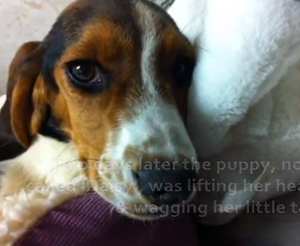
A heart-rending, true story of a puppy. (Has a very happy ending!)
Those of you who have read today’s Chapter Eighteen of ‘the book’ will not have escaped the central role played by Philip’s German Shepherd: Pharaoh.
Well a few days ago the following video was sent to me by a good friend, Ginger, from our Payson days. Won’t say anymore until you have watched it.
Tried hard to find the Facebook page but failed. However, I did find this article on the Psychology Today website that not only refers to Daisy but offers more on the subject of animal emotions.
Animal Emotions
Do animals think and feel?
by Marc Bekoff – Professor Emeritus of Ecology and Evolutionary Biology at the University of Colorado, Boulder.Daisy: The Injured Dog Who Believed She’d Walk Again and Did
Anthrozoology, also called human-animal studies (HAS), is a rapidly growing and expanding interdisciplinary field. A recent and comprehensive review of this wide-ranging discipline can be found in Paul Waldau’s book titled Animal Studies: An Introduction. Many of the essays I write for Psychology Today have something to do with anthrozoology in that they focus on the wide variety of relationships that humans establish with nonhuman animals (animals). Some essays also discuss what we can learn from other animals, including traits such as trust, friendship, forgiveness, love, and hope.
Often, a simple video captures the essence of the deep nature of the incredibly close and enduring bonds we form with other animals and they with us. As a case in point, my recent essay called “A Dog and His Man” showed a dog exuberantly expressing his deep feelings for a human companion he hadn’t seen for six months. Another essay titled “My Dog Always Eats First: Homeless People and Their Animals” dealt with the relationship between homeless people and the animals with whom they share their lives.
Daisy: An unforgettable and inspirational symbol of dedication and hope
I just saw another video called “Daisy – the Little Pup Who Believed” that is well-worth sharing widely with others of all ages. There is no way I can summarize the depth of five-month old Daisy’s resolve to walk again after she was injured or of the devotion of the woman, Jolene, who found her on the side of a road – scared, malnourished, unable to walk or wag her tail, the people who contributed money to help her along, or the wonderful veterinarians and staff at Barrie Veterinary Hospital in Ontario, Canada, who took care of her. You can also read about Daisy’s remarkable and inspirational journey here.
Please take five minutes out of your day to watch this video, read the text, listen to the song that accompanies it, and share it widely. I am sure you will get teary as you watch Daisy go from an injured little ball of fur living in a ditch on the side of a road with a broken spine to learning to walk in water to romping around wildly as if life had been that proverbial pail of cherries from the start.
I’ve watched Daisy’s journey many times and every single time my eyes get watery. Among the many lessons in this wonderful video is “stay strong and never give up”. Clearly dogs and many other animals can truly teach us about traits such as trust, friendship, forgiveness, love, and hope.
OOOO
Two closing thoughts.
When you next want a dog please, please think of those dogs who are in shelters. They must be our first priority.
If there is ever a time when we humans need to learn from dogs the qualities of trust, friendship, forgiveness, love and hope, it is now!
Winter on its way.
We have had a run of cold days here in Southern Oregon going down to the mid-twenties Fahrenheit at night (-4 deg C.)
So this first picture sent in by John H. seemed appropriate for today.

oooo
Then continuing with the series that started last Sunday.

oooo

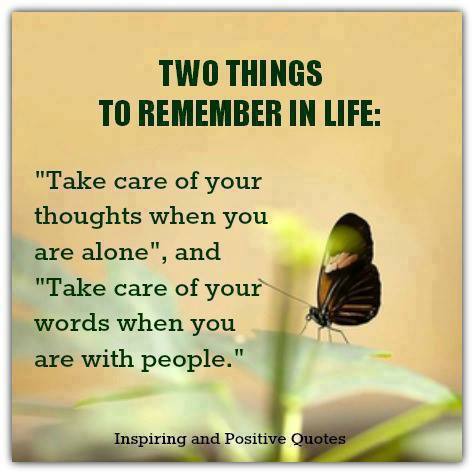
Wise words indeed.
oooo

oooo
oooo
Finally, to a short but inspiring video sent to me by Dan Gomez.
This is a video of a homeless man in Santa Barbara and his pets.
They work State Street every week for donations.
The animals are pretty well fed and are mellow.
They are a family.
The man who owns them rigged a harness up for his cat so she wouldn’t have to walk so much (like the dog and the man himself).
At some juncture the rat came along, and as no one wanted to eat anyone else, the rat started riding with the cat, frequently on the cat.
For a few chin scratches the dog will stand all day and, let you talk to him and admire him.
So the Mayor of Santa Barbara decided to film this clip and send it out as a holiday card.
Happy Thanksgiving in so many ways!
Just a collection of items that I hope you will enjoy.
So enough of the book this week for you dear readers.
It’s the week-end and time to offer you some odds and ends that have come my way in recent days.
First up is some really glorious singing.

Some years ago, I was working with a colleague and subsequently got to know that his wife was a brilliant singer/songwriter enjoying a good singing career. Her name is Rebecca Bains and there is a website here although still under construction according to the home page.
So to Rebecca’s singing.
Now for something completely different.
It’s an advertisement for Volvo Trucks. Sent to me by friend, Neil, from my Devon days. The short video has been seen over 45 million times! If you haven’t seen it, prepared to be wowed!
Now back to Rebecca’s singing. But with this introduction from me. Many know that here in Oregon we have nine dogs. Four of those are dogs that were rescued by Jean from earlier days in Mexico and two from the shelter in Payson, Arizona where we were living before coming to Oregon. There are many, many others who adopt rescue dogs or care for homeless dogs in countless ways.

So as we approach Christmas, the Season of Good Will, please do everything you can to help man’s best friend and companion for, literally, thousands upon thousands of years. If you are thinking of adopting a dog, or a cat, please visit your local shelter or the Pet Finder website.
OK, now to a short video with the singing from Rebecca Bains.
Trust me, this will rightly grab your heartstrings.
Well done, Rebecca.
It’s not just dogs who can read us so well.
Millions of dog owners know how well their animals can read us humans; it’s been mentioned on Learning from Dogs many times before.
Try elephants.
There was a fascinating article on the BBC news website a few weeks ago that went on to explain:
10 October 2013
Elephants ‘understand human gesture’
By Victoria GillScience reporter, BBC News
African elephants have demonstrated what appears to be an instinctive understanding of human gestures, according to UK scientists. In a series of tests, researcher Ann Smet, of the University of St Andrews, offered the animals a choice between two identical buckets, then pointed at the one containing a hidden treat.From the first trial, the elephants chose the correct bucket.
The results are published in the journal Current Biology.
The item included a short video that I am delighted to say is on YouTube. Here it is:
Published on Oct 10, 2013
African elephants have demonstrated what appears to be an instinctive understanding of human gestures, according to UK scientists.
In a series of tests, researcher Ann Smet, of the University of St Andrews, offered the animals a choice between two identical buckets, then pointed at the one containing a hidden treat.
From the first trial, the elephants chose the correct bucket.
The results are published in the journal Current Biology.
The scientists worked with captive elephants at a lodge in Zimbabwe.
Prof Richard Byrne, a co-author on the research, said the elephants had been rescued from culling operations and trained for riding.
“They specifically train the elephants to respond to vocal cues. They don’t use any gestures at all,” said Prof Byrne.
“The idea is that the handler can walk behind the elephant and just tell it what to do with words.”
Despite this, the animals seemed to grasp the meaning of pointing from the outset.
Ms Smet added that she had been impressed by the animals’ apparently innate understanding of the gesture.
“Of course we had hoped that the elephants would be able to learn to follow human pointing, or we wouldn’t have done the experiment in the first place,” she said.
“But it was really surprising that they didn’t seem to have to learn anything.
“It seems that understanding pointing is an ability elephants just possess naturally and they are cognitively much more like us than has been realised.”
Prof Byrne said studying elephants helped build a map of part of the evolutionary tree that is very distant from humans.
“They’re so unrelated to us,” he told BBC News. “So if we find human-like abilities in an animal like an elephant, that hasn’t shared a common ancestor with people for more than 100 million years , we can be pretty sure that it’s evolved completely separately, by what’s called convergent evolution.”
The researchers said their findings might explain how elephants have successfully been tamed and have “historically had a close bond with humans, in spite of being potentially dangerous and unmanageable due to their great size”.
But the scientists added the results could be a hint that the animals gesture to one another in the wild with their “highly controllable trunks”.
Ms Smet told BBC News: “The next step [in our research] is to test whether when an elephant extends its trunk upwards and outwards – as they regularly do, such as when detecting a predator, this functions as a point.”
That BBC article goes on to highlight:
Prof Byrne said studying elephants helped build a map of part of the evolutionary tree that is very distant from humans.
“They’re so unrelated to us,” he told BBC News. “So if we find human-like abilities in an animal like an elephant, that hasn’t shared a common ancestor with people for more than 100 million years , we can be pretty sure that it’s evolved completely separately, by what’s called convergent evolution.”
The researchers said their findings might explain how elephants have successfully been tamed and have “historically had a close bond with humans, in spite of being potentially dangerous and unmanageable due to their great size”.
But the scientists added the results could be a hint that the animals gesture to one another in the wild with their “highly controllable trunks”.
Ms Smet told BBC News: “The next step [in our research] is to test whether when an elephant extends its trunk upwards and outwards – as they regularly do, such as when detecting a predator, this functions as a point.”
Now just where did I pack my old trunk.
Russell Brand speaks the truth to wide applause.
Yesterday’s post here on Learning from Dogs looked at the utter insanity, the greed, the short-sightedness of extracting oil in greater and more varied ways; as if the future for all of life on this planet just didn’t matter. I guess the truth is that for those who stand to benefit from this wealth, the future of the planet just doesn’t matter.
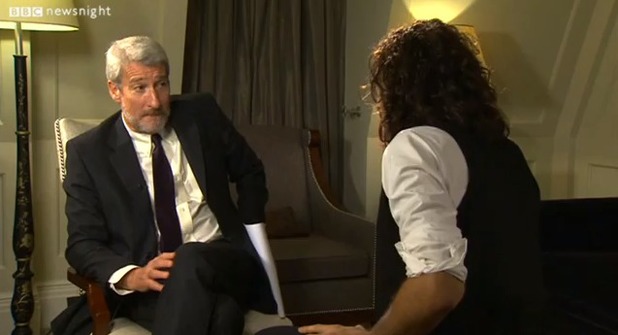
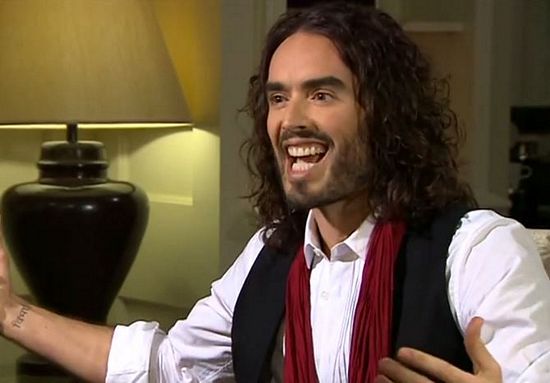
The recent interview on BBC Newsnight by Jeremy Paxman of British comedian Russell Brand has gone viral. At the time of writing this post, YouTube report 7,661,280 viewings! It’s not surprising because what Russell Brand is saying is obvious to millions of people all around the world. What Brand is expressing is as clear as a lone, lighted beacon at midnight on the darkest Winter night one could imagine.
The UK’s Guardian newspaper published an article about the interview last Friday. It was called: Russell Brand takes on the crisis of civilisation. But what now? Here’s how that article opened:
During his Wednesday night interview with Jeremy Paxman on BBC Newsnight, comedian and actor Russell Brand said what no politician or pundit would ever dare say: that without dramatic, fundamental change, the prevailing political and economic system is broken, and hell-bent on planetary-level destruction:
With Dr Ahmed, the author of that Guardian article, concluding:
And in doing so, we might begin to realise that it is precisely the lack of a single, top-down manifesto that is our greatest strength – because, unlike the old, dying, fossil fuel dependent paradigm of endless growth for its own sake for the corporate few, the new, emerging post-carbon paradigm will be co-created by people themselves from the ground up.
That is why Brand’s answer for the way forward is so compelling:
“We shouldn’t destroy the planet. We shouldn’t create massive economic disparity. We shouldn’t ignore the needs of the people.”
If we want our children to inherit a habitable planet, rather than bashing Brand for not having a more coherent solution, we need to start being part of it.
Dr Nafeez Ahmed is executive director of the Institute for Policy Research & Development and author of A User’s Guide to the Crisis of Civilization: And How to Save It among other books. Watch his film, The Crisis of Civilization, for free. Follow him on Twitter @nafeezahmed
“We need to start being part of it.”
You know what! The incredible response to that Paxman-Brand interview shows the millions of us who are already “part of it.” Yes, it really does feel that the time is now. That time that so very many of us, in a myriad of different ways, are fighting for our beautiful planet from the ground up.
Finally, if you want to read that interview between Paxman and Brand in detail, then over on Corrente there is a full transcript of the exchange between them.
Long may this run!
“Minds together do not just bind together, they find together.”
My post last Monday, The lure of patterns, appears to have resonated far and wide. In the sense of many echoes reinforcing the perilous nature of our present times and the desperately uncertain decades ahead. Tomorrow I shall be writing specifically about those echoes.
Today, I wanted to spend a little time reflecting on dogs and communities! After all this blog is called Learning from Dogs!
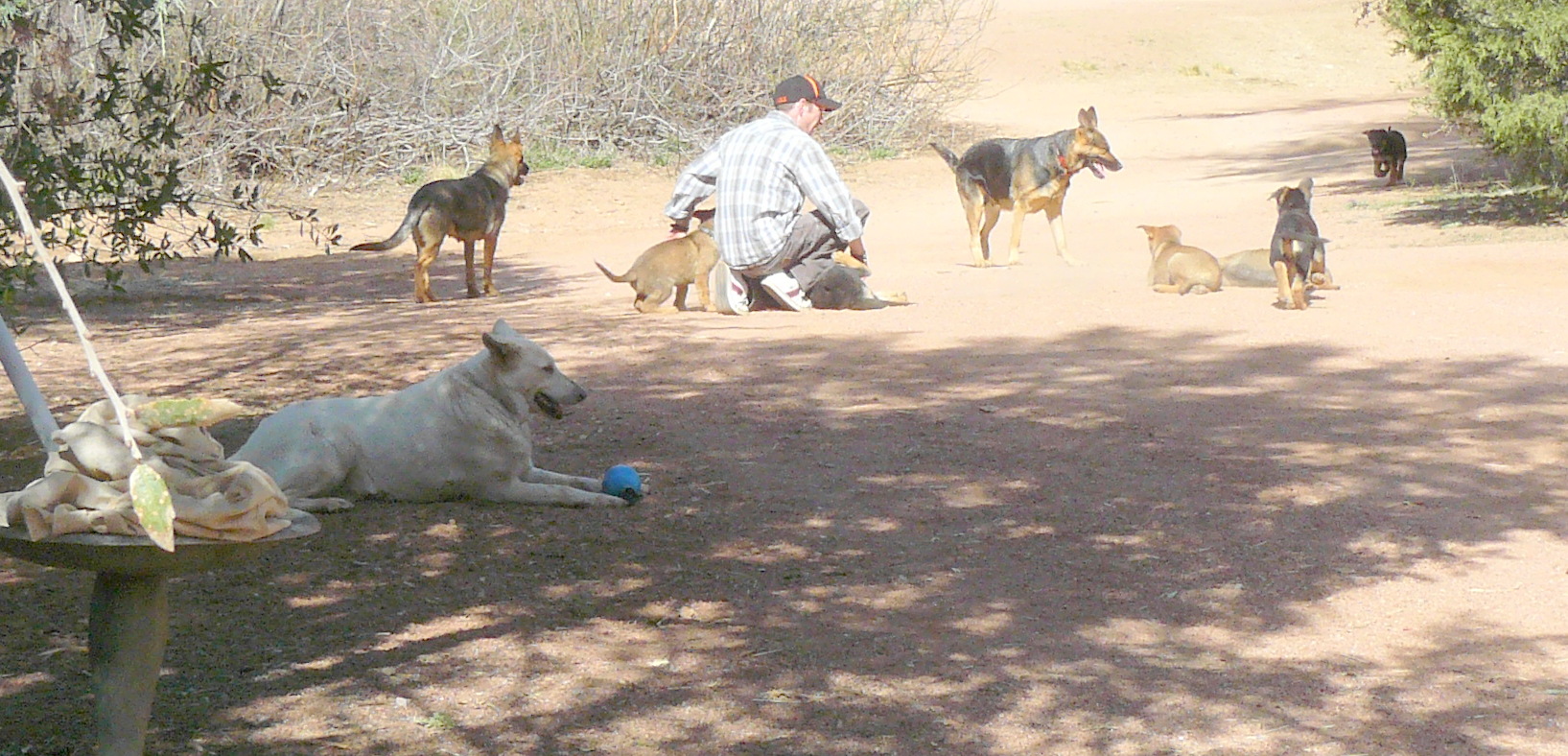
In Monday’s post I opined that the future may well see a return to people re-evaluating and re-energising the benefits of local communities. Now when it comes to communities, there are no better examples than dogs and, so many thousands of years before dogs, grey wolves. These species have an incredibly strong social structure. I mean, of course, the pack. It’s a shame that the expression ‘pack of wolves’ or ‘pack of dogs’ has such misplaced negative connotations.
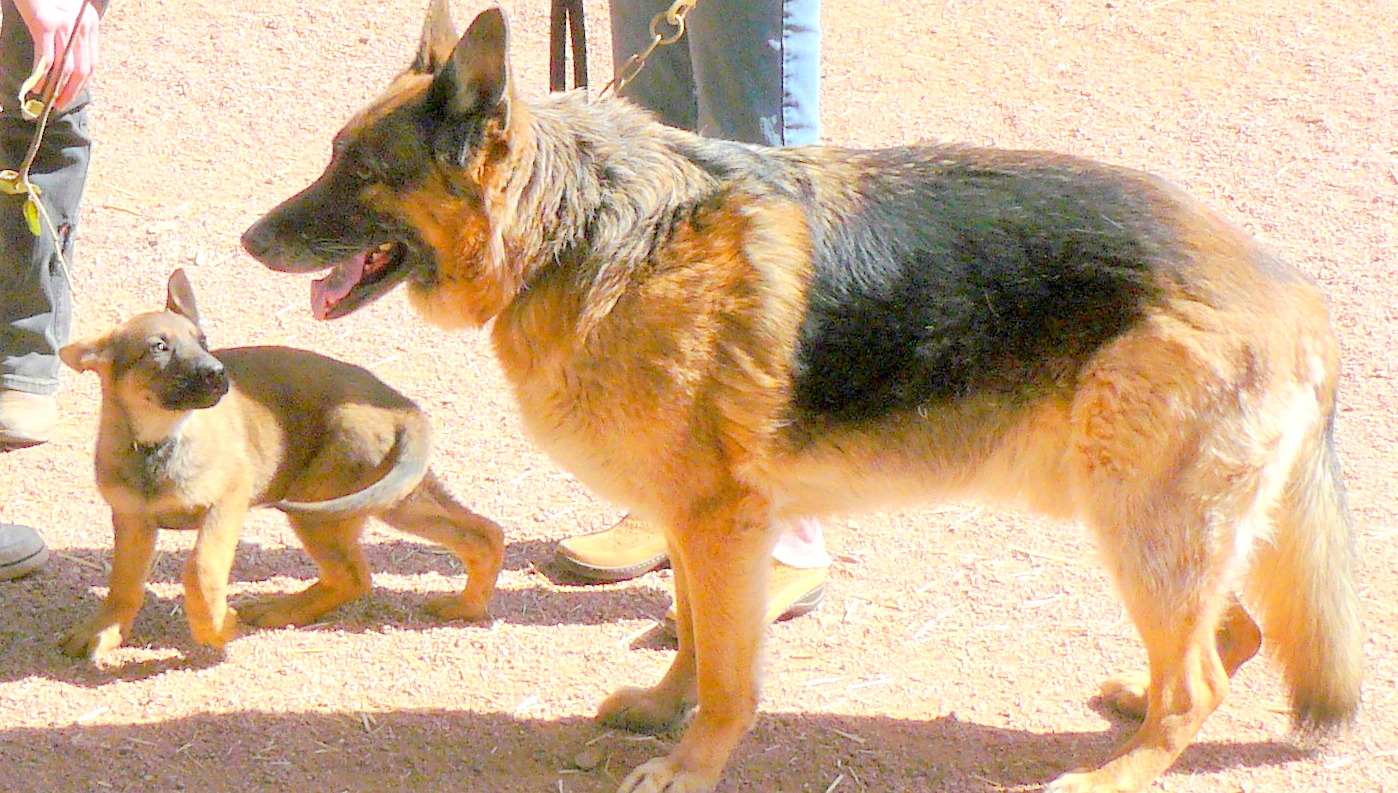
Before dogs were domesticated, as in when they first evolved from the grey wolf, they shared with wolves a natural pack size of around 50 animals. There was a very strong social cohesiveness within that pack yet a very ‘light’ status differential between those dogs having pack status and the mass of the pack group. Ditto with wolves.
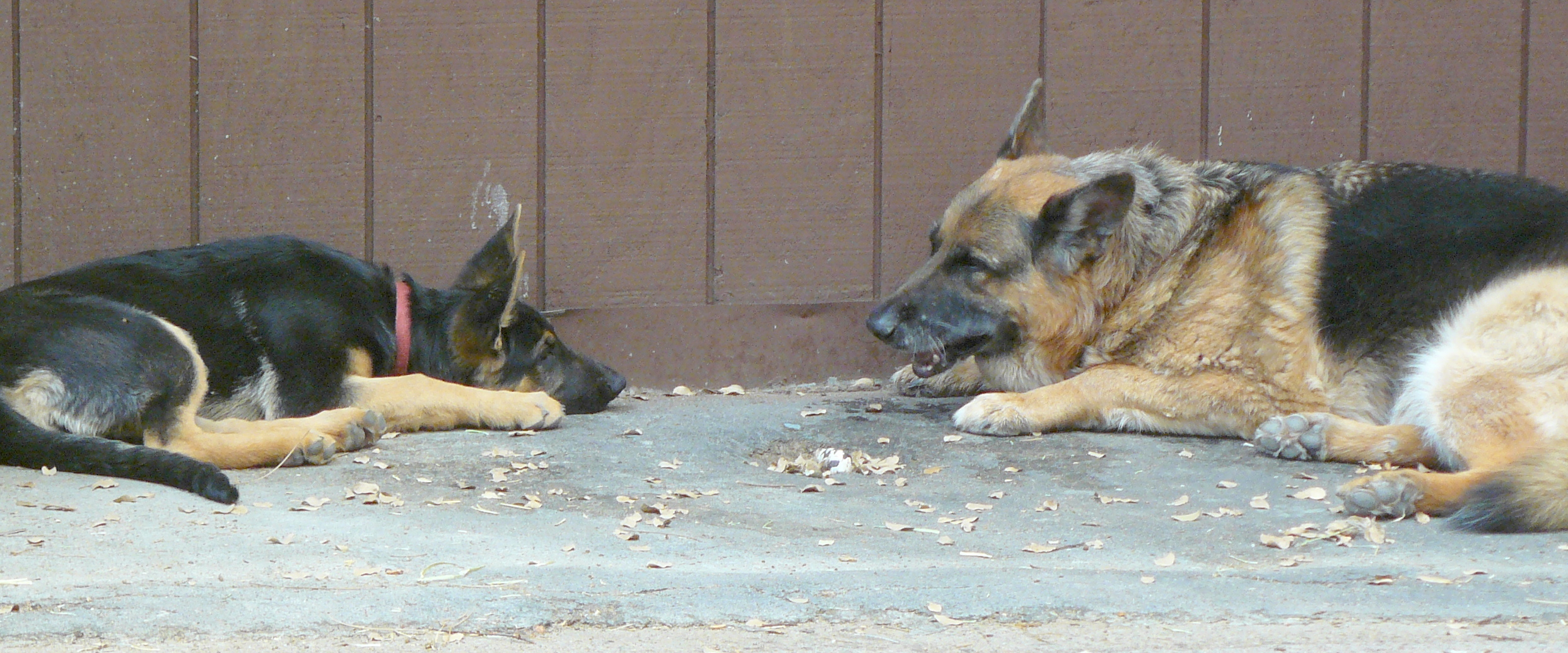
In fact there were (still are) just three status roles: Mentor/Monitor/Nanny. Or has been described previously on this blog: Alpha/Beta/Omega roles. Even within the domesticated dog, thousands upon thousands of years later, those social instincts are alive and well. Many followers of Learning from Dogs will know that Pharaoh, him of the Home Page, now an elderly German Shepherd is a Monitor or Beta dog. I could write about this aspect of dogs for hours!
So back to us funny old humans.
I closed last Monday’s post off with three predictions:
Patrice commented:
Dear Paul: I like your predictions. They will play some role. But maybe somewhere in the bushes only. I think predictions of the future beyond the next 12 months are obsolete.
Jeremy remarked: (and do click the link and read some of Jeremy’s fantastic poetry)
I am hoping for a new localism. I see signs of this in the local food movement and a growing concern about factory farming, for one thing. I think people are really scrutinizing where their food comes from, where their medicines are made, and I think there also is a dawning awareness of how we are living on the backs of exploited third world workers (and poorly paid service workers here at home). I do see signs of these things permeating the consciousness of many people and leading them to want to become more “local.”
Alex said:
Your predictions are good, and I liked the one of communities from different parts of the world working with each other… that was creatively brilliant.
(Click on their names to see three wonderful blog sites, by the way.)
So my idea of a return to an era of localism, but a 21st C. version reflecting the way so many millions of us are connected electronically, wasn’t immediately rejected.
Patrice recently published a post called Devils In The Details. I mentioned in a comment to that post that I would be referring to it in this place. Patrice replied [my italics]:
Very good, Paul! No doubt you will bring more common sense to one more of these interesting collaborations you bring together! Internet debates! A long way from the paleolithique cave!… But still the same idea. Minds together do not just bind together, they find together.
I found that last sentence so powerful that it was used as the sub-heading to today’s post. Then Alexi Helligar commented:
The word consciousness, breaks down to con+scious+ness, which literally means together knowing or shared knowledge.
Adding in a subsequent comment:
In other words: Without society there is no consciousness. The sages of old knew this. Why has it been forgotten?
So right before my eyes (and yours!) we are seeing the power of ‘finding together‘.
Finally, just on the spur of the moment, I did a web search under an entry of ‘early caveman social structure’. Guess what! One of the top search returns was an essay by an Erik D. Kennedy under the title of On the Social Lives of Cavemen. From which jumped off the screen:
Human beings are no strangers to group living. Call it a family trait. Our closest animal relatives spend a good bulk of their time eating bugs off of their friends’ back. While I’m overjoyed we’re not social in that manner, I’m less pleased that we’re not social more to that degree. In study after study, having and spending time with close friends is consistently correlated with happiness and well-being. And yet, the last few decades in America have seen a remarkable decline in many things associated with being in a tight-knit social circle—things like family and household size, club participation, and number of close friends. Conversely, we’ve seen an increase in things associated with being alone—TV, commutes, and the internet, for example.
This trend is quite unhealthy. It’s no surprise that humans are social animals—but it may be surprising that we’re such social animals that merely joining a club halves your chance of death in the next year—or that living in a close-knit town of three-generation homes can almost singlehandedly keep you safe from heart disease.
My goodness me, this sharing idea may be core to a healthy society in ways that we need to return to. Erik’s essay goes on thus:
That particular case—of Roseto, Pennsylvania—is mentioned by Malcolm Gladwell in his book Outliers. In 1950’s Roseto, the incidence of heart disease in men over sixty-five was half the national average (and suicide, alcoholism, drug addiction, and serious crime were also basically unheard of[ii]). Bewildered doctors searched for solutions in genetics, diet, exercise, and geography, but finding nothing, reached the conclusion that it was the close-knit social life of the community that kept its residents so healthy. Dinners with grandma, friendly chats between neighbors, and a precocious level of civic involvement were the driving factors in the health of a town that nothing but old age could kill.
The happiness and health I’m describing are not, however, ingredients to a long-lost elixir of well-being. This sort of paleo social life occurs in cultures large and small all over the globe. America just happens to be an enormous exception (and the one that I live in). The whole reason Roseto was an outlier is because it was a town whose inhabitants more or less collectively moved from rural Italy to the middle of Pennsylvania over a few decades. This was basically an Italian village in the American countryside, and it stood out because Italy’s social culture was remarkable compared to America’s—and that was in the 1950’s. America’s social culture has only deteriorated even further since then. We’ve lost a lot, but my thesis is a positive one; we have as much to gain as ever.
So if wolves and dogs naturally settle into packs of 50 animals, what’s the optimum ‘pack’ size for humans? Dear Erik even offers that answer:
Along with that urban emigration came a shrink in residents per household and a widespread decline in community and organization engagement. This isolation has been taxing on our physical and mental health, and the reason has been clear from the beginning: it’s not good for man to be alone.
So we’ll spend more time with other people. Fine. But who should we spend our time with? What kind of groups should we hang out in? And how big of groups? The simple answer is: as long as you’re pretty close to the people you’re with, it hardly matters. Piles of research back up what is essentially obvious from everyday experience: that the more time you spend with people you trust, the better off you are. That’s not to discourage actively meeting new people, but seeing as though close friends push us towards health and happiness better than strangers, there does appear to be a limit on the number of people you can have in your “tribe”.
And that number is about 150, says anthropologist Robin Dunbar, who achieved anthropologist fame by drawing a graph plotting primates’ social group size as a function of their brain sizes. He inputted the average human brain size into his model, and lo and behold, the number 150 has been making a whirlwind tour of popular non-fiction books ever since. Beyond being the upper bound for both hunter-gatherer tribes and Paleolithic farming villages, it appears that everything from startup employee counts to online social networks show this number as a fairly consistent maximum for number of close social ties.
You really must read Erik’s essay in full; it really ‘spoke’ to me and maybe it will do the same for you.
So no other way to close than to say that of all the things we can learn from dogs, the power of sharing, of living a local community life, may just possibly be the difference between failure and survival of us humans.
oooo
Is this present era really coming to an end?
Somewhere in my aged brain cells is the memory of having heard that humans are great lovers of patterns. In other words, patterns are deemed to be very important for the progress and evolution of homo sapiens. Of course, it is not just humans who learn from patterns; I’m sure most of the animals who live around us are great pattern matchers. To support that proposition, anyone who has owned a dog or cat will have spotted how quickly they learn patterns. (As an aside, some months ago our puppy German Shepherd, Cleo, work me at around 4am because she needed to go outside for a ‘call of nature’. I now get woken every single night variously between 2am and 5am for Cleo’s benefit!)
The British mathematician G. H. Hardy who lived from the last quarter of the 19th Century well into the 20th Century, reputedly said (and I cheated and looked it up!):
A mathematician, like a painter or poet, is a maker of patterns. If his patterns are more permanent than theirs, it is because they are made with ideas.
So why has this post opened with the theme of patterns? Because, call it coincidence or what, within the last couple of weeks there have been three articles, each from very a different source, predicting that the present levels of inequality in society are both unsustainable and the beginning of the end.
First, on Michael Robert’s blog there was a post eleven days ago about global wealth inequality. From which I quote:
Global wealth inequality: top 1% own 41%; top 10% own 86%; bottom half own just 1%
—–
Just 8.4% of all the 5bn adults in the world own 83.4% of all household wealth (that’s property and financial assets, like stocks, shares and cash in the bank). About 393 million people have net worth (that’s wealth after all debt is accounted for) of over $100,000, that’s 10% own 86% of all household wealth! But $100,000 may not seem that much, if you own a house in any G7 country without any mortgage. So many millions in the UK or the US are in the top 10% of global wealth holders. This shows just how little two-thirds of adults in the world have – under $10,000 of net wealth each and billions have nothing at all.
This is not annual income but just wealth – in other words, 3.2bn adults own virtually nothing at all. At the other end of the spectrum, just 32m people own $98trn in wealth or 41% of all household wealth or more than $1m each. And just 98,700 people with ‘ultra-high net worth’ have more than $50 million each and of these 33,900 are worth over $100 million each. Half of these super-rich live in the US.
Michael Robert’s essay closes:
All class societies have generated extremes of inequality in wealth and income. That is the point of a rich elite (whether feudal landlords, Asiatic warlords, Incan and Egyptian religious castes, Roman slave owners, etc) usurping control of the surplus produced by labour. But past class societies considered that normal and ‘god-given’. Capitalism on the other hand talks about free markets, equal exchange and equality of opportunity. But the reality is no different from previous class societies.
Secondly, just last Friday I was drawn to an essay on, of all places, The Permaculture Research Institute blog. The essay, by Chris Hedges (**), was called On Inequality and the Collapse of Globalization. Chris Hedges opened his essay, thus:
The uprisings in the Middle East, the unrest that is tearing apart nations such as the Ivory Coast, the bubbling discontent in Greece, Ireland and Britain and the labor disputes in states such as Wisconsin and Ohio presage the collapse of globalization. They presage a world where vital resources, including food and water, jobs and security, are becoming scarcer and harder to obtain. They presage growing misery for hundreds of millions of people who find themselves trapped in failed states, suffering escalating violence and crippling poverty. They presage increasingly draconian controls and force—take a look at what is being done to Pfc. Bradley Manning—used to protect the corporate elite who are orchestrating our demise.
We must embrace, and embrace rapidly, a radical new ethic of simplicity and rigorous protection of our ecosystem—especially the climate—or we will all be holding on to life by our fingertips. We must rebuild radical socialist movements that demand that the resources of the state and the nation provide for the welfare of all citizens and the heavy hand of state power be employed to prohibit the plunder by the corporate power elite. We must view the corporate capitalists who have seized control of our money, our food, our energy, our education, our press, our health care system and our governance as mortal enemies to be vanquished.
The PRI editor’s preamble to the Chris Hedges essay included a couple of videos that he recommended watching. One was a talk by Robert Reich: How Unequal Can America Get Before We Snap?
The other one was a recent TED Talk by Richard Wilkinson (his profile is here).
Mr. Wilkinson explains that for the majority of people there is an instinctive feeling that societies with huge income gaps and corresponding high levels of social inequality are somehow going wrong. He charts the hard data on such economic inequality and shows what gets worse when rich and poor are too far apart: ergo, the very real effects on health, lifespan, and even such basic values as trust.
Just 16 minutes long, it’s a very revealing talk. Do watch it.
oooo
The final, third piece of the pattern was me coming across an essay on the blog DeflationLand, not a blog I had come across before, on the same day that I saw the PRI article. This essay, published just two days before the PRI article, was about patterns; the patterns of the centuries. More specifically, how the characteristics of a century generally evolve to a new culture within the first 10 to 15 years of the following century. It was a most interesting proposition and, to my delight, I was given permission to republish that essay here on Learning from Dogs. So here it is.
oooOOOooo
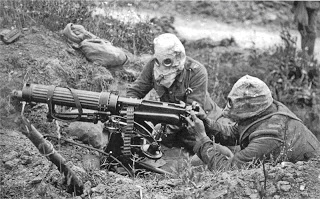
For the past 300 years, the historical pattern has been for the era marked by a century to continue into the following century by fourteen or fifteen years. Let me explain. Everyone knows that the 19th Century, its uprightness, its optimism and sense of purpose, the halcyon days of British Empire, came to an end with World War I, starting in 1914 and building to a nasty crescendo by 1916. The 20th Century had arrived, and it had some real horrors in store for us.
But if we return back another hundred years, we notice that the 18th Century ends in 1815 with the final defeat of Napoleon, that final project of the Enlightenment and of the French Revolution. With the Congress of Vienna in 1814-1815, we have a new Europe along the lines of Metternich’s plan, and the 19th Century at last is here.

In 1713 and 1714, we have the Treaties of Utrecht, Baden, and Rastatt, bringing an end to the era of Spain as a major power, and the rise of the Habsburgs. Louis XIV dies in 1715, after reigning for 72 years. The Baroque period is over, and we are now firmly in the 18th Century.

We still live in the 20th Century. Nothing much significant has changed in our lives in the past twenty years. Symptoms of a deeper rot are appearing here and there, foreshadowing a larger crisis, but the crisis itself has not arrived yet. We still live in an era of Pax Americana, the old republic very much a strained and tired Empire now, with the U.S. Dollar as the world’s reserve currency.
That is going to change.
The next task for History is to dismantle the untenable structures and institutions put in place by late Modernity, which have been extended now as far as they can go. Our debt-based monetary system will collapse, our unbacked fiats will be worthless. The debts and unmeetable obligations will all default.
There are ironies and great contradictions as the former home and hope of Liberty becomes viciously unfree and increasingly despotic. Our leaders no longer govern, but try instead to rule us — they are less legitimate with each passing day, their laws corrupt or worse. They are nearly finished, and will be swept away with the tide.
Just as in 1914, the internationalist system will break down, dashing the hopes of the would-be first-world nations. We will probably have a pretty good war as well, or many local ones worldwide. These transitions tend to involve war.
Deflation first — it clears the way for the complete loss of faith and hyperinflation that will follow. The next big wave down in the financial markets is the battering ram. The U.S. national debt is about faith, so is quantitative easing, and so is the very idea of magical coins that could ever be “worth” a trillion dollars. When this faith breaks, in concert with loss of faith in perpetual growth and unlimited cheap energy, then things will move very, very quickly.
There is nothing any of us can do at this point, except navigate the rapids as well as possible, and to stay out of the way of a dying empire, which is still very dangerous in its death throes. We are actually very privileged to be alive and witnessing this next transition, to what we do not know just yet. But what an honor to live at this time, not in ignorance but with an existential resolve to come out of it alive and much the wiser.

oooOOOooo
** Chris Hedges is a Pulitzer Prize–winning author and former international correspondent for the New York Times. His latest book is The World As It Is: Dispatches on the Myth of Human Progress.
I am neither a scientist nor a historian; just someone who has lived in and observed the world for coming on for 60 years.
So you have to understand that my prediction is hardly worth the ‘paper I write upon’ (which certainly dates me!). But, undaunted, here are my predictions for the 21st Century:
What do you think?

