Category: consciousness

Honouring our rescue dogs.

In this case, honouring one particular one.

As many know, yesterday was the fourteenth anniversary of when those two planes struck the towers of the World Trade Centre. Thus it seemed beautifully appropriate to recognise the life of the last living 9/11 rescue dog by republishing the article just published on Mother Nature News.

ooOOoo

Last living 9/11 rescue dog rewarded with epic day

Bretagne traveled to NYC to be honored for her weeks of service at Ground Zero.

By: Laura Moss, September 11, 2015.

At 16, Bretagne is a senior dog, but that hasn't slowed her down. She now volunteers at schools. (Photo: BarkPost)
At 16, Bretagne is a senior dog, but that hasn’t slowed her down. She now volunteers at schools. (Photo: BarkPost)

About 100 search-and-rescue dogs scoured the twisted steel beams and crumbled concrete of the World Trade Center in the aftermath of the 9/11 attacks, and today, Bretagne (pronounced “Brittany”) is the last known living 9/11 search-and-rescue dog. And she just had the best day ever.

To honor Bretagne for her service and celebrate her 16th birthday, BarkPost teamed up with the dog-friendly 1 Hotel Central Park to give the golden retriever a “Dog’s Best Day” that included a full day of treats and activities in New York City.

When Bretagne arrived in New York with her owner and handler Denise Corliss, she was greeted by a personalized billboard in Times Square.

Photo: BarkPost
Photo: BarkPost

Then she was off to play in the water at Hudson River Park, where she was presented with the doggie version of the Key to the City.

Former search-and-rescue teammates attended Bretagne’s sweet-16 party later that day, where she received a variety of toys and treats — and her very own birthday cake.

Photo: BarkPost
Photo: BarkPost

Corliss was also presented with a $1,000 donation for Texas Task Force 1, Bretagne’s search-and-rescue team, which is the most active one in the country.

In addition to her recovery work at Ground Zero, Bretagne and Corliss also worked in New Orleans following Hurricane Katrina, and today, the senior dog serves her community by volunteering at school programs that teach children to read.

Corliss adopted Bretagne as an 8-week-old puppy in 1999, and after undergoing rigorous training, the two joined Texas Task Force 1. Their first deployment was to Ground Zero, where a search for survivors quickly turned into a search for human remains.

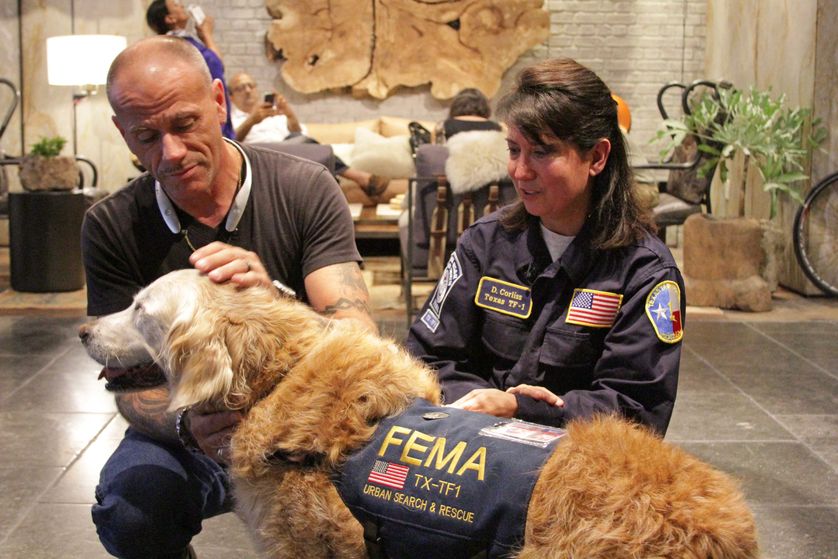
Bretagne with a firefighter and her owner and handler, Denise Corliss during her "Dog's Best Day." (Photo: BarkPost)
Bretagne with a firefighter and her owner and handler, Denise Corliss during her “Dog’s Best Day.” (Photo: BarkPost)

For two weeks, the golden retriever tirelessly worked 12-hour shifts at the former site of the World Trade Center, and one day, Bretagne walked away from Corliss, ignoring commands to come back. The 2-year-old dog made her way to a firefighter sitting on the ground, laid next to him and put her head in his lap.

“When we deploy to some of the disasters, what I didn’t anticipate is the role that they take on as a therapy dog,” Corliss told BarkPost. “It provides an opportunity for people to have support from the dog and comfort from the dog in a real difficult environment.”

Watch Bretagne enjoy her best day in the video below.

ooOOoo

Don’t these wonderful, fabulous animals just make your heart ache!

Jean and I salute Bretagne and all the other Search & Rescue dogs both here in America and all around the world.

Animal survival.

The wonderful way that animals have evolved to survive life on the go.

It is very easy to look at our wonderful domesticated dogs and forget that genetically they are still very much hunting dogs. Of all the dogs that we have had Dhalia seemed the most closely connected with those instincts, and she is still missed more than a year after she died. So much so that I’m going to republish part of the post that commemorated her life just after she died. Here it is:

Dhalia, as with so many other dogs, offered lasting lessons.
April 8th, 2014

Inevitably, as Jean and I went around our ‘stuff’ yesterday after burying Dhalia in the morning, there were moments of quiet contemplation and gentle discussion.  Interludes over a hot drink where we reflected on the special dog that she was.

Much has already been written in this place but there can’t be too many reminders for us quirky humans of how valuable are the qualities of trust and love given to us by our dogs.

We need reminding how dogs are so intuitive and can reach out to a stranger without a moment of hesitation.  As Jean described when recalling how she first came across Dhalia.

Dhalia - domesticated but still the wild dog shows through.
Dhalia – domesticated but still the wild dog shows through.

It was a Sunday around the middle of the month of September in the year 2005. My friend, Gwen, and I had set off for La Manga, a small fishing village three miles from San Carlos, Mexico.  As the trip would take us through areas of desolate desert and the day was forecast to be a sizzler, we left early. The purpose of the journey was to feed a pack of dogs that were living on the outskirts of La Manga. These wild dogs were gradually getting used to our presence and with the aid of a humane trap we had previously caught two of them, a small puppy and her mother. Those two dogs were at my home and were gradually becoming tame so that good homes could be found for them.

Half-way to our destination, we saw two dogs running by the side of the road.   It wasn’t unusual to see strays searching for road-kill. I stopped the car and prepared food and water for them. One dog took off almost immediately but the other just stood perfectly still looking intently at me. She was rail-thin and full of mange.  Her ears and chest were scabbed with blood, and I could see that previously she had had pups. Tentatively, I pushed the food towards her. She took a bite and sat on her haunches; her eyes never leaving mine. Then she lifted a paw and reached out to me. Immediately, I burst into tears and scooped her into my arms.  I carried her back to the car where she lay quietly in my lap whilst we went on to do our feeding.  She was bloody and very smelly. However, I didn’t care.

Dhalia was always a gentle dog.  One that would mix with any of the other dogs. A dog that loved people, of all types and ages.

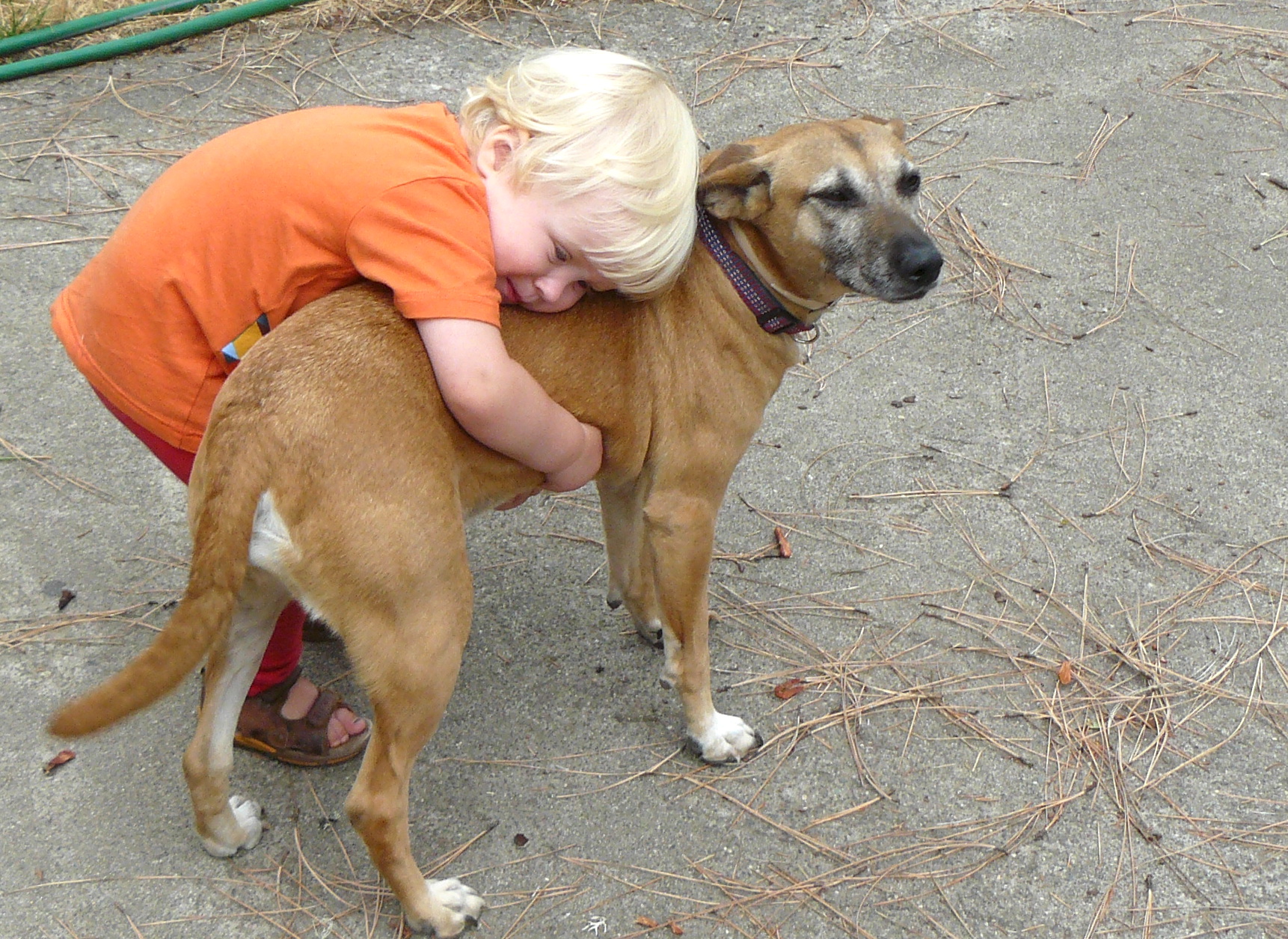
Love and Trust - Grandson Morten hugging Dhalia.
Love and Trust – Grandson Morten hugging Dhalia, September 2013.

You can read the full post here.

The reason that my post from last year came to mind was as a result of a recent article on The Conversation blogsite. It was called Motion dazzle: spotting the patterns that help animals outsmart predators on the run and seemed ideal to share with all you good people who support this place.

ooOOoo

Motion dazzle: spotting the patterns that help animals outsmart predators on the run

Laura Kelley, University of Cambridge

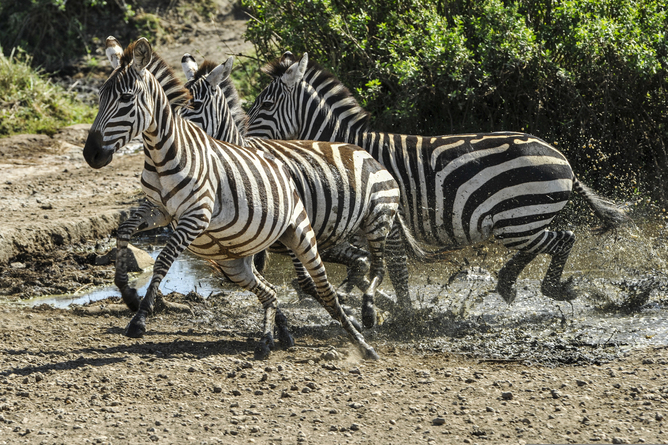
Zebra are seen running at the Serengeti National Park in Tanzania Nov. 14, 2013. (U.S. Navy photo by Mass Communication Specialist 1st Class Eric Dietrich/Released)

Many animals use the colours and patterns on their bodies to help them blend into the background and avoid the attention of predators. But this strategy, crypsis, is far from perfect. As soon as the animal moves, the camouflage is broken, and it is much easier for a predator to see and catch it. So how do animals protect themselves when they’re on the move?

Researchers are exploring whether high-contrast patterns during motion, such as stripes and zigzags, may be distorting the predator’s perception of where the animal is going. But, as little is known about such “motion dazzle”, we have built an online game to help shed light on it.

Lessons from war

The idea is that it may be more effective for animals to focus on preventing capture, rather then preventing detection or recognition, is actually more than 100 years old. It was naturalist Abbott Thayer who suggested that high-contrast patterns may distort the perceived speed or direction of a moving object, making it harder to track and capture.

Such motion dazzle patterns were actually used in World War I and II, where some ships were painted with black and white geometric patterns in an attempt to reduce the number of successful torpedo attacks from submarines. However, due to many other factors affecting wartime naval losses, it is unclear whether motion dazzle patterns actually had the desired effect.

HMS Argus displaying a coat of dazzle camouflage in 1918. wikimedia

What about the natural world? Zebras have bold stripes, and scientists have debated the function of their patterns since Darwin’s time. A recent modelling study suggested that when zebras move, their stripes create contradictory signals about their direction of movement that is likely to confuse predators. There are potentially two visual illusions responsible for this, which could form the basis of motion dazzle effects: the wagon wheel effect and the barber pole illusion.

The wagon wheel effect is named after Western movies, where the wheels on wagons often appear to be moving backwards. This is because the visual system takes “snapshots” over time and links them to create a continuous scene, in the same manner as recording film. If a wheel spoke moves forward rapidly between sampling events, it will appear to have moved backwards as it will be misidentified as the following spoke.

The barber pole illusion (also known as the aperture effect) occurs because the moving stripes provide ambiguous information about the true direction of movement. These illusory effects produced by stripes could therefore lead to difficulties in judging the speed and movement of a moving target. However, the zebra study was entirely theoretical and didn’t test whether striped patterns actually affected the judgements of real observers.

Dazzle Bug

Surprisingly, the first experimental tests of the effectiveness of motion dazzle patterns weren’t carried out until recently. Some studies have shown that strikingly patterned targets can be more difficult to catch than targets with other patterns in studies using humans as “predators” playing touch screen computer games. However, other studies have found no clear advantage for motion dazzle patterns So although patterns can affect our perception of movement, it’s still not clear which are most effective at doing so.

Can you see the spider? Crypsis can be pretty effective – as long as you don’t move. J Kelley, Author provided

We are addressing the question of which patterns are best for avoiding predators during movement using Dazzle Bug – an online game that asks players to imagine themselves as a predator, trying to catch a moving bug as fast as possible. Each bug has a different body pattern as well as a random pattern of movement. Bugs with easy to catch patterns will disappear, whereas those that are particularly tricky to catch will survive ––just like in nature. Over time, the patterns on the bugs’ body will evolve so that they become harder to catch with each successive generation.

This citizen science project will allow us to see what patterns are most effective at evading capture. We can then use these results to look at what visual effects these patterns have, and to see whether these patterns match up with those found on real animals in the wild.

Our findings will offer insight into the role of stripes, which are common in many species. While these patterns may have evolved to confuse the visual perception of a predator, they may also be a result of other selection pressures, such as attracting a mate or regulating body temperature. If striped patterns survive and evolve in the game, this would provide strong evidence that these patterns do act to confuse human predators, perhaps by producing the illusions described above. As motion perception seems to be highly conserved across a wide range of populations, these illusions may occur for many other predators too.

If we find that patterns other than stripes – such as speckles, splotches or zigzags – are most effective in preventing capture, this then leads to new and interesting questions about how these patterns may act to confuse or mislead. Whatever the outcome, Dazzle Bug will provide insight into how bodily patterns may have evolved to help animals to survive life on the go.

The ConversationLaura Kelley, Research Fellow, University of Cambridge

This article was originally published on The Conversation. Read the original article.

ooOOoo

 The natural world is so incredibly interesting.

Seeing the truth in our mirror.

A sombre reflection on the killing abilities of man.

I was in two minds as to whether to post this today for it is certainly a grim reminder of the less desirable aspects of our species.

In the end, I decided to so do because it needs to be shared and if it changes the mindset of just one person it will have been worthwhile. I was originally seen by me on the EarthSky blogsite.

ooOOoo

Want to see Earth’s super predator? Look in the mirror.

Our efficient killing technologies have given rise to the human super predator. Our impacts are as extreme as our behavior, says study.

Rope trawl for midwater trawling. Photo credit: NOAA

Extreme human predatory behavior is responsible for widespread wildlife extinctions, shrinking fish sizes and disruptions to global food chains, according to research published in the August 21 edition of the journal Science these are extreme outcomes that non-human predators seldom impose, according to the article.

Lead researcher Chris Darimont is a professor of geography at the University of Victoria. Darimont said:

Our wickedly efficient killing technology, global economic systems and resource management that prioritize short-term benefits to humanity have given rise to the human super predator. Our impacts are as extreme as our behavior and the planet bears the burden of our predatory dominance.

A coastal wolf is hunting salmon in British Columbia, Canada. Photo credit: Guillaume Mazille

The team’s global analysis indicates that humans typically exploit adult fish populations at 14 times the rate than do marine predators. Humans also hunt and kill large land carnivores such as bears, wolves and lions at nine times the rate that these predatory animals kill each other in the wild.

Researchers noted that in some cases, dwindling species of predatory land carnivores are more aggressively hunted for trophies, due to the premium placed on rare prey.

The result of human activity on wildlife populations is far greater than natural predation. Research suggests that socio-political factors can explain why humans repeatedly overexploit. Technology explains how: Humans use advanced killing tools, cheap fossil fuel, and professional harvesters – like high-volume commercial fishing fleets – to overcome the defensive adaptations of prey.

Humanity also departs fundamentally from predation in nature by targeting adult quarry.Co-author Tom Reimchen is a biology professor at University of Victoria. He said:

Whereas predators primarily target the juveniles or ‘reproductive interest’ of populations, humans draw down the ‘reproductive capital’ by exploiting adult prey.

During four decades of fieldwork on Haida Gwaii, an archipelago on the northern coast of British Columbia, Reimchen looked at how human predators differ from other predators in nature. Reimchen’s predator-prey research revealed that predatory fish and diving birds overwhelmingly killed juvenile forms of freshwater fish. Collectively, 22 predator species took no more than five per cent of the adult fish each year. Nearby, Reimchen observed a stark contrast: fisheries exclusively targeted adult salmon, taking 50 per cent or more of the runs.

The authors conclude with an urgent call to reconsider the concept of “sustainable exploitation” in wildlife and fisheries management. A truly sustainable model, they argue, would mean cultivating cultural, economic and institutional change that places limits on human activities to more closely follow the behavior of natural predators. Darimont said:

We should be protecting our wildlife and marine assets as an investor would in a stock portfolio.

Enjoying EarthSky? Sign up for our free daily newsletter today!

Bottom line: According to research published in the August 21, 2015 edition of Science, extreme human predatory behavior is responsible for widespread wildlife extinctions, shrinking fish sizes and disruptions to global food chains.

Read more from the University of Victoria

ooOOoo

Chris Darimont really put his finger on the spot in my opinion when he was quoted,”We should be protecting our wildlife and marine assets as an investor would in a stock portfolio.”

Going to close today’s post by repeating what is presented on the Welcome page of Learning from Dogs, namely:

As man’s companion, protector and helper, history suggests that dogs were critically important in man achieving success as a hunter-gatherer. Dogs ‘teaching’ man to be so successful a hunter enabled evolution, some 20,000 years later, to farming, thence the long journey to modern man. But in the last, say 100 years, that farming spirit has become corrupted to the point where we see the planet’s plant and mineral resources as infinite. Mankind is close to the edge of extinction, literally and spiritually.

Dogs know better, much better! Time again for man to learn from dogs!

My argument rests!

That most precious bond.

Why we turn to dogs when disaster strikes.

With the memory of Hurricane Katrina refreshed in our minds as we acknowledge the recent passing of the tenth anniversary of that ghastly disaster, a link to an item from May, 2013 that was published on Mother Nature Network seems perfect for this place.

ooOOoo

Why we turn to dogs when disaster strikes

From aiding search-and-rescue missions to lending a shoulder to cry on, man’s best friend can often be found at the site of tragedy.

By: Laura Moss, May 21, 2013.

Photo: K-9 Parish Comfort Dogs/Facebook

Disaster relief is flooding into Moore, Okla., but along with volunteers and supplies, there are dogs.

Some, including the 11 canine disaster search teams trained by the Search Dog Foundation or SDF, are scouring tornado debris for survivors. Others are en route to comfort the devastated city’s residents. Lutheran Church Charities, whose therapy dogs have worked with victims of the Boston bombings and the Newtown, Conn., shootings, is sending six dogs from its Chicago headquarters.

When disaster strikes, man’s best friend is often there, working on the frontlines of rescue efforts, as well as behind the scenes, helping people cope with trauma and loss.

Super sniffers

Experts estimate that one search-and-rescue (SAR) dog can accomplish the work of 20 to 30 human searchers. Because of these unparalleled abilities, the number of trained SAR dogs has been rising across the United States.

Dogs make efficient searchers due to their superior vision, hearing and sense of smell. A dog’s nose is about 100 times more sensitive than a human nose, and SAR dogs are trained to locate human scents amid countless other smells. They track our scents by the 30,000 to 40,000 dead skin cells we drop every minute.

“Dogs aren’t miracle workers, but their noses are so precious,” said SDF founder Wilma Melville. “They can find those people who survived a horrific ordeal.”

Air-scent dogs are trained to work in specific types of terrain. Some search in wilderness settings while others search urban environments, which often can involve scouring Moss2collapsed buildings.

Because they must navigate unstable terrain, urban SAR dogs are some of the most highly trained canines. The only national standards for such dogs are the Federal Emergency Management Agency’s certification standards for urban disaster work. Currently, fewer than 100 dog-handler teams in the U.S. have this certification.

In addition to air-scent dogs, there are dogs taught to seek out both skin cells and the smell of human decomposition. During major disasters, such as the 1995 Oklahoma City bombing and the 2001 collapse of the World Trade Center, both air-scent dogs and cadaver dogs were used to search for people.

This caused problems for SAR dogs because they became discouraged when they found only dead bodies. At both Oklahoma City and Ground Zero, handlers hid in rubble so that dogs could occasionally find a living person. The dogs’ desire to elicit a response from a found person may be a result of their training, which involves seeking feedback and rewards, but experts say it could also speak to a deeper connection with humans.

Man’s best friend

When disasters occur, dogs do much more than just aid search-and-rescue missions. They’re often there to provide a source of comfort for us in ways that only an animal can.

In an interview with American Thinker, Debra Tosch, executive director of SDF, explained how her SAR dog Abby was able to console a firefighter at Ground Zero. “When someone was found, work would stop, and I watched as the tears rolled down the firefighters’ faces. I remember one firefighter who hugged Abby and buried his face in her neck after just finding out a fellow firefighter was found,” she said.

Research show that petting dogs can lower anxiety, regulate breathing and decrease blood pressure, and a Japanese study found that simply looking at a dog can increase Moss3oxytocin levels. Oxytocin is a chemical released by the pituitary gland that’s associated with human bonding and affection.

But while the firefighter may have found comfort in Abby’s presence, was the dog able to empathize? Research says it’s very likely.

A 2012 study at Portugal’s University of Porto found that dogs yawn even when they hear only the sound of a person yawning, providing strong evidence that dogs are able to empathize with us.

And a study at the University of London Goldsmiths College found that dogs comforted people — both their owners and strangers — when the person pretended to cry.

“I think there is good reason to suspect dogs would be more sensitive to human emotion than other species,” Custance told Discovery News. “We have domesticated dogs over a long period of time. We have selectively bred them to act as our companions. Thus, dogs that responded sensitively to our emotional cues may have been the individuals that we would be more likely to keep as pets and breed from.”

ooOOoo

Time and time again, the facts support what the vast majority of those who care for and love dogs truly know: the bond between dog and human is the most special that there has ever been between an animal and mankind.


I’ll lead, you follow Mr Goose.

Stories like this are wonderful – more please!

This needs no further introduction from me other than to say that this gorgeous story is from Mother Nature Network.

ooOOoo

‘Lost’ goose follows pickup truck 6 miles to water

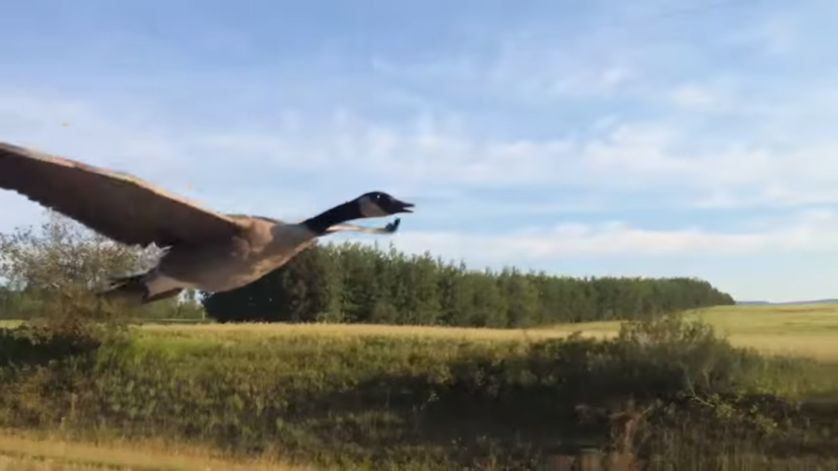
After a Canada goose started following his truck, forester Andre Bachman decided to lead it to a nearby lake — and to film a video out his window as the bird flew dutifully alongside.

By: Russell McLendon
August 20, 2015

If there’s a wild Canada goose following you, it often means you’re being chased angrily from a pond or harassed for bread crumbs. But as a new viral video illustrates, the famously surly birds can be surprisingly civil — even compliant.

Andre Bachman first realized a goose was tailing him as he drove along a gravel road in rural southwest Alberta. “The goose was flying above when it saw his truck and started flying beside him,” writes Reddit user Watchboy0, who posted a video of the encounter titled “A Canada Goose was following my dad in his truck.”

Curious why a goose would spontaneously follow a pickup truck, Bachman pulled over — as did the goose. He began filming with his smartphone as he stepped out to greet the goose, which was waddling nonchalantly toward him.

“Hi,” Bachman said. “What are you doing? Are you lost?”

The goose didn’t answer, aside from quiet honking. But its behavior spoke volumes, revealing a level of comfort with humans that suggests it may have been a pet at some point. Shooing it with “off you go, off you go” didn’t work, so Bachman decided to embrace the goose’s idea. Thinking it might need help finding water, he set out for Shining Bank Lake, which the CBC reports is about 10 kilometers (6 miles) away.

“Let’s go for a flight, OK?” he offered. As Bachman filmed through his truck window, he began driving and coaching the goose to follow. It started with a brisk trot — a pretty amusing sight on its own — and then flapped into flight, letting Bachman capture an endearing view of it flying alongside to the Beatles’ “Let It Be.”

A Canada goose flies alongside a pickup truck on its way to Alberta's Shining Bank Lake. (Photo: Andre Bachman/YouTube)
A Canada goose flies alongside a pickup truck on its way to Alberta’s Shining Bank Lake. (Photo: Andre Bachman/YouTube)

Bachman stopped at least once to check on the goose, saying “I almost hit you, didn’t I?” and noting its tameness when the bird let him pet it. As goose expert Sid Andrews of Inglewood Bird Sanctuary tells Canada’s Global News, even wild Canada geese accustomed to handouts rarely tolerate that.

“I would guess that because it allowed the fellow driving the truck to get very close, that at some point in time, it must have been imprinted on human beings,” Andrews says, adding that it also may have simply mistaken its reflection in the truck’s bumper for another goose. “It somehow got lost or estranged from the group and found, just by happenstance, another goose in the reflection in the bumper.”

Either way, the goose had little trouble keeping up. “My dad would just about stop for the corners after the first one to let it turn,” Watchboy0 writes on Reddit. “Also, at one point he wanted to see how fast it could go. At around 80 km/h [50 mph], the goose started flying above his truck on the air coming off his windshield.”

Once at the lake, the goose “seems happy and stays,” Bachman writes on YouTube, where the video has been watched more than 1.5 million times in about a week. The bird was probably never in serious distress, Andrews says, but Bachman may still have done it a favor by leading it to water. “I certainly would applaud [the driver’s] instincts to head to water because it’ll have a much better chance of finding food.”

ooOOoo

Well done that man: forester Andre Bachman. Well done, indeed!

Staying with the memory of Lilly

A republication of a post from February, 2014

Yesterday, I offered the first of two previous posts about Lilly. Here is the second, originally published in February, 2014.

ooOOoo

Lilly, the second of our nine dogs.

Last week was the start of a series of posts giving you, dear reader, background on each of our nine dogs.  Thus last week, Jean wrote about Paloma.  Here is Jean’s account of how Lilly came into her life.

ooOOoo

Lilly

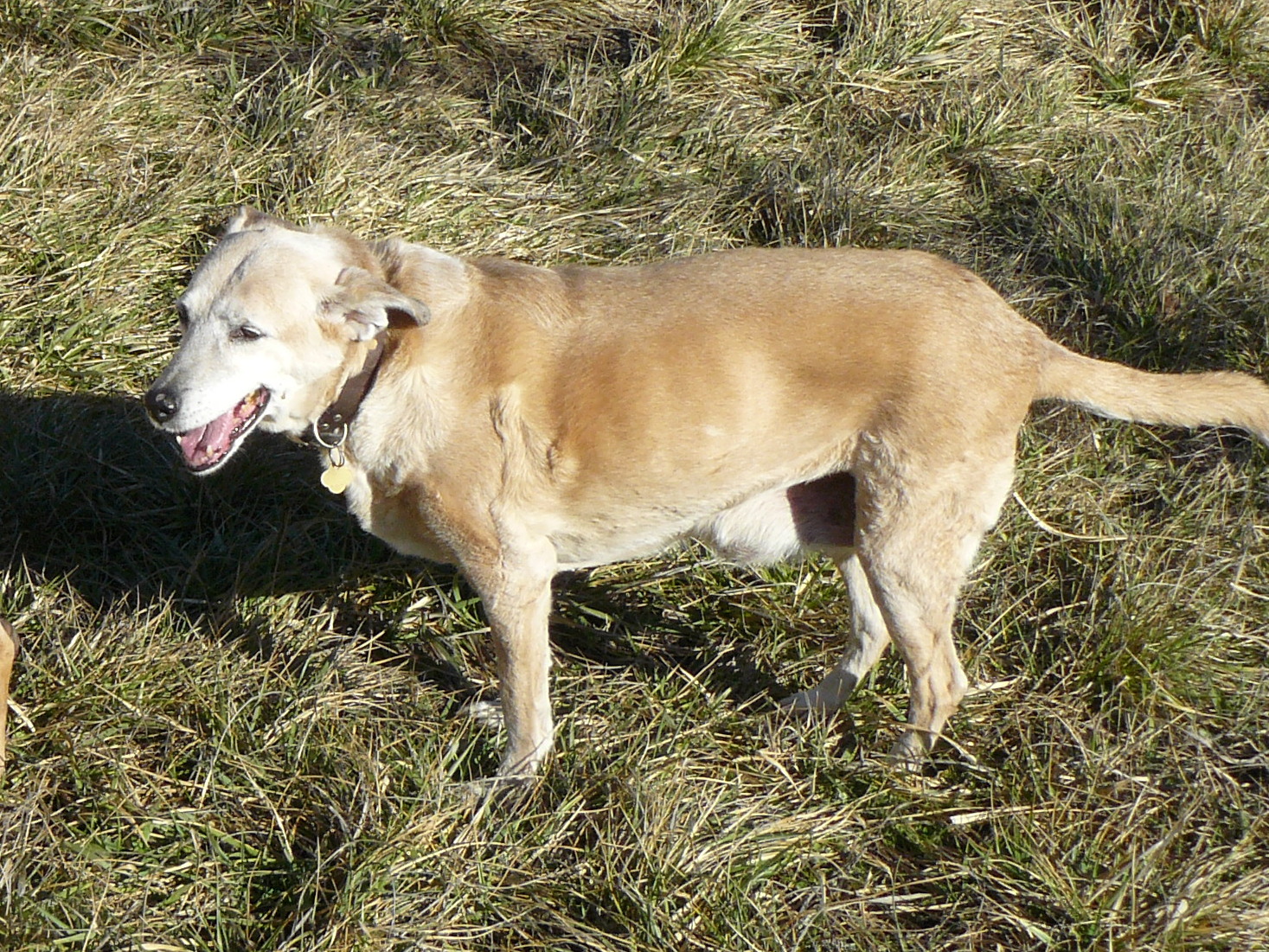
Lilly - Taken in the last two weeks.
Lilly – Taken 26th January, 2014

Lilly came into my life fourteen years ago. I had taken my car into the mechanics workshop in San Carlos, Mexico for an oil change and was beckoned over to an old junk car in their lot. It had no glass in the windows and in the hatch-back area lay a smallish dog with five young, suckling puppies. She had apparently walked in off the street and chosen the old airy car as a suitable ‘house’ in which to have her babies. The workers had supplied her with an old greasy towel for a mattress.

My girlfriend, Suze, and I immediately set about making her comfortable with a small quilt and plenty of water and good dog food. She had been dining on tacos and tamales scraps up until then.

Suze and I visited frequently and took plenty of food and at the same time went about looking for homes for the pups. However, one day we arrived and found all the beautiful babies gone. The mechanics had given them away. We were shattered and could only hope that they had gone to loving homes.

‘Rabbit’, as she was then called, continued hanging around the workshop and the men seemed to like her. Rabbit had this trick of leaping on her hind legs, twirling and landing on her four legs; hence her name Rabbit, I guess.

Suze and I would see her once a week on average and had also arranged for Rabbit to be spayed. All seemed well until Easter came (I think we are talking of the year 2000). As is common in Mexico, during Easter week in San Carlos everything shuts down. It’s carnival time. The streets are busy with tourists and there is much traffic. I was worried about Rabbit as the mechanic’s shop was locked up tight and Rabbit was outside in the lot by the street. I planned to take her home for the rest of the holiday but fate intervened. On my way to collect her, I was aghast to see her motionless by the side of the road, obviously having been hit by a car.  I gently picked her up and took her home.  On inspection, it was clear that she had two broken legs on her right-hand side.  Her injuries were so bad that I knew the local vet did not have the skills or instruments to heal her. My late husband, Ben, and I ended up driving her two hours South to Obregon where there was an orthopaedic vet. He put pins in both legs and she stoically set about mending herself. Rabbit became Lilly. Irrespective of name, she was an assertive but sweet young dog and settled in nicely with my burgeoning pack; I had twelve rescue dogs in those days.  Her legs healed nicely and she resumed her twirling.

Lilly became a particular favourite of Ben, my late husband. When in 2005 Ben lay dying at home, Lilly slept non-stop by his side on the bed, only leaving to eat or go outside.  I knew for sure that Ben had died in the night when one morning I awoke to feel Lilly beside me on my bed. Lilly sensed that now I needed her more.

Lilly is still with us.  Now a dowager old lady of at least fifteen years of age, she still enjoys going out with her buddies whom she tends to boss somewhat.  (Paul thinks that Lilly is an ‘alpha’ dog, in other words has pack leadership in her genes.) But one thing that Lilly doesn’t now do; she doesn’t twirl anymore, but then neither do I.

It will be a very sad day when Paul and I have to say goodbye to this treasure of a dog. [As indeed, it was] In the meantime we endeavour to make each day that she has left as rich as possible.

Another very recent photograph of Lilly.

ooOOoo

I think it would wonderful to also include a section from an email that Suzann Reeve, a good friend of this blog, sent to Jeannie yesterday.

The story of Lily and her origins:

(I of course burst into tears when reading your email, Paul.) I knew it was coming. I wish I could have seen her one more time.

Poor baby, I hope she did not suffer much.

In 1998, Don and I went to a junk yard, which at the time was next to the telephone company in San Carlos. As we were talking to the men, out of a shell of an old car behind us popped a small mama dog, heavy with milk. I of course went right over there after hearing puppies cry to see many little baby puppies were mewling for mommy’s milk! The dog was so sweet and jumped around like a rabbit. I brought food and water for her and found her a nice blanket for her and the pups.
I told Jeannie about them and we went back the next day to check it out. We told the men we would care for them, but one day when we came to feed, the puppies were gone! I begged Don to let me take her, but as I lived in an RV, he would not let me, and I also had 3 dogs at the time, Poncho, and his sister and Destina….., plus the men wanted her, which almost led to her death.
After Don and I left town for the summer sometime later, if i remember correctly, Jean and Ben were driving down the main road in town when they saw LLevre (rabbit in Spanish) injured on the road. I believe they took her down to Obregon for an operation right away, and after a successful operation, she was theirs! They saved her life!
She has lived a very full and happy life. I am so sad that she is gone.


Lilly’s long goodbye

Fewer than five minutes ago, at 11:52 PDT today, Sunday 23rd August 2015, Jim Goodbrod euthanised our Lilly.

Lilly, aged seventeen, started to decline about a year ago. In the last few weeks she had become progressively weaker, she was hardly eating and had lost much body mass, her kidneys were close to total failure and it was clear to Jean and me that she was close to what could in all likelihood be a painful end. So much better for Lilly that her end should be peaceful and pain-free, as it most clearly was.

Lilly was found by Jean sixteen years ago with her five young, suckling puppies in a car mechanics workshop in San Carlos, Mexico and has been loved and cared for by Jean right up to the end. Most Mexican street dogs barely live for a couple of years.

All of our dogs are special yet the odds of any other of our dogs living seventeen human years is very low.

I intend to republish tomorrow and Tuesday two posts of Lilly in homage of this wonderful, gentle and loving dog.

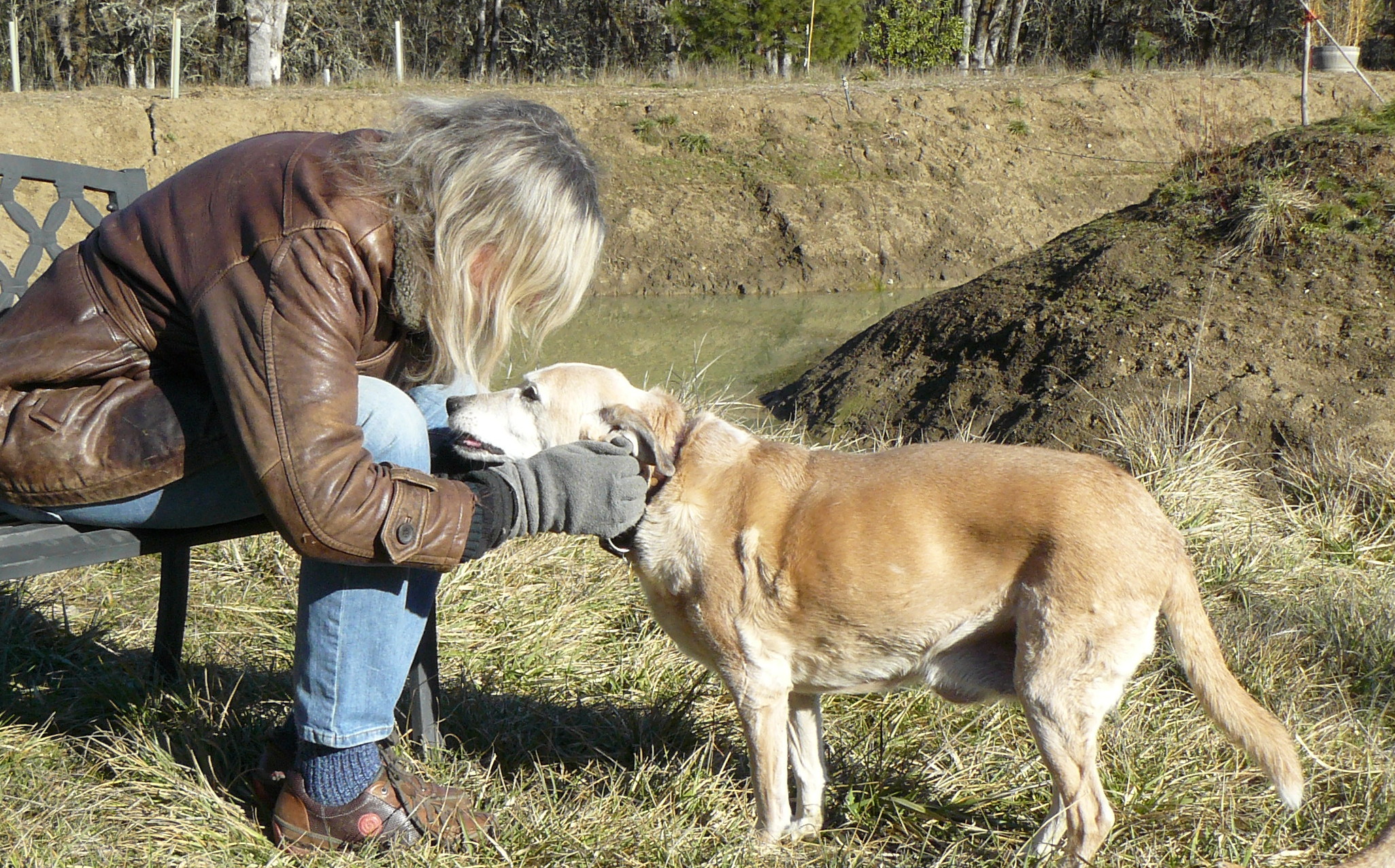
Let me leave you with this photograph of Jean and Lilly from earlier last year.

Another very recent photograph of Lilly.
A photograph of Lilly taken in February, 2014.

The art of stillness.

Another fabulous lesson we can learn from our dogs.

Stillness. It is a very simple, single word yet, somehow, it sounds as though it belongs to a different age. As though stillness is a very long way from the modern society that millions and millions of us subscribe to.

The dog is the master of being still. Being still, either from just laying quietly watching the world go by, or being still from being fast asleep. The ease at which they can find a space on a settee, a carpeted corner of a room, the covers of a made-up bed, and stretch out and be still, simply beggars belief. Dogs offer us humans the most wonderful quality of stillness that we should all practice. Dogs reveal their wonderful relationship with stillness.

Now watch this entrancing talk from Pico Iyer.

Published on Nov 26, 2014
The place that travel writer Pico Iyer would most like to go? Nowhere. In a counterintuitive and lyrical meditation, Iyer takes a look at the incredible insight that comes with taking time for stillness. In our world of constant movement and distraction, he teases out strategies we all can use to take back a few minutes out of every day, or a few days out of every season. It’s the talk for anyone who feels overwhelmed by the demands for our world.

Why you should listen.

Acclaimed travel writer Pico Iyer began his career documenting a neglected aspect of travel — the sometimes surreal disconnect between local tradition and imported global pop culture. Since then, he has written ten books, exploring also the cultural consequences of isolation, whether writing about the exiled spiritual leaders of Tibet or the embargoed society of Cuba.

Iyer’s latest focus is on yet another overlooked aspect of travel: how can it help us regain our sense of stillness and focus in a world where our devices and digital networks increasing distract us? As he says: “Almost everybody I know has this sense of overdosing on information and getting dizzy living at post-human speeds. Nearly everybody I know does something to try to remove herself to clear her head and to have enough time and space to think. … All of us instinctively feel that something inside us is crying out for more spaciousness and stillness to offset the exhilarations of this movement and the fun and diversion of the modern world.”

What others say

“[Iyer] writes the kind of lyrical, flowing prose that could make Des Moines sound beguiling.” — Los Angeles Times

Five years, in the blink of an eye!

How time flies.

We have a guest staying with us for twenty-four hours and the last thing I wanted to do was to spend time at a keyboard composing a new post for today.

So just for fun, I thought of reposting what appeared on this blog five years ago: August 18th, 2010.

And here it is.

ooOOoo

New thinking is our only solution

Came across an interesting organisation the other day, the Centre for the Advancement of the Steady State Economy.

Do drop in to the web site and read what they are all about.

Common sense!

And then reflect about Easter Island.

It’s almost unimaginable that Planet Earth could go the same way.  Then again, anyone over the age of, say 60, would find where we are today, in terms of mankind’s long-term survival, equally unimaginable from how the world looked 40 years ago.

An early predictor of Planet Earth?

ooOOoo

When dark shadows fall across our hearts.

One of the most important lessons we can learn from our dogs: coping with death.

In writing about the lesson of death that we can learn from our dogs I am, of course, speaking of our own death, of the inevitability of our death. That largely unspoken truth that Sharon Salzberg described in her book Faith: “What does it mean to be born in a human body, vulnerable and helpless, then to grow old, get sick and die, whether we like it or not?” [page 34.]

Anyone who has loved a dog has most likely been intimately involved in the end of that dog’s life. It is, to my mind, the ultimate lesson that dogs offer us: how to be at peace when we die and how to leave that peace blowing like a gentle breeze through the hearts of all the people who loved us.

Our beloved dogs have much shorter life spans than us, thus almost everyone who has loved a dog will have had to say goodbye to that gorgeous friend at some point in their lives. Very sadly, perhaps, saying goodbye to more than one loved dog.

All of which is my introduction to a recent essay published on The Conversation blogsite. The essay is written by Bernard Rollin, Professor of Philosophy, Animal Sciences and Biomedical Sciences at Colorado State University. The essay is called: When is it ethical to euthanise your pet?

ooOOoo

When is it ethical to euthanize your pet?

August 12, 2015 6.18am EDT

In the 1960s, I knew people who, before going on vacation, would take their dogs to a shelter to be euthanized. They reasoned that it was cheaper to have a dog euthanized – and buy a new one upon returning – than pay a kennel fee.

Two decades later, I was working at Colorado State’s veterinary hospital when a group of distraught bikers on Harley-Davidsons pulled up carrying a sick chihuahua. The dog was intractably ill, and required euthanasia to prevent further suffering. Afterwards, the hospital’s counselors felt compelled to find the bikers a motel room: their level of grief was so profound that the staff didn’t think it was safe for them to be riding their motorcycles.

These two stories illustrate the drastic change in how animals have been perceived. For thousands of years, humans have kept animals as pets. But only during the past 40 years have they come to be viewed as family.

While it’s certainly a positive development that animals are being treated humanely, one of the downsides to better treatment mirrors some of the problems the (human) health care system faces with end-of-life care.

As with humans, in many cases the lives of pets are needlessly prolonged, which can cause undue suffering for the animals and an increased financial burden for families.

The growth of veterinary medicine and ethics

In 1979, I began teaching veterinary medical ethics at Colorado State University’s veterinary school, the first such course ever taught anywhere in the world.

A year later, the veterinary school hired an oncologist to head up a new program on animal oncology. Soon, our clinic was applying human therapeutic modalities to animal cancer. The visionary head of the veterinary program also hired a number of counselors to help pet owners manage their grief – another first in veterinary circles.

I’d been under the impression that people would be reluctant to spend much money on animal treatments, so I was genuinely shocked when the following April, the Wall Street Journal reported individuals spending upwards of six figures on cancer treatments for their pets.

As a strong advocate for strengthening concern for animal welfare in society, I was delighted with this unprecedented turn of events. I soon learned that concern for treating the diseases of pets besides cancer had also spiked precipitously, evidenced by a significant increase in veterinary specialty practices.

One of the family

So what’s behind the shift in how pets are perceived and treated?

For one, surveys conducted over the last two decades indicate an increasing number of pet owners who profess to view their animals as “members of the family.” In some surveys, the number is as high as 95% of respondents, but in nearly all surveys the number is higher than 80%.

In addition, the breakdown of nuclear families and the uptick of divorce rates have contributed to singles forming tighter bonds with companion animals.

Such attitudes and trends are likely to engender profound changes in societal views of euthanasia. Whereas before, many owners didn’t think twice about putting down a pet, now many are hesitant to euthanize, often going to great lengths to keep sick animals alive.

Vets caught in the middle

However, veterinarians continue to experience extensive stress as they experience two opposite – but equally trying – dilemmas: ending an animal’s life too soon, or waiting too long.

In a paper that I published entitled Euthanasia and Moral Stress, I described the significant stress experienced by veterinarians, veterinary technicians and humane society workers. Many chose their profession out of a desire to improve the lot of animals; instead, they invariably ended up euthanizing large numbers of them, often for unethical reasons.

These ranged from “I got the dog to jog with me, and now it’s too old to run,” to “If I die, I want you to euthanize the animal because I know it can’t bear to live without me.”

In other cases, the animal is experiencing considerable suffering, but the owner is unwilling to let the animal go. With owners increasingly viewing pets as family members, this has become increasingly common, and many owners fear the guilt associated with killing an animal too soon.

Ironically this, too, can cause veterinarians undue trauma: they know the animal is suffering, but there’s nothing they can do about it unless the owner gives them permission.

The consequences are manifest. One recent study showed that one in six veterinarians has considered suicide. Another found an elevated risk of suicide in the field of veterinary medicine. Being asked to kill healthy animals for owner convenience doubtless is a major contribution.

How to manage the decision to euthanize

Here is my suggestion to anyone who is thinking about getting a pet: when you first acquire it, create a list of everything you can find that makes the animal happy (eating a treat, chasing a ball, etc). Put the list away until the animal is undergoing treatment for a terminal disease, such as cancer. At that point, return to the list: is the animal able to chase a ball? Does the animal get excited about receiving a treat?

If the animal has lost the ability to have positive experiences, it’s often easier to let go.

This strategy can be augmented by pointing out the differences between human and animal consciousness. As philosopher Martin Heidegger has pointed out, for humans much of life’s meaning is derived from balancing past experiences with future aspirations, such as wishing to see one’s children graduate or hoping to see Ireland again.

Animals, on the other hand, lack the linguistic tools to allow them to anticipate the future or create an internal narrative of the past. Instead, they live overwhelmingly in the present. So if a pet owner is reluctant to euthanize, I’ll often point out that the animal no longer experiences pleasant “nows.”

In the end, managing euthanasia represents a major complication of the augmented status of pets in society. Ideally, companion animal owners should maintain a good relationship with their general veterinary practitioner, who has often known the animal all of its life, and can serve as a partner in dialogue during the trying times when euthanasia emerges as a possible alternative to suffering.

ooOOoo

So much to learn from these beautiful creatures and so many ways to return the unlimited love we receive from them.