This is not the time to engage in deep philosophical thoughts about death, dogs and what we can learn from them. I shall leave that for later.
Just to hold dear in our minds what dogs offer humanity. Dear friends, Rosemarie and Joe, who lunched with us yesterday gave us the following poem and it seems a very apt way to send out prayers into the universe.
Corrie, just 10 days ago.
With eye upraised his masters look to scan,
The joy, the solace and the aid of man.
The rich man’s guardian and the poor man’s friend,
The only creature faithful to the end. George Crabbe
Corrie died at 01:30 this morning with Jean and me holding her tight in our arms and our prayers. She was a good dog. Her loving and faithful soul will return.
Did you watch the video of Sheldrake discussing The Morphogenetic Universe? If not then you may want to start here, at yesterday’s Post.
Rather than crowd that article, here is more to provide you with a broader perspective of Sheldrake’s work.
Firstly, Rupert Sheldrake’s very interesting website is here.
Secondly, there is a video here of a talk given by Rupert Sheldrake about animal telepathy. The talk was given to an audience at Schumacher College in South Devon, England. Well worth settling down to watch – and be amazed.
Finally, there are many videos on YouTube for those that wish to explore this in more detail. Here’s a taste.
A fascinating talk by Rupert Sheldrake on Morphic Fields, Morphic Resonance and ESP
In 1981 Rupert Sheldrake outraged the scientific establishment with his hypothesis of morphic resonance. A morphogenetic field is a hypothetical biological field that contains the information necessary to shape the exact form of a living thing. A presentation at the Biology of Transformation Conference in 2007.
If the sub-heading means as little to you as it did to me when I was introduced to this speaker and his ideas, then hang on for a small while. But thanks to Peter N, I have had my eyes opened big time about a number of concepts. Such as have you ever wondered how at times you ‘sense’ who is ringing you before you answer the phone? Or how your pet cat or dog, especially your dog, knows when you are returning home even outside a normal pattern of your behaviour?
Rupert Sheldrake is a serious scientist, indeed a Fellow of Clare College, Cambridge University. He is a Research Fellow of the Royal Institute.
So if you trust what is presented on Learning from Dogs, then trust this one and settle down and watch the video. It will truly open your eyes in a way that you won’t anticipate. The video is 1 hour 20 minutes long but within 10 minutes you’ll be hooked!
“When the student is ready, the teacher will appear.”Buddhist quote.
A number of thoughts and experiences came together to prompt the writing of this Post. It’s a much longer and more reflective post than usual but is offered in the loving hope that there can be no caring without sharing.
Firstly, good American friends, Gordon and Linda, whom Jean and I got to know in Mexico, recently sent us a Happy New Year
George Carlin
email, that included a slide presentation entitled Philosophy of Old Age. It was based on the writings and wisdom of George Carlin, one of the all-time great comedians of the world. But George Carlin (1937-2008) was much more than a great comedian. Much of his humour was a playful but very sharp form of social commentary on the ‘big world’. (P.S. George Carlin’s website is here, a rather strange experience in the sense of a virtual life after death.)
Anyway, back to the slide presentation from Gordon and Linda.
The slide presentation felt worthy of a post on Learning from Dogs but, thankfully, it was available in a better format for a WordPress Blog, a YouTube video. Here it is.
You can see that there are some very deep but simple messages about what, in the end, are the really important things in life. Top of the list is ‘love’. Especially unconditional love.
That takes me to second element of what motivated me to write this piece.
Just 14 days ago, I participated in a memorial service described as ‘A Memorial Service For the Lives of Loved Ones Lost‘ at our local St Paul’s Episcopal Church here in Payson. The idea came out of a comment from friend, mentor and fellow Blog author, Jon Lavin, who had noted that the language that I used when speaking of my father, now dead for well over 50 years, was the language of a child who hadn’t been ‘released’ from that event (I was just 12 at the time) rather than that of an adult who accepts that death is part of the natural order of the world.
Losing a loved one is tough, incredibly tough, and full of pain and anguish in a very deep-seated and personal manner. That’s the perspective from the loved ones left behind with more life ahead of them. But if one thinks of it in reverse, what is the one thing that we would want to leave behind when we die?
It is, without doubt, that our death does not leave in the hearts and souls of those left behind, whom we loved and who loved us, pain and anguish that isn’t embraced and dealt with healthily.
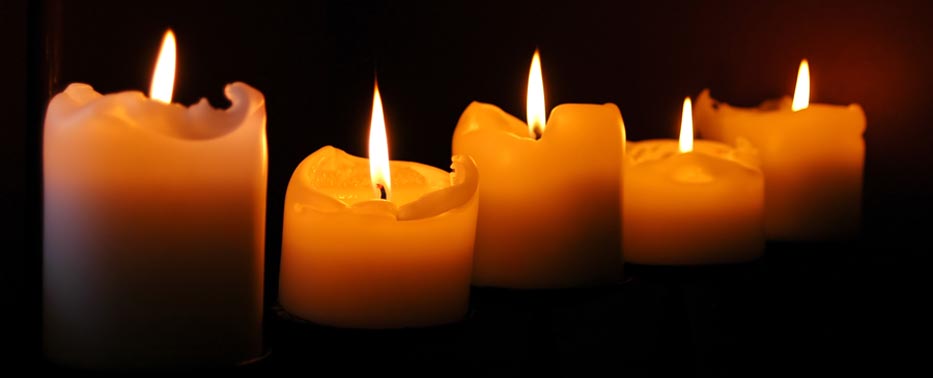
It was that collective unresolved pain and anguish that brought all of us together at that Service on the 20th. It was a wonderful release for all present. During the Service the Advent Wreath candles were lit. Here are selection of the thoughts that were voiced and released as the four candles were lit.
This first candle we light is to remember those whom we have loved and lost. We pause to remember their name, their face, their voice, the memory that binds them to us in this season.
This second candle we light is to redeem the pain of loss; the loss of relationships, the loss of jobs, the loss of health. We pause to gather up the pain of the past and offer it to God, asking that from God’s hands we receive the gift of peace.
This third candle we light is to remember ourselves this Christmas time. We pause and remember these past weeks and months and years; the disbelief, the anger, the down times, the poignancy of reminiscing, the hugs and handshakes of family and friends, all those who stood with us.
This fourth candle is lit to remember our faith and the gift of hope which the Christmas story offers us.
Light defeats darkness.
Go back and see those words that accompanied the lighting of the third candle. It included “to remember ourselves“. Once again, it’s loving ourselves, accepting that we spend our lives doing our best; in other words the answers to the unresolved issues that can haunt us is simple acceptance of who you are and being at peace with you!
Now I’m conscious that this is running on a bit but I pray that this is reaching out to others – we all need better clarity at times in our lives. So before I go on to the third and last element which has me in front of this keyboard, let me share what I wrote, privately, a few days before the Service on the 20th in trying to make sense of my own feelings about the loss of my father.
If we don’t embrace who we are and why we are who we are, i.e. real self awareness, we are condemned to being emotionally dysfunctional to a greater or lesser degree for a long time. If we understand and love ourselves, avoiding the ‘easy’ route of constantly reminding ourselves what is ‘wrong’ with us, not being a victim to guilt, and on and on, then we see a better, softer, more loving world though our eyes. Then the world reflecting back what we think about most rewards us with a better, softer, more loving world.
Loving ourselves, letting go, opening our arms to peace and joy is the true gift that we have really been given by the ‘loss’ of the loved one.
What I am embracing is that the emotional consequences of my father’s death, all those many, many years ago, created degrees of emotional dysfunction that went on for far too long. Being free to walk clear of those emotional ‘hooks’ is not only so much better for me and those who love me, it is exactly what my father would have wanted!
Being clear of deep emotional burdens allows us to love ourselves and from that comes the greatest personal gift of all – unconditional love for others. There’s that love word again!
OK, now to the third and final element! Wake up at the back there!
The year 2010 was for me and Jean the epitome of a joyous journey that started, coincidentally, on a December 20th, this one in 2007. On that evening in a bar/nightclub in San Carlos, Mexico, six days after I had arrived to stay with friends who had known Jean for many years, that I asked Jean for a dance, put my arm around her waist, and experienced something mystical – I knew she was the woman I would love to my last breath.
Thirty-five months later, on November 20th 2010, Jean and I were married in St. Paul’s Episcopal Church, Payson, Arizona. We had been living together in Mexico since September 2008 and in Payson since February, 2010. In Payson we have found a wonderfully interesting, generous and supportive community and our 13 dogs just love our rural home tucked into the forest; it is a very beautiful existence.
Frankly, I find it almost impossible to get my head around in any rational way as to how life can be so randomly alluring – we really have so little control over it all! Save for how we accept and love ourselves. Thus my own haltering and challenging steps to better self-awareness have given me more than I could ever have dreamed of. This realisation has left me feeling pretty emotional over the Christmas period.
From those emotions has come, for the first time in my life, the awareness of mortality. Not in some sort of intellectual homage to the notion that it doesn’t go on forever. No, this is a real, hard-edged, realisation that I am going to die! It’s a clear vision, as clear as those beautiful stars shining out from the brittle cold, night sky over Payson very early on New Year’s Day. My mortal life is going to end.
And that, my dear readers is that. Go back and watch that video from George Carlin, think about those past loved ones in your life and what they gifted you and, above all, feel your own love for you, savour it, and share it around.
“When the student is ready, the teacher will appear.”Buddhist quote.
Just wanted to add my best wishes to all Learning from Dog readers to those of Paul from yesterday.
Plus I did want to expand, just a touch, on what Paul wrote yesterday, more or less reflecting on an article by Leo Babauta. In that post, Paul quoted Leo writing:
The thing I’ve learned, and it’s not some new truth but an old one that took me much too long to learn, is that if you learn to be content with who you are and where you are in life, it changes everything.
In a very real sense what Leo is saying is that if you don’t love yourself you can’t possibly ‘love’ the world around you. Now this is incredibly easy to consider, too easy in fact, because the truth of loving oneself first is, for the vast majority of people, a complex, confusing and unclear journey, as in ‘self-journey’. Read that quote from Leo again and see how he writes, ‘an old one [as in truth] that took me much too long to learn‘.
I’m sure when Leo writes ‘too long to learn‘ he is, in effect, acknowledging the very individual circumstances that lead to a person developing the awareness that is expressed in that quote ‘if you learn to be content with who you are and where you are in life, it changes everything‘.
So if 2011 is going to be a challenging year then hang on to the only rock in your life – yourself! Embrace the reality that you, like all of us, do your best. Be good and kind to you.
I started writing this new Post on the 30th December with my mind full of predictions of a terribly difficult year ahead for millions of people. Indeed, there is no question that there are endless accounts of what calamities may be ahead of us in this New Year. But, as is said, it is what it is! The challenge, as always, is how we deal with it. As my fellow author, Jon, has often said, “The world reflects back what we think about most!”
In other words how we relate to the exterior world is really, and fundamentally, a reflection of how we relate to ourselves. Jon has penned a few words on this theme for tomorrow.
But serendipitously I came across a nice piece on Leo Babauta’s blog, Zen Habits called ‘you’re already perfect’. The link to it is here.
Here are some extracts:
A lot of people come to Zen Habits (and read other personal development blogs and books) because they want to improve something about themselves. They’re not satisfied with their lives, they’re unhappy with their bodies, they want to be better people.
I know, because I was one of those people.
This desire to improve myself and my life was one of the things that led to Zen Habits. I’ve been there, and I can say that it leads to a lot of striving, and a lot of dissatisfaction with who you are and what your life is.
A powerful realization that has helped me is simply this: You’re already good enough, you already have more than enough, and you’re already perfect.
and later Leo writes:
The thing I’ve learned, and it’s not some new truth but an old one that took me much too long to learn, is that if you learn to be content with who you are and where you are in life, it changes everything.
Consider what changes:
You no longer feel dissatisfied with yourself or your life.
You no longer spend so much time and energy wanting to change and trying to change.
You no longer compare yourself to other people, and wish you were better.
You can be happy, all the time, no matter what happens in the world around you.
Instead of trying to improve yourself, you can spend your time helping others.
You stop spending so much money on things that will supposedly improve your life.
A few days ago I published an article that had first appeared on the CASSE Blog site entitled Top Ten Songs for a Steady State. A long-term contributor to this Blog, Per Kurowski, then added a comment to that post that I thought deserved being made into a separate item on Learning from Dogs. Here it is.
This is also a contender:
Where Do the Children Play?
Cat Stevens, Tea for the Tillerman (1970)
Well I think it’s fine, building jumbo planes.
Or taking a ride on a cosmic train.
Switch on summer from a slot machine.
Yes, get what you want to if you want, ’cause you can get anything.
Chorus: I know we’ve come a long way,
We’re changing day to day,
But tell me, where do the children play?
Well you roll on roads over fresh green grass.
For your lorry loads pumping petrol gas.
And you make them long, and you make them tough.
But they just go on and on, and it seems that you can’t get off.
Well you’ve cracked the sky, scrapers fill the air.
But will you keep on building higher
’til there’s no more room up there?
Will you make us laugh, will you make us cry?
Will you tell us when to live, will you tell us when to die?
By the way the following song should also classify as a contender… though excuse me if when I also use music to keep sane… I might drive others insane
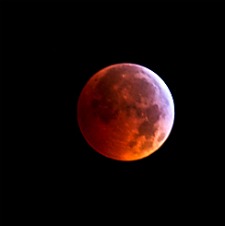
As it happens, here in Payson at 01:15 am on the morning of Tuesday, 21st December, low broken cloud was obscuring the moon much of the time. But nonetheless the pale outline of the darkened moon was visible, sitting above the constellation of Orion. Very, very mystical.
Here’s what it looked like without the cloud, thanks to a Google search for images.
Dec 21st 1638; Dec 21st 2010; Dec 21st 2094
And a late update, thanks to Pete N (via Facebook) who spotted this wonderful video recently placed on YouTube.
which then highlighted this video taken by the Kurdistan Planetarium – these are amazing examples of the power of our new virtual world in sharing images across so many peoples.
So here’s a nice distraction- thanks to Sherry Jarrell who sent them to me.
Learning from dogs!
There are about 23 or 24 pictures on the theme of what dogs mean to humans and every odd day or two over the Christmas period, you can enjoy one of them.