Category: Communication

Writing into old age!

Thank goodness for this!

It’s not exactly a ball of fun growing old. But while somethings inevitable decline writing isn’t one of them. This is a fascinating article from The Conversation.

ooOOoo

One skill that doesn’t deteriorate with age

Reading and writing can prevent cognitive decline.
AJP/Shutterstock.com

Roger J. Kreuz, University of Memphis

When Toni Morrison died on Aug. 5, the world lost one of its most influential literary voices.

But Morrison wasn’t a literary wunderkind. “The Bluest Eye,” Morrison’s first novel, wasn’t published until she was 39. And her last, “God Help the Child,” appeared when she was 84. Morrison published four novels, four children’s books, many essays and other works of nonfiction after the age of 70.

Morrison isn’t unique in this regard. Numerous writers produce significant work well into their 70s, 80s and even their 90s. Herman Wouk, for example, was 97 when he published his final novel, “The Lawgiver.”

Such literary feats underscore an important point: Age doesn’t seem to diminish our capacity to speak, write and learn new vocabulary. Our eyesight may dim and our recall may falter, but, by comparison, our ability to produce and to comprehend language is well preserved into older adulthood.

In our forthcoming book, “Changing Minds: How Aging Affects Language and How Language Affects Aging,” my co-author, Richard M. Roberts, and I highlight some of the latest research that has emerged on language and aging. For those who might fear the loss of their language abilities as they grow older, there’s plenty of good news to report.

Language mastery is a lifelong journey

Some aspects of our language abilities, such as our knowledge of word meanings, actually improve during middle and late adulthood.

One study, for example, found that older adults living in a retirement community near Chicago had an average vocabulary size of over 21,000 words. The researchers also studied a sample of college students and found that their average vocabularies included only about 16,000 words.

In another study, older adult speakers of Hebrew – with an average age of 75 – performed better than younger and middle-aged participants on discerning the meaning of words.

On the other hand, our language abilities sometimes function as a canary in the cognitive coal mine: They can be a sign of future mental impairment decades before such issues manifest themselves.

In 1996, epidemiologist David Snowdon and a team of researchers studied the writing samples of women who had become nuns. They found that the grammatical complexity of essays written by the nuns when they joined their religious order could predict which sisters would develop dementia several decades later. (Hundreds of nuns have donated their brains to science, and this allows for a conclusive diagnosis of dementia.)

While Toni Morrison’s writing remained searingly clear and focused as she aged, other authors have not been as fortunate. The prose in Iris Murdoch’s final novel, “Jackson’s Dilemma,” suggests some degree of cognitive impairment. Indeed, she died from dementia-related causes four years after its publication.

Toni Morrison published her last novel, ‘God Help the Child,’ when she was 84 years old.
AP Photo/Michel Euler

Don’t put down that book

Our ability to read and write can be preserved well into older adulthood. Making use of these abilities is important, because reading and writing seem to prevent cognitive decline.

Keeping a journal, for example, has been shown to substantially reduce the risk of developing various forms of dementia, including Alzheimer’s disease.

Reading fiction, meanwhile, has been associated with a longer lifespan. A large-scale study conducted by the Yale University School of Public Health found that people who read books for at least 30 minutes a day lived, on average, nearly two years longer than nonreaders. This effect persisted even after controlling for factors like gender, education and health. The researchers suggest that the imaginative work of constructing a fictional universe in our heads helps grease our cognitive wheels.

Language is a constant companion during our life journey, so perhaps it’s no surprise that it’s interwoven into our health and our longevity. And researchers continue to make discoveries about the connections between language and aging. For example, a study published in July 2019 found that studying a foreign language in older adulthood improves overall cognitive functioning.

A thread seems to run through most of the findings: In order to age well, it helps to keep writing, reading and talking.

While few of us possess the gifts of a Toni Morrison, all of us stand to gain by continuing to flex our literary muscles.

Richard M. Roberts, a U.S. diplomat currently serving as the Public Affairs Officer at the U.S. Consulate General in Okinawa, Japan, is a contributing author of this article.

Roger J. Kreuz and Richard M. Roberts are the authors of:

Changing Minds: How Aging Affects Language and How Language Affects Aging The Conversation

MIT Press provides funding as a member of The Conversation US.

Roger J. Kreuz, Associate Dean, College of Arts & Sciences, University of Memphis

This article is republished from The Conversation under a Creative Commons license. Read the original article.

ooOOoo

This is not about dogs but it is about writing about dogs!

Picture Parade Three Hundred and Four

Photos of theatre-loving dogs.

All taken from this post.

Service dogs from K-9 Country Inn Working Service Dogs attend a ‘relaxed’ performance at the Stratford Festival, and by all accounts, they loved it. (Photo: K-9 Country Inn Working Service Dogs & Co.)

oooo

The outing was more about training than culture. (Photo: K-9 Country Inn Working Service Dogs)

oooo

While the relaxed performance was an ideal environment in which to train these dogs, the festival welcomes service animals at all performances. (Photo: K-9 Country Inn Working Service Dogs)

oooo

Elvis is ready for the play to begin. (Photo: K-9 Country Inn Working Service Dogs & Co.)

oooo

Audience members enjoy seeing how focused the dogs are during the play. (Photo: K-9 Country Inn Working Service Dogs & Co.)

oooo

Some of the dogs rested on the floor between the seats. (Photo: K-9 Country Inn Working Service Dogs & Co.)

oooo

It just goes to show that there’s no end to the pleasure a dog gets!

And yet another one!

More dog food contaminated with Salmonella.

There’s a continuing problem with Salmonella.

ooOOoo

Berkley Jensen Pig Ear Dog Chews Sold at BJ’s Wholesale Club Recalled

September 3, 2019 — Dog Goods USA is expanding its recent recall to include all 30-packs of Berkley Jensen brand pig ear dog chews sold at BJ’s Wholesale Club stores due to possible contamination with Salmonella.

The previous recall is being expanded after testing by Rhode Island Department of Health found Salmonella bacteria in Berkley Jensen brand pig ear pet chews.

What’s Being Recalled?

Dog Goods USA LLC of Tobyhanna, PA, has been contacted by the FDA and is conducting a voluntary recall of the following products: non-irradiated bulk and packaged pig ears branded Chef Toby Pig Ears with the lot codes indicated below.

The affected products were distributed nationwide in retail stores.

What Caused the Recall?

According to the company, Dog Goods USA purchased the affected treats from a single supplier in Brazil from September 2018 through August 2019.

The U.S. Food and Drug Administration, together with the Centers for Disease Control and Prevention and State partners, is investigating a link between pig ear pet treats and human cases of salmonellosis.

About Salmonella

Healthy people infected with Salmonella should monitor themselves for some or all of the following symptoms: nausea, vomiting, diarrhea or bloody diarrhea, abdominal cramping and fever.

Rarely, Salmonella can result in more serious ailments, including arterial infections, endocarditis, arthritis, muscle pain, eye irritation, and urinary tract symptoms.

Consumers exhibiting these signs after having contact with this product should contact their healthcare providers.

Pets with Salmonella infections may be lethargic and have diarrhea or bloody diarrhea, fever and vomiting.

Some pets will have only decreased appetite, fever and abdominal pain.

Infected but otherwise healthy pets can be carriers and infect other animals and humans.

If your pet has consumed the recalled product and has these symptoms, please contact your veterinarian.

For more information and Salmonella and its symptoms and health risks, please refer to the following link: https://www.dfs.gov/animal-veterinary/news-events/fda-investigates-contaminated-pig-ear-pet-treats-connected-human-salmonella-infections.

Dog Goods Company Statement

The following statement has been provided by the company:

Dog Goods has also launched an internal investigation to determine, when and where the Products may have been contaminated.

To date, this internal investigation has not indicated any vulnerability in the company’s practices, including but not limited to the inspection, handling and storage of the Products.

Nonetheless, Dog Goods will continue to investigate the matter, collaborate fully with the FDA and the CDC, and provide further information to its customers and the public as appropriate.

What to Do?

Consumers who have purchased the products are urged to return them to the place of purchase for a full refund.

Consumers with questions may contact the company at 786-401-6533 from Monday to Friday, 9 AM ET through 5 PM ET.

U.S. citizens can report complaints about FDA-regulated pet food products by calling the consumer complaint coordinator in your area.

Or go to https://www.fda.gov/petfoodcomplaints.

Canadians can report any health or safety incidents related to the use of this product by filling out the Consumer Product Incident Report Form.

ooOOoo

Well, there are too many of these salmonella complaints if you ask me.

But it’s better to send out these FDA alerts than not to.

Again, please share as far and wide as you can.

Now this is what I call survival!

A Vancouver, Washington dog survives a month in the wilderness.

Niko is a Vancouver family’s dog. He is also adventure partner to 16-year-old Caden Alt.

On July 26th, Niko went camping with Caden’s father, David Alt, in the Gifford Pinchot National Forest. Located in South-West Washington it encompasses well over a million acres.

But I’ll let the KGW-TV blogsite tell you the full story.

ooOOoo

Dog Survives 31 Days In Woods After Being Hit By Car

By LINDSAY NADRICH, KGW-TV

VANCOUVER, Wash. (AP) — Niko, a Vancouver family’s dog, survived 31 days in the wilderness after getting hit by a car.

Niko is 16-year-old Caden Alt’s adventure partner.

“He’s always fun to have around,” Caden told KGW-TV. “He’s right there at your side walking around and yeah, he’s just awesome.”

On July 26, Niko went camping with Caden’s father, David Alt, in the Gifford Pinchot National Forest. Later that night, Niko wandered over to the road and got hit by a car. David ran from the campsite just in time to see Niko sprint off into the woods.

“A lady jumped out of the car immediately and said, ‘I don’t know how he could’ve survived that,'” he said.

He searched all night, but could not find Niko. He said it was devastating.

For the next 31 days, he and Caden spent as much time as they could going back to look.

“Every weekend we went up there, we searched, that was pretty hard, coming back every day not finding anything,” Caden recalled.

Then last weekend, they got a call from two men who had seen a post about Niko on Facebook and spotted him about 100 yards from where he disappeared.

“That was, just like, my heart dropped for a second, like, is this happening?” Caden asked.

The Good Samaritans canceled their own trip and drove Niko straight to Vancouver.

“So, yeah, my son and I were just crying, it was, it was unbelievable, yeah, and then of course when we’re in the driveway and they bring him up, Caden and I are crying, those two grown men are crying, four guys crying, it was great,” David said.

Niko lost about 15 pounds but is otherwise doing well.

“Skin and bones and one eye shut, he had lost 30% of his body weight, but he immediately was eating and drinking,” David said.

Niko seemed pretty happy to be back by Caden’s side.

“It’s been amazing,” Caden said. “I’m so glad to have him back. He’s not like perfect, energetic back up to himself, but he’s getting there, better every day. He’s just as cute as ever, the house is filled again.”

So what did Niko do for 31 days alone in the woods?

“As far as trying to recap, only Niko knows the story right, too bad he couldn’t tell it,” David said.

During the month Niko was missing, David and Caden said they got a lot of support from people on social media, as well as a lot of tips that helped with the search. They said they are so thankful for everyone who kept them going.

___

Information from: KGW-TV, http://www.kgw.com/

ooOOoo

And it was very easy to close with a photograph of Niko. (And apologies, I didn’t make a note of the journal that published the photo.)

He is a gorgeous dog!

And another one!

Another FDA warning about a dog food.

Specifically Aunt Jeni’s Home Made frozen raw pet food.

Here are the details.

ooOOoo

FDA Warning: Do Not Feed Certain Lots of Aunt Jeni’s Dog Food

August 30, 2019 — The U.S. Food and Drug Administration is warning pet ownersnot to feed their pets certain lots of Aunt Jeni’s Home Made frozen raw pet food.

That’s because 2 samples collected during an inspection of the company’s product tested positive for Salmonella and/or Listeria monocytogenes.

FDA is issuing this warning since these lots of Aunt Jeni’s Home Made frozen raw pet food represent a serious threat to both human and animal health.

Because the products are sold and stored frozen, FDA is concerned that people may still have them in their possession.

No product images have been provided by the FDA or the company.

Which Products Are Affected?

The affected products include:

  • Aunt Jeni’s Home Made Turkey Dinner Dog Food
    Package size: 5 pounds (2.3kg)
    Lot number: 175199 JUL2020
  • Aunt Jeni’s Home Made Chicken Dinner Dog Food
    Package size: 5 pounds (2.3kg)
    Lot number: 1152013 JUL2020

Aunt Jeni’s Home Made pet foods are sold frozen both online and through various retail locations. Lot codes are printed on the lower right corner of the front of each bag.

About Salmonella

Salmonella is a bacterium that can cause illness and death in humans and animals, especially those who are very young, very old, or have weak immune systems.

According to CDC, people infected with Salmonella can develop diarrhea, fever and abdominal cramps.

Most people recover without treatment. However, in some people, the diarrhea may be so severe that they need to be hospitalized.

In some patients, the Salmonella infection may spread from the intestines to the blood stream and then to other body sites unless the person is treated promptly with antibiotics.

Consult your health care provider if you have symptoms of Salmonella infection.

Pets do not always display symptoms when infected with Salmonella.

However, signs can include vomiting, diarrhea (which may be bloody), fever, loss of appetite and/or decreased activity level.

If your pet has these symptoms, consult a veterinarian promptly.

You should also be aware that infected pets can shed the bacteria in their feces and saliva without showing signs of being sick, further contaminating the household environment.

About Listeria

Like Salmonella, Listeria monocytogenes is another bacterium that can cause illness and death in humans and animals, especially those who are pregnant, very young, very old, or have weak immune systems.

According to CDC, listeriosis in humans can cause a variety of symptoms, depending on the person and the part of the body affected.

Symptoms can include headache, stiff neck, confusion, loss of balance, and convulsions in addition to fever and muscle aches.

Pregnant women typically experience only fever and other flu-like symptoms, such as fatigue and muscle aches.

However, infections during pregnancy can lead to miscarriage, stillbirth, premature delivery, or life-threatening infection of the newborn.

Pregnant women and their newborns, adults age 65 and older, and people with weakened immune systems are more likely to get sick with listeriosis.

Anyone with symptoms of listeriosis should contact a health care provider.

Listeria infections are uncommon in pets. However, they are still possible.

Symptoms may include mild to severe diarrhea, anorexia, fever, nervous, muscular and respiratory signs, abortion, depression, shock and death.

Pets do not need to display symptoms to be able to pass Listeria on to their human companions.

As with Salmonella, infected pets can shed Listeria in their feces and saliva without showing signs of being sick, further contaminating the household environment.

What to Do?

If you have any of the affected product, stop feeding it to your pets and throw it away in a secure container where other animals, including wildlife, cannot access it.

Consumers who have had this product in their homes should clean refrigerators and freezers where the product was stored.

Clean and disinfect all bowls, utensils, food prep surfaces, pet bedding, toys, floors, and any other surfaces that the food or pet may have had contact with.

Because animals can shed the bacteria in the feces when they have bowel movements, it’s important to clean up the animal’s feces in yards or parks where people or other animals may become exposed.

Consumers should thoroughly wash their hands after handling the affected product or cleaning up potentially contaminated items and surfaces.

U.S. citizens can report complaints about FDA-regulated pet food products by calling the consumer complaint coordinator in your area.

Or go to https://www.fda.gov/petfoodcomplaints.

Canadians can report any health or safety incidents related to the use of this product by filling out the Consumer Product Incident Report Form.

ooOOoo

There’s a great deal of useful information contained in this recall.

As always, please share as much as you can.

Picture Parade Three Hundred and Three

The last republication of an earlier picture parade.

Over the last few weeks I have been republishing some picture parades where the photos were sent in by Margaret down in Tasmania. As before if you want to go back to the originals they start here.

OK, let’s get into this last set!

ooOOoo

The last set of those glorious photographs sent in by Margaret from Tasmania

“Animals and nature are insignificant for a man when the man is unworthy.”

oooo

“There is no better psychiatrist in the world than a puppy licking your face.“ – Woodrow Wilson

oooo

“Somewhere in the rain, there will always be an abandoned dog, that prevents you from being happy“ – Aldous Huxley

oooo

“The greatness of a nation and its moral progress can be judged by the manner in which its animals are treated“ – Mahatma Gandhi

oooo

“Many who have dedicated their life to love, can tell us less about this subject than a child who lost his dog yesterday“. – Thornton Wilder

oooo

“Dogs are not everything in life, but they make it complete“ – Roger Caras

oooo

Just thinking that my dog loves me more than I love him, I feel shame.“ – Konrad Lorenz

oooo

“They will be our friends forever, always and always.”

oooo

oooo

That’s it, folks.

But I do have wonderful photographs for next Sunday albeit as different to these from Marg as one could imagine!

You all take care.

ooOOoo

They are really beautiful and the sayings are just as perfect.

Unfortunately next Sunday’s Picture Parade will not be a republication of a previous post.

Picture Parade Three Hundred and Two

Again, a republication of an earlier post.

ooOOoo

 Yes, another set of those wonderful photographs sent in by Marg.

If you missed previous sets then start back here.

“A dog is the only thing on earth that will love you more than you will love yourself.”  –
Josh Billings

oooo

“You can live without a dog, but it is not worthwhile.”

oooo

“If a dog does not come to you after looking you in the face, it is better that you go home and examine your conscience“ – Woodrow Wilson

oooo

“Buying a dog may be the only opportunity that a human being has to choose a relative”. – Mordecai Siega

oooo

“You can say any foolish thing to a dog and the dog will look at you in a way that seems to say: ‘My God, he is right!!! That would have never occurred to me’ “. – Dave Barry

oooo

“Sitting back in the evening, stargazing and stroking your dog, is an infallible remedy.“ – Ralph Waldo Emerson

oooo

“To exercise, walk with someone who will accompany you willingly, preferably a dog.“ – David Brown

oooo

It breaks my heart to advise you that the Picture Parade in a week’s time will be the last of the most glorious and touching photographs that came from Marg down in Tasmania.

ooOOoo

Not only are the photographs to die for but the sayings are exquisite as well!


The Edinburgh Fringe!

The Edinburgh Fringe, or perhaps a small portion of it!

The reason that I going there, albeit in topic rather than in person, is that they had a funniest joke award.

A joke about vegetables has made it to the top of the menu as this year’s funniest at the Edinburgh Fringe.

Swedish comedian Olaf Falafel has won Dave’s “Funniest Joke of The Fringe” award with the niche culinary pun.

In its 12th year, the prize rewards the funniest one-liner to grace the venues of the festival and celebrates the pool of talent the Fringe has to offer.

And the winning one-liner was:

“I keep randomly shouting out ‘Broccoli’ and ‘Cauliflower’ – I think I might have florets”.

Vegetable inspiration: cauliflower and broccoli – Getty Images.

I’m going to offer the rest in future Saturday posts. Enjoy!

How dogs are so good for children.

A delightful guest post from Holli.

A short while ago I was emailed by Holli Burch who asked me if I was ready for another guest post. Was I! I love to receive guest posts. From regular contributors, such as Holli, and people who are new to Learning from Dogs.

There was a quick exchange of emails and then yesterday in came Holli’s latest. It’s brilliant!

ooOOoo

How Dogs are Good For Kids

By Holli Burch. 22nd August, 2019
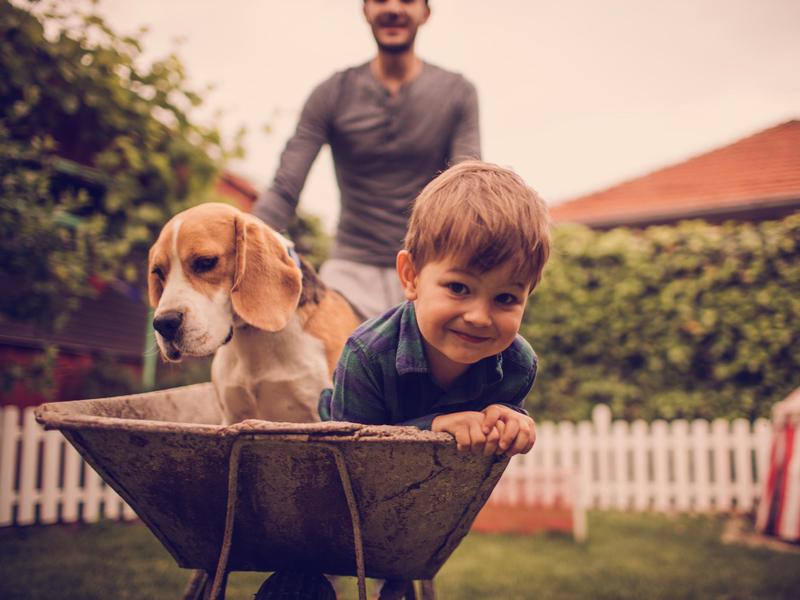
Many kids dream of having a dog.

While we know that dogs teach kids loyalty and unconditional love, there are also many other reasons that dogs are good for kids! I feel so grateful to be able to have both human and canine kids at home. I have always had dogs around me as a child also. My dad had hunting dogs and my mom liked the smaller poodle terrier dog breeds.

According to an article in the Washington Post, a recent study found that children who had strong bonds with their dog also had more secure stronger bonds with their parents and with their (human) best friends. I find this so extremely important, especially in adolescent age when kids struggle the most!

They had another study regarding how dogs effect children’s emotions during stressful times. They found that when the children had their dog with them, they were much more calm. Suggesting that the contact they have with their dog enhances positive affect.
More reasons dogs are good for our kids…

  • Dogs can help kids with behavioral problems – A dog can calm a hyperactive child and have been shown to be especially beneficial to those with special needs. Having a therapy dog can help ease parent worries a little by knowing the dog will protect them and can be trained to react to certain behaviors, including wandering.
  • Dogs can help ease anxiety- Petting your dog or cuddling with them releases the “feel good” hormones in their body called oxytocin. This soothes the anxiety mind and helps to calm them down
  • Dogs teach kids responsibility- Dogs need to be fed, walked and given love daily. When a child gets a dog they learn to take care of something other than themselves. This also creates empathy and self confidence.
  • Dogs keep kids in better health- Dogs can help overweight children and help get kids active. Parents need to make sure both are getting daily exercise. A study from Psychology today found that children who walked their dogs were 50% less likely to become obese. Not only that but according to LiveScience, kids that grow up around dog dust have less chance of developing allergies and asthma! It helps them develop a strong immune system.
  • Protection- A dog will always protect those it feels are family. This can mean protecting your child from bullies or helping them to feel safe while home alone. Kids often feel more safe during scary events if they have their dog by their side.
  • Dogs are best friends- They are always willing to play with your child and lift their spirit. Dogs can help with loneliness and depression because they won’t go away, they give unconditional love no matter what, so kids feel wanted and loved. They don’t fight with them, hit or yell. Kids can share anything with them with no judgement. Dogs often can help kids recover from trauma because they can confide in them.

We rescued Tuffy (above) from a shelter, as a puppy, after my daughter lost her horse in a traumatic accident. It’s been a couple years now and Tuffy has also helped her through more. We are blessed to have her and she follows my daughter everywhere. I know she will always keep her safe. Their bond is so strong and if she is ever feeling down, Tuffy knows and is right there to lift her spirit.

Each of my children have one of our dogs that they call theirs, except my 5 year old. Although, he did just ask me the other day if he can get his own dog. He is good at helping me walk them everyday and loves to cuddle with them. When we recently lost Jesse in April, it was also a hard lesson for the kids on loss. We miss her everyday. That’s her below.
One last thing I want to mention is how important it is to teach your child to respect their dog. First few things to teach is to respect their boundaries, how dogs communicate and how to interact when the dog is new to the family.

I would love to hear your comments and stories about how your dogs have helped your kids!
Dog Bless!~ The Dog Connection

oooo

A little bit about Holli.

As a mother of 4 canines and 4 humans, I am here to help the connection between dogs and humans; mind, body & soul.  My purpose is providing inspiration and information to dog lovers on health, training and bonding.

Holli – The Dog Connection
Blog link: https://mysecretdog.blog

Dog Bless!❤🐾

ooOOoo

Time and time again we see a bonding between a human and a dog. It’s precious and the need to involve children from a young age is crucial. Young people growing up today will be facing a whole raft of issues, many of them extremely serious. All the more reason to have a young person bond with a dog, because that’s so important for that young person.

I dare you to keep a dry eye!

This is beautiful.

Nothing to do with dogs but everything to do with loving the natural world.