I can’t recall who it was that mentioned this TED video which is a great shame as I really should pay credit to a wonderful examination of the business of being creative.
“Telling people how to be creative is easy – being creative is difficult.” John Marwood Cleese (born 27 October 1939) is an English actor, comedian, writer and film producer. He achieved success at the Edinburgh Festival Fringe and as a scriptwriter and performer on The Frost Report.
In the late 1960s he became a member of Monty Python, the comedy troupe responsible for the sketch show Monty Python’s Flying Circus and the four Monty Python films: And Now for Something Completely Different, The Holy Grail, Life of Brian and The Meaning of Life. In the mid 1970s, Cleese and his first wife, Connie Booth, co-wrote and starred in the British sitcom Fawlty Towers. Later, he co-starred with Kevin Kline, Jamie Lee Curtis and former Python colleague Michael Palin in A Fish Called Wanda and Fierce Creatures.
He also starred in Clockwise, and has appeared in many other films, including two James Bond films as Q, two Harry Potter films, and three Shrek films. With Yes Minister writer Antony Jay he co-founded Video Arts, a production company making entertaining training films. It was founded in 1972 by John Cleese, Sir Antony Jay, and a group of other television professionals. The videos feature well known British actors, and humorously explain business concepts. Productions include Meetings, Bloody Meetings and More Bloody Meetings, and have featured Cleese, Dawn French, Prunella Scales, Hugh Laurie, and Robert Hardy.
In December 1977, Cleese appeared as a guest star on The Muppet Show. Cleese was a fan of the show, and co-wrote much of the episode. He appears in a “Pigs in Space” segment as a pirate trying to hijack the spaceship Swinetrek, and also helps Gonzo restore his arms to “normal” size after Gonzo’s cannonball catching act goes wrong. During the show’s closing number, Cleese refuses to sing the famous show tune from Man of La Mancha, “The Impossible Dream”. Kermit the Frog apologises and the curtain re-opens with Cleese now costumed as a Viking trying some Wagnerian opera as part of a duet with Sweetums. Once again, Cleese protests to Kermit, and gives the frog one more chance. This time, he is costumed as a Mexican maraca soloist. He has finally had enough and protests that he is leaving the show, saying “You were supposed to be my host. How can you do this to me? Kermit — I am your guest!”. The cast joins in with their parody of “The Impossible Dream”, singing “This is your guest, to follow that star…”. During the crowd’s applause that follows the song, he pretends to strangle Kermit until he realises the crowd loves him and accepts the accolades. During the show’s finale, as Kermit thanks him, he shows up with a fictional album, his own new vocal record John Cleese: A Man & His Music, and encourages everyone to buy a copy. This would not be Cleese’s final appearance with the Muppets. In their 1981 film The Great Muppet Caper, Cleese does a cameo appearance as Neville, a local homeowner. As part of the appearance, Miss Piggy borrows his house as a way to impress Kermit the Frog. Cleese won the TV Times award for Funniest Man On TV — 1978-79.
Many people think you are either born with creativity or you aren’t. But John Cleese explains how to become creative and in the video, he talks about such thing as the unconscious mind.
An important plea to support a major road tour by the 350.org team.
Bill McKibben
There are a number of key players in the movement to arrest the affects of man on the world’s future climate and one of those is Bill McKibben. His organisation, 350.org, has been at the forefront of raising the public’s awareness as to the terrible consequences of not changing our ways pretty damn soon.
As Wikipedia puts it,
William Ernest “Bill” McKibben (born 1960) is an American environmentalist, author, and journalist who has written extensively on the impact of global warming. He is the Schumann Distinguished Scholar at Middlebury College. In 2010, the Boston Globe called him “probably the nation’s leading environmentalist” and Time magazine described him as “the world’s best green journalist.”
Anyway, something came in to my ‘in-box’ the other day that I wanted to share with all Learning from Dogs readers. This is what was said,
Friends,
The reaction to our announcement of our national “Do the Math” road tour has been utterly pheneomenal.
Case in point: the event in Boston sold out in 24 hours. We’re trying to find another, larger venue to seat everyone, but the main point is this: this tour is going to be huge, and you need to be part of it.
Get your tickets here (math.350.org), and please do spread the word to everyone you know.
P.S. If you haven’t gotten a chance to read our first announcement, I’ve included it below.
oooOOOooo
Dear Friends,
We’re getting ready for our most ambitious venture yet.
From November 7th to December 3rd, I’ll be on the road, visiting 20 cities in 20 nights (with a few days for travel in between) to help bring together the movement we need to make sure this planet has a future that we can all appreciate.
We’re calling it the Do the Math tour, but it’s not (thank heaven) just going to be me standing in front of a microphone.The goal is to jump-start the kind of movement that I discussed in the article I wrote for Rolling Stone about the scary new math of climate change. We will bring together musicians, artists and voices from across the movement to work together on directly confronting the financial and political might of the fossil fuel industry.
If you are near one of our stops, I want to make sure you’re there with us. You’re exactly the people we need to be there — folks who understand the climate math already, have experience in the movement, and are willing to step up to do more.
These events will need to be big, and reach beyond our normal circle of friends. That’s why we need to make sure that everyone knows that something big is underway. Can you take a moment to share the Do the Math tour site with your social networks?
Also, just a heads up — we’re going to be putting together a live web event so that everyone who doesn’t happen to be near a tour stop can still get together and get a campaign started in their community. Our team is still hammering out the details for the exact date and time, but please keep an eye out — we absolutely need you in this fight.
I do a lot of talks to big groups, but this is a new kind of undertaking for me, and for 350.org. We’re trying to quickly build up some serious momentum, which is why we’ve gone to great lengths to make this a very different kind of event.
Not only will we have music and guests like Naomi Klein, Jim Hansen, Desmond Tutu, in person and via video, this event is also the kickoff to some serious organizing in your community. This tour will launch our next big mission — a campaign to directly confront the economic power of the fossil fuel industry. Our message will be crystal clear: it’s not OK to sacrifice our future for the sake of one industry’s bottom line. Divestment is one important tool that we’ll discuss, but we’re ready for many other tactics as well.
Over the past few months our planet gave stark warning signs that humans have never seen before. The Arctic melted, breaking every record. The Great Plains sweltered. The West burned. This roadshow is the next big step — but the price of admission, besides the ticket, is a willingness to really go to work to change the world in the year ahead. That’s why we need you this November.
The stakes have never been this high, and I’ve never been more serious.
So go across to that Tour site, where you will read this,
On November 7th, we’re hitting the road to jumpstart the next phase of the climate movement.
It’s simple math: we can burn 565 more gigatons of carbon and stay below 2°C of warming — anything more than that risks catastrophe for life on earth. The only problem? Fossil fuel corporations now have 2,795 gigatons in their reserves, five times the safe amount. And they’re planning to burn it all — unless we rise up to stop them.
This November, Bill McKibben and 350.org are hitting the road to build the movement that will change the terrifying math of the climate crisis.
Don’t see your town on the map? You can still get involved by signing up here.
ABOUT THE TOUR
This won’t be your typical lecture.
Each event will be a unique and interactive experience, unlike any talk you’ve been to before. It will pick up where Bill McKibben’s landmark Rolling Stone article left off — and everyone who comes will be asked to join a growing movement that is strong enough to stand up to the fossil fuel industry. Together we’ll mount an unprecedented campaign to cut off the industry’s financial and political support by divesting our schools, churches and government from fossil fuels.
This won’t be easy: we’re up against the most profitable, powerful, and dangerous industry in history. But we have our own currency: creativity, courage and if needed, our bodies.
Never let it be said that we, as in all of us, don’t have the power to change the world. Oh, and feel free to circulate today’s post.
The origins of this saying seem to have disappeared in the mists of time but it’s a rare person that doesn’t write a list from time to time. But when it comes to critical processes, having a list, or better known as a ‘checklist’ is essential to completing the process correctly.
With that in mind, then let me introduce you to a story recently sent to me by old friend Dan Gomez.
oooOOOooo
I’ve always done it this way!
This is an example of what happens when we do not pay attention to detail, and do not follow instructions and checklists!
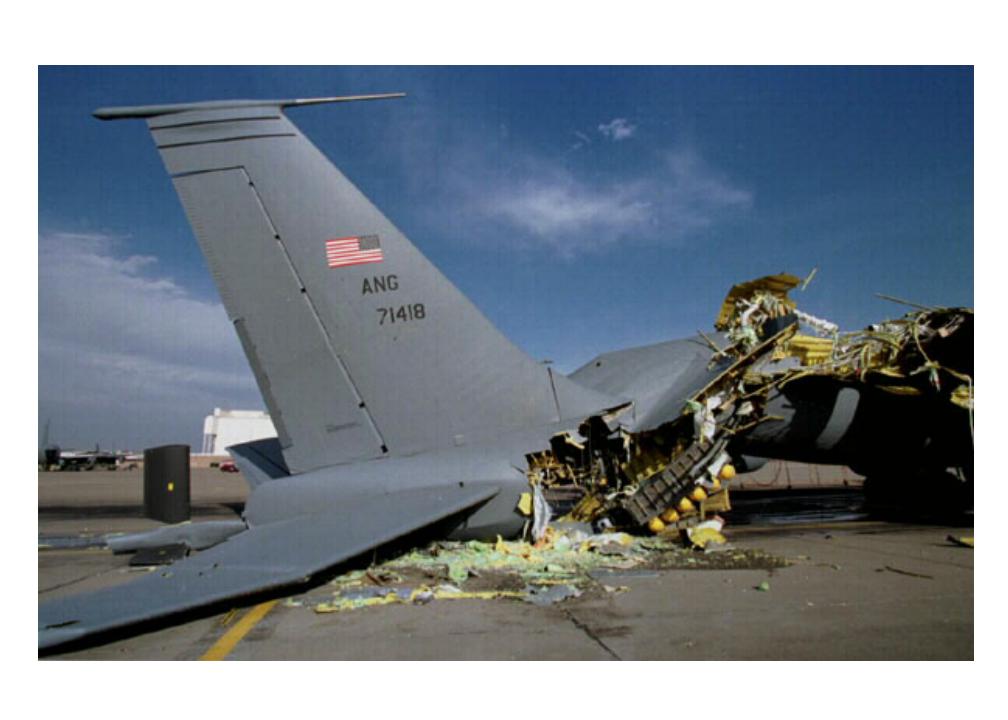
A KC-135 Aircraft was being pressurized at ground level. The outflow valves which are used to regulate the pressure of the aircraft were capped off during a 5-year overhaul and never re-opened. The post-investigation revealed that a civilian depot technician who “had always done it that way” was using a homemade gauge, and no procedure.
Apparently, the technician’s gauge didn’t even have a max “peg” for the needle, so it was no surprise he missed it when the needle went around the gauge the first time.
As the technician continued to pressurize the aircraft with the needle on its second trip around the gauge there was a “boom”. One KC-135 went bang! Indeed, the rear hatch was blown over 70 yards away, through a blast fence!
An incident like this is never funny and is further regrettable when we consider that this mistake is one that we taxpayers will end up paying for. Fortunately, no one was reported as being injured.
This was a good “Lessons Learned” for making sure we have trained people, with the correct tools, and who are following detailed procedures. It should serve as a reminder that just because you’ve always done it that way, it does not make it the “right” way!
Regular followers of Learning from Dogs will recall that on Monday 24th September, Alexa Russell published a guest post under the title of The changing ways in which humans communicate.
Thus it seemed entirely appropriate to continue the theme of communications change with this story sent to me by a very good friend, who asked to remain anonymous!
The European Commission has just announced an agreement whereby English will be the official language of the European Union rather than German, which was the other possibility.
As part of the negotiations, the British Government conceded that English spelling had some room for improvement and has accepted a 5-year phase-in plan that would become known as “Euro-English”.
In the first year, “s” will replace the soft “c”. Sertainly, this will make the sivil servants jump with joy. The hard “c” will be dropped in favour of “k”. This should klear up konfusion, and keyboards kan have one less letter. There will be growing publik enthusiasm in the sekond year when the troublesome “ph” will be replaced with “f”. This will make words like fotograf 20% shorter.
In the 3rd year, publik akseptanse of the new spelling kan be expekted to reach the stage where! more komplikated changes are possible.
Governments will enkourage the removal of double letters which have always ben a deterent to akurate speling.
Also, al wil agre that the horibl mes of the silent “e” in the languag is disgrasful and it should go away.
By the 4th yer people wil be reseptiv to steps such as replasing “th” with “z” and “w” with “v”.
During ze fifz yer, ze unesesary “o” kan be dropd from vordskontaining “ou” and after ziz fifz yer, ve vil hav a reil sensi bl riten styl.
Zer vil b e no mor trubl or difikultis and evrivun vil find it ezi tu understand ech oza. Ze drem of a united urop vil finali kum tru.
Und efter ze fifz yer, ve vil al be speking German like zey vunted in ze forst plas.
Scientists have given animals consciousness. Not through complex manipulation of the brain or through genetic manipulation, but by publicly acknowledging the consensus, for the first time in such a straightforward way, that non-human animals, including some of our evolutionarily distant cousins, have awareness and experience like we do.
The declaration, called The Cambridge Declaration On Consciousness, was signed at the Francis Crick Memorial Conference of Consciousness in Human and Non-Human Animals in the presence of Stephen Hawking in July in Cambridge, U.K. by an international group of scientists including cognitive neuroscientists, neuropharmacologists, neurophysiologists, neuroanatomists and computational neuroscientists.
What do they mean by consciousness? The Declaration treats it as the same as the phrase, “subjective experience.” Philosophers who share this view of consciousness with the scientists often say that something is conscious if there is “something that it is like” to be that thing. So, according to this, a rock is not conscious, because there is nothing “that it is like to be a rock.”
The signing marked the first formalization of the scientific consensus about the consciousness of several non-mammals, including birds, octopuses and even bees.
We declare the following: “The absence of a neocortex does not appear to preclude an organism from experiencing affective states. Convergent evidence indicates that non-human animals have the neuroanatomical, neurochemical, and neurophysiological substrates of conscious states along with the capacity to exhibit intentional behaviors. Consequently, the weight of evidence indicates that humans are not unique in possessing the neurological substrates that generate consciousness. Nonhuman animals, including all mammals and birds, and many other creatures, including octopuses, also possess these neurological substrates.”
The full document is really worth reading, by the way.
There is much more about the conference including some remarkable videos here, from which I will select two. The first one, in particular, is very moving, and upsetting! Be warned!
OK, forgive me but I’m going to state the obvious! Just read the entry on Wikipedia about Orangutans.
Orangutans are among the most intelligent primates and use a variety of sophisticated tools, also constructing elaborate sleeping nests each night from branches and foliage. The apes have been extensively studied for their learning abilities. There may even be distinctive cultures within populations. Field studies of the apes were pioneered by primatologist Birutė Galdikas. Both orangutan species are considered to be Endangered with the Sumatran orangutan being Critically Endangered. Human activities have decimated the populations and ranges of both species. Threats to wild orangutan populations include poaching, habitat destruction and the illegal pet trade. There are several conservation and rehabilitation organisations dedicated to the survival of orangutans in the wild.
‘Among the most intelligent primates‘! Yet again, an example of mankind treating the planet as a disposable item! A quick web search came across the Orangutan Foundation so as well as being saddened and angry, there is something we can do; support them.
The second video from that Conference website is about the intelligence of dolphins – enjoy!
The signatories have indicated that we cannot, at least certainly not for the reasons we have been giving, ignore the fact that animals have the same type of experiences that gives us a reason to treat other humans humanely.
Beyond the ethical ramifications, this declaration is another step in a long line of conclusions that the animal brain displays remarkable plasticity and is able to accomplish highly complex tasks in multiple ways.
While anyone who has gone to a zoo or owned a pet has at least temporarily thought of animals as conscious, there is still a large contingent that strongly believes that humans are exceptional in some morally and scientifically significant way. But, as Christof Koch, who co-presented the declaration notes, “The belief in human exceptionalism, so strongly rooted in the Judeo-Christian view of the world, flies in the face of all evidence for the structural and behavioral continuity between animals and people.”
A wonderful story that mustn’t be allowed to fade away.
Togo
A week ago, I wrote a post called Sticks and Stones. Towards the end of that post, I mentioned Togo,
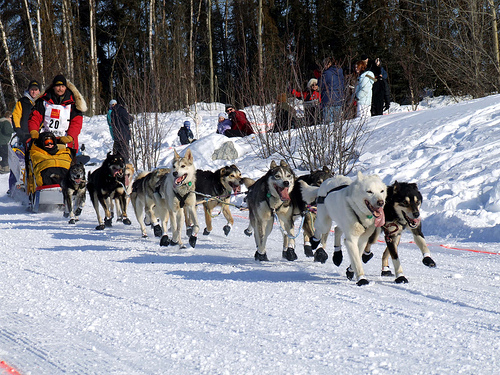
In 1925, a ravaging case of diphtheria broke out in the isolated Alaskan village of Nome. No plane or ship could get the serum there, so the decision was made for multiple sled dog teams to relay the medicine across the treacherous frozen land. The dog that often gets credit for eventually saving the town is Balto, but he just happened to run the last, 55-mile leg in the race. The sled dog who did the lion’s share of the work was Togo. His journey, fraught with white-out storms, was the longest by 200 miles and included a traverse across perilous Norton Sound — where he saved his team and driver in a courageous swim through ice floes.
and added that I would write more about Togo. Here it is.
Togo (October 1913 – December 5, 1929) was the sled dog who led Leonhard Seppala and his dog sled team as they covered the longest distance in the 1925 relay of diphtheria antitoxin from Anchorage to Nome, Alaska, to combat an outbreak of the disease. The run is commemorated by the annual Iditarod dog sled race.
Annual Iditarod Trail Sled Dog Race
Togo was a Siberian Husky, his coat was black, brown, and gray, and he weighed about 48 pounds (22 kg). Seppala’s lead dog during the 1914 All-Alaska Sweepstakes, and was a precocious leader. At the time of the serum run Togo was twelve years old.
Within that entry, under the sub-heading of the Great Race of Mercy is this,
The first batch of 300,240 units of serum was delivered by train from Anchorage to Nenana, Alaska, where it was picked up by the first of twenty mushers and more than 100 dogs who relayed the serum a total of 674 miles (1,085 km) to Nome.
Togo and Seppala traveled 170 miles (274 km) from Nome in three days, and picked up the serum in Shaktoolik on January 31. The temperature was estimated at −30 °F (−34 °C), and the gale force winds causing a wind chill of −85 °F (−65 °C).
The return trip crossed the exposed open ice of the Norton Sound. The night and a ground blizzard prevented Seppala from being able to see the path but Togo navigated to the roadhouse at Isaac’s Point on the shore by 8 AM preventing certain death to his team. After traveling 84 miles (134 km) in one day, the team slept for six hours before continuing at 2 AM.
Before the night the temperature dropped to −40 °F (−40 °C), and the wind increased to 65 mi/h (105 km/h). The team ran across the ice, which was breaking up, while following the shoreline. They returned to shore to cross Little McKinley Mountain, climbing 5,000 feet (1,500 m). After descending to the next roadhouse in Golovin, Seppala passed the serum to Charlie Olsen, who in turn would pass it to Gunnar Kaasen and Balto.
A web search for ‘Togo’ including a mention on a website called Find A Grave that has this,
Birth: Oct., 1913
Death: Dec. 5, 1929, Poland Spring, Androscoggin County, Maine, USA
A sled dog for Leonhard Seppala. In 1925, When a diphtheria out brake happened in Nome Alaska. Seppala, Togo and a team of dogs ran to Nenana. He ran 10 times the distance of a average sled run. However another dog named Balto got nearly all of the fame. After the run, Seppala sold Togo to a friend in Poland Spring Maine were Togo was euthanized on December 5th 1929. He was stuffed and was put on display at Yale University. He was eventually moved to the Iditarod Trail Sled Dog Race Museum in Wasilla Alaska, where he is today.
Burial: Iditarod Trail Sled Dog Race Museum, Wasilla, Matanuska-Susitna Borough, Alaska, USA
Communication seems to be a bit of a theme just at present!
About 18 months ago, I wrote a piece on Learning from Dogs about Rupert Sheldrake’s fascinating book Dogs That Know When Their Owners Are Coming Home. The reason that this has come up again (and, as it happens, I’m rereading Sheldrake’s book just now) is a recent item on the Big Think website called Can We Have Brain-to-Brain Communication? Here’s what was written.
Dr. Michio Kaku addresses the question of Collective Intelligence. Some people think that the next big innovation in the coming decades is not going to involve the Internet because we can already connect computers to the human mind. Therefore, Dr. Kaku says this brain-to-brain communication would involve not just the exchange of information, but also the transmission of emotions and feelings, “because these are also part of the fabric of our thoughts.”
There’s also an interesting 4-minute video by Dr. Kaku that may be accessed here.
But then again, many pet owners would probably take it for granted that our cats and dogs can read our mind, as Dr. Sheldrake rather entertainingly explains below.
Before closing today’s post, the research that Dr. Sheldrake has undertaken is very impressive. His website is here, from which one learns that,
Dr. Sheldrake
Rupert Sheldrake, one of the world’s most innovative biologists and writers, is best known for his theory of morphic fields and morphic resonance, which leads to a vision of a living, developing universe with its own inherent memory.
He worked in developmental biology at Cambridge University, where he was a Fellow of Clare College. He was then Principal Plant Physiologist at the International Crops Research Institute for the Semi-Arid Tropics (ICRISAT), in Hyderabad, India. From 2005 to 2010 he was Director of the Perrott-Warrick project. , funded from Trinity College, Cambridge.
One of the seven experiments concerned unexplained abilities of animals, and I published a series of papers on the unexplained powers of animals, see Papers on animals .
My research with Aimée Morgana into the telepathic powers of her African Grey Parrot, Nkisi, led to the celebrated debate at the London RSA with Prof Lewis Wolpert, which is featured on this website The Telepathy Debate
More information is available on Nkisi, including a tape of one of his conversations with Aimée in The Nkisi project
So if your pet is looking at you as though they know what you are thinking – they probably are!


























 Learning from Dogs