“There are no strangers here; Only friends you haven’t yet met.” William Butler Yeats
Day Six: A Character-Building Experience
Today’s Prompt: Who’s the most interesting person (or people) you’ve met this year?
Our stories are inevitably linked to the people around us. We are social creatures: from the family members and friends who’ve known us since childhood, to the coworkers, service providers, and strangers who populate our world (and, at times, leave an unexpected mark on us).
Today, write a post focusing on one — or more — of the people that have recently entered your life, and tell us how your narratives intersected. It can be your new partner, your newborn child, or the friendly barista whose real story you’d love to learn (or imagine), or any other person you’ve met for the first time in the past year.
Today’s twist: Turn your post into a character study.
“In displaying the psychology of your characters, minute particulars are essential. God save us from vague generalisations!” – Anton Chekhov, Letter to Alexander Chekhov; May 10, 1886
Describing people — whether real or fictional — in a way that channels their true essence is an invaluable skill for any writer. Through the careful accumulation of details, great authors morph their words into vivid, flesh-and-bones creations in our minds. How can you go about shaping your portrait of a person? Some ideas to explore:
Don’t just list their features. Tell us something about how their physical appearance shapes the way they act and engage with others. For example, see how the author of this moving photo essay, which documents the final weeks of a woman dying of cancer, captures the kernel of the woman’s spirit with a short, masterful statement: “Her eyes told stories that her voice didn’t have the power to articulate and she had a kindness that immediately made me feel like we had been friends for years.”
Give us a glimpse of what makes this person unique. We all have our own quirks, mannerisms, and individual gestures, both physical and linguistic.
“Our stories are inevitably linked to the people around us.”
That is so true. But so many of my stories have also been linked to the dogs around me. So for today’s Writing 101 theme instead of writing about a person, I shall write about a dog. Specifically, young Oliver who entered our lives at 11:10 PDT on June 16th, 2014.
oooo
Oliver
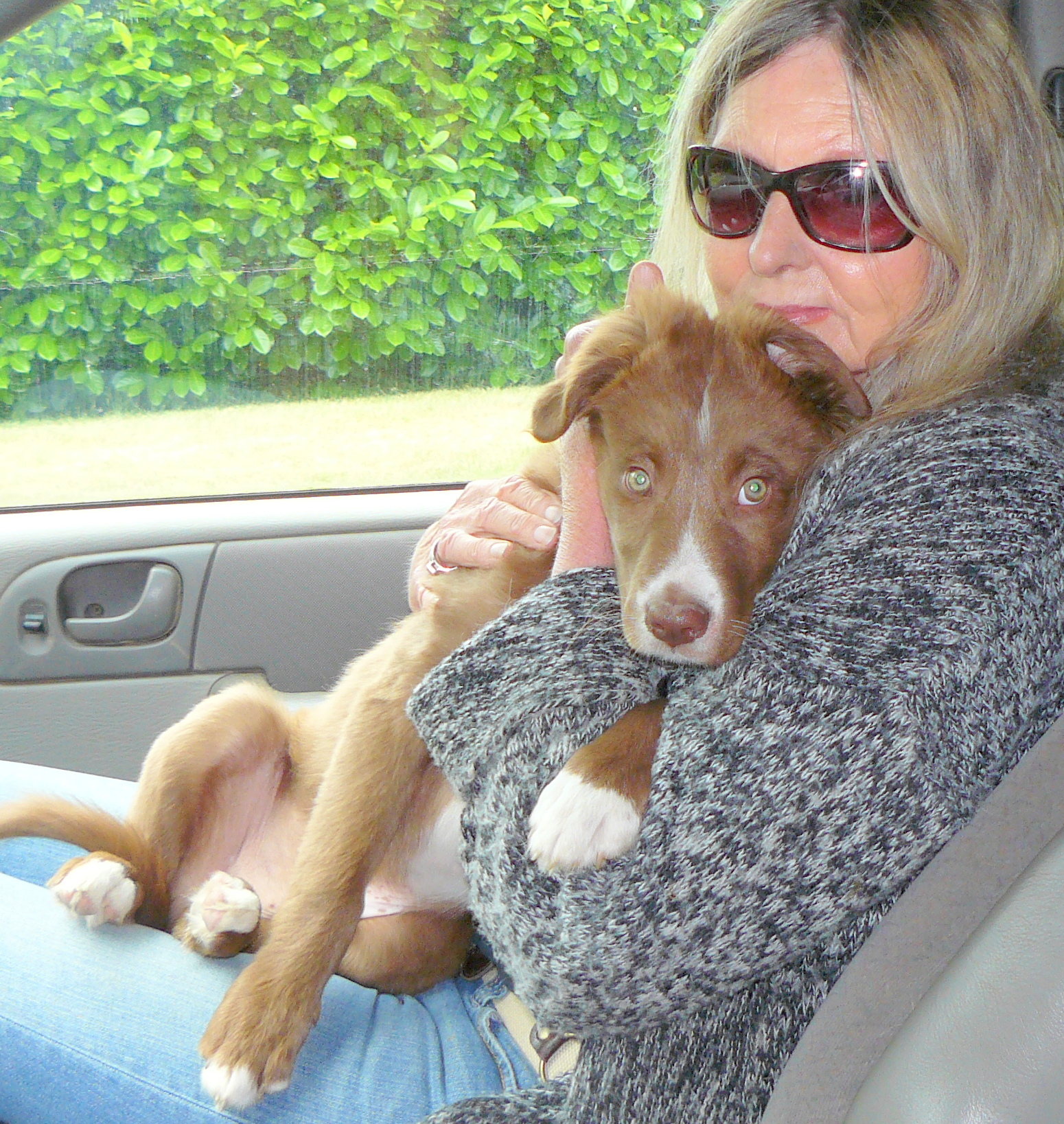
First viewing of young Oliver.
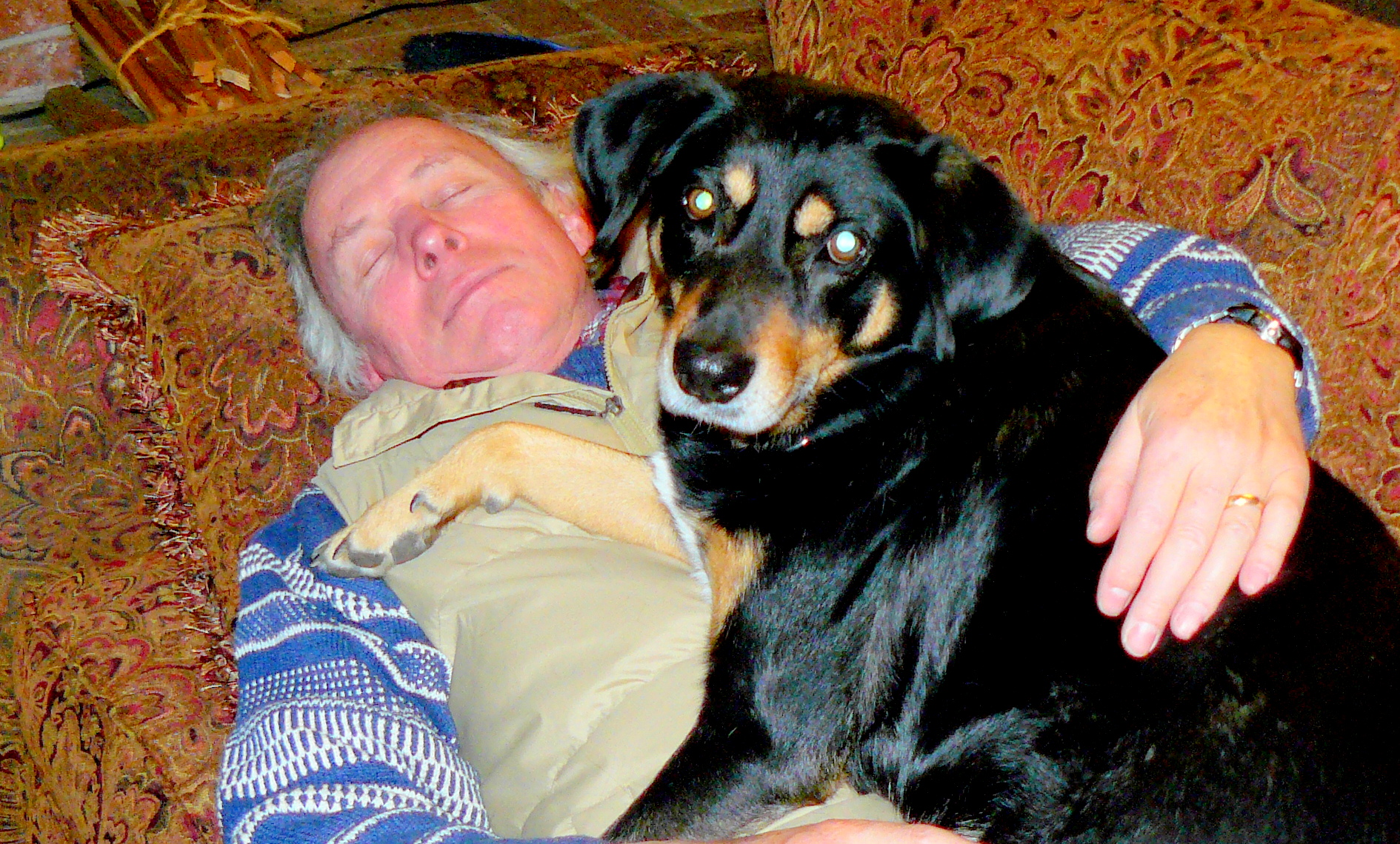
It was the eyes that got me! Right from the first moment that he and I looked at each other.
Those yellow-green eyes just had a power of attraction that was beyond my rational understanding. As if those eyes carried some haunting echo of that ancient time, millennia ago, when a young wolf looked upon the face of early man and each registered a mutual attraction.
Dear Oliver was born on the 28th February, 2014 and rapidly became a lively puppy: too lively for the couple who had taken him on. They lived close to us and Jean and I were called early in June that same year and asked if we might consider being his new parents. We went around on the morning of the 16th June to assess this young dog, especially from the angle of how well he would get on with our other dogs, before making our minds up for sure.
Within minutes, however, we knew without any doubt that under the skin of this lively, bouncy young dog there was a heart of gold and he came home with us that same morning.
No avoiding those eyes (and I’m not referring to Jean!).
Young Oliver had every reason to be a lively, bouncy young dog. For he was the offspring of Chocolate Labrador and Border Collie parents! One can’t get much more of a lively mix than that! So those early days with Oliver in the house turned out to be fun!
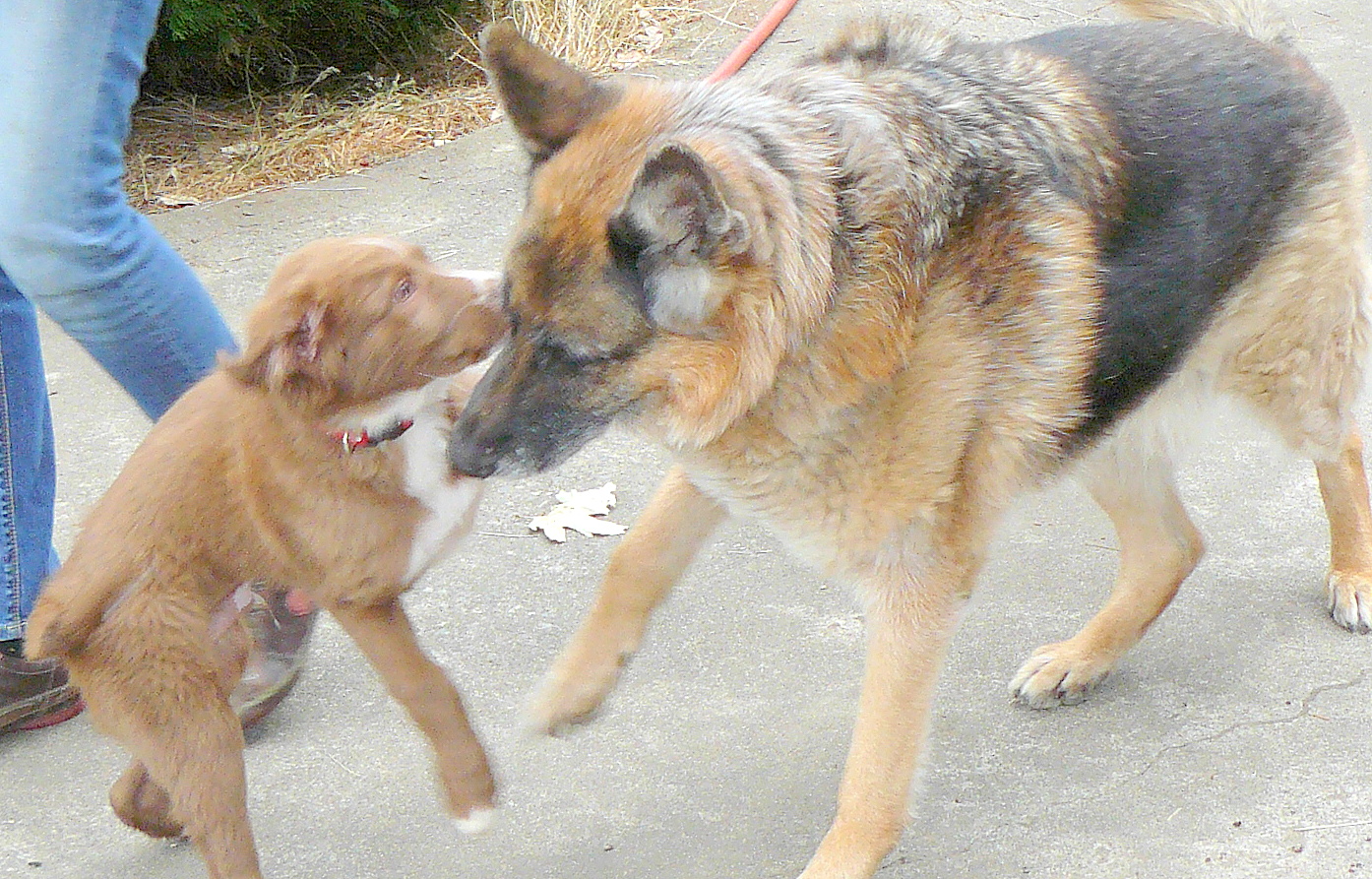
Those early days also showed that Oliver’s heart of gold extended from people to other dogs. Within minutes of arriving home he was fearlessly loving up to Pharaoh. That meant that Pharaoh and all the other dogs were going to love him back in return.
Win over the bossman and the rest is easy.
So quickly young Oliver became a wonderful member of the family with not one of the other eight dogs taking even a hint of umbrage at this new puppy in their midst. Oliver’s character is gloriously open and honest, as matched in his face.
Over the weeks as we got to know Oliver better and better he has shown that he has the most beautiful disposition.
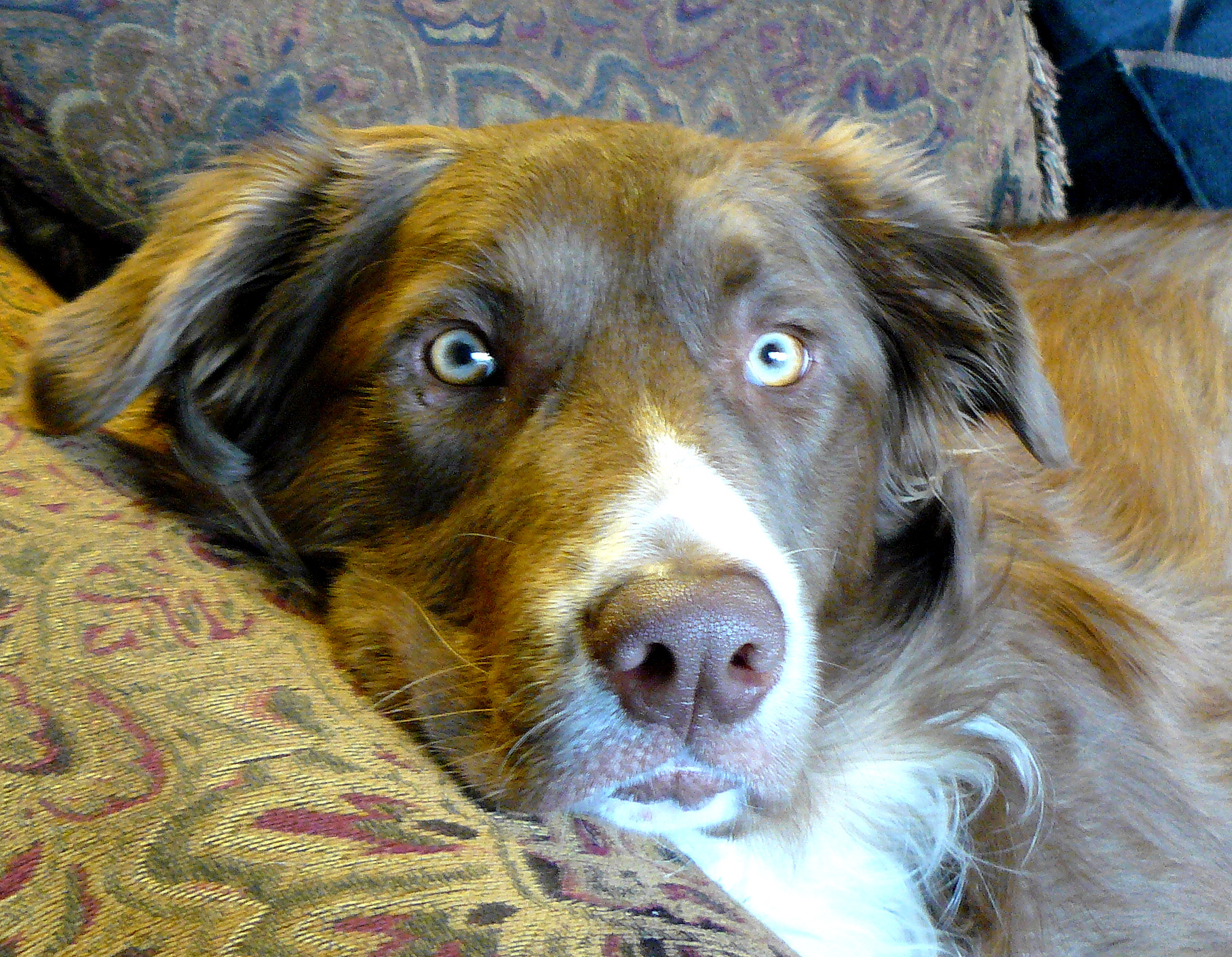
Now as I write this some ten months after we welcomed Oliver I find it impossible to imagine life without him. Or more accurately written that it would be impossible to imagine life without those eyes!
Those eyes! (Photograph taken yesterday afternoon.)
I wasn’t sure if WordPress were going to take the week-end off, so to speak, but it does look as though they did.
Thus the last theme idea that was posted from WordPress was on the 9th and was:
Day Five: Be Brief
Today’s Prompt: You stumble upon a random letter on the path. You read it. It affects you deeply, and you wish it could be returned to the person to which it’s addressed. Write a story about this encounter.
Today’s twist: Approach this post in as few words as possible.
“None of us will ever know the whole story in other words. We can only collect a bag full of shards that each seem perfect.”
Brevity is the goal of this task, although “brief” can mean five words or five-hundred words. You might write a fifty-word story, as writer Vincent Mars publishes on his blog, Boy in the Hat. Or you might tell your tale in precisely one-hundred words, like the folks at 100 Word Story — an approach that forces you to question every word.
For writers who tend to write more, a longer word count may be considered concise, too. At Brevity, writers publish nonfiction of seven-hundred-fifty words or less: there is space to develop a piece, yet a focus on succinctness.
The power of a good camera, an exceptional eye and patience!
A few weeks back there was a run of picture parades that featured a set a wonderful photographs that neighbour Dordie had found; the last group being Picture parade eight-eight.
Then not so long ago, John Hurlburt, a good friend from our Payson, AZ, days forwarded another incredible set of photographs. So today and for the next few Sundays here they are.
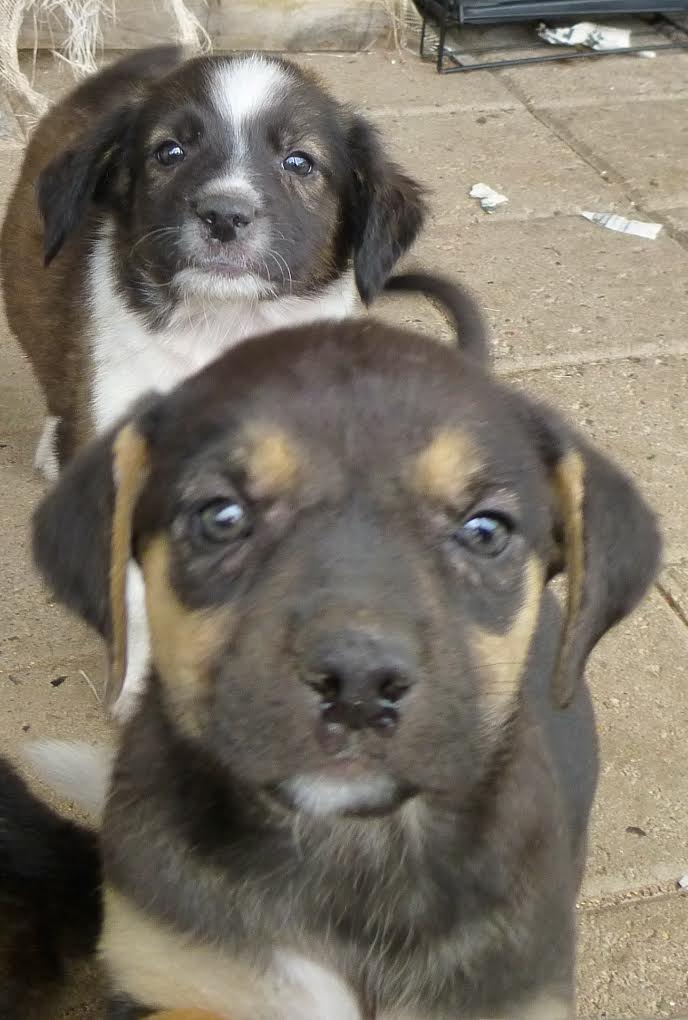
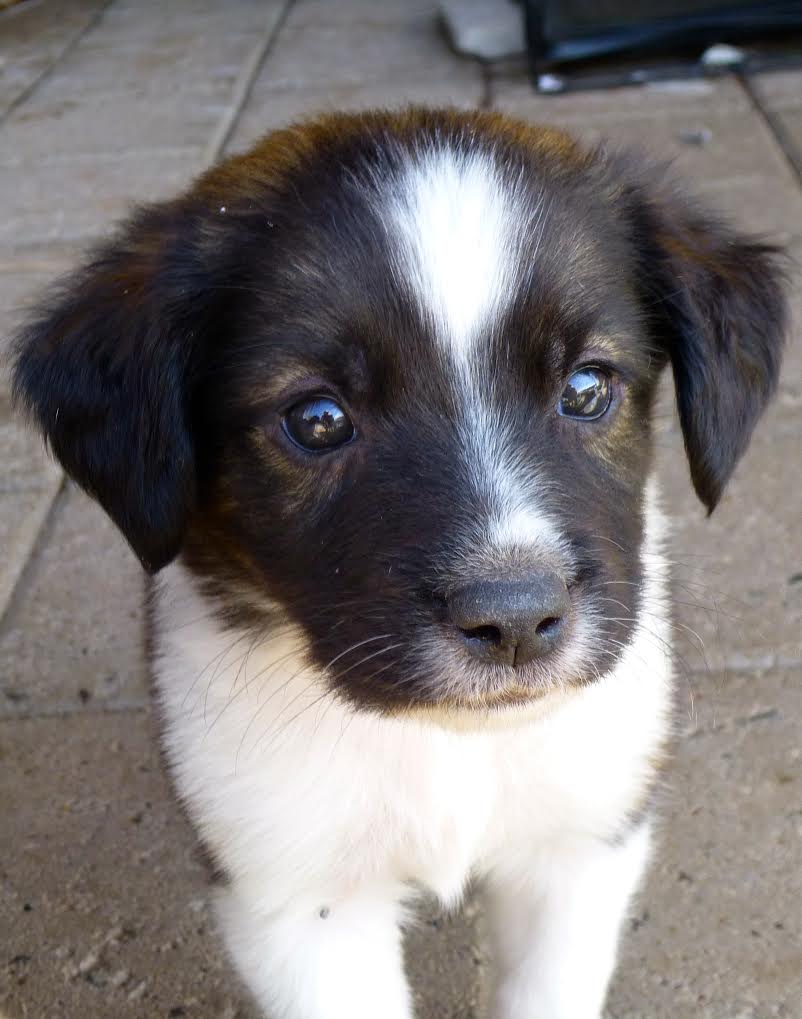
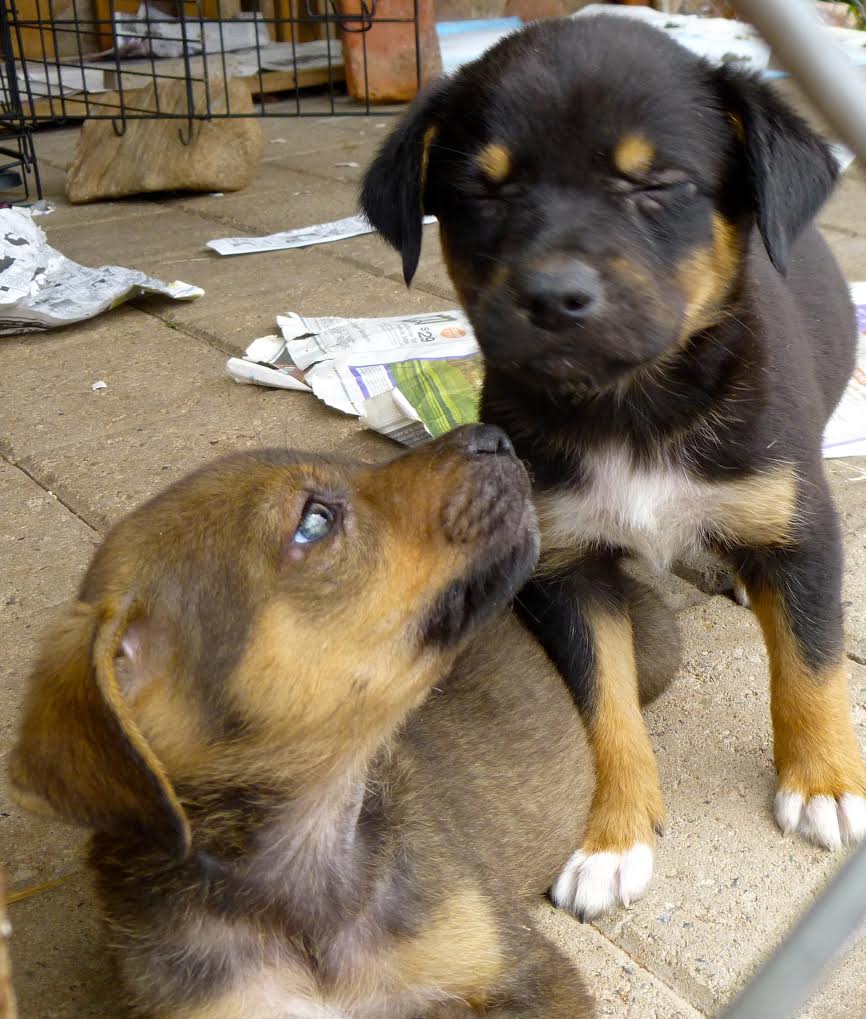
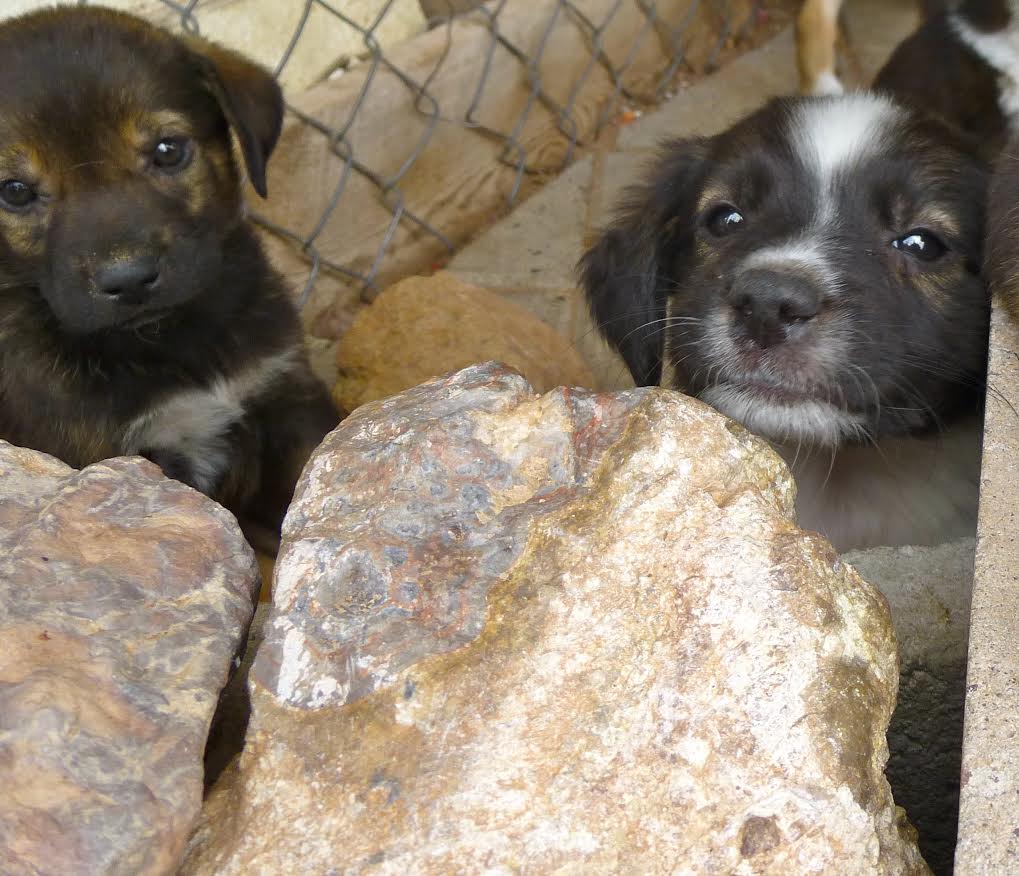
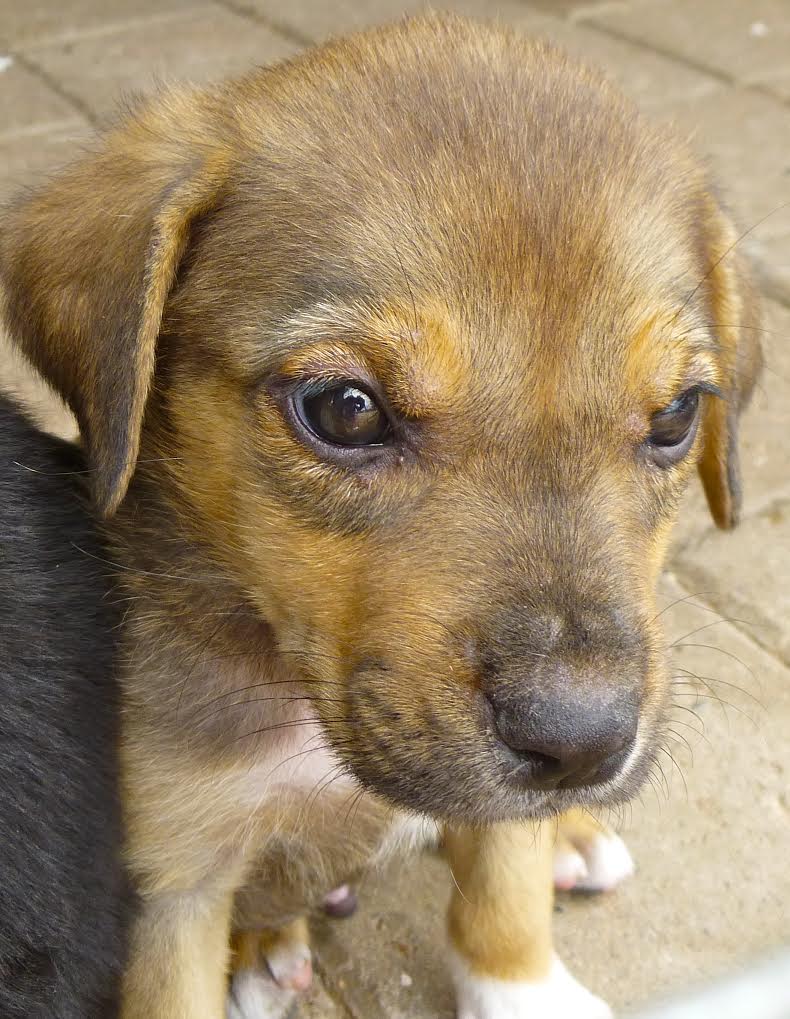
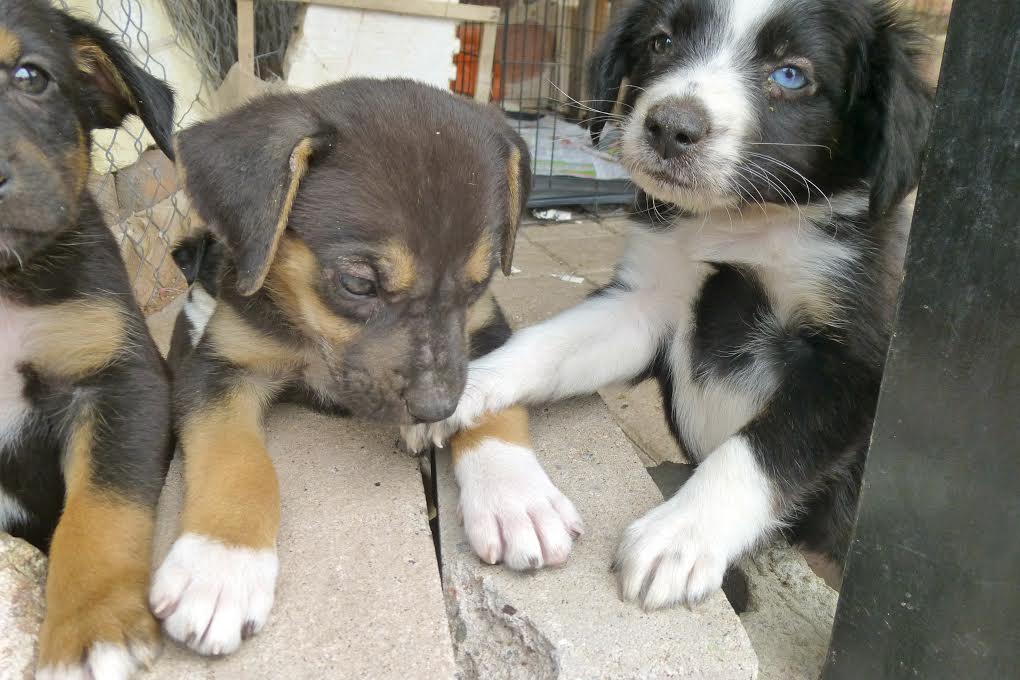
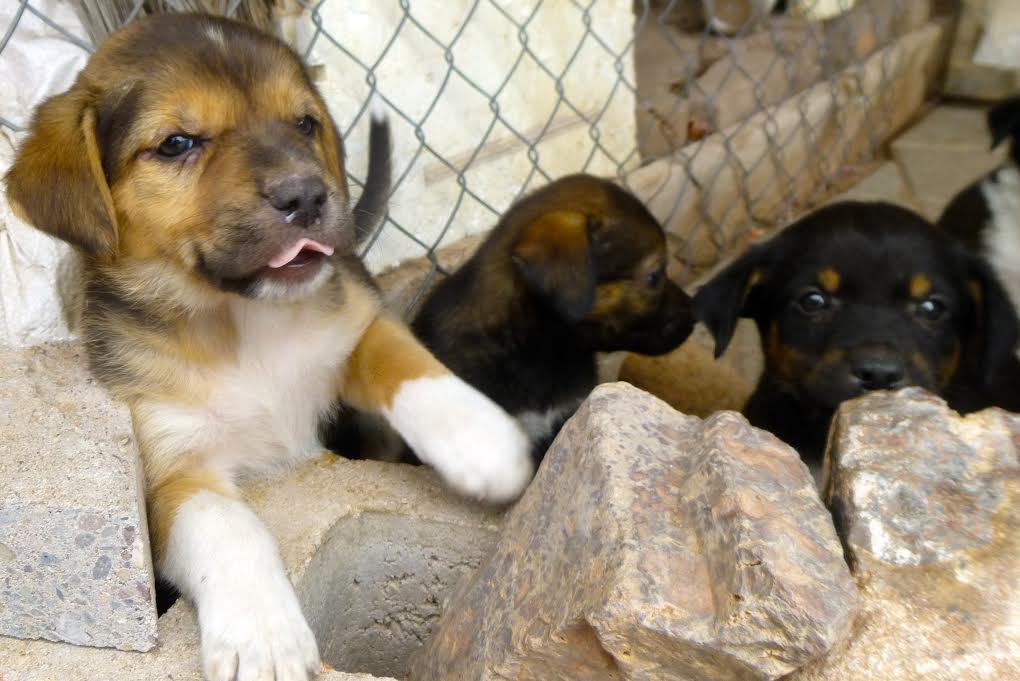
Please, please can you help find homes for these gorgeous puppies.
Please read to the end and share this post as widely as you can! Thank you!
Many know that I first met Jean in San Carlos, Mexico over Christmas, 2007.
I met Jean as a result of the kindest gift anyone has given me. Namely, Suzann Reeve, sister of Dan Gomez, whom I have known for 45 years, and Suzann’s husband, Don, invited me to spend Christmas with them at their home in San Carlos.
Before my arrival on the scene, Jean and Su had worked together for a long time rescuing poor feral dogs off the streets and finding homes for them in the USA.
After Jean and I moved from San Carlos, with 14 dogs I hasten to add, up to Arizona in 2010, Su has kept going rescuing street dogs and loving them until they can find real homes.
Many of the Mexican people are so poor that when a female dog has a litter of puppies they sell the puppies for a few pesos and cast the mother dog back out on to the street.
Our Hazel that we have here at home in Oregon was one such dog and, trust me, never have I experienced a more loving, loyal and affectionate dog.
Hazel loving up yours truly!
In the last few days, Su has been on the telephone to say that she has a litter of nine puppies and is desperate to find homes for them before too long.
In answer to my question about the background to the puppies, Su replied:
They are reputed to have been born on Valentine’s day, which makes them 8 weeks on April 14th.
They are about 6-7 lbs each today.
There are 4 girls and 5 boys.
Their mom was feral, but wags her tail ferociously when she spies me with her food bowl!
Mom eats steak, bone broth, rice, Kirkland Nature’s Domain canned food, Kirkland dry food. She has cared well for her pups.
The pups eat Blue Buffalo canned puppy food mixed in with Kirkland puppy food and some water. they have also received yogurt in their food which I weaned them off as of yesterday.
They will be receiving their first vaccination Monday.
They have been wormed twice.
They have been given anti-tick spray twice.
Several have at least one blue eye with the other being a brownish grey, some have brown eyes, and the others have light brown eyes.
I have their grandmother here at the casa as well, and Sofia is looking for a forever home as well. Bella, the mom of the pups, is a medium sized dog with brown, terra cota and white markings.
One of the dads is mostly black with a little white, and the one blue eye.
They were born in a small beach side fishing village in La Manga, Mexico.
The mom has a sweet disposition.
At least 2 of the pups have alpha tendencies.
So dear, dear people, if you or anyone you know might be interested in having one of these beautiful puppy dogs then leave a comment without delay.
If you have any questions or queries, likewise articulate that query as a comment to this post. Su will reply to each and every one.
Please share this post as far and wide as you can.
Don’t even hesitate in wondering how Su and all of us can get a puppy from San Carlos to wherever you are – it will be sorted!
Dogs spend their whole lives offering unconditional love to us humans.
Let’s return that love by finding homes for these nine beautiful puppies.
All men should strive to learn before they die, what they are running from, and to, and why.
Yet another WordPress theme:
Day Four: Serially Lost
Today’s Prompt: Write about a loss: something (or someone) that was part of your life, and isn’t any more.
This doesn’t need to be a depressing exercise; you can write about that time you lost the three-legged race at a picnic. What’s important is reflecting on this experience and what it meant for you — how it felt, why it happened, and what changed because of it.
Today’s twist: Make today’s post the first in a three-post series.
Our blogs are often made of standalone posts, but using them to take readers on longer journeys is an immersive experience for them — and you. It allows you to think bigger and go deeper into an idea, while using a hook that keeps readers coming back.
Fiction, where each post gives readers the next chapter or a new story, like the work at Flashes in the Pan and 300 Stories.
We also have advice that might help. If you decide to go serial, we’ve got days scheduled later in Writing 101 for parts two and three, so don’t worry about writing everything now or having to shoehorn the other posts in. If you’re not sure where to start, share your trilogy ideas in The Commons first to get some feedback.
You only need to write the first post in the series today — we’ll let you know when it’s time for the next installment.
This is a very easy theme for me to write about. For I want to share an early story from my yet unfinished book. My book of the same name as this blog: Learning from Dogs. This story has appeared on the blog some years ago but what is presented today is a much-revised version.
oooo
Messages from the night.
“Jean, where’s Dhalia?”
“Don’t know. She was here moments ago.”
“Jeannie, You take the other dogs back to the car and I’ll go and scout around for her. Oh, and you better put Pharaoh on the leash otherwise you know he’ll follow me.”
“Paul, don’t worry, Dhalia’s always chasing scents; bet she beats us back to the car. Especially as it’s going to be dark soon.”
Nonetheless, I started back down the dusty, dirt road, the last rays of the sun pink on the high, tumbled cliffs of granite. This high rocky, forest plateau, known as the Granite Dells, just three miles from our home on the outskirts of Payson in Arizona, made perfect dog-walking country and rarely did we miss an afternoon out here. However this afternoon, for reasons I was unclear about, we had left home much later than usual.
There was no sign of Dhalia ahead on the road so I struck off left, hoping she was somewhere up amongst the trees and the high boulders. Soon I reached the first crest, panting hard in the thin air. Behind me, across the breath-taking landscape, the setting sun had dipped beneath faraway mountain ridges; a magnificent sight. Suddenly, in the midst of my brief pause admiring the perfect evening, a sound echoed around the cliffs. The sound of a dog barking. I bet my life on that being Dhalia. Just as quickly the barking stopped.
The barking started up again, barking that suggested Dhalia was hunting something. The sound came from an area of boulders way up above the pine trees on the other side of the small valley ahead of me.
Perhaps, Dhalia had trapped herself. More likely, I reflected, swept up in the evening scents of the wilderness, Dhalia had temporarily reverted back to the wild, hunting dog she had been all those years ago. That feral Mexican street dog who in 2005 had tentatively turned away from scavenging in a pile of rubbish in a dirty Mexican town and shyly approached Jean. Jean had named her Dhalia.
I set off down to the valley floor and after fifteen minutes of hard climbing had reached the high boulders the other side. I whistled, then called “Dhalia! Dhalia! Come, there’s a good girl.”
Thank goodness Dhalia was such a sweet, obedient dog.
I anticipated the sound of dog feet scampering through rough undergrowth. But no sound came.
I listened; no sounds, no more barking. Now where had she gone? Perhaps past these boulders down into the steep ravine beyond me, the one so densely forested with pine trees. With daylight practically gone I needed to find Dhalia very soon. I plunged down the slope, pushing through tree branches that whipped across my face, then fell heavily as a foot found empty space instead of the anticipated firm ground.
I cursed, picked myself up and paused. That fall had a message: the madness of continuing this search in the near dark. The terrain made very rough going even in daylight. At night, the boulders and plunging ravines would guarantee a busted body, at best! Plus, I ruefully admitted, I didn’t have a clue about finding my way back to the road from wherever I was!
The unavoidable truth smacked me full in the face. I would be spending this night alone in the high, open forest!
It had one hell of a very scary dimension. I forced myself not to dwell on just how scary it all felt. I needed to stay busy, find some way of keeping warm; last night at home it had dropped to within a few degrees of freezing. I looked around, seeing a possible solution. I broke a small branch off a nearby mesquite tree and made a crude brush with which I swept up the fallen pine needles I saw everywhere about me. Soon I had a stack sufficient to cover me, or so I hoped.
Thank goodness that when me and Jeannie had decided to give four of our dogs this late afternoon walk, I had jeans and a long-sleeved shirt on, a pullover thrown over my shoulders. Didn’t make Dhalia’s antics any less frustrating but I probably wasn’t going to freeze to death!
The air temperature sank as if connected with the last rays of the sun. My confidence sank in harmony with the temperature. I lay down, shuffled about, swept the pine needles across my body, tried to find a position that carried some illusion of comfort. No matter the position, I couldn’t silence his mind. No way to silence the screaming in my head, this deep, primeval fear of the dark forest about me, imagination already running away with visions of hostile night creatures, large and small, watching me, smelling me, biding their time.
Perhaps I might sleep for a while? A moment later the absurdity of that last thought hit me. Caused me to utter aloud, “You stupid sod. There’s no way you’re going to sleep through this!”
My spoken words echoed off unseen cliffs in the darkness, reinforcing my sense of isolation. I was very frightened. Why? Where in my psyche did that come from? I had spent many nights alone at sea without a problem, a thousand miles from shore. Then, of course, I knew my location and always had a radio link to the outside world. But being lost in this dark, lonely forest touched something very deep inside me.
Suddenly, I started shivering. The slightest movement caused the needles to slip from me and the cold night air began to penetrate my body. I mused about how cold it might get and, by extension, thanked my lucky stars that the night was early October not, say, mid-December. So far, not too cold, but soon the fear rather than the temperature started to devour me. What stupid fool said, ‘Nothing to fear but fear itself!’ My plan to sleep under pine needles, fear or no fear, had failed! I couldn’t get warm. I had to move.
Looking around, I saw an enormous boulder a few yards away, like some giant, black shadow. No details, just this huge outline etched against the night. I carefully raised myself, felt the remaining needles fall away, and gingerly shuffled across to the dark rock. I half-expected something to bite my extended hand as I explored the surface, as I ran my hand down towards the unseen ground. Miracle of miracles, the granite gently emitted the warmth absorbed from the day’s sun. I slowly settled myself to the ground, eased my back against the rock-face and pulled my knees up to my chest. I felt so much less vulnerable than when I had been flat out on the forest floor. I let out a long sigh, then burst into tears, huge heart-rending sobs coming from somewhere deep within me.
Gradually the tears washed away my fear, restored a calmer part of my brain. That calmer brain brought the realisation that I hadn’t considered, well not up until now, of what Jeannie must be going through. At least I knew I was alive and well. Jeannie, not knowing, would be in despair. I bet she would remember that time when out walking here in the Dells we had lost little Poppy, an adorable ten-pound poodle mix, never to be found again despite ages spent combing the area, calling out her name. A year later and Jeannie still said from time to time, “I so miss Poppy!“. First Poppy and now me! No question, I had to get through this in one piece, mentally as much as physically.
Presumably, Jeannie would have called 911 and been connected to the local search and rescue unit. Would they search for me in the dark? I thought unlikely.
Thinking about Jeannie further eased my state of mind and the shivering stopped. Thank goodness for that! I fought to retain this new perspective. I would make it through, even treasure this night under the sky, this wonderful, awesome, night sky. Even the many pine tree crowns that soared way up above me couldn’t mask a sky that just glittered with starlight. Payson, at five-thousand feet, had many beautifully clear skies and tonight offered a magical example.
Frequently during my life, the night skies had spoken to me, presented a reminder of the continuum of the universe. On this night, however, I felt more humbled by the hundred, million stars surrounding me than ever before.
Time slipped by, my watch in darkness. However, above my head that vast stellar clock. I scanned the heavens, seeking out familiar pinpoints of light, companions over so much of my lifetime. Ah, there! The Big Dipper, Ursa Major, and, yes, there’s the North Pole star: Polaris. Great! Now the rotation of the planet became my watch, The Big Dipper sliding around Polaris, fifteen degrees for each hour.
What a situation I had got myself into. As with other challenging times in my life, lost in the Australian bush, at sea hunkering down through a severe storm, never a choice other than to work it out. I felt a gush of emotion from the release this changed perspective gave me.
Far away, a group of coyotes started up a howl. What a timeless sound, how long had coyotes been on the planet? I sank into those inner places of the mind noting how the intense darkness raised deep thoughts. What if this night heralded the end of my life, the last few hours of the life of Paul Handover? What parting message would I give to those that I loved?
Jeannie would know beyond any doubt how much I had adored her, how her love had created an emotional paradise for me beyond measure. But my son and daughter, dear Alex and Maija? Oh, the complexities I had created in their lives by leaving their mother so many years ago. I knew that they still harboured raw edges, and quite reasonably so. I still possessed raw edges from my father’s death, way back in 1956. That sudden death, just five days before Christmas and so soon after I had turned twelve, that had fed a life-long feeling of emotional rejection. The feeling that had lasted for fifty-one years until, coincidentally also five days before Christmas, in 2007, I had met Jean.
My thoughts returned to Alex and Maija. Did they know, without a scintilla of doubt, that I loved them. Maybe my thoughts would find them. Romantic nonsense? Who knows? Dogs had the ability to read the minds of humans, often from far out of visual range. I knew Pharaoh, my devoted German Shepherd, skilfully read my mind.
I struggled to remember that saying from James Thurber. What was it now? Something about men striving to understand themselves before they die. Would that be my parting message for Alex and Maija? Blast! I wished I could remember stuff more clearly these days and let go of worrying about the quote. Perhaps my subconscious might carry the memory back to me.
I looked back up into the heavens. The Big Dipper indicated at least an hour had slipped by. Gracious, what a sky in which to lose one’s mind. Lost in that great cathedral of stars. Then, as if through some stirring of my consciousness, the Thurber saying did come back to me: “All men should strive to learn before they die, what they are running from, and to, and why.”
I reflected on those who, incarcerated in solitary confinement, had their minds play many tricks, especially when it came to gauging time. What a bizarre oddment of information; where had that come from? Possibly because I hadn’t a clue about my present time. It felt later than 11pm and earlier than 4am, but any closer guess seemed impossible. Nevertheless, from out of those terrible, heart-wrenching hours of being alone I had found calm; had found a peace within. I slept.
Suddenly, a sound slammed me awake. Something out there in the dark had made a sound, caused my whole body to become totally alert, every nerve straining to recognise what it might be. It sounded like animal feet moving through the autumn fall of dead leaves. I prayed it wasn’t a mountain lion. Surely such a wild cat preparing to attack would be silent. Now the unknown creature had definitely paused, no sound, just me knowing that out there something waited. Now what! The creature had started sniffing. I hoped not a wild pig. Javelinas, those pig-like creatures that always moved in groups, could make trouble – they had no qualms at attacking a decent-sized dog.
Poised to run, I considered rising to my feet but chose to stay still and closed my right-hand around a small rock. The sniffing stopped. Nothing now, save the sound of my rapid, beating heart. I sensed, sensed strongly, the creature looking at me. It seemed very close, ten or twenty feet away. The adrenalin hammered through my veins.
I tried to focus on the spot where I sensed the animal waited; waited for what? I pushed that idea out of my head. My ears then picked up a weird, bizarre sound. Surely not! Had I lost my senses? It sounded like a dog wagging its tail; flap, flap, flapping against something such as a tree-trunk.
A dog? If a dog, it had to be Dhalia!
Then came that small, shy bark! A bark I knew so well. Oh wow, it is Dhalia. I softly called, “Dhalia, Dhalia, come here, there’s a good girl.”
With a quick rustle of feet Dhalia leapt upon me, tail wagging furiously, her head quickly burrowing into my body warmth. I hugged her and, once more, tears ran down my face. Despite the darkness, I could see her perfectly in my mind. Her tight, short-haired coat of light-brown hair, her aquiline face, her bright inquisitive eyes and those wonderful head-dominating ears. Lovely large ears that seemed to listen to the world. A shy, loving dog when Jean had rescued her in 2005 and these years later still a shy, loving dog.
Dhalia licked my tears, her gentle tongue soft and sweet on my skin. I shuffled more onto my back which allowed her to curl up on my chest, still enveloped by my arms. My mind drifted away to an era long time ago, back to an earlier ancient man, likewise with arms wrapped around his dog under a dome of stars, bonded in a thousand mysterious ways.
The morning sun arrived as imperceptibly as an angel’s sigh. Dhalia sensed the dawn before I did, brought me out of my dreams by the slight stirring of her warm, gentle body.
Yes, there it came, the end of this night. The ancient sun galloping towards them across ancient lands; another beat of the planet’s heart. Dhalia slid off my chest, stretched herself from nose to tail, yawned and looked at me, as much to say time to go home! I could just make out the face of my watch: 4.55am. I, too, raised myself, slapped my arms around my body to get some circulation going. The cold air stung my face, yet it couldn’t even scratch my inner warmth, the gift from the loving bond Dhalia and I had shared.
We set off and quickly crested the first ridge. Ahead, about a mile away, we saw the forest road busy with arriving search and rescue trucks. I noticed Jean’s Dodge parked ahead of the trucks and instinctively knew she and Pharaoh had already disappeared into the forest; Pharaoh leading the way to us.
We set off down the slope, Dhalia’s tail wagging with unbounded excitement, me ready to start shouting for attention from the next ridge. We were about to wade through a small stream when, across from us, Pharaoh raced out of the trees. He tore through the water, barking at the top of his voice in clear dog speak, ‘I’ve found them, they’re here, they’re safe’. I crouched down to receive my second huge face lick in less than six hours.
Later, once safely home, it came to me. When we had set off in that early morning light, Dhalia had stayed pinned to me. So unusual for her not to run off. Let’s face it, that’s what got us into the mess in the first place. Dhalia had stayed with me as if she had known that during that long, dark night, it had been me who had been the lost soul.
The message from the night, as clear as the rays of this new day’s sun, the message to pass to all those I loved. If you don’t get lost, there’s a chance you may never be found.
oooo
I know it will cause Jean much angst to republish this photograph but I can’t close today’s post with sharing this picture with you.
Today’s Prompt: Write about the three most important songs in your life — what do they mean to you?
Nailing Brahms’ Hungarian Dance Number 5 on your alto sax. Making perfect pulled pork tacos. Drawing what you see. Or, writing a novel. Each requires that you make practice a habit.
Today, try free writing. To begin, empty your mind onto the page. Don’t censor yourself; don’t think. Just let go. Let the emotions or memories connected to your three songs carry you.
Today’s twist: You’ll commit to a writing practice. The frequency and the amount of time you choose to spend today — and moving forward — are up to you, but we recommend a minimum of fifteen uninterrupted minutes per day.
The basic unit of writing practice is the timed exercise. – Natalie Goldberg
Author Natalie Goldberg says to “burn through to first thoughts, to that place where energy is unobstructed by social politeness or the internal censor.” Here are some of her rules of free writing practice from Writing Down the Bones, which we recommend you keep in mind:
Keep your hand moving. (Don’t pause to reread the line you’ve just written. That’s stalling and trying to get control of what you’re saying.)
Don’t cross out. (That is editing as you write. Even if you write something you didn’t mean to write, leave it.)
Don’t worry about spelling, punctuation, grammar. (Don’t even care about staying within the margins and lines on the page.)
Lose control.
Don’t think. Don’t get logical.
Go for the jugular. (If something comes up in your writing that is scary or naked, dive right into it. It probably has lots of energy.)
Jorge Luis Borges said: “Writing is nothing more than a guided dream.” So, what are you waiting for? Get writing. Fifteen minutes. Go. And then, do it again tomorrow, and the day after, and the day after.
Now having written a daily post for well over five years, I’m comfortable with the concept of committing to a writing practice.
Thus I’m going to republish something that gets to the heart of more worldly matters – keeping a smile on your face in these ‘interesting’ times. It comes from a blog that I recently started following: One Regular Guy Writing about Food, Exercise and Living Longer.
Regular readers know that I have embraced the theory of positive psychology. I have written a number of posts on the benefits of a positive point of view. You can find an index of them at the end of this post.
In a study of a large number of adults in their mid to late 50’s researchers found that “when people displayed higher levels of agency, communion and redemption and lower levels of contamination, their mental health improved. They consider good mental health to be low levels of depression and high levels of life satisfaction and psychological and social well-being.”
They explained the four keys to good mental health as follows:
• Agency—Did the subjects feel able to influence and respond to events in life, or did they feel battered around by the whims of external forces?
• Communion—Are the people connected to others or disconnected?
• Redemption—Did the subjects take a negative experience and find some positive outcome?
• Contamination—Did they tell narratives of good things turning bad?
In it I quoted Maggie Crowley, Psy.D., a Health Psychologist at the center for Integrative Medicine and Wellness at Northwestern Memorial Physicians Group.
Dr. Crowley listed the following as maladaptive coping strategies:
*Demand our circumstances be different *Devalue ourselves and others *Demean/blame ourselves and others *When the above fail to work, do we choose another strategy? *Or, do we double our ill-conceived efforts and feed our downward spiral.
She said that we needed something to shift our mental gears out of the stressful/fearful response that triggers that damaging cascade of negative emotion. She suggested the following activities that set off the parasympathetic approach:
*Practicing appreciation *Making choices that are positive *Using constructive language *Employing our strengths and personal power.
I think that there is a great similarity between the four keys to good mental health mentioned in the Journal and the points made by Dr. Crowley in dealing with stressors.
Regarding positive psychology, I have found it answered a lot of questions for me. If you are interested you can explore it in the following posts:
This is such incredibly powerful and useful advice with lots of further reading to boot!
For we are bombarded with negative news from all quarters and having a healthy relationship with oneself and, thence, with the world around us is, in the end, what life is all about.
As I’m sure you know Learning from Dogs is written under WordPress. Right from the start, I took the decision to offer a daily post and am so glad I did. (This post is number 2,435!)
However, many bloggers do not subscribe to a daily publication of a post and WordPress, in an effort to encourage more bloggers to so do, have launched Writing 101. Here’s what they sent out to those bloggers that signed up to Writing 101, as indeed did I.
ooOOoo
Day One: Unlock the Mind
You write because you have an idea in your mind that feels so genuine, so important, so true. And yet, by the time this idea passes through the different filters of your mind, and into your hand, and onto the page or computer screen — it becomes distorted, and it’s been diminished. The writing you end up with is an approximation, if you’re lucky, of whatever it was you really wanted to say.
– Author Khaled Hosseini, “How to Write,” the Atlantic
On The Daily Post, we try to instill a daily blogging habit in each of our readers. We’ve gotten to know many of you — your avatars, your blogs — and are reminded each day that our community is full of many different stories and voices.
Some of you want to take your craft of writing to the next level — you might be a seasoned daily prompter ready for something more, or want to experiment with different aspects of storytelling, from considering your setting and point of view, to developing your characters and dialogue.
So welcome to Writing 101: Building a Blogging Habit. In these twenty days, we’ll dive into the elements of storytelling, help you cut through writer’s block and — as Natalie Goldberg teaches — access the pure thoughts and ideas of your wild mind.
To get started, let’s loosen up. Let’s unlock the mind. Today, take twenty minutes to free write. And don’t think about what you’ll write. Just write.
Keep typing (or scribbling, if you prefer to handwrite for this exercise) until your twenty minutes are up. It doesn’t matter if what you write is incomplete, or nonsense, or not worthy of the “Publish” button.
And for your first twist? Publish this stream-of-consciousness post on your blog.
Need a helping hand? Head to The Commons. Happy writing!
ooOOoo
So apart from Sundays I shall be posting in accordance with the daily theme for the next twenty days. On Sundays I shall revert to my usual Picture Parade.
So that’s enough of a preamble (or delaying tactic!) to today’s theme – here we go.
ooOOoo
Just twenty minutes of free writing.
(Time: 15:10 PDT)
Writing without thinking!
On the face of it that is an absurd notion … and yet? And yet, there is something fascinating in being totally free to let the words spill out without regard to the potential reader – I guess how one might approach writing a daily diary or journal.
Or try exploring the concept of consciousness!
It strikes me that it’s a little like those odd times when one is sitting in a passenger seat on a commercial airliner flight and one starts to ponder about what makes you and all your fellow passengers remain aloft! There is a difference however in that physics does understand the nature of lift that occurs when air flows across the upper and lower surfaces of a wing.
But consciousness!
I’m pretty sure in my guess that while the human brain is well-understood the precise process, for want of a better term, that explains consciousness is not perfectly understood. If I am wrong on that count then so be it. I hope I am not, for there is something incredibly wonderful, even ephemeral, about a conscious human wondering what it is that makes him or her that conscious human wondering just what it is that causes him or her to be that conscious person! (I sense the closeness of a circular argument appearing out of the mists of my own consciousness!)
The way the brain works in terms of thoughts and inner thoughts and even deeper subconscious thoughts is wonderful. Anyone who has had cause to use the services of a counsellor or therapist to delve into the inner workings of the mind could not fail to be in awe of the power of our brains, the way our brains are so deeply ‘wired-up’ during our formative childhood years, and the way that they conduct our behaviours during our years of adult life.
Which leads me nicely to a closing thought (my wrist-watch is telling me that my twenty minutes are up in six minutes time).
Here it is.
Writing is such a wonderful gift. Put no better than in the words of Khaled Hosseini as quoted in that opening of the Writing 101 item above. It strikes me that it is impossible to write on a regular basis without revealing a great deal about one’s own thoughts, inner thoughts and deeper subconscious thoughts.
That is why blogging is such an incredible way of making connections. Connections across countries, cultures, genders and creeds. In my years of writing this blog I feel an incredible family of friends out there. Those that follow my humble scribblings and, in turn, those that attract my own following.
It would be wonderful to think that this new world of digital writing and the consequential sharing of the thoughts and ideas that drive our writing may one day make this world a very much better place.
I had in mind to republish a recent George Monbiot essay but then saw this post from Alex Jones’ blog The Liberated Way. It seemed a perfect follow-on to yesterday’s Picture parade ninety. It is republished with Alex’s kind permission.
ooOOoo
Look beyond appearance and prejudice
Everything in nature is good says the philosopher Heraclitus. Humans love to divide everything into good and bad, thus missing the beauty of what nature offers in the blindness of their prejudices.
A few years ago, I intervened to save a baby crow from traffic and school children, taking it to a veterinarian surgery, who had the contacts of people who could look after it. The receptionist annoyed me on seeing the bird describing it as “evil.”
In fact, if people can look beyond the superstitious nonsense surrounding these black feathered birds, there is an intelligent empathy lurking inside these beautiful corvids. If humans, dolphins and octopuses are in the top division of “intelligent” animals, the corvids, including magpies, jackdaws, ravens, crows, choughs and rooks, are in the same division. The corvids use tools, play, can problem-solve, express empathy and have a rudimentary sense of self based on experiments showing they recognise themselves in a mirror. The BBC recently reported how a child had developed a close relationship with crows she was feeding in the garden, birds that were leaving her gifts. A flood of feedback by readers revealed that gift-giving by corvids to those showing kindness to them was common around the world.
The symbol of my town port is the raven. My business carries the logo of the raven, a symbol for me of its intelligence. The stories of various archetypes such as Apollo, the Celtic Mercury and Odin had ravens as their messenger birds, who symbolised memory, thought, wisdom, intelligence, and the gathering or delivery of knowledge.
The sad situation is that most people blind themselves to the beauty of a living thing like a crow or raven, based on appearance and prejudice, so that they will do it harm, even though it might manifest the very qualities of intelligence and empathy that humans admire but often appear to lack.
ooOOoo
There was a recent TED Talk that fits very nicely with today’s theme. It’s just fifteen minutes long. Enjoy.
What do you call a veterinarian that can only take care of one species? A physician. In this short and fascinating talk, Barbara Natterson-Horowitz shares how a species-spanning approach to health can improve medical care of the human animal — particularly when it comes to mental health.
Tomorrow things on Learning from Dogs are going to change for a spell. More details in twenty-four hours!
Last Saturday, in a humorous post called Cognitive Ageing, I wrote:
Or put another way: I can remember everything except the things I forget.
Like many others of my age, the short-term memory is not as sharp as it used to be (not that I can remember when that was! 😉 )
Today’s post is to pass on a recommendation for a programme called Lumosity. It was recommended to me by my local doctor and I signed up in February of this year. Clearly, it is impossible to know, in a scientific way, how much good it has done me but instinctively I feel it has made a strong, positive difference. Let me quote from their website:
The Science Behind Lumosity
Neuroplasticity: how the brain is capable of change
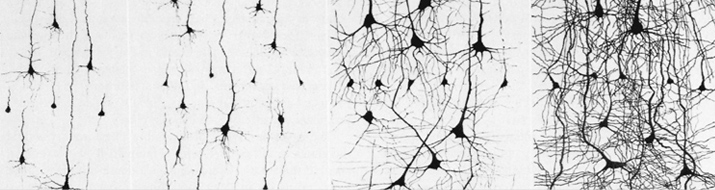
Scientists have historically believed that once a person reaches adulthood, their cognitive abilities are immutable. But beginning in the early twentieth century, that theory has been contested by evidence suggesting that the brain’s abilities are in fact malleable and plastic. According to this principle of neuroplasticity, the brain is constantly changing in response to various experiences. New behaviors, new learnings, and even environmental changes or physical injuries may all stimulate the brain to create new neural pathways or reorganize existing ones, fundamentally altering how information is processed.
One of the most dramatic examples of neuroplasticity at work comes from a 2000 brain scan study on London taxi drivers (Maguire et al., 2000). In order to earn a license, London taxi drivers typically spend about two years learning to navigate the city’s serpentine streets. What mark, the study’s researchers wondered, did this long, rigorous period of training leave on taxi drivers’ brains? Under the scrutiny of fMRI scans, 16 male taxi drivers in this study were revealed to have larger hippocampuses than a control group of 50 healthy males of similar ages. And the longer the time spent as a taxi driver, the larger the hippocampus tended to be. As a brain area involved in memory and navigation, the hippocampus likely changed in response to the taxi drivers’ experiences.
Most instances of neuroplasticity-based changes in the brain are much more subtle. But in recent decades, it’s cases like that of the London taxi drivers that have inspired certain members of the scientific community to pursue the next logical step in research: rather than passively waiting to see how the brain might respond to circumstances, is it possible to direct that capacity for change, targeting improvements in specific key abilities?
The science of cognitive training seeks to answer this question. In 2013 alone, 30 cognitive training studies were registered on the government database ClinicalTrials.gov. Lumosity scientists, with the help of outside collaborators, contribute to this research effort: so far, 7 peer reviewed studies have been published using Lumosity as a cognitive training tool for diverse populations, including healthy adults, cancer survivors, elderly people, and children with a genetic disorder.
Maguire, E. A., Gadian, D. G., Johnsrude, I. S., Good, C. D., Ashburner, J., Frackowiak, R. S. J., & Frith, C. D. (2000). Navigation-related structural change in the hippocampi of taxi drivers. Proceedings of the National Academy of Sciences of the United States of America, 97(8), 4398-4403.
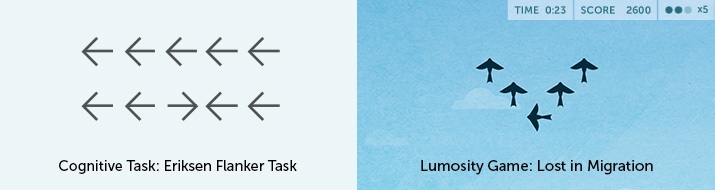
Clearly, without trying it out yourself, it’s difficult for me to convey the nature of the ‘games’ that are provided.
What I can do is to republish a review that appeared on the website MD-Health.
Does Lumosity Work?
Lumosity was designed by several leading neuroscientists, which adds an air of credibility to this popular site, and combines the perks of social networking with brain training technology that supposedly makes your brain function at a higher level. But do these brain training games really work? There is plenty of evidence to support and contract the claims made by this popular gaming website, so it is important to look at the facts before making this determination.
What is Lumosity?
Lumosity is a webpage that features several different brain training games. Players are encouraged to create a profile that allows them to track their progress and play certain games that target mental flexibility, memory, problem solving, speed and attention. The idea is that performing these tasks regularly will help “train” your brain to function more effectively.
How Does Lumosity Work?
The web page explains that Lumosity is based on neuroplasticity, which treats the brain like a muscle that needs to adapt when it is presented with new challenges. The idea here is that if you present your brain with harder challenges, the portion of your brain meant to help solve them will grow larger and more functional. Previously it was believed that neuroplasticity was only available in children with brains that were still developing, but recent science leads researchers to believe that this skill is also available for adults.
Lumosity depends on two basic elements when users create their training program. First, users need to use the program regularly. This is similar to creating a daily routine at your local gym to work and tone your muscles. Your routine will not be as effective if you do not stick with it. The second part of this training program depends on users using many different types of games. There are 35 different games available on Lumosity in addition to many different skill levels within these games. Players should use a variety of different games and increase the difficulty level over time to help ensure that they are continuing to challenge the mind. Creating your initial profile gives the player an opportunity to see what weaknesses they have so they can create a routine that is ideal for their situation.
Is Lumosity Effective?
There are several scientific studies that lead scientists to believe that the brain training activities at Lumosity do have an effect on the brain. A study at the University of Michigan found that adults that used brain training games for a regular amount of time saw an improvement in test scores for dual attention asks and memory games in multiple tests. A similar study at Brown University also saw adults exceeding expectations in brain performance after using brain training games to aid in their work. These programs were found to boost the working memory which helps users keep track of tasks they are currently performing.
The thing to remember when analyzing these results is that they came from laboratory conditions. These adults used Lumosity games for hours every day for several months. Users that do not work on a similar schedule will not see these types of results. There is a great deal of evidence that supports the idea that brain training games can help grow and develop the mind, but not necessarily any evidence that Lumosity and the brain training games available here are more effective than other training games that are on the market elsewhere. In general, keeping the mind active and challenging your mind to learn more advanced tasks and ways of thinking are healthy and can help you perform tasks more effectively, and if Lumosity helps you accomplish this, then it can be seen as a positive asset.
There was a review published in The Guardian newspaper back in April, 2013 from which this extract is offered:
According to the website for Lumosity, which devised these games and is one of the best-known internet providers of brain training, setting aside a few minutes each day to complete the above tasks can make you feel “smarter, sharper, and brighter”. By factoring in a mental workout in the same way that we might go to the gym to exercise, we get cleverer and our IQ rockets.
That, at least, is the idea. And there are lots of people who buy it. In recent years, brain training has become a multimillion-pound business with companies such as Jungle Memory, Nintendo and CogniFit developing a wide range of user-friendly neuroscientific puzzles for the average punter. Lumosity itself has grown by 150% year-on-year since its launch in 2005 and now reaches more than 35 million people worldwide. In January alone, the company’s mobile app was downloaded nearly 50,000 times a day and its revenue hit $24m (£16m).
Co-founded by Michael Scanlon after he abandoned his neuroscience PhD at Stanford University, California, the business also has an extensive research programme that studies the effects of computerised cognitive training as well as conducting experiments over the web.
I can also republish another article from the Lumosity website:
The Science Behind Lumosity
The scientific roots of the Lumosity program
Research has found that certain types of activities may impact the brain more than others (Mechelli et al., 2004; Gaser and Schlaug, 2003; Draganski et al., 2006). It’s believed that as an activity is repeated, the brain tends to fall back on the same set of existing neural pathways. To continue changing, the brain must be exposed to novel, adaptive experiences that challenge it to work in new ways.
Drawing on this idea, Lumosity is designed to give each person a set of exercises that challenge their cognitive abilities.
Lumosity “games” are based on a combination of common neuropsychological and cognitive tasks, many of which have been used in research for decades, and new tasks designed by an in-house science team. Working with experienced game designers, Lumosity neuroscientists have transformed these tasks into over 40 challenging, adaptive games.
Lumosity’s game-based training program is designed to expose your brain to gradually increasing levels of challenges, adapting game difficulty to your individual ability level. As your scores increase, you may encounter new or more difficult games. Modelled from the concept of a physical personal trainer, Lumosity pushes you to operate at the limits of your abilities and stay challenged.
Gaser, C. & Schlaug, G. (2003). Brain structures differ between musicians and non-musicians. Journal of Neuroscience, 23(27), 9240-9245.
Draganski, B., Gaser, C., Kempermann, G., Kuhn, H. G., Winkler, J., Büchel, C., & May, A (2006). Temporal and spatial dynamics of brain structure changes during extensive learning. Journal of Neuroscience, 26(23), 6314-6317.
Mechelli, A., Crinion, J. T., Noppeney, U., O’Doherty, J., Ashburner, J., Frackowiak, R. S., & Price, C.J. (2004). Neurolinguistics: Structural plasticity in the bilingual brain. Nature, 431, 757.
Lumosity is not expensive and while it is impossible to be objective about the positive difference it is giving me I wouldn’t give up on it.
Or put another way: I can remember everything except the things I forget.
Like many others of my age, the short-term memory is not as sharp as it used to be (not that I can remember when that was! 😉 )
So with that in mind, and only for my dear readers who understand where I am coming from, here’s a lovely item that was sent to neighbour Dordie who then passed it on to me.
ooOOoo
Your Yearly Dementia Test
(only 4 questions)
Yep, it’s that time of year again for us to take our annual senior citizen test.
Exercise of the brain is as important as exercise of the muscles. As we grow older, it’s important to keep mentally alert. If you don’t use it, you lose it!
Here is a very private way to gauge how your memory compares to your last test.
Some may think it is too easy, but the ones with memory problems may have difficulty. So take this test to determine if you’re losing it or not.
The spaces below are so you don’t see the answers until you’ve made your answer.
OK, relax, clear your mind and begin.
Question One: What do you put in a toaster?
.
.
.
.
.
.
.
.
.
Answer: Bread.
If you said ‘toast’, just give up now and go do something else. And, try not to hurt yourself.
If you said Bread, go to Question #2.
Question Two: Say ‘silk’ five times. Now spell ‘silk.’ What do cows drink?
.
.
.
.
.
.
.
.
.
Answer: Cows drink water.
If you said ‘milk,’ don’t attempt the next question. Your brain is already over-stressed and may even overheat. Content yourself with reading more appropriate literature such as Women’s Weekly or Auto World. However, if you did say ‘water’, proceed to Question Three.
Question Three: If a red house is made from red bricks and a blue house is made from blue bricks and a pink house is made from pink bricks and a black house is made from black bricks, what is a green house made from?
.
.
.
.
.
.
.
.
.
Answer: Greenhouses are made from glass.
If you said ‘green bricks’, why are you still reading this??? PLEASE, go lie down! But, if you said ‘glass,’ go on to Question #4.
Question Four: (Do not use a calculator for this):
You are driving a bus from New York City to Philadelphia.
In Staten Island, 17 people got on the bus. In New Brunswick, 6 people get off the bus and 9 people get on. In Windsor, 2 people get off and 4 get on. In Trenton, 11 people get off and 16 people get on. In Bristol, 3 people get off and 5 people get on. And, in Camden, 6 people get off and 3 get on.
You then arrive at Philadelphia Station.
Without going back to review, how old is the bus driver?
.
.
.
.
.
.
.
.
Answer: Oh, for crying out loud! Don’t you remember your own age?!?! It was YOU driving the bus!
If you pass this along to your friends, pray they do better than you.
But don’t be too hard on yourself: 95% of people fail most of the questions!






 Learning from Dogs