One of the many things that we adore about living here in Merlin, Southern Oregon is the closeness of nature. Not just the nature of the slopes and mountains but the nature of the trees, creeks, grasses and wild plants.
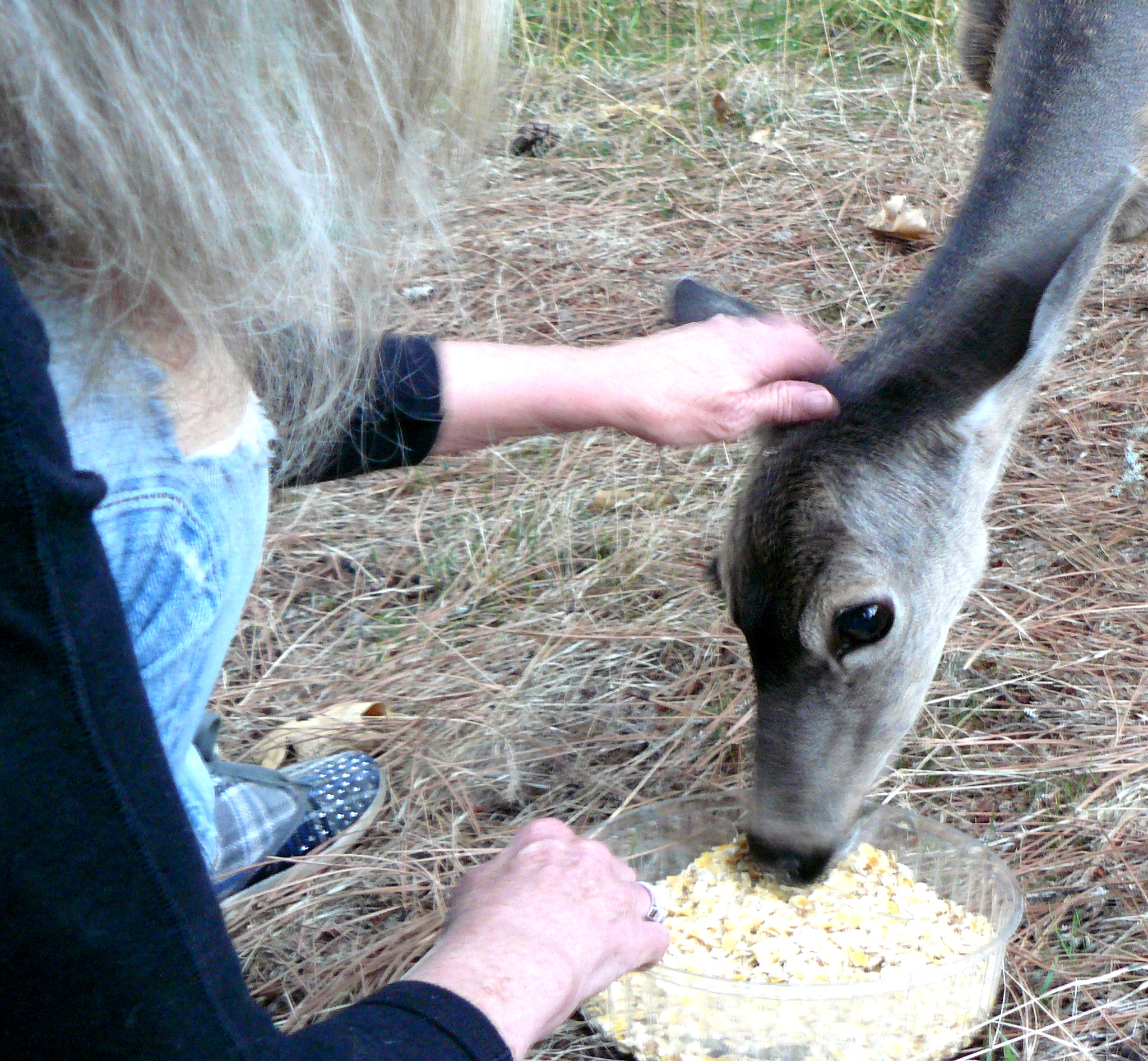
Plus the awareness over the 4+ years that we have been here of how easy it is to gain the trust of wild animals. I will go to my grave holding on to the sweet sensation of a wild deer trusting me and Jean to the point where we could stroke the deer’s neck when we were feeding her.
The trust between the deer and Jean then enabled the deer to feed from Jean’s hand.Then, unbelievably, the wild deer continues feeding as Jean fondles the deer’s ear.
(Both photographs taken in October, 2014 in the area of grassland near to our stables.)
The measure of how we, as in humanity, really feel about the only home we have, as in Planet Earth, is how we regard our planet.
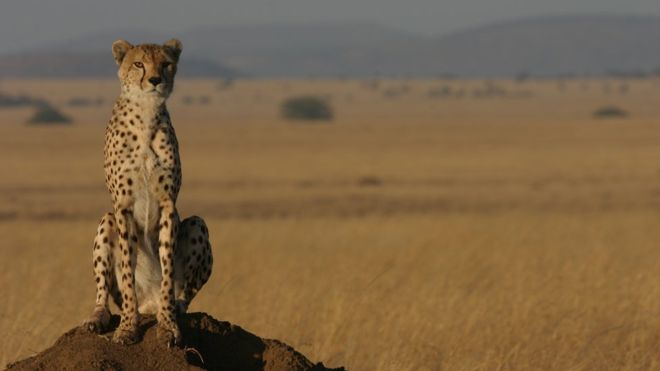
The pain that we feel when we read, as I did yesterday, about another animal species possibly heading towards extinction. In this case, an item on the BBC News website about Cheetahs.
Cheetahs heading towards extinction as population crashes
By Matt McGrath Environment correspondent
Protected parks and reserves for cheetahs are not sufficient as the animal ranges far beyond these areas.
The sleek, speedy cheetah is rapidly heading towards extinction according to a new study into declining numbers.
The report estimates that there are just 7,100 of the world’s fastest mammals now left in the wild.
Cheetahs are in trouble because they range far beyond protected areas and are coming increasingly into conflict with humans.
The authors are calling for an urgent re-categorisation of the species from vulnerable to endangered.
It’s no good tut-tutting; something different has to be done. For otherwise nature will have the last word to say about the future of vast numbers of species especially homo sapiens!
All of which leads me to the main theme of today’s post: holding nature in higher esteem as in higher legal esteem.
Read the following that was published on The Conversation blogsite on October 10th, 2016 and is republished here within their terms. The author is Chip Colwell , Lecturer on Anthropology, University of Colorado, Denver.
ooOOoo
What if nature, like corporations, had the rights and protections of a person?
October 10, 2016 8.16am EDT
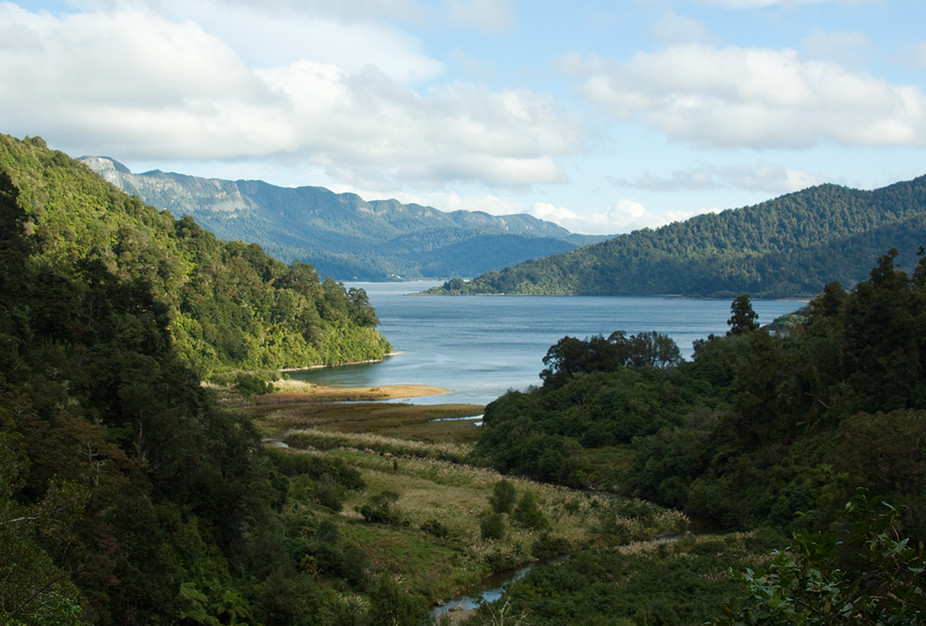
The forest around Lake Waikaremoana in New Zealand has been given legal status of a person because of its cultural significance. Paul Nelhams/flickr, CC BY-SA
In recent years, the U.S. Supreme Court has solidified the concept of corporate personhood. Following rulings in such cases as Hobby Lobby and Citizens United, U.S. law has established that companies are, like people, entitled to certain rights and protections.
But that’s not the only instance of extending legal rights to nonhuman entities. New Zealand took a radically different approach in 2014 with the Te Urewera Act which granted an 821-square-mile forest the legal status of a person. The forest is sacred to the Tūhoe people, an indigenous group of the Maori. For them Te Urewera is an ancient and ancestral homeland that breathes life into their culture. The forest is also a living ancestor. The Te Urewera Act concludes that “Te Urewera has an identity in and of itself,” and thus must be its own entity with “all the rights, powers, duties, and liabilities of a legal person.” Te Urewera holds title to itself.
Although this legal approach is unique to New Zealand, the underlying reason for it is not. Over the last 15 years I have documented similar cultural expressions by Native Americans about their traditional, sacred places. As an anthropologist, this research has often pushed me to search for an answer to the profound question: What does it mean for nature to be a person?
The snow-capped mountain
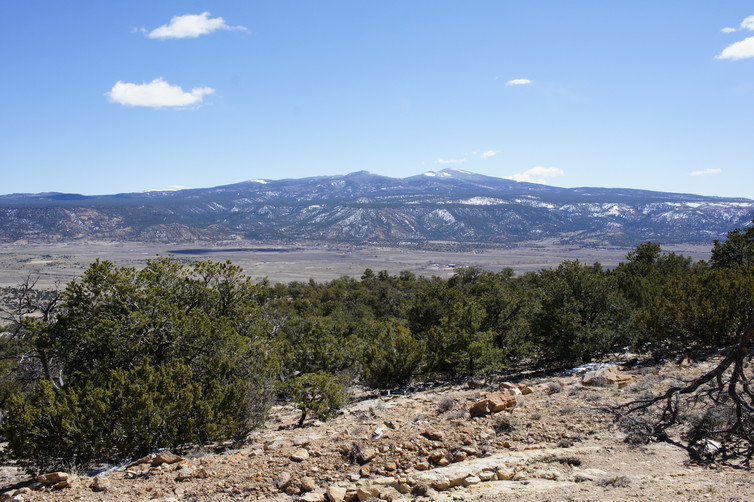
A majestic mountain sits not far northwest of Albuquerque, New Mexico. Like a low triangle, with long gentle slopes, Mount Taylor is clothed in rich forests that appear a velvety charcoal-blue from the distance. Its bald summit, more than 11,000 feet high, is often blanketed in snow – a reminder of the blessing of water, when seen from the blazing desert below.
The Zuni tribe lives about 40 miles west of Mount Taylor. In 2012, I worked with a team to interview 24 tribal members about the values they hold for Dewankwin K’yaba:chu Yalanne (“In the East Snow-capped Mountain”), as Mount Taylor is called in the Zuni language. We were told that their most ancient ancestors began an epic migration in the Grand Canyon.
Mount Taylor in New Mexico, a sacred site to the Zuni who believe it is a living being. Chip Colwell, Author provided.
Over millennia they migrated across the Southwest, with important medicine societies and clans living around Mount Taylor. After settling in their current pueblo homes, Zunis returned to this sacred mountain to hunt animals like deer and bear, harvest wild plants like acorns and cattails, and gather minerals used in sacrosanct rituals that keep the universe in order. Across the generations Dewankwin Kyaba:chu Yalanne has come to shape Zuni history, life, and identity no less than the Vatican has for Catholics.
But unlike holy places in the Western world, Zunis believe Mount Taylor is a living being. Zuni elders told me that the mountain was created within the Earth’s womb. As a mountain formed by volcanic activity, it has always grown and aged. The mountain can give life as people do. The mountain’s snow melts in spring and nourishes plants and wildlife for miles. Water is the mountain’s blood; buried minerals are the mountain’s meat. Because it lives, deep below is its beating heart. Zunis consider Mount Taylor to be their kin.
There is a stereotype that Native American peoples have a singular connection to nature. And yet in my experience, they do see the world in a fundamentally different way from most people I know. Whether it is mountains, rivers, rocks, animals, plants, stars or weather, they see the natural world as living and breathing, deeply relational, even at times all-knowing and transcendent.
In my work with Arizona’s Hopi tribe, I have traveled with cultural leaders to study sacred places. They often stop to listen to the wind, or search the sky for an eagle, or smile when it begins to rain, which they believe is a blessing the ancestors bestow upon them.
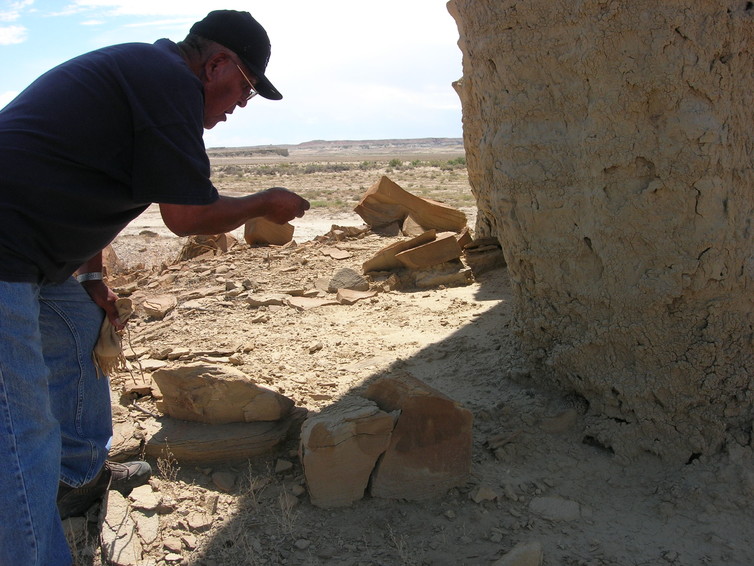
During one project with the Hopi tribe, we came across a rattlesnake coiled near an ancient fallen pueblo. “Long ago, one of them ancestors lived here and turned into a rattlesnake,” the elder Raleigh H. Puhuyaoma Sr. shared with me, pointing to the nearby archaeological site. “It’s now protecting the place.” The elders left an offering of corn meal to the snake. An elder later told me that it soon rained on his cornfield, a result from this spiritual exchange.
Violent disputes
Understanding these cultural worldviews matters greatly in discussions over protecting places in nature. The American West has a long history of battles over the control of land. We’ve seen this recently from the Bundy family’s takeover of the federal wildlife refuge in Oregon to the current fight over turning Bears Ears – 1.9 million acres of wilderness – into a national monument in Utah.
Yet often these battles are less about the struggle between private and public interests, and more about basic questions of nature’s purpose. Do wild places have intrinsic worth? Or is the land a mere tool for human uses?
A Hopi elder making an offering to a snake to protect a sacred space. Chip Colwell, Author provided.
Much of my research has involved documenting sacred places because they are being threatened by development projects on public land. The Zuni’s sacred Mount Taylor, much of it managed by the U.S. National Forest Service, has been extensively mined for uranium, and is the cause of violent disputes over whether it should be developed or protected.
Even though the U.S. does not legally recognize natural places as people, some legal protections exist for sacred places. Under the National Historic Preservation Act, for example, the U.S. government must take into consideration the potential impacts of certain development projects on “traditional cultural properties.”
This and other federal heritage laws, however, provide tribes a small voice in the process, little power, and rarely lead to preservation. More to the point, these laws reduce what tribes see as living places to “properties,” obscuring their inherent spiritual value.
In New Zealand, the Te Urewera Act offers a higher level of protection, empowering a board to be the land’s guardian. The Te Urewera Act, though, does not remove its connection to humans. With a permit, people can hunt, fish, farm and more. The public still has access to the forest. One section of the law even allows Te Urewera to be mined.
Te Urewera teaches us that acknowledging cultural views of places as living does not mean ending the relationship between humans and nature, but reordering it – recognizing nature’s intrinsic worth and respecting indigenous philosophies.
In the U.S. and elsewhere, I believe we can do better to align our legal system with the cultural expressions of the people it serves. For instance, the U.S. Congress could amend the NHPA or the American Indian Religious Freedom Act to acknowledge the deep cultural connection between tribes and natural places, and afford better protections for sacred landscapes like New Mexico’s Mount Taylor.
Until then, it says much about us when companies are considered people before nature is.
I included in yesterday’s post the interview with Bill Kotke and his concern that humanity’s greed, and that’s the correct term in my view, focusing on each generation having more, howsoever one defines ‘more’, was utterly at odds with a sustainable future on the only home we have: Planet Earth. A finite planet in a finite solar system.
On Monday I was chatting with Roger D. back in the old country. It was Roger who introduced me to gliding back in the late 70s. Later we were in business together in Colchester, Essex and we still keep in touch.
Anyway, Roger was bemoaning the current state of affairs in the UK regarding Brexit and went on to say that every economic strategy offered by this or that UK Government was about growth. Whether we are talking economic growth, improvement in living standards or population growth why are there no leading figures in any leading government standing up and saying this can’t go on! Because it can’t!
We are presently a global population of 7.5 billion. This year alone, as of today, there have been 56,000,000 deaths. But also, as of today, there have been 133,000,000 births. (I rounded the figures but what difference does it make!) That’s a growth of 77 million persons in this one year. It cannot go on!
Bill Kotke also spoke of soil loss. Just last Sunday there was a Care2 item about soil loss. From which I extract:
Could soil ever actually run out?
Yes. If we continue to harm and degrade topsoil at the current rate, it’s estimated that the world could lose all its topsoil within 60 years.
Topsoil is the uppermost layer of soil on the surface of the earth. It’s the most fertile type of soil that typically contains lots of nutrient-rich organic matter from broken down plants and other organisms. Topsoil is also alive with beneficial microbes, fungi and critters like earth worms, which feed on the organic matter.
The deeper layers of soil beneath the topsoil are not nearly as rich. They are primarily made up of decomposing rock that provides the raw material for future topsoil as well as a substrate for deeply rooted plants to anchor in.
If the delicate ecosystem within topsoil is disrupted, it will essentially die. Plants can’t grow in topsoil that doesn’t have abundant organic matter and thriving populations of microbes.
Yes, there are street protests about this political action or that political action but why aren’t we seeing tens of thousands on the streets protesting about the loss of our topsoil!!
Moving on.
There was a recent essay from Patrice Ayme in which he wrote about the Australian Asthma Thunderstorm. Just read this long extract from that essay:
(November 29th, 2016 Italics are from the story as presented in the New York Times)
Mr. McGann was one of thousands of people in Melbourne having an attack of thunderstorm asthma. About 8,500 people went to hospitals. Eight have died, and one remains in intensive care more than a week after a thunderstorm surged across Melbourne, carrying pollen that strong winds and rain broke into tiny fragments.
Perennial ryegrass seeds were swept up in whorls of wind and carried from four million hectares of pasturelands (about 9.9 million acres) that lie to Melbourne’s north and west. If broken into fragments, they are so fine that they can be inhaled.”
Actually what also lie north and west of Melbourne are giant fields of canola. Consider the following propaganda picture:
Mr. McGann did not end up in the hospital. “Every breath I took made the next breath harder,” he said, adding that he had no family history of asthma. “I just didn’t realize it could have the effect it had.”
Grass pollen is the primary source of allergies in southern Australia, and tracking the data allowed scientists to forecast high levels of grass seeds in the atmosphere on Nov. 21. Still, Ms. Hennessy said, the government was taken by surprise.”
Surprise, indeed, this did not happen before, by two orders of magnitude. How come so much more severity?
My lawyer’s theory is different. It evolved from my own observations and theories of why asthma and allergies, let alone weird cancers, have been augmenting spectacularly. There are around 150,000 artificial, man-made chemical products in use. By medical drug standards, they are untested (in earlier essays, I mentioned 80,000, which is the number brandished in the USA; however, French specialists talk about 150,000 untested chemicals.).
Canola (or rapeseed), Brassica napus, is an oilseed crop which is cultivated for its high quality edible oil used in many foods (eg. margarines and cooking oil) and seed meal (the fibrous material left after the oil pressing process), which has a high protein content. That makes it highly desirable as a stock feed.
In 2010-11, the Australian state of Victoria, where Melbourne is located, produced 476 thousand tonnes of canola with a gross value of $293 million.
Control of weeds, particularly weeds from the Brassicaceae family (broadleaf), through herbicide application during the canola-growing season, significantly improves the quantity of the grain produced. Weeds compete for space, nutrients and sunlight. (African countries have dismissed that the quality of GMO seed is higher, in contradistinction with US propaganda; quite the opposite, they say)
Two genetically modified (GM) canola varieties have been developed in Australia, Roundup Ready® (by Monsanto Australia Ltd) and InVigor® (by Bayer CropSciences Pty Ltd). For maximum effect, each GM variety has been developed to be tolerant to and hence used with, a specific herbicide. The result is the mass poisoning of the planet, horizon to horizon.
The same poisoning trick is used for insecticides. To boot, the poison resistance spreads, demanding even higher doses of poison to be used in the grand outdoors..
In other words, massive quantities of poisons are put in the soil, and from there, are kicked up, in the air.
Exposed to this life destroying poisons, the body reacts by shutting down all pores. Asthma.
It cannot go on!
It is time for you and me and millions of others to be the change we want to see. Whether it’s the little things like recycling, or car sharing, or the bigger things like moving to an eco village we have to make a difference.
We have to learn from those communities that for thousands of years lived harmonious and sustainable lives on the planet. Doing so many thousands of years before farming man came on to the scene
In 1969 I spent a year in the outback of Australia as a correspondent for KotiPosti; a Finnish magazine. While I was out in the wilderness looking for Finns to write about it was impossible not to be drawn into the history of the aboriginal Australian.
ABORIGINAL AUSTRALIANS ARE descendents of the first people to leave Africa up to 75,000 years ago, a genetic study has found, confirming they may have the oldest continuous culture on the planet.
Professor Eske Willerslev of the University of Copenhagen, who led the study, says Aboriginal Australians were the first modern humans to traverse unknown territory in Asia and Australia. “It was a truly amazing journey that must have demanded exceptional survival skills and bravery,” he says.
A century-old lock of hair, given by a West Australian indigenous man to an anthropologist, has led to the discovery that ancestors of Aboriginal Australians reached Asia at least 24,000 years before another wave of migration that populated Europe and Asia.
It was back then that I truly understood the relationship that those early Australians had with the earth; with their planet. Forget religions and churches, the Aborigines had a spiritual relationship with the planet that sustained them.
I will never forget exploring quietly, just me and my wife of those days, the caves and darker recesses around the base of Ayers Rock, better called Uluru, the most amazing monolith right out there in the middle of the desert. The unmistakable signs of so many of those quiet recesses being spiritual places for those ancient people. Uluru, or Ayers Rock, is a massive sandstone monolith in the heart of the Northern Territory’s arid “Red Centre”. The nearest large town is Alice Springs, 450km away. Uluru is sacred to indigenous Australians and is thought to have started forming around 550 million years ago. It’s within Uluru-Kata Tjuta National Park, which also includes the 36 red-rock domes of the Kata Tjuta (colloquially “The Olgas”) formation.
It is just he same for the North American Indians. They have a spiritual relationship with the land.
Back to Bill Kotke’s talk. He spoke of how when each of us was the product of the fertilisation of the egg by the sperm in utero we grow first as a fish, then as a mammal and, finally, emerge as a human: “We are connected to the earth!”
As you all know I am a secular humanist. But that doesn’t mean that I don’t have deep, as in spiritual, feelings for the lands and the oceans and for the wildlife of this planet
So let me close by repeating what I said at that meeting where Bill was presenting. For Bill spoke of being connected, in a heartfelt manner, with the planet. For if one is so connected then it is natural for one to want to love and protect the planet.
This is what I said:
Bill,
In 1991 I departed Gibraltar Harbour solo on my yacht Songbird of Kent heading West out across the Atlantic.
After I had settled in to the routine of being at sea, better described as settling in to being connected to the ocean, I loved watching the dolphins come up to the boat, give it the once over, raise their heads and offer me a brief eye contact and then slip away.
Then I became aware that when I was laying down on my bunk in the cabin I could sense when the dolphins were close to my hull. Each time I had that sense I would come up to the deck, briefly pausing to clip on my safety harness lest I truly joined the dolphins, and one or two of those dolphins were always by my boat.
I called this post What To Say To The Kids. Not just my son and daughter, now both mature adults, but my grandson Morten son to my daughter and her husband.
Because I feel so strongly that waiting for our leaders and politicians to lead humanity in protecting our planet is pointless. They are driven by other values.
It cannot go on!
I want to be measured by my son and my daughter, and by my grandson in due time, as a person who made a difference; even just a small one.
For I truly believe that showing love for our planet will make a difference and that is what I want to say to my kids.
We have to return to community living; a twenty-first century version of such living. Even in the giant populations of big cities we have to reach out and form local communities. Groups of people who are driven by the imperative to curtail population growth, eager to share in as many ways as possible and totally committed to taking no more from the planet than they put in.
We, as in humanity, could be very close to the end!
Now my sub-title could be argued as being a tad provocative and, perhaps, it is. But I wanted to catch your attention and then hope that you stay with me for today’s post.
Jean and I belong to the Humanists & Freethinkers Group of Grants Pass. At last Saturday’s meeting the main item was a talk given by William Kötke: His website is here. Bill, as he was happy to be called, is the author of the books The Final Empire and Garden Planet (the links take you to the respective Amazon pages). Bill also has more details of his first book here.
The essence of Bill’s talk was that when we ‘evolved’ from a life of hunting and gathering to developing the land for agricultural purposes we lost our connection to the planet. For the simple reason that as foragers we depended on always being able to find edible wild plants and fruit, and therefore lived in balance with the land, but when we started to farm we became protective, materialistic and greedy. For having more land, even if one took it by force from another, equated to making more; making more food, using the surplus to buy favours, sell, etc.
Some of the facts that Bill presented in his talk were truly frightening such as soil loss; a topic I highlight in tomorrow’s post.
But for now just settle down and watch this interview of Bill filmed by Woodburn Community Access Television.
Published on Jan 10, 2016
Author and Futurist William H. Kotke shares with Woodburn his years of knowledge and understandings of the Human History and The Current Dilemma all of us face as a species.
Is there a way forward?
Yes, I think so and it’s all to do with communities; more on that in a later post.
Is this anything to do with dogs?
Here’s what the Welcome page of this blog says (in part):
As man’s companion, protector and helper, history suggests that dogs were critically important in man achieving success as a hunter-gatherer. Dogs ‘teaching’ man to be so successful a hunter enabled evolution, some 20,000 years later, to farming, thence the long journey to modern man. But in the last, say 100 years, that farming spirit has become corrupted to the point where we see the planet’s plant and mineral resources as infinite. Mankind is close to the edge of extinction, literally and spiritually.
Dogs know better, much better! Time again for man to learn from dogs!
We all could easily be drinking in ‘the last chance saloon’.
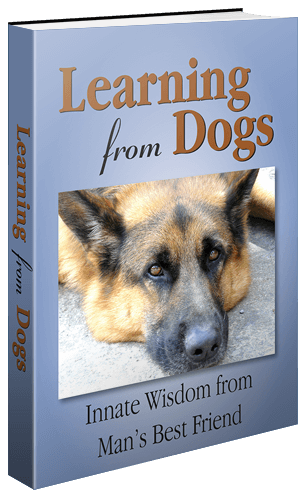
After I published my book, Learning From Dogs, last December I was invited to a number of book signing events. In each case I gave a short talk of about 20 minutes in which I explained the philosophy behind the book. Perhaps no better articulated than by Dr. Jim Goodbrod’s Foreword to the book. Take this paragraph, for instance, from that Foreword:
Dogs represent to me that innocence lost. Their emotions are pure. They live in the present. They do not suffer existential angst over what they are. They do not covet material wealth. They offer us unconditional love and devotion. Although they certainly have not reached the great heights of intellectual achievement of us humans (I know for a fact that this is true after having lived with a Labrador Retriever for several years), at the same time they have not sunk to the depths of depravity to which we are susceptible. It could be argued that I am being overly anthropomorphic, or that dogs are simply mentally incapable of these thoughts. But nevertheless, metaphorically or otherwise, I believe that dogs demonstrate a simple and uncorrupted approach to life from which we all could benefit.
During my opening talks on each occasion I would ask the audience: “So raise your hands if you are someone who is not worried about the future?”
There was never a raised hand!
My introduction to a recent essay published by George Monbiot that is republished here with Mr. Monbiot’s permission.
ooOOoo
The Drums of War
24th November 2016
The combination of automation, complexity and climate change is dangerous in ways we haven’t even begun to grasp.
By George Monbiot, published in the Guardian 23rd November 2016
Wave the magic wand and the problem goes away. Those pesky pollution laws, carbon caps and clean power plans: swish them away and the golden age of blue-collar employment will return. This is Donald Trump’s promise, in his video message on Monday, in which he claimed that unleashing coal and fracking will create “many millions of high-paid jobs”. He will tear down everything to make it come true.
But it won’t come true. Even if we ripped the world to pieces in the search for full employment, leaving no mountain unturned, we would not find it. Instead, we would merely jeopardise the prosperity – and the lives – of people everywhere. However slavishly governments grovel to corporate Luddism, they will not bring the smog economy back.
No one can deny the problem Trump claims to be addressing. The old mining and industrial areas are in crisis throughout the rich world. And we have seen nothing yet.
I have just re-read the study published by the Oxford Martin School in 2013 on the impacts of computerisation. What jumps out today, to put it crudely, is that jobs in the rustbelts and rural towns that voted for Trump are at high risk of automation; while the professions of many Clinton supporters are at low risk.
The jobs most likely to be destroyed are in mining, raw materials, manufacturing, transport and logistics, cargo handling, warehousing and retailing, construction (pre-fabricated buildings will be assembled by robots in factories), office support, administration and telemarketing. So what, in the counties that voted for Trump, will be left?
Farm jobs have mostly gone already. Service and care work, where hope for some appeared to lie, will be threatened by a further wave of automation, as service robots – commercial and domestic – take over. Yes, there will be jobs in the green economy, more and better than any that could be revived in the fossil economy. But they won’t be enough to fill the gaps, and many will be in the wrong places.
At lower risk is work that requires negotiation, persuasion, originality and creativity. The management and business jobs that demand these skills are comparatively safe from automation; so are lawyers, teachers, researchers, doctors, journalists, actors and artists. The jobs that demand the highest educational attainment are the least susceptible to computerisation. The divisions tearing America apart will only widen.
Even this bleak analysis does not capture in full the underlying reasons why good, abundant jobs will not return to the places that need them most. As Paul Mason argues in Postcapitalism, the impacts of information technology go way beyond simple automation: it is likely to destroy the very basis of the market economy and the relationship between work and wages.
And, as the independent thinker Paul Arbair notes in the most interesting essay I have read this year, beyond a certain level of complexity, economies become harder to sustain. There’s a point at which further complexity delivers diminishing returns; society is then overwhelmed by its demands and breaks down. He argues that the political crisis in Western countries suggests we may have reached this point.
In the same video address on Monday, Trump announced that he will withdraw America from the Trans-Pacific Partnership (TPP). He is right to do so, for the wrong reasons. Like TTIP and CETA, the TPP is a fake trade treaty, whose primary impact is to extend corporate property rights at the expense of both competition and democracy. But withdrawal will not, as he claims, “bring jobs and industry back to American shores”. The work in Mexico and China that Trump wants to reclaim will evaporate long before it can be repatriated.
As for the high-quality, high-waged working class jobs he promised, these are never handed down from on high. They are secured through the organisation of labour. But the unions were smashed by Ronald Reagan, and collective bargaining has been suppressed ever since by casualisation and fragmentation. So how is this going to happen? Out of the kindness of Trump’s heart? Kindness, Trump, heart?
But it’s not just Trump. Clinton and Sanders also made impossible promises to bring back jobs. Half the platform of both parties was based on a delusion. The social, environmental and economic crises we face require a complete reappraisal of the way we live and work. The failure by mainstream political parties to produce a new and persuasive economic narrative, that does not rely on sustaining impossible levels of growth and generating illusory jobs, provides a marvellous opening for demagogues everywhere.
Governments across the world are making promises they cannot keep. In the absence of a new vision, their failure to materialise will mean only one thing: something or someone must be found to blame. As people become angrier and more alienated; as the complexity and connectivity of global systems becomes ever harder to manage; as institutions like the European Union collapse and as climate change renders parts of the world uninhabitable, forcing hundreds of millions of people from their homes, the net of blame will be cast ever wider.
Eventually the anger that cannot be assuaged through policy will be turned outwards, towards other nations. Faced with a choice of hard truths or easy lies, politicians and their supporters in the media will discover that foreign aggression is among the few options for political survival. I now believe that we will see war between the major powers within my lifetime. Which ones it will involve, and on what apparent cause, remains far from clear. But something that once seemed remote now looks probable to me.
A complete reframing of economic life is needed not “just” to suppress the existential risk that climate change presents (a risk marked by a 20°C anomaly reported in the Arctic Ocean while I was writing this article), but other existential threats as well – including war. Today’s governments, whether they are run by Trump or Obama or May or Merkel, lack the courage and imagination even to open this conversation. It is left to others to conceive of a more plausible vision than trying to magic back the good old days. The task for all those who love this world and fear for our children is to imagine a different future, rather than another past.
On my desk in front of me is a small booklet of business quotations that was published by Speedwing Training Ltd, part of the British Airways Group of Companies. I have had it for years. I randomly opened the booklet and there on page 7 is this quotation (and the emboldening is mine):
Our task is not to fix the blame for the past, but to fix the course for the future.
John F. Kennedy
Mr. Monbiot speaks for the millions of people who need that course for the future NOW!
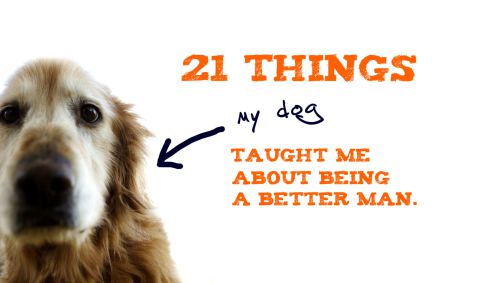
Twenty-one things my dog taught me about being a better man.
June 7, 2010 by Olivier Blanchard
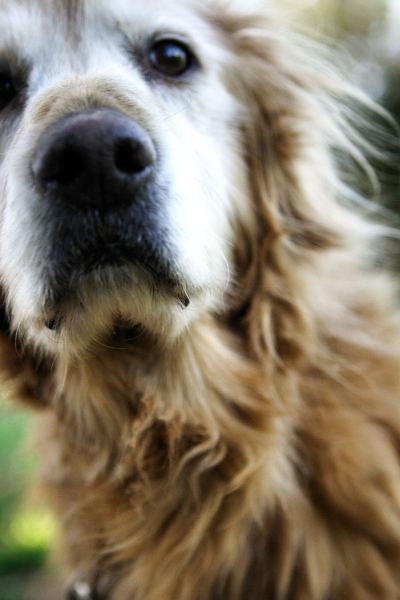
We had to put our golden retriever to sleep this weekend, our friend of fifteen years, our family’s faithful guardian and companion, and one of the kindest, most loyal and giving souls I have ever met. True to her breed, Sasha was courageous, tender and selfless until the end.
I was trying to figure out how to give her a worthy send-off here on The BrandBuilder blog, and settled on some of the things she taught me over the years. Or rather, the things I didn’t realize she had taught me until this past week, much of which I spent caring for her, as she could no longer take care of herself. She and I had some long chats, in our own way, and the old girl was much wiser than I gave her credit for.
Are there business lessons in this list? Yes. There are. But all are deeply human lessons at the core. If being human can make a business better, if it can fuel its soul (or even simply give it one), then yes, let these be business lessons. But don’t ever forget that what makes a business truly great isn’t technology or design or a fancy logo. Those are expressions of something deeper. Something more visceral and powerful and true. What makes a business great, what makes it special, worthy of a connection, worthy of trust and loyalty, admiration and respect, even love, always starts with a beating heart, not a beeping cash register. (One is the cause, and the other one of many effects. Don’t lose sight of that distinction. Horse before cart: Soul drives love. Love drives business.)
It’s so easy to lose sight of what’s important in our lives. And this isn’t me being overly sentimental because I just lost my dog. I mean, yes, sure, okay… But there’s also something to this: That sentimentality, that emotion, these things that make us connect with other souls is at the heart of EVERYTHING this blog has been about these last few years: Business, design, marketing, social media, communications, corporate responsibility, best practices… No company can ever be great unless it can tap into the very essence of what makes us want to connect with each other, and no executive or business manager or cashier can ever truly be great at their jobs unless they also tap into the very thing that makes genuine human connections possible. If ever there was a secret to successfully building a brand, a lovebrand, the kind that people will fight for and whose mark they will tattoo on their bodies, it is this. The rest is merely execution.
If you only walk away with one bit of wisdom from this post, let it be this: You cannot build a better business unless you first become a better human being. Everything that strips you of your humanity, of your empathy, of your ability to connect with others is bad for business. It’s bad practice. It is doomed to fail in the end.
As my good friend John Warner noted yesterday, “If more people were as loyal and loving as dogs the world would be a better place.” (source) And he’s right. How do you become a better human being then? Well, that’s up to you, but if you had asked Sasha, she might have given you a few pointers of her own. Granted, she was never a Fortune 500 C.M.O. She didn’t design the iPad. She didn’t invent the internet or write a book. She never presented at a conference. All she did was hang out with me and Chico. We went on car rides. She watched me work. She lived the simple life of a dog, uncluttered by Twitter followers and Hubspot rankings and the drive to publish and present case studies. She was a dog, and so her perspective is a little different from what you may be used to. At any rate, here are twenty-one she and I discussed at length last week. I hope they will be as valuable to you as they now are to me.
Twenty-one things my dog taught me about being a better man:
1. Be true to your own nature. There’s no point in faking it. A golden retriever isn’t a chihuahua or a pug or a greyhound, and for good reason. Being comfortable in your own skin is 90% of the trick to rocking out your life. Not everyone is meant to be Rintintin or a seeing-eye dog or an Iditarod racer. It’s okay. Find yourself and embrace your nature. That’s always a great place to start.
2. Be true to the ones you love. Your friends, your family, your tribe, your pack. A life lived for others is a life well-lived. Selfish pursuits aside, ambition often grows hollow when turned inwardly instead of outwardly. It’s one thing to want to be pack leader, but there is just as much value and honor in serving than in leading. When in doubt, see item number one.
3. Never say no to a chance to go on a car ride. When the days grow short, I guarantee you’ll wish you’d have gone on more car rides.
4. Leashes are the enemy. Avoid them at all cost.
5. People are strange. So much potential, yet here they are, doing everything they can to complicate rather than simplify their lives. It’s puzzling.
6. Belly scratches.
7. The end isn’t pretty, but if you can face it with dignity and grace, none of your body’s weaknesses will matter. Your heart, your courage, your spirit is what people will see and remember. This isn’t only applicable in your last days and weeks. It’s applicable every day of your life. Adversity happens. It’s how you deal with it that matters.
8. Forgiveness is easier for dogs than for humans, but humans have opposable thumbs and the ability to speak, so it all balances out in the end.
9. Your bark is your own. No one has one quite like yours. Own it. Love it. Project it.
10. Trust your instincts. They rarely steer you wrong. The feeling in your gut though, that’s probably just something you ate.
11. Just because you’re meant to live on land doesn’t mean you can’t feel at home in water. Play outside the safety zone. Swim in the deep end. Dive in. We’re all designed to do more than the obvious.
12. Play more. The game is irrelevant. Just play. Tip: Exploring is play. Having adventures is play. Finding out what’s behind the next hill is play.
13. Your body growing old doesn’t mean you can’t be a puppy at heart. Actually, the first should have no impact on the latter. If you find that it does, take a step back, regroup, and restart. Always be a puppy at heart.
14. Humans aren’t all bad. But they aren’t all good either. Choose yours wisely.
15. Always keep that 20% wolf in you. If you ever give it up, you’re done. A dog without a little wildness in the blood isn’t a dog. It’s a furry robot. The beauty of a great dog doesn’t lie in its obedience but in its loyalty. Loyalty is a choice. Dogs choose to be dogs and not wolves. That’s what makes them so special.
16. Running full bore across a field in the rain.
17. There are no mysteries. Take cats, for example: Half rat, half badger. Crap in a box. Eat rodents. Where’s the mystery in that? If you look hard enough, you can figure most things out for yourself. The world isn’t as complicated as it sometimes seems.
18. Sometimes, you have to back up your growl with a bite. Go with it. Some people like to test your bark-to-bite ratio. With those “inquisitive” types, a little education goes a long way. As much as it sucks to have to go there, it is sometimes necessary. (It’s what the fangs are for.) Your territory, your space, your safety… They’re worth defending. Make a show of it once, and chances are you’ll never have to teach anyone a lesson again.
19. Being alone is no way to go through life. We’re pack animals. Humans, dogs, same thing. We need others to make all of this worthwhile. As an aside, if we live through others, why not also live for others, even if only a little bit? It isn’t that much of a stretch.
20. When you chase the ball, CHASE the fucking ball. Two reasons: a) It’s a chase. You don’t half-ass a chase. You go all out. It’s what you do. It’s the point. b) You don’t want some other mutt to get to the ball before you and slobber it all up, do you?
21. In the end, you will revisit your adventures, your battles, your chases, your voyages and all the excitement of your life with bemused pride, but it’s the quiet moments with loved ones that your mind will settle on. The comfort of those days when all you did was spend lazy hours with them, your head on their lap, their’s on yours, taking in the afternoon sun and the hundreds of fleeting stories carried like whispers on the breeze, those are the memories that will stay with you to the end and beyond.
Never give up on your thirst for life, on the beauty subtle moments, and on chasing that ball as hard and fast as your legs and heart will carry you.
Godspeed, Sasha.
Sasha (1995 – 2010) R.I.P.
ooOOoo
Shortly after completing today’s post, I read the following. It seemed appropriate to include it today.
When you talk, you are only repeating what you know,
“Like many others wiser than me, I believe that world peace can and must be created from the inside out.
If we can find a way for everybody to develop peace and happiness within themselves, their inner peace and happiness will naturally manifest into compassion.
And if we create a world where most people are happy, at peace and compassionate, we can create the foundation for world peace….
Fortunately, a methodology for doing that already exists and has already been practiced by various peoples for thousands of years.
It is the art of contemplative practices to develop the mind. Most of us know this as meditation.”
~ Chade-Meng Tan
It begins with each and every one of us.
Now more than ever, find the connection to the peace and stillness within you.
Consciously step away from the external chaos of the world and the media.
It only takes a moment to pause and take a few deep breaths.
Allow your awareness to move into the center of your being, just below your heart.
Notice the rise and fall of the breath.
Ask yourself “What is alive in me right now?” and “Can I be with this?”
Sit with this for a while and allow what you are experiencing to be felt in your heart.
Loneliness and the feeling of being unwanted is the most terrible poverty.
Those words above are attributed to Mother Teresa and I have no reason to doubt that.
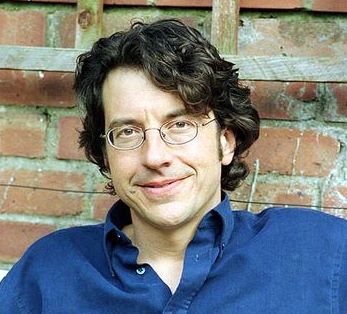
George Monbiot
I selected them because they seemed to capture the mood that flowed out at me from a recent essay by George Monbiot.
Many will know George for he is a British writer very well-known for his environmental and political activism. He writes a weekly column for The Guardian, and is the author of a number of books.
Way back in the early days of this blog I was moved to republish some of GM’s essays and sought his permission to do just that. He responded promptly giving me blanket permission to republish any of his essays.
Now it’s a long time since I have availed myself of that permission for the simple reason that so very often George writes about matters that are tough to read and I choose not to share with you because there’s no shortage of tough commentaries about today’s world. That’s no criticism, actual or implied, into George Monbiot’s integrity as a reporter and writer.
By George Monbiot, published in the Guardian 3rd October 2016
Two years ago, I wrote a column for the Guardian in which I argued that what distinguishes our age from those preceding it is an epidemic of loneliness. Throughout human history, we have been hyper-social animals, dependent on each other for both physical and psychic survival. Thomas Hobbes’s claim – that our natural state is a war of “every man against every man” – is a myth proposed by someone whose understanding of human evolution was confined to the book of Genesis. But the myth is now being realised through the religion of our time: a celebration of extreme individualism and universal competition. The resulting loneliness, I argued, is a deadly condition, which kills as many people as smoking or obesity.
To my astonishment, the article exploded, and the ripples can still be felt today. A documentary it inspired, called the Age of Loneliness, aired recently on BBC1. Several publishers asked me to write books on the topic, but I could think of nothing more depressing than spending three years sitting on my backside, documenting social isolation. There was plenty I wanted to say on the topic. But how?
A few weeks later, I dashed out to buy some screws from a hardware shop. Ahead of me in the queue was an elderly woman. She lent on the counter, dithering about what she wanted and trying to engage the sales assistants in a riveting conversation about her state of health. Stuck behind her, I quietly fumed: it seemed as if she would never leave.
But as I cycled home, and my frustration ebbed away, I saw what should have been obvious: here was a person who seemed desperately lonely. “Where’s your empathy?”, I asked myself. “Isn’t that what you were writing about?”. What if that conversation was the only one she would have all day? I felt guilty about my feelings in the shop.
When I returned to my desk, I began dashing out a rough poem about a woman living with little to keep her company but memories, who goes to the shops in the hope that she might talk to someone, but discovers that the tills have been replaced with automatic checkouts. As I wrote, it seemed to me that it was trying to become something else: a ballad. Suddenly I knew what I wanted to do with the topic: I wanted to write an album.
There were just a couple of minor hitches. I can’t read music, I don’t play an instrument and my singing is banned under international law. But I knew who to ask.
I first heard Ewan McLennan while listening to Late Junction on Radio 3, in 2011. I was transfixed by his voice, his playing and what seemed to be an almost supernatural ability to find the heart of a song. He was just 25. I bought his first album, Rags and Robes, and listened to it over and again. Three years later, I heard him interviewed by Mary Ann Kennedy, whose programmes I’ve followed since she began broadcasting on Radio Scotland. He spoke with the same ease of expression I had heard in his music. He was relaxed and funny, politically engaged and plainly fascinated by the roots and text of songs and poems. He came across as a cracking bloke.
I did something I have seldom done: I sent him a fan letter. I invited him to a talk I was giving in his home city, Bristol. He came, and over dinner afterwards we clicked. So, a few months later, with some trepidation, it was to him that I sent my idea of collaborating on a themed album.
To my delight, he agreed. I would start by thinking up a story and writing a rough sketch, which might incorporate some potential hooks, rhymes and choruses. I would send it to him on the understanding that he could do whatever he liked with it. I did not try to write to his style, as I knew he would take from each sketch what he wanted and make the song his own.
I wasn’t wrong. A couple of weeks after I emailed the first sketch to him, I found an audio file in my inbox, and opened it with the excitement of a child at Christmas. It was wonderful – he had turned my base metal into gold. The songs he sent back to me were riveting and heart-wrenching, capturing sensations I have long struggled to express.
The album is a mixture of dark shades and light: sad ballads and stirring anthems. We want to use it as a means of not only talking about loneliness, but, in a small way, addressing it. With advice from charities working on the issue, we are designing our gigs to try to bring people together. I will talk about the themes and Ewan will perform the songs. We will encourage people in the audience to talk to each other; then it will end up with a party in the nearest willing pub. Music naturally makes connections; we want to take it a step further.
In one respect, the album is already succeeding, as the collaboration has relieved the usual solitude in which we both work, making our lives less lonely. I hope it has the same effect on other people.
Breaking the Spell of Loneliness, by Ewan McLennan and George Monbiot, is released on October 14 by Fellside Records.
Here’s a short video about the project, featuring some of the music:
This remarkable collaboration between author George Monbiot and musician Ewan McLennan seeks to address the curse of our age: a crowded planet stricken by loneliness. Using music and the written word, it seeks to make connections in a splintered world.
Now, dear reader, you would be disappointed if I didn’t close today’s post without reference to the value of a dog or two in one’s life, and I have no intention of delivering such disappointment!
From the dozens of pictures that have been presented here over the years I chose this one.
Because I have this notion that one can never be truly alone if there is a dog in one’s life.
This is no sinecure – the future of mankind is at risk.
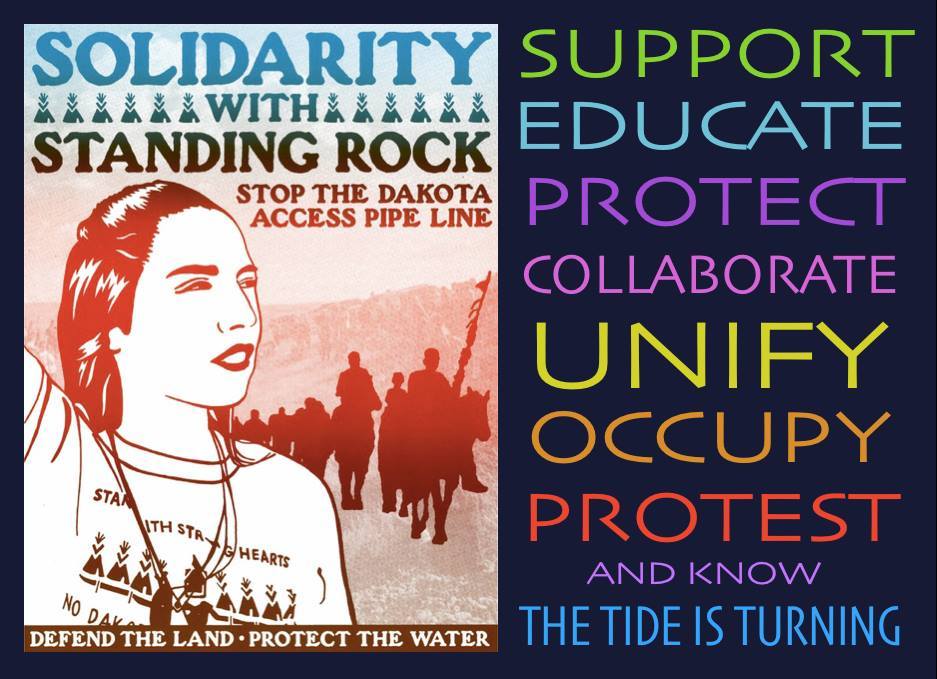
Very often I find a topic for Saturday that is easy on the mind. But I make no apologies for republishing, with Jennifer’s permission, a post that she published over on Transition Times yesterday. When you read it you will see clearly that promoting this today is right. For many readers may well be able to join thousands of others in showing their support for the Standing Rock Sioux tribe.
Thousands of Native Americans, members of a whole host of tribes, have gathered at Standing Rock, North Dakota, to protest the North Dakota Access Pipeline (#NoDAPL), which was sited by the Army Corps of Engineers to run dangerously close to the Missouri River and the Standing Rock Reservation.
If there is anyone to look back at this turbulent period in human history on Earth—now coming to be known as the Anthropocene—they will surely wonder at the suicidal tendency of human civilization in the 20th and early 21st centuries.
Why, they will ask, would such an intelligent species willingly—even enthusiastically—engage in the poisoning of its waterways and underground water resources; the destruction of its forests; the chemical contamination of its soils and oceans; the overheating of its precious atmosphere by relentless burning of fossil fuels? Why would humans put so much of their intelligence and technological prowess into developing ever more lethal weapons of mass destruction, used to bludgeon each other? Why would they preside blithely over the extinction of millions of other species, the vicious ripping of the great ecological web of life on Earth?
Why indeed?
I know it’s hard for any of us to escape the clutter of our everyday lives, with the constant pressures and worries that beset us on the personal level. But this is precisely what is being asked of us now.
The courageous defenders out at Standing Rock dropped their ordinary lives to be part of the historic encampment protesting the stranglehold of the oil companies on our waterways and our lands. They are fighting in the courts, through the media, and most importantly with their physical presence, standing up to the bulldozers, the attack dogs and the pepper spray.
Image source: Democracy Now!
This is what McKibben’s World War Three looks like—it’s already begun. It will be fought locally, as communities and individuals wake up to the implications of the destruction and decide that hell no, they won’t take it any more.
In my own corner of the world, we are under assault from General Electric, wanting to create toxic waste dumps right in the middle of our small rural towns. We have a gas pipeline being constructed, despite vehement protests, through a pristine old-growth state forest. We have oil tanker trains running constantly right through our communities. Despite a thriving organic and biodynamic farm renaissance, we still have far too many pesticides, herbicides and fungicides being used locally, and too many trees being cut down.
I have been thinking and writing for some time now about how important it is to align the personal, political and planetary in our own lives and in the way we relate to the world around us. On all three of these levels, 21st century American life is way out of balance.
It is time to focus, each one of us, on using our brief lifetimes to create balance and harmony on Earth. Sometimes the way to harmony leads through protest and discord, as is happening now in Standing Rock. Sometimes it can be as simple as choosing to support local, low-impact agriculture rather than industrial agriculture. Leaning on our political representatives to move faster on policy that will shift our society to renewable energy is key.
There are so many ways to get involved in this War for the Planet, many of them quite peaceful. The important thing is to get off the sidelines. Get involved. Feel the potential of this moment—it’s literally a make or break period for the future of humanity on Earth, and many other living beings too.
The brave defenders at Standing Rock are reminding us that we are all “natives” of this Earth, and we all have a stake in protecting her. Which side are you on?
ooOOoo
Yes, we are all natives of this world and that includes our dear animals and our wonderful animal companions.
Make a promise to yourself to make a difference; even one small difference. With that in mind, if you want to find an event close to you then the Sierra Club have a page where you can look up which event you would like to attend.
This essay from George Monbiot just has to be read as widely as possible.
Dear followers of this blog know that from time to time I dip into politics. I do so because something I read strikes me with such force that I want others to read the article or essay. Not infrequently, my ‘dip’ is in the form of republishing an essay from George Monbiot who, long ago, gave me blanket permission to republish his essays. That is the case today.
I was inspired to write my book, subsequently self-published last December, because I truly believe that the values that we see in our longest animal companions are values that we, as in our societies, from top to bottom, have to embrace if we are to stand any chance of surviving as a species.
Reflect on the fact that dogs do not lie, they do not set out to deceive or influence others for their own personal gain and they are utterly creatures of integrity.
OK, I can hear some of you thinking that dogs are dogs and humans are humans and it’s just plain daft to link the two in this fashion. My only answer to that is to read the book or, at the very least, download and read the first twenty-five pages (for free). Better still purchase the book and have 50% of my net income donated to the Rogue Valley Humane Society.
On the 28th July, George Monbiot published an essay entitled So Much For Sovereignty. I read the essay and, frankly, was apalled at what George was describing: the background of the UK’s new international trade secretary, Liam Fox, recently appointed by Theresa May.
Read it for yourself and see if you react the same way that I did!
ooOOoo
So Much For Sovereignty
28th July 2016
To this government, “taking back control” means handing Britain to a different set of foreign powers
By George Monbiot, published in the Guardian 27th July 2016
What does it mean to love your country? What does it mean to defend its sovereignty? For some of the leaders of the Brexit campaign, it means reducing the United Kingdom to a franchise of corporate capital, governed from head offices overseas. They will take us out of Europe to deliver us into the arms of other powers.
No one embodies this contradiction as much of the man now charged with determining the scope of our sovereignty: the new international trade secretary, Liam Fox. He explained his enthusiasm for leaving Europe thus: “We’ll be able to make our own laws unhindered by anyone else, and our democratic parliament will not be overruled by a European Court.” But of all the people Theresa May could have appointed to this post, he seems to me the most likely to ensure that our parliament and laws are overruled by foreign bodies.
Dr Fox looks to me like a corporate sleeper cell implanted in government. In 2011, he resigned his post as defence secretary in disgrace, after his extracurricular interests were exposed. He had set up an organisation called Atlantic Bridge, financed in large part by a hedge fund owner. Atlantic Bridge formed a partnership with a corporate lobbying group called the American Legislative Exchange Council, which is funded by tobacco, pharmaceutical and oil companies. Before it was struck off by the Charity Commission, it began assembling a transatlantic conclave of people who wished to see public services privatised and corporations released from regulation.
He allowed a lobbyist to attend his official meetings, without government clearance. He made misleading statements about these meetings, which were later disproved. It seems extraordinary to me that a man with such a past could have been brought back into government, let alone given such a crucial and sensitive role. Most newspapers have brushed his inconvenient history under the political carpet. He is, after all, their man.
This is the man who has been put in charge of making new trade agreements. What he wants to do with them is pretty clear. “We need to see a reinvigoration of our transatlantic relationship,” he argues. “We have a low regulation and low taxation environment which is only likely to improve outside the EU.” Improve, in this context, means becoming yet more hostile to human welfare, social mobility and the defence of the living world.
They threaten to reduce to the lowest common denominator the laws protecting us from predatory finance, the exploitation of workers, food adulteration, climate change and environmental destruction. They threaten to force the privatisation of public services. They would allow corporations to sue governments for compensation in offshore tribunals that – unlike the European Court Dr Fox professes to hate – are unaccountable, opaque and wildly imbalanced. The EU has no mandate to strike such agreements: a consultation on the offshore tribunals TTIP proposes attracted 150,000 responses, 97% of which were negative.
Leaving Europe should enable us to leave behind biased, destructive treaties of this kind; we will, after all, have to renegotiate most of our trade agreements. But by putting the Fox in charge of the chicken coop, Theresa May seems determined to replace them with something even worse.
The corporate army is already at the gates. The Republican senator Tom Cotton proposes that Britain should join the North American Free Trade Agreement (NAFTA). Using the kind of international tribunals that TTIP threatens to impose, NAFTA has undermined labour rights and environmental protection. It has blocked attempts to produce more progressive laws and greatly restricted legislative sovereignty. Whether we formally join NAFTA, or connect to that trading area through TTIP or another such agreement, the results will gravely threaten our sovereignty – unless negotiations are run on an entirely different basis.
In response to the Philip Green scandal, Theresa May says she wants to “tackle corporate irresponsibility” and “reform capitalism so that it works for everyone not just the privileged few.” We have no idea what she means, but here’s where it should begin. Before her government starts negotiating any new trade treaties, it should open a public consultation about their purpose and scope. The UK’s trading relationships should be debated in parliament and the people of this nation should be allowed to determine how much control over national life our representatives should retain, and how much should be ceded to international agreements and international bodies.
Does this mean a referendum? If we can be trusted to decide whether or not to share our sovereignty with Europe, should we not also be trusted to decide whether or not to share it with transnational capital?
But the Conservative vision of sovereignty is highly selective. People like Dr Fox appear to hate much of what others love about this country: the NHS, our public broadcasters, our social safety net, the protection of the countryside, the notion that power resides in the people, rather than in corporations and their shadowy lobbyists. There are traitors in our midst, who would rip down our most treasured institutions on behalf of the transnational elite and its offshore holdings. This, it seems, is what they mean by taking back control.
Sometimes the most obvious solutions take the longest to find.
I feel a little embarrassed that this introduction may come across as rather self-indulgent; I don’t intend that.
My purpose is to offer an introduction to a recent blogpost from Sue Dreamwalker that explains why her post really ‘spoke’ to me and why it felt important to share Sue’s post with all you good people.
Subsequently, I left a follow-up to my first comment, replying to a comment from Diane Husic. This is what Diane wrote:
Many of us realize what a critical junction the country faces in this election cycle. As an academic, I am trying to figure out the appropriate role I should play. We need to teach students to be respectful of difference, to be tolerant, to be problem solvers, and to be civically engaged, but we aren’t supposed to use our positions to “force” our political views on them. But given the magnitude of issues confronting the planet and humanity and the importance of having leadership that “gets it” (and displays compassion and empathy), this is a tough balance to try to find.
and this was my reply to Diane:
Diane, as someone who previously has run his own business and then, after selling it in 1986, spent a number of years as a mentor with the Prince’s Youth Business Trust in the UK, I have come to the conclusion that the best role model we adults can offer our ‘students’ is this: “Be the best you can be!” That flows from being fully aware of the person that one is. For self-awareness is the key to understanding oneself and, consequently, of understanding others. Understanding why people think and behave the way they do, for good and bad, is the only effective way of engaging with others and seeking that ‘civic engagement’ so critically important.
Apologies, that paragraph sounds like a damn speech! I didn’t intend it to be so. Plus, my own journey of self-awareness has been a long and tortuous one – but that doesn’t change my view just expressed.
Her recently released book on the effectiveness of Role Montage in building leadership skills is highly relevant to today’s students. In Jan’s words (and I have no commercial or financial link with Jan):
Role Montage: A Creative New Way to Discover the Leader Within You is written from Jan’s experience with her client work and her research. It helps leaders explore self-awareness and leadership using the role montage process.
I’ll creep back into my hole!
You can see why I offered a warning about coming across as self-indulgent!
But if you have stayed with me so far (and thank you) you will now understand why Sue’s post spoke so clearly to me. Republished here with Sue’s very kind permission.
ooOOoo
Set Yourself Free..
by Sue Dreamwalker. July 28th, 2016.
This morning I switched on the radio and the first record I heard was this one.. It was the very first time I had listened to this recording, never hearing it before.. It made me smile.. Especially when it mentioned taking Calcium and taking care of our knees.. So I decided to YouTube it to listen to again and to my delight found several versions..
Life has been busy within the Dreamwalker’s Domain this last week.. Last night I was so tired I went to bed at 7pm and slept for 12 hours.
Today the Universe thought to allow me to cool down in the showers of rain, so I thought I would share about my Busy time in the Sun on my Gardening Blog. And to share what brought such a smile to my face first thing this morning..
I particularly enjoyed the lyrics in the middle of this narrative of the inclusion of Rozalla’s Song Everybody’s Free to Feel Good, which is an old favourite of mine..
So Go On FEEL GOOD and DANCE.. LAUGH and SING..
And SHARE THE FEEL GOOD FACTOR
Sending Love and Blessings
Next time I will share with you the village I grew up in as we went back to see the Well Dressings.. Along with some of my thoughts..
Sue
ooOOoo
Feeling good about ourselves is the result of knowing and liking who we are. The foundation stone of knowing and liking all the many good people we interact with throughout our lives.

 My dreams of hope!






Diane, as someone who previously has run his own business and then, after selling it in 1986, spent a number of years as a mentor with the Prince’s Youth Business Trust in the UK, I have come to the conclusion that the best role model we adults can offer our ‘students’ is this: “Be the best you can be!” That flows from being fully aware of the person that one is. For self-awareness is the key to understanding oneself and, consequently, of understanding others. Understanding why people think and behave the way they do, for good and bad, is the only effective way of engaging with others and seeking that ‘civic engagement’ so critically important.
Apologies, that paragraph sounds like a damn speech! I didn’t intend it to be so. Plus, my own journey of self-awareness has been a long and tortuous one – but that doesn’t change my view just expressed.
Coincidentally, I have been having some informal chats with Jan Schmuckle: http://www.janconsults.com/home
Her recently released book on the effectiveness of Role Montage in building leadership skills is highly relevant to today’s students. In Jan’s words (and I have no commercial or financial link with Jan):
Role Montage: A Creative New Way to Discover the
Leader Within You is written from Jan’s experience
with her client work and her research. It helps
leaders explore self-awareness and leadership using
the role montage process.
I’ll creep back into my hole!