Category: Business

Free speech!

Hats off to some intrepid commentators

We are going through unprecedented troubled times and the way ahead looks very uncertain.  The whole world could be participating in the ‘lost decade’ that Japan experienced previously.

But this article is not about doom and gloom!  It is about recognising the commitment to open and honest reporting being undertaken by (at least) these three  individuals.  Three commentators that this author follows in admiration and awe.

Learning from Dogs has nothing like the following of James Kwak, Yves Smith and Karl Denninger but the LfD authors do have an inkling of the work involved in writing not one but often several articles each day.  It is a huge commitment.

James Kwak

First James Kwak of Baseline Scenario.  Simon Johnson is, perhaps, the more well-known of this duo that comprise Baseline Scenario but it is James that puts in the leg-work.  Here’s a taste of a recent article from James:

Radio Stories

I spend a lot of time in the car driving to and from school, so I end up listening to a lot of podcasts (mainly This American Life, Radio Lab, Fresh Air, and Planet Money). I was catching up recently and wanted to point out a few highlights.
Last week on Fresh Air, Terry Gross interviewed Scott Patterson, author of The Quants, and Ed Thorp, mathematician,  inventor of blackjack card counting (or, at least, the first person to publish his methods), and, according to the book, also the inventor of the market-neutral hedge fund.

Large chunk snipped ……

I finally got around to listening to Planet Money’s interview with Russ Roberts from December. Russ Roberts and I are pretty sure to disagree on almost any actual policy question. But what I liked about his interview was that he basically admitted that policy questions cannot be settled by looking at the empirical studies. On whether the minimum wage increases or decreases employment for example, he says that he can poke holes in the studies whose conclusions he doesn’t agree with, but other people can poke holes in the studies he agrees with. In Roberts’s view, people’s policy positions are determined by their prior normative commitments.

I don’t completely agree. I don’t think that these questions, like the one about the minimum wage, are inherently unanswerable in the sense that the answer does not exist. But I agree that empirical studies are unlikely to get to the truth, particularly on a politically charged question, because there are so many ways to fudge an empirical study. As one of my professors said, there are a million ways you can screw up a study, and only one way to do it right. But I agree with the general sentiment. We are living in an age of numbers, where people think that statistics can answer any question. Statistics can answer any question, but they can answer it in multiple ways depending on who is sitting at the keyboard.

By James Kwak

Read about Yves Smith & Karl Denninger

More Trouble Ahead?

This is clear! Clear as mud!

Help!! Is there a financial Wizard out there somewhere? I need your input! My bank, the Société Générale, is advising

Société Générale

its customers that “a global economic collapse” is very possible within the next two years and that we should make “defensive preparations” for it.

Is this a sign of the bank losing its mind (and they did lose £5 billion a few years ago at the hands of a rogue trader) or do they know something that other pundits don’t?

Where is the Guru that can tell me where I should put my money now? Under the mattress? And in which form? Shirt buttons?

They say gold will skyrocket as the only thing buyable worth buying! And there’s me having just sold all mine at what I thought was the top of the market!!!! Oh Dear …..

By Chris Snuggs

Humour is alive and well!

The Toyota Prius recall gets a few laughs.

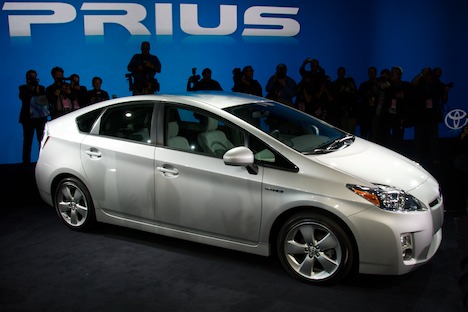
2010 model Prius

Most of the readers of Learning from Dogs will be aware of the global embarrassment that Toyota is facing as a result of the recall of the Toyota Prius model.  As described partly on the UK website of Toyota:

Toyota have announced a recall on the latest, third-generation Prius built before 27 January 2010. This will involve 8,500 cars in the UK.

To date, there have been no accidents linked to this issue reported in Europe. No other Toyota or Lexus models are affected by this latest recall action in Europe.

Toyota GB would like to apologise to its customers for any concern this issue has caused.

The recall is being taken in response to reports of inconsistent brake feel during slow and steady braking on bumpy or slick road surfaces when the anti-lock braking system (ABS) is actuated.

Well a few days ago, a friend of mine sent me a text message on my cell phone.  It read, “Just driving my new Toyota Prius. Chat later, Can’t stop.

And I see the Jeremy Clarkson/James May team from BBC’s Top Gear programme are also having a little poke at Toyota.  James May was reported to have said:

‘You have to laugh a bit don’t you,’

‘Maybe if you’re going to try to save the world through your car you have to accept that some sacrifices have to be made and one of them is stopping.’

James May

How Earth Made Us …

... and the way we treat it!

Once again the British Broadcasting Company, BBC, has put together a spectacular television production; the epic story of how geology, geography and climate have influenced mankind.  It is remarkable and fabulous viewing as you can sample in these opening minutes from the first episode on Deep Earth.

The four programmes, Deep Earth; Water; Wind; Fire, are testament to both the incredible symbiosis between mankind and the elements and how that relationship is critically balanced in a way that allows us to survive.  Some of the images are truly outstanding, for example, the section on Prof. Iain Stewart exploring the Naica Cave system in Mexico.

Naica Cave system, Mexico

This theme of the balance of geological circumstances that allows, just, mankind to survive comes across time and time again in these films.  For example, our relationship with fresh water which we all take completely for granted.

Have any of us really pondered how long we would survive if there was insufficient clean, safe drinking water to go around?

The programmes also reveal something of the technological prowess that mankind has achieved to allow the way these films have been produced.

So why, oh why, are we also such a stupid, stupid species – so stupid that we foul our own nest to an incredible degree.

Continue reading “How Earth Made Us …”

The Wobbling Euro

Europe puts on a grand farce for the rest of the world to watch and wonder at.

The “Greece scuppers the euro” soap opera is steaming along at top speed and the iceberg ahead is more than big enough to sink the Euro, the flagship of those seeking a United States of Europe.

The Euro coin

Several very interesting things are becoming clearer about all this:

A) Greece (and for that matter some other countries) was NOT “ready” for the straitjacket of a single currency in the same bed as Germany, Holland and other serious (well, sort of ) countries, particularly in the North ….

B) The EU hierarchy set some stiff rules for entry to the Euro, which Greece LIED about to gain entry.

C) I firmly believe the EU leaders KNEW that Greece’s figures were the delusional fruits of fraudulent pretention, but they PRESSED ON regardless.

The question is, WHY did they let Greece in? And the reason was – I maintain – their GREED. Not directly for money (though that is ever in the background) but for POWER. The more countries in the Euro the bigger the organism and all organisms seek to grow to their maximum.

The bigger the Eurozone the more unstoppable the momentum would appear (and “appear” is certainly the right word) and the more power would accrue to Brussels and Frankfurt. POLITICAL GREED overcame economic and financial logic.

But the chickens always come home to roost and the result could now be the OPPOSITE of what they wanted to achieve.

Coming back to the roost

Instead of a tight core of financially-stable and righteous Eurocountries that could have thrived as a model for others to emulate and join, Euroland has become a haphazard bodge of totally-disparate economies that has every chance of unravelling in chaos.

I have no desire to see the Greeks or anyone else in economic trouble, but we cannot build a new Europe – let alone world – on lies and a lack of realism. A touch of hubris is direly needed. More practically, we need more long-term planning and less short-term political greed and cowardice.

If this Greek crisis had happened when the EU was flush with funds then it could perhaps – temporarily – have been bodged over as usual. Now we are still on a financial knife edge, and it could go either way. There is some talk that this crisis could accelerate political and monetary union, but I can’t see individual countries giving up their financial independence to Frankfurt and Brussels …. what is true is that we are in dangerous waters out of control and maybe heading towards the rapids … (or the iceberg …) Most EU countries are already in serious trouble; the last thing they need is a further drain on scarce resources. The Greek patient could well bring down the German doctor …….

One of the funniest things (if you like black humour) was soon after the EU bigwigs fixed a ceiling of 3% above GDP for countries’ budget deficits. In other words, countries joining the Euro had to guarantee to take steps to ensure this ceiling would not be breached, and this in the interests of Euroland as a whole; a sort of collective responsibility.

Yet as soon as FRANCE found it could not apply the self-discipline to keep to this promise (do promises matter at all in politics?) then some French government spokesperson said when challenged on this that “the rule could not be applied to big countries.

You couldn’t make it up!!!

By Chris Snuggs

Remarkable people: Eli Goldratt

What do you know? And when did you know it?

Eli Goldratt

Many of the situations that we face are well understood … or, at least, we think they are! Then someone comes along with a different approach and breaks through into a new regime.

This can be unsettling, but then the new approach becomes the norm. What was previously obvious is now ridiculous; and what was previously ridiculous is now obvious! No wonder these things do not happen often, because, if they did, they would not be so unusual!

Eli Godratt has had an enormous impact on many businesses through his approach to understanding business processes. Some of his most effective works are novels! How many business consultants write novels to help people to learn? “The Goal” was his first and captured the main elements of his approach which he termed the Theory of Constraints. He has gone on to describe new approaches to project management, which he calls Critical Chain.

Continue reading “Remarkable people: Eli Goldratt”

Are you really sure about your cell phone?

Society may be cooking up one hell of an issue.

Like most people if most western nations, for many years I had a cell phone, or a mobile phone as they are known in the UK.

I can recall a few years ago there being a scare in the UK about the microwave radiation hazard involved in using a cell phone but it certainly passed me by in terms of not really worrying about it.

Now a recent report in GQ Magazine seems to be gathering some momentum: once again, it’s about how your cell phone may be hazardous to your health.  It would be too easy just to dismiss this as just another poke at a very successful technology but something about this article caused me to write this Post – make of it what you will.

Here’s an extract:

Earlier this winter, I met an investment banker who was diagnosed with a brain tumor five years ago. He’s a managing director at a top Wall Street firm, and I was put in touch with him through a colleague who knew I was writing a story about the potential dangers of cell-phone radiation. He agreed to talk with me only if his name wasn’t used, so I’ll call him Jim. He explained that the tumor was located just behind his right ear and was not immediately fatal—the five-year survival rate is about 70 percent. He was 35 years old at the time of his diagnosis and immediately suspected it was the result of his intense cell-phone usage. “Not for nothing,” he said, “but in investment banking we’ve been using cell phones since 1992, back when they were the Gordon-Gekko-on-the-beach kind of phone.” When Jim asked his neurosurgeon, who was on the staff of a major medical center in Manhattan, about the possibility of a cell-phone-induced tumor, the doctor responded that in fact he was seeing more and more of such cases—young, relatively healthy businessmen who had long used their phones obsessively. He said he believed the industry had discredited studies showing there is a risk from cell phones. “I got a sense that he was pissed off,” Jim told me. A handful of Jim’s colleagues had already died from brain cancer; the more reports he encountered of young finance guys developing tumors, the more certain he felt that it wasn’t a coincidence. “I knew four or five people just at my firm who got tumors,” Jim says. “Each time, people ask the question. I hear it in the hallways.”

Continue reading “Are you really sure about your cell phone?”

Selling airplanes!

Jet airliners any way up!

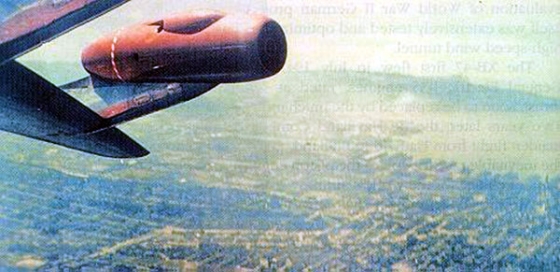
Back in 1955, air travel was an adventure and the age of the jet airliner had already dawned in the UK, albeit with some major setbacks along the way.

As the US prepared to enter the market that summer, there is the well known incident of Boeing test pilot “Tex” Johnston rolling a prototype Boeing 707.

From today’s perspective, under those circumstances , the integrity of the people involved was impressive. As the pilot describes, he was called into the office of the president of Boeing to explain his actions. For me, the most telling comment is his final line:

It was fine!

By John Lewis

Every Economist, Mr. President? No, Sir!

Here’s one person who doesn’t agree with the President.

The President seems to believe that he can say whatever he wants and no one will hold him accountable. He now claims that “every economist, from both sides of the aisle, believes that the stimulus program created jobs.”

I am an economist, Mr. President, and I know, based either on simple first principles of economics, or on a more rigorous controlled study of labor markets in each major sector of the economy, that the unemployment rate would have been much lower today had the stimulus program never occurred.

You are either woefully unaware of the facts, Mr. President, or are purposefully distorting the facts. Neither is good.  When are you going to realize that just because you say something does not make it so? The world does not contort itself to support your version of the truth.

Do not put words in my mouth, sir.

By Sherry Jarrell

Rationing – the New Paradigm?

A World War II practice may reappear.

Some little time ago I wrote about the word “fair”, which I tongue-in-cheek referred to as a Word of Mass Destruction (WOMD) insofar as if one REALLY put into place practices that were truly “fair” then western capitalism would break down completely. (The story of the CEO of Goldsmiths and his $100,000,000 bonus is for another day ….)

Well, my OTHER WOMD is “rationing”.

I was drawn to this topic by the words of a British minister about the desirability of introducing rationing into AIR TRAVEL.  The thinking goes (and to be honest it is in fact obvious, isn’t it?) that IF we are serious about reducing climate change (a VERY BIG IF!!) then we cannot continue to hope to fly where and when we want to as in the past. For aviation is a growth industry despite the current crisis, and as people in developing economies in Asia in particular grow more prosperous they will want to travel more and more. I have seen estimates to suggest that within a decade ONE HUNDRED MILLION Chinese will be travelling to Europe EVERY YEAR.

This is of course totally incompatible with any hope of doing anything serious about climate change. The logical conclusion is that (until some boffin invents an emission-free jet) we MUST reduce flying. This is likely for most adults to be about as palatable as denying burgers and chips to British teenagers, but I really cannot see the alternative IF Global Warming is to be taken seriously (which it probably won’t be until it’s too late).

But let’s for the moment remain positive …. supposing it is decided by some courageous government (are there any?) that we must reduce flying then there are two ways to do it.

A) TAX it so highly that only the rich can afford it

B) RATION it – everyone has a quota of air miles per annum.

Now option A is the usual free-market/capitalist way. After all, Ferraris are rationed by their price; otherwise all males over 18 would have one, or in my case several. But – much as I recognize what the free market has done in terms of wealth creation – we are in a new scenario, aren’t we? Can we really hope to say that only the rich can fly? I think not, and therefore rationing is the only way to do this.

Now, there is a minority of people that abuse anything, and no doubt rationing would be abused by some, somewhere, somehow. But it is the only FAIR way to go about it, isn’t it?

In London and other big cities we are now seeing a TAX imposed on driving into the city centres. Yes, very sensible, but of course, the RICH aren’t bothered. In effect, schemes like London’s are simply a way of excluding the masses from the city centre. The same idiocy is seen on French motorways, which are becoming increasingly expensive. The rich are not bothered by the tolls but the less well-off certainly ARE and so drive on other roads which are less safe; survival of the richest …….

No, the free-market is not going to work in the Brave New World which we are entering. If you have a birthday party for your kids then EVERYONE gets an equal share of the cake. This principle is going to have to be applied in other areas of life, otherwise we are going to get serious social unrest. Besides, any other way is just not FAIR, is it?

Of course, once you concede the point on AIR TRAVEL there is – in a world of increasing populations and diminishing resources – no way of limiting the concept purely to air travel, is there?

I am just old enough to remember my Mother’s WWII ration card, which she used up to the very early 50s I believe. Will we soon start to see a modern reincarnation, and not only in carbon credits?

By Chris Snuggs

WWII Ration Card - UK