How something so fundamental as humans talking with each other can so often be mysterious.
When I composed this sub-heading, I wasn’t sure of what word to use to end the sentence. Some of the words that sped through my mind were: complex, distorted, difficult, obtuse and …. well, you get the message.
“The single biggest problem in communication is the illusion that it has taken place.” George Bernard Shaw is reputed to have once said!
Today’s essay on the challenges of speaking clearly to another, perhaps better described as communicating in a clear and unambiguous fashion, came out of a recent conversation with Jon Lavin, a good friend from my Devon days. (Jon offers services for business owners and entrepreneurs under his business banner of The People Workshop.)
Jon was explaining that the number one hurdle for businesses that are managing change, and for so many businesses managing change is practically a constant, is having clear communications within the team.
Seems clear enough to me! 😉
Yet, what we hear and what we say are both modified, frequently unconsciously, by past events, experiences and trauma. That being the case, then it is key, critically so, that we achieve the best possible self-awareness. Because it is only through an understanding of our past that we come to learn of our sensitivities and our associated ‘tender spots’ and their potential for ‘pulling our strings’. Here’s a personal story.
In 1956, when I was 12, I experienced a trauma that was interpreted by my consciousness as emotional rejection. By the age of 14 that sensitivity to rejection had descended into my subconscious. For fifty years, that sensitivity remained hidden yet continued to influence my life in many unseen ways, not all of them negatively by a long measure. In 2007 a period of counselling revealed that hidden emotional rejection; brought it to the surface. It changed beyond imagination how I felt, how I behaved, how I was. Nonetheless, that sensitivity to rejection is still there, albeit now visible. Thus when I hear or experience something that tickles that sensitivity I still react. But because I can now see and feel myself reacting, I can sidestep the emotional strings.
The following is a short, twenty-minute, documentary film about fear. Do watch it. The message that we are so profoundly a product of our past is beautifully presented.
I have a policy of not allowing Learning from Dogs to promote commercial interests. I need those who visit this place to trust the integrity of what they find here.
Then back on the 19th December last, in came the following email.
Dear LearningfromDogs (I think Paul!),
Greetings from Florence, Tuscany!
We are sending you a piece that we hope will be considered for publication on your blog: we begin by talking about making pet food at home (and then go on to list some of the risks – essentially the message here is don’t do it!), we then talk about buying products off the shelf, and explain about food labeling and what different types of labeling will mean in terms of the meat content. I’ve also included some pictures that we purchased from DepositPhotos to help support with its publication. You can verify the usage terms on Deposit photos, but I can tell you that for your website they will be considered appropriate use.
Our shop first opened it doors in 1962 and we’ve just started an English website where we (wait for it!) are making dog beds, and collars to order. We’ve got the most amazing fabrics from a town in Tuscany that has been producing fabrics from the 13th Century. The quality is (as I hope you will take a look) of the highest standard.
Please take a read through the article and if you would like to publish it we would be thrilled.
Best regards from Tuscany,
Glyn
The email offered me a potential conflict. Glyn was clearly promoting his company and yet the information struck me as valuable to pet owners. On balance, it seemed worthwhile to publish the article.
ooOOoo
We only want what’s best for our dogs.
There have been substantial changes in the market of pet foods over the last decade, and so this article sets out to demystify pet food labelling in layman’s terms. We also consider whether or not preparing the food your pet eats in your own home is really a viable option, if you want to have a healthy pet.
Preparing food at home
If you have decided to undertake the mission of preparing your pet’s food at home, it’s important that you take some time to look up what exactly is needed in your pet’s diet. You have to ensure that your pet gets all the nutrients it needs, and that you don’t provide it with too much of one food group or another as this could cause it serious health problems (Hypervitaminosis A, Hypervitaminosis D).
A short thought for the cat!
Cats require a varied diet, consisting mainly of meat. One of the most important amino acids for cats is Taurine which is only found in meat – a lack of this in a cat’s diet could cause cardiac dysfunction, blindness, etc. Other essential nutrients for our feline friend include: arginine (also important for dogs too), arachidonic acid, niacin, vitamin A, vitamin D, vitamin E. You should not forget to provide the right amount of calcium, phosphorus, and magnesium. Reading this you probably get the sense that taking on the task of being your pet’s personal cook is not as simple as it sounds. Our pets have very specific dietary needs, just like us, and you wouldn’t want to risk endangering them with the wrong food. The plate of scraps after a large meal is clearly not enough.
Purchasing food off the shelf
As the vast majority of consumers opt for buying their food from either the supermarket or their local pet store, it’s important to highlight that the range of dietary foods being produced today means that, if you don’t read the label carefully, you can really do harm to your pet feeding them food that is not matched to their actual dietary needs. We’ve seen dogs that look emaciated and thin simply because they have not been given the correct advice when feeding their dog (we then saw the same dog a few weeks later looking great!).
For example, ‘ash’ is often included in the ingredient list of pet foods. This refers to the inorganic component of the food, and it shouldn’t make up more than 6.5%-7% of dry foods and 1%-2% of wet foods. The lower the concentration of ash, the higher the quality of the food.
Labelling in pet food and what it means
Specifically regarding meat in packaged pet foods, there are a few things to keep an eye open for while studying the labels. The amount of meat included in pet food changes from brand to brand, but as a general rule the following serves as a guide:
– products that have the word ‘flavour’ or ‘aroma’ in their name contain under 4% of meat;
– when the product name declares ‘with meat’ it should contain over 4% of meat;
– when the name contains ‘rich in meat’ or ‘extra meat’ the percentage of meat is between 14% and 25%. Anything above 14% and 25% and the product takes on the name of the meat it’s made up of.
In dry foods, sometimes meat flour or fish flour are included. These sometimes contain offal and discarded meat so a better option is dehydrated meat.
Author Bi line
We hope that this article has provided you the reader with greater detail on some of the nuances involved in planning your pet’s diets. At ZEIPET in Florence, Tuscany, we have been serving customers in our little pet shop since 1962. We are most known for our luxury dog beds which are made to order and from some of the finest fabrics in Italy. So, after you pet has eaten and it’s time to stretch out, they are guaranteed to do so on a bed of doggie paradise.
Now what!
ooOOoo
Hope this has been helpful. If you have any questions, leave them as comments and I’ll ask Glyn to reply.
“There IS very intelligent life, but somehow it can’t seem to achieve dominance over the other kind.” Chris Snuggs.
In yesterday’s Part One, I offered three independent essays, about the USA, the UK and Europe, that contained a common message. A message of “the abject failure of modern nation-state democracy — not only in Europe, but across the globe.“ (In the words of one of the essayists: Don Quijones.)
As with Part One, Part Two brings together disconnected commentators offering an interconnected theme.
One of the commentators was Chris Snuggs who writes the blog Nemo Insula Est. It was his post about the slaughter of elephants for their tusks that I featured last Tuesday: Legitimate anger. Chris and I recently exchanged emails on the curious issue of why those who are charged with governing our democratic societies so often fail to do so in a fair and balanced manner; to put it mildly.
Here’s some of that exchange from Chris:
My theory is that intelligent people are too nice. Take you, for example – someone so intelligent, informed and civilised should be in government, but you are not ruthless, nasty and/or ambitious enough!!!
Another way to put it is that people like you – and I on a more modest, brutish and disorganised level – are doing their bit to spread civility in general, but we have NO POWER because we are too nice.
A related theory is that most people are in fact basically nice but that the rest have a disproportionate influence, both because a greater proportion of them have power and because of the “rotten apple” theory – one apple rots the barrel eventually.
I should open a school to teach nice and intelligent people how to be more nasty to nasty people! ………. Indeed, it is our duty to be more ruthless to stand up to the bad guys.
Moving swiftly over the flattery of yours truly, there is a strong message from Chris. The message that nice people are not being sufficiently active in registering their disgust over what is being done in the supposed name of the people.
The next item, as part of this theme, was a recent article on Permaculture News. The article was called Majority Voting is Inadequate and was based around an interview with Peter Emerson. I hadn’t heard of Mr. Emerson before but very quickly established that Peter Emerson is the director of the de Borda Institute in Belfast, Northern Ireland. He is a leading authority on voting systems for use in both decision-making and elections.
Here is a flavour of that interview.
Marcin Gerwin (Poland): There are many divisions and even hostility in the Polish parliament. The ruling coalition currently has 232 votes in a parliament with 460 seats. This slight majority allows them to run all the ministries, and they can pass almost any bill they want. Do you think that creating an all-inclusive government, where all parties have their representatives, could help to tone down the atmosphere and create a more cooperative environment?
Peter Emerson
Peter Emerson: In a word – yes. However, I think I should argue the other point first. There is no justification for majority rule. When I was in Russia, it was quite interesting, because when Gorbachev started perestroika, all sorts of experts rushed over to Moscow, to tell him what to do to be democratic. They advised the system that we have here in Northern Ireland and that you now have in Poland and pretty well everyone else has as well – and that is that you elect your parliament by one of many electoral systems, apparently they all are democratic, even though some are bad and some are worse. But when it comes to what happens in parliament, nearly every parliament in the world debates things and then takes a majority vote.
These experts talked in Russia about majority rule but Mikhail Sergeyevich doesn’t speak English, so they had to use the Russian word. And the Russian word for majoritarianism is bolshevism. It comes from the Russian word for majority which is bolshinstvo, so the member of the majority was a bolshevik and a member of the minority was a menshevik. The decision to split into bolsheviks and mensheviks was taken in 1903 in London by the mathematical accident of just one vote. The whole thing was nonsense. But God, such a dangerous one.
MG: If not a majority vote, what are the other ways that decisions can be made?
PE: There are lots of voting methodologies – Borda count, Condorcet…. One of these could be used. And in fact Dublin City Council recently took a vote by means of a Borda count, which is brilliant. It was partly because they had more than two options on the agenda, so you almost have to move beyond majority voting.
And when you look at it, the majority vote is actually the most inaccurate measure of collective opinion ever invented. It’s over two thousand years old, it was used by the Greeks and the Chinese. But there is no justification to for its use today because it’s so inaccurate.
You did register what Peter said in that last paragraph? “the majority vote is actually the most inaccurate measure of collective opinion ever invented.”
If you have only the slightest curiosity about better methods of voting then do read the interview in full. For the interview contains links to other voting systems, most of which I hadn’t heard of before. There is the Borda count, the Condorcet method, the Ranked voting system (otherwise known as Preferential voting), and the proportional voting process known as the Matrix vote.
Moving on.
The final coincidence was John Hurlburt sending me the following essay, that is published with his permission.
ooOOoo
Apocalypse and Epiphany
Apocalypse, n. [Gr. apokalypsis, from apokalypto, to disclose and to discover.] Revelation; discovery; disclosure. (The New Webster Encyclopedic Dictionary)
Apocalypse is a word which describes a human awakening to change. Change is a constant. Our species has been living through apocalypse for fourteen million years. Conservative groups deny change. For example financial interests spent 14 million dollars to refute the scientific reality of climate change during 2013. We are in the midst of worldwide financial wars, energy wars, cultural wars, and political wars. Has there been progress in emerging human species intelligence?
Perhaps more importantly, has there been progress in human morality? We’ve been around as a species for roughly 14 million years. Have we truly learned anything in the process? For the last two hundred years we’ve been industrially poisoning the environment which sustains our existence at a steadily increasing rate.
We’re needlessly killing ourselves and a significant portion of the life on our shared garden planet in the pursuit of artificial symbols of trust we call money. No one knows for sure how deep and how devastating an impending economic, cultural, political and geophysical collapse may become.
We’ve reached a critical tipping point between species survival and a severely diminished quality of human life. We’re in the process of falling off the edge. The good news is that we know what needs to be done and we know how to do it. So why don’t we do what we know needs to be done?
There are a variety of reasons. The seven deadly sins are a starting point for systemic corruption. The seven deadly sins are pride, greed, lust, anger, gluttony, envy and sloth. Add ignorance, denial and indifference. Serve bread and circuses for dessert. In terms of action, compete more than cooperate. Rush ever faster without reflection, contemplation or meditation. As a final touch, become consumed by “now” without regard for the future.
Epiphany, n. [Gr. epiphaneia, appearance; from epiphanio, to appear] an appearance or a becoming manifest. (The New Webster Encyclopedic Dictionary) Epiphany provides us a way to deal with apocalypse. As what’s going on is revealed, we realize that something needs to be done about it and that we are capable of creating and implementing solutions in concert with Nature.
To paraphrase Shakespeare’s “Hamlet”, “The fault, Dear Brutus, lies not in our stars but in ourselves.” What do we need to personally change both spiritually and practically? Today is the tomorrow – we imagined yesterday.
Considering our steadily increasing demographic and our systemic global failure, it’s half past time to clean house. We begin with our “self”. We take inventory. We honestly look at our thoughts and actions. What do we personally have to offer that’s useful and productive in terms of a resilient tomorrow? What’s standing in our way today?
We accept that we are a very young consciously aware species on a fragile garden planet that’s 14 Billion years old in a universe that’s roughly 33 billion years old. We accept that we are a species component of the matter and energy of Creation. We accept responsibility for sustaining our being and by extension responsibility for the being of life on earth.
We realize our purpose as stewards of Creation.
an old lamplighter
ooOOoo
So put those three perspectives together and the message is clear. This is a period of significant change and, as with previous periods in history, change only comes along when there is dissatisfaction with the present. Ergo, there is widespread acceptance that the present way of life is not working for millions and millions around the world.
Reinforced only this morning (Thursday) by a recent announcement from Gallup regarding the voting intentions of Americans.
January 8, 2014
Record-High 42% of Americans Identify as Independents
Republican identification lowest in at least 25 years
by Jeffrey M. Jones
PRINCETON, NJ — Forty-two percent of Americans, on average, identified as political independents in 2013, the highest Gallup has measured since it began conducting interviews by telephone 25 years ago. Meanwhile, Republican identification fell to 25%, the lowest over that time span. At 31%, Democratic identification is unchanged from the last four years but down from 36% in 2008.
Let me include this section:
Fourth Quarter Surge in Independence
The percentage of Americans identifying as independents grew over the course of 2013, surging to 46% in the fourth quarter. That coincided with the partial government shutdown in October and the problematic rollout of major provisions of the healthcare law, commonly known as “Obamacare.”
The 46% independent identification in the fourth quarter is a full three percentage points higher than Gallup has measured in any quarter during its telephone polling era.
Taking everything into consideration, from yesterday’s evidence and what is presented today, it’s hardly surprising to read in that Gallup report [my italics]:
The increased independence adds a greater level of unpredictability to this year’s congressional midterm elections. Because U.S. voters are less anchored to the parties than ever before, it’s not clear what kind of appeals may be most effective to winning votes. But with Americans increasingly eschewing party labels for themselves, candidates who are less closely aligned to their party or its prevailing doctrine may benefit.
Fascinating times! Thank goodness there’s always a dog to remind us of how to cope!
I wrote down the title of today’s post a few days back. Jean and I had just watched the BBC Panorama Special regarding Amazon UK. It had been screened on the 25th November and was described:
It’s the online retailer that has transformed the way we shop, but how does Amazon treat the workers who retrieve our orders? Working conditions in the company’s giant warehouses have been condemned by unions as among the worst in Britain. Panorama goes undercover to find out what happens after we fill our online shopping basket.
Or more fully reported in a BBC News item, as this extract reveals:
A BBC investigation into a UK-based Amazon warehouse has found conditions that a stress expert said could cause “mental and physical illness”.
Prof Michael Marmot was shown secret filming of night shifts involving up to 11 miles of walking – where an undercover worker was expected to collect orders every 33 seconds.
It comes as the company employs 15,000 extra staff to cater for Christmas.
Amazon said in a statement worker safety was its “number one priority”.
Undercover reporter Adam Littler, 23, got an agency job at Amazon’s Swansea warehouse. He took a hidden camera inside for BBC Panorama to record what happened on his shifts.
He was employed as a “picker”, collecting orders from 800,000 sq ft of storage.
A handset told him what to collect and put on his trolley. It allotted him a set number of seconds to find each product and counted down. If he made a mistake the scanner beeped.
Adam Littler went undercover as a “picker” at Amazon’s Swansea warehouse
“We are machines, we are robots, we plug our scanner in, we’re holding it, but we might as well be plugging it into ourselves”, he said.
The 30-minute Panorama programme is on YouTube and is included in this post just below.
As I started to explain, the reaction to watching the Panorama programme was to feel sickened by the way these workers were being treated.
Not helped when yesterday, the UK Daily Mail newspaper added their own story of another undercover reporting operation at Amazon. Here’s an extract from the last third of the piece, reported by Carole Cadwalladr:
It is taxes, of course, that pay for the roads on which Amazon’s delivery trucks drive, and the schools in which its employees are educated.
Taxes that all its workers pay, and that, it emerged in 2012, Amazon tends not to pay.
On UK sales of £4.2 billion in 2012, it paid £3.2 million in corporation tax. In 2006, it transferred its UK business to Luxembourg and reclassified its UK operation as simply an ‘order fulfilment’ business.
The Luxembourg office employs 380 people. The UK operation employs 21,000. You do the sums.
Brad Stone tells me that tax avoidance is built into the company’s DNA. From the very beginning it has been ‘constitutionally oriented to securing every possible advantage for its customers, setting the lowest possible prices, taking advantage of every known tax loophole or creating new ones’.
In Swansea I chat to someone called Martin for a while. It’s Saturday, the sun is shining and the warehouse has gone quiet. The orders have been turned off like a tap.
‘It’s the weather,’ he says. ‘When it rains, it can suddenly go mental.’ We clear away boxes and the tax issue comes up.
‘There was a lot of anger here,’ he says. ‘People were very bitter about it. But I’d always say to them: “If someone told you that you could pay less tax, do you honestly think you would volunteer to pay more?”’
He’s right. And the people who were angry were also right. It’s an unignorable fact of modern life that, as Stuart Roper of Manchester Business School tells me, ‘some of these big brands are more powerful than governments. They’re wealthier. If they were countries, they would be pretty large economies.
‘They’re multinational and the global financial situation allows them to ship money all over the world. And the Government is so desperate for jobs that it has given away large elements of control.’
MPs like to attack Amazon and Starbucks and Google for not paying their taxes, but they’ve yet to actually create legislation compelling them to do so.
Then if that wasn’t sufficient to make me want to live on a desert island, along comes George Monbiot pointing out that even the BBC, to me the most respected and trusted news organisation on the planet, has been economical with the truth.
The BBC’s disgraceful failure to reveal who its contributors are speaking for.
By George Monbiot, published on the Guardian’s website 29th November 2013
Do the BBC’s editorial guidelines count for anything? I ask because it disregards them every day, by failing to reveal the commercial interests of its contributors.
Let me give you an example. Yesterday the Today programme covered the plain packaging of cigarettes. It interviewed Mark Littlewood, director-general of the Institute of Economic Affairs, an organisation which calls itself a thinktank.
Mishal Husain introduced Mark Littlewood as “the director of the Institute of Economic Affairs, and a smoker himself”.
It’s bad enough when the BBC interviews people about issues of great importance to corporations when it has no idea whether or not they are funded by those companies, and makes no effort to find out.
It’s even worse when those interests have already been exposed, yet the BBC still fails to mention them.
Then along came three items that pulled my back from the brink of despair and disgust.
The first came from the blog of the UK’s Transition Network, Transition Times. Rob Hopkins wrote an article on December 5th called The day I closed my Amazon account. Please read it if you feel unsettled by the Amazon situation. The last two paragraphs are:
Me, I resolve to buy less, but better. Less, but longer-lasting. Less, but local. The thought of where we will end up in 5 years time, 10 years time, 20 years time, if companies like Amazon continue as they are, really frightens me. It’s not good, it’s not right. It’s not about our needs, it’s about the needs of huge investors. I want a different world for my boys.
I can’t, on my own, do that much about it. I can’t insist that the UK government legislate so that, as in Holland, the Recommended Retail Price (RRP) is the legal minimum at which any book can be sold, although I think that is grounds for a really timely campaign. Because of that, Amazon don’t really operate in Holland. Bring back the RRP for books here, and let’s have a level playing field. As I say, I can’t do much, but I can withdraw my support. I just have withdrawn my support. It feels surprisingly unsettling, as one does after ending a relationship, but it was the right thing to do. It may be a drop in the ocean, but if enough people do it….
The second was coming across something called The Restart Project in London. I had never heard of them before. But it gets better because these London folk are part of a global movement. Which in the words of The Restart Project can be explained thus:
A spontaneous, global, grassroots repair movement
Sitting in London, we at The Restart Project have been inspired by Holland, the US, Australia, and now we realize that there are many more community repair and fixit groups than we ever knew of before… Milan, Barcelona, Finland, the list just grows.
Some groups have regular events in their own spaces and some are pop-up groups.
The most remarkable thing is that we are not just all doing similar things, we are doing them in the same way and with similar motivations
1) learning, skillsharing and community are a premium. No judgment. Openness and inclusivity, all are made to feel welcome.
2) the idea is NOT a freebie fix. The idea is that people get involved in the repair, taking responsibility for their stuff and taking back control. It’s about behaviour change, not just about waste prevention
and
3) importantly – fun!
Please help us map repair groups, to connect people to their local repair gurus and fixit friends – and who knows, inspire the creation of more.
“Just repair, don’t despair!”
Just repair, don’t despair! That shouted out at me. The more that the world we live in is consumed by the power-brokers and greed-mongers. The more that our traditional view of politics is seen to be out-dated and incorrect, then the more we have do within our own lives, within our own communities and with our friends, loved ones and families to show we can repair our world a darn site quicker than the ‘dark forces’ can break it.
My third example of hope is tomorrow in a post called The power of self.
With thanks to Cynthia for including me on her recent email.
oooOOOooo
FDA seeks pet owner help on dangerous jerky treats
From Associated Press October 23, 2013 8:17 AM EST
WASHINGTON (AP) — The Food and Drug Administration is appealing to dog and cat owners for information as it struggles to solve a mysterious outbreak of illness and deaths among pets that ate jerky treats.
In a notice to consumers and veterinarians published Tuesday, the agency said it has linked illnesses from jerky pet treats to 3,600 dogs and 10 cats since 2007. About 580 of those pets have died.
The FDA’s Center for Veterinary Medicine has run more than 1,200 tests, visited pet treat manufacturing plants in China and worked with researchers, state labs and foreign governments but hasn’t determined the exact cause of the illness, the FDA statement said.
“This is one of the most elusive and mysterious outbreaks we’ve encountered,” Bernadette Dunham, a veterinarian and head of the FDA vet medicine center, said in the statement.
Pets can suffer from a decreased appetite, decreased activity, vomiting and diarrhea among other symptoms within hours of eating treats sold as jerky tenders or strips made of chicken, duck, sweet potatoes or dried fruit.
Severe cases have involved kidney failure, gastrointestinal bleeding, and a rare kidney disorder, the FDA said.
Most of the jerky treats implicated have been made in China, the FDA said.
The FDA has issued previous warnings. A number of jerky pet treat products were removed from the market in January after a New York state lab reported finding evidence of up to six drugs in certain jerky pet treats made in China, the FDA said. The agency said that while the levels of the drugs were very low and it was unlikely that they caused the illnesses, there was a decrease in reports of jerky-suspected illnesses after the products were removed from the market. FDA believes that the number of reports may have declined simply because fewer jerky treats were available.
oooOOOooo
That FDA Notice is here. I have taken the liberty of republishing it in full.
oooOOOooo
Jerky Pet Treats
The problem
Since 2007, FDA has received reports of illnesses in pets associated with the consumption of jerky pet treats. As of September 24, 2013, FDA has received approximately 3000 reports of pet illnesses which may be related to consumption of the jerky treats. The reports involve more than 3600 dogs, 10 cats and include more than 580 deaths.
What we are doing
FDA is working with laboratories across the country to investigate causes. To date, testing for contaminants in jerky pet treats has not revealed a cause for the illnesses.
We have tested for:
Salmonella
Metals or Elements (such as arsenic, cadmium and lead, etc.)
Markers of irradiation level (such as acyclobutanones).
Pesticides
Antibiotics (including both approved and unapproved sulfanomides and tetracyclines)
Mold and mycotoxins (toxins from mold)
Rodenticides
Nephrotoxins (such as aristolochic acid, maleic acid, paraquat, ethylene glycol, diethylene glycol, toxic hydrocarbons, melamine, and related triazines)
Other chemicals and poisonous compounds (such as endotoxins).
Testing has also included measuring the nutritional composition of jerky pet treats to verify that they contain the ingredients listed on the label and do not contain ingredients that are not listed on the label. Another area of investigation includes the effects of irradiation and its byproducts.
Watch your pet closely. Signs that may occur within hours to days of feeding the jerky treat products are decreased appetite, decreased activity, vomiting, diarrhea (sometimes with blood or mucus), increased water consumption and/or increased urination. Severe cases are diagnosed with pancreatitis, gastrointestinal bleeding, and kidney failure or the resemblance of a rare kidney related illness called Fanconi syndrome.
If your pet has experienced signs of illness, please report it to FDA. Once a consumer has filed a report with their local FDA Consumer Complaint Coordinator, or electronically through our safety reporting portal, FDA will determine whether there is a need to conduct a follow-up phone call or obtain a sample of the jerky pet treat product in question. While FDA does not necessarily respond to every individual complaint submitted, each report becomes part of the body of knowledge that helps to inform FDA on the situation or incident.
What veterinarians can do
The “Dear Veterinarian” letter to veterinary professionals explains how they can provide valuable assistance to the agency’s investigation, requests that veterinarians report to FDA any cases of jerky pet treat-related illness that come to their attention and, when requested, that they also provide samples for diagnostic testing by the Veterinary Laboratory Investigation and Response Network (Vet-LIRN), a network of veterinary laboratories affiliated with FDA.
oooOOOooo
I just mentioned this to Jeannie who says that while we do feed our dogs jerky treats, she is careful to purchase only those brands that are made in the USA.
How the foreclosure crisis was a boon for the super wealthy.
For some time now, must be quite a few years, I have subscribed to Yves Smith’s Naked Capitalism blog. I do so for a number of reasons.
Thus it was that a few days ago I read with a mixture of anger and disgust an article about the consequences of the foreclosure crisis on the wealthy. Within a few hours of me requesting by email permission to republish that article on Learning from Dogs came the reply from Yves granting such permission.
This is Naked Capitalism fundraising week. 53 donors [now well over 400, Ed.] have already invested in our efforts to shed light on the dark and seamy corners of finance. Join us and participate via our Tip Jar or another credit card portal, WePay in the right column, or read about why we’re doing this fundraiser and other ways to donate, such as by check, as well as our current goal, on our kickoff post.
It’s a welcome departure to see Adam Davidson’s weekly column in the New York Times, which usually puts a happy face on how the 1% are winning the class war in America, have a guest writer look at the other side of the story.
Catherine Rampell has a short but compelling piece on how the foreclosure crisis was wealth transfer from lower and middle income families to the rich. Her points are simple: the typical person who lost their home wasn’t a greedhead who bought too much house or refied to buy flat panel TVs and go on cruises (if you hang out with mortgage types, you’ll get a big dose of profligate consumer urban legend). The people who were like that (and there were some) for the most part were in subprime loans that reset in 2007 and 2008 and were in the early wave of foreclosures. The people who’ve lost their homes in later foreclosures were overwhelmingly people who had the bad fortune to buy late in the housing bubble (so when the bust hit, they had negative equity and couldn’t use lower rates to refi into cheaper payments) and took economic hits as a direct result of the crisis (hours cuts and job losses; other people who were hurt were in the more typical “shit happens” categories, like suffering medical problems, with their situation made much worse by their inability to sell or refinance their home).
Rampell’s contribution is to look at the phenomenon of investors, both big and small, and how they’ve bought properties at foreclosure and then flipped them. Separately, Josh Rosner recently released the astonishing statistic: that sales of owner-occupied properties showed only a 1% gain in the last 12 months. The gains that have been driving the indexes were all in investor owned properties. Some flipped to other investors. In hot markets, local investors have been doing “mini-bulks,” acquiring small portfolios to sell to private equity investors, some without renovating them, others with modest fix-ups. Others sold them to homebuyers.
Rampell uses the example of a couple who believed that renting was throwing away their money, and had the bad luck to buy a moderately-priced fixer-upper in early 2007. Each wage earner saw their income drop and unable to get a loan modification, they lost their home. Their $309,000 Seattle home went to an investor for $155,000 in the summer of 2011. That investor just sold it to a homeowner for $290,000, not far below what the hapless couple paid for it. But the new buyer paid all cash.
Rampell tells us:
Of the 87,062 foreclosures in the last five years that were bought by corporate investors and have been flipped, about a quarter were sold for at least $100,000 more than what the investor originally paid, according to [an online real estate listings site] Redfin (Although it’s impossible to know how much investors spent on upgrades or renovations.)….
The boom-bust-flip phenomenon is just one of the most obvious ways that research suggests the financial crisis has benefited the upper class while brutalizing the middle class. Rents have risen at twice the pace of the overall cost-of-living index, partly because middle-class families can’t get the credit they need to buy. That means “landlords can raise rents with impunity,” says Glenn Kelman, chief executive of Redfin. And according to a report by David Autor, the M.I.T. economist, job losses during and after the recession were concentrated in midskilled and midwage jobs, like white-collar sales, office and administrative jobs; and blue-collar production, craft, repair and operative jobs. Employment for higher-skilled workers, on the other hand, has grown substantially.
There is a second way foreclosures have served as a wealth transfer to the capitalist classes. Foreclosures don’t necessarily result in evictions. Banks often leave properties in a “zombie” state, starting foreclosures but not completing them, leaving the owner who thought he was foreclosed on still on the hook for property taxes. Another variant which is much less damaging is to leave the homeowner in place. I recently met an investor who is acquiring homes in Atlanta. The day after he buys a house, he goes to introduce himself to the former homeowner to see if he can work out a deal to keep them in place as tenant. In the overwhelming majority of cases, he can. “They were paying $1100 on their mortgage and the bank wouldn’t give them a mod. I’ll let them rent for $700, which is way above what they’d have gotten if they wrote the principal down to the price at which I bought the house. And I tell the tenants I’d be happy to sell the home to them.” We didn’t discuss details, but it sounded as if he’d be willing to structure rent to own deals (where part of the rent would go to a down payment on the house).
He was clear that his business depended on what he saw as value destroying behavior by banks. He described how he’d recently bought a home and when he went for his usual visit to the house, a well-dressed black man met him and invited him in, saying he’d be out in 30 days and assumed it wasn’t a problem. The new owner saw the house was in impeccable shape. He chatted with the owner a bit and found out he was a bodybuilder with a high-end training business. He asked the homeowner: “You look like you take good care of yourself and the house. You’d been paying on time. What happened?”
The trainer told him that he’d bought the house at the peak of the cycle for $160,000. The house was clearly now worth way less. He tried to get the bank to modify it to a principal balance of $100,000. The bank wouldn’t consider it. “So I bought a house which is comparable to this one for $50,000 and gave this one up.”
In this case, the homeowner had enough cash to arbitrage himself. The investor told me he’d bought the foreclosed home for $40,000. Had the bank cut a deal for $100,000 (and who knows, the homeowner might have accepted a higher number), it would have come out way ahead. But that also assumes that the bank owned the mortgage. It’s pretty much a given that the bank was a servicer, and as we’ve seen again and again, servicers don’t have the incentives or the infrastructure to do mods. So investor in the mortgages lose, homeowners lose. The winners are the banks as inefficient looters (the money they skim off the servicing is chump change relative to the damage done by negligent and predatory servicing) and the investors who profit by picking up the pieces. This is isn’t a well-functioning economic system, it’s rentier capitalism. And it’s looking more and more like a doomsday machine for what remains of the middle class.
oooOOOooo
Can’t add anything polite to this! Except, to say it’s a very long way from integrity!
I ran out of time and inspiration for today’s post; was going to republish something from earlier blogging days.
Then Suzann came to the rescue in sending me an email with a link to the following. Guess Su wanted me to keep up with some of the strange ideas of us Brits.
Published on Apr 2, 2013
Sacla’ served up a great surprise at John Lewis Foodhall from Waitrose and staged an impromptu Opera in the food aisles.
They planted five secret opera singers who were disguised as casual shoppers and store staff amongst the groceries who broke into song bringing the foodhall to a standstill with a rousing rendition of the Italian classic Funiculì, Funiculà.
I know it was an advertising stunt, but it was very well done! More please!
As is the way of things, my post yesterday, The growth of empathy, unwittingly set the scene for today’s post. Here’s why!
In yesterday’s post I mentioned Fukushima and the power of blogging in connecting so many all across the world. Maurice Barry, who writes his own blog, left a comment:
Regarding Fukashima I’m still left wondering whether the real problem is the lack of social conscience in the top level leaders or the apathy of ordinary people like you and I who let them carry out their plans.
To which I replied, “Maybe just the power of 20:20 hindsight?”
So to today’s post.
One of the items in yesterday’s Naked Capitalism Links was the headline: Is there a media blackout on the fracking flood disaster in Colorado?That caught my eye and in a moment I had gone across to the blogsite: Bluedaze Drilling Reform.
This is what I read:
Is there a media blackout on the fracking flood disaster in Colorado?
I will update this post as residents send me pictures and video.
We need the national news stations to go cover the environmental disaster that’s happening in Colorado right now.
This picture taken by a resident is from yesterday.
From an email.
I see you’ve noticed the underwater wells in Weld County, Colorado. Amazing; we’ve emailed the Denver TV stations, other media, and state and local politicians. We’ve sent pictures that our members have taken. It’s like the media and politicians have been TOLD not to say anything about it. There has been no mention of the gas wells on the Denver newscasts either last night or this evening although all stations have had extensive and extended flood coverage. You can see underwater wells in the background of some of the newscast videos, and yet the reporters say absolutely nothing.
Here’s a picture one of our members took yesterday in Weld County, Colorado. We’ve got tons more on our website. Check it out. The tanks are tipping and, in some cases, have fallen over. They have to be leaking toxins into the flood waters. There have to be hundreds if not thousands of underwater well pads in Weld County as a result of the flooding.
Please publicize this in Texas since our media people and politicians have gone silent!
The reason I called today’s post ‘Questions without answers’ was because there are so many complex issues today. So many issues that cannot be understood in simple ‘question and answer’ ways. But one hope of finding answers to the complex questions of these times is through the sharing, caring ways of communicating that so many can access. No more passionately demonstrated than by TXSharon in her About section of her blog.
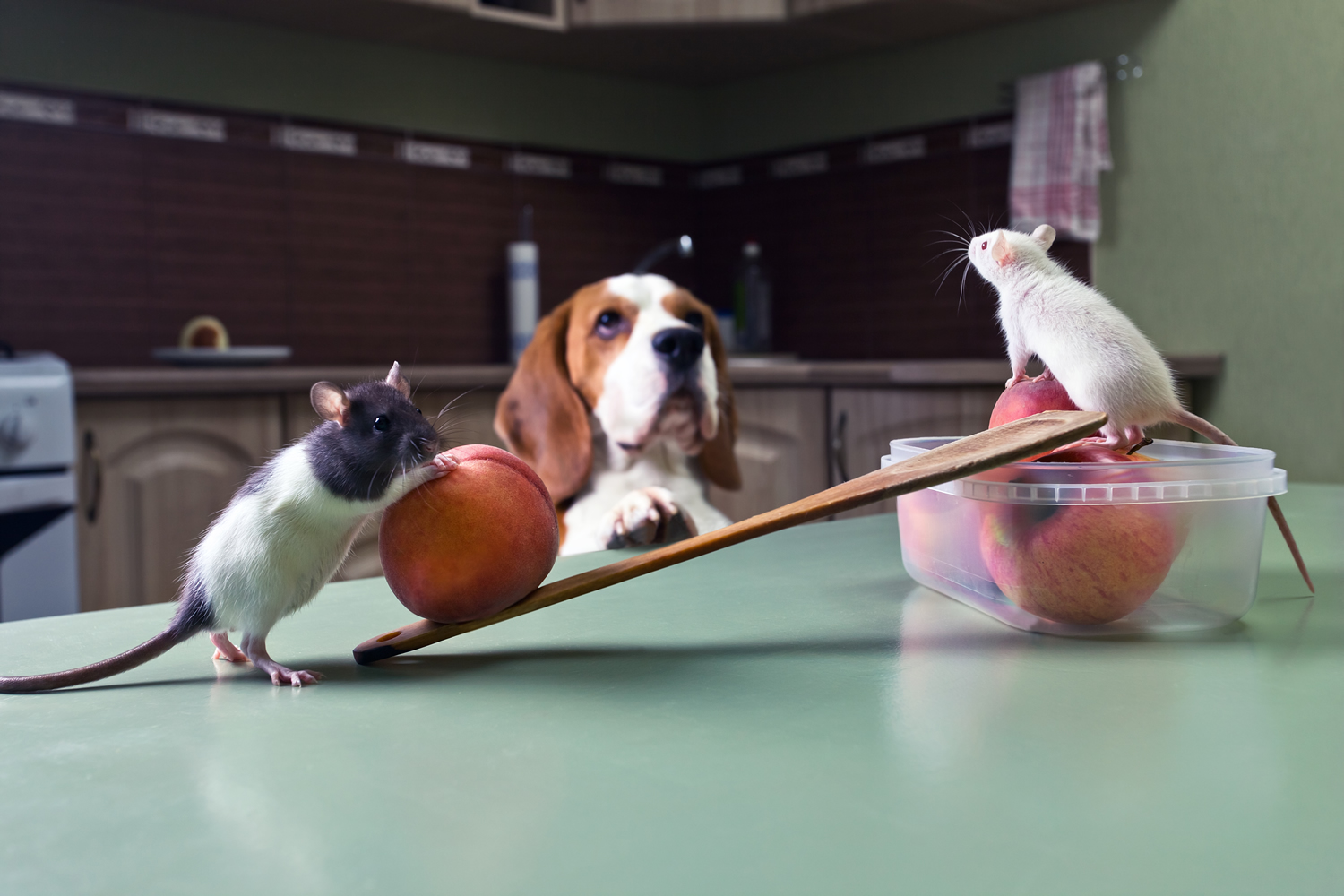
Finally, I shall leave you with another great dog picture from Chris Snuggs. So beautifully appropriate to the complex world we live in.



 Learning from Dogs