Category: Business

Starting a veterinary clinic

Like any new start-up of a business venture, this requires knowledge, skills and quite a bit of luck!

I am delighted to offer this guest post by Penny.

ooOOoo
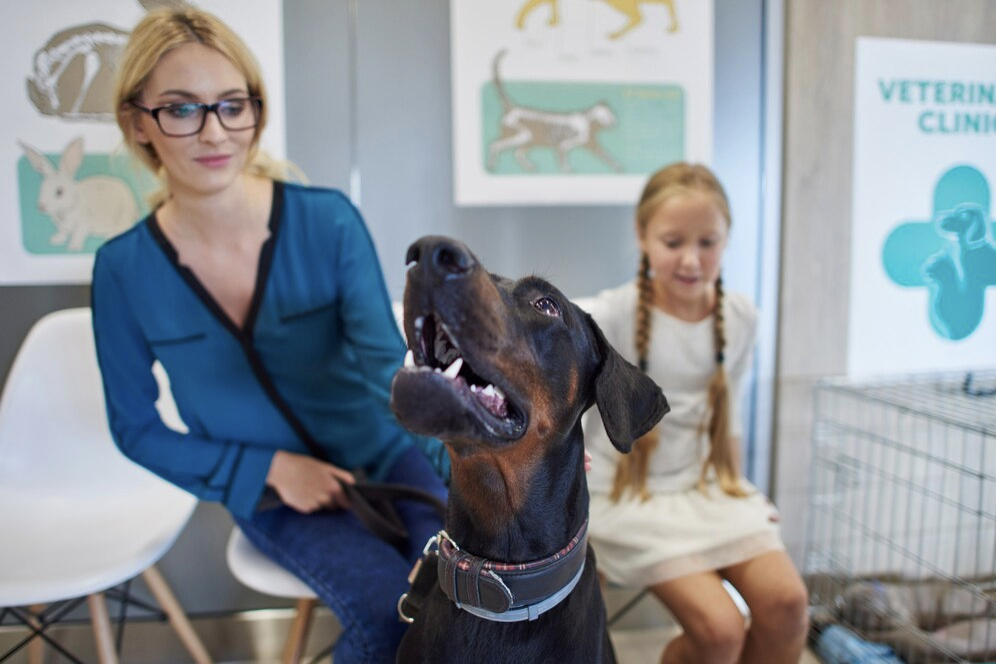
Image: Freepik

Vision to Reality: Building a Profitable Vet Clinic

Launching a veterinary clinic is a significant endeavor that requires meticulous planning and strategic decision-making. This venture combines a passion for animal care with the intricacies of managing a successful business. Aspiring clinic owners must navigate several critical steps to lay a strong foundation and ensure operational excellence. Starting your own clinic promises not only to fulfill a dream of helping animals but also to establish a thriving enterprise in the community.

Build a Strong Foundation with an Effective Marketing Strategy

A robust marketing strategy is essential to attract potential clients in the digital era. Establishing a professional online presence through a user-friendly website that details your services, team, and location builds trust among pet owners. Engage actively on social media with regular updates and client testimonials to showcase your expertise and commitment to animal care. Forge partnerships with local pet-related businesses to increase visibility and drive traffic to your clinic, enhancing both your and your partners’ customer bases.

Craft a Clear and Detailed Business Plan

A well-constructed business plan acts as your clinic’s roadmap, detailing your mission, services offered, and the specific target market. Identify your niche early—whether it’s specializing in certain animals or treatments—to attract the appropriate clientele. Include comprehensive financial projections and a marketing budget in your plan to ensure financial preparedness and support your clinic’s promotional activities.

Enhance Your Business Knowledge by Pursuing an MBA

Running a veterinary clinic demands a blend of clinical and business expertise. Pursuing a master’s of business administration online can boost your proficiency in key business areas such as strategy, management, and finance. An MBA not only deepens your understanding of business operations but also enhances leadership skills and self-assessment capabilities. These competencies are essential for balancing the medical and business demands of your clinic, ensuring its long-term success.

Safeguard Your Business with Proper Insurance

Operating a veterinary clinic comes with inherent risks, making comprehensive insurance coverage essential. Essential policies include malpractice insurance to handle legal issues and general liability insurance for accidents on your premises. Property insurance is crucial to protect your clinic’s infrastructure and equipment against unexpected events. Consulting with an insurance expert can ensure that you have thorough coverage to protect against potential financial setbacks.

Invest in High-Quality Veterinary Equipment

Providing top-tier care necessitates investing in high-quality veterinary equipment. Essential tools like X-ray machines, surgical instruments, and lab equipment should be of the highest standard to ensure accurate diagnoses and treatments. Modern technologies, such as digital imaging systems, not only enhance patient care but also improve operational efficiency. While the initial cost may be higher, investing in quality equipment pays off in the long run by boosting efficiency and minimizing errors.

Secure the Necessary Funding for Your Clinic

Securing sufficient funding is critical when starting a veterinary clinic. Estimate your startup costs accurately to understand your financial needs, including equipment, premises, staffing, and marketing. Explore diverse financing options, such as bank loans, private investors, and specialty medical practice loans that might offer favorable terms. Adequate initial funding prevents cash flow problems and supports your clinic’s growth trajectory.

Choose the Right Location for Your Clinic

The location of your clinic is pivotal to its success, necessitating a spot with a high demand for veterinary services. Conduct thorough market research to choose a community rich in pet owners who need your services. Select a location that is accessible, visible, and has ample parking to ensure convenience for your clients. Proximity to complementary services like pet groomers or dog trainers can further enhance client traffic and provide expansion opportunities.

Opening a veterinary clinic is both challenging and rewarding, demanding a careful blend of dedication and strategic foresight. Success in this field not only enhances the well-being of pets but also contributes positively to the local community. It requires ongoing commitment to adapt and grow in a dynamic environment. Ultimately, the fulfillment of running a successful veterinary clinic comes from both the impact on animal health and the achievement of entrepreneurial goals.

Discover the timeless wisdom that dogs offer at Learning from Dogs, where integrity and living in the present are celebrated. Dive into our content and embrace the lessons from our four-legged friends.

ooOOoo

This is a skilled summary of the needs of opening a vet’s clinic. And thank you, Penny, for your last paragraph. It has been a pleasure!

August’s video of felling our trees

August has produced a find video and it is presented today.

August Hunicke has completed the editing of the video he shot while taking down the very tall trees alongside our house on the 24th and 25th of last September.

It is shared with all of you today.

When a Smooth Job Meets Bad Company

The team involved in the project were shown in this previous post.

A ‘new’ home.

For the last two days we have had some major tree work done.

A couple of weeks ago, our neighbour Clarence came across to our land to point out a dying pine. It was alongside the house together with two other trees, another pine and a fir. The pines were over a hundred feet tall.

They had to come down reasonably quickly otherwise they would crash into the roof with terrible consequences.

Clarence recommended a company, August Hunicke Arborists Inc., and August came round to give us an estimate.

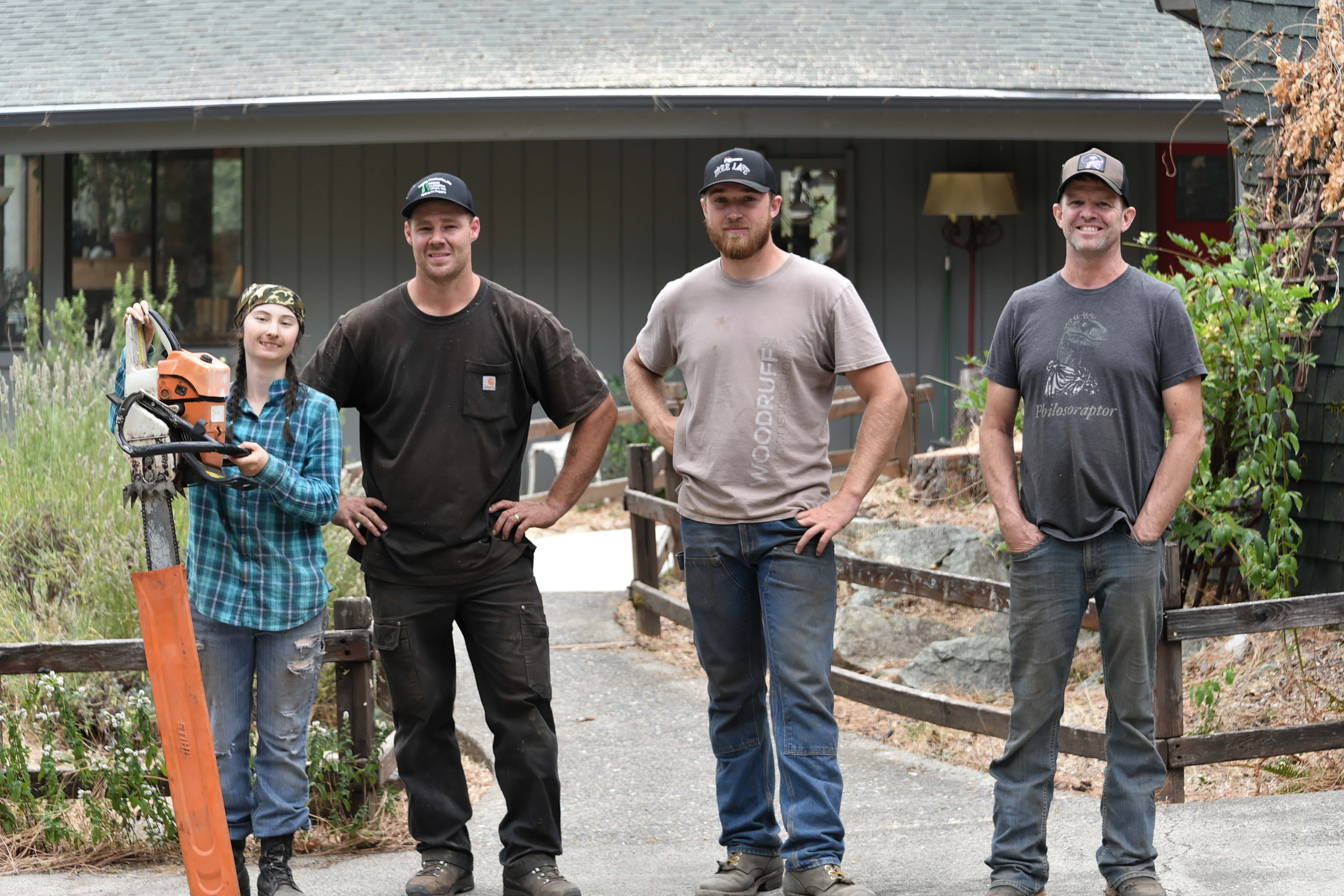
And on Tuesday and Wednesday they came to do the job. They had a great deal of equipment plus lots of experience. They were four of them. And the two pines were very far gone.

At the end of the project I took two photographs and here they are:

August is on the far right of the group.

oooo

It was not cheap but they did an excellent job.

Our teeth

A recent post from The Conversation reveals all!

I have no excuse for not being better at looking after my teeth, for one of my elder sisters, Corinne, was a dental assistant and when I was in my mid-fifties I moved down to South-West England and bought a home just a few miles from Corinne’s home. Thereafter she looked after my teeth at the dental practice in Totnes.

But I was careless in following Corinne’s advice and it wasn’t until in my seventies, and living in Merlin, Oregon, that I saw the light; so to speak!

Read this!

ooOOoo

Healthy teeth are wondrous and priceless – a dentist explains why and how best to protect them

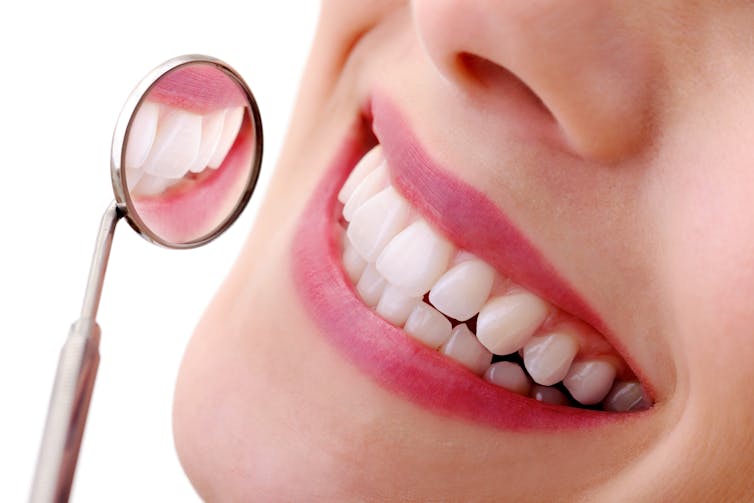
Healthy teeth are truly priceless. Moncherie/E+ via Getty Images

Samer Zaky, University of Pittsburgh

At an auction in England in 2011, one of John Lennon’s teeth sold for just over US$31,000.

How much are your teeth worth?

Teeth are amazing little miracles. They light up our smiles, we use them to speak and we chew with them more than 600 times at every meal.

Yet, in a society where 1 out of 5 Americans ages 75 and up live without their teeth, many people may not realize that teeth are designed to stay with us for a lifetime.

I’m a dentist and an assistant professor spanning clinical dentistry and craniofacial regeneration research. Researchers like me are still deepening our understanding of tooth development, with the ultimate goal of serving patients with on-demand regrown ones.

In the process, I have developed reverence for natural teeth and for the complex beauty of these biological and mechanical masterpieces.

Designed for lifelong function

The secret of teeth longevity lies in their durability as well as in how they are anchored to the jaw – picture a hammer and its hand grip. For each tooth, durability and anchorage are functions of the complex interface between six different tissues; each alone is a biological marvel.

For anchorage, the cementum, ligament and bone grip the tooth at its root portion that is buried under the gum. The ligament, a soft tissue that is about 0.2 millimeters wide (about the diameter of four hairs), attaches the cementum of the root on one end to the bone of the jaw on the other end. It serves to anchor the tooth as well as to cushion its movement during chewing.

For durability, however, the secret lies in the enamel, dentin and pulp – our focus in this discussion.

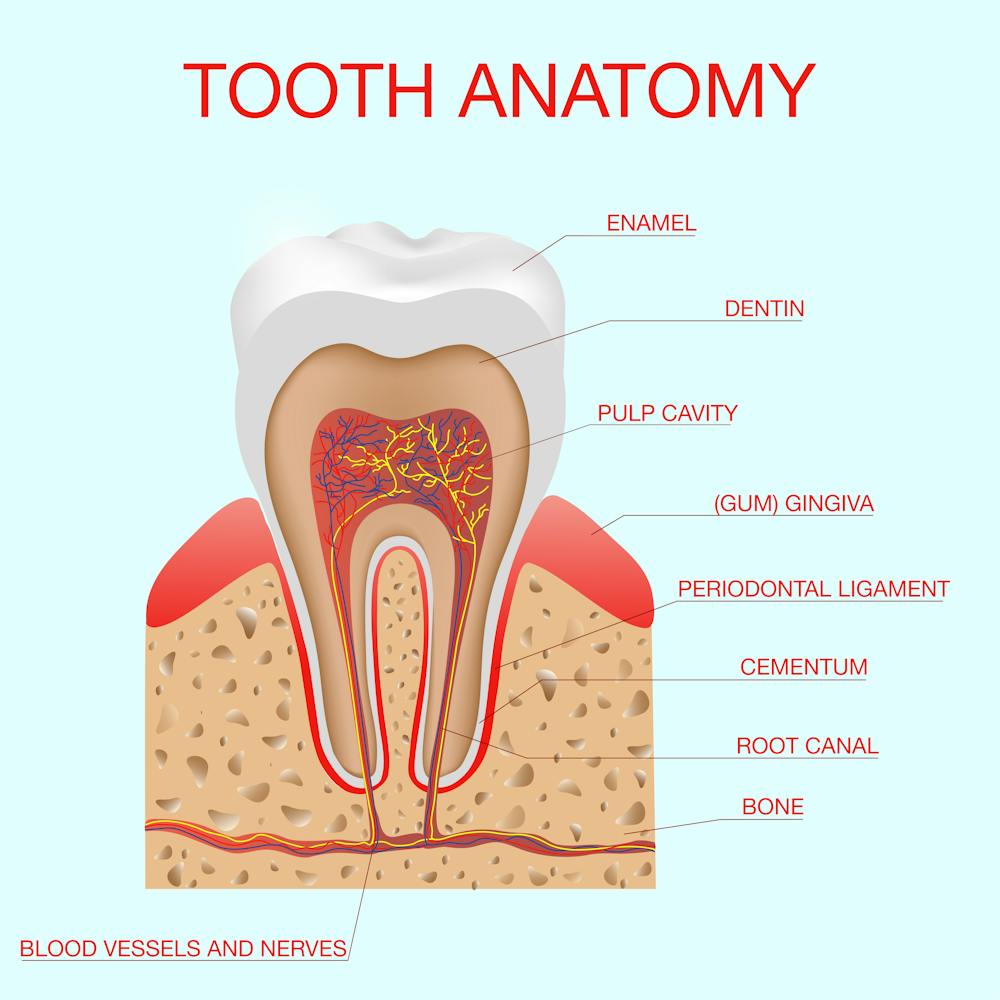
An illustration of tooth anatomy
Dentin and pulp are the body and heart of the tooth. Anna Koroleva/iStock via Getty Images

Enamel – the shield

The enamel is the protective shell that covers the visible part of the tooth above the gum. Thanks to its high mineral content, enamel is the hardest tissue in the body. It needs to be, since it acts as a shield against the constant impact of chewing.

Enamel does not contain cells, blood vessels or nerves, so it is nonliving and nonsensitive. Enamel is also non-regenerating. Once destroyed by decay or broken by misuse such as ice chewing, nail biting or bottle opening – or touched by the dental drill – that part of our priceless enamel is gone for good.

Because it interfaces with a germ-laden world, the enamel is also where decay starts. When acid-generating bacteria accumulate on unbrushed or poorly brushed teeth, they readily dissolve the minerals in the enamel.

How bacteria invade the teeth and cause cavities.

Like hair or fingernails, the non-innervated enamel is not sensitive. The decay advances through the 2.5-millimeter thick (tenth of an inch) layer of enamel painlessly. When caught at that phase during a dental checkup visit, the dentist can treat the decay with a relatively conservative filling that hardly compromises the tooth’s structural integrity.

Because of its high mineral content, enamel is stiff. Its lifelong support is provided by the more resilient infrastructure – the dentin.

Dentin and pulp – body and heart

With less mineral content than enamel, dentin is the resilient body of the tooth. It is a living tissue formed of parallel tiny tubes housing fluid and cellular extensions. Both originate from the pulp.

The pulp is the tooth’s soft tissue core. Vastly rich in cells, blood vessels and nerves, it is the life source of the tooth – its heart – and the key to its longevity.

Like smoke detectors communicating with a remote fire station, the cellular extensions within the dentin sense decay as soon as it breaks through the nonsensitive layer of enamel into dentin. Once the extensions communicate the danger signal to the pulp, our tooth sensitivity alarm goes off: The tooth heart is in flames.

The inflamed pulp initiates two protective actions. The first is to secrete an additional layer of dentin to delay the approaching attack. The second is toothache, a call to visit the dentist.

The earlier the visit, the less the drilling and the smaller the filling. If caught in time, most of the tooth’s natural tissues will be preserved and the pulp will likely regain its healthy state. If caught too late, the pulp slowly dies out.

Without its heart, a nonliving tooth has no defense against further decay invasion. Without a hydration source, a dried-out dentin will sooner or later break under the forces of constant chewing. Besides, a tooth that has already lost a significant portion of its natural structure to decay, cavity preparation or root canal instrumentation becomes weak, with limited longevity.

In other words, the tooth is never the same without its heart. Pulpless, the tooth loses its womb-to-tomb endurance and mother nature’s lifelong warranty.

The tooth coming together

More complex – and more precious – than a pearl within an oyster, the formation of a tooth within our jawbone involves layered mineral deposition. As tooth development progresses in a process of ultimate cellular engineering, the cells of the six aforementioned tissues – enamel, dentin, pulp, cementum, ligament and bone – multiply, specialize and mineralize synchronously with each other to form uniquely interlocking interfaces: enamel to dentin, dentin to pulp, cementum to dentin and cementum to ligament to bone.

https://www.youtube.com/embed/xrebAYBnKw0?wmode=transparent&start=0 Tooth development – the ultimate process of cellular engineering.

In a progress akin to 3D printing, the tooth crown grows vertically to full formation. Simultaneously, the root continues its elongation to eventually launch off the crown from within the bone across the gum to appear in the mouth – the event known as teething. It is about that time, around 12 years of age, that our set of adult teeth is complete. These pearls are set to endure a lifetime and are undoubtedly worth preserving.

Save your teeth, visit the dentist

Tooth decay, the most prevalent disease in humans, is both predictable and preventable. The earlier it is caught, the more the tooth integrity can be preserved. Since the process starts painlessly, it is imperative to visit the dentist regularly to keep those insidious germs in check.

During your checkup visit, the dental professional will clean your teeth and check for early decay. If you are diligent with your daily preventive measures, the good news for you will be no news – enough to make anyone smile.

Samer Zaky, Research Assistant Professor in Oral and Craniofacial Sciences, University of Pittsburgh

This article is republished from The Conversation under a Creative Commons license. Read the original article.

ooOOoo

There’s that saying: “No news is good news.”

The imminent climate change crisis

But a positive TED Talk on the situation.

There have been so many disastrous activities on climate change, and I am not belittling them, but it was amazing to come across a TED Talk last Saturday that I watched. But first the speaker, Asmeret Asefaw Berhe, who was born in Asmara, Eritrea. Her bio (in part):

From WikiPedia:

ooOOoo

Asmeret Asefaw Berhe is a soil biogeochemist and political ecologist who is the current Director of the Office of Science at the US Department of Energy. She was previously the Professor of Soil Biogeochemistry and the Ted and Jan Falasco Chair in Earth Sciences and Geology in the Department of Life and Environmental Sciences; University of California, Merced.[1] Her research group worked to understand how soil helps regulate the Earth’s climate.

Advocacy and global impact work

Berhe’s work at the intersection of soil, climate change, and political ecology lends itself well to a number of global issues. During her graduate career, she was a member of the working group that produced the Millennium Ecosystem Assessment, which was called for by the United Nations Secretary Kofi Annan to assess the impact of humans on the environment. She was one of the lead authors on the 2005 report’s chapter on “Drivers of Change in Ecosystem Condition and Services.”[19] The Assessment received the Zayed International Prize for the Environment in 2005.[20]

In 2018, Berhe was selected as part of the inaugural National Academies of Sciences, Engineering, and Medicine New Voices in Sciences, Engineering, and Medicine cohort, as an early career leader working to advance the conversation around key emerging global issues and communicate the evidence base around those challenges.[21]

An advocate for women in science, Berhe is currently a co-Principal Investigator of ADVANCEGeo, which is working to transform the workplace climate of the geosciences to increase retention of women in the field and develop a sustainable model that can be transferred to other scientific domains. Currently, the Earth Science Women’s Network (ESWN), the Association for Women Geoscientists, and the American Geophysical Union (AGU) have partnered to address the issue of sexual harassment in the earth, space and environmental sciences.[22] The program led by Erika Marín-Spiotta and is run with support from a four-year $1.1 million grant from the National Science Foundation.[23]

She currently serves as an advisory board member of 500 Women Scientists, a grassroots organization working to make science open, inclusive, and accessible, and is on the leadership board of the Earth Science Women’s Network.

ooOOoo

Now from the TED Talk, firstly the description:

Part 3 of the TED Radio Hour episode What Lies Beneath.

Earth’s soil can store vast amounts of carbon. Biogeochemist Asmeret Asefaw Berhe says soil could be a powerful tool for fighting climate change – if only we stopped treating it like dirt.

About Asmeret Asefaw Berhe

Asmeret Asefaw Berhe is a soil biogeochemist and President Biden’s nominee to lead the Department of Energy Office of Science. She is a professor of soil biogeochemistry at University of California, Merced. Her research group works to understand how soil helps regulate the earth’s climate.

Berhe’s work exists at the intersection of soil, climate change, and political ecology. During her graduate career, she was a member of the working group that produced the Millennium Ecosystem Assessment, which was called for by the United Nations to assess the impact of humans on the environment.

Berhe received a B.Sc. in Soil and Water Conservation at the University of Asmara in Eritrea. She has an M.Sc. in Political Ecology from Michigan State University and a Ph.D. in Biogeochemistry from University of California, Berkeley.

This segment of the TED Radio Hour was produced by Matthew Cloutier and Sylvie Douglis and edited by Rachel Faulkner and Katie Simon. You can follow us on Facebook @TEDRadioHour and email us at TEDRadioHour@npr.org.

Now that positive TED Talk:

We wish Asmeret the very best of fortune in bringing about these changes.

Ways to help stray animals.

A welcome to a new guest author from India.

A while ago I was contacted by email from Anushka Mishra about her writing a guest post. This is what I received:

Greetings,

This is Anushka Mishra, Content Strategist at Jaldee Vets. We hope this email finds you well. We are writing to propose a guest blogging opportunity for your esteemed pet care blog. Our platform, Jaldee Vets specializes in pet care with a significant emphasis towards strays. In the spirit of becoming the voice for the voiceless, we provide free consultancy to stray animals. Through our blog posts we want to convey the message of carrying out social responsibility of protecting stray and providing care to animals.

We will be providing an SEO optimized blog of 500-600 words. With our high-quality guest blog, you will benefit from fresh and engaging content that can captivate your readers. We can offer our expertise in pet care to cover topics such as nutrition, health, training, and grooming, providing valuable insights to your audience.

In return, we would gain exposure to your dedicated readership and the opportunity to showcase our #StrayLivesMatter initiative of providing free consultancy to strays. It would be an excellent platform for us to establish ourselves as a reliable resource and expand our reach within the pet care community.

We look forward to discussing the specifics and exploring potential topics. We eagerly await your positive response.

Warm regards,

Anushka Mishra

As is normal in these situations I took a look at the organisation that Anushka represented and replied:

Anushka,

Good day to you and thank you for your email and the offer.

Unfortunately, I only take guest posts from those who have no business connection because otherwise I would have the challenge of determining what businesses I would support and what businesses I would not support.

Hope you understand,

Kind regards,

Paul H.

However, I got it wrong because Jaldee Vets is in the business of doing much more. They are an Indian firm that provide online services including providing free online vet consultations for stray dogs and cats.

So here is Anushka’s guest post.

ooOOoo

Ways to help stray animals

The bigger picture of looking at the whole world is that around 200 million strays embrace the streets, finding love and joy in slight caresses and mini treats. Every nation has strays flaunting their roads. However, what differentiates one is the condition in each of these countries. In some countries, the situation of street animals is alarming, with the perpetual enmity of brutal and inhumane behaviour towards them. The indifference towards these creatures has led to a massive shoot in their population. They are usually left to cater for themselves and are more prone to fall prey to some diseases.

On the contrary, some countries look after their strays with utmost concern. They have working policies for neutering and spraying strays and adequate amenities to provide suitable shelter care. Along with the direct accommodations, there is always a persistent attempt at propagating vigilance and educating people. As a living entity endowed with the privilege to stand up for ourselves and speak our concerns out loud, it is our responsibility to tend to those devoid of such benefits. The implementation and execution of official policies and reforms are outside our hands. However, it’s well within our powers to do small bits and pieces to make life easier for these hustling babies. 

Helping stray animals

Adopt

The best way to help the button-eyed sweethearts is by welcoming them into the comfort of your abode. Bringing home a new member can add a hint of sparkling confetti to the lives of all the family members. On the other hand, it would always bestow the four-legged friend with a healthier living ribboned in kindness and surrounded by loved ones. If you have doubts about becoming a full-time parent, there’s always an option of fostering. This allows you a trial run for a life as a pet parent and gives the pet adequate living temporarily until they find a permanent residence. 

Volunteer

Various animal welfare organizations work towards rescuing and sheltering stray animals. These organizations are always open towards a helping hand who can assist with multiple works. Volunteering involves but isn’t limited to helping in the rescuing process. The job extends to several back-end works such as photography, content writing, bringing sponsors on board, etc. Volunteering in such initiatives is a noble method of helping stray animals and would also give you some quality time with these endearing pets. 

Generating awareness

Little drops accumulate together to make an entire ocean; thus, every drop counts. Just like that, every small step towards raising awareness and educating people on the cause of animal safety can eventually make a profound difference. No one alone can end all the mistreatment and cruelty happening to animals. However, we can do our best by educating our friends, family and acquaintances on the subject. You can participate in events promoting such values or engage with online campaigns to help add more voice to the cause. 

Feed and Care

All it takes to help a stray is a strong will and good food. The easiest way to bring joy to these lovely friends is by feeding them and providing them warm clothes if winter is around the corner. Good food would ensure a healthy and sound living for stray animals, which they direly require. 

When Injury strikes?

Unless you are a professional or vet, you can do only so much. On some grim day, you may stumble across an injured animal. The immediate response to such a situation should always be to consult a vet. Jaldee Vets, with its online consulting platform, is thriving to make lives more manageable for stray animals. Through our site, one can avail of free online consultancy for strays who may require the same. If you encounter an animal injured or have met with an accident and can’t find a clinic nearby, you can hop on to the site and get immediate help for the furry pal. The consultancy is online and completely free. 

Strays are a social responsibility. To help them isn’t just a noble cause but a necessary one. So, wait no further and take these small and practical steps to shower some ounces of comfort and kindness into the lives of many animals.  

ooOOoo

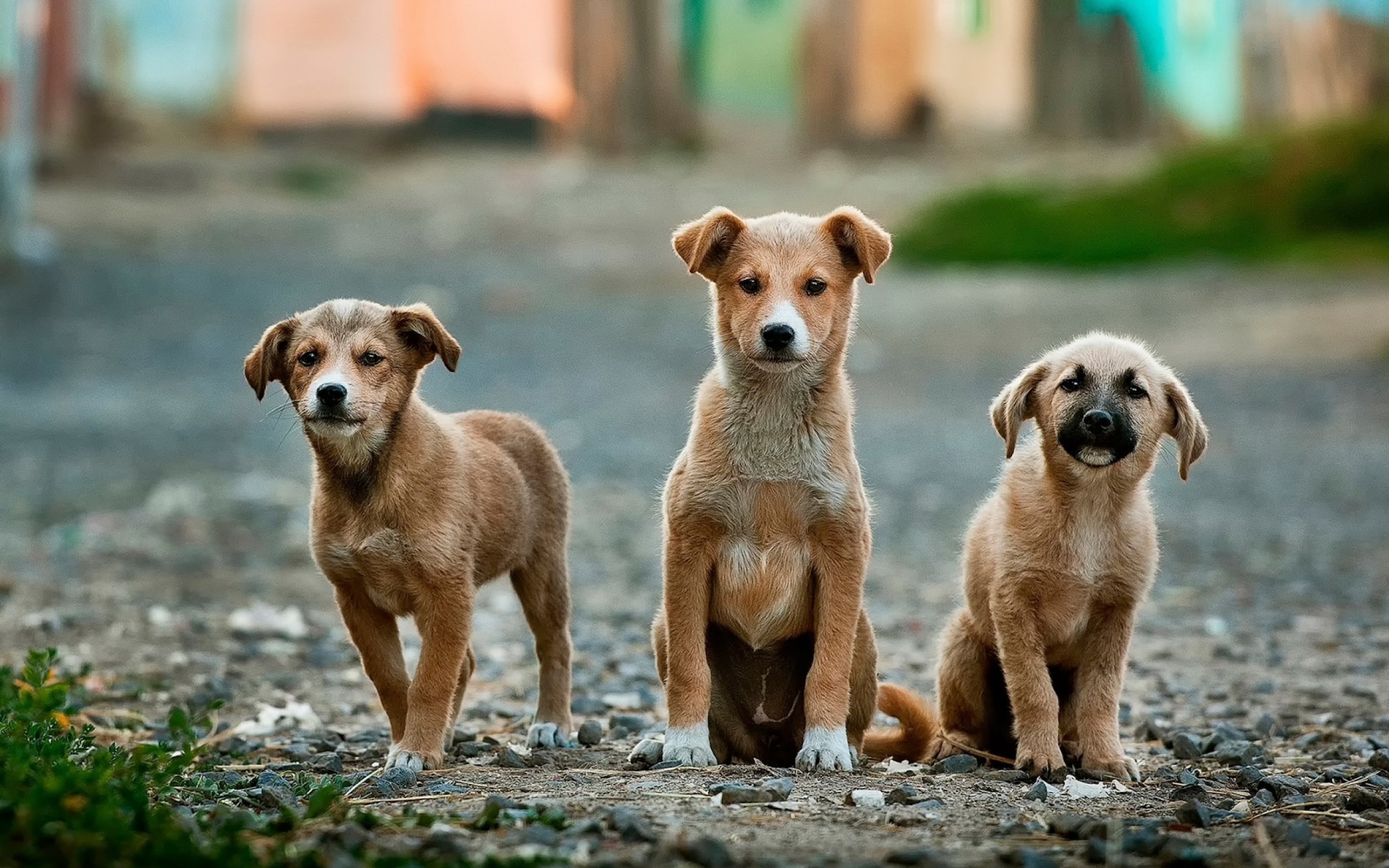
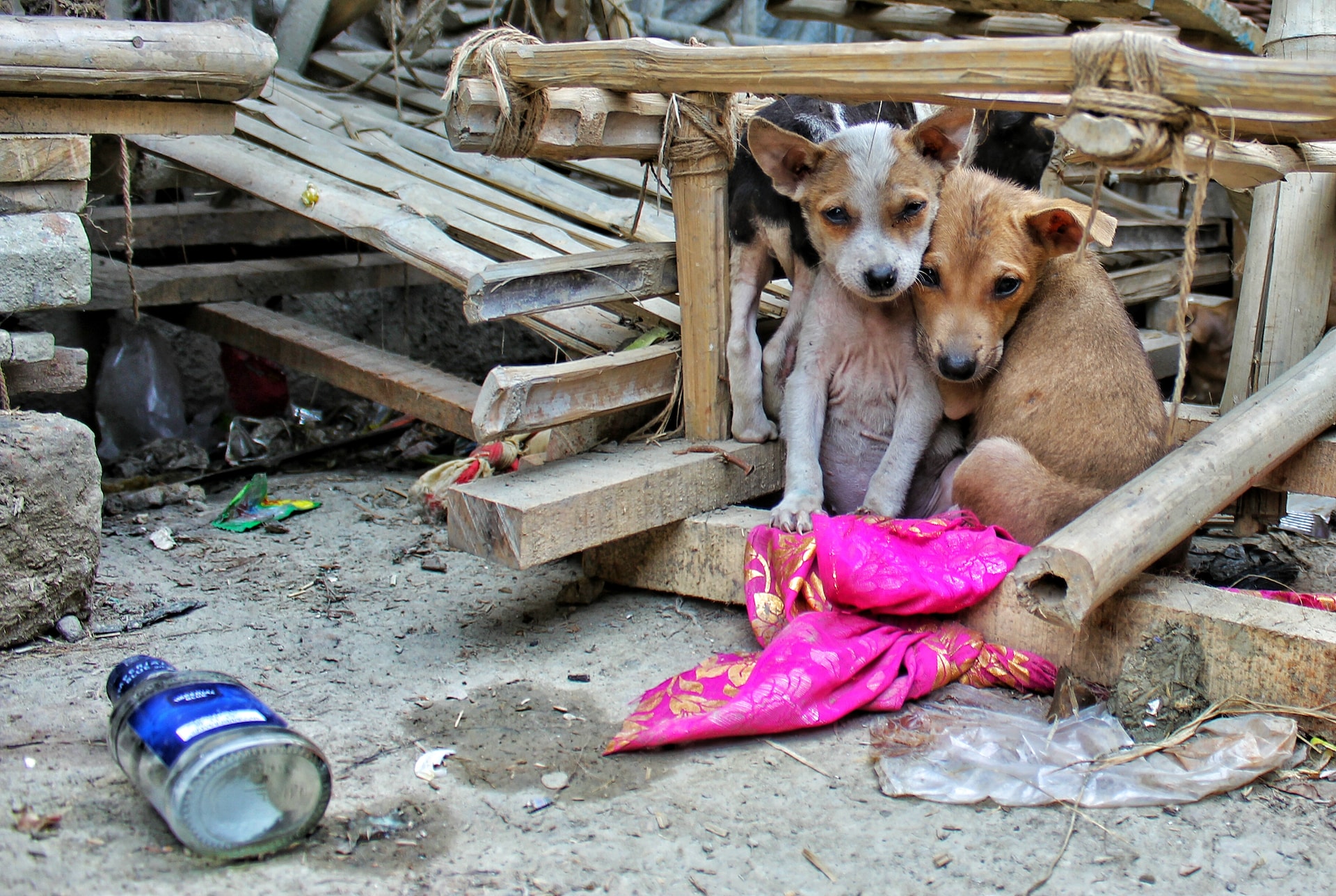
The only way to close this is by adding a couple of pictures from Unsplash of stray dogs.

Photo by Anoir Chafik on Unsplash

oooo

Photo by Evan Clark on Unsplash

These pictures make my heart ache and I hope you support Jaldee Vets. Finally are you in favour of me publishing guest posts from Anushka? Please give me feedback.

It is amazing what one sees on the road!

This is an account of an Amazon delivery driver!

This story was originally published on The Dodo and I thought it would make a brilliant share with you all. Here it is!

ooOOoo

Amazon Delivery Driver Spots The Weirdest-Looking ‘Dog’ Trotting Toward His Truck

“This is so funny, what the heck” 😂
By Caitlin Jill Anders

Published on the 24th August, 2023

An Amazon delivery driver named Erik was out delivering packages as usual when he noticed someone furry walking in front of his truck. He figured it was a dog coming to say hi, which happens to him a lot on his route. He was getting excited to greet the dog and see if he’d ever met this one before — then suddenly realized he wasn’t a dog at all.

When the animal made it to the door of his truck, Erik realized the friendly neighbor was actually a goat.

Erik and the goat stood watching each other for a few seconds, both assessing the situation. Then, the goat decided Erik was friendly and climbed on the truck, greeting Erik just like a dog would. Erik couldn’t stop laughing at the absurdity of the situation.

“This is so funny, what the heck,” Erik said in a video about the encounter.

The goat jumped up onto Erik to say hi and even stuck his little tongue out. He was wearing a collar and a leash, which made Erik think this kind of thing probably happens a lot.

A TikTok user who has goats commented, “[T]hat bell means he’s the problem goat.”

Luckily, using the leash, Erik was able to lead the friendly goat back to where he came from. He was glad it didn’t turn into a neighborhood-dog-who-wouldn’t-leave-his-truck, which has happened to him before.

Erik didn’t expect to see a goat during his shift that day, but now he hopes it’ll happen again.

ooOOoo

There were three videos inserted in the original, all from TikTok, but I chose not to include them. If you want to watch them then please go here.

However, it is a delightful story!

Koko’s last hunt

Jesse Anderson’s dog.

Back in mid-May I received an email from Jess. It said:

Paul, as of about two years ago I’ve been writing my life story.  I wanted my kids and grandkids to know what it was like when I was a kid.  Some of my best memories are times spent with my dogs.  This is one story I wrote about Koko’s last hunt. 

It was a lovely story and I have no idea why I have left it so long before publishing it. But here it is!

ooOOoo

Koko

By Jesse Anderson

When I was just a young boy, I was gifted a puppy that was a Chesapeake/setter cross.  Because of his chocolate color, we called him Koko.  Koko was my constant companion thru everything I did as a kid.  When I was old enough to hunt, he was my bird dog, and a good one he was.

My family was a very poor one.  Our house was about 750 square feet, and there were eight of us living in it.  There were four boys in the same bed, and there was still room for Koko.  

It just got too crowded in that little house, so in my junior year I went to the old barn and took over one of the calf sheds, turning it into my very own bedroom.  It would be my very first one!  I made a bunk, covered it with straw, swept the dirt floor and put an old rug on it, then hung some of my paintings on the walls.  It was far from perfect, but Koko and I thought it was incredible.  He slept, with me, inside my sleeping bag on the straw.  No one was allowed inside unless they were invited.

With six kids and a disabled father, it took a lot to keep things going.  We all worked in the fields, even at a very young age.  When hunting seasons started, it was my que to get out there and put as much game in the freezer as I could.  My mother had worked for a meat packing company, and when they bought new equipment, they gave us the old freezer.  I tried my best to keep it full.

Koko and I were tied at the hip.  When we hunted, even with others, he was always aware to my presence.  Anytime a bird was shot, it was always brought back to me.  I could control him with nothing more than a hand signal.  Some of the best times I had, as a kid, were out in the field with that dog.  He was my very best friend.

As he grew older his hips started going bad.  One morning I got my shotgun out and headed for the car.  He could hardly get up, whimpering as he tried.  I decided to leave him behind, thinking it would be the best for him.  I was very wrong.

For the entire day he sat in front of the window, waiting for my return.  When I got home, I walked into the house with my days harvest, only to be met at the door by Koko.  He stood very still, staring me right in the eyes, for a long time.  Then he just turned and walked away.  He said everything he wanted to say.  I just felt terrible.  I had let my best friend down.  After that, if I knew his hips were bad that day, and some were worse than others, I would sneak out the back bedroom window before I left.

I went into the Army shortly after I graduated from High School.  After basic, I came home, bringing one of the recruits from Guam with me.  He got to see this wonderful dog in action.  Again, I had to leave, this time being stationed in Alabama.  A year later the Army thought I should be in Germany.  I, once again, came home on leave.  By this time, old Koko was completely deaf, couldn’t smell a skunk, and his eyes were failing.  It really hurts me to see my dogs get old.  That’s the only real fault they have.

I decided that I had to take him out for the last big hunt. I owed him that much after all the years we had together. I had to pick him up and put him in the car, but he knew we were going hunting, and the look on his face was incredible!  Don’t tell me that a dog can’t smile.  That smile said it all!

When we got into the field, he knew he couldn’t hear, and after every ten or twelve steps, he would look at me to see if he was doing what I wanted.  A big rooster pheasant flew up and I shot it.  Koko didn’t even hear the shot.  When he looked up to get directions, I guided him right to the bird.  You have never seen a happier dog in your life.  He laid that bird at my feet and looked me right in the eye and had the hugest smile on his face.  I knelt down to him and cried such happy tears, hugging him the entire time.  I was so happy that I was able to bring such joy into that old man’s life.

That would be the last time I would see him.  Germany kept me for another year and a half, and his age caught up to him.  I was notified thru the mail that he had died.  The vision that has stuck with me my entire life, and now I’m 76, is the look on that old dog’s face the day we had his last hunt.  It could not have been planned better.   JESS

ooOOoo

What a beautiful account of Koko.

Jesse is just a couple of years younger than me so I resonate with him. I still miss Pharaoh, my German-Shepherd, and he died in 2017. Dogs are incredible companions.

Jesse has his own website that is here. I share with you a little bit about Jesse from his website.

Born in Nampa, Idaho, Jesse Anderson has been doing artwork most of his life.  There wasn’t a time, as a youngster, that he wasn’t sitting and drawing whatever his fancy was at the moment.  He was given his first set of oil paints at age 11. In High School he was encouraged by his art teacher, Dorothy Long, to pursue art as far as he could go and they stayed in touch for the next 40 years.  After high school, Jess went directly into the U.S. Army.  Upon learning of his art abilities, Uncle Sam saw fit to put him in charge of the Battalion Training-Aids Department  (aka, the art department).  Following his discharge in 1968, he enrolled in Boise State College in hopes of getting a degree in Commercial Art.  The College would only allow ONE art class the first year, and it was beginning drawing.  This was not what he was looking for as the next step in his art career so he dropped out.   Before leaving college, he met Cheryl, his wife of over 50 years.  With Cheryl working as a bookkeeper to keep the bills paid, he enrolled in the “Advertising Art School” in Portland, Oregon where he graduated top of his class.   He started his own commercial art business and his dream of making a living as a full time artist was in motion.

Perfect!

Dr Renée Lertzman speaking a great deal of sense

She was at TED19 giving this talk.

It is under 14 minutes in length so, please, watch it until the end. You will be pleased you did!

It’s normal to feel anxious or overwhelmed by climate change, says psychologist Renée Lertzman. Can we turn those feelings into something productive? In an affirming talk, Lertzman discusses the emotional effects of climate change and offers insights on how psychology can help us discover both the creativity and resilience needed to act on environmental issues.

Dr. Renée Lertzman is a researcher, educator and engagement strategist who uses psychological insights to unlock action on global climate and environmental crises.

Why you should listen

Dr. Renée Lertzman is a pioneer and leader at the intersection of psychology, climate and environment. She applies psychosocial insights to drive engagement and action on ecological issues. 

Lertzman translates psychology and social science best practices into tools, resources and guidance that unleash the potential for creativity and courage. She guides companies and organizations in strengthening engagement campaigns and boosting their ability to connect with stakeholders to inspire action, ingenuity and resilience in facing one of the biggest challenges of our time.

Her website is here: https://reneelertzman.com

This is a very positive talk and the recommendation that Dr. Lertzman provides is simply music to our ears!

Journalism.

A start to a fascinating programme on BBC Radio 4.

Yesterday morning (Oregon time) had me listening to a new series on BBC Sounds. It was Frontlines of Journalism. Here is what the Beeb had to say about it:

Released On: 27 Feb 2023

Available for over a year

In the spring of 2023, twenty years after the Americans, the British and their allies invaded to overthrow Saddam Hussein, BBC International Editor Jeremy Bowen was reporting from Iraq for the BBC. He described the invasion as ‘a catastrophe’. Taking you to some of the most difficult stories Jeremy and other journalists have covered; in this episode – why impartiality is not about trying to get perfect balance, the truth lying somewhere in the middle.  Often it does not.   Jeremy speaks with: journalist Rana Rahimpour who was born in Iran but left when she was 25 to work for the BBC; former BBC bureau chief Milton Nkosi, who grew up under apartheid in Soweto, South Africa; journalist and environmentalist George Monbiot, and CNN’s Chief International Anchor Christiane Amanpour.

Presenter: Jeremy Bowen Producer: Georgia Catt Assistant Producer: Sam Peach Additional research: Rob Byrne Series mixing: Jackie Margerum Series Editor: Philip Sellars.

But in wanting to present a little more to you readers, I did some research on the topic and came across this article published by the Reuters Institute at the University of Oxford. I cannot see a warning about not sharing this with you.

ooOOoo

Impartiality is still key for news audiences. Here’s how to rethink it for the digital age

Our research shows people still value the ideal of impartial news. A new report offer suggestions to adapt it to a challenging environment.

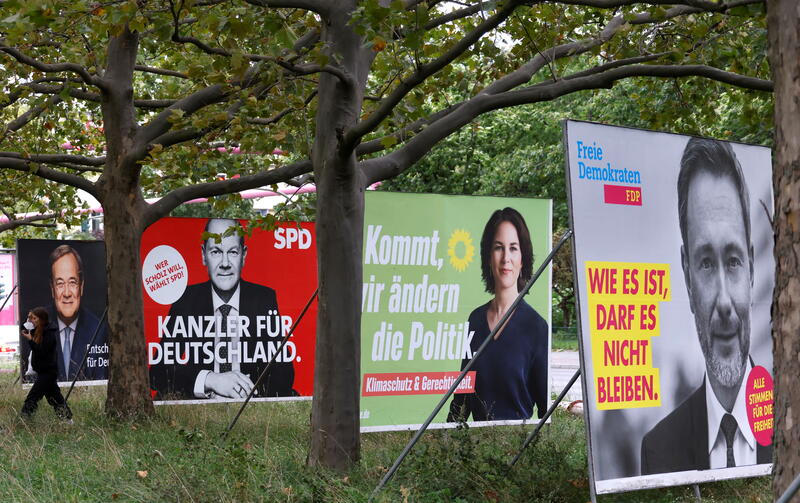
Election posters of Germany’s top candidates for chancellor.
September 16, 2021. REUTERS/Fabrizio Bensch

Nic Newman

Tuesday 19 October 2021

Most people agree that news organisations and journalists should reflect all sides of an issue and not push a particular agenda – at least when asked about it in surveys. Our 2021 Digital News Report finds this to be true across countries and age groups

However, many people feel that the media often fail to live up to this ideal. Our surveys consistently show that committed partisans believe that traditional media coverage is unfair, especially in countries where debates about politics or social justice have become deeply polarised. In recent years we’ve also seen an increase in opinion-led television formats such as Fox News/MSNBC in the United States, GB News in the UK and CNews in France, while many traditional print publications have focussed on distinctive and robust opinion as a way of standing out online.

Together with the growth of partisan websites, YouTubers and podcasters, audiences now have access to a wider range of views than ever before. Against this background, some have questioned traditional approaches to impartiality that try to represent all points of view within a single broadcast or publication. Other critics go further – arguing that impartiality has given extreme or unrepresentative views undue prominence, through its focus on balance, helping to legitimise climate change deniers and anti-vaxxers amongst others.

This all raises the question: how relevant is impartial and objective journalism to audiences today? The Reuters Institute commissioned market research company JV Consulting to carry out qualitative research in four countries – Brazil, Germany, the UK, and the US – with different news markets, traditions of public broadcasting, and systems of media regulation. They conducted a series of focus groups and in-depth interviews on our behalf in February and March 2021 with politically and ethnically diverse groups of older and younger people interested in and engaged with news (52 people in total).

These are some of the key findings of the report:

  • Engaged audiences in the four countries researched still care about impartiality and say it helps define news, even if some consider it an impossible ideal. They want journalists to focus on facts, objectivity and fairness, and to steer clear of opinions and bias in reporting, leaving them to decide for themselves how they feel about the news. Alongside accuracy, impartiality is a foundational value of news that underpins audiences’ trust.
  • People recognise the risk of giving exposure to extreme views or one side in the name of balance. However, evidence from this group of engaged users is that they are even more concerned about the suppression and silencing of viewpoints. There are particular misgivings about this in Brazil and Germany, where twentieth century history frames some people’s views.
  • Most participants recognise that there were some topics (e.g., science stories, natural disasters, and questions of social justice) where there were not always two or more sides to represent. Here, many felt there should be more latitude for journalists to present just one perspective or an established point of view. There are also expectations that journalists will show greater empathy and connection in their reporting than perhaps traditional interpretations of impartiality have allowed in the past.
  • Across countries, newer digital formats such as social media are perceived as carrying more risk of bias along with the growth of more informal and entertaining broadcast formats such as chat shows and podcasts. Impartiality is more vulnerable in these contexts, as well as when the news is emotive or controversial, because journalists’ personal views risk slipping out in the impulse to engage, although the subject and intention have a bearing on how audiences feel about this.
  • Younger people, who have grown up using more informal and digital sources, tend to have different expectations of impartiality, often looking for journalism that aligns with their values. But overall, their underlying attitudes and desires are remarkably similar to older people’s.
  • Different countries’ news traditions shape people’s experiences and expectations. Audiences in the US cannot envisage a world without partisan news outlets, but in the UK and Germany, with their public service traditions, most audiences still laud the upholding of impartiality.
  • Respondents also delineate between news reporting (where impartiality is expected) and opinion/commentary (where people expect that views are argued for). Importantly, many told us that they often find it difficult to distinguish between the two, especially online. Interviewees like news and they like opinion, but want them very clearly separated. 

It is important to recognise that not all news organisations are committed to impartiality: indeed, some make a virtue of creating news and opinion with a clear point of view. But most will want to take note of audience desires for a range of views to be represented and to see clearer labelling of news and opinion. For news organisations that are committed to impartiality, the report highlights the increased dangers in areas where journalism is more informal or accessed in distributed environments. Public media like the BBC have already embarked on updated training and issued new guidelines on these issues. Audiences have also sent a clear signal in this report that they would like much greater transparency over why certain perspectives are included or excluded, however difficult this may be in practice.

Finally, the report notes that given the importance of social media, search and other access points, technology platforms such as Facebook, Google and Apple, will also need to develop clearer guidelines on impartiality – as their own trust levels will depend on fair implementation of policies around inclusion and exclusion, whether by algorithm or human intervention.

Download the full report

ooOOoo

Now this isn’t everyone’s cup of tea but when one thinks of the enormous amount of news and information one gathers from the television, the radio, the press and a wide variety of online sources then thinking a little more about the truth of what we are being told is crucial to us making wise decisions. including voting where appropriate.

People still value the ideal of impartial news; there is no question about that!