Category: Business

Being scammed; once again!

The latest tricks are very clever!

I’m too confident, and I need to change. My confidence comes from having been scammed a few years ago, and trying now to be very careful.

But scamming is moving forward, technologically speaking, at a great pace.

Thus, I’m including the following article from The Conversation because it offers fantastic tips.

ooOOoo

AI is supercharging money scams – here’s what you can do to protect yourself

An older man looks at a paper statement, with a confused expression, in front of his laptop.
Financial losses caused by AI fraud are skyrocketing, especially among adults over 60. Volodymyr Hryshchenko on Unsplash

Pawan Jain, University of Michigan Flint

The phone rings, and it’s your grandson’s shaken voice. There’s been an accident, he says, and he needs money before anyone finds out. Except it isn’t him. It’s software that learned his voice from a clip posted online, run by a stranger working through a list of phone numbers.

For years, warnings about artificial intelligence and cybersecurity have focused on corporate networks and government systems. Those threats are real. But if you follow the money in the FBI’s fraud data, a different picture emerges: Staggering sums are flowing out of household accounts.

In its 2025 annual report, the FBI’s Internet Crime Complaint Center began tracking complaints with an AI connection for the first time. Americans filed more than 22,000 such cases and reported roughly US$893 million in losses. Investment fraud accounted for $632 million of that, and people over 60 accounted for $352 million of the losses.

Those figures include only victims who reported to the FBI, and only cases where AI’s role could be identified. The consulting firm Deloitte projects that the actual hit from AI will be much bigger and help push U.S. fraud losses overall to $40 billion by 2027, up from $12.3 billion in 2023.

I’m a finance professor who studies household finance and how people use AI to make money decisions. And I believe the most consequential AI security story right now isn’t unfolding in server rooms, but at kitchen tables.

Old cons, new machinery

None of these scams are new. What AI changed is the cost and the quality of the cons.

Cloning a voice now takes a few seconds of audio and cheap consumer tools. In one study, listeners were able to identify an AI-generated voice only about 60% of the time. Video is heading the same way. In 2024, a finance employee at the architecture and design firm Arup was tricked into wiring about $25 million to fraudsters after they set up a video meeting “staffed” by deepfakes of the chief financial officer and several colleagues.

Phishing has improved, too. Clumsy wording and odd formatting used to give fraudulent emails away. Language models now write clean, fluent messages and can personalize them at scale using details scraped from social media. Deepfake videos of well-known business figures pitch bogus trading platforms.

The same pressure is visible in business losses. The cyber insurer Resilience reported that more than 85% of the losses in its claims portfolio in the first half of 2026 stemmed from attacks aimed at people rather than systems.

Why careful people fall for it

We’d like to believe that only careless people get taken. Research in behavioral finance says otherwise.

These scams are engineered around fear and urgency: a panicked grandchild, a boss demanding a same-day transfer, an investment window that closes tonight. Stress narrows attention and pushes people toward fast, intuitive judgments at the very moment they need slow, deliberate ones. Fraudsters also strike a pose of authority, whether a CFO’s face or a government agency’s letterhead, because most people defer to it.

Fluency matters as well. My own research examines how the smoothness of AI-generated communication leads people to trust it. A message with no typos, in a voice that sounds exactly right, sails past defenses that a clumsy fake would have tripped.

Nobody plans to make a major financial decision mid-panic. That’s exactly why scammers manufacture the panic.

The quiet version of the attack

AI-enabled theft doesn’t necessarily involve talking to the victim. Stolen personal data sells for a few dollars on dark web markets. Criminals then feed it to automated AI agents that probe bank and fintech systems around the clock, testing credentials and hunting for weak points at a speed no human crew could match. Last fall, the AI company Anthropic disrupted an espionage campaign in which an AI agent performed 80% to 90% of the intrusion work against roughly 30 targets, including financial institutions.

When an attacker gets into a customer account, the takeover can be over in minutes. Instant payment platforms like Zelle, built for speed and convenience, become the getaway car. The money typically moves within minutes, and getting it back is almost impossible.

How to protect you and your loved ones

Banks defend their own wire rooms with procedures, not vigilance. Households can borrow those procedures.

Check by calling back. When you get a suspicious call, hang up and dial a number you already know – like your bank’s fraud hotline – and never one the caller or message supplies. The point is to leave the channel the scammer controls. A cloned voice can’t answer your grandson’s real phone.

Trust and verify. You should agree on a robust family code word for emergencies and treat any request for money that lacks it as fake. Require two people in your household to sign off on any large transfer, so nobody moves serious money alone and under pressure. And build in a delay, such as a self-imposed 24-hour wait, before any big payment. Urgency is the scammer’s tool. Slowness is yours.

Add layers of protection. Protect the accounts themselves, too. Turn on two-factor login for financial accounts, and never share a verification code with someone who contacts you. That code is the second lock on your door, and the only reason a caller wants it is to get in.

You should also switch on your bank’s transaction alerts so a takeover announces itself in minutes, and consider a credit freeze, which is free and blocks thieves from opening new accounts with data bought on the dark web.

Protect older people. With $352 million of reported AI-related losses coming from Americans over 60, conversations with older family members are key. Walk through the callback rule and the code word, and ask their bank or brokerage about adding a trusted contact they can call. It costs nothing, and it gives the institution a way to raise an alarm before the money moves.

If money has already moved, you should call your bank immediately, ask it to attempt a recovery, then report the scam to the Federal Trade Commission.

Where habits end, rules should begin

Good habits raise the cost of every one of these scams, but they can’t do it all. This is where the U.S. regulations have fallen behind the technology.

Federal law is supposed to protect consumers from unauthorized electronic transfers, and regulators have said that a transfer set in motion by a fraudster counts as unauthorized even when the victim was tricked into handing over account credentials.

In practice, though, victims of instant-payment fraud often recover little. Banks frequently classify losses as “authorized” when a customer was deceived into approving the payment, and even obvious victims of such takeovers can face long fights over reimbursement.

For example, the Consumer Financial Protection Bureau sued Zelle’s operator and three of the country’s largest banks over their response to alleged fraud in late 2024, then dropped the case in March 2025. New York’s attorney general has since filed her own lawsuit, which a judge allowed to proceed in July. Zelle’s operator denies the allegations and says it will appeal.
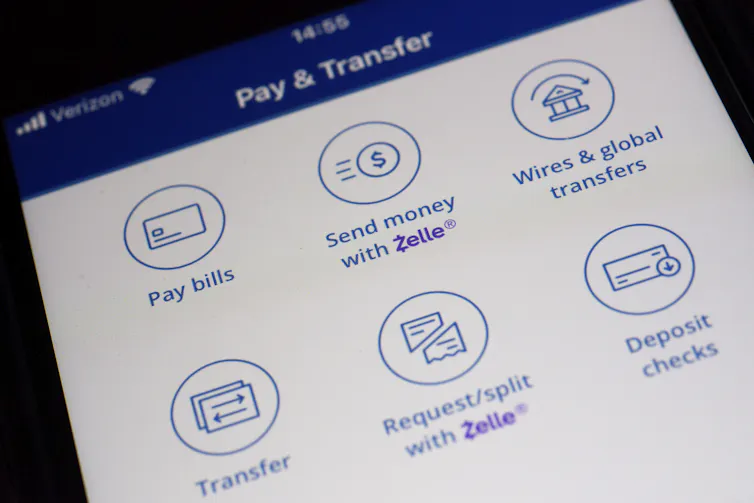
A Zelle payments app displays different options for mobile banking on a smart phone.
The payment platform Zelle has become a favorite tool for scammers because stolen money is so hard to retrieve. AP Photo/Patrick Sison

The U.K. has taken a different path. Since late 2024, U.K. banks have been required to reimburse most scam victims up to £85,000, roughly $115,000, with the cost split between the sending and receiving institutions. The logic is that banks are best equipped to fight fraud, since they run security teams and networkwide analytics that can spot suspicious patterns across millions of transactions. What they had lacked was a strong financial reason to deploy them fully, and the reimbursement rule supplied it.

The regulator’s own dashboard shows that 88% of the money lost to eligible scams has been returned to victims since the rules took effect. More telling: An independent evaluation found that scam losses fell by roughly a fifth in the rule’s first year. That shows that when banks bear the losses, they find ways to prevent them.

I believe American regulators and Congress should study that model closely. When payments are instant and irreversible, the risk cannot rest almost entirely on the customer, who is the least-equipped party in the chain.

Pawan Jain, Associate Professor of Finance, University of Michigan Flint

This article is republished from The Conversation under a Creative Commons license. Read the original article.

ooOOoo

The advice is excellent.

A reminder of the tips explained above: Check by calling back., Trust and verify., Add layers of protection., Banking protections,. Protect older people.

They are excellent tips.

And I need to learn this advice and take action, not just republish it and forget it!
American academic research

How has the administration affected science funding.

Long been the envy of the world, recent events have affected big changes. In this article published by The Conversation the changes are explored.

ooOOoo

Self‑censorship, more stress, tougher recruiting – we asked US researchers how the Trump administration’s science policies have affected them

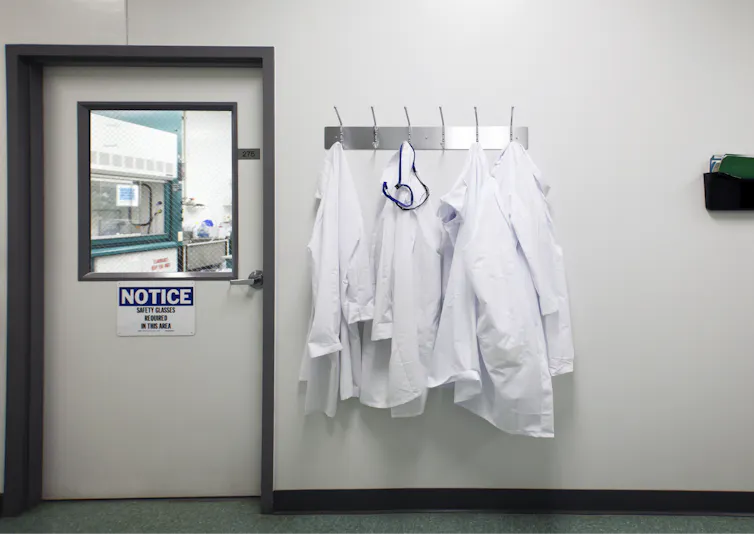
Lab coats on hooks outside a closed door to a lab
93% of surveyed researchers have negative opinions of federal science policies since January 2025. Cavan Images via Getty Images

Eric Welch, Arizona State University and Timothy P. Johnson, University of Illinois Chicago

The American academic research engine has long been the envy of the world. Generally well-funded, labs in the United States have been able to attract the best minds who generate breakthroughs and train the next generation workforce that powers the U.S. economy. But since the start of the second Trump administration in January 2025, new federal policies have destabilized the American scientific enterprise.

The disruption generated by the Trump administration’s funding, DEI and visa policies has been well reported by the media. On an individual level, though, what do academic researchers think of all these changes and how have they been directly affected?

We are researchers affiliated with Arizona State University’s scientist opinion panel survey, known as SciOPS, a 5-year research program designed to monitor, understand and improve how scientists communicate with the public. We wanted to know more about the reality inside today’s universities as researchers grapple with Trump administration policies.

Along with our colleagues, we fielded a survey of randomly sampled members of the academic science community participating in the SciOPS panel. We obtained responses from 280 scientists from several fields, including biology, chemistry, civil and environmental engineering, computer and information science engineering, geography and public health from 131 universities.

Our results show dramatic, mostly negative, effects of federal policy changes on researchers, the research system and American competitiveness.

How research in US universities has changed

Any research enterprise thrives because of its ability to fund cutting-edge science and thus attract highly motivated, well-trained people. Since the second Trump administration took office in January 2025, just over half of the scientists in our survey report that their overall funding has declined.

Declines in federal funding have had knock-on effects. Around one-quarter of scientists reported that state and local and university internal funding have also declined. Another 9% reported that internal funding has increased, presumably as universities have provided emergency funds to researchers to support critical studies.

According to the scientists who responded to our survey, Trump administration policies have also affected the scientific workforce pipeline, hampering their ability to recruit internationally and domestically.

We hypothesize that these hiring issues can be related to visa and immigration policies, which make it difficult for international graduate students and postdocs to work in the U.S. or attend international conferences. Just over half of scientists in our survey reported that international students or postdocs have expressed concerns to them about deportation.

Concerns about longer-term career impacts are also to blame for trouble recruiting the next generation of researchers. Over 80% of surveyed scientists reported that graduate students or postdocs on their research team have increased concerns about future job prospects.

These impacts have taken a toll on scientists’ professional work environment and overall outlook. Over two-thirds reported more work-related stress and almost half reported increased workloads since January 2025. About half reported decreased work motivation.

How are scientists and engineers reacting?

We found scientists’ responses to be a mixture of resilience, acquiescence and considering an exit.

While many scientists said they were less motivated at work, most reported no change in their efforts to obtain federal research funding. Small proportions did report successfully increasing their efforts to obtain funding from non-federal sources.

Our survey also asked scientists whether they had taken any self-censoring actions since January 2025 due to concern over potential negative consequences for their work or career. Over half reported having reviewed or adjusted key words in research proposals, and almost half said they’d reframed research topics. Forty-three percent had also cautioned students or collaborators to be careful what they say publicly and more than a third had abandoned plans on one or more research topics.

Although scientists are adopting strategies to cope with the new challenges, nearly two-thirds of the scientists in our sample appear to be considering one or more other career options.

Scientists look to the long term

Scientists and engineers in our sample have strong opinions about the impacts of current U.S. science policy. A large majority (87%) believe the administration’s actions have influenced research priorities more than previous administrations. Most scientists in our survey had a negative opinion of the Trump administration’s overall changes to science policy.

Scientists in our sample believed that administration policies have had a negative effect on the future scientific workforce and the ability of scientists and engineers in the U.S. to produce breakthroughs and discoveries and contribute to national welfare.

Large majorities believe these policies have harmed public perceptions of the integrity of U.S. scientists (85%) and hurt public trust in science (84%).

Academic scientists’ reactions to the Trump administration’s changes to science policy are perhaps not surprising given the perceived level of threat these actions represent to the research community. What is less certain is whether the dramatic changes we are currently witnessing – cuts to grant funding, politicization of research, downsizing of federal agencies, restrictive immigration policies, attacks on the autonomy of higher education and more – are temporary or if they represent the initial phase of a transition to a new research environment with less federal support for American science.

Eric Welch, Professor and Director, Center for Science, Technology & Environmental Policy Studies, Arizona State University and Timothy P. Johnson, Professor Emeritus of Public Administration, University of Illinois Chicago

This article is republished from The Conversation under a Creative Commons license. Read the original article.

ooOOoo

The last paragraph contains the essence of the argument, as in a temporary change or the first phase of an environment with less federal support for science.

Only time will tell!

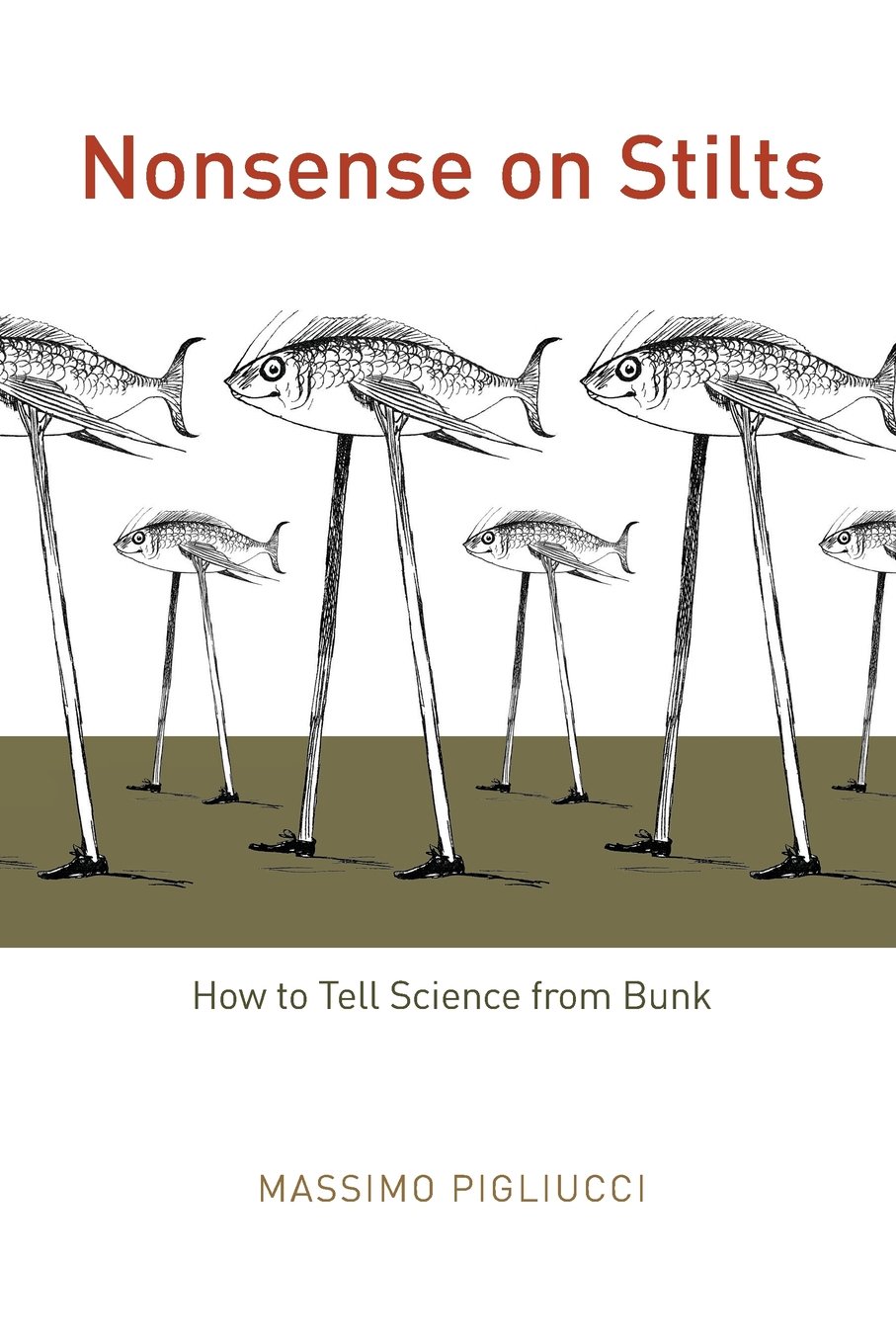
Nonsense on Stilts

The book by Massimo Pigliucci.

The subtitle of the book is “How to Tell Science from Bunk

I am up to page 48 and I read something that is so obvious but had not occured to me before now. I have spoken to friends and they, too, had not realised this.

Namely, that the fact that “…. a variation on the old latitudinal hypothesis ….. explains a major causal factor explaining the rise of more successful civilizations in Euroasia, say, than in sub-Saharan Africa or on the American continent, is that Euroasia expands along an East-West axis.

This East-West expansion provides greater opportunity for the invention of agriculture and the domestication of, say, the horse. Simply because feed crops are easier to grow owing to the smaller change in weather patterns. Unlike, the North-South expansion, where there is the problem of having to adjust to different weather towards the North or towards the South.

Here is the book from Amazon.

Version 1.0.0

It is a very interesting book.

Starting Your Own Pet Boarding and Daycare Business: A Complete Guide

Once again, Penny supplies a guest post.

I love what Penny writes, and here is another of her guest posts.

ooOOoo

For new pet boarding owners and first-time pet care entrepreneurship hopefuls, a pet daycare business startup can feel like the perfect way to turn a love of animals into steady, local work. The real tension is that caring for pets professionally means balancing joy with responsibility, and getting clear on what families in the local pet service market actually need. Community pet care needs can look very different from one neighborhood to the next, and the wrong assumptions can lead to stress for pets, disappointed clients, and a business that never finds its footing. With the right foundation, a caring idea can become a service people trust.

Understanding What Builds Trust in Pet Care

At its core, a successful boarding and daycare business is a promise: safe care, clear routines, and honest communication. A pet boarding services overview clarifies what you offer, while daycare facility requirements spell out what your space must support, from safe separation to clean airflow. Animal welfare standards set the non-negotiables that protect pets and guide daily decisions.

This matters because families are not buying a kennel run, they are buying peace of mind. With 94 million U.S. households now own a pet, trust is what turns first-time clients into regulars. Clear standards also reduce incidents, staff burnout, and stressful handoffs. Think of it like a child daycare check-in. Parents relax when the rules are consistent, the facility feels secure, and safety steps are visible. Pet parents respond the same way when your policies and setup match your care claims.

Build Business Skills That Make Your Pet Care Idea Profitable

When you understand what earns trust, the next step is building the business know-how that helps more local pet parents find you, and stick with you. If you want a more structured way to sharpen your planning and promotion skills, going back to school for a business degree can be a practical move while you develop your pet boarding or daycare idea. Whether you earn a degree in marketing, business, communications, or management, you can learn skills that can help your business thrive. 

And because online degree programs are designed for flexibility, it can be easier to run your business while going to school at the same time. If you’d like to explore a guided option, you can look into an accredited online business program while you keep moving your plans forward. With your skills and support lined up, you’re ready to follow a step-by-step launch plan to bring your pet care business to life in your community.

From Idea to Opening Day: Your Launch Checklist

This quick launch path helps you cover the unglamorous essentials (legal, safety, staffing, marketing, and money) so you can open with confidence and avoid costly do-overs.

  1. Confirm your services and business setup
    Start by choosing your exact offer: daycare only, overnight boarding, add-ons (baths, pickups), and your ideal pet size and temperament. Then pick a simple business structure and name, and open a separate business bank account so your income and expenses stay easy to track.
  2. Handle licensing and basic policies early
    Call your city or county to ask what approvals apply to animal care businesses, including zoning, permits, and any inspections that affect where you can operate. Write plain-language policies now (hours, drop-off rules, behavior standards, vaccination requirements) so every customer gets the same expectations.
  3. Set up a safe, low-stress facility flow
    Design your space around safety and calm: separate areas for small and large dogs, clear entry and exit paths, secure gates, and easy-to-clean surfaces. Build your care routine around pet comfort too, since a consistent diet can reduce tummy troubles and help pets settle faster.
  4. Hire, train, and schedule for reliability
    Start small with dependable coverage for peak times, then add staff as demand grows. Train everyone on handling basics (leash control, safe group play, cleaning routines, incident reporting), and use checklists so care stays consistent even on busy days.
  5. Create a simple budget and local marketing plan
    List your monthly must-pays (rent, utilities, payroll, cleaning supplies, software) and one-time setup costs (build-out, crates, fencing, signage), then set pricing to cover those with room for slow weeks. Promote locally with a polished Google Business Profile, partnerships with vets and groomers, and a “first visit” offer that encourages trial bookings.

Pet Boarding and Daycare Questions, Answered

Q: What insurance do I actually need to open?
A: Start with general liability and animal bailee or care, custody, and control coverage for injuries, escapes, or property damage. Many owners also add workers’ comp if they hire staff and commercial auto if they offer pickups. Ask a broker for a pet-care specific quote and confirm exclusions in writing.

Q: How strict should my vaccination and health policy be?
A: Clear rules protect pets, your staff, and your reputation. Require proof of core vaccines, parasite prevention, and a symptom-free check at drop-off, plus a plan for isolating cough, vomiting, or diarrhea. Put your policy in plain language and enforce it consistently.

Q: What should I do if a pet gets sick or injured on my watch?
A: Get written owner permission for emergency care, a preferred vet, and a spending limit before the first stay. Train staff to document symptoms, call the owner fast, and transport safely if needed. Keep a stocked first-aid kit and a simple incident report form.

Q: How do I set prices without guessing?
A: A pricing strategy helps you set prices based on costs, demand, and the add-ons you offer. Calculate your true daily cost per pet, then compare local competitors and adjust for your hours, staffing ratio, and facility quality. Test packages and a small peak-day surcharge instead of constant price changes.

Q: What regulations tend to surprise new owners?
A: Zoning, noise rules, waste disposal, fire safety, and occupancy limits can affect your layout and capacity. Call your city or county early and ask what permits, inspections, and signage rules apply to animal care businesses. Getting clarity up front prevents expensive remodels later.

Turning Pet Care Passion Into a Reliable Local Business

Starting a pet boarding and daycare business can feel like balancing big heart with real-world rules, costs, and what-ifs. The steadier path is a simple mindset: build trust through clear standards, thoughtful planning, and consistent care, then improve one decision at a time as you grow. When that approach guides the launch, entrepreneurial motivation turns into confidence, startup challenges become manageable checkpoints, and long-term business growth starts to look realistic. A successful pet care business is built on clear policies, calm systems, and genuine care.

ooOOoo

As an ex-entrepreneur, a very ‘ex’ by the way, I can support that last sentence. As well as the three items of a successful business, I would add that, above all, there has to be an identified need for the business, and it helps enormously if the person, starting the pet business, is a salesperson.

Because the key role of a salesperson is to listen: to your potential customers, to whosoever will be your competitors, and through discussion with key people in your line of business.

The unacceptable side of technology

The right to repair one’s own technology products is under attack.

I hadn’t really thought of this before now. I am speaking of an article last Friday that was published by The Conversation.

A large part of me is very open to the ways that technology is helping me. I presume that I am far from being alone.

Here is that article that questions the way things are.

ooOOoo

Today’s bans on DIY repairs of everything from cell phones to tractors grew out of Hollywood’s fear of videotaping

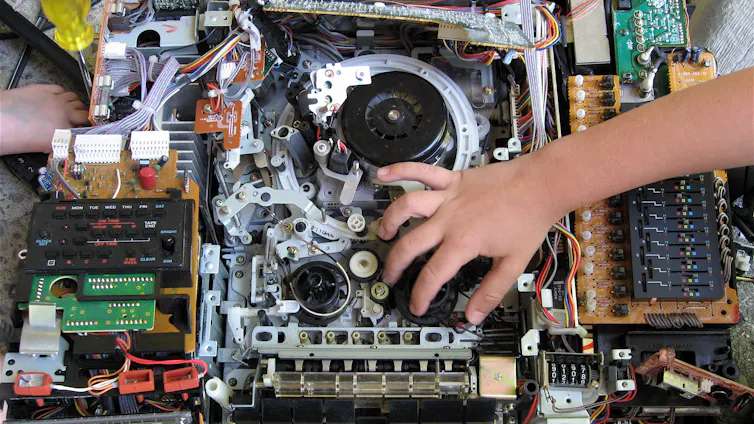
Betamax video recorders like this one helped set off a chain of events leading to bans on repairing your own devices. Steve Jurvetson/Wikimedia Commons, CC BY

Oana Godeanu-Kenworthy, Miami University

If you have ever tried to repair something, realized that it was beyond your financial or technical means, and ended up buying a new one, you are not alone. Repairing electronics and household appliances has not been a real option in the United States for decades now, particularly for items that have proprietary software in them.

Absurd situations have proliferated. It can cost about the same to buy a new printer as it does to replace the ink cartridge. The U.S. Department of Defense cannot repair the weapons systems it purchases because the intellectual property rights remain with the manufacturer. John Deere, the farming equipment company, doesn’t allow farmers to access the software needed to repair their own combines and tractors because, while the purchase covers the physical machinery, it does not cover the software.

One consequence, in addition to cost and frustration for consumers, is environmental harm. The U.S. is the world’s second producer of electronic waste after China, to the tune of about 43 lbs (19.5 kg) of electronic waste annually per person. Only 25% of this e-waste is recycled.

The right-to-repair movement emerged in response, calling for people to be able to repair what they purchase, or have third parties do the repair work, without unnecessary financial, legal or technical barriers. Right to repair seems to be a rare area of bipartisanship in Congress. The Warrior Right to Repair Act – introduced in 2025 by a Democrat – and the Repair Act – introduced by a Republican – are two ongoing legislative initiatives to create a federal legal framework that would make it easy and cheap for American users to repair their devices. Both bills are fiercely opposed by industry groups.

As a scholar of American culture, I found through my research that the origins of the legal and technical obstacles to product repairs lie in debates in the 1980s over new media and copyright guardrails.

Hollywood and VCRs

The rapid rise and popularity of video cassette recorders, or VCRs, in the late 1970s transformed films and TV shows from transient experiences into tangible consumer goods. As I show in my book, “Videotape,” despite the potential for extra revenue, Hollywood was alarmed by the fact that users were now able to copy films on videotape, and tried to stop the technology. Today’s repair bans are part of that story.

The first U.S. copyright provisions were embedded in the 1790 Constitution. Over time, the law was amended to include new technologies, but at the core of future legal arrangements remained the initial intent: to protect the financial rights of creators while giving enough access to information for society as a whole to progress.

Until the second half of the 20th century, the American doctrine of fair use, which allows the unlicensed use of protected works under specific conditions, allowed judges to prevent copyright law from negatively affecting public interest. Organizations such as public libraries, book clubs, universities and news organizations benefited from this legal approach. The concept was codified into American law in the Copyright Act of 1976.

When the film studios took Sony to court to stop the production and sale of video recorders in 1976, they argued that Sony’s product encouraged copyright infringement. But the U.S. Supreme Court ruled in 1984 that taping TV content for personal use did not violate copyright law, expanding the understanding of fair use.

The industry then focused on finding a technological solution to the piracy problem and on securing stricter legal protections for its products.

They identified the digital versatile disc, or DVD, as a safer alternative to the VHS tape. Initially, the DVD was a read-only format. It took a few more years of engineering before affordable recording was possible. Even then, the process was far more complicated for users than videotape recording. In 1997, barely one year after the video disc was launched, all of the Motion Picture Association of America member studios joined the DVD Forum, collectively adopted the new format and started to phase out films released on videotape. https://www.youtube.com/embed/46RDkiy5h3U?wmode=transparent&start=0 Manufacturers use several tactics to block consumers and third-party repair shops from fixing their products.

Copyright and virtual locks

Then came digital rights management. Collectively, the term refers to the battery of technological tools that the industry developed in order to control user access to content. These include encryption software and various forms of authentication or enforcement software that limit which types of digital activities users can perform. For instance, some mechanisms block the option to download or share a digital file.

The Digital Millennium Copyright Act, or DMCA, signed into law by President Bill Clinton in 1998, provided the broad legal framework that allowed these technological locks to expand far beyond entertainment, including to software. The Digital Millennium Copyright Act reflected a new alignment in interests between the entertainment and software industries. It increased existing penalties for copyright infringement online and criminalized any technology used to bypass technological locks. The law was adopted although at the time – and since then – critics warned that it could stifle innovation and increase costs for consumers.

Since 1998, more and more consumer products, from toys to dishwashers, use microchips and proprietary software protected by copyright. Because of the Digital Millennium Copyright Act, third party repairers cannot alter or bypass the proprietary software. If they did so, they would be liable for infringing the manufacturer’s intellectual property rights, as is the case for John Deere farm equipment. Some electronics are even designed to make tampering with the product impossible.

Manufacturers maintain that only they or authorized personnel can and should repair their products. These repairs are often quite costly. When getting a product repaired becomes almost as expensive as buying a new one, many consumers will choose to buy and throw repairable items away.

Rising resentment over repair bans

Technology tends to outpace existing legal arrangements. With over 80% of Americans supporting the right to repair, it remains to be seen when or if American law will catch up with the unexpected consequences of a law meant to protect the intellectual rights of the creative industries, but which is now hurting consumers’ pocket books.

Oana Godeanu-Kenworthy, Teaching Professor of American Studies, Miami University

This article is republished from The Conversation under a Creative Commons license. Read the original article.

ooOOoo

The end of that article points out that more than 80% of Americans support the right to repair and, I guess, that support extends far beyond the USA.

Indeed, a quick online search found that in the UK an organisation, Restart, had a website on the subject. Here is a little of what they said;

The last few years have been really exciting for the Right to Repair in many countries outside the UK. Around the world we’ve seen people get access to more repairable and longer lasting products, cheaper repair options and better information about product repairability. As a result, repair is helping tackle climate change, reduce waste, lower living costs, support communities and create green skilled jobs in more places than ever.

Then another search found out that the Eurpoean Commission had a Right to repair law in place. It was introduced in 2024. Here’s how it starts:

“The new rules reinforce the right to repair, aim to reduce waste and bolster the repair sector by making it easier and more cost-effective to repair goods.

So, hopefully, Oana, the teaching professor at Miami University, can establish a new law that will give American consumers the right to replair their technology belongings.

The ‘Free’ Trial

As you are seeing on the Web.

This article from The Conversation really resonated with me. For as the online world is advancing, so too is the darker side of the Web.

Here is that article.

ooOOoo

Dark patterns on the web are designed to manipulate you – why aren’t they all illegal?

Website designs that try to change your behavior cross a line when they outright deceive. Fizkes/iStock via Getty Images

Gregory M. Dickinson, University of Nebraska-Lincoln; Institute for Humane Studies

You open a free app to do one simple thing. Before you even start, a full-screen message asks whether you want to try the paid version. The “Start free trial” button is large, bright and hard to miss. The option to keep using the free version is smaller, buried at the bottom. The same prompt appears again tomorrow. And the day after that.

A lot of people look at screens like that and think, “Surely this has to be illegal.” We even have a name for them, “dark patterns.” They feel pushy. They waste time. They seem designed to wear you down. But in most cases, they are perfectly lawful.

“Dark pattern” is not a legal term with a clear boundary. It is a broad label for digital designs that nudge, pressure, confuse or trap users. As a legal scholar who studies consumer protection and digital design, I think the most important thing for readers to understand is that the label “dark pattern” covers a broad spectrum.

Some of that spectrum is just annoying. Some of it is aggressive salesmanship. And some of it crosses the line into deception or coercion. Federal and state consumer protection laws are mostly aimed at that last category. They do not ban every design choice people dislike, only those that trick or coerce.

Annoying isn’t illegal

smartphone screenshot of images of a well-dressed young man
The ‘X’ in the upper right corner of this ad, for users to click to dismiss the ad, appears after the ad has been displayed for a moment. The ad also has an ‘X’ in the upper left corner, which is part of the image in the ad. Some users might click the ‘X’ on the left to dismiss the ad but instead be sent to the ad’s website. Possibly annoying but not illegal. Screen capture by Gregory Dickinson

That reality may sound unsatisfying, but it is not unusual. Offline life is full of things that are irritating but not unlawful. Think of the cashier who asks whether you want to sign up for the store credit card, then points out the discount you are turning down, then asks again. Most people know exactly what is happening. They roll their eyes, say no and try to shop somewhere else next time.

The same is true online. A repeated pop-up can be obnoxious. A guilt-inducing button can be tacky. But consumers recognize ordinary annoyance for what it is. In many cases, the market answer is simple: Close the app, ignore the pitch or take your business elsewhere.

Similarly, law does not ban persuasive sales pitches just because they are effective. A car salesperson who keeps steering you toward the upgraded model is trying to influence your choice. So is the airline clerk who offers travel insurance. So is the restaurant server who asks whether you want dessert. Salesmanship is nothing new. Digital design often borrows from familiar techniques.

That helps explain why lawmakers cannot simply outlaw “manipulation.” And so many interfaces are built to persuade, openly and lawfully.

What crosses the line

What the federal FTC Act and analogous state consumer-deception statutes usually care about is not whether a design is annoying. They focus on whether the design is likely to mislead a reasonable consumer. That is the core idea in modern consumer protection law.

So a design is likelier to be unlawful when it hides key facts, makes an optional choice look mandatory or tricks people about the effect of the button they are pressing. A fake countdown timer, a disguised ad, a misleading one-click purchase button or a cancellation path that looks finished when it is not are all different from ordinary hard selling. Those designs do not just pressure users; they can deceive them.

That is also why the app maker’s intent is not always the key question. In many consumer protection cases, a company does not get a free pass just because no one said, “Let’s trick people.” The legal question is often about effect: What would a reasonable user likely understand from this screen?

Research on dark patterns reinforces that concern. Even relatively mild designs can push people into choices they would not otherwise make. And regulators have increasingly focused on subscription flows, hidden fees and cancellation obstacles for exactly that reason.

image of a website form with a pop-up box in front of it
The instructions for this web form and the pop-up box that appears when users click ‘Continue’ indicate that the form has required fields. The form uses the word ‘mandatory,’ which could lead some users to believe that the form itself is required in order to continue when it is instead optional. Possibly annoying but not illegal. Screen capture by Gregory Dickinson

Why it feels like dark patterns are everywhere

One reason people might think there are no laws against dark patterns is that they see them so often. But that frequency reflects that the term covers a wide range of conduct, from lawful nagging to outright deception.

It also reflects enforcement limits. Regulators cannot chase every irritating screen on every app and website. They have to prioritize the worst cases. That leaves a lot of borderline conduct in the wild, which makes the whole problem feel bigger and murkier to ordinary users.

So when people ask why there is not a law against dark patterns, the best answer is that there already is, but the law does not prohibit every annoying or high-pressure design. It targets lies, misleading cues and coercive obstacles.

That line can be fuzzy. But the fuzziness is not a mistake. It is what you get when the law tries to separate persuasion from deception in a world full of both.

Gregory M. Dickinson, Assistant Professor of Law, University of Nebraska-Lincoln; Institute for Humane Studies

This article is republished from The Conversation under a Creative Commons license. Read the original article.

ooOOoo

Gregory Dickinson does us a real service. Especially when the intention is to pass on blatant mistruths.

So many people get sucked into these dark patterns. The legality of these dark matters needs to be re-examined.

Starting your own business

And even better if it involves dogs.

Another wonderful article from Penny Martin.

Years ago I started my own business back in England. It was wonderful. It was very different to what I expected. It was exciting, and tiring. In the main, I worked seven days a week!

ooOOoo

How to Start a Successful Pet Treat Bakery Inspired by Your Dog

For beginner dog owners who feel calmer, more connected, and more themselves around their pups, the idea of launching a pet bakery can feel both exciting and out of reach. The tension is real: canine-inspired business ideas spark hope, but uncertainty about what’s “safe,” what’s realistic, and what dogs truly need can stop dog owner entrepreneurship before it starts. A pet treat bakery business can be more than a hobby when it’s built with care, clarity, and respect for the animals it serves. With the right mindset, launching a pet bakery becomes a grounded next step.

Quick Summary: Starting a Pet Treat Bakery

  • Start by researching the pet treat market to confirm demand and spot clear customer needs.
  • Start by building a simple business plan that maps products, pricing, and day to day operations.
  • Start by focusing on essential launch strategies that keep your bakery realistic and manageable.
  • Start by choosing funding options that fit your budget and help you grow steadily.

Build the Business Backbone: Budgeting, Leadership, and Management

Going back to school for a business degree can help you sharpen the fundamentals behind budgeting, leading, and managing day-to-day decisions, so your big-hearted dog treat dream has a sturdy backbone. A business degree can also teach practical skills in accounting, business, communications, or management that translate directly into running any small operation. And because online degree programs are designed for flexibility, it’s often easier to keep working full-time while staying on top of your studies. When you’re ready to explore options, learn more about accredited online business bachelor’s programs.

With that groundwork in place, you’ll be ready to walk through the step-by-step process of opening your pet treat bakery.

From Recipe Idea to First Pet Treat Sale

With that groundwork in place, here’s your path to action.

This process helps you turn your dog-inspired treat idea into a real, legal, sellable product. It matters because dogs model integrity so well: they are consistent, they listen for feedback, and they earn trust one small choice at a time, which is exactly how a good bakery is built.

  1. Step 1: Develop one “signature” recipe and test it
    Start with a simple base recipe using dog-safe ingredients, then make small, trackable changes one variable at a time (texture, size, bake time). Share samples with a few trusted dog-owner friends and ask for honest notes about smell, crumbiness, and how dogs react. Keep a mini “treat journal” so your results are repeatable, like your dog’s steady routines.
  2. Step 2: Choose your selling setup and confirm licensing
    Decide where you will produce treats (home kitchen, shared commercial kitchen, or a rented space) because that choice affects permits, inspections, and packaging rules. Write down your product list and how you plan to sell (online, markets, local shops), then call your city or county office to ask what you must file before you accept money. Build integrity early by doing this before you print labels or buy bulk supplies.
  3. Step 3: Source suppliers and price your treats clearly
    List your must-have ingredients and packaging, then get quotes from at least two vendors for each so you can compare quality, minimums, and delivery times. Set a price that covers ingredients, packaging, test batches, and your time, not just the flour and peanut butter. 
  4. Step 4: Build a brand that reflects your values
    Pick a bakery name, a short promise (for example, “simple ingredients, honest sourcing”), and 2 to 3 product names that are easy to remember. Create labels that match what you actually do, not what sounds impressive, and write a short origin story about what your dog taught you about consistency and care. Trust grows when your branding and your behavior line up.
  5. Step 5: Market, take pre-orders, and make your first sale
    Start small with a weekly batch schedule, a simple order form, and a clear pickup or shipping plan. Post behind-the-scenes photos of testing days, ingredient prep, and your dog “quality control,” and invite early customers to review honestly. 

Small, consistent steps earn loyal customers, just like your dog earns trust every day.

Pet Treat Bakery Questions Dog Owners Ask Most

Q: What rules do I need to follow before selling dog treats?
A: Start by calling your local business licensing office and your state agriculture or feed control agency to ask how pet treats are classified where you live. Requirements often include a business license, approved production space, labeling rules, and possible registration. Keep a simple compliance checklist and treat it like your dog’s “house rules”: clear, consistent, and non-negotiable.

Q: How do I keep my treats food-safe if I’m baking in small batches?
A: Write down a basic safety plan: clean and sanitize surfaces, separate allergens, date every batch, and store ingredients in sealed containers. Use a batch log so you can trace what went into each run if a customer has a concern. When in doubt, simplify ingredients and processes until you can do them the same way every time.

Q: Can I say my treats help with anxiety, allergies, or joint health?
A: Be careful with health claims because they can trigger stricter oversight and customer distrust. Stick to truthful, verifiable statements like ingredients, sourcing, and texture benefits, and encourage pet parents to consult their veterinarian for medical needs. Integrity in marketing protects both dogs and your business.

Q: How do I find my first customers without feeling salesy?
A: Lead with service: offer a small sampler box to a few dog-owning communities and ask for specific feedback and referrals. Share your story, your standards, and your consistency, because trust sells better than hype

Q: What’s the biggest risk that makes new pet treat bakeries stall out?
A: One common trap is making a “great” product that nobody buys. Reduce that risk by taking pre-orders, validating pricing early, and tracking repeat purchases instead of likes. Let your dog’s honesty guide you: listen to real behavior, not wishful thinking.

Keep it simple, stay truthful, and let trust grow one good batch at a time.

Turning Dog-Led Treat Ideas Into a Trustworthy Bakery Brand

Starting a pet treat bakery can feel like a tug-of-war between big dreams and the real-world rules that keep pets safe and customers confident. The path that holds up is entrepreneurial motivation guided by integrity in business, making careful choices, staying consistent, and letting care lead every decision. When that mindset becomes the foundation, long-term business success looks less like luck and more like steady trust, repeat orders, and word-of-mouth that grows through community engagement.

Build trust first, and the bakery grows from there. You can take one next step today by starting a simple conversation, ask a local pet group what they look for in treats and listen closely. That kind of care creates resilience, connection, and a healthier, steadier business life for inspiring pet bakery founders.

ooOOoo

Thank you, Penny, for another great article. As an ex-salesman of office software, running my own business, I can vouch for trust in yourself, your company, and, especially, keeping the customer happy, being the most important qualities.

As the say goes: “The customer is always right.”

A clean chimney

What a difference it has made!

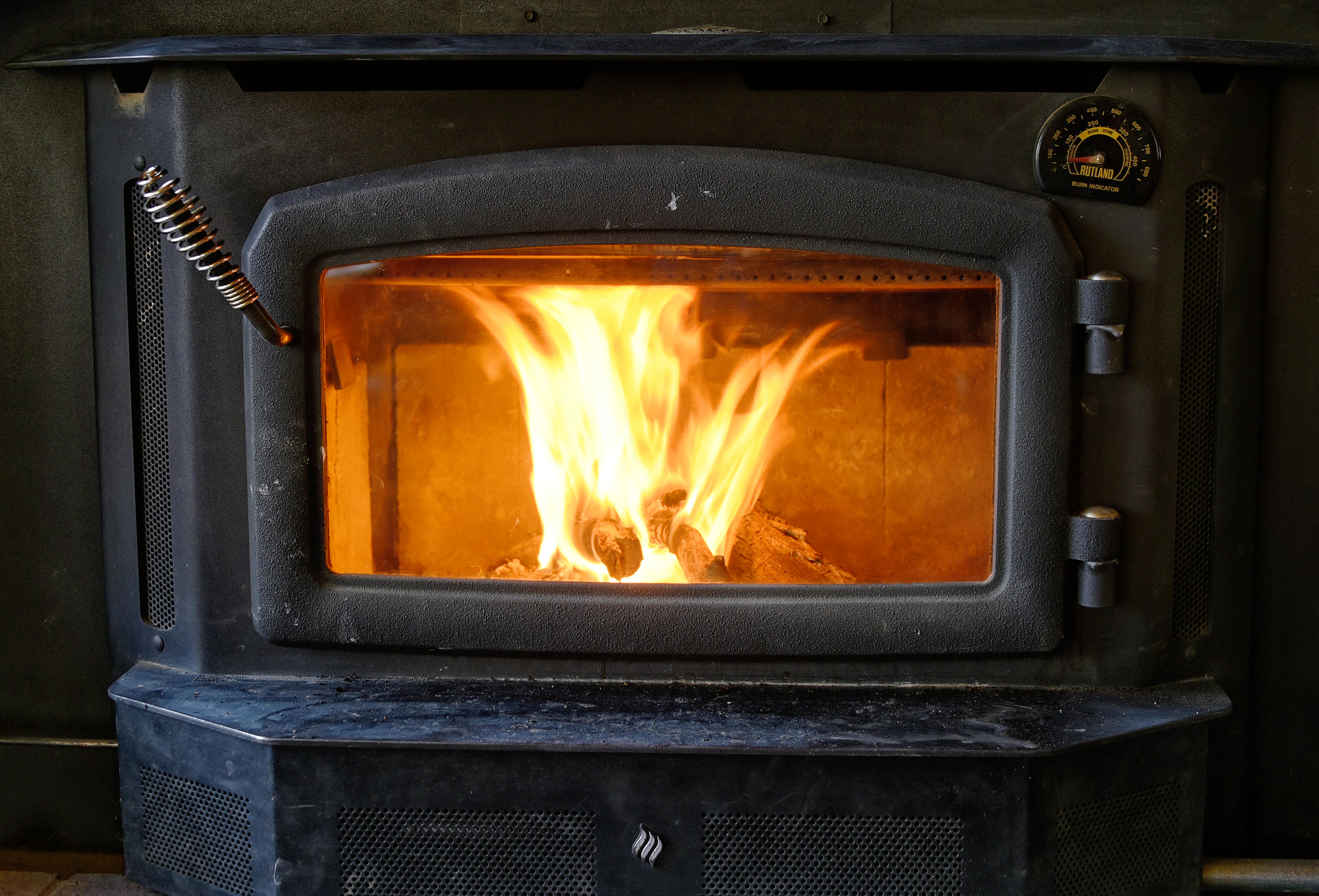
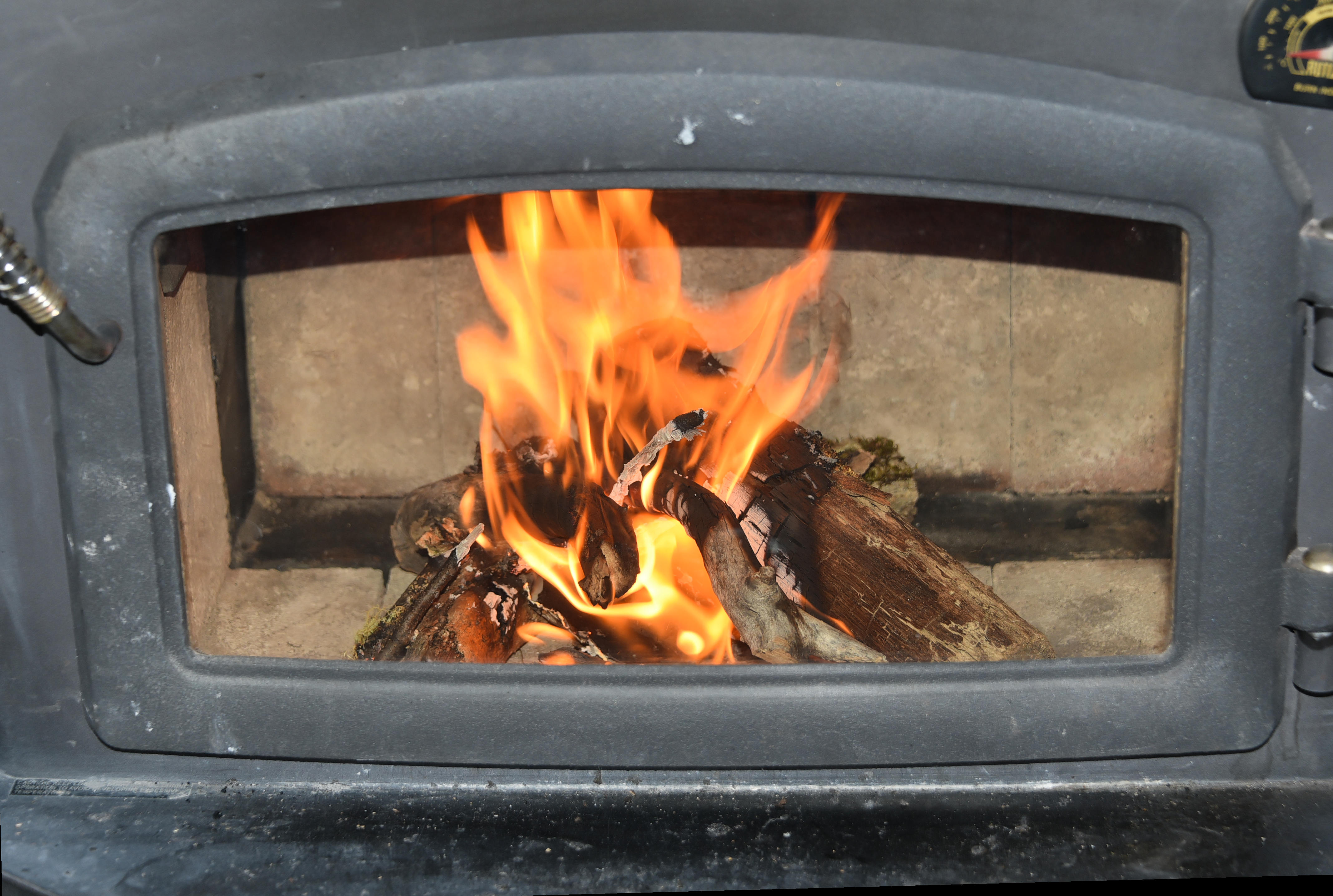
Last Wednesday, Smokey’s Stoves in Grants Pass, came to the house to clean the chimney, and the fire, in our lounge.

I had not realised how much soot and ‘muck’ had accumulated.

According to one of two gentlemen that came, the top of the metal chimney where is exits the roof was so clogged up there was only a small space, about an inch in diameter, left. There was over a huge bucketful of ash taken from the fireplace.

In the afternoon we lit a fire and basked in the heat, and the brilliance of a clean fireplace.

oooo

Well done, Smokey’s Stoves.

The downside of technology

A recent article in The Conversation prompted today’s post.

More and more I get concerned at some of the ways we are going.

ooOOoo

Deepfakes leveled up in 2025 – here’s what’s coming next

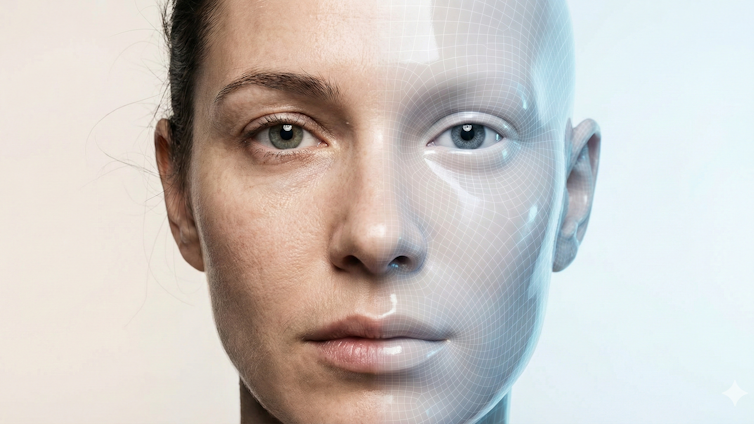
AI image and video generators now produce fully lifelike content. AI-generated image by Siwei Lyu using Google Gemini 3

Siwei Lyu, University at Buffalo

Over the course of 2025, deepfakes improved dramatically. AI-generated faces, voices and full-body performances that mimic real people increased in quality far beyond what even many experts expected would be the case just a few years ago. They were also increasingly used to deceive people.

For many everyday scenarios — especially low-resolution video calls and media shared on social media platforms — their realism is now high enough to reliably fool nonexpert viewers. In practical terms, synthetic media have become indistinguishable from authentic recordings for ordinary people and, in some cases, even for institutions.

And this surge is not limited to quality. The volume of deepfakes has grown explosively: Cybersecurity firm DeepStrike estimates an increase from roughly 500,000 online deepfakes in 2023 to about 8 million in 2025, with annual growth nearing 900%.

I’m a computer scientist who researches deepfakes and other synthetic media. From my vantage point, I see that the situation is likely to get worse in 2026 as deepfakes become synthetic performers capable of reacting to people in real time.

Dramatic improvements

Several technical shifts underlie this dramatic escalation. First, video realism made a significant leap thanks to video generation models designed specifically to maintain temporal consistency. These models produce videos that have coherent motion, consistent identities of the people portrayed, and content that makes sense from one frame to the next. The models disentangle the information related to representing a person’s identity from the information about motion so that the same motion can be mapped to different identities, or the same identity can have multiple types of motions.

These models produce stable, coherent faces without the flicker, warping or structural distortions around the eyes and jawline that once served as reliable forensic evidence of deepfakes.

Second, voice cloning has crossed what I would call the “indistinguishable threshold.” A few seconds of audio now suffice to generate a convincing clone – complete with natural intonation, rhythm, emphasis, emotion, pauses and breathing noise. This capability is already fueling large-scale fraud. Some major retailers report receiving over 1,000 AI-generated scam calls per day. The perceptual tells that once gave away synthetic voices have largely disappeared.

Third, consumer tools have pushed the technical barrier almost to zero. Upgrades from OpenAI’s Sora 2 and Google’s Veo 3 and a wave of startups mean that anyone can describe an idea, let a large language model such as OpenAI’s ChatGPT or Google’s Gemini draft a script, and generate polished audio-visual media in minutes. AI agents can automate the entire process. The capacity to generate coherent, storyline-driven deepfakes at a large scale has effectively been democratized.

This combination of surging quantity and personas that are nearly indistinguishable from real humans creates serious challenges for detecting deepfakes, especially in a media environment where people’s attention is fragmented and content moves faster than it can be verified. There has already been real-world harm – from misinformation to targeted harassment and financial scams – enabled by deepfakes that spread before people have a chance to realize what’s happening. https://www.youtube.com/embed/syNN38cu3Vw?wmode=transparent&start=0 AI researcher Hany Farid explains how deepfakes work and how good they’re getting.

The future is real time

Looking forward, the trajectory for next year is clear: Deepfakes are moving toward real-time synthesis that can produce videos that closely resemble the nuances of a human’s appearance, making it easier for them to evade detection systems. The frontier is shifting from static visual realism to temporal and behavioral coherence: models that generate live or near-live content rather than pre-rendered clips.

Identity modeling is converging into unified systems that capture not just how a person looks, but how they move, sound and speak across contexts. The result goes beyond “this resembles person X,” to “this behaves like person X over time.” I expect entire video-call participants to be synthesized in real time; interactive AI-driven actors whose faces, voices and mannerisms adapt instantly to a prompt; and scammers deploying responsive avatars rather than fixed videos.

As these capabilities mature, the perceptual gap between synthetic and authentic human media will continue to narrow. The meaningful line of defense will shift away from human judgment. Instead, it will depend on infrastructure-level protections. These include secure provenance such as media signed cryptographically, and AI content tools that use the Coalition for Content Provenance and Authenticity specifications. It will also depend on multimodal forensic tools such as my lab’s Deepfake-o-Meter.

Simply looking harder at pixels will no longer be adequate.

Siwei Lyu, Professor of Computer Science and Engineering; Director, UB Media Forensic Lab, University at Buffalo

This article is republished from The Conversation under a Creative Commons license. Read the original article.

ooOOoo

I hope with all my heart that lines of defense will rise to the challenge.

Found on Easter Island

Amazing what science can find out.

But while the science is brilliant the social implications are not so good. Read on!

ooOOoo

A billion-dollar drug was found in Easter Island soil – what scientists and companies owe the Indigenous people they studied

The Rapa Nui people are mostly invisible in the origin story of rapamycin. Posnov/Moment via Getty Images

Ted Powers, University of California, Davis

An antibiotic discovered on Easter Island in 1964 sparked a billion-dollar pharmaceutical success story. Yet the history told about this “miracle drug” has completely left out the people and politics that made its discovery possible.

Named after the island’s Indigenous name, Rapa Nui, the drug rapamycin was initially developed as an immunosuppressant to prevent organ transplant rejection and to improve the efficacy of stents to treat coronary artery disease. Its use has since expanded to treat various types of cancer, and researchers are currently exploring its potential to treat diabetes, neurodegenerative diseases and even aging. Indeed, studies raising rapamycin’s promise to extend lifespan or combat age-related diseases seem to be published almost daily. A PubMed search reveals over 59,000 journal articles that mention rapamycin, making it one of the most talked-about drugs in medicine.

Connected hexagonal structures
Chemical structure of rapamycin. Fvasconcellos/Wikimedia Commons

At the heart of rapamycin’s power lies its ability to inhibit a protein called the target of rapamycin kinase, or TOR. This protein acts as a master regulator of cell growth and metabolism. Together with other partner proteins, TOR controls how cells respond to nutrients, stress and environmental signals, thereby influencing major processes such as protein synthesis and immune function. Given its central role in these fundamental cellular activities, it is not surprising that cancer, metabolic disorders and age-related diseases are linked to the malfunction of TOR.

Despite being so ubiquitous in science and medicine, how rapamycin was discovered has remained largely unknown to the public. Many in the field are aware that scientists from the pharmaceutical company Ayerst Research Laboratories isolated the molecule from a soil sample containing the bacterium Streptomyces hydroscopicus in the mid-1970s. What is less well known is that this soil sample was collected as part of a Canadian-led mission to Rapa Nui in 1964, called the Medical Expedition to Easter Island, or METEI.

As a scientist who built my career around the effects of rapamycin on cells, I felt compelled to understand and share the human story underlying its origin. Learning about historian Jacalyn Duffin’s work on METEI completely changed how I and many of my colleagues view our own field.

Unearthing rapamycin’s complex legacy raises important questions about systemic bias in biomedical research and what pharmaceutical companies owe to the Indigenous lands from which they mine their blockbuster discoveries.

History of METEI

The Medical Expedition to Easter Island was the brainchild of a Canadian team comprised of surgeon Stanley Skoryna and bacteriologist Georges Nogrady. Their goal was to study how an isolated population adapted to environmental stress, and they believed the planned construction of an international airport on Easter Island offered a unique opportunity. They presumed that the airport would result in increased outside contact with the island’s population, resulting in changes in their health and wellness.

With funding from the World Health Organization and logistical support from the Royal Canadian Navy, METEI arrived in Rapa Nui in December 1964. Over the course of three months, the team conducted medical examinations on nearly all 1,000 island inhabitants, collecting biological samples and systematically surveying the island’s flora and fauna.

It was as part of these efforts that Nogrady gathered over 200 soil samples, one of which ended up containing the rapamycin-producing Streptomyces strain of bacteria.

It’s important to realize that the expedition’s primary objective was to study the Rapa Nui people as a sort of living laboratory. They encouraged participation through bribery by offering gifts, food and supplies, and through coercion by enlisting a long-serving Franciscan priest on the island to aid in recruitment. While the researchers’ intentions may have been honorable, it is nevertheless an example of scientific colonialism, where a team of white investigators choose to study a group of predominantly nonwhite subjects without their input, resulting in a power imbalance.

There was an inherent bias in the inception of METEI. For one, the researchers assumed the Rapa Nui had been relatively isolated from the rest of the world when there was in fact a long history of interactions with countries outside the island, beginning with reports from the early 1700s through the late 1800s.

METEI also assumed that the Rapa Nui were genetically homogeneous, ignoring the island’s complex history of migration, slavery and disease. For example, the modern population of Rapa Nui are mixed race, from both Polynesian and South American ancestors. The population also included survivors of the African slave trade who were returned to the island and brought with them diseases, including smallpox.

This miscalculation undermined one of METEI’s key research goals: to assess how genetics affect disease risk. While the team published a number of studies describing the different fauna associated with the Rapa Nui, their inability to develop a baseline is likely one reason why there was no follow-up study following the completion of the airport on Easter Island in 1967.

Giving credit where it is due

Omissions in the origin stories of rapamycin reflect common ethical blind spots in how scientific discoveries are remembered.

Georges Nogrady carried soil samples back from Rapa Nui, one of which eventually reached Ayerst Research Laboratories. There, Surendra Sehgal and his team isolated what was named rapamycin, ultimately bringing it to market in the late 1990s as the immunosuppressant Rapamune. While Sehgal’s persistence was key in keeping the project alive through corporate upheavals – going as far as to stash a culture at home – neither Nogrady nor the METEI was ever credited in his landmark publications.

Although rapamycin has generated billions of dollars in revenue, the Rapa Nui people have received no financial benefit to date. This raises questions about Indigenous rights and biopiracy, which is the commercialization of Indigenous knowledge.

Agreements like the United Nations’s 1992 Convention on Biological Diversity and the 2007 Declaration on the Rights of Indigenous Peoples aim to protect Indigenous claims to biological resources by encouraging countries to obtain consent and input from Indigenous people and provide redress for potential harms before starting projects. However, these principles were not in place during METEI’s time.

Close-up headshots of row of people wearing floral headdresses in a dim room
The Rapa Nui have received little to no acknowledgment for their role in the discovery of rapamycin. Esteban Felix/AP Photo

Some argue that because the bacteria that produces rapamycin has since been found in other locations, Easter Island’s soil was not uniquely essential to the drug’s discovery. Moreover, because the islanders did not use rapamycin or even know about its presence on the island, some have countered that it is not a resource that can be “stolen.”

However, the discovery of rapamycin on Rapa Nui set the foundation for all subsequent research and commercialization around the molecule, and this only happened because the people were the subjects of study. Formally recognizing and educating the public about the essential role the Rapa Nui played in the eventual discovery of rapamycin is key to compensating them for their contributions.

In recent years, the broader pharmaceutical industry has begun to recognize the importance of fair compensation for Indigenous contributions. Some companies have pledged to reinvest in communities where valuable natural products are sourced. However, for the Rapa Nui, pharmaceutical companies that have directly profited from rapamycin have not yet made such an acknowledgment.

Ultimately, METEI is a story of both scientific triumph and social ambiguities. While the discovery of rapamycin has transformed medicine, the expedition’s impact on the Rapa Nui people is more complicated. I believe issues of biomedical consent, scientific colonialism and overlooked contributions highlight the need for a more critical examination and awareness of the legacy of breakthrough scientific discoveries.

Ted Powers, Professor of Molecular and Cellular Biology, University of California, Davis

This article is republished from The Conversation under a Creative Commons license. Read the original article.

ooOOoo

Ted Powers explains in the last paragraph: “Ultimately, METEI is a story of both scientific triumph and social ambiguities.” Then goes on to say: “I believe issues of biomedical consent, scientific colonialism and overlooked contributions highlight the need for a more critical examination and awareness of the legacy of breakthrough scientific discoveries.”

If only it was simple!