And I am not speaking of things that go bump in the night!
I switched from being a Microsoft Windows user to a Mac some time ago.
Apple products are not the cheapest by a very long shot but their operating systems are fabulous. So it was natural to follow-up having an iMac by getting myself an iPAD.
Not too many months ago I came across an application for the Apple Mac and iPAD that is called Things. As the website explains:
Things is the award-winning personal task manager that helps you achieve your goals.
This all-new version has been rethought from the ground up: it’s got an all-new design, delightful new interactions, and powerful new features.
I started off getting to know the app on the Mac and very quickly found it so useful and with such a clear and intuitive ‘user interface’ that I downloaded the version for the iPAD.
Here’s the little intro video that is on the Things website (and, please, understand that this review of this app is purely because of my own personal experience and has no connection whatsoever with the firm).
So if you are finding that keeping track of your to-do lists is becoming a bit of a headache and you are a MAC or iOS user, as in Apple MAC, iPad, iPhone or Apple Watch, then I really do recommend taking a closer look. Done so easily by looking at the features in the all-new Things!
Plus, the Things team offer great support!
For as Henry Ford is reputed to have said: “Anyone who stops learning is old, whether at twenty or eighty. Anyone who keeps learning stays young. The greatest thing in life is to keep your mind young.” (Thanks BrainyQuote.)
UPDATE: In the last 72 hours I received a newly-ordered iPhone and Apple Watch. The iPhone has had the Things 3 application installed upon it and, hey presto!, my watch now reminds me of the things coming up; even when the phone is some distance away from where I am. Plus it does tell the time rather accurately!!
Again and again I feel so privileged to be writing this blog!
For so many reasons! But the top reasons are that I feel part of an enormous family of dog lovers and that so frequently I am approached by a person who has valuable information to share with me and you.
Such as it was when back last September in came an email from Zara Lewis.
Hi Paul,
As you probably already know, all the pet stories you are sharing are super interesting and, most importantly, super useful to the entire community of us, pet parents.
Professionally, I am a regular contributor at highstylife.com magazine, while personally I am very interested in pet topics, as I am a proud mom of two + one. I say “+one” because I can hardly separate my foster dog from my children 😀
I have no book to publish, but I was wondering if you are willing to add guest content to your blog. Here you can check my style and previous posts:
Here are some topic suggestions that I believe can be useful for your community:
-Teaching your child responsibility with animals
-The Latest Trends in Pet Care
Looking forward to your response.
Regards from me & furry Joey,
Zara
You will not be surprised to hear me say that I replied to Zara saying that I would be delighted to receive an essay from her.
The weeks slipped by, as they do, but on the 6th March Zara sent the following.
It’s a wonderful essay!
ooOOoo
Dog Allergies 101: What Are the Most Common Ones & What to Do About Them
by Zara Lewis, March 6th, 2018.
Allergies are a very common ailment, so it’s not unusual for your dog to have one. Even though people have the ability to describe the symptoms to the last detail, dogs tend to show different ones, so it’s very important for us to know and recognize them. Unless you have some kind of a super dog breed, your four-legged friend might start developing certain allergies. This mostly happens because their bodies mistakenly believe a certain type of food is bad for them, or they use it too much or too often, so their immune system responds by releasing antibodies that can cause serious problems. Take a look at the most common symptoms and allergens:
What could the symptoms be?
So before starting with the most common allergens, it’s very important to know what the most common symptoms of food allergies in dogs are. So, if you happen to notice that your dog is experiencing one of the following, make sure to get them checked by a vet as it’s very probable they have a certain food allergy:
Itching
Poor fur quality
Nausea
Obsessive Licking
Vomiting
Chronic diarrhoea
Chronic gas
Chronic ear inflammation
What are the most common allergens?
Eggs
It’s a well-known fact that eggs (more specifically egg yolks) are very rich in protein, so your dog can easily become allergic to them. On the positive side, avoiding eggs is not difficult; just make sure to check dog food labels to see if there’s any danger for your four-legged friend. Even though one of the most common symptoms of this type of allergy in your dog is the appearance of bald spots, egg allergy can manifest in other ways as well.
Beef, chicken and lamb
Beef is also known to have high amounts of protein, which means that your dog can become intolerant to this kind of meat as well. This usually happens if you’ve been feeding your dog a certain type of food for a very long time, so your dog becomes intolerant or allergic to that specific food. Due to this reason, beef allergies are very common, as most dog foods contain this type of meat. The same rule applies to chicken as well. Dog foods are most commonly made of beef and chicken, so it would be best to feed your dog with all possible meats – beef, pork, chicken and lamb, and rotate them as much as you can. On the other hand, lamb is very often regarded as a ‘safe haven’ for dogs with meat allergies. However, if you don’t pay attention to rotating your dog’s diet, your dog can also become allergic to lamb.
Grain
Another thing that most types of dog food contain is grains, which means that this is also one of the most common allergens. If you happen to notice itchy and dry skin or hair loss, make sure to check if your dog is allergic to grain. Mind that finding completely grain-free food can be quite tricky, so there might be a chance you have to cook everything by yourself. Luckily, for all those who don’t have the time to do this daily, there are certain products that can help with that, such as the grain-free line of Ivory Coat dog food. Always check your dog – if they’re allergic to grain, the sooner you discover it, the better.
Dairy products
It’s not only people who can be lactose intolerant – dogs can be as well. This means they are not allowed to eat or drink any dairy products, such as cheese or milk. Otherwise, they’ll end up with gas problems, diarrhoea and vomiting. As far as dairy products are concerned, there is one tricky thing you need to pay attention to – a dog can actually develop an allergy towards them, so it’s crucial for you to be able to tell the allergy apart from the intolerance. If you notice itchiness or redness on your dog, make sure to have it checked by the vet as soon as possible. If it’s only diarrhoea or vomiting, it’s probably only intolerance, but a check-up won’t hurt. Soy
There’s an ongoing debate whether soy is good for your dog or not, but it’s definitely true that soy food is very common. Soy can cause many health problems that can be more serious than simple allergies, including reproductive and growth problems, and diseases of the liver. Furthermore, soy is the second most genetically modified crop that is grown, so it would be the most advisable to avoid this product.
It’s not for nothing that they say dogs are people’s best friends. And we treat our best friends nicely, don’t we? This is why we should all (especially if we’re the owners) make sure to treat them the best we can. The first step is making sure our little furry friends are not allergic to anything, and discovering this quickly won’t make only our lives easier, but those of our dogs as well.
ooOOoo
Great email from Zara! Great guest essay with great pictures and loads and loads of valuable advice, and great links to other websites.
Because you signed up on our website and asked to be notified, I’m sending you this special recall alert. If you no longer wish to receive these emails, please click the “unsubscribe” link at the bottom of this message.
Redbarn Pet Products of Long Beach, CA is expanding its recall to now include multiple brands of dog chews due to contamination with Salmonella.
To learn which products are affected, please visit the following link:
Redbarn Expands Recall to Include Multiple Brands of Dog Chews
March 7, 2018 — Redbarn Pet Products, LLC of Long Beach, CA is expanding its voluntarily recall issued on February 9 to include all lots manufactured with raw material from a single supplier because it has the potential to be contaminated with Salmonella.
No illnesses, injuries or complaints have been reported to date.
What’s Recalled?
The recall is limited to specific lots of the following brands distributed from March 2017 through February 2018:
Redbarn
Chewy Louie
Good Lovin’
Dentley’s Brand
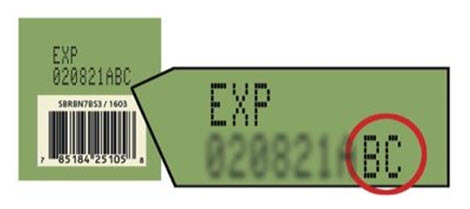
The supplier’s raw material was used to produce the Redbarn, Chewy Louie, Dentley’s and Good Lovin’ brand products listed below with best-buy dates ending in BC.
In total, 24 SKUs are affected.
The recalled products were distributed nationwide in pet specialty and grocery retail stores.
Affected products are listed below and have best by dates ending in BC.
All lots of Redbarn, Chewy Louie, Dentley’s and Good Lovin’ brand products listed below with best by dates ending in BC are included in this expanded recall.
The supplier’s raw materials were used to produce each of these products:
Redbarn Brand
205001 Redbarn 5″ Bully Stick
Best By Code Ending: BC
UPC: 785184205006
207001 Redbarn 7″ Bully Stick
Best By Code Ending: BC
UPC: 785184207000
207016 Redbarn 7″ Bully Stick 6pk
Best By Code Ending: BC
UPC: 785184207161
209001 Redbarn 9″ Bully Stick
Best By Code Ending: BC
UPC: 785184209004
230001 Redbarn 30″ Bully Stick
Best By Code Ending: BC
UPC: 785184230015
236001 Redbarn 36″ Bully Stick
Best By Code Ending: BC
UPC: 785184236017
245002 Redbarn Steer Stick 6pk
Best By Code Ending: BC
UPC: 785184245026
245010 Redbarn 5″ Steer Stick 10pk
Best By Code Ending: BC
UPC: 785184245101
247000 Redbarn 7″ Steer Stick
Best By Code Ending: BC
UPC: 785184247006
251005 Redbarn 7″ Bully Stick 3pk
Best By Code Ending: BC
UPC: 785184251058
290091 Redbarn 9″ Bully 1-lb bag
Best By Code Ending: BC
UPC: 785184290095
C207001 Redbarn 7″ Bully
Best By Code Ending: BC
UPC: 785184207017
C207016 Redbarn 7″ Bully Stick 6pk
Best By Code Ending: BC
UPC: 785184207062
C236001 Redbarn 36″ Bully Stick
Best By Code Ending: BC
UPC: 785184236116
Chewy Louie Brand
807101 Chewy Louie 7″ Bully Stick
Best By Code Ending: BC
UPC: 785184807019
Good Lovin’ Brand
2729250 Good Lovin’ 10pk Steer
Best By Code Ending: BC
UPC: 800443272732
2729381 Good Lovin’ 6pk Bully Stick
Best By Code Ending: BC
UPC: 800443272862
2729410 Good Lovin’ 7″ Bully Stick
Best By Code Ending: BC
UPC: 800443272893
2729461 Good Lovin’ 5″ Bully Stick
Best By Code Ending: BC
UPC: 800443272947
2729532 Good Lovin’ XL Bully
Best By Code Ending: BC
UPC: 800443273012
207004 Prime Cuts 7″ Bully Stick
Best By Code Ending: BC
UPC: 800443104798
207005 Time for Joy Holiday 7″ Bully
Best By Code Ending: BC
UPC: 800443287781
207013 Prime Cuts 7″ Bully 3pk
Best By Code Ending: BC
UPC: 800443120446
Dentley’s Brand
920068 Dentley’s 7″ Bully Stick
Best By Code Ending: BC
UPC: 737257479852
What Caused the Recall?
Redbarn initiated a recall of a single lot of product in early February after being notified that a sample collected at retail by the Colorado Department of Agriculture tested positive for Salmonella.
Redbarn is expanding this recall to include all products manufactured from the raw material supplier of the first recalled product.
We came to this decision after being notified that the FDA tested a different lot of raw material from this supplier at Redbarn and it tested positive for Salmonella.
About Salmonella
Salmonella can affect animals eating the products, and there is a risk to humans from handling contaminated pet products, especially if they have not thoroughly washed their hands after
having contact with the products or any surfaces exposed to these products.
Healthy people infected with Salmonella should monitor themselves for some or all of the
following symptoms: nausea, vomiting, diarrhea or bloody diarrhea, abdominal cramping and
fever.
Rarely, Salmonella can result in more serious ailments, including arterial infections, endocarditis, arthritis, muscle pain, eye irritation, and urinary tract symptoms.
Consumers exhibiting these signs after having contact with this product should contact their healthcare providers.
Pets with Salmonella infections may become lethargic and have diarrhea or bloody diarrhea, fever, and vomiting.
Some pets will have only decreased appetite, fever, and abdominal pain.
Infected but otherwise healthy pets can be carriers and infect other animals or humans.
If your pet has consumed the recalled product and has these symptoms, please contact your veterinarian.
What to Do?
Consumers are encouraged to check the best by code, using the guide above, to see if their
product was affected.
Pet owners who have this product matching this best by code in their homes are urged to discontinue use of the product.
Consumers who purchased the product with the affected lot code are urged to return them to the place of purchase for a full refund.
Consumers with questions may contact the company via email at info@redbarninc.com or by
phone at 800-775-3849, Monday thru Friday, 8 AM to 5 PM PT.
U.S. citizens can report complaints about FDA-regulated pet food products by calling the consumer complaint coordinator in your area.
Why do I have this feeling that this is not the last alert to dog food possibly having salmonella contamination! Wonder if cat food is similarly affected?
First, here is the text of the email that came to me a little before 4pm on the 6th March:
Dear Fellow Dog Lover,
Because you signed up on our website and asked to be notified, I’m sending you this special recall alert.
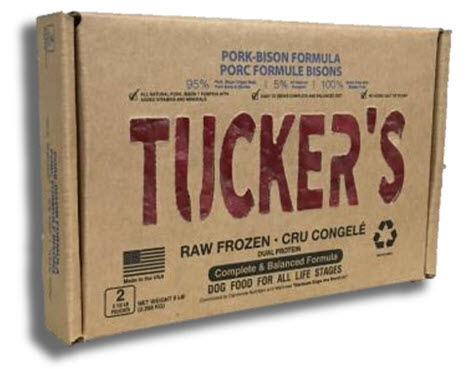
Raw Basics LLC of Pleasant Prairie, WI, is recalling one specific lot of its Tucker’s raw frozen dog food due to possible contamination with Salmonella.
To learn which products are affected, please visit the following link:
Please share the news of this alert with other pet owners.
Mike Sagman, Editor
The Dog Food Advisor
P.S. Need help? Get instant access to a list of The Dog Food Advisor’s most recommended dog food brands. Click here for details.
Then if you go to that site you will find it is yet another case of salmonella contamination!!
ooOOoo
Tucker’s Raw Frozen Dog Food Recall
March 6, 2018 — Raw Basics, LLC of Pleasant Prairie, Wisconsin, is recalling its Tucker’s Raw Frozen Pork-Bison Dog Food because it has the potential to be contaminated with Salmonella.
What’s Recalled?
The affected product is labeled “Tucker’s Pork-Bison-Formula” and includes the following identifying information.
Tucker’s Raw Frozen Pork-Bison Formula
Size: 5-pound boxes
UPC code: 072635520017
Lot code: 27717
Best buy date: 04/17/19
About Salmonella
Salmonella can affect animals eating the products and there is risk to humans from handling contaminated pet products, especially if they have not thoroughly washed their hands after having contact with the products or any surfaces exposed to these products.
Healthy people infected with Salmonella should monitor themselves for some or all of the following symptoms: nausea, vomiting, diarrhea or bloody diarrhea, abdominal cramping and fever.
Rarely, Salmonella can result in more serious ailments, including arterial infections, endocarditis, arthritis, muscle pain, eye irritation, and urinary tract symptoms.
Consumers exhibiting these signs after having contact with this product should contact their healthcare providers.
Pets with Salmonella infections may be lethargic and have diarrhea or bloody diarrhea, fever, and vomiting.
Some pets will have only decreased appetite, fever and abdominal pain.
Infected but otherwise healthy pets can be carriers and infect other animals or humans.
If your pet has consumed the recalled product and has these symptoms, please contact your veterinarian.
What Caused the Recall?
This recall was issued after the company was notified by the Nebraska Department of Agriculture of the positive Salmonella finding.
Product affected was isolated to 1 lot of 540 lbs (108 boxes) and distributed to distributors in Minnesota, Georgia, Kansas, and Pennsylvania.
The products were sold at pet specialty retail stores.
No illnesses have been reported to date.
Raw Basics tests all batches of products for all pathogens in a hold and release program before releasing for shipping.
What to Do?
Consumers who have purchased the affected product are are urged to return it to the place of purchase for a full refund.
Consumers with questions may contact the company at 800-219-3650.
U.S. citizens can report complaints about FDA-regulated pet food products by calling the consumer complaint coordinator in your area.
So welcome to the first day of March!! Holidays in the offing? Here is some useful advice!
Inevitably, with so many followers (big hugs to you all) I receive emails from people who have a commercial interest in the readership of this blog.
As I did earlier in January.
Hi,
Hope you had a great weekend!
My name is Emma from BestCarSeatHub.com. I’m wondering if we can contribute a fresh and original post about pets (traveling with pets or safety of dogs) to your site Learning from Dogs. It’ll be 100% neutral and written based on your site’s tone.
In return, we’ll be sharing that post to all our networks… helping you gain new and more readers.
Let me know if you’re interested. I’m also willing to discuss any other options you have. Thanks a lot.
—
Sincerely yours, Emma Lachey.
My reply was:
Emma,
Thanks for writing me.
In principle, I am happy to receive your guest post so long as you are happy for me to introduce your company as a firm of which I have no personal knowledge.
Does that work for you?
Paul H.
Emma then sent me the following guest post. It’s very useful advice in my opinion.
ooOOoo
Traveling With Your Dog – A How To Guide
Are you planning to travel with your dog in the future? While it is a great experience and you will certainly have many memories, it will also add a few new levels to your traveling experience. You will have to plan a lot more, make sure your dog is allowed everywhere you go, and make concessions on what you can do.
For most people, boarding their dogs turns out to be the better option – but it doesn’t have to be if you take these tips into consideration. For now, we will focus on traveling with your dog in the car.
Plan Ahead
The first thing you want to do is really plan ahead for your travels. Think about where you may need to take a break for your dog to go to the bathroom – and he will need to go much more frequently than he will just at home. Make sure to have some time set aside so that he can get out and walk around – a dog that wares off some energy will be much easier to deal with in the car.
Finally, make sure that you have places you can go so that your dog doesn’t have to be stuck inside the car when you go to eat. There are plenty of places that either offer outdoor seating or will be happy to pack your food up for you so that you can eat it somewhere where your dog can as well – of course, weather will dictate much of this.
Consider Medication
If your dog has severe anxiety when he or she is in the car, you might want to consider getting medication for your dog. This is something you should only use sparingly, but it is something you want to consider.
Bring Toys and Familiar Items
Does your dog have a favorite toy? How about a familiar bed or blanket? If he does, you want to bring some of those with you, just to make him more comfortable. With toys, you want to get something that he will sit and play with for a long time while you are travelling – this can take away much of the stress.
Use a Dog Car Seat
Dogs get pretty excited about going in the car, especially if they aren’t the type of dogs that get to go for a ride all that often. There are plenty of dog car seats on the market today, from simple tethers or harnesses to high-tech dog booster seats that have all you can ever imagine.
Some other items you want to have?
Leash
Water bowl and water
Treats
Busy Toys
Doggie Bags
Medication
All your dog’s tags
The name and number of a local vet
The car seat won’t only keep your dog safe, which of course is important, but it will keep you safe as well. Dogs running around the car can really distract you from your surroundings and can put everyone in danger.
Be Prepared for Emergencies
Emergencies will happen, and while you hope that you won’t encounter one, you do have to be prepared for anything. Planning in advance will ensure that you can tackle anything that might happen. Before you go on a trip, talk to your vet about anyone that he or she may know near where you are staying. It should be a priority to take your dog to the vet before you leave for your trip anyway. You also want to have the phone number of your vet so that you can call in a pinch. Always make sure that your phone has a full battery so you can look up vets in the car.
If your dog is acting quiet and a little “off,” it could be nothing – your dog could just be adjusting to life this way. However, you want to ensure that your dog has enough time out of the car and has enough water. Once your dog shows sudden signs of illness, then you want to get to work.
If you are driving, you want to map out any vets on the pathway, set an alarm for medications, bring only the highest quality dog food, give your dog adequate bathroom time, and bring all medical records with you.
Make Sure ID Is Always on Your Dog
Make sure that your dog always has a collar on when you are traveling. Make sure the collar has your phone number and your name on it as well. If your dog does get away when you are traveling, this is the best way to ensure that your dog will get back to you.
You might want to consider a microchip as well. You’ll want to have a recent photo of your dog on your phone so that, if the worst does happen, you will have a way to make flyers.
Traveling with your dog doesn’t have to be a terrible experience. Instead, you want to make the most of it by being prepared, taking many photos of your pup, and having the times of your lives.
ooOOoo
Now all that Jean and I need to work out is how to take our six dogs with us when next month we travel to Europe for a couple of weeks!!
The U.S. FDA has announced Smokehouse Pet Products of Sun Valley, CA, is expanding its recall of its “Beefy Munchies” and “Beefy Bites” dog treats due to contamination with Salmonella bacteria.
To learn which products are affected, please visit the following link:
If one follows that link then you come to these details:
ooOOoo
FDA Expands Nationwide Beefy Munchies Dog Treats Recall
February 19, 2018 — The FDA has announced that Smokehouse Pet Products, Inc. of Sun Valley, CA is recalling all sizes and package types of dog treats labeled as “Beefy Munchies” because they have the potential to be contaminated with Salmonella.
About the Recall
“Beefy Munchies” was distributed nationwide through distributors selling to various retailers.
The product comes in individual bags, resealable bags and plastic tubs.
The plastic tub will be labeled “Beefy Bites”.
All sizes and packaging types will include a UPC code, lot number, and a best used by date of stamped on the back.
The current recall is expanded to include all “Beefy Munchies”.
No illnesses have been reported to date in connection with this problem.
What Caused the Recall
The potential for contamination was noted after routine sampling and testing by the Colorado Department of Agriculture revealed the presence of Salmonella in two 4-oz packages of “Beefy Munchies”.
About Salmonella
Salmonella can affect animals eating the products and there is risk to humans from handling contaminated pet products, especially if they have not thoroughly washed their hands after having contact with the products or any surfaces exposed to these products.
Healthy people infected with Salmonella should monitor themselves for some or all of the following symptoms: nausea, vomiting, diarrhea or bloody diarrhea, abdominal cramping and fever.
Rarely, Salmonella can result in more serious ailments, including arterial infections, endocarditis, arthritis, muscle pain, eye irritation, and urinary tract symptoms.
Consumers exhibiting these signs after having contact with this product should contact their healthcare providers.
Pets with Salmonella infections may be lethargic and have diarrhea or bloody diarrhea, fever, and vomiting.
Some pets will have only decreased appetite, fever and abdominal pain.
Infected but otherwise healthy pets can be carriers and infect other animals or humans.
If your pet has consumed the recalled product and has these symptoms, please contact your veterinarian.
What to Do?
Any consumers who have purchased “Beefy Munchies” should discontinue use of the product and may return the unused portion to the place of purchase for a full refund.
Consumers with questions may contact Smokehouse Pet Products, Inc. at 877-699-7387, Monday through Friday 7 AM to 3:30 PM PT.
U.S. citizens can report complaints about FDA-regulated pet food products by calling the consumer complaint coordinator in your area.
One of the great differences between us humans and our beloved dogs is that frequently we think too much! But it’s worse than that. We think too much and get caught up in some spiral from which we can’t think ourselves back out. Perhaps that can be likened to a dog worrying away at something that the dog thinks is being overlooked by it’s human friend, or over-licking a wound or such.
A very quick web search will bring up the background information on Dr. de Bono who was responsible for overturning the way we think. It was de Bono who attended an IBM Office Products management course that I was attending, far too many moons ago, when I was promoted from being a salesman to the first rung of the management ladder; the position of Marketing Manager. It was during de Bono’s talk that I first learned of lateral thinking and what de Bono called the “PO” moment.
Just watch the first minute of this talk to get an appreciation of what the PO moment is. Seriously, the video starts with Simon Middleton defining a PO moment. It’s relevant to the rest of this post.
As you all know Jean has Parkinson’s Disease (PD). We have come to understand that PD affects different people in different ways, albeit there are some aspects that many PD sufferers share.
Many individuals report difficulties in multitasking and organizing daily activities.
In recent weeks I noticed I was becoming frustrated because although I was suggesting to Jeannie a number of what I thought were pleasant things to do in and around our property they weren’t being done.
As much as I tried to say to myself to chill out, this is all down to Jean’s PD, I couldn’t push out of sight the growing frustration that my help was being rejected, and I know I have a problem dealing with rejection! I really didn’t want my frustration to build up to anger.
Eventually, one morning last week after I came back to the bedroom from having fed the horses and the deer I blurted out, rather clumsily I admit, this frustration that was close to becoming a real annoyance.
At first Jean was upset by what I said, understandably so, but then we settled down to examining each suggestion of mine and where I was coming from. Then the conversation became very productive and in a moment of creative thinking I suggested what turned out to be a ‘PO’ moment. In other words, we had both agreed that while we acknowledged the fact that Jean was not motivated to do the things I was suggesting nonetheless it was important that we choose another day and time to discuss how I should remind Jean of these ‘overlooked’ suggestions and, more importantly, how it could be done in a loving and constructive manner.
It was a fascinating outcome and I immediately jumped out of bed, went to my office room next to the bedroom, grabbed a new, unused notebook and came back to the bedroom.
“Jean, let’s write this down in the book as a reminder of something we need to return to and resolve in a creative way! Let’s call these reminders Pharaoh moments!”
Jean very happily agreed!
I then explained to Jean that this felt very much like one of de Bono’s PO moments and calling it a Pharaoh moment was a beautiful way of remembering our wonderful dog.
Edward de Bono is the originator of the concept of Lateral Thinking, which is now a firm entry in the Oxford English Dictionary. Dr de Bono was born in Malta. As a well-established academic, de Bono was a Rhodes Scholar at Oxford and holds an MA in psychology and physiology from Oxford. He is a Professor at many leading institutions around the world. He is an author of many best-selling books, and is known as the world’s leading authority on thinking.
I write this post as a very happy man who has lived the value and benefits of not bottling up one’s feelings!
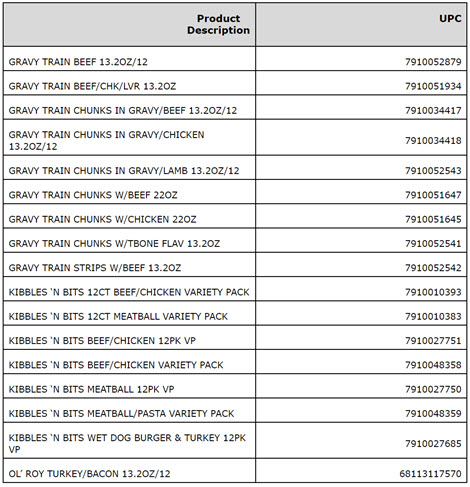
Because since the beginning of February there have been four (now five as of yesterday!) dog food recalls notified to subscribed owners. Although I have copied and pasted product pictures if any of these products are relevant to you then please do follow the link to the Dog Food Recall page offering more details!
On the 9th February this was released:
Smokehouse Pet Products of Sun Valley, CA, is recalling a specific lot of its “Beefy Munchies” dog treats due to potential contamination with Salmonella bacteria.
If you go to this link you can see pictures of the product package and other details.
oooo
Then on the same day another notification was issued:
Raws for Paws of Minneapolis, MN, is recalling specific lots of its raw frozen dog food due to possible contamination with Salmonella bacteria.
A day later, on the 10th February, out came the third alert:
Redbarn Pet Products LLC of Long Beach, CA, is recalling a specific lot of its “Redbarn Naturals Bully Sticks” due to potential contamination with Salmonella bacteria.
Darwin’s Natural Pet Products of Tukwila, WA, is recalling specific lots of its Darwin’s ZooLogics raw frozen dog food due to possible contamination with Salmonella bacteria.
It primarily featured a short video from the home page of Colin Potter’s Fight Parkinson’s website. That video explained how a strict regime of the right food and supported by supplements had made an incredible difference to his health, effectively putting his PD into remission.
Or in Colin’s words:
I am Colin Potter and I have a Parkinson’s diagnosis.
Only there’s one difference between me and virtually all other people with Parkinson’s
I no longer suffer from its symptoms. I don’t take conventional medications.
You’d hardly know I had Parkinson’s. How is this possible?
I’m not a doctor, I’m just an ordinary bloke diagnosed with Parkinson’s in 2011 who just didn’t like what he was being told by his doctors; that his condition was incurable and his health would go into permanent decline.
So, I started my own research, and found thousands of authoritative research studies that:
Showed that Parkinson’s mostly had its origins in our lifestyle and environment
Revealed the possible, specific causes behind Parkinson’s
Promoted the actions I could take to fix the problem
Allowed me to cease levodopa medication
I then made the necessary changes to my lifestyle and diet and here I am, two+ years later, healthy and recovered.
I know many of you will find it hard to dedicate a measurable amount of ‘viewing’ time to this post but that doesn’t stop me from recommending a subsequent video.
Namely, a longer (32 minutes) interview of Colin Potter that really explains his transformation
There’s even more to share with you but Jeannie and I have made a fundamental decision. That is that before we go any further it is only right that we seek the views of a local nutritionist in nearby Grants Pass.
We need to be certain that the major changes that we are planning in terms of diet and supplement intake are supported by local, qualified persons.
We will share those findings with you very soon.
But it does cross my mind that the following should be included in this post.
We do not offer advice and nothing on any website, email or any other communication is intended to treat, diagnose, prevent or cure any disease. It is not a substitute for consulting your doctor. You should consult a doctor for diagnosis of conditions, before beginning any diet, exercise or supplementation or if you suspect you have any health issue. You should not stop medication without consulting your doctor.
Getting to the truth of what is or is not good for our dogs.
As many will understand so very often I am acting more as a messenger than an authoritative source in this place. It is very difficult for me, almost impossible indeed, for me to verify the validity of what is posted here.
On January 11th, I published a guest post from Kathreen Miller. Her article was called Is Organic Food Really Good For Your Dog To Eat?
Yesterday, local good friend and neighbour, Jim Goodbrod, sent me an email pointing out a number of weaknesses in Kathreen’s article and giving me permission to republish what he wrote as a post on Learning from Dogs.
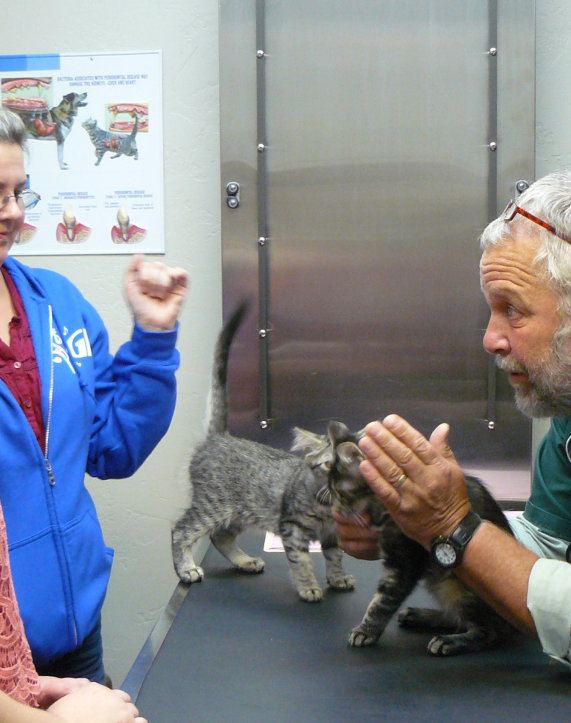
Jim is an experienced Doctor of Veterinary Medicine (DVM) and has frequently advised us, both professionally and informally, about our own dogs and cats. We trust him fully. Jim attends a couple of local vet clinics including Lincoln Road Veterinary Clinic in Grants Pass to where we take our pets when required.
Dr. Jim seeing a patient at Lincoln Road Vet.
Here is Jim’s update published with his kind permission and unchanged by me apart from some minor formatting amendments including italicising some phrases.
ooOOoo
Hey Paul …
Regarding your post of 1-11-18, a guest post by Kathreen Miller concerning canine diet, I feel the need (justified or not) to clarify a few points. She seems to be a big proponent of “organic diets” and lest your readers be misled, I think we need to define what is meant by “organic”.
The legal definition of “organic” is codified by the USDA National Organic Program (NOP) in 7 CFR 205. Pet foods and pet treats must comply with these regulations or they may not legally use the word “organic” on the label. If you read these regulations, you will find that “organic” refers only to the handling and processing of ingredients and products.
These regulations cover: ingredient sourcing, ingredient handling, manufacturing, and labeling & certification of products wanting to use the word “organic” in their labeling.
However, these rules are not considered by NOP as a means to ensure safer, healthier, or more nutritious foods. In fact, there is no regulatory distinction in the tolerable levels of pesticides, drugs, or other residues allowed in organic vs conventional products (even though lower residues may in fact be a result).
Rather, the “organic” label is viewed as a confirmation of the organic production process, and the purchaser is left to his or her own determination as to whether the costs merit the perceived benefits. The bottom line is that “organic” refers to the processing of a product, and makes no guarantees as to the quality or digestibility of ingredients, safety, nutritional value or health benefits of the product.
A savvy pet owner, in order to ensure her dog’s optimal nutritional health, would be better advised to follow guidelines outlined by WSAVA or AAHA (or other reputable source) rather than to reflexively reach for the dog food that says “organic” on the label. The “organic” label does not necessarily mean a diet is good or bad, but it has nothing to do with the nutritional adequacy of the diet and hence your dog’s health.
Another point: Kathreen seems to buy into the popular myth that plant-based ingredients (like corn) are poorly digested fillers that provide little nutritional value and can cause allergies. Corn provides a good source of carbohydrates, essential amino acids, protein, and essential fatty acids in the diets of dogs and cats. It is highly digestible and is not a common cause of allergies. It is actually a very good nutrient as an ingredient in pet food.
My last point is regarding the product “Pet Bounce” that Kathreen endorses as a treatment for arthritic pain in dogs. This product is labelled as homeopathic and as such is nothing more than a placebo.
It has been proven over and over and over again that homeopathic remedies are nothing but water and perform no better than placebos in numerous clinical trials. Reading the list of ingredients, one can see that it contains:
1) Belladonna 6X
2)Caulphyllum 6C
3) Colchicum autumnale 200C
4) Apis mellifica 30C
5) Rhus toxicodendron 200C
6) Ruta graveolens 6X.
Anyone familiar with homeopathic nomenclature knows that, for example, the Apis mellifica 30C designation means that this particular herb is diluted in water 1 to or (that’s 1 followed by 60 zeroes!).
To put it into perspective, that’s equivalent to 1 molecule of this substance in a sphere of water 90 million miles in diameter (approximately the distance of the earth to the sun). That’s a 30C dilution.
At a 200C dilution, the treating substance is diluted more than the total number of atoms in the known universe!
Regardless of any medicinal properties these herbs may have, they are so fantastically diluted that there is not one molecule present in the final solution.
I defy any reasonable person to tell me that this so-called remedy is effective to treat anything and consists of anything more than a water placebo.
My problem with this kind of snake oil is that well-meaning pet owners waste their money (~$50.00 per bottle!) on this useless product, believing all the hype and thinking that they are improving the quality of their dog’s life, meanwhile squandering the opportunity to actually help their dog with an effective and evidence-based treatment.
Kathreen seems to be a nice and well-intentioned woman, but I don’t know what qualifies her as a “pet health expert”, other than her own opinion. According to her profile (from your blog) she lives in Chicago with her daughter and dog “Buddy” and listens to music, watches TV, and travels. That’s it? Nothing more??


 It’s not only people who can be lactose intolerant – dogs can be as well. This means they are not allowed to eat or drink any dairy products,