There are plenty more of those wonderful pictures and cartoons to come to come from Janet Goodbrod.
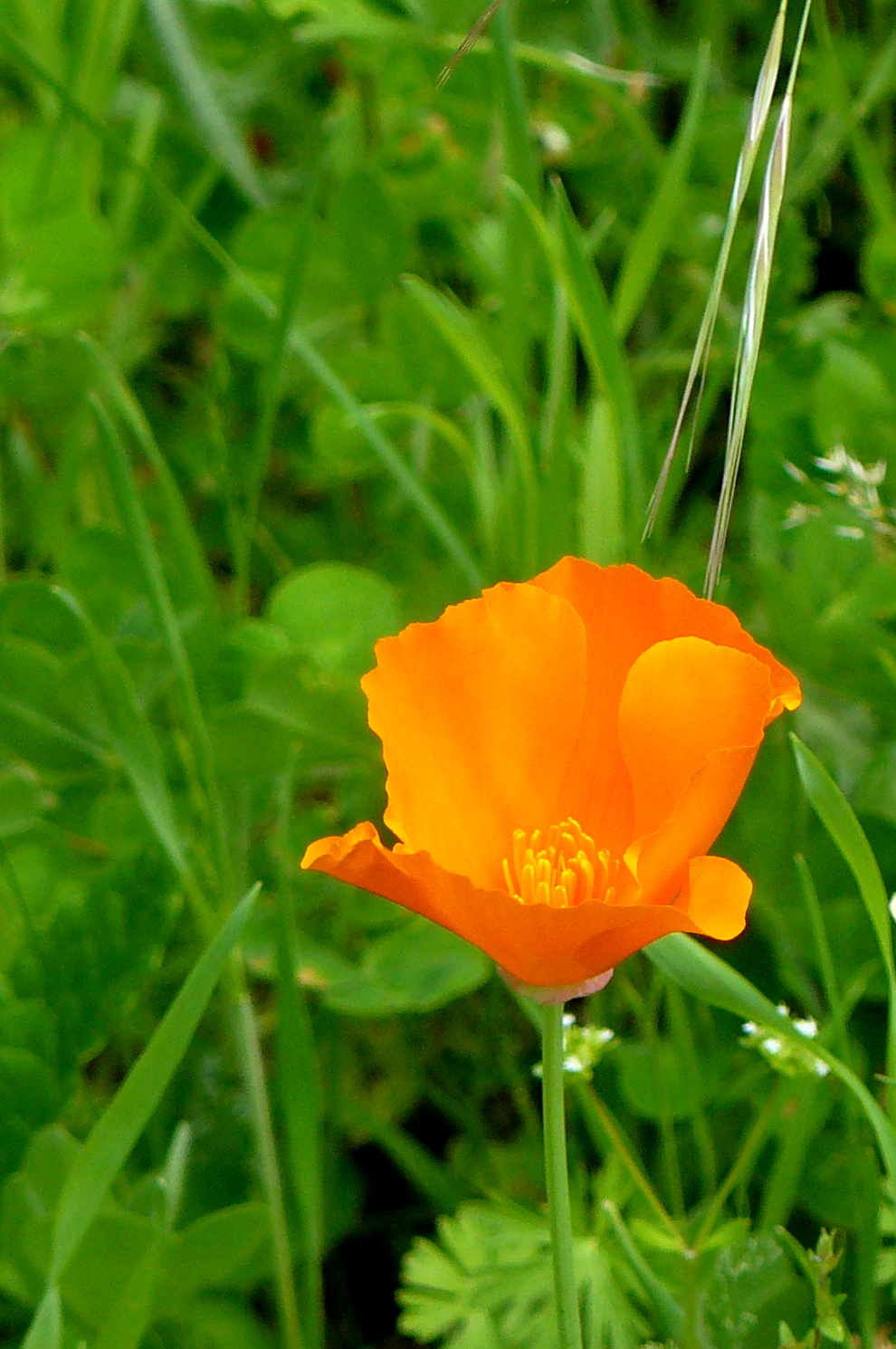
But a few days ago there were so many beautiful flowers blooming in the Spring sunshine that I couldn’t resist taking photographs of them and sharing them with you. All from home! (Apart from the young tree and the cows on our neighbour’s property for while not being flowery , nonetheless, they seemed to speak to me about springtime.)
oooo
oooo
oooo
oooo
oooo
oooo
Don’t ask me what the names of the various flowers are!
And the final photograph for this week’s Picture Parade is of Socks being cuddled by a member of his new family home. Socks has been adopted!! (Full story about this wonderful happening on Tuesday.)
That article featured the former president of Iceland, Olafur Grimsson, and how he was encouraging new solutions to climate change. Primarily via a new organisation called RoadMap. (Did you sign up??)
There is change in the air. People are starting to make a better future. Cities across the USA (and elsewhere undoubtedly) are pledging to go 100 percent renewable. Here’s what Grist published on May 4th.
ooOOoo
Cities all over the U.S. are pledging to go 100 percent renewable.
Atlanta is the 27th city to make the pledge, according to the Sierra Club. These kinds of municipal promises have been popping up nationwide over the past few months. Here’s a recap:
Portland, Oregon, pledged in April to go 100 percent renewable by 2050. The surrounding Multnomah County got in on the plan, too.
South Lake Tahoe, California, committed to go renewable by 2032. Its initiative is, at least to begin, entirely volunteer-driven.
It’s not just the coasts: In March, Madison, Wisconsin became the biggest city in the Midwest to pledge to a community-wide switch to 100 percent renewable energy (though it hasn’t set a target date).
The tiny town of Abita Springs, Louisiana committed in March to transition to clean energy by 2030 — and its Republican mayor went to bat for it. That’s a big win in our books.
“We know that moving to clean energy will create good jobs, clean up our air and water, and lower our residents’ utility bills,” said Kwanza Hall, an Atlanta City Council member and mayoral candidate, in a statement. “We have to set an ambitious goal or we’re never going to get there.”
The shape of the world is hanging by a thread – or rather, according to experts, by a 110 mile-long (177km) rift. That’s the extent of a rapidly expanding crack in an enormous ice shelf in Antarctica. When the Larsen C shelf finally splits, the largest iceberg ever recorded (bigger than the US state of Rhode Island and a third the size of Wales) will snap off into the ocean. Widening each day by 3 ft (1 m), the groaning cleft is on the verge of dramatically redrawing the southern-most cartography of our planet and is likely to lead, climatologists predict, to an acceleration in the rise of sea levels globally.
An aerial photo of the frigid fissure, taken late last year when it was discovered that the pace of the icy tear was quickening, was suddenly back in the news this week with the announcement that a second rift in the shelf had been detected. The fracture leads our eye along a zig-zagging path – from the backward gaze of the plane’s right engines to the pristine polar blue of the horizon in the distance. The jaggedness of the cleft, which takes our vision on a journey whose ultimate destination is unfathomable, seems at once monumental and terrifyingly fragile. The photo intensifies our helplessness in the face of cataclysmic change. It freezes the potential destruction in the blink of a camera’s shutter, while at the same time hinting at a catastrophe that we can witness unfolding but are utterly powerless to stop.
A second rift was recently discovered in the Larsen C ice shelf on the Antarctic peninsula (Credit: NASA/John Sonntag)
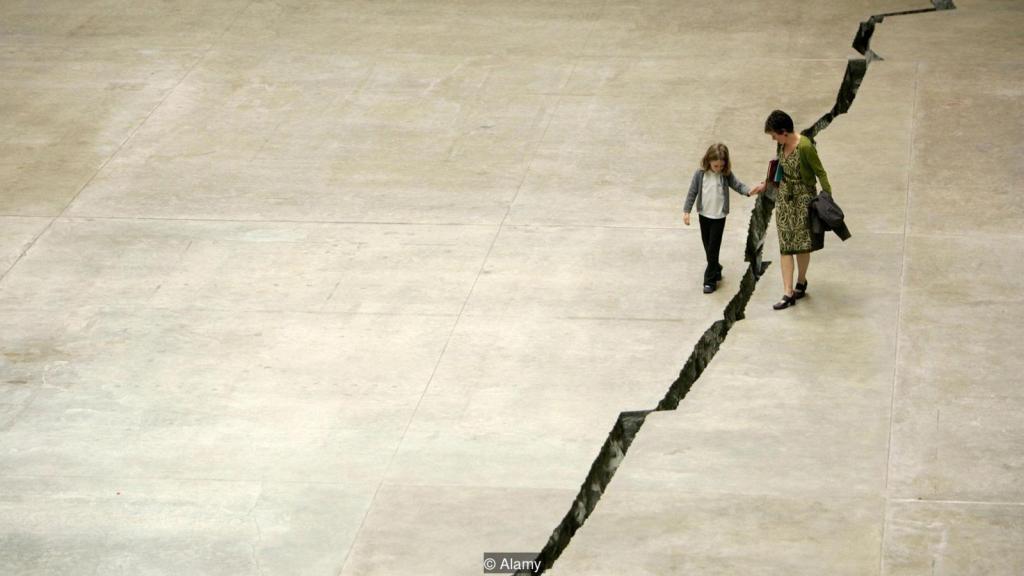
As a visual statement, the aerial photo of the Larsen C crack is, by definition, incomparable; never before has the world marked the glacial advance of such a sublime and fearsome fracture in its very fabric. Yet the reemergence of the image in the news anticipates the ten-year anniversary of one of the most intriguing and innovative large-scale works in contemporary art – a work whose power relies for its thought-provoking effect on the peculiar poetry of ruinous rifts. In October 2007, the Colombian-born artist Doris Salcedo unveiled in London an ambitious installation in the cavernous space of Tate Modern’s Turbine Hall – a piece that split reaction down the middle.
Inviting gallery-goers into the otherwise empty and austere interior of the former Bankside Power Station, Salcedo subverted expectations. Rather than offering visitors a hall of temporarily installed sculptures, she orchestrated the contemplation instead of a ragged subterranean breach that appeared to rip open the concrete floor of the structure – a crevice that extended from one end of the yawning space to the other.
For the Colombian artist Doris Salcedo’s 2007 work, Shibboleth, a giant crack was made in the concrete floor of Tate Modern’s Turbine Hall (Credit: Alamy)
Salcedo deepened the mystery of her bold and experimental conceptual work by giving to it the curious title Shibboleth – a biblical word which, when mispronounced, was said to have exposed the outsider status of individuals. Complicating matters still further, the artist insisted that her work was a comment not on the folly of material ambitions, but on racism – that deep cultural scar that tears at the foundations of humanity. Placed side-by-side, this week’s photo from Antarctica and the image captured a decade ago of Doris Salcedo’s challenging Shibboleth share both a brutal beauty and a common theme: the brittleness of being.
If you would like to comment on this story or anything else you have seen on BBC Culture, head over to our Facebook page or message us onTwitter.
And if you liked this story, sign up for the weekly bbc.com features newsletter, called “If You Only Read 6 Things This Week”. A handpicked selection of stories from BBC Future, Earth, Culture, Capital and Travel, delivered to your inbox every Friday.
ooOOoo
“the brittleness of being.”
Please, all of us, let’s make a positive difference so that we can soften the edges of that brittleness.
It takes so little good news to uplift one’s heart!
For reasons I can’t readily put my finger on it’s been feeling like a bit of a struggle recently. But that’s enough of that! For our gorgeous dogs have yet another lesson for me: How little it takes for a dog to wag it’s tail!
I so frequently share stuff that I read over on the Care 2 site and why not because as the home page declares:
40,107,687 members: the world’s largest community for good
Just three days ago there was a wonderful article shared on the Care 2 site about some dogs being rescued from a so-called backyard breeder. Better than that, it highlighted the wonderful consequence of a donation from George and Amal Clooney.
Here’s the story.
ooOOoo
9 Dogs Successfully Rescued From Backyard Breeder Thanks to George and Amal Clooney
Nine lucky dogs have just had their world turned upside down in the best way possible.
Camp Cocker Rescue, based in California, just took in the “Mojave 9″ who were being kept by a backyard breeder. They’ll be getting all the love and veterinary care they desperately need thanks to a generous donation made by George and Amal Clooney.
The nine dogs have had little human contact, and are all in need of extensive veterinary treatment for health issues ranging from mammary tumors and dental disease to skin and ear infections to ingrown toenails. The organization relies on donations, and expenses for this rescue operation were quickly rising.
“We literally didn’t know how we were even going to begin to start paying for all of these new dogs that we took in on the same day,” Camp Cocker’s founder Cathy Stanley told PEOPLE.
Now, the organization is celebrating a generous and unexpected donation of $10,000 made by George and Amal Clooney, who are parents to two adopted cocker spaniels from Camp Cocker — Einstein and Louie.
Their donation is going to help cover the cost of care for these dogs, who have never been to a vet. The Clooney’s will also be matching donations up to $10,000 for the rest of May.
“After we all did happy dances and cried with happiness for this unbelievable matching donation offer – we then asked the donors if (and only if they gave us their permission) . . . if we could reveal their names to our supporters in order to help us reach our big goal this month. They were so very gracious to give us permission to reveal their names,” Camp Cocker wrote in an update.
While this was a huge boost for them, Camp Cocker is quick to point out that no donation is too small to help.
“We have a philosophy where we want to be very inclusive of all of our supporters and it’s important to us that no matter how small of a donation, every person feels like their donation is meaningful and that we appreciate them,” Stanley added.
Hopefully news about the Mojave 9 and the attention it’s getting will help raise awareness about rescue and inspire more people to get involved … and will help find each of these precious dogs their perfect forever home.
For more on how to help, and info on how to adopt one of these dogs, check out Camp Cocker Rescue and follow updates on Facebook.
Those of you that read this blog fairly regularly know that from time to time I drift away from all things dog and potter in the garden of simply fascinating ideas.
Such is the case today.
It is an article on mathematics that was sent to me by Jim Goodbrod. He had read it in The New York Times in April.
Read it and see if you, too, find it as fascinating as I did!
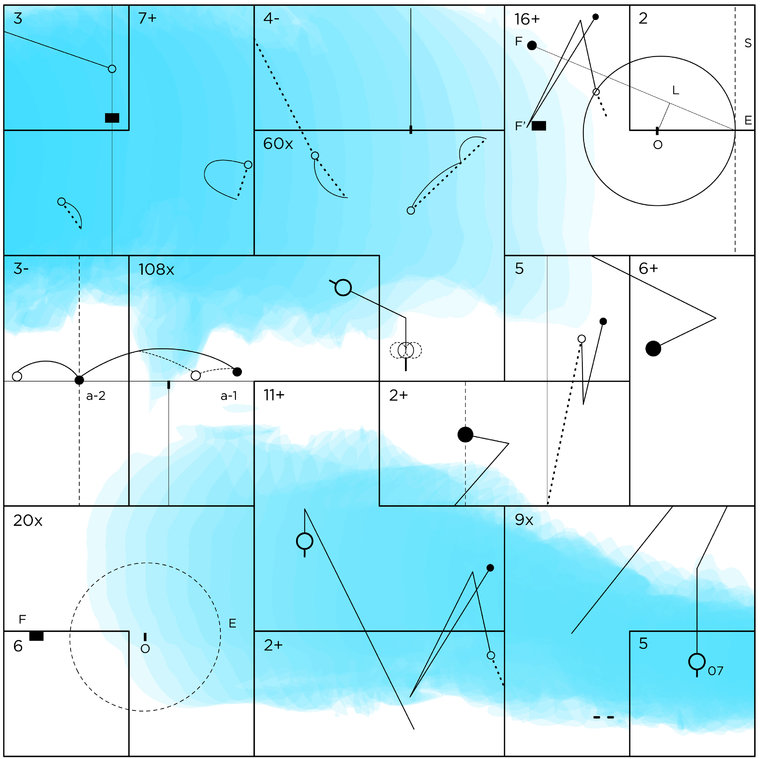
I was doing KenKen, a math puzzle, on a plane recently when a fellow passenger asked why I bothered. I said I did it for the beauty.
O.K., I’ll admit it’s a silly game: You have to make the numbers within the grid obey certain mathematical constraints, and when they do, all the pieces fit nicely together and you get this rush of harmony and order.
Still, it makes me wonder what it is about mathematical thinking that is so elegant and aesthetically appealing. Is it the internal logic? The unique mix of simplicity and explanatory power? Or perhaps just its pure intellectual beauty?
I’ve loved math since I was a kid because it felt like a big game and because it seemed like the laziest thing you could do mentally. After all, how many facts do you need to remember to do math?
Later in college, I got excited by physics, which I guess you could say is just a grand exercise in applying math to understand the universe. My roommate, a brainy math major, used to bait me, saying that I never really understood the math I was using. I would counter that he never understood what on Earth the math he studied was good for.
We were both right, but he’d be happy to know that I’ve come around to his side: Math is beautiful on a purely abstract level, quite apart from its ability to explain the world.
We all know that art, music and nature are beautiful. They command the senses and incite emotion. Their impact is swift and visceral. How can a mathematical idea inspire the same feelings?
Well, for one thing, there is something very appealing about the notion of universal truth — especially at a time when people entertain the absurd idea of alternative facts. The Pythagorean theorem still holds, and pi is a transcendental number that will describe all perfect circles for all time.
But our brains also appear to respond to mathematical beauty as they do to other beautiful experiences.
In a 2014 study, Semir Zeki, a neuroscientist at University College London, and other researchers used fM.R.I. scanners to observe the brains of 15 mathematicians while they were thinking about various equations. The subjects were shown 60 mathematical formulas two weeks before they were scanned and during and after the scan. They were also asked to rate their level of understanding of each equation and their subjective emotional response to it, from ugly to beautiful.
The researchers found a strong correlation between finding an equation beautiful and activation of the medial orbitofrontal cortex, a region of the prefrontal cortex just behind the eyes. This is the same area that has been shown to light up when people find music or art beautiful, so it seems to be a common neural signature of aesthetic experience.
Geeks, take heart: While you can’t see or hear mathematical ideas, they too are capable of arousing a sense of beauty.
No doubt you’d like to know which equation won the beauty contest. It was the so-called Euler’s identity, which is a deceptively spare but profound equation that links five fundamental mathematical constants: a mix of real and imaginary numbers that combine to make zero. And the ugliest? Ramanujan’s infinite series for the reciprocal of pi — a clunky equation, even to this non-mathematician.
While mathematicians were more likely to find formulas beautiful if they understood them well, the correlation was not perfect, so the researchers were able to show that the observed brain activation was a result of the experience of beauty apart from meaning. This makes sense, in that there were equations that subjects understood completely yet found ugly.
Now, the medial orbitofrontal cortex is also active when we find something pleasurable or rewarding, which isn’t surprising either, since you’d expect beautiful experiences to be both.
My love of math originated in the physical world. My father, an insatiably curious guy and electrical engineer, used to build things with me — crystal radios, electric generators, all kinds of exciting contraptions.
One summer evening I found him tinkering with a mysterious metal box in the garage. It was a prototype of a ruby laser. When he flicked the switch, a brilliant thin red light shot out of the laser and up into the night sky.
“How far does it go?” I asked. “To infinity,” he said and added, smiling, “or further.”
I was awe-struck. I still am.
Richard A. Friedman is a professor of clinical psychiatry and the director of the psychopharmacology clinic at the Weill Cornell Medical College, and a contributing opinion writer.
ooOOoo
While my understanding of mathematics is average, to say the best, I did identify with the idea spelt out a few paragraphs above. This one:
….. so the researchers were able to show that the observed brain activation was a result of the experience of beauty apart from meaning.
Because it took me back to looking up at the night sky out at sea well away from land.
Did I understand the meaning of what I was looking up at? Of course not! Did I experience beauty? Beyond what I could put into words!
On a clear night you can see some 4,000 stars in our universe. (Photo taken of a night sky over England – National Trust)
That quote was one uttered by Harold Macmillan, the British Conservative politician and publisher, who served six years as Prime Minister from 1957 to 1963. It was in response to a question regarding what sort of thing was most likely to blow a government off course.
Why did that quotation come to my mind? Simply because all my grand plans for writing a post for you good people were stymied by our internet connection being down for much of the weekend.
So rather than get cut off half-way through a new post, I decided to re-post what I published on this blog five years ago to the day: on April 24th. 2012. Here it is.
ooOOoo
How lady luck brought joy for a ‘down-and-out’ Londoner and a cat called Bob!
I was chatting with my son yesterday and he happened to mention that perhaps I should write about a cat for a change! Alex mentioned a book recently published in the UK called A Street Cat Named Bob: How One Man and His Cat Found Hope on the Streets.
This is how the book is described on Amazon (UK site),
When James Bowen found an injured, ginger street cat curled up in the hallway of his sheltered accommodation, he had no idea just how much his life was about to change. James was living hand to mouth on the streets of London and the last thing he needed was a pet. Yet James couldn’t resist helping the strikingly intelligent tom cat, whom he quickly christened Bob. He slowly nursed Bob back to health and then sent the cat on his way, imagining he would never see him again. But Bob had other ideas. Soon the two were inseparable and their diverse, comic and occasionally dangerous adventures would transform both their lives, slowly healing the scars of each other’s troubled pasts. A Street Cat Named Bob is a moving and uplifting story that will touch the heart of anyone who reads it.
A quick web search found volumes of material.
As in the local London newspaper the Islington Tribune wrote this back in 2010,
Two cool cats… the Big Issue seller and a stray called Bob
Inseparable: musician James Bowen with Bob
Down-on-his-luck musician teams up with ‘wonderful loyal friend’ he rescued from streets
Published: 24 September, 2010
by PETER GRUNER
NOT since the legendary Dick Whittington has a man and his cat become such unlikely celebrities on the streets of Islington.
Big Issue seller James Bowen and his docile ginger cat Bob, who go everywhere together, have been attracting comments since they first appeared outside Angel Tube station.
The story of how they met – widely reported in blogs on the internet – is one of such extraordinary pathos that it seems only a matter of time before we get a Hollywood film.
James, 31, who lives off Seven Sisters Road, Holloway, is a musician who has fallen on hard times.
He ekes out a basic living selling the homeless people’s magazine Big Issue at Angel and Covent Garden.
Bob was a stray discovered by James outside his accommodation one day.
The cat was limping after apparently being attacked by another animal, possibly a fox.
After failing to discover the cat’s owner, James took him to the RSPCA hospital at Finsbury Park, which prescribed a course of antibiotics.
“I kept him for two weeks until he was well enough to go on his way,” said James. “But when I opened the front door to let him out Bob wouldn’t move. He seemed to me to be saying: ‘I want to stay with you.’
“Now we go everywhere together. I even have a cat harness when we go out and Bob gets really excited when I show it to him.”
Read the rest of the article here and if you want more information, a web search on Bob the Cat will finds loads more.
It’s a fabulous story with a great message of hope for not just for James and Bob but for all of us that find ourselves ‘up a creek without a paddle’ at points in our lives.
Here’s how the newspaper The Daily Mail wrote about it on their website,
[last half of the story]
But then Bob started following him and it became increasingly difficult to shoo him away, especially as there were dangerous roads to be crossed. One day there was nothing for it but to put Bob on a makeshift lead and take him along. Bob travelled sitting on James’s shoulders.
The trouble was, so many cat-mad passers-by stopped him to stroke the animal that James arrived late at his pitch, secretly cursing Bob for thereby costing him some of his usual £25-a-day takings. He couldn’t have been more wrong.
Within minutes, people who would normally have walked by without giving James a second glance were lingering to make a fuss of the cat sitting sedately in his guitar case, and most made a donation. By the end of the day, he’d racked up more than £60.
It was the beginning of a phenomenon as tourists and commuters befriended Bob and James, many bringing titbits for the cat. People were amazed at how placidly Bob would sit all day, quite happily watching the world go by while James earned a living. Not that it was always without a hitch; on a couple of occasions Bob bolted when startled, leading to a frantic chase through the crowded streets.
Bob’s popularity continued when James switched from busking to selling the Big Issue, the magazine produced and sold by homeless people. This change in direction was part of James’s growing sense of a need to get his life in order, which he puts down to the responsibility of looking after Bob, and the example the cat offered of the possibility of a second chance.
It enabled James to make the final push to end his drug dependency, going through the necessary cold turkey to get off heroin substitutes, and to mend broken contacts with his family. The final result of Bob’s influence came when a literary agent who passed the duo every day and had seen them on YouTube suggested James tell their story in a book. The result is this heart-warming tale with a message of hope that will appeal especially to the many cat obsessives out there.
Offering up a tribute to the work of a professional.
Many, many years ago when I was in business on my own account (1978-1986) I had the pleasure of getting to know Frank Tijou. He was running his own very successful business. But more important than that, Frank had this wonderful ability to explain what he had learned over his years of being an entrepreneur. One such learning was stick to what you really know and don’t try and do things that are best left to other professionals. In other words, don’t be an amateur when it comes to important matters.
Thus when some weeks ago I was strongly recommended by some local authors to have an author website, I looked around for a professional. I quickly came to find Christy Kiltz of Design! by Kiltz Internet Solutions.
Talk about finding a true professional.
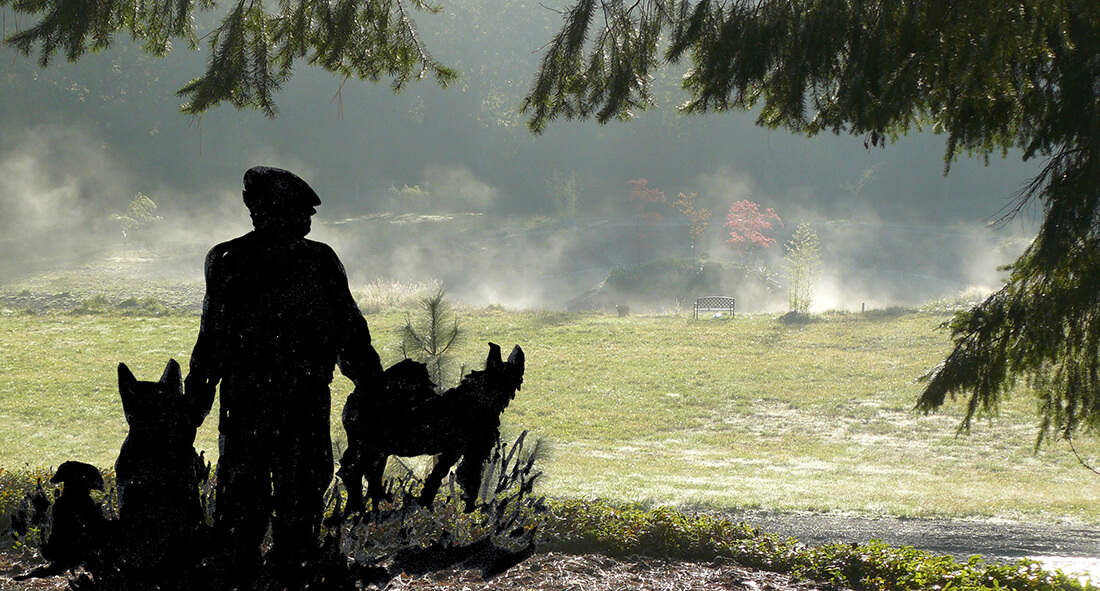
Forgive me, I’m not coming at this in terms of an ego trip. I just want to promote what a wonderful job Christy did. (And not forgetting Emily’s grand design work.) (And most certainly not forgetting my darling Jeannie who did the image of the man in a flat cap with the dogs!)




























 Learning from Dogs