Yesterday, the guest post published by Suzan from Romania touched many of you. In that guest post there was mention of the dog Joe.
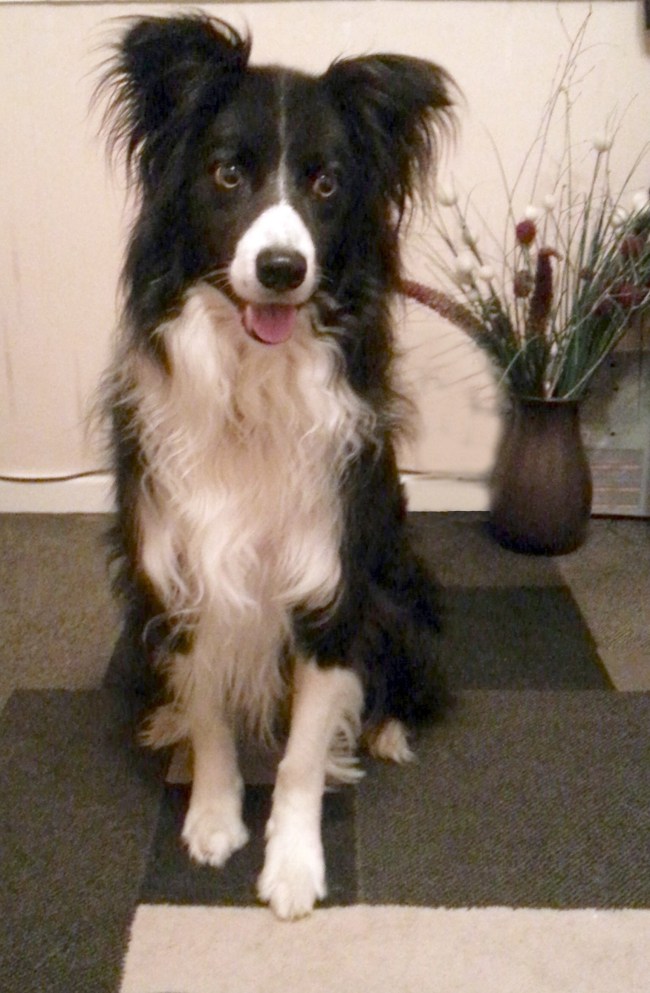
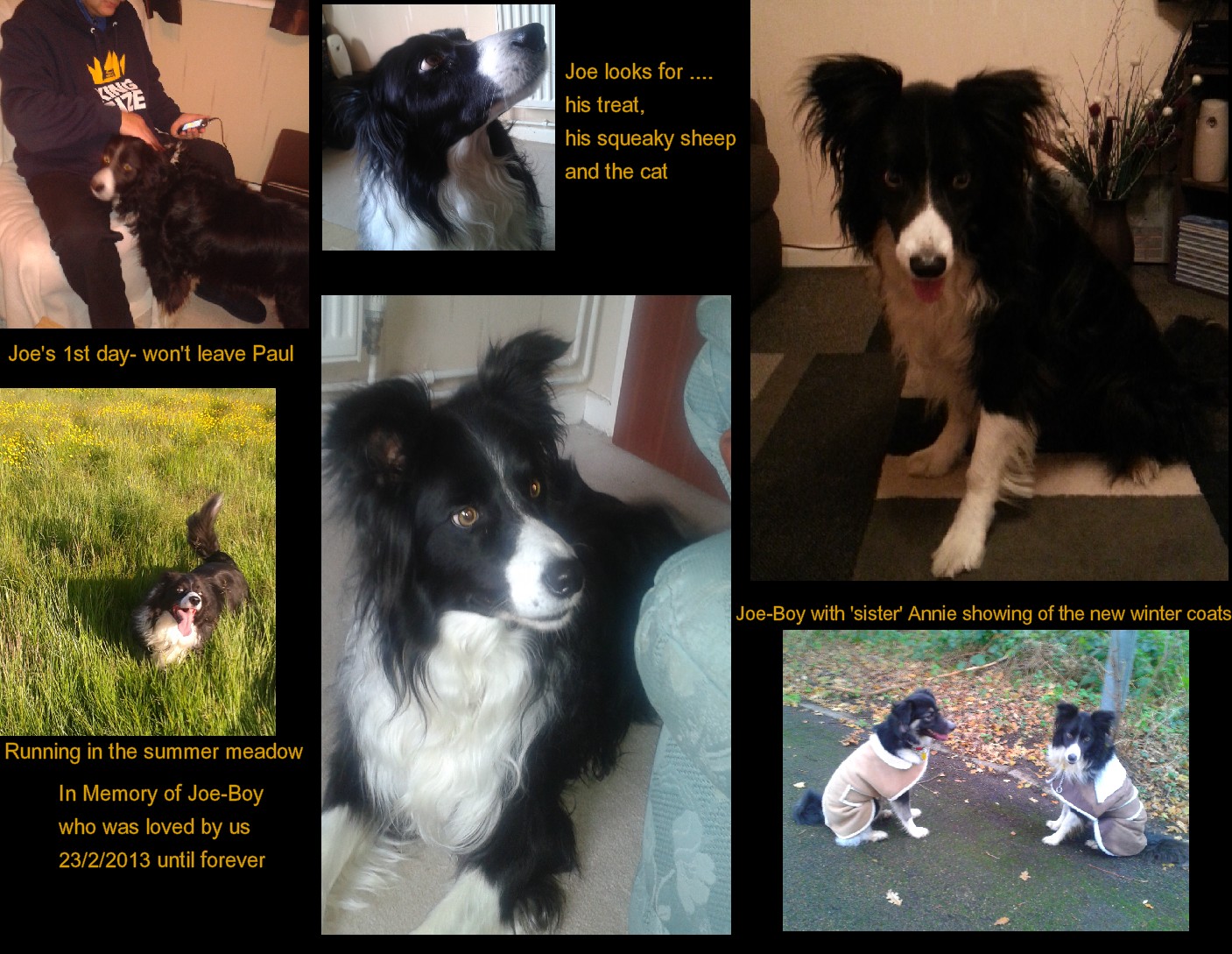
Take Joe. Joe had been sold on Facebook and bought by dog-baiters, bitten so severely vets thought he would die. You’d think that’s turned him off to humans? But no! He was a beautiful 6yr-old Collie. He was awesome. He obeyed, loved and cherished us, giving cuddles, playing gently … I’ve never had such a beauty under my roof.
I also wrote that I would publish more today. Taken directly from Mrs Skeats’ blog.
ooOOoo
Joe died but his death is still carrying a message.
It’s 19th June 2014. Joe died 6 months ago on 23rd December 2013.
Joe was a 6 year old beautiful boy taken from us after only 10 months by a cruel twist .. an accident due to a lack of information .. so I started a mini campaign. And I’ve just read about another poor soul, a friend of a friend, having to wait to see if his dog will survive a stick injury. Heartbreaking.
Ok so writing about it channelled my grief but the whole thing goes beyond that.
What was to be thought a rare, freak accident turned out to be all too familiar to vets and families worldwide. What was thought to be a personal kick in the nuts turns out to be a case of ignorance that is most definitely not bliss.
I received hundreds of comments on my first post after Joe died. I received hundreds of facebook and twitter comments too. The current ‘WordPress’ views are at over 139,000 which is great, and yet not enough. Dogs are still being treated for nasty stick injuries, vets see a few each month. I can’t preach and say stop it, but I can let anyone and everyone who cares know what a potential danger stick throwing is: better than being totally ignorant of the risks.
What happened to Joe, and happens to dogs all over the world at a frighteningly too-often rate, was borne of ignorance, stupidity, even years of “that’s what we do with dogs”. We simply never thought about the consequences it could bring.
Historically, when man decided to have dogs as pets and not merely working companions (not all that long ago in the UK) chasing a stick was a favourite game. We’ve all seen the old adverts in faded yellows and reds with a boy, stick in hand and his faithful dog panting happily as he waits for the ‘toy’ to be thrown. Why should we think it’s dangerous? We see things like celebs on the One Show with their dog, happily throwing it a stick, or in videos…. Dogs and stick throwing seems synonomous.
These are but a few stories of reasons why we should try and change this ……………..
Please think twice before you throw a stick for your dog to chase.
In memory of a beautiful dog, whose life will not ever have been in vain, but will mean so much more if we save others from pain.
ooOOoo
Please follow those links that Suzan included and read the articles. The message is clear. If you are the owner of a dog or play with dogs, don’t ever throw them a stick to catch.
As with yesterday’s post, please share this as widely as you can.
Jean would be the first to tell you that I’m always remarking to her how this funny old world of blogging creates links and friendships right across the world. Many of the kind people who follow Learning from Dogs are themselves the authors of blogs and in the vast majority of cases when I read their posts I sense a kindred spirit.
T.O.R.A Rescue shelter to close – Dogs need homes Foster or Adopt
TORA will close. This is indeed sad news for me but devastating for the dogs still left at the rescue shelter. My beautiful Annie came from there. Rescued off the street as a frightened puppy: Just look at her now.
Beautiful Annie.
TORA, like many other rescue shelters in Romania have been fighting against all odds to get dogs off the streets, and now out of the public shelters since the killing law has been passed. Dogs are in public shelters for only a short time before they are put to sleep. There are horrific stories and pictures around. Some may see it as practical, culling the population. That’s a valid opinion but not one I and thousands upon thousands of dog/animal lovers can share.
All TORA asks now though is for people to view the site on Facebook or contact them [Ed. via that Facebook link] and foster or adopt one of the remaining dogs. If there are dogs left in October when they must close, then they will be returned to the public shelter to receive their fate.
EVEN IF YOU CANNOT HAVE A DOG YOURSELF, please share, someone somewhere will, and for each one that does, another beautiful dog is safe. They didn’t ask to be thrown on the streets. They didn’t ask to be cast out like vermin. All they want is a chance to have a human family and a life of kindness.
ABOUT ASOCIATIA
T.O.R.A. is a small non-profit dog rescue organization that is based in Bistrita, North of Romania (Transylvania). TORA is dedicated to the rescue and placement of stray dogs.
We are an animal charity of 2-4 volunteers, with funds available only from public support, with a shelter of 20 spacious kennels, 11 indoor & outdoor and 9 only outdoors ones. We have a vet attending the dogs daily and a caretaker.
All of our dogs get neutered, (with the exception of puppies under the age of 6 months old and very old dogs), vaccinated, microchipped , defleed and dewormed prior to adoption.
T.O.R.A. shelter cares for the rescued dogs entirely from donations received from private people, that’s why there is a constant need of support whether its financial, material (food or medicine donations, beds, dog clothes, etc) or by sharing and promoting the dogs to find good homes so that space becomes available to help others .
T.O.R.A. helps an average of 40-60 animals at any given time.
Many who follow my scribblings know that of the nine dogs we have here at home, seven are rescues. When I first met Jean down in Mexico she was rescuing feral dogs off the streets and finding homes for them. Over the many years, Jean estimates that well over two-hundred stray dogs had been found loving homes. Indeed, when Jean and I moved from Mexico to Payson, AZ., we came with fourteen dogs of which thirteen were ex-rescues! Pharaoh being the notable exception!
Anyway, back to Mrs Skeats.
I was so moved by what I read on her blogsite that I implored her to write a guest post for you, dear reader. Suzan was gracious enough to agree and here is her post.
ooOOoo
Rescued dogs are life-savers.
by Suzan.
Paul asked if I would post as a “guest” after reading my post(s) about dogs that have been or need to be rescued from some quite awful conditions. “OH here we go again” some of you will say. Well, then it is your choice to read on or close the page.
I hope you read on as this is not about begging for funds or equipment or even a home for these lovely creatures. It’s about what THEY can offer you.
I love animals – not just dogs. I’ve cared for many in my time, but dogs have to be top of my list. Dogs love to love. They don’t know how to be any other way until they are mistreated in some way.
Dog’s are like having a permanent 3 years old around you, with the exception they don’t answer back (often) and are usually not quite so stubborn. I’ve had 7 children under my roof in the years (hence the menagerie at times) – I know.
Dogs look to their human companion as leader, feeder, soul mate, room mate, walker, talker, and all they want to do is to please …. literally their life is lived for you. But rescued dogs do this to a deeper level than dogs raised from a pup. Not just me but thousands of others find this.
Raised dogs are no less loyal, please don’t think I say different. There’s just something about a dog that has had a bad start, lonely, captured, mistreated … whatever. These dogs reach deeper into your heart and aim to please as if they are desperate to say thank you. Perhaps they have a fear that the person who has been so lovely will leave if they misbehave. I can’t say, I’m not a dog.
I do know as I have had both kinds; from a pup and rescued from kennels. My last ‘pup raised’ dog, Dizzi, was with me 18 years and a star in her own right, but my rescues … it’s hard to say, but they love me in a different way, unique to rescues.
Take Joe. Joe had been sold on Facebook and bought by dog-baiters, bitten so severely vets thought he would die. You’d think that’s turned him off to humans? But no! He was a beautiful 6yr-old Collie. He was awesome. He obeyed, loved and cherished us, giving cuddles, playing gently … I’ve never had such a beauty under my roof. [Ed: Joe’s early and tragic death will be the subject of tomorrow’s post.]
Annie is a Romanian street dog, rescued age 9 months from under a pile of pallets in the cold Romanian winter, never having had a home. Now two, and she too has a special love for us. I swear if we’re annoyed with her she cries (not the doggy whine – I mean from the heart) and she’ll do ANYTHING to get a hug from us. Not once has she ever messed in the house from day 1, she goes to bed when told, sits politely for treats or her lead and wags herself to death when we come in the front door. Very rarely has she “got it wrong” and is so sorrowful if she does, her worst misdemeanour being chewing her bedding when she was about 14 months old, and obviously bored.
I could go on, I’ve had 5 rescues and two from pups…..
All I’ll now say is if you’re looking for a dog to share your life with – consider very carefully as they love you warts and all for a long time – then get a rescued dog. Once you look into those soulful eyes, and hold that paw, you’ll connect and feel the love and be very humbled ……. but you won’t regret it.
ooOOoo
Please share the message as much as possible! These dogs need to find loving homes. Thank you.
As I have been intimating previously, today is the start of my mother from London visiting us here in Oregon. Thus, as one would expect, time for blogging is going to be restricted. Then in a week’s time, we are also joined by my sister, Elizabeth, who lives in Tokyo. So, dear reader, you will understand if there is a deficit of creative writing, assuming you find some of it creative, why that is.
Thus today, I’m leaning heavily on a recent item I read on the EarthSky blogsite. It’s all about pronking! Yes, I hadn’t come across the word before.
ooOOoo
Does your dog pronk?
Among wild animals, pronking may be a way of avoiding predators. But when you see an animal pronk, you can’t but think it’s leaping for joy.
Alpacas, gazelles, some deer and baby lambs are all known to pronk. That is, they leap into the air as if leaping for joy, lifting all four feet off the ground at once. The fact that – in some species like sheep – young animals do it more than older ones does suggest playfulness. But, among wild animals, pronking may be a way of avoiding predators. It means something like, “Hey, I’m very fit so don’t bother chasing me.”
But how about dogs? I didn’t find much online discussion about true dog-pronking, although many of us, at one time or another, may have seen our dog leaping for joy. I recall my own dog Snoop (rest his soul) released from the car in a South Dakota meadow, leaping and running like crazy through the long grass for maybe 20 minutes, until we called him back. It was one of the most joyful things I’ve ever seen, and definitely one of my best memories of Snoop.
So enjoy the videos below. And, by the way, although it is a survival strategy for some, the very word pronk comes from an Afrikaans verb pronk-, which means show off or strut. It has the same linguistic derivation as our English verb prance.
“Pronking” seems to occur when an animal gets excited and jumps around his field, leaving the ground with all four feet simultaneousl, almost as though he had springs attached to his feet..Often these jumps can be high in the air.No-one really knows why llamas pronk. Certainly it is the response to some sort of excitement or disturbance. It is often infectious; sometimes my entire herd will take off. I am told that it isn’t only llamas but sheep and goats. Those of you old enough to remember BBC’s Magic Roundabout may well recall that Zebedee was a “pronker”. We never had a telly as kids, but I believe Zebedee was a dog (??).
Okay, well, maybe some sheep and wild animals like this young springbok – in Etosha National Park, Namibia – are the only true pronkers. Maybe true pronking has to have the downward-pointing head and stiff-leggedness. But if you ever see your dog do what the dogs in these videos do … you’ll feel happy. Image via Wikipedia.
Bottom line: Among wild animals, pronking seems to be a way of avoiding predators. But when you see an animal pronk, you can’t but think it’s leaping for joy.
ooOOoo
So there you go. Don’t say that Learning from Dogs doesn’t teach you some new words from time to time!
The more that man tries to interfere the more that man screws up.
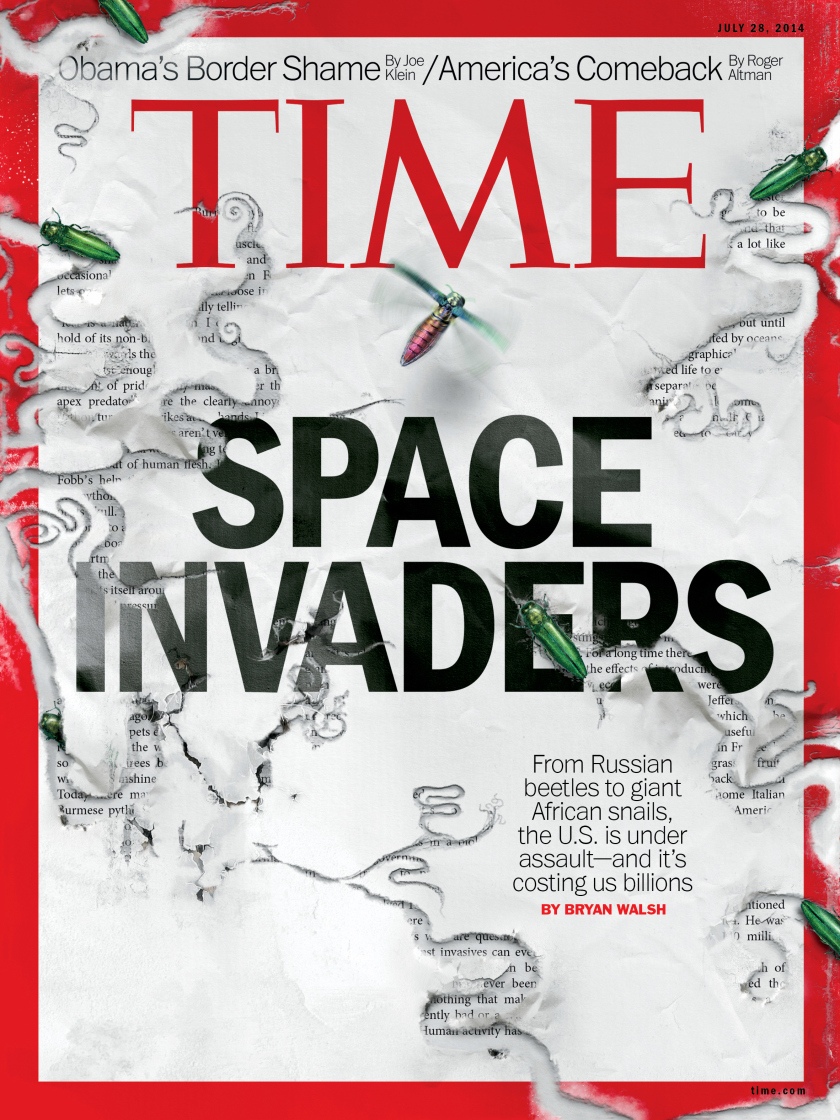
Jeannie and I subscribe to Time Magazine. This week’s edition had a pretty eye-catching cover that required a second look.
Illustration by Justin Metz for Time. Photo reference for emerald ash borer courtesy of PDCNR—Forestry Archive, Bugwood.org
That cover referred to the lead article concerning invasive species, “From giant snails to Asian carp, alien wildlife is on the move.“, written by Bryan Walsh. The essence of the article is that man’s global activities are responsible, albeit often unwittingly, for the movement of a wide range of species across national borders. My own reaction to the article was that it was typical of the many ‘scare’ stories the media present but that at the end of the day, nothing will change. However the last two paragraphs of the article did resonate with me.
Human beings have become the dominant force on the planet, so much so that many scientists believe we’ve entered an entirely new geological epoch: the Anthropocene. We have already been shaping the planet unintentionally, through greenhouse-gas emissions and global trade and every other facet of modern existence. The challenge now is to take responsibility for that power over the planet and use it for the right ends – all the while knowing that there is no single correct answer, no lost state of grace we can beat back toward.
How we respond to the thickening invasions that we ourselves loosed will be part of that answer – which is only just. There is one species that can claim to be the most dominant invasive of all time. From its origins in Africa, this species has spread to every corner of the world and every kind of climate. Everywhere it goes, it displaces natives, leaving extinction in its wake, altering habitat to suit its needs, with little regard for the ecological impact. Its numbers have grown nearly a millionfold, and its spread shows no sign of stopping. If that invasive species sounds familiar, it should. It’s us.
Thus with that article from Time in mind, it was very pertinent to see the latest essay from George Monbiot. It reinforces, in spades, the sentiment expressed by Bryan Walsh in those paragraphs above and is republished here on Learning from Dogs with the generous permission of George Monbiot.
ooOOoo
A One Way Street to Oblivion
As soon as an animal becomes extinct, a new bill proposes, it will be classified as “non-native”.
By George Monbiot, published on the Guardian’s website, 21st July 2014
Can any more destructive and regressive measures be crammed into one bill?
Already, the Infrastructure Bill, which, as time goes by, has ever less to do with infrastructure, looks like one of those US monstrosities into which a random collection of demands by corporate lobbyists are shoved, in the hope that no one notices.
So far it contains (or is due to contain) the following assaults on civilisation and the natural world:
– It exempts fracking companies from the trespass laws
– Brings in a legal requirement for the government to maximise the economic recovery of petroleum from the UK’s continental shelf. This is directly at odds with another legal requirement: to minimise the UK’s greenhouse gas emissions
– Introduces the possibility (through Clauses 21 and 22) of a backdoor route to selling off the public forest estate. When this was attempted before, it was thwarted by massive public protest.
– further deregulates the town and country planning system, making life even harder for those who wish to protect natural beauty and public amenities
Enough vandalism? Not at all. There’s yet another clause aimed at suppressing the natural world, which has, so far, scarcely been discussed outside parliament. If the Infrastructure Bill is passed in its current state, any animal species that “is not ordinarily resident in, or a regular visitor to, Great Britain in a wild state” will be classified as non-native and subject to potential “eradication or control”. What this is doing in an infrastructure bill is anyone’s guess.
At first wildlife groups believed it was just poor drafting, accidentally creating the impression that attempts to re-establish species which have become extinct here – such as short-haired bumblebees or red kites – would in future be stamped out. But the most recent Lords debate scotched that hope: it became clear that this a deliberate attempt to pre-empt democratic choice, in the face of rising public enthusiasm for the return of our lost and enchanting wildlife.
As Baroness Parminter, who argued unsuccessfully for changes to the bill, pointed out, it currently creates
“a one-way system for biodiversity loss, as once an animal ceases to appear in the wild, it ceases to be native.”
She also made the point that it’s not just extinct species which from now on will be treated as non-native, but, as the bill now stands, any species listed in Schedule 9 of the Wildlife and Countryside Act 1981.
Among those in Schedule 9 are six native species that have already been re-established in Britain (the capercaillie, the common crane, the red kite, the goshawk, the white-tailed eagle and the wild boar); two that are tentatively beginning to return (the night heron and the eagle owl); and four that have been here all along (the barn owl, the corncrake, the chough and the barnacle goose). All these, it seems, are now to be classified as non-native, and potentially subject to eradication or control.
After the usual orotund time-wasting by aristocratic layabouts (“my ancestor Sir Ewen Cameron of Lochiel, who was known as the great Sir Ewen … killed the last wolf in Scotland” etc), the minister promoting the bill, Baroness Kramer, made it clear that the drafting was no accident. All extinct species, it appears, are to be treated as non-native and potentially invasive. At no point did she mention any of the benefits their re-establishment might bring, such as restoring ecological function and bringing wonder and delight and enchantment back to this depleted land.
Here is a list, taken from Feral, of a few of the animals which have become extinct recently (in ecological terms) and which probably meet the bill’s new definition of non-native: “not ordinarily resident in, or a regular visitor to, Great Britain in a wild state”. Some would be widely welcomed; others not at all, but it’s clear that a debate about which species we might welcome back is one that many people in this country want to have, but that the government wants to terminate. There’s a longer list, with fuller explanations and a consideration of their suitability for re-establishment, in the book.
European Beaver: became extinct in Britain in the mid-18th Century, at the latest. Officially re-established in the Knapdale Forest, Argyll. Unofficially in the catchment of the River Tay and on the River Otter, in Devon.
Wolf: The last clear record is 1621 (not 1743 as commonly supposed). It was killed in Sutherland. As far as I can determine, neither Sir Ewen Cameron nor any of the other blood-soaked lairds and congenital twits from whom Lord Cameron of Dillington is descended were involved.
Lynx: The last known fossil remains date from the 6th Century AD, but possible cultural records extend into the 9th Century.
Wild Boar: The last truly wild boar on record were killed on the orders of Henry III in the Forest of Dean, in 1260. Four small populations in southern England, established after escapes and releases from farms and collections.
Elk or Moose (Alces alces): The youngest bones found in Britain are 3,900 years old. Temporarily released in 2008 into a 450-acre enclosure on the Alladale Estate, Sutherland.
Reindeer: The most recent fossil evidence is 8,300 years old. A free-ranging herd grazes on and around Cairn Gorm in the Scottish Highlands.
Wild horse: The most recent clearly-established fossil is 9,300 years old. Animals belonging to the last surviving subspecies of wild horse, Przewalski’s (Equus ferus przewalskii), graze Eelmoor Marsh in Hampshire.
Forest bison, or wisent: Likely to have become extinct here soon before the peak of glaciation, between 15,000 and 25,000 years ago. A herd was temporarily established at Alladale in 2011.
Brown bear: probably exterminated around 2000 years ago.
Wolverine: survived here until roughly 8,000 years ago.
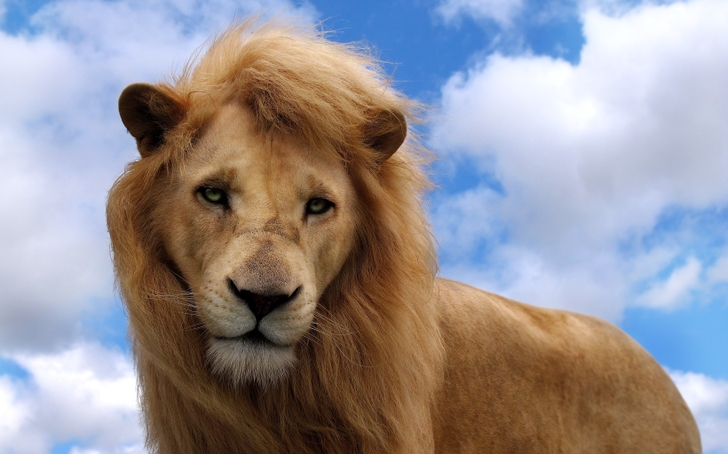
Lion: the last record of a lion in the region is a bone from an animal that lived in the Netherlands – then still connected to Britain – 10,700 years ago.
Spotted hyaena: around 11,000 years ago.
Hippopotamus: it was driven out of Britain by the last glaciation, around 115,000 years ago, and hunted to extinction elsewhere in Europe about 30,000 years ago.
Grey whale: the most recent palaentological remains, from Devon, belonged to a whale that died around 1610 AD.
Walrus: late Bronze Age, in the Shetland Islands.
European Sturgeon: possibly as recently as the 19th Century.
Blue stag beetle: probably 19th Century.
Eagle owl: the last certain record is from the Mesolithic, 9,000-10,000 years old . But a possible Iron Age bone has been found at Meare in Somerset. Now breeding in some places, after escaping from collections.
Goshawk: wiped out in the 19th Century. Unofficially re-established in the 20th Century, through a combination of deliberate releases and escapes from falconers.
Common crane: last evidence of breeding in Britain was in 1542. Cranes re-established themselves through migration in the Norfolk Broads in 1979, and have bred there since then. Now breeding in two other places in eastern England. Re-introduced in 2010 to the Somerset Levels.
White Stork: last recorded nesting in Edinburgh in 1416. In 2004 a pair tried to breed on an electricity pole in Yorkshire. In 2012 a lone bird built a nest on top of a restaurant in Nottinghamshire.
Spoonbill: the last breeding records are 1602 in Pembrokeshire and 1650 in East Anglia. In 2010 a breeding colony established itself at Holkham in Norfolk.
Night Heron: last bred here in either the 16th or 17th Century, at Greenwich. Today it is a scarce visitor.
Dalmatian Pelican: remains have been found from the Bronze Age in the Cambridgeshire Fens and from the Iron Age in the Somerset levels, close to Glastonbury. A single mediaeval bone has been found in the same place.
These and many others are now to be classified as officially non-native, unless this nonsense can be stopped.
Incidentally, determining what is and isn’t a native species, let alone what “should” or “should not” be living here, is a much more complicated business than you might imagine, as Ken Thompson’s interesting book, Where Do Camels Belong?, makes clear. He also points out that some species which are initially greeted with horror and considered an ecological menace soon settle down as local wildlife learns to prey on them or to avoid them. Sometimes they perform a useful ecological role by filling the gaps created by extinction. He overstates his case, and glosses over some real horror stories, but his book is an important counterweight to attempts to create a rigid distinction between native and non-native wildlife.
Many species introduced to this country by human beings are now cherished as honorary members of our native wildlife. Here are just a few I’ve come across. How many of you knew that they were all brought here by people?:
Brown hare
Little owl
Field poppy
Corncockle
Crack willow
Greater burdock
Pheasant’s eye
Cornflower
Wormwood
Mayweed
White campion
Isn’t this an interesting subject? Unfortunately government ministers seem to know to know nothing about it and to care even less. They are crashing through the middle of delicate interactions between people and the natural world like bulldozers in a rainforest.
I will close today’s post with another, very recent, story in The Guardian, that opens, thus:
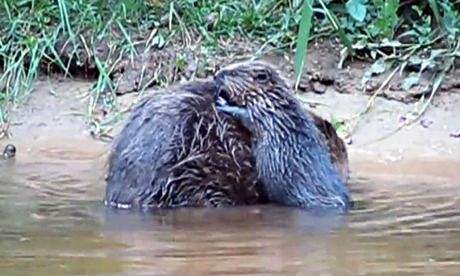
Wild beaver kits born in Devon
Thursday 17 July 2014
One of the first wild beavers to be seen in England in centuries and due to be taken into captivity has given birth to three young.
Local retired environmentalist Tom Buckley captured the three young beavers climbing all over their mother. Photograph: Tom Buckley/Apex
A wild beaver due to be taken into captivity has given birth to at least three young.
The young, known as kits, were born to the family of two adult and one juvenile European beavers (Castor fiber) that were spotted living on the river Otter in Devon earlier this year, in what was believed to be the first sighting of the species in the wild in England in 500 years.
All that is left for me to do is to quote a little from a recent letter from John Hurlburt.
Our future depends on the air we breathe. Our lives depend upon rivers of living water. Our health requires the blessings of organic agriculture. Our energy streams through us from the cosmos.
We are warrior animals. Peace must come from within. Non-violence is our best choice. We have the magnificent opportunity to wake up as an animal that is grateful and sings in harmony with the Earth.
The present is surrounded by the past and the future. We float on the wings of compassion and wisdom with a sacred responsibility for the Nature of all Creation.
Such a fundamental aspect of all conscious life on Planet Earth.
As many of you know, weekend posts on Learning from Dogs are usually pretty innocuous. But two things came together to make me want to offer today’s central thoughts while they were fresh and clear in my mind.
The first thing flowed from good friend, John Hurlburt. Together with Jon Lavin, John had helped me develop my Statement of Purpose for my book. It was John who proposed a chapter under the heading of “The biological interconnectedness of all conscious earthly life“; a proposal I embraced with open arms.
The second thing was that Alex Jones, he of the blog The Liberated Way, published a post yesterday that, succinctly and beautifully, supported John Hurlburt’s thesis.
What do we mean by the idea that all of us are connected? (…. and ignoring the many of you who wonder why the question even has to be asked.)
I’m going to answer that most fundamental of all questions in this rather roundabout manner.
As someone who in previous times has been a glider pilot (aka sailplane in US speak), and a long-distance sailor (Tradewind 33), the weather about me was very much part of my life. Long ago I came to love clouds. Yesterday morning we had to take puppy Oliver to the vet and, unusually for this time of year in Southern Oregon, overhead there were beautiful grey stratus clouds covering 90% of the sky. There wasn’t the time to grab my camera but the following stock photograph found on the web is close to what we saw.
Still en-route in answer to the question, take a look at the next photograph; also from the web.
Now to the next photograph. (Hang on in there!)
See how the road, a man-made road stretching away to the horizon, is such an intimate part of the landscape and the sky.
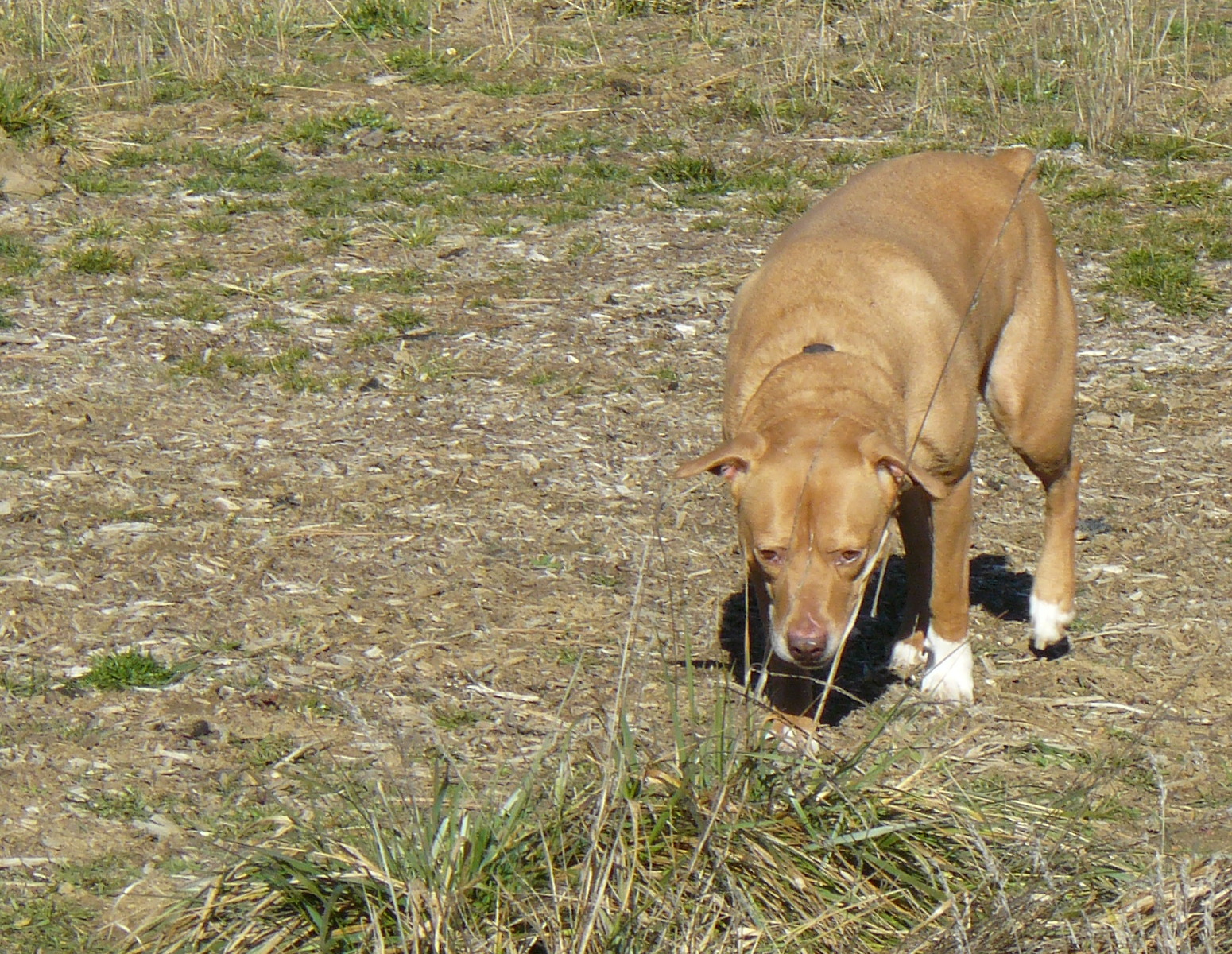
Now to my final photograph.
I see a strong and clear theme behind these four beautiful images. A theme that answers the question of what we mean by the idea that all of us are connected.
It is this.
Our planet’s atmosphere gives us all that we need to live. All the oxygen and water and other essentials for all of life. Over millions of years it has provided all that life has needed to evolve and grow.
The land prospered. Beautiful animals arrived. Then came man and over time he left his mark on the lands of the planet. For aeons of time, man and animals shared their lives upon the land. Indeed, man and animals frequently demonstrated they had the capacity to love each other without denying the fact that both man and animals, in many cases, were also meat-eaters. To state the obvious, the beauty of the obvious, is to say that everything on this planet is connected under Nature. Man, animals, lands: all part of that same Nature.
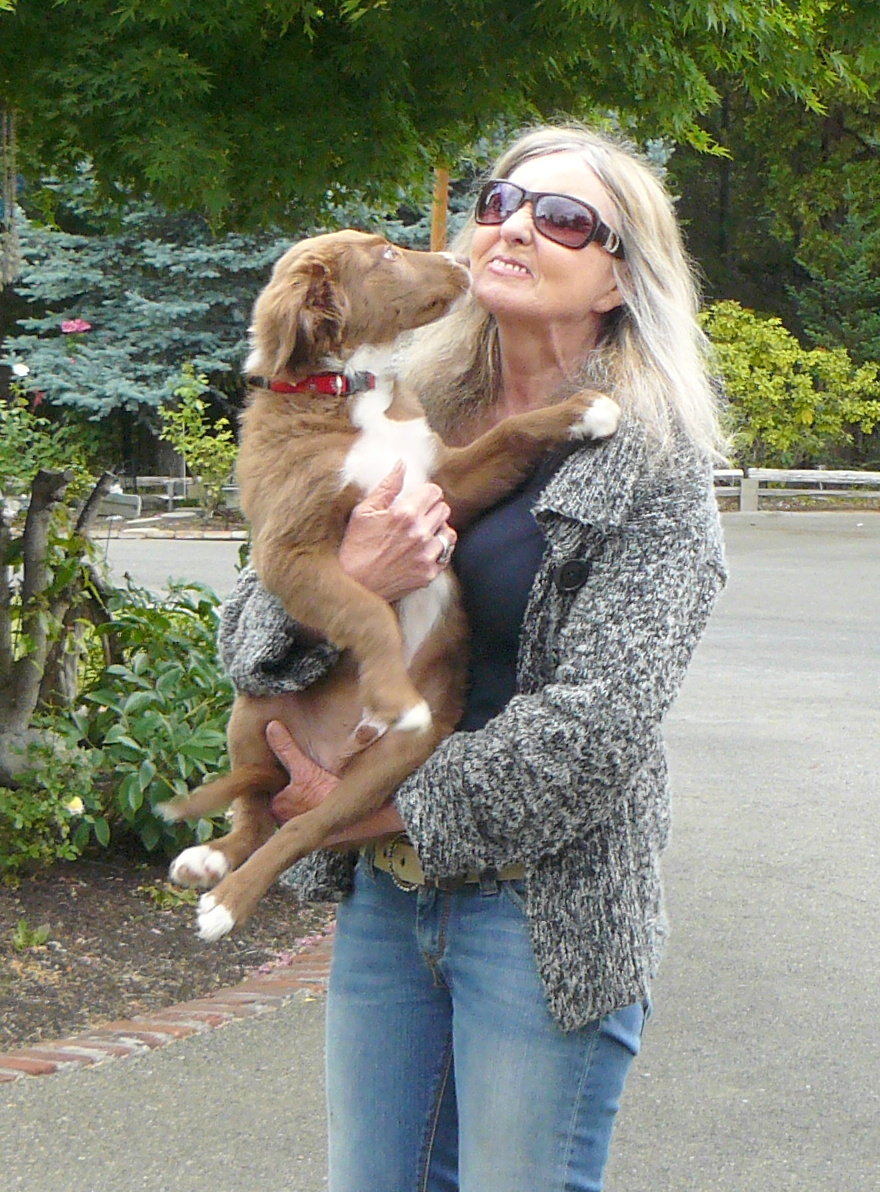
Loving each other: woman and dog!
Let me close by republishing with Alex’s permission his post from yesterday.
ooOOoo
One in nature
The joy of knowing nature and self are one.
The butterfly and I enjoyed a common connection in the sun on a fallen tree – we became one.
Sitting upon a fallen dead tree, one that could have but did not kill me when it fell in the storms last year, an orange butterfly flew and settled next to me. Here we were, butterfly and I, enjoying the warm sun sitting on the same tree trunk like two people on a park bench. The butterfly would after a time fly away returning later to sit next to me. In this moment I shared something in common with this butterfly, different species, but living on and coming from the same planet earth.
Another day it is raining, I huddle under the garden conifers eating raspberries, watching the clouds empty their water upon a thirsty garden, my cat Pebbles sitting at my feet. Out of the fallen branches two little mice played, oblivious to me and the cat, which did not seem to notice them.
For many people there are degrees of separation from nature, us and them. For some like me, Ubuntu, I am because we are. There is only connection, the animals and I are one.
Camping in the rain, a knocking at the tent door. I looked out of the tent, I looked into the eyes of a frog, which then vanished into the rainy darkness.
When you are a WordPress user, as is Learning from Dogs, you can pay $30 a year to stop advertisements from appearing on one’s blogsite.
This is how WordPress explain their policy on advertising:
We sometimes display advertisements on your blog to help pay the bills. This keeps free features free! We only run them in limited places, and we do not show ads to logged-in readers, which means only a very small percentage of your page views will actually contain ads. To eliminate ads on your blog entirely, you can purchase the No-Ads Upgrade for a single blog (per year).
I choose not to pay that upgrade, despite the ads being annoying; of that I have no doubt.
For this reason.
WordPress pay an amount of their advertising income to the owner of the blog. Thus twenty-four hours ago, WordPress sent me an email:
Just thought you’d like to know WordPress.com sent you $106.23 USD.
I’m not sure but I think that covers the last twelve months.
That $106 will be divided into two with $53 staying with Jean and me and $53 going to our nearest humane society; Rogue Valley Humane Society.
Hoping that this story of rescuing some young birds may be of help to others.
Last Saturday afternoon we were sitting outside under the shade with the ‘kitchen’ group of dogs enjoying themselves.
Jean and I noticed Casey taking a great interest in something on the ground. Casey is a keen explorer as this photograph from earlier in the year demonstrates.
Casey demonstrating a dog’s focussing skills!
The something that had caught Casey’s attention was a small baby bird that had fallen from a nearby nest. We called Casey away and went across to see the tiny creature whereupon Jean picked up the baby bird.
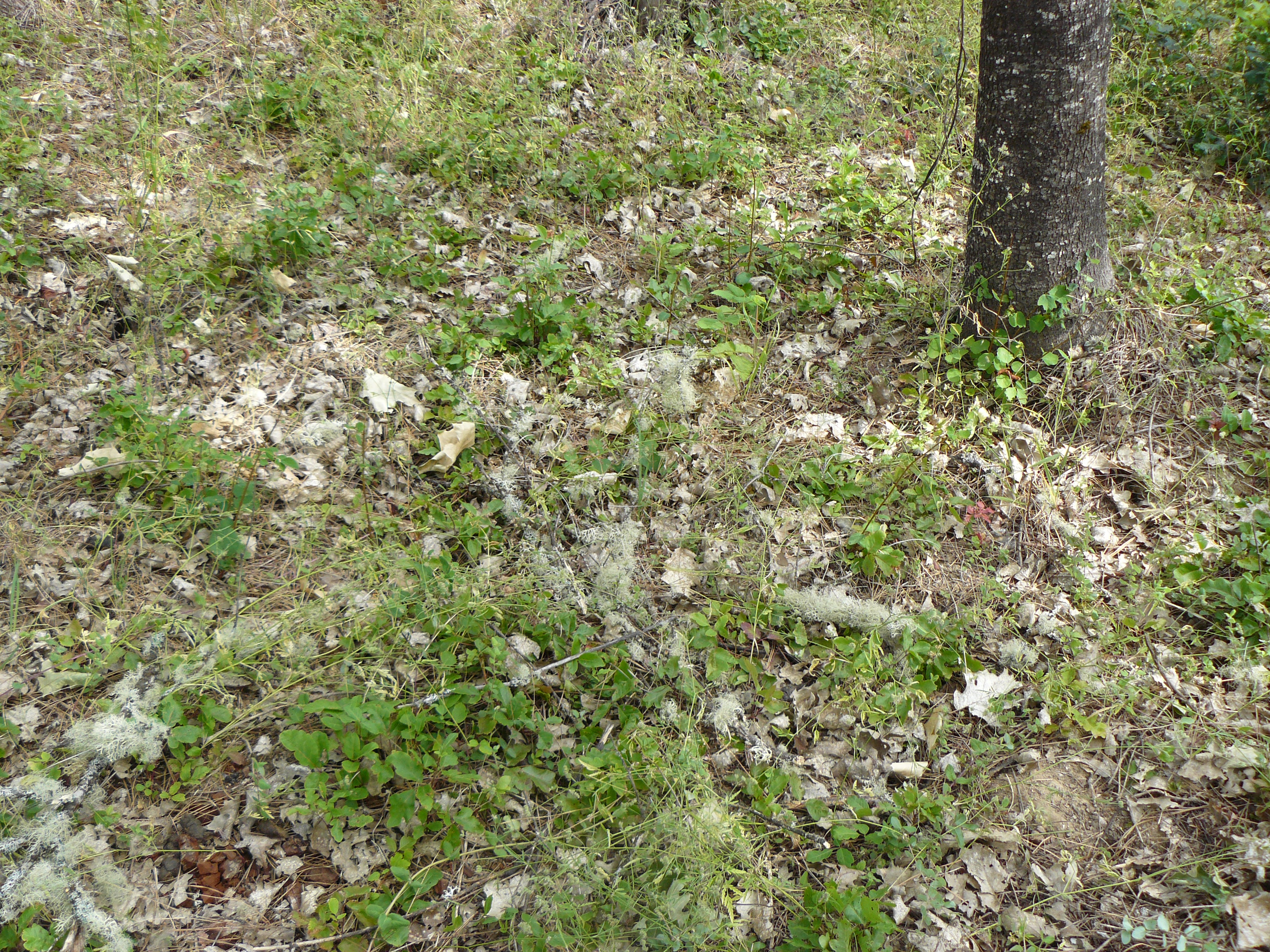
The patch of ground where the birds were found.
Frankly, we didn’t have a clue as to what to do but called Wildlife Images, just a few miles away from where we live. As the Wildlife Images website explains:
Our guiding principles are the foundation for “why” we do what we do. These principles guide us in our work, our relationships with each other, our guests, supporters, sponsors, and vendors.
PURPOSE
Saving Wildlife
VISION
Wildlife Images Rehabilitation and Education Center is the educational leader of a healthy co-existence with our wildlife neighbors by rehabilitation sick, injured, and orphaned animals.
MISSION
Involve – people to share in our vision.
Educate – children and adults about the personal benefits of taking care of wildlife entrusted to our care.
Inspire – the public to engage in our rehabilitation and education efforts.
Jean and I had previously visited the centre and been impressed with their dedication to saving wildlife.
Over the phone we were told that the best thing to do was try and find the old nest and replace the baby bird within the nest. If all else failed then bring the bird across to Wildlife Images.
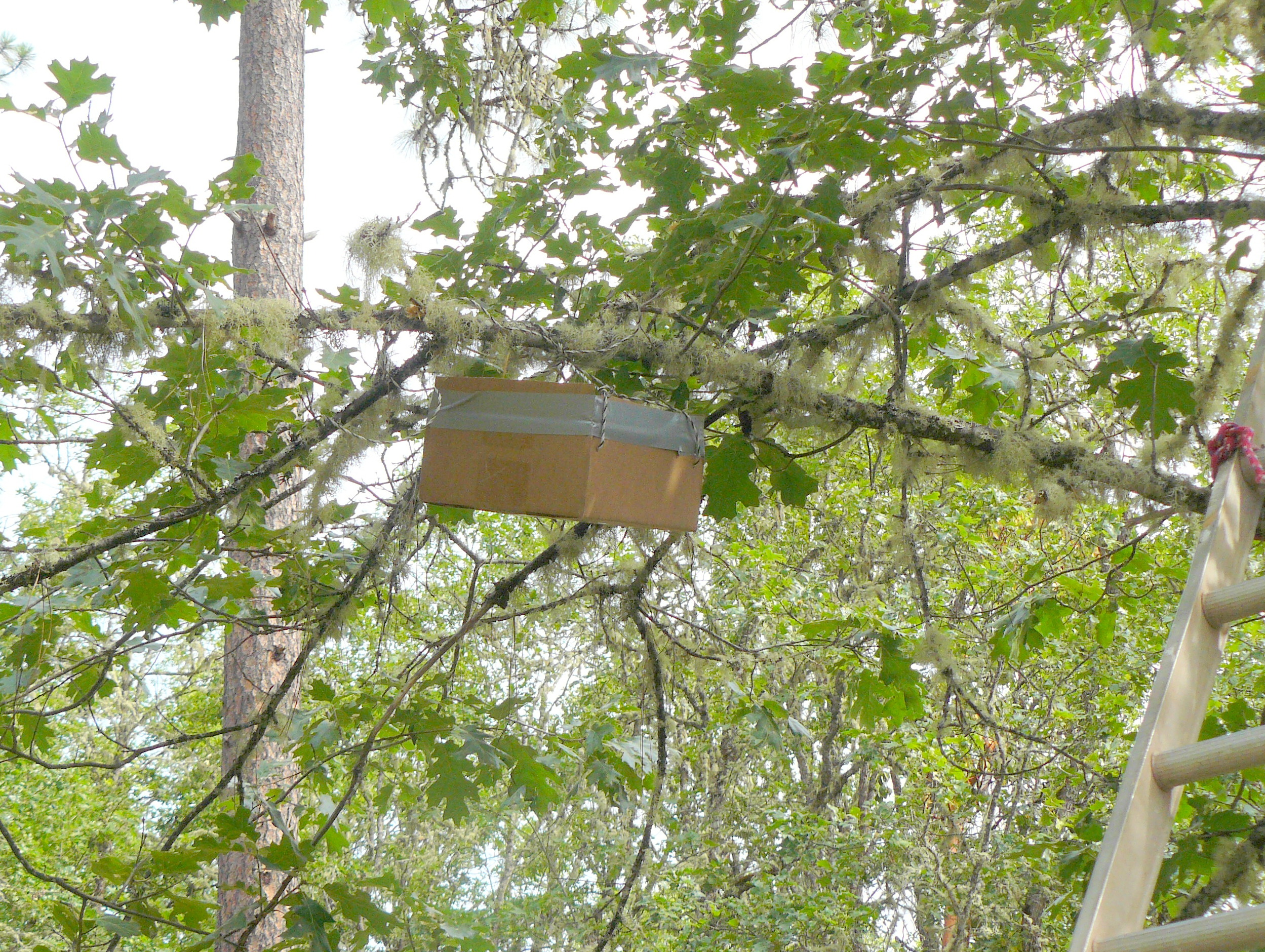
Frankly, we struggled to find the nest but at least got a ladder up against the likely tree from where the bird had fallen.
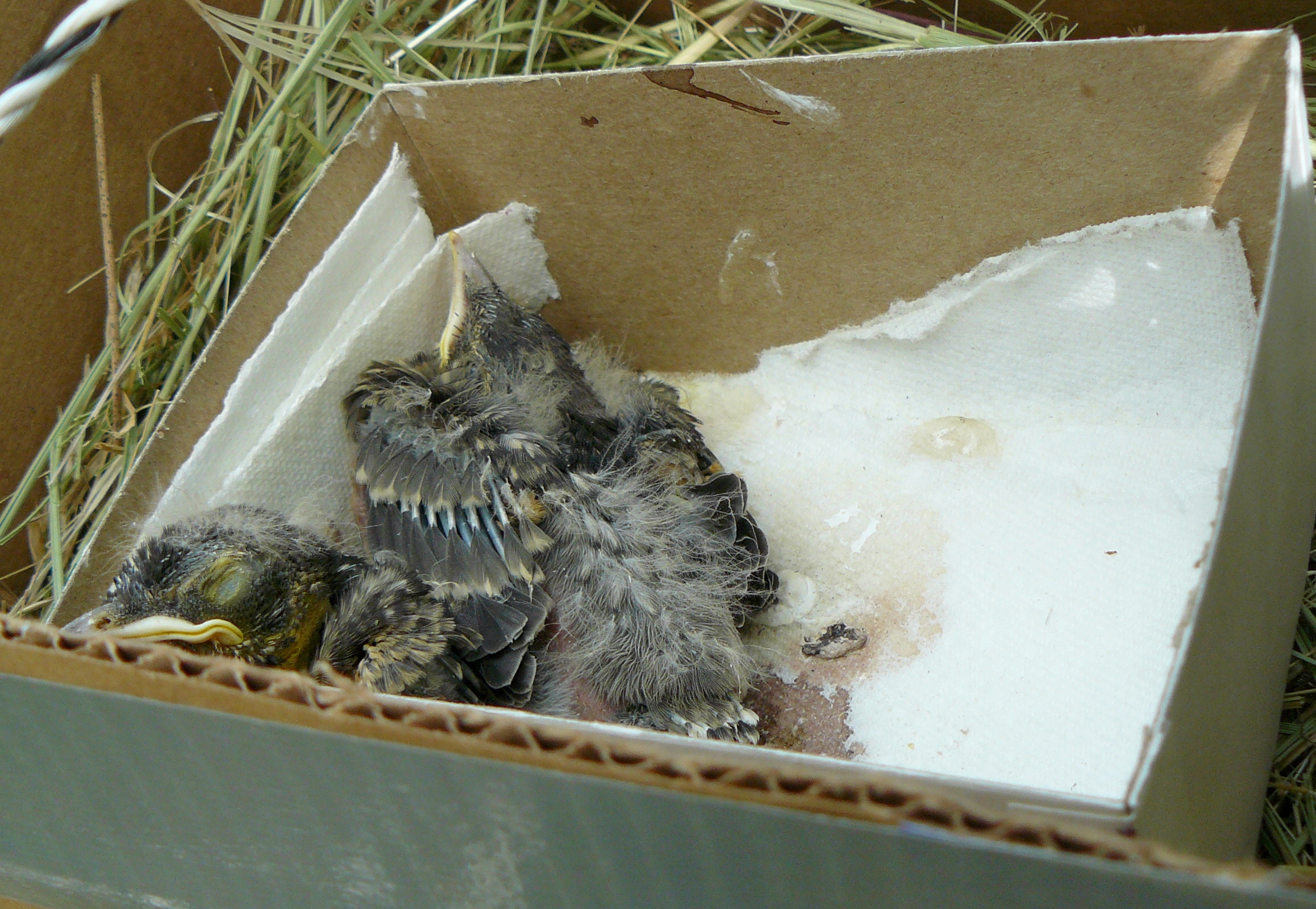
It was as we were getting the ladder in place that we discovered another tiny bird on the ground in amongst the dead leaves and ground cover. Now we had two birds and knew we were struggling to do the right thing for these vulnerable creatures.
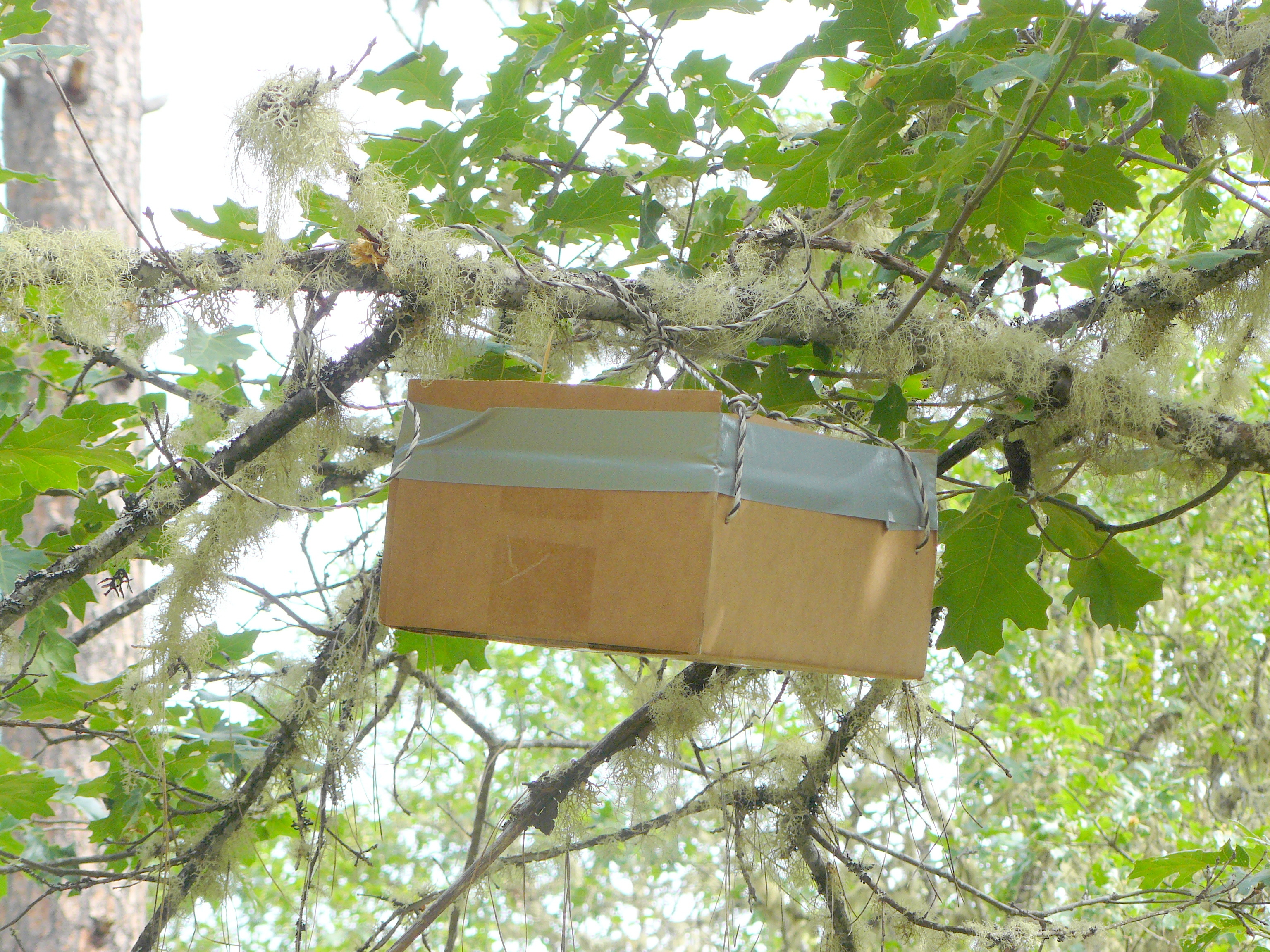
We drove across to Wildlife Images and they advised us to build an artificial nest and hang that up in the tree. The call of the baby birds would attract the mother and, with a bit of luck, the mother would return to feeding the chicks again. We were also told to speak quietly around the baby birds so that they wouldn’t imprint on our voice. Apparently that was the greater risk of them being rejected rather than the smell of humans on their little bodies.
So back home we went and soon had a makeshift ‘nest’ in place.
Would it work?
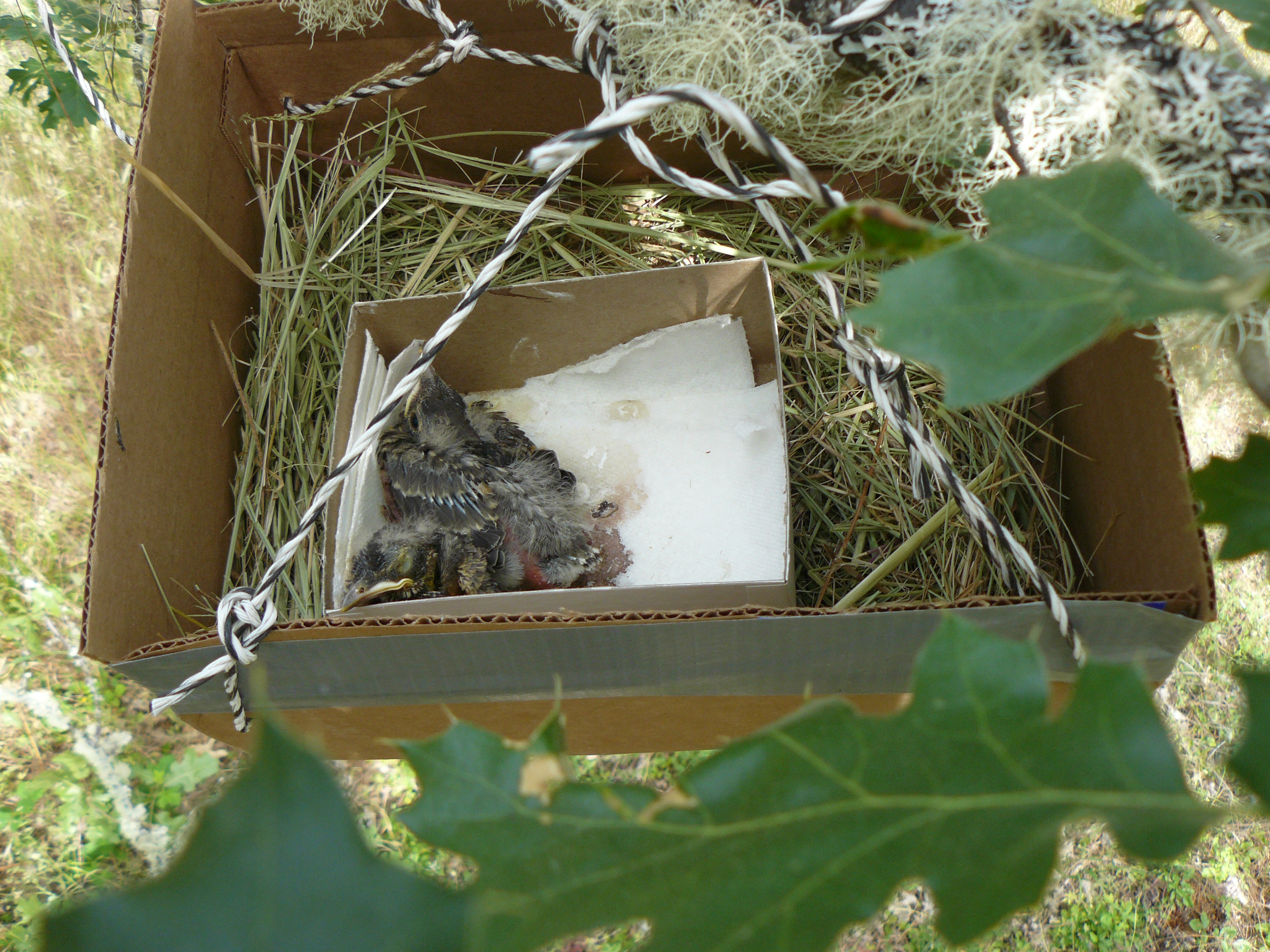
Once the ‘nest box’ was in place, it was time to place the youngsters in their new home.
Good luck, my little things.
We left the birds in peace and went inside for a while. Our fear was that they might try leaping out.
Then curiosity got the better of us and we needed to see if they were still alright. So a couple of hours later, I took the following photograph.
Against all odds!
The evening approached and we feared for their fate.
Then miracle of miracles we saw the mother come to them and start feeding her offspring.
We retired for the day content that we had done all we could.
Then on Sunday morning, bright and early, we went outside again. Had they survived the night? Had the mother returned to feed them this second day?
We heard nothing: saw nothing. Feared the worst.
It was no good, I had to climb the ladder and take a peek.
Still alive!
They were still in the land of the living!
Yet, there was still no sign of the mother.
Jean and I sat under our nearby gazebo and tried hard not to fear the worst. My camera was on my lap.
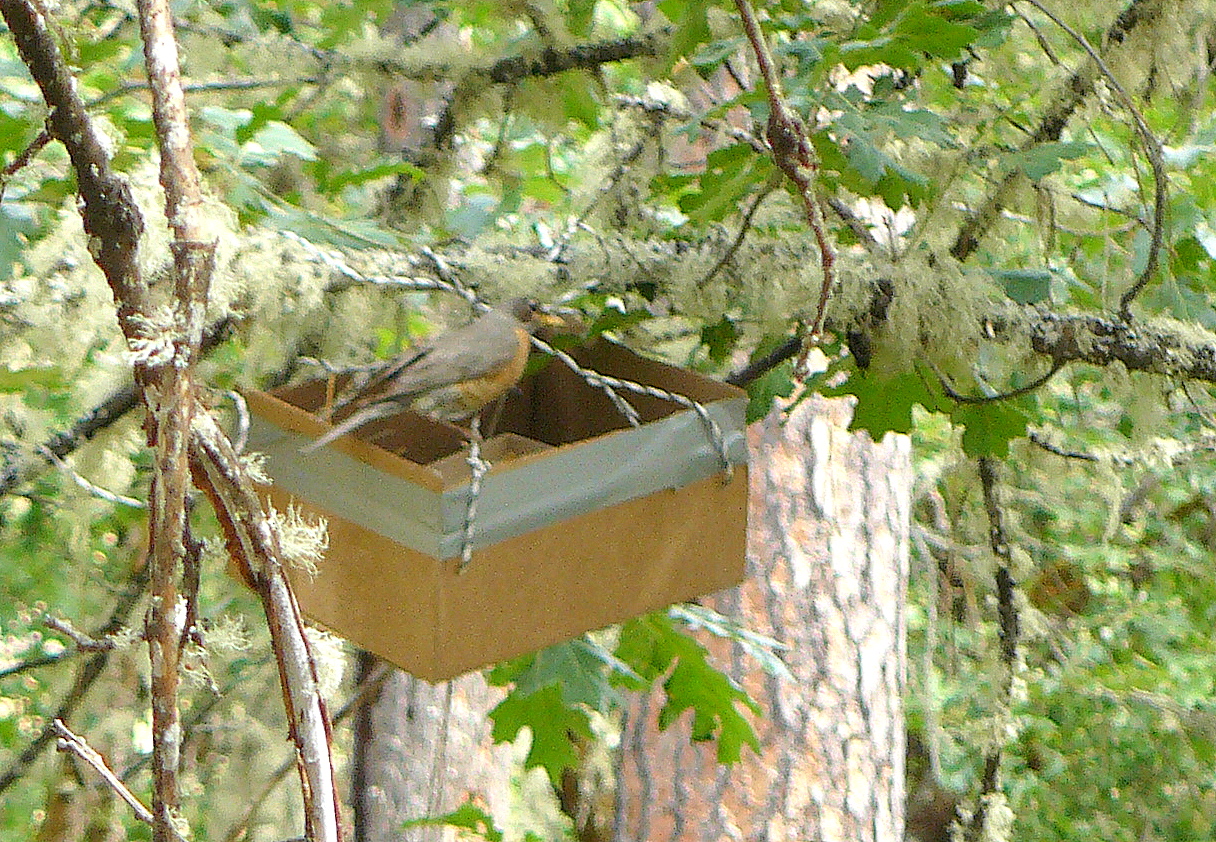
Then Jean saw a flash of feathers. It was the mother arriving to feed her young.
I was able to take the following picture.
Not the best quality picture but so what! It’s proof the birds are being cared for by their mother.
In the scheme of things, rescuing a couple of small birds doesn’t add up to much. But I’ll tell you! When Jean and I saw the mother feeding her young both of us were a little wet around the eyes!
Just last Tuesday, I posted the news that we had welcomed young puppy Ollie. (It was later that day that we decided on the renaming from ‘Smokey’ to ‘Ollie’.)
Anyway, at the end of that post I said that Sunday’s picture parade would be devoted to some further pictures of the young man. So here they are!
First, a further couple of pictures from that same day that Ollie arrived; the 16th.
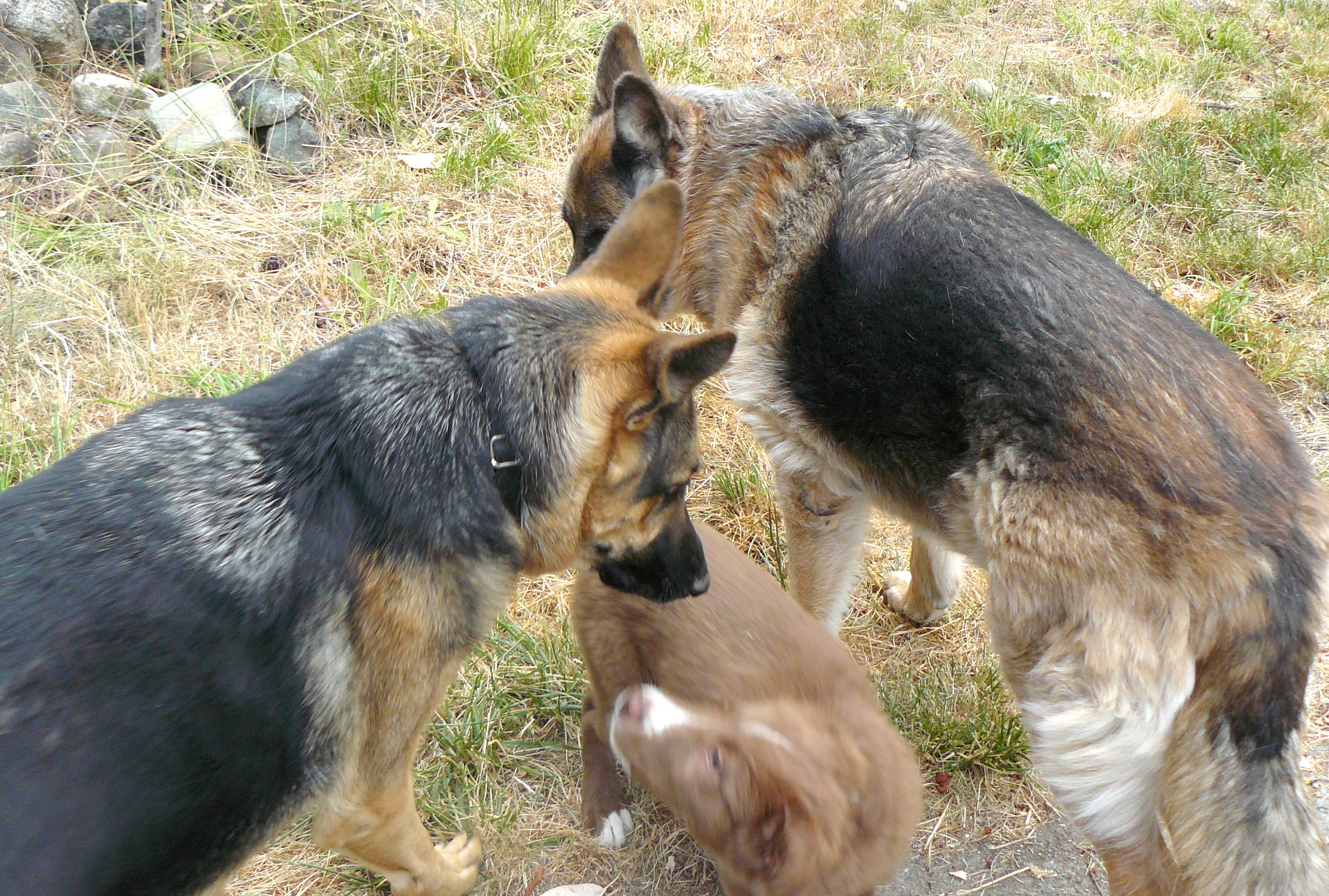
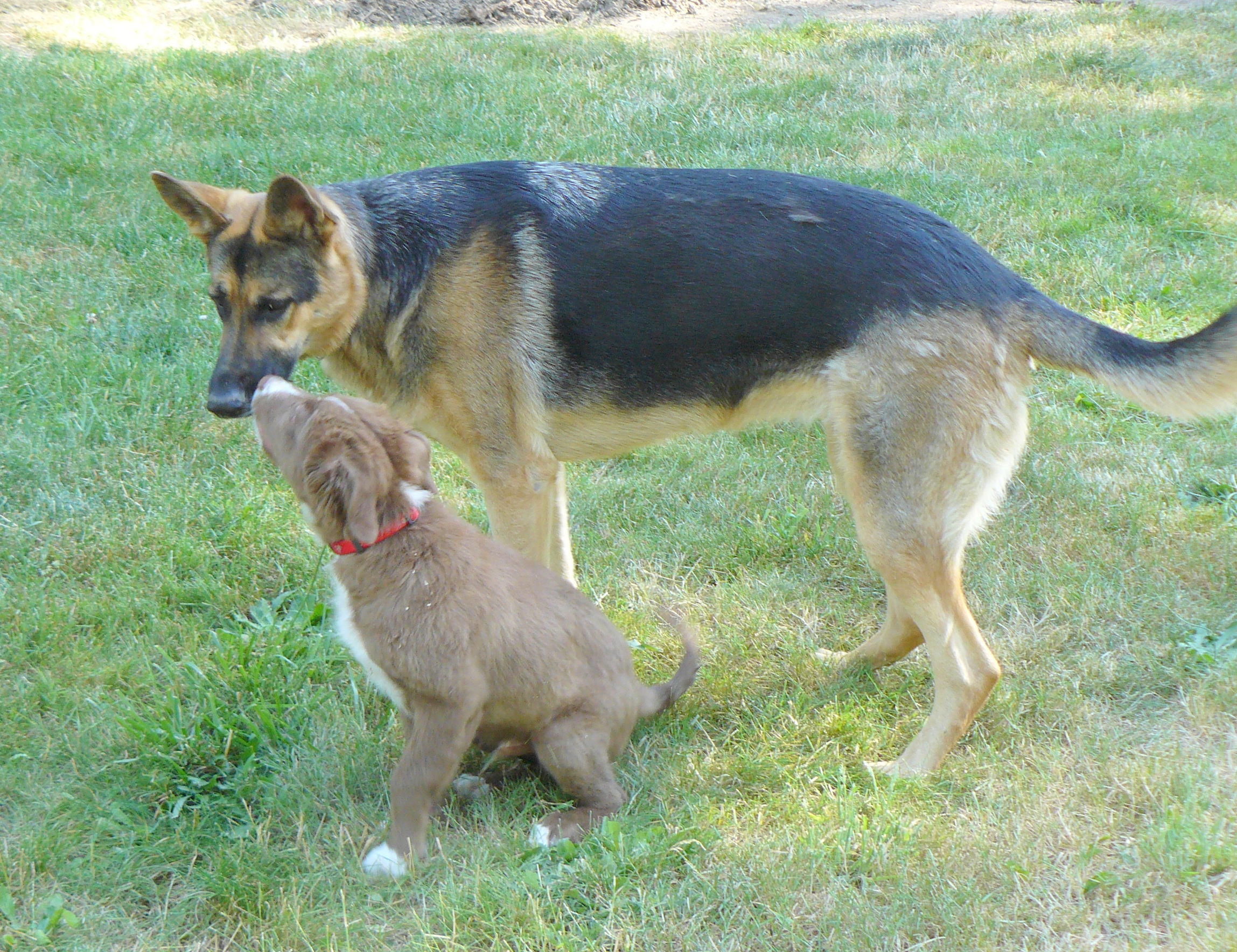
As may be seen, Pharaoh (RHS) and Cleo accepted this young puppy in moments. A real delight to see how smoothly it went.
A Shepherd Sandwich!
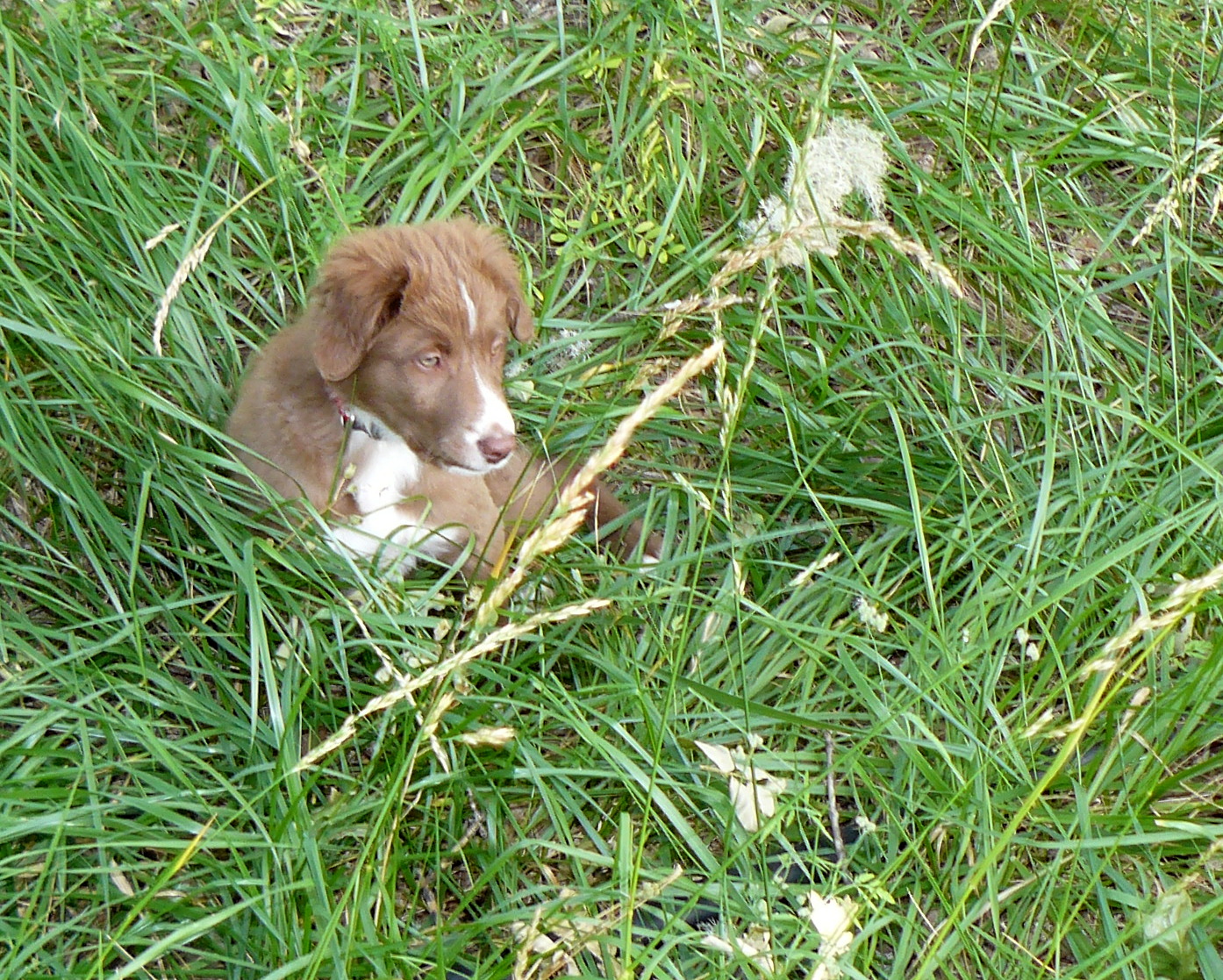
Then during the afternoon of the 16th, I grabbed this lovely study of Ollie looking out over new pastures; so to speak!
Just a gorgeous picture of the young lad!
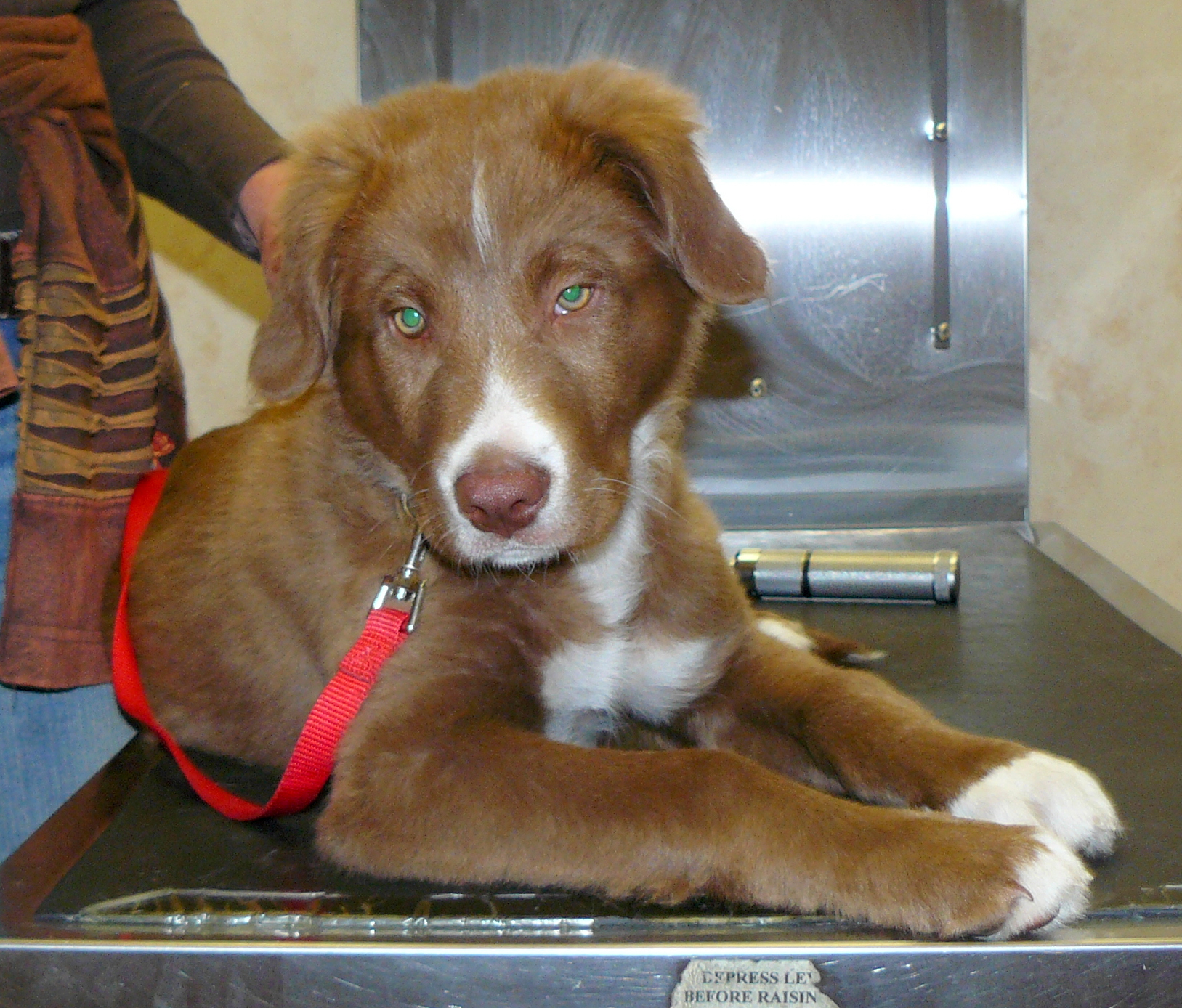
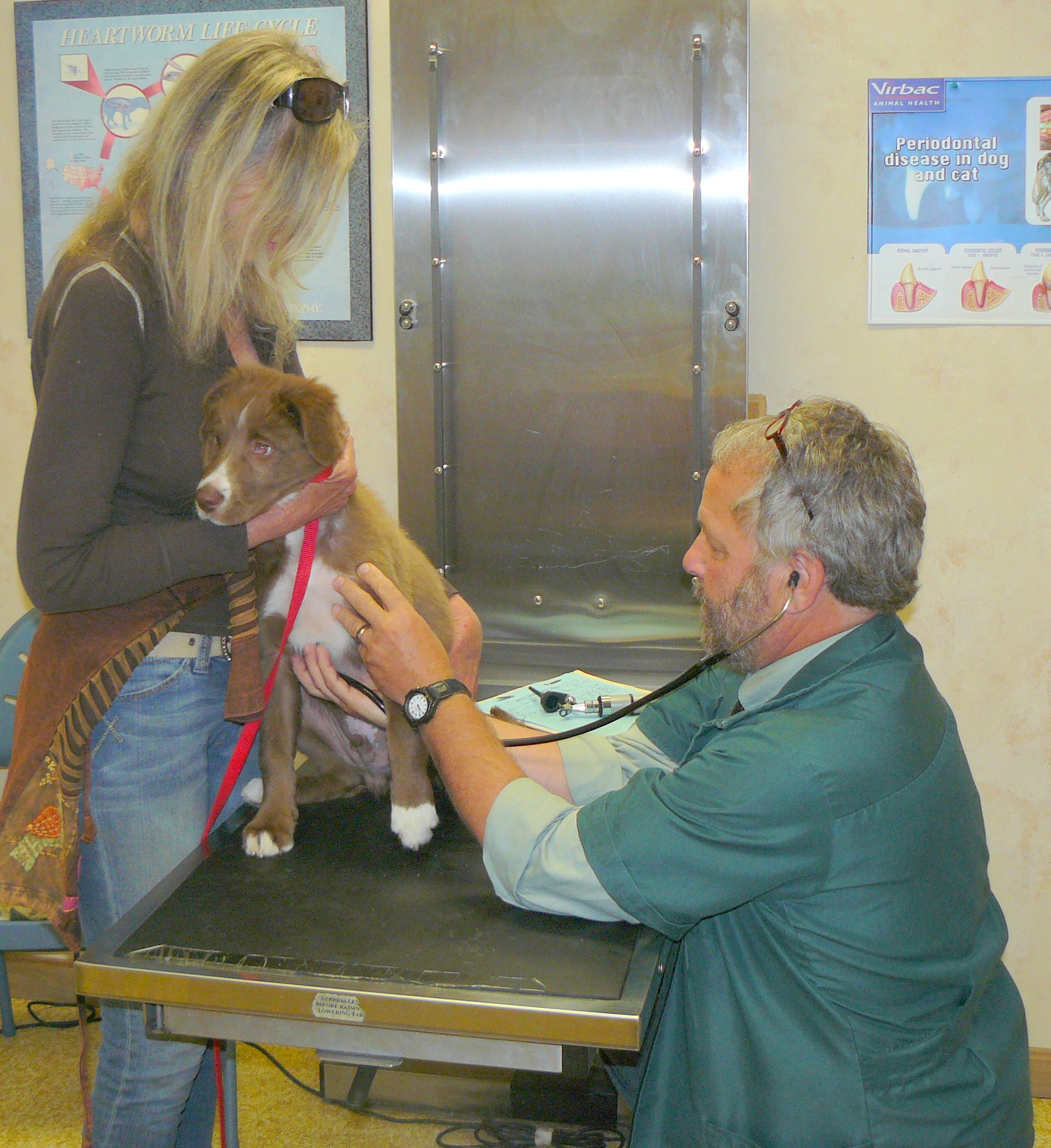
Ollie was due a couple of injections so on the 19th he was taken to our local veterinarian establishment.
Mummy, I feel a bit uncertain of all this!
(Aren’t those eyes of his just beautiful!)
Before Ollie could say ‘bone’ it was all done and time to go home!
The good Doctor Goodbrod!
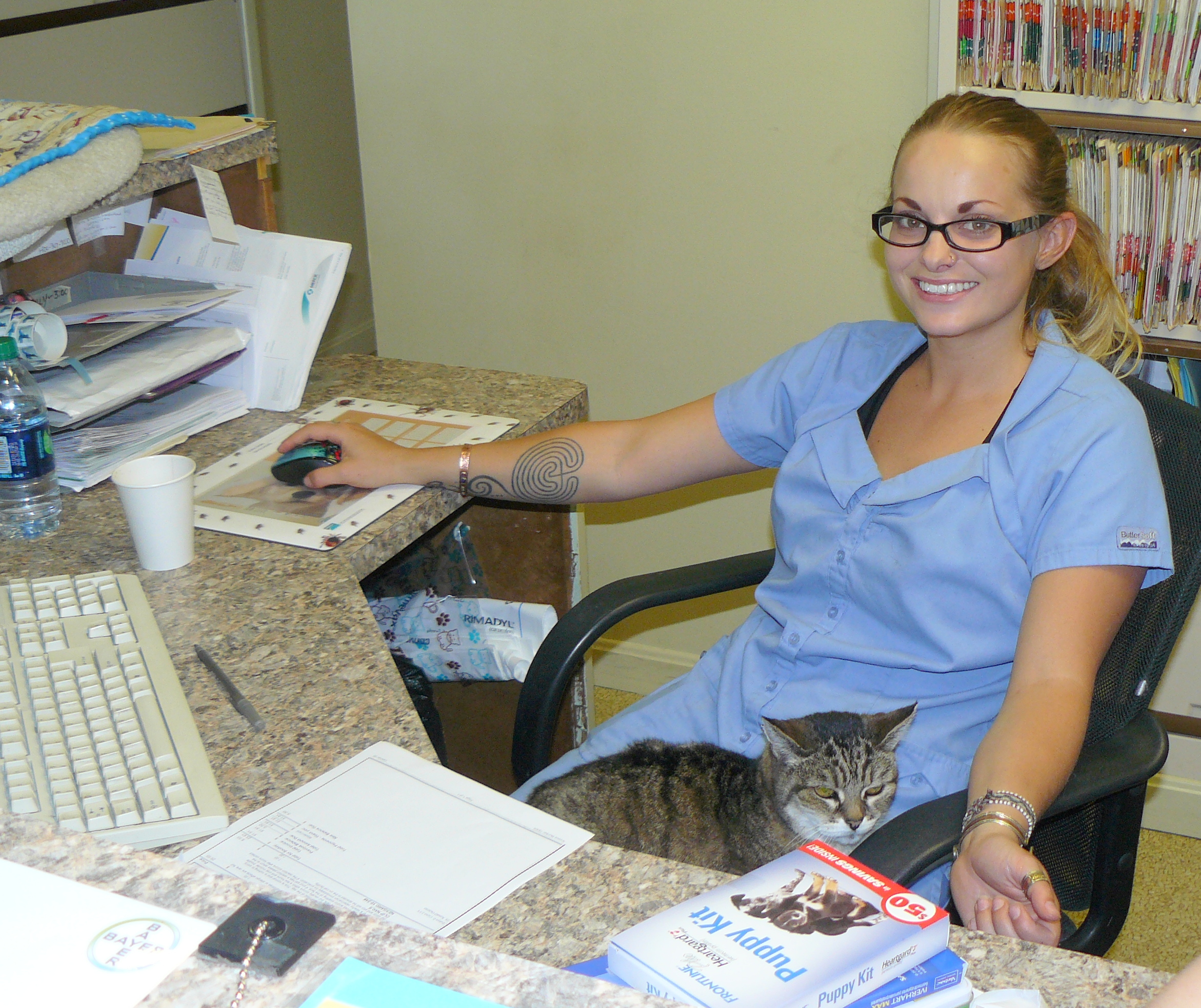
But not before Ollie was given his puppy kit by Jasmine! (Who is a bit of an animal person as well!)
Jasmine and NutNut.
The day after the visit to the Vet’s office, I chose the following shot from number of photographs taken on the 20th. It just seemed to convey the friendship and trust that had so quickly developed between Ollie and Cleo.
Ollie and Cleo!
The final photograph for today was taken early in the morning on Mid-Summer’s Day.
A contemplative moment!
Make no mistake, Ollie is full of all the wonderful ‘charms’ of a young puppy dog but he is a very smart, sensitive individual and a wonderful addition to our home. Very difficult to believe that today, this Sunday, we haven’t even had him for one week.
Our new young puppy is consuming a great deal of attention and time!
As regular readers will know (and your readership is so much appreciated) last Tuesday I published the news that we had taken on a new puppy. He is settling in incredibly well but consuming heaps of attention; as well he should.
So rather than struggle to be creative with today’s post, I’m cheating by going back to the last time I wrote about a new arrival to our flock; namely puppy Cleo. If you will forgive me, I’m going to republish the post I wrote for puppy Cleo back on April 8th, 2012.
But before so doing, let me explain that our latest arrival has gone through a name change. The previous owners had named the young pup Smokey but we were not comfortable with that name; Jean especially so. So Smokey is now Ollie!
ooOOoo
The arrival of Cleo brings us back to eleven dogs.
Way back in 2003 when I became the proud ‘Dad’ of Pharaoh, my German Shepherd dog that you see on the home page of Learning from Dogs, Sandra Tucker who ran the GSD Breeders Jutone, where Pharaoh was born, gave me some advice. Sandra said that when Pharaoh was getting on in life, then bring in a German Shepherd puppy. Apparently, there were two solid reasons why this made sense. The first was that Pharaoh would teach the new puppy many of the skills and disciplines that Pharaoh had learnt as a young dog and, secondly, the puppy would keep Pharaoh active.
Now we know this to be true because years later when Pharaoh had his own mini pack here in Payson, we introduced a new ‘rescue’ puppy called Sweeny. Pharaoh took an instant like to him and became very tolerant to Sweeny’s ‘games’.
Hi! I’m Pharaoh, going to be my buddy? (February, 2011)
But as adorable as Sweeny is, Jean understood the deep reasons why I always wanted a German Shepherd in our lives. So when a chance encounter in Payson Feed Store between Jean and Brendon S. revealed that Brendon had a litter of German Shepherd puppies for sale, just a couple of miles outside Payson, the temptation was irresistible!
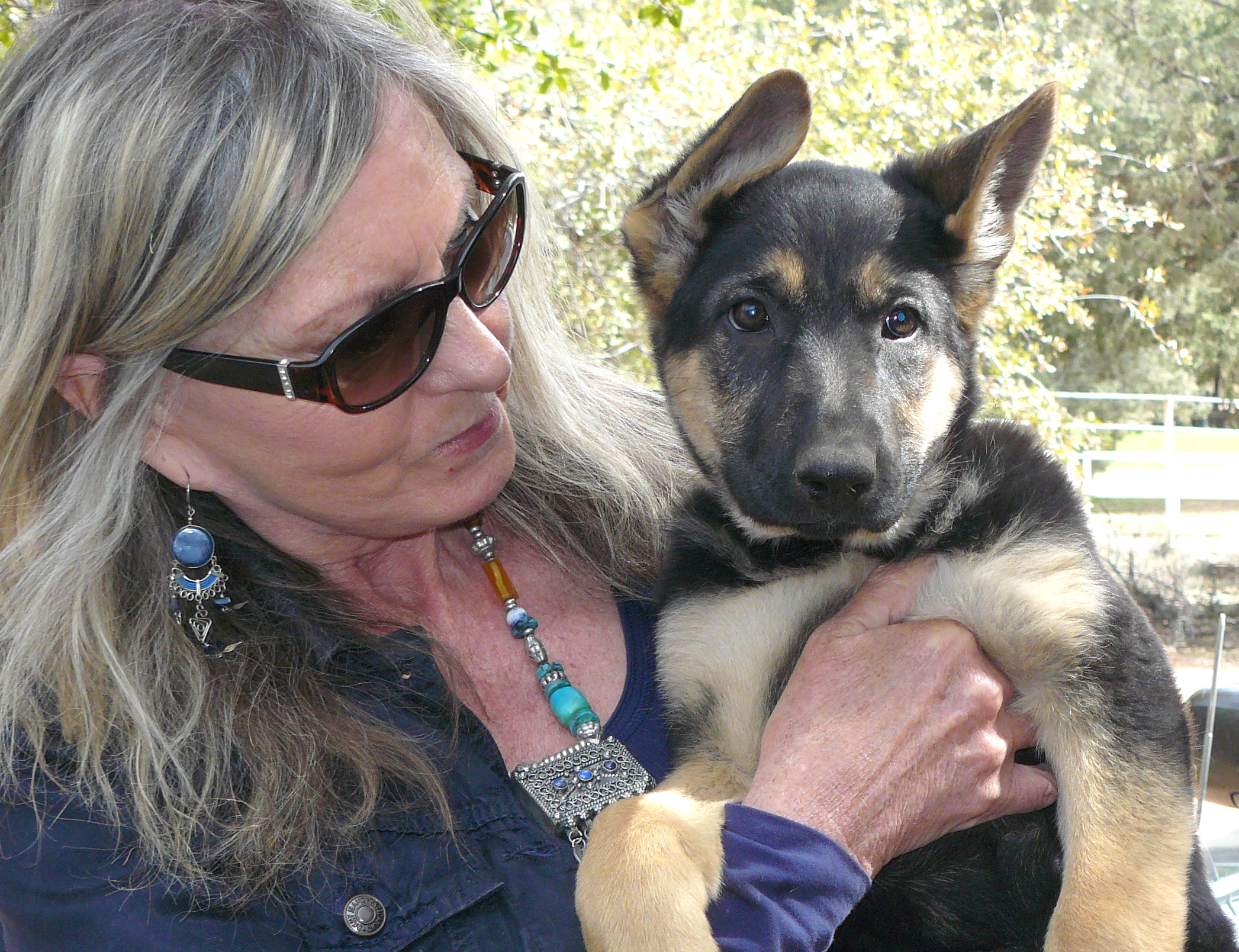
Thus a few days ago, Jean and I went round to Brendon’s home and spent a couple of hours mingling with the puppies and their GSD mother. They all looked excellent dogs and a review of their blood lines showed that their genetic background included German stock not too far back. It was difficult to select any one pup as they were all wonderful animals. But one youngster seemed to catch Jean’s eye.
Little bit of bonding going on!
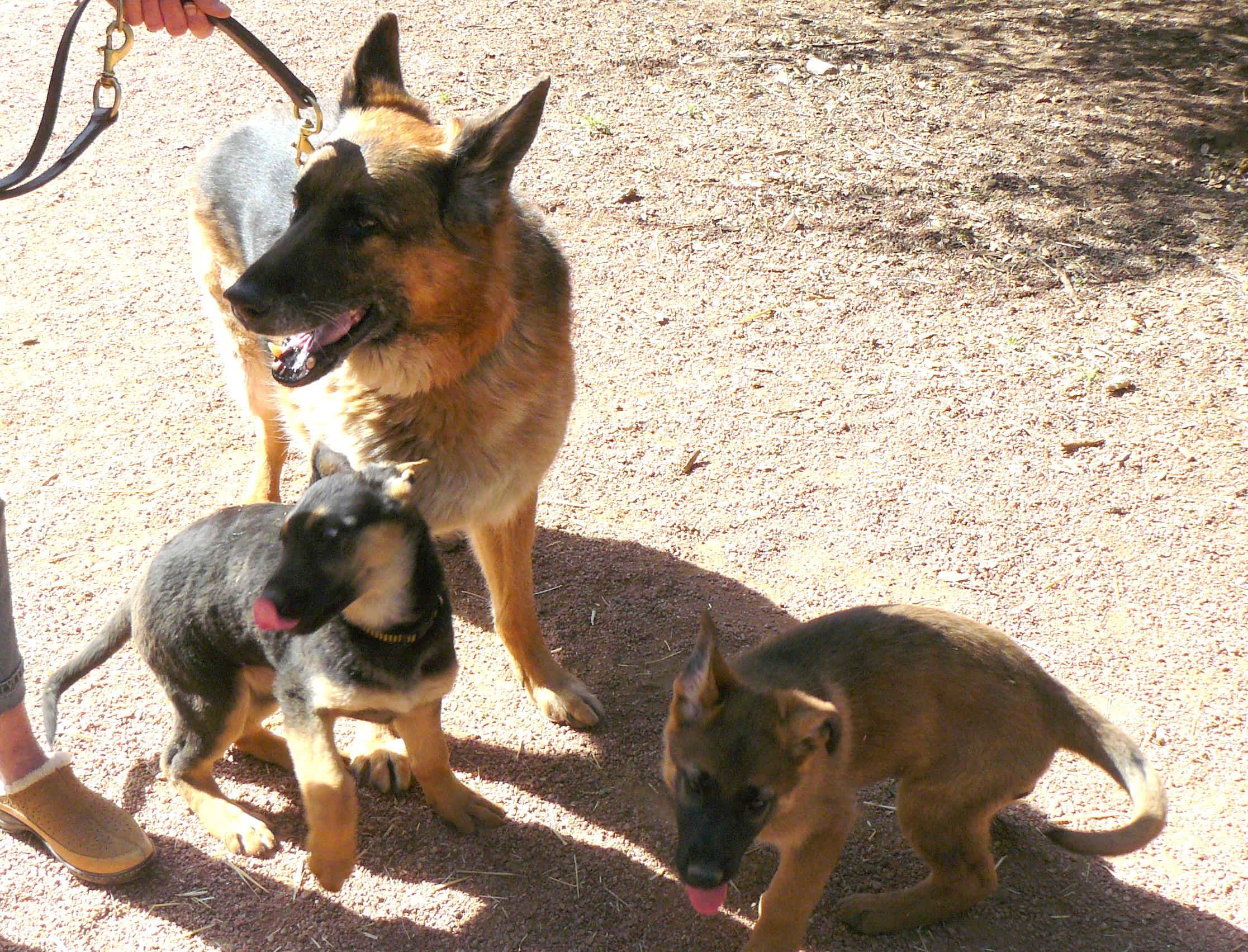
Then the next test was to introduce Pharaoh to the puppies. That took place last Friday and it was wonderful to see how well he coped with the onslaught of puppies!
More puppies that one could shake a stick at!
In the end, we ran out of reasons not to follow Sandra’s advice from all those years ago and we agreed terms on a young female GSD that, inevitably, was christened Cleopatra (Cleo) by Jean!
Cleo meet your new Mum!
Then yesterday, Saturday, we went back round to collect young Cleo, meeting Brendan’s wife Ebony in the process. The following photographs record some of the key moments.
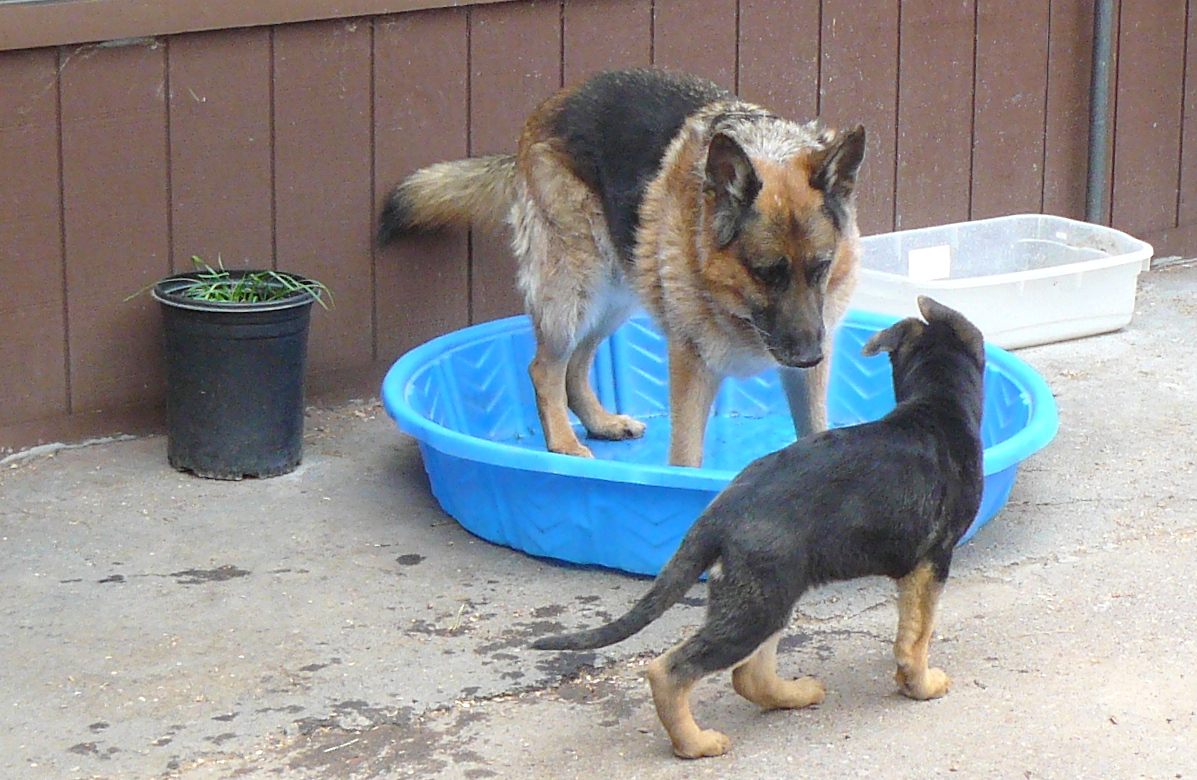
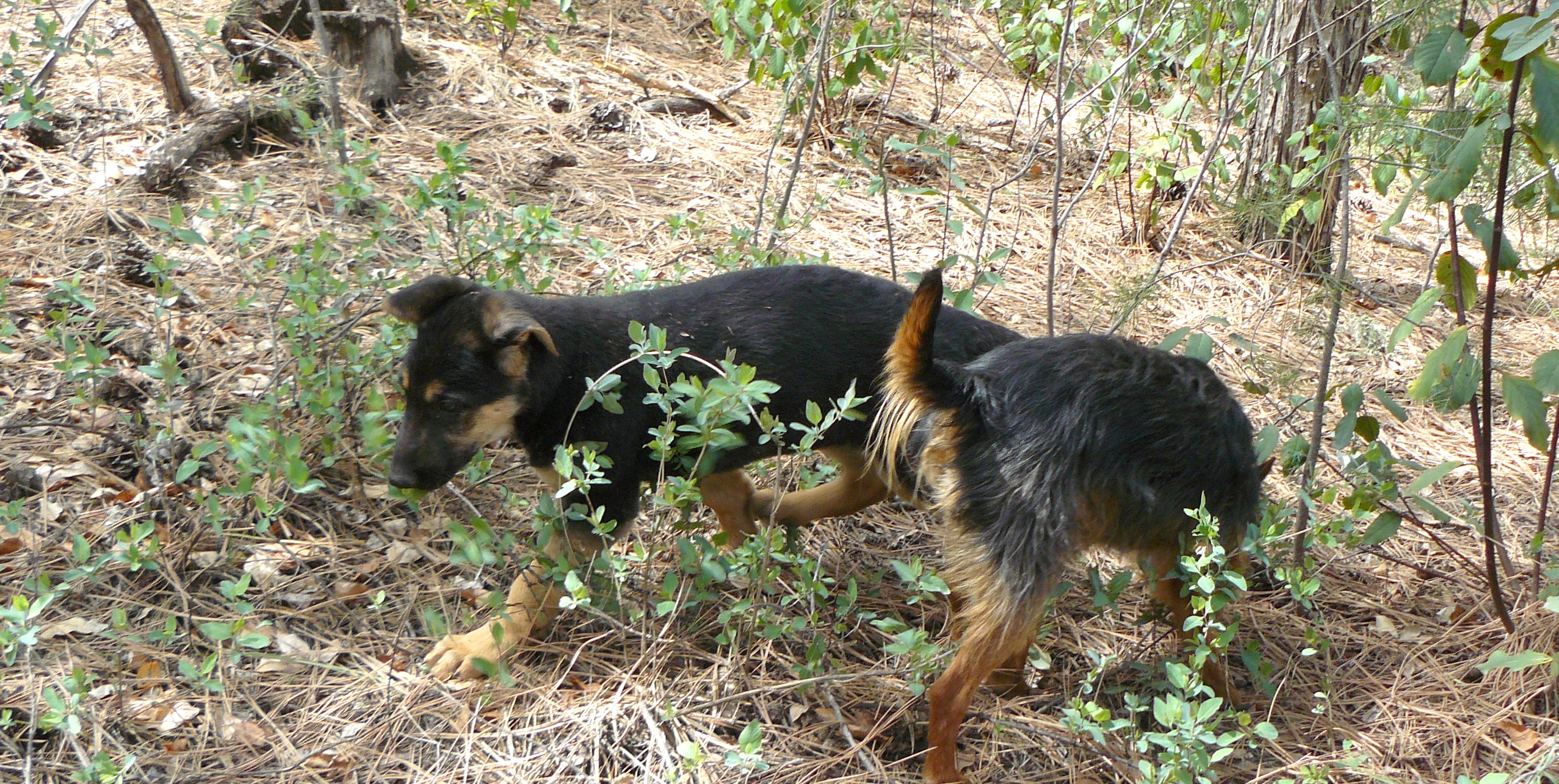
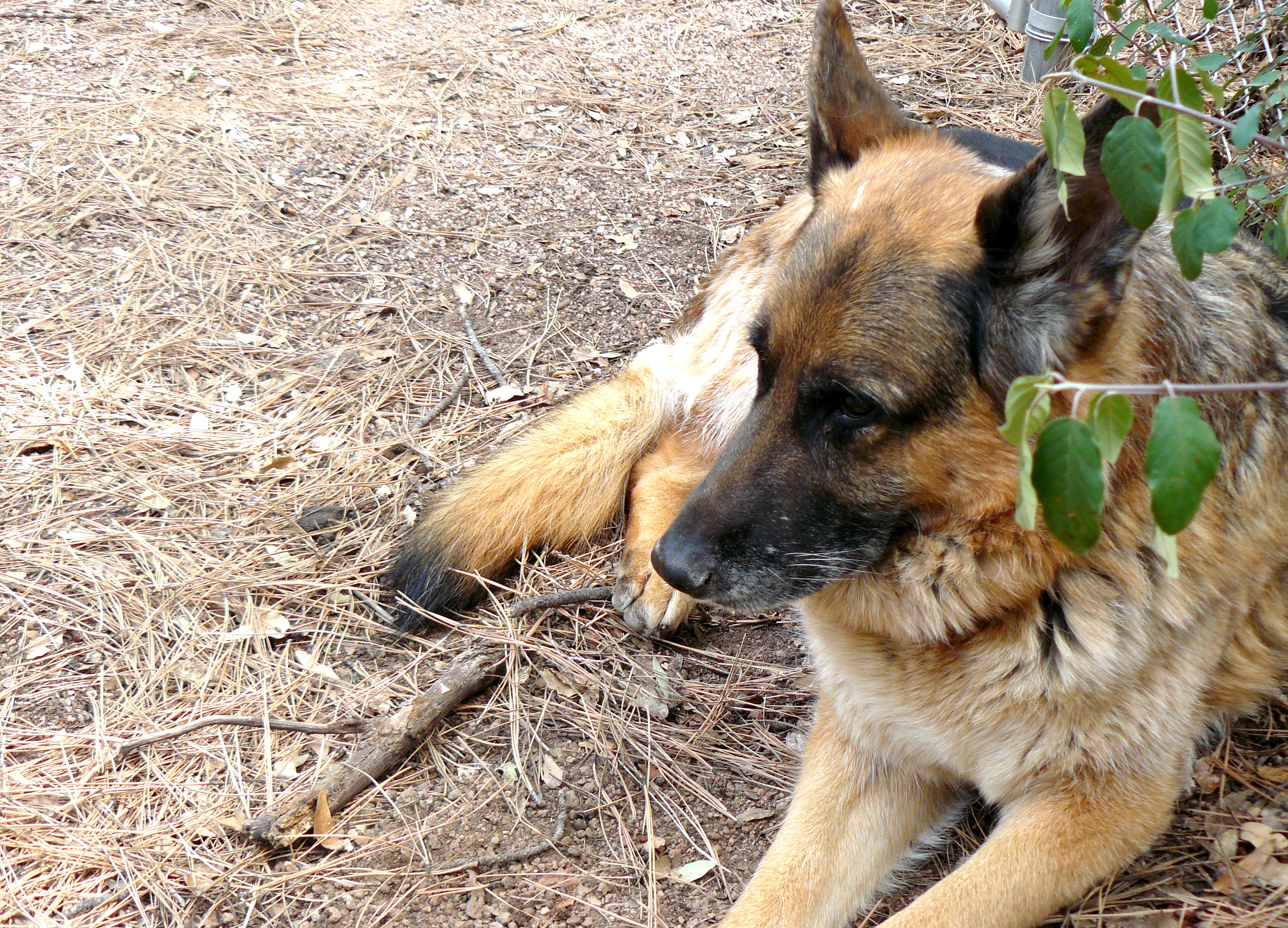
Homeward bound to a new life!Next step is to meet the gang!Welcome, young lady. I’m the boss around here!It’s my pool but you can use it!Hey Sweeny, fancy having one’s own woods to play in!She’ll do! Nice addition to my family!
So there we are. Back up to eleven dogs, five chickens, six cats, and a fish!
Finally, a big thanks to Sandra of Jutone for her guidance in the last few days.
ooOOoo
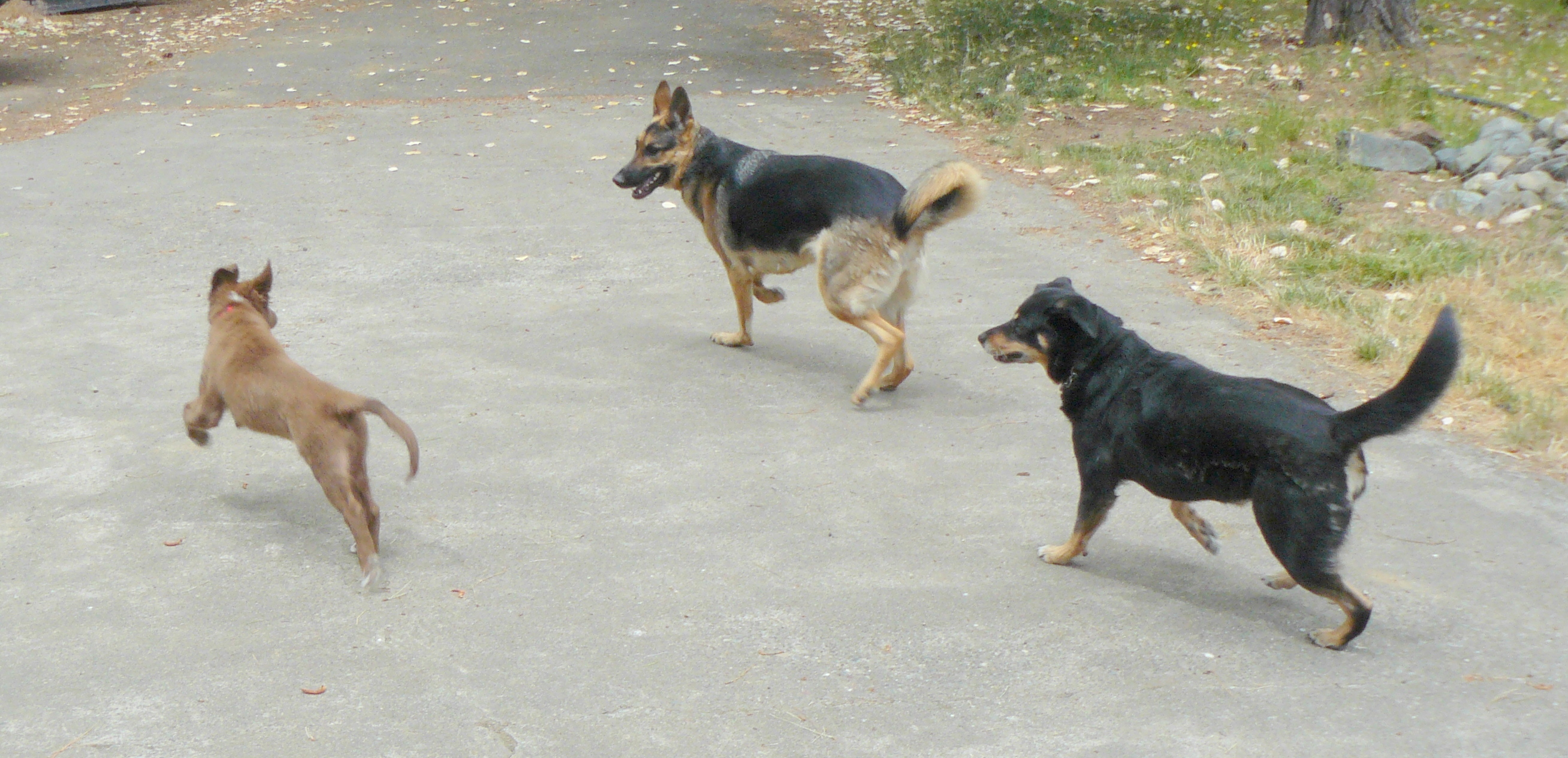
Back to the present to leave you with a picture of puppy Ollie happily playing with Cleo and Hazel. More pictures of Ollie on Sunday.
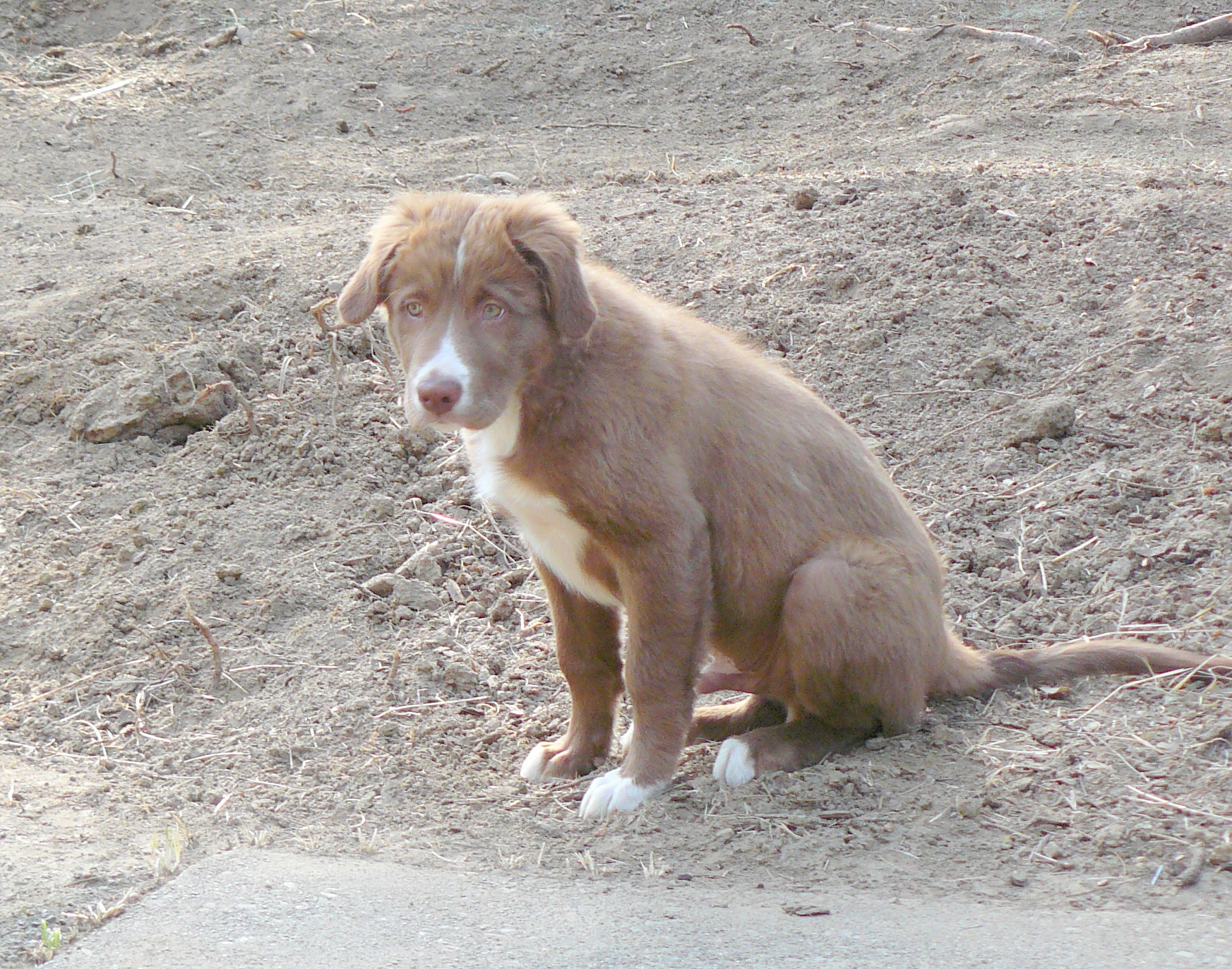
A few weeks ago Jean and I were invited to a social gathering with a couple who live about a mile further along Hugo Road. We couldn’t help admiring their young dog; a delightful puppy by the name of Smokey. Smokey appeared to be about ten weeks old and, despite being very puppy-like was, nevertheless, a sweet, friendly, young male dog. Apparently, a mix of a Labrador and a Bordie Collie.
Anyway, last week there was a call from them to say that they were finding the puppy to be too much of a handful and were looking to find Smokey a new home: Did we want first refusal?
Thus it came about that yesterday morning Jean and I drove the short distance to collect Smokey and introduce him to the dog’s circus that is home for us all!
Naturally, the key question would be how would Pharaoh take to Smokey.
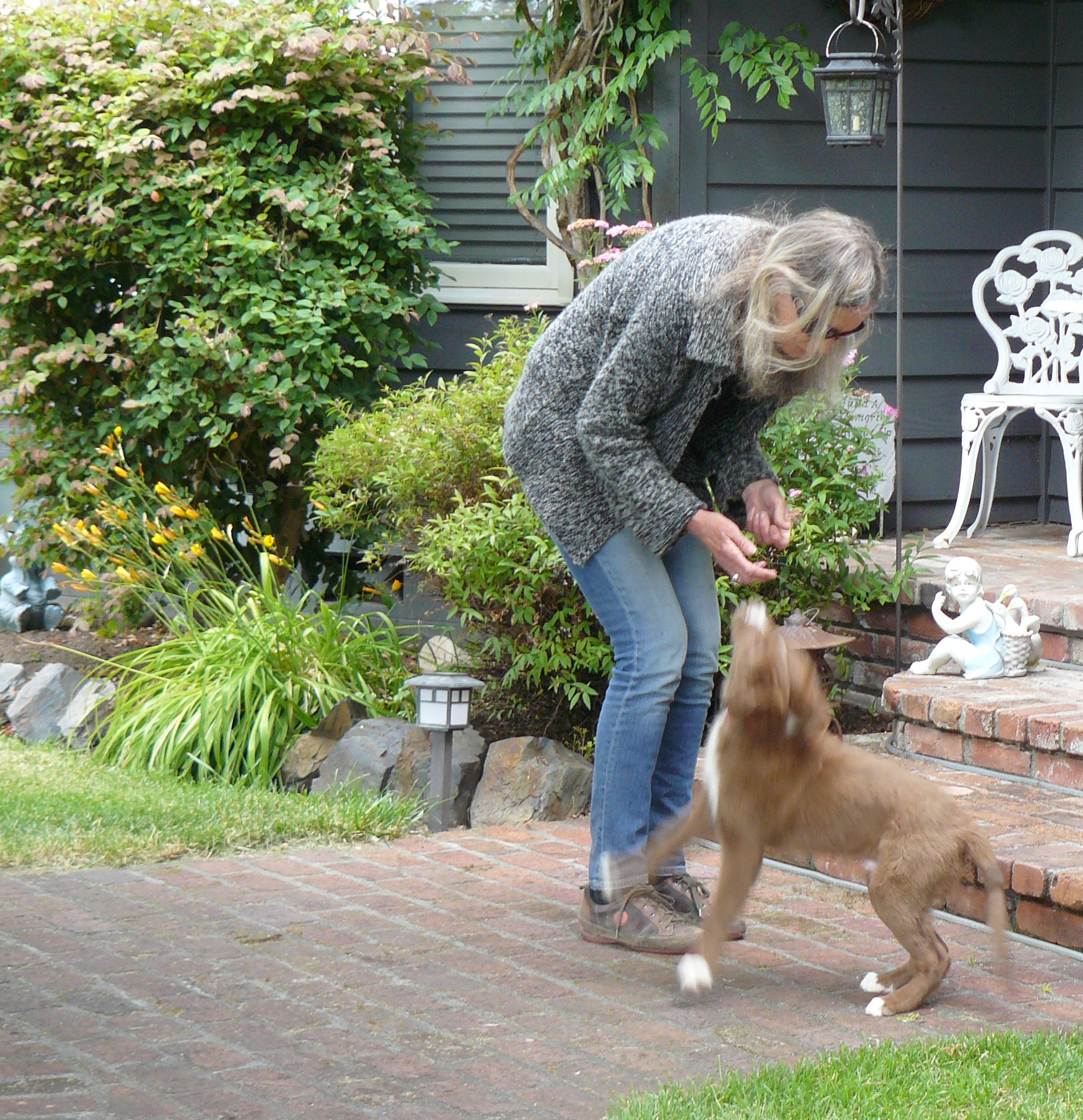
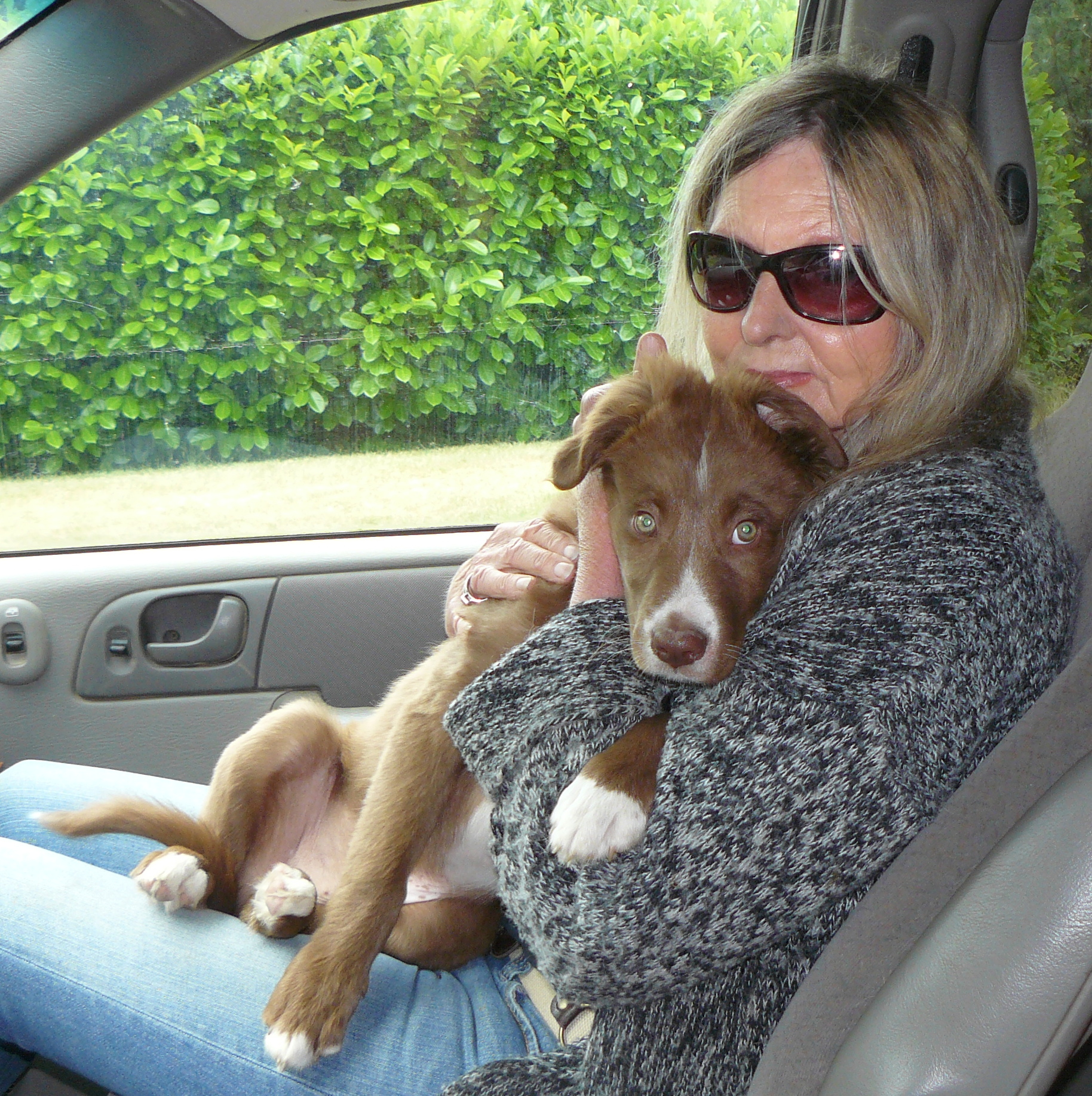
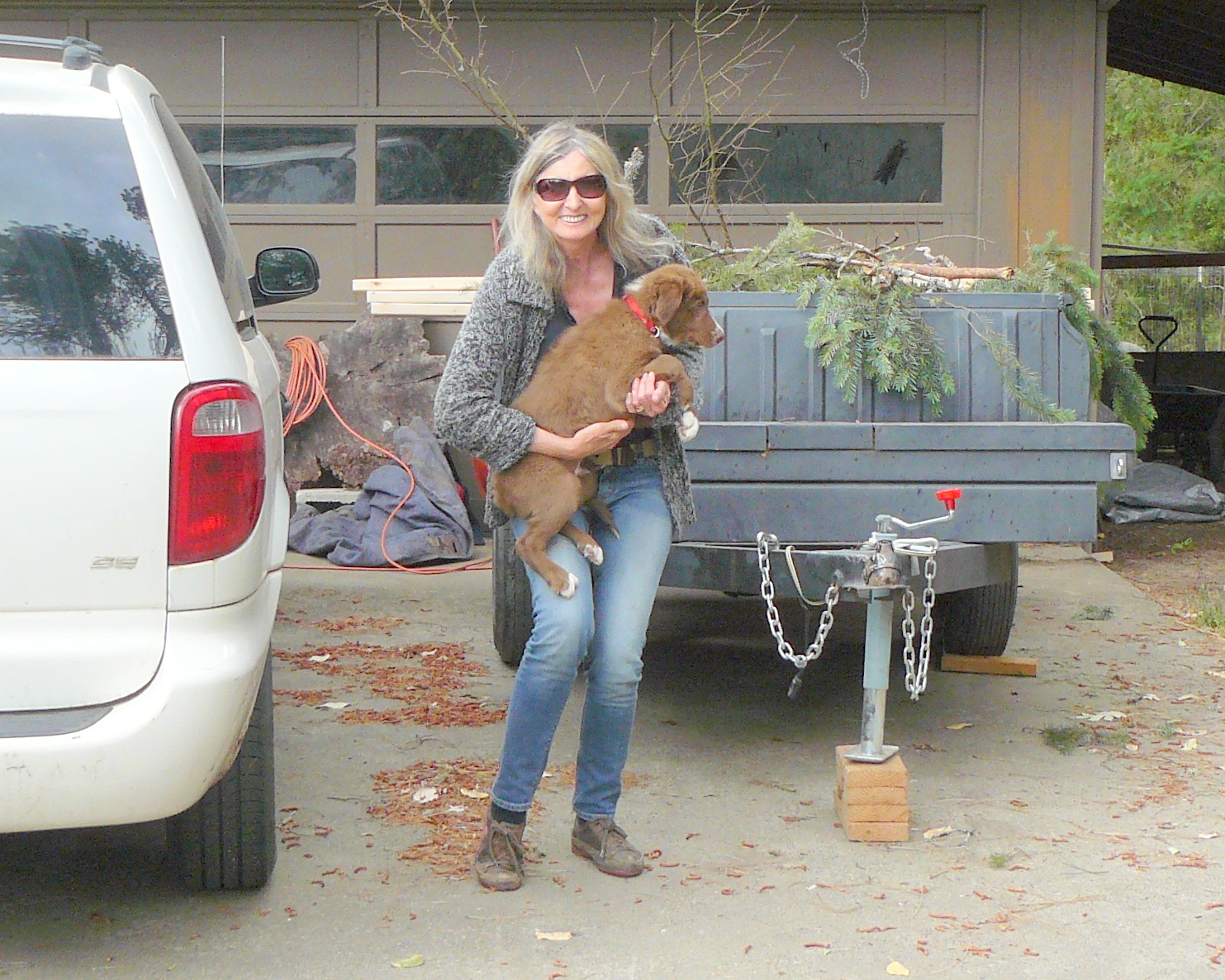
A few pictures to tell the tale.
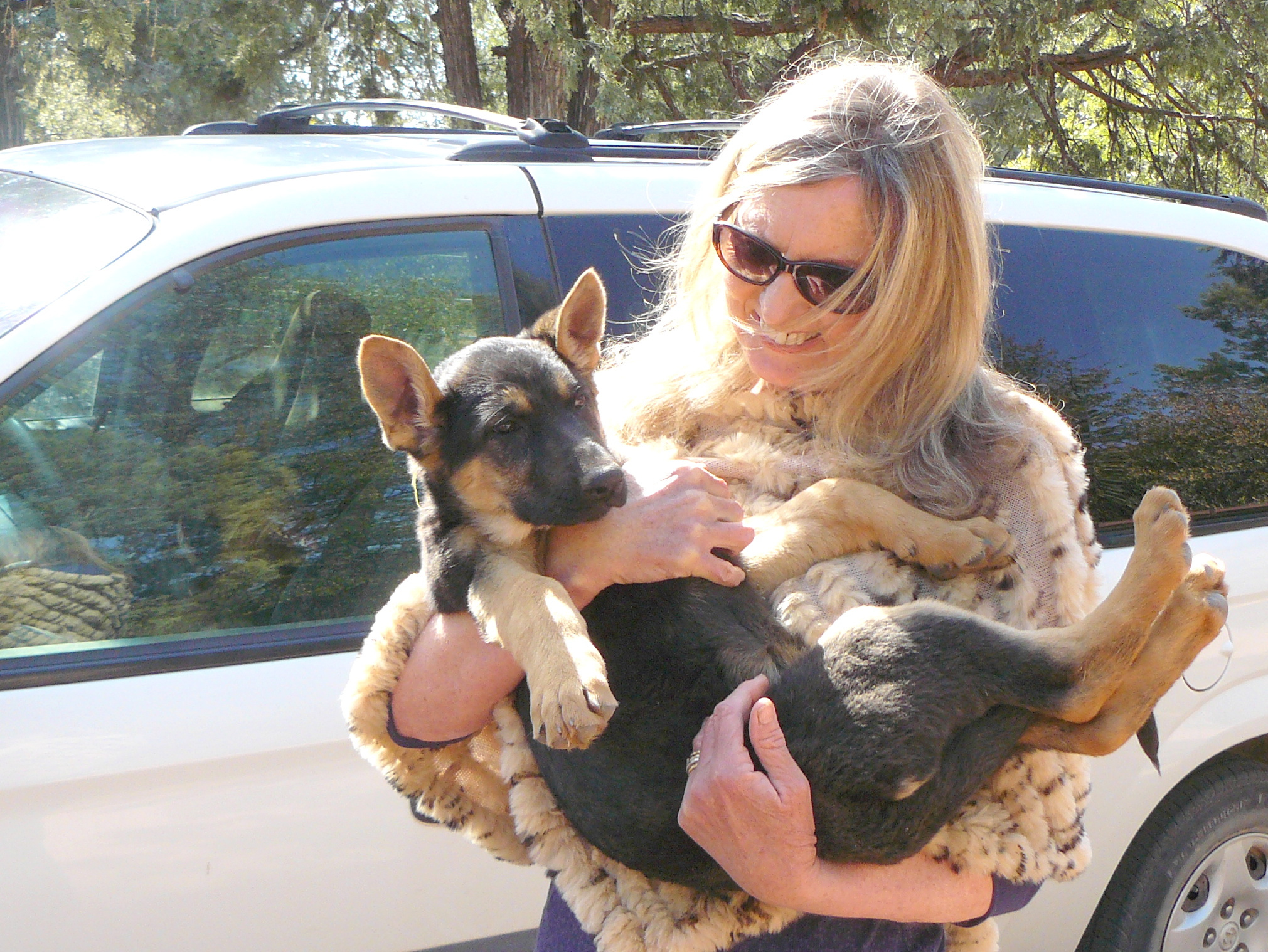
Hello Smokey, I’m Jean and we are hoping you will come home with us and be part of our family.
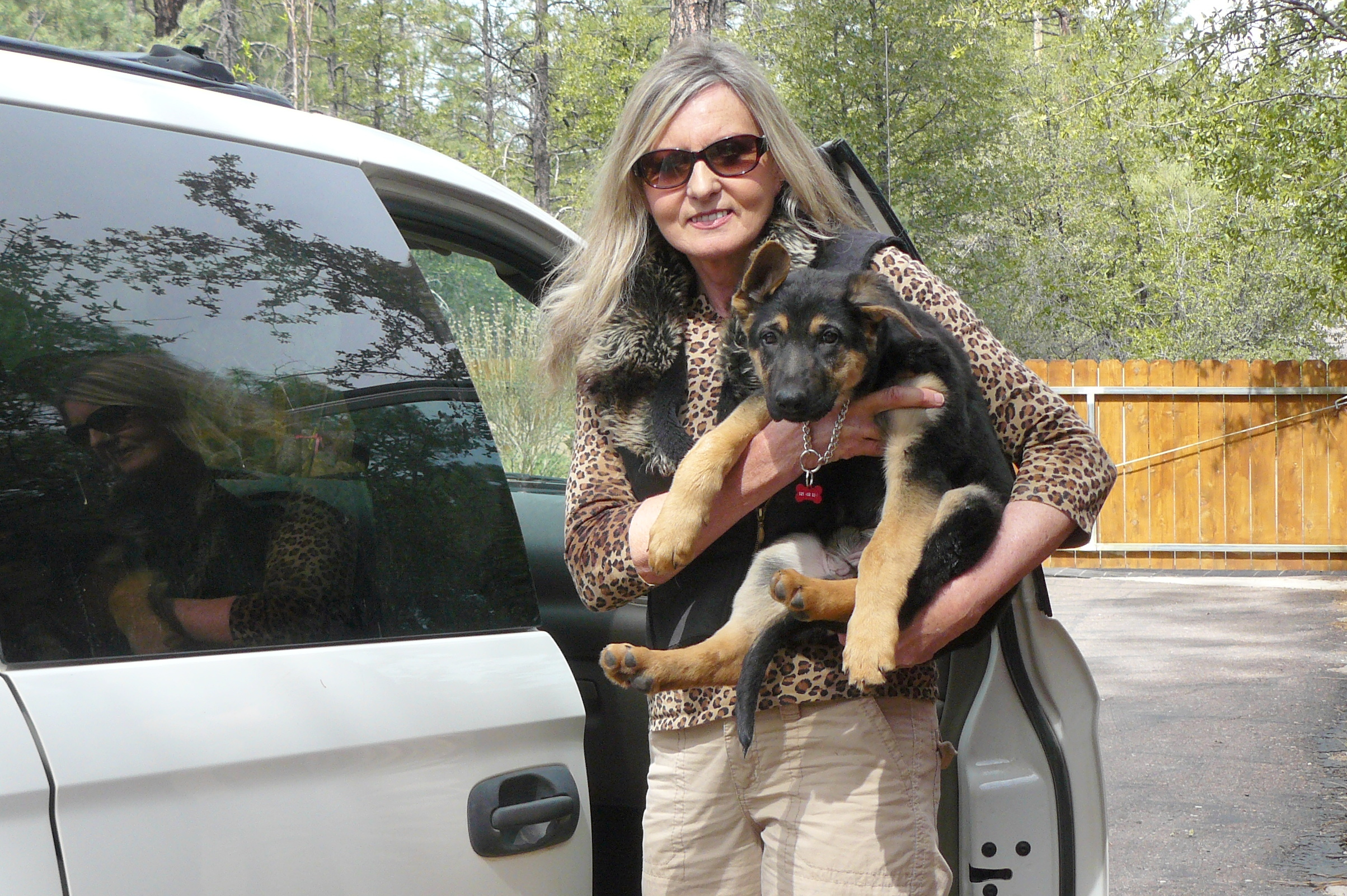
Well, you certainly seem like a friendly little chap. Let me carry you across to the car.
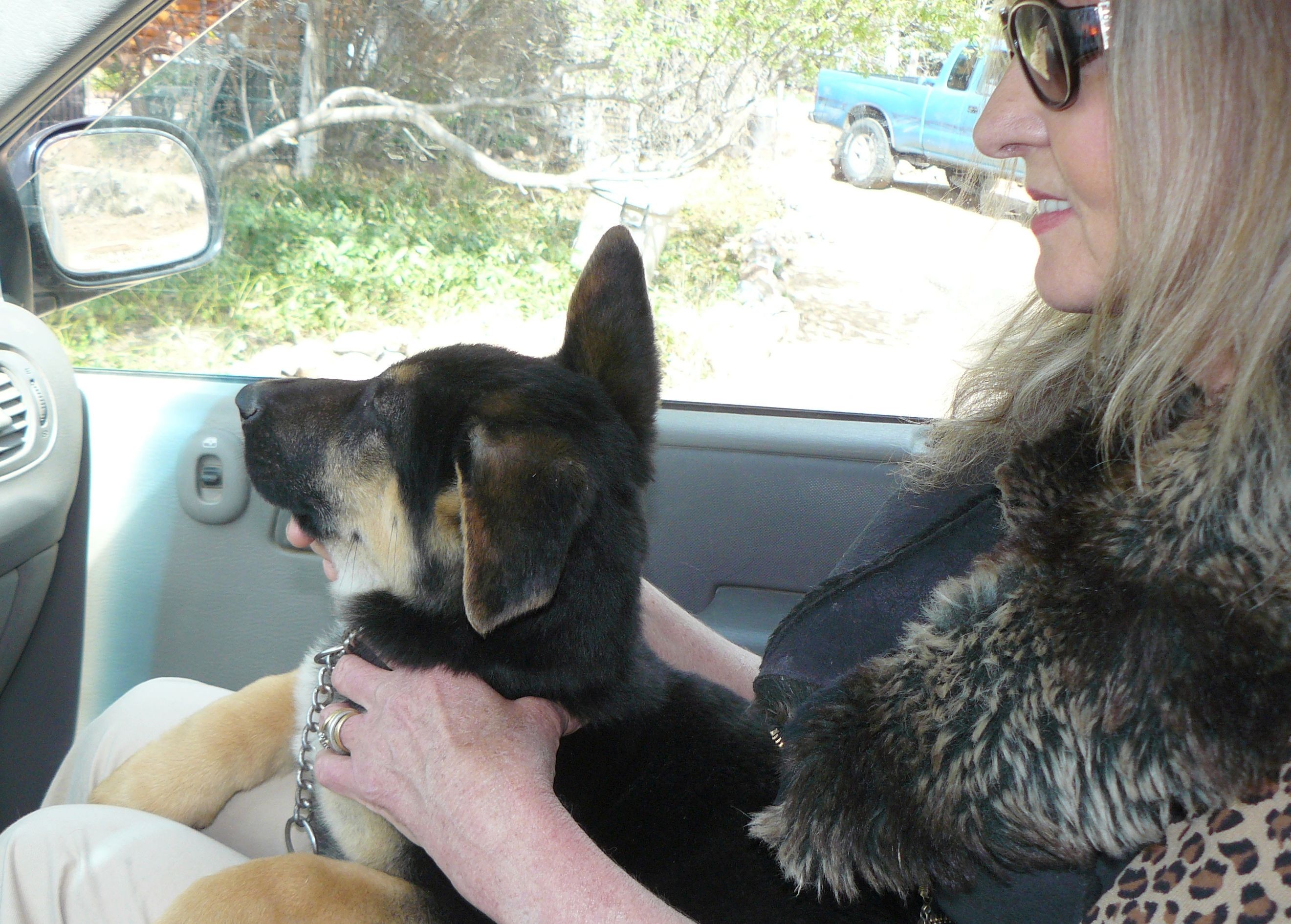
That’s Paul, your new Daddy! Hold on tight; it’s only for ten minutes.
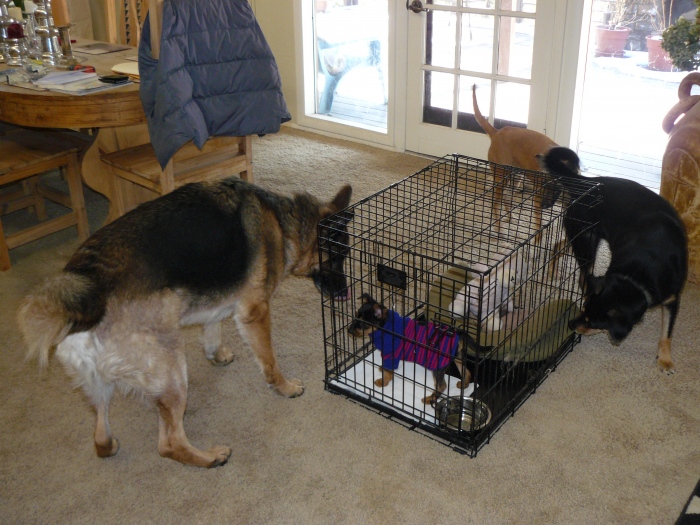
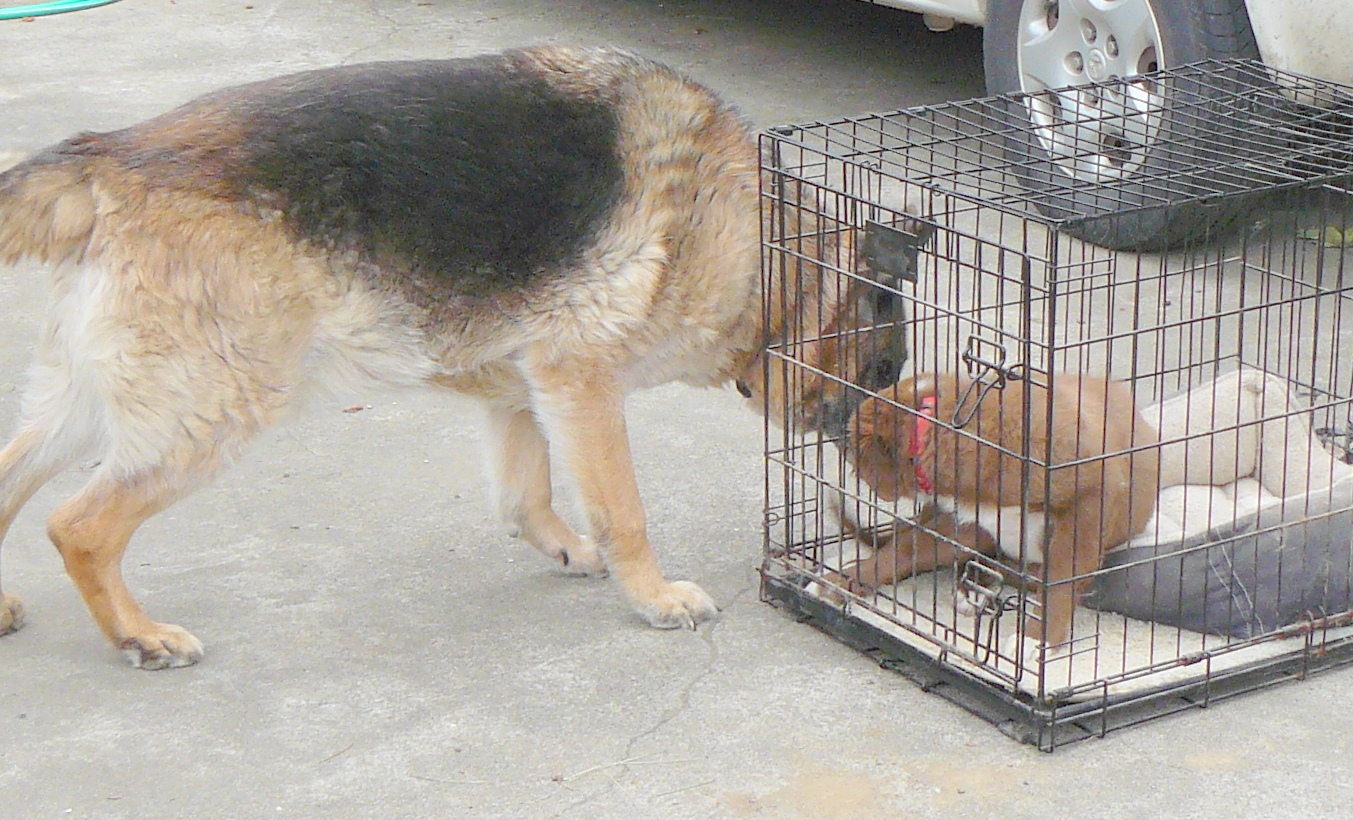
And here we are at your new home. Going to pop you into a dog crate so Pharaoh can come out and meet you.
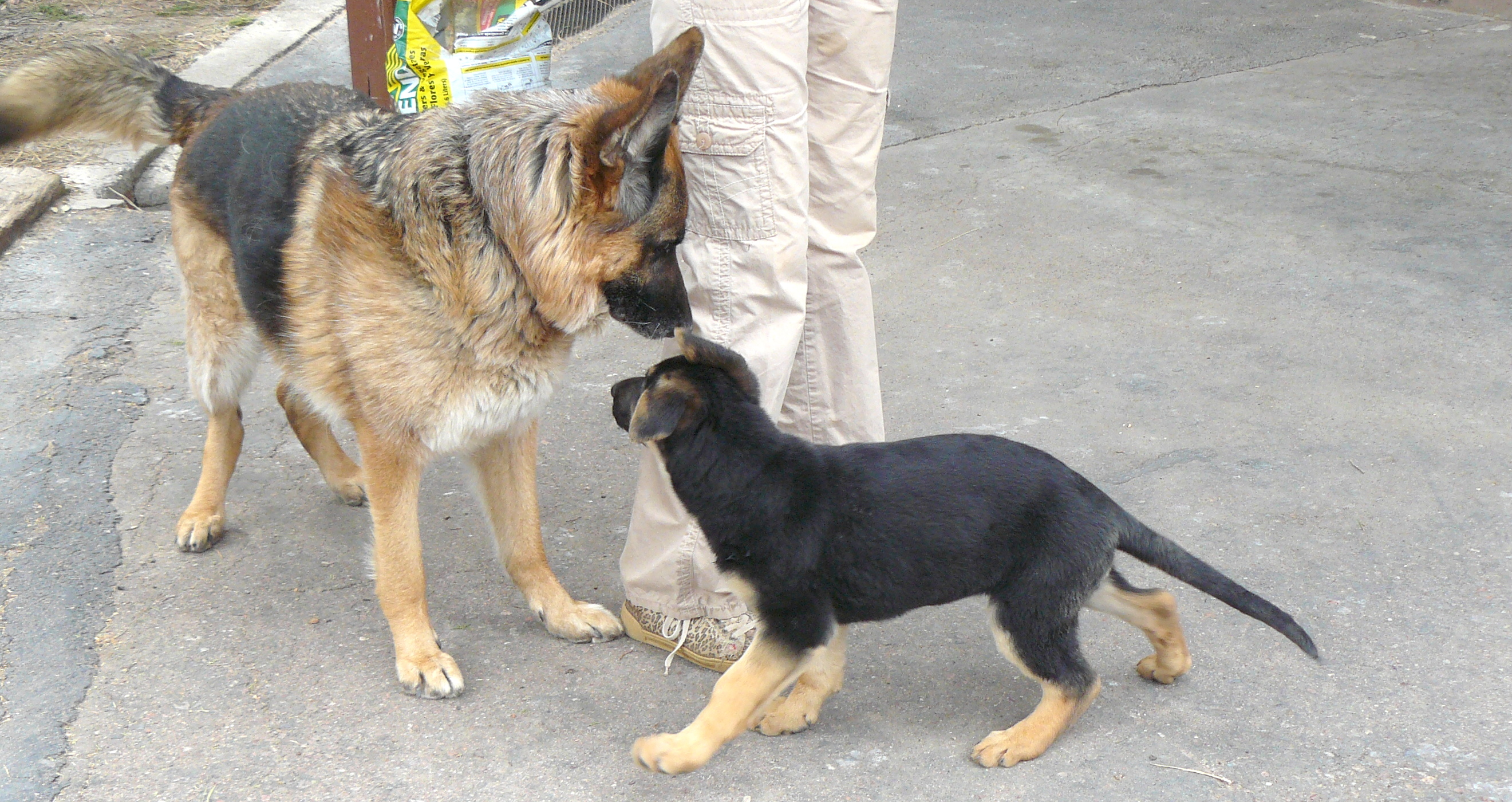
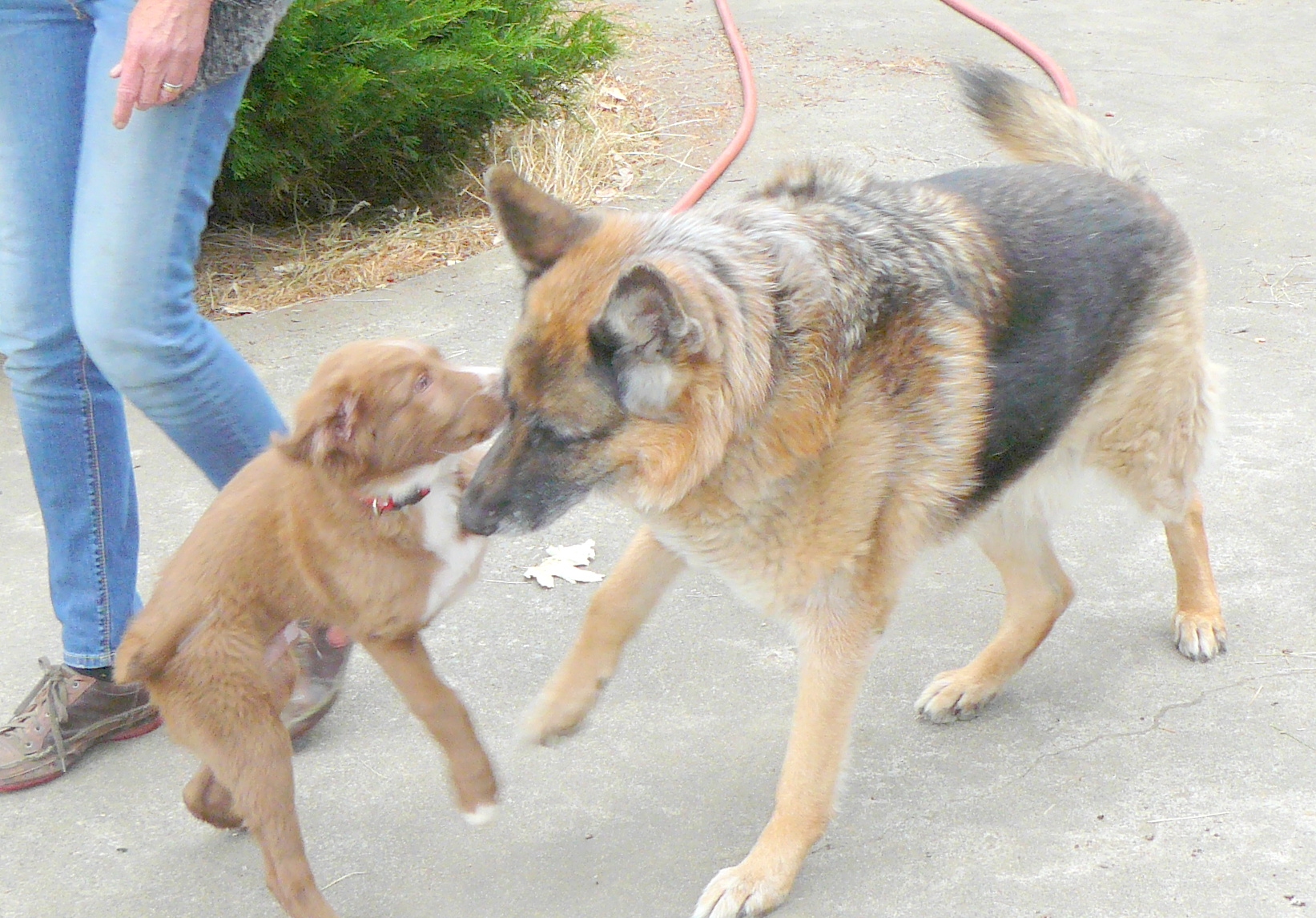
So what do we have here? I’m Pharaoh and despite my age, I’m still the boss around here! M’mm, you seem to pick things up quickly!
Ah, that’s good my little friend. You may be young but you seem like a smart puppy. Welcome to the clan!
Many more pictures of Smokey successfully meeting the rest of Pharaoh’s ‘team’ but I will make those a special ‘Smokey’ set of pictures for this coming Sunday.
Let me close this by saying that as I write this post at 2pm yesterday afternoon, Jean is reading a book and about her, in perfect silence and contentment, are Pharaoh, Hazel, Cleo, Sweeny ….. and Smokey!