Category: Animal rescue

Putting a smile on your dog’s face!

Dogs do suffer from depression.

OK, in many cases I’m sure it is because dogs are watching too much television; especially the news!

OK: Only kidding!

Some may be surprised that dogs can express sadness and suffer from depression but it is true.

Only a few days ago there was a bit of a ‘punch up’ between Brandy and Ruby. Ruby was feeding and Brandy approached her food bowl. Ruby gave a short, throaty “stay away from my food” growl and the next instant Brandy had Ruby’s face in his mouth and it was quickly turning into a Grade A dog fight.

Luckily Jean and I were on hand and had the two of them separated within seconds. But it was still sufficient time for Brandy to have drawn blood from a small bite to the side of Ruby’s face.

However, the point I was coming to was that since that incident Ruby has clearly been very depressed and withdrawn.

So on to today’s topic. Recently published on Mother Nature Network.

ooOOoo

Is my dog depressed? The warning signs and solutions

Find out what causes doggy depression and how to fix it.

Jaymi Heimbuch March 30, 2017.
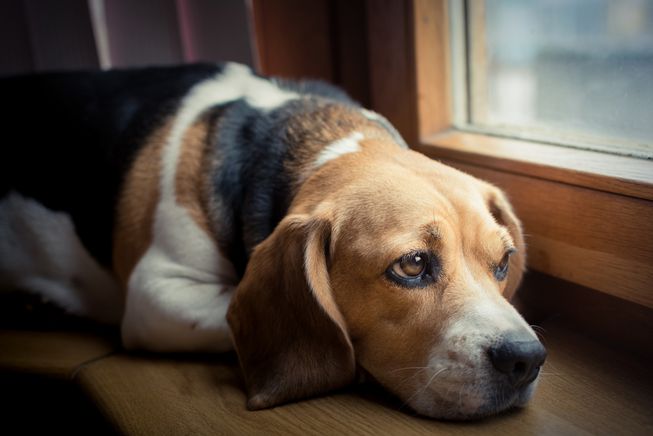
Dogs can get the doldrums. But there are ways to help them come out of it with a wagging tail. (Photo: Iuliubo/Shutterstock)

Yes, dogs can get depressed. Whether or not it’s the same as what humans experience, we may never know since we can’t ask a dog. But there are signs and symptoms from a dog’s behavior that reveal when a dog is in the doldrums. If you’ve noticed a sudden change in your four-legged friend’s behavior and are worried, you may need to see if the change is a clue that your dog needs some psychological TLC.

Common triggers for dog depression

Dogs are creatures of habit, activity and loyalty. A sudden change that affects their world can cause a dog to have a spat of depression. Triggers include:

  • The addition of a new person or pet to the family
  • A sudden drop in attention from an owner or family members
  • A sudden change in the household schedule
  • The loss of an owner or companion
  • Moving to a new home
  • A traumatic injury

Dogs may also suffer from Seasonal Affective Disorder, or SAD, during the winter months. Stanley Coren reports in Psychology Today: “Do dogs suffer from SAD? Some data comes from a survey conducted by a leading veterinary charity in the UK. PDSA (The People’s Dispensary for Sick Animals) found that approximately 40 percent of dog owners saw a considerable downturn in their pet’s moods during the winter months. In addition, half of the dog owners felt that their dogs slept longer, with around two in five reporting their pets to be less active overall.”

Some dogs may suffer depression simply for not having a job to do. The Guardian notes:

“In the not too distant past, dogs mostly had to work for a living and were probably very often physically and mentally fatigued at the end of the day – which is why we have the expression ‘dog-tired’. Could the stress of being made redundant be the source of this apparent unhappiness? Dog behaviourist Penel Malby told me: ‘Dogs live very differently to the way they used to. Lots more dogs, lots more people, lots more stress for everyone, I think. If you think back even just 50 years, dogs were allowed to roam free every day, socialise with their neighbourhood friends. Now they either go out with a dog walker or go out for an hour if they’re lucky, and the rest of the time is spent at home.'”

The upside is that canine depression usually isn’t permanent, or even necessarily long-lived, and there are ways to combat it to help your dog get back to normal in due time.

What are the warning signs?
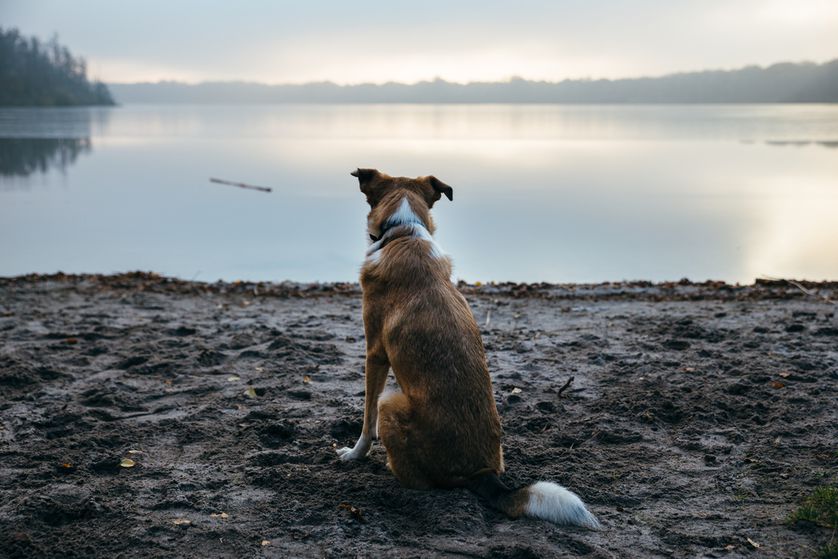
Watch for warning signs of depression so you can catch the trouble early and help your dog recover. (Photo: DREIDREIEINS Foto/Shutterstock)

The most common symptoms dogs display when they’re depressed mirror those that humans experience during a depression. They include:

  • Sleeping much more than usual
  • A change in eating habits, including a loss or gain in appetite and in weight
  • A refusal to drink water
  • A lack of interest in usual energetic activities like going for walks or playing
  • Excessive licking of their paws
  • Excessive shedding
  • Become withdrawn or hiding in the house
  • Suddenly showing signs of aggression or anxiety

Unfortunately, these symptoms also occur with a range of other medical issues. A dog might have a change in appetite because of a thyroid or kidney issue, or the dog might not want to go on a walk because of joint pain or arthritis flaring up. So if you notice any changes in your dog’s behavior, the first thing to do is visit the vet to rule out any serious health-related issues before assuming it comes down to depression.

How to help your dog out of a depression
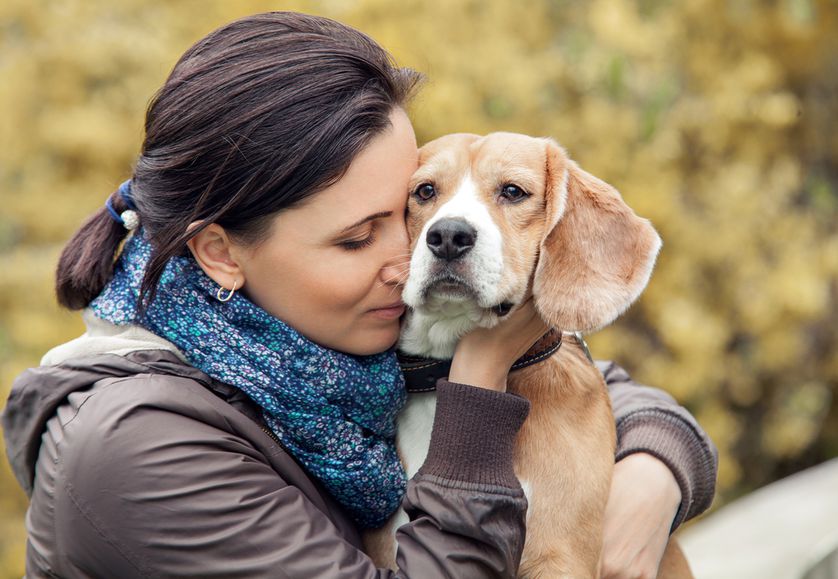
Sometimes time, extra love and a steady routine is all that’s needed. (Photo: Soloviova Liudmyla/Shutterstock)

If you have determined your dog is feeling depressed, there are many things you can do to help them pull out of it.

– Take your dog on more frequent walks during the day to favorite places, allowing them to sniff around and enjoy the scenery. It’s also helpful to do this first thing in the morning to start the day out with a bit of fresh air and energy.

– Try to keep a schedule as much as possible. Dogs are creatures of habit and having a predictable routine can be an enormous source of comfort for a stressed or depressed dog, especially if the trigger for the depression was a sudden change in routine.

– Reward your dog when he shows signs of improved mood or energy. Rather than babying the dog during the down times — which reinforces that behavior — reward him with extra special treats or a favorite toy when he shows a bit of enthusiasm about life to amplify the mood even more.

– Bring home a new toy, such as a squeaker or puzzle toy that stimulates the senses and encourages play.

– If the cause of depression is the loss of a companion, like another household pet, consider adopting another dog that can be a companion. However, only do this if you’ve seriously considered the needs of your household and your depressed dog. It isn’t an option to be taken lightly.

As a last resort, medication could be an option. There are antidepressants for dogs that you can discuss with your veterinarian. However, catching depression early on and trying for behavioral changes first is the best solution. Bonnie Beaver, DVM, notes in a WebMD article, “[I]t can take up to two months for drugs to become effective. But unlike people, who often remain on antidepressants for years, most dogs can get better in six to 12 months and then be taken off the drugs.”

And finally, give it time. As Wag Walking notes, “Be Patient: Sometimes — especially if the issue was a loss of a companion or master — the only thing that will heal a dog’s heart is time. It may be as few as a couple days or as much as a few months, but most dogs will be able to pull themselves out of depression with a little time and understanding.”

ooOOoo

May you, your family and all your wonderful animals have a wall-to-wall happy weekend!

Picture Parade One Hundred and Eighty-Eight

Stay Happy Good People!

Returning to the pictures sent in by ‘Captain Bob’.

oooo

oooo

oooo

oooo

oooo

The final set of Bob’s Happy-Making pictures next Sunday.

Rebecca’s Ode To Her Dog

What a wonderful postscript to yesterday’s post.

There was an exchange of comments yesterday to my post This Is The Dog.

Rebecca offered:

I just wrote an ode to my dog…. she is everything.

I responded:

Rebecca, please share your ode with everyone.

Rebecca then provided the link:

Here ya go 😀
https://myfacesoflife.wordpress.com/2017/03/21/ode-to-my-dog/

If you go to that place, you will read this.

ooOOoo

Ode to my Dog.

on March 21, 2017

This is Raya.

She is perfect. Even with her imperfections.


Wherever I go, so does she.

For 11 years she has been in my life.

For 11 years she has comforted me through my troubles.

For 11 years she has filled me with love.

For 11 years she has loved me.

For 11 years I treasured every moment.

For 11 years now… and I am fully aware that we are running out of time.

Here she lies, sleeping next to me on the sofa.

Dreaming a dogs dream with all paws moving.

She is perfect.

How will I ever do this without her sleeping next to me on the sofa?

This is Raya.

She is perfect. Even with her imperfections.

She keeps me safe when I am scared.

She watches over me as she sleeps on the foot of my bed.

This is Raya.

She is perfect. Even with her imperfections.

When she is happy, I smile with her.

When she is hurt, I fix her pain.

When she needs help, I stop what I am doing and I help.

When I am sad, she comforts me.

She makes what I do possible. She makes the bad days good. She makes the good days fantastic. She makes the horrible days bearable. Through every move, through every fight, through every depression, through every tear, through every laugh, through every moment of joy, through every moment of peace, through every moment of serenity, through every nightmare, through every feeling of desperately wanting to run away, through all of the times that I wanted to scream at the top of my lungs, through all of the times I prayed for death, through all of the times my insides were screaming so hard it made me feel like I was going to burst, through all of the times I felt my heart break, through all of the times I felt my heart mend again. She was there. Depression has many faces and she has seen them all and helped me overcome. She has given me reason because her love deserves attention.

….. and we are running out of time. The possible will become impossible.

This is Raya.

She is perfect.

She is mine and I am hers.

I am hers and she is mine.

We are equal in love, in pain, in joy, in life.

I am proud to be her human. All of the mistakes I have made in the past… with Raya, I did it right.

She is perfect.

When you look into her eyes you can see her soul. Her character, her goofiness, her lust for life, her love, her mind, her cleverness. Her loyalty. I sometimes wonder what she sees when she looks back into my eyes. Does she see everything that I see? Would she also call me perfect? All I see in that connection is love.

She is perfect.

My Raya, my girl. All my love. We will live forever.


~ Becca ~


ooOOoo

Stunningly beautiful and, yes, perfect!

This is the dog!

Perhaps the loss of a loved dog explains so much!

The posts for the last two days have carried separate and very different stories of terrible cruelty to dogs, the second one involving terrible cruelty to a dog and a bull! As a tradition! Ouch!!

Readers of this place know what they feel about dogs. It is felt deep within their hearts. Those feelings are poured out when, either from me or someone else, there’s a post lamenting the loss of their dog.

Just as a tiny example of that love we all have for our dogs, here’s a response from Marina Kanavaki and, trust me, Marina is far from being alone in this regard.

Oh, no, Paul!!! I’m so sorry my friend! It is hard to believe and not so long ago, Casey. I know words can’t take away the pain but you have my thoughts and I’m sending you both my love and hugs.

So a recent essay published on The Conversation site is a must to share with you today. As usual, it is republished within the terms of The Conversation.

ooOOoo

Why losing a dog can be harder than losing a relative or friend

March 9, 2017
Frank T. McAndrew,   Cornelia H. Dudley Professor of Psychology, Knox College.

Recently, my wife and I went through one of the more excruciating experiences of our lives – the euthanasia of our beloved dog, Murphy. I remember making eye contact with Murphy moments before she took her last breath – she flashed me a look that was an endearing blend of confusion and the reassurance that everyone was ok because we were both by her side.

When people who have never had a dog see their dog-owning friends mourn the loss of a pet, they probably think it’s all a bit of an overreaction; after all, it’s “just a dog.”

However, those who have loved a dog know the truth: Your own pet is never “just a dog.”

Many times, I’ve had friends guiltily confide to me that they grieved more over the loss of a dog than over the loss of friends or relatives. Research has confirmed that for most people, the loss of a dog is, in almost every way, comparable to the loss of a human loved one. Unfortunately, there’s little in our cultural playbook – no grief rituals, no obituary in the local newspaper, no religious service – to help us get through the loss of a pet, which can make us feel more than a bit embarrassed to show too much public grief over our dead dogs.

Perhaps if people realized just how strong and intense the bond is between people and their dogs, such grief would become more widely accepted. This would greatly help dog owners to integrate the death into their lives and help them move forward.

An interspecies bond like no other

What is it about dogs, exactly, that make humans bond so closely with them?

For starters, dogs have had to adapt to living with humans over the past 10,000 years. And they’ve done it very well: They’re the only animal to have evolved specifically to be our companions and friends. Anthropologist Brian Hare has developed the “Domestication Hypothesis” to explain how dogs morphed from their grey wolf ancestors into the socially skilled animals that we now interact with in very much the same way as we interact with other people.

Perhaps one reason our relationships with dogs can be even more satisfying than our human relationships is that dogs provide us with such unconditional, uncritical positive feedback. (As the old saying goes, “May I become the kind of person that my dog thinks I already am.”)

This is no accident. They have been selectively bred through generations to pay attention to people, and MRI scans show that dog brains respond to praise from their owners just as strongly as they do to food (and for some dogs, praise is an even more effective incentive than food). Dogs recognize people and can learn to interpret human emotional states from facial expression alone. Scientific studies also indicate that dogs can understand human intentions, try to help their owners and even avoid people who don’t cooperate with their owners or treat them well.

Not surprisingly, humans respond positively to such unrequited affection, assistance and loyalty. Just looking at dogs can make people smile. Dog owners score higher on measures of well-being and they are happier, on average, than people who own cats or no pets at all.

Like a member of the family

Our strong attachment to dogs was subtly revealed in a recent study of “misnaming.” Misnaming happens when you call someone by the wrong name, like when parents mistakenly calls one of their kids by a sibling’s name. It turns out that the name of the family dog also gets confused with human family members, indicating that the dog’s name is being pulled from the same cognitive pool that contains other members of the family. (Curiously, the same thing rarely happens with cat names.)

It’s no wonder dog owners miss them so much when they’re gone.

Psychologist Julie Axelrod has pointed out that the loss of a dog is so painful because owners aren’t just losing the pet. It could mean the loss of a source of unconditional love, a primary companion who provides security and comfort, and maybe even a protégé that’s been mentored like a child.

The loss of a dog can also seriously disrupt an owner’s daily routine more profoundly than the loss of most friends and relatives. For owners, their daily schedules – even their vacation plans – can revolve around the needs of their pets. Changes in lifestyle and routine are some of the primary sources of stress.

According to a recent survey, many bereaved pet owners will even mistakenly interpret ambiguous sights and sounds as the movements, pants and whimpers of the deceased pet. This is most likely to happen shortly after the death of the pet, especially among owners who had very high levels of attachment to their pets.

While the death of a dog is horrible, dog owners have become so accustomed to the reassuring and nonjudgmental presence of their canine companions that, more often than not, they’ll eventually get a new one.

So yes, I miss my dog. But I’m sure that I’ll be putting myself through this ordeal again in the years to come.

ooOOoo

Just let the messages of this essay reverberate around your heart. I’ll say no more!

Pigs Ears Dog Food Recall

This came in an hour ago!

ooOOoo

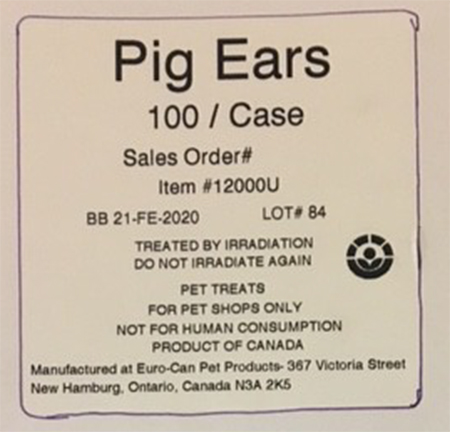
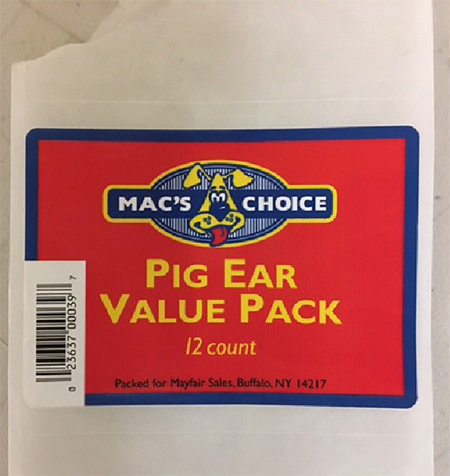
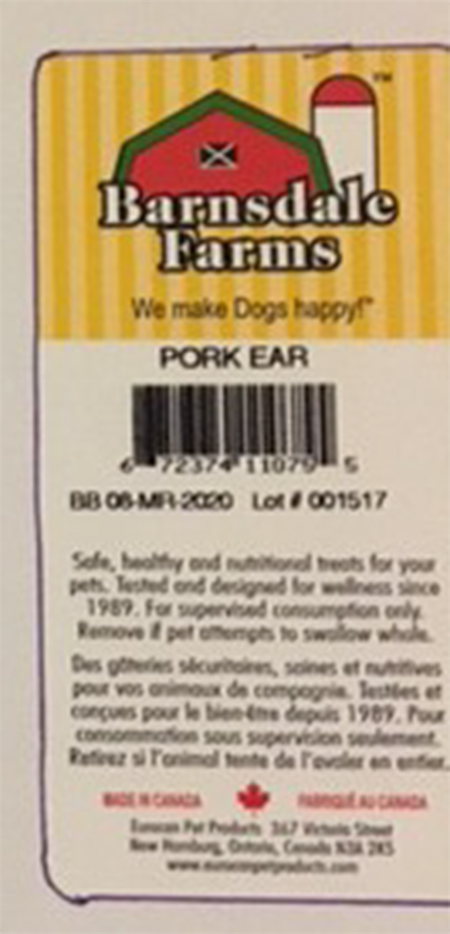
March 20, 2017 — EuroCan Manufacturing is voluntarily recalling one lot of its Barnsdale Farms, HoundsTooth and Mac’s Choice pig ears because they have the potential to be contaminated with Salmonella.

What’s Being Recalled?

The recalled pig ears were distributed throughout the U.S.A. and Canada.

The products were packaged as individually shrink-wrapped, 6-pack, 12-pack and 25-pack bags under the following brands:

  • Barnsdale Farms
  • Barnsdale Farms Select
  • Houndstooth
  • Mac’s Choice

The recalled products are from Lot 84.

No illnesses of any kind have been reported to date.

About Salmonella

Salmonella can affect animals eating the products and there is a risk to humans from handling contaminated pet products, especially if they have not thoroughly washed their hands after having contact with the products or any surfaces exposed to these products.

Healthy people infected with Salmonella should monitor themselves for some or all of the following symptoms: nausea, vomiting, diarrhea or bloody diarrhea, abdominal cramping and fever.

Rarely, Salmonella can result in more serious ailments, including arterial infections, endocarditis, arthritis, muscle pain, eye irritation, and urinary tract symptoms.

Consumers exhibiting these signs after having contact with this product should contact their healthcare provider.

Pets with Salmonella infections may be lethargic and have diarrhea or bloody diarrhea, fever and vomiting.

Some pets will have only decreased appetite, fever and abdominal pain.

Infected but otherwise healthy pets can be carriers and infect other animals or humans.

If your pet has consumed the recalled product and has these symptoms, be sure to contact your veterinarian.

About the Recall

The potential for contamination was noted after routine testing revealed the presence of Salmonella in the product.

The company has suspended distribution of the product while FDA and the company continue their investigation as to the source of the problem.

What to Do?

Consumers who have purchased any of the affected Barnsdale Farms pig ears should return the product to the place of purchase for a refund.

Those with questions may contact the company Monday to Friday from 9 AM to 5 PM ET Time at 888-290-7606.

U.S. citizens can report complaints about FDA-regulated pet food products by calling the consumer complaint coordinator in your area.

Or go to http://www.fda.gov/petfoodcomplaints.

Canadians can report any health or safety incidents related to the use of this product by filling out the Consumer Product Incident Report Form.

Get Dog Food Recall Alerts by Email

Get free dog food recall alerts sent to you by email. Subscribe to The Dog Food Advisor’s emergency recall notification system.

This must be stopped!

And Now!!

Please, good people, this is going to be a very tough read, especially coming immediately after yesterday’s example of terrible cruelty.

But these instances of such disgusting behavior have to be shared.  For without sharing them then there will be no end to them.

I am indebted to Change.org for carrying this.

ooOOoo

Sign: Stop Tying Dogs to Bulls in Horrific Bullfight ‘Punishment’

Lady Freethinker

The village of Chalhuani in Peru has a horrific annual tradition where a dog is tied to the back of a bull at a bullfight as punishment for “bad” behavior. Both of the animals are then painfully killed during the fight.

Video posted by the Mirror exposed this cruel Virgen de la Asuncion tradition in action, sparking global outrage. The video shows a dog being forced onto the back of a bull while it yelps and barks in fear. The terrified dog is tied spread-eagle to the bull, with the ropes so tight it cannot move.

The bull then enters the ring, where it is viciously killed. All the while, the dog is trapped on the bull’s back, unable to save itself from an excruciating death.

One villager tried to justify the cruelty in an interview with a local news station:

“We pick a dog that was disobedient over the past 12 months and has caused trouble,” the villager said. “As a community we see this as a fitting punishment for the dog’s bad behavior.”

But “bad” behavior is no excuse for animal cruelty. No dog deserves this horror.

These bullfights are barbaric and must be stopped. Sign this petition to urge the Peruvian ambassador to the United States to end this terrible practice, so no more animals suffer this horrific fate.

This petition will be delivered to: Ambassador Miguel Castilla

ooOOoo

Good people!

This is the letter to be delivered to the Ambassador:

Letter to Ambassador Miguel Castilla
Stop Tying Dogs to Bulls’ Backs in Cruel Bullfighting ‘Punishment’
The village of Chalhuani in Peru has a horrific annual tradition where a dog is tied to the back of a bull at a bullfight as punishment for “bad” behavior. Both of the animals are then painfully killed during the fight.
These bullfights are barbaric and must be stopped. Not only is animal cruelty an unacceptable form of punishment for dogs, but bulls do not deserve to be forced into fights, where they are tortured and killed for entertainment.
I urge the Peruvian government to ban this horrific practice at once, so no more animals must suffer for this cruel “tradition.”

Please not only sign this petition yourself but share it as far and wide as you can.

On cruelty to our beloved animals.

One just cannot ignore such cruelty as this!

I am really sorry folks but both today and tomorrow I am adding my tiny shoulder to a very large and heavy wheel. Endeavouring to make a very small difference before I leave this land of the living.

But before going on to share something that was sent to me by Scott Beckstead, the Senior Oregon and Rural Outreach Director of The Humane Society, I want to repeat something that I wrote in response to a comment left to yesterday’s Picture Parade. Because it may be seen as utterly irrelevant to today’s complex world but, nonetheless, it does explain where my love of this planet comes from.

In yesterday’s post, Yvonne of the blog Pets, People and Life left the following comment:

Those beautiful dog’s spirit lives on in the air you breathe, the green of the trees, the beating wings of a hummingbird, the house where they lived and where ever they ran and played. I hope you and Jean feel their presence when things are rough and in the quiet of the night.

I was so moved by those words that almost without any further thought I replied, thus:

Wow! Wow! And Wow!

There is something wondrous about the nature of the human consciousness that still escapes science. Neither me nor Jean are believers in a ‘God’ or subscribe to religious ‘factions’ for so much pain, war and suffering may be laid at the feet of religions (excuse my rant!), but ….

But there is something magical in “the air you breathe, the green of the trees, the beating wings of a hummingbird,” that defies definition. I like to think of it as a deep, connection with the planet that is our womb and sustains us.

This really smacked into me in back in the early 90’s; something that forever changed me. That something I experienced roughly about 4 days out in a solo sailing passage from the Azores to Plymouth. I came up on deck, clipped on, and looked around me. Primarily on the lookout for steaming lights that might indicate a ship in the same patch of ocean. It was after midnight. Having checked there wasn’t a ship in sight, I looked up at what was a totally cloud-free night sky.

What I saw were stars in that night sky that were visible 360 degrees around me. Not only visible in every single direction but visible right down to the edge of that black, ocean horizon. A huge celestial dome centered over this tiny me on my tiny boat. (A Tradewind 33: Songbird of Kent.)

It put into perspective, emotionally, visibly, intellectually and spiritually, how irrelevant one human being is and yet, how each of us is, or should be, the custodian of something immeasurably precious and beautiful: Planet Earth.

(Whoops! Sorry about that! Rather wandered off topic!)

OK, here’s what Scott sent me:

In the past two weeks, USDA Wildlife Services has:

1. Killed an Idaho family’s beloved pet dog;

2. Sent the family’s 14 year-old to the hospital with suspected cyanide poisoning;

3. Killed a Wyoming family’s two beloved pet dogs; and

4. Killed a protected Oregon wolf.

All of these incidents were caused by the M-44, a device used by Wildlife Services that fires a cyanide pellet into an animal’s mouth, causing a slow and agonizing death.

Wildlife Services’ greatest regret in all of these incidents is that they brought the agency more negative press – and given their history, they will probably use all of the incidents as “teaching moments” to instruct their agents to “shoot, shovel, and shut up.”

PLEASE CONTACT YOUR SENATORS AND U.S. REP AND URGE THEM TO ELIMINATE FUNDING FOR USDA WILDLIFE SERVICES.

Scott then included a link to an article that was recently published in The Oregonian. I am taking the liberty of republishing it in full.

ooOOoo

Labrador killed by cyanide device in Idaho, boy knocked to the ground.

A federal M-44 cyanide device exploded Thursday, March 16, 2017, killing a dog in Pocatello Idaho. (Bannock County Sheriff’s Office)

By Andrew Theen | The Oregonian/OregonLive
March 18, 2017 at 7:30 AM, updated March 18, 2017 at 2:20 PM

A three-year-old Labrador retriever died and a 14-year boy was knocked to the ground when a cyanide device deployed by the federal government exploded in Pocatello, Idaho.

The Idaho State Journal reported the boy, who had been on a walk with his dog Thursday on a ridge near their home, watched his dog die. According to the Bannock County Sheriff’s Office, the boy was also “covered in an unknown substance” when the device known as an M-44 detonated. He was evaluated at a hospital and released.

“That little boy is lucky,” Sheriff Lorin Nielsen told the Pocatello newspaper. “His guardian angel was protecting him.”

The Idaho incident comes a few weeks after a gray wolf was accidentally killed by an M-44 on private land in Oregon’s Wallowa County. The controversial type of trap is used by the U.S. Department of Agriculture’s Wildlife Services crews around the country primarily to kill coyotes and other predators.

U.S. Rep. Peter DeFazio, D-Ore., introduced legislation as recently as 2012 to ban the trap.

DeFazio has said he would reintroduce a similar bill in Congress.

The wolf death was the first documented “incidental take” of its kind in Oregon involving the protected animal and the M-44, fish and wildlife officials said.

Federal Wildlife Services officials said there were 96 M-44 devices dispersed across Oregon as of last week and the agency was looking to remove devices that were near known wolf habitat. Oregon fish and wildlife officials have said the devices were not allowed in areas of known wolf activity.

Oregon has long paid Wildlife Services to kill invasive species and specific predators. But Gov. Kate Brown’s’ recommended budget doesn’t include $460,000 typically set aside to pay the federal agency to kill animals in Oregon.

Bannock County officials described the device as “extremely dangerous to animals and humans.”

The department circulated photos of the trap. “If a device such as this is ever located please do not touch or go near the device and contact your local law enforcement agency,” officials said.

Government officials have said the number of deaths of domestic animals and non-target animals each year is low, and officials say they are conducting an “internal review” of the wolf death.

Wildlife Services killed 121 coyotes in Oregon in 2016 with M-44 devices, along with three red foxes, according to the government’s figures. No gray wolf was killed in the U.S. last year with the cyanide capsules, according to the government.

A Eugene nonprofit says the government isn’t being truthful about the number of pets and non-target animals – such as wolves – killed each year.

“Yesterday’s Idaho poisoning of a dog and the near poisoning of a child is yet another example of what we’ve been saying for decades:  M-44s are really nothing more than land mines waiting to go off, no matter if it’s a child, a dog, or a wolf,” Brooks Fahy, executive director of Predator Defense, said in a statement.

“It’s time to ban these notoriously dangerous devices on all lands across the United States.”

— Andrew Theen
atheen@oregonian.com
503-294-4026
@andrewtheen

ooOOoo

I will be writing about another terrible example of cruelty to animals tomorrow. One where you have the opportunity to add your name to a petition trying to have this cruel ‘tradition’ stopped.

Because as Anna Sewell (1820-1878), the English author who was the author of many books including Black Beauty is recorded as saying:

My doctrine is this, that if we see cruelty or wrong that we have the power to stop, and do nothing, we make ourselves sharers in the guilt.

We cannot do nothing!

Picture Parade One Hundred and Eighty-Seven

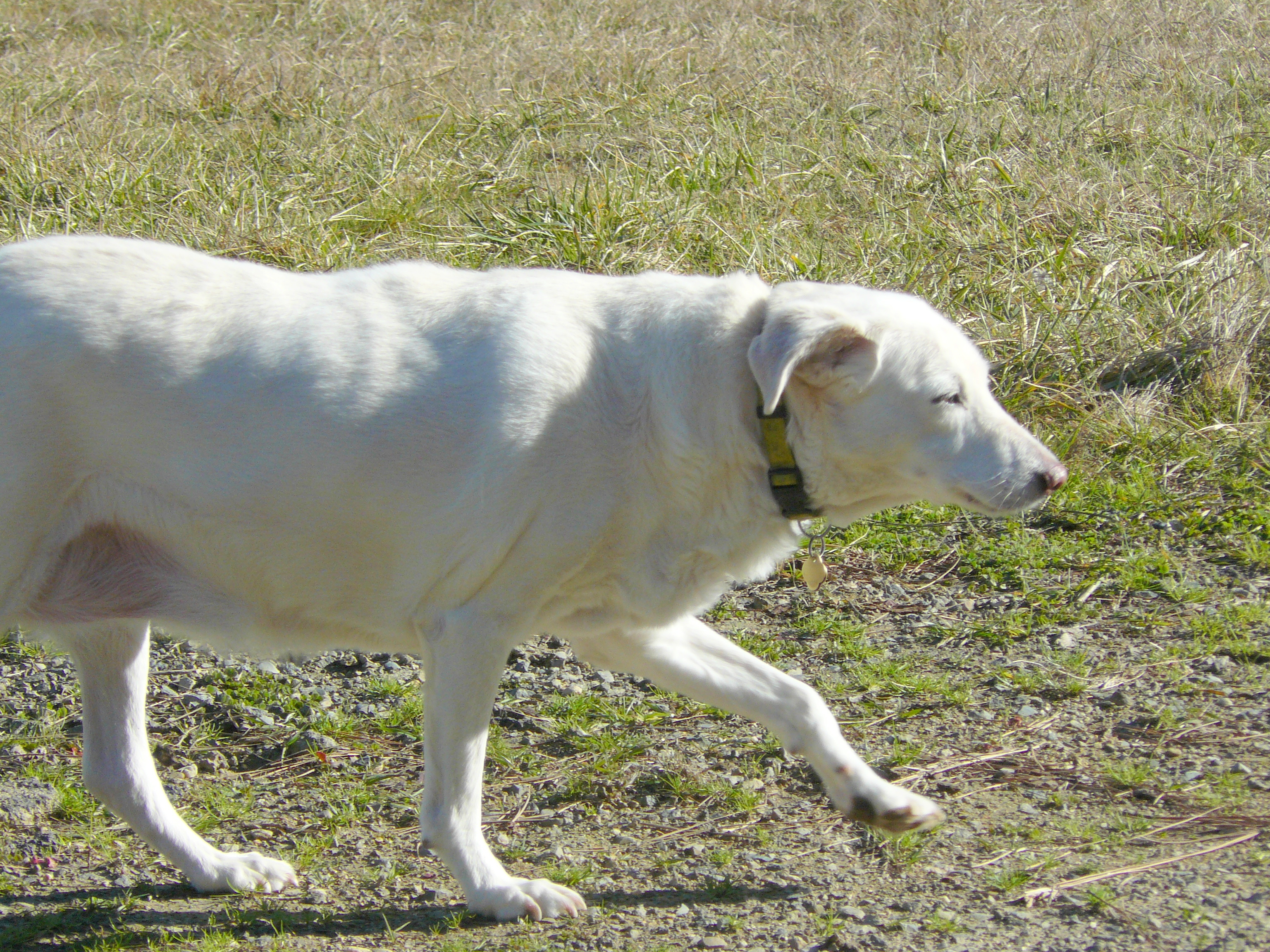
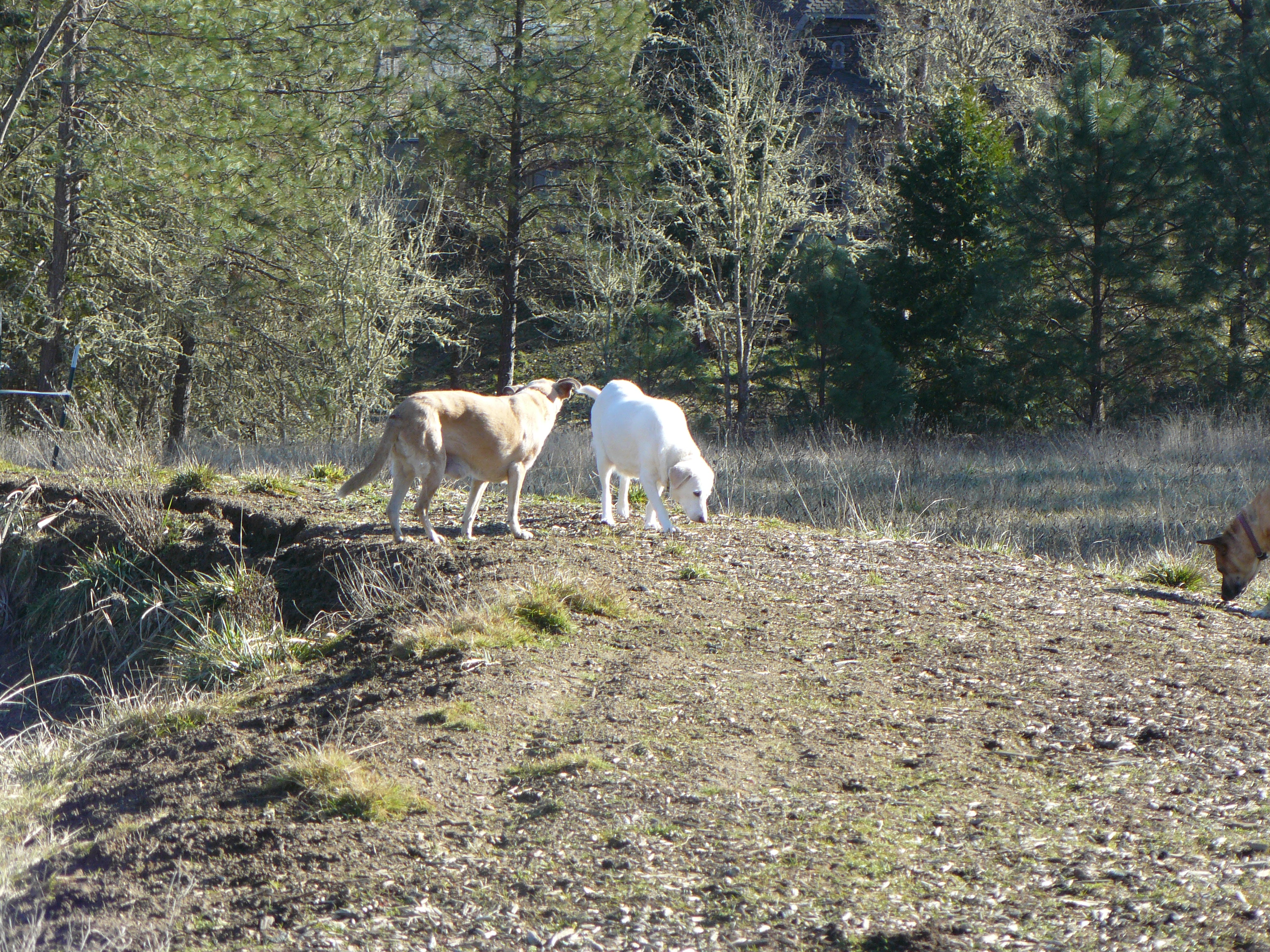
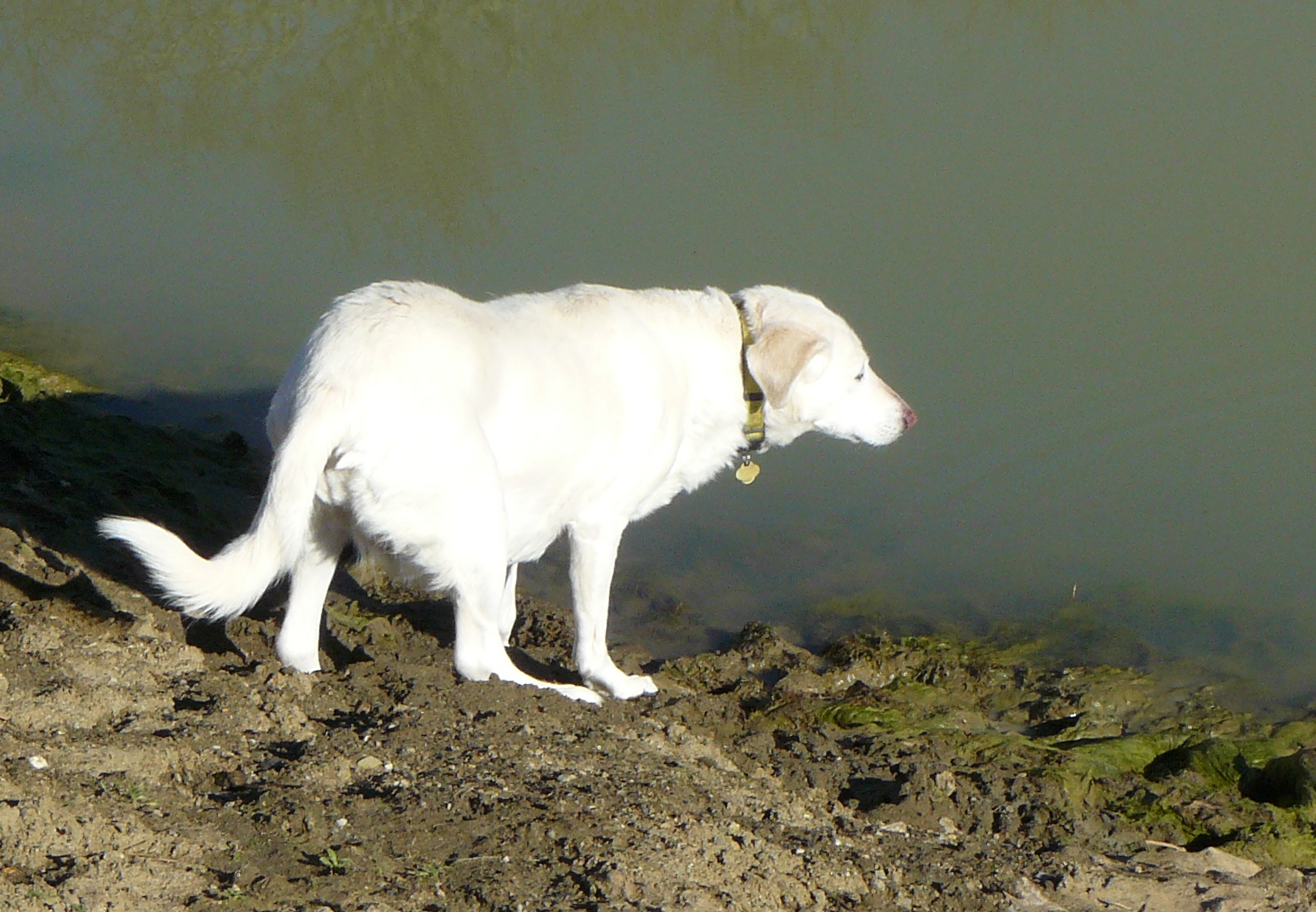
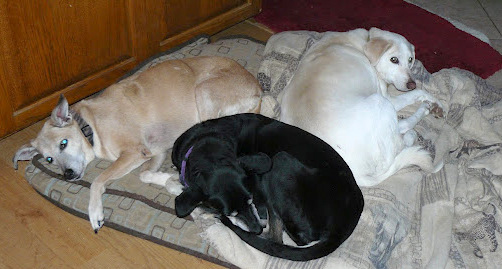
Today’s Picture Parade is devoted to remembering Paloma

Just five precious photographs.

oooo

oooo

Here at Oregon, January 26th, 2014.

oooo

This one is especially poignant as it shows (L-R) Lilly, Hazel and Paloma. All three of them are no longer with us.

oooo

Paloma, December 29th 2011

oooo

Such a special lady in a world of such special dogs.

The ‘Dog Lady’.

The story of Paloma

Just want to go straight to what Jeannie wrote and I published back in January, 2014. There will be more memories of Paloma coming along on Monday.

ooOOoo

Preface.

Before I met Jean in December 2007, she had been rescuing feral dogs in the Mexican beach town of San Carlos for many, many years. Over those years, Jean must have rescued and found homes for 60 dogs or more. In the month that I met Jean, she had 12 dogs and 6 cats at her home. Ten months later, in September 2008, I flew out to be permanently with Jean with my German Shepherd, Pharaoh – that’s him on the home page of Learning from Dogs – taking the total up to 13 dogs.

When we moved up to Payson, Arizona in February, 2010 we brought all 13 dogs and 6 cats with us, much to the amazement of the US Immigration officers at the US-Mexican border town of Nogales! Indeed, our particular officer left his booth excitedly to explain to his colleagues that our dogs and cats represented a border crossing record! Paul.

oooo

Paloma

By Jean Handover   30th January, 2014

Paloma, December 29th 2011

The old white dog padded down the dusty pavement. Sway-backed and dull-eyed, her teats, heavy with milk, grazed the ground. An anonymous creature in a cruel world. The pavement sizzled in the afternoon Mexican summer sun blistering her tired feet, but she could not hurry. She had to conserve her energy. Her pups were soon coming and finding a safe place to give birth to them was her priority. The beach that had been her home was not a good place. .. needed cool shelter. She would find it.

She was alone among a sea of human legs in this scruffy Mexican beach town. No-one noticed her plight. No-one cared. She was used to it. She had long been adept at finding dried fish, discarded tortillas, sometimes a tasty morsel thrown by a tourist sunning in front of the big hotel.

This would be her eighth litter and she was very tired. As a puppy she belonged to a family with small children. There were plenty of leftovers. But when she became pregnant they drove her to the beach, threw her out and left her to fend for herself.

Her babies were always beautiful. She had Labrador in her genes donating a coat that was pure white. Humans always took her pups; she could only ever hope their fate was always a better one than hers.

Anonymity. She had perfected the art; never make eye contact, move low to the ground, escape the stray kick with a quick sideways leap.

She remembered at the very end of the long beach there was a house with a pool. Plenty of water. Onward she padded.

The lawn surrounding the pool was moist with sprinklers and the hibiscus hedge close to the house made a safe nest. Soon she had dug into the damp earth a big enough hole to curl into; it was cool under the canopy of red flowers.

A human voiced shouted, “Carlos, get that dog out of the hedge.” Then the long hose filling that tempting pool was turned on her and a burst of water hit her in the face. She uttered a low growl. Carlos, the gardener, backed away, “Señor, the dog, she is having babies.”

The owner of the house turned abruptly and went inside. He picked up his phone, made a call to the local English lady who over the years had acquired the nickname ‘Dog Lady’. He practically shouted down the phone, “I have a dog in my hedge having pups. You had better do something about it or I shall dispose of them, and I won’t be pretty about it!”

‘Dog Lady’ was used to this. Had been many years since she took on the practically impossible task of rescuing Mexican feral dogs and she was well-known for never turning a dog away. In less than 15 minutes, she had walked to the fine house overlooking the beach and quietly looked under the hedge. As anticipated, the dog was incapable of being moved, her focus entirely now on the safe birth of her pups. With appropriate feminine wiles, the white dog’s human saviour persuaded the disgruntled owner to allow the mother dog a stay of a few days. ‘Dog Lady’ promised that she would take them away as soon as possible.

“She’s a mean and wild dog, you’ll never tame her,” came the angry response from the house owner.

‘Dog Lady’ just smiled and said nothing.

But every day she took food to the white dog then sat quietly close by on the grass reading her book. The white dog had just the one pup, which ‘Dog Lady’ called Solovino, the Spanish for ‘comes alone’. The mother dog she called Paloma, Spanish for ‘Dove’. Many white dogs in Mexico were called Paloma and maybe years earlier that was what the children named her as the name did seem to resonate with this gentle dog.

Patiently, ‘Dog Lady’ moved closer and closer until Paloma would take meat from her hand, rapidly followed by allowing her ears to be caressed. Ten days later, while Paloma was eating, ‘Dog Lady’ picked up the little Solovino and put him into her car. Paloma’s response was immediate; she frantically ran to her child, her mothering instinct so great that she leapt without hesitation into this strange vehicle. Paloma and Solovino were safe.

The house owner graciously admitted that he had been taught a lesson in empathy and how sorry he was for being so rude and cruel.

Back at ‘Dog Lady’s’ home, a quiet sanctuary for so many dogs over the past years, Paloma and Solovino were quickly settled into a cool room. Paloma soon utterly trusted her ‘Dog Lady’ human companion and became the tame and loving dog she always wanted to be. Her shining eyes embraced her new world and she even regained her figure! Solovino grew quickly and found a wonderful family home in Tucson, Arizona.

Now some 6 years after ‘Dog Lady’ rescued Paloma from under that hedge, she is a beloved part of the Handover family. Indeed, she travelled in peace in February 2009 with her twelve dog friends from her sanctuary in San Carlos, Mexico to this dog paradise in the Arizonan forest just outside Payson.

Paloma will never want again.

ooOOoo

Paloma never ever did want again.

Nighty, night Paloma

Now we are seven!

It’s approaching 6:30pm here in Oregon.

Jean and I have just returned from taking Paloma to Lincoln Road Vet Clinic.

The reason being is that not two hours ago, Jean and I came into the house to find Paloma paralyzed in both rear legs.

Dr. Russell Codd at the clinic determined via an X-ray that a spinal disc had ‘popped’ and contacted a spinal nerve, hence the paralysis.

My planned post for tomorrow is postponed. I’ll write a eulogy for Paloma and publish it instead.