Category: Aircraft

The recent history of flying

A copy of an article published by Historic England.

As many of you know I flew during my years when I was based in England. I flew as a hobby. Very quickly I realised that looking at the ground from a few thousand feet up gave one a unique view of the landscape.

ooOOoo

50 Years of Flying for Heritage

Damian Grady

Damian Grady is the Historic England Aerial Reconnaissance Manager. He joined the Royal Commission on the Historical Monuments of England in 1990 to map archaeology from aerial photographs and from 1998 became responsible for managing the aerial reconnaissance programme.

Published 8 February 2017

On Wednesday 8 February 2017 Historic England celebrated 50 years of our flying programme. Since those early days in 1967 much has changed, but reconnaissance, the act of flying to record and monitor sites and landscapes of archaeological interest, is still at the heart of the work carried out by our research teams.

This article was originally written in 2017 to mark the 50th anniversary but we have kept it live as it continues to be read and enjoyed.
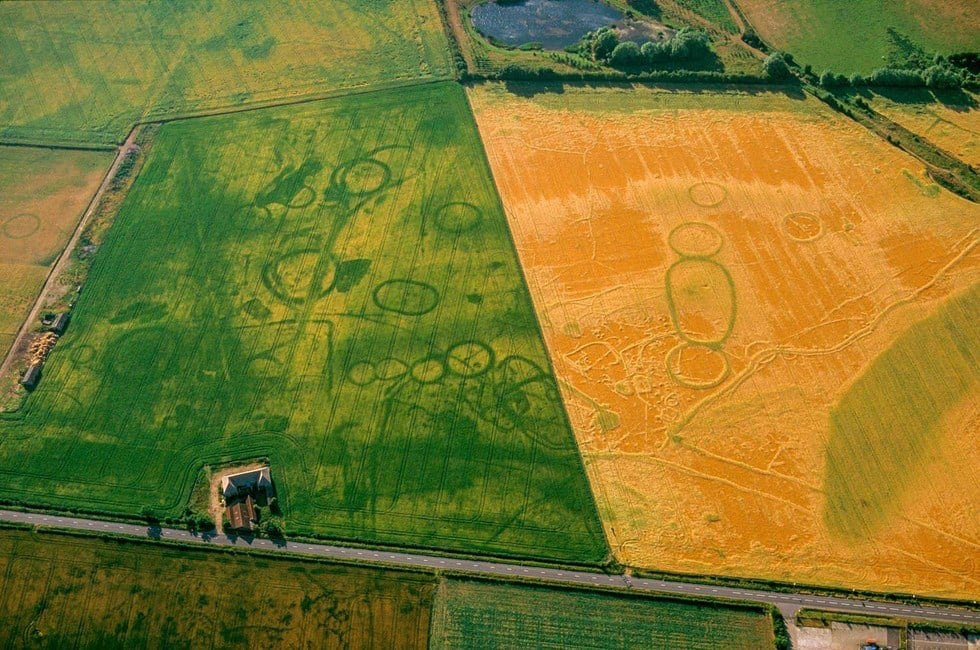
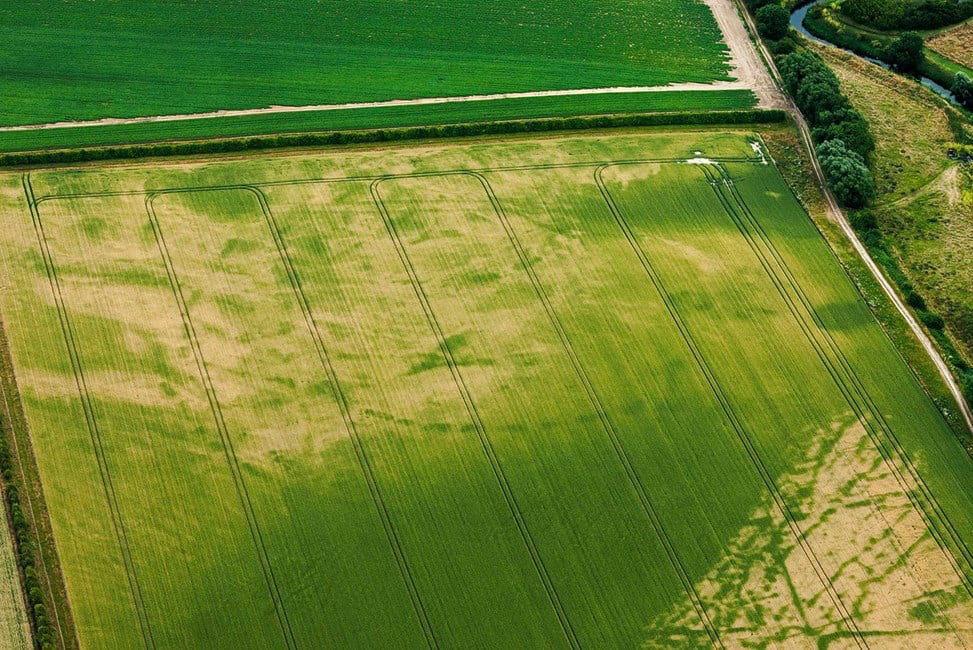
Cropmarks of prehistoric barrow cemetery and enclosures near Eynsham, Oxfordshire photographed on 01 September 1995 (NMR15291/21) © Crown copyright.Historic England Archive: Photographer – Roger Featherstone

Beginnings

On a cold February afternoon in 1967 an Auster, four-seater, light aircraft took off from Fairoaks airfield on the outskirts of south west London. This was the first test flight of the Royal Commission on the Historical Monuments of England (RCHME), one of the predecessors of Historic England. On-board was the pilot, a photographer, Ron Parsons and John Hampton. John was responsible for setting up the RCHME Air Photo Library in 1965 to implement the commission’s resolution (1964) to “use air photography to build up rapidly a record of field monuments throughout England.”

In the beginning this involved acquiring aerial photographs to build up a library of images of archaeological sites. By 1967 it was felt that RCHME should take its own oblique aerial photographs in support of its field survey work. Oblique photographs are taken at an “oblique” angle to the ground, as opposed to directly from above. They are usually taken with a hand held camera through the open window of a plane. The main target at this time was cropmarks; the walls and ditches of buried archaeology can affect the rate at which plants grow over them, causing differences in colour and height. These cropmarks are not always visible on the ground, so the best way to look for them is from the air.
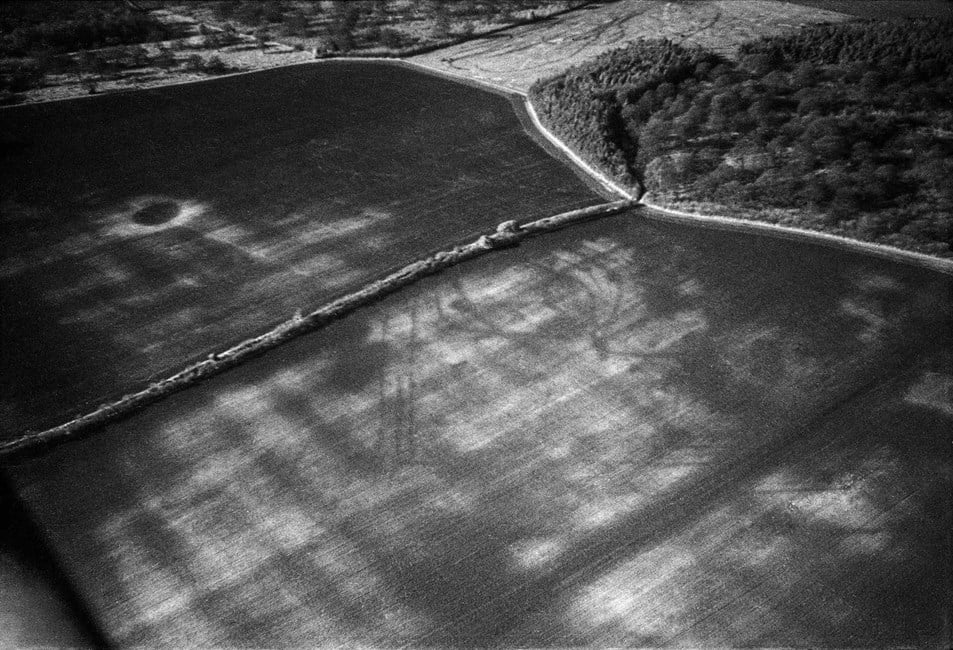
A prehistoric enclosure near Wootton St. Lawrence, Hampshire, recorded on the first flight on 08 February 1967 (NMR 20/3a) © Crown copyright. Historic England Archive: Photographer – Ron Parsons

This first flight was very much an experiment. Flying from Fairoaks to Basingstoke, Tidbury Ring and back they photographed prehistoric sites on the chalk soils of Hampshire. Many of the sites had been ploughed recently and were seen as colour differences in the soil and germinating crops. During the 1.5 hour flight John Hampton learned a number of valuable lessons, such as the best height to fly, the best angle to use and to make sure there was plenty of film! The lessons learned from this and subsequent flights formed the foundation of 50 years of flying by the aerial reconnaissance team in RCHME, English Heritage and now Historic England.

Growth of the archive

At about the same time as this first flight the collection of aerial photographs grew with the arrival of the Crawford Collection from the Ordnance Survey. Later, in the 1970s, the Air Photo library acquired many more aerial photographs from archaeologists and private fliers keen to discover archaeological sites. One such flier was Derrick Riley who took this photograph of an Iron Age/Roman field system in Nottinghamshire.
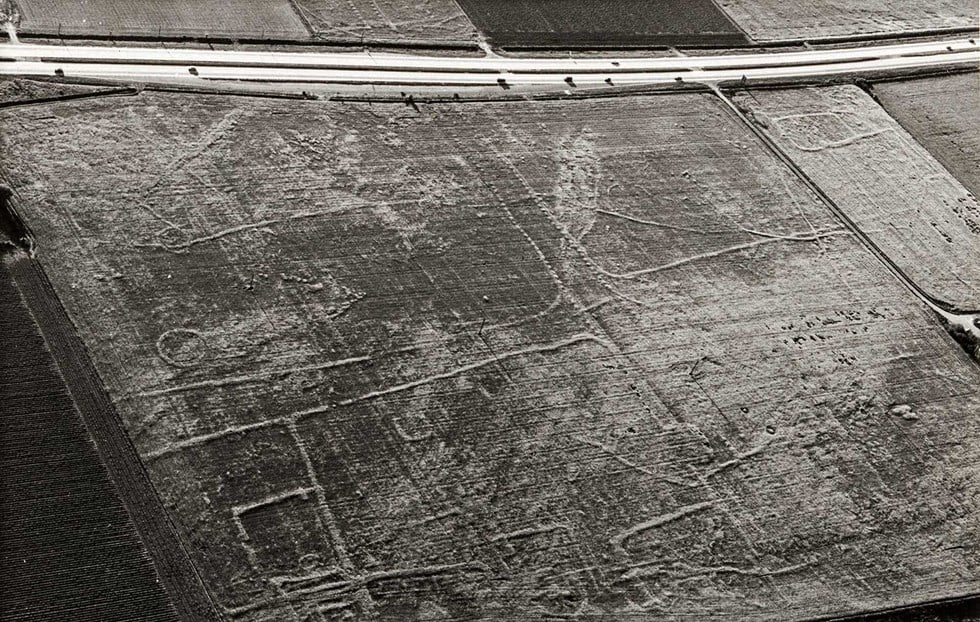
Cropmarks of a prehistoric field system in Nottinghamshire taken by Derrick Riley on 06 June 1976  (DNR 847_17). © Historic England Archive (Derrick Riley Collection)

The oblique photographs acquired and taken by RCHME were ordered by kilometre square and stored in distinctive red boxes. Then in the 1980s there was a rapid growth with the acquisition of the Department of the Environment collection of vertical aerial photos. This collection included all prints taken of England by the RAF since the start of WWII such as the image below. This shows the airfield at Biggin Hill, near London with evidence of the many bomb craters sustained during German air raids. Further expansion came in the 1990s with the acquisition of the Ordnance Survey archive and in 2007 with the Aerofilms collection.
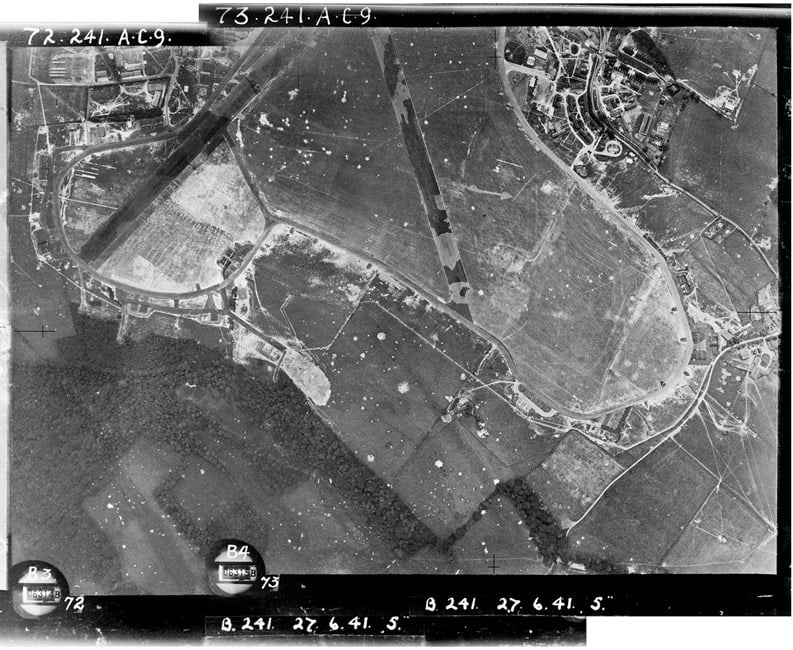
Photo mosaic of RAF images of Biggin Hill airfield taken on 27 June 1941, showing a camouflaged runway and filled in bomb craters (RAF_241_72 and 73). Source: Historic England Archive (RAF collection).

Mapping from aerial photographs

In the 1970s John Hampton and his team looked at various ways of interpreting and mapping from the aerial photographs taken by RCHME and acquired from local fliers. Along with others, they experimented with a variety of mapping techniques from sketch plotting to photogrammetry. An important step in the development of this process was the project to map the archaeology around the Iron Age hillfort of Danebury. This approach was scaled up by RCHME to map the prehistoric archaeology visible as cropmarks on the Yorkshire Wolds. This project used computer aided rectification of oblique aerial photographs, a process that was being developed. 

In the late 1980s, as the archive acquired more aerial photographs, RCHME developed a systematic methodology to interpret, map and record all archaeological features, not just cropmarks, visible on aerial photographs. Pilot projects in Kent, Hertfordshire and the Thames Valley were set up to develop the methodology further. 
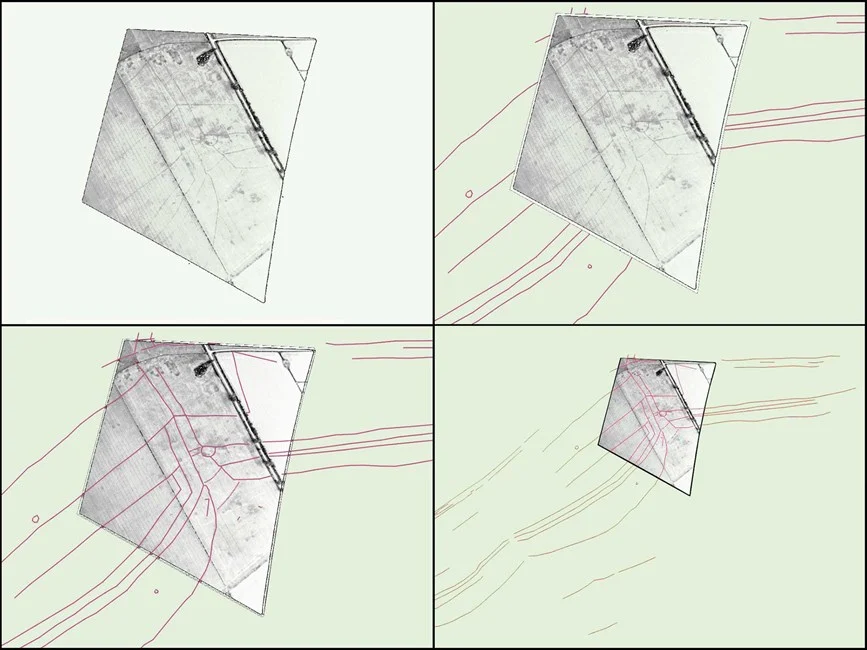
Computer-aided rectification, interpretation and mapping allows information from many individual photographs to be combined, revealing extensive landscape features. Here you can see the process from the original rectified photo to how it fits into the wider landscape. Photo (NMR 1580/04A) © Historic England Archive (Derrick Riley Collection)

Increasing our range

In the 1990s the range of subjects photographed increased as RCHME used aerial photographs to record the large building complexes they were surveying that were undergoing major changes at the time. These included textile mills, hospitals, prisons and Cold War military sites. For some of these sites such as the textile mill below in Leeds, these photographs are the last record we have as development pressures have since led to their demolition.
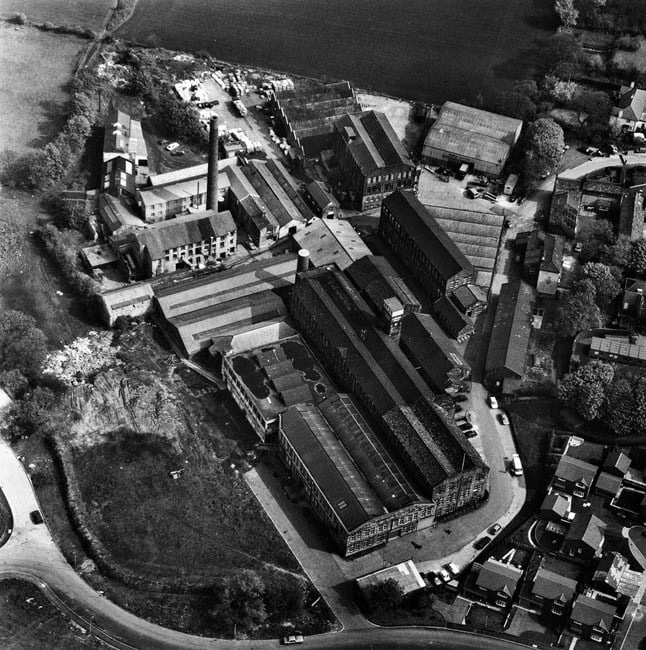
Laneside Paper mill (foreground) and Churwell knitting mill (top centre), Morley, Leeds, photographed on 17 May 1985, and since demolished (NMR2613_57) © Crown copyright.Historic England Archive: Photographer – Mike Hesketh-Roberts

New discoveries

The 1990s also saw new discoveries across the country especially in the hot summers of 1995 and 1996. Below is just one such site, a “banjo” enclosure, so called because of the shape; a circular enclosure with a long funnel neck leading into it. See other examples of new sites discovered in the 1990s and at other times in the gallery below. 
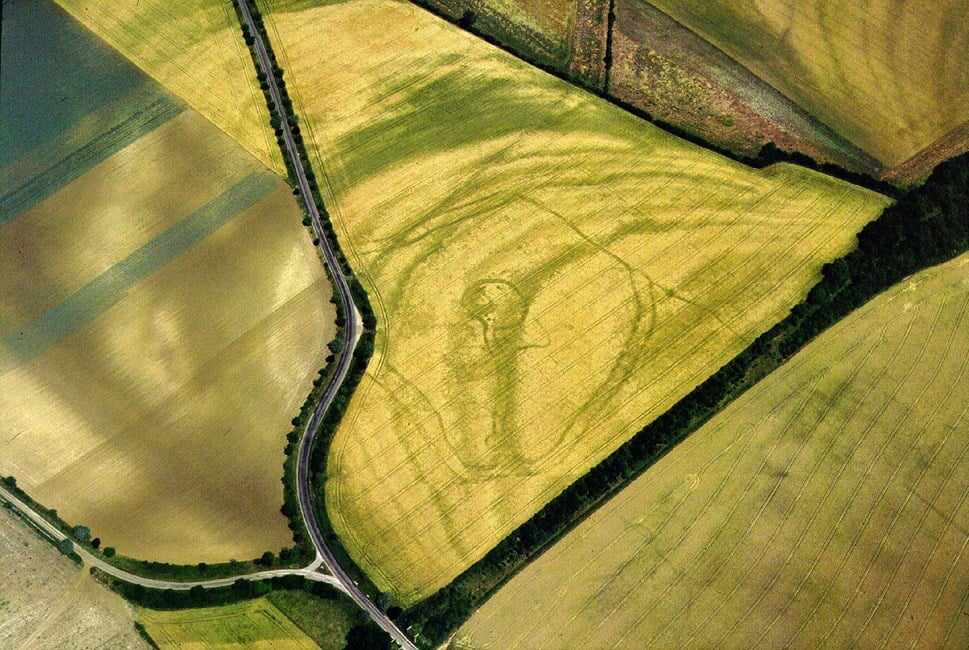
Cropmarks of an Iron Age Banjo enclosure, Rollright, Oxfordshire photographed on 20 July 1995 (NMR 15350_33). © Crown copyright. Historic England Archive.

Expansion

In the 1990s the political changes and opening up of eastern Europe led to archaeologists visiting the survey and archive teams to learn from our experience of flying, mapping and archiving aerial photographs. This led to us joining forces with other aerial archaeologists from western Europe to set up training courses in Hungary and Poland. This in turn led to further work exchanges and training courses across Europe. 

The late 1990s saw RCHME and EH working together to supply aerial photographs to help Field Monument Wardens monitor the condition of scheduled monuments. Following the merger of the two organisations in 1999 this became an important aspect of the flying programme. In the image below the World War Two anti-aircraft battery might appear to be safe since it has been removed from the cultivation that surrounds it. However, it is still at risk from being overgrown by scrub. 
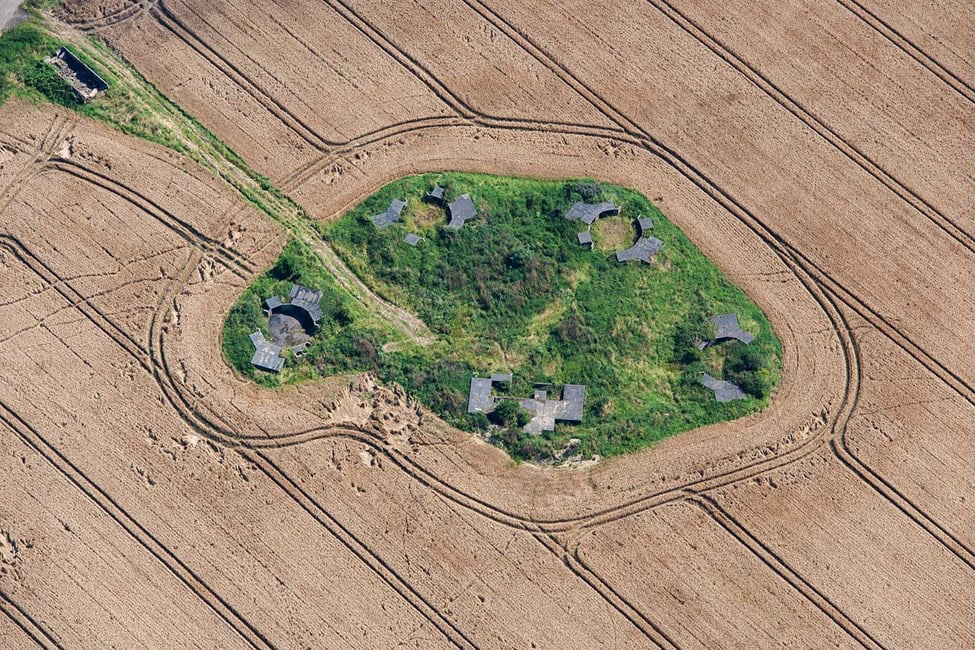
World War Two Heavy Anti-aircraft battery near Bolton upon Dearne, Barnsley photographed on 10 August 2012 (NMR 28324/002). © Historic England Archive

New technology

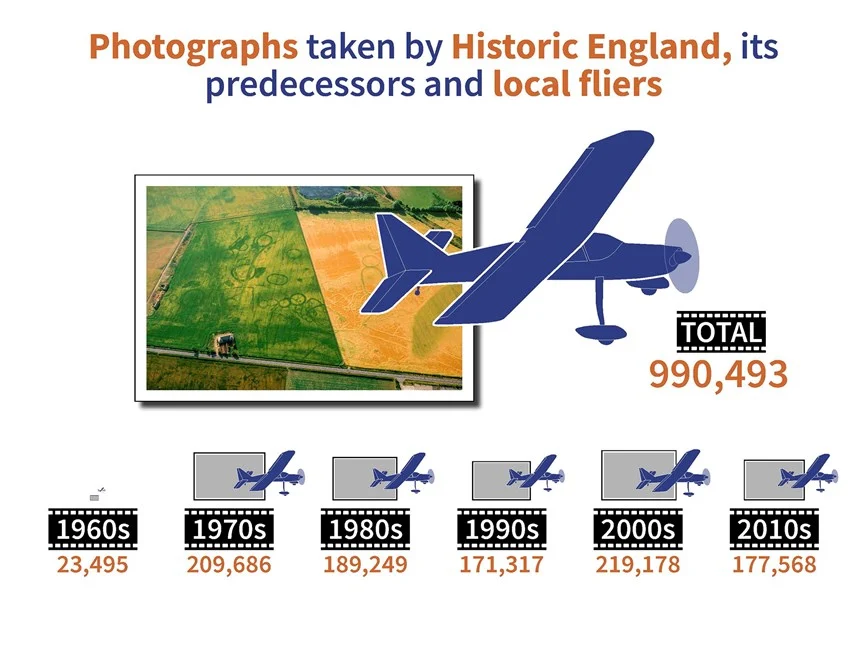
The new century saw important technological developments taken up by the flying and mapping teams.  The reconnaissance teams began experimenting with digital cameras in 2003 and the archive developed standards for the long term preservation of digital data. The last negative film shot in the air was 2006. The archive now holds over 200,000 digital aerial photographs taken by the reconnaissance teams. 

In 2001 English Heritage used lidar, a system of airborne laser scanning, for a review of mapping of the Stonehenge World Heritage site. Since then HE have developed our use of the data and now use it as a regular source for any mapping and interpretation projects. 

The early 2010s saw more new discoveries, of which these are our favourite examples

The distinctive elongated pits of a newly discovered Neolithic enclosure in Cambridgeshire, seen here as cropmarks in a field of wheat on 06 July 2015 (NMR 29353_034) © Historic England Archive: Photographer – Damian Grady

The discovery of new archaeological sites is still the most exciting part of the flying programme, but since the first flight in 1967 the scale, range and scope has changed. New sensors and camera technology are allowing us to look at new ways of taking aerial photographs. New software and access to other aerial data such as lidar allows us to see, map and understand the historic landscape in ways that could only have been dreamed about in 1967. 

Since our systematic analysis of new and archive aerial photographs began in the late 1990s we have discovered over 122,000 new archaeological sites like the one above.
ooOOoo

I very much hope that republishing this article is in order. An email to the Press Office of Historic England requesting permission has been sent last Sunday afternoon.

This morning, 30th July, I received the following email:

To use the aerial images you have seen on our webpage ’50 Years Flying’ athttps://historicengland.org.uk/whats-new/research/50-years-flying/ , please make a note of the image reference numbers and then visit our Aerial Photography Explorer website at https://historicengland.org.uk/images-books/archive/collections/aerial-photos/ . If you then navigate to the oblique image search screen and fill in the reference number under the ‘file contains’ tab you will be taken to that image. By then hovering over that image a share/embed option will appear that will allow you to use the images free of charge on non-commercial websites and some social media sites such as X and Facebook. Our reference is 150356.

Picture Parade Four Hundred and Seventy

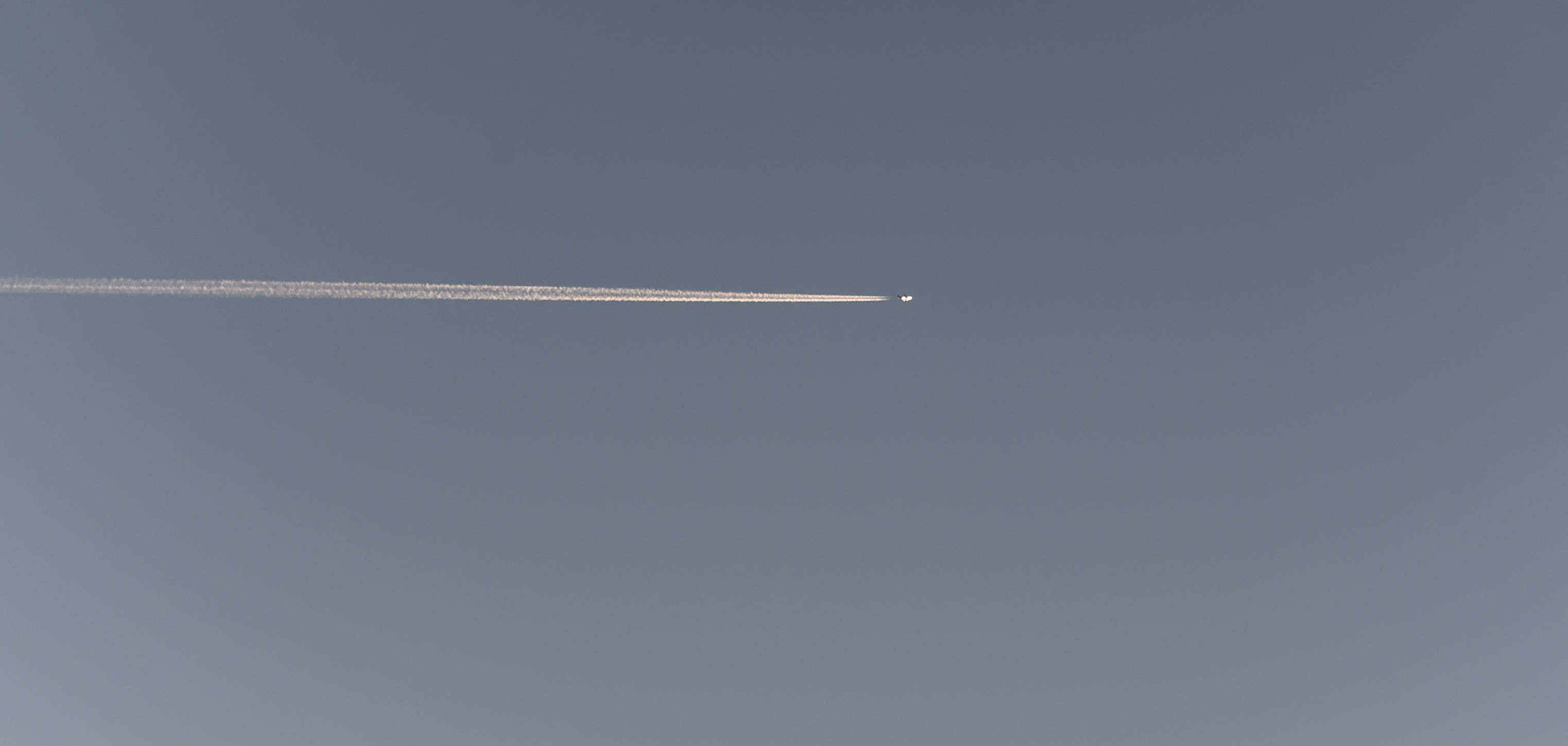
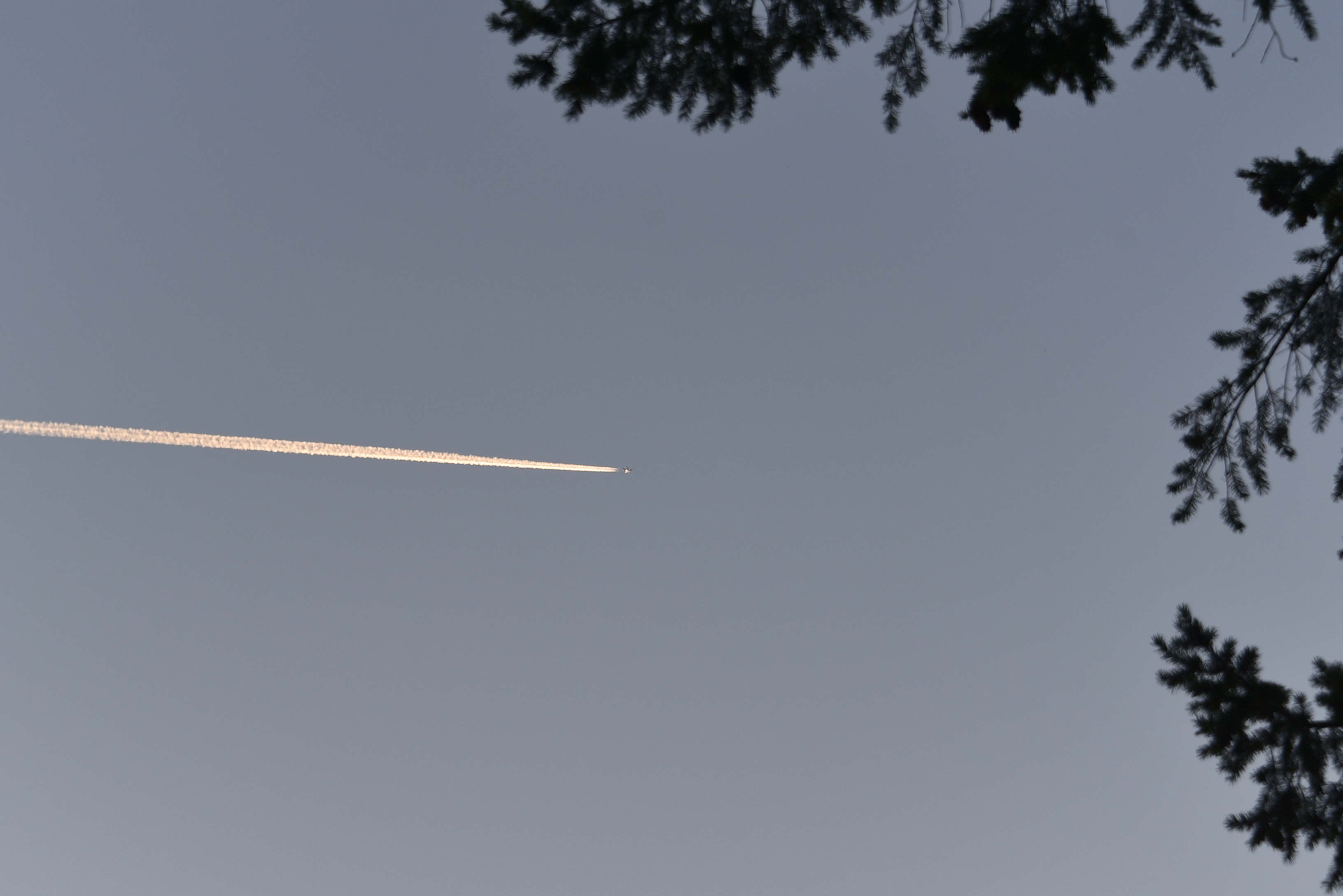
Today it is all about jet contrails.

I just find the contrails of the jets way above us in Merlin, Oregon fascinating.

oooo

oooo

oooo

oooo

oooo

All of the photos taken from our rear deck.

Plus two taken in September last year.

oooo

My dear friend, Richard.

Richard’s funeral was last Thursday.

Julie, his partner, sent me the Order of Service, held on the 20th, that I have published on LfD today.

(Click on the link to see the complete Order.)

UPDATE: Here is the service, sent to me on Sunday by Julie.

ooooo

In Loving Memory and to 

Celebrate the Life of

Richard Julian Maugham

28th October 1946 – 9th February 2025

————–

Entrance Music – 

Theme from Out of Africa (Flying Scene)

By John Barry

——————–

A very warm welcome as we unite in both love and friendship to say, not just goodbye, but more importantly to pay tribute and to celebrate the life of Richard Julian Maugham.

———————-

Richard was a true character, one of a kind, sociable, funny and a wonderful raconteur who led a varied and interesting life which we will hear more about shortly but even then, we will barely scratch the surface of all he was, but I hope when you leave here this afternoon that you will do so with a real sense of having shared in something special, for a friendly, popular and unique individual.

——————-

Reflection Music

We start today by playing a song from one of Richard’s favourite bands The Eagle’s, please sit back, listen and enjoy – ‘It’s Your World Now’ 

——————

Eulogy

The word Eulogy refers to a tribute of somebody’s life and it’s a pleasure for me share these words on behalf of Richard’s family and friends.

Richard was welcomed into this world on 28th October 1946 to parents Phylis and Lesley, born in Chiswick he would join his elder sister Vivienne who aged 4 was quizzed if she would prefer a brother or sister, prompting her response ‘I don’t really mind as long as it’s NOT a boy!’

But fortunately, it didn’t matter as Richard and Vivienne forged a wonderful relationship over the years and although not spending a lot of time together early on, Vivienne has such fond memories of cycling together with a picnic to the local swimming pool and also their cycle trips out with their dad too, Vivienne still recalls seeing Richard with his legs pedalling rapidly as he sped across the ground on the popular child’s bike of that era nicknamed the ‘fairycycle’.  

They both appreciated their safe and secure upbringing enjoying quiet Christmas’s together with a few close relatives and even when their paths took them in different directions, they remained good friends with a great rapport and comfortable in each other’s company. Richard was always very fond of his sister but also couldn’t wait for her to get married and leave home so he could inherit her bedroom however after waiting patiently for this happen his plan was scuppered when his grandma moved in instead! This gave Vivienne a little chuckle at the time having been pestered constantly to tie the knot.

Growing up in Twickenham, Richard passed his eleven plus with ease and attended the best Boy’s Grammer School in the area which would certainly hold him in good stead throughout his career, Richard was sharp as a knife, a confident lad and already showing signs of having the gift of the gab plus a real knack of making friends, with some of you here today as his lifelong friends for over 65 years namely Ken and Robin who formed part of the group known as the Young Pretenders, all meeting annually in the summer for the past 30 years and to Richard this was a very important and a valued friendship group that he held with a great deal of affection. 

Richard’s career path would typify his character a hard worker, charming, good with people and a fantastic communicator but the ideal person equipped to give us the best insight into Richard’s background is one of his best friends Tony, who shared these wonderful memories with me about the various sides to Richard having meet him in 1968 when working together in the Olivetti Sales and Management Training Centre in Haslemere. Tony was there to replace Richard or Dick as he was known then and to create a smooth transition within the workplace. But little did anyone know just what an impact this would have on the 2 of them and their future as friends, Tony for the first 3 months or so watched his every move, listened to his advice and even copied his jokes especially as they both shared the same sense of humour! Tony mused that Richard was your true dapper gentlemen, always extremely smartly dressed and often took on the role as Tony’s personal shopper, costing Tony a fortune in the process but it ensured he looked the part too, ready for their many nights out in Guildford or Haslemere and needless to say with that gift of the gab again, his looks and witty personality they had some memorable and extremely fun times through the years, Tony even recalls the time they attended the Cannes Film Festival, staying in a slightly sleazy apartment they nevertheless donned their best evening suits and walked the red carpet, a treasured memory.

This chance meeting at Olivetti really was the start of something very special, even when Richard went off to become a manager in Croydon and his career took him on a different pathway via some office supplies companies, a spell in Oman in the Middle East which certainly left an impression on him and onto roles in the car industry with Audi and VW as part of the Inchcape Group, Tony will forever remember the fond memories of their shared flats, shared holidays, shared clothing  and a shared love of being just little rascals when together, so as you can imagine Tony was beyond proud when Richard asked him to be his Best Man when he married Jane in 1986, returning the compliment when Tony married as well some years later.

But Tony wasn’t the only lifelong friend that Richard would make during his salesmen years, for in 1982, whilst both selling the Commodore ‘PET’, he would encounter a fellow salesman, Paul, meeting in the Petjet, the private small jet owned by Jack Tramiel, the CEO of Commodore, they hit it off immediately while travelling to the Hannover International Fair.

Richard and Paul took the pilots out for dinner that evening which inspired Paul to start gliding and later power flying, Richard flew on many occasions with Paul, as both being members of a private aircraft club, they would often hire a plane to fly to Jersey or Scotland but one memorable flight was their trip to visit Tony, who had recently relocated to South West France, flying to Bergerac airport they stayed a few nights enjoying Tony’s hospitality before flying back home. 

Richard by now had also developed a passion for all things aeronautical, often visiting air shows in later years and was visibly moved to tears whilst witnessing a Spitfire fly past when attending a Remembrance celebration at Seagry near Chippenham, a very special moment for him.

Paul’s friendship with Richard would continue to grow, living in Oregon now, he still recalls that meeting Richard in the way he did gave him a gift that he has treasured forevermore and a cherished relationship that also included meeting The Prince of Wales, this whilst both volunteering for the Prince’s Trust Charity where they helped many young people start their own businesses, one in particular being a gardening venture which Richard being the type of generous person he was duly employed the appreciative couple to work on his own garden, cementing Richard’s thoughtful and helpful approach to others.

Working until he was 77 years old, Richard will always be known as a hard worker, a great salesman, a fantastic speaker and presenter who was highly thought off across all his companies he graced but it was never all work and no play for Richard, helped by being a self-confessed petrol head, not only from working in the trade but also from the pure joy he experienced in his leisure pastimes with his passion for cars, watching the Monaco Grand Prix with a friend in the 70’s to his own Ferrari and Formula 3 Race Track Driving Experiences that he absolutely adored were just 2 of his highlights, as well as owning a MGB and Porsche that he loved. 

Approaching his 60’s, Richard would also find love again, introduced by a friend, he met a lovely lady, Julie who subsequently relocated to Wiltshire to be with Richard. They would also go on to purchase a property in South West France to renovate, named Mason DeFrere which was once part of a Friary, used by the monks to study and pray whilst it was also located not far from his friend Tony and his wife Caroline, travelling regularly to France they enjoyed many good times, strolling around the markets and spending quality time as a foursome together. 

Richard and Julie also enjoyed a shared love of music, at times Richard could be moved to tears demonstrating a real sensitive side to him not often seen but he could lose himself to the tunes of The Eagles or Hollies and seeing live music from the likes of Fleetwood Mac, Eric Clapton, Tony Bennett, Simply Red and Billy Joel are particular fond memories for Julie. 

Julie appreciated Richard’s sharp wit which was often fuelled by his love of the radio programme recently chaired by Jack Dee called ‘I’m sorry I haven’t a clue’, he would cry with laughter and often use the one liners himself to entertain his friends, he was an out and out ‘wordsmith’ loving his crosswords and an avid reader of the humorous dictionary ‘Meaning of Liff’ which again would have him in stitches and characterised his sense of humour perfectly.

Richard and Julie relocated to Essex to be closer to her son and grandchildren but Richard’s heart always remained in Wiltshire so a decision was made for him to return and continue to spend time with his friends, he had always professed that his Parkinson diagnosis would not define him but as the time moved on and following a fall, he was very much grateful to his wonderful friends Gillie and Colin who visited every other day and remained by his side as he sadly lost his battle last month.

We have lost a truly respected and loved man who gave so much to so many and lived a full life surrounded by people who cared for him, so we can be comforted in the knowledge that he has left us all with some treasured memories of time spent in his company.  

Thank you, Richard 

——————–

Reflection Music

How we love by Beth Neilson Chapman

We have shared some lovely memories and I have no doubt you will all have you own personal memories from times spent with Richard, we would now like to give you a little time to reflect on those while we listen to a lovely tune by Beth Neilson Chapman

——————

Poem

I would now like to share a poem chosen by Julie especially for today’s service and dedicated to Richard and his love of aviation – 

High Flight

Oh! I have slipped the surly bonds of Earth

And danced the skies on laughter-silvered wings;

Sunward I’ve climbed, and joined the tumbling mirth of sun-split clouds – and done a hundred things you have not dreamed of—wheeled and soared and swung high in the sunlit silence.

Hov’ring there, I’ve chased the shouting wind along, and flung my eager craft through footless halls of air ….

Up, up the long, delirious, burning blue

I’ve topped the wind-swept heights with easy grace

Where never lark, or even eagle flew—

And, while with silent lifting mind I’ve trod

The high untrespassed sanctity of space,

Put out my hand, and touched the face of God.

——————-

Tributes

I would now like to invite Ken and Robin to share their tributes to their special friend while we hear in the background a popular song of Richard’s by The Hollies

——————

Farewell

“We are all visitors to this time, this place. We are just passing through. Our purpose here is to observe, to learn, to grow, to love…and then we return home.”

Richard, we have heard the impact that you had on so many people. Your character, humour and individuality that were so much a feature of your life will live on in our memories and create a beautiful legacy of love for your family and friends for much longer than the acute desolation we are feeling here today. 

Richard it is with such sadness we say goodbye to you, but we thank you so much for every little gift you have contributed to this life.

But most of all we thank you for your love and for your friendship; your warmth and care, and for your kind and humble heart.

We thank you Richard for everything you were and all that you gave, and may you now forever rest in peace with the certain knowledge that you were, are, and will always be, dearly loved and terribly missed. 

Farewell Richard Farewell

——————

“Always remember you matter, you’re important and you are loved, and you bring to this world things no one else can.”   

——————–

Exit Music

Don’t Stop Thinking About Tomorrow 

By Fleetwood Mac

oooo

Now a selection of my photos.

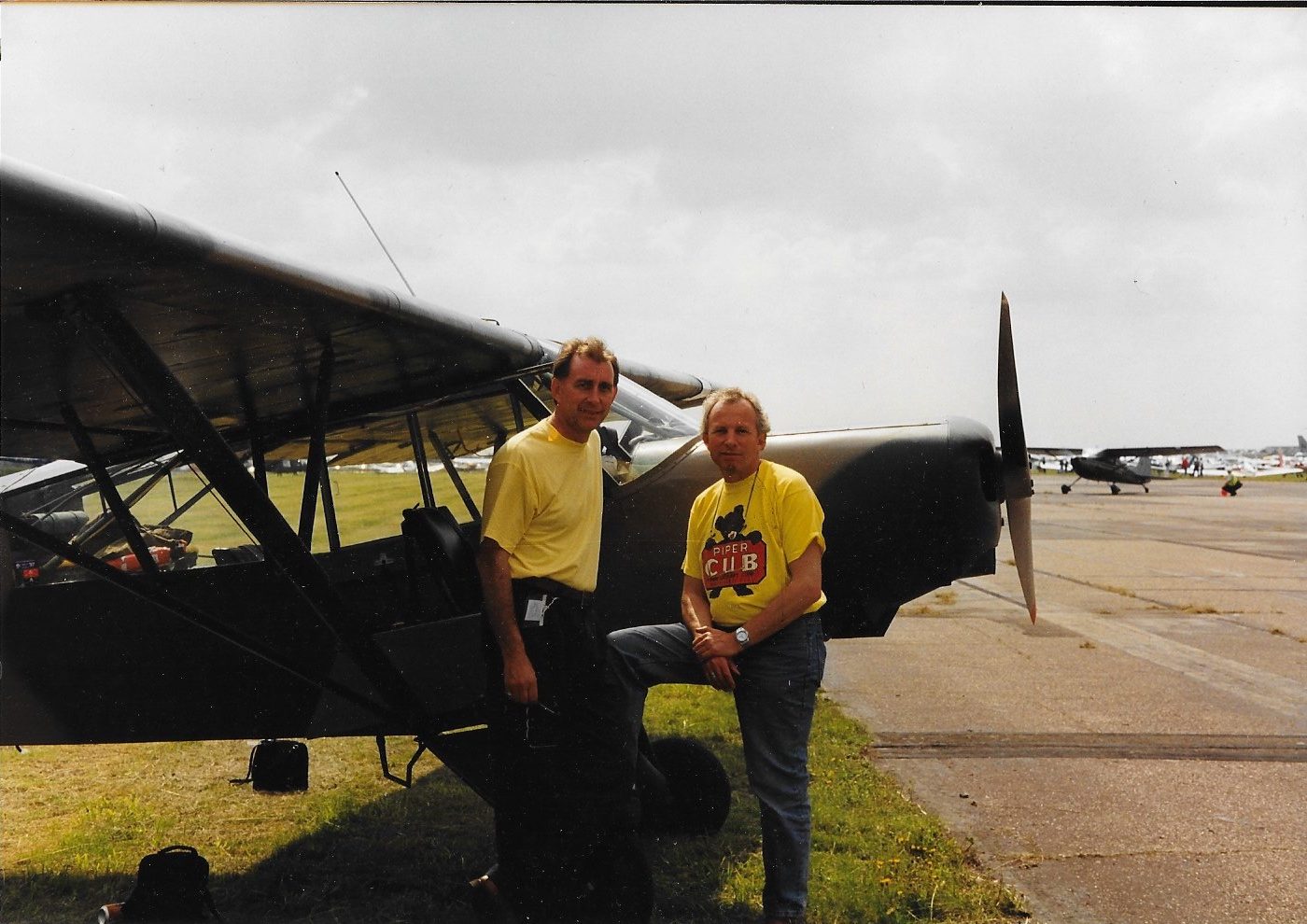
Richard and me by the Piper Super Cub, registration R151.

oooo

Richard and Alex, my son, in front of G-BPAS, a TB20, at another air show.

oooo

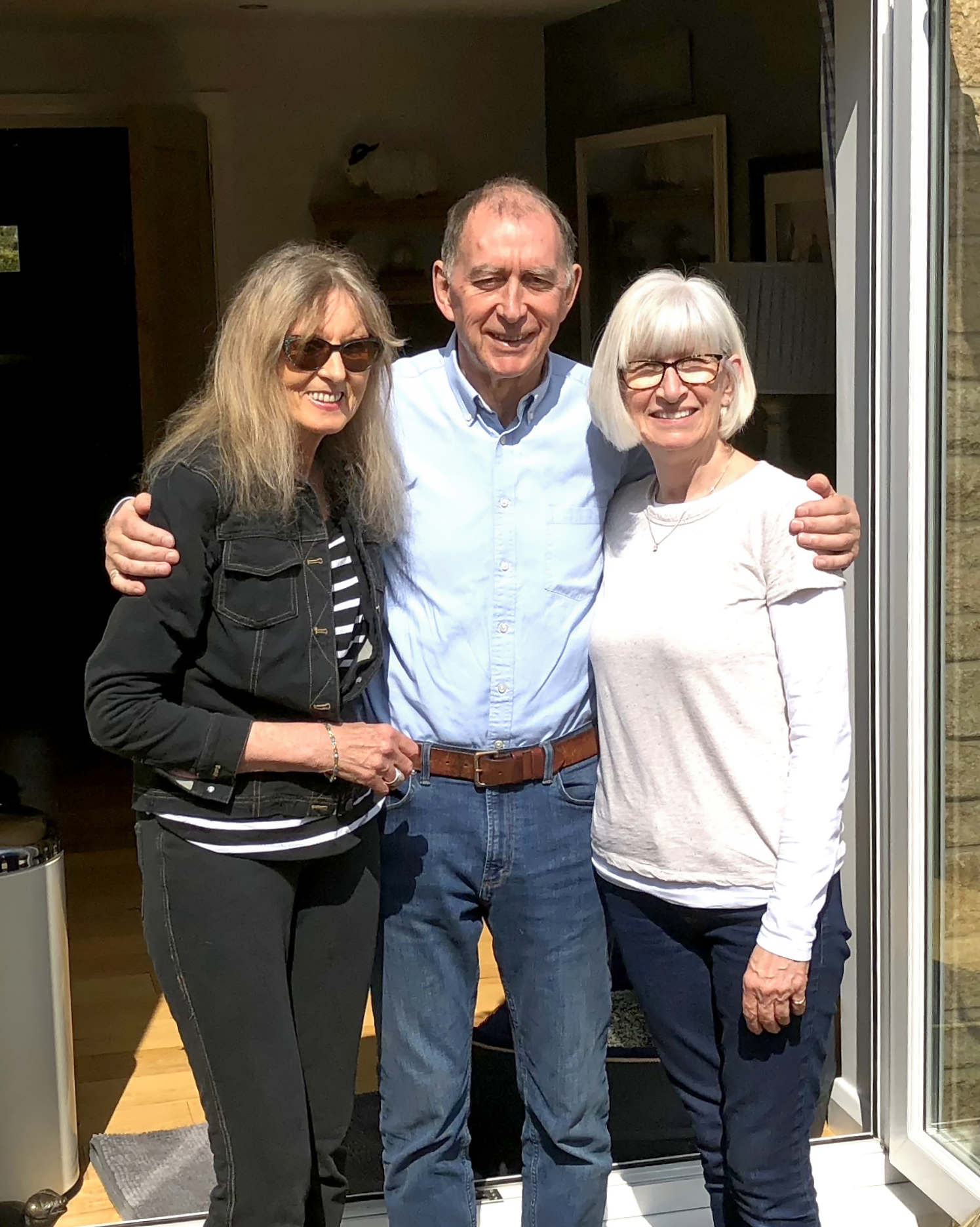
Jeannie, Richard and Julie.

oooo

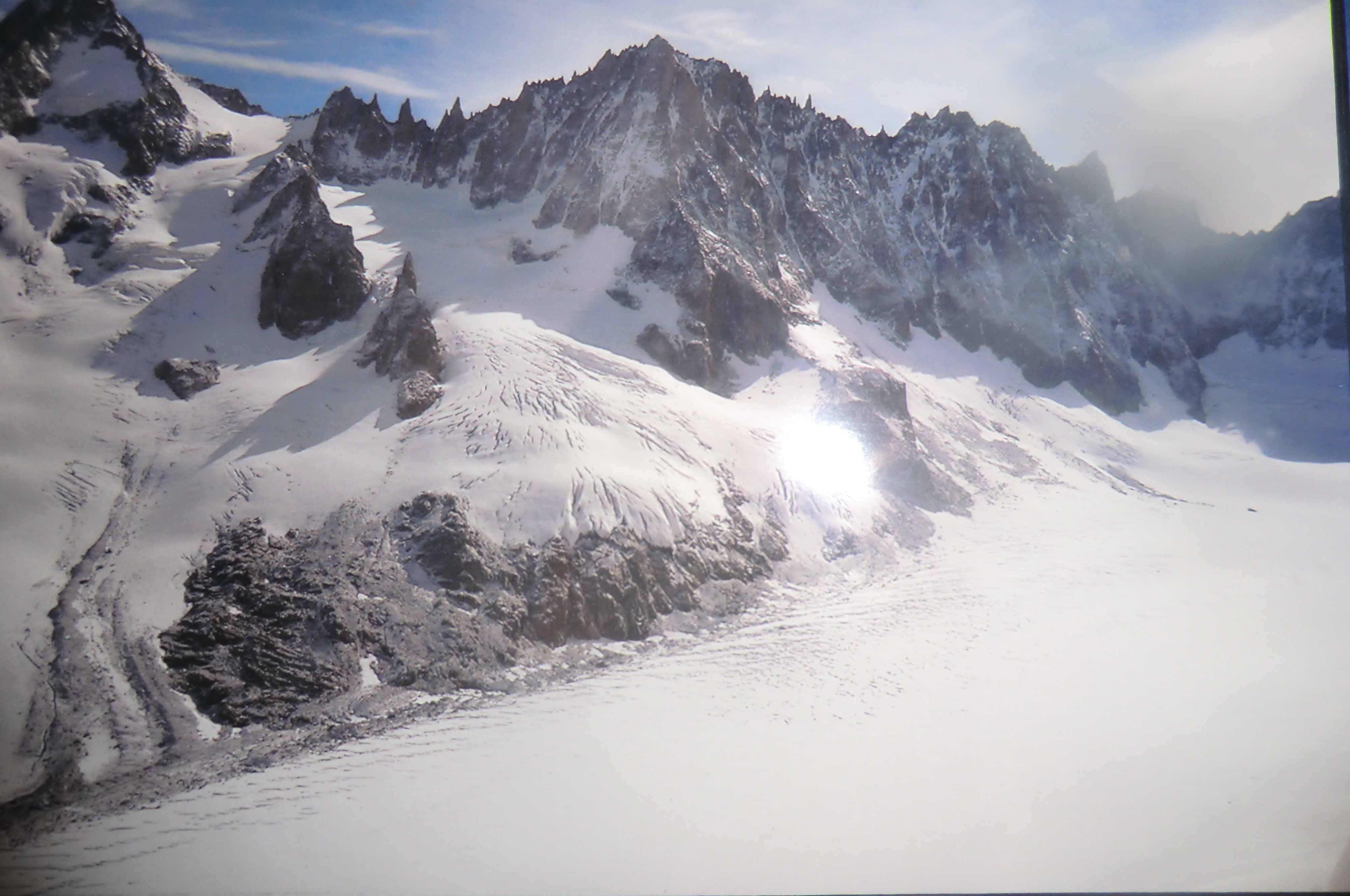
R151 taking me and Richard to see Mont Blanc. It was the 25th August, 2006.

oooo

Another view of the same valley; again the 25th August, 2006.
oooo

The final photograph of Richard and me meeting the then Prince of Wales.

Background to the friendship.

(Previously published on LfD.)

I first met Richard Maugham when we were being treated to a private jet flight to the Hannover International Fair in 1982, some 43 years ago. We were both English and I was living in Tollesbury, Essex, near Colchester and Richard living near Ealing, West London.

The common thread was that all the passengers were major sellers of the Commodore ‘PET’.

Richard and I hit it off straight away. Richard was a fellow salesman. I was ex-IBM Office Products Division and Richard was ex-Olivetti.

Both of us also volunteered for the Prince’s Youth Business Trust, a charity headed by Prince of Wales, as he was then, helping young people start their own business.

My tribute to Richard who will always be missed.

Picture Parade Four Hundred and Fifty-One

A few photographs from home.

oooo

oooo

oooo

oooo

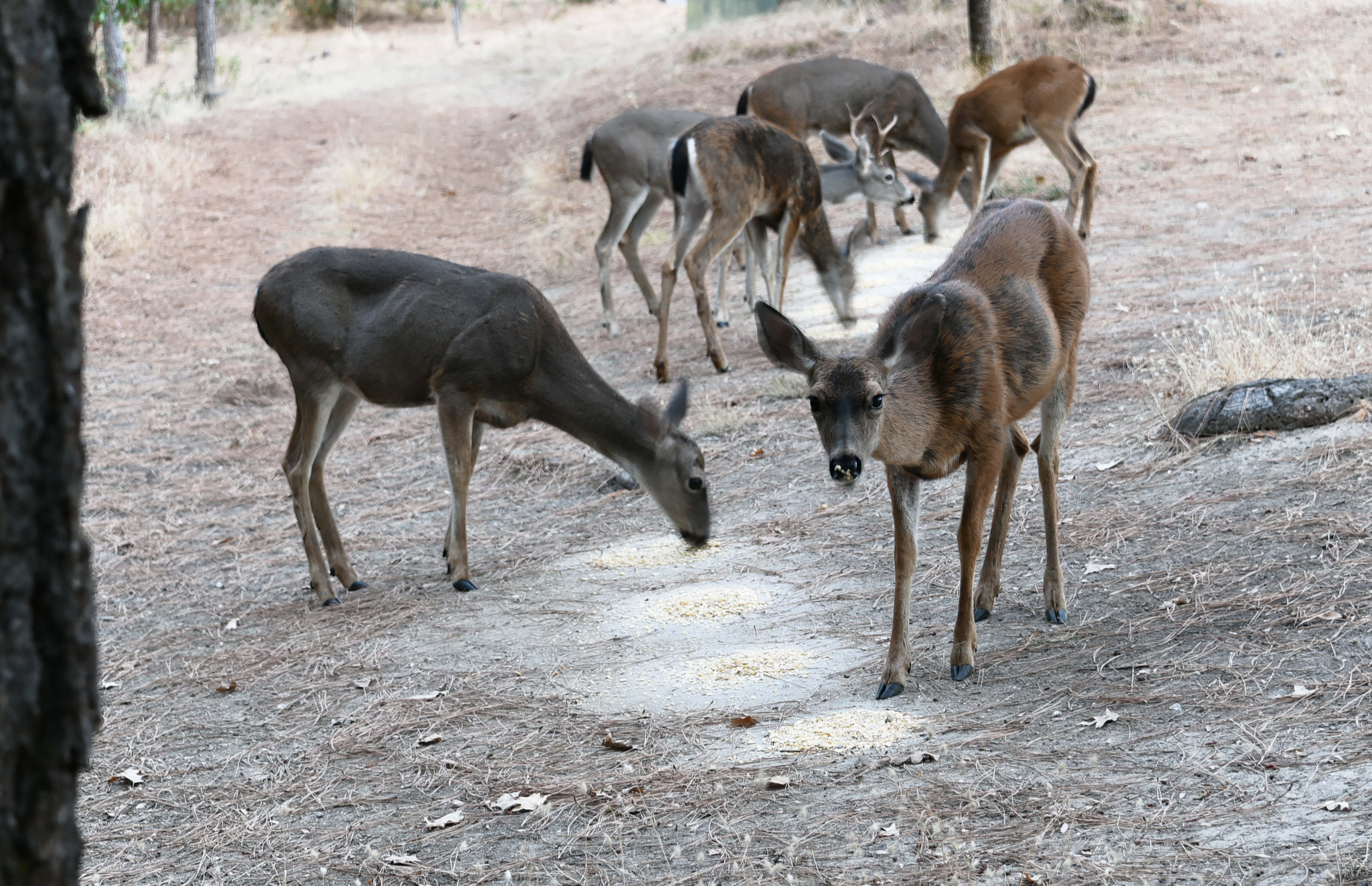
The three deer photos show them feeding from me putting out COB (corn, oats, barley) each morning soon after it is light.

Of course, typically the morning I took my camera out there were just four deer. Usually there between seven and fifteen and a couple of months ago a friendly stag in getting to the COB as I was pouring it out rubbed his right antler on my right leg.

Feeding my friends!

A delightful story

About a blind man and his dog being rescued.

Today’s post is a short video that has no sound. But don’t let that stop you from watching it.

Blind man and dog rescued after days stuck on trail.

A 55-year-old blind man and his dog have been rescued from the Rogue River trail in South-Western Oregon. They began hiking on the trail on July 3 or 4 with a friend. During the hike, the man began to experience heat exhaustion, so the friend left to try to call emergency services. A US Coast Guard helicopter crew airlifted them to safety and the man and his dog were taken to emergency medical services.

My understanding is that they were rescued on July 11th, just a week ago.

Keep it Simple – Live the Dream

A guest post from a friend of many years!

Bob Derham is someone I met many years ago, when I was living on my yacht in Larnaca, Cyprus, and I can do no better than to repeat what I wrote in my autobiography.

ooOOoo

I negotiated what I thought was a good deal and sold the company. Inevitably I resigned from what was now not my company; it was the end of November in the year of 1988.

In Tollesbury, I had my annual tax returns done by Peter Michael, also living in the village. Peter was an accountant who also taught accountancy at the nearby Essex University. I saw Peter and we discussed the recent agreement for the sale of the business.

“Paul, there is not a lot you can do, to be honest. You will be liable in broad terms for the tax in the difference between the opening price and the closing price. In your case the opening price was near enough zero and the closing price…” Peter did not need to finish the sentence. I got the picture and stood up to leave. Just has I was going out of the room, Peter added: “Unless you can leave the country before April 15th next year, and stay away for a minimum of four tax years. In other words, leave before April 15th, 1989.”

I walked home from Peter Michael’s house that November, 1988 with the advice I had been given ringing in my ears. I would worry about the tax implications in a day or two. But once again fate intervened.

I was a subscriber to the boating magazine Practical Boat Owner (PBO). In a late 1988 issue I read in the classifieds:

Songbird of Kent – Tradewind 33

Great opportunity to purchase a long-distance ocean yacht designed by John Rock for sea-kindly short-handed sailing.

Well kitted out, continually updated and maintained Songbird of Kent is the yacht for you if you dream of blue waters and serious long distance cruising.

Lying Larnaca, Cyprus.

I knew about Tradewind yachts, was familiar with John Rock. (As the designer of Tradewind yachts he had been featured several times in Practical Boat Owner magazine), and knew how many of his yachts had made world circumnavigations, and, finally, I deserved a holiday. I arranged to go out to Larnaca as soon as I could.

About a week later I caught a flight to Larnaca International Airport; upon arriving I rented a car and drove the few miles to the Marina.

The yacht was easy to find as it was out of the water. I met the owners, Michael and Betty Hughes, who were still living onboard Songbird of Kent. They explained why they were selling. Simply because, as Michael put it, they had been living on the boat for many years and it was time to return to their native Wales. Songbird had been extensively cruised the length of the Mediterranean Sea using Larnaca Marina as the base.

I quietly inspected the boat. Because it was lifted out viewing the boat in detail was much easier than had it still been floating. It was in good condition; very good condition in fact. Then I climbed up the ladder and entered the boat. Again I found everything that I expected, and more. It was clear to me that Michael and Betty had had the boat as their home and, consequently, everything was in order. Or to use the phrase; shipshape and Bristol fashion!

I excused myself, left the yacht and went and sat on a nearby seawall. I wanted to think. To be honest, it was pretty easy thinking. I loved the boat; it was a purchase I could afford, and if everything went to plan and I left the UK before April 15th, 1989, and stayed away for four tax years, there would be no UK tax to pay on the sale of my company Dataview. Nothing: Nada!

So that is exactly what I did!

I went back to Songbird, where Michael and Betty were still sitting in the cockpit, and told them I would buy it. They drew up a contract there and then and I signed it!

My autobiography

ooOOoo

Here is Bob’s story:

Paul and I first met in 1992, when I was working as a contract pilot on the BAC 1-11 for Cyprus Airways.

My last flying post was down in New Zealand, a wonderful place to be, with it’s natural beauty, and lack of aggression and oppression. The joy of life is set around being outdoors, so road trips, camping, sailing, and skiing all feature, but less on big houses, and possessions.

Although I have travelled widely in my career, I now want a simple life, and that amounts to being free of ties to a property, such that all I really need is a warm, dry place to sleep, a suitable place to prepare food, and a place to relax, it is no longer about the big house, which brings it’s own issues, and expenses.

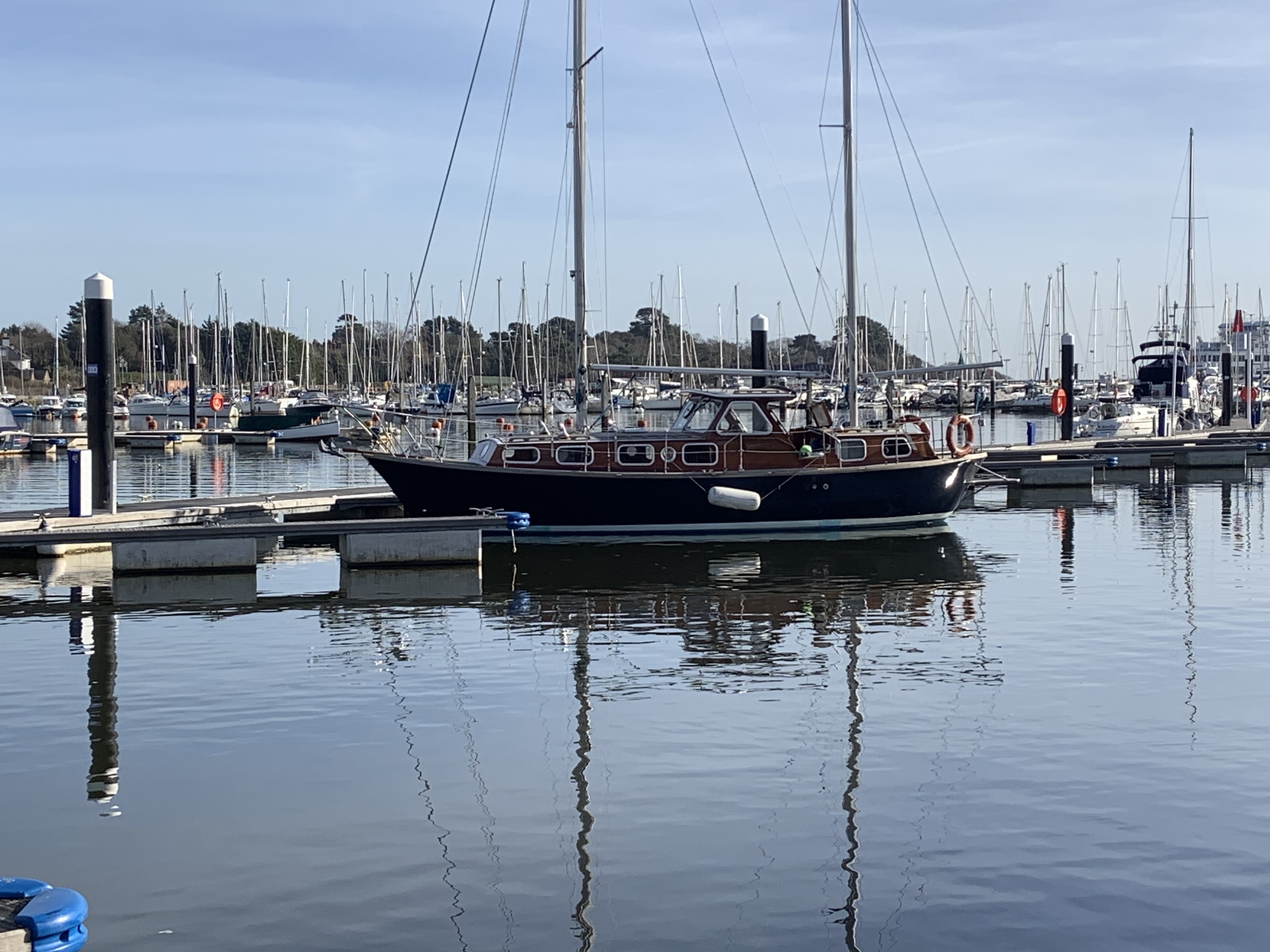
Following on from my time living on Paul’s boat, I was then drawn to living on a boat. I owned a smaller Westerley Centaur, for a few years, and even though small, I had a very happy time when I lived on that. It was down in Lymington, a small market town on the south coast of England opposite Yarmouth, on the Isle of Wight, that I kept my first boat.

The reason for this was simple 🙂

One of the interesting people I met in Cyprus was a man called Les Powles. Paul and I would regularly go out and have a mezze in a side street of Larnaca. Les would be very easy company, and found fun in the most silly situations. I was invited to call by on his boat any time, and have a “ cuppa”  What I was intrigued with onboard was a picture of the globe, but cut in half, and opened up. There were a series of lines around the world. I asked Les what this was. His reply was “It’s where I have been when sailing round the world.“
So why I asked are their three lines ?
“Because I have done it three times!“

Les was a most unusual character in that he had started building his boat in 1970. It took him 5 years to complete, and apart from a few short sea trials, Les actually had no other sailing experience, but in 1975, with barely enough rice and water onboard, he headed west. Actually he had intended to go to the Caribbean, but he had applied the variation to his navigation the wrong way, and made land fall 1500 miles from his intended destination. Les only died last year, 96, and his home had been his boat for all those years.

It’s that bit that has been the big thing for me.

Having a home has been ongoing hassle, the fun and enjoyment has been removed, because you are in a trap.
It is important to have a home, but I started to question the point of having a physical building. That brings all the ongoing costs and expenses, where the authorities can milk you for a lot of money!

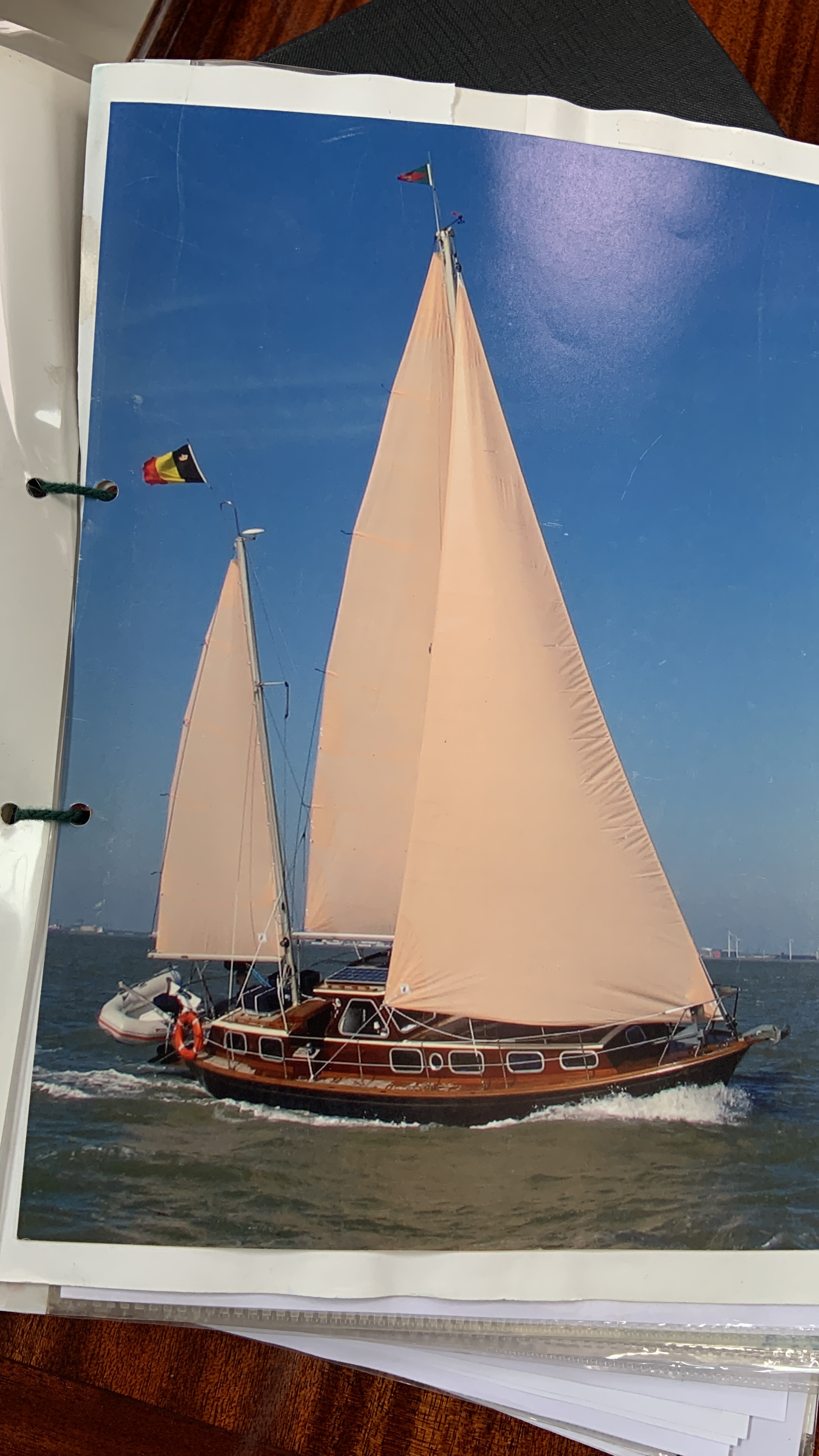
I first saw Antoinette, in Lymington, and from the first moment I saw the boat, I knew I could make the boat my “home.”
She went to Southwold in Suffolk, England for a major refit, and so there is a new engine, gearbox, and propeller, replaced decking, and repairs have been carried out to the hull.

Inside, I can stand up, and although only 37 foot long, being beamy, there is a lot of room.
There are double cabins both fore and after, with “heads” (bathrooms). The main cabin and galley is very comfortable. It has a lot of mahogany wood, so looks homely, and the “dog house” (bit in the middle), is a very open useable space, either enclosed when cold and wet, or if the weather permits, opened up to enjoy the sun.

The key is that this is “my home”. 

I can now travel, and go where I like, but I have my home with me. It has heating, but normally when you arrive somewhere, part of the mooring fees offer a shower unit and facilities. I have space to entertain, but above all, I am free of all the ties that we adopt by following the life society offers us as “the norm“.

It is only now that I see the traps that others face, because I can up anchor and head off, and can see where Les Powles got his freedom, and lived his dream.

In the cabin of Antoinette with Finn the dog belonging to Natalie (on the left).

The collie is “Finn”, Natalie’s dog. I think Paul was one of the first to see her when she was born, so 31 years later, Natalie wants to enjoy the alternative life.

As for Finn, he loves it.  Fresh air, plenty going on, and a lot to see.

“Tiny living”, but the release from the way most people live is amazing.

No speeding tickets for me. 🤪

ooOOoo

Thank you, Bob for the story of you and me. That last thirty years have flown by and those years on Songbird of Kent were really special albeit the end of my cruising days were pretty scary.

Memories of Pharaoh

What a wonderful relationship it has been.

(This post was drafted back in 2020 and, for whatever reason, never got published, until today! Pharaoh, of course, is no longer with us)

Years ago if I was ever to own a dog, it had to be one breed and one breed only: a German Shepherd Dog.

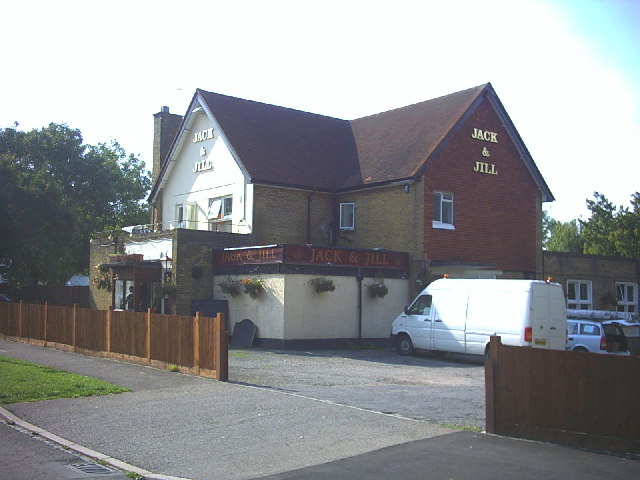
The reason for this was that back in 1955 my father and mother looked after a German Shepherd dog called Boy.  Boy belonged to a lovely couple, Maurice and Marie Davies.  They were in the process of taking over a new Public House (Pub); the Jack & Jill in Coulsdon, Surrey.  My father had been the architect of the Jack & Jill.

Jack & Jill, Longlands Avenue, Coulsdon, Surrey

As publicans have a tough time taking holidays, it was agreed that the move from their old pub to the Jack & Jill represented a brilliant opportunity to have that vacation.  My parents offered to look after Boy for the 6 weeks that Maurice and Marie were going to be away.

Boy was the most gentle loveable dog one could imagine and I quickly became devoted to him; I was 11 years old at the time.  So when years later it seemed the right time to have a dog, there was no question about the breed.  Boy’s memory lived on all those years, and, as this post reveals, still does!

Pharaoh was born June 3rd, 2003 at Jutone Kennels up at Bovey Tracy, Devon, on the edge of Dartmoor.  As the home page of the Jutone website pronounces,

The Kennel was established in 1964 and it has always been the aim to breed the best German Shepherd Dogs for type and temperament. To this end the very finest German bloodlines are used to continue a modern breeding programme.

and elsewhere on that website one learns:

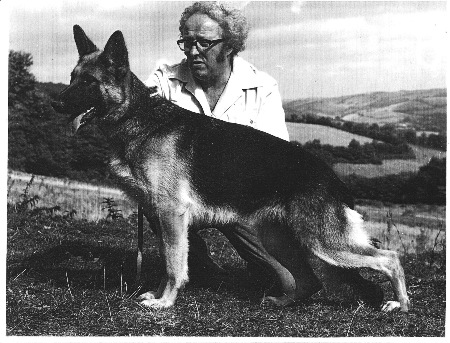
Jutone was established by Tony Trant who was joined by Sandra Tucker in 1976. Sandra continues to run Jutone since Tony passed away in 2004. Both Tony and Sandra qualified as Championship Show judges and Sandra continues to judge regularly. Sandra is the Secretary and a Life Member of the German Shepherd Dog Club of Devon.

Tony Trant

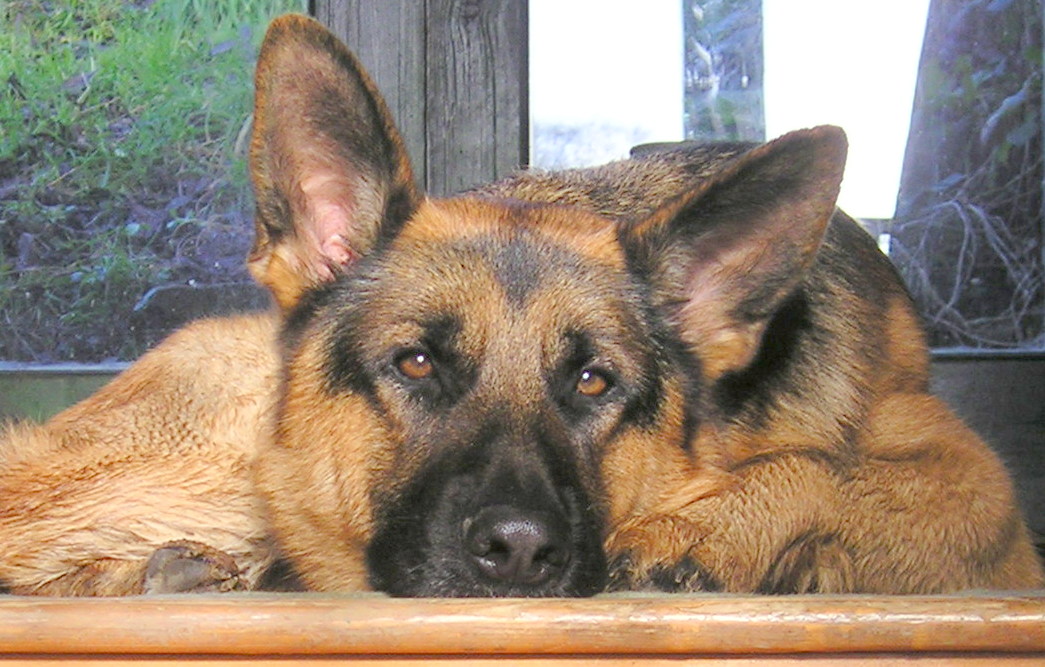
Turning to Pharaoh, here are a few more pictures over the years.

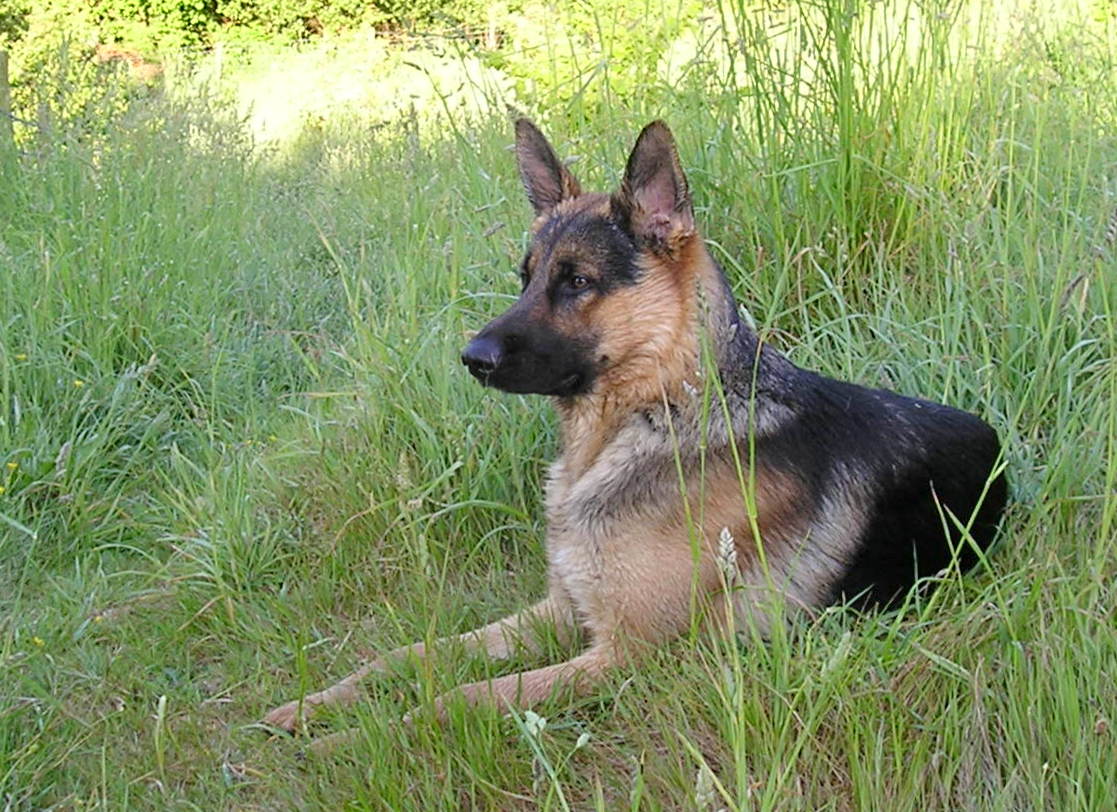
Pharaoh, nine months old.

oooo

One year old: June 3rd 2004.

The next picture of Pharaoh requires a little background information.

For many years I was a private pilot and in later days had the pleasure, the huge pleasure I must say, of flying a Piper Super Cub which is a group-owned aircraft based at Watchford Farm in South Devon.  The aircraft, a Piper PA-18-135 Super Cub, was originally supplied to the Dutch Air Force in 1954 and was permitted by the British CAA to carry her original military markings including her Dutch military registration, R-151, although there was a British registration, G-BIYR, ‘underneath’ the Dutch R-151.  (I wrote more fully about the history of the aircraft on Learning from Dogs back in August 2009.)

Piper Cub R151

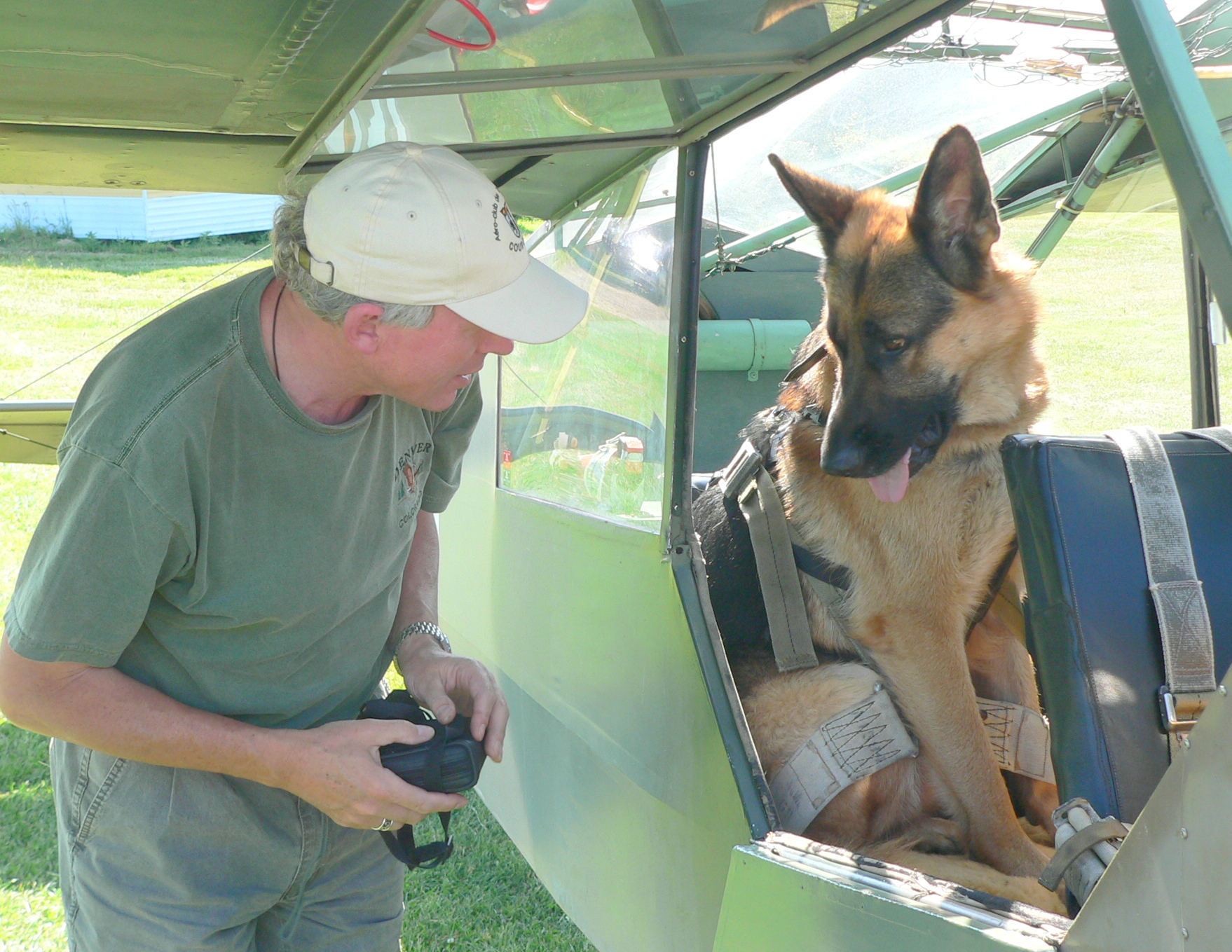
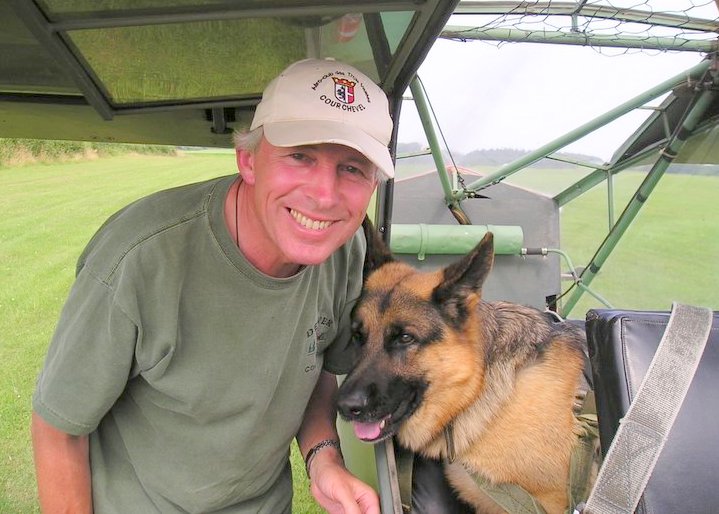
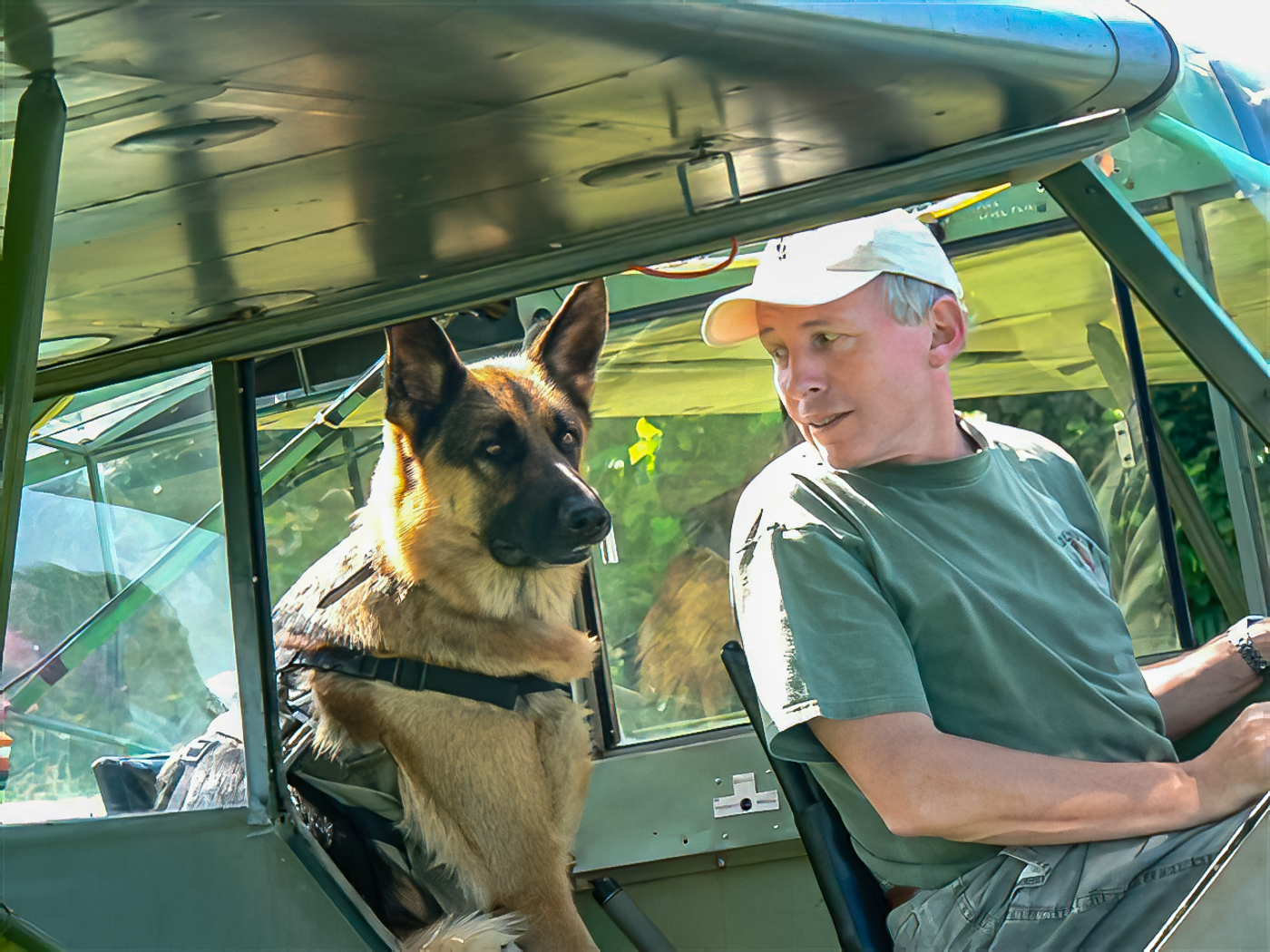
Anyway, every time I went to the airfield with Pharaoh he always tried to climb into the cockpit.  So one day, I decided to see if he would sit in the rear seat and be strapped in.  Absolutely no problem with that!

Come on Dad, let's get this thing off the ground!

My idea had been to fly a gentle circuit in the aircraft.  First I did some taxying around the large grass airfield that is Watchford to see how Pharaoh reacted.  He was perfectly behaved.

Then I thought long and hard about taking Pharaoh for a flight.  In the Cub there is no autopilot so if Pharaoh struggled, or worse, it would have been almost impossible to fly the aircraft and cope with Pharaoh.  So, in the end, I abandoned taking him for a flight.  The chances are that it would have been fine.  But if something had gone wrong, the outcome just didn’t bear thinking about.

So we ended up motoring for 30 minutes all around the airfield which, as the next picture shows, met with doggie approval.  The date was July 2006.

That was fun, Dad!

What a dear dog he has been over all the years!

As if to reinforce the fabulous dog he still is, yesterday it was almost as though he knew he had to show how youthful he still was.

Because, when I took his group of dogs out around 7.30am armed with my camera, Pharaoh was brimming over with energy.

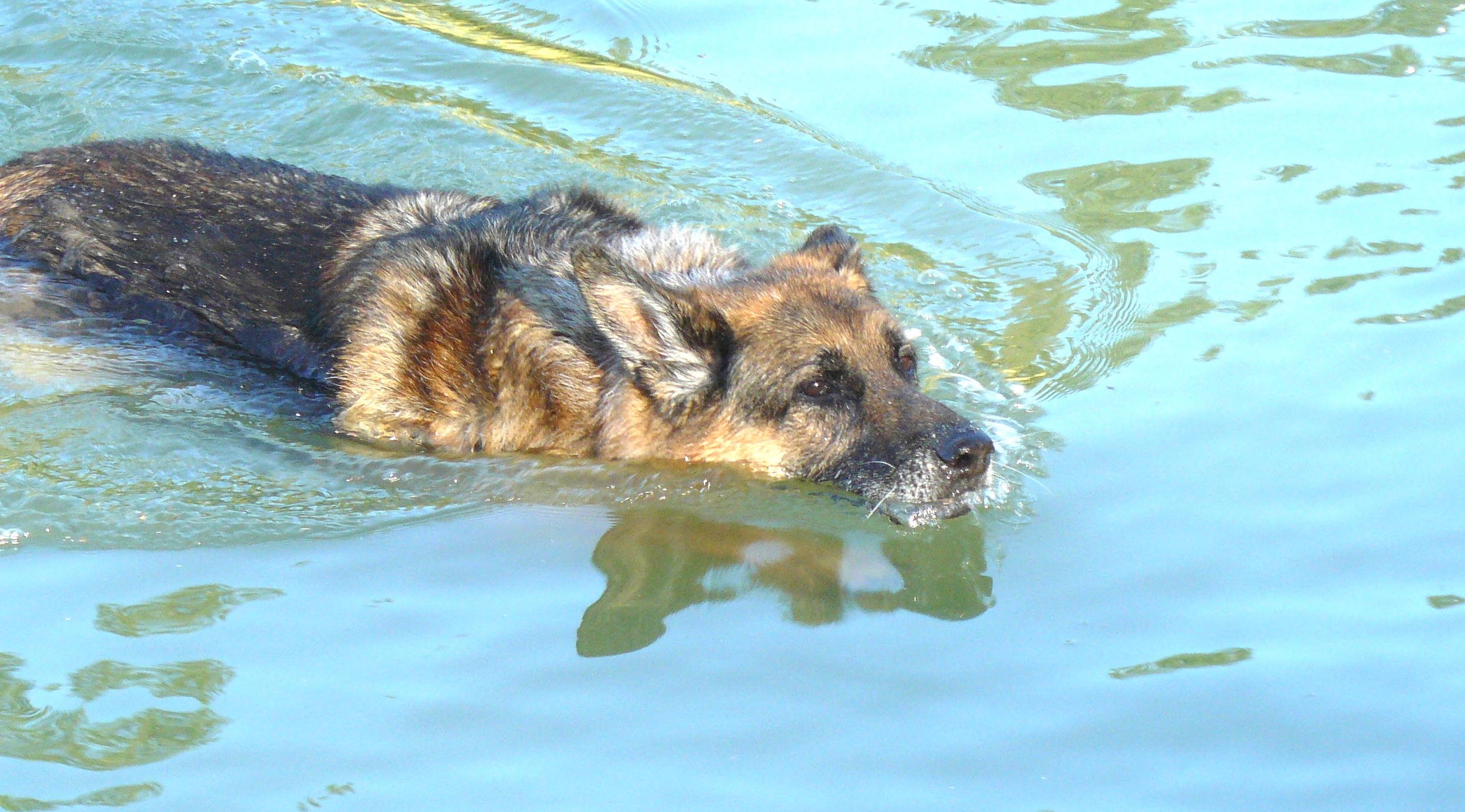
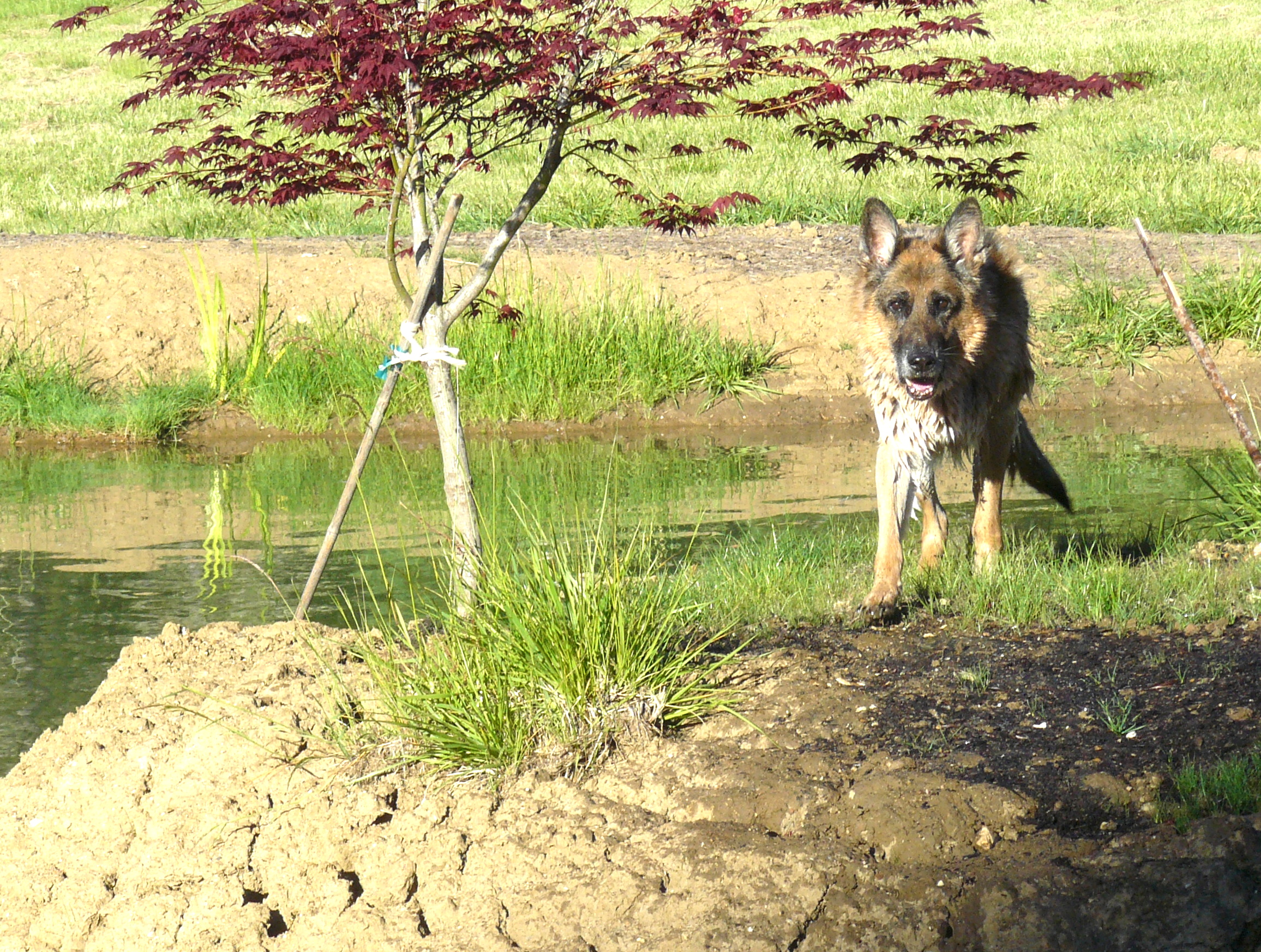
First up was a swim in the pond.

Ah, an early birthday dip! Bliss!

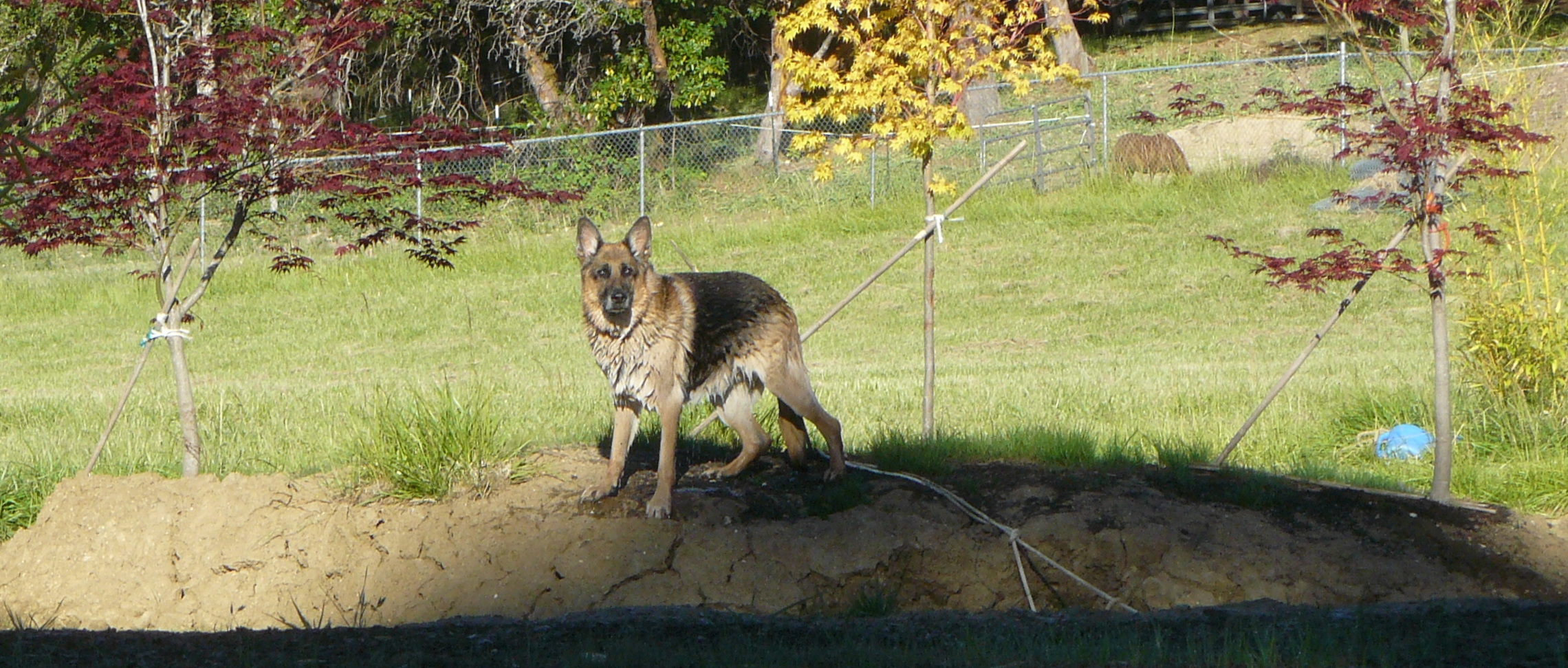
Then in a way he has not done before, Pharaoh wanted to play ‘King of my Island’, which is in the middle of the pond.

Halt! Who goes there!

oooo

This is my island! So there!

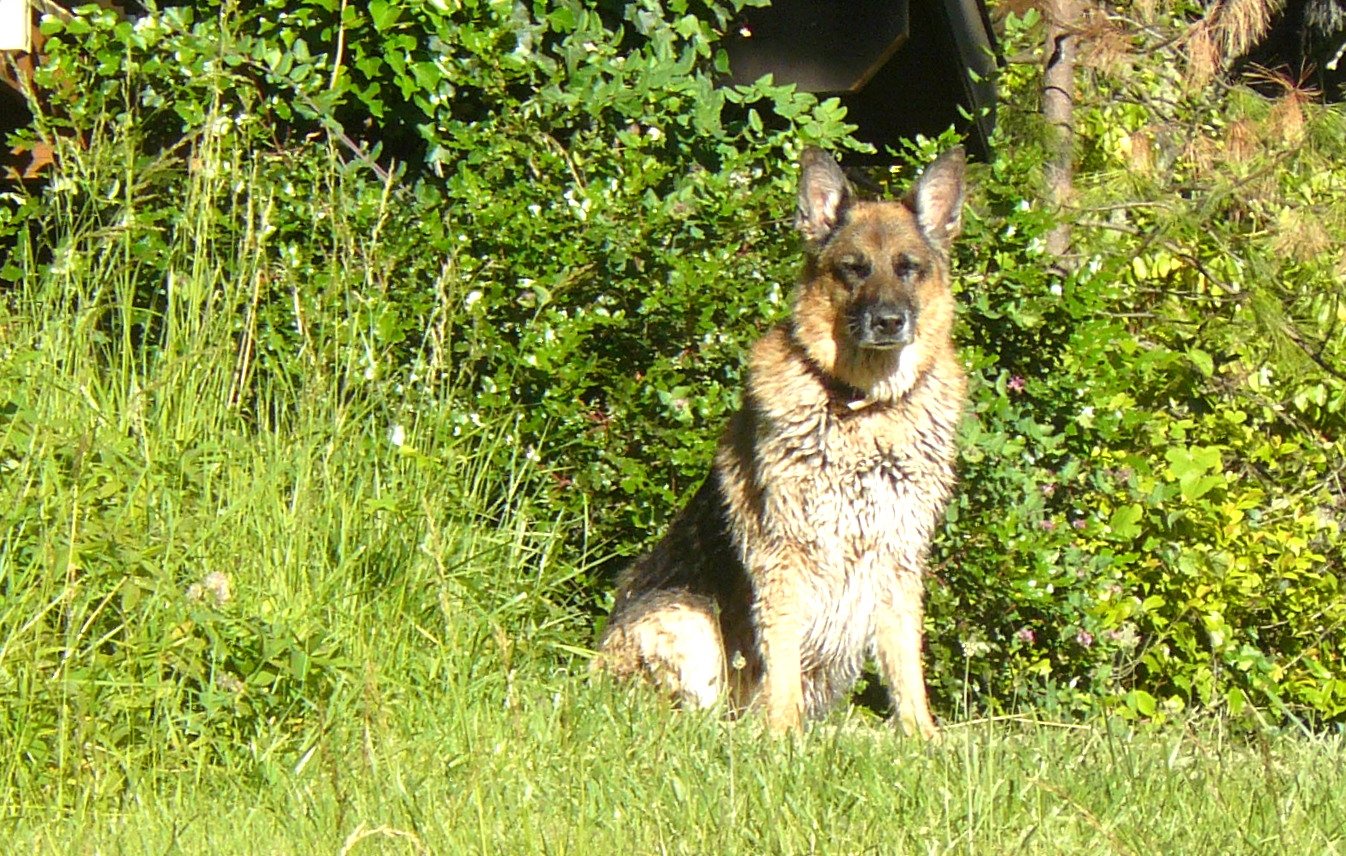
Then a while later, when back on dry land, so to speak, it was time to dry off in the morning sunshine.

Actually, this isn’t such a bad life!

Long may he have an enjoyable and comfortable life.

ooOOoo

This was written quite obviously before Pharaoh died. He is still on the home page of this blog.

Beloved Pharaoh. Born: June 3rd., 2003 – Died: June 19th., 2017. A very special dog that will never be forgotten.

Picture Parade Four Hundred and Fifty.

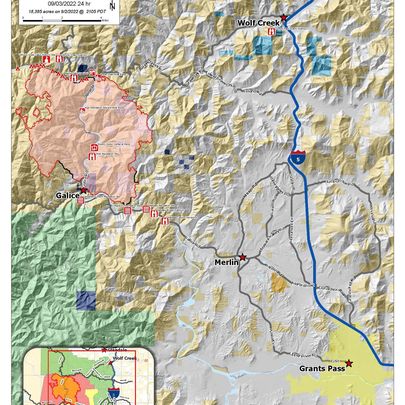
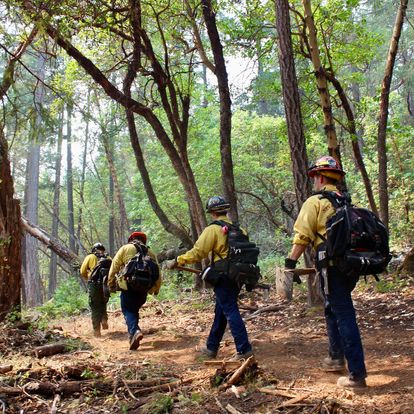
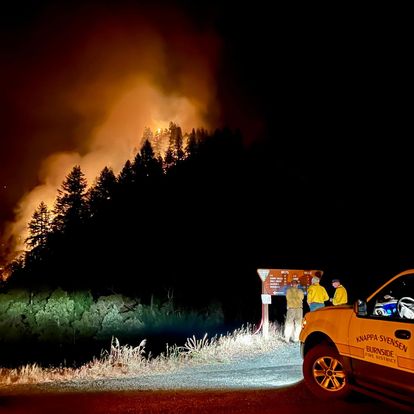
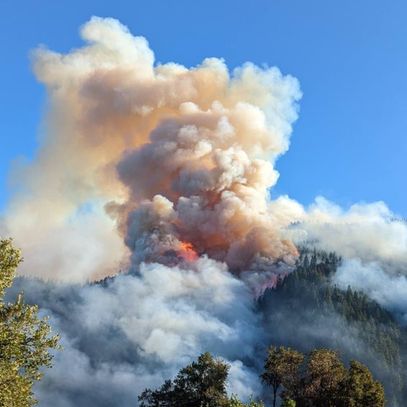
Photos of Rum Creek Fire!

Not all that are available by any means! These were copied from the Facebook page.

oooo

oooo

oooo

oooo

oooo

oooo

oooo

oooo

Well done all those actively involved. We will see what the next week brings.

A dog’s journey!

A guest post from a dear friend!

Many years ago I found myself teaching at a unit attached to Exeter University. I was teaching sales and marketing. I can’t remember clearly the events that produced the meeting between myself and Chris Snuggs. But I recall the outcome.

Chris was the director of studies at a French institute named ISUGA. Let me borrow from their website:

The ISUGA Europe-Asia International BBA Bachelor’s degree is a 4-year cursus following the Baccalaureate or High School diploma which combines studying International Business and Marketing with learning an Asian or English language and comprising university exchange stays, as well as internships in French and International businesses.

ISUGA is located in Quimper, Western Brittany relatively close to Devon in England where I was living.

In Chris’ words: “It must have been through them that we got your name when we needed someone to teach Selling. Now I come to think of it, we HAD someone lined up for a whole week and he CANCELLED on us, so you were a last-minute replacement.”

For quite a few years I went across to Quimper to teach for Chris. Mainly by ferry from Plymouth to Roscoff. During the summer months I flew to Quimper from Exeter in our group-owned TB20. (The picture below is of the type only not our aircraft.)

A Socata TB20

Since that day we have remained in reasonable contact and I regard Chris as good friend.

A few days ago Chris published on his blog his account of his journey from Quimper back to Ramsgate, in east Kent. It was hilarious and I asked Chris if I could publish it and share with everyone.

Chris not only said yes but insisted on improving it (his words) including expanding it to what it is below.

So with no further ado, here is Chris’ post.

ooOOoo

“A DOG’s Travel Across Northern France” … as in “Doddering Old Git”

I am officially a “Senior Citizen”, but as such prefer much of what passes for “The Good Old Days” when in this case we were called “Old Age Pensioners” – MUCH less PC and wokeish AND more realistic – but DOGS sounds much better (and more informative) than OAPs.

A simple trip to Blighty to see the family for XMAS was not supposed to be a saga, but it turned out to be one: 

Like ET, I was going home, though not quite as far – though it probably seemed like it.

I got about 3 hours sleep max Thursday night/Friday morning; worried about oversleeping even though I had THREE electronic wake-up devices.

I got up at 04:30 to finalize packing and clean up (the worst of) my mess.

I went out into the street in front of the house at 06:45 to await the taxi – it was raining, albeit not heavily.

The taxi was 5 minutes late, but the driver didn’t apologize. (I was going to say “woman driver” but I believe that sex differentiation is no longer allowed.)

I tried to help her (it, hir, shim?) load my heavy suitcase into *** boot (car, not footwear).

I lightly touched the car with the suitcase, and shim said: “Mind my car. Your suitcase is too heavy.”

I nearly said: “So are you, but it’s probably your hormones or your genes.” but decided that discretion was the better part of insult as I had to catch a train ……

We got to the station in plenty of time, only for me then to find that the train was due to go from platform C (usually it’s A as you leave the entrance hall).

I then found out/remembered that there is no lift at Quimper station. “This is not going to be my day,” I thought …

As I approached the stairs down to the access tunnel, I pretended to be a Doddery Old Git on the point of collapse (no comments please) and a nice young man helped me with the case.

Same procedure with a different bloke to go up to platform C. I actually tried this ploy with a pretty young lady first, but just got a funny look ….

Eventually got onto the right and very crowded train; my “This is not a gasmask” COVID mask was very reassuring as the virus probably had a field day circulating the carriage. I got some more funny looks, but two people asked me where I got my mask, so I am thinking of merchandising them ….

Got to Paris 4 hours later – showed a railway worker my little map where the taxi was supposed to be waiting and he pointed me in direction X saying authoritatively: “Tout au bout.” (“right at the end” for those who left school at 14).

Seemed a bit iffy to me (I vaguely remembered having gone somewhere else the last time I had done the journey, but couldn’t remember where. Does that happen to you?), but I followed his directions in the obviously-idiotic belief that someone actually working in a place would know where the taxis would be.

Of course, there was no sign of a taxi area at the distant far end of the HUGE Montparnasse Station, so I asked another railway bod.

He pointed in the 180° opposite direction and said the same as the first bloke, so I had to retrace my steps and go another 200 metres past where I had started to one of the no doubt multiple exits.

On exiting I was surrounded by some Middle Eastern gentlemen (without beards as it happens) who were desperate to take me somewhere.

I told them I had booked a taxi already and they suddenly lost interest.

I then got a call on my posh new mobile, but as with every other mobile I have ever owned it is specifically designed so that one cannot easily answer a call – first there is always some other leftover screen on the thing which by the time you have got rid of the caller has given up, and second you have to SWIPE to even see a green button which you then press – and I don’t know who invented SWIPE but hanging, drawing and quartering while being burned alive in oil over a period of several hours would be a suitable punishment.

This was all way beyond me, so I missed the call.

Miraculously, however, I did manage to call back and it was in fact the driver.

After two or three calls in each direction we managed to find each other physically as well as phonally.

We set off for La Gare du Nord, which should be about 15 minutes max by road – but it took us an hour and a quarter … (This was Paris in the rain on Friday at lunchtime – but I did learn a few new French swearwords from the driver.)

Fortunately, I had plenty of time between trains and so managed to find and embark on my TER to Calais.

This was an uneventful trip except that I was opposite a young mother with an inquisitive baby who kept looking at me for some reason (the baby not the woman ….).

I thought about playing with the baby but did not want to be arrested as a paedophile. I did plonk a small orange on the little table between us thinking she might want to play with it, but I got a funny look from her mother …. so I picked it up (the orange not the baby) and ate it – getting more funny looks. Strange … I get that all the time.

There was no internet on the TER so I tried to doze, but dozing with a high-decibel baby one metre away is a skill I have not yet mastered – and probably never will.

Arrived at Calais station – it took me 10 minutes to find the lift to get to the exit: in fact, one has to be led across an actual line by a railway bod and then take the lift – which is conveniently hidden.

But once outside the station I got a taxi right away. (a rare plus chalked up!)

I was dropped at the port outside a little hut marked “Billets”: (“tickets” for the linguistically-challenged).

This was weird – there used to be a big hall full of foot-passengers, but it has all changed – there IS a big hall, but it is empty except for two WWI biplanes. “Perhaps they want to fly us over?” I thought.

Went into the ticket office to be told my boat was cancelled (no explanation was offered) and they would try to get me on the next one. I never did understand why they would “try” (there was hardly anyone else there), but it seems they had to wait for a phone call.

It was a very small cabin with four guichets (Would you like a French dictionary for XMAS?) and three simple chairs, on one of which – after having my particulars scrutinized and recorded – I was invited to sit – which I did, not sure whether I should show appreciation or keep going with the scowl I could feel coming on ….

Behind the desks several women came and went, but spent all the time yacking to one another about women stuff while three of us sat waiting in stony and in my case exhausted silence (it was by now 18:00 and I had been up since 04:30).

I eventually got up and complained, something that comes naturally to we DOGs. I said I did not understand the delay, that I needed a coffee and a toilet break and that the least they could do was install some beds in their little office for those in my situation (and condition) who had to wait overnight for information about getting on a replacement ferry. I wanted to add a question about whether they had been trained in defibrillation techniques but by then I had run out of breath.

The charming young lady smiled and said they had none of the things that might alleviate my stress (adding the word “understandable” would have been nice) but that the large hall opposite might be open, and if not she could lend me a key to open it and visit the convenience.

I couldn’t be bothered to try to work out why she wouldn’t know whether the hall was open or not and that what I in fact most urgently needed was to get out of there without bothering with keys I would probably lose – which I did.

I then walked round the large hall three or four times admiring the WWI planes and wondering if the Red Baron had ever flown one of them. The fresh air and exercise refill renewed the oxygen supply to my needy brain.

I eventually staggered back to the ticket office and sat down on my hard chair again. I was tempted to feign a loud snore but as with the taxi driver in the morning decided that discretion was the better part of valour.

15 minutes later a phone call came and I was summoned to the guichet and given my ticket.

“Great,” I thought. “At last we can get outta here.”

THEN she told us that in 40 minutes someone would come to drive us to the boat.

I was fast losing the will to live, but thought that another dose of circling the large airplane hall might at least get my blood circulating again.

I told her where I was going and mentioned the hall and the planes (to be fair she did laugh at my joke about flying us across the Channel), but said: “That’s all run by the Chamber of Commerce.”, and of course we all know that no lunacy is beyond THAT organization.

I left after asking if she could send out a rescue party if I did not return – and she smiled again …. Smiles don’t of course achieve anything practical but they do at least make the pain somewhat more tolerable. 

I came back half an hour later, having admired the bi-planes once again and wondered whether the Red Baron had ever flown one – and indeed a lady driver soon turned up as predicted to drive us to the boat. (another rare plus chalked up …)

We had to go up and down two or three kerbs (nowhere lowered for people to wheel their too-heavy suitcases) and eventually got onto a bus.

Had to go up a multiply-zig-zagged ramp to get onto the boat, but I played the Doddery Old Git card again and someone helped with my case.

I had thought of taking my walking-stick on this trip to boost the DOG sympathy factor, but could not work out how I could possibly carry it simultaneously with the rest of my baggage.

I asked a boatbod what time we would be leaving and then arrive in Dover, and he said: “in 15 minutes and 20:00.”

40 minutes later we still had not left, so I asked someone else when we would be leaving and was told in 15 minutes.

We actually left 30 minutes later, and I decided that being 100% wrong in a prediction was not actually that bad as these things go.

When I asked yet anOTHER bod WHY there had been another delay he just rolled his eyes and said something about the Captain which I didn’t understand – but was past caring. 

Ten minutes later I asked the next available bod what time we would arrive in Dover and was told 20:30.

This was well past the time my taxi was booked, so I called to inform Eddy, the driver.

Fortunately, making calls on mobiles is easier than receiving them, so that was OK.

On the boat I got talking to a foot-passenger couple (there were only EIGHT of us!).

They were very nice and I gave them Taxi Supremo Andy’s phone number as they had nothing arranged for their arrival.

When we eventually got to Dover, there were no more checks (even though they made us walk through a maze of corridors in the totally empty border-control and customs instead of going straight to the taxi area – maybe they were filming us secretly?) and we eventually got to where I hoped to find Eddy the Driver.

However, there are huge roadworks going on just inside the port entrance and all the usual roads are blocked off and/or rerouted.

There was of course no sign of Eddy – OR any other taxis. Foot-passengers have a VERY low priority …..

Grateful for my phone once again, I called Eddy who said he was ALREADY in the port but had got lost.

Taxi-drivers getting lost is a bit ominous, so I assumed he was even more of a DOG than I am. Still, we DOGs have to stick together …..

I told him where we were ….. right near the entrance just past the roundabout at the bottom of the long clifftop descent to the port. For those who know Dover this is the easiest part of the entire port (or indeed of England) to find …..

Three exchanged calls later we finally met up physically as well as phonally – which was a reminder of Paris. In future, I am going to fix a GPS signal to myself and ensure my driver has military-standard tracking equipment. Perhaps Nathalie can arrange that?

Eddy was as suspected a bit of a DOG – but like me, very nice …… I asked if he could drop off my friends from the boat at Dover railway station before taking me back to Ramsgate – which he agreed to.

So we took them up the road to the station, where they unloaded their stuff from the boot.

I did think about getting out to check they didn’t take any of my four bits of luggage, but I was very tired and also thought that it would be impossible to confuse the grotty things I was carrying with any of their posh stuff from Parisian shops.

They gave Eddy an extra £8 for the slight detour. As I said they were very nice even if the lady’s perception and memory banks were highly undeveloped.

We then at last set off for Ramsgate, but Eddy took a wrong turn and we ended up driving towards Canterbury.

It takes a really advanced stage of dodderation to get lost driving from Dover to Ramsgate, so I will be contacting “The Guinness Book of Records”.

I decided against advising Eddy to do a U-turn in the pitch dark, and after driving four miles up a dual-carriageway we eventually got to a roundabout, retraced our wheels and made our way back to Dover.

Miraculously finding the right road to Ramsgate this time, we set off on the last lap. By now I was desperately hanging onto life by a thread.

Halfway to Ramsgate Eddy got a call from Taxiboss Andy’s Missus:

“The couple you dropped off at the station just rang; it seems they have got a package belonging to one of the other passengers.” ME! NO, I AM NOT MAKING THIS UP …..

…. but they were nice people and apparently said they would wait at the station for us to come and pick up the bag.

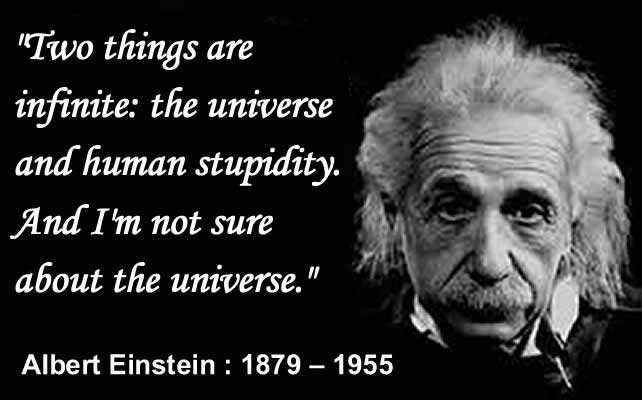
I tried to keep calm, but remembered Einstein’s famous dictum. (SEE BELOW)

We stopped to check the boot and I saw that they had taken a plastic bag with two boxes of wine for my sister Maggie and another box of boiled eggs and fishsticks essential for my diet.

I asked Eddy if he minded going back, and he agreed to instantly – even without being promised any more dosh.

So back we went to the station, picked up the bag and Eddy collected another £10 for his trouble. (As I said, nice people …)

Off we set for Ramsgate again, and this time Eddy did not get lost ……. even we DOGs are capable of learning.

I eventually got to Ramsgate around 22:30 instead of the anticipated 20:00 – and of course I felt obliged to give Eddy a generous tip even though he DID get lost twice. Actually, everything in France had gone pretty smoothly as planned; it only went really tits-up when we got to Dover. I of course blame BREXIT ……

How was your day?

PS No insult to real dogs is intended in this account. As we know, if the world were ruled by dogs we would all be safer and happier, though the absence of tv and the internet would be a shame.

PPS I was fortunate to be able to employ Paul for brief periods over a number of years to teach business students about Selling and Marketing during my time as Director of Studies of a business school in France. His teaching was highly impressive, but even more so his habit of flying his own plane to Quimper. In this and many other ways he was and remains unique. As I told the students: “Listen to Paul’s advice and one day you will fly your own plane.”

ooOOoo

Marvellous.

Thank you, Chris!

Picture Parade Three Hundred and Ninety-Three

Make no apologies for publishing some more photos of Pharaoh!

As I mentioned it was the anniversary of his death last Friday.

oooo

oooo

oooo

oooo

oooo

That will do for now! That last one is really precious.