Author: Paul Handover

Not your average airport!

The world’s 18 strangest airports

The American magazine Popular Mechanics had an interesting piece on some of the more bizarre airports around the world.  As the article says,

Engineers tasked with building an airport are faced with countless challenges: The ideal location needs ample space, endless flat ground, favorable winds and great visibility. But spots in the real world are rarely ideal, and engineers are forced to work with what they have, making sure that the end product is the safest possible structure for pilots. A survey of airports around the world turns up a mixed bag, ranging from dangerous and rugged landing strips to mega-size facilities that operate like small cities.

Apart from the general interest in these airports, there is also a personal resonance as three of them are in my aviation log-book: Barra; Gibralter; Courchevel.  Indeed my experiences of flying into Barra were the subject of a Post on this Blog a few months ago.

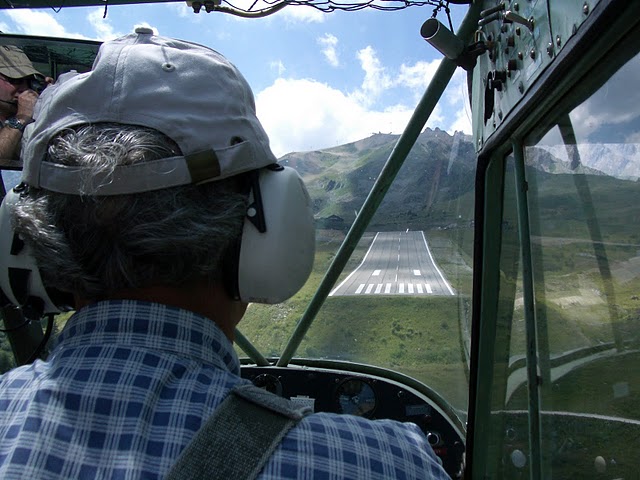
Courchevel in the French Alps is, for all pilots, one of the most amazing, butt-clenching arrivals one could ever imagine.

As Wikipedia puts it:

Courchevel’s airport also has a certain degree of infamy in the aviation industry as home to one of the shortest runways in the world, with a length of 525 metres and a gradient of 18.5% in order to help slow landing aircraft. The airport has a dangerous approach through deep valleys which can only be performed by specially certified pilots. On landing there is no go-around procedure, as most of the worlds airports have – there is merely a very steep hill which has seen a few accidents since the airport first opened.

Quite so!

Here’s an interesting video from YouTube

and a few personal memories:

Start of the approach into Courchevel
'short final' Courchevel
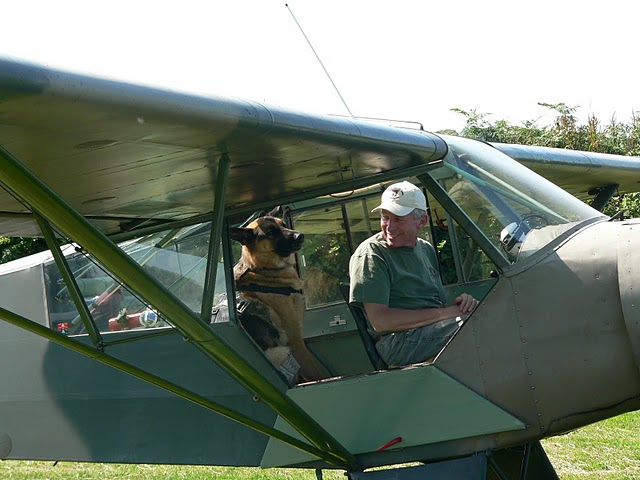
Author & aircraft on the apron - Courchevel

By Paul Handover

Old age!

A piece of Internet fiction still carries an important message

One of the features of the Internet is that stories can circulate widely across the globe.  This poem is one such example.  The ‘story’ behind the poem would appear to be fiction but so what!  It serves as a good reminder of something that affects us all (except those tragically cut off before they grow old!).

But before getting the poem, the reason that it was decided to publish the Post is that old age, whatever that really means, is a much bigger issue for societies than many care to acknowledge.  Because, I guess, the ‘many’ tend not to be old, or let us say, the right side of 60.

And look how even the terminology is so biased towards youth.  Why should it be the ‘right’ side of 60?  What is ‘wrong’ with being older than 60, or 70 or whatever age?

Of course, in so many ways nature’s purpose is for us to breed the next generation to continue our gene pool and once we have achieved that then our ‘natural’ use is limited.  But that is to ignore the value of wisdom, the huge advantage the next generation has in being able to tap into the experience and knowledge of the ‘ancients’.

Here’s an interesting piece from Aging and the Elderly by Hampton Roy MD and Charles Russell PhD

Wisdom has been attributed to older people in nearly all world societies from ancient times, but modern research on the psychology of aging has paid little attention to this quality of the late years

………………..
A number of researchers, however, have assessed the psychology of aging quite differently. Instead of measuring decline, their aim has been to measure the unique and special characteristics of mind possessed by older people.

………………….

These researchers might typically define wisdom as Kenyon did when he described it as “the ability to exercise good judgement about important but uncertain matters of life” -where “uncertain matters” refers to problems that may not have come up before, or to which there are competing or conflicting solutions, and so forth. These researchers describe the old as having “self-creating” powers because they seem to be more independent in their decisions, and less subject to external influences like the fads and trends that sweep over the young.
They propose also that the old are better able to live with contradictions in life and that they quickly see the essentials of situations because of their greater experience. Wisdom, they observe, includes the intent to do good, which in turn depends on holding favorable attitudes toward other people.

Then again, popular culture defines the ancient American Indian warrior as many things but old and decrepit doesn’t figure in that list!

Sioux warrior

So here’s that poem – may you live to a great age!

Read the rest of this Post

Collecting bridges!

Maybe not the strangest thing to collect, but close!

I doubt if very many people have heard of an American by the name of Eric Sakowski and, to be honest, neither had I until I opened a copy of The Arizona Republic newspaper on a recent visit to Payson, Az.  There on the front page was an article about Eric and his passion for bridges!  Yes, bridges.  As the article starts:

Eric Sakowski’s fixation with bridges began as it has for many.

As a kid, he bought the “Guinness Book of World Records” every year and read it cover to cover. He began to ponder: What is the world’s second-highest bridge? Or the 100th.

In 2004, Sakowski took his interest to the next level. He embarked on a five-year quest that would take him halfway around the world three times and cost him thousands of dollars. He became an amateur sleuth, digging out what he says are the real heights of mammoth bridges and snapping pictures.

Sakowski’s endeavor culminated last month in a tidy room of his parents’ home in Sun City West, where at age 44, he completed his project by launching a Web site, highestbridges.com, that catalogs the 500-highest bridges in the world. His findings challenge some long-held claims.

In fact, the website is really quite interesting and some of the photos are stunning.  Here’s one of the Hegigio Gorge Pipeline Bridge in Papua New Guinea.

Hegigio Gorge Pipeline Bridge

It’s 1,289 feet high (393 m) and until 2009 was the world’s highest bridge.

Sakowski has also found some interesting errors in the statistics concerning some bridges.

Using a laser range-finder, he has measured about 100 bridges in the U.S. and about a dozen in China. He found some interesting discrepancies. For example, he determined that the highest bridge in the United States, the Royal Gorge Bridge in Colorado, is 98 feet lower than officially reported. In western China, he said, he first identified the latest bridge to become the world’s highest. He is trying to get “Guinness World Records” to publish the claim next year.

Eric is a professional film-maker but I sense that the day may not be too far off when someone is going to make a film about Eric the Bridge Man!

By Paul Handover

Free speech!

Hats off to some intrepid commentators

We are going through unprecedented troubled times and the way ahead looks very uncertain.  The whole world could be participating in the ‘lost decade’ that Japan experienced previously.

But this article is not about doom and gloom!  It is about recognising the commitment to open and honest reporting being undertaken by (at least) these three  individuals.  Three commentators that this author follows in admiration and awe.

Learning from Dogs has nothing like the following of James Kwak, Yves Smith and Karl Denninger but the LfD authors do have an inkling of the work involved in writing not one but often several articles each day.  It is a huge commitment.

James Kwak

First James Kwak of Baseline Scenario.  Simon Johnson is, perhaps, the more well-known of this duo that comprise Baseline Scenario but it is James that puts in the leg-work.  Here’s a taste of a recent article from James:

Radio Stories

I spend a lot of time in the car driving to and from school, so I end up listening to a lot of podcasts (mainly This American Life, Radio Lab, Fresh Air, and Planet Money). I was catching up recently and wanted to point out a few highlights.
Last week on Fresh Air, Terry Gross interviewed Scott Patterson, author of The Quants, and Ed Thorp, mathematician,  inventor of blackjack card counting (or, at least, the first person to publish his methods), and, according to the book, also the inventor of the market-neutral hedge fund.

Large chunk snipped ……

I finally got around to listening to Planet Money’s interview with Russ Roberts from December. Russ Roberts and I are pretty sure to disagree on almost any actual policy question. But what I liked about his interview was that he basically admitted that policy questions cannot be settled by looking at the empirical studies. On whether the minimum wage increases or decreases employment for example, he says that he can poke holes in the studies whose conclusions he doesn’t agree with, but other people can poke holes in the studies he agrees with. In Roberts’s view, people’s policy positions are determined by their prior normative commitments.

I don’t completely agree. I don’t think that these questions, like the one about the minimum wage, are inherently unanswerable in the sense that the answer does not exist. But I agree that empirical studies are unlikely to get to the truth, particularly on a politically charged question, because there are so many ways to fudge an empirical study. As one of my professors said, there are a million ways you can screw up a study, and only one way to do it right. But I agree with the general sentiment. We are living in an age of numbers, where people think that statistics can answer any question. Statistics can answer any question, but they can answer it in multiple ways depending on who is sitting at the keyboard.

By James Kwak

Read about Yves Smith & Karl Denninger

How Earth Made Us …

... and the way we treat it!

Once again the British Broadcasting Company, BBC, has put together a spectacular television production; the epic story of how geology, geography and climate have influenced mankind.  It is remarkable and fabulous viewing as you can sample in these opening minutes from the first episode on Deep Earth.

The four programmes, Deep Earth; Water; Wind; Fire, are testament to both the incredible symbiosis between mankind and the elements and how that relationship is critically balanced in a way that allows us to survive.  Some of the images are truly outstanding, for example, the section on Prof. Iain Stewart exploring the Naica Cave system in Mexico.

Naica Cave system, Mexico

This theme of the balance of geological circumstances that allows, just, mankind to survive comes across time and time again in these films.  For example, our relationship with fresh water which we all take completely for granted.

Have any of us really pondered how long we would survive if there was insufficient clean, safe drinking water to go around?

The programmes also reveal something of the technological prowess that mankind has achieved to allow the way these films have been produced.

So why, oh why, are we also such a stupid, stupid species – so stupid that we foul our own nest to an incredible degree.

Continue reading “How Earth Made Us …”

Crazy flying

This is not your usual air-show display

Author & author's dog in Piper Super Cub, R151

Three of the authors on Learning from Dogs are or have been pilots although only one, Bob Derham, is a real pilot!  I.e. he does it for a living!

Most pilots and many wannabes love the atmosphere of a good air show but after a few visits they can become rather predictable and that applies as much to the flying displays.  After all there is only so much that one can do to an aeroplane.

Not so the good people who comprise the Franklin’s Flying Circus.

Here’s a YouTube video showing Kyle Franklin ‘stealing’ a Piper Cub.  As a past owner of a Piper Super Cub, I have to tell you that the skills being used in this display are supremely clever.

Enjoy!

By Paul Handover

Are you really sure about your cell phone?

Society may be cooking up one hell of an issue.

Like most people if most western nations, for many years I had a cell phone, or a mobile phone as they are known in the UK.

I can recall a few years ago there being a scare in the UK about the microwave radiation hazard involved in using a cell phone but it certainly passed me by in terms of not really worrying about it.

Now a recent report in GQ Magazine seems to be gathering some momentum: once again, it’s about how your cell phone may be hazardous to your health.  It would be too easy just to dismiss this as just another poke at a very successful technology but something about this article caused me to write this Post – make of it what you will.

Here’s an extract:

Earlier this winter, I met an investment banker who was diagnosed with a brain tumor five years ago. He’s a managing director at a top Wall Street firm, and I was put in touch with him through a colleague who knew I was writing a story about the potential dangers of cell-phone radiation. He agreed to talk with me only if his name wasn’t used, so I’ll call him Jim. He explained that the tumor was located just behind his right ear and was not immediately fatal—the five-year survival rate is about 70 percent. He was 35 years old at the time of his diagnosis and immediately suspected it was the result of his intense cell-phone usage. “Not for nothing,” he said, “but in investment banking we’ve been using cell phones since 1992, back when they were the Gordon-Gekko-on-the-beach kind of phone.” When Jim asked his neurosurgeon, who was on the staff of a major medical center in Manhattan, about the possibility of a cell-phone-induced tumor, the doctor responded that in fact he was seeing more and more of such cases—young, relatively healthy businessmen who had long used their phones obsessively. He said he believed the industry had discredited studies showing there is a risk from cell phones. “I got a sense that he was pissed off,” Jim told me. A handful of Jim’s colleagues had already died from brain cancer; the more reports he encountered of young finance guys developing tumors, the more certain he felt that it wasn’t a coincidence. “I knew four or five people just at my firm who got tumors,” Jim says. “Each time, people ask the question. I hear it in the hallways.”

Continue reading “Are you really sure about your cell phone?”

Organic milk in the USA

The unacceptable face of the big agricultural businesses

Another wonderful link from Naked Capitalism.  This one refers to the way that the definition of ‘organic’ as in organic milk is being twisted and distorted to favour the huge indoor milking herds, up to 10,000 cattle, that in any sensible mind could never be regarded as the organic production of milk.

This to me is a picture of organic production of milk:

An English meadow

This to me is NOT! Yet the milk from these cows is defined as organic!

Organic milk?

This last picture is courtesy of The Cornucopia Institute, another web site worth a visit whether or not you take an interest in farming – after all, one presumes that you do eat!

The article is on the Politics of the Plate website, worth your visit whether or not you are an American, and is, to me, so important that I am taking the liberty of publishing the article in full.
Here it is:
Read this very important article

Moscow’s dogs

Another example of the very tight bonds between man and dogs.

A couple of weeks ago Learning from Dogs published a series of videos originally broadcast by the BBC Horizon programme called The Secret Life of the Dog.  It revealed a hitherto unknown depth of understanding of dogs by man and man by dogs.  Part One of those six parts is linked to here.

Now it turns out that Russian Muscovites are fascinated by stray dogs and it is estimated that there are 35,000 stray dogs in the Russian capital city.

Interestingly, because we tend to associate the newspaper with financial matters, the British Financial Times had a fascinating article a couple of weeks ago, from which is quoted:

Where did these animals come from? It’s a question Andrei Poyarkov, 56, a biologist specialising in wolves, has dedicated himself to answering. His research focuses on how different environments affect dogs’ behaviour and social organisation. About 30 years ago, he began studying Moscow’s stray dogs. Poyarkov contends that their appearance and behaviour have changed over the decades as they have continuously adapted to the changing face of Russia’s capital. Virtually all the city’s strays were born that way: dumping a pet dog on the streets of Moscow amounts to a near-certain death sentence. Poyarkov reckons fewer than 3 per cent survive.

Do read the article as it is a revealing piece about our interest in dogs in all corners of the world.  Indeed it mentions a web site devoted to stray dogs on Moscow’s Metro railway.

Russian stray

By Paul Handover

Track – the puppy

Yet another lovely dog rescue story

Once again, we are indebted to Naked Capitalism for bringing this lovely story to our attention.  It was originally published in the Birmingham (Alabama) News.

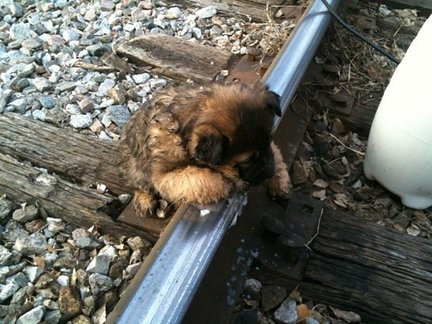
Track inspector for CSX railroad Gary McLean found this puppy frozen to the tracks in last weekend's cold snap. The puppy, now named Track, has found a home with a dog lover in Bessemer.

One near victim of the cold is now happy and warm and residing in Bessemer.

Last Saturday, Gary McLean, a track inspector for CSX Railroad, found and rescued a tiny shivering puppy who’d become frozen to the train tracks.

It was 7:30 a.m. and the temperature was about 14 degrees. McClean, a resident of the Trussville-Argo area, was riding in a rail mounted truck near Caro lina Avenue looking for any obstacles in advance of a train that would be headed down that track about an hour later. He heard something go bump on the track, stopped and looked back, but saw nothing. He turned forward and, ahead of him, he saw a tiny ball of fur on the tracks.

McLean is accustomed to encountering dead dogs along the tracks, but as he got closer, he saw the little ball of fur moving.”It was big timeshivering,” he said. “I felt so sorry for him.”

Apparently, the 5-inch-tall mutt had gotten wet in a nearby ditch. When he tried to jump the 7-inch-tall rail, he got stuck and his icy fur froze to the track. McLean tried applying warm water and lifting him off. That didn’t work. So he took a knife and carefully cut him off the track.

If the train had come, the dog would never have been able to set himself free, McLean said. McLean took pictures of the puppy and sent them to his wife, Lois.
The McLean’s already have three dogs and couldn’t adopt another. So they turned to the Internet to find the dog a home.

She posted the picture on Facebook and the story found its way to the blog of ABC 33/40 meteorologist James Spann. The e-mails started pouring in.

Sorting through the of fers, the McLeans decided to give the dog to Terry Walls of Bessemer.

He is doing great,” Walls said as the puppy she’s named Track chewed on her slipper.

Track had a manly ring to it,” she said.

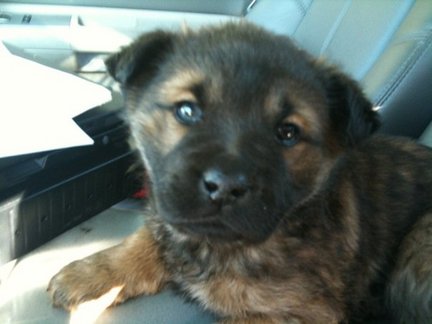
Walls estimated the puppy is 7 or 8 weeks old. It has a full set of sharp teeth and has German Shepherd and possibly some husky in his ancestry.

'Track' the lucky puppy

By Paul Handover