Year: 2015

Picture parade one hundred and fifteen.

The openness of dogs, and cats, to new ways of living.

Today’s picture parade needs a short introduction.

When Jean and I moved from San Carlos in Mexico to Payson, Arizona, we came with twelve dogs and seven cats of which all but one (Pharaoh) were rescues from the Mexican streets over the years; many from before Jean and I met each other.

That was five years ago and, inevitably, some of the dogs and cats have died of old age.

Since we arrived here in Merlin, Oregon, three years ago this October, the five cats we came with have been living in our largish double garage that, as you can imagine, is pretty cold during the winter. One cat died last year and Jean and I were thinking how nice it would be to bring the remaining four cats into the house.

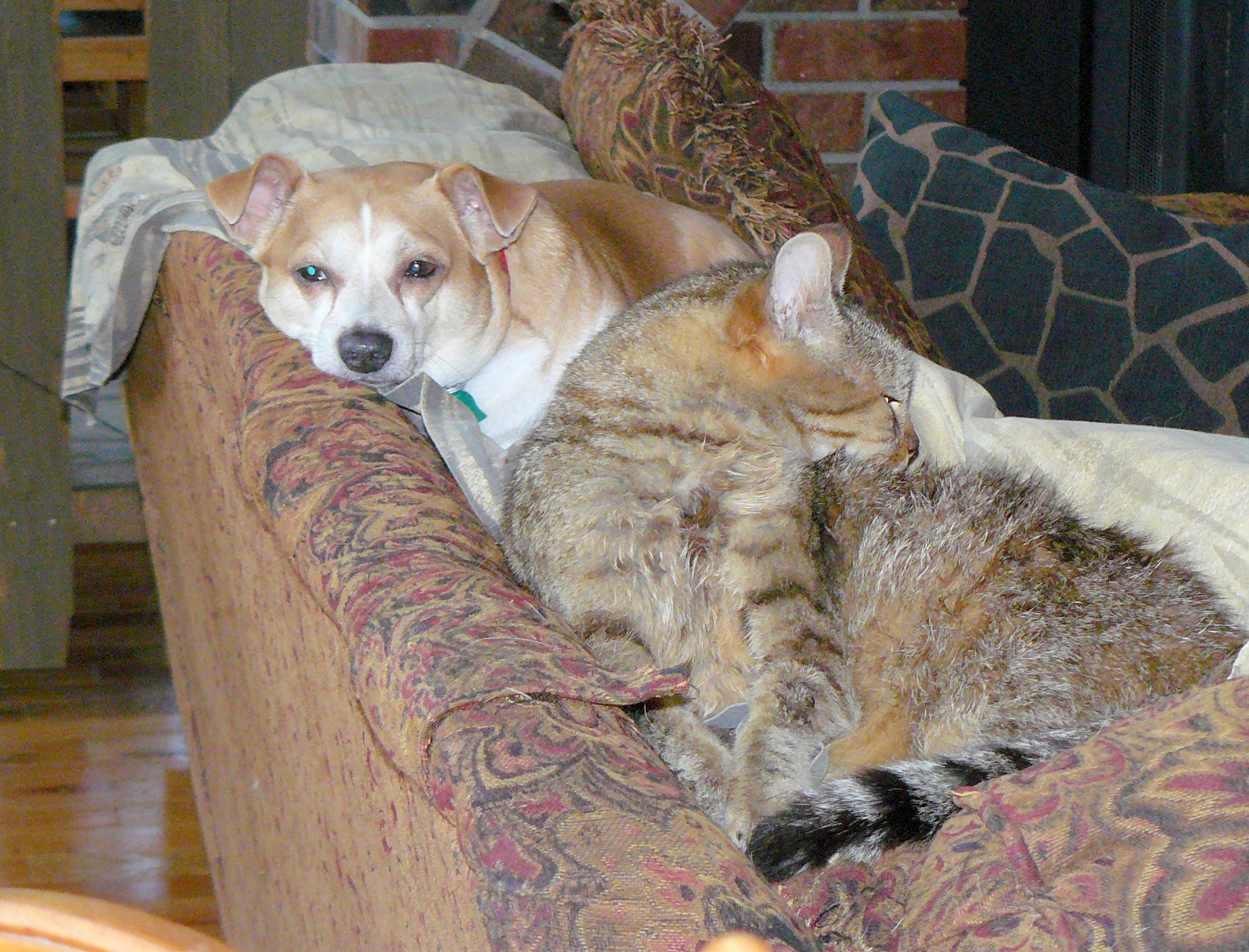
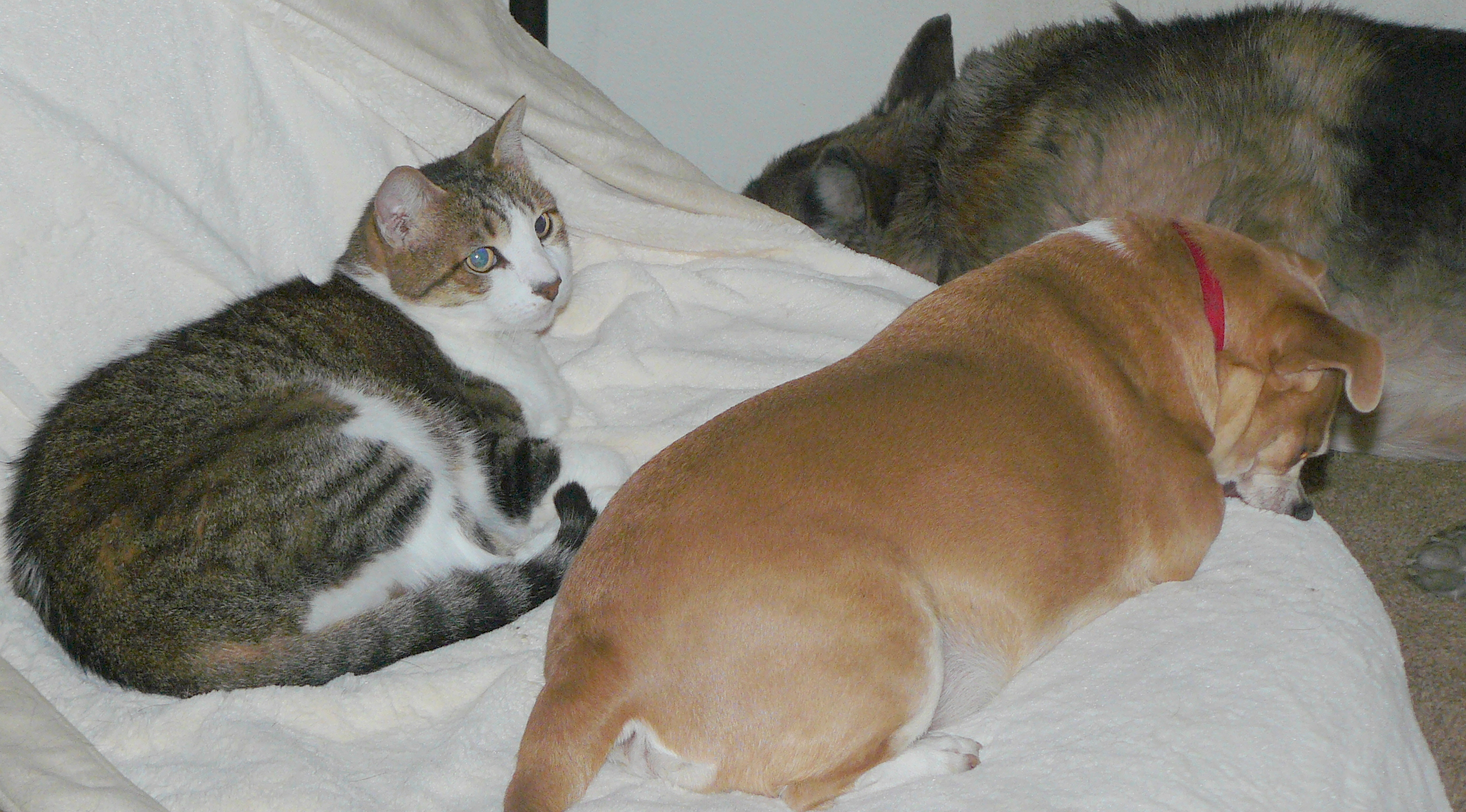
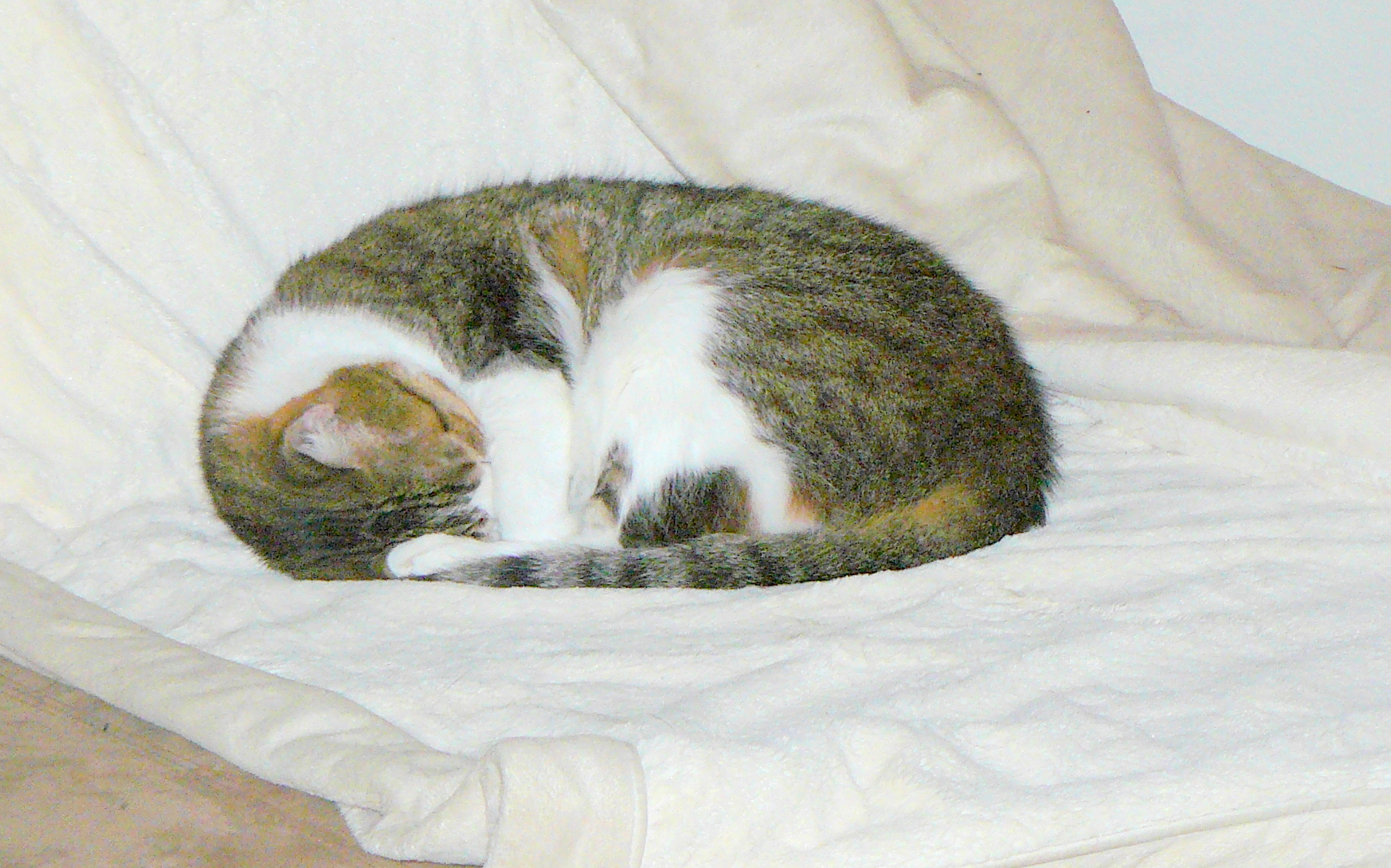
Thus, just over a week ago, we brought two of the cats, George and Mitts, across to the house and the following pictures reveal a little of how that has gone.

Wow! What's this that Mummy is holding?
Wow! What’s this that Mummy is holding? A guess at what Cleo could be thinking!

oooo

P1150734
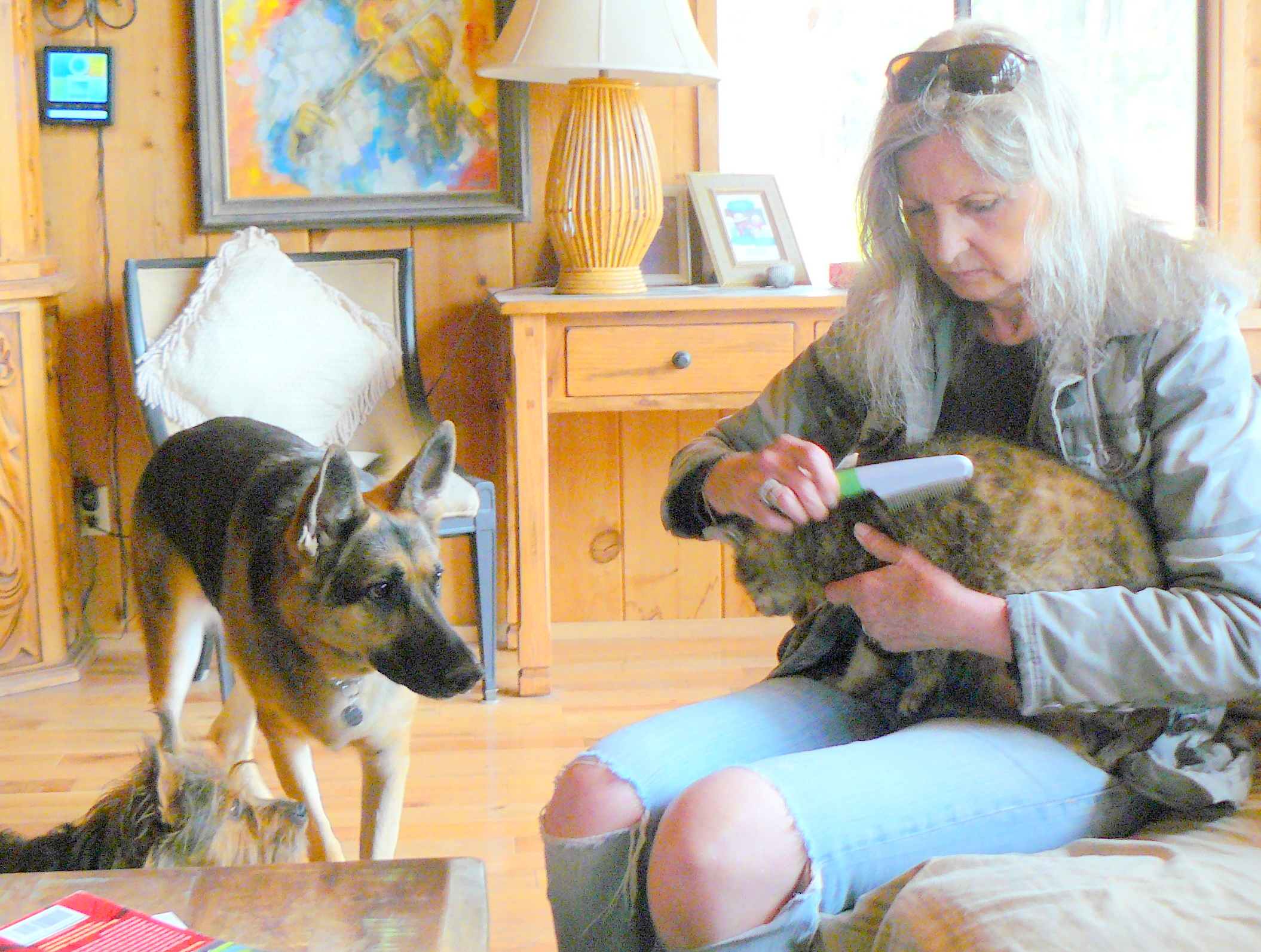
Jean combing Mitts very soon after it came into the house much to the interest of Cleo and Sweeny (whose head can just be seen by the edge of the table). Mitts has not a single tooth in her head, by the way.

oooo

P1150735
Little Pedy was totally nonchalant about the arrival of Mitts right from the start.

oooo

P1150755
As this photograph underscores.

oooo

Hedy just as happy with ???
Pedy is just as happy with George.

oooo

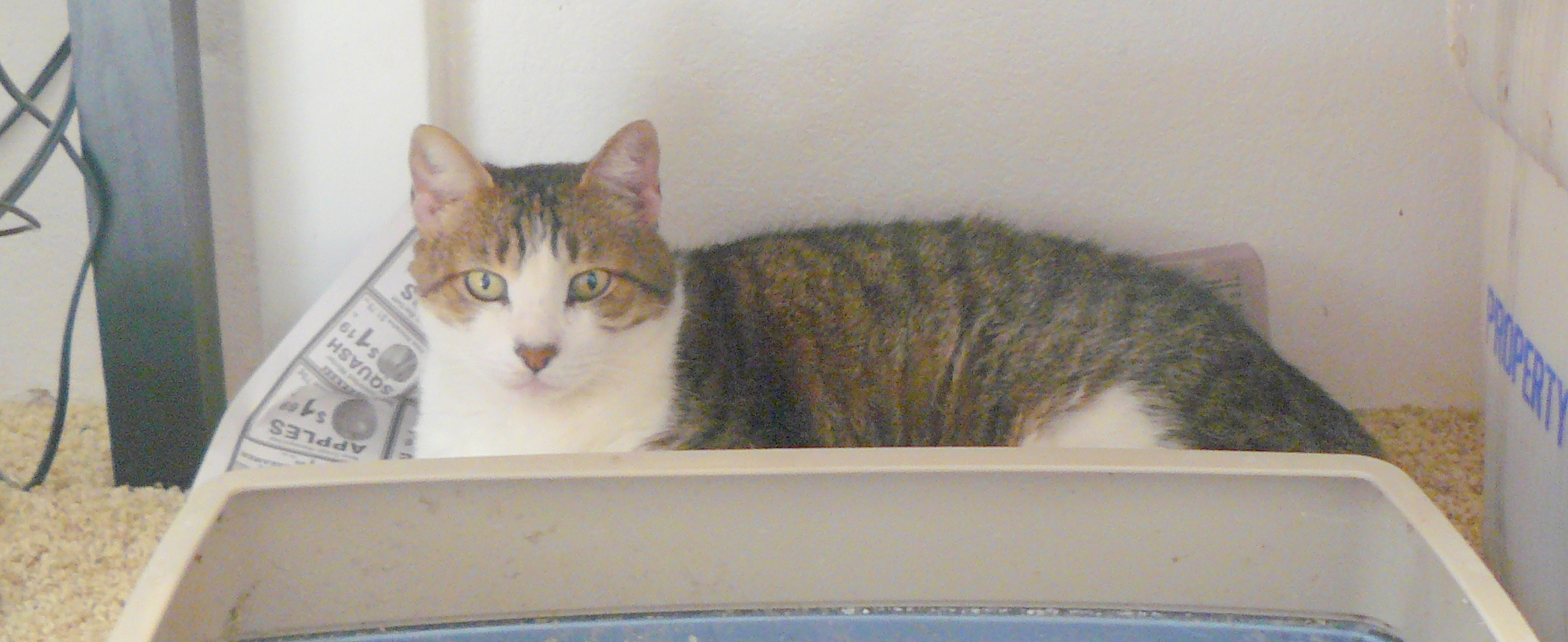
The cats have adopted my office as their new home.
The cats have adopted my office as their new home, with Mitts demonstrating how to fit a cat into a small bin!

oooo

P1150738
Meanwhile, George has found his resting spot under a small table.

 oooo

But not if the vacant settee in the den is free.
But not if the settee in the den is vacant.

oooo

Plus, a sunny area of the carpet suits Mitts better than the bin.

oooo

I hope to update you with the news of how the final two cats make the transition into the house in two or three weeks time.

The truth about Pit Bull dogs.

Like all dogs, they are beautiful animals.

Previously, I have mentioned the authors’ group AIM, that meets monthly in Grants Pass.

One of the authors is Frank Morin and he and I have a monthly chit-chat lunch together. Not so long ago, Frank posted a link on his Facebook page to the following video that shows the truth about Pit Bull dogs.

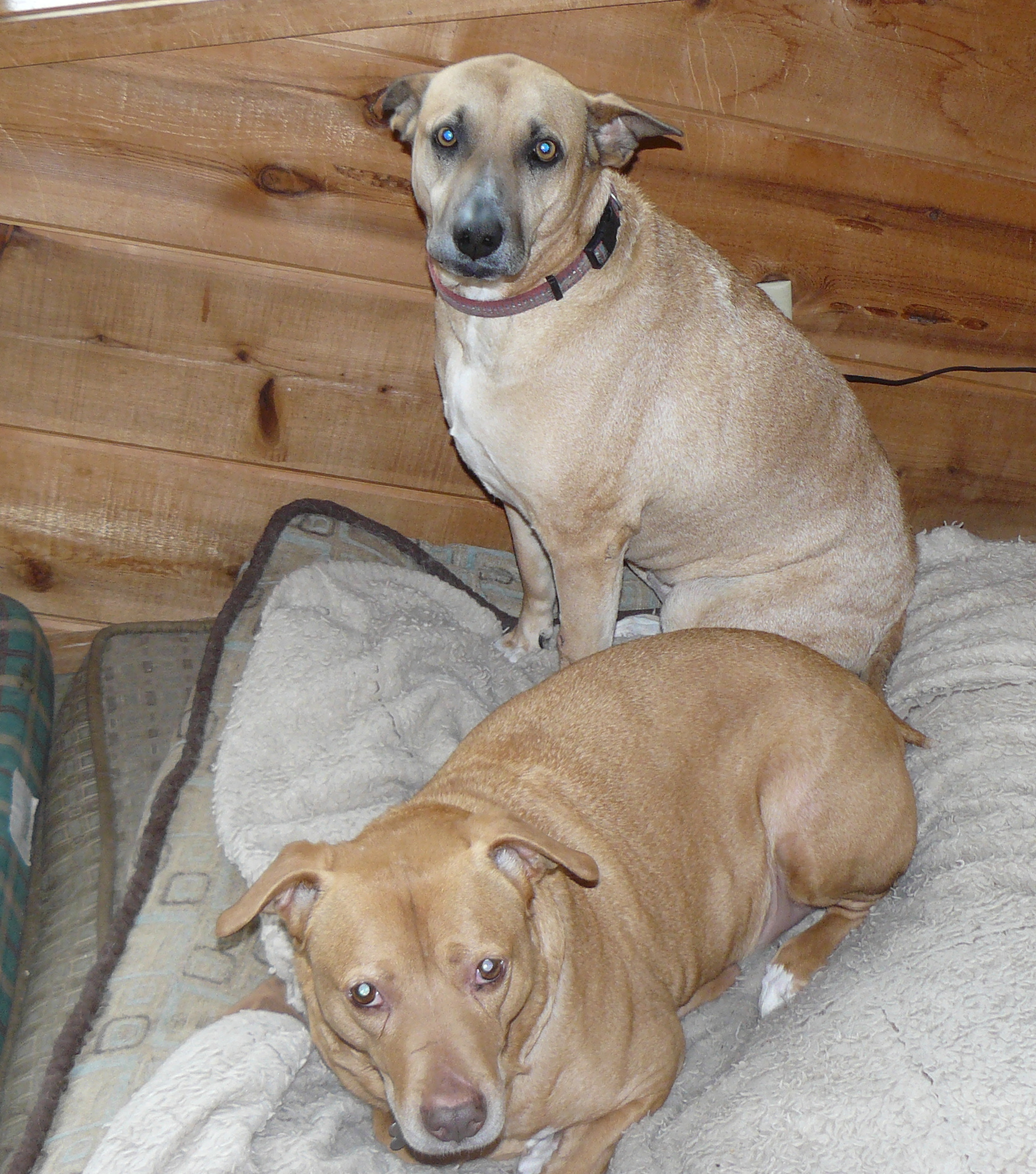
We have a Pit Bull here at home. His name is Casey and he is the perfect gentleman. You would never know that he was in a care centre for over a year because no one would give him a home, for there is not an emotional scar on him!


Ruby behind Casey.
Casey, in the foreground, sharing Ruby’s bed as they are great friends.

Please ensure you and your dogs have a great weekend.

Ageing brains.

A postscript to yesterday’s post.

There was a comment left on yesterday’s post that seemed a delightful reason to stay with the topic; more or less!  This was the comment left by Tony.

“at the age of 70, I am already noticing the creeping onset of reduced verbal IQ, cognitive decline, and worry about the onset of dementia….”

Paul, I am 75 and lost an aunt to Alzheimer’s and a mother to dementia. I consider myself to also be at risk. There seems no defense, yet, against Alzheimer’s, but cardiovascular exercise is absolutely one against dementia. Cardio sends oxygen molecules to the brain which actually create new neurotransmitters. Check out my Page – Important Facts About Your Brain (and Exercise Benefits).

Nine days ago, dear friend Bob Derham from my UK days, emailed me the following (in turn, it had been sent on to Bob):

ooOOoo

I’m only sending this to the brightest of my older friends

This test will keep that dreaded disease that effects your memory at bay!

New Senior’s Exam, you only need 4 correct out of 10 questions to pass.

1) How long did the Hundred Years’ War last?

2) Which country makes Panama hats?

3) From which animal do we get cat gut?

4) In which month do Russians celebrate the October Revolution?

5) What is a camel’s hair brush made of?

6) The Canary Islands in the Pacific are named after what animal?

7) What was King George VI’s first name?

8) What color is a purple finch?

9) Where are Chinese gooseberries from?

10) What is the color of the black box in a commercial airplane?

Remember, you need only 4 correct answers to pass.

Check your answers below ….

Continue reading “Ageing brains.”

Never stop fighting for a better world.

Protecting our right to breathe good, clean air.
robertgreeningersoll118442

Fundamentally, today’s post is not about dogs. But it is about the qualities that we can see in our dogs: trust, honesty, openness, and the core quality that inspires my writings about dogs: integrity.

I’m speaking of the disgusting news that has been headlined in the world’s media in recent days, no better summarised than by this extract from a current (1pm PDT yesterday)) BBC news report:

Volkswagen chief executive Martin Winterkorn has resigned following the revelation that the firm manipulated US diesel car emissions tests.

Mr Winterkorn said he was “shocked” by recent events and that the firm needed a “fresh start”.

He added that he was “not aware of any wrongdoing on my part” but was acting in the interest of the company.

VW has already said that it is setting aside €6.5bn (£4.7bn) to cover the costs of the scandal.

The world’s biggest carmaker admitted last week that it deceived US regulators in exhaust emissions tests by installing a device to give more positive results.

The company said later that it affected 11 million vehicles worldwide.

As ever, the voice of George Monbiot speaks a little clearer than most, and I am referring to his recent essay published both on his blog and in The Guardian newspaper.  I am very pleased to have Monbiot’s permission to republish his essay here on Learning from Dogs.

ooOOoo

Smoke and Mirrors

22nd September 2015

Pollution, as scandals on both sides of the Atlantic show, is a physical manifestation of corruption.
By George Monbiot, published in the Guardian 23 September 2015

In London, the latest figures suggest, it now kills more people than smoking. Worldwide, a new study estimates, it causes more deaths than malaria and HIV-Aids together. I’m talking about the neglected health crisis of this age, that we seldom discuss or even acknowledge. Air pollution.

Heart attacks, strokes, asthma, lung and bladder cancers, low birth weight, low verbal IQ, poor memory and attention among children, faster cognitive decline in older people and – recent studies suggest – a link with the earlier onset of dementia: all these are among the impacts of a problem that, many still believe, we solved decades ago. The smokestacks may have moved to China, but other sources, whose fumes are less visible, have taken their place. Among the worst are diesel engines, sold, even today, as the eco-friendly option, on the grounds that their greenhouse gas emissions tend to be lower than those of petrol engines. You begin to wonder whether any such claims can still be trusted.

Volkswagen’s rigging of its pollution tests is an assault on our lungs, our hearts, our brains. It is a classic example of externalisation: the dumping of costs that businesses should carry onto other people. The air that should have been filtered by its engines is filtered by our lungs instead. We have become the scrubbing devices it failed to install.

Who knows how many people have paid for this crime already, with their health or with their lives? In the USA, 200,000 deaths a year are attributed to air pollution. For how many of those might Volkswagen be responsible? Where else was the fraud perpetrated? Of what proportion of our health budgets has this company robbed us?

The fraud involves the detection of nitrogen oxides (NOx), of which diesel engines are the major source in many places. This month, for the first time in our history, the UK government estimated the impact of NOx emissions on public health, and discovered that they are likely almost to double the number of deaths from air pollution, adding 23,000 to the 29,000 attributed to particulates (tiny particles of soot).

The government released this discovery, alongside its useless proposals for dealing with the problem, on Saturday 12 September, a few minutes before Jeremy Corbyn’s election as Labour leader was announced. How many government press releases are published on a Saturday? How many are published on a Saturday during an event on which everyone is focused? In other words, as a Labour press officer once notoriously advised, this was “a good day to bury bad news”. Not only was the number of deaths buried by this means, but so was the government’s consultation on its feeble plans for reducing this pollution: a consultation to which it evidently wanted as few respondents as possible. Liz Truss, the environment secretary, has some explaining to do.

She has her reasons for keeping us in the dark. In April, the Supreme Court ruled that the UK is in breach of the European air quality directive, and insisted that the government draw up a plan for compliance by the end of this year. Instead, Truss produced a plan to shed responsibility. Local authorities, her consultation suggests, should create clean air zones in at least eight cities, in which diesel engines are restricted or banned. But she has given them neither new money nor new powers. Nor has she offered an explanation of how this non-plan is going to address the issue in the rest of the country, as the ruling demands.

Already, the UK has missed the European deadline by six years. Under Truss’s proposals, some places are likely still to be in breach by 2025: 16 years after the original deadline. I urge you to respond to the consultation she wanted you to miss, which closes on November 6.

The only concrete plan the government has produced so far is to intensify the problem, through a new programme of airport expansion. This means more nitrous oxides, more particulates, more greenhouse gas emissions.

Paradoxically, the Volkswagen scandal may succeed where all else has failed, by obliging the government to take the only action that will make a difference: legislating for a great reduction in the use of diesel engines. By the time this article is published, we might know whether the company’s scam has been perpetrated in Europe as well as North America: new revelations are dripping by the hour. But whether or not this particular deception was deployed here, plenty of others have been.

Last week the Guardian reported that nine out of ten new diesel cars break European limits on nitrous oxides – not by a little but by an average of sevenfold. Every manufacturer whose emissions were tested had cars in breach of the legal limit. They used a number of tricks to hotwire the tests: “stripping components from the car to reduce weight, using special lubricants, over-inflating tyres and using super-smooth test tracks.” In other words, the emissions scandal is not confined to Volkswagen, not confined to a single algorithm and not confined to North America: it looks, in all its clever variants, like a compound global swindle.

There are echoes here of the ploys used by the tobacco industry: grand deceptions smuggled past the public with the help of sophisticated marketing. Volkswagen sites advertising the virtues of “clean diesel” have been dropping offline all day. In 2009, the year in which its scam began, the TDI engine at the centre of the scandal won the Volkswagen Jetta 2.0 the green car of the year award. In 2010, it did the same for the Audi A3.

There’s plenty that’s wrong with corporate regulation in the United States, but at least the fines, when they occur, are big enough to make a corporation pause, and there’s a possibility of guilty executives ending up in prison. Here, where corruption, like pollution, is both omnipresent and invisible, major corporations can commit almost any white-collar crime and get away with it. Schemes of the kind that have scandalised America are, in this country, both commonplace and unremarked. How can such governments be trusted to defend our health?

www.monbiot.com

ooOOoo

I found myself having two emotional reactions to Monbiot’s essay. The first was that for many years, when I was living and working in England, I drove diesel-powered cars on the (now false) belief that they were better for the environment.

My second reaction was to Monbiot listing the likely impacts from air pollution,”Heart attacks, strokes, asthma, lung and bladder cancers, low birth weight, low verbal IQ, poor memory and attention among children, faster cognitive decline in older people and – recent studies suggest – a link with the earlier onset of dementia. . . “, for the reason that at the age of 70, I am already noticing the creeping onset of reduced verbal IQ, cognitive decline, and worry about the onset of dementia. To think that my earlier decisions about what cars to drive might be a factor in this is disturbing.

I am going to close this post by highlighting how fighting for what we want is important, critically so. By republishing an item that was posted on AmericaBlog just over a year ago, that fortuitously is a reward for living in the State of Oregon.

ooOOoo

Climate win: Appeals court in Oregon rules state court must decide if atmosphere is a “public trust”

6/16/14 10:00am by Gaius Publius

Two teenagers from Eugene, Ore. filed suit against Governor Kitzhaber and the State of Oregon for failing to protect the “atmosphere, state waters, and coast lines, as required under the public trust doctrine.”

They lost the first round, where the state court said that climate relief was not a judicial matter. But they won on appeal. The case goes back to the original court, which now has orders to decide the case on its merits and not defer to the executive or legislature.

The gist of the appeals court decision:

Their lawsuit asked the State to take action in restoring the atmosphere to 350 ppm of CO2 by the end of the century. The Oregon Court of Appeals rejected the defenses raised by the State, finding that the youth could obtain meaningful judicial relief in this case.

That’s quite a nice victory. Here’s the full story, from the Western Environmental Law Center (my emphasis throughout):
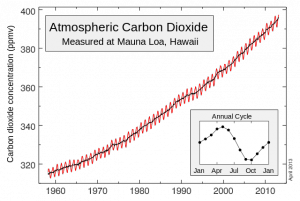
Keeling-curve_CO2_ppm_Mauna_Loa_Carbon_Dioxide_Apr2013.svg_-300x201

In a nationally significant decision in the case Chernaik v. Kitzhaber, the Oregon Court of Appeals ruled a trial court must decide whether the atmosphere is a public trust resource that the state of Oregon, as a trustee, has a duty to protect. Two youth plaintiffs were initially told they could not bring the case by the Lane County Circuit Court. The trial court had ruled that climate change should be left only to the legislative and executive branches. Today, the Oregon Court of Appeals overturned that decision.

Two teenagers from Eugene, Kelsey Juliana and Olivia Chernaik, filed the climate change lawsuit against Governor Kitzhaber and the State of Oregon for failing to protect essential natural resources, including the atmosphere, state waters, and coast lines, as required under the public trust doctrine. Their lawsuit asked the State to take action in restoring the atmosphere to 350 ppm of CO2 by the end of the century. The Oregon Court of Appeals rejected the defenses raised by the State, finding that the youth could obtain meaningful judicial relief in this case. …

In reversing the Lane County trial court, the Oregon Court of Appeals remanded the case ordering the trial court to make the judicial declaration it previously refused to make as to whether the State, as trustee, has a fiduciary obligation to protect the youth from the impacts of climate change, and if so, what the State must do to protect the atmosphere and other public trust resources.

The implications of this are broad, and similar cases are pending in other states, as the article describes.

Make no mistake; decisions like this matter. It places the court squarely in the mix as a power player in the climate war, the fight for “intergenerational justice” as James Hansen puts it — or the war against intergenerational betrayal, as I put it.

This is a cornerstone decision from the Oregon Court of Appeals in climate change jurisprudence. The court definitively ruled that the question of whether government has an obligation to protect the atmosphere from degradation leading to climate change is a question for the judiciary, and not for the legislative or executive branches. The Court did not opine as to how that question should be answered, only that it should be answered by the judiciary.

We can win this; it’s not over. If we reach 450 ppm and we’re still not stopping with the CO2, then it’s over and I become a novelist full-time. But we’re not there yet, and please don’t surrender as if we were.

The courts are now a powerful tool, as is divestment. James Hansen has a way to restore the atmosphere to 350 ppm CO2 in time to stop slow feedbacks from kicking in. It’s a doable plan, but we’ll need to use force. Using the courts, as with using divestment campaigns, counts as force. Stay tuned.

(Want to use force at the national level? Find a way to challenge Obama publicly to stop leasing federal land to coal companies. He’s a hypocrite until he stops federal coal from being mined and sold abroad. A simple and obvious challenge for him. You too can be the activist.)

GP

Twitter: @Gaius_Publius
Facebook: Gaius Publi

(Facebook note: To get the most from a Facebook recommendation, be sure to Share what you also Like. Thanks.)

ooOOoo

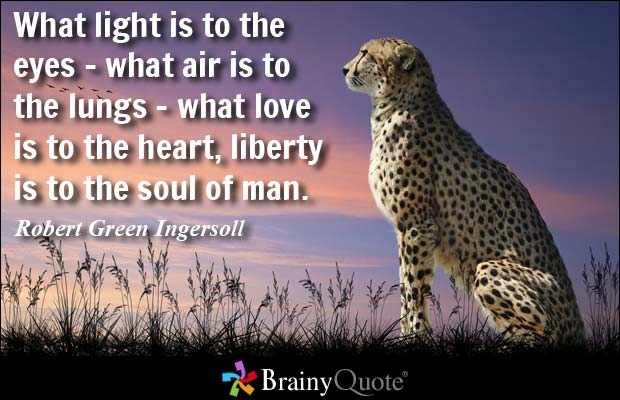
 Never forget that you, me and every other good-minded person on this planet can make a positive difference. Need inspiration? Gain it from our dogs! Let’s use the liberty we enjoy to make a difference.
Please adopt your next dog.

Continuing the message of that special bond between us humans and our dogs.

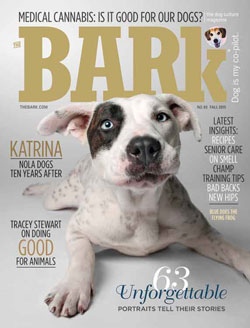
Yesterday’s post regarding the dog saved from the Texas floods came to mind when earlier today (Tuesday) I was reading the Fall issue of The Bark magazine.

Cover of the Fall 2015 issue.

Reading the magazine took me across to The Bark website and from there I ended up reading about dogs being mentioned in people’s obituaries. Here’s a snippet of that article:

Dogs in Obituaries

Included as cherished family members
Karen B. London, PhD | September 18, 2015

dogorbits

It’s been a long time since the majority of people with dogs considered them property, but the inclusion of them in the celebrations and events of life associated with family continues to grow. Birthday parties and gifts for dogs have become increasingly common in recent years, and the number of dogs included in family photos or in signatures on greeting cards is bigger than ever. It’s really old news to say that many people consider dogs to be family members, but interesting studies of the ways in which that’s true continue to be published.

Earlier this year, a study called Companion Animals in Obituaries: An Exploratory Study was published in the journal Anthrozoös. The study illuminated the importance of companion animals, including dogs, based on the frequency and manner in which they were mentioned in obituaries.

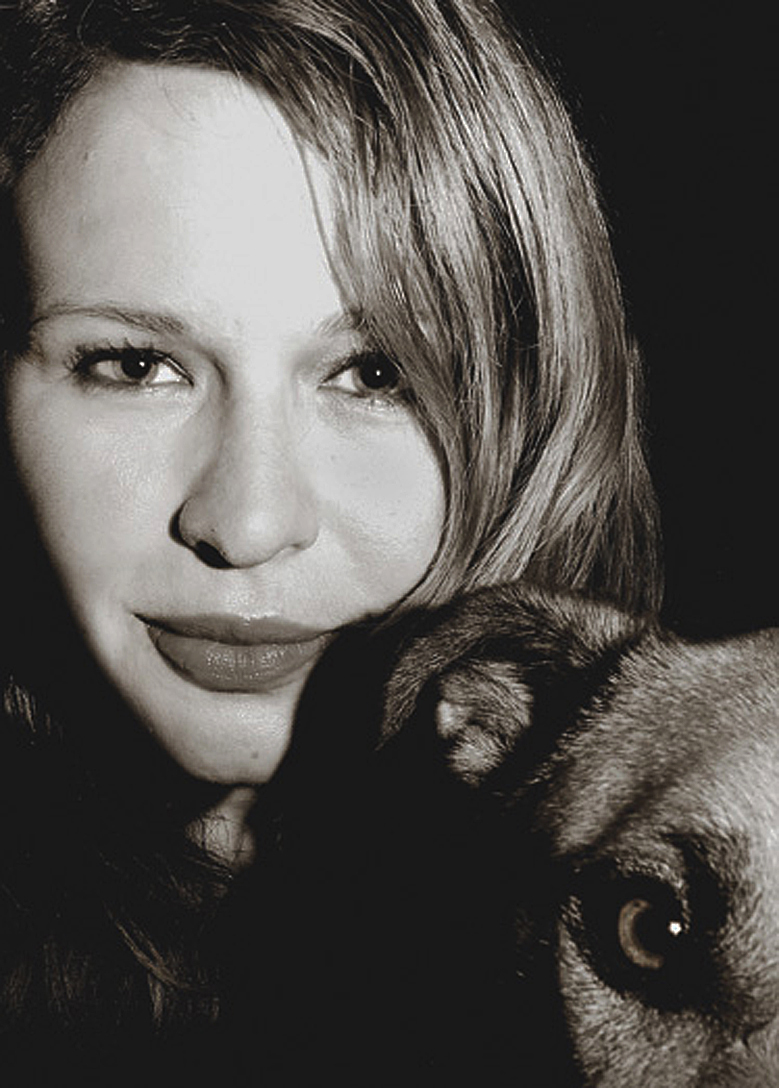
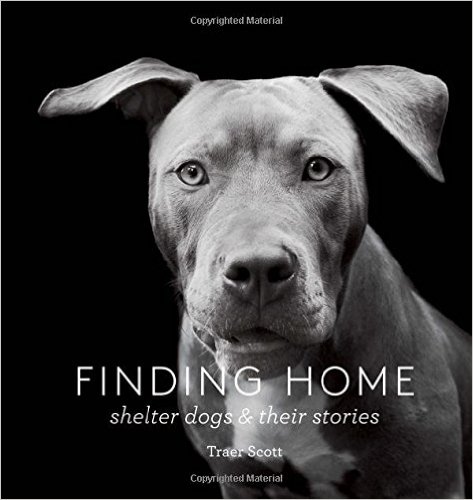
Another article in that same issue of The Bark was by photographer Traer Scott. Scott is the author of the book Shelter Dogs and has just launched a new book called Finding Home: shelter dogs & their stories. (Her blogsite is here.) As is detailed on her website:

Traer Scott is an award winning fine art and commercial photographer and author of six books including “Nocturne: Creatures of the Night” (Princeton Architectural Press, 2014) and her newest release “Finding Home; Shelter Dogs and Their Stories” (Princeton Architectural Press, Fall 2015). Her work has been exhibited in several countries and featured in National Geographic, Life, Vogue, People, O, on the NY Times Lens Blog, “Behold” and dozens of other national and international print and online publications. Her first solo museum show Natural History opens at the University of Maine Museum of Art in October 2015. Traer was the recipient of the Rhode Island State Council for the Arts 2010 Photography Fellowship Grant and the 2008 Helen Woodward Humane Award for animal welfare activism. She lives in Providence, Rhode Island with her husband, daughter and adopted dogs: a pit bull and a baby basset hound.

A quick mouse-click took me to Amazon and to Scott’s latest book. Where one reads:

scottbook

Bold, retiring, serious, sparkling, quirky, or lovable—the dogs in Traer Scott’s remarkable photographs regard us with humor, dignity, and an abundance of feeling. Scott began photographing these dogs in 2005 as a volunteer at animal shelters. Her first book, Shelter Dogs, was a runaway success, and in this follow-up, Scott introduces a new collection of canine subjects, each with indomitable character and spirit: Morrissey, a pit bull, who suffered from anxiety related behaviors brought on by shelter life until adopted by a family with four children; Chloe, a young chocolate Lab mix, surrendered to a shelter by a family with allergies; Gabriel and Cody, retired racing greyhounds; and Bingley, a dog who lost his hearing during a drug bust but was brought home by a loving family that has risen to the challenge of living with a deaf dog. Through extended features we become better acquainted with the personalities and life stories of selected dogs and watch as they experience the sometimes rocky and always emotional transition to new homes. The portraits in Finding Home form an eloquent plea for the urgent need for more adoptive families, as well as a tribute to dogs everywhere.

Further down that Amazon page there was a review by The Bark magazine and what they wrote is the perfect way of heading to the close of today’s post. [My emphasis]

“Photographer Traer Scott follows up her groundbreaking book Shelter Dogs with a new work of equal grace and sensitivity. The portraits in Finding Home not only showcase a collection of canines with indomitable character and spirit, they are also an eloquent plea for more adoptive families, and a tribute to all dogs everywhere.” – The Bark

Please, howsoever you can, share the benefits of adopting a dog from your nearest animal care centre.

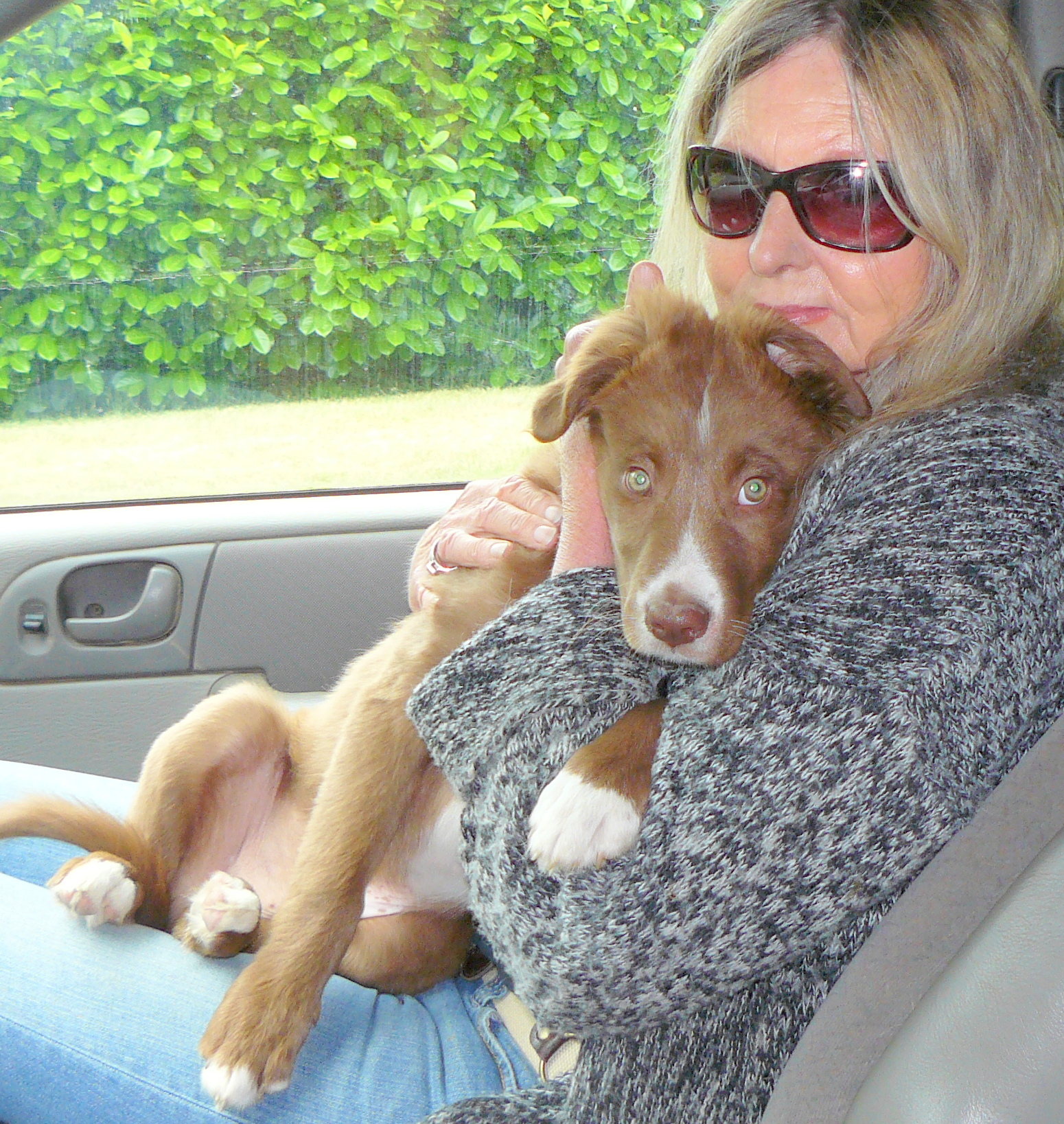
No avoiding those eyes (and I'm not referring to Jean!).
Proof positive of the love that flows between Jean and our Oliver.

The bond between dogs and humans

We can never be reminded too often of this most special bond.

Again, the pressures of the book and the fact that Jean and I were away from the house until early afternoon, made it difficult for me to spend time writing a post from scratch.

Then in my blog folder, I saw this lovely story reported by the British Daily Mail newspaper; to be honest, probably quite some time ago.

But so what!

The bond between humans and dogs is timeless.

ooOOoo

Touching moment as firefighters save this dog from flood waters.

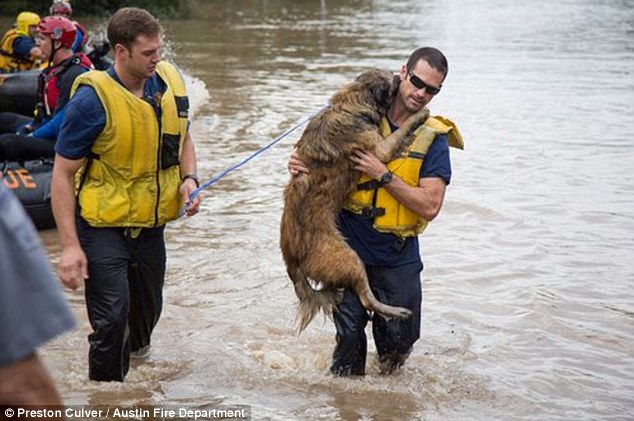
Two firefighters with the Austin Fire Department were pictured saving a dog from flood waters in central Texas yesterday.

The department posted the picture of firefighters Matt Harvey and Michael Cooper with the animal to their Facebook page, saying:  ‘We don’t just rescue two-legged victims…we love our four-legged friends as well.

The animal looks like it’s been through a lot, and clings to one of the firefighters as if they’re hugging.

Saving dog

There was a bonus in waiting a while before publishing this. For the story of the dog being reunited with its owner made television news.

A scientific view of domestication.

Of our dogs, of course!

You may recall that back on the 15th of this month, I posted a Note to Readers that spoke about my need to be focused on the editing of my manuscript. Here’s part of that note:

Dear readers, we are talking hours of revisions that I need, and want, to make.

All of which is my way of saying that if my posts over the next couple of weeks more strongly lean on the republishing of other material then you will understand why. In all cases I will endeavour to republish articles that are likely to interest you, of course!

Late yesterday, I completed the many revisions to the manuscript recommended by Joni Wilson but still have more days of formatting changes ahead.

Thus another republication of an item, this time an article that appeared on the Smithsonian website.

ooOOoo

Domestication Seems to Have Made Dogs a Bit Dim

Thanks to their relationship with us, dogs are less adept at solving tricky puzzles than their wolf relatives

It's OK, buddy. We're here to help. (stelo/iStock)
It’s OK, buddy. We’re here to help. (stelo/iStock)

By Rachel Nuwer, smithsonian.com, September 15, 2015

Dogs are considered some of the most intelligent animals on the planet. Thanks to a relationship with humans that dates back tens of thousands of years, dogs can respond to emotions, recognize numerous words and be trained to follow commands.

Notably, these seemingly smart accomplishments all hinge on the partnership between our two species. Now, however, tests of canine problem-solving skills indicate that dogs rely on humans so much that we actually seem to be dumbing them down.

Most studies that investigate dog intelligence assume that certain interactions with humans are indicative of higher cognitive function. In one experiment, for example, dogs and human-socialized wolves were presented with a canine version of the Kobayashi Maru — an unopenable box that contained food.

When confronted with a difficult task, dogs often turn to us—their human masters—for guidance, indicating their puzzlement with a cock of the head and eyes that seem to implore for help. Indeed, the dogs in the study quickly gave up and simply stared at the nearest human. The wolves, on the other hand, sought out no such help and persisted at trying to solve the impossible puzzle on their own.

Researchers usually interpret such findings as a sign of dogs’ intelligence; the wolves kept trying to win the no-win scenario, while the dogs knew that humans could help out with tasks they themselves could not solve.

But depending on humans for help is not necessarily a cognitive asset, points out Monique Udell, an assistant professor of animal and rangeland sciences at Oregon State University.

If dogs only turn to humans when presented with an impossible task—not a solvable one—then their “look back” behavior would indeed be advantageous. On the other hand, if they simply throw their paws up at the slightest hint of cognitive challenge, then that could indicate “a conditioned inhibition of problem-solving behavior,” as Udell puts it. Like a child whose parents always give away the answers to homework, dogs may be overly reliant on us, she surmised.

To test this hypothesis, Udell presented ten pet dogs and ten human-socialized wolves with a solvable puzzle. Sausage was placed inside a sealed plastic tub with a lid that included a bit of rope. With some paw and mouth finagling, the lid could be opened.

She also included ten shelter dogs in the study, because past research shows that shelter dogs are initially less responsive to humans compared to established pets. These animals acted as a sort of intermediary between hyper-socialized dogs and wolves.

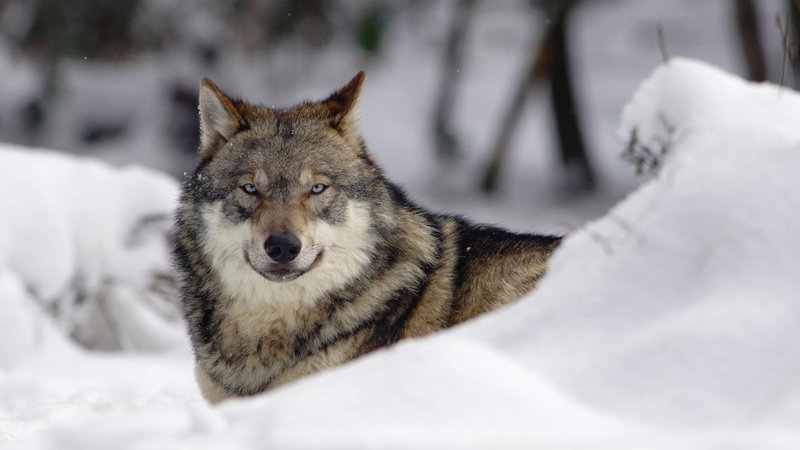
Crazy smart, like a wolf. (Kaphoto/iStock)

Udell presented the canines with the puzzle box both in the presence of humans—an owner, caretaker or familiar person—and without any person nearby. Each time, the animals had two minutes to figure out how to get at the sausage. Subjects that failed in both trials were given a third and final try in which they also received verbal encouragement from their human friend.

Udell’s findings, reported today in the journal Biology Letters, were telling. In the presence of humans, just one pet dog and none of the shelter dogs managed to open the box. Eight out of ten of the wolves, however, succeeded in enjoying the sausage treat inside.

Wolves also spent more time chipping away at the problem and more time staring at the box, as if working out how to open it. Both pet and shelter dogs, on the other hand, did the opposite—they gave up more quickly and stared at humans instead of the box, seemingly asking for help.

When humans were not around, the findings were similar—nearly all of the wolves figured out how to open the box, while just one shelter dog and no pet dogs succeeded. In the third and final trial, dogs that had failed in both of the prior tests performed a bit better when humans encouraged them.

With some human cheerleading, four of nine shelter animals and one of eight pet dogs opened the box, and all spent more time trying to open the box and looking at the box than they did when they were either alone or when their human friends remained silent.

Udell’s results indicate that dogs do seem to be overly dependent on us compared to their wild relatives, although the cause of this—whether biological, environmental or both—still needs to be worked out.

Lucky for pet pooches, however, we humans will no doubt always be there to help them navigate all of life’s tricky plastic containers.

ooOOoo

Read more here.

Picking up on that last sentence, luckily for us humans our dogs will always be there to help us in innumerable ways, especially giving us unconditional love.