Irrespective of our believe.
There are only two days in our lives when we live for less than twenty-four hours: the day we are born and the day when we die!
I was born in November, 1944 and that makes me eighty-one. I was born as a result of an affair between my mother and my father. The family genes favour girls over boys, as in seven girls for every boy, and the son is normally the first born. My mother lost her first child, it was a boy. Then my mother had a second baby. Surprise, surprise, it was another son – me!!
I say this as an introduction to a post on The Conversation.
ooOOoo
Americans are unprepared for the expensive and complex process of aging – a geriatrician explains how they can start planning
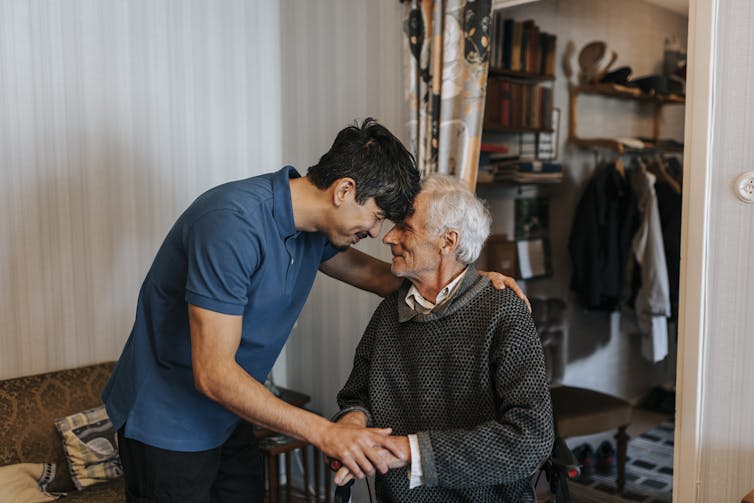
Kahli Zietlow, University of Michigan
Hollywood legend Gene Hackman and his wife, Betsy Arakawa, were found dead in their home in February 2025. Hackman had been living with Alzheimer’s and depended on Arakawa as his full-time caregiver.
Disturbingly, postmortem data suggests that Arakawa died of complications from pulmonary Hantavirus several days before her husband passed. The discordant times of death point to a grim scenario: Hackman was left alone and helpless, trapped in his home after his wife’s death.
The couple’s story, while shocking, is not unique. It serves as a warning for our rapidly aging society. The U.S. population is aging, but most Americans are not adequately planning to meet the needs of older adulthood.
As a geriatric physician and medical educator, I care for older adults in both inpatient and outpatient settings. My research and clinical work focus on dementia and surrogate decision-making.
In my experience, regardless of race, education or socioeconomic status, there are some universal challenges that all people face with aging and there are steps everyone can take to prepare.
Aging is inevitable but unpredictable
Aging is an unpredictable, highly individualized process that varies depending on a person’s genetics, medical history, cognitive status and socioeconomic factors.
The majority of older Americans report a strong sense of purpose and self-worth. Many maintain a positive view of their overall health well into their 70s and 80s.
But at some point, the body starts to slow down. Older adults experience gradual sensory impairment, loss of muscle mass and changes in their memory. Chronic diseases are more likely with advancing age.
According to the U.S. Census Bureau, 46% of adults over age 75 live with at least one physical disability, and this proportion grows with age. Even those without major health issues may find that routine tasks like yard work, housekeeping and home repairs become insurmountable as they enter their 80s and 90s.
Some may find that subtle changes in memory make it difficult to manage household finances or keep track of their medications. Others may find that vision loss and slowed reaction time make it harder to safely drive. Still others may struggle with basic activities needed to live independently, such as bathing or using a toilet. All of these changes threaten older adults’ ability to remain independent.
The costs of aging
Nearly 70% of older Americans will require long-term care in their lifetime, whether through paid, in-home help or residence in an assisted living facility or nursing home.
But long-term care is expensive. In 2021, the Federal Long Term Care Insurance Program reported that the average hourly rate for in-home care was US$27. An assisted living apartment averaged $4,800 per month, and a nursing home bed cost nearly double that, at a rate of $276 per day.
Many Americans may be shocked to discover that these costs are not covered by Medicare or other traditional medical insurance. Long-term care insurance covers the cost of long-term care, such as in-home care or nursing home placement. However, what is covered varies from plan to plan. Currently, only a small minority of Americans have long-term care insurance due to high premiums and complex activation rules.
I am not aware of any high-quality, peer-reviewed studies that have demonstrated the cost effectiveness of long-term care insurance. Yet, for many Americans, paying for care out of pocket is simply not an option.
Medicaid can provide financial support for long-term care but only for older adults with very low income and minimal assets – criteria most Americans don’t meet until they have nearly exhausted their savings.
Those receiving Medicaid to cover the costs of long-term care have essentially no funds for anything other than medical care, room and board. And proposed federal financial cuts may further erode the limited support services available. In Michigan, for example, Medicaid-covered nursing home residents keep only $60 per month for personal needs. If individuals receive monthly income greater than $60 – for instance, from Social Security or a pension – the extra money would go toward the cost of nursing home care.
Those who don’t qualify for Medicaid or cannot afford private care often rely on family and friends for unpaid assistance, but not everyone has such support systems.

Planning for the care you want
Beyond financial planning, older adults can make an advance directive. This is a set of legal documents that outlines preferences for medical care and asset management if a person becomes incapacitated. However, only about 25% of Americans over 50 have completed such documentation.
Without medical and financial powers of attorney in place, state laws determine who makes critical decisions, which may or may not align with a person’s wishes. For instance, an estranged child may have more legal authority over an incapacitated parent than their long-term but unmarried partner. Seniors without clear advocates risk being placed under court-appointed guardianship – a restrictive and often irreversible process.
In addition to completing advance directives, it is important that older adults talk about their wishes with their loved ones. Conversations about disability, serious illness and loss of independence can be difficult, but these discussions allow your loved ones to advocate for you in the event of a health crisis.
Who’s going to care for you?
Finding a caregiver is an important step in making arrangements for aging. If you are planning to rely on family or friends for some care, it helps to discuss this with them ahead of time and to have contingency plans in place. As the Hackman case demonstrates, if a caregiver is suddenly incapacitated, the older adult may be left in immediate danger.
Caregivers experience higher rates of stress, depression and physical illness compared with their peers. This is often exacerbated by financial strain and a lack of support. It helps if the people you will be relying on have expectations in place about their role.
For instance, some people may prefer placement in a facility rather than relying on a loved one if they can no longer use the bathroom independently. Others may wish to remain in their homes as long as this is a feasible option.
Connecting with available resources
There are local and federal initiatives designed to help aging adults find and get the help they need. The Centers for Medicare & Medicaid Services recently launched the GUIDE Model to improve care and quality of life for both those suffering from dementia and their caregivers.
This program connects caregivers with local resources and provides a 24-hour support line for crises. While GUIDE, which stands for Guiding an Improved Dementia Experience, is currently in the pilot stage, it is slowly expanding, and I am hopeful that it will eventually expand to provide enhanced coverage for those suffering from dementia nationwide.
The Program for All-Inclusive Care of the Elderly helps dual-eligible Medicare and Medicaid recipients remain at home as they age. This program provides comprehensive services including medical care, a day center and home health services.
Area agencies on aging are regionally located and can connect older adults with local resources, based on availability and income, such as meals, transportation and home modifications that help maintain independence.
Unfortunately, all of these programs and others that support older adults are threatened by recent federal budget cuts. The tax breaks and spending cuts bill, which was signed into law in July 2025, will result in progressive reductions to Medicaid funding over the next 10 years. These cuts will decrease the number of individuals eligible for Medicaid and negatively affect how nursing homes are reimbursed.
The government funding bill passed on Nov. 13 extends current Medicare funding through Jan. 30, 2026, at which point Medicare funding may be reduced.
Even as the future of these programs remains uncertain, it’s important for older adults and their caregivers to be intentional in making plans and to familiarize themselves with the resources available to them.
Kahli Zietlow, Physician and Clinical Associate Professor of Geriatrics & Internal Medicine, University of Michigan
This article is republished from The Conversation under a Creative Commons license. Read the original article.
ooOOoo
This article is a wakeup call for me, because I have no plan in place.
While I think about death more frequently than I used to, the fact that I don’t have plan is naive: I must get myself to a stage where I have a plan, and soon! I guess I am not the only person in their 80s without a plan!
 Learning from Dogs
Indeed Paul, Everyone wants to live long lives, but the fail to comprehend how that may turn out health wise. Congratulations upon your Birthday Month of November Paul… And you touch upon some tender points as we all age… No one wishes to think about that particular time ahead… Yet as we who are aging, you are three years senior to my hubby, we have to make plans and alter our living conditions to accommodate those frailties which begin to creep upon us.. Indeed that story of Gene Hackman was a tragic one… I have recently been on call several times in the helping of a aged neighbour further down the street from us… He asked if I could be a help line on an emergency call system… I have been called out around 4 times now as he has fallen and couldn’t get back up, and the emergency services on one such call I was unable to attend took 5 hours to come to his aid… So I have got his house key and have rallied other neighbours in helping to assist him back in his chair while ensuring he is unharmed.. His son Lives in London, and travels abroad a lot so he has no one.. Other than now a fleet of carers 3 times a day to assist him .. But his falls have been in between visits.. Its a dilemma and I know it must be one in which is very worrying when relatives are further away.. Sending love and blessings to you both..
( PS I have been absent from wp for a while and just trying to catch up again )
LikeLike
Having my son, daugher and grandson in the U.K. while I am here in Oregon rules them out from assisting me when the time comes. Well that’s my opinion! There is much information online including videos on YouTube. I am going to do the research soon and will post my findings here on LfD. Much love back to you, from Jean and me!
LikeLiked by 1 person
Sending love and well wishes right back Paul xx
LikeLike
This is an interesting article. As a dog I know I can rely on my humans to make sure they look out for me until the fateful day arises for me, as it surely shall. Sometimes I would like them not to see me whilst I am chewing my leg or scratching my ear making it raw and blooded in the process.
I say it is interesting as there seems to be a movement away from what I think is the old world practice of the younger folk looking after their forebears in their dotage. I think it is likely because of the ease and accessibility of transport and living around the world. I think there are some countries and cultures in which the older people are looked after by their successors and the practice is revered and honoured. Even after death there seems to be continued acceptance that those who have passed still should be remembered and there graves swept clean, and their memories living on. Other societies seem happier to have external parties to look after the ageing population, with the subsequent service industry then seeking to charge the governing parties and/or the people whose parents they are looking out for.
I don’t think there is an easy solution, I just find it interesting to see the different cultures attending to an older person and the way in which they are prepared to maybe give the care to another party.
LikeLike
Dear Dexter, thank you for your thoughtful reply. Yes, our sweet Oliver dog does chew his legs and feet and I am conscious of thinking that I wished I didn’t see him.
There is no doubt that across the world national cultures are changing, for better and worse. Change is a constant and the younger generation are at the spearhead of this movement. I hope hugely that these younger people address the big issues especially the changing climate driven by the rise in CO2. Perhaps I will live for another twenty years and see these issues dealt with? Nothing would make me happier!
LikeLiked by 1 person