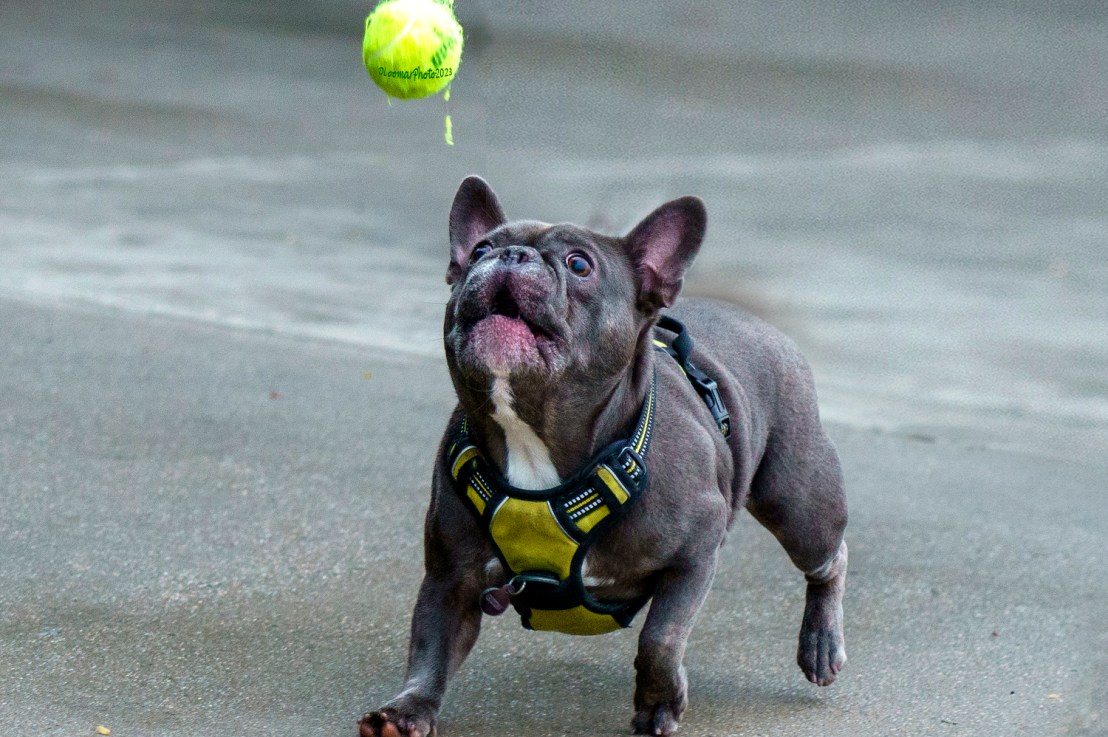
Another guest post; this time from Lorna D.
Dogs are so close to humans, as has been reported many times in many places. This guest post from Lorna explores the very latest in scientific thinking.
ooOOoo
Busting Myths: Do Dogs Really Understand Human Language?
By Lorna Dikoff
Dogs are often seen as more than pets. They are companions, loyal protectors, and, for many like me, family members.
Many people think dogs understand our words like we do. This idea has been around for a long time. But is it true?
Let’s look at what science tells us about how dogs communicate. Also, let’s think about what our bonds with dogs teach us. These bonds teach us about trust and loyalty. They also reveal a deeper form of connection.
The Science of Canine Communication
Dogs have been our companions for thousands of years. During this time, they have become very good at understanding human behavior.
In 2016, researchers in Hungary made an interesting discovery. They found that dogs process words and tone similarly to humans. Dogs use different parts of their brains to recognize words and emotional sounds.
But, this doesn’t mean dogs understand language like we do. Instead, they learn to connect certain sounds (words) with specific actions or results. For example, a dog might know that the sound of a leash means a walk is coming. They recognize patterns rather than understanding language.
So while dogs are good at figuring out what we do and say, they don’t understand language the same way humans do. They’ve learned to pick up on our signs, but in their own special way.
But does this mean they understand the full meaning behind those words? The answer is no.
Dogs are great at reading people. They watch our body language, listen to our tone, and look at our faces. Dogs pay more attention to these signs than to our words.
This doesn’t mean dogs are less smart. It shows that they excel in a different type of communication.
The Myth of Full Language Comprehension
People often think dogs understand human language. We want to believe our pets understand us like other people do. It’s a nice idea, but it’s not quite true.
Dogs can learn some words and follow orders. But they don’t understand language. They remember patterns and connect words with actions. It’s not the same as how we understand each other when we talk.
This myth doesn’t make our bond with dogs any less special. It actually shows something even more extraordinary. Dogs are great at connecting with us without words. They tune into our feelings and pick up on how we act. This makes our relationship with them pretty amazing.
Dogs don’t need words to sense when we are sad, anxious, or excited. Their ability to “read” our emotions is what makes their companionship so special.
Trust and Loyalty: The Real Language of Dogs
Dogs and humans have a special bond that is far more profound than language. It’s about trust and loyalty.
These things are at the heart of what we can learn from dogs. Dogs show us how to be honest and true. They teach us about connecting with feelings, not only with words.
Dogs don’t need a large vocabulary to express their loyalty or unconditional love. Instead, they show it through actions. They sit with us when we’re sad and guard us when we’re weak. And they always get super happy to see us, even if we’ve only been gone for a bit.
This speaks to a deeper truth that dogs teach us: communication isn’t only about words. It’s about the trust we build through consistent, reliable actions.
In a world where words can sometimes mislead or fall short, dogs show us a better way. Dogs remind us of the importance of honesty and integrity in our interactions.
The Lesson from Dogs
So, do dogs understand human language? The answer is no, at least not in the way we hope. But their understanding of us is something far more profound.
Dogs teach us that we don’t always need words to talk. They teach us that our actions often speak louder than language. Their loyalty, intuition, and emotional intelligence. makes our bond with them special, more than words can explain.
We often overcomplicate communication, but dogs keep it simple. They show up and act the same way every day.
This teaches us that real connections come from trust and love. Dogs prove that understanding each other is about more than using words.
About the Author:
Lorna is the founder of Furry Friends Advisor. She is a passionate and experienced long-time dog owner with a deep love for animals. Lorna’s commitment to understanding and caring for dogs led her to spend countless hours researching and learning about canine health, behavior, and care. When not immersed in writing for her site, she is pampering her French Bulldog name Lucy. Her mission is to give advice about dog care and nutrition accessible to everyone.
ooOOoo
Thank you, Lorna.
There is no question that a dog’s actions speak so much louder than words.
Trust and loyalty; they are the supreme qualities of dogs and it is a pity that in some quarters these qualities are not seen in humans.
 Learning from Dogs
What a fantastic article!! And so true. Dogs have intuitive and emotional intelligence, which is why we are so drawn to them. What they add to our mental health is invaluable.
LikeLiked by 1 person
And as well as providing much better mental health they are also great emotional friends (although one could argue that this is the same thing). One of our two dogs, Oliver, I truly love, and I’m sure Jean feels the same way. Both Oliver and Cleo are perfect dogs and I can’t imagine life beyond them.
LikeLiked by 1 person
I think they understand well enough… So does my Cat.. 🙂 Thank you for sharing Paul… xx
LikeLike
It amazes me, Sue, that our dogs read so much into our behaviours. Thank you for your response, Paul
LikeLiked by 1 person
You’re welcome Paul x 😊
LikeLike
We understand actions more than words. Single simple words repeated, with an end product, usually get to our knowledge quickly. For instance, “biscuit” will get Lenny running from the garden, more so if he is enticed with a smiling human. When we are having our post-garden clean down before returning to the house, our paws are wiped and when it gets to “last one” we obligingly lift the final leg for the cleaning process. It is the same if there is sadness in the house. We will instinctively look at, and then try to contact, the humans to provide them with some solace. This is often times not communicated verbally to us.
LikeLike
Oh so true! As I said previously, our two dogs are perfect. I am certain that whichever for first to go, as in Jeannie or me, the grief that will be shared with our dogs will be total. And that may not be these dogs but on the basis that we will always have a couple of dogs then my statement stands. Thank you so much for your response!
LikeLiked by 1 person
Dog Talk
With all due respect, I don’t think the author understands what language is, and how it works… The understanding between my dog and me is plenty good enough. Including 50 jokes a day, minimum… That includes growling for fake aggression and fake displeasure (followed by tail wagging). The difficult part is not the dog understanding the human, but the human understanding the dog. Dogs talk. Plenty.
An overlooked fact is that dogs say hello by touching their muzzles to one’s leg (typically)… very quickly… That’s probably often interpreted as aggression… It’s the opposite…
When I ask my dog if he wants to do something, he answers by pointing at it… or away from it, for example. Pointing means yes, pointing away means no. It’s quick and maybe most dog owners don’t get it… Also I never give my dog treats: our communications are on a non food basis 98% of the day… I don’t treat my dog as a prostitute, but as my collaborator…So my dog’s reward for communication is… communication! Thus we communicate plenty… But it’s deaf and mute language much of the time, he understands hand gestures extremely well… And no leash, of course…
LikeLike
You and I agree albeit the touching of your dog’s muzzle to your leg is not something our dogs do, and that is their choice. But they touch us elsewhere. In Cleopatra’s case she touches me a little higher usually between my upper thighs. And Oliver loves having his tummy rubbed. Dogs understand hand gestures widely. Yes dogs are masters of communication and Jean and I are careful to interpret their needs 99% of the time.
Thank you for your reply!
LikeLike
The touching of the nose can be done pretty much anywhere, and it’s extremely fast (fraction of a second). It’s something all friendly dogs who want to say hello do. It’s the equivalent of a handshake, they have no other possibilities… Lifting the frontpaw is also practiced, but it’s no way to say hi: my beagle-terrier claws are weapons and earth diggers…
Anyway I had not noticed it until my present dog. He does it like 50 times a day, due to our complicated relationship, with lots of jokes… So it’s to conclude the joke, saying that was a good one… Then I notice dogs I don’t know at all do it to exhibit they mean well (it can be easily mistinterpreted as an aggreession)… Yes the rubbing… When mine wants to be rubbed, he mimimics the rubbing on the part to be rubbed, with its paws, and looks at me intently…
Point it all of this is language… When I ask Taz if he wants to do something, pointing at it, or the door, whatever, means yes…
LikeLiked by 1 person
More interesting observations. The more one becomes closer to a dog the more they share what can be quite a sophisticated relationship. They are beautiful animals.
LikeLike