The idea that humanity will not prevent the approaching disaster is beyond belief!
One of the results of all you great people signing up to follow Learning from Dogs is that it encourages me to share things that strike me as so, so important.
Another of the results in there being, as of today, 3,349 following this place, is that I get the sense of what many of you good people also feel is important. Ergo, it is clear to me, clear beyond doubt, that caring and loving a dog or two makes you a person who cares and loves passionately this beautiful planet that is our home.
The emotion that is spilling out of me via these words to you is a result of having just read an essay published recently on The Conversation site and shared with you today.
Directly, it has nothing to do with our dear dogs. Yet, in a way, it does!
ooOOoo
7.5 billion and counting: How many humans can the Earth support?
By Andrew D. Hwang, Associate Professor of Mathematics, College of the Holy Cross, July 9th 2018.
Humans are the most populous large mammal on Earth today, and probably in all of geological history. This World Population Day, humans number in the vicinity of 7.5 to 7.6 billion individuals.
Can the Earth support this many people indefinitely? What will happen if we do nothing to manage future population growth and total resource use? These complex questions are ecological, political, ethical – and urgent. Simple mathematics shows why, shedding light on our species’ ecological footprint.
The mathematics of population growth
In an environment with unlimited natural resources, population size grows exponentially. One characteristic feature of exponential growth is the time a population takes to double in size.
Exponential growth of world population
It took 127 years for the world population to double from one billion to two. By contrast, it took only 47 years, from 1927 to 1974, to double from two billion to four. Since 1960, world population has grown by about one billion every 13 years. Each point represents an additional one billion people.
Exponential growth tends to start slowly, sneaking up before ballooning in just a few doublings.
To illustrate, suppose Jeff Bezos agreed to give you one penny on Jan. 1, 2019, two pennies on Feb. 1, four on March 1, and so forth, with the payment doubling each month. How long would his $100 billion fortune uphold the contract? Take a moment to ponder and guess.
After one year, or 12 payments, your total contract receipts come to US$40.95, equivalent to a night at the movies. After two years, $167,772.15 – substantial, but paltry to a billionaire. After three years, $687,194,767.35, or about one week of Bezos’ 2017 income.
The 43rd payment, on July 1, 2022, just short of $88 billion and equal to all the preceding payments together (plus one penny), breaks the bank.
Real population growth
For real populations, doubling time is not constant. Humans reached 1 billion around 1800, a doubling time of about 300 years; 2 billion in 1927, a doubling time of 127 years; and 4 billion in 1974, a doubling time of 47 years.
On the other hand, world numbers are projected to reach 8 billion around 2023, a doubling time of 49 years, and barring the unforeseen, expected to level off around 10 to 12 billion by 2100.
This anticipated leveling off signals a harsh biological reality: Human population is being curtailed by the Earth’s carrying capacity, the population at which premature death by starvation and disease balances the birth rate.
World population projections
In 2020, the UN predicts that there will be 7,795,482 people worldwide.
Humans are consuming and polluting resources – aquifers and ice caps, fertile soil, forests, fisheries and oceans – accumulated over geological time, tens of thousands of years, or longer.
According to the Worldwatch Institute, an environmental think tank, the Earth has 1.9 hectares of land per person for growing food and textiles for clothing, supplying wood and absorbing waste. The average American uses about 9.7 hectares.
These data alone suggest the Earth can support at most one-fifth of the present population, 1.5 billion people, at an American standard of living.
A man works recycling plastic bottles outside Hanoi, Vietnam. REUTERS/Kham
Water is vital. Biologically, an adult human needs less than 1 gallon of water daily. In 2010, the U.S. used 355 billion gallons of freshwater, over 1,000 gallons (4,000 liters) per person per day. Half was used to generate electricity, one-third for irrigation, and roughly one-tenth for household use: flushing toilets, washing clothes and dishes, and watering lawns.
If 7.5 billion people consumed water at American levels, world usage would top 10,000 cubic kilometers per year. Total world supply – freshwater lakes and rivers – is about 91,000 cubic kilometers.
World Health Organization figures show 2.1 billion people lack ready access to safe drinking water, and 4.5 billion lack managed sanitation. Even in industrialized countries, water sources can be contaminated with pathogens, fertilizer and insecticide runoff, heavy metals and fracking effluent.
Freedom to choose
Though the detailed future of the human species is impossible to predict, basic facts are certain. Water and food are immediate human necessities. Doubling food production would defer the problems of present-day birth rates by at most a few decades. The Earth supports industrialized standards of living only because we are drawing down the “savings account” of non-renewable resources, including fertile topsoil, drinkable water, forests, fisheries and petroleum.
The drive to reproduce is among the strongest desires, both for couples and for societies. How will humans reshape one of our most cherished expectations – “Be fruitful and multiply” – in the span of one generation? What will happen if present-day birth rates continue?
Population stays constant when couples have about two children who survive to reproductive age. In some parts of the developing world today, couples average three to six children.
We cannot wish natural resources into existence. Couples, however, have the freedom to choose how many children to have. Improvements in women’s rights, education and self-determination generally lead to lower birth rates.
As a mathematician, I believe reducing birth rates substantially is our best prospect for raising global standards of living. As a citizen, I believe nudging human behavior, by encouraging smaller families, is our most humane hope.
ooOOoo
This essay from Professor Hwang is one of those articles that one frequently sees online that comes across as really interesting but, in the end, only gets a skim read; at best.
So if you didn’t fully comprehend what the good Professor included then ‘Stop‘ and go back and read it all very carefully.
Don’t just be alarmed at Professor Hwang writing:
This anticipated leveling off signals a harsh biological reality: Human population is being curtailed by the Earth’s carrying capacity, the population at which premature death by starvation and disease balances the birth rate.
Or:
Though the detailed future of the human species is impossible to predict, basic facts are certain. Water and food are immediate human necessities. Doubling food production would defer the problems of present-day birth rates by at most a few decades. The Earth supports industrialized standards of living only because we are drawing down the “savings account” of non-renewable resources, including fertile topsoil, drinkable water, forests, fisheries and petroleum.
Be concerned that each and every one of us, as in you and me, can only prevent the train crash by making a change in how we live: Today!
Otherwise ….
In so many ways we are such a clever and inventive race, capable of exploring the farthest reaches of outer space and the innermost aspects of quantum mechanics. Surely we must learn to live sustainably on beautiful Planet Earth!
Simply because it offers some very interesting insights into the history of canines in The Americas.
Enjoy!
ooOOoo
European Dogs Devastated Indigenous American Pup Populations
Disease, cultural change wiped out pre-contact populations, leaving no trace of ancient dogs’ DNA in modern counterparts
A dog buried in Western Illinois 10,000 years ago is one of the oldest dogs known in the Americas, and the oldest dog burial in the world. These native American dogs were almost entirely wiped out when European colonists arrived. (Del Baston, courtesy of the Center for American Archeology)
The first humans to populate the Americas arrived from Siberia via the Bering land bridge around 16,000 years ago. Man’s best friend, the domesticated dog, didn’t arrive for another 6,000 years or so, crossing over just in time to avoid the land bridge’s collapse, but archaeological evidence suggests that the two species lived in harmony for thousands of years—at least until 1492, the year Columbus sailed the ocean blue.
According to a study published in Science on Thursday, “pre-contact” American dogs possessed a unique genetic signature derived not from the North American wolf, as previously thought, but from domesticated Siberian ancestors. Today, that singular genome has all but disappeared, eradicated by the 15th-century arrival of European settlers and their canine companions.
National Geographic’s Maya Wei-Haas explains that European dogs, like their human owners, probably carried diseases that pre-contact dogs were unequipped to fend off. The colonists preferred European breeds and discouraged their pets from mating with the native dogs, which study co-author Angela Perri, a zooarchaeologist at Durham University, says were viewed as “wild” and “vicious.”
“This study demonstrates that the history of humans is mirrored in our domestic animals,” Greger Larson, director of the Palaeo-BARN at Oxford and senior author of the study, said in a statement. “People in Europe and the Americas were genetically distinct, and so were their dogs. And just as indigenous people in the Americas were displaced by European colonists, the same is true of their dogs.”
To trace the story of these pre-contact dogs, researchers studied DNA found in the mitochondria of 71 North American and Siberian dog bones. The remains, which date from roughly 10,000 to 1,000 years ago, included those of the Koster dogs, a group of four domesticated canines discovered at a burial site in western Illinois during the 1970s. (A second study, newly published in pre-print server Biorxiv, further discusses these early dogs.) As Science’s David Grimm notes, the Koster pups lived about 10,000 years ago, making them the oldest known dogs in the Americas. Perri, referencing the animals’ small, slender stature, tells Grimm that “it wouldn’t be surprising if they were all used as hunting dogs.”
DNA analysis allowed the scientists to identify pre-contact dogs’ closest relatives: a group of dogs native to Zhokhov Island, a frigid Arctic site situated about 300 miles north of the Russian mainland. The Atlantic’s Ed Yong writes that these dogs were the first to be bred for a specific purpose, namely pulling their humans’ sleds.
In addition to shedding light on the first American dogs’ origins, the study offers insights on pre-contact dogs’ connections—or rather, lack of connections—with modern dogs. Researchers compared the 71 ancient genomes with DNA from more than 5,000 modern dogs, including breeds like chihuahuas and Carolina dogs, which are commonly thought to be descended from indigenous populations. The highest level of pre-contact DNA conclusively found in any of the modern dogs was four percent, a negligible result, the New York Times’ James Gorman reports.
The team’s findings suggest that modern American dogs are descended solely from Eurasian breeds introduced by European settlers. Perri tells Wei-Haas that the scientists expected to find evidence of interbreeding between the pre-contact pups and the new arrivals. Instead, they realized that the native dogs had virtually vanished.
“It is fascinating that a population of dogs that inhabited many parts of the Americas for thousands of years, and that was an integral part of so many Native American cultures, could have disappeared so rapidly,” Laurent Frantz, study co-author and evolutionary geneticist at Queen Mary University of London, said in a statement.
Oddly enough, scientists found that the closest surviving trace of pre-contact dogs’ DNA is found in a sexually transmitted canine cancer. The Los Angeles Times’ Deborah Netburn writes that the disease, known as canine transmissible venereal tumor, stems from the genetic mutation of a single North American dog that lived up to 8,225 years ago. The tumor cells spread through mating and carry a copy of that original DNA, allowing researchers to paint a clear picture of the “founding dog,” or patient zero.
Elaine Ostrander, chief of the cancer genetics and comparative genomics branch at the National Human Genome Research Institute, tells Wei-Haas, “It’s the world’s oldest continuously propagated cell line, which is really, really remarkable.”
We have to keep banging this drum on behalf of our wildlife!
OK! This new essay from George Monbiot applies specifically to the United Kingdom. But there’s no question in my mind that awareness of what is going in the U.K. will be important for readers in many other countries.
ooOOoo
Incompetence By Design
As state bodies are dismantled, corporations are freed to rip the living world apart
By George Monbiot, published in the Guardian 4th July 2018
It feels like the collapse of the administrative state – and this is before Brexit. One government agency after another is losing its budget, its power and its expertise. The result, for corporations and the very rich, is freedom from the restraint of law, freedom from the decencies they owe to other people, freedom from democracy. The public protections that constrain their behaviour are being dismantled.
An example is the cascading decline in the protection of wildlife and environmental quality. The bodies charged with defending the living world have been so enfeebled that they now scarcely exist as independent entities. Natural England, for example, has been reduced to a nodding dog in the government’s rear window.
Its collapse as an autonomous agency is illuminated by the case that will be heard next week in the High Court, where two ecologists, Tom Langton and Dominic Woodfield, are challenging its facilitation of the badger cull. That the cull is a senseless waste of life and money is well established, but this is only one of the issues being tested. Another is that Natural England, which is supposed to assess whether the shooting of badgers causes wider environmental harm, appears incapable of discharging its duties.
As badger killing spreads across England, it intrudes upon ever more wildlife sites, some of which protect animals that are highly sensitive to disturbance. Natural England is supposed to determine whether allowing hunters to move through these places at night and fire their guns has a detrimental effect on other wildlife, and what the impact of removing badgers from these ecosystems might be. The claimants allege that it has approved the shooting without meaningful assessments.
Some of its decisions, they maintain, are farcical. In Dorset, for example, Natural England assumed that overwintering hen harriers and merlins use only one out of all the sites that have been designated for their protection, and never stray from it. It makes the same assumption about the Bewick’s swans that winter around the Severn estuary. That birds fly, enabling them to move from one site to another, appears to have been overlooked.
Part of the problem, the claimants argue, is that staff with specialist knowledge have been prevented from making decisions. The location of the badger cull zones is such a closely guarded secret that Natural England’s local staff are not allowed to see the boundaries. As a result, they can make no meaningful assessment of what the impact might be. Instead, the decisions are made in distant offices by people who have not visited the sites.
I wanted to ask Natural England about this, but its external communications have been shut down by the government: any questions now have to be addressed to Michael Gove’s environment department, Defra. Defra told me “staff carrying out this work have all the necessary information. It would be inappropriate to comment on an ongoing legal matter.” How can Natural England be an independent body when the government it is supposed to monitor speaks on its behalf?
Another example of how far Natural England has fallen is the set of deals it has struck with grouse moor owners, allowing them to burn protected habitats, kill protected species and build roads across sites that are supposed to be set aside for wildlife. For several years, the redoubtable conservationist Mark Avery has been fighting these decisions. This May, Natural England conceded, in effect, that he was right. The agency that is meant to protect our wild places has been colluding in their destruction.
A correspondent from within Natural England tells me its staff are so demoralised that it has almost ceased to function. “Enforcement, for example, is close to non-existent … Gove seems to have somehow both raised the profile of environmental issues whilst simultaneously stripping the resources … it has never been as bad as this.”
In March, the House of Lords reported that Natural England’s budget has been cut by 44% since it was founded in 2006. The cuts have crippled both its independence and its ability to discharge its duties. It has failed to arrest the catastrophic decline in our wildlife, failed to resist the housebuilders trashing rare habitats and abandoned its regulatory powers in favour of useless voluntary agreements. As if in response, the government cut the agency’s budget by a further 14%.
Dominic Woodfield, one of the claimants in the court case next week, argues that Natural England has been “on death row” since it applied the law at Lodge Hill in Kent, where the Ministry of Defence was hoping to sell Britain’s best nightingale habitat to a housing developer. Natural England had no legal choice but to designate this land as a site of scientific interest, hampering the government’s plans. As the government slashed its budget and curtailed its independence, the agency’s disastrous response has been to try to save itself through appeasement. But all this has done is to alienate its defenders, reduce its relevance and hasten its decline. “There are still good people in Natural England. But they’re broken. They talk very slowly because they’re thinking very carefully about everything they say.”
If this is happening before we leave the European Union, I can only imagine where we will stand without the protection of European law. The environmental watchdog that, according to Michael Gove, will fill the role now played by the European Commission, will know, like Natural England, that its budget is provided by the government and can be cut at the government’s discretion. What is to prevent it from being nobbled as other agencies have been?
Already, the deliberate mutilating of the administrative state, delivering incompetence by design, has released landowners, housebuilders and assorted polluters from regulatory restraint. Only through European law have government agencies been forced to discharge their duties. Brexit strips away this defence. And if, as some propose, it paves the way for One Nation Under Gove, we should, the evidence so far suggests, be even more alarmed.
But some of us are now mobilising to turn the great enthusiasm for wildlife and natural beauty in this country into political action, and to fight the dismantling of the laws that protect our precious wild places. Watch this space.
So many times this old blog of mine seems like one great family! Which is why I am sharing an exchange between Lisa and me.
For last Friday in came the following email from Lisa (republished with Lisa’s permission.):
Hi Paul,
I still receive your blog every day and love it! I contributed a couple of blogs to you about our Sabrina which you published on Learning from Dogs.
I have a question for you and perhaps your community.
A picture of Sabrina from an earlier guest post written by Lisa.
Sabrina is experiencing some anxiety at breakfast time. She begins whimpering and crawling on the floor. It happens a few times a week. She usually doesn’t eat her breakfast right away after these episodes. Her behavior is normal the rest of the day.
I’ve told our vet about it and she thinks it’s some kind of anxiety and is willing to prescribe medication. I’d rather not medicate her all the time as this episode happens infrequently.
We may have some blood test taken as our next approach.
Have you ever experienced this kind of thing with one of your dogs or heard of it happening with someone else’s dog?
Also, another question I’ve been meaning to ask you writer-to-writer. I recall you telling me you are from a small town near Cornwall or Devon? I’d love to find some type of writer’s residency in that area and wondering if you know any association or grant available? It’s difficult for me to learn of residency opportunities in the UK being in the USA. No big deal, just thought I’d ask you.
Hope all is well with you and glad to hear you and Jean are going vegan! I’m a former vegan/vegetarian. We are eating more vegetarian these days and I especially love to COOK vegan. I am going to look into the Halo Garden of Vegan dog food too. Great tip.
Thank you!!
Best,
Lisa.
I discussed this with Jean and then sent the following reply to Lisa:
Lisa,
Jean is recommending changing Sabrina’s routine. Such as feeding her in a different place. Plus, trying a proprietary stress relief medicine. We used Bach Rescue Remedy, a homeopathic formula, for our dogs when we moved from Arizona to Oregon back in 2012.
Keep us in the loop with this!
Best wishes,
Paul
Back came Lisa:
Hi Paul!
Thank you to you and Jean for your two emails. Dennis and I were just talking about Sabrina’s behavior and it occurred to me it could be separation anxiety. Dennis gets up at 4:30, feeds her, gets ready for work and is out of the house by 5:30. Sabrina favors him and I’m thinking as much as she loves to eat, it means he’s about to leave and be gone from her all day.
I will pick definitely pick up the Bach’s Rescue Remedy and have Dennis feed her in a different area of the house.
Oh, yes, and please, if interested make the subject of Sabrina’s behavior a post and yes, yes, yes on soliciting for a writer’s retreat in the UK for me 🙂
Thanks a million!
Best,
Lisa.
To which I then responded, thus:
I think you may have solved Sabrina’s behaviour issue. An easy thing to try out is to ask Dennis not to feed Sabrina at that time and you to feed her instead. Would take a few days for her to get accustomed to the change but within a week you would know if this was the fix!
And, thanks for the permission. It will be coming out next week.
So, good people, any other ideas to add to assist Lisa in settling down Sabrina in the morning? And what about that writer’s retreat in the UK?
Any thoughts?
Finally, I am going to be pretty distracted these next 48 hours so apologies if I am not very attentive to your responses. Plus there will be no post tomorrow.

 [Ed: Text taken from a chart displayed in the article.]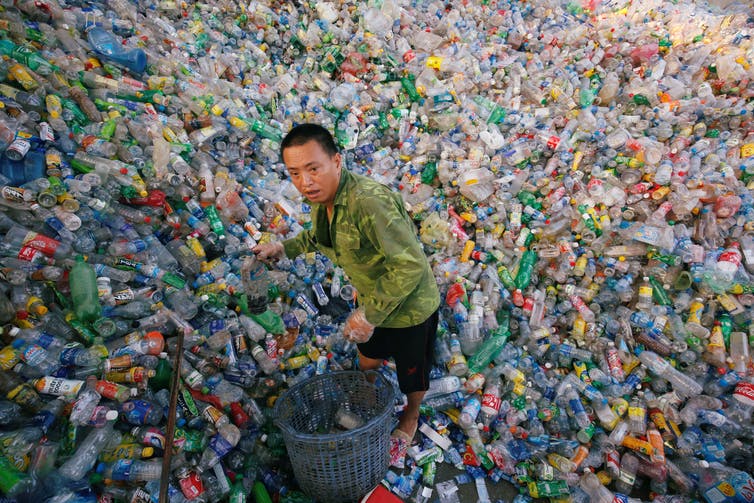


 Learning from Dogs