Tried hard to avoid a grim reality post, but failed!
As last week, I thought that wall-to-wall book chapters were a bit much and that Wednesdays should be a break. Ideally, a light-hearted break. But failed! Sorry!
For a long time, I have followed George Monbiot’s writings. Like a number of other correspondents that come to mind, Mr. Monbiot writes with a clarity and intellect that takes some beating. Rather tentatively I wrote to him asking if I might republish some of his essays, including those that are published in the UK newspaper, The Guardian. To my great pleasure, George replied that so long as his essays did not appear in print then permission was given.
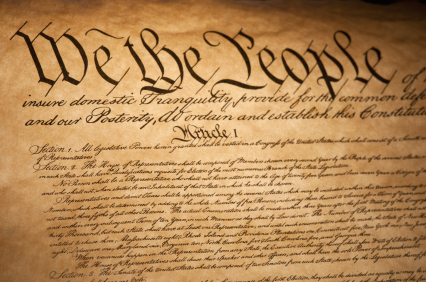
Before going on, it may do no harm to remind me and so many millions of others, of the opening preamble of the US Constitution:
We the People of the United States, in Order to form a more perfect Union, establish Justice, insure domestic Tranquility, provide for the common defence, promote the general Welfare, and secure the Blessings of Liberty to ourselves and our Posterity, do ordain and establish this Constitution for the United States of America.
Whatever the country, the concept of ‘by the people, of the people, for the people’ takes one hell of a lot of beating.
So to the essay. I was struck by a recent essay from George Monbiot that seemed to touch on something that more and more ordinary folk sense; that many so-called democratic political systems are not functioning in the interests of the people. Thus with no further ado, here it is.
oooOOOooo
Why Politics Fails
November 11, 2013
Nothing will change until we confront the real sources of power.
By George Monbiot, published in the Guardian 12th November 2013
It’s the reason for the collapse of democratic choice. It’s the source of our growing disillusionment with politics. It’s the great unmentionable. Corporate power. The media will scarcely whisper its name. It is howlingly absent from parliamentary debates. Until we name it and confront it, politics is a waste of time.
The political role of corporations is generally interpreted as that of lobbyists, seeking to influence government policy. In reality they belong on the inside. They are part of the nexus of power that creates policy. They face no significant resistance, from either government or opposition, as their interests have now been woven into the fabric of all three main parties.
Most of the scandals that leave people in despair about politics arise from this source. On Monday, for example, the Guardian revealed that the government’s subsidy system for gas-burning power stations is being designed by an executive from the company ESB, who has been seconded into the energy department(1). What does ESB do? Oh, it builds gas-burning power stations.
On the same day we learnt that a government minister, Nick Boles, has privately assured the gambling company Ladbrokes that it needn’t worry about attempts by local authorities to stop the spread of betting shops(2). His new law will prevent councils from taking action.
Last week we discovered that G4S’s contract to run immigration removal centres will be expanded, even though all further business with the state was supposed to be frozen while allegations of fraud are investigated(3). Every week we learn that systemic failures on the part of government contractors are no barrier to obtaining further work, that the promise of efficiency, improvements and value for money delivered by outsourcing and privatisation have failed to materialise(4,5,6). The monitoring which was meant to keep these companies honest is haphazard(7), the penalties almost non-existent(8), the rewards stupendous, dizzying, corrupting(9,10). Yet none of this deters the government. Since 2008, the outsourcing of public services has doubled, to £20bn. It is due to rise to £100bn by 2015(11).
This policy becomes explicable only when you recognise where power really lies. The role of the self-hating state is to deliver itself to big business. In doing so it creates a tollbooth economy: a system of corporate turnpikes, operated by companies with effective monopolies.
It’s hardly surprising that the lobbying bill – now stalled by the Lords – offered almost no checks on the power of corporate lobbyists, while hogtying the charities who criticise them. But it’s not just that ministers are not discouraged from hobnobbing with corporate executives: they are now obliged to do so.
Thanks to an initiative by Lord Green, large companies have ministerial “buddies”, who have to meet them when the companies request it. There were 698 of these meetings during the first 18 months of the scheme, called by corporations these ministers are supposed be regulating(12). Lord Green, by the way, is currently a government trade minister. Before that he was chairman of HSBC, presiding over the bank while it laundered vast amounts of money stashed by Mexican drugs barons(13). Ministers, lobbyists – can you tell them apart?
That the words corporate power seldom feature in the corporate press is not altogether surprising. It’s more disturbing to see those parts of the media that are not owned by Rupert Murdoch or Lord Rothermere acting as if they are.
For example, for five days every week the BBC’s Today programme starts with a business report in which only insiders are interviewed. They are treated with a deference otherwise reserved for God on Thought for the Day. There’s even a slot called Friday Boss, in which the programme’s usual rules of engagement are set aside and its reporters grovel before the corporate idol. Imagine the outcry if Today had a segment called Friday Trade Unionist or Friday Corporate Critic.
This, in my view, is a much graver breach of BBC guidelines than giving unchallenged airtime to one political party but not others, as the bosses are the people who possess real power: those, in other words, whom the BBC has the greatest duty to accost. Research conducted by the Cardiff school of journalism shows that business representatives now receive 11% of airtime on the BBC’s 6 o’clock news (this has risen from 7% in 2007), while trade unionists receive 0.6% (which has fallen from 1.4%)(14). Balance? Impartiality? The BBC puts a match to its principles every day.
And where, beyond the Green Party, Plaid Cymru, a few ageing Labour backbenchers, is the political resistance? After the article I wrote last week, about the grave threat the transatlantic trade and investment partnership presents to parliamentary sovereignty and democratic choice(15), several correspondents asked me what response there has been from the Labour party. It’s easy to answer: nothing.
Blair and Brown purged the party of any residue of opposition to corporations and the people who run them. That’s what New Labour was all about. Now opposition MPs stare mutely as their powers are given away to a system of offshore arbitration panels run by corporate lawyers.
Since Blair’s pogroms, parliament operates much as Congress in the United States does: the lefthand glove puppet argues with the righthand glove puppet, but neither side will turn around to face the corporate capital that controls almost all our politics. This is why the assertion that parliamentary democracy has been reduced to a self-important farce has resonated so widely over the past fortnight.
So I don’t blame people for giving up on politics. I haven’t given up yet, but I find it ever harder to explain why. When a state-corporate nexus of power has bypassed democracy and made a mockery of the voting process, when an unreformed political funding system ensures that parties can be bought and sold, when politicians of the three main parties stand and watch as public services are divvied up by a grubby cabal of privateers, what is left of this system that inspires us to participate?
References:
1. http://www.theguardian.com/environment/2013/nov/10/gas-industry-employee-energy-policy
2. http://www.theguardian.com/society/2013/nov/10/planning-law-changes-help-bookmakers-minister
3. http://www.theguardian.com/business/2013/nov/08/g4s-expand-contract-freeze-government-work
4. http://www.theguardian.com/commentisfree/2013/aug/05/privatisation-public-service-users-bill
6. http://www.theguardian.com/society/2013/jul/22/disabled-benefits-claimants-test-atos
7. http://www.theguardian.com/society/2013/nov/07/government-outsourcing-problems-g4s-serco-a4e
9. http://www.theguardian.com/commentisfree/2013/jan/09/financial-transparency-privatised-nhs
10. http://www.theguardian.com/commentisfree/2013/nov/04/rail-privatisation-train-operators-profit
11. http://www.theguardian.com/commentisfree/2013/feb/07/public-sector-outsourcing-shadow-state
12. http://www.theguardian.com/politics/2013/jan/18/buddy-scheme-multinationals-access-ministers
13. http://www.theguardian.com/business/2012/jul/24/lord-green-hsbc-scandal
14. http://downloads.bbc.co.uk/bbctrust/assets/files/pdf/our_work/breadth_opinion/content_analysis.pdf
15. http://www.theguardian.com/commentisfree/2013/nov/04/us-trade-deal-full-frontal-assault-on-democracy
oooOOOooo
Nothing that I can add to Mr. Monbiot’s essay, that’s for sure.
 Learning from Dogs
I Iike the voices of reason Why do we bother to vote? and what voice do we hold? and yet I have not given up on politics either.. because we need a system in place.. but one which is not controlled by the BIG BOYS… which has to be said throughout each country rule the roost on what goes.. Sad, but true..
LikeLike
Sue, there is hope. Hope that the growing awareness for a return to true representative government will result in political action.
LikeLike
Government by taxation, or representation, is not democracy.
LikeLike
Corporate power has long been fustigated (see Teddy Roosevelt). So has capitalism (see Marx). Or even property (Proudhon). But these efforts were unsuccessful, because they are the wrong targets: corporate power, property and capitalism are OK… within bounds to be determined by We The People.
The real problem is that representative democracy ought to be discarded. And replaced, in first order, by a Swiss style direct democracy (that means with blocking first the enormous influence of giant money as in California, were referenda get bought).
Another target ought to be the fractional reserve system, which had been reformed thoroughly by the Banking Act of 1933 (demolished under Clinton). That sounds abstract, but that’s how money is generated: privately. Roosevelt regulated it, Clinton gave it back to the greedy bastards without regulation.
Privatizing everything neglects one factor that has destroyed civilization again and again: the plutocratic phenomenon. It’s now getting fully in gear.
The Gates of Hell have opened again:
http://patriceayme.wordpress.com/2013/11/18/gates-of-hell/
LikeLike
Thanks Patrice. I thoroughly recommend all LfD readers to go across to Patrice’s essay.
LikeLike
Thanks Paul!
LikeLike
The political system needs an overhaul, since corrupted parties and politicians are the byproducts of such a failed system
LikeLike
Yes, of course. Rather obvious – once it’s been spelt out. What are your thoughts as to the Swiss style?
LikeLike
Swiss style is an improvement, and worth considering for many nations.
LikeLike
It’s more than an overhaul that is needed. It’s a change of system. What we have, the ancient Greeks would definitively have NOT called democracy. I wrote plenty on this. First a direct vote is necessary. Instead of taxation by representation.
There is a very good example under our nose, with the best economy in Europe: Switzerland (Norway is richer bcs fossil fuels; Luxembourg bcs plutocratic crime; whereas Switzerland is a genuine resource poor intellectual powerhouse).
LikeLike
Presumably in these of high-speed digital communications, the sort of direct voting you have mind for the USA would be entirely feasible?
LikeLike
That’s feasible (see recent French elections). However, the Swiss are very conservative, and vote the old fashion way. Next votations (with possible modifications of the constitution), November 24, 2013: next Sunday.
By contrast, I suggested to a very wealthy senior American architect that the Constitution of the USA had to be changed, I thought he was going to throw me a wine bottle in the face, and he told me I ought to change my tune, if I wanted to have friends in the USA.
LikeLike
Changes to the Constitution? That seems like a topic for a post? Your place or mine?
LikeLike
Please start with yours, you are better grounded. Then I take flight (hahaha). Feel free to use my writing. The “votation” Sunday is interesting, they even have a proposed change (from the socialists) to create a ceiling for income (!!!) Once ahead (!!!!), it will fail.
LikeLike
OK, on the list for next month – another 15,000 words to write before the 30th November!
LikeLike
Amusingly, my Neanderthal essay learned from dogs…
LikeLike
I’m counting on revelations in that essay of yours for me to steal for the book!
LikeLike