It’s not just the climate change that is unsustainable!
Early in yesterday’s post I wrote:
My post last Monday, The lure of patterns, appears to have resonated far and wide. In the sense of many echoes reinforcing the perilous nature of our present times and the desperately uncertain decades ahead. Tomorrow I shall be writing specifically about those echoes.
Those echoes, as I chose to call them, were kicked off by a recent item on the blog Economic Populist. The item was called Maps of Economic Disaster and had some sickening information. Such as:
Today 15% of Americans live in poverty. Below is a county map showing the previous year’s poverty rate and we see once again the South has high concentrations.
People are living on the edge. People living in liquid asset poverty is a whopping 43.9%. This means 132.1 million people lack the savings to cover basic expenses for three months if they lose their job, have a medical emergency or some other sort of crisis. The below map** breaks down that percentage state by state. Pretty much half the country is living on the edge, paycheck to paycheck.

** I’ve not included that map but it may be seen here. However, I did want to republish the closing map.
Finally, the next map shows how income inequality has grown in United States over time. The gini index is a measure of income inequality, the higher then index gets, the worse income inequality is. If there is ever a map which shows the the destruction of the U.S. middle class, it is this one.
[N.B. The following map is an automated GIF so just left-click on it to see the sequence. That sequence is essentially a coloured graphical image of each year, from 1977 through to 2012. Don’t struggle with it. All you have to note are the changing colours. More colours towards the green end of the spectrum indicate a worsening gini index, i.e. a worsening measure of income inequality. ]

America is clearly in dire straights and the above maps it all out. Why then has this government, this Congress not put wages and jobs as jobs #1 is a good question. Why America hasn’t outright revolted, demanding this government do so is a better one.
oooo
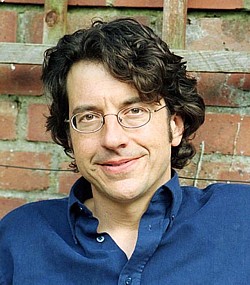
Let me now turn to George Monbiot, a British writer known for his environmental and political activism. WikiPedia describes Mr. Monbiot, in part, as:
He lives in Machynlleth, Wales, writes a weekly column for The Guardian, and is the author of a number of books, including Captive State: The Corporate Takeover of Britain (2000) and Bring on the Apocalypse: Six Arguments for Global Justice (2008). He is the founder of The Land is Ours, a peaceful campaign for the right of access to the countryside and its resources in the United Kingdom.
On his own website, he offers us this:
Here are some of the things I love: my family and friends, salt marshes, arguments, chalk streams, Russian literature, kayaking among dolphins, diversity of all kinds, rockpools, heritage apples, woods, fishing, swimming in the sea, gazpacho, ponds and ditches, growing vegetables, insects, pruning, forgotten corners, fossils, goldfinches, etymology, Bill Hicks, ruins, Shakespeare, landscape history, palaeoecology, Gavin and Stacey and Father Ted.
Here are some of the things I try to fight: undemocratic power, corruption, deception of the public, environmental destruction, injustice, inequality and the misallocation of resources, waste, denial, the libertarianism which grants freedom to the powerful at the expense of the powerless, undisclosed interests, complacency.
Here is what I fear: other people’s cowardice.
There was a recent essay concerning the UK’s energy strategy posted by George Monbiot published in the Guardian on the 22nd October. It is also on his website.
The essay opens, thus [my emphasis]:
Fiscal Meltdown
The government is betting the farm on a nuclear technology that might soon look as hip as the traction engine.
Seven years ago, I collected all the available cost estimates for nuclear power. The US Nuclear Energy Institute suggested a penny a kilowatt hour. The Royal Academy of Engineering confidently predicted 2.3p. The British government announced that in 2020 the price would be between 3 and 4p. The New Economics Foundation guessed that it could be anywhere between 3.4 and 8.3p. 8.3 pence was so far beyond what anyone else forecast that I treated it as scarcely credible. It falls a penny short of the price now agreed by the British government.
Mr. Monbiot’s essay concludes:
An estimate endorsed by the chief scientific adviser at the government’s energy department suggests that, if integral fast reactors were deployed, the UK’s stockpile of nuclear waste could be used to generate enough low-carbon energy to meet all UK demand for 500 years. These reactors would keep recycling the waste until hardly any remained: solving three huge problems – energy supply, nuclear waste and climate change – at once. Thorium reactors use an element that’s already extracted in large quantities as an unwanted by-product of other mining industries. They recycle their own waste, leaving almost nothing behind.
To build a plant at Hinkley Point which will still require uranium mining and still produce nuclear waste in 2063 is to commit to 20th-Century technologies through most of the 21st. In 2011 GE Hitachi offered to build a fast reactor to start generating electricity from waste plutonium and (unlike the Hinkley developers) to carry the cost if the project failed. I phoned the government on Monday morning to ask what happened to this proposal. I’m still waiting for an answer.
That global race the prime minister keeps talking about? He plainly intends to lose.
NB. I edited out the links to a comprehensive set of references to make the essay easier to read off the screen. But all the facts reported by Mr. Monbiot may be seen here.
oooo
Just two more or less random pieces of writing that have graced my ‘in-box’. Nothing scientific about my selection; just the sense that they are representative of the reams and reams of articles, essays and reports coming in on an almost daily basis from right across the world showing an ever-increasing credibility gap between the peoples of many nations and those who purport to serve those peoples in their respective Governments.
Frankly, I can’t even imagine how or when we will ‘transition’ out of this present period. But one thing I am sure about. This schism between us, the people, and those who govern us is unsustainable!
Fascinating times! (I think!)
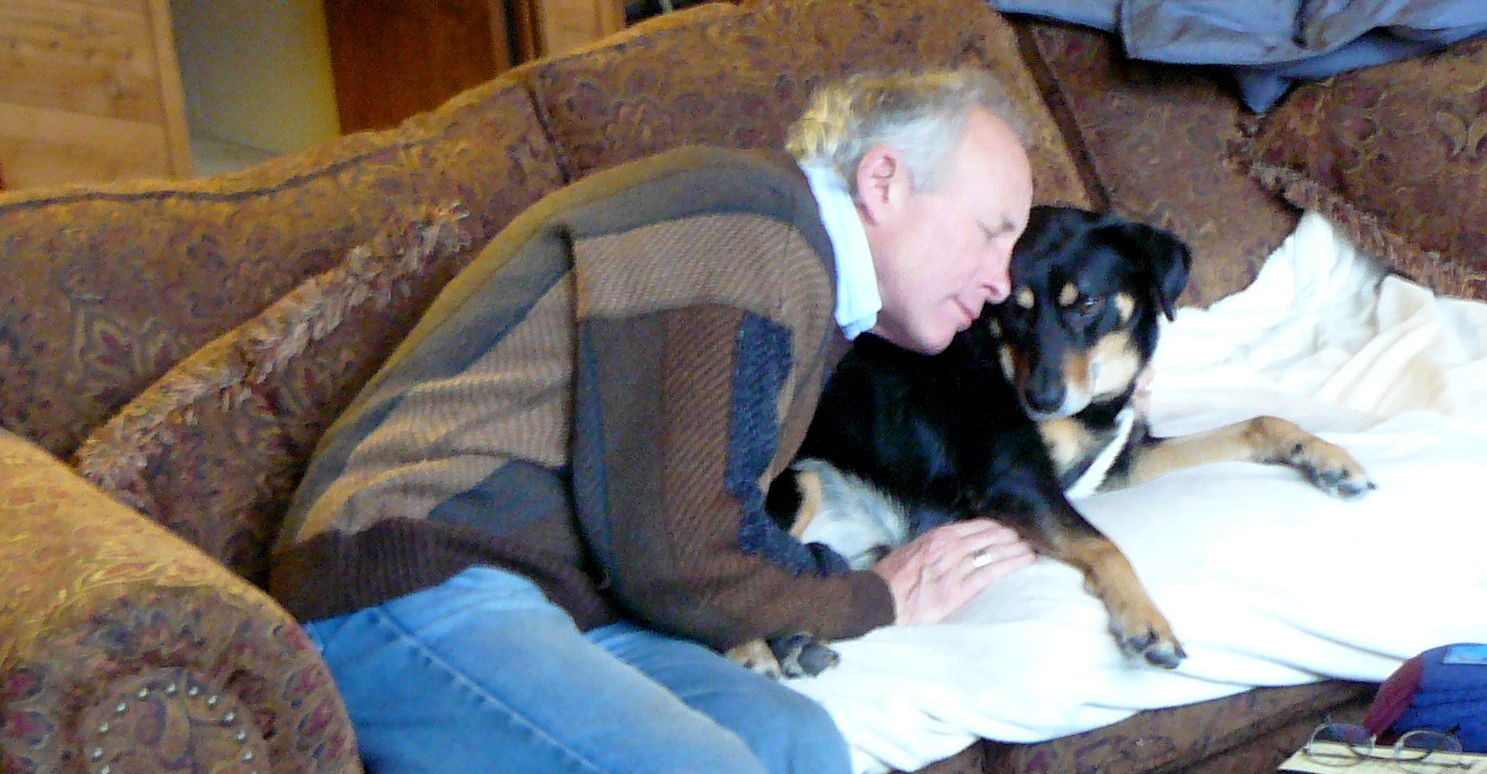
Need to go and hug a dog!
 Learning from Dogs
The patterns show a house of cards ready to fall.
LikeLike
I find it difficult not to have some level of background worry running in my mind. Primarily from the uncertainty that surrounds the near future. Do you share this? Do you have any sense of how that house of cards will fall?
LikeLike
A small event that explodes into a large global event.
LikeLike
I wondered about that myself. Next year, with all that will be on in the American political arena, stands a good chance of birthing that small event.
LikeLike
Dear Paul: The Guardian journalist Monbiot is actually FOR nuclear power (me too, big time!). I am not sure your own essay makes that clear.
From the same essay of his we find:
“I still support nuclear power. I believe that to abandon our primary source of low carbon energy during a climate change crisis would be madness. It would mean replacing atomic plants with something much worse.
We should, of course, cut our profligate demand for power as much as possible. But if transport and heating are to be powered by low-carbon electricity, total demand is likely to rise even with the most parsimonious use of energy(6).
And we should make as much use as we can of renewables. But the biggest onshore wind schemes could supply only a fraction of the low carbon power a nuclear plant can produce. For example, the controversial deployment in mid-Wales would generate just one 14th of the proposed output of Hinkley C(7). Offshore wind has greater potential, but using it to displace most of our fossil fuel generation is a tough call, even when it’s balanced with a nuclear power baseload. Without that you would explore the limits of feasibility. If every square metre of roof and suitable wall in the UK were covered with solar panels, they would produce 9% of the energy currently provided by fossil fuels(8).
The harsh reality is that less nuclear means more gas and coal. Coal burning produces, among other toxic emissions, heavy metals, acid sulphates and particulates, which cause a wide range of heart and lung diseases. Even before you take the impacts of climate change into account, coal is likely to kill more people every week than the Chernobyl disaster has killed since 1986(9). It astonishes me to see people fretting about continuing leaks at Fukushima, which present a tiny health risk even to the Japanese(10), while ignoring the carcinogenic pollutants being sprayed across our own country.
But none of this means that we should accept nuclear power at any cost. And at Hinkley Point the cost is too high.”
(End of Monbiot)
LikeLike
Patrice, when I was composing today’s post I was uncomfortable in republishing too much of Monbiot’s article without formal permission.
So thanks for your extensive comment. 😉 Yes, he is adamant that nuclear is the future. Or in his own words:
LikeLike
Well what he said is not original, not at all, although it’s very important.
A problem is that his own essay, clear in the passage I quoted, is not as clear in the passage you quote. And also he did not do his job well in that passage. The problem with “Integral Fast Reactor” is that those of the breeder type were tried in the 1970s, 1980s and 1990s (USA Congress defunded research in 1994).
It’s a very long story, that culminated with Super Phoenix and its 1,200 MW on line producing one billion euros of electricity. Followed by liquid sodium corrosion…
The short of it, is that lots of research on the DETAILS needs to be done for THORIUM reactors to become efficient, cheap and large scale. That massive program has not been engaged. Instead, fancy electric hyper expensive sport cars makers have been lavishly financed, so that the hyper rich can show off in style at the local restaurant in Palo Alto.
LikeLike
Valuable and highly educational feedback from you. Thank you.
LikeLike
Thanks for this, Paul. It is very, very interesting to see Monbiot back on the subject of nuclear energy – and putting the case for Fast Breeder Reactors (FBRs) so forcefully. Like Monbiot, I am at a loss to understand the actions of our current government. However, unlike Monbiot, I would really like to be able to vote for the Conservatives. Sadly, on every front, they seem determined to disappoint, frustrate and anger me. The most recent example being Prime Minister Cameron attempting to blame energy price rises on Green Taxes. The reality of the situation is that prices have more than doubled in the last 10 years and Green Taxes have only contributed a tenth of that total increase.
Seen in this light, although the government should have gone for the FBR/Hitachi option, EDF Energy have got a fair price for their eventual output: In 10 years time, if civilisation has not collapsed, electricity probably will cost double what it costs today.
LikeLike
Thanks for your thoughts, Martin. I applaud both George Monbiot and The Guardian newspaper for being so forthright in reporting so many issues in the UK at present.
LikeLike
Yes. I do too. However, even The Daily Telegraph has some sensible journalists – like Louise Gray.
LikeLike
To be honest Paul the thought of Nuclear Power makes my stomach sink, as I still see the effects the disasters have caused… and to learn that the UK is following a huge programme again, made me doubly Sick… When we know how to tackle what is happening in these disaster zones http://www.reuters.com/article/2013/10/25/us-fukushima-workers-specialreport-idUSBRE99O04320131025
no wonder Paul the Government in Japan are seeking to set new laws under a sort of secrets act
http://fukushimaupdate.com/japans-new-state-secrets-law-raise-fears-over-fukushima-reporting/
And How many years has it been since Chernobyl around 20 yrs and still radiation levels there 😦 No I can not agree to the Nuclear Power Programme ..
LikeLike
Sue, do you feel the same way with the Fast Breeder Reactors?
LikeLike
Yes I do, Paul, they still produce waste and toxins and although the fuel can not be used for weapons, I still think Mankind is dealing with a substance he has no clue how to dispose of safely…
LikeLike
I May have gone into the Spam box as I posted two links with my last comment Paul
LikeLike
Yes, but quickly corrected, as you can see.
LikeLike
Many thanks! 🙂
LikeLike