Freedom as something one must endeavor to gain and maintain!

There is a quiet self-contradiction developing in the Tea Party movement that needs addressing, for it is a contradiction that, if left uncorrected, could turn a force with truly revolutionary potential into one more element of an oligarchic political stasis.
This movement, which as a culture attempts in many ways to be an imitation of the founders, is steering away from its origins and failing to take hold of perhaps the single most important insight of the entire American Revolution – that national change is the result of local change, not its cause.
It was not homesickness that led Thomas Jefferson to return to his home state of Virginia and decline a re-election to
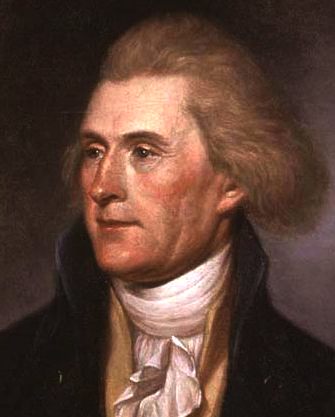
Congress after penning the Declaration of Independence. At the forefront in Jefferson’s mind on July 5, 1776, was not the welfare of the new nation as a whole, but rather the welfare of his home state of Virginia.
For Jefferson, Virginia was not simply one part of the ultimate goal of the United States, but in fact an ultimate goal in itself. It was at the local level that Jefferson knew provisions for the future freedom of his fellow Virginians had to be made.
Voltairine de Cleyre, an anarchist who lived in the late 19th and early 20th centuries, greatly admired the founding generation and Jefferson in particular.
In her essay “Anarchism and American Traditions,” she wrote that one of the greatest traits of the American revolutionaries was their recognition “that the little must precede the great; that the local must be the basis of the general; that there can be a free federation only when there are free communities to federate; that the spirit of the latter is carried into the councils of the former.”
“Anarchism” today is often employed as a pejorative term rather than as a description of the political and economic philosophy taken seriously by such great minds as J.R.R. Tolkien, Henry David Thoreau, Thomas Jefferson and William Lloyd Garrison. In fact, de Cleyre’s political philosophy had many similarities with modern libertarianism and traditional conservatism.
The names of such anarchists as Voltairine de Cleyre and Benjamin Tucker are not absent from our history textbooks because of these individuals’ lack of ability to make a profound impact on the world stage. Rather, they are absent because these people were not attempting to impact the artificial political realm that so often is put front and center in historical analyses. They were instead attempting to make changes for the better at the local level, and in these endeavors they often succeeded.
They, like the American revolutionaries, understood freedom as something one must endeavor to gain and maintain, not a privilege received by supporting – or opposing – a political party or pundit. This emphasis on placing local goods over national grandeur can be traced all the way back to such ancients as the Roman statesman Cato, who said, “After I’m dead, I’d rather have people ask why I have no monument than why I have one.”
And thus, one can now see the growing self-contradiction in the Tea Party movement, for more and more the Tea Parties focus on national issues, rather than taking into account their local communities.
Speeches by Sarah Palin, Tom Tancredo, and Michele Bachmann in front of angry protestors dressed like minutemen on April 15 did absolutely nothing to restore our freedoms. Directing anger towards Barack Obama does equally little, as replacing one talking puppet with another would do little to change the state of our nation. I do not think that I would be any freer today with John McCain rather than Barack Obama as president.
I do not mean to condemn the Tea Party movement. I simply hope to remind these people, who claim to respect the founders, of what the American revolutionaries hoped future Americans would never forget: we must create freedom for ourselves at the local level before we can expect to see freedom for our nation as a whole.
We must direct our resources not towards 2012 presidential and congressional campaigns, but towards mayoral and city council elections, reform of local government contracts with power and water companies, and reform of local law enforcement agencies. In short, we must have liberty-oriented local communities before we can ever hope to have a liberty-oriented national community.
While we’re at it, why not push for a permanent transfer of power to local communities via rejection of federal funds in as many areas as possible? Rather than attempting some treasonable action, this would in fact be taking our nation in the direction that our founder’s intended, the direction of local governance with political ties between communities only in those areas that were absolutely necessary!
Political philosophers as far back as the ancient Greeks understood that the more autonomous a community is in its political associations, the freer its members can expect to be – the very reason that the anti-federalists used pseudonyms of Greeks and Romans who were opposed to the expansion of their respective empires.

There truly is a mountain of potential in the Tea Party movement. If I thought that the movement was just one more example of pointless political anger, then I would not anguish so much at the attempts made to hijack it by the political class. I echo the sentiments of Noam Chomsky, who recently told a Wisconsin crowd that the Tea Party movement is something to be taken seriously, and something to be reached out to by any and all who wish to see real change in our nation.
Whether history will remember the Tea Parties as a catalyst for real change or a political movement that became one more element of a system characterized by big-government stasis will hinge on whether or not this movement is able to mobilize for real change at the local level.
If this begins to occur, then I truly may begin to hope for the day when we will fight to maintain, rather than obtain, the freedoms that Patrick Henry and his cohorts hoped to secure for all Americans.
By Elliot Engstrom
 Learning from Dogs
I agree with some of this. But we have seen the pitfalls of going small. We have seen Greece, I mean the Greek City-States, which became so small that fascist Macedonia crushed them, we have seen the French Communes, which became so small fascist Prussia crushed them.
American problems are big, they are not small. A problem is that gasoline cost three dollars a gallon instead of ten. Another is that Warren Buffet pays less taxes than his janitor. Warren pays 17% tax, he said it himself, a secret way of crowing:”My class is winning!” what are the tea partyists going to do? Offer him tea? After offering him billions through Goldman Sachs?
Power exists. It needs to be harnessed. It is beyond the navel. If nothing else, the most obvious flaw of the USA is the inability to direct power away from the military-industrial complex it has set-up to suck the world dry.
The USA uses gigantic amounts of power towards submitting the planet: more than half the world’s military spending, bases in more than 100 nations.
Just minding the American villages will not change this, just the opposite. Americans have shown they can think local, like termites. Time to think global, like man.
Tea partyists fill their tanks with the blood of oppressed people, worldwide. Let them drink the oil from the Gulf, and the propaganda from their poisoned tea! Americans have shown, over the years, that they know how to throw a party, and it’s not just tea that they drink. As a German official said last week about Greece:”They had their fun!”
If American schools don’t work, it’s first of all too much of the money, all too much of the power, goes to boots and guns, to terrorize the natives into submission on the other side of the earth. As I just pointed on my blog, Americans don’t know about May 1, because they have been propagandized into submission. The Tea Party is another of these propaganda movements.
PA
http://patriceayme.wordpress.com/
LikeLike
Ultimately, Big is Bad. Any organisation, big or small, can go bad and do damage, but a big bad organisation does that much more damage.
The Greek city states did alright fighting together against Persia, but Macedonia at the time was too “big” and had a genius commander.
We need smaller banks, smaller organisations at a more human level. Vast multi-nationals seemed like a good thing at the time, but perhaps their time should pass.
The USA? It is in need of a reality check as much as the Greeks. Maybe my Yank friends won’t like to hear this, but the country seems riven with deep problems. Many countries are in teh same boat of course, but as the USA is so big it really matters to the rest of us. Not to say the US isn’t ultimately a source for good, but they need to sort a lot of stuff out.
LikeLike
The USA is just as bad as Greece, indeed. At least Greece has the rest of Europe to call to the rescue.
Speaking of Greeks, at Marathon, Sparta was not because it was having a festival. Worse was to come: Sparta was actually paid by PERSIA to destroy Athens. Paid so much it bought itself a fleet, with which it destroyed the Athenian fleet.
Thebes then did Sparta in, and so Alexander annihilated Thebes, something the Greeks did not forgive (and rightly so).
Big may be bad, but big we have, big we are. Our ecological footprint is enormous, unsustainable with present technology. even the most rabid of green clown is enormous. Serving Tea at a Party will not help. Of Tea Parties a diet is not made. Stuff it out, or snuff it out? That is the question…
P
LikeLike