On April 1st I set the scene for the essays that I wanted to write for Learning from Dogs as follows:
I often ask myself just how effective the modern US schooling system is as a tool of education, and whether or not its costs outweigh its benefits. I hope to have at least a rough answer to this question in the
Elliot Engstrom
final post of this series.
In the following posts, I will examine three topics:
– In what ways does the modern schooling system function as a positive tool for education?
– What costs involved in modern schooling hinder its ability as an educative tool, and even make it a negative influence on students?
– Considering the analyses put forth in the first two posts, do the costs or benefits or this system outweigh the other? On the whole, are school and education complements or antagonists?
Here is the first one looking at the positive aspects of the American educational system.
Intellectual exploration
My kindergarten teacher told me to always start with something positive, so I’ll be beginning my analysis of American schooling by looking at how it is a positive tool for education.
One facet of the American education system that I once disapproved of but now find extremely useful and educative is the long period of time that students have before they must commit to a career choice.
I used to view this lag as a waste of resources. However, living in France and being a student at a French university changed my mind. The French system begins to lock children into a career path as early as the closing years of middle school. If a student in France wants to be a doctor, for example, they enter into medical school immediately upon leaving high school. The same is true for professions like pharmacology and law. There is very little opportunity for intellectual exploration in the country’s schools. Rather, one simply must make the best of wherever one ends up.
While the American system is more long-winded, it is a better tool for education in that it allows for a more dynamic range of studies. A liberal arts education forces students to delve into a wide range of subjects, giving students the chance to explore their interests and abilities.
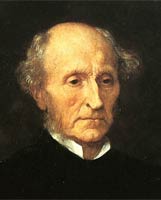
Socrates (or Plato, depending on your interpretation of Plato’s dialogues), believed that a liberal arts education also encouraged the development of critical thinking skills. However, it should be noted that many of the greatest critical
John Stewart Mill, (1806–1873)
thinkers in history did not go through formal schooling. (Socrates himself and John Stewart Mill come to mind.)
This system also allows students to change their mind, pursuing those fields of study that truly interest them the most. It is amazing how many students in the American university system change majors during their tenure as students. This often is because they find that the career path they thought was for them is in fact not their liking – the number of students who abandon the premed track during college is a perfect example of this.
Education also entails socializing with other human beings. The American education system also facilitates this form of education quite well, as a liberal arts form of study at both the high school and university levels mixes together students of different interests.
Whereas in the French model a student studying medicine is constantly surrounded by other students of the same mindset, a premed student in the United States will have classes with students in other fields of study, expanding their social horizons and forcing them to relate to people with whom they may have little in common.
In my next post, I will examine the American schooling system as an antagonist to education, and will then close this series by attempting to weigh the system’s costs and benefits against each other.
9 thoughts on “Elliot’s schooling – the positives”
Comparing the French and American educational systems may be comparing nutritious food and pop corn. The fact is, American high school students know too little when they come out of high school to go to medical school.
So they need to study more English, more math, more science, more foreign languages… They spend four long years in that remedial high school known as college. When the American late bloomers are finally ready to go to medical school, guess what? The French students are already doctors, ready to embark on “internat”, and specialization. This may explain the extremely high quality of the French medical system and research. this happened also with law school, engineering schools, administration, teaching. So France has, paradoxically, a younger highly qualified professional work force. (The same is true to a great extent with the UK and German workforces, and European diplomas are getting synchronized, as they are already equivalent, by law.)
The USA long had most of the world’s oil and many other graces. Plenty of land, thanks to all those dead Indians, etc… When Hitler came around, courtesy of Wall Street and Henry Ford, and their German colleagues, the USA made enormous business with the Nazis, including weapon business (I have documented this on my diverse sites over the years). France did not have this luxury, but, after losing 4% of her population killed, 20 years earlier, she had to declare war to Hitler, and go back for another round (the French empire lost 2% of its population, killed, two million people during the six years of war, 1939-1945… I am sure they do not learn this in US high schools! By comparison, US losses on all theaters were 400,000, a third of one percent of its population.
After the war, Europe was flattened, and the USA owned it, with most of the world, and the ruins of European empire were colonized by American corporate imperialism..
Thus Americans did not really have to work very hard, and did not have to know much. Even NASA was stuffed in its higher echelons with hundreds of Nazi engineers, headed by the Nazi aerospace criminal in chief, Von Braun.
Americans decided that they know nothing, do nothing, revere the rich system was a superior philosophy of life. So here we are. Arguably the loss of relative growth of the economy of the USA is the greatest in a century, or more (when averaged over a 15 years period). And this is just the beginning.
Indeed the haughty perch on which the USA was sitting, crowing of its superiority over the world, is changing, though. Call it climate change. In 8 years, the USA will have no more oil, they will be like France always had been, that way. By then young Americans will be told to go to school and learn real facts of history, science, and humanities, and how to reflect.
How to reflect is taught, and it’s not about starting with the positive. Actually, it may rather be about starting with the negative. Contradicting is what humans do. Bleating with the sheep, what their prey do.
Popcorn happens to be a nutritious food….lots of ruffage in a society that sorely needs it, due to all the sugar consumed. I once baby-sat for the sons of a nutritionist. She gave me orders that Sunday evenings “supper” was to consist of popcorn and milk.
I read your articles with some interest. The primary point that I feel you have made (in my mind, anyway) is the difference between schooling and education. Schooling, too many times is a rote element. Education must be craved by the student. Some schooling may rub off (osmosis, perhaps) on a student, but true education may and often does come outside the classroom. It is the teacher that has the duty to create the desire for education. However, many, today, only go through the rote motions. Sad, very sad indeed.

 Learning from Dogs
Comparing the French and American educational systems may be comparing nutritious food and pop corn. The fact is, American high school students know too little when they come out of high school to go to medical school.
So they need to study more English, more math, more science, more foreign languages… They spend four long years in that remedial high school known as college. When the American late bloomers are finally ready to go to medical school, guess what? The French students are already doctors, ready to embark on “internat”, and specialization. This may explain the extremely high quality of the French medical system and research. this happened also with law school, engineering schools, administration, teaching. So France has, paradoxically, a younger highly qualified professional work force. (The same is true to a great extent with the UK and German workforces, and European diplomas are getting synchronized, as they are already equivalent, by law.)
The USA long had most of the world’s oil and many other graces. Plenty of land, thanks to all those dead Indians, etc… When Hitler came around, courtesy of Wall Street and Henry Ford, and their German colleagues, the USA made enormous business with the Nazis, including weapon business (I have documented this on my diverse sites over the years). France did not have this luxury, but, after losing 4% of her population killed, 20 years earlier, she had to declare war to Hitler, and go back for another round (the French empire lost 2% of its population, killed, two million people during the six years of war, 1939-1945… I am sure they do not learn this in US high schools! By comparison, US losses on all theaters were 400,000, a third of one percent of its population.
After the war, Europe was flattened, and the USA owned it, with most of the world, and the ruins of European empire were colonized by American corporate imperialism..
Thus Americans did not really have to work very hard, and did not have to know much. Even NASA was stuffed in its higher echelons with hundreds of Nazi engineers, headed by the Nazi aerospace criminal in chief, Von Braun.
Americans decided that they know nothing, do nothing, revere the rich system was a superior philosophy of life. So here we are. Arguably the loss of relative growth of the economy of the USA is the greatest in a century, or more (when averaged over a 15 years period). And this is just the beginning.
Indeed the haughty perch on which the USA was sitting, crowing of its superiority over the world, is changing, though. Call it climate change. In 8 years, the USA will have no more oil, they will be like France always had been, that way. By then young Americans will be told to go to school and learn real facts of history, science, and humanities, and how to reflect.
How to reflect is taught, and it’s not about starting with the positive. Actually, it may rather be about starting with the negative. Contradicting is what humans do. Bleating with the sheep, what their prey do.
PA
LikeLike
I’ll be touching on a lot of these points in my next post.
LikeLike
Popcorn happens to be a nutritious food….lots of ruffage in a society that sorely needs it, due to all the sugar consumed. I once baby-sat for the sons of a nutritionist. She gave me orders that Sunday evenings “supper” was to consist of popcorn and milk.
LikeLike
Wow, that’s a comment to an old Post! But, nevertheless, a big thank-you for leaving your thoughts, best wishes, Paul
LikeLike
I read your articles with some interest. The primary point that I feel you have made (in my mind, anyway) is the difference between schooling and education. Schooling, too many times is a rote element. Education must be craved by the student. Some schooling may rub off (osmosis, perhaps) on a student, but true education may and often does come outside the classroom. It is the teacher that has the duty to create the desire for education. However, many, today, only go through the rote motions. Sad, very sad indeed.
LikeLike
Thanks Gordon, appreciate the input, Paul
LikeLike
Great point, I’ll be touching on this in my next post.
LikeLike