We all live in the Quantenary period. From Wikipedia I quote a small piece:
It follows the Neogene Period and spans from 2.6 million years ago to the present.
I don’t know about you but 2.6 million years ago (Ma) seems like a very long time. But then the prior period was the Neogene that went from 2.6 Ma to 23 Ma.
But if one wants to think ‘old’ then try the Ordovician period:
The Ordovician spans 41.6 million years from the end of the Cambrian Period 486.85 Ma (million years ago) to the start of the Silurian Period 443.1 Ma.
****
Just to put us humans into context, human evolution is very much shorter. I have it from six million years onwards. But here are two videos, courtesy of YouTube. The first one is a short one:
Scientists use fossils to reconstruct the evolutionary history of hominins—the group that includes modern humans, our immediate ancestors, and other extinct relatives. Today, our closest living relatives are chimpanzees, but extinct hominins are even closer. Where and when did they live? What can we learn about their lives? Why did they go extinct? Scientists look to fossils for clues.
The second video is a 54-minute one from PBS.
They have both been watched thousands of times.
Now on to today’s post.
ooOOoo
Giant ground sloths’ fossilized teeth reveal their unique roles in the prehistoric ecosystem
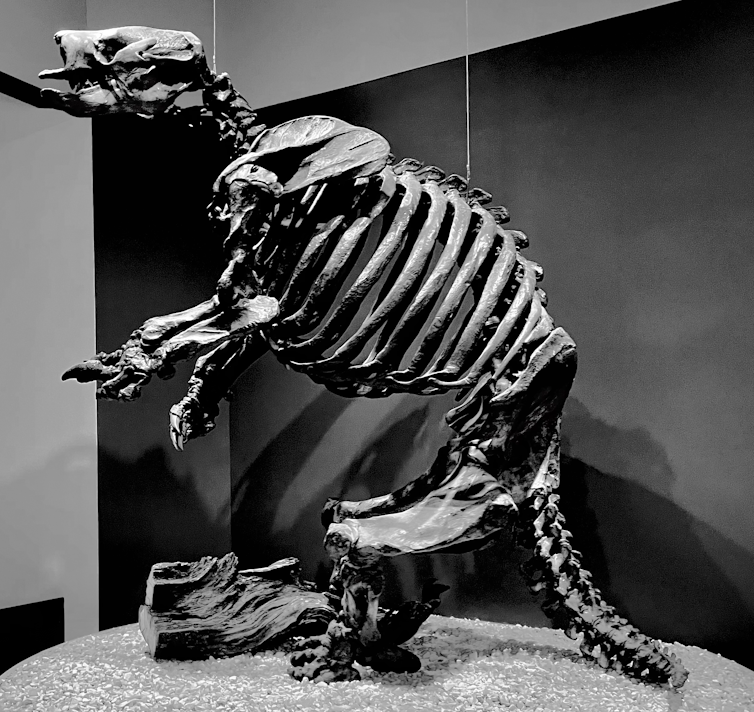
Harlan’s ground sloth fossil skeleton excavated and displayed at the La Brea Tar Pits in Los Angeles. Larisa DeSantis
A two-toed sloth at the Nashville Zoo. Larisa R. G. DeSantis
Imagine a sloth. You probably picture a medium-size, tree-dwelling creature hanging from a branch. Today’s sloths – commonly featured on children’s backpacks, stationery and lunch boxes – are slow-moving creatures, living inconspicuously in Central American and South American rainforests.
But their gigantic Pleistocene ancestors that inhabited the Americas as far back as 35 million years ago were nothing like the sleepy tree huggers we know today. Giant ground sloths – some weighing thousands of pounds and standing taller than a single-story building – played vital and diverse roles in shaping ecosystems across the Americas, roles that vanished with their loss at the end of the Pleistocene.
In our new study, published in the journal Biology Letters, we aimed to reconstruct the diets of two species of giant ground sloths that lived side by side in what’s now Southern California. We analyzed remains recovered from the La Brea Tar Pits of what are colloquially termed the Shasta ground sloth (Nothrotheriops shastensis) and Harlan’s ground sloth (Paramylodon harlani). Our work sheds light on the lives of these fascinating creatures and the consequences their extinction in Southern California 13,700 years ago has had on ecosystems.
Dentin dental challenges
Studying the diets of extinct animals often feels like putting together a jigsaw puzzle with only a portion of the puzzle pieces. Stable isotope analyses have revolutionized how paleoecologists reconstruct the diets of many ancient organisms. By measuring the relative ratios of light and heavy carbon isotopes in tooth enamel, we can figure out what kinds of foods an animal ate – for instance, grasses versus trees or shrubs.
Drilling teeth provides a sample for stable isotope analyses. Aditya Kurre
But the teeth of giant ground sloths lack enamel, the highly inorganic and hard outer layer on most animal teeth – including our own. Instead, sloth teeth are made primarily of dentin, a more porous and organic-rich tissue that readily changes its chemical composition with fossilization.
Stable isotope analyses are less dependable in sloths because dentin’s chemical composition can be altered postmortem, skewing the isotopic signatures.
Another technique researchers use to glean information about an animal’s diet relies on analyzing the microscopic wear patterns on its teeth. Dental microwear texture analysis can infer whether an animal mostly ate tough foods such as leaves and grass or hard foods such as seeds and fruit pits. This technique is also tricky when it comes to sloths’ fossilized teeth because signs of wear may be preserved differently in the softer dentin than in harder enamel.
Prior to studying fossil sloths, we vetted dental microwear methods in modern xenarthrans, a group of animals that includes sloths, armadillos and anteaters. This study demonstrated that dentin microwear can reveal dietary differences between leaf-eating sloths and insect-consuming armadillos, giving us confidence that these tools could reveal dietary information from ground sloth fossils.
Distinct dietary niches revealed
Previous research suggested that giant ground sloths were either grass-eating grazers or leaf-eating browsers, based on the size and shape of their teeth. However, more direct measures of diet – such as stable isotopes or dental microwear – were often lacking.
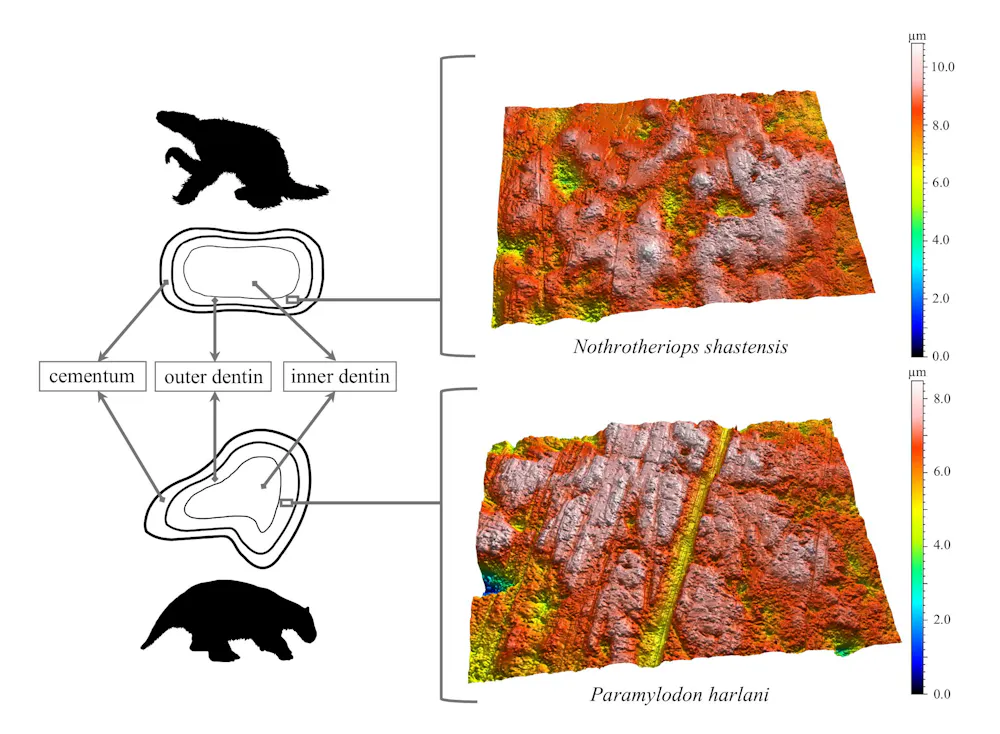
Our new analyses revealed contrasting dental wear signatures between the two co-occurring ground sloth species. The Harlan’s ground sloth, the larger of the two, had microwear patterns dominated by deep pitlike textures. This kind of wear is indicative of chewing hard, mechanically challenging foods such as tubers, seeds, fungi and fruit pits. Our new evidence aligns with skeletal adaptations that suggest powerful digging abilities, consistent with foraging foods both above and below ground.
The fossil teeth of the Harlan’s ground sloth typically showed deeper pitlike textures, bottom, while the Shasta ground sloth teeth had shallower wear patterns, top. DeSantis and Kurre, Biology Letters 2025
In contrast, the Shasta ground sloth exhibited dental microwear textures more akin to those in leaf-eating and woody plant-eating herbivores. This pattern corroborates previous studies of its fossilized dung, demonstrating a diet rich in desert plants such as yucca, agave and saltbush.
Next we compared the sloths’ microwear textures to those of ungulates such as camels, horses and bison that lived in the same region of Southern California. We confirmed that neither sloth species’ dietary behavior overlapped fully with other herbivores. Giant ground sloths didn’t perform the same ecological functions as the other herbivores that shared their landscape. Instead, both ground sloths partitioned their niches and played complementary ecological roles.
Extinctions brought ecological loss
The Harlan’s ground sloth was a megafaunal ecosystem engineer. It excavated soil and foraged underground, thereby affecting soil structure and nutrient cycling, even dispersing seed and fungal spores over wide areas. Anecdotal evidence suggests that some anachronistic fruits – such as the weird, bumpy-textured and softball-size Osage orange – were dispersed by ancient megafauna such as giant ground sloths. When the Pleistocene megafauna went extinct, the loss contributed to the regional restriction of these plants, since no one was around to spread their seeds.
The broader consequence is clear: Megafaunal extinctions erased critical ecosystem engineers, triggering cascading ecological changes that continue to affect habitat resilience today. Our results resonate with growing evidence that preserving today’s living large herbivores and understanding the diversity of their ecological niches is crucial for conserving functional ecosystems.
Studying the teeth of lost giant ground sloths has illuminated not only their diets but also the enduring ecological legacies of their extinction. Today’s sloths, though charming, only hint at the profound environmental influence of their prehistoric relatives – giants that shaped landscapes in ways we are only beginning to appreciate.
George Monbiot published an article in The Guardian recently that was as hard-hitting as I have ever read from him.
I found it very powerful even though I have not been living in England since 2008. Mr Monbiot has previously given me permission to republish his articles and here it is.
ooOOoo
Four-Year Plan
Posted on 3rd June 2025
Keir Starmer has accidentally given us four years in which to build a new political system. We should seize the chance.
By George Monbiot, published in the Guardian 27th May 2025
This feels terminal. The breaches of trust have been so frequent, so vast and so decisive that the voters Labour has already lost are unlikely to return. In one forum after another, I hear the same sentiments: “I voted for change, not the same or worse.” “I’ve voted Labour all my life, but that’s it for me.” “I feel I’ve been had.”
It’s not dissatisfaction. It’s not disillusionment. It’s revulsion: visceral fury, anger on a level I’ve seldom seen before, even towards Tory cruelties. Why? Because these are Tory cruelties, delivered by a party that claimed to be the only alternative, in our first-past-the-post electoral system.
Like many people, I was wary of Keir Starmer. I had limited expectations, but I willed Labour to succeed. So I’ve watched aghast as he and his inner circle have squandered one of the greatest opportunities the party has ever been granted. They seem to despise people who voted for them, while courting and flattering those who didn’t and won’t.
The results? Last week, the polling company Thinks Insight & Strategy found that 52% of those who voted Labour in the 2024 general election are considering switching to the Liberal Democrats or the Greens. That’s more than twice as many as might migrate to Reform UK. The research group Persuasion UK estimates that Labour could lose 250 seatsas a result of this flight to more progressive parties (again, more than twice as many as it could lose through voters shifting to Reform). Figures compiled by the progressive thinktank Compass show that Labour would lose its majority on just a 6% swing. Already, while it won a massive majority on a measly 34% vote at the election, it now polls at just 22%.
What explains this idiocy? Labour has succumbed, quickly and hard, to the defining sickness of our undemocratic political system: the sofa cabinet system of close advisers. Opaque and unaccountable government favours opaque and unaccountable power. Ever receptive to the demands of rentiers, oligarchs, non-doms and corporations, Labour’s oh-so-clever strategists are moronically giftwrapping the country for Nigel Farage.
Governments don’t start conservative and turn radical. The cruelty will set like concrete. The likely result is annihilation in 2029. On this trajectory, it might not be surprising if Labour were left with seats in only double figures.
Perhaps it’s a blessing that Starmer has shown his hand so soon, as we now have four years in which to prepare. I’m not a party person: for me, it’s a question of what works. And now we can clearly see the shape of it.
The Compass analysis, published in December, reveals extreme electoral volatility. This is caused by a combination of public fury towards austerity, exclusion, rip-off rents and startlingly low rates of wellbeing, and the “democratic mayhem” resulting from a first-past-the-post system in which five parties are now polling at 10% or more. Small vote shifts in this situation can cause wild fluctuations in the allocation of seats.
The report points out that the UK is an overwhelmingly progressive nation: in all but one election since 1979 most voters have supported left or centre-left parties. Of 15 nations surveyed, the UK has the extraordinary distinction of being both the furthest to the left and the most consistent elector of rightwing governments. Why? Because of our first-past-the-post system, which is grossly unfair not by accident but by design. Labour refuses to change it, as it wants to rule alone. The result is that most of the time it doesn’t rule at all.
The thinktank was hoping to mobilise the progressive majority around a revitalised Labour party, but that moment has passed. What the figures show, however, is massive potential for more radical change. A YouGov survey reveals that almost twice as many people want proportional representation in this country as those who wish to preserve the current system. So let’s build a government of parties that will introduce it.
Here’s the strategy. Join the Lib Dems, Greens, SNP or Plaid Cymru. As their numbers rise, other voters will see the tide turning. Encourage troubled Labour MPs to defect. Most importantly, begin the process in each constituency of bringing alienated voters together around a single candidate. This is what we did before the last election in South Devon, where polls had shown the anti-Tory vote evenly split between Labour and the Lib Dems. Through the People’s Primary designed by locals, the constituency decided to back the Lib Dems. The proof of the method can be seen less in the spectacular routing of the Conservatives (as similar upsets occurred elsewhere) than in the collapse in Labour’s numbers, which fell from 17% in 2019, and 26% in a poll before the primary began, to 6% in the 2024 election. The voters took back control, with startling results.
Whether you fully support any of these parties is beside the point. This coalition would break for ever the lesser-of-two-evils choice that Starmer has so cruelly abused, and which has for so long poisoned politics in this country. Game the system once and we’ll never have to game it again.
No longer will we be held hostage, no longer represented by people who hate us. It will be a tragedy if, as seems likely, Keir Starmer has destroyed the Labour party as a major political force. But it will be a blessing if he has also destroyed the two-party system.
Proportional representation is explained in detail here. There is also an explanation on WikiPedia here. From which I quote a small section:
Proportional representation (PR) refers to any electoral system under which subgroups of an electorate are reflected proportionately in the elected body. The concept applies mainly to political divisions (political parties) among voters. The aim of such systems is that all votes cast contribute to the result so that each representative in an assembly is mandated by a roughly equal number of voters, and therefore all votes have equal weight. Under other election systems, a bare plurality or a scant majority in a district are all that are used to elect a member or group of members. PR systems provide balanced representation to different factions, usually defined by parties, reflecting how votes were cast. Where only a choice of parties is allowed, the seats are allocated to parties in proportion to the vote tally or vote share each party receives.
That is a timely and powerful article from George Monbiot.
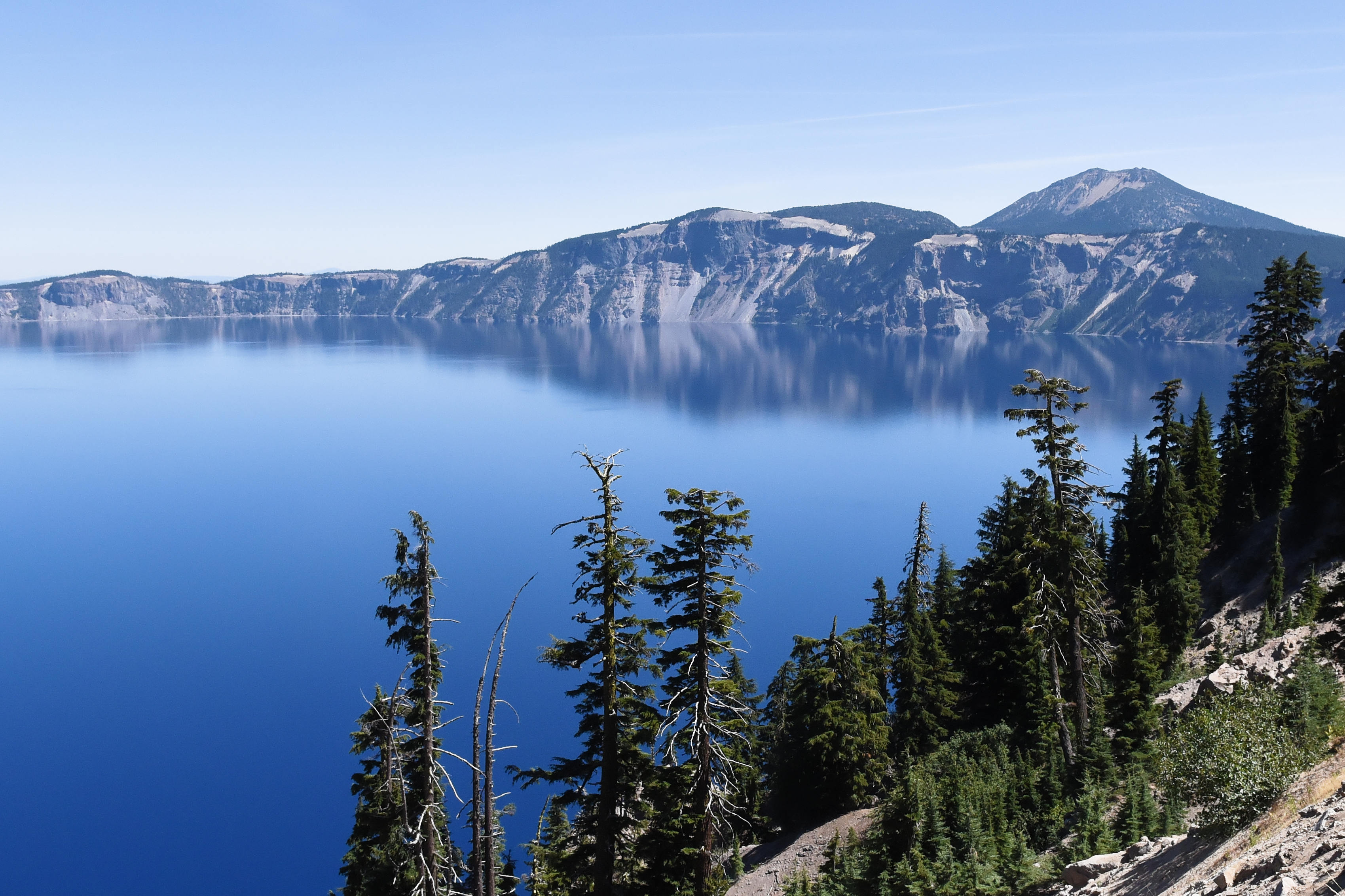
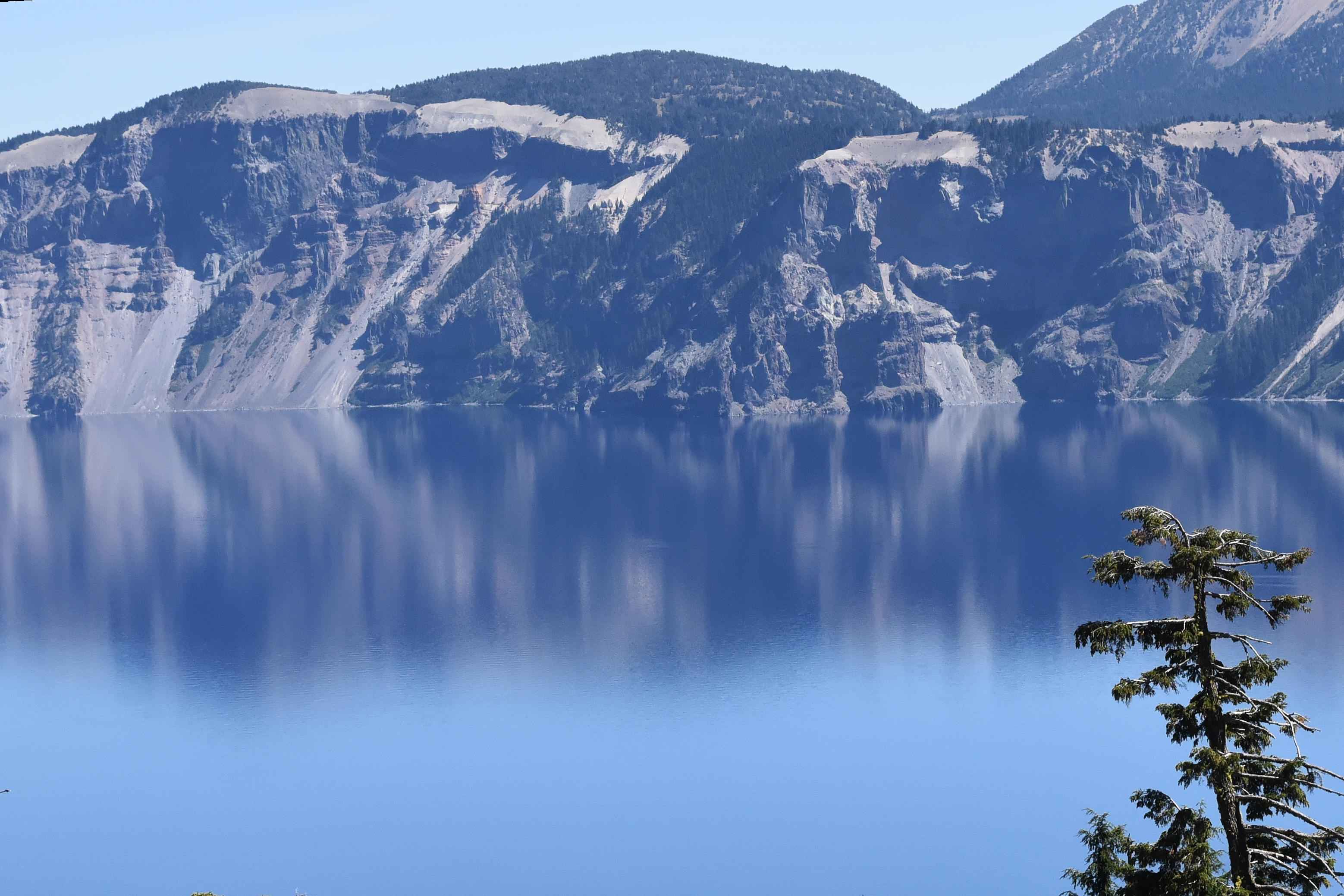
I was going through some files yesterday and found many photographs taken by me.
oooo
These were taken in 2018 which was when my son, Alex, and his partner, Lisa, came over to see us.
Here is the opening part of Wikipedia writing about Crater Lake:
Crater Lake (Klamath: Giiwas)[2] is a volcanic crater lake in south-central Oregon in the WesternUnited States. It is the main feature of Crater Lake National Park and is a tourist attraction for its deep blue color and water clarity. The lake partly fills a 2,148-foot-deep (655 m) caldera[3] that was formed around 7,700 (± 150) years ago[4] by the collapse of the volcano Mount Mazama. No rivers flow into or out of the lake; the evaporation is compensated for by rain and snowfall at a rate such that the total amount of water is replaced every 150 years.[5] With a depth of 1,949 feet (594 m),[6] the lake is the deepest in the United States. In the world, it ranks eleventh for maximum depth, as well as fifth for mean depth.
On yesterday’s World This Weekend the programme was entirely devoted to a speech that John Major gave on February 16th. His theme was: “We are moving into a more dangerous world“
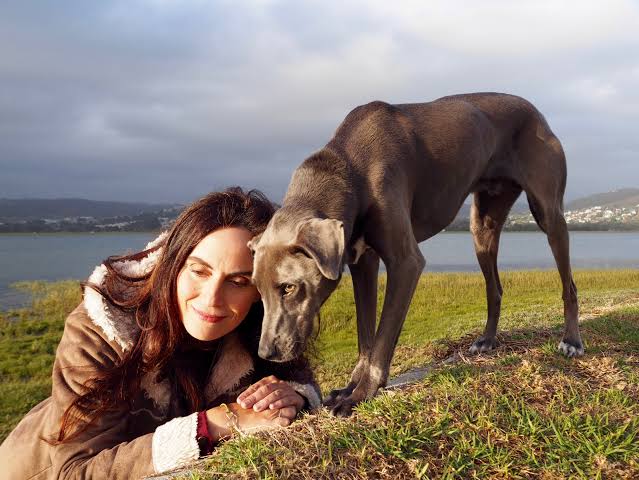
Countless numbers of people have dreamt that they can communicate with animals and I would imagine an enormous percentage of those would have dreamt that they can communicate with dogs.
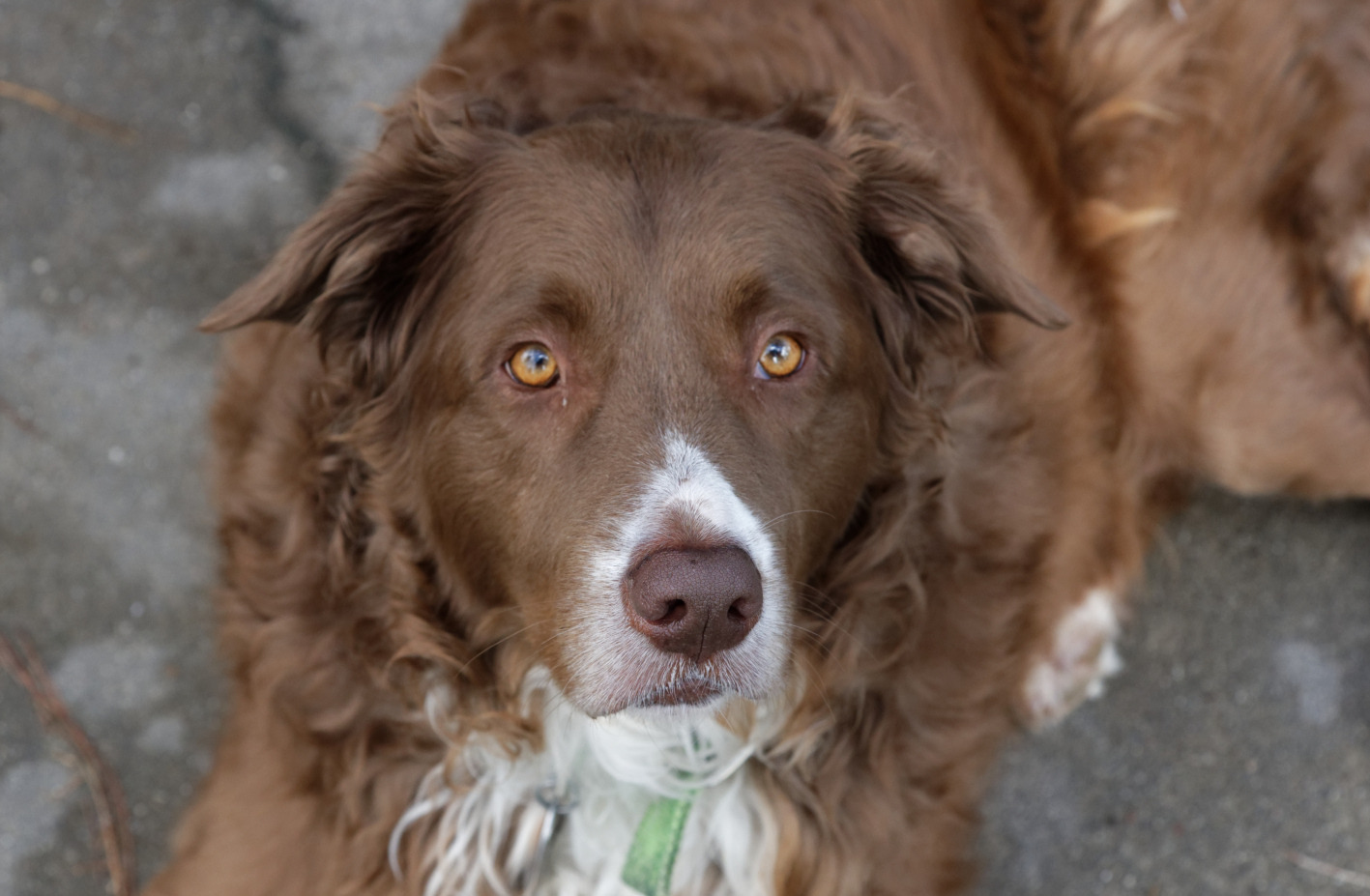
Certainly of the three dogs we have alive still here at home (we had in the past some fifteen dogs) Oliver below appears to understand much of what is said to him by me and Jean
If one goes to the YouTube website then one is introduced to Anna Breytenbach who has made it her life’s passion to better communicate with animals. Here’s a small piece from the extensive WikiPedia entry:
In her twenties she decided to pursue her passion for wildlife (big cats in particular) by becoming a cheetah handler at a conservation education project. On moving to America, she explored wolf and other predator conservation. She has also served on committees for wolf, snow leopard, cheetah and mountain lion conservation.
Anna Breytenbach and friend
So now we come to this video of Anna and Diablo, more properly called Spirit, (and the video will make that clear).
Arjan Postma explains the background to the film:
I just want to share this message as much as possible without any commercial intent, personal benefit or whatsoever. All used materials and therefore copyrights do not belong to me. I hope you enjoy discovering and watching this story and skill as much as I did: What if you could talk to animals and have them talk back to you? Anna Breytenbach has dedicated her life to what she calls interspecies communication. She sends detailed messages to animals through pictures and thoughts. She then receives messages of remarkable clarity back from the animals. In this section, Anna transforms a deadly snarling leopard into a relaxed content cat. The amazing story of how leopard Diabolo became Spirit… I found the source of this amazing documentary here: http://www.cultureunplugged.com/docum… This is the first full length documentary film on the art of animal communication. Nominated for Best Long Documentary, Best Director of “Jade Kunlun” Awards of 2012 World Mountain Documentary Festival of Qinghai China. Director: Craig Foster | Producer: Vyv Simson | Narrator: Swati Thiyagarajan Genre: Documentary | Produced In: 2012.
There are not many who achieve so much, but Sir David most definately has!
This is our planet. It is the only one we have (stating the obvious!).
This beautiful photograph taken from the Apollo 11 mission says it all. That Commander Neil Armstrong and lunar module pilot Buzz Aldrin landed the Apollo Lunar Module Eagle on July 20, 1969 changed everything.
But one thing that was not on anyone’s mind then; the state of the planet!
This view of Earth rising over the Moon’s horizon was taken from the Apollo 11 spacecraft. The lunar terrain pictured is in the area of Smyth’s Sea on the nearside. Coordinates of the center of the terrain are 85 degrees east longitude and 3 degrees north latitude. While astronaut Neil A. Armstrong, commander; and Edwin E. Aldrin Jr., lunar module pilot, descended in the Lunar Module (LM) “Eagle” to explore the Sea of Tranquility region of the moon, astronaut Michael Collins remained with the Command and Service Modules (CSM) “Columbia” in lunar orbit. Image Credit: NASA
How that has changed since 1969.
David Attenborough is a giant of a man, and I say this out of humility and respect for what he has done in his long life, he was born in May, 1926, and he is still fighting hard to get us humans to wake up to the crisis that is upon us.
Wikipedia has an entry that lists all the television shows, and more, that David Attenborough has made. As is quoted: “Attenborough’s name has become synonymous with the natural history programmes produced by the BBC Natural History Unit.”
Please take 45 minutes and watch this film. It is so important.
But before you do please read this extract taken from this site about the film:
For decades David Attenborough delighted millions of people with tales of life on Earth, exploring wild places and documenting the living world in all its variety and wonder. Now, for the first time he reflects upon both the defining moments of his lifetime as a naturalist and the devastating changes he has seen.
Honest, revealing and urgent, the film serves as a witness statement for the natural world – a first-hand account of humanity’s impact on nature, from Australia’s Great Barrier Reef to the jungles of central Africa, the North Pole and Antarctica. It also aims to provide a message of hope for future generations.
“I’ve had a most extraordinary life. It’s only now I appreciate how extraordinary,” Sir David says in the film’s trailer, in which he also promises to tell audiences how we can “work with nature rather than against it”.
The film retraces Sir David’s career, his life stages and natural history films, within the context of human population growth and the loss of wilderness areas. “I don’t think that the theoretical basis for the reason why biodiversity is important is a widely understood one,” he told the Guardian in September.
This autumn, a series of publications warned that “humanity is at a crossroads” in its relationship with nature, culminating in a UN report that the world has failed to meet a single target to stop the destruction of nature in the past decade.
Sir David has been vocal about the threat of climate change in recent years, calling on politicians to take their “last chance” to act rather than continue to “neglect long-term problems”.
“We need to learn how to work with nature, rather than against it”, according to Sir David. In the film, he is going to tell us how.
Now watch the film. Please!
As you can see, in the film Sir David states that the only way out of this mess is a massive focus on rewilding.
Coincidentally, Patrice Ayme last Sunday wrote about rewilding: California Grizzly: Rewilding Is A Moral Duty. In the latter half of that essay, he wrote: “One should strive to reintroduce American megafauna, starting with the more innocuous species (and that includes the grizzly). By the way, I have run and hiked in grizzly country (Alaska), with a huge bear pepper spray cannister at the ready. I nearly used the cannister on a charging moose (with her calf which was as big as a horse). The calf slipped off, and I eluded the mom through a thicket of very closely spaced tough trees. But I had my finger on the trigger, safety off. Moose attack more humans than grizzlies and wolves combined (although a bear attack is more dangerous). In any case, in the US, stinging insects kill around 100, deer around 200 (mostly through car collisions), and lightning around three dozen people, per year.
As it is, I run and hike a lot in California wilderness, out of rescue range. I generally try to stay aware of where and when I could come across bears, lions and rattlers. My last close call with a large rattlesnake, up a mountain slope, was partly due to hubris and not realizing I was moving in dangerous terrain. Fortunately I heard the slithering just in time. Dangerous animals make us aware of nature in its full glory, and the real nature of the human condition. They keep us more honest with what is real, what humanity is all about.
And that should be the primordial sense.“
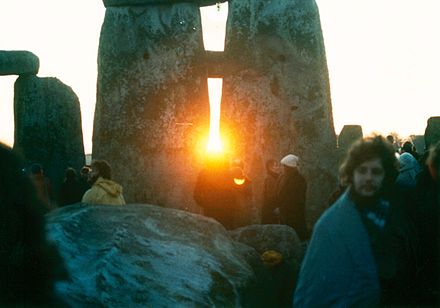
I will close by offering you this photograph. May it inspire you to rewild, in small ways and also, if you can, in bigger ways. All of us must be involved. Otherwise…
The winter solstice, also called the hiemal solstice, hibernal solstice, and brumal solstice, occurs when either of Earth‘s poles reaches its maximum tilt away from the Sun. This happens twice yearly, once in each hemisphere (Northern and Southern). For that hemisphere, the winter solstice is the day with the shortest period of daylight and longest night of the year, when the Sun is at its lowest daily maximum elevation in the sky. Either pole experiences continuous darkness or twilight around its winter solstice. The opposite event is the summer solstice. Depending on the hemisphere’s winter solstice, at the Tropic of Cancer or Capricorn, the Sun reaches 90° below the observer’s horizon at solar midnight, to the nadir.
The winter solstice occurs during the hemisphere’s winter. In the Northern Hemisphere, this is the December solstice (usually December 21 or 22) and in the Southern Hemisphere, this is the June solstice (usually June 20 or 21). Although the winter solstice itself lasts only a moment, the term sometimes refers to the day on which it occurs. Other names are the “extreme of winter” (Dongzhi), or the “shortest day”. Since the 18th century, the term “midwinter” has sometimes been used synonymously with the winter solstice, although it carries other meanings as well. Traditionally, in many temperate regions, the winter solstice is seen as the middle of winter, but today in some countries and calendars, it is seen as the beginning of winter.
Since prehistory, the winter solstice has been seen as a significant time of year in many cultures, and has been marked by festivals and rituals. It marked the symbolic death and rebirth of the Sun. The seasonal significance of the winter solstice is in the reversal of the gradual lengthening of nights and shortening of days.
Later on, that article speaks of the Celtic history:
Celtic
Prior to the arrival of Christianity, the Celtic people of Britain celebrated Yule in a similar fashion to the Germanic festival. It is alleged that Celtic Druids began the tradition of the Yule Log, with the intention of driving out darkness, evil spirits, and poor luck in the following year. The Yule Log was intended to be kept alight over the entire solstice period, twelve days over which the sun was believed to stand still. The log being extinguished symbolised poor luck in the following year. Additionally, evergreen plants were used in decoration – of key significance are “The Holly and the Ivy”, used in decoration, and Mistletoe, suspended over a doorway in a token gesture of goodwill to all who passed under it. These traditions have been adopted into the Christian winter celebrations, symbolised by a mistletoe wreath placed on the front door to a building.
It is a most ancient celebration because as soon as humans recognised that this was the shortest day they were deeply respectful of the forces of the universe.





 Learning from Dogs