Tag: TomDispatch.com

A few reflections on a new world order

Maybe the power of open communications is our only way forward.

A number of disparate ideas have flown into my ‘in-box’ and left me with these thoughts.

The first was the last essay on TomDispatch.  This one from the hands of Mr. Engelhardt himself.  I’m referring to Tomgram: Engelhardt, The Washington Straitjacket.  As many of you know, Tom has been generous in granting me blanket permission to republish his posts and I frequently so do;  as yesterday’s post written by Professor Michael Klare demonstrated.

Let me give you a idea of where Tom was coming from with this personal essay,

The Barack Obama Story (Updated) 
How a Community Organizer and Constitutional Law Professor Became a Robot President
By Tom Engelhardt

President Barack Obama
The White House
1600 Pennsylvania Avenue, NW
Washington, D.C. 20500

Dear President Obama,

Nothing you don’t know, but let me just say it: the world’s a weird place. In my younger years, I might have said “crazy,” but that was back when I thought being crazy was a cool thing and only regretted I wasn’t.

I mean, do you ever think about how you ended up where you are? And I’m not actually talking about the Oval Office, though that’s undoubtedly a weird enough story in its own right.

The next paragraph opens, thus:

After all, you were a community organizer and a constitutional law professor and now, if you stop to think about it, here’s where you’ve ended up: you’re using robots to assassinate people you personally pick as targets.

Then there’s a comprehensive description of all the outcomes that have taken place in the last few years as in this paragraph,

Still, who woulda thunk it?  Don’t these “accomplishments” of yours sometimes amaze you? Don’t you ever wake up in the middle of the night wondering just who you are? Don’t you, like me, open your eyes some mornings in a state of amazement about just how you ended up on this particular fast-morphing planet? Are you as stunned as I am by the fact that a tanker carrying liquid natural gas is now making a trip from Norway to Japan across the winter waters of the Arctic? Twenty days at sea lopped off an otherwise endless voyage via the Mediterranean Sea, and the Indian and Pacific Oceans. Did you ever think you’d live to see the opening of the Northeast Passage in winter? Don’t you find it ironic that fossil fuels, which helped burn that oceanic hole in the Arctic ice, were the first commercial products shipped through those open waters? Don’t you find it just a tad odd that you can kill someone in distant Yemen without the slightest obstacle and yet you’ve been able to do next to nothing when it comes to global warming? I mean, isn’t that world-championship weird, believe-it-or-not bizarre, and increasingly our everyday reality?

Tom’s essay comes to this conclusion,

And don’t you ever wonder whether a labyrinth of 17 (yes, 17!) major agencies and outfits in the U.S. “Intelligence Community” (and even more minor ones), spending at least $75 billion annually, really makes us either safe or smart? Mightn’t we be more “intelligent” and less paranoid about the world if we spent so much less and relied instead on readily available open-source material?

I mean, there are so many things to dream about. So many ghostly possibilities to conjure up. So many experimental acts that offer at least a chance at another planet of possibility. It would be such a waste if you only reverted to your community-organizer or constitutional-law self after you left office, once “retirement syndrome” kicked in, once those drones were taking off at the command of another president and it was too late to do a thing. You could still dream then, but what good would those dreams do us or anyone else?

It’s a very powerful analysis that I really encourage you to read.

Then thanks to a mailing from the WordPress team, I was drawn to a recent account of life by Ruth Rutherford.  In an essay from the 13th November, Ruth writes about living in the dark, as this sample evocatively describes,

Dating in the dark

Just got back from visiting my ol’ stomping grounds in New Jersey where I spent the weekend with my parents and grandparents, just talking, eating and enjoying good company. And all this was done in the dark. Yep, that’s right. Even nearly two weeks after Hurricane Sandy unleashed her fury, the Garden State is still struggling to recover. And let me tell you: Living without power for that long will quickly make you appreciate the little things.

Like walking into a dark room and then transforming it with just the flip of a switch. Or turning on a faucet and seeing water actually pour out. Or pulling into a gas station on any day you choose, not just the days you’re allowed to based on the numbers on your license plate. Or just using the bathroom without strategically planning your “number twos” based on how much water is in the tank. Or not having to wake up at two o’clock in the morning to wander outside in your pajamas to fill the generator with gas. (Okay, fine. My dad did that part. But still…)

When you’re without electricity for a while, your mind tends to do a lot of thinking. There are no reality shows to turn your brain into mush, no hair dryers to block out the noise of everyday life, and no steaming hot baths to drown your worries in. Basically, it’s you, alone, with a candle, a flashlight and your thoughts. So I spent the time brain blogging.

At the heart of this essay is the concept that ‘dating’ as in finding one’s life partner has become too complex.  This is how Ruth concludes her ideas.

Yep, I’m telling you to be shallow.

Forget the deep end, folks. Jump, cannonball style, into the shallow end and let the fun begin!

Shared interests. Favorite movies. Local hot spots. Interesting hobbies. Recent vacations. Current music playlists. Boring work stories. Embarrassing childhood memories. Stupid jokes. Mutual attraction. Sparks. Chemistry.

Because if you can’t relate on these basic levels, then who the heck cares if you both want two boys, one girl and a yellow Labrador named Minnie?

Start small. Start simple. Grab a lantern and meet during a power outage. It’s amazing what you’ll find out about your date in the dark. (With your clotheson, people! Get your minds out of the gutter.)

~Ruth

Finally, closer to home. Patrice Ayme and Martin Lack have been exchanging views in comments to my recent post Unintended Consequences.  Patrice ended a comment with this: ” If goodness is to win, it has to be smarter than the enemy.

So what’s this all coming to?  According to WordPress there are over 500,000 people blogging about the world as they see it.  The number of others who read all those words must be well into many, many millions.  Even humble old Learning from Dogs received over 45,000 viewings in November alone bringing the total viewings to over 785,000!

As the saying goes, “the only thing required for evil to win, is for good people to do nothing.”

Go and read the latest from Bill McKibben on 350.org.

The_New_York_Times

The article in The New York Times tells the story of students, faculty and alumni around the country who are demanding divestment from fossil fuels. On a few campuses, like Swarthmore, they’ve been at it for semesters — but all of a sudden, as the article says, they find themselves “at the vanguard of a national movement. In recent weeks, college students on dozens of campuses have demanded that university endowment funds rid themselves of coal, oil and gas stocks. The students see it as a tactic that could force climate change, barely discussed in the presidential campaign, back onto the national political agenda.”

The picture that accompanies the article comes from our Minneapolis roadshow last Friday night, and the article concisely lays out the demands and the strategy of the campaign. It’s precisely the boost we need. So please, go read it here: www.nyti.ms/SESrfr

We’re quickly getting traction, but we can get more if we have your help.

So, first things first: please email the article by clicking the “E-Mail” button on the New York Times website — if we can get it on the newspaper’s “most emailed list”, we can help make sure it goes as far as possible, as fast as possible.

For full instructions on how to email the article, click here: www.350.org/nyt

I sense that we, as in the peoples on this planet, are well into a period of such change that even by the end of 2013, a little over 50 weeks away, the precipice for humanity will be within sight.  I hold out zero hope that any time soon our leaders and politicians will stop ‘playing games’ and focus on doing what’s right.  The time for truth, for integrity, for sound debate is NOW!

The sharing of ideas, thoughts and emotions that this ‘virtual’ world of blogging offers (despite me regarding the word ‘blogging’ as ugly) is going to be the only tool, the only channel to carry sufficient weight and power for the wishes and desires of the ‘common man’ to live peacefully and safely to the end of this century and beyond!

The more it changes, the more it’s the same thing.

Tom Engelhardt’s essay on the recent US Presidential election.

Introduction

Regular readers will be aware that republishing essay’s from Tom Engelhardt’s superb blog site TomDispatch has been a regular event on Learning from Dogs.  Again, readers will surely be aware that shortly after this blog got under way and I requested permission to republish a TomDispatch essay, Tom not only promptly gave me permission but added that I was free to republish any others that caught my fancy.  That was very generous and, by way of example, here are links to the last three that have appeared here.  There was the essay on Ernest Callenbach in May, Magic and the Machine in June, and The West in flames at the end of July.

So on to this essay that was recently published by Tom and is called The Meaning of a Do-Nothing Election.  As someone who is not entitled to vote in American elections and is far from understanding local cultures let alone American politics, reading an essay like this is deeply educational and I trust is for you as well.  The full essay including the introduction now follows:

oooOOOooo

[Note for TomDispatch Readers: Recently, I went back to a piece I wrote just days after the 2008 election titled “Don’t Let Barack Obama Break Your Heart.”  It reminded me that sometimes a good deal about our American future can be mined from the post-election moment.  So today, I’ve tried my hand at it again.  I’ll have to check it out in November 2016.  In the meantime, if you want to read more of my writings about the years in between, pick up a copy of The United States of Fear — or for $75 that will help this website stay afloat, you can get a signed, personalized copy (with my appreciation) via our donation page. Tom]

The Mandate of Hell 
How Not to Change the World 
By Tom Engelhardt

In the fall of 1948, Harry Truman barnstormed the country by train, repeatedly bashing a “do-nothing Congress,” and so snatched victory from the jaws of defeat in that year’s presidential campaign.  This year, neither presidential candidate focused on blasting a do-nothing Congress or, in Obama’s case, “Republican obstructionism,” demanding that the voters give them a legislative body that would mean an actual mandate for change.

We now know the results of such a campaign and, after all the tumult and the nation’s first $6 billion election, they couldn’t be more familiar.  Only days later, you can watch a remarkably recognizable cast of characters from the reelected president and Speaker of the House John Boehner to the massed pundits of the mainstream media picking up the pages of a well-thumbed script.

Will it be bipartisanship or the fiscal cliff?  Are we going to raise new revenues via tax reform or raise tax rates for the wealthiest Americans?  Will the president make up with Israeli Prime Minister Benjamin Netanyahu or not?  Will it be war or something less with Iran?  And so on and so forth.  It’s the moment the phrase déjà vu all over again was made for.

A Hell of Our Own Making

When a new Chinese dynasty came to power, it was said that it had received “the mandate of heaven.”  We’ve just passed through an election campaign that, while the noisiest in memory, was enveloped in the deepest of silences on issues that truly matter for the American future.  Out of it, a “mandate” has indeed been bestowed not just on Barack Obama, but on Washington, where a Republican House of Representatives, far less triumphant but no less fully in the saddle than the president, faces media reports that its moment is past, that its members are part of “the biggest loser demographic of the election,” and that its party — lacking the support of young peoplesingle women, those with no religious affiliationHispanicsAfrican Americans, and Asian Americans — is heading for the trash barrel of history.

If true, that does sound like a mandate for something, sooner or later — assuming you happen to have years of demographic patience.  In the meantime, there will be a lot more talk about how the Republicans need to reorient their party and about a possible “civil war” over its future.  And while we’re at it, bet on one thing: we’re also going to hear a ton more talk about how much deeply unhappy Americans — the very ones who just reinstalled a government that’s a senatorial blinkaway from the previous version of the same — really, really want everyone to make nice and work together.

But isn’t it time to cut the b.s., turn off those talking heads, and ask ourselves: What does election 2012 really mean for us and for this country?

Let’s start with one basic reality: we’ve just experienced a do-nothing election that represents a mandate from a special American kind of hell. (Admittedly, Mitt Romney’s election, which would have put the House of Representatives and Big Energy in the Oval Office, undoubtedly represented a more venal circle of that fiery establishment.)

That, in turn, ensures two different but related outcomes, both little discussed during the campaign: continuing gridlock on almost any issue that truly matters at home and a continuing damn-the-Hellfire-missiles, full-speed-ahead permanent state of war abroad (along with yet more militarization of the “homeland”).  The only winners — and don’t believe the outcries you’re hearing about sequestration “doom” for the military — are likely to be the national security complex, the Pentagon, and in a country where income inequality has long been on the rise, the wealthy.  Yes, in the particular circle of hell to which we’re consigned, it’s likely to remain springtime for billionaires and giant weapons manufacturers from 2012 to 2016.

How do we know that gridlock and a permanent state of war are the only two paths open to the people’s representatives, that Washington is quite so constrained?  Because we’ve just voted in a near-rerun of the years 2009-2012, which means that the power to make domestic policy (except at the edges) will continue to slowly seep out of the White House, while the power of the president and the national security state to further abridge evaporating liberties at home and make war abroad will only be enhanced.  The result is likely to be stasis for the globe’s last superpower at a moment when much of the world — and the planet itself — is in the process of tumultuous transformation.

Here are things not to expect: a major move to rebuild the country’s tattered infrastructure; the genuine downsizing of the American global military mission; any significant attempt to come to grips with a changing planet and global warming; and the mobilization of a younger generation that, as Hurricane Sandy showed, is ready to give much and do much to help others in need, but in the next four years will never be called to the colors.

In other words, this country is stuck in a hell of its own making that passes for everyday life at a moment when the world, for better and/or worse, is coming unstuck in all sorts of ways.

Fiddling While the Planet Burns

The United States remains a big, powerful, wealthy country that is slowly hollowing out, breaking down.  Meanwhile, on planet Earth, the global economy is up for grabs.  Another meltdown is possible, as the European, Chinese, Japanese, and Indian economies all continue to take hits.  Power relations have been changing rapidly, from the rise of Brazil in what was once Washington’s “backyard” to the Chinese miracle (and the military muscle that goes with it).  A largely American system that long helped keep the Greater Middle East, the energy heartlands of the globe, under grim, autocratic control is unraveling with unknown consequences.  Above all, from increasingly iceless Arctic waters to ever more extreme weather, rising sea levels, and the acidification of the oceans, this planet is undergoing a remarkably rapid transformation based largely on the release into the atmosphere of carbon dioxide from the burning of fossil fuels.

Other than a few curious Republican comparisons of an American economy under the Democrats to “Greece,” a near obsessive focus on the death of Ambassador J. Christopher Stephens and three other Americans in Libya, and various denunciations of China as a currency manipulator, not a single one of these matters came up in any meaningful way in the election campaign.  In other words, election 2012 boiled down to little more than a massive case of Washington-style denial.  And don’t for a second think that that’s just an artifact of election year artifice.

Take climate change, which like the Arab Spring blasted its way into our unprepared midst in 2011-2012.  There was the wildfire season of all seasons in a parching Southwest and West, a devastating drought that still hasn’t fully lifted in the Midwestern breadbasket (or corncob) of the country, and a seemingly endless summer that may make this the hottest year on record for the continental United States.  It was staggering and, if opinion polls are to be believed, noted by increasing numbers of concerned Americans who could literally feel the world changing around them.

And yet none of this made global warming an election issue.  Month after month, it was The Great Unmentionable.  The silence of emboldened Republicans plugging their drill-baby-drill and lay-those-pipelines policies and of cowed Democrats who convinced themselves that the issue was a no-win zone for the president proved deafening — until the campaign’s last days.  It was then, of course, that Hurricane Sandy, the “Frankenstorm,” swept through my town and devastated New Jersey.  It provided the extreme weather coup de grâce of 2012.  (And yes, there’s little doubt that climate-change-induced rising sea levels contributed to its fury.)  Superstorm Sandy also revealed just how unprepared the U.S. infrastructure is for predicted climate-change events.

The extremity of Sandy and its 14-foot storm surge was stunning enough that global warming was suddenly forced out of the closet.  It made magazine covers and gubernatorial press conferences.  There was even a last-minute Romney vs. Sandy web ad (“Tell Mitt Romney: Climate Change Isn’t a Joke”), and in his victory statement on election night, President Obama did manage to briefly acknowledge the changed post-Sandy moment, saying, “We want our children to live in an America that isn’t… threatened by the destructive power of a warming planet.”

Still, in just about every sense that matters in Washington, real planning for climate change is likely to remain off that table on which all “options” always sit.  Expect the president to offer Shell further support for drilling in Arctic waters, expect a new push for the Keystone XL pipeline which will transport some of the “dirtiest” energy from Canada to the Gulf of Mexico, and so on.

Don’t count on anyone doing the obvious: launching the sort of Apollo-style R&D program that once got us to the moon and might speed the U.S. and the planet toward an alternative energy economy, or investing real money in the sort of mitigation projects for the new weather paradigm that might prevent a coastal city like New York — or even Washington — from turning into an uninhabitable disaster zone in some not so distant future.

Climate science is certainly complex and filled with unknowns.  As it happens, many of those unknowns increasingly seem focused on two questions: How extreme and how quickly?  It’s suggested that sea levels are already rising faster than predicted and some recent scientific studies indicate that, by century’s end, the planet’s average temperature could rise by up to eight degrees Fahrenheit, an almost unimaginable disaster for humanity.

Whatever the unknowns, certain things are obvious enough.  Here, for instance, is a simple reality: any set of attempts, already ongoing, to make North America the “Saudi Arabia” of the twenty-first century in energy production are guaranteed to be a climate-change disaster.  Unfortunately, this election ensures once again that, no matter what the planetary realities or the actual needs of this country, no significant money will flow into alteration or mitigation projects.

Among the truly bizarre aspects of this situation, one stands out: thanks in part to a long-term climate-change-denial campaignwell-funded by the giant energy companies, the subject has become “political.”  The idea that it is a liberal or left-wing “issue,” rather than a global reality that must be dealt with, is now deeply embedded.  And yet there may never have been a more basic conservative issue (at least in the older sense of the term): the preserving, above all else, of what is already most valuable in our lives.  And what qualifies more for that than the health of the planet on which humanity “grew up”?

The phrase “fiddling while Rome burns” seems to catch something of the essence of this post-election moment — and it has special meaning when the fiddlers turn out to be slipping matches to the arsonists.

Mobilize Yourself

Just a week after the election, the Republican Party is already gearing up to produce a new, better-looking, more “diverse,” better-marketed version of itself for the 2014 and 2016 Hispanic and Asian American “markets.”  The Democratic Party is no doubt following suit.  In American politics these days, presidential elections last at least four years.  The first poll for Iowa 2016 is already out.  (Hillary’s way ahead).  Elections are the big business, sometimes just about the only significant political business Washington focuses on with any success, aided and abetted by the media.  So look forward to the $7 billion or $8 billion or $9 billion elections to come and the ever-greater hoopla surrounding them.

But stop waiting for change, “big” or otherwise, to come from Washington.  It won’t.  Don’t misunderstand me: as the residents of the Midwestern drought zone and the Jersey shore now know all too well, change is coming, like it or not.  If, however, you want this country to be something other than its instigator and its victim, if you want the U.S. to engage a world of danger (and also of opportunity), you’d better call yourself and your friends and neighbors to the colors.  Don’t wait for a Washington focused on its own well-being in 2014 or 2016.  Mobilize yourself.  It’s time to occupy this country before it’s blown away in a storm.

Tom Engelhardt, co-founder of the American Empire Project and author of The United States of Fear as well as The End of Victory Culture, his history of the Cold War, runs the Nation Institute’s TomDispatch.com. His latest book, co-authored with Nick Turse, is Terminator Planet: The First History of Drone Warfare, 2001-2050.  You can see his recent interview with Bill Moyers on supersized politics and election 2012 by clicking here.

Follow TomDispatch on Twitter @TomDispatch and join us on Facebook.  Check out the newest Dispatch book, Nick Turse’s The Changing Face of Empire: Special Ops, Drones, Proxy Fighters, Secret Bases, and Cyberwarfare.

Copyright 2012 Tom Engelhardt

oooOOOooo

So what made me select the heading?  Well, it’s the English translation of the well-known French saying, “plus ça change, plus c’est la même chose” that translates to “The more things change, the more they stay the same.”  As Wikipedia tells us, “An epigram by Jean-Baptiste Alphonse Karr in the January 1849 issue of his journal Les Guêpes (“The Wasps”). Literally “The more it changes, the more it’s the same thing.”  Seems to pick up Tom’s theme very nicely.

Magic and the Machine

Living in an American Age of Techno-Wonder and Unreason

Introductory note from yours truly!

It’s becoming a regular item in the agenda of Learning from Dogs to republish essays that appear on Tom Engelhardt’s blog, Tom Dispatch.  But as the following was, in turn, a republication by Tom of a very interesting essay by Lewis Lapham, I took the precaution of asking Mr. Lapham’s office for permission to republish.  It showed the standing in which Tom is held by the very prompt reply from Michelle Legro, Associate Editor of Lapham’s Quarterly who confirmed, “If you have permission from Tom Englehart to republish the piece, than it is fine with us.

So it’s more than important that today I include Tom’s plea that headed up Lewis Lapham’s article, as follows,

[Note for TomDispatch readers: The 30,000 of you who get email notices whenever a new piece is posted, as well as the tens of thousands who bookmark TD or read its pieces reposted elsewhere, can support this site by encouraging new readers to sign on. TomDispatch spreads mainly thanks to word of mouth, a formidable force in the online world. For those of you already hooked, I urge you to lend the site a little more of that word-of-mouth power. I hope you’ll consider putting together a modest list of friends, colleagues, relatives, or, for that matter, people you like to argue with who might benefit from getting TomDispatch regularly. Urge them to go to the “subscribe” window to the right of the main screen, put in their e-mail addresses, hit “submit,” answer the confirmation letter that will quickly arrive in email boxes (or, fair warning, spam folders), and join the TD crew. Many thanks in advance for your efforts. They do matter! Tom] 

So please do subscribe to Tom’s deeply interesting blog.  The home page is here and the ‘subscribe’ window is slightly down on the right-hand side of the ‘home’ page.  You will not be disappointed.

OK, now on to Nick Turse’s introduction to Lewis Lapham’s article.

It is said, Lewis Lapham tells us, that Abbot John Trithemius of Sponheim, a fifteenth-century scholar and mage, devised a set of incantations to carry “messages instantaneously… through the agency of the stars and planets who rule time.”  In 1962, Lapham adds, Bell Labs “converted the thought into Telstar, the communications satellite relaying data, from earth to heaven and back to earth, in less than six-tenths of a second.”  Magic had become science.  Today, the Pentagon is picking up the centuries old gauntlet, asking the brightest minds in academe — through its far-out research arm, the Defense Advanced Research Projects Agency or DARPA — to come up with a means for a 20-something-kid-cum-lieutenant or perhaps the military’s much-lauded “strategic corporal” to be wired into unprecedented amounts of information beamed down from the heavens above.

At some level, even the language of DARPA’s solicitation for its SeeMe program seems to conjure up the visions that danced in Trithemius’s head.  Its goal, we are told, “is to provide useful on-demand imagery information directly to the lowest echelon warfighter in the field from a very low cost satellite constellation launched on a schedule that conforms to DoD [Department of Defense] operational tempos.”  Those heavenly-sounding constellations are, however, tempered by the reality of what the Pentagon is really after.

Yesterday’s future of high-tech satellites that would allow our thoughts to slip “the surly bonds of Earth,” while connecting the far reaches of the planet and linking minds globally in ways even Trithemius couldn’t imagine, is now being exchanged for a low-bid, low-rent system of military satellites.  These will be capable of allowing a kid just out of high school to more efficiently target a kid who probably never went to high school — all courtesy of a well-educated university scientist who never bothered to think of the implications of his tenure-producing, tax-payer-funded research.  This can’t be what Trithemius had in mind.  And yet, that’s where we’re at.

If the Pentagon has its way, SeeMe will eventually fill the skies with cheap, disposable “satellites at very low altitudes, networked to existing fielded communications systems and handheld platforms.”   So much for the “the high untrespassed sanctity of space.”  But let Lewis Lapham explore further the borderlands of science and magic that have somehow been fused into the very center of our lives.   The famed former editor of Harper’s Magazine now edits Lapham’s Quarterly, which, four times a year, brilliantly unites some of the most provocative and original voices in history around a single topic. (You can subscribe to it by clicking here.) TomDispatch thanks the editors of that journal for allowing us to offer an exclusive online first look at Lapham’s elegant history of unreason in this techno-age of ours. Nick Turse

oooOOOooo

Magic and the Machine
Living in an American Age of Techno-Wonder and Unreason
By Lewis H. Lapham

[A longer version of this essay appears in “Magic Shows,” the Summer 2012 issue of Lapham’s Quarterlyand is posted at TomDispatch.com with the kind permission of that magazine.]

As between the natural and the supernatural, I’ve never been much good at drawing firm distinctions. I know myself to be orbiting the sun at the speed of 65,000 miles per hour, but I can’t shake free of the impression shared by Pope Urban VIII, who in 1633 informed Galileo that the earth doesn’t move. So also the desk over which I bend to write, seemingly a solid mass of wood but in point of fact a restless flux of atoms bubbling in a cauldron equivalent to the one attended by the witches in Macbeth.

Nor do I separate the reality from the virtual reality when conversing with the airy spirits in a cell phone, or while gazing into the wizard’s mirror of a television screen. What once was sorcery maybe now is science, but the wonders technological of which I find myself in full possession, among them indoor plumbing and electric light, I incline to regard as demonstrations magical.

This inclination apparently is what constitutes a proof of being human, a faculty like the possession of language that distinguishes man from insect, guinea hen, and ape. In the beginning was the word, and with it the powers of enchantment. I take my cue from Christopher Marlowe’s tragical drama Doctor Faustus because his dreams of  “profit and delight,/Of power, of honor, of omnipotence,” are the stuff that America is made of, as was both the consequence to be expected and the consummation devoutly to be wished when America was formed in the alembic of the Elizabethan imagination. Marlowe was present at the creation, as were William Shakespeare, the navigators Martin Frobisher and Francis Drake, and the Lord Chancellor Francis Bacon envisioning a utopian New Atlantis on the coast of Virginia.

It was an age that delighted in the experiment with miracles, fiction emerging into fact on the far shores of the world’s oceans, fact eliding into fiction in the Globe Theatre on an embankment of the Thames. London toward the end of the sixteenth century served as the clearinghouse for the currencies of the new learning that during the prior 150 years had been gathering weight and value under the imprints of the Italian Renaissance and the Protestant Reformation in Germany. The Elizabethans had in hand the writings of Niccolò Machiavelli and Martin Luther as well as those of Ovid and Lucretius, maps drawn by Gerardus Mercator and Martin Waldseemüller, the observations of Nicolaus Copernicus, Johannes Kepler, Giordano Bruno, and Paracelsus.

The medieval world was dying an uneasy death, but magic remained an option, a direction, and a technology not yet rendered obsolete. Robert Burton, author ofThe Anatomy of Melancholy, found the air “not so full of flies in summer as it is at all times of invisible devils.” To the Puritan dissenters contemplating a departure to a new and better world the devils were all too visible in a land that “aboundeth with murders, slaughters, incests, adulteries, whoredom, drunkenness, oppression, and pride.”

Think Tanks of the Sixteenth and Twentieth Centuries

In both the skilled and unskilled mind, astronomy and astrology were still inseparable, as were chemistry and alchemy, and so it is no surprise to find Marlowe within the orbit of inquisitive “intelligencers” centered on the wealth and patronage of Henry Percy, “the Wizard Earl” of Northumberland, who attracted to his estate in Sussex the presence of Dr. John Dee, physician to Queen Elizabeth blessed with crystal showstones occupied by angels, as well as that of Walter Raleigh, court poet and venture capitalist outfitting a voyage to Guiana to retrieve the riches of El Dorado.

The earl had amassed a library of nearly 2,000 books and equipped a laboratory for his resident magi, chief among them Thomas Hariot, as an astronomer known for his improvement of the telescope (the “optic tube”), and as a mathematician for his compilation of logarithmic tables. As well versed in the science of the occult as he was practiced in the study of geography, Hariot appears in Charles Nicholl’s book The Reckoning as a likely model for Marlowe’s Faustus.

During the same month last spring in which I was reading Nicholl’s account of the Elizabethan think tank assembled by the Wizard Earl, I came across its twentieth-century analog in Jon Gertner’s The Idea Factory: Bell Labs and the Great Age of American Innovation. As in the sixteenth century, so again in the twentieth: a gathering of forces both natural and supernatural in search of something new under the sun.

The American Telephone and Telegraph Company undertook to research and develop the evolving means of telecommunication, and to that end it established an “institute of creative technology” on a 225-acre campus in Murray Hill, New Jersey, by 1942 recruiting nearly 9,000 magi of various description (engineers and chemists, metallurgists, and physicists) set to the task of turning sand into light, the light into gold.

All present were encouraged to learn and borrow from one another, to invent literally fantastic new materials to fit the trajectories of fanciful new hypotheses. Together with the manufacture of the laser and the transistor, the labs derived from Boolean algebra the binary code that allows computers to speak to themselves of more things in heaven and earth than were dreamed of in the philosophies of either Hamlet or Horatio.

Gertner attributes the epistemological shape-shifting to the mathematician Claude Shannon, who intuited the moving of “written and spoken exchanges ever deeper into the realm of ciphers, symbols, and electronically enhanced puzzles of representation” — i.e., toward the “lines, circles, scenes, letters, and characters” that Faustus most desired. The correspondence is exact, as is the one to be drawn from John Crowley’s essay, “A Well Without a Bottom,” that recalls the powers of the Abbot Trithemius of Sponheim, a fifteenth-century mage who devised a set of incantations “carrying messages instantaneously… through the agency of the stars and planets who rule time.” Bell Labs in 1962 converted the thought into Telstar, the communications satellite relaying data, from earth to heaven and back to earth, in less than six-tenths of a second.

Between the 1940s and the 1980s, Bell Labs produced so many wonders both military and civilian (the DEW line and the Nike missile as well as the first cellular phone) that AT&T’s senior management was hard put to correct the news media’s tendency to regard the Murray Hill estate as “a house of magic.” The scientists in residence took pains to discount the notion of rabbits being pulled from hats, insisting that the work in hand followed from a patient sequence of trial and error rather than from the silk-hatted magician Eisenheim’s summoning with cape and wand the illusions of “The Magic Kettle” and “The Mysterious Orange Tree” to theater stages in nineteenth-century Paris, London, and Berlin.

The disavowals fell on stony ground. Time passed; the wonders didn’t cease, and by 1973 Arthur C. Clarke, the science-fiction writer believed by his admirers to be the twentieth-century avatar of Shakespeare’s Prospero, had confirmed the truth apparent to both Ariel and Caliban: “Any sufficiently advanced technology is indistinguishable from magic.”

As chairman of the British Interplanetary Society during the 1950s, Clarke had postulated stationing a communications satellite 22,300 miles above the equator in what is now recognized by the International Astronomical Union as “The Clarke Orbit,” and in 1968 he had co-written the film script for 2001: A Space Odyssey. The opening sequence — during which an ape heaves into thin air a prehistoric bone that becomes a spaceship drifting among the stars — encompasses the spirit of an age that maybe once was Elizabethan but lately has come to be seen as a prefiguration of our own.

The New World’s Magical Beginnings (and Endings)

New philosophies call all in doubt, the more so as the accelerating rates of technological advance — celestial, terrestrial, and subliminal — overrun the frontiers between science, magic, and religion. The inventors of America’s liberties, their sensibilities born of the Enlightenment, understood the new world in America as an experiment with the volatile substance of freedom. Most of them were close students of the natural sciences: Thomas Paine an engineer, Benjamin Rush a physician and chemist, Roger Sherman an astronomer, Thomas Jefferson an architect and agronomist.

Intent upon enlarging the frame of human happiness and possibility, they pursued the joy of discovery in as many spheres of reference as could be crowded onto the shelves of a Philadelphia library or a Boston philosophical society. J. Hector St. John de Crèvecoeur, colonist arriving from France in 1755, writes in his Letters from an American Farmer to express gratitude for the spirit in which Benjamin Franklin’s invention of the lightning rod — “by what magic I know not” — was both given and received: “Would you believe that the great electrical discoveries of Mr. Franklin have not only preserved our barns and our houses from the fire of heaven but have even taught our wives to multiply their chickens?”

A similar approach to the uses of learning informed Jefferson’s best hopes for the new nation’s colleges and schools, and for the better part of the last two centuries it has underwritten the making of America into what the historian Henry Steele Commager named “the empire of reason.” An empire that astonishes the world with the magnificence of its scientific research laboratories, but one never safe from frequent uprisings in the rebel provinces of unreason.

Like England in the late sixteenth century, America in the early twenty-first has in hand a vast store of new learning, much of it seemingly miraculous — the lines and letters that weave the physics and the metaphysics into strands of DNA, Einstein’s equations, Planck’s constant and the Schwarzschild radius, the cloned sheep and artificial heart. America’s scientists come away from Stockholm nearly every year with a well-wrought wreath of Nobel prizes, and no week goes by without the unveiling of a new medical device or weapons system.

The record also suggests that the advancement of our new and marvelous knowledge has been accompanied by a broad and popular retreat into the wilderness of smoke and mirrors. The fear of new wonders technological — nuclear, biochemical, and genetic — gives rise to what John Donne presumably would have recognized as the uneasy reawakening of a medieval belief in magic.

We find our new Atlantis within the heavenly books of necromancy inscribed on walls of silicon and glass, the streaming data on an iPad or a television screen lending itself more readily to the traffic in spells and incantation than to the distribution of reasoned argument.  The less that can be seen and understood of the genies escaping from their bottles at Goldman Sachs and MIT, the more headlong the rush into the various forms of wishful thinking that increasingly have become the stuff of which we make our politics and social networking, our news and entertainment, our foreign policy and gross domestic product.

How else to classify the Bush administration’s invasion of Iraq if not as an attempt at alchemy? At both the beginning and end of the effort to transform the whole of the Islamic Middle East into a democratic republic like the one pictured in the ads inviting tourists to Colonial Williamsburg, the White House and the Pentagon issued press releases in the voice of the evil angel counseling Faustus, “Be thou on earth as Jove is in the sky,/Lord and commander of these elements.”

Charles Krauthammer, neoconservative newspaper columnist and leading soloist in the jingo chorus of the self-glorifying news media, amplified the commandment for the readers of Time magazine in March 2001, pride going before the fall six months later of the World Trade Center: “America is in a position to reshape norms, alter expectations, and create new realities. How? By unapologetic and implacable demonstrations of will.”

So again four years later, after it had become apparent that Saddam Hussein’s weapons of mass destruction were made of the same stuff as Eisenheim’s projection of “The Vanishing Lady.” The trick had been seen for what it was, but Defense Secretary Donald Rumsfeld emerged from the cloud of deluded expectation, unapologetic and implacable, out of which he had spoken to the groundlings at a NATO press conference in 2002: “The message is that there are no ‘knowns.’ There are things we know that we know. There are known unknowns… but there are also unknown unknowns… The absence of evidence is not evidence of absence.”

“Perform What Desperate Enterprise I Will”

The Rumsfeldian message accounts not only for what was intended as a demonstration magical in Iraq, but also for the Obama administration’s current purpose in Afghanistan, which is to decorate a wilderness of tribal warfare with the potted plant of a civilized and law-abiding government that doesn’t exist. Choosing to believe in what isn’t there accords with the practice adopted on Wall Street that brought forth the collapse of the country’s real-estate and financial markets in 2008.

The magnitude of the losses measured the extent to which America assigns to the fiction of its currency the supernatural powers of a substance manufactured by a compensation committee of sixteenth-century alchemists. The debacle was not without precedent.  Thomas Paine remarked on the uses of paper money (“horrid to see, and hurtful to recollect”) that made a mess of America’s finances during its War of Independence, “It is like putting an apparition in place of a man; it vanishes with looking at, and nothing remains but the air.”

Paine regarded the “emissions” of paper money as toxic, fouling the air with the diseases (vanity, covetousness, and pride) certain to destroy the morals of the country as well as its experiment with freedom. A report entitled “Scientific Integrity in Policy Making,” issued in February 2004 by the Union of Concerned Scientists, advanced Paine’s argument against what it diagnosed as the willed ignorance infecting the organism of the Bush administration.

Signed by more than 60 of the country’s most accomplished scientists honored for their work in many disciplines (molecular biology, superconductivity, particle physics, zoology), the report bore witness to their experience when called upon to present a federal agency or congressional committee with scientific data bearing on a question of the public health and welfare. Time and again in the 40-page report, the respondents mention the refusal on the part of their examiners to listen to, much less accept, any answers that didn’t fit with the administration’s prepaid and prerecorded political agenda.

Whether in regard to the lifespan of a bacteria or the trajectory of a cruise missile, ideological certainty overruled the objections raised by counsel on behalf of logic and deductive reasoning. On topics as various as climate change, military intelligence, and the course of the Missouri River, the reincarnations of Pope Urban VIII reaffirmed their conviction that if the science didn’t prove what it had been told to prove, then the science had been tampered with by Satan.

The report spoke to the disavowal of the principle on which the country was founded, but it didn’t attract much notice in the press or slow down the retreat into the provinces of unreason. The eight years that have passed since its publication have brought with them not only the illusion of “The Magic Kettle” on Wall Street, but also the election of President Barack Obama in the belief that he would enter the White House as the embodiment of Merlin or Christ.

To the extent that more people become more frightened of a future that calls all into doubt, they exchange the force of their own thought for the power they impute to supernatural machines. To wage the war against terror the Pentagon sends forth drones, robots, and surveillance cameras, hard-wired as were the spirits under the command of Faustus, “to fetch me what I please,/Resolve me of all ambiguities,/Perform what desperate enterprise I will.”

Wall Street clerks subcontract the placing of $100 billion bets to the judgment of computer databanks that stand as silent as the stones on Easter Island, while calculating at the speed of light the rates of exchange between the known unknowns and the unknown unknowns.  By way of projecting a federal budget deficit into both the near and distant future, the season’s presidential candidates float cloud-capped towers of imaginary numbers destined to leave not a rack behind.

The American body politic meanwhile dissolves into impoverished constituencies of one, stripped of “profit and delight” in the realm of fact, but still sovereign in the land of make-believe. Every once and future king is possessed of a screen like the enchanted mirror that Lady Galadriel shows to Frodo Baggins in the garden at Caras Galadhon; the lost and wounded self adrift in a sea of troubles but equipped with the remote control that once was Prospero’s; blessed, as was the tragical Doctor Faustus, with instant access to the dreams “of power, of honor, of omnipotence.”

Lewis H. Lapham is editor of Lapham’s Quarterly. Formerly editor of Harper’s Magazine, he is the author of numerous books, including Money and Class in AmericaTheater of WarGag Rule, and, most recently, Pretensions to Empire. The New York Times has likened him to H.L. Mencken; Vanity Fair has suggested a strong resemblance to Mark Twain; and Tom Wolfe has compared him to Montaigne. This essay, shortened for TomDispatch, introduces “Magic Shows,” the Summer 2012 issue of Lapham’s Quarterly.

Follow TomDispatch on Twitter @TomDispatch, join us on Facebook, and check out the latest TD book, Terminator Planet: The First History of Drone Warfare, 2001-2050.

Copyright 2012 Lewis Lapham

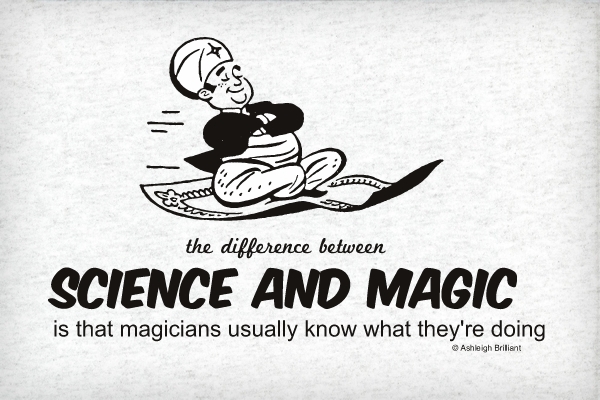
I haven’t a clue as to how to close this post after that – so I will just fade away ……. and leave you with this rather tongue-in-cheek cartoon.

More wisdom!

Further reflections on where next for US Energy policy.

Pumping our way to extinction!

On the 28th March, I republished a powerful essay from Patrice Ayme under my Post title of Questions are never stupid.  In fact, Patrice’s essay was called Energy Question For The USA and concluded thus:

Total oil sales, per day are about 100 million barrels (in truth the cap is lower, see graph above), at, say $100, so ten billion dollars a day, 3.6 trillion a year. The USA uses about 25% of that. Some have incorporated the price of the part of the gigantic American war machine and (what are truly) bribes to feudal warlords insuring Western access to the oil fields, and found a much higher cost up to $11 a gallon.

Ultimately, and pretty soon, in 2016, specialists expect oil prices to explode up, from the exhaustion of the existing oil fields. Then what?

Moreover, in 2016, the dependence upon OPEC, or, more exactly Arab regimes, is going to become much greater than now. What’s the plan of the USA? Extend ever more the security state, and go occupy the Middle East with a one million men army? To occupy, or not to occupy, that is the question.

Is it time for a better plan? And yes, any better plan will require consumers to pay higher energy prices. As consumers apparently want the army to procure the oil, they ought to pay for it.

So when Michael Klare published an essay just two days ago on TomDispatch entitled, Welcome to the New Third World of Energy, the U.S. it seemed highly relevant to have that follow-on from Patrice’s essay.  Again I am very grateful to Tom Engelhardt for giving me permission to republish.  Readers may like to know a little of Michael Klare’s background, from here:

Michael T. Klare is a professor of peace and world security studies at Hampshire College and the author of Resource Wars and Blood and Oil. Consider this essay a preview of his newest book, Rising Powers, Shrinking Planet: The New Geopolitics of Energy, which has just been published by Metropolitan Books. A brief video of Klare discussing key subjects in his new book can be viewed by clicking here.

So here is that essay.  I’m going to include Tom’s introduction because it’s fair to so do!

Tomgram: Michael Klare, Welcome to the New Third World of Energy, the U.S.

[Note for TomDispatch Readers:With today’s Michael Klare piece, you get your last chance to receive a signed, personalized copy of his new book, The Race for What’s Left: The Global Scramble for the World’s Last Resources, in return for a contribution of $100 or more to this website.  (Visit our donation page to check it out.)  The offer will end later this week.  Many thanks to those of you who have already given.  Klare’s book is little short of prophetic and the dollars you so generously send in really do help keep TomDispatch afloat! Tom]

Here’s a simple rule of thumb when it comes to energy disasters: if it’s the nuclear industry and something begins to go wrong — from Three Mile Island in Pennsylvania in 1979 to Fukushima, Japan, after the 2011 tsunami — whatever news is first released, always relatively reassuring, will be a lie, pure and simple.  And as the disaster unrolls, it’s not likely to get much better.  The nuclear industry is incapable of telling the truth about the harm it does.  So when the early stories appear about the next nuclear plant in trouble, whatever you hear or read, just assume that you don’t know the half, not even the quarter, of it.

When it comes to the oil and gas industry and disasters, a similar rule of thumb follows: however bad it first sounds, the odds are it’s going to sound a lot worse before it’s over.  (See BP, Deepwater Horizon.)  So when you first hear about an oil leak from a Chevron well off the coast of Brazil or from a natural gas well in the North Sea operated by the French oil giant Total and you getthose expectable reassurances, they, too, are likely to be nothing but gas.

And here’s the sad thing, you’re going to get all too many chances to test out these simple rules when it comes to bad energy news.  After all, as Michael Klare has been writing at this site for years, we’re entering the “tough energy” era.  The big energy companies are going to be extracting hydrocarbons in ever more hazardous, difficult-to-reach places like the Arctic and they’re going to be using ever uglier methods to do so.

It’s a guarantee that, however bad the environmental damage we’ve seen so far, it’s only going to get worse as the energy industry despoils various regions to give us our fossil-fuel fix and theirmega-profits.  As Klare points out, one of those regions is slated to be not in distant Africa, the Persian Gulf, or the Caspian Sea, but right here in the U.S.  Klare has been ahead of the energy curve ever since, in the late 1990s, he suggested that we would soon be on a planet embroiled in“resource wars.”  His new book, The Race for What’s Left: The Global Scramble for the World’s Last Resources, catches the nightmarish nature of the planet’s last energy boom in a way no one else has.  And don’t be surprised if that nightmare lands squarely in your backyard. Tom

A New Energy Third World in North America?
How the Big Energy Companies Plan to Turn the United States into a Third-World Petro-State 

By Michael T. Klare

The “curse” of oil wealth is a well-known phenomenon in Third World petro-states where millions of lives are wasted in poverty and the environment is ravaged, while tiny elites rake in the energy dollars and corruption rules the land.  Recently, North America has been repeatedly hailed as the planet’s twenty-first-century “new Saudi Arabia” for “tough energy” — deep-sea oil, Canadian tar sands, and fracked oil and natural gas.  But here’s a question no one considers: Will the oil curse become as familiar on this continent in the wake of a new American energy rush as it is in Africa and elsewhere?  Will North America, that is, become not just the next boom continent for energy bonanzas, but a new energy Third World?

Once upon a time, the giant U.S. oil companies — Chevron, Exxon, Mobil, and Texaco — got their start in North America, launching an oil boom that lasted a century and made the U.S. the planet’s dominant energy producer.  But most of those companies have long since turned elsewhere for new sources of oil.

Eager to escape ever-stronger environmental restrictions and dying oil fields at home, the energy giants were naturally drawn to the economically and environmentally wide-open producing areas of the Middle East, Africa, and Latin America — the Third World — where oil deposits were plentiful, governments compliant, and environmental regulations few or nonexistent.

Here, then, is the energy surprise of the twenty-first century: with operating conditions growing increasingly difficult in the global South, the major firms are now flocking back to North America. To exploit previously neglected reserves on this continent, however, Big Oil will have to overcome a host of regulatory and environmental obstacles.  It will, in other words, have to use its version of deep-pocket persuasion to convert the United States into the functional equivalent of a Third World petro-state.

Knowledgeable observers are already noting the first telltale signs of the oil industry’s “Third-Worldification” of the United States.  Wilderness areas from which the oil companies were once barred are being opened to energy exploitation and other restraints on invasive drilling operations are being dismantled.  Expectations are that, in the wake of the 2012 election season, environmental regulations will be rolled back even further and other protected areas made available for development.  In the process, as has so often been the case with Third World petro-states, the rights and wellbeing of local citizens will be trampled underfoot.

Welcome to the Third World of Energy

Up until 1950, the United States was the world’s leading oil producer, the Saudi Arabia of its day. In that year, the U.S. produced approximately 270 million metric tons of oil, or about 55% of the world’s entire output. But with a postwar recovery then in full swing, the world needed a lot more energy while America’s most accessible oil fields — though still capable of growth — were approaching their maximum sustainable production levels.  Net U.S. crude oil output reached a peakof about 9.2 million barrels per day in 1970 and then went into decline (until very recently).

This prompted the giant oil firms, which had already developed significant footholds in Indonesia, Iran, Saudi Arabia, and Venezuela, to scour the global South in search of new reserves to exploit — a saga told with great gusto in Daniel Yergin’s epic history of the oil industry, The Prize. Particular attention was devoted to the Persian Gulf region, where in 1948 a consortium of American companies — Chevron, Exxon, Mobil, and Texaco — discovered the world’s largest oil field, Ghawar, in Saudi Arabia.  By 1975, Third World countries were producing 58% of the world’s oil supply, while the U.S. share had dropped to 18%.

Environmental concerns also drove this search for new reserves in the global South. On January 28, 1969, a blowout at Platform A of a Union Oil Company offshore field in California’s Santa Barbara Channel produced a massive oil leak that covered much of the area and laid waste to local wildlife. Coming at a time of growing environmental consciousness, the spill provoked an outpouring of public outrage, helping to inspire the establishment of Earth Day, first observed one year later. Equally important, it helped spur passage of various legislative restraints on drilling activities, including the National Environmental Policy Act of 1970, theClean Water Act of 1972, and the Safe Drinking Water Act of 1974. In addition, Congress banned new drilling in waters off the Atlantic and Pacific coasts and in the eastern Gulf of Mexico near Florida.

During these years, Washington also expanded areas designated as wilderness or wildlife preserves, protecting them from resource extraction. In 1952, for example, President Eisenhower established the Arctic National Wildlife Range and, in 1980, this remote area of northeastern Alaska was redesignated by Congress as theArctic National Wildlife Refuge (ANWR). Ever since the discovery of oil in the adjacent Prudhoe Bay area, energy firms have been clamoring for the right to drill in ANWR, only to be blocked by one or another president or house of Congress.

For the most part, production in Third World countries posed no such complications. The Nigerian government, for example, has long welcomed foreign investment in its onshore and offshore oil fields, while showing little concern over the despoliation of its southern coastline, where oil company operations have produced a massive environmental disaster. As Adam Nossiter of the New York Timesdescribed the resulting situation, “The Niger Delta, where the [petroleum] wealth underground is out of all proportion with the poverty on the surface, has endured the equivalent of the Exxon Valdez spill every year for 50 years by some estimates.”

As vividly laid out by Peter Maass in Crude World, a similar pattern is evident in many other Third World petro-states where anything goes as compliant government officials — often the recipients of hefty bribes or other oil-company favors — regularly look the other way. The companies, in turn, don’t trouble themselves over the human rights abuses perpetrated by their foreign government “partners” — many of them dictators, warlords, or feudal potentates.

But times change.  The Third World increasingly isn’t what it used to be.  Many countries in the global South are becoming more protective of their environments, ever more inclined to take ever larger cuts of the oil wealth of their own countries, and ever more inclined to punish foreign companies that abuse their laws. In February 2011, for example, a judge in the Ecuadorean Amazon town of Lago Agrio ordered Chevron to pay $9 billion in damages for environmental harm caused to the region in the 1970s by Texaco (which the company later acquired).  Although the Ecuadorians are unlikely to collect a single dollar from Chevron, the case is indicative of the tougher regulatory climate now facing these companies in the developing world.  More recently, in a case resulting from an oil spill at an offshore field, a judge in Brazil hasseized the passports of 17 employees of Chevron and U.S. drilling-rig operator Transocean, preventing them from leaving the country.

In addition, production is on the decline in some developing countries like Indonesia and Gabon, while others have nationalized their oil fields or narrowed the space in which private international firms can operate. During Hugo Chávez’s presidency, for example, Venezuela has forced all foreign firms to award a majority stake in their operations to the state oil company, Petróleos de Venezuela S.A.  Similarly, the Brazilian government, under former President Luiz Inácio Lula da Silva, instituted a rule that all drilling operations in the new “pre-salt” fields in the Atlantic Ocean — widely believed to be the biggest oil discovery of the twenty-first century — be managed by the state-controlled firm, Petróleo de Brasil (Petrobras).

Fracking Our Way to a Toxic Planet

Such pressures in the Third World have forced the major U.S. and European firms — BP, Chevron, ConocoPhillips, ExxonMobil, Royal Dutch Shell, and Total of France — to look elsewhere for new sources of oil and natural gas.  Unfortunately for them, there aren’t many places left in the world that possess promising hydrocarbon reserves and also welcome investment by private energy giants. That’s why some of the most attractive new energy markets now lie in Canada and the United States, or in the waters off their shores.  As a result, both are experiencing a remarkable uptick in fresh investment from the major international firms.

Both countries still possess substantial oil and gas deposits, but not of the “easy” variety (deposits close to the surface, close to shore, or easily accessible for extraction).  All that remains are “tough” energy reserves (deep underground, far offshore, hard to extract and process). To exploit these, the energy companies must deploy aggressive technologies likely to cause extensive damage to the environment and in many cases human health as well.  They must also find ways to gain government approval to enter environmentally protected areas now off limits.

The formula for making Canada and the U.S. the “Saudi Arabia” of the twenty-first century is grim but relatively simple: environmental protections will have to be eviscerated and those who stand in the way of intensified drilling, from landowners to local environmental protection groups, bulldozed out of the way.  Put another way, North America will have to be Third-Worldified.

Consider the extraction of shale oil and gas, widely considered the most crucial aspect of Big Oil’s current push back into the North American market. Shale formations in Canada and the U.S. are believed to house massive quantities of oil and natural gas, and their accelerated extraction is already helping reduce the region’s reliance on imported petroleum.

Both energy sources, however, can only be extracted through a process known as hydraulic fracturing (“hydro-fracking,” or just plain “fracking”) that uses powerful jets of water in massive quantities to shatter underground shale formations, creating fissures through which the hydrocarbons can escape. In addition, to widen these fissures and ease the escape of the oil and gas they hold, the fracking water has to be mixed with a variety of often poisonous solvents and acids. This technique produces massive quantities of toxic wastewater, which can neither be returned to the environment without endangering drinking water supplies nor easily stored and decontaminated.

The rapid expansion of hydro-fracking would be problematic under the best of circumstances, which these aren’t.  Many of the richest sources of shale oil and gas, for instance, are located in populated areas of Texas, Arkansas, Ohio, Pennsylvania, and New York. In fact, one of the most promising sites, the Marcellus formation, abuts New York City’s upstate watershed area.  Under such circumstances, concern over the safety of drinking water should be paramount, and federal legislation, especially the Safe Drinking Water Act of 1974, should theoretically give the Environmental Protection Agency (EPA) the power to oversee (and potentially ban) any procedures that endanger water supplies.

However, oil companies seeking to increase profits by maximizing the utilization of hydro-fracking banded together, put pressure on Congress, and managed to get itself exempted from the 1974 law’s provisions. In 2005, under heavy lobbying from then Vice President Dick Cheney — formerly the CEO of oil services contractor Halliburton — Congress passed the Energy Policy Act, which prohibited the EPA from regulating hydro-fracking via the Safe Drinking Water Act, thereby eliminating a significant impediment to wider use of the technique.

Third Worldification

Since then, there has been a virtual stampede to the shale regions by the major oil companies, which have in many cases devoured smaller firms that pioneered the development of hydro-fracking. (In 2009, for example, ExxonMobil paid $31 billion to acquire XTO Energy, one of the leading producers of shale gas.)   As the extraction of shale oil and gas has accelerated, the industry has faced other problems. To successfully exploit promising shale formations, for instance, energy firms must insert many wells, since each fracking operation can only extend several hundred feet in any direction, requiring the establishment of noisy, polluting, and potentially hazardous drilling operations in well-populated rural and suburban areas.

While drilling has been welcomed by some of these communities as a source of added income, many have vigorously opposed the invasion, seeing it as an assault on neighborhood peace, health, and safety. In an effort to protect their quality of life, some Pennsylvania communities, for example, have adopted zoning laws that ban fracking in their midst. Viewing this as yet another intolerable obstacle, the industry has put intense pressure on friendly members of the state legislature to adopt a law depriving most local jurisdictions of the right to exclude fracking operations. “We have been sold out to the gas industry, plain and simple,” saidTodd Miller, a town commissioner in South Fayette Township who opposed the legislation.

If the energy industry has its way in North America, there will be many more Todd Millers complaining about the way their lives and worlds have been “sold out” to the energy barons.  Similar battles are already being fought elsewhere in North America, as energy firms seek to overcome resistance to expanded drilling in areas once protected from such activity.

In Alaska, for example, the industry is fighting in the courts and in Congress to allow drilling in coastal areas, despite opposition from Native American communities which worry that vulnerable marine animals and their traditional way of life will be put at risk. This summer, Royal Dutch Shell is expected to begin test drilling in the Chukchi Sea, an area important to several such communities.

And this is just the beginning. To gain access to additional stores of oil and gas, the industry is seeking to eliminate virtually all environmental restraints imposed since the 1960s and open vast tracts of coastal and wilderness areas, including ANWR, to intensive drilling. It also seeks the construction of the much disputed Keystone XL pipeline, which is to transport synthetic crude oil made from Canadian tar sands — a particularly “dirty” and environmentally devastating form of energy which has attracted substantial U.S. investment — to Texas and Louisiana for further processing. According to Jack Gerard, president of the American Petroleum Institute (API), the preferred U.S. energy strategy “would include greater access to areas that are currently off limits, a regulatory and permitting process that supported reasonable timelines for development, and immediate approval of the Keystone XL pipeline.”

To achieve these objectives, the API, which claims to represent more than 490 oil and natural gas companies, has launched a multimillion-dollar campaign to sway the 2012 elections, dubbed “Vote 4 Energy.” While describing itself as nonpartisan, the API-financed campaign seeks to discredit and marginalize any candidate, including President Obama, who opposes even the mildest version of its drill-anywhere agenda.

“There [are] two paths that we can take” on energy policy, the Vote 4 Energy Web site proclaims. “One path leads to more jobs, higher government revenues and greater U.S. energy security — which can be achieved by increasing oil and natural gas development right here at home. The other path would put jobs, revenues and our energy security at risk.” This message will be broadcast with increasing frequency as Election Day nears.

According to the energy industry, we are at a fork in the road and can either chose a path leading to greater energy independence or to ever more perilous energy insecurity. But there is another way to characterize that “choice”: on one path, the United States will increasingly come to resemble a Third World petro-state, with compliant government leaders, an increasingly money-ridden and corrupt political system, and negligible environmental and health safeguards; on the other, which would also involve far greater investment in the development of renewable alternative energies, it would remain a First World nation with strong health and environmental regulations and robust democratic institutions.

How we characterize our energy predicament in the coming decades and what path we ultimately select will in large measure determine the fate of this nation.

Michael T. Klare is a professor of peace and world security studies at Hampshire College, a TomDispatch regular, and the author of The Race for What’s Left: The Global Scramble for the World’s Last Resourcesjust published by Metropolitan Books.  To listen to Timothy MacBain’s Tomcast audio interview in which Klare discusses his new book and what it means to rely on extreme energy, click here, or download it to your iPod here.  Klare can be followed on Facebook.

Follow TomDispatch on Twitter @TomDispatch and join us on Facebook.

Copyright 2012 Michael T. Klare

Fascinating times indeed!

Climate and truth, footnote.

So many vested opinions!

Regular readers will know that I published recently, in two parts, a post with the heading of Climate, truth and integrity, the first part being here and the second part here.

To me the arguments supporting the premise that mankind is engaged in the process of destroying our very being are powerful and convincing.  But if there is any serious scientific doubt, then I am reminded of that saying in aviation circles about a risk to the safety of an aircraft, “If there’s any doubt, there’s no doubt!”  Surely, that’s the stance the climate change skeptics should be taking!  Because when the evidence of global warming, pollution, natural resource depletion, species extinctions, and habitat destruction is drawn together and there are no skeptics left, then will the last person left alive please switch the lights off!

Anyway, I’m going to republish, with permission, a recent Post that appeared on Tom Engelhardt‘s powerful blogsite, Tom Dispatch.  It was written by Bill McKibben of 350.org fame.  Here it is,

Tomgram: Bill McKibben, Why the Energy-Industrial Elite Has It In for the Planet

Posted by Bill McKibben at 9:39am, February 7, 2012.

Introduction

Two Saturdays ago, I was walking with a friend in a park here in New York City.  It was late January, but I was dressed in a light sweater and a thin fall jacket, which I had just taken off and tied around my waist.  We were passing a strip of bare ground when suddenly we both did a double-take.  He looked at me and said, “Crocuses!”  Dumbfounded, I replied, “Yes, I see them.”  And there they were, a few clumps of telltale green shoots poking up from the all-brown ground as if it were spring.  Such a common, comforting sight, but it sent a chill through me that noticeably wasn’t in the air.  Even the flowers, I thought, are confused by our new version of weather.

Later that same week, as temperatures in the Big Apple crested 60 degrees, I was chatting on the phone with a friend in Northampton, Massachusetts.  I was telling him about the crocuses, when he suddenly said, “I’m looking out my window right now and for the first time in my memory of January, there’s not a trace of snow!”

Of course, our tales couldn’t be more minor or anecdotal, even if the temperatures that week did feel like we were on another planet.  Here’s the thing, though: after a while, even anecdotes add up — maybe we should start calling them “extreme anecdotes” — and right now there are so many of them being recounted across the planet.  How could there not be in a winter, now sometimes referred to as “Junuary,” in which, in the United States, 2,890 daily high temperature records have either been broken or tied at last count, with the numbers still rising?  Meanwhile, just to the south of us, in Mexico, extreme anecdotes abound, since parts of the country are experiencing “the worst drought on record.”  Even cacti are reportedly wilting and some towns are running out of water (as they are across the border in drought-stricken Texas).  And worst of all, the Mexican drought is expected to intensify in the months to come.

And who can doubt that in Europe, experiencing an extreme cold spell the likes of which hasn’t been seen in decades — even Rome had a rare snowfall and Venice’s canals were reported to be freezing over — there are another set of all-too-extreme anecdotes.  After all, in places like Ukraine, scores of the homeless are freezing to death, pipes are bursting, power cuts are growing, and maybe even an instant energy crisis is underway (at a moment when the European Union is getting ready to cut itself off from Iranian oil).

That’s just to begin a list.  And yet here’s the strange thing.  At least in this country, you can read the “freaky” weather reports or listen to the breathless TV accounts of unexpected tornadoes striking the South in January and rarely catch a mention of the phrase “climate change.”  Given the circumstances, the relative silence on the subject is little short of eerie, even if worries about climate change lurk just below the surface.  Which is why it’s good to have TomDispatch regular Bill McKibben, author of Eaarth: Making a Life on a Tough New Planet, take a clear-eyed look at American denialism and just what it is we prefer not to take in. Tom

The Great Carbon Bubble
Why the Fossil Fuel Industry Fights So Hard

By Bill McKibben

If we could see the world with a particularly illuminating set of spectacles, one of its most prominent features at the moment would be a giant carbon bubble, whose bursting someday will make the housing bubble of 2007 look like a lark. As yet — as we shall see — it’s unfortunately largely invisible to us.

In compensation, though, we have some truly beautiful images made possible by new technology.  Last month, for instance, NASA updated the most iconic photograph in our civilization’s gallery: “Blue Marble,” originally taken from Apollo 17 in 1972. The spectacular new high-def image [see below, Ed] shows a picture of the Americas on January 4th, a good day for snapping photos because there weren’t many clouds.

It was also a good day because of the striking way it could demonstrate to us just how much the planet has changed in 40 years. As Jeff Masters, the web’s most widely read meteorologist, explains, “The U.S. and Canada are virtually snow-free and cloud-free, which is extremely rare for a January day. The lack of snow in the mountains of the Western U.S. is particularly unusual. I doubt one could find a January day this cloud-free with so little snow on the ground throughout the entire satellite record, going back to the early 1960s.”

In fact, it’s likely that the week that photo was taken will prove “the driest first week in recorded U.S. history.” Indeed, it followed on 2011, which showed the greatest weather extremes in our history — 56% of the country was either in drought or flood, which was no surprise since “climate change science predicts wet areas will tend to get wetter and dry areas will tend to get drier.” Indeed, the nation suffered 14 weather disasters each causing $1 billion or more in damage last year. (The old record was nine.) Masters again: “Watching the weather over the past two years has been like watching a famous baseball hitter on steroids.”

In the face of such data — statistics that you can duplicate for almost every region of the planet — you’d think we’d already be in an all-out effort to do something about climate change. Instead, we’re witnessing an all-out effort to… deny there’s a problem.

Our GOP presidential candidates are working hard to make sure no one thinks they’d appease chemistry and physics. At the last Republican debate in Florida, Rick Santorum insisted that he should be the nominee because he’d caught on earlier than Newt or Mitt to the global warming “hoax.”

Most of the media pays remarkably little attention to what’s happening. Coverage of global warming has dipped 40% over the last two years. When, say, there’s a rare outbreak of January tornadoes, TV anchors politely discuss “extreme weather,” but climate change is the disaster that dare not speak its name.

And when they do break their silence, some of our elite organs are happy to indulge in outright denial. Last month, for instance, the Wall Street Journal published an op-ed by “16 scientists and engineers” headlined “No Need to Panic About Global Warming.” The article was easily debunked. It was nothing but a mash-up of long-since-disproved arguments by people who turned out mostly not to be climate scientists at all, quoting other scientists who immediately said their actual work showed just the opposite.

It’s no secret where this denialism comes from: the fossil fuel industry pays for it. (Of the 16 authors of the Journal article, for instance, five had had ties to Exxon.)Writers from Ross Gelbspan to Naomi Oreskes have made this case with such overwhelming power that no one even really tries denying it any more. The open question is why the industry persists in denial in the face of an endless body of fact showing climate change is the greatest danger we’ve ever faced.

Why doesn’t it fold the way the tobacco industry eventually did? Why doesn’t it invest its riches in things like solar panels and so profit handsomely from the next generation of energy? As it happens, the answer is more interesting than you might think.

Part of it’s simple enough: the giant energy companies are making so much money right now that they can’t stop gorging themselves. ExxonMobil, year after year, pulls in more money than any company in history. Chevron’s not far behind. Everyone in the business is swimming in money.

Still, they could theoretically invest all that cash in new clean technology or research and development for the same. As it happens, though, they’ve got a deeper problem, one that’s become clear only in the last few years. Put briefly: their value is largely based on fossil-fuel reserves that won’t be burned if we ever take global warming seriously.

When I talked about a carbon bubble at the beginning of this essay, this is what I meant. Here are some of the relevant numbers, courtesy of the Capital Institute: we’re already seeing widespread climate disruption, but if we want to avoid utter, civilization-shaking disaster, many scientists have pointed to a two-degree rise in global temperatures as the most we could possibly deal with.

If we spew 565 gigatons more carbon into the atmosphere, we’ll quite possibly go right past that reddest of red lines. But the oil companies, private and state-owned, have current reserves on the books equivalent to 2,795 gigatons — five times more than we can ever safely burn. It has to stay in the ground.

Put another way, in ecological terms it would be extremely prudent to write off $20 trillion worth of those reserves. In economic terms, of course, it would be a disaster, first and foremost for shareholders and executives of companies like ExxonMobil (and people in places like Venezuela).

If you run an oil company, this sort of write-off is the disastrous future staring you in the face as soon as climate change is taken as seriously as it should be, and that’s far scarier than drought and flood. It’s why you’ll do anything — including fund an endless campaigns of lies — to avoid coming to terms with its reality. So instead, we simply charge ahead.  To take just one example, last month the boss of the U.S. Chamber of Commerce, Thomas Donohue, called for burning all the country’s newly discovered coal, gas, and oil — believed to be 1,800 gigatons worth of carbon from our nation alone.

What he and the rest of the energy-industrial elite are denying, in other words, is that the business models at the center of our economy are in the deepest possible conflict with physics and chemistry. The carbon bubble that looms over our world needs to be deflated soon. As with our fiscal crisis, failure to do so will cause enormous pain — pain, in fact, almost beyond imagining. After all, if you think banks are too big to fail, consider the climate as a whole and imagine the nature of the bailout that would face us when that bubble finally bursts.

Unfortunately, it won’t burst by itself — not in time, anyway. The fossil-fuel companies, with their heavily funded denialism and their record campaign contributions, have been able to keep at bay even the tamest efforts at reining in carbon emissions. With each passing day, they’re leveraging us deeper into an unpayable carbon debt — and with each passing day, they’re raking in unimaginable returns. ExxonMobil last week reported its 2011 profits at $41 billion, the second highest of all time. Do you wonder who owns the record? That would be ExxonMobil in 2008 at $45 billion.

Telling the truth about climate change would require pulling away the biggest punchbowl in history, right when the party is in full swing. That’s why the fight is so pitched. That’s why those of us battling for the future need to raise our game. And it’s why that view from the satellites, however beautiful from a distance, is likely to become ever harder to recognize as our home planet.

Bill McKibben is Schumann Distinguished Scholar at Middlebury College, founder of the global climate campaign 350.org, a TomDispatch regular, and the author, most recently, of Eaarth: Making a Life on a Tough New Planet.

Follow TomDispatch on Twitter @TomDispatch and join us on Facebook.

Copyright 2012 Bill McKibben

This photo was taken on January 4, 2012.

Most Amazing High Definition Image of Earth – Blue Marble 2012

January 25, 2012

*Updated February 2, 2012: According to Flickr, “The western hemisphere Blue Marble 2012 image has rocketed up to over 3.1 million views making it one of the all time most viewed images on the site after only one week.”

A ‘Blue Marble’ image of the Earth taken from the VIIRS instrument aboard NASA’s most recently launched Earth-observing satellite – Suomi NPP. This composite image uses a number of swaths of the Earth’s surface taken on January 4, 2012. The NPP satellite was renamed ‘Suomi NPP’ on January 24, 2012 to honor the late Verner E. Suomi of the University of Wisconsin.

Suomi NPP is NASA’s next Earth-observing research satellite. It is the first of a new generation of satellites that will observe many facets of our changing Earth.

Suomi NPP is carrying five instruments on board. The biggest and most important instrument is The Visible/Infrared Imager Radiometer Suite or VIIRS.

To read more about NASA’s Suomi NPP go to: www.nasa.gov/npp

Credit: NASA/NOAA/GSFC/Suomi NPP/VIIRS/Norman Kuring

Voices from a Professor of Peace.

Our Planet is a living entity, which means…. well, allow Professor Klare to spell it out.

A few months back, specifically on the 3rd May, I reflected on views that the Planet Earth was a living entity responding to how it was treated.  One of those views was the now-famous Gaia hypothesis from Prof. James Lovelock; the other idea, of an avenging planet, was from Michael T. Klare, a professor of peace and world security studies at Hampshire College.

Then in June, Tom Engelhardt, of TomDispatch fame, published a further article from Professor Michael Klare.  Tom’s generosity allows me the permission to re-publish the article, which is riveting reading.

The Global Energy Crisis Deepens

Three Energy Developments That Are Changing Your Life 
By Michael T. Klare

Here’s the good news about energy: thanks to rising oil prices and deteriorating economic conditions worldwide, the International Energy Agency (IEA) reports that global oil demand will not grow this year as much as once assumed, which may provide some temporary price relief at the gas pump.  In its May Oil Market Report, the IEA reduced its 2011 estimate for global oil consumption by 190,000 barrels per day, pegging it at 89.2 million barrels daily.  As a result, retail prices may not reach the stratospheric levels predicted earlier this year, though they will undoubtedly remain higher than at any time since the peak months of 2008, just before the global economic meltdown.  Keep in mind that this is the good news.

As for the bad news: the world faces an array of intractable energy problems that, if anything, have only worsened in recent weeks.  These problems are multiplying on either side of energy’s key geological divide: below ground, once-abundant reserves of easy-to-get “conventional” oil, natural gas, and coal are drying up;above ground, human miscalculation and geopolitics are limiting the production and availability of specific energy supplies.  With troubles mounting in both arenas, our energy prospects are only growing dimmer.

Here’s one simple fact without which our deepening energy crisis makes no sense: the world economy is structured in such a way that standing still in energy production is not an option.  In order to satisfy the staggering needs of older industrial powers like the United States along with the voracious thirst of rising powers like China, global energy must grow substantially every year.  According to the projections of the U.S. Department of Energy (DoE), world energy output, based on 2007 levels, must rise 29% to 640 quadrillion British thermal units by 2025 to meet anticipated demand.  Even if usage grows somewhat more slowly than projected, any failure to satisfy the world’s requirements produces a perception of scarcity, which also means rising fuel prices.  These are precisely the conditions we see today and should expect for the indefinite future.

It is against this backdrop that three crucial developments of 2011 are changing the way we are likely to live on this planet for the foreseeable future.

Tough-Oil Rebels

The first and still most momentous of the year’s energy shocks was the series of events precipitated by the Tunisian and Egyptian rebellions and the ensuing “Arab Spring” in the greater Middle East.  Neither Tunisia nor Egypt was, in fact, a major oil producer, but the political shockwaves these insurrections unleashed has spread to other countries in the region that are, including Libya, Oman, and Saudi Arabia.  At this point, the Saudi and Omani leaderships appear to be keeping a tight lid on protests, but Libyan production, normally averaging approximately 1.7 million barrels per day, has fallen to near zero.

When it comes to the future availability of oil, it is impossible to overstate the importance of this spring’s events in the Middle East, which continue to thoroughly rattle the energy markets. According to all projections of global petroleum output, Saudi Arabia and the other Persian Gulf states are slated to supply an ever-increasing share of the world’s total oil supply as production in key regions elsewhere declines.  Achieving this production increase is essential, but it will not happen unless the rulers of those countries invest colossal sums in the development of new petroleum reserves — especially the heavy, “tough oil” variety that requires far more costly infrastructure than existing “easy oil” deposits.

In a front-page story entitled “Facing Up to the End of ‘Easy Oil,’” the Wall Street Journal noted that any hope of meeting future world oil requirements rests on a Saudi willingness to sink hundreds of billions of dollars into their remaining heavy-oil deposits.  But right now, faced with a ballooning population and the prospects of an Egyptian-style youth revolt, the Saudi leadership seems intent on using its staggering wealth on employment-generating public-works programs and vast arrays of weaponry, not new tough-oil facilities; the same is largely true of the other monarchical oil states of the Persian Gulf.

Whether such efforts will prove effective is unknown.  If a youthful Saudi population faced with promises of jobs and money, as well as the fierce repression of dissidence, has seemed less confrontational than their Tunisian, Egyptian, and Syrian counterparts, that doesn’t mean that the status quo will remain forever.  “Saudi Arabia is a time bomb,” commented Jaafar Al Taie, managing director of Manaar Energy Consulting (which advises foreign oil firms operating in the region). “I don’t think that what the King is doing now is sufficient to prevent an uprising,” he added, even though the Saudi royals had just announced a $36-billion plan to raise the minimum wage, increase unemployment benefits, and build affordable housing.

At present, the world can accommodate a prolonged loss of Libyan oil.  Saudi Arabia and a few other producers possess sufficient excess capacity to make up the difference.  Should Saudi Arabia ever explode, however, all bets are off.  “If something happens in Saudi Arabia, [oil] will go to $200 to $300 [per barrel],”said Sheikh Zaki Yamani, the kingdom’s former oil minister, on April 5th.  “I don’t expect this for the time being, but who would have expected Tunisia?”

Nuclear Power on the Downward Slope

In terms of the energy markets, the second major development of 2011 occurred on March 11th when an unexpectedly powerful earthquake and tsunami struck Japan.  As a start, nature’s two-fisted attack damaged or destroyed a significant proportion of northern Japan’s energy infrastructure, including refineries, port facilities, pipelines, power plants, and transmission lines.  In addition, of course, it devastated four nuclear plants at Fukushima, resulting, according to the U.S. Department of Energy, in the permanent loss of 6,800 megawatts of electric generating capacity.

This, in turn, has forced Japan to increase its imports of oil, coal, and natural gas, adding to the pressure on global supplies.  With Fukushima and other nuclear plants off line, industry analysts calculate that Japanese oil imports could rise by as much as 238,000 barrels per day, and imports of natural gas by 1.2 billion cubic feet per day (mostly in the form of liquefied natural gas, or LNG).

This is one major short-term effect of the tsunami.  What about the longer-term effects?  The Japanese government now claims it is scrapping plans to build as many as 14 new nuclear reactors over the next two decades.  On May 10th, Prime Minister Naoto Kan announced that the government would have to “start from scratch” in devising a new energy policy for the country.  Though he speaks of replacing the cancelled reactors with renewable energy systems like wind and solar, the sad reality is that a significant part of any future energy expansion will inevitably come from more imported oil, coal, and LNG.

Read this book.

The disaster at Fukushima — and ensuing revelations of design flaws and maintenance failures at the plant — has had a domino effect, causing energy officials in other countries to cancel plans to build new nuclear plants or extend the life of existing ones.  The first to do so was Germany: on March 14th, Chancellor Angela Merkelclosed two older plants and suspended plans to extend the life of 15 others.  On May 30th, her government made the suspension permanent.  In the wake of mass antinuclear rallies and an election setback, she promised to shut all existing nuclear plants by 2022, which, experts believe, will result in an increase in fossil-fuel use.

China also acted swiftly, announcing on March 16th that it would stop awarding permits for the construction of new reactors pending a review of safety procedures, though it did not rule out such investments altogether.  Other countries, including India and the United States, similarly undertook reviews of reactor safety procedures, putting ambitious nuclear plans at risk.  Then, on May 25th, the Swiss government announced that it would abandon plans to build three new nuclear power plants, phase out nuclear power, and close the last of its plants by 2034, joining the list of countries that appear to have abandoned nuclear power for good.

How Drought Strangles Energy

The third major energy development of 2011, less obviously energy-connected than the other two, has been a series of persistent, often record, droughts gripping many areas of the planet.  Typically, the most immediate and dramatic effect of prolonged drought is a reduction in grain production, leading to ever-higher food prices and ever more social turmoil.

Intense drought over the past year in Australia, ChinaRussia, and parts of theMiddle East, South America, the United States, and most recently northern Europehas contributed to the current record-breaking price of food — and this, in turn, has been a key factor in the political unrest now sweeping North Africa, East Africa, and the Middle East.  But drought has an energy effect as well.  It can reduce the flow of major river systems, leading to a decline in the output of hydroelectric power plants, as is now happening in several drought-stricken regions.

By far the greatest threat to electricity generation exists in China, which is suffering from one of its worst droughts ever.  Rainfall levels from January to April in the drainage basin of the Yangtze, China’s longest and most economically important river, have been 40% lower than the average of the past 50 years, according toChina Daily.  This has resulted in a significant decline in hydropower and severe electricity shortages throughout much of central China.

The Chinese are burning more coal to generate electricity, but domestic mines no longer satisfy the country’s needs and so China has become a major coal importer.  Rising demand combined with inadequate supply has led to a spike in coal prices, and with no comparable spurt in electricity rates (set by the government), many Chinese utilities are rationing power rather than buy more expensive coal and operate at a loss.  In response, industries are upping their reliance on diesel-powered backup generators, which in turn increases China’s demand for imported oil, putting yet more pressure on global fuel prices.

Wrecking the Planet

So now we enter June with continuing unrest in the Middle East, a grim outlook for nuclear power, and a severe electricity shortage in China (and possibly elsewhere).  What else do we see on the global energy horizon?

Despite the IEA’s forecast of diminished future oil consumption, global energy demand continues to outpace increases in supply.  From all indications, this imbalance will persist.

Take oil.  A growing number of energy analysts now agree that the era of “easy oil” has ended and that the world must increasingly rely on hard-to-get “tough oil.”  It is widely assumed, moreover, that the planet harbors a lot of this stuff — deep underground, far offshore, in problematic geological formations like Canada’s tar sands, and in the melting Arctic.  However, extracting and processing tough oil will prove ever more costly and involve great human, and even greater environmental, risk.  Think: BP’s Deepwater Horizon disaster of April 2010 in the Gulf of Mexico.

Such is the world’s thirst for oil that a growing amount of this stuff will nonetheless be extracted, even if not, in all likelihood, at a pace and on a scale necessary to replace the disappearance of yesterday’s and today’s easy oil.  Along with continued instability in the Middle East, this tough-oil landscape seems to underlie expectations that the price of oil will only rise in the coming years.  In a poll of global energy company executives conducted this April by the KPMG Global Energy Institute, 64% of those surveyed predicted that crude oil prices will cross the $120 per barrel barrier before the end of 2011.  Approximately one-third of them predicted that the price would go even higher, with 17% believing it would reach $131-$140 per barrel; 9%, $141-$150 per barrel; and 6%, above the $150 mark.

The price of coal, too, has soared in recent months, thanks to mounting worldwide demand as supplies of energy from nuclear power and hydroelectricity have contracted.  Many countries have launched significant efforts to spur the development of renewable energy, but these are not advancing fast enough or on a large enough scale to replace older technologies quickly.  The only bright spot, experts say, is the growing extraction of natural gas from shale rock in the United States through the use of hydraulic fracturing (“hydro-fracking”).

Proponents of shale gas claim it can provide a large share of America’s energy needs in the years ahead, while actually reducing harm to the environment when compared to coal and oil (as gas emits less carbon dioxide per unit of energy released); however, an expanding chorus of opponents are warning of the threat to municipal water supplies posed by the use of toxic chemicals in the fracking process.  These warnings have proven convincing enough to lead lawmakers in a growing number of states to begin placing restrictions on the practice, throwing into doubt the future contribution of shale gas to the nation’s energy supply.  Also, on May 12th, the French National Assembly (the powerful lower house of parliament)voted 287 to 146 to ban hydro-fracking in France, becoming the first nation to do so.

The environmental problems of shale gas are hardly unique.  The fact is that all of the strategies now being considered to extend the life-spans of oil, coal, and natural gas involve severe economic and environmental risks and costs — as, of course, does the very use of fossil fuels of any sort at a moment when the first IEA numbers for 2010 indicate that it was an unexpectedly record-breaking year for humanity when it came to dumping greenhouse gases into the atmosphere.

With the easily accessible mammoth oil fields of Texas, Venezuela, and the Middle East either used up or soon to be significantly depleted, the future of oil rests on third-rate stuff like tar sands, shale oil, and extra-heavy crude that require a lot of energy to extract, processes that emit added greenhouse gases, and as with those tar sands, tend to play havoc with the environment.

Shale gas is typical.  Though plentiful, it can only be pried loose from underground shale formations through the use of explosives and highly pressurized water mixed with toxic chemicals.  In addition, to obtain the necessary quantities of shale oil, many tens of thousands of wells will have to be sunk across the American landscape, any of one of which could prove to be an environmental disaster.

Likewise, the future of coal will rest on increasingly invasive and hazardous techniques, such as the explosive removal of mountaintops and the dispersal of excess rock and toxic wastes in the valleys below.  Any increase in the use of coal will also enhance climate change, since coal emits more carbon dioxide than do oil and natural gas.

Here’s the bottom line: Any expectations that ever-increasing supplies of energy will meet demand in the coming years are destined to be disappointed.  Instead, recurring shortages, rising prices, and mounting discontent are likely to be the thematic drumbeat of the globe’s energy future.

If we don’t abandon a belief that unrestricted growth is our inalienable birthright and embrace the genuine promise of renewable energy (with the necessary effort and investment that would make such a commitment meaningful), the future is likely to prove grim indeed.  Then, the history of energy, as taught in some late twenty-first-century university, will be labeled: How to Wreck the Planet 101.

Michael T. Klare is a professor of peace and world security studies at Hampshire College, a TomDispatch regular, and the author, most recently, ofRising Powers, Shrinking Planet. A documentary movie version of his previous book, Blood and Oil, is available from the Media Education Foundation. To listen to Timothy MacBain’s latest TomCast audio interview in which Klare discusses the U.S., Saudi Arabia, and resource conflicts, click here, or download it to your iPod here.

Copyright 2011 Michael T. Klare

TomDispatch – The Great American Carbon Bomb.

A powerful and insightful essay from Bill McKibben about our love affair with carbon-based energy.

Introduction

I subscribe to a number of Blogs and one of them is TomDispatch.  Here’s how Tom describes what the writings are all about.

Tom Engelhardt launched Tomdispatch in November 2001 as an e-mail publication offering commentary and collected articles from the world press. In December 2002, it gained its name, became a project of The Nation Institute, and went online as “a regular antidote to the mainstream media.” The site now features Tom Engelhardt’s regular commentaries and the original work of authors ranging from Rebecca Solnit, Bill McKibben, and Mike Davis to Chalmers Johnson, Michael Klare, Adam Hochschild, Robert Lipsyte, and Elizabeth de la Vega. Nick Turse, who also writes for the site, is associate editor and research director.

Tomdispatch is intended to introduce readers to voices and perspectives from elsewhere (even when the elsewhere is here). Its mission is to connect some of the global dots regularly left unconnected by the mainstream media and to offer a clearer sense of how this imperial globe of ours actually works.

I read the TomDispatch essay from Bill McKibben on the 14th.  It caught my eye, not only because of the power of Bill’s conclusions, but also because I was deeply impressed with Bill’s book ‘eaarth’, which I reviewed on Learning from Dogs here and here.

Tom Engelhardt has given written permission for that TomDispatch to be re-published in full on Learning from Dogs.  It now follows.

First the introduction by Tom Engelhardt,

The Great American Carbon Bomb

These days, even ostriches suffer from heat waves.  More than 1,000 of them reportedly died from overheating on South African farms during a 2010 drought.  As for American ostriches, the human variety anyway, at the moment it should be increasingly hard for them to avoid extreme-weather news. After all, whether you’re in sweltering heat, staggering drought, a record fire season, or a massive flood zone, most of us are living through weird weather this year.  And if you’re one of the lucky few not in an extreme-weather district of the USA, you still won’t have a problem running across hair-raising weather stories, ranging from the possible loss of one out of every ten species on this planet by century’s end to the increasing inability of the oceans to soak up more atmospheric carbon dioxide.

Then, of course, there are those other headlines.  Here’s a typical one: “As Water Rises, Florida Officials Sit on Their Hands” (a former member of the just abolished Florida Energy and Climate Commission points out that, thanks to Republican governor Rick Scott and the legislature in the part of the country most vulnerable to rising sea levels, “there is no state entity addressing climate change and its impact”).  And here’s another: “Economy Keeps Global Warming on the Back Burner for 2012” (American climate-change “skeptics” are celebrating because “the tide of the debate — at least politically — has turned in their favor” and “political experts say that… concerns over global warming won’t carry much weight in the 2012 election”).   And then there are the polls indicating Americans are confused about the unanimity of the scientific consensus on climate change, surprisingly dismissive of global-warming dangers, worry less about it than they did a decade ago, and of major environmental issues, worry least about it.

It’s true, of course, that no weird-weather incident you experience can definitively be tied to climate change and other factors are involved.  Still, are we a nation of overheating ostriches?  It’s a reasonable enough conclusion, and in a sense, not so surprising.  After all, how does anyone react upon discovering that his or her way of life is the crucial problem, that fossil fuels, which keep our civilization powered up and to which our existence is tethered, are playing havoc with the planet?

TomDispatch regular Bill McKibben, author most recently of Eaarth: Making a Life on a Tough New Planet, is a man deeply committed to transforming us from climate-change ostriches to climate-change eagles.  Perhaps it’s time, he suggests, for the environmental movement to get one heck of a lot blunter. Tom

Here’s the essay from Bill,

Will North America Be the New Middle East?
It’s Yes or No For a Climate-Killing Oil Pipeline — and Obama Gets to Make the Call 

By Bill McKibben

The climate problem has moved from the abstract to the very real in the last 18 months.  Instead of charts and graphs about what will happen someday, we’ve got real-time video: first Russia burning, then Texas and Arizona on fire.  First Pakistansuffered a deluge, then Queensland, Australia, went underwater, and this spring and summer, it’s the Midwest that’s flooding at historic levels.

The year 2010 saw the lowest volume of Arctic ice since scientists started to measure, more rainfall on land than any year in recorded history, and the lowest barometric pressure ever registered in the continental United States.  Measured on a planetary scale, 2010 tied 2005 as the warmest year in history.  Jeff Masters, probably the world’s most widely read meteorologist, calculated that the year featured the most extreme weather since at least 1816, when a giant volcano blew its top.

Since we’re the volcano now, and likely to keep blowing, here’s his prognosis: “The ever-increasing amounts of heat-trapping gases humans are emitting into the air put tremendous pressure on the climate system to shift to a new, radically different, warmer state, and the extreme weather of 2010-2011 suggests that the transition is already well underway.”

There’s another shift, too, and that’s in the response from climate-change activists. For the first two decades of the global-warming era, the suggested solutions to the problem had been as abstract as the science that went with it: complicated schemes like the Kyoto Protocol, or the cap-and-trade agreement that died in Congress in 2010.  These were attempts to solve the problem of climate change via complicated backstage maneuvers and manipulations of prices or regulations.  They failed in large part because the fossil-fuel industry managed, at every turn, to dilute or defang them.

Clearly the current Congress is in no mood for real regulation, so — for the moment anyway — the complicated planning is being replaced by a simpler rallying cry. When it comes to coal, oil, and natural gas, the new mantra of activists is simple, straightforward, and hard to defang: Keep it in the ground!

Two weeks ago, for instance, a few veteran environmentalists, myself included, issued a call for protest against Canada’s plans to massively expand oil imports from the tar sands regions of Alberta.  We set up a new website, tarsandsaction.org, and judging from the early response, it could result in the largest civil disobedience actions in the climate-change movement’s history on this continent, as hundreds, possibly thousands, of concerned activists converge on the White House in August. They’ll risk arrest to demand something simple and concrete from President Obama: that he refuse to grant a license for Keystone XL, a new pipeline from Alberta to the Gulf of Mexico that would vastly increase the flow of tar sands oil through the U.S., ensuring that the exploitation of Alberta’s tar sands will only increase.

Forget the abstract and consider the down-and-dirty instead. You can undoubtedly guess some of the reasons for opposition to such a pipeline.  It’s wrecking native lands in Canada, and potential spills from that pipeline could pollute some of the most important ranchlands and aquifers in America. (Last week’s Yellowstone River spill was seen by many as a sign of what to expect.)

There’s an even bigger reason to oppose the pipeline, one that should be on the minds of even those of us who live thousands of miles away: Alberta’s tar sands are the continent’s biggest carbon bomb.  Indeed, they’re the second largest pool of carbon on planet Earth, following only Saudi Arabia’s slowly dwindling oilfields.

If you could burn all the oil in those tar sands, you’d run the atmosphere’s concentration of carbon dioxide from its current 390 parts per million (enough to cause the climate havoc we’re currently seeing) to nearly 600 parts per million, which would mean if not hell, then at least a world with a similar temperature. It won’t happen overnight, thank God, but according to the planet’s most important climatologist, James Hansen, burning even a substantial portion of that oil would mean it was “essentially game over” for the climate of this planet.

Halting that pipeline wouldn’t solve all tar sands problems.  The Canadians will keep trying to get it out to market, but it would definitely ensure that more of that oil will stay in the ground longer and that, at least, would be a start.  Even better, the politics of it are simple. For once, the Republican majority in the House of Representatives can’t get in the way.  The president alone decides if the pipeline is “in the national interest.” There are, however, already worrisome signs within the Obama administration.  Just this week, based on a State Department cable released by WikiLeaks, Neela Banerjee of the Los Angeles Timesreported that, in 2009, the State Department’s “energy envoy” was already instructing Alberta’s fossil-fuel barons in how to improve their “oil sands messaging,” including “increasing visibility and accessibility of more positive news stories.” This is the government version of Murdochian-style enviro-hacking, and it leads many to think that the new pipeline is already a done deal.

Still, the president can say no.  If he does, then no pipeline — and in the words of Alberta’s oil minister, his province will be “landlocked in bitumen” (the basic substance from which tar-sands oil is extracted). Even energy-hungry China, eager as it is for new sources of fossil fuels, may not be able to save him, since native tribes are doing a remarkable job of blocking another proposed pipeline to the Canadian Pacific.  Oil, oil everywhere, and nary a drop to sell. (Unfortunately that’s not quite true, but at least there won’t be a big new straw in this milkshake.)

An Obama thumbs-down on the pipeline could change the economics of the tar sands in striking ways. “Unless we get increased [market] access, like with Keystone XL, we’re going to be stuck,” said Ralph Glass, an economist and vice-president at AJM Petroleum Consultants in Calgary.

Faced with that prospect, Canada’s oilmen are growing desperate. Earlier this month, in a classic sleight of hand, they announced plans for a giant “carbon capture and sequestration” scheme at the tar sands. That’s because when it comes to global warming, tar sands oil is even worse than, say, Saudi oil because it’s a tarry muck, not a liquid, and so you have to burn a lot of natural gas to make it flow in the first place.

Now, the oil industry is proposing to capture some of the extra carbon from that cooking process and store it underground.  This is an untested method, and the accounting scheme Alberta has adopted for it may actually increase the province’s emmissions.  Even if it turns out to work perfectly and captures the carbon from that natural gas that would have escaped into the atmosphere, the oil they’re proposing to ship south for use in our gas tanks would still be exactly as bad for the atmosphere as Saudi crude. In other words, in the long run it would still be “essentially game over” for the climate.

The Saudis, of course, built their oil empire long before we knew that there was anything wrong with burning oil. The Canadians — with American help, if Obama obliges the oil lobby — are building theirs in the teeth of the greatest threat the world has ever faced. We can’t unbuild those Saudi Arabian fields, though happily their supplies are starting to slowly dwindle. What we can still do, though, is prevent North America from becoming the next Middle East.

So there will be a battle, and there will be nothing complicated or abstract about it.  It will be based on one question: Does that carbon stay in the earth, or does it pour into the atmosphere?  Given the trillions of dollars at stake it will be a hard fight, and there’s no guarantee of victory. But at least there’s no fog here, no maze of technicalities.

The last climate bill, the one the Senate punted on, was thousands of pages long. This time there’s a single sheet of paper, which Obama signs… or not.

Bill McKibben is Schumann Distinguished Scholar at Middlebury College, founder of 350.org, and a TomDispatch regular. His most recent book, just out in paperback, is Eaarth: Making a Life on a Tough New Planet.

Copyright 2011 Bill McKibben

Final note from yours truly.

Guess what I read about on the BBC News website on the 15th, the day that I put this article together?  I read about a fabulous new ship about to start construction at the Samsung Heavy Industries shipyard in South Korea.  When launched and loaded, at 600,000 tonnes, it will be the world’s largest ship.  Wow that’s impressive!

Now read here as to what is the purpose of this ‘ship’.  Here’s a flavour of that BBC news item,

Shell has unveiled plans to build the world’s first floating liquefied natural gas (FLNG) platform. The 600,000-tonne behemoth – the world’s biggest “ship” – will be sited off the coast of Australia. But how will it work?

FLNG project in figures

Deep beneath the world’s oceans are huge reservoirs of natural gas. Some are hundreds or thousands of miles from land, or from the nearest pipeline.

Tapping into these “stranded gas” resources has been impossible – until now.

At Samsung Heavy Industries’ shipyard on Geoje Island in South Korea, work is about to start on a “ship” that, when finished and fully loaded, will weigh 600,000 tonnes.

That is six times as much as the biggest US aircraft carrier.

By 2017 the vessel should be anchored off the north coast of Australia, where it will be used to harvest natural gas from Shell’s Prelude field.

Yes, it’s more technology to enable us to use more carbon!  As the article (just) touches on,

But there has been opposition from environmentalists. Martin Pritchard from Environs Kimberley says he is concerned about the potential for “oil leaks and spills”.

WWF Western Australia, [my inserted link, Ed.] meanwhile, argues that the underwater wellheads and pipelines will harm the tropical marine environment, and estimates the project will emit more than two million tonnes of greenhouse gases per year.

Sort of reminds me of that old Devonshire saying (and you need to imagine hearing it in that wonderful dialect that just still exists in this far part of SW England)

“All the world’s a little queer except thee and me …. and I have me doubts about thee!”

We are all very ‘queer’ indeed!

Earth’s climate

Where’s it going?

Last Friday (10th) I wrote about a recent article that appeared in the Newsweek magazine of June 6th and mused about there seeming to be a growing awareness of the changing of the Planet Earth.

I just wanted to add a few other important elements (pardon the pun) of the current awareness.

First, at the time of writing this (June 2nd) the website that shows the monthly level of CO2 in the atmosphere was still showing the figure for April.  Here it is,

CO2 in the atmosphere

Go here and check out what it is for May 2011.  We all know that it won’t be below 393.18, which is already over 12% above the maximum safe level that scientists have determined.

UPDATE (June 7th): The figures for May are now on the website CO2 Now and they are 394.35 up, as predicted, from the figure of 393.18 for April, 2011.

Then go and watch this, from Bill McKibben,

Then go to the CO2 Now website and read, and ponder and think about what is becoming increasingly obvious to us all.

Finally, read a article that Bill McKibben has recently written that seems to have been widely published.  Here it is on the TomDispatch website.  It starts thus,

Three Strikes and You’re Hot
Time for Obama to Say No to the Fossil Fuel Wish List 

By Bill McKibben

In our globalized world, old-fashioned geography is not supposed to count for much: mountain ranges, deep-water ports, railroad grades — those seem so nineteenth century. The earth is flat, or so I remember somebody saying.

But those nostalgic for an earlier day, take heart. The Obama administration is making its biggest decisions yet on our energy future and those decisions are intimately tied to this continent’s geography. Remember those old maps from your high-school textbooks that showed each state and province’s prime economic activities? A sheaf of wheat for farm country? A little steel mill for manufacturing? These days in North America what you want to look for are the pickaxes that mean mining, and the derricks that stand for oil.

Yes, it all seems ‘doom and gloom’ around us at present but then consider that the only way we, as in mankind, can change to a truly sustainable relationship with this Planet is through better understanding and a global realisation that the time for change is now!  That is a very positive message!