Tag: The Conversation

How to live with uncertainty.

Another essay that is nothing to do with dogs!

I have long been a subscriber to The Conversation. They seem to be politically neutral as well as giving permission for their essays to be republished elsewhere.

This particular essay chimed with me because for some time, one or two years sort of time-span, the number of people agreeing with the statement, “It’s a strange world“, has measurably grown. At first I thought it was a question of politics, both sides of The Atlantic, but I have recently come to the opinion that it is deeper than that.

This encapsulates the idea perfectly.

ooOOoo

How CEOs, experts and philosophers see the world’s biggest risks differently

By   Professor of Ethics and Business Law, University of St. Thomas

January 27, 2020

We live in a world threatened by numerous existential risks that no country or organization can resolve alone, such as climate change, extreme weather and the coronavirus.

But in order to adequately address them, we need agreement on which are priorities – and which aren’t.

As it happens, the policymakers and business leaders who largely determine which risks become global priorities spent a week in January mingling in the mountainous resort of Davos for an annual meeting of the world’s elite.

I participated in a global risk assessment survey that informed those at the Davos summit on what they should be paying the most attention to. The results, drawn from experts in a broad range of disciplines including business, happen to be very different from what company CEOs specifically see as the biggest threats they face.

As a philosopher, I found the differences curious. They highlight two contrasting ways of seeing the world – with significant consequences for our ability to address societal risks.

Wildfires in Australia have destroyed more than 3,000 homes and razed more than 10.6 million hectares since September. AP Photo/Noah Berger

Two perspectives on the biggest risks

The World Economic Forum’s Global Risk Report consolidates the perceptions of about 800 experts in business, government and civil society to rank “the world’s most pressing challenges” for the coming year by likelihood and impact.

In 2020, extreme weather, a failure to act on climate change and natural disasters topped the list of risks in terms of likelihood of occurrence. In terms of impact, the top three were climate action failure, weapons of mass destruction and a loss of biodiversity.

The specific perspective of corporate leaders, however, is captured in another survey that highlights what they perceive as the biggest risks to their own businesses’ growth prospects. Conducted by consultancy PwC since 1998, it also holds sway in Davos. I’ve been involved in that report as well when I used to work for the organization.

In sharp contrast to the World Economic Forum’s risk report, the CEO survey found that the top three risks to business this year are overregulation, trade conflicts and uncertain economic growth.

President Trump’s trade war and other economic concerns tend to be the focus of corporate CEOs. AP Photo/Evan Vucci

Economic or ethical

What explains such a big difference in how these groups see the greatest threats?

I wanted to look at this question more deeply, beyond one year’s assessment, so I did a simple analysis of 14 years of data generated by the two reports. My findings are only inferences from publicly available data, and it should be noted that the two surveys have different methodologies and ask different questions that may shape respondents’ answers.

A key difference I observed is that business leaders tend to think in economic terms first and ethical terms second. That is, businesses, as you’d expect, tend to focus on their short-term economic situation, while civil society and other experts in the Global Risk Report focus on longer-term social and environmental consequences.

For example, year after year, CEOs have named a comparatively stable set of narrow concerns. Overregulation is among the main three threats in all but one of the years – and is frequently at the top of the list. Availability of talent, government fiscal concerns and the economy were also frequently mentioned over the past 14 years.

In contrast, the Global Risk Report tends to reflect a greater evolution in the types of risks the world faces, with concerns about the environment and existential threats growing increasingly prominent over the past five years, while economic and geopolitical risks have faded after dominating in the late 2000s.

A philosophical perspective

Risk surveys are useful tools for understanding what matters to CEOs and civil society. Philosophy is useful for considering why their priorities differ, and whose are likelier to be right.

Fundamentally, risks are about interests. Businesses want a minimum of regulations so they can make more money today. Experts representing constituencies beyond just business place a greater emphasis on the common good, now and in the future.

When interests are in tension, philosophy can help us sort between them. And while I’m sympathetic to CEOs’ desire to run their businesses without regulatory interference, I’m concerned that these short-term economic considerations often impede long-term ethical goals, such as looking after the well-being of the environment.

An uncertain world

Experts agree on at least one thing: The world faces dire risks.

This year’s Global Risk Report, titled, “An Unsettled World,” depicts on its cover a vulnerable earth in the shadow of a gigantic whirlpool.

The cover photograph of the Global CEO Survey, which reported the lowest CEO confidence in economic growth since the Great Recession, shows an incoming tide beneath looming dark clouds, with the words: “Navigating the Rising Tide of Uncertainty.”

Between the covers, however, the reports demonstrate a wide gap between two influential groups that need to be on the same page if we hope to resolve the world’s biggest threats.

Last century, in the same year that World War II drew to a close, Bertrand Russell proclaimed that
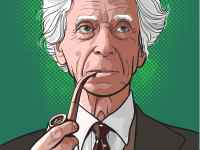
Bertrand Russell. Naci Yavuz/Shurterstock.com

the purpose of philosophy was to teach us “how to live without certainty, and yet without being paralyzed by hesitation.”

In the 21st century, philosophy can remind us of our unfortunate tendency to let economic priorities paralyze action on more pressing concerns.

[ You’re smart and curious about the world. So are The Conversation’s authors and editors. You can read us daily by subscribing to our newsletter. ]

ooOOoo

Bertrand Russell was a great philosopher. Well he was that and much more. Wikipedia remind us that he “was a British philosopher, logician, mathematician, historian, writer, essayist, social critic, political activist, and Nobel laureate.”

He died at the age of 97 on the 2nd February, 1970; fifty years ago as of yesterday.

I’ll close with another quote from the great man:

“The whole problem with the world is that fools and fanatics are always so certain of themselves, and wiser people so full of doubts. …”

This has nothing to do with dogs!

But everything to do with staying fit and healthy.

There are many things that I read first thing in the morning before I am dressed. Ninety-nine percent of them I don’t share with you.

But the following caused me to a) reflect on whether I was guilty of doing this, and b) how many others know of this.

One of the results of having 4,000 (bar 25) followers of this place is that I feel a certain obligation to share certain news.

It was published on The Conversation and is free to reproduce.

So here goes:

ooOOoo

The serious consequence of exercising too much, too fast

Exercising too much, too hard can lead not only to burnout but sometimes to a serious condition that can harm the kidneys.

By , Associate Professor of Exercise and Sports Science, Wayne State University, January 24th, 2020.

Every 365.25 days, when the Earth completes a full orbit around the Sun, we humans have the opportunity to hit the reset button and become fitter, finer versions of ourselves. As usual for January, social media is humming with advice on how to eat better, exercise regularly, lose weight and remain healthy. We feel particularly invincible at this time of year, armed with renewed vigor and motivation to purge ourselves from previous indulgences and our couch-potato ways.

The New Year is also the time when our overzealous, instant-gratification selves emerge, and we do too much exercise too soon to make up for lost time. Exhaustive muscular work, especially following a period of inactivity, can cause mechanical and chemical disruptions to muscle cell membranes which trigger the muscle cells to burst.

I am an exercise physiologist and sports medicine specialist who studies exercise-associated collapse. I am seeing and hearing of more incidents of skeletal muscle ruptures that are causing harm in other parts of the body.

This information is not designed to scare people back onto the couch. The key take-away from highlighting these cases is to remind athletes, coaches and mere mortals that the desired physiological response to a training stimulus requires both a gradual buildup period and period of recovery in between training sessions.

A cross-section of the human kidneys, which can be injured when muscle cells rupture and send toxic chemicals into the bloodstream. crystal light/Shutterstock.com

More than muscle injury

The medical term for skeletal muscle cell rupture is “rhabdomyolysis,” or “rhabdo” for short. When muscle cells rupture or explode, the intracellular contents are released into the bloodstream. These cellular contents include enzymes, such as creatine kinase; electrolytes, such as potassium; and proteins, such as myoglobin.

Myoglobin, in particular, is a big, red protein that can block the kidney filtration system, or renal tubules, that serve as kidney plumbing. It also can dissociate into toxic byproducts that injure kidneys. In rare cases, too much myoglobin in the bloodstream can stop kidney function altogether, as happened with a 27-year old marathon runner who died from kidney failure.

In a study we conducted on college swimmers, we saw a cluster of rhabdomyolysis, in which six out of 34 swimmers were hospitalized after participating in a 20-minute or so “arm competition” to see how many pull-ups, rows and bench presses they could complete. Cases of “symptomatic rhabdo,” or those needing medical treatment, appear to be increasing within collegiate sports teams at an alarming rate, with the characteristic appearance seen in football players returning to January practice after a season-ending holiday layoff.

To date, 17 cases of team rhabdo have occurred from doing “too much, too soon, too fast” and include a variety of sports such as football, swimming, lacrosse, soccer, track, basketball, softball, volleyball and golf.

Noncompetitive athletes affected too

So, what about us mere mortals trying to get back in shape? Any physical activity that is either new or excessive can cause symptomatic rhabdo. Excessive gardening, weightlifting, CrossFit type activities and even a routine Army physical fitness test have triggered symptomatic rhabdo with kidney injury.

Over 90 cases of rhabdo have been documented after spinning, while 119 high school students in Taiwan ended up in the emergency room after their teacher made them complete 120 push-ups within five minutes. Thus, harmful muscle cell rupture can occur after any degree five minutes to 36 hours of exuberant and/or unaccustomed physical activity.

In combination, gradual training and appropriate recovery allow beneficial muscular, cardiovascular and body composition adaptations to occur, such as building muscle, increasing fitness and losing body fat. Our research confirms that a two-week gradual introduction into training after a layoff is required for muscle cell membranes to fully adapt to training stress.

Subclinical rhabdo, or muscle breakdown without acute kidney injury or debilitating symptoms, is common and represents the typical response to training which does not require medical treatment. However, hard exercise, especially following a layoff, with the following signs or symptoms within one to two days requires an appropriate medical examination:

    • excruciating muscle pain that does not resolve over time
    • muscle swelling with limitations in movement
    • nausea or vomiting, or both
    • very dark (looks like Coca-Cola) or sparse urine.

There are risk factors which increase the likelihood of developing rhabdo following a workout. These risk factors include exercising in the heat, dehydration or overhydration, binge drinking, excessive coffee consumption, extreme dietary practices (vegetarian or high [protein] https://doi.org/10.1097/JSM.0000000000000310)) and possessing the sickle cell trait. Both men and women can develop symptomatic rhabdo, although we see more cases in men. Smaller arm muscles appear more susceptible to rupture after five to 30 minutes of exercise than bigger leg muscles for reasons that remain unclear.

Although symptomatic rhabdomyolysis is uncommon, this emergent complication of exercise should be on everyone’s radar since cases are on the rise. We coaches, trainers, scientists, practitioners and others encourage everyone to reap the joys and benefits of regular exercise training. However, we caution against exercising too much too soon. Self- (or coach-) inflicted skeletal muscle cell explosions are fully preventable with adherence to smart, physiologically sound approaches to training.

ooOOoo

Now there’s an element of me not really understanding this (and I haven’t yet watched the video) but that’s no reason not to share it with you.

What do you think? Wiser to share it or too much a case of worrying? Tamara Hew-Butler certainly knows all about this.

Being ever so grateful for one’s lot.

There’s a science background to being healthy and happy.

Especially as one gets older.

It’s Jean’s birthday today and we are grateful for our lot. I’m 75 now and Jean is a few years younger. But more importantly we are so grateful to have met and, subsequently, fallen in love.

As well as Jean’s love in return we have our gorgeous dogs as well (not to count in addition the two horses, the two parakeets and the cat) and they reinforce the feelings of happiness that surround us.

All of which is an introduction to an article on The Conversation that caught my eye yesterday.

I’m afraid it doesn’t mention dogs but then again we dog owners know for sure how they benefit us humans.

ooOOoo

Are you as grateful as you deserve to be?

November 26, 2019
By
Chancellor’s Professor of Medicine, Liberal Arts, and Philanthropy, Indiana University

Gratitude is not only a great feeling but a healthy one. Aaron Amat/Shutterstock.com

As a physician, I have helped to care for many patients and families whose lives have been turned upside down by serious illnesses and injuries. In the throes of such catastrophes, it can be difficult to find cause for anything but lament. Yet Thanksgiving presents us with an opportunity to develop one of the healthiest, most life-affirming and convivial of all habits – that of counting and rejoicing in our blessings.

Gratitude’s benefits

Research shows that grateful people tend to be healthy and happy. They exhibit lower levels of stress and depression, cope better with adversity and sleep better. They tend to be happier and more satisfied with life. Even their partners tend to be more content with their relationships.

Perhaps when we are more focused on the good things we enjoy in life, we have more to live for and tend to take better care of ourselves and each other.

When researchers asked people to reflect on the past week and write about things that either irritated them or about which they felt grateful, those tasked with recalling good things were more optimistic, felt better about their lives and actually visited their physicians less.

It is no surprise that receiving thanks makes people happier, but so does expressing gratitude. An experiment that asked participants to write and deliver thank-you notes found large increases in reported levels of happiness, a benefit that lasted for an entire month.

Philosophical roots

Giving thanks is important for our psyches and our souls. Love You Stock/Shutterstock.com

One of the greatest minds in Western history, the Greek philosopher Aristotle, argued that we become what we habitually do. By changing our habits, we can become more thankful human beings.

If we spend our days ruminating on all that has gone poorly and how dark the prospects for the future appear, we can think ourselves into misery and resentment.

But we can also mold ourselves into the kind of people who seek out, recognize and celebrate all that we have to be grateful for.

This is not to say that anyone should become a Pollyanna, ceaselessly reciting the mantra from Voltaire’s “Candide,” “All is for the best in this, the best of all possible worlds.” There are injustices to be righted and wounds to be healed, and ignoring them would represent a lapse of moral responsibility.

But reasons to make the world a better place should never blind us to the many good things it already affords. How can we be compassionate and generous if we are fixated on deficiency? This explains why the great Roman statesman Cicero called gratitude not only the greatest of virtues but the “parent” of them all.

Religious roots

Gratitude is deeply embedded in many religious traditions. In Judaism, the first words of the morning prayer could be translated, “I thank you.” Another saying addresses the question, “Who is rich?” with this answer: “Those who rejoice in what they have.”

From a Christian perspective, too, gratitude and thanksgiving are vital. Before Jesus shares his last meal with his disciples, he gives thanks. So vital a part of Christian life is gratitude that author and critic G.K. Chesterton calls it “the highest form of thought.”

Gratitude also plays an essential role in Islam. The 55th chapter of the Quran enumerates all the things human beings have to be grateful for – the Sun, Moon, clouds, rain, air, grass, animals, plants, rivers and oceans – and then asks, “How can a sensible person be anything but thankful to God?”

Other traditions also stress the importance of thankfulness. Hindu festivals celebrate blessings and offer thanks for them. In Buddhism, gratitude develops patience and serves as an antidote to greed, the corrosive sense that we never have enough.

Roots even in suffering

In his 1994 book, “A Whole New Life,” the Duke University English professor Reynolds Price describes how his battle with a spinal cord tumor that left him partially paralyzed also taught him a great deal about what it means to really live.

After surgery, Price describes “a kind of stunned beatitude.” With time, though diminished in many ways by his tumor and its treatment, he learns to pay closer attention to the world around him and those who populate it.

Reflecting on the change in his writing, Price notes that his books differ in many ways from those he penned as a younger man. Even his handwriting, he says, “looks very little like that of the man he was at the time of his diagnosis.”

“Cranky as it is, it’s taller, more legible, and with more air and stride. And it comes down the arm of a grateful man.”

A brush with death can open our eyes. Some of us emerge with a deepened appreciation for the preciousness of each day, a clearer sense of our real priorities and a renewed commitment to celebrating life. In short, we can become more grateful, and more alive, than ever.

Practicing gratitude

Good conversation, good friends and connections – not material possessions – bring great joy. Jacob Lund/Shutterstock.com

When it comes to practicing gratitude, one trap to avoid is locating happiness in things that make us feel better off – or simply better – than others. In my view, such thinking can foster envy and jealousy.

There are marvelous respects in which we are equally blessed – the same Sun shines down upon each of us, we all begin each day with the same 24 hours, and each of us enjoys the free use of one of the most complex and powerful resources in the universe, the human brain.

Much in our culture seems aimed to cultivate an attitude of deficiency – for example, most ads aim to make us think that to find happiness we must buy something. Yet most of the best things in life – the beauty of nature, conversation and love – are free.

There are many ways to cultivate a disposition of thankfulness. One is to make a habit of giving thanks regularly – at the beginning of the day, at meals and the like, and at day’s end.

Likewise, holidays, weeks, seasons and years can be punctuated with thanks – grateful prayer or meditation, writing thank-you notes, keeping a gratitude journal and consciously seeking out the blessings in situations as they arise.

Gratitude can become a way of life, and by developing the simple habit of counting our blessings, we can enhance the degree to which we are truly blessed.

[ Thanks for reading! We can send you The Conversation’s stories every day in an informative email. Sign up today. ]

ooOOoo

That reference to Reynolds Price and his challenges make one think. I have been fortunate that nothing really dreadful has happened to me; apart from my father’s death when I had just turned 12. I’m getting a little hazy in terms of certain memories but that’s an old age thing rather than an illness. But to go through what he did; I just don’t know the person that I am, in terms of how I wold react to that.

But to the general tone of the article, I would hope that I can get better and better.

For it’s splendid to cultivate that disposition.

One is to make a habit of giving thanks regularly – at the beginning of the day, at meals and the like, and at day’s end.

Perfect!

Vibrations!

The mind-body debate!

This is a republication of a recent article that appeared on The Conversation site. In a sense, it has nothing to do with dogs. Yet in another sense, it does!

You be the judge.

Meanwhile, I have finished the draft of my book, have printed it out and now have the gargantuan task of reading and editing it before it goes to an independent proof reader. All 56,657 words.

Oh well, if you can’t take a joke, you shouldn’t have joined!

ooOOoo

Could consciousness all come down to the way things vibrate?

November 9th, 2019

By

Affiliate Guest in Psychology, University of California, Santa Barbara

Why is my awareness here, while yours is over there? Why is the universe split in two for each of us, into a subject and an infinity of objects? How is each of us our own center of experience, receiving information about the rest of the world out there? Why are some things conscious and others apparently not? Is a rat conscious? A gnat? A bacterium?

These questions are all aspects of the ancient “mind-body problem,” which asks, essentially: What is the relationship between mind and matter? It’s resisted a generally satisfying conclusion for thousands of years.

The mind-body problem enjoyed a major rebranding over the last two decades. Now it’s generally known as the “hard problem” of consciousness, after philosopher David Chalmers coined this term in a now classic paper and further explored it in his 1996 book, “The Conscious Mind: In Search of a Fundamental Theory.”

Chalmers thought the mind-body problem should be called “hard” in comparison to what, with tongue in cheek, he called the “easy” problems of neuroscience: How do neurons and the brain work at the physical level? Of course they’re not actually easy at all. But his point was that they’re relatively easy compared to the truly difficult problem of explaining how consciousness relates to matter.

Over the last decade, my colleague, University of California, Santa Barbara psychology professor Jonathan Schooler and I have developed what we call a “resonance theory of consciousness.” We suggest that resonance – another word for synchronized vibrations – is at the heart of not only human consciousness but also animal consciousness and of physical reality more generally. It sounds like something the hippies might have dreamed up – it’s all vibrations, man! – but stick with me.

How do things in nature – like flashing fireflies – spontaneously synchronize? Suzanne Tucker/Shutterstock.com

All about the vibrations

All things in our universe are constantly in motion, vibrating. Even objects that appear to be stationary are in fact vibrating, oscillating, resonating, at various frequencies. Resonance is a type of motion, characterized by oscillation between two states. And ultimately all matter is just vibrations of various underlying fields. As such, at every scale, all of nature vibrates.

Something interesting things happen when different vibrating things come together: They will often start, after a little while, to vibrate together at the same frequency. They “sync up,” sometimes in ways that can seem mysterious. This is described as the phenomenon of spontaneous self-organization.

Mathematician Steven Strogatz provides various examples from physics, biology, chemistry and neuroscience to illustrate “sync” – his term for resonance – in his 2003 book “Sync: How Order Emerges from Chaos in the Universe, Nature, and Daily Life,” including:

  • When fireflies of certain species come together in large gatherings, they start flashing in sync, in ways that can still seem a little mystifying.
  • Lasers are produced when photons of the same power and frequency sync up.
  • The moon’s rotation is exactly synced with its orbit around the Earth such that we always see the same face.

Examining resonance leads to potentially deep insights about the nature of consciousness and about the universe more generally.

External electrodes can record a brain’s activity. vasara/Shutterstock.com

Sync inside your skull

Neuroscientists have identified sync in their research, too. Large-scale neuron firing occurs in human brains at measurable frequencies, with mammalian consciousness thought to be commonly associated with various kinds of neuronal sync.

For example, German neurophysiologist Pascal Fries has explored the ways in which various electrical patterns sync in the brain to produce different types of human consciousness.

Fries focuses on gamma, beta and theta waves. These labels refer to the speed of electrical oscillations in the brain, measured by electrodes placed on the outside of the skull. Groups of neurons produce these oscillations as they use electrochemical impulses to communicate with each other. It’s the speed and voltage of these signals that, when averaged, produce EEG waves that can be measured at signature cycles per second.

Each type of synchronized activity is associated with certain types of brain function. artellia/Shutterstock.com

Gamma waves are associated with large-scale coordinated activities like perception, meditation or focused consciousness; beta with maximum brain activity or arousal; and theta with relaxation or daydreaming. These three wave types work together to produce, or at least facilitate, various types of human consciousness, according to Fries. But the exact relationship between electrical brain waves and consciousness is still very much up for debate.

Fries calls his concept “communication through coherence.” For him, it’s all about neuronal synchronization. Synchronization, in terms of shared electrical oscillation rates, allows for smooth communication between neurons and groups of neurons. Without this kind of synchronized coherence, inputs arrive at random phases of the neuron excitability cycle and are ineffective, or at least much less effective, in communication.

A resonance theory of consciousness

Our resonance theory builds upon the work of Fries and many others, with a broader approach that can help to explain not only human and mammalian consciousness, but also consciousness more broadly.

Based on the observed behavior of the entities that surround us, from electrons to atoms to molecules, to bacteria to mice, bats, rats, and on, we suggest that all things may be viewed as at least a little conscious. This sounds strange at first blush, but “panpsychism” – the view that all matter has some associated consciousness – is an increasingly accepted position with respect to the nature of consciousness.

The panpsychist argues that consciousness did not emerge at some point during evolution. Rather, it’s always associated with matter and vice versa – they’re two sides of the same coin. But the large majority of the mind associated with the various types of matter in our universe is extremely rudimentary. An electron or an atom, for example, enjoys just a tiny amount of consciousness. But as matter becomes more interconnected and rich, so does the mind, and vice versa, according to this way of thinking.

Biological organisms can quickly exchange information through various biophysical pathways, both electrical and electrochemical. Non-biological structures can only exchange information internally using heat/thermal pathways – much slower and far less rich in information in comparison. Living things leverage their speedier information flows into larger-scale consciousness than what would occur in similar-size things like boulders or piles of sand, for example. There’s much greater internal connection and thus far more “going on” in biological structures than in a boulder or a pile of sand.

Under our approach, boulders and piles of sand are “mere aggregates,” just collections of highly rudimentary conscious entities at the atomic or molecular level only. That’s in contrast to what happens in biological life forms where the combinations of these micro-conscious entities together create a higher level macro-conscious entity. For us, this combination process is the hallmark of biological life.

The central thesis of our approach is this: the particular linkages that allow for large-scale consciousness – like those humans and other mammals enjoy – result from a shared resonance among many smaller constituents. The speed of the resonant waves that are present is the limiting factor that determines the size of each conscious entity in each moment.

As a particular shared resonance expands to more and more constituents, the new conscious entity that results from this resonance and combination grows larger and more complex. So the shared resonance in a human brain that achieves gamma synchrony, for example, includes a far larger number of neurons and neuronal connections than is the case for beta or theta rhythms alone.

What about larger inter-organism resonance like the cloud of fireflies with their little lights flashing in sync? Researchers think their bioluminescent resonance arises due to internal biological oscillators that automatically result in each firefly syncing up with its neighbors.

Is this group of fireflies enjoying a higher level of group consciousness? Probably not, since we can explain the phenomenon without recourse to any intelligence or consciousness. But in biological structures with the right kind of information pathways and processing power, these tendencies toward self-organization can and often do produce larger-scale conscious entities.

Our resonance theory of consciousness attempts to provide a unified framework that includes neuroscience, as well as more fundamental questions of neurobiology and biophysics, and also the philosophy of mind. It gets to the heart of the differences that matter when it comes to consciousness and the evolution of physical systems.

It is all about vibrations, but it’s also about the type of vibrations and, most importantly, about shared vibrations.

ooOOoo

This may require more than one read. Because, if you are interested in the subject I’m sure you will wish to read it again.

But the underlying premise is that, as was said earlier,: “all matter is just vibrations of various underlying fields.

Beautiful!


Being alone!

We have had a taste of this a week-and-a-half ago.

We were truly alone when we went to Utah.

But then again, one of the privileges of being on 13 acres, 13 very rural acres, here in Southern Oregon is that being alone is not that far away!

I don’t want to underplay the importance of this posting, republished from The Conversation website (with permission), because we live in so busy times.

Written by three professors, it’s a very wise and profound article.

ooOOoo

Spending time alone in nature is good for your mental and emotional health

June 4th, 2018

By

Professor of Outdoor Education, Montreat College

Associate Professor and Program Director of Parks and Recreation Management, Western Carolina Universit

Associate Professor of Outdoor Education, Montreat College

Today Americans live in a world that thrives on being busy, productive and overscheduled. Further, they have developed the technological means to be constantly connected to others and to vast options for information and entertainment through social media. For many, smartphones demand their attention day and night with constant notifications.

As a result, naturally occurring periods of solitude and silence that were once commonplace have been squeezed out of their lives. Music, reality TV shows, YouTube, video games, tweeting and texting are displacing quiet and solitary spaces. Silence and solitude are increasingly viewed as “dead” or “unproductive” time, and being alone makes many Americans uncomfortable and anxious.

But while some equate solitude with loneliness, there is a big difference between being lonely and being alone. The latter is essential for mental health and effective leadership.

We study and teach outdoor education and related fields at several colleges and organizations in North Carolina, through and with other scholars at 2nd Nature TREC, LLC, a training, research, education and consulting firm. We became interested in the broader implications of alone time after studying intentionally designed solitude experiences during wilderness programs, such as those run by Outward Bound. Our findings reveal that time alone in nature is beneficial for many participants in a variety of ways, and is something they wish they had more of in their daily life.

On an average day in 2015, individuals aged 15 and over spent more than half of their leisure time watching TV. Bureau of Labor Statistics, Americans Time Use Survey

Reflection and challenge

We have conducted research for almost two decades on Outward Bound and undergraduate wilderness programs at Montreat College in North Carolina and Wheaton College in Illinois. For each program, we studied participants’ experiences using multiple methods, including written surveys, focus group interviews, one-on-one interviews and field notes. In some cases, we asked subjects years later to look back and reflect on how the programs had affected them. Among other questions, our research looked at participant perceptions of the value of solo time outdoors.

Our studies showed that people who took part in these programs benefited both from the outdoor settings and from the experience of being alone. These findings build on previous research that has clearly demonstrated the value of spending time in nature.

Scholars in fields including wilderness therapy and environmental psychology have shown that time outdoors benefits our lives in many ways. It has a therapeutic effect, relieves stress and restores attention. Alone time in nature can have a calming effect on the mind because it occurs in beautiful, natural and inspirational settings.

Spending time in city parks like Audubon Park in New Orleans provides some of the same benefits as time in wilderness areas, including reduced stress levels and increased energy levels. InSapphoWeTrust, CC BY-SA

Nature also provides challenges that spur individuals to creative problem-solving and increased self-confidence. For example, some find that being alone in the outdoors, particularly at night, is a challenging situation. Mental, physical and emotional challenges in moderation encourage personal growth that is manifested in an increased comfort with one’s self in the absence of others.

Being alone also can have great value. It can allow issues to surface that people spend energy holding at bay, and offer an opportunity to clarify thoughts, hopes, dreams and desires. It provides time and space for people to step back, evaluate their lives and learn from their experiences. Spending time this way prepares them to re-engage with their community relationships and full work schedules.

Putting it together: The outdoor solo

Participants in programmed wilderness expeditions often experience a component known as “Solo,” a time of intentional solitude lasting approximately 24-72 hours. Extensive research has been conducted on solitude in the outdoors because many wilderness education programs have embraced the educational value of solitude and silence.

Solo often emerges as one of the most significant parts of wilderness programs, for a variety of reasons. Alone time creates a contrasting experience to normal living that enriches people mentally, physically and emotionally. As they examine themselves in relation to nature, others, and in some cases, God, people become more attuned to the important matters in their lives and in the world of which they are part.

Solo, an integral part of Outward Bound wilderness trips, can last from a few hours to 72 hours. The experience is designed to give participants an opportunity to reflect on their own thoughts and critically analyze their actions and decisions.

Solitary reflection enhances recognition and appreciation of key personal relationships, encourages reorganization of life priorities, and increases appreciation for alone time, silence, and reflection. People learn lessons they want to transfer to their daily living, because they have had the opportunity to clarify, evaluate and redirect themselves by setting goals for the future.

For some participants, time alone outdoors provides opportunity to consider the spiritual and/or religious dimension of life. Reflective time, especially in nature, often enhances spiritual awareness and makes people feel closer to God. Further, it encourages their increased faith and trust in God. This often occurs through providing ample opportunities for prayer, meditation, fasting, Scripture-reading, journaling and reflection time.

Retreating to lead

As Thomas Carlyle has written, “In (solitary) silence, great things fashion themselves together.” Whether these escapes are called alone time, solitude or Solo, it seems clear that humans experience many benefits when they retreat from the “rat race” to a place apart and gather their thoughts in quietness.

In order to live and lead effectively, it is important to be intentional about taking the time for solitary reflection. Otherwise, gaps in schedules will always fill up, and even people with the best intentions may never fully realize the life-giving value of being alone.

ooOOoo

I would modify that advice from Thomas Carlyle and that is to include a dog.

For in my experience when one is in the mood for a bit of solitary reflection your dog seems to sense it as well.

Writing into old age!

Thank goodness for this!

It’s not exactly a ball of fun growing old. But while somethings inevitable decline writing isn’t one of them. This is a fascinating article from The Conversation.

ooOOoo

One skill that doesn’t deteriorate with age

Reading and writing can prevent cognitive decline.
AJP/Shutterstock.com

Roger J. Kreuz, University of Memphis

When Toni Morrison died on Aug. 5, the world lost one of its most influential literary voices.

But Morrison wasn’t a literary wunderkind. “The Bluest Eye,” Morrison’s first novel, wasn’t published until she was 39. And her last, “God Help the Child,” appeared when she was 84. Morrison published four novels, four children’s books, many essays and other works of nonfiction after the age of 70.

Morrison isn’t unique in this regard. Numerous writers produce significant work well into their 70s, 80s and even their 90s. Herman Wouk, for example, was 97 when he published his final novel, “The Lawgiver.”

Such literary feats underscore an important point: Age doesn’t seem to diminish our capacity to speak, write and learn new vocabulary. Our eyesight may dim and our recall may falter, but, by comparison, our ability to produce and to comprehend language is well preserved into older adulthood.

In our forthcoming book, “Changing Minds: How Aging Affects Language and How Language Affects Aging,” my co-author, Richard M. Roberts, and I highlight some of the latest research that has emerged on language and aging. For those who might fear the loss of their language abilities as they grow older, there’s plenty of good news to report.

Language mastery is a lifelong journey

Some aspects of our language abilities, such as our knowledge of word meanings, actually improve during middle and late adulthood.

One study, for example, found that older adults living in a retirement community near Chicago had an average vocabulary size of over 21,000 words. The researchers also studied a sample of college students and found that their average vocabularies included only about 16,000 words.

In another study, older adult speakers of Hebrew – with an average age of 75 – performed better than younger and middle-aged participants on discerning the meaning of words.

On the other hand, our language abilities sometimes function as a canary in the cognitive coal mine: They can be a sign of future mental impairment decades before such issues manifest themselves.

In 1996, epidemiologist David Snowdon and a team of researchers studied the writing samples of women who had become nuns. They found that the grammatical complexity of essays written by the nuns when they joined their religious order could predict which sisters would develop dementia several decades later. (Hundreds of nuns have donated their brains to science, and this allows for a conclusive diagnosis of dementia.)

While Toni Morrison’s writing remained searingly clear and focused as she aged, other authors have not been as fortunate. The prose in Iris Murdoch’s final novel, “Jackson’s Dilemma,” suggests some degree of cognitive impairment. Indeed, she died from dementia-related causes four years after its publication.

Toni Morrison published her last novel, ‘God Help the Child,’ when she was 84 years old.
AP Photo/Michel Euler

Don’t put down that book

Our ability to read and write can be preserved well into older adulthood. Making use of these abilities is important, because reading and writing seem to prevent cognitive decline.

Keeping a journal, for example, has been shown to substantially reduce the risk of developing various forms of dementia, including Alzheimer’s disease.

Reading fiction, meanwhile, has been associated with a longer lifespan. A large-scale study conducted by the Yale University School of Public Health found that people who read books for at least 30 minutes a day lived, on average, nearly two years longer than nonreaders. This effect persisted even after controlling for factors like gender, education and health. The researchers suggest that the imaginative work of constructing a fictional universe in our heads helps grease our cognitive wheels.

Language is a constant companion during our life journey, so perhaps it’s no surprise that it’s interwoven into our health and our longevity. And researchers continue to make discoveries about the connections between language and aging. For example, a study published in July 2019 found that studying a foreign language in older adulthood improves overall cognitive functioning.

A thread seems to run through most of the findings: In order to age well, it helps to keep writing, reading and talking.

While few of us possess the gifts of a Toni Morrison, all of us stand to gain by continuing to flex our literary muscles.

Richard M. Roberts, a U.S. diplomat currently serving as the Public Affairs Officer at the U.S. Consulate General in Okinawa, Japan, is a contributing author of this article.

Roger J. Kreuz and Richard M. Roberts are the authors of:

Changing Minds: How Aging Affects Language and How Language Affects Aging The Conversation

MIT Press provides funding as a member of The Conversation US.

Roger J. Kreuz, Associate Dean, College of Arts & Sciences, University of Memphis

This article is republished from The Conversation under a Creative Commons license. Read the original article.

ooOOoo

This is not about dogs but it is about writing about dogs!

Helping dogs with cancer, and a bonus!

This item from The Conversation website is very interesting!

Cancer touches so many people.

My father died of lung cancer in 1956. My step-father in turn died of cancer much later on (I can’t recall what cancer it was and when he died).

It’s a terrible disease.

Key facts. Cancer is the second leading cause of death globally, and is responsible for an estimated 9.6 million deaths in 2018. Globally, about 1 in 6 deaths is due to cancer. Approximately 70% of deaths from cancer occur in low- and middle-income countries.

Cancer – World Health Organization

But then this comes along and offers hope.

The Conversation

Published on Jul 23, 2019

Cheryl London, a professor of veterinary medicine at Tufts University, practices “comparative oncology,” or testing cancer treatments in animals for potential use in humans. Her trials give sick pets a chance at a longer life – and could help contribute to new therapies for people.

That seems like it’s good for dogs and good for us!

Bravo!

The power of a photograph

No words to say how I feel!

The bodies of Salvadoran migrant Oscar Alberto Martínez Ramírez and his daughter lie on the bank of the Rio Grande in Matamoros, Mexico. AP Photo/Julia Le Duc

This is a terrible photograph. It has been widely shown but that doesn’t make it any less terrible.

Patrice Ayme recently wrote about the tragedy but for today I am republishing the article in The Conversation.

ooOOoo

How much power can one image actually have?

By

Associate Professor, School of Journalism and Communication, University of Oregon

Professor of Psychology, University of Oregon

When the Associated Press published Julia Le Duc’s photograph of a drowned Salvadoran man, Óscar Alberto Martínez Ramírez, and his 23-month old daughter Valeria, it sparked outrage on social media. According to Le Duc, Ramírez had attempted to cross the Rio Grande after realizing he couldn’t present himself to U.S. authorities to request asylum.

But beyond raising awareness via Twitter and Facebook feeds, does an image like this one have the power to sway public opinion or spur politicians to take action?

As journalism and psychology scholars interested in the effects of imagery, we study the ability of jarring photos and videos to move people from complacency to action. While graphic imagery can have an immediate impact, the window of action – and caring – is smaller than you’d think.

A political catalyst?

Photographs and videos – through their perceived authenticity – can have an effect on people.

Research suggests that the graphic photo of slain Emmett Till in his open casket served as a “political catalyst” in mobilizing Americans to action in the civil rights movement. Similarly, news images have been credited as playing an important role in ending the Vietnam War.

But not all scholars agree. A recent article argued that it was a “myth” that the iconic “napalm girl” photo swayed public opinion and hastened the end of the Vietnam War.

Did the ‘napalm girl’ significantly shift public opinion on the Vietnam War? manhhai/flickr, CC BY

We must also look to psychology to understand the impacts of emotional news content. Research demonstrates that audiences need an emotional connection – and not merely a “just-the-facts” reporting approach – as “prerequisite for political action” when it comes to appreciating the importance of distant mass suffering. And imagery can trigger this emotional connection by overcoming the psychic numbing that occurs when casualties mount, images blur and lost lives become merely dry statistics.

Images from Syria

In April 2017, gut-wrenching images seem to have awakened the world to the human atrocities happening in Syria. Following a chemical bomb attack in the town of Khan Sheikhoun, graphic photos and videos documented the horrific effects of the banned nerve agent sarin. Millions bore witness to excruciating human suffering: gasping, choking, writhing and dying. More than 500 people were injured, with at least 86 deaths, including 28 children.

The vivid, closeup images of sarin attack victims were resonant enough to break through the complacency of people and politicians accustomed to bad news emerging from the war-torn nation. In President Trump’s response – which included a retaliatory missile strike – he seemed to recognize the value of the Syrian lives depicted in the horrific photos and videos.

Syrian doctors treat a child following a suspected chemical attack in the town of Khan Sheikhoun, northern Idlib province, Syria. Edlib Media Center, via AP, File

“When you kill innocent children,” he said during a news conference, “that crosses many, many lines, beyond a red line – many, many lines.”

The limits of an image

Nonetheless, even though the attacks may have briefly heightened U.S. concerns over the wars in Syria, the photographic documentation of the suffering in Syria wasn’t new.

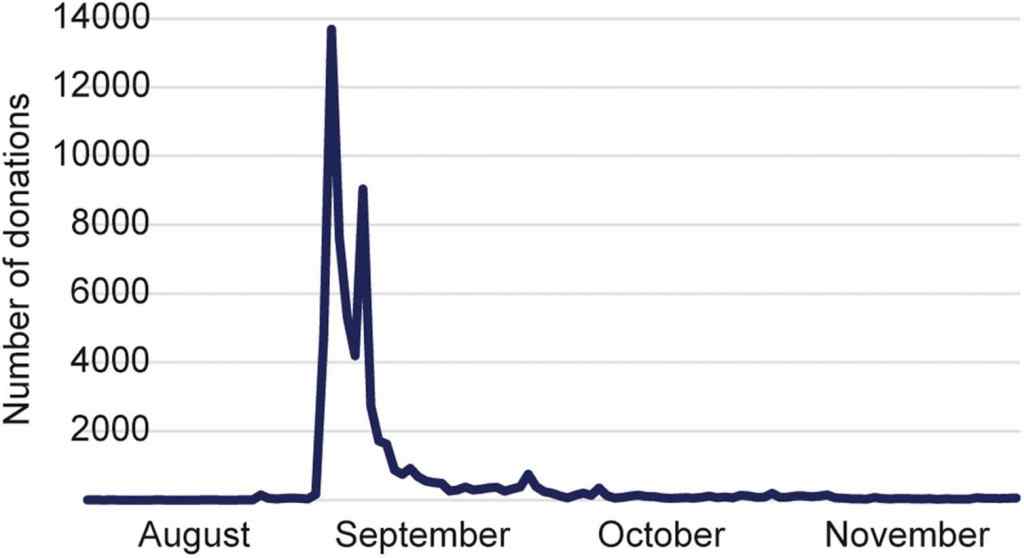
The 2015 photos of a tiny Syrian boy’s lifeless body resting face down in the sand similarly stirred the world’s collective consciousness. Within hours of its release, the photo had reached 20 million people through Twitter, with many more millions seeing it on the front pages of newspapers the next day. Afterwards, government restrictions on accepting refugees were loosened while private donations to organizations like the Red Cross spiked dramatically.

A year later haunting images of a young boy in the back of an ambulance, caked in dirt and blood, galvanized the world.

But the emotional and compassionate responses to both photographs were short-lived. The bombing of civilians in Syria continued. Refugees continued risking their lives to escape the war zone.

After a photograph of a dead Syrian boy went viral in 2015, the number of daily donations to a Swedish Red Cross campaign designated specifically for aiding Syrian refugees spiked dramatically – but only for a brief window. Proceedings of the National Academy of Sciences of the United States of America, CC BY-SA

Since the publication of Le Duc’s photo of the dead migrants, supportive politicians may feel emboldened to sound the alarm on the plight of Central American migrants. Donations to immigrant aid organizations might briefly spike.

But it seems that a photograph, no matter how emotionally devastating, can only do so much.

Yes, it can create a window of time when we’re motivated to act, and we’ll usually do so if we have effective options to pursue. This could mean a charitable donation at the individual level or, collectively, a surge of political will. However, psychology research from the “arithmetic of compassion” suggests that sympathy for distant human suffering declines when we’re presented with rising body counts. Sometimes we’re discouraged by the scope of the problem and this stops us from doing things that actually make a difference – even if partial solutions can save lives. Other times, if the options for helping others seem too narrow or ineffective, we’ll turn away and stop caring.

Images can alert us to the horrors of violence, mass migration and poverty. But as we have seen time and again, photographs and news footage of human suffering generally precipitate a short-term emotional reaction, rather than a sustained humanitarian response.

ooOOoo

As one reads the article it is much more than a comment on a single image despite how terrible that photograph may be.

The two scientists set out to show that the period that we are alarmed or terrified or just plain sad at the state of nations is rather short.

Maybe it’s the self-protective nature of our species that does this.

But it still doesn’t diminish the horror of that top photograph.

More on meteorites.

I saw this story very late yesterday.

This was read quickly towards the end of the day, as in yesterday, but I thought it well worthwhile rescheduling my doggie article until Saturday and putting this in for today.

Later on yesterday it was read more thoroughly and it is full of fascinating information such as the weight of meteorites that fall onto Planet Earth each day. I wasn’t aware of that.

Anyway, hope you too find it of interest.

ooOOoo

The tell-tale clue to how meteorites were made, at the birth of the solar system

By

Professor of Astronomy, Wesleyan University

and

Assistant Professor of Earth and Environmental Sciences, Wesleyan University

June 6th, 2019.

April 26, 1803 was an unusual day in the small town of L’Aigle in Normandy, France – it rained rocks.

Over 3,000 of them fell out of the sky. Fortunately no one was injured. The French Academy of Sciences investigated and proclaimed, based on many eyewitness stories and the unusual look of the rocks, that they had come from space.

The Earth is pummeled with rocks incessantly as it orbits the Sun, adding around 50 tons to our planet’s mass every day. Meteorites, as these rocks are called, are easy to find in deserts and on the ice plains of Antarctica, where they stick out like a sore thumb. They can even land in backyards, treasures hidden among ordinary terrestrial rocks. Amateurs and professionals collect meteorites, and the more interesting ones make it to museums and laboratories around the world for display and study. They are also bought and sold on eBay.

Despite decades of intense study by thousands of scientists, there is no general consensus on how most meteorites formed. As an astronomer and a geologist, we have recently developed a new theory of what happened during the formation of the solar system to create these valuable relics of our past. Since planets form out of collisions of these first rocks, this is an important part of the history of the Earth.

This meteor crater in Arizona was created 50,000 years ago when an iron meteorite struck the Earth. It is about one mile across. W. Herbst, CC BY-SA

The mysterious chondrules

Drew Barringer (left), owner of Arizona meteor crater, his wife, Clare Schneider, and author William Herbst in the Van Vleck Observatory Library of Wesleyan University, where an iron meteorite from the crater is on display. W. Herbst

About 10% of meteorites are pure iron. These form through a multi-step process in which a large molten asteroid has enough gravity to cause iron to sink to its center. This builds an iron core just like the Earth’s. After this asteroid solidifies, it can be shattered into meteorites by collisions with other objects. Iron meteorites are as old as the solar system itself, proving that large asteroids formed quickly and fully molten ones were once abundant.

The other 90% of meteorites are called “chondrites” because they are full of mysterious, tiny spheres of rock known as “chondrules.” No terrestrial rock has anything like a chondrule inside it. It is clear that chondrules formed in space during a brief period of intense heating when temperatures reached the melting point of rock, around 3,000 degrees Fahrenheit, for less than an hour. What could possibly account for that?

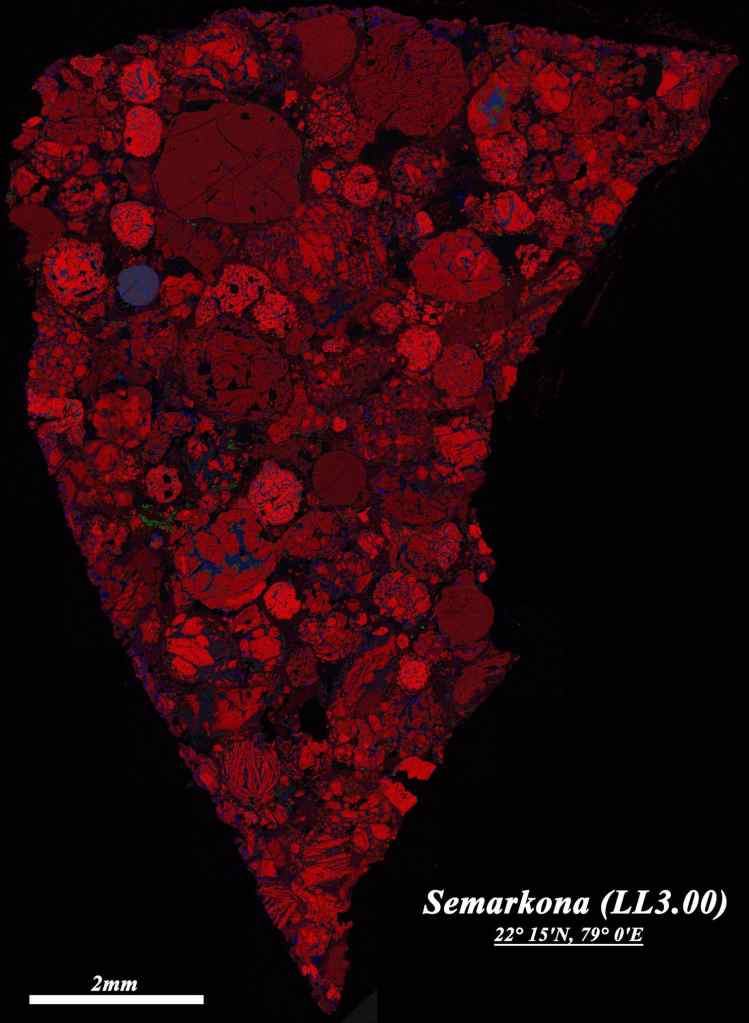
A closeup of the Semarkona meteorite showing dozens of chondrules. Kenichi Abe

Researchers have come up with many hypotheses through the last 40 years. But no consensus has been reached on how this brief flash of heating happened.

The chondrule problem is so famously difficult and contentious that when we announced to colleagues a few years ago that we were working on it, their reaction was to smile, shake their heads and offer their condolences. Now that we have proposed a solution we are preparing for a more critical response, which is fine, because that’s the way science advances.

The flyby model

Our idea is quite simple. Radioactive dating of hundreds of chondrules shows that they formed between 1.8 and 4 million years after the beginning of the solar system – some 4.6 billion years ago. During this time, fully molten asteroids, the parent bodies of the iron meteorites, were abundant. Volcanic eruptions on these asteroids released tremendous amounts of heat into the space around them. Any smaller objects passing by during an eruption would experience a short, intense blast of heat.

To test our hypothesis, we split up the challenge. The astronomer, Herbst, crunched the numbers to determine how much heating was necessary and for how long to create chondrules. Then the geologist, Greenwood, used a furnace in our lab at Wesleyan to recreate the predicted conditions and see if we could make our own chondrules.

Laboratory technician Jim Zareski (top) loads a programmable furnace as co-author Jim Greenwood looks on, in his laboratory at Wesleyan University. This is where the synthetic chondrules are made. W. Herbst

The experiments turned out to be quite successful.

We put some fine dust from Earth rocks with compositions resembling space dust into a small capsule, placed it in our furnace and cycled the temperature through the predicted range. Out came a nice-looking synthetic chondrule. Case closed? Not so fast.

Two problems emerged with our model. In the first place, we had ignored the bigger issue of how chondrules came to be part of the whole meteorite. What is their relationship to the stuff between chondrules – called matrix? In addition, our model seemed a bit too chancy to us. Only a small fraction of primitive matter will be heated in the way we proposed. Would it be enough to account for all those chondrule-packed meteorites hitting the Earth?

A comparison of a synthetic chondrule (left) made in the Wesleyan lab with a heating curve from the flyby model, with an actual chondrule (right) from the Semarkona meteorite. The crystal structure is quite similar, as shown in the enlargements (bottom row). J. Greenwood

Making whole meteorites

To address these issues, we extended our initial model to consider flyby heating of a larger object, up to a few miles across. As this material approaches a hot asteroid, parts of it will vaporize like a comet, resulting in an atmosphere rich in oxygen and other volatile elements. This turns out to be just the kind of atmosphere in which chondrules form, based on previous detailed chemical studies.

We also expect the heat and gas pressure to harden the flyby object into a whole meteorite through a process known as hot isostatic pressing, which is used commercially to make metal alloys. As the chondrules melt into little spheres, they will release gas to the matrix, which traps those elements as the meteorite hardens. If chondrules and chondrites form together in this manner, we expect the matrix to be enhanced in exactly the same elements that the chondrules are depleted. This phenomenon, known as complementarity, has, in fact, been observed for decades, and our model provides a plausible explanation for it.

The authors’ model for forming chondrules. A small piece of rock (right) — a few miles across or less — swings close to a large hot asteroid erupting lava at its surface. Infrared radiation from the hot lava briefly raises the temperature on the small piece of rock high enough to form chondrules and harden part of that object into a meteorite. W. Herbst/Icarus

Perhaps the most novel feature of our model is that it links chondrule formation directly to the hardening of meteorites. Since only well-hardened objects from space can make it through the Earth’s atmosphere, we would expect the meteorites in our museums to be full of chondrules, as they are. But hardened meteorites full of chondrules would be the exception, not the rule, in space, since they form by a relatively chancy process – the hot flyby. We should know soon enough if this idea holds water, since it predicts that chondrules will be rare on asteroids. Both Japan and the United States have ongoing missions to nearby asteroids that will return samples over the next few years.

If those asteroids are full of chondrules, like the hardened meteorites that make it to the Earth’s surface, then our model can be discarded and the search for a solution to the famous chondrule problem can go on. If, on the other hand, chondrules are rare on asteroids, then the flyby model will have passed an important test.

ooOOoo

Perfect timing!

On atheism!

Musings about truth, faith and reason.

One of the Christmas cards that we received said this:

So glad we are friends and neighbors. And I will pray you will have a year full of the peace, love and hope that Jesus promises.

With Love, Hugs and Prayers.

Now I understand to a degree why the sender, a neighbour of ours, would write that. But at the same time I do not. We are clearly atheists. Indeed, back in 2012 on first meeting I happened to say that I was not a believer and it produced a shock; a reaction that how could anyone not be a believer.

And I think yesterday’s post supports the view that the reality of the existence of our solar system, all 2.6 billion years of it, shows that religious beliefs of all forms come from an age where the world beyond one’s doorstep was unknown and scary. Things are different now.

But to go back to the age of things.

That existence of our solar system came about some 9.2 billion years, give or take some 60 million years, after the Big Bang.

In other words, the Big Bang, that started the whole thing off, came about three and a half times earlier than the creation of the solar system.

So read the following by Prof. Jerry Coyne. It makes perfect sense.

ooOOoo

Yes, there is a war between science and religion

   Professor Emeritus of Ecology and Evolution, University of Chicago

As the West becomes more and more secular, and the discoveries of evolutionary biology and cosmology shrink the boundaries of faith, the claims that science and religion are compatible grow louder. If you’re a believer who doesn’t want to seem anti-science, what can you do? You must argue that your faith – or any faith – is perfectly compatible with science.

And so one sees claim after claim from believers, religious scientists, prestigious science organizations and even atheists asserting not only that science and religion are compatible, but also that they can actually help each other. This claim is called “accommodationism.”

But I argue that this is misguided: that science and religion are not only in conflict – even at “war” – but also represent incompatible ways of viewing the world.

Opposing methods for discerning truth

My argument runs like this. I’ll construe “science” as the set of tools we use to find truth about the

The scientific method relies on observing, testing and replication to learn about the world. Jaron Nix/Unsplash, CC BY

universe, with the understanding that these truths are provisional rather than absolute. These tools include observing nature, framing and testing hypotheses, trying your hardest to prove that your hypothesis is wrong to test your confidence that it’s right, doing experiments and above all replicating your and others’ results to increase confidence in your inference.

And I’ll define religion as does philosopher Daniel Dennett: “Social systems whose participants avow belief in a supernatural agent or agents whose approval is to be sought.” Of course many religions don’t fit that definition, but the ones whose compatibility with science is touted most often – the Abrahamic faiths of Judaism, Christianity and Islam – fill the bill.

Next, realize that both religion and science rest on “truth statements” about the universe – claims about reality. The edifice of religion differs from science by additionally dealing with morality, purpose and meaning, but even those areas rest on a foundation of empirical claims. You can hardly call yourself a Christian if you don’t believe in the Resurrection of Christ, a Muslim if you don’t believe the angel Gabriel dictated the Qur’an to Muhammad, or a Mormon if you don’t believe that the angel Moroni showed Joseph Smith the golden plates that became the Book of Mormon. After all, why accept a faith’s authoritative teachings if you reject its truth claims?

Indeed, even the Bible notes this: “But if there be no resurrection of the dead, then is Christ not risen: And if Christ be not risen, then is our preaching vain, and your faith is also vain.”

Many theologians emphasize religion’s empirical foundations, agreeing with the physicist and Anglican priest John Polkinghorne:

“The question of truth is as central to [religion’s] concern as it is in science. Religious belief can guide one in life or strengthen one at the approach of death, but unless it is actually true it can do neither of these things and so would amount to no more than an illusory exercise in comforting fantasy.”

The conflict between science and faith, then, rests on the methods they use to decide what is true, and what truths result: These are conflicts of both methodology and outcome.

In contrast to the methods of science, religion adjudicates truth not empirically, but via dogma, scripture and authority – in other words, through faith, defined in Hebrews 11 as “the substance of things hoped for, the evidence of things not seen.” In science, faith without evidence is a vice, while in religion it’s a virtue. Recall what Jesus said to “doubting Thomas,” who insisted in poking his fingers into the resurrected Savior’s wounds: “Thomas, because thou hast seen me, thou hast believed: blessed are they that have not seen, and yet have believed.”

Two ways to look at the same thing, never the twain shall meet. Gabriel Lamza/Unsplash, CC BY

And yet, without supporting evidence, Americans believe a number of religious claims: 74 percent of us believe in God, 68 percent in the divinity of Jesus, 68 percent in Heaven, 57 percent in the virgin birth, and 58 percent in the Devil and Hell. Why do they think these are true? Faith.

But different religions make different – and often conflicting – claims, and there’s no way to judge which claims are right. There are over 4,000 religions on this planet, and their “truths” are quite different. (Muslims and Jews, for instance, absolutely reject the Christian belief that Jesus was the son of God.) Indeed, new sects often arise when some believers reject what others see as true. Lutherans split over the truth of evolution, while Unitarians rejected other Protestants’ belief that Jesus was part of God.

And while science has had success after success in understanding the universe, the “method” of using faith has led to no proof of the divine. How many gods are there? What are their natures and moral creeds? Is there an afterlife? Why is there moral and physical evil? There is no one answer to any of these questions. All is mystery, for all rests on faith.

The “war” between science and religion, then, is a conflict about whether you have good reasons for believing what you do: whether you see faith as a vice or a virtue.

Compartmentalizing realms is irrational

So how do the faithful reconcile science and religion? Often they point to the existence of religious scientists, like NIH Director Francis Collins, or to the many religious people who accept science. But I’d argue that this is compartmentalization, not compatibility, for how can you reject the divine in your laboratory but accept that the wine you sip on Sunday is the blood of Jesus?

Can divinity be at play in one setting but not another? Jametlene Reskp/Unsplash, CC BY

Others argue that in the past religion promoted science and inspired questions about the universe. But in the past every Westerner was religious, and it’s debatable whether, in the long run, the progress of science has been promoted by religion. Certainly evolutionary biology, my own field, has been held back strongly by creationism, which arises solely from religion.

What is not disputable is that today science is practiced as an atheistic discipline – and largely by atheists. There’s a huge disparity in religiosity between American scientists and Americans as a whole: 64 percent of our elite scientists are atheists or agnostics, compared to only 6 percent of the general population – more than a tenfold difference. Whether this reflects differential attraction of nonbelievers to science or science eroding belief – I suspect both factors operate – the figures are prima facie evidence for a science-religion conflict.

The most common accommodationist argument is Stephen Jay Gould’s thesis of “non-overlapping magisteria.” Religion and science, he argued, don’t conflict because: “Science tries to document the factual character of the natural world, and to develop theories that coordinate and explain these facts. Religion, on the other hand, operates in the equally important, but utterly different, realm of human purposes, meanings and values – subjects that the factual domain of science might illuminate, but can never resolve.”

This fails on both ends. First, religion certainly makes claims about “the factual character of the universe.” In fact, the biggest opponents of non-overlapping magisteria are believers and theologians, many of whom reject the idea that Abrahamic religions are “empty of any claims to historical or scientific facts.”

Nor is religion the sole bailiwick of “purposes, meanings and values,” which of course differ among faiths. There’s a long and distinguished history of philosophy and ethics – extending from Plato, Hume and Kant up to Peter Singer, Derek Parfit and John Rawls in our day – that relies on reason rather than faith as a fount of morality. All serious ethical philosophy is secular ethical philosophy.

In the end, it’s irrational to decide what’s true in your daily life using empirical evidence, but then rely on wishful-thinking and ancient superstitions to judge the “truths” undergirding your faith. This leads to a mind (no matter how scientifically renowned) at war with itself, producing the cognitive dissonance that prompts accommodationism. If you decide to have good reasons for holding any beliefs, then you must choose between faith and reason. And as facts become increasingly important for the welfare of our species and our planet, people should see faith for what it is: not a virtue but a defect.

ooOOoo

I would love to have your views.