Tag: Pharaoh

The book! Chapter Two.

Words after words after words!

The completion of the draft of Chapter Two, very much a draft you’ll find, brings the total words to-date to 4,730.  That’s not counting Chapter Three that is more or less finished at around 3,000 words and Chapter Four, three-quarters finished at 1,650 words.  For a grand total as at the end of the 5th November of 9,380 words!  So a little over 1,000 words ahead of the game until tomorrow, the 6th, comes and I’m then 600 words behind the curve.

So, trust me, the 1,667 words required each day is relentless.

But I’m enjoying it! 🙂

So here is Chapter Two and tomorrow, Thursday, I’ll give you wonderful readers a break from The Book!

oooOOOooo

Learning from Dogs

Chapter Two

Days slipped into weeks with young Pharaoh settling down so perfectly well.  Philip was fortunate that just a little over five miles away his nephew, James, had thirty acres of land near Staverton, of which fifteen were woods.  Even better, the entire property surrounded by a stock-proof fence.

So almost from day one, Philip would put Pharaoh into the back of the Volvo and drive across to those secluded acres for an hour or so of exploring all the smells that Mother Nature could offer.  Indeed, by the end of October it was a routine that each of them looked forward to.  Pharaoh would busy himself in ways that only a dog can do, totally lost in his world of these trees.  Philip would settle himself down on an old stump and just let his wonderful dog have the time of his life.  That dog was becoming such a great companion and his already deep bond with the young Pharaoh and the dog’s clear devotion in return to him fed some very deep emotional needs.

This yearning for a dog, specifically for a German Shepherd dog, had links back to very early times in his life.  Way back to 1956 when he was just eleven-years-old.  That Summer when his father had offered to look after a nearby couple’s German Shepherd because they had to travel to Australia and would be away for six weeks.  That late Summer having the dog so quickly settle in at home, so quickly the dog allowing young Philip to play with it, stroke it, cuddle up to it.  Having Boy, for that was the simple and straightforward name for the dog, sleep in his bedroom.  It was instant love for Boy by Philip.  Those six weeks had been precious beyond description resulting in them becoming a life-long, unforgettable, enchanting memory.  So deeply linked to the event that was to change Philip’s life forever. For just six weeks after he turned twelve his father died suddenly and unexpectedly at night; just five days before Christmas.  The pain of his father’s sudden death in such contrast to the purest love he had felt for Boy, such extremes of joy and sorrow, would haunt Philip for decades.

Philip was conscious that he was leaving it a little late to sign up for dog training classes but in many ways Pharaoh was learning naturally and rapidly from both Philip and Maggie.  He would listen intently to what was being spoken in the house.  He had quickly learned the meaning of ‘Sit’, ‘Stand’, ‘Lie down’ and a host of other more complex communications.  Within just a couple of weeks Pharaoh knew that when Philip said to Maggie, “Guess I better take Pharaoh for a walk!”, the dog would get so over-excited that Philip quickly amended saying the word ‘walk’ to spelling it out ’w-a-l-k’.  But within days of that change Pharaoh had learnt that spelling out the word didn’t change the intention, and the over-excitement returned.  Nevertheless, the time for training was now if Philip was to take Pharaoh anyplace where there would be other people and dogs.  Plus Pharaoh was rapidly losing his puppyhood and growing into a significant male German Shepherd.

Philip rang Sandra and she recommended the South Brent Dog Classes just a few miles away from home. So that first Saturday afternoon in November, grey clouds spilling down from the moors, a hint of drizzle in the air, Philip drove West out of Totnes along the Ashburton Road.  Pharaoh instinctively new something was up despite him so frequently being put in the back of the old Volvo Estate every time he was taken for walks.

The road meandered out of Totnes through green country hills where the sheep population far outnumbered humans.  Totnes itself was surrounded by hills and dales as well as acres of green grasslands, the latter so closely cropped by sheep. Every fold in those hills seemed to hold either an ancient wood or an even older village that still felt so strongly connected with the long-ago settlements that preceded these havens.  Names such as Berry Pomeroy, Stoke Gabriel, Dartington, Asprington, Harberton, Diptford, Rattery, Littlehempston; such echoes of times long gone. Philip mused about the history of Totnes, the ancient legend of Brutus of Troy, the mythical founder of Britain, first coming ashore here.  Presumably, he pondered, because the town is at the head of the estuary of the River Dart and the Dart is one of the first safe anchorages along the Northern coastline of the English Channel, up from the South-West tip of Cornwall. In fact, set into the pavement of Fore Street in Totnes is the ‘Brutus Stone’.  It’s a small granite boulder onto which, according to that legend, Brutus first stepped from his ship, proclaiming, ”Here I stand and here I rest. And this town shall be called Totnes.”  Philip pondered that the likelihood of the legend being true was pretty low.  But it was a great tourist magnet!

Just six miles later, Pharaoh still sitting erect intently watching the passing cars, Philip drove across the flyover that spanned the main Exeter to Plymouth road, the A38.  Seemingly always busy, whatever the time of day, or day of the week, the speeding cars were throwing up a road spray as the drizzle had now deteriorated into a steady light rain.

Philip turned onto the B3372, that meandering country lane that ran into South Brent.  He had been told to watch out for a five-acre field to the right just before entering South Brent; that was where the classes were held, come all weathers!

The open field gate and half-a-dozen parked cars made the location obvious.  Philip drove carefully in, parked on a gravel parking area, leaving some distance from the smart, white Ford van to his right-hand side, and turned the engine off.

The ignition key had hardly been dropped into his coat pocket when Pharaoh erupted into a frenzy of barking. Thirty yards away a cheerful Cocker Spaniel was being walked across to the gathering group of dogs and respective owners and this clearly had triggered the barking.

Pharaoh’s nose was pressed up against the tailgate glass, his whole body tense, ears erect, tail straight out.  This was a dog in attack posture.  The sound of barking was overwhelming in the confined space of the car.

“Pharaoh! Shut it! Quiet!”, shouted Philip.

Pharaoh stopped barking but was still quivering all over, giving every indication of wanting to jump out of the car and beat up the Cocker Spaniel.

This was not what Philip had anticipated; far from it.

Philip swung his legs out of the car, stood up and closed the door.  He better find the person in charge of the class and get acquainted with the routine.  The rain was typical for Dartmoor!  Fine rain that seemed to have a way of working its way through the most tightly buttoned coats.  He pulled his coat collar up around the back of his neck and walked across to where a group of people were standing together, perhaps half of them with dogs held close to them on leashes.

As Philip approached the group, a woman, perhaps early middle-age, her dark-brown hair spilling out from under a leaf-green felt hat, caught his eye.  She walked over to them, her blue jeans tucked into black Wellington boots.

“Hallo, you look like a first-timer?”

“Yes, that’s correct.  Name’s Philip. Philip Stevens from Harberton together with my German Shepherd, Pharaoh.”

“Well welcome to the class.  My name is Deborah Longland and I’m the instructor around here.  Call me Debbie; most do!”

Philip quickly guessed she was an experienced and supportive coach.  Just something about her that way.

“Was that Pharaoh that I heard barking a few moments ago?”, Debbie asked.

“Yes, first time he has behaved like that.”

Debbie was looking across at the Volvo. “Strong, male German Shepherd, I don’t doubt. Not uncommon at all,” she replied, continuing, “Leave him in the car until I have the first class underway.”

Debbie went on to explain, “We have the regulars walk around that grass area over there with all their dogs on leashes.  This gets them settled down.  Then we reinforce the usual commands, as you will see.”

Philip looked to where Debbie was indicating.  The nearest corner of the grassland that must have been three or four acres had an area that showed clear previous signs of dogs and owners walking round in a wide circle.

“After that, in about twenty minutes,” Debbie continued, “then we will bring Pharaoh in with, perhaps, just two or three other dogs, and see how he behaves.”

Then adding, “Once the first class is running, I suggest you give Pharaoh a bit of a walk around the far part of the field.  Get him adjusted to the environment.”

“Oh, I presume Pharaoh is settled on the leash?” Debbie added as an afterthought.

Philip replied, “Yes, he’s fine on his lead.  In fact, he walks well with me despite no formal heeling lessons.”

Debbie came back at him. “Shepherds are incredibly intelligent dogs and I can tell just from the way you speak about him that the two of you are very close.  Catch you later, must dash now.”

Philip went back to the car and reached in to the rear brown, pseudo-leather bench-seat and picked up Pharaoh’s leash.  It was a handsome affair, even if was just a dog lead.  Sandra Chambers from the breeding kennels had recommended the type, a leash that had two length settings.  More importantly, the supple, heavy-duty leather leash had a hand loop just six inches up from the snap catch.  This allowed Philip to hold the leash in his left hand with Pharaoh having no freedom to be anything other than close to Philip’s left leg, the recommended arrangement for walking a dog on a lead. Right from the first moment that Pharaoh had been taken across to James’ woods, Philip had taught Pharaoh to ‘heel’ on the leash as they walked the grassy track down to the woods.  It wasn’t long before Pharaoh would obediently remain close to Philip’s side without any pulling on his lead, even with the leash at full length.  But how would it be today?

Philip leaned over the back of the bench-seat and clipped the lead onto Pharaoh’s collar before slipping back out from the car and closing the side door.  He walked around to the tailgate and inched it open; sufficient to slip his arm inside and grab the leash.  With his other arm, he raised the tailgate to its full extent.  Pharaoh sat on his haunches just staring at everything.

“Pharaoh, down you get, there’s a good boy.”

Pharaoh dropped down on to the grass and looked up at Philip. It was clear that this was all very unfamiliar territory, for the first time in his young Shepherd’s life.

Philip gave him a couple of quick commands. “Pharaoh, stand! Pharaoh, heel!”

With that, Philip stepped, left foot forward, and Pharaoh was right on the mark.

It was a walk of a couple of hundred paces to get them to the far corner of the field.  The ground had risen in their direction and now when Philip had Pharaoh sit and they looked back across the field and beyond to the rolling South Hams countryside so typical of South Devon, the view, even with the light rain, was so comforting; so homely.

Despite a lifetime of living in so many places, both within the UK, and overseas, this part of Devon felt so strongly connected to the person he was, that this was his home, where his roots were.  That Acton, his place of birth in North London, just happened to be a technicality in his life’s journey.

Before they knew it, the first group was leaving the walking area and it was time to experience Pharaoh’s first obedience class!

They waited just to one side.  Debbie came across.

“Philip, do you know what Pharaoh is like with other dogs?”

“No experience whatsoever,” he replied, continuing “We live over at Harberton but I have access to private woods at Staverton.  Pharaoh is walked there most days. So I have never walked him in a public place and have no intention of doing that until he’s been properly trained and assessed; by you, I guess.”

“OK, let’s take it cautiously.  Walk Pharaoh into the centre of the exercise area, have him sit, hold him close to on his leash.”

Debbie was quiet in thought for a few moments, unaware, it seemed, of the rain water that looked as though it were soaking into the crown of her hat.

“We have many dogs here today, although no Shepherds. I will ask a few of the owners to walk their dogs, dogs I know well, one at a time in a circle about you and Pharaoh, coming in closer each time if it all runs to plan.”

Philip walked Pharaoh to that centre spot.

“Pharaoh, sit!” He did so without hesitation.

A black, female Labrador and her owner, a gent wearing a black, full-length raincoat over brown hiking boots, the gent’s right hand carrying a wooden walking-stick, detached themselves from the group of dogs and owners and commenced to walk obliquely around them.

Philip reinforced his instructions to Pharaoh. “Pharaoh, Stay! Sit, there’s a good boy!”

Debbie was thirty feet away watching the proceedings carefully.

“Tom,” Debbie called out to the circling gent, “Come in just a few feet and continue circling Pharaoh.”

So far, so good.

“OK Tom, that’s fine.  Going to move on to Geoff and his dog.”

Tom and the Lab returned to the owner’s group and a younger man, perhaps in his late twenties, came across with a smaller, creamy coloured male dog.  To Philip eye’s the dog looked like a Pit Bull or a Pit Bull mix.

The dog was a far less settled creature than the Lab, and Terry, for the name of the dog immediately became clear, was prompted several times to heel.

Terry and his owner approached the circling zone.  Pharaoh started to bristle, the hairs on the nape of his soft, brown neck lifting in anticipation of something, something only known to Pharaoh.

“Pharaoh, sit,” Philip voiced sternly as he noticed Pharaoh’s rear quarters just lifting up from the wet grass.

As Geoffrey and Terry circled around the rear of Philip and Pharaoh, Pharaoh squirmed his body and head so as to keep an eye on this other dog.

Then it happened!

As the Pit Bull arrived off to Philip’s right side, about eight feet away, Pharaoh sprang at the dog.  It was not entirely unexpected by Philip but even so, even with Pharaoh being held at short rein, the jump practically dragged Philip off his feet.  He had no idea that Pharaoh had such power in his legs now.  He was just a little over four months old!

“Pharaoh, No! Come here! Come back!” Philip combined shouting angry commands with dragging Pharaoh back to his left side.  Pharaoh begrudgingly obeyed but continued barking fiercely, standing erect on all four legs, lips curled back exposing his fangs and teeth; indeed everything about him signalling to the Pit Bull that Pharaoh was a deeply unhappy animal.

Debbie signalled to Geoff to retreat from the area and, as quickly as Pharaoh became upset, he settled down and squatted back on his haunches.

Debbie walked across to Philip.

“I’m terribly sorry to say this,” Debbie said quietly to Philip, “but I think you have a German Shepherd with an aggression issue.”

“Until you get that sorted, I just can’t take the risk of Pharaoh coming to these classes.  Under the circumstances, I’ll waive today’s training fee.”

With that Debbie returned to the other owners.

Philip was gutted.  Utterly shocked to his core.  The dog that meant so much to him had been rejected.  That rejection was as much his rejection as it was Pharaoh’s.

2,692 words Copyright © 2013 Paul Handover

The knowing of dogs.

A fascinating study on human empathy strikes a chord with man and dog, perhaps.

Let me start with a true account from the evening of Monday, 19th August.

That evening, at 7pm, I had an appointment with my doctor in Grants Pass.  Jean stayed at home looking after our guests and preparing the evening meal.

The journey from the doctor’s clinic back to home, a distance of 20 miles, takes a little over half-an-hour.  The last 3 miles are along Hugo Road; about 6 minutes including opening and closing the gate across our driveway.
Anyway, according to Jean shortly after 8pm Pharaoh sprang up barking and went across to put his nose against one of the windows that looks out over our front drive and garden.  Jeannie looked at the clock on the kitchen wall and made a note of the time: it was 8:10pm.  She also came over to the window that Pharaoh was looking out of and searched for any reason for his outburst of barking: squirrels, deer, any kind of wildlife or other distraction.  There was none.
A little before 8:20pm Jeannie saw the headlights of my car pull up and moments later I came in through the front door.

It appeared that Pharaoh had sensed the point where I had turned into Hugo Road.

One could easily dismiss this, perhaps by thinking that Jean had unconsciously signalled to Pharaoh that I was on my way home.  But Jean had only the vaguest idea of when I might be back.

Or one could be drawn to the research undertaken by Dr. Rupert Sheldrake, as this extract from a post back in May, 2011 explains.

What an amazing book this is.

Amazing!

I have written about Dr Rupert Sheldrake a few times on Learning from Dogs for pretty obvious reasons!  You can do a search on the Blog under ‘sheldrake’ but here are a couple of links.  Serious Learning from Dogs on January 10th, 2011 and Time for a rethink on the 14th April, 2011.

Anyway, I am now well towards the end of Sheldrake’s revised book, Dogs That Know When Their Owners Are Coming Home and it is more than fascinating.  Bit short of time just now so please forgive me if I do no more than show this video which sets out some of the background to the book.  Sheldrake’s website is here, by the way.

Anyway, what’s this all leading up to?

I can’t recall where it was that I read about a report posted on the Forbes website about the new findings of the power of human empathy.

Study: To The Human Brain, Me Is We

A new study from University of Virginia researchers supports a finding that’s been gaining science-fueled momentum in recent years: the human brain is wired to connect with others so strongly that it experiences what they experience as if it’s happening to us.

This would seem the neural basis for empathy—the ability to feel what others feel—but it goes even deeper than that. Results from the latest study suggest that our brains don’t differentiate between what happens to someone emotionally close to us and ourselves, and also that we seem neurally incapable of generating anything close to that level of empathy for strangers.

The research revealed:

“The correlation between self and friend was remarkably similar,” said James Coan, a psychology professor in U.Va.’s College of Arts & Sciences who co-authored the study. “The finding shows the brain’s remarkable capacity to model self to others; that people close to us become a part of ourselves, and that is not just metaphor or poetry, it’s very real. Literally we are under threat when a friend is under threat. But not so when a stranger is under threat.”

The findings back up an assertion made by the progenitor and popularizer of “Interpersonal Neurobiology,” Dr. Daniel Siegel, who has convincingly argued that our minds are partly defined by their intersections with other minds. Said another way, we are wired to “sync” with others, and the more we sync (the more psycho-emotionally we connect), the less our brains acknowledge self-other distinctions.

Later in that Forbes article Professor Coan is reported:

“A threat to ourselves is a threat to our resources,” said Coan. “Threats can take things away from us. But when we develop friendships, people we can trust and rely on who in essence become we, then our resources are expanded, we gain. Your goal becomes my goal. It’s a part of our survivability.”

So if science is discovering that our subconscious minds are connecting “psycho-emotionally” with the minds of others whom we trust, then it doesn’t seem like too great a leap to embrace human minds psycho-emotionally connecting with the animals that we trust, and vice versa.  Because for thousands upon thousands of years, the domesticated dog and man have depended on each other for food, protection, warmth, comfort and love.

Footnote.

References for those who wish to follow up on this article are:

Original Forbes article, written by David DeSalvo.

David DeSalvo’s website.

Daniel J. Siegel, clinical professor of psychiatry at the UCLA School of Medicine and Executive Director of the Mindsight Institute.

Daniel Siegel’s book The Developing Mind.

Professor Robin Ian MacDonald Dunbar, British anthropologist, evolutionary psychologist and a specialist in primate behaviour.  His theory known as Dunbar’s Number explained here.

Oxford Journal: Familiarity promotes the blurring of self and other in the neural representation of threat.

Four years old!

How time flies!

Four years ago this day, the first post was published on Learning from Dogs.  Here it is again:

Parenting lessons from Dogs!

Much too late to make me realise the inadequacies of my own parenting skills, I learnt an important lesson when training my GSD (who is called Pharaoh, by the way).  That is that putting more emphasis into praise and reward for getting it right ‘trains’ the dog much quicker than telling it off.  The classic example is scolding a dog for running off when it should be lots of hugs and praise for returning home.  The scolding simply teaches the dog that returning home isn’t pleasant whereas praise reinforces that home is the place to be.  Like so many things in life, very obvious once understood!

Absolutely certain that it works with youngsters just the same way.

Despite being a very dominant dog, Pharaoh showed his teaching ability when working with other dogs.  In the UK there is an amazing woman, Angela Stockdale, who has proved that dogs (and horses) learn most effectively when being taught by other dogs (and horses).  Pharaoh was revealed to be a Beta Dog, (i.e. second in status below the Alpha Dog) and, therefore, was able to use his natural pack instinct to teach puppy dogs their social skills and to break up squabbles within a pack.

When you think about it, don’t kids learn much more (often to our chagrin!) from other kids than they do from their parents.  Still focusing on giving more praise than punishment seems like a much more effective strategy.

As was read somewhere, Catch them in the act of doing Right!

By Paul Handover.

As it happens, it feels a little like ‘what goes around, comes around’.  Why do I say that?

Because just last Saturday, I sent off a selection of pictures and videos to Angela Stockdale.  Stay with me for a while as to the reason why.

Angela trades under the name of The Dog Partnership and, frankly, what she doesn’t know about the behaviour of dogs isn’t worth bothering about!

Just take a peek at the page on her website under the heading of Teaching Dogs.  Here’s a little of what Angela writes:

I consider myself so lucky for dogs alone to have been my teachers. I learnt from watching how my own dogs responded to another dog’s body language and vice versa their language. Watching, learning and working with Teaching Dogs was the only way I knew.

I was and always will be in awe of a Teaching Dog’s dogs ability to consciously adapt their body language in accordance to how the other dog was feeling. The result being, they could relax nervous dogs but at the same time maintain control of a problem situation. Remember, dogs talk dog far better than we do.

It came as quite a shock to me when I learnt about other approaches. It seemed foreign for people to have so much input in resolving what were described as ‘ behavioural’ issues. For me, working with these dogs was far more than resolving a behavioural issue. It was about improving the quality of lives of dogs who were not coping with everyday life. If they found dogs or people worrying, sometimes this was shown in displays of aggression. It is important to understand, these dogs were not aggressive, they simply displayed aggressive behaviour.

Now, I would like to introduce you to the world of Teaching Dogs and how these special dogs change the lives of less fortunate dogs, who never had the opportunity to really understand how to communicate with their own species.

Do read the rest here.

Back to why those photographs and videos had been sent to Angela.  A couple of weeks ago, we enjoyed an evening meal with friends of friends, so to speak.  This other couple owned a beautiful-looking male German Shepherd dog: Duke.  Duke was 4-years-old.  Our hostess remarked that he was very boisterous and had nipped a couple of strangers who had called at the house.  She added that he seemed difficult to control.  Duke had been there for about a month and he was a rescue so they had little or no knowledge of past behaviour.

Well, I’m no expect with dogs, that’s Jean’s domain.  But there was something about Duke that captivated me.  Something in the way he looked at me, his eyes linking so directly with mine, allowing me to see a dog that offered an honest openness.

More or less on impulse I stood up, held my right arm up at 45 degrees, looked Duke in the face and said, “Duke! Sit!”

Duke held my gaze and sat back on his haunches.

I moved my arm in a complete circle, around to the right, and said, “Duke! Lie down!” Duke lay down.

H’mm, I thought. Fascinating.  This dog has been professionally trained at some point in the past, using the same ‘command’ system of voice and arm signalling as I had learnt with Pharaoh way back in 2003/2004.

The food was now on the table.  I grabbed a small piece of meat off my plate and returned to Duke who had, of course, resumed his pottering around the room.  “Duke! Here boy!”  Duke came over to me.  “Duke! Lie down!”  Duke did so.  I placed the piece of meat on the wooden floor about three feet in front of him.  Duke’s eyes were riveted on the meat.  “Duke!”  Duke’s eyes reluctantly engaged with mine.  “Duke! Stay!”  I repeated the Stay command a couple more times as I backed away about 6 or 8 feet.

“Go on, Boy. Take the meat!”  Duke gleefully grabbed the piece of meat.  Gracious, I thought, this dog is magnificent.  I wonder ……..

I took another piece of meat, “Duke! Sit!”  “Duke! Stay!”  I then backed off that 8 feet again, got down on my knees and placed the piece of meat just between my lips.  I knew this was potential madness with a dog I had only met some 30 minutes previously, but there wasn’t an ounce of doubt in my mind.  I voiced in my throat for Duke to fetch the meat. Duke came straight over and confidently and carefully removed the meat from my lips.

What a truly fabulous dog! It was a wonderful evening and once home both Jean and I were eulogising about Duke.

Then two days later, our dinner hostess rang me.  “You know, I have decided we can no longer keep Duke.  He is too strong a dog, I can’t control him.  Is there any chance of you finding a new home for Duke?”

Without question, Jean and I would have offered Duke a new home; in a heartbeat.  The only thing stopping that was me wondering if this strong-willed, male German Shepherd might be a Beta dog, as Pharaoh was. Or just might be too dominant a male dog to fit in comfortably with our dogs, especially Pharaoh who was at the stage of life where the last thing that should happen is for his happiness and contentment to be disturbed.

I hadn’t a clue as to how to answer that question.  But I knew someone who would know: Angela Stockdale.

I rang her, caught up on old times and then explained the background to Duke’s situation.  Angela said to repeat the exercise that I had witnessed when I took Pharaoh to her all those years ago, when I wondered if Pharaoh was an aggressive dog.  My uncertainty with regard to Pharaoh followed a number of times when walking him in a public area with other dogs and he had been very threatening, both in voice and posture, towards some of those other dogs.

This is what Angela arranged.  I took Pharaoh up to her place at Wheddon Cross, near Minehead in Somerset.  When we arrived, Angela was standing just by a gate into a fenced paddock, maybe a half-acre in size.  In the far corner were two dogs.

Angela asked me to bring Pharaoh to the gate and let him off the leash.  It was clear that Pharaoh was going to be let into the paddock.  I cautioned that Pharaoh could be quite a handful with other dogs and, perhaps, it would be better that I walked him into the area still on his lead.  Angela said that wouldn’t be necessary.  So as she held the gate open sufficient for Pharaoh to enter the paddock, I slipped the lead off him and backed away, as requested.

Pharaoh had hardly taken 2 or 3 paces when Angela called out, “Paul, there’s nothing wrong with him!”

I was astounded and stammered, “But, er, er, how can you tell so quickly?”  “Because my two dogs haven’t taken any notice!”, came the reply.

Later Angela explained that in the paddock were her female Alpha dog and her male Beta dog.  Ergo, the two top dogs in terms of status so far as dogs see other dogs.

In fact, Pharaoh was utterly subservient to these dogs, in a way that I had never witnessed before.  Later on, as Pharaoh relaxed and started playing, Angela said that she thought that Pharaoh was a Beta dog.  Mixing some of her other dogs into the group was later able to confirm that.

So back now to present times and Duke.

Thus last Saturday, as Angela recommended, we selected two of our dogs, Cleo our female German Shepherd and the most socialable of dogs, and Casey, a strong but not aggressive male (he had some PitBull in him).

Duke arrived and was allowed freely to nose around the large grassed area some way from the fenced-off horse paddock that we were using for the ‘introduction’.

Duke pottered around and then caught sight of Cleo and Casey in the paddock.

First sighting of Cleo and Casey.

Then the meetings began!

Hello! My name is Duke.  Do I smell OK? Mr. Casey?
Hello! My name is Duke. Do I smell OK? Mr. Casey?

And play didn’t seem to be too far off the agenda!

You lead, Cleo, I'll chase!
You lead, Cleo, I’ll chase!

So all the photographs and videos have been sent to Angela, and we will see what the conclusion is!

As Angela put it, “Remember, dogs talk dog far better than we do.”

More on Pharaoh’s life.

What a wonderful relationship it has been.

Years ago if I was ever to own a dog, it had to be one breed and one breed only: a German Shepherd Dog.

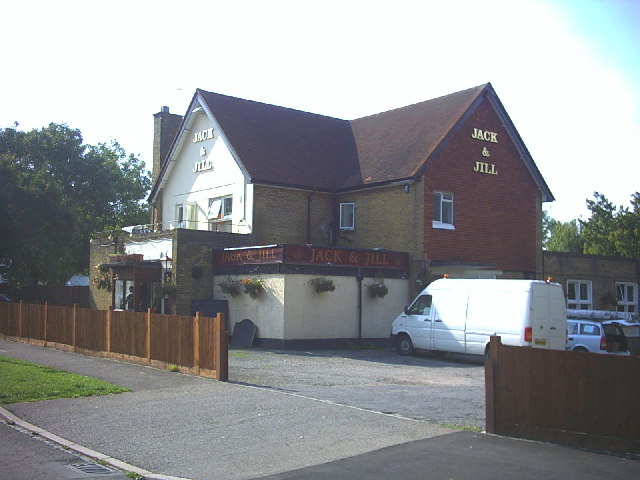
The reason for this was that back in 1955 my father and mother looked after a German Shepherd dog called Boy.  Boy belonged to a lovely couple, Maurice and Marie Davies.  They were in the process of taking over a new Public House (Pub); the Jack & Jill in Coulsdon, Surrey.  My father had been the architect of the Jack & Jill.

Jack & Jill, Longlands Avenue, Coulsdon, Surrey

As publicans have a tough time taking holidays, it was agreed that the move from their old pub to the Jack & Jill represented a brilliant opportunity to have that vacation.  My parents offered to look after Boy for the 6 weeks that Maurice and Marie were going to be away.

Boy was the most gentle loveable dog one could imagine and I quickly became devoted to him; I was 11 years old at the time.  So when years later it seemed the right time to have a dog, there was no question about the breed.  Boy’s memory lived on all those years, and, as this post reveals, still does!

Pharaoh was born June 3rd, 2003 at Jutone Kennels up at Bovey Tracy, Devon, on the edge of Dartmoor.  As the home page of the Jutone website pronounces,

The Kennel was established in 1964 and it has always been the aim to breed the best German Shepherd Dogs for type and temperament. To this end the very finest German bloodlines are used to continue a modern breeding programme.

and elsewhere on that website one learns:

Jutone was established by Tony Trant who was joined by Sandra Tucker in 1976. Sandra continues to run Jutone since Tony passed away in 2004. Both Tony and Sandra qualified as Championship Show judges and Sandra continues to judge regularly. Sandra is the Secretary and a Life Member of the German Shepherd Dog Club of Devon.

93ac7d454b15519effff8014ffffffd3
Tony Trant

Turning to Pharaoh, here are a few more pictures over the years.

Pharaoh, nine months old.

oooOOOooo

One year old: June 3rd 2004.

The next picture of Pharaoh requires a little background information.

For many years I was a private pilot and in later days had the pleasure, the huge pleasure, of flying a Piper Super Cub, a group-owned aircraft based at Watchford Farm in South Devon.  The aircraft, a Piper PA-18-135 Super Cub, was originally supplied to the Dutch Air Force in 1954 and was permitted by the British CAA to carry her original military markings including her Dutch military registration, R-151, although there was a British registration, G-BIYR, ‘underneath’ the Dutch R-151.  (I wrote more fully about the history of the aircraft on Learning from Dogs back in August 2009.)

Piper Cub R151
Piper Cub R151

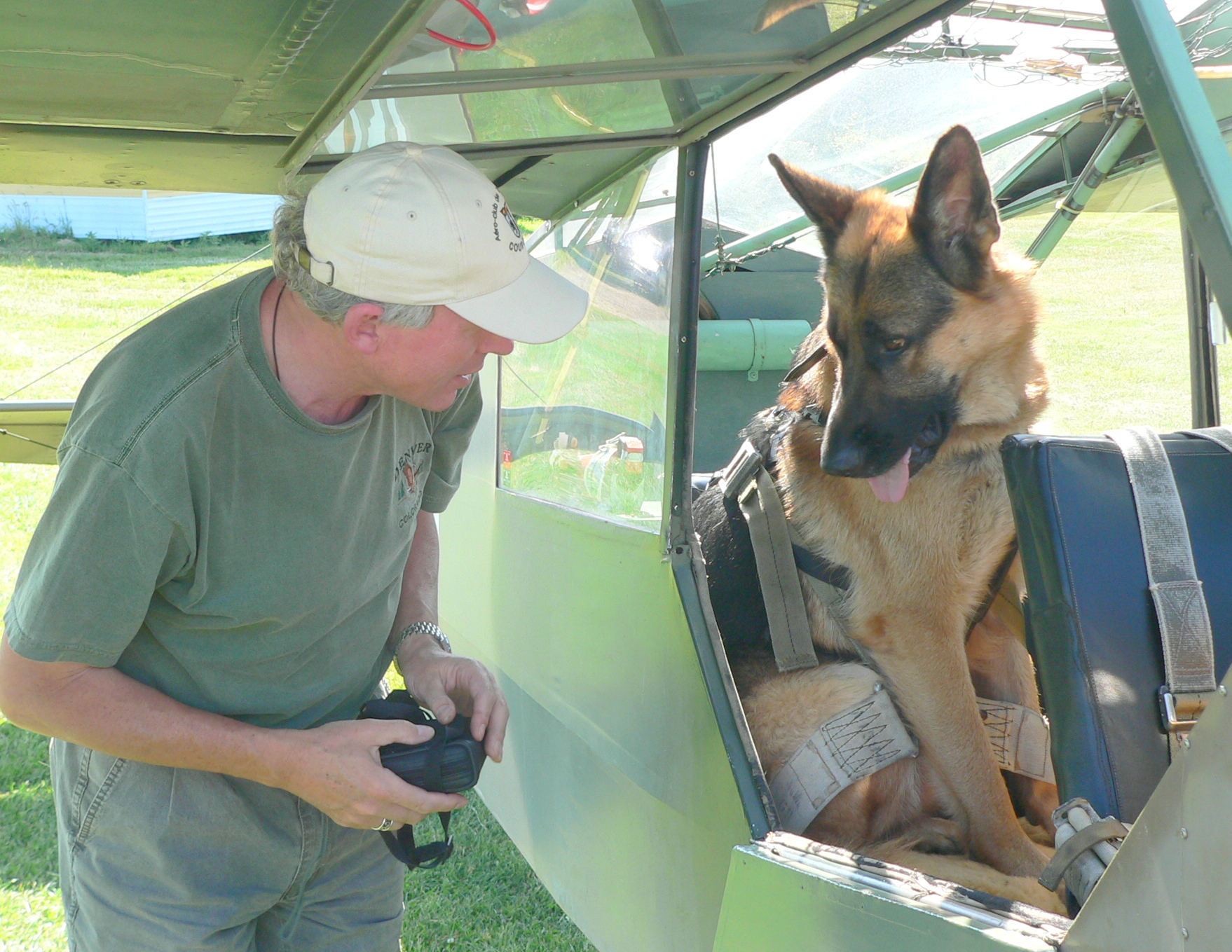
Anyway, every time I went to the airfield with Pharaoh he always tried to climb into the cockpit.  So one day, I decided to see if he would sit in the rear seat and be strapped in.  Absolutely no problem with that!

Come on Dad, let's get this thing off the ground!
Come on Dad, let’s get this thing off the ground!

My idea had been to fly a gentle circuit in the aircraft.  First I did some taxying around the large grass airfield that is Watchford to see how Pharaoh reacted.  He was perfectly behaved.

Then I thought long and hard about taking Pharaoh for a flight.  In the Cub there is no autopilot so if Pharaoh struggled or worse it would have been almost impossible to fly the aircraft and cope with Pharaoh.  So, in the end, I abandoned taking him for a flight.  The chances are that it would have been fine.  But if something had gone wrong, the outcome just didn’t bear thinking about.

So we ended up motoring for 30 minutes all around the airfield which, as the next picture shows, met with doggie approval.  The date was July 2006.

That was fun!
That was fun!

What a dear dog he has been over all the years and, thankfully, still is!

As if to reinforce the fabulous dog he still is, yesterday it was almost as though he knew he had to show how youthful he still was.

Because, when I took his group of dogs out around 7.30am armed with my camera, Pharaoh was brimming over with energy.

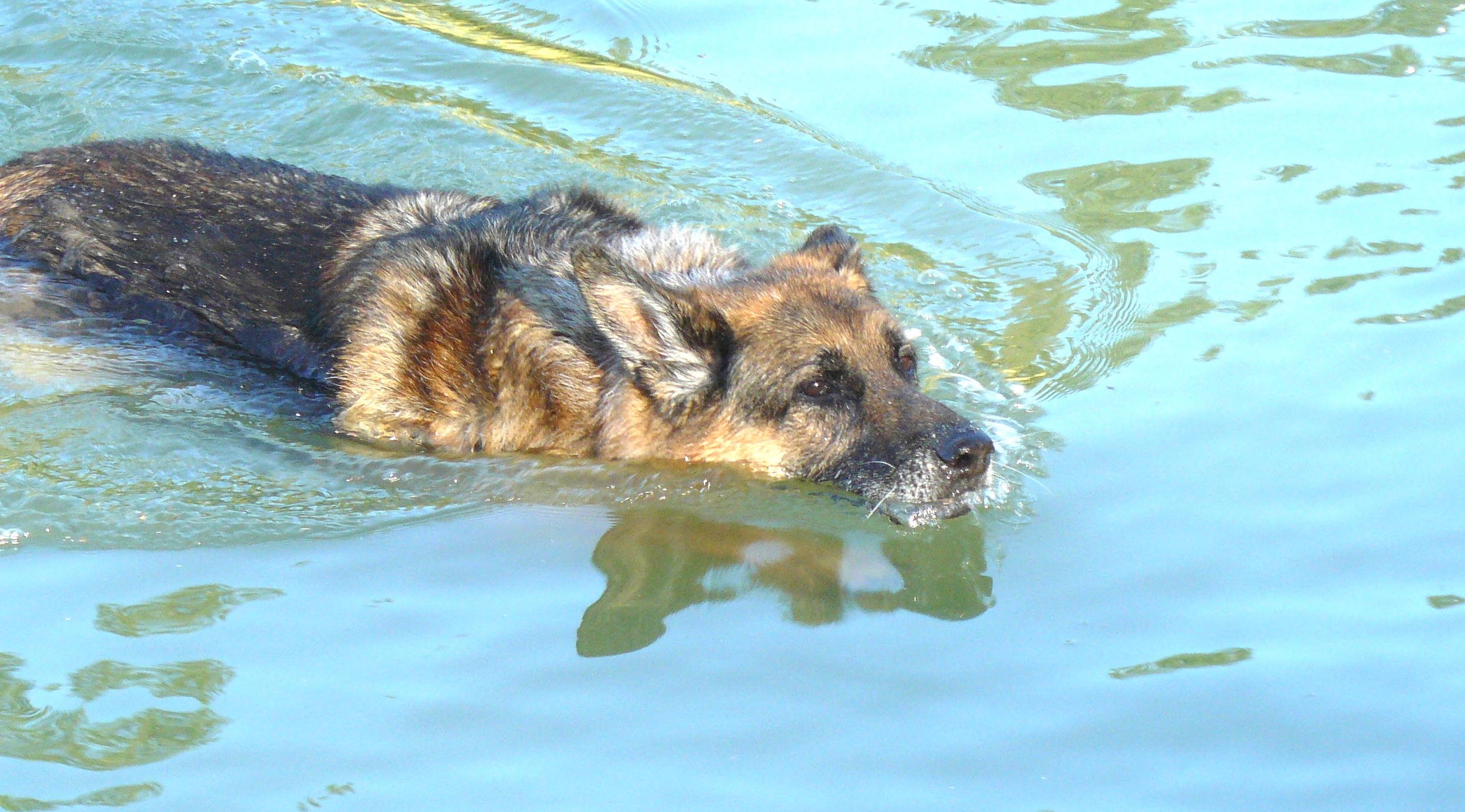
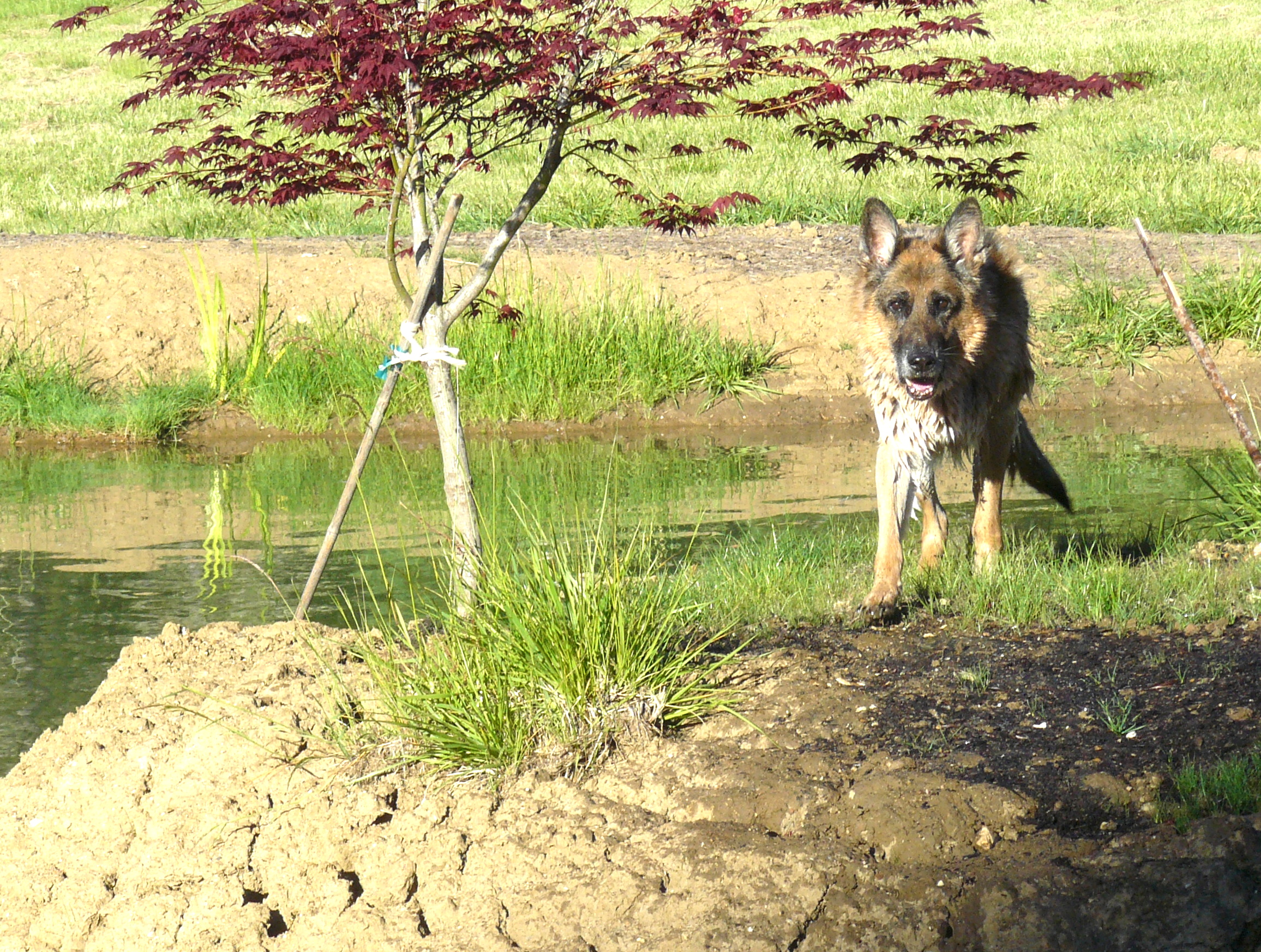
First up was a swim in the pond.

Ah, an early birthday dip! Bliss!

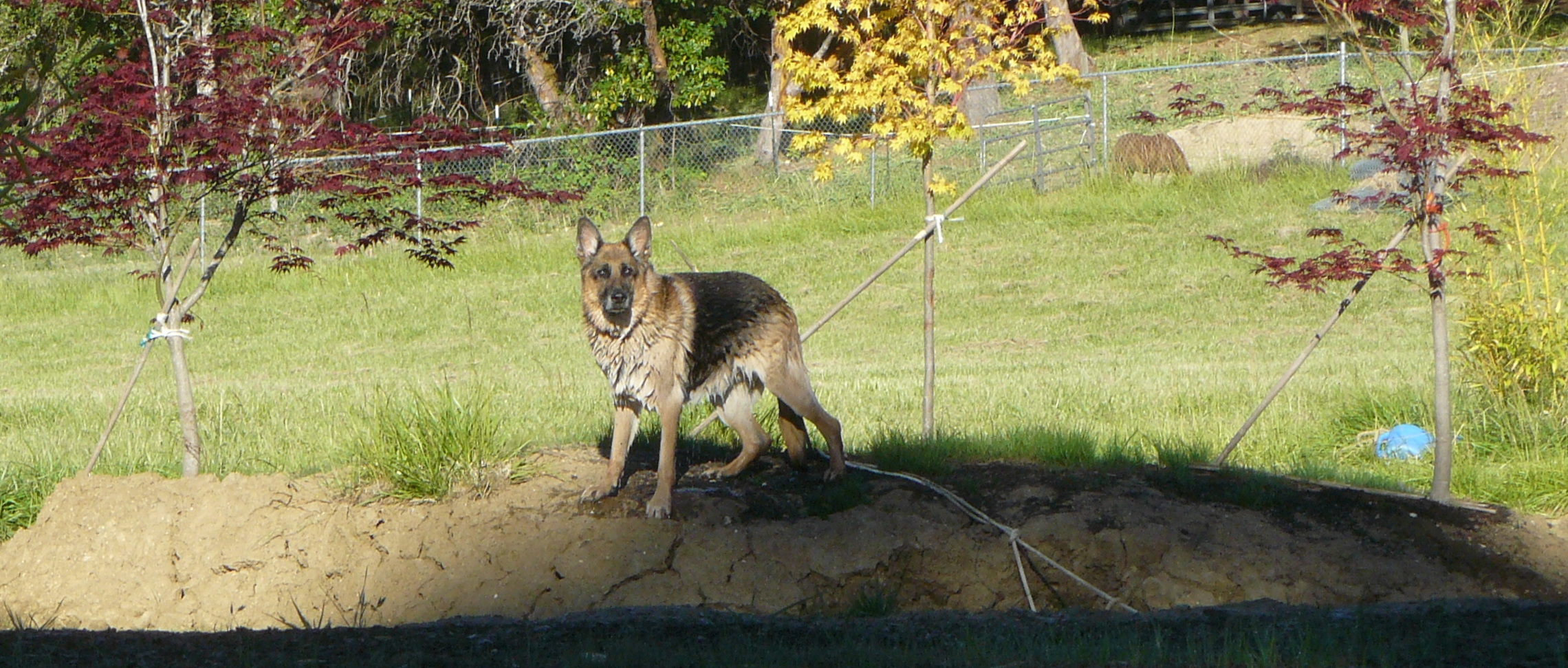
Then in a way he has not done before, Pharaoh wanted to play ‘King of my Island’, which is in the middle of the pond.

Halt! Who goes there!

ooo

This is my island! So there!

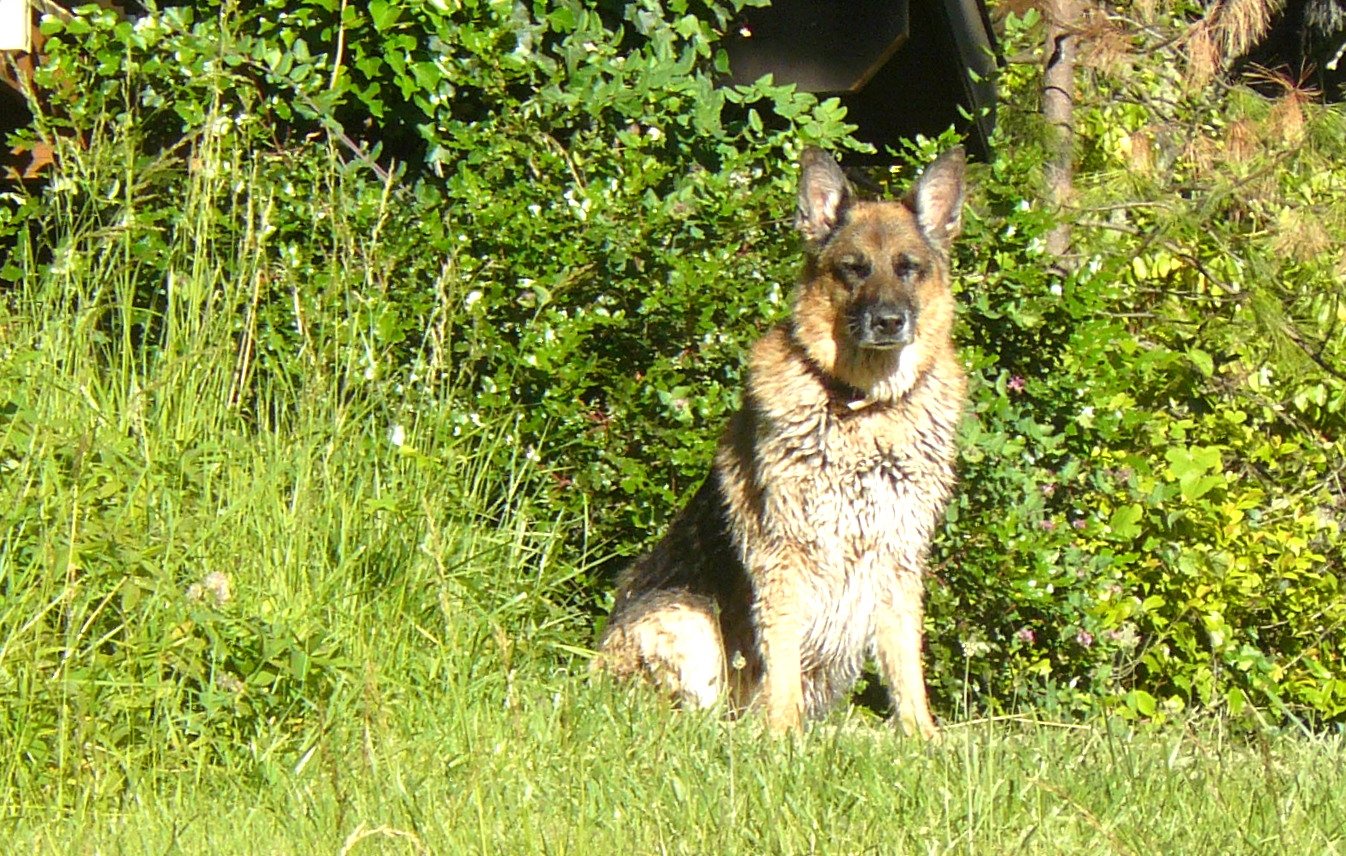
Then a while later, when back on dry land, so to speak, it was time to dry off in the morning sunshine.

Actually, this isn't a bad life!
Actually, this isn’t a bad life!

Long may he have an enjoyable and comfortable life.

Happy Birthday to Pharaoh

Our lovely old German Shepherd is 10 today.

Yes, Pharaoh was born back on June 3rd 2003.  So today, in human years he is 10.  In the old traditional ‘dog years is seven times times human years‘ he would be 70.  But according to a recent item on BBC News there is a more accurate way of calculating dog years.

Longevity secrets of readers’ pets who lived past 100 ‘dog years’

Thanks to our dog age calculator, people have been reassessing the age of their furry friends.

It put a new spin on the old saying that the age of dogs could be better understood by multiplying the number of years since their birth by seven.

You can read more here.  That dog age calculator is here.

Dog years: The calculator

Working out your dog’s true age used to be a case of simply multiplying it by seven. But it’s more complicated than that, and here’s a handy calculator to do it for you.

A recent Magazine feature explained that:

  • Different breeds of dog age at varying speeds
  • Dogs age at varying speeds at different stages of their lives

With that in mind, we’ve built a calculator for you to work out your dog’s true age – its age in “dog years”.

Alternatively, you can find out how old you would be if you were a dog. You can choose to be a labrador, a spaniel, a whippet, or any one of 20 breeds.

The calculator uses these multipliers for the first two years of a dog’s life:

  • 12.5 for small dogs
  • 10.5 for medium-sized dogs
  • 9 for large dogs

Then, for the third and subsequent years of the dog’s life, each human year has to be multiplied by between 4.3 and 13.4 years, depending on the breed:

Small: Dachshund (Miniature) 4.32, Border Terrier 4.47, Lhasa Apso 4.49, Shih Tzu 4.78, Whippet Medium 5.30, Chihuahua 4.87, West Highland White Terrier 4.96, Beagle 5.20, Miniature Schnauzer 5.46, Spaniel (Cocker) 5.55, Cavalier King Charles 5.77, Pug 5.95, French Bulldog 7.65

Medium: Spaniel 5.46, Retriever (Labrador) 5.74, Golden Retriever 5.74, Staffordshire Bull Terrier 5.33, Bulldog 13.42

Large: German Shepherd 7.84, Boxer 8.90

The calculator does not work for cross breeds, sadly, but on average these live 1.22 years longer than pure breeds, according to Dan O’Neill (from Petts Wood in London…) who is researching the subject for a PhD at the Royal Veterinary College.

Nor does the calculator work for cats. What we can say is that the average life expectancy of a cat is 12.1 years, which equates to 64 human years.

Guidelines issued by the American Association of Feline Practitioners say that cats reach 10 human years in their first six months and are approximately 24 at the age of two years. After this their age increases by four “cat years” every year.

So dear Pharaoh is the equivalent of an 80-year-old human! The breed has an average life expectancy of 9.73 years. (Source: BBC calculations on data from UK Kennel Club and US Veterinary Medical Database.)

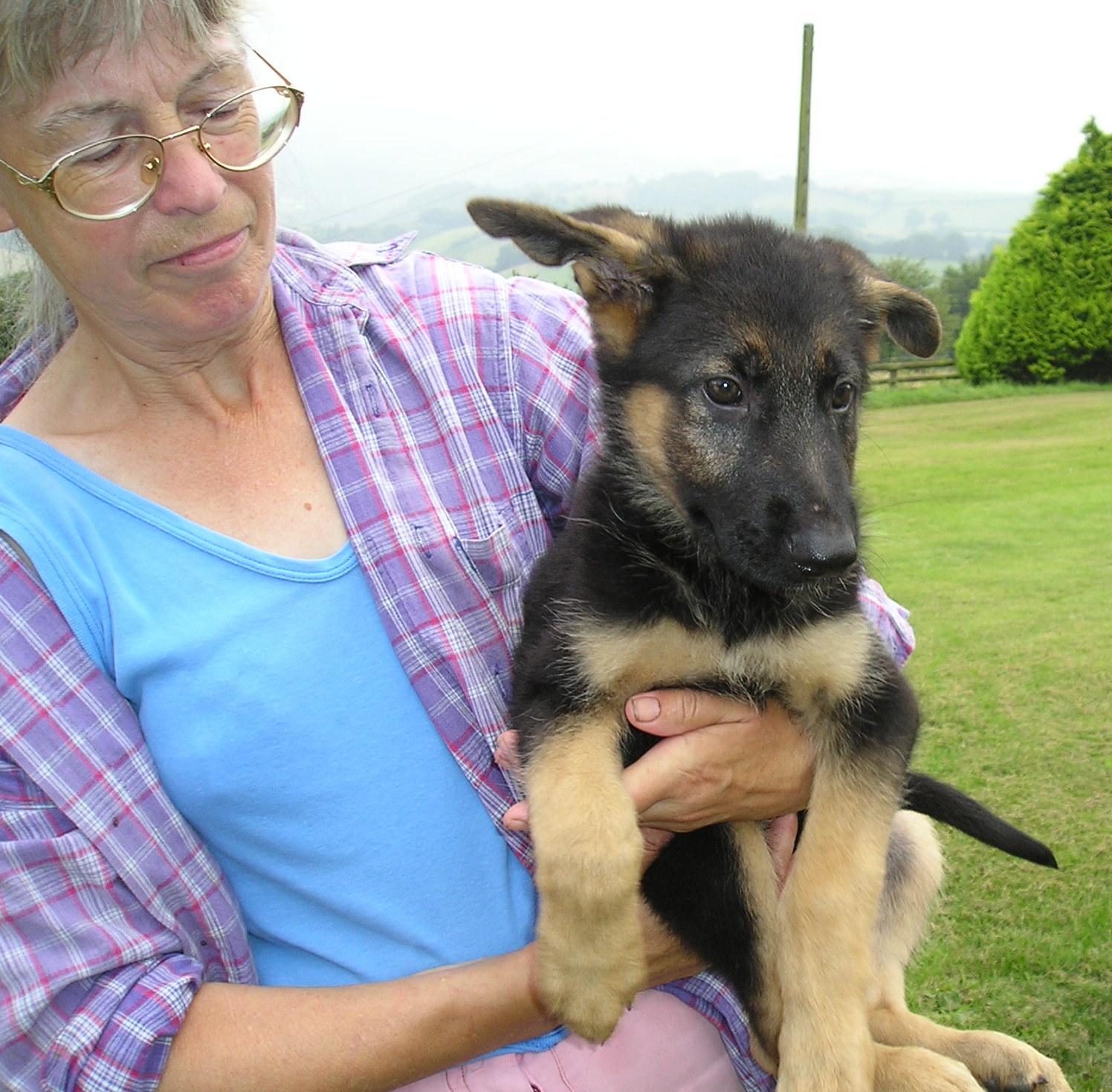
Going to leave you for today with three photographs of Pharaoh taken the day I first saw Pharaoh as a puppy, back on the 12th August 2003.  The woman holding Pharaoh is Sandra Tucker who runs Jutone Kennels in Devon, England., where Pharaoh was born 10 years ago this day!

OLYMPUS DIGITAL CAMERA

oooOOOooo

OLYMPUS DIGITAL CAMERA

oooOOOooo

OLYMPUS DIGITAL CAMERA

oooOOOooo

More pictures tomorrow.

Then we were twenty-three!

Three Koi joined our family yesterday.

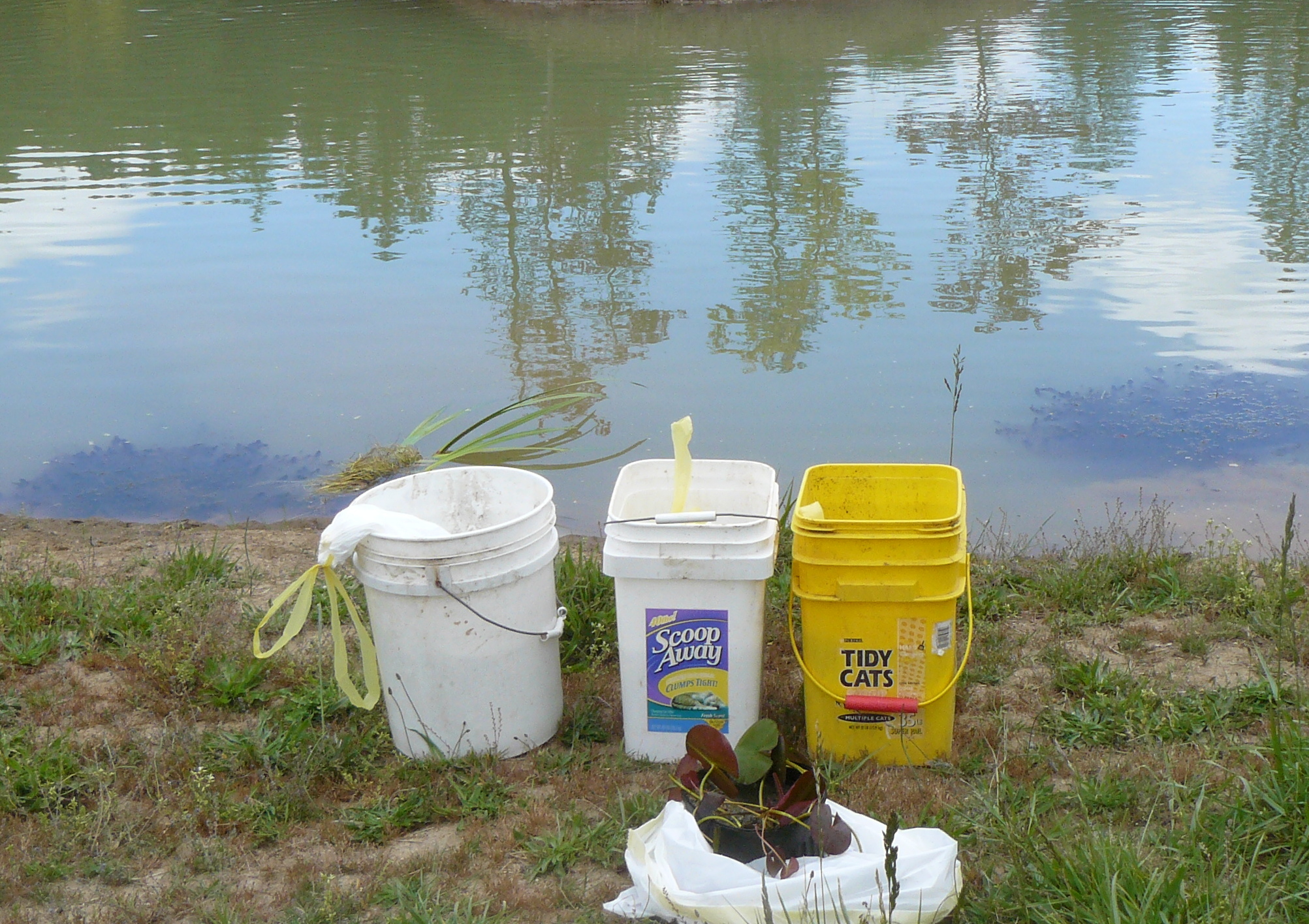
Our pond has settled to the point where Jean thought it would be good to get some fish.  So off to a pond and fish supplies store in Grants Pass to seek advice.  We settled on some Koi and a water lily plant.

Koi and water lily ready for the launch.

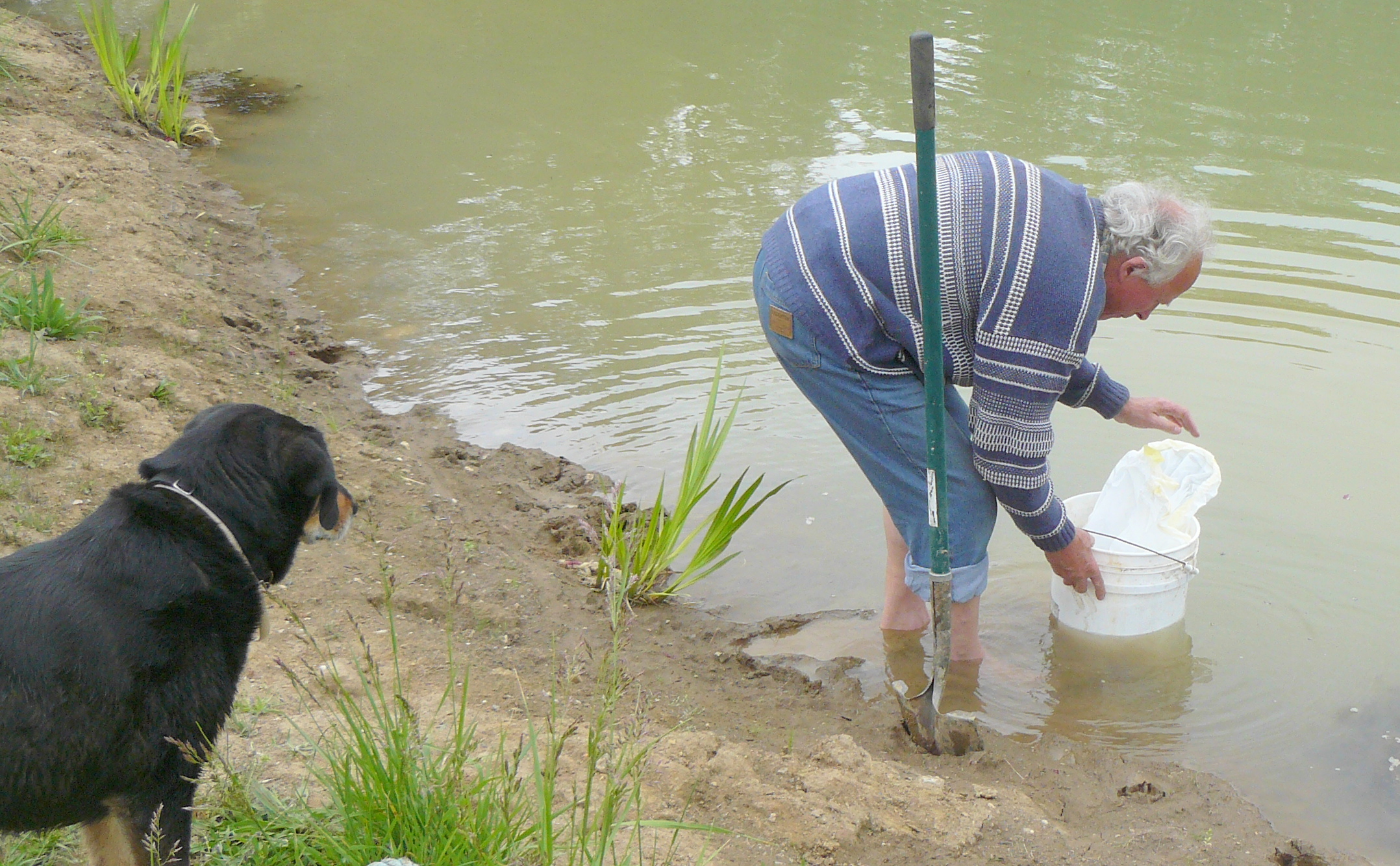
We were advised to acclimatise the fish in terms of water temperature by slowly mixing pond water into the bags containing each fish.

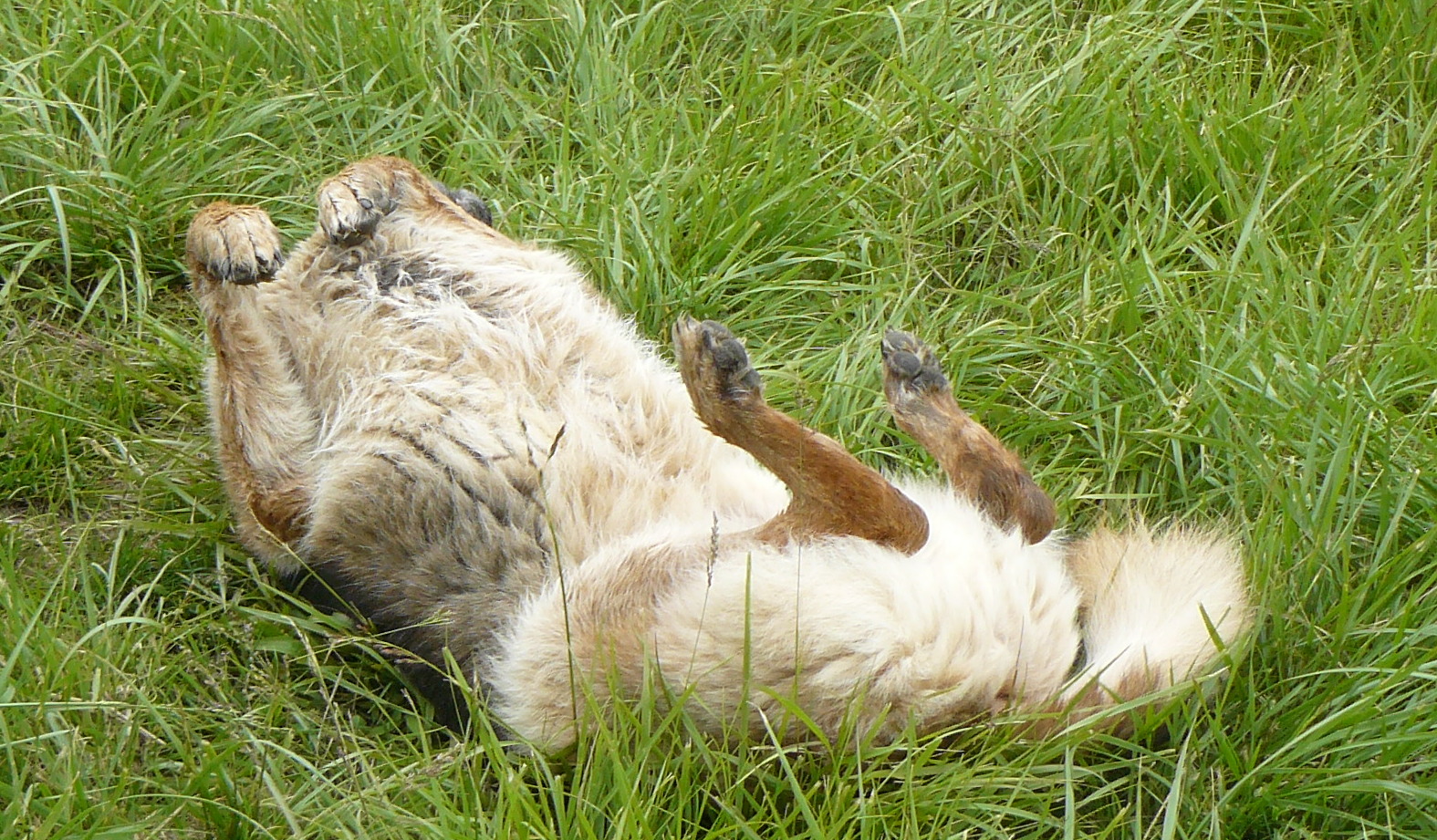
Meanwhile, Pharaoh took advantage of clean, green grass to give his back a bit of a rubdown.

Ah, that feels so much better!

And Hazel pondered what ‘Dad’ was up to.

Not seen this happen before?

But eventually it was time for the three Koi to slip away into the depths of their new home.

Wonder if I'll ever find my two mates?
Wonder if I’ll ever find my two mates?

The twenty-three?

Nine dogs, five cats, four chickens, two miniature horses and three Koi!

Now temporarily eighteen!

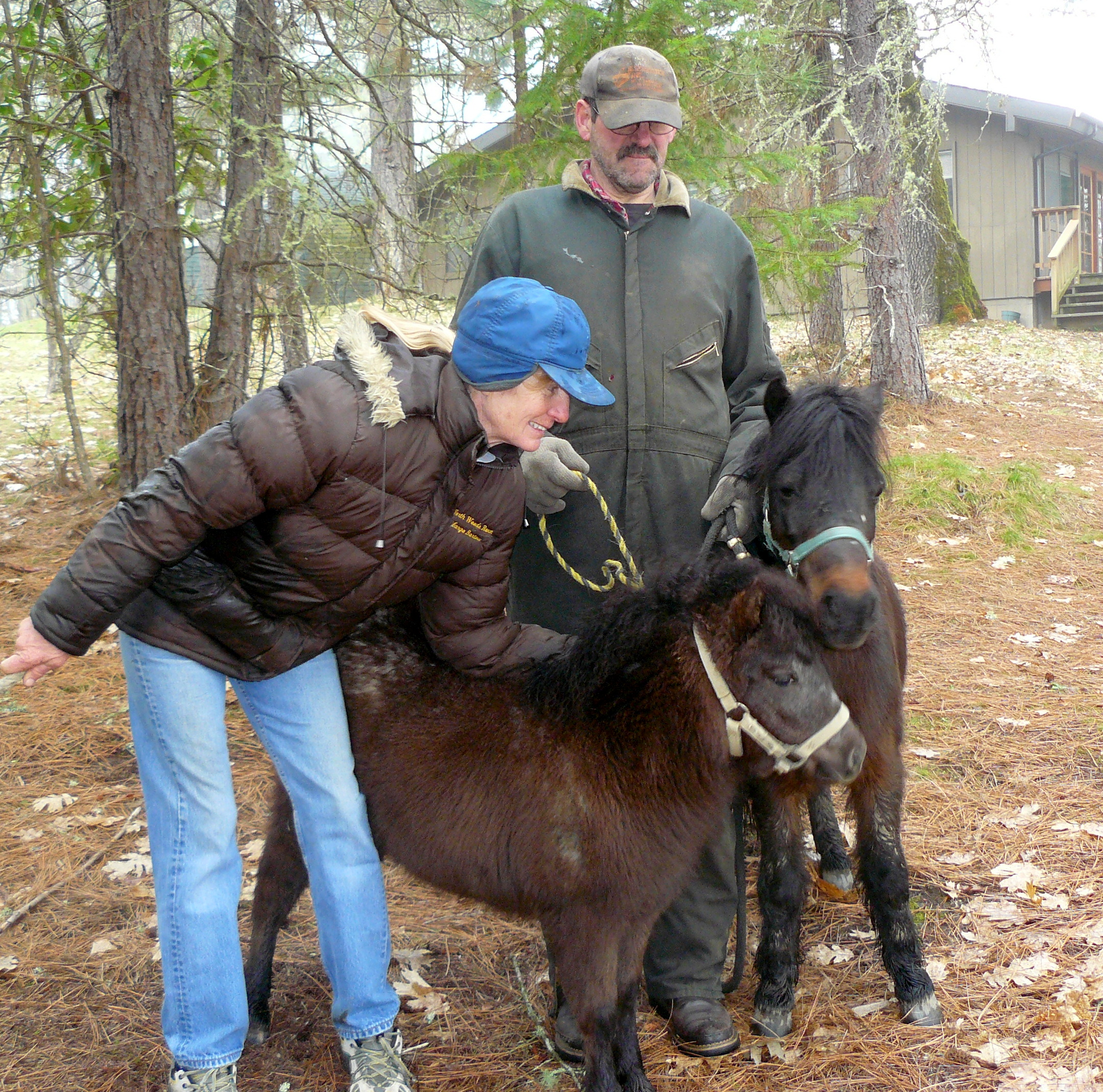
Young Allegra comes to live with us.

Back on the 14th January in a post called Now we are seventeen, I introduced the two miniature horses, Dancer and Grace, that came to be with us.  In that post I mentioned,

Ready to leave
Ready to leave

Jean is holding Dancer while Grace is waiting by the fence.  Our original plans had been to take Dancer’s sister’s foal Allegra, but she was too stressed to leave her mother so soon; she is just six months old.  As an interim, we borrowed Grace, Dancer’s last foal, until Allegra is ready to move homes.

Well yesterday Allegra was ready and came over to join Dancer while lovely Grace returned to neighbour Margo.  Just wanted to share some pictures from yesterday.

P1120585

Margo, her arm on Allegra, and her husband, Clarence, holding Allegra’s mother Keepsake.  The two horses had come over together so as to offer comfort to young Allegra, now just 7 months old.

P1120606

Allegra is on the left getting to know her new grounds.  On the right is Aunt Chloe who came to spend the night here with Allegra to minimise any separation anxiety.

P1120595

Close up of Dancer’s nose!

Don't believe it!  Another horse!!
Don’t believe it! Another horse!!

I’m sure Pharaoh is wondering how long it will be before there are more horses than dogs!

oooOOOooo

Finally, on a completely different theme …

P1120578

Does this remind you of anyone you know?

Sometimes the meaning escapes us.

Much more than a house move.

Today, the 4th January, we have been at our new home in Oregon for exactly 72 days.  We knew there would be many differences between Payson, Arizona and Merlin, Oregon all of which could be described as objective, factual differences.   However, what was unexpected were the deep, complex emotions associated with moving to this rural part of Josephine County, Oregon.  We were utterly unprepared for that.

In fact, I have been staring at this screen for some time unable to put any structure or meaning to this post.  So I’m not going to try anymore, just offer some photographs and my reflections in the hope that you can sense where I am coming from.

P1120157

The Winter storm that came in on the 20th December was, according to locals, unprecedented.  We lost our power from the 20th until just before Christmas Eve.  It caught us unawares in terms of being ready for this type of winter event.  But then the sun came out one afternoon and I took this picture.

P1120274

It shows the flank of Mt. Sexton, the picture being taken from our deck in front of the house.  I found it impossible to describe the effect that this natural beauty had on me; being in awe just scratches the surface of my feelings.

Moving on.

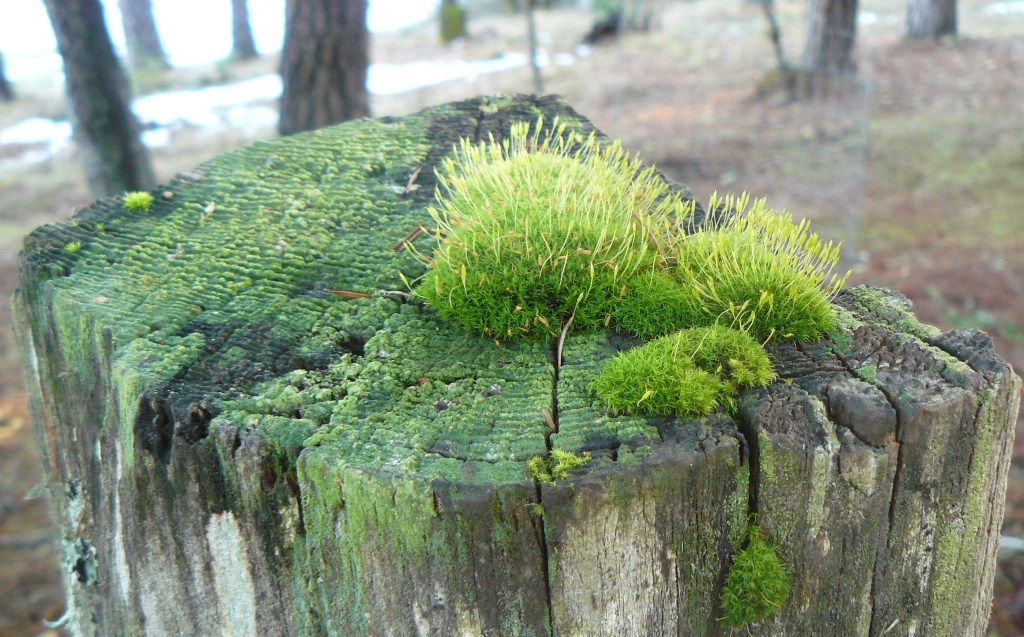
We have been working hard preparing stables in readiness for two miniature horses that we have purchased from our neighbours, Margo and Clarence.  Last Tuesday, we were busy at this when I saw another breathtakingly beautiful sight.

Just some growth on the top of an old fence post.  But the words utterly fail the image.  Here it is.

P1120292

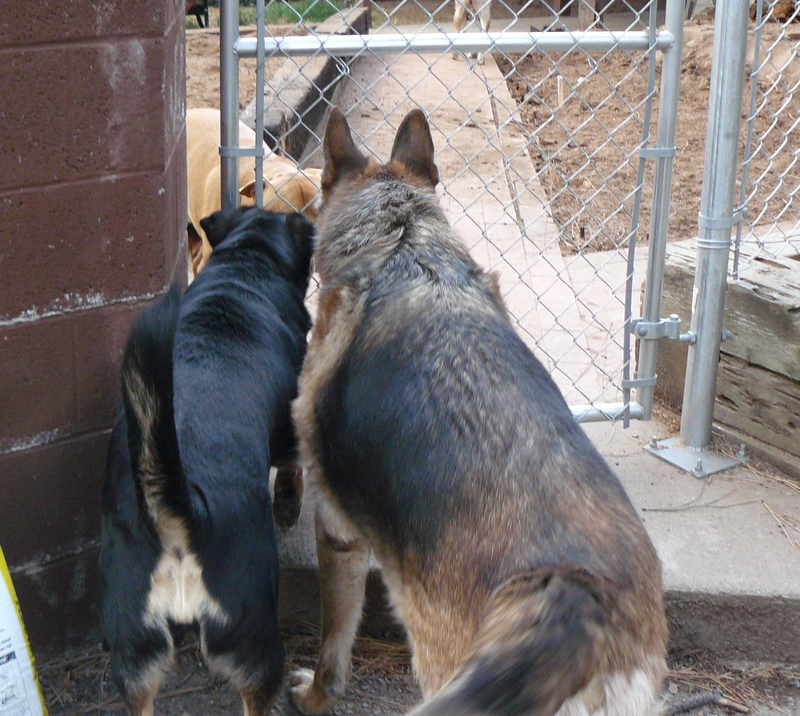
Then about an hour ago (yesterday), while struggling to write this post, I heard the dogs barking in the bedroom next door.  Went into the room and they were ‘speaking’ to some wild deer grazing our pasture land.

P1120306

Wish I could wrap this all up with some profound view, some wise observations about life and the meaning of the universe!

But I can’t!  Can’t make any sense of it at all. How did we get here?  How did I meet Jeannie, this most precious woman, back in Christmas 2007? How did I sell up and walk away from Devon, England, with just Pharaoh by my side, to start this unbelievable new life with Jean and all the dogs?

Anyone know the answers?

P1110454-001
“The silly old sod does mutter on at times!”


Animals in love

The beautiful hidden depths of the consciousness of animals

Back in the Summer of 2011, I published a couple of posts on the subject of consciousness.  The first one was called Consciousness, science or God? and the second one about a month later continued the theme under the heading of And more on consciousness.

In that second article, I concluded with these words:

Finally, do you have a dog at home?  If you do, ponder on how their conscious world engages them.  If science can’t explain human consciousness then all we have is our own intuition with regard to animals.  Not sure about you but when one is feeling a little low and a dog comes up and lays a head across you I feel a very strong conscious connection.

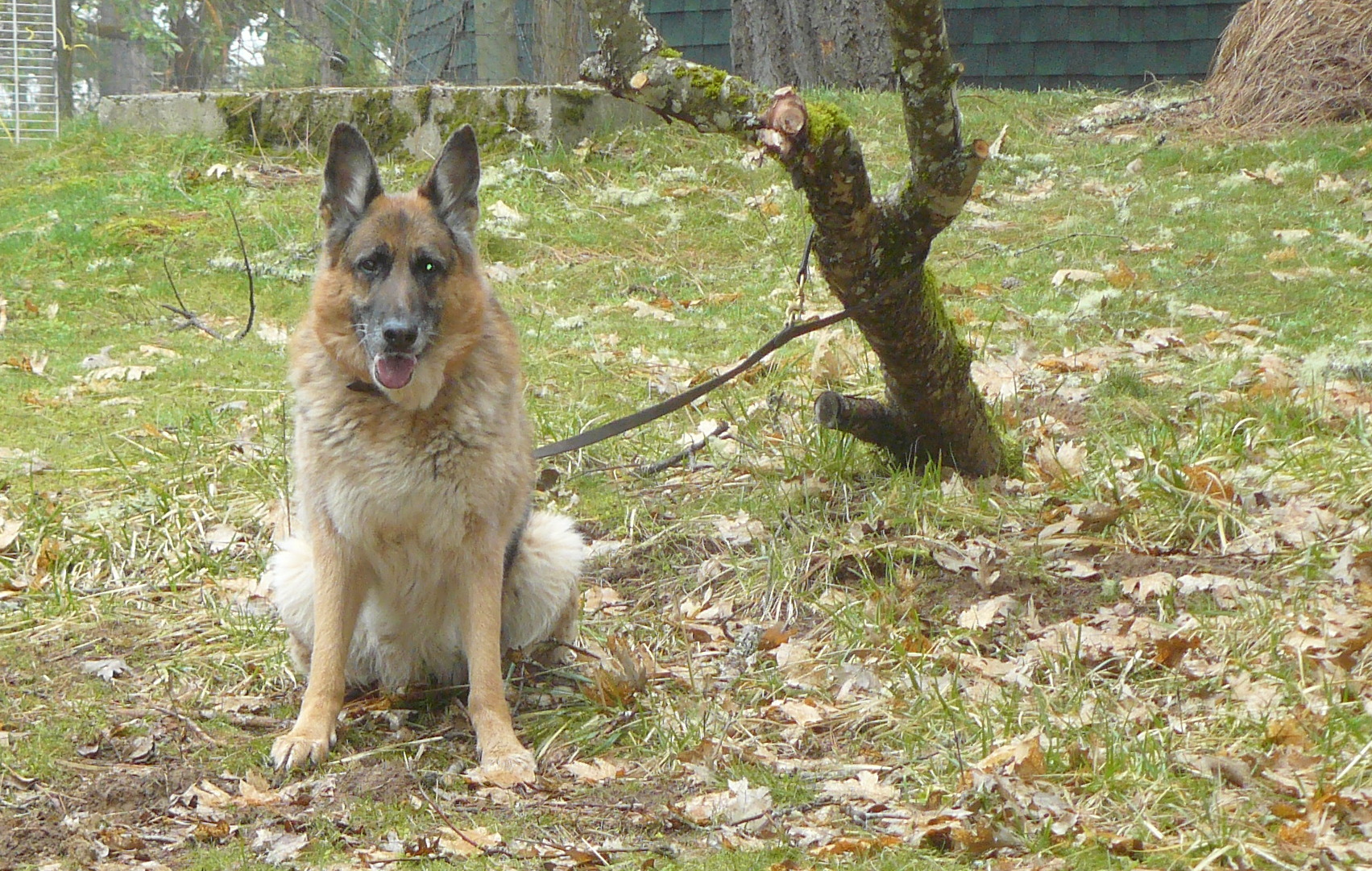
Hazel and Pharaoh

The dog to the left of Pharaoh in the above picture is Hazel.  Shortly before we left San Carlos, Mexico to move up to Arizona in February, 2010, this dog was dumped outside Jean’s house.  She was still in milk and Jean explained that it was common practice for female dogs to be cast out shortly after they had had pups.  The pups would have been sold for a few pesos and the mother dog was no longer of any use or value and was ‘disposed’.

We took her in, of course, and she joined the other dozen dogs on our journey to our new Arizonan home.  Hazel has the sweetest of dispositions and frequently sleeps snuggled up against me at night.  As I write these words, Hazel is sleeping just to the left of my feet.  There are times when Hazel looks into my eyes with what I can’t lable as anything other than the look of a dog in love.

So with that in mind, let me introduce you to Kate and Pippin.  As their website proposes  Kate & Pippin is “An unlikely love story“.

THE STORY

Pippin, a helpless baby fawn was abandoned by her mother on the property of Isobel Springett. Isobel’s Great Dane, Kate, adopted Pippin immediately and they have been best friends ever since.

The story of Kate’s and Pippin’s loving relationship is charmingly chronicled in a handsome book featuring the beautiful photography of Isobel Springett.

Here’s Martin Springett, author of the book.

While there’s a small degree of overlap with the first video, you’ll still love to watch this.

A collection of photos from pips’s early days. She was just a few days old when she found us. Music is by my brother Martin Springett.

To close, here’s Pip at about two and a half months old. She’s just lost her spots and is looking like a teenager, all legs! She loves grapes and bananas after her bottle. (And the music is fabulous – Artist: Jelengue “Amar Mi Verdad”)

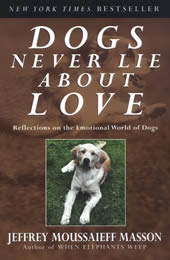
Reminds me of that great book from Jeffrey Masson, Dogs never lie about love!

Happy Birthday dear blog!

Learning from Dogs is three years old this day.

Ironically, we are away this day but here are the ‘stats’ from yesterday, the 14th:

594,721 individual viewings

449 subscribers

An average of 1,300 readers a day (and still growing!)

3,705 comments in this period

Nearly 1,372 posts since the start

It seems a rather trite thing to say but, trust me, this is said from the bottom of my heart.  All of you who come to Learning from Dogs, whether just a couple of times or most days, have made this a wonderfully creative three years for me.

THANK YOU ALL!

And now here’s a republication of that very first post back on July 15th, 2009.

Parenting lessons from Dogs

Much too late to make me realise the inadequacies of my own parenting skills, I learnt an important lesson when training my GSD (who is called Pharaoh, by the way).  That is that putting more emphasis into praise and reward for getting it right ‘trains’ the dog much quicker than telling it off.  The classic example is scolding a dog for running off when it should be lots of hugs and praise for returning home.  The scolding simply teaches the dog that returning home isn’t pleasant whereas praise reinforces that home is the place to be.  Like so many things in life, very obvious once understood!

Absolutely certain that it works with youngsters just the same way.

Despite being a very dominant dog, Pharaoh showed his teaching ability when working with other dogs.  In the UK there is an amazing woman, Angela Stockdale, who has proved that dogs (and horses) learn most effectively when being taught by other dogs (and horses).  Pharaoh was revealed to be a Beta Dog, (i.e. second in status below the Alpha Dog) and, therefore, was able to use his natural pack instinct to teach puppy dogs their social skills and to break up squabbles within a pack.

When you think about it, don’t kids learn much more (often to our chagrin!) from other kids than they do from their parents.  Still focusing on giving more praise than punishment seems like a much more effective strategy.

As was read somewhere, Catch them in the act of doing Right!

By Paul Handover.