Tag: NaNoWriMo

The book! Part Two: We are all connected.

Mankind, Nature and Dogs

We are all connected – The biological interconnectedness of all conscious life.

I sit here writing the draft of this book in the Summer of 2014, a stone’s throw from the small community of Merlin in Southern Oregon where my wife and I and numerous animals, including nine dogs and four horses, live in thirteen acres of very rural countryside. Just a few miles away from us is a place known as Wildlife Images, or to give them their full name Wildlife Images Rehabilitation and Education Center. As their website declares, “The facility was created in order to provide for the care and treatment of sick, injured and orphaned wildlife.

We visit Wildlife Images frequently, especially when we have guests staying with us.

There is an enclosure for the otters and on one of the surrounding glass screens is engraved a Native American Proverb: “We will be forever known by the tracks we leave.

The first time I stood and read the words I was struck by something very profound, yet something that struggled to surface in my mind as a clearly articulated idea. Part of me embraced the irony of a race of people, the many tribes of the ancient North American Indians, that history suggests lived very much in harmony with the land, leaving a message to another race of people, modern man, who not only subjugated those native Indians but proceeded to despoil much of the vastness of what we today call the United States of America.

Granted, that word ‘despoil’ is a bit harsh in the direct sense that millions of acres of this continent remain as open, unspoilt countryside, but when one thinks about what Americans have exported in terms of technology and culture right across the planet then, maybe, despoil isn’t being too unfair. Exported, of course, to millions of eager recipients in dozens of other countries. This is a failure of modern man, not of any one country.

Returning to my reactions to that glass-engraved proverb, the only other thought that surfaced was that we, as in all of humanity, are living in such very strange times, times in which the tracks that we have been leaving over the last, say sixty years, indicate a path towards a future oblivion.

—-

In July, 2014, Stanford Biology Professor, Rodolfo Dirzo, and his colleagues, issued a warning that the present rate of what he called “defaunation” could have harmful downstream effects on human health. Professor Dirzo explained that despite the “planet’s current biodiversity, the product of 3.5 billion years of evolutionary trial and error being the highest in the history of life” we may have reached a tipping point.

The warning explained that more than 320 terrestrial vertebrates had become extinct since the year 1500 and that, since then, “Populations of the remaining species show a 25 percent average decline in abundance. The situation is similarly dire for invertebrate animal life.

Professor Dirzo further went on to explain that “while previous extinctions have been driven by natural planetary transformations or catastrophic asteroid strikes, the current die-off can be associated to human activity.” He even gave this era a name: the era of the “Anthropocene defaunation.

The current die-off can be associated to human activity”. Surely, this is the irony of all ironies. By that I mean the die-off of modern man being a direct consequence of the actions directly associated with modern man. Wow!

It seems to me that whichever way we look, the interconnectedness of all conscious life is staring at us full in the face. Of course we are all interconnected. Not just all of mankind but all of conscious life. Ergo, the destruction of natural habitats, the loss of every species, even the unwarranted killing of a wild animal is, in a very real and tangible way, the destruction of our own habitat, the loss of the species that is us, and the unwarranted killing of future generations of that same species: homo sapiens.

Now it would be perfectly reasonable to see this as a temporary distraction that has affected, or should the word be infected, mankind since the end of the Second World War, a relatively modern example of a new-style madness of our species. Some may claim that our continuing destruction of our habitat is an ingrained characteristic; a blindness beyond comprehension to the consequences of our actions. I see it in clearer terms. That the relative peace and prosperity of these last seven decades, the incredible gains in terms of medical science and human life-span, and above all our global population, have combined to bring about a growth in the demands on our planet that has taken us to a point where our consumption is now way beyond that which is sustainable. That millions of people who live comparatively comfortable lives have lost their connection with the planet, or more properly put, their connection with the laws of nature of the planet.

To further reinforce the argument that we are beyond a point of living sustainably on the only planet we can call home, consider the figures regarding the growth of the human population.

The first billion inhabitants of this planet did not occur until 1800. The next billion was clocked up one hundred and twenty-seven years later, in 1927. The third billion arrived in 1960, just thirty-three years after 1927. Since 1960 we have been increasing our presence on our planet by a billion people every fourteen years or so. Now fifty years or so after 1960 we have a global population of over seven billion: 7.183 billion[1] to be precise.

Several recent studies[2] show that Planet Earth’s resources are enough to sustain only about two billion people, at a European standard of living that is, so the global population of over seven billion is already two to three times higher than what is sustainable, stably so, over any period of time. That’s even before we consider that the typical European, on average, consumes only about half the planet’s resources of the typical American.

Yet despite the drama of these numbers, despite the daily headlines all over the world offering examples of our collective madness, so many do not sense the peril of our ways. It is almost as though we have become immune to some form of potential global suicide.

The global population of over seven billion people, from the top to the bottom in terms of living standards, are using about fifty percent more resources than our planet Earth is capable of producing. Or to put it another way: If we take the past twelve months, you and I and the rest of the 7.2 billion of us, have consumed the resources that it took the planet about eighteen months to produce. We are consuming our own resource base.

No, that previous sentence, about consuming our own resource base, despite the truth of the statement, comes over as too bland, too unemotional, to my way of thinking. Let me turn to E. F. Schumacher and one of his quotes: “Infinite growth of material consumption in a finite world is an impossibility.” That says it much better!

It could be argued, and frequently is so argued, that these are the end times for mankind, the end of the era of materialism and consumption, that we are past a number of critical tipping-points, past any chance of saving mankind from massive and widespread extinction. I would admit to being drawn to this ‘end of the world’ chant because whichever way one looks the challenges and problems far outweigh the solutions. But there’s another quote that frequently tickles my consciousness, the one that goes, “Never underestimate the power of the unintended consequence”. I have no idea who penned it but that doesn’t weaken the power of the quotation.

What I sense, in some barely-conscious manner, is that the interconnectedness of all living things, and I use the term interconnectedness in the broadest way possible, is the power-house, the engine, of huge unintended consequences that will illustrate the unarguable logic of Mr. Schumacher’s quotation. Because soon nature will remind mankind that we are part of nature, not in charge of nature. Nature will not only offer the solution to our present massive imbalance with our planet, but will enforce it.

Of course, I have no idea what nature’s solution will mean to me and my loved ones. Maybe being born a 1944 baby, I will not live sufficiently long to see the future clearly. However, of one thing I am clear. The sooner every human being starts living a life of balance with the planet, starts learning the way to live from all of nature including our nearest companions, our dogs, then the sooner the power of interconnectedness redeems us all.

It takes an ancient proverb from a people that lived in harmony with the planet to speak the truth. We ignore it at our peril.


[1] Estimate as of 2013 by the United States Census Bureau (USCB.
[2] WorldPopulation.org website

1,484 words Copyright © 2014 Paul Handover

Back to the book!

NaNoWriMo 2014.

In the year since NaNoWriMo 2013, I spent a great deal of time thinking, rethinking and massively changing what I wrote last November.  My last chapter, Chapter Twenty-Three, published on this blog last December was written in the third tense, using fictional names.  Here’s an example from that chapter, (Molly is Jean; Philip is yours truly):

It was October 25th, 2013. Exactly a year since the day that they had moved in to their Merlin home. Yet in some very strange way if felt neither as long as a full year nor as short.

Molly and Philip were sitting on the decked verandah looking out over the acres of grass. A group of five dogs were cavorting and chasing around in what looked like for them a dog heaven.

I didn’t like it. It wasn’t working and I rewrote it in the first person, namely me!

Then during the year I was contacted by a professional freelance publishing agent who added to my feelings of not really knowing what I was doing.  She asked me if I had defined my reading audience and the structure of the book? Duh! How bloody obvious!  Me an ex-marketing man and it hadn’t even occurred to me to “define my market”!

It was incredibly helpful advice and I did sit down and produce what I called a Statement of Purpose (SoP).  Here are the Introduction and Reading audience sections from v1.65 of my Statement of Purpose.

Introduction

We live in very challenging times.

It seems rare these days to meet someone who doesn’t sense, to one degree or another, a feeling of vulnerability to today’s world. A sense that many aspects of their lives are beyond their control.

These are also times where it is widely acknowledged that the levers of privilege and money are undermining the rights and needs of so many, that there are unprecedented levels of deceit, lying and greed; all enveloped within an abuse of power.

That’s even before we embrace the matter of climate change and whether or not there is a potential “end-of-world” tipping point; the so-called beat of the butterfly’s wing.

Yes, these are challenging times. As we are incessantly reminded by the drumbeat of the doom-and-gloom news industry every hour, frequently every half-hour, throughout the day. A symphony of negative energy.

Yet right next to us is a world of positive energy. The world of dogs. A canine world full of love and trust, playfulness and relaxation. A way of living that is both clear and straightforward. Albeit, far from being simple, as anyone will know who has seen the way dogs interact with each other and with us humans.

In other words, dogs offer endless examples of positive behaviours. The wonderful power of compassion for self, and for others, and of loving joy. The way to live that we humans often crave for. A life full of hope and positive energy that keeps the power of negativity at bay.

Reading audience

The book is written by ‘an ordinary bloke’, not by someone who has a specialist or professional understanding in the areas of mind and behaviour. On that count, the author is no different to the majority of people ‘out there’ and, presumably, the majority of potential readers.

Potential readers who feel the weight of all that ‘doom-and-gloom’ and negativity that seems to be in the air at this time. Yet, readers who desire a positive, compassionate attitude to their own life, and to the lives of the people around them. Almost certainly readers who are animal lovers, in general, and dog lovers in particular.

Anyway, my ambition for NaNoWriMo 2014 is to write 50,000+ words that will become Parts Two, Three, Four and Five of the book Learning from Dogs. My SoP describes those sections as:

  • Part Two – Mankind, Nature and Dogs
  • Part Three – Mankind in the 21st Century
  • Part Four – The power of positive thoughts and deeds
  • Part Five – What does mankind need to learn from dogs

Thus, as I did last year, thirty minutes after publishing my daily blog post I will publish my day’s NaNoWriMo writing. Ergo, in thirty minutes time I will be publishing what was written under NaNoWriMo last Saturday, November 1st.

Time waits for no man!

The coming weeks are going to see some repeats!

In yesterday’s post, I closed it by saying “More on the theme tomorrow.”  What I had in mind was writing about a recent essay that I read; courtesy of Naked Capitalism.  However, the essay struck me as of such interest that it should be republished in full. Thus I sent off a request for permission to so do.  Hopefully, permission granted in time for me to publish the essay tomorrow (and see my note later on).

That then gave me the opportunity to explain my situation for the next few weeks.

In short, as a result of a number of guests coming to stay with us from the end of July right through to the end of September, the hours that I spend pleasurably preparing and writing posts for Learning from Dogs are going to be under some pressure.

For instance!

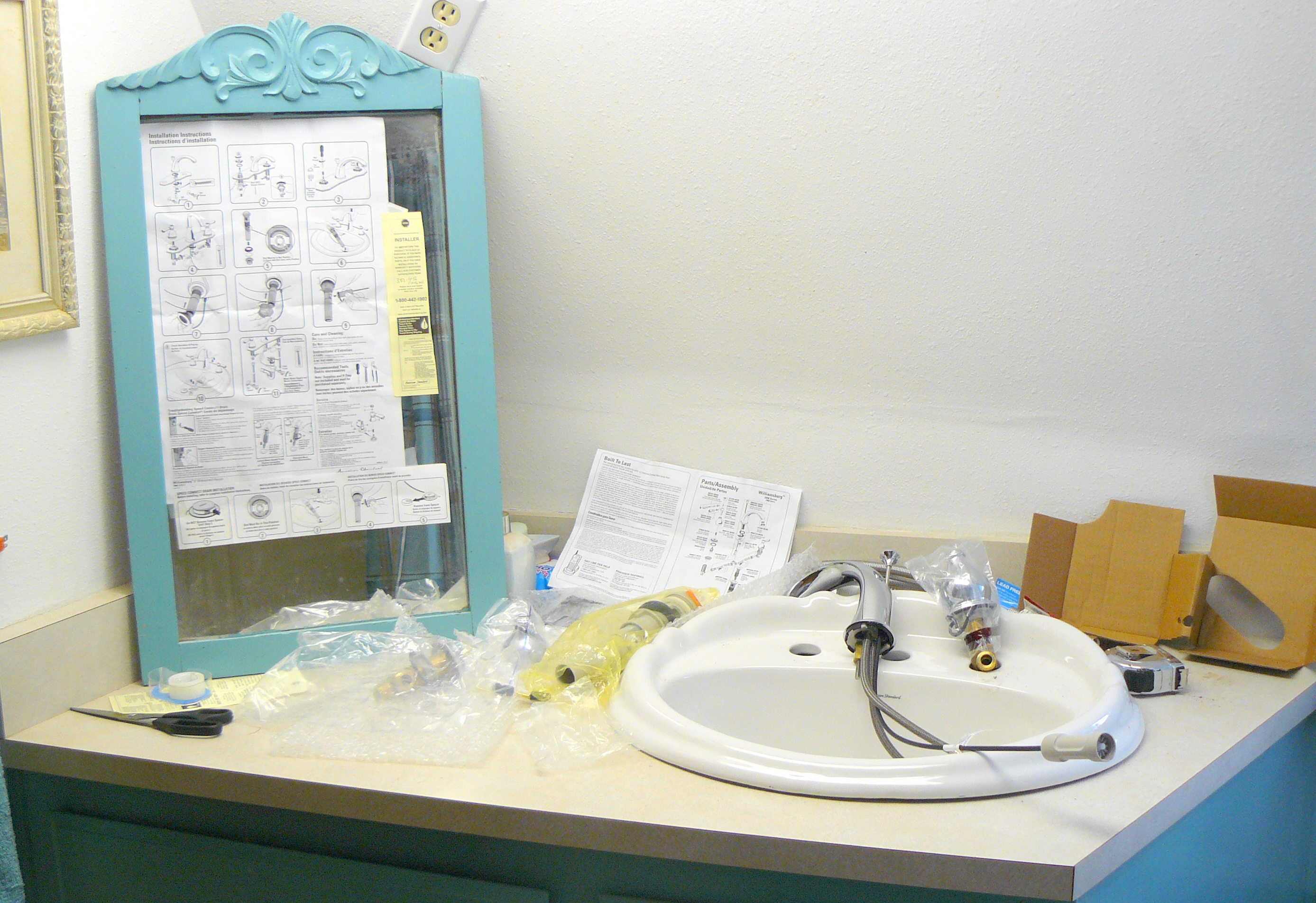
Ahead of the arrival of our first set of guests, my mother from London and my sister from Tokyo, it has been decided to renovate the guest bathroom by upgrading the wash-basin. Naturally, something yours truly wants to do himself! (Don’t believe me? See the following photo!)

P1140906

Of course, as well as still not speaking American, I’m a very long way from speaking American plumbing!  I mean fancy going into a builder’s store and asking for a set of taps.

So how does one connect the hot and cold water to these taps!

I looked at what the store attendant had placed in front of me and said, “No, I don’t mean that sort of tap, I mean a tap for a bathroom basin.”

Oh, you mean force-it!“, replied the attendant.

(Now how did this attendant know that my tool of choice for jobs around the house was a 2-pound club hammer!)

“Of course,” I replied, “You Americans call them faucets!”

So you get the message!

(By the way, the permission to republish the article from The Automatic Earth just came through – just 12 minutes after I sent off my email request – great service, peeps.)

Plus there’s another distraction! Even more bizarre than pretending to be an American plumber!  I am pretending to be an American author!

I have returned to writing the book!

Long-term readers of this blog (you crazy lot) will recall that last November I signed up for NaNoWriMo: National Novel Writing Month.  From that accomplishment has flowed a number of very positive outcomes.  One of them was being contacted by a company specialising in self-publishing.  I was told that really before I get started in earnest, I need to set out a clear idea of what I am writing about and the audience I have in mind.  I called it my Statement of Purpose and after a number of weeks of being amended and revised (huge thanks to Jon and John for their help) it was finally completed just a week ago.  Here are the opening sections:

Learning from Dogs

the book.

Statement of Purpose v1.51

Introduction

We live in very challenging times.

It seems rare these days to meet someone who doesn’t sense, to one degree or another, a feeling of vulnerability to today’s world. A sense that many aspects of their lives are beyond their control.

These are also times where it is widely acknowledged that the levers of privilege, power and money are undermining the rights and needs of so many. A feeling of unprecedented levels of deceit, lying and greed.

Then there’s the subject of climate change and the “end-of-world” sword just waiting to descend on us all; the so-called beat of the butterfly’s wing!

Yes, these are challenging times. As we are incessantly reminded by the drumbeat of the doom-and-gloom news industry every hour, frequently every half-hour, throughout the day. A symphony of negative energy.

Yet right next to us is a world of positive energy. The world of dogs. A canine world full of love and trust, playfulness and relaxation. A way of living that is both clear and straightforward; albeit far from being simple. As anyone will know who has seen the way dogs interact with each other and with us humans.

In other words, dogs offer endless examples of positive behaviours. The wonderful power of compassion for self, and others, and of loving joy. The way to live that we humans crave for. A life full of hope and positive energy that keeps the power of negativity at bay.

Reading audience

The book is written by ‘an ordinary bloke’, not by someone who has a specialist or professional understanding in the areas of mind and behaviour. The author is no different to the majority of people out there and, presumably, the majority of potential readers.

Readers who feel the weight of all that ‘doom-and-gloom’ and general negativity that seems to be in the air. Yet, readers who desire a positive, compassionate attitude to their own life, and to the lives of the people around them. Almost certainly readers who are animal lovers, in general, and dog lovers in particular.

Copyright (©) 2014 Paul Handover. All rights reserved.

The clarity provided by the above has been fantastic and I am now firmly committed to writing something, however small in words, each day.

Yet another drag on my blogging time; I regret.

So if over the coming weeks you read something that strikes you as familiar it may be because I have reposted the item from previous years.  Or if there seems to be a string of posts that have been republished from elsewhere, then at least you will understand.

Of course even better would be for you, my dear reader, to send me stuff or point me towards material you think others would enjoy.  Or write a guest post! 🙂  Now that would be splendid!

Oregon wolves, and book writing!

Just wanted to share some good news with you. Well, regarding Oregon’s wolves!

My so-called book has rather ground to a halt.  Sturdy followers of this blog will recall that in November last year, I sat down and wrote the first draft of a book, under the umbrella of NaNoWriMo = write a minimum of a 50,000-word novel in the month of November.  That I did write in excess of 50,000 words (53,704) in under thirty days felt a wonderful achievement.

But then reality set in!

I subscribed to a NaNoWriMo webinar on editing hosted by David Henry Sterry and Arielle Eckstut of The Book Doctors. To my horror, half-way through the webinar came the realisation that what I had written wasn’t even a fictional novel: It was a personal story on the theme of what dogs have taught me over a life of approaching 70 years.

So those 53,000 words had to be rewritten as non-fiction book!

The next boulder to cause me to fall was the issue of tense.  The book had been written in the 3rd-person, as you can see from the draft of Chapter Twenty-Three.  But the more that I thought about the story the more that it felt that it should be in the 1st-person; namely this first person!  Reinforced by feedback from Jeannie and from reading Melinda Roth’s latest book Mestengo clearly written in the first-person.

Mestengo book cover.

Chapter One

I first smelled the smoke as I stood in the driveway of the farmhouse on the top of a hill in McHenry County in Northern Illinois that was, according to the man who leased it to me one month before, the highest point in all of Northern Illinois.

Damn, damn, damn!  Now the rewrite not only has to go from fiction to non-fiction, it also has to change the tense from ‘Philip’ to ‘Paul’; from him to me!  The words from The Book Doctors seminar rang louder and louder, “You write the first draft for yourself; you edit it for your readers!” (Smart arses!)

Then along came hope in the form of Kami Garcia, the author.  It was a NaNoWriMo pep talk.

So you made it through NaNoWriMo, and you have 50,000 words… Now what? It’s the same question a lot of writers face when they finish a first draft. The good news is you finished the hard part: you have a draft.

I can hear some of you cursing me now: “But Kami, my first draft is totally crappy and worthless. It’s terrible. I wasted an entire month of my life, and all I have 50,000 terrible words to show for it.”

My answer: It doesn’t matter if you wrote the crappiest first draft in the history of all first drafts. You have something to work with, which means you can fix it, mold it, and bang it into whatever shape you want. Here are a few tips to get started:

Read Your First Draft (and Possibly Cry a Little)

After you put away the pint of ice cream and the tissues, take an objective look at your draft. What are the strongest points? The parts that kept you reading? Whether you print out your draft to make notes or use software (I love Scrivener), mark the best bits—circle, highlight, whatever works for you. These are the parts you’ll re-read whenever you start to lose hope (which will be often).

All of which is a long-winded way of me saying that I shouldn’t be spending time writing blog posts but have my head down in the big edit.

But, hey, already come this far so going to leave you with this wonderful news.

ooOOoo

Hello Paul,

Good news: For the first time since 2009, the Oregon Department of Fish & Wildlife has confirmed wolves south of the Eagle Cap Wilderness!

Based on recent evidence, it’s clear that at least five wolves are frequenting an area in Northern Baker County. It may not be a story as epic as Journey’s, but it’s another good sign wolves are continuing to retake their rightful place on the Oregon landscape.

Those of you who have been tracking wolf issues for a long time, may remember the iconic photo of a scraggly Oregon wolf in sagebrush. The young wolf and his partner frequented an area near the Keating Valley in Baker County.

Sadly, the “Keating Wolves”, as they came to be known, were killed in 2009. Despite some tantalizing reports, since that time, only one Oregon wolf is known south of the Wallowas.

Later today, we’ll revisit the story of the Keating Wolves on the Oregon Wild Blog and post it on the Oregon Wolves Facebook page. Wolf recovery still has a long ways to go. But today’s news is significant.

Since 2009 – with your help – we’ve stopped round after round of wolf kill bills in Salem. We’ve stood up for wolves in court. We’ve worked with responsible ranchers. We’ve educated the public, highlighted the positive impacts of having wolves back on the landscape, and shared news – good and bad – of wolf recovery.

Things are far from perfect. Old prejudices die hard and wolves continue to be at the center of a campaign of misinformation and fear. The Obama administration is stubbornly pushing a scheme to strip wolves of important protections, and the state can still kill wolves on behalf of the livestock industry.

But today’s news is a sign that we’re headed in the right direction here in Oregon. And there should be more on the horizon. Wolves are mating, pups should be on their way, and Oregon will announce an updated wolf population estimate soon. That’s more news we look forward to sharing.

For wolves and wildlife,
Rob Klavins
Wildlife Advocate, Oregon Wild

ooOOoo


The Big Edit!

The start of phase two of ‘The Book’!

Back on the 1st November, I started out on the journey to write, before the end of November, a novel of a minimum of 50,000 words.  It was part of the NaNoWriMo annual encouragement for new writers.  To my amazement, I completed a first draft.

However, now comes the hard work!  For as Stephen King explains in his book, On Writing,

When you write a story, you’re telling yourself the story, when you rewrite, your main job is taking out all the things that are not the story. (p. 57)

Or as I read somewhere else: Your first write is for you, your rewrite is for your readers.

Either way it doesn’t get around the fact that for the next several weeks I need to be spending hours rewriting the first draft.

Which is my way of saying that until that rewrite is complete I won’t be able to spend so much time writing posts for Learning from Dogs.  In other words, there will be more republication of other articles and essays that catch my interest, repeat posts back from the earlier days of the blog and the publication of essays that you, dear reader, have sent me (hint!!).

TED Talks is an amazing resource that thousands use.  Not infrequently, a TED Talk finds its way to these pages; as indeed one on dieting will be offered tomorrow.

For today, however, enjoy this wonderful, and powerful, TED Talk by Benjamin H. Bratton.

The book! Back to the beginning.

Learning from Dogs

Back to the beginning.

The grey smoke from the fire drifted up into the still air of the night sky.  It had been a good day for them. Their small community out here in the wild lands. Eight of them had been foraging since the sky had first become light. They had found nuts and plants and fruit aplenty, perhaps sufficient to provide food through one more darkness, maybe two.

Jogod and Omo sat together with their loving animals.  Those two tiny, helpless, shivering, baby wolves that Jogod and Omo had rescued so many moons ago.  Now grown to such beautiful animals and now so much a part of their tribe that Jogod and Omo could not imagine ever being without them.  The wolves were not outsiders.  They were part of the community, even to having names like all the others members of the tribe.  The young female wolf had been called Palo and the young male had been called Toto. So quickly did they come to know their names. So quickly they came to speak with Jogod and Omo in their strange voices. So quickly that Jogod and Omo came to understand those voices; know what so many of those sounds meant.

The fire at the start of darkness was another part of the way they all lived.  For it offered some warmth before the long night. It made the animals that would want to harm them stay away. Now with the fire burning and having Palo and Toto sleeping in the entrance of their cave, they could sleep so more deeply than ever before. Palo and Toto had become their ears and eyes.  They knew when danger was coming close.  They knew how to wake the sleepers in the cave so that they would make noises and shouts to make the creatures that would harm them go away.

Having fire to keep them warm and safe had been long part of their lives. But this very day their fire had given them something very different. It had given them new food. Good new food.

Jogod, with Gadger and Kudu, and with Palo and Toto, had been deep in the land of tall trees when they saw an animal that they had seen before at times. An animal with a head on a long, slender neck, a body covered in brown hair with rows of white dots, a body on long, slim legs.  It was eating the leaves of a tree, did not hear them until, too late, it tried to run as Palo and Toto lunged at it.  Palo and Toto grabbed the animal, held on to its back legs.  It could not run. Kudu came up and threw his arms around the slender neck. Gadger brought down his wooden club hard between the soft ears of the creature. It became still and fell to the ground.

Jogod had carried the dead animal across his shoulders back to the cave. They had lit their evening fire as they always did.  But in this new darkness they also had sticks in the fire, each stick had some of the meat of the animal in the heat of the flames. They had tasted and then eaten some of the hot meat of the animal and it was good.  This hot animal meat seemed to comfort them in a way unlike the fruit and the nuts.

Jogod held a stone with a sharp edge and cut meat from the animal for Palo and Toto.  Palo and Toto knew that what they had found for these animals who walked on two legs was good. Good for all.  Palo and Toto knew they could find other animals like the one they had found today.

After they had all eaten, it was time to sleep in the cave.

Jogod felt good.  He rested down and put his arm around Omo. They slept.

Then Toto came to lay with Jogod and rest beside him, and then he slept. Then Palo came to lay with Omo and rest beside her, and then she slept.

Such was the moment of these happenings. This moment when the trust between man and wolf became the power of faith of each in the other. The faith that they would forever be joined. The destiny for wolf and man for the rest of time.

718 words. Copyright © 2013 Paul Handover

The book! Chapter Twenty-Three.

Learning from Dogs

Chapter Twenty-Three

It was October 25th, 2013. Exactly a year since the day that they had moved in to their Merlin home.  Yet in some very strange way if felt neither as long as a full year nor as short.

Molly and Philip were sitting on the decked verandah looking out over the acres of grass. A group of five dogs were cavorting and chasing around in what looked like for them a dog heaven.

He came back to his strange thought of it not feeling like a year; in either direction.  The beauty of their land, the joy the dogs experienced every time they ran freely about the place was beyond measure.  All their neighbours, without exception, were people that he and Molly liked. More than that, they were also helpful and sharing persons.  Rationally, he admitted, this was probably a key aspect of country folk right across the United States of America.  But it didn’t diminish what it felt like.  Plus his Englishness was welcomed and enjoyed and that created an additional layer of acceptance. Thus in those ways it felt that they had been here for much longer than twelve short months.

On the other hand, his difficulty at learning names and faces of people, even neighbours; his struggle to still find his way to certain stores and shops in Grants Pass had a feel as though they had only just moved in; had been here much less than a full year.  That slowness in learning his way about the area worried him at times. It was disquieting and more than once he turned inwards and quietly worried that dementia was stealing up on him as it had for his elder sister, Diana, who had died of it earlier in 2013.

More generally, two dogs had died of old age over the past months so they were down to a total of nine.  Those nine were divided into groups of five and four.

The group of five were Pharaoh, Sweeny, Dhalia, Hazel and Cleo. Cleo was the younger German Shepherd that they had purchased as a companion to Pharaoh, who had passed ten-years-old last June. This group was affectionately called the bedroom group because they slept overnight in the main bedroom with Molly and Philip.  The other four dogs were Lilly, Ruby, Casey and Paloma.  Known as the kitchen group because they lived in the large kitchen and dining area. It worked very well. All nine dogs found their home property endlessly interesting simply because each day there were so many new smells for them to follow.

There was another aspect of their year here that figured very strongly in Philip’s mind.  That was the tension between anger and peace, his anger and his peace, and the role of dogs in his life.

He had observed strongly how the level of disquiet, to put it mildly, in the minds of everyday folk all around them was increasing.  A throw-away comment in front of a store check-out woman about how we were living in interesting times would trigger a facial expression, a shrug of the shoulders that spoke volumes.  Often added to by a comment from the next person in line.  Many other tiny windows into how so many people were feeling uncomfortable about the world we were all now living in.

He fully expected to see growing levels of social anger and unrest over the next few years.  He could feel the force of anger playing with his mind.

What was it that Jonathan used to speak about?  Yes, the difference between power and force.  How force could never produce lasting change. Yet how power came from within and could change mountains, metaphorically speaking.  Or, as Jonathan pointed out, literally in the case of the power of water and sand.

Philip knew that to bury his face into the furry warmth of a dog’s coat, to wrap his arms around one of their animals and feel the dog relax in to that hug, offered him something priceless.  It offered the lesson, time and time again, that anger is only cured from within. That the power of that dog’s unconditional love for him effortlessly took him within himself and bathed him in love, peace and contentment.

One evening during early September, Dhalia did not return to the house after the usual after-supper dog run.  He said to Molly that he would go out and look for her.  He walked down to the forest just by the creek and stood calling out her name. As the sun set behind the tall peaks and the darkness drew in around him, he started imagining what it would be like to leave their property and plunge into the deep forest searching for one of their dogs that had become lost.  He shivered with the thought of how fragile was the boundary between being secure at home and being utterly lost in a vast wilderness.

Thank goodness, he wasn’t put to the test because at that moment the sound of little paws heralded Dhalia’s return.  She came immediately to his side, her tail wagging with such furious affection, as it so often did.  Philip kneeled down and hugged her.  Dhalia lowered her head and pushed herself under his left arm. Tears flowed from his eyes revealing his joy and love that this precious dog was not lost or harmed.

When he and Dhalia had returned to the house, he couldn’t shake off that image of being out alone in the forest. To the extent that the same evening, quite untypically, after their meal he had excused himself to Molly and sat down and written a short story on the theme.

Sitting there with Molly on the verandah more than a month later he  reflected that what he could remember of those words was a little hazy. He rose from the chair to go and find where he had put the completed story. He found it almost immediately and came back out to the verandah.

“What’s that you’ve got there?” Molly asked.

“It’s that story I wrote of being lost out in the forest; you know the one I wrote back in early September.”

“Oh yes, I loved that story. Do read it to me again.”

He took out his reading glasses, looked down and started reading.

——

“Molly, where’s Dhalia?”

“I don’t know. She was here moments ago.”

“Molly, You take the other dogs back to the car and I’ll go and scout around for her. Oh, and you better put Pharaoh on the leash otherwise you know he’ll follow me.”

“Philip, don’t worry. Dhalia’s always chasing scents; bet she beats us back to the car. Especially as it’s going to be dark soon.”

Nonetheless, Philip started back down the dusty, dirt road, the last rays of the sun pink on the high, forested cliffs about them. This high rocky, forest plateau, in an area known as the Siskiyou Forest, not those many miles from their home in Southern Oregon. It made perfect dog-walking country and rarely did they miss a week-end afternoon out here. However, this particular Saturday afternoon, for reasons Philip was unclear, they had left home much later than usual.

There was no sign of Dhalia ahead on this remote forest road so he struck off left, hoping that she was somewhere up amongst the higher trees and the boulders. Soon he reached the first crest; panting hard. Behind him, across the breath-taking landscape, the setting sun had dipped beneath faraway mountain ridges; a magnificent sight. Suddenly, in the midst of that brief pause, him admiring the perfect evening, a sound echoed around the cliffs. The sound of a dog barking. He bet his life on that being Dhalia. Just as quickly the barking stopped.

The barking started up again, barking that suggested Dhalia was hunting a creature. The sound came from an area of boulders way up above the pine trees on the other side of the small valley ahead of him. Perhaps, Dhalia had trapped herself. More likely, he reflected, swept up in the evening scents of the wilderness, Dhalia had temporarily reverted back to the wild, hunting dog she had been all those years ago. That feral Mexican street dog who in 2005 had tentatively turned away from scavenging in a pile of rubbish in a dirty Mexican town and shyly approached Molly. Molly had named her Dhalia.

He set off down through the dense forest to what he thought was the valley floor. Some thirty minutes later, thirty minutes of hard climbing, had him reach those high boulders.

Philip whistled, then called “Dhalia! Dhalia! Come, there’s a good girl.” Thank God for such a sweet, obedient dog. He anticipated the sound of dog feet scampering through rough undergrowth. But no sound came.

He listened; no sounds, no more barking. Now where had she gone? Perhaps past these boulders down in the next steep ravine beyond him, the one even more densely forested with pine trees. With daylight practically gone he needed to find Dhalia, and find her very soon.

He plunged down the slope, through tree branches that whipped across his face, then fell heavily as his foot found empty space instead of the expected firm ground. Philip cursed, picked himself up and paused. That fall had a message for him: the madness of continuing this search in the near dark. The terrain made very rough going even in good daylight. At night, the boulders and plunging ravines would guarantee a busted body, at best! Plus, he ruefully admitted, he didn’t have a clue as to where he now was, let alone finding his way back to the road where he had left Molly.

The unavoidable truth smacked him full in the face. He would be spending this night alone in the high, open forest. It had one hell of a very scary dimension.

He forced himself not to dwell on just how scary it all felt. He needed to stay busy, find some way of keeping warm; last night at home it had dropped to within a few degrees of freezing. Philip looked around, seeing a possible solution. He broke a small branch off a nearby fir tree and made a crude brush with which he swept up the fallen pine needles he saw everywhere about him. Soon he had a stack sufficient to cover him, or so he hoped. Thank  goodness that when he and Molly had decided to give the five dogs this late afternoon walk, he had put on jeans and a long-sleeved shirt, a pullover thrown over his shoulders. It didn’t make Dhalia’s antics any less frustrating but he probably wasn’t going to freeze to death!

The air temperature sank as if connected with the last rays of the sun. Philip’s confidence sank at the same rate as the temperature.

He lay down, shuffled about, swept the pine needles across his body, tried to find a position that carried some illusion of comfort. No matter the position, he couldn’t silence his mind. Couldn’t silence the screaming in his head, his deep, primeval fear of this dark forest about him, his imagination already running away with visions of hostile night creatures, large and small, watching him, smelling him, biding their time. Perhaps he might sleep for a short while?

A moment later the absurdity of that last thought hit him. Caused him to utter aloud, “You stupid sod. There’s no way you’re going to sleep through this!” His words echoed off unseen cliffs in the darkness reinforcing his sense of isolation.

He was very frightened. Why? Where in his psyche did that come from? He had spent many nights alone at sea without a problem, a thousand miles from shore. Then, of course, he knew his location, always had a radio link to the outside world. But being lost in this dark, lonely forest touched something very deep in him. Suddenly, he started shivering.

The slightest movement he made caused the needles to slip from him and the cold night air began to penetrate his body. He tried not to think about how cold it might get and, by extension, thanked his lucky stars that the night was early September not, say, mid-December. So far, not too cold. But it wasn’t long before the fear rather than the temperature started to devour him. What stupid fool said, ‘Nothing to fear but fear itself!’ His plan to sleep under  the pine needles, fear or no fear, had failed; he couldn’t get warm. He had to move.

He looked around and vaguely saw a boulder a few yards away, like some giant, black shadow. No details, just this huge outline etched against the night. He carefully raised himself, felt the remaining needles fall away, and gingerly shuffled across to the dark rock. He half-expected something to bite his extended hand as he explored the surface, ran his hand down towards the unseen ground. Miracle of miracles, the granite gently emitted the warmth absorbed from the day’s sun. He slowly settled himself to the ground, eased his back against the rock-face and pulled his knees up to his chest. He felt so much less vulnerable than he had laying on the forest floor. He let out a long sigh, then burst into tears, huge heart-rending sobs coming from somewhere very far within him.

Gradually the tears washed away his fear, restored a calmer part of his brain. That calmer brain brought the realisation that he hadn’t considered, well not up until now, what Molly must be going through. At least he knew he was alive. Molly, not knowing, would be in despair. He bet she would remember that time when out walking in the Dells down in Arizona they had lost little Poppy, an adorable 10 lb poodle mix, never to be found again despite ages spent combing the area, calling out her name. A year later and Molly still said from time to time, “I so miss Poppy!” First Poppy and now him! No question, he had to get through this in one piece, mentally as much as physically.

Presumably, Molly would have called 911 and been connected to the local search and rescue unit. Would they search for him in the dark? He thought it unlikely.

Thinking about her further eased his state of mind and his shivering stopped. Thank goodness for that! Philip fought to retain this new perspective. He would make it through, even treasure this night under the sky, this wonderful, awesome, night sky. Even the many crowns of the tall trees that soared way up above him couldn’t mask a sky that just glittered with starlight.

It was that heavenly clock that resided in the night sky and tonight offered a magical example of the immensity and grandeur of the universe.

Often during his life the night skies had spoken to him, presented a reminder of the continuum of the universe. On this night, however, he felt more humbled by the hundred, million stars surrounding him than ever before.

Time slipped by, him being unable to read his watch in the darkness. However, above his head there was that vast stellar clock. He scanned the heavens, seeking out familiar pinpoints of light, companions over so much of his lifetime. Ah, there! The Big Dipper, Ursa Major, and, yes, there the North Pole star, Polaris. Great! Now the rotation of the planet became his watch, The Big Dipper sliding around Polaris, fifteen degrees for each hour.

What a situation he had got himself into. As with other challenging times in his life, lost in the Australian bush, at sea hunkering down through a severe storm, never a choice other than to work it out. He felt a gush of emotion from the release this changed perspective gave him.

Far away, a group of coyotes started up a howl. What a timeless sound. How long had coyotes been on the planet? He sank into those inner places of his mind noting how the intense darkness raised correspondingly deep thoughts. What if this night heralded the end of his life, the last few hours of the life of Philip Stevens? What parting message would he give to those that he loved?

Molly would know beyond any doubt how much he had adored her, how her love had created an emotional paradise for him beyond measure. But his son and daughter, dear William and Elizabeth? Oh, the complexities he had created in their lives by leaving their mother so many years ago. He knew that they still harboured raw edges, and quite reasonably so. He still possessed raw edges from his father’s death, way back in 1956. That sudden death, five days before Christmas, so soon after he had turned twelve, that had fed a life-long feeling of emotional rejection. That feeling that lasted for fifty-one years until, coincidentally, also just a few days before Christmas, he had met Molly in 2007.

His thoughts returned to William and Elizabeth. Did they know, without a scintilla of doubt, that he loved them? Maybe his thoughts would find them. Romantic nonsense? Who knows? Dogs had the ability to read the minds of humans, often from far out of visual range. He knew Pharaoh, his devoted German Shepherd, skilfully read his mind.

Philip struggled to remember that saying from James Thurber. What was it now? Something about men striving to understand themselves before they die. Would that be his parting message for William and Elizabeth? Blast, he wished he could remember stuff more clearly these days and let go of worrying about the quote. Perhaps his subconscious might carry the memory back to him.

He looked back up into the heavens. The Big Dipper indicated at least an hour had slipped by. Gracious, what a sky in which to lose one’s mind. Lost in that great cathedral of stars. Then, as if through some stirring of consciousness, that Thurber saying did come back to him: All men should strive to learn before they die, what they are running from, and to, and why.

He reflected on those who, incarcerated in solitary confinement, had their minds play many tricks, especially when it came to gauging time. What a bizarre oddment of information; where had that come from? Possibly because he hadn’t a clue about his present time. It felt later than 11pm and earlier than 4am, but any closer guess seemed impossible. Nevertheless, from out of the terrible, heart-wrenching hours of being alone he had found calm, had found something within him. He slept.

Suddenly, he was slammed fully awake. Something out there in the dark had made a sound. Something that caused his whole body to become totally alert, every nerve straining to recognise what it might be. It sounded like animal feet moving through the autumn fall of dead leaves. He prayed that it wasn’t a mountain lion. Surely, such a wild cat preparing to attack him would be silent. Now the unknown creature had definitely paused, no sound, just Philip knowing that somewhere out there, something was watching him, waiting. Now what! The creature was making a sniffing sound. He hoped it was not a puma. Pumas could make trouble; they had no qualms at attacking a decent-sized dog.

Poised to run, he considered rising but chose to stay still.  Very quietly and gently he moved his fingers around the ground near to him on either side.  A few moments later he closed his right-hand around a small rock. The sniffing stopped. Nothing now, save the sound of his rapidly beating heart. He sensed, sensed strongly, the creature looking at him. It seemed very close, ten or twenty feet away. The adrenalin hammered through his veins.

He tried to focus on the spot where he sensed the animal was waiting; waiting for what? He pushed that idea out of his head. His ears then picked up a weird, bizarre sound. Surely not! Had he lost his senses? It sounded like a dog wagging its tail; flap, flap, flapping against a tree-trunk.

A dog? If a dog, it had to be Dhalia!

Then came that small, shy bark! A bark he knew so well. It was Dhalia. He softly called her, “Come here girl, there’s a good girl.”

With a quick rustle of feet Dhalia leapt upon him, tail wagging furiously, her head quickly burrowing into his body warmth. He hugged her and, once more, the tears ran down his face. Despite the darkness, he could see her perfectly in his mind. Her tight, short-haired coat of light-brown hair, her aquiline face, her bright inquisitive eyes and those wonderful head-dominating ears. Lovely large ears that seemed to listen to the world. A shy, loving dog when Molly had rescued her in 2005 and all these years later still a shy, loving dog.

Dhalia raised her head towards his face and licked his tears, her gentle tongue soft and sweet on his skin. He shuffled more on to his back and that allowed her to curl up on his chest, still enveloped by his arms. His mind drifted off to an era a long time ago, back to an earlier ancient man, likewise arms wrapped around his dog under a dome of stars. This bond between man and dog.  So different to each other yet so closely bonded. Bonded in a thousand mysterious ways.

The morning sun arrived as imperceptibly as an angel’s sigh. Dhalia sensed the dawn before Philip, brought him out of his dreams by the slight gentle stirring of her warm body.

Yes, there it came, the end of this night. The sun galloping towards them across ancient lands, another beat of the planet’s heart. Dhalia slid off his chest, stretched herself from nose to tail, yawned and looked at him, as much to say time to go home! He could just make out the face of his watch: 5.55am. He, too, raised himself, slapped his arms around his body to get some circulation going. The cold air stung his face, yet it couldn’t even scratch the inner warmth of his body, the glow from the bond between him and Dhalia.

They set off.  As they crested the first ridge there ahead, about a mile away, was a forest road busy with arriving search and rescue trucks. Philip could just see Molly’s white Dodge parked ahead of the trucks and he instinctively knew that she and Pharaoh had already disappeared into the forest, knew Pharaoh was leading her to them.

They set off down the slope, Dhalia’s tail wagging with unbounded excitement, Philip ready to start shouting for attention from the next ridge. They were about to wade through a small stream when Pharaoh raced out of the trees from the other side. He tore through the water, barking at the top of his voice in clear dog speak, ‘I’ve found them, they’re here, they’re safe’.  Philip crouched down to receive his second huge face lick in less than six hours.

Later, when safely home, something struck him. When earlier they had set off to find their way back, not long after sunrise, Dhalia had stayed pinned to him. That was so unusual for her not to run off. Let’s face it, that’s what got them into the mess in the first place. Dhalia had stayed with him as if she had known that during that long, dark night, it had been he who had been the lost soul.

Thus came the message from that night, a message as clear as the rays of this new day’s sun, the message to pass to all those he loved. We can only find ourselves from the places where we are lost.

——

Philip put down the story.  There were tears to his eyes.  Molly had just blown her nose with a paper tissue so he guessed he wasn’t the only one with wet eyes.

She looked at him.

“You know, that story about Dhalia reminds me of the way that Lilly stayed with Ben.”

“Sorry sweetheart, remind me of that again.”

“When Ben was dying, Lilly stayed by his side on the bed every minute of every hour except for a dash outside for a pee from time to time, and to eat her meals. I knew that Ben had died even before going into his bedroom because Lilly had come out from the room and was resting besides me.  Lilly knew that I needed her now more than Ben did.”

There is so much for people to learn from dogs. So many of the ways that dogs behave that show us of what is so desperately missing from these times; from these so-called modern, twenty-first-century times. A time when many believe that our way-of-life is as good as broken.  Broken by the levels of greed, by the lies and abuses of those wielding power and control, riven by the deep inequalities between those with comfortable, material lives and those who struggle to live more than one cruel day at a time.

Dogs live so beautifully in the present. They make the best of each moment uncluttered by the complex fears and feelings that we humans so often chose to have about us. They don’t judge, they simply take the world around them at face value.  Yet they have been part of man’s world for an unimaginable length of time. Man’s longest animal companion, by far!

There is no archeological evidence of dogs being part of man’s life earlier than thirty-thousand years ago.  However, there is serious consideration by scientists that the grey wolf, from which the dog evolved, was in some way connected to Neanderthal man.  That the earliest dogs became man’s companion, protector and helper and that the relationship between dog and man was critically important in man achieving success as a hunter-gatherer.  Allowing our species to evolve to farming the land and, thence, the long journey to present times.

However at some point in the last, say one to two-hundred years, that farming and husbandry spirit became corrupted by selfishness and greed to the point where the planet’s plant, energy and mineral resources were, and still are, seen as an infinitely deep pot.  That corruption producing a blindness to the most important truth in all our lives.  That Planet Earth is man’s only source of life.  Unless and until we return to living in balance and harmony with our planet then we are close to the edge of extinction.  Both a literal and spiritual extinction.

Dogs know better, so much better!  Time again for man to learn from dogs!

4,463 words.
The book! Chapter Twenty-Two.

Learning from Dogs

Chapter Twenty-Two

Philip drove himself, as quietly as he could manage it, back up to Lisa and Don’s house. It was a little after 4am.  The night air was cold and as he slipped into his bed the inside of the bodega felt just as cold as outside. The hours of love-making with Molly had been a new experience for him. Of extraordinarily different dimensions from any previous experience. Like every other aspect of their relationship, because now it was most definitely a relationship, the ways that he and Molly were relating to each other, how each was getting to know the other, was a new journey for him.  As with all new journeys in life, both the real, external ones and the inner, subjective ones, new journeys came with new experiences, new vistas and new horizons every step of the way.

As he slept on that next morning, Lisa had telephoned Molly and had asked her what the hell was going on.  She seemed very upset in a way that Molly couldn’t fully understand.  After Lisa had calmed down a little, Molly told her that she and Philip were now lovers.

Five days later, 2007 bid farewell forever and in came the New Year of 2008. Philip and Molly endeavoured to be together as much as possible for his remaining ten days. He was now effectively living at her house.  In those ten days any lingering cautions in their minds about either of them being hurt just vaporised. For the very simple, yet gigantic, reason that he wanted to be with her and she with him.  There was no doubt whatsoever that he would leave Devon and come to San Carlos with Pharaoh just as soon as it could be arranged.  In the interim, Molly would come to Devon in the Spring to meet his family and friends.  Then the plan was that in the early Autumn, he and Pharaoh would make the one-way trip to Mexico, routing via California.

Thus it came to pass that early one morning in September, Philip arrived at London Airport with two suitcases and one beloved dog: Pharaoh. They were flying one-way with British Airways, London to Los Angeles.  He had been informed that Pharaoh would need to be checked-in at the World Cargo centre. Philip parked outside said cargo centre and walked Pharaoh on his leash to the animal check-in desk. Fifteen minutes later, with his face staring out at Philip through the grill of his travel cage, Pharaoh disappeared from sight without even a bark; without even a whimper.  It was as if he sensed the new life that was ahead of him. Philip had asked as to where in the aircraft’s hold Pharaoh’s cage would be situated and had reserved a cabin seat more or less above that spot.  He was of no doubt that Pharaoh would know that he was sitting as close to him as possible.

As is the way of long international, non-stop flights, it was over in some sort of time-warped way, before he could really grasp it.

Molly had driven up from San Carlos to meet him and Pharaoh when they flew in to Los Angeles.  First she welcomed Philip with the world’s sweetest and dearest hug then they repositioned to another part of the terminal building to await Pharaoh’s arrival. In what seemed like no time at all they were all heading out from the airport complex, Pharaoh sitting on his haunches on the rear seat of Molly’s car unable to take his eyes off the strange world outside yet at the same time eagerly eating a bowl of dog biscuits being held under his chin by Philip.

So, it’s time for this story to take a pause. Well, maybe not a pause, more a drawing back from the intricacy and detail of the previous pages. For in so many ways the story has now been told.

Philip and Molly’s lives together were all, and more, of what they could have ever imagined.

He had been living in Mexico with Molly for about eighteen months when they were clear that they wanted to marry and find a new home in America. Because Molly had US citizenship through her marriage to Ben, it seemed sensible for Philip to apply for a US Fiancée Visa.  So it was decided that they would find a home in Arizona and sell the beach-side house in San Carlos.  They quickly found a comfortable home in Payson, a city of fifteen-thousand persons located at five-thousand feet, eighty miles North-East of Phoenix, Arizona. The subsequent move from Mexico to Payson went off remarkably well. Especially if one reflects that the move included fourteen dogs, seven cats and all their belongings. Their latest dog being a beautiful, black, half-Rottweiler female dog that was dumped in the street just outside the house barely ten days before they departed Mexico.  She was still in milk, frantically tearing back and forth along the dusty street, presumably looking for her puppies, crying out the pain of her loss.  Molly enticed her into the house, gave her water, for she was very thirsty, and within minutes the dog was showing her love and gratitude to Molly. They named her Hazel.

Then it was time for Philip to apply for that fiancée visa. There was no delaying that because his entrance to the USA, when they moved up from San Carlos, was on the basis of a ninety-day tourist visa.

Applying for that fiancée visa could only be done at the US Embassy back in his home country; England.  In the end, it involved several trips back to the UK and strange, interminable processes convincing the US Embassy in London that he was a fit and proper person to be admitted as a resident to the United States of America.

Nevertheless, on November 4th, 2010, he boarded Virgin Atlantic’s flight VS007 from London Heathrow to Phoenix, the possessor of a United States visa permitting him to marry a US Citizen; in this case a very special one.  Sixteen days later, on Saturday, November 20th, he and Molly were married.

This is where the story should have ended.  Molly and Philip and their animals living very happily in a comfortable home in Payson, Arizona. But the story has a twist.

It had been a night in the middle of June in 2012; the night of the 20th June as he recalled.  There was nothing about the previous day that could have had any bearing on his mind, as in any trigger for the dream, not that, as dreams go, it was a dream of any meaning; well not outwardly. He dreamt he had gone to the bathroom in the middle of the night and turned on the cold-water tap and found no water flowing from it. That was the dream; no more or no less. Bizarre!

Yet when he awoke in the morning, the dream was vividly present in his mind.  He said to Molly that he had had the most strangest of dreams and recounted the experience. As it happened, they had a neighbour call by later that morning and the conversation lead Philip to mention his dream.  To which the neighbour had simply remarked that if he was worried about water then they should go to Oregon.

While their property was sufficiently far out from Payson to require their own well and, as wells go, it was a deep one of nearly three-hundred feet, the water level had stayed pretty constant around sixty-feet down.  On the other hand, this part of Arizona had been receiving below-average rains for the last twenty years.

Then, almost as though it had been pre-ordained, a short while thereafter Molly met a woman who said that she would be delighted to house sit and look after all the pets if Molly and Philip ever wanted to go on a vacation. Molly had mentioned that they were thinking of visiting Oregon.  All of which came together and saw Molly and Philip setting off on July 11th on the start of a three-day, twelve-hundred mile drive to Southern Oregon.

On their arrival in Grants Pass, Oregon, yet another set of coincidences found them being introduced to an independent real-estate agent, Donna. Donna said she was happy to show them some properties for sale in this part of Southern Oregon. The second property that Donna showed them was a few miles North of the small community of Merlin, itself some nine miles North-West of Grants Pass.

Donna stopped at the entrance to the driveway, turned round and looked back at them.

“I have to be honest and tell you that I know very little about this property. There are not even listing particulars. It was for sale a few years back, rumours had it at well over a million dollars; possibly even million and a third.  Then it was lost to the bank and, for whatever reason, nobody has gone for it.  It’s been empty for at least two years.”

Donna drove in.  The driveway was surrounded either side by tall forest trees; oaks, pines and firs. It initially sloped down from the roadway and then went across a bridge over a sparkling creek of crystal-clear water flowing from right-to-left.  Donna paused the car as Philip asked a question.

“Any details about the creek, Donna?”

“It’s called Bummer Creek and it flows all-year. Not sure, will need to check on it, but I thought I had heard there were formal water extraction rights for the owners of the property.”

The driveway then made a gently climb along the right-hand edge of a large, multi-acre, grass paddock.  In what must have been nearly a quarter-of-a-mile later, they drove up to a large, wooden-clad, single-story home surrounded by more wonderful tall pines and firs.  It was stupendous.  A four-bedroomed property in thirteen acres of fenced land with stables, a garage and other outbuildings, and what did turn out to be water extraction rights from Bummer Creek.

It took Molly and Philip less than an hour to make up their minds that at the right price this could be their home of a lifetime for them and all their animals.

Donna came up to them as they stood outside the front of the property.

“What do you think, guys?”

Philip answered, “It’s an incredible property and I don’t doubt that at some point it would have been an expensive property to purchase.  Do you know the asking price?’

Donna answered, “I’ve just been calling to find out more details.  The bank that originally foreclosed on the property then sold it a while back to a company called Gorilla Capital.  Gorilla are just trying to flip the place for cash but, as with the bank, have had trouble finding a buyer.  The company have told me they are looking for three-hundred-and-eighty-thousand dollars.  I have to say that’s quite a low price for all that’s here even in these depressed times.  My guess is that many people would find it a bit too much to take on in terms of the acres.   Otherwise, I can’t see why it hasn’t sold a long time ago. Especially for the money being asked.”

Philip and Molly took another walk around the house. They ended up standing together on the wooden deck overlooking some eight or nine acres of grassland, dense forest sweeping up the flanks of the slopes in the near distance, and the mighty Mount Sexton visible four or five miles off to the North-East.

“What do you think, Molly?” he asked, putting his arm around her waist.

“It’s gorgeous, I just can’t believe what an incredible home it is.  How about you? What do you think, sweetheart?”

His reply was unequivocal. “I think we should put in a silly offer.”

“Such as?” Molly wondered aloud.

“Come with me.”

He took her hand and lead her around to the front of the house, to where Donna was waiting.

“Donna, we want to make an offer.  Tell Gorilla that we can’t go anywhere near their asking price just now. But if they want a deal today, we will offer two-hundred-and-fifty-thousand dollars. Cash on the nail as we say in my old country.”

Donna walked away to be out of earshot and rang Gorilla.  She was back in a couple of minutes.

“They say that’s too low.  Say there really looking for something a bit higher.”

Fifteen minutes later, Gorilla and Philip and Molly had settled on the figure of two-hundred-and-seventy-one-thousand dollars.

As they walked towards Donna’s car she said to them, “You do know, don’t you, that even in today’s depressed housing market, that’s one hell of a deal.”

So it came to pass that on the following day, Sunday, 15th July, over at Donna’s office, Philip and Molly signed the purchase contract.

They left to return to Payson the following day.

Upon their return to Payson, without exception, all the people they shared their news with were astounded at what they had purchased for such a modest sum of money.  Now came the challenge of getting their Payson house ready for sale, packing up their things and transporting what was by now eleven dogs and five cats, the twelve-hundred miles to Oregon.

Nevertheless, as is the way of things, piece by piece, little by little, it all came together resulting in the day of the ‘big move’ arriving: Tuesday, October 23rd to be exact.  Philip’s Jeep was towing a large covered U-Haul trailer and Molly was driving a U-Haul rental van towing another trailer carrying her Dodge van packed to the roof. They were off to Oregon.

Within less than forty-eight hours of arriving at their new home in Merlin, as Molly and Philip saw how the dogs reacted to their acres of land, the trees, the hollows and the borders, they knew that all of them, in the fullest sense of the phrase, had come home.

2,387 words. Copyright © 2013 Paul Handover

The book! Chapter Twenty-One.

Learning from Dogs

Chapter Twenty-One

He was settling very quickly into the local scene.  It was a strange mix of Americans and Mexicans.  Then within the Mexican population there appeared to be as least two groupings, or categories.  Those Mexicans that, in one form or another, had lives or businesses that revolved around the many Americans living there and then another group of Mexicans who were much less visible.  Undoubtedly, this latter group were poorer, many living in an area of San Carlos known as the Ranchitas. An area that he didn’t expect to be shown but had been mentioned by both Lisa and Molly.  It slightly reminded him of those early days in Spain when English tourists started travelling there, before the whole packaged holiday thing exploded.  He could remember his father and mother taking the family for a vacation in Spain. Pretty sure that was back in 1953 because he recalled the streets of London being prepared for the Queen’s Coronation as they drove through London early in the morning on their way to the Channel car ferry. Distant and faint memories of the place where they were staying in Spain being dusty, hot and very uncommercial yet gearing themselves up to sell as many services as they could to these new British tourists.  So, so long ago.  Philip didn’t have a clue as to where they had stayed in Spain, just that at some deep level in his memory that place in Spain seemed to resonate some fifty-three years later with this place in Mexico.

Lisa and Molly arranged that all of them would go on Friday to a local dinner and dance establishment in San Carlos called Banana’s. Apparently, every Friday there was a Mexican Mariachi band that played lively music plus the menu offered a number of good local Mexican dishes.

He didn’t have a clue as to what to wear but not having brought an enormous range of clothes he settled on a loose-fitting, short-sleeved cotton shirt over a pair of cream slacks.

It was a perfect end to his first full week, and he had no doubt whatsoever that Lisa’s invitation to come here for Christmas had been a godsend. No better underlined than by the fact that yesterday had been the 20th of December and it was only this morning, the 21st, as he was showering and wondering what the date was, that he realised that the anniversary of the bombshell in his life a year ago had remained out of his consciousness.  Maggie had been erased.

Rather than go directly to Banana’s, Don drove first over to Molly’s house and waited while she closed her front door and jumped into her own car.  He caught a glimpse of what she was wearing; noticing how her low-cut blouse, a silk scarf across her shoulders, a pair of skin-tight long, pale-blue trousers signalled that this was a lady who was going to enjoy her Friday evening out with them all.

The atmosphere at Banana’s was electric for reasons that he couldn’t put his finger on.  Not that it mattered what the reasons were, what did matter was that there was almost a festival mood all around them.

Molly was obviously a very competent Spanish speaker and ordered the meals and drinks for all in the Mexican waiter’s native tongue.  Philip had rapidly come to the view that Molly was well-known in the town. Hardly surprising when one reflected on how many years she had been living here, as well as being a fluent Spanish speaker.  They were chatting about the number of Americans living in San Carlos and Don explained how he and Lisa, as with so many of the other Americans, went North back up to the States during the Summer as it became so very hot here in San Carlos.  Molly said that for her this was her one and only home plus that she couldn’t, and wouldn’t want to, leave her dogs.

Their meal came to an end.  Molly was clearly itching to be dancing.  Philip, never a great dancer at the best of times, was fearful of even being able to put one foot in front of another, let alone offer an attractive woman a worthy experience on the dance-floor.

The Mariachi group started another tune.  Molly said, “It’s a tango, come on, let’s give it a try.”

He started to protest that he didn’t know how to dance the tango but, nonetheless, was rising from his seat.

She grabbed his hand and led him on to a smallish dance-floor saying just to follow her.  The wooden circular dance-floor, perhaps thirty-five feet in diameter, had a dozen or so other couples getting into the swing of the music.

He put his right arm around Molly’s slim waist, grasped her outstretched hand with his other hand, and gave in to the rhythm.  Molly danced in such a natural way that within a few bars of the music his feet had got the idea, and his head had embraced the beat of the music.  He very quickly got lost in the whole sensation, not even the smallest part of his mind puzzled on how it was that he could walk on to a Mexican dance-floor with a woman with whom he had never danced, a band playing a rhythm that he would have been certain he couldn’t dance to, and feel as though he and Molly had done this their entire lives.

It was not unnoticed by others. As the music came to a close, Philip and Molly were aware, and rather embarrassed, to observe that other couples on the dance-floor had stopped their dancing and moved to the edge of the floor to give them more space for their gyrations.  Molly put her arm through his as they made their way back to the table and said that was perfect; that she loved fun things and hadn’t had such fun for a long time.

Lisa looked up at them as they came to the table and remarked in Philip’s direction that for someone who claimed not to be able to dance the tango, he and Molly had put on quite a show.

Molly had her hand on Philip’s forearm as she declared to Lisa that this man was quite a dancer. Philip was at a complete loss to make sense of anything.  It was almost as though the Philip of a year ago had died and been reborn Philip Mk. II.

After a pause of ten minutes or so, Molly was up for another dance and grabbed his arm.  It was a slower dance and he had not one moment’s hesitation to be on the dance-floor with her.

Again, he became connected totally to her through the music, unaware of anything else going on in the room. All that he was experiencing in his heart was that being with Molly was unlike being with any other woman in his life. All he knew was that in a previous life having such close contact with a gorgeous, single woman would be triggering desires to have his wicked way with her.  No, forget triggering desires, he would be scheming how to get her knickers off before the night was out!

But with Molly it was different.  Yes, of course, she had a lovely figure and   as they danced close to each other he could feel her beautiful breasts pressing through her silk blouse against his chest.  No, the difference was that he had no ambitions, no sense of what was coming next; whether that next was in an hour’s time or in a life time.  He had heard frequently about living in the present; assumed what it was at an intellectual level. However, what he was experiencing now was nothing less than being fully alive in this present moment.  It felt like perfection of being.

They returned to the table to find that Don had left.  Lisa explained that he was tired, that he wasn’t much of a partying man and had gone on home, with the expectation that Molly would run Lisa and Philip back to the house at the end of the evening.  It didn’t seem to phase Lisa; quite the opposite.  Because she said, with an eager and excited tone to her voice, that they should spend the rest of Friday evening at Froggie’s Bar.  Apparently, Don had settled the bill here at Banana’s on the way out.

The evening continued at Froggie’s as it had started at Banana’s. Lots of silliness between the three of them to the extent that their peals of laughter, especially from Lisa and Molly, caused more than one head to turn in their direction.  He couldn’t believe, even as he was experiencing these days in San Carlos, just how wonderful it was making him feel.

Thus it was some twenty minutes later, with Lisa enjoying a dance with one of the many Americans having a Friday night out, when he glanced at Molly and spoke with a slightly raised voice to counter the sound of the music, “I just can’t tell you what a difference coming to San Carlos has made for me.”

Molly, sitting next to him at the table, gave him what he thought was a most puzzling look.  He was trying to read that look, a look that seemed part dreamy, part embarrassed, and part very private, when she lent her head close to his right ear, hand on top of his hand, and murmured to him, “Do you know I would love to be kissed by you.”

He swung his legs around to the right so that he was sitting opposite her, placed his right arm around her warm, slender waist and softly, so very softly, met her lips and kissed her.  The moist tip of her tongue explored his tongue in what was the most sensuous kiss he could remember in a lifetime.

It had him turned totally upside down.  As with their second dance at Banana’s he was feeling a wave of emotion unfamiliar with anything from his past life.

Lisa returned to the table and after another twenty minutes or so, it was agreed by all that it was time to call it a night.  Lisa, in particular, didn’t want her return to be too late knowing that Don would be asleep in bed.

Philip suggested that as Molly and Lisa had clearly had quite a lot to drink, certainly much more than he had, then why not let him drive Molly’s car, drop Molly off at home and bring her car back first thing in the morning.

It was a little before nine in the morning when Philip drew up outside Molly’s house, turned off the ignition and opened the door in the front wall that enclosed a small yard space in front of the house.  He was heard by the dogs well before he reached up for the iron door knocker on the main front door and shortly thereafter he heard Molly’s shout to come on in.

“How’s your head?” he asked her.

“Oh, fine.  Thank goodness I rarely suffer from hangovers.  Don’t know why because I’m happy to have a few drinks when the mood is right.  Can I get you a coffee?  Or would you like a tea? I managed to buy some tea-bags yesterday.  Lipton’s tea, can you believe that.”

He opted for the tea and stood looking out across the bay. He heard the sound of water heating up in a pot followed moments later by Molly calling out to him.

“Philip, I’m so sorry about last night for being a fool.  I got a little carried away in asking you for that kiss.  Please excuse me.”

He wasn’t sure how to reply and sat on his thoughts, so to speak, as the sound of boiling water being poured into two mugs heralded the arrival of the tea.

“Milk but no sugar,” she called out.

“Yes, that’s correct. Well done on remembering.”

They both sat down on the verandah.

“Did you hear me saying how sorry I was to be such a fool?”

“Yes, I heard you.”

There was a silence between them of a couple of minutes or so, before she spoke up.

“I don’t know what to make of your lack of any reaction to what I just said.”

“Molly, it’s like this.  Your kiss was beautiful for me and I thought you felt the same way.  So when you just said sorry for being a fool, it’s left me confused.  I don’t know how to match what I felt as we kissed with the idea that it may have just been a bit of a flirtation on your part coming out of a fun evening.”

Molly said nothing. She just put her mug down on the glass-topped table in front of her, stood up and came around to be behind Philip as he sat on his chair.

She wrapped both arms around his neck and shoulders and across his chest and lent her head down besides his, kissed his left cheek and breathed the words, “Thank you”.

As she stood upwards, he got out of his chair, turned and grasped his arms around her and kissed her full on her lips.  This time there was a hunger in him and he felt stirrings through his body that were both sexually exciting and emotionally confusing.  For he was starting to realise that Molly was something more to him, even if he was unable to define what that more was. Yet, at in the same thought, he knew that in just over two week’s time he would be leaving Mexico and travelling back to England.  That he knew that he was emotionally unprepared for the separation from this woman that was starting to be so attractive to him.

“Sorry, Molly, now my turn to apologise.  I was clearly getting a little carried away.”

Her face was written all over with the same emotional confusion as he had just felt within him.

“Molly, both you are and I mustn’t inadvertently hurt each other.  I sense we are both yearning for love and compassion but …”

He couldn’t find the words to finish his sentence.

“I understand, Philip, I really do.  You’re right,” Molly paused. “But I damn well wish you weren’t.” There was a twinkle in her eye.

“Come on, I’ll run you back to Lisa’s place.”

Philip was aware from previous times that Americans didn’t make as much of Christmas as Europeans do, and especially as the Brits do.  However, Molly, in true British style, decided to put on a Christmas dinner for all four of them.  He wondered what to give Molly for a Christmas gift. Luckily came up with the brain-wave of buying some blank recordable CDs and making up some music CDs.  He had brought his laptop with him from England and there were several hundred music tracks to choose from.  It was only after a long evening’s recording that he realised that the majority of the tracks he had selected had romantic music. Something was pulling his emotional strings!

Later, after his bed-side lamp had been turned off and he was settling down under his covers, he found himself thinking very deeply about Molly. If only she was living in Britain.  If only …. He pulled himself up sharply.  If only what Philip?  Was he thinking that Molly is someone that he would like to have a full relationship with? But only if it was convenient? The voice in his head was very good at asking the questions but not so good at delivering the answers.

Christmas Day was a good day and Molly adored the music CDs. She had worked so hard to decorate her house yet Philip dare not admit that the warmth and the sun and the scintillating views out across the waters of the bay didn’t make it really feel like an English version of Christmas Day. Even the huge Christmas lunch couldn’t offset his feeling of displacement.  It was small beer in the scheme of things.

The 26th, the day after Christmas, was a Wednesday. Two American friends of Molly, Don and Pam, invited Philip and Molly for dinner at Banana’s. They, too, had a second home in San Carlos. Molly came over to Lisa’s house to pick him up in her car

He immediately took to Don and Pam as they sat and enjoyed a pre-dinner drink.  Don was asking him a little about his background when he noticed Pam say something to Molly in private that made her blush and snigger a little.

He paused in his conversation with Don and caught Molly’s eyes.

“Philip, Pam was just saying that the general view around the place is that we are an item.”

Don laughed and said how it only confirmed all that he had heard about British single men and their carrying-ons when on holiday.

“Come on Don,” Philip teased him back. “That’s single British men in the twenties screwing around, literally, on the beaches of the Costa Brava in Spain; the result of bottom-dollar cheap packaged holidays. I’m an ancient fella in contrast, I mean the wrong side of sixty-three and all that.  Practically forgotten how to screw if you’ll forgive the expression. Last time I performed that way London was being lit by gas lamps.”

Pam threw back her head and roared with laughter.  Molly poked a finger in his upper arm and commented that she hadn’t realised that he was that old.

It was another lovely evening.  He couldn’t help noticing how he was being accepted by all those that clearly knew Molly well and it made him feel very good within.

After the meal, both Don and Pam and Philip and Molly enjoyed a number of dances.

He and Molly had returned to their table as Don and Pam remained for the next dance.

She took his hand and looked him in the eyes. “You know, I was thinking about what you said earlier.”

“What was that I was saying?”

“About how you have practically forgotten how to make love. Can’t use that other word.”

There was the briefest of pauses before she continued, the softest of loving tones in her voice, “Do you want to make love to me tonight?”

3,072 words. Copyright © 2013 Paul Handover

The book! Chapter Eighteen.

Learning from Dogs

Chapter Eighteen.

The day before Philip’s appointment with Jonathan, he suddenly realised that if they had set a time he hadn’t made a note of it.  He called Jonathan.

“Jonathan, it’s Philip.”

“Hallo Philip, is there a problem for tomorrow?”

“No, not at all. It’s just that if we made a time, I screwed up and didn’t note it down.”

He could hear Jonathan’s laugh over the phone. “Ah, and there I was thinking I hadn’t made a note of the time.  Luckily, I was going to be in all day so was pretty relaxed about when you came across.”

Philip replied, “Ah, that’s a welcoming attitude.  But how about me coming over early to mid-morning? How does that suit you?”

“Ten-thirty, Philip?”

“Done, I’ll see you at ten-thirty.” He was just about to ring off when he added, “Jonathan, I could leave Pharaoh here at the flat but as it’s not become home to him yet, would it be alright if I bring him with me?”

“Not a problem. Would be lovely to see him again.”

“Thanks Jonathan, see you in the morning.”


The room at Jonathan and Helen’s house was ideal.  Ideal, that is, for a large dog. However, just in case Pharaoh couldn’t settle, before leaving the flat Philip had stuck a couple of dog biscuits in his bag.  But there had been no need to worry because as soon he and Jonathan sat down and started to talk Pharaoh curled up behind Philip’s chair.

Jonathan opened the conversation by asking Philip, “Why don’t you tell me a little about your life, pick out the things that more often than not come to you when you think back over the years?”

Philip settled back in his chair and allowed his memory of the last fifty or so years to bubble up into his consciousness.  The key moments were easy to speak about.  His father’s death, his subsequent failure to get any decent exam results at school, then managing to enrol as a graduate electrical engineer at the Faraday House of Electrical Engineering so long as he passed two ‘A-levels’ within the first year; which he failed to do. So he had to leave Faraday House but, miracle of miracles, somehow managed to gain a commercial apprenticeship at the British Aircraft Corporation’s manufacturing plant in Stevenage.

A quiet snoring from Pharaoh showed that he was now solidly asleep. Philip guessed he had heard all this before!

He continued with this snapshot of his past years. Going on to recall how he loved so much his first year at BAC because all apprentices had to spend their first year learning a whole range of engineering skills: cutting, shaping, welding, riveting, and much more. He mused how those skills had given him confidence later on in life to tackle most construction projects; well small ones anyway.  Then on to the second year at BAC and the deadly boredom of the commercial office undertaking such gripping tasks as pasting typed amendments over the top of the pages of current Government contracts for hours upon hours.  Only made bearable by the kindness of Malcolm Hunt, who was his oversight manager.  Leading to Philip offering to cut Malcolm’s grass at his home in the Summer evenings because Malcolm had to constantly wear a neck brace due to severe problems with his upper spine. Then him meeting Malcolm’s lovely Scottish wife, Sadie, and often being invited to have an evening meal with them.

On to that fateful day when he was sitting at his desk, his desk next to Malcolm’s, when Malcolm said, “Philip, Sadie wondered if you could give her a call at work.” He passed Philip a slip of paper on which he had written down Sadie’s office number, a local Stevenage number. He had gone over to the main canteen where there was a public phone box in the lobby.

“Hallo, British Visqueen, how may I help you?”

“Yes, my name is Philip Stevens and I have been asked to call Mrs Sadie Hunt.”

It was but a moment before Philip heard Sadie’s lovely Scottish accent. “Philip, how nice of you to call.  Listen we have a vacancy in our sales office, the team that manage the sales of our polythene film products to UK companies, and I wondered if you would like to be interviewed for the vacancy?”

“Oh Sadie, thank you so much for thinking of me.  I would love to have a try at the position.”

“Well, that’s grand, Philip.  Both Malcolm and I were thinking that your present job was leaving you unfulfilled and something closer to selling would match your skills and personality.  I’ll arrange for the usual letter inviting persons to interview to be sent to you in tonight’s post.”

He became conscious that he had drifted away and looked up at Jonathan with some embarrassment.

“Whoops, got a bit carried away there, didn’t I.”

Jonathan replied gently, “You obviously got the job at British Visqueen.”

“Yes, I did and in a funny way that job set me up for life.  Of course, that’s only clear to me now looking backwards. But all my life I’ve loved the interaction that selling inevitably requires, and, without wanting to blow my own trumpet, I have been good at it.”

The hour with Jonathan flew by.  They agreed the next appointment for a week’s time and he and Pharaoh went out to the car and made their way back to the flat.

Despite that hour with Jonathan almost entirely taken up with him speaking of past times, it had still left its mark on him.  He was aware for much of the rest of that Friday that there was something about the atmosphere in Jonathan’s room that made him feel totally safe even though he had no idea as to how that had been achieved. That was fascinating, he pondered.  It was not as if he was a stranger to being one-on-one with another person nor disliked meeting and talking with others, far from it. But still it felt so different.  He looked forward to next Friday morning.


The morning was soon upon him and, again, much of that next session continued with him talking about the key events in his life, not just in his working life but, for example, the circumstances of his first marriage and how that failed.  By the end of the second session he was up to present times.


The third session, a further week on, started very differently because Jonathan started to talk about consciousness.  In particular about David R. Hawkins who, apparently, is an internationally renowned psychiatrist and researcher into human consciousness.  This all felt a little strange to Philip but as Jonathan showed him a chart, for want of a better term, of the different states of consciousness, a map of consciousness as the title described it, then it did start to fall somewhat into place.

Apparently, David Hawkins had found a way of measuring the human body’s reaction, using kinesiology, to a range of life’s circumstances. Leading to Dr. Hawkins proposing that those reactions were really a window into a person’s consciousness. Hawkins then went on to create a numerical value for those measurements and proposed a mid-way value.  Mid-way, as it were, between positive and negative human reactions. Philip found this fascinating from an intellectual perspective.  He still struggled to embrace the meaning and relevance of it as part of his counselling.  However, from what he had come to observe about Jonathan’s approach to psychotherapy he expected the emotional significance of this to appear pretty soon.

He tuned back into Jonathan explaining how those measurements of the body that scored above the mid-way level of 200 described a range of positive, strong levels of human consciousness and below a corresponding range of negative, weak levels. It was all a little baffling; he had to admit.

Jonathan could see that Philip was struggling a little with the whole idea of human consciousness having levels, let alone that those levels could be measured.

“Philip, think of it as two very broad categories.  From a mid-way level of 200 all the upper states of consciousness are described in the general terms of truth, integrity and supportive of life.  Whereas, from 200 and down those states of consciousness are described as false, lacking integrity and unsupportive of life.”

Jonathan paused and went on to add, “And did you know that the consciousness of dogs has been mapped?”

That brought Philip immediately to the edge of his seat, the suddenness of his reaction causing Pharaoh to open his eyes and lift up his head.

“Yes, the consciousness of dogs has been mapped as between 205 and 210.  They are creatures of integrity.”

Philip knew in that instant that something very profound had just occurred.  He slipped forward out of his chair, got down on his hands and knees, crawled behind his chair, and gave Pharaoh the most loving hug of his life.  Dogs are creatures of integrity.  Of course! So utterly and profoundly obvious. Wow, what a revelation.

He sat back up in his chair, now truly engaged in the subject. Jonathan continued to outline more of David Hawkins’ findings, closing their session by offering to lend Philip the Hawkins’ book Power vs Force.

“See you same time next Friday, Philip?”

“No question.  And thank you for a fascinating session.”


On the drive back to Diptford, Philip couldn’t take his mind off the idea that dogs were creatures of integrity and truthfulness.  What was that third quality that Jonathan had mentioned?  Ah, yes. Integrity, truthfulness and supportive of life. He had no doubt that all Nature’s animals could be seen in the same light but what made it so powerful in terms of dogs was the scale of the unique relationship between dogs and man.  A relationship that had been running for thousands upon thousands of years.

As he made himself his usual light lunch of a couple of peanut butter sandwiches and some fruit and then sat enjoying a mug of hot tea, he just couldn’t take his mind off what Jonathan had revealed.  Dogs are examples of integrity and truth.  No, examples is a pathetic word.  Dogs are beacons of integrity and truth.  Yes, that’s it.  Wow.

Then from a place that he knew not from where, it came to him.  Some day he would write about this. About these qualities of man’s best friend. How we should be comparing the integrity of dogs to this modern, dysfunctional world, a world that seems to be descending deeper and deeper into corruption, lies, greed, selfishness and depravity.  My goodness, how much there is for man to learn from dogs.

As that last thought passed across his mind, he was hit by a force, a force that was beyond question.  He would write not some time in the future but now.  Write about how we must, for the future sake of mankind, learn from dogs.

He shuffled his chair across to his computer, toggled it back to life and started looking at available internet domain names.  Bingo, it hadn’t been taken! Thus a few minutes later he was the registered owner of the domain name learningfromdogs.


Friday the 22nd came round as regular as clockwork and Philip, once again, was settled into his chair in Jonathan’s room. Pharaoh likewise settled in to the corner of the room behind his chair.  He had been looking forward to this next hour with Jonathan because so much had flowed from the revelations of last week’s session.

“Philip, when we had our first session and I asked you to relate the key life events that came to you, the first event you spoke of was the death of your father.  Tell me more about that time in your life.”

“To be honest, I don’t have clear memories of my father much before he died that year. He was a lot older than my mother, some eighteen years, and I had been the result of an affair between them; my father being married at the time.  They met when they were both members of an amateur orchestra in London during the height of the Second World War.  Apparently, my father had had two daughters with his wife and longed for a son.  I came along just six months before the end of the war.  At first, my father couldn’t decide to leave his wife leading to my mother eventually giving him an ultimatum that if he wished to continue to see his son then he would have to marry her.  So despite me being born in November 1944 it wasn’t until 1946 that my parents became married.”

He paused for a few moments, as if having to dip back to that December in 1956 was going to stir up pain.

“I had turned twelve-years-old in early November 1956.  Just finished my first term at Grammar School.  To be honest, I can’t recall when my father became ill and how long he had been bed-ridden. But on the evening of December 19th, after I had kissed my father goodnight and jumped into my bed in the room next door, my mother came in, closed my bedroom door, sat on the edge of my bed and told me that my father was very ill and may not live for much longer.

It clearly didn’t register with me at any significant emotional level because I went off easily to sleep. But when I awoke in the morning, I was told that my father had died during the night, the family doctor had attended and my father’s body had been removed from the house. I had slept through it all.”

Jonathan quietly looked at him.  Nothing was said; not for a long time. Philip was aware of a strange, yet peaceful, presence in the room.  Pharaoh softly stood up, came over and laid his head across Philip’s leg. All remained still and quiet in the room.  He lost any notion of the passing of time, no idea of how long it was when there was a gentle movement from Jonathan.

“What are you experiencing at this moment?”

“Jonathan, it’s strange but there’s almost a complete absence of feelings.  I’ve often tried to reflect on what I truly felt at the time or, indeed, what I feel all these years later whenever I am drawn back to that time.  But the best I have ever been able to come up with is that I was never able to say goodbye.  You need to know, Jonathan, that it was decided that because it would be too upsetting for me, I wasn’t even at the funeral and cremation thus reinforcing my sense of not saying goodbye to my father.”

Minutes passed afresh before Jonathan asked his next question. “Philip, you have a son and daughter.  What are their ages?”

“My son, William, is now thirty-five and my daughter, Elizabeth, thirty-four.”

Jonathan put his hands together fingers-to-fingers and lent his chin against them. “So your son would have been twelve in 1984.  That was when you were very busy running your own business, if I recall.”

Philip nodded in reply.

“So Philip let’s say that during that year of 1984 you had been diagnosed with some terminal illness, say cancer, as with your father.  You were given a life expectancy of six months or less. What thoughts come to mind?”

“You mean in the sense of what it would have meant for William and Elizabeth?”

Jonathan nodded.

“Wow, what a truly terrible thing to reflect upon.”

He idly stroked Pharaoh’s head as he tried to put himself in the position of knowing he was dying back when his children were eleven and twelve.

He looked up. “What comes to mind without any doubt is that I would have walked away from my business immediately. After all, very soon it wasn’t going to be my business.  My kids were still living at home, of course. I would have wanted to share every minute of my life with them. Try to let them understand as much about me, who I was, what I believed in, what made Philip Stevens the person he was.”

Jonathan almost breathed the next question into the air of the room, “Translate the circumstances of the death of your father across to your son experiencing the same circumstances from your death. What’s your reaction to that situation? Admittedly one we know didn’t take place, thank goodness.”

Philip felt the passion rise from within. He almost cried out,  “To know that I was terminally ill and to have that kept from my son and daughter; that’s terrible, it’s beyond comprehension. Then to compound it by having everything associated with my death and the disposal of my body kept secret from William and Elizabeth.”

He left the sentence unfinished before adding, the pain so clear in his voice, “It’s cruel beyond description.  My poor children wouldn’t have had a clue as to why they had been excluded. No, not excluded; denied. Denied from telling their father how much they loved him and, in turn, denied not hearing from their father how much he loved them. Denied for ever more.”

Jonathan allowed Philip’s anger to reverberate around the room.

“Is there one word that says it all to you? If so, what’s the one word that comes to you?” Jonathan asked.

Philip hardly hesitated. “Rejection.  Yes, that’s the word.”

He went silent as he turned that word over in his mind. “No, can’t better the word.  William and Elizabeth losing their father that way shouts out that their feelings weren’t even considered.  No-one in the lives had stopped to think about how these two very young people were dealing with the severe illness, let alone the imminent death, of their father. Their feelings were not cared for. And not caring means not loving.  Yes, that’s it.  They would see it as a total rejection of them by their father. Not unreasonably, I might add.”


There was a further silence in the room that lasted for, perhaps, five minutes or more.  Then Jonathan said, “Philip, we are not quite up to the hour but I’m going to suggest you just sit here quietly with Pharaoh.”

Jonathan looked at Pharaoh who still had his head across Philip’s leg and said, “I was going to say just let yourself out when you are confident of being OK to drive home.  But, of course, Pharaoh will be the one to make it clear when you may go home.  Bet you anything on that one.  Either way, I’ll be next door; very close by.”

He added, “Just let today settle itself in your consciousness just however it wants to.  Don’t force your thoughts either way, either dwelling on today or preventing thoughts naturally coming to the surface of your mind.  As we have discussed before, pay attention to your dreams.  Maybe have a notebook by your bedside so you can jot down what you have been dreaming about.  I’ll see you next Friday same time, if that’s alright with you.”

Jonathan left the room whereupon Philip quietly laid his face down on Pharaoh’s warm head and wept.  He knew beyond doubt that he had been released from a long, dark, emotional prison.

A few minutes later, he lifted his head, wiped his eyes, just as Pharaoh lifted his own head and indicated clearly that it was time to go. They left the house a few moments later.


When a crossroads is neither a roadway, nor a choice of pathways in the woods or fields, when that crossroads is in our minds, we seldom know it’s there or the choice we made to take one path and not the other until it’s long past.  Sometimes, the best one can do is to look for the tiniest clues as to where one is really heading.


Philip had read that in a book a few weeks back although, typically, could no longer remember the name of the book.  It had spoken to him in a way that he couldn’t fathom out at the time, yet carried sufficient strength and clarity for him to feel the need to jot it down on a sheet of paper.  He had been sorting papers out on his desk on the Sunday following that last session with Jonathan when he came across the sheet of paper.  Much more than the first time he read the words, when he reread them now they were laden brim-full of meaning.

Because, to his very great surprise, his sleep on both Friday and Saturday nights had not only been dream free but had taken him to a place of such sweet contentment that it was almost as though he had been reborn.  Alright, perhaps reborn was a little over the top, but there was no question that he was in an emotional place quite unlike anything he could ever recall.  Almost as if for the first time in his life he truly liked who he was.

Earlier on that Saturday morning when he had taken Pharaoh over to James’ woods, he called in on his sister and shared a cup-of-tea with her.  As he was leaving, Diana asked him if he was alright.  In  querying why she had asked, she said, “Oh, I don’t know. There’s something different about you that I can’t put my finger on.  A happiness about you that I haven’t seen in ages, possibly never seen in you.”

He wrapped his arms around Diana and gave his sister a long and deep hug. He softly said, “I miss our father at times, don’t you?”

She answered, “Oh, I miss him too, miss him so much at times.  He was such a wonderful, gentle man who lived for his children.  He loved all three of us more than anything else. To die at such a young age.”


As the week passed by, Philip became aware of a truth that had been hidden from him for practically the whole of his life. He couldn’t wait to share it with Jonathan.  Thus, as he drove across to Torquay on what was the last Friday of June, he was full of what he wanted to say.

Jonathan could tell that Philip was fit to burst. They had hardly sat down when Philip said, “Jonathan, it’s been an amazing week.  I’ve at last understood some fundamental aspects of my life.”

“That sounds very interesting, tell me more.”

“Well, when I realised that the consequence of the way my father’s death had been handled was to bury in my subconscious the idea, the false idea, of having been rejected, something struck me smack in the face. Namely, that it explained two ways in which I have behaved since being a teenager.”

Jonathan remained silent.

“The first thing that came to me was the reason why I have been so unfortunate in my relationships with women.  This is how I figured it out.  Whenever a woman took a shine to me, I would do everything to come over as a potentially attractive spouse. Rather than rationally wondering if this woman had the potential to be a woman I would fall in love with and love as a wife, I have been driven by such a fear of rejection, that I oversold myself and, inevitably, made poor long-term relationships; Maggie being the classic example.”

Philip’s excitement had him out of breath.  He took a lung-full of air and continued, “But the positive aspect of my fear of rejection is that throughout the whole of my business and professional life, I have been successful. Because I have always put the feelings of the other person above my own. I can’t tell you what a release this has been for me.”

“Philip, that’s a fabulous example of how when we really get to know the person we are it gives us a psychological freedom, a freedom to be the person we are, to feel happy with ourselves.”

Jonathan continued, “One thing I should mention is this.  It’s likely that what happened to you back in December 1956 is not necessarily hard-wired but certainly is a very deep-rooted emotional aspect of who you are.  This new-found awareness will be of huge value to you but that sensitivity to rejection is not going to disappear.  The difference is that you are now aware of it. Quite quickly you will spot the situations, as they are happening, that stir those ancient feelings around.  Then you will be able to notice those feelings without having them pulling behavioural strings. You will be fine; of that I have no doubt.”

4,139 words. Copyright © 2013 Paul Handover