This was a day when a massage would have been perfect treatment!
On Wednesday afternoon Jean and I hooked a big flatbed trailer, borrowed from a neighbour, to our pickup truck and went into town to collect a new sectional settee that we had recently purchased at a furniture sale.
Yesterday, Michael who comes in to help us on a regular basis turned up at 8:30 and we all set to. First up was to dismantle an old sectional in our den that had seen much better days and then carry that out to the front.
Next we moved a settee from our living-room to the den.
Last up was to unpack all three units that comprised the new sectional. Oh, nearly forgot! Then the old sectional from the den was loaded on to the trailer and taken to the tip!
By the end of the day this Brit, who will be 72 in a couple of weeks time, was feeling the odd aching muscle or two!
Most animals can benefit from massage, but whether it’s theraputic or not, they sure enjoy it, just like we do. (Photo: Serjey Saraschenko/Shutterstock)
I get massages whenever I’m able, and it’s my answer to the fun party question: “What would you do with a million dollars?” Well, first I’d pay off my grad school loans, but second on the list would definitely be weekly massage. Every time I get one, I end up walking on air; for me it’s like doing a yoga class without the effort.
But watching massage can be relaxing too — not watching people (that’s icky), but animals. I’m not the only one: My Facebook feed is littered with people posting and reposting cute furry animals both wild and domesticated getting backs kneaded and shoulders rubbed. My favorites are below, so if you need a moment of chill, check out a couple of these and relax.
This corgi’s face massage is a joy to watch, and it’s funny too — check out his reclining position which is more guy-napping-on-a-pool-float than canine.
This sweet gray kitten getting an ever-so-gentle facial massage in the sunshine starts out asleep and seems to get more relaxed as you watch. Is that even possible?
Guinea pigs are known for being snuggly creatures, but also nervous ones. Watching this one slowly relax does the same thing for me.
If you get sucked into this video like I did, you’ll be rewarded with a soft-as-marshmallow white bunny, which follows the gray bunny. Spoiler alert: Both get lots of love.
The relaxation and happiness of this pregnant cow getting a solid rubdown is crystal clear even though the video quality is low.
Aside from dogs, horses are probably the domesticated animal that gets the most serious massage attention, since many of them are performers and athletes, either in the dressage ring or on a racecourse. So there are lots of instructional videos about horse massage, but I think Jess, a trained horse massage therapist, shows it best.
There are a lot of animals that give themselves massages, especially otters. This one is clearly an expert — after a solid minute of scalp massage, she has a nap!
ooOOoo
Well I have to say that receiving a massage directly would have been a tad better than watching these animals get their massages, but it was way, way better than nothing!
These four kittens were rescued and reunited with their mother. (Photo: Celia Hammond/Facebook)
The owner of a dry-cleaning shop got a surprise recently when he heard crying and mewing from the back of one of his machines. Fortunately, this on-the-ball dry-cleaner called an animal rescue squad who rescued the four small kittens and reunited them with their mother.
According to the BBC , the dry cleaning shop where the kittens were found is located in Forest Gate, a residential suburb of London. The shop owner called animal rescuers from the Celia Hammond Animal Trust, a local animal rescue center, to help identify the source of the sounds.
Rescuers dismantled the tumble dryer where the noises were coming from and found four small ginger kittens inside. They also located the kittens’ mother when they noticed a distressed cat pacing outside the shop.
The shop owner told rescuers that a nearby resident had moved and left the pregnant cat behind. That poor distressed mama clearly needed a warm, dry place to give birth and she found it inside the dry-cleaning tumble machine.
One of the animal rescuers noted on their Facebook page that the kittens were in bad shape when they were found, “[w]hen we picked them up they were filthy, covered in grease and dirt and had been breathing carbon tetrachloride fumes since they were born in the back of the machine.”
Thankfully, the kittens and their mother are now being well cared for in a foster home.
ooOOoo
One might ponder about the kittens having a clean start to their young lives! (Sorry!)
Coping with an emergency includes looking after our dogs.
Most of us live our daily lives without paying too much attention to the likelihood of an emergency. But as Hurricane Hermine and the recent explosion of that SpaceX rocket show the unexpected does come along.
All of which is my preamble to a recent item over on the Mother Network Nature site that reviewed taking care of our beloved pets when an emergency does strike.
I have pleasure in sharing it with you.
ooOOoo
5 steps to ensure your pet is cared for in an emergency
Jaymi Heimbuch August 31, 2016
When an unexpected problem pops up, have a back-up plan for your pet. (Photo: Africa Studio/Shutterstock)
A car crash, an arrest, a natural disaster or a medical emergency. While no one wants to think about these awful possibilities, sometimes we should to protect and provide for those we love, in case one day we can’t make it home as planned. And those we love include our pets.
Imagine something happens to you and you can’t get home to your dogs, cats, birds or other critters. You need a way to not only alert others to the fact that you have pets at home, but also the information they need to care for your pets in your absence. Here are five ways you can ensure that your pets will be looked after.
Carry a card in your wallet
Create a card that you can carry in your wallet or purse. If you’re ever in a medical emergency, a rescue worker or paramedic looking through your wallet for identification will also know that there are animals at your home that need care.
The card can be as simple as a note that you have pets at home on one side, and on the other side lists contact information for friends or family members you’ve designated to care for them. Or it can be detailed, listing how many pets you have at home, their names and the kind of animal each pet is, your address, and emergency contact information for two people you trust to care for your pets. How much information you want to include is entirely up to you.
You can create your own card, download a free template online to print out, or buy cards online that you can fill in information with a pen.
Add a sign on your door or windows to save your pet
Another place to put an alert card is in your window or on the door to your home. An emergency pet alert sticker is ideal when you can’t get to your home but someone like a firefighter or rescue worker can.
Like a wallet card, a sticker should list how many pets are inside and what species they are, so any rescue worker would know if they’d found all the animals inside.
This is a small but potentially life-saving step in preparing for emergency situations such as after an earthquake, tornado, fire or flood, so that someone who is searching through homes can rescue your pet even if you can’t — or aren’t allowed — to get back to your home.
Ensure at least 2 separate people you trust have access to your home
Your emergency wallet card states contact information for people you trust to care for your pet if you’re in an emergency situation and can’t get home to them. The next step is ensuring they can get to your pet when needed.
Make sure each person listed as an emergency guardian has a set of keys, or that they know the secret hiding place for your spare set of keys. If you have an alarm system on your home, you’ll need to provide these friends with the access code.
Because these friends or family members not only have access to your home but also will take responsibility for your animal companion, you’ll need to put some thought into who you’ll have in place as a temporary caregiver or as a permanent caregiver.
When choosing a temporary caregiver, consider someone who lives close to your residence. He or she should be someone who is generally home during the day while you are at work or has easy access to your home. When selecting a permanent caregiver, you’ll need to consider other criteria. This is a person to whom you are entrusting the care of your pet in the event that something should happen to you. Be sure to discuss your expectations at length with a permanent caregiver, so he or she understands the responsibility of caring for your pet.
You may want to put down temporary caregiver contact information on your emergency cards, and ensure they know who is designated as the permanent caregiver should you not be able to return home to your pets for a long time, or at all.
An emergency kit with your pet’s medical information, extra food and other supplies will help rescuers. (Photo: rSnapshotPhotos/Shutterstock)
Create a kit for your pet
A disaster preparedness kit is a great idea both for you and your pet. This also benefits your pet not just for a natural disaster, but if you’re in an emergency and can’t get to them.
An emergency supply kit should include a document that a temporary caregiver or potential permanent guardian can use to understand your pet’s needs. This includes:
vet and vaccination records
pet insurance details
information about any medications your pet needs
an extra leash and collar
a carrier if you have a smaller pet
information on any behavior problems, quirks or habits that a caregiver should know about
Be sure to tell your emergency contacts and temporary caregivers where this information is located in your home, so they can access it should they need it.
Make formal long-term arrangements for your pet
We briefly discussed designating someone as a permanent caregiver for your pet should you not be able to return to them. You may want to consider setting up a formal arrangement for this to ensure that your pet definitely goes to the person you’ve designated and receives the care they need.
This could be a formal written arrangement with a permanent caregiver or it may be part of your will. You might also consider creating a trust or other financial arrangement to ensure your pet is cared for if you’re incapacitated. However, Petfinder notes:
Before making formal arrangements to provide for the long-term care of your pet, seek help from professionals who can guide you in preparing legal documents that can protect your interests and those of your pet. However, you must keep in mind the critical importance of making advance personal arrangements to ensure that your pet is cared for immediately if you die or become incapacitated. The formalities of a will or trust may not take over for some time.
Such a document may at first seem like a lot to handle for a “what if” situation, but by taking the appropriate precautions ahead of time, you can be sure that your pets are immediately cared for should something occur that prevents you from returning home to them.
ooOOoo
This all seems like very sound advice and, believe me, advice that Jeannie and I will review and adopt wherever we can.
Please, good people, do take care of yourselves including all your pets.
The following was read over on Mother Nature News on June 30th. The item, and especially the photographs, just had to be shared with you.
However, to ensure the integrity of republication and the identity of the photographers, I’m going to include the photographs and the words of the original MNN piece, and split it across today and next Sunday.
Trust me you will adore these photographs.
ooOOoo
These prize-winning images of dogs will steal your heart.
10th annual Dog Photographer of the Year competition drew entries from photographers in 90 countries.
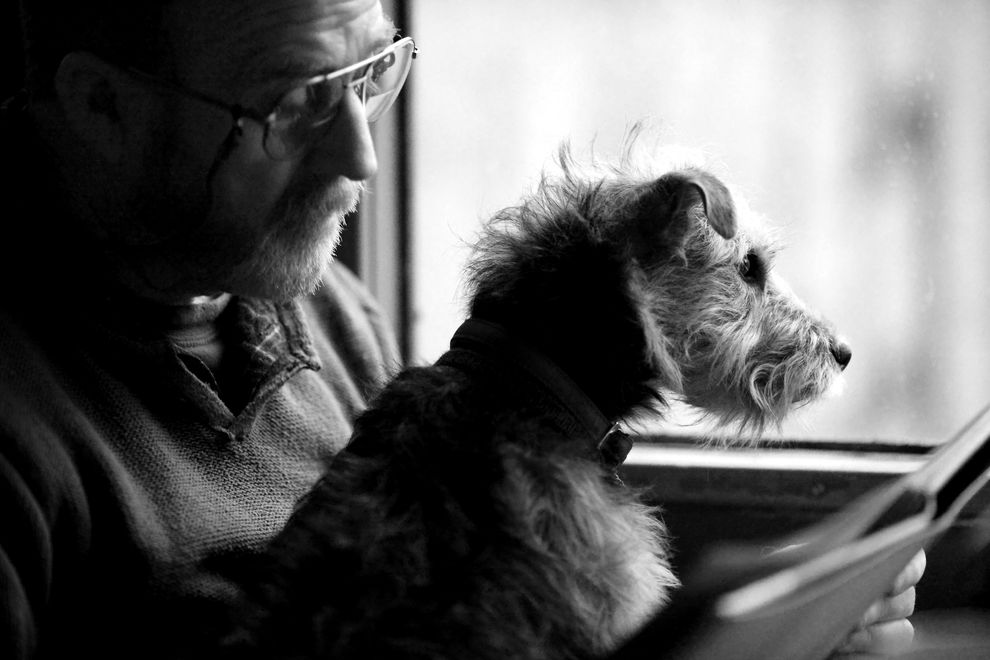
Winner of the Man’s Best Friend category (Photo: Fiona Sami/Dog Photographer of the Year Competition)
The love of a dog is a universal joy, as the latest photography competition from The Kennel Club illustrates. The 10th annual competition drew over 13,000 entries from photographers in 90 countries. The photographs show the beauty, loyalty, companionship, dignity and, of course, the adorableness of dogs around the world.
The competition features eight categories, including Puppies, Oldies, Dogs at Work, Dogs at Play, Man’s Best Friend (winner pictured above), Assistance Dogs and Dog Charities, Dog Portraits and I Love Dogs Because.
Winner of the Dogs At Work category as well as overall winner of the competition (Photo: Anastasia Vetkovskaya/Dog Photographer of the Year Competition)
This image of Sheldon the English springer spaniel enjoying a mist-shrouded pond early one morning is the work of Anastasia Vetkovskaya from Russia. Not only did it win for the Dogs At Work category, but it also placed as the overall winner of the competition.
Vetkovskaya states, “I have loved animals from an early age, which is why I went to Moscow Veterinary Academy and became a veterinary surgeon in 2007. Around this period of time, my husband gave me my first SLR camera, and since then I have devoted all of my free time to photography. My specialty is pets, and I am inspired most by horses and dogs.”
Winner of the Dogs at Play category (Photo: Tom Lowe/Dog Photographer of the Year Competition)
Baxter the Westie inspired his photography-loving human, Tom Lowe, to snap this image of Baxter playing in the water of Loch Lomond in Scotland.
Winner of the Assistance Dogs and Dog Charities category (Photo: Michael Higginson/Dog Photographer of the Year Competition)
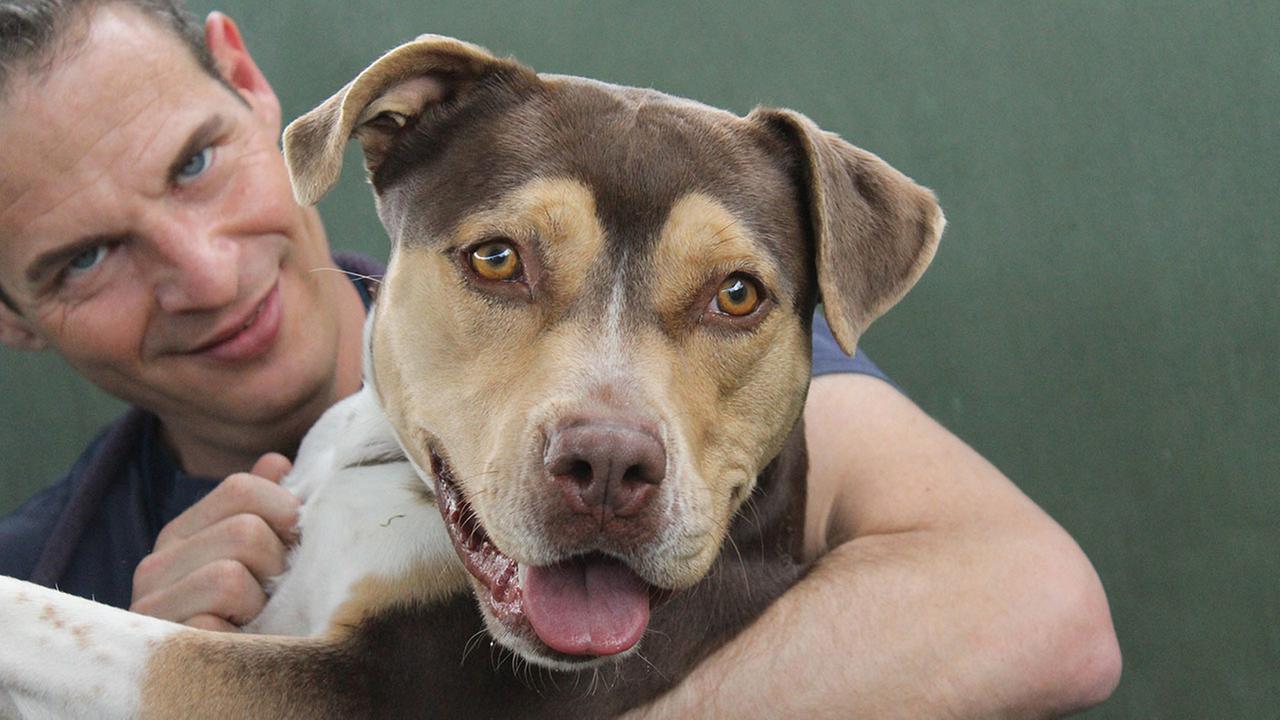
This poignant image was taken by Michael Higginson, and features his brother Dale with Esta the dog. The win not only benefits the photographer but also a charity of his choice. The Kennel Club is making a donation to Higginson’s favorite charity, Dogs for Good.
Higginson states, “Winning the Assistance Dog category has made it even more special. It’s an honor to be able to show the world what a difference a dog can make to someone else’s life.”
ooOOoo
Aren’t they breath-takingly beautiful!
The rest of these fabulous photographs in a week’s time.
Welcome to Territorio de Zaguates, or “Land of the Strays”.
When it comes to loving stray dogs I thought that the friends of John Zande and his wife were showing the rest of the world how to do it. For it is my understanding that Sandra and her partner down in Brazil are providing a home for around 300 ex-rescue dogs.
Dogs frolic in a lush green field at the Territorio de Zaguates dog sanctuary in Costa Rica. (Photo: Territorio de Zaguates)
Welcome to Territorio de Zaguates, or “Land of the Strays,” an amazing, privately funded, volunteer-run animal sanctuary in Costa Rica where no mutt is turned away.
Located less than an hour outside the bustling capital city of San José, this doggie safe haven is home to hundreds of abandoned canines that have been given a second chance at life.
This is no ordinary animal sanctuary, though. After all, when you live in a place as beautiful as Costa Rica, you take advantage of what the landscape provides. That’s why volunteers lead the ragtag pack of rescued mutts on scenic hikes through the gorgeous mountains nearly every day. It’s a sight to behold.
A volunteer at Territorio de Zaguates leads a pack of dogs up a hill. (Photo: Territorio de Zaguates)
Aside from the free-range mountain hikes with breathtaking scenery, Territorio de Zaguates functions just like any other animal rescue or sanctuary.
“First thing we do when a new dog gets here is spay/neuter, vaccinate and get rid of parasites,” the organization explains on its Facebook page. “Then we assess if the dog requires any other type of special treatment [and] put them in quarantine if necessary.”
Once this initial processing is completed, the new dog is released into the general population, where it can either be adopted by a loving human or spend the rest of its days frolicking in what is essentially a doggy paradise.
There are all kinds of mutts living at Territorio de Zaguates. (Photo: Territorio de Zaguates)
What makes Territorio de Zaguates even more special is the creative approach to finding the dogs forever homes.
To encourage adoption, every doggie resident at the sanctuary is not only given a name, but also a customized “breed” name based on the dog’s phenotypic traits. These one-of-a-kind breed monikers include memorable titles like “Alaskan collie fluffy terrier” and the “chubby-tailed German doberschnauzer.”
The resounding message behind this strategy is that when you adopt a mutt, you’re adopting a unique breed. Learn more about this clever campaign in the video below:
As any animal rescuer will know, maintaining such an massive sanctuary requires an enormous amount of time, money and labor. But thanks to a host of charitable donors and an eager base of volunteers, the sanctuary is a great success.
“We have a very small staff but still we manage to do everything from daily picking up the poo and disposing of it properly, to feeding and medicating the dogs, and everything in between,” a spokesperson for the organization writes.
Continue below for just a glimpse of what life is like for these adorable pups at Territorio de Zaguates:
Mattresses are provided for the dogs to lounge on throughout the day. (Photo: Territorio de Zaguates)
Mattresses provide natural lounge spots for the dogs throughout the day.
A pack of rescued dogs take a leisurely walk in the woods with a few of the sanctuary’s hard-working volunteers. (Photo: Territorio de Zaguates)
The pack takes a leisurely hike in the woods with a few of the sanctuary’s hard-working volunteers and some prospective dog adopters
Photo: Territorio de Zaguates)
Lunch time at Territorio de Zaguates means serious business, which is why kibble donations are so important!
Cushy bed donations are also very important for the sanctuary. (Photo: Territorio de Zaguates)
In addition to food, comfy dog beds are also a much welcomed donation item for the sanctuary!
A volunteer leads the pack downhill. (Photo: Territorio de Zaguates)
A sanctuary volunteer leads the pack downhill during a scenic hike through the mountains.
(Photo: Territorio de Zaguates)
In case you were wondering where all those yummy kibble donations went … behold the trough
(Photo: Territorio de Zaguates)
A few of the sanctuary’s senior residents rest on the steps of the facility. Even if the pups aren’t adopted out, they’ll always be guaranteed a luxurious forever home at the sanctuary.
(Photo: Territorio de Zaguates)
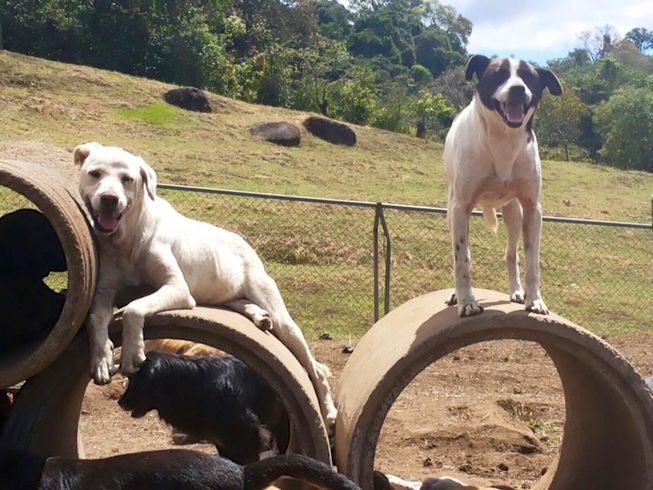
Concrete drainage pipes makes excellent (and sturdy!) makeshift dog houses
(Photo: Territorio de Zaguates)
Rescued dogs hang out in the shade of the sanctuary’s many trees
(Photo: Territorio de Zaguates)
A nice refreshing dip … in some drinking water
(Photo: Territorio de Zaguates)
After a long, fun-filled day of being a dog, there’s nothing like cuddling up with a friend and snoozing before dinner time
ooOOoo
Well it certainly puts our ten dogs in the shade!
In doing a trawl through YouTube I came across this video that I will use to close off today’s post. Chances are that, as with me, you won’t understand the voice-over but it won’t diminish your pleasure at looking at these dogs.
Published on Jul 3, 2014
“Territorio de Zaguates” ubicado en las hermosas montañas de Costa Rica, es un albergue de animales donde se le da casa, comida, atención veterinaria, ejercicio, esparcimiento y cariño a 700 perros callejeros víctimas del maltrato, el abuso, el abandono y la negligencia humana.
–ENGLISH– “Territorio de Zaguates” is a No-kill-shelter in the beautiful mountains of Costa Rica that provides home, food, vet care, exercise, recreation and affection to over 700 stray dogs, victims of neglect, abandonment and abuse.
Actually, let me close off today’s post with these two sets of words from the story above:
Once this initial processing is completed, the new dog is released into the general population, where it can either be adopted by a loving human or spend the rest of its days frolicking in what is essentially a doggy paradise.
“essentially a doggy paradise.”
The resounding message behind this strategy is that when you adopt a mutt, you’re adopting a unique breed.
That is so true! Each and every dog, especially an ex-rescue dog, is a unique breed.
These days there is plenty to sigh about. Whether it’s presidential politics this side of the Atlantic or immigration and ‘Brexit’ in Europe. However, today’s post is not about our, as in human, sighs but is about the sighs that our dogs make.
We sigh when we’re frustrated and when we’re happy. What about our four-legged friends? (Photo: sgilsdorf/flickr)
Every dog owner has experienced it at one time or another. Your dog lies down, often with his head on his front paws, and lets out a sigh. Is he sad? Content? Disappointed in his life?
“When the sigh is combined with half-closed eyes, it communicates pleasure; with fully open eyes, it communicates disappointment: ‘I guess you are not going to play with me.'”
Geez. Guilt trip, anyone?
A dog’s sigh is “a simple emotional signal that terminates an action,” writes Stanley Coren, Ph.D. in his book, “Understanding Your Dog for Dummies.”
“If the action has been rewarding, it signals contentment. Otherwise, it signals an end of effort.”
So if you and your dog just finished a fun romp in the yard or a great walk in the park, that sigh means, “I’m content and am going to settle down here awhile.” If your dog has begged at your side all during dinner without a payoff, that sigh signifies, “I’ll give up now and simply be depressed.”
Dog trainer Pat Engel agrees.
“My own unscientific observation is that dogs usually sigh while resting, or when they are what I call ‘resigned,'” she writes in the San Francisco Chronicle. “These sighs seem to mark a physiological transition into a deeper state of relaxation.”
If you feel like your dog sighs (or yawns or makes other noises excessively), it’s worth mentioning to your vet, Engel suggests. There’s always a chance that a health issue might be at the root of the sounds.
If a medical reason isn’t to blame, then concentrate on reading the cues your canine is sharing.
Massachusetts dog trainer Jody Epstein says a dog’s body language is definitely the key to interpreting the noise he’s making.
“If his body is relaxed, ears soft, head down on the bed in what we might call a ‘sleeping’ position, and he’s in perfect health otherwise, then I’d expect it’s just a sign of uber relaxation,” she writes in her All Experts advice column. “If he’s laying there, but sitting up watching you and doing it, then it’s more likely an active communication that you may wish to address.”
Like, hey, buddy, isn’t it time for a treat? Or when was the last time we played ball?
One dog may sigh because he’s frustrated; another may sigh because she’s comfortable and is ready for a nap. (Photo: Brent Schumacher/flickr)
Is a sigh always a sigh?
“Dogs make many vocalizations, and they mean different things depending on various factors such as context, experience, relationships, the individual dog, and much more,” says certified animal behaviorist and dog trainer Katenna Jones of Jones Animal Behavior, in Warwick, Rhode Island. “There is also human interpretation: One person’s sigh is another person’s huff, moan, groan or whine.”
And, Jones says, some breeds tend to make more or different sounds than others.
“The most important thing is to remember there is no one answer. It’s important to not apply human feelings to dogs because dogs are not humans!” she says. “Look at the context of situations in which your dog is sighing, take note, and see if you can identify why YOUR dog is sighing — because it may be different than why MY dog is sighing.”
Just because we don’t always know what our dogs are trying to say, doesn’t mean we should stop trying to figure things out.
The AKC points out: “Dogs make sounds both intentionally and unintentionally, and they all have certain meanings. Just because we do not understand the wonderful variety of sounds that dogs vocalize does not mean that dogs are not doing their best to communicate with us.”
ooOOoo
So come on, you dear readers, send in some examples of sighing and other wonderful sounds that your dogs make!
Here’s my contribution from YouTube. The sound of a German Shepherd deep asleep and a very familiar sound in this house when Pharaoh is sound asleep.
Published on Sep 5, 2014
At first I had no idea it was him. I thought maybe it was my husband (who was downstairs in the living room taking a nap) and the dogs and I were upstairs….but soon figured out it was him! This was the first time I had heard Jax snore. I especially love his little face when he was woken up by his brother. Which I think he did on purpose. Haha. It is hilarious!
Luna likely survived on dead fish and mice, as well as fresh water that was shipped in for Navy employees. (Photo: U.S. Navy – Naval Base Coronado)
When Nick Haworth’s dog, Luna, fell off his fishing boat a couple miles off the shore of San Clemente Island in the Pacific Ocean, he thought there was a good chance she’d swim for land.
“Nick was pretty certain she would make for shore because she was a very strong swimmer,” says Sandy DeMunnik, public affairs officer for the U.S. Navy’s Naval Base Coronado, which includes the island. “He asked if he could have permission to come ashore to get her.”
San Clemente Island is a weapons training facility where they work with bombs and offshore bombardment, so they had to shut off one of the artillery ranges to look for the 1 1/2-year-old German shepherd/Husky mix. The staff helped Haworth search for her to no avail. He stayed in the area for two more days and couldn’t find her.
“After about a week, it was presumed she had never even made it to shore because they hadn’t seen a sign of her,” says DeMunnik. “They presumed she was lost at sea.”
Fast forward five weeks to March 15 when Navy staff arrived on the island for work.
“She was sitting on the side of the road just wagging her tail,” says DeMunnik. The staff members knew immediately that this was the dog they had been searching for. They opened their door, whistled and Luna jumped right in the truck.
After more than a month of being gone, Luna takes a well-deserved nap. (Photo: U.S. Navy – Naval Base Coronado)
They immediately called Haworth and let him know the happy news. Luna was examined by the island’s wildlife biologist, who said she likely wasn’t seen for five weeks because her tan-and-black coloring let her blend in with the island’s landscape. Miraculously, except for having lost a little weight, she was OK.
“Amazingly for being lost for five weeks in a very dangerous and treacherous environment, she was fine,” says DeMunnik. “During that time, there was bombardment training, weapons training … there was a lot of very loud, very dangerous training going on, and we had some very severe El Nino storms.”
Those storms probably helped keep the dog alive because fresh water was brought to the island by barge for the staff during the storm. They determined that Luna had survived by eating dead fish and rodents.
Because her owner, a commercial fisherman and student at San Diego State University, was away on a fishing trip, he sent his best friend, Conner Lamb, to meet Luna’s plane. When the plane doors opened, she leapt into Lamb’s arms and he fought back tears. On her first night home, he made her a steak for dinner.
The commanding officer of the base sent Luna home with a keepsake of her time spent on the island: her own set of military dog tags. They are engraved with her name, the dates she was missing, and “Keep the faith.”
Luna is greeting by paparazzi — but it’s clear that’s she’s had enough media coverage for the day. (Photo: U.S. Navy – Naval Base Coronado)
ooOOoo
Two more pictures to reinforce this wonderful story.
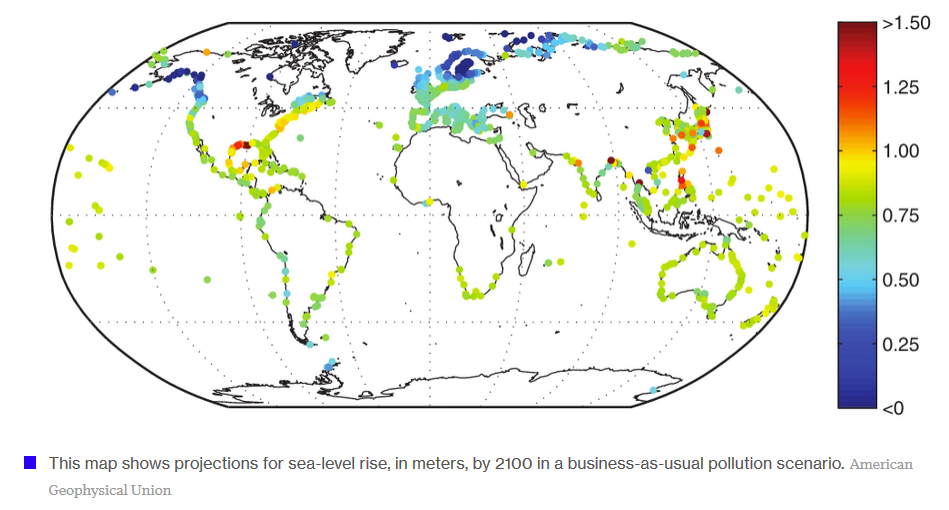
6. Sea levels could rise another 1.3 meters (4.3 feet) in the next 80 years.
This map shows areas that would flood (marked in red) due to 1-meter sea-level rise. (Photo: NASA)
In another study published this month, scientists report that global sea levels will likely rise 0.5 to 1.3 meters (1.6 to 4.3 feet) by the end of this century if greenhouse gas emissions aren’t rapidly reduced. Even if last year’s Paris Agreement does spur ambitious climate policy, sea levels are still projected to rise 20 to 60 cm (7.8 to 23.6 inches) by 2100. Taken with the longer-term effects from melting ice sheets in Greenland and Antarctica, that means any strategy to endure sea-level rise must involve adaptation plans as well as efforts to slow the trend.
7. Up to 216 million people currently live on land that will be below sea level or regular flood levels by 2100.
Higher sea levels can exacerbate storm surges, like this 2013 flood in Wenzhou, China. (Photo: STR/AFP/Getty Images)
Of the estimated 147 million to 216 million people in harm’s way, between 41 million and 63 million live in China. Twelve nations have more than 10 million people living on land at risk from sea-level rise, including China as well as India, Bangladesh, Vietnam, Indonesia and Japan. Bangladesh is especially vulnerable, identified by the U.N. as the country most in danger from rising seas. Once the ocean rises by 1.5 meters (4.9 feet) next century, it will affect 16 percent of Bangladesh’s land area and 15 percent of its population — that’s 22,000 km2 (8,500 mi2) and 17 million people.
The situation is also urgent for low-lying island nations like Kiribati, the Maldives, the Marshall Islands and the Solomon Islands, where land is already so close to sea level that a few inches make a world of difference. Some are even mulling mass relocations — the government of Kiribati, for one, has a web page outlining its strategy for “migration with dignity.” A town on Taro Island, the capital of Choiseul Province in the Solomon Islands, is also planning to move its entire population in response to rising seas. The small community of Newtok, Alaska, has already begun the difficult process of transplanting itself away from the encroaching coast.
8. Sea-level rise can contaminate water used for drinking and irrigation.
Sea-level rise can aid saltwater intrusion of freshwater aquifers, as seen in this schematic illustration. (Image: NRC.gov)
In addition to surface flooding, sea-level rise can both push up the freshwater table and contaminate it with seawater, a phenomenon known as saltwater intrusion. Many coastal areas rely on aquifers for drinking water and irrigation, and once they’re tainted by saltwater they may be unsafe for humans as well as crops.
It is possible to remove salt from water, but the process is complex and costly. San Diego County recently opened the Western Hemisphere’s largest desalination plant, for example, and several other sites are proposed in the state. Yet that may not be practical for many coastal communities, especially in less wealthy nations.
9. It can also threaten coastal plant and animal life.
Floods fueled by rising seas may harm baby sea turtles, like these South African loggerheads. (Photo: Jeroen Looyé/Flickr)
Humans aren’t the only ones who’ll suffer as sea levels rise. Any coastal plants or animals that can’t quickly move to new, less flood-prone habitats could face dire consequences. As one 2015 study noted, sea turtles have a long-established habit of laying eggs on beaches, which need to stay relatively dry for their babies to hatch.
Inundation for one to three hours reduced egg viability by less than 10 percent, the study’s authors found, but six hours underwater cut viability by about 30 percent. “All embryonic developmental stages were vulnerable to mortality from saltwater inundation,” the researchers write. Even for hatchlings that do survive, being starved of oxygen in the egg could lead to developmental problems later in life, they add.
Other beach life may also be at risk, including plants. A recent study found that some salt marshes can adapt, both by growing vertically and by moving inland, but not all flora will be so fortunate. “Trees have to work harder to pull water out of salty soil; as a result, their growth can be stunted — and if the soil is salty enough, they will die, a common sign of sea-level rise,” Climate Central explains. “Even trees that are especially suited to salty soil can’t survive repeated flooding by seawater.”
10. Global flood damage for large coastal cities could cost $1 trillion a year if cities don’t take steps to adapt.
This Google Earth simulation shows a Tokyo neighborhood with 1.3-meter sea-level rise. (Image: Google Earth)
The average global losses from flooding in 2005 were about $6 billion, but the World Bank estimates they’ll rise to $52 billion per year by 2050 based on socioeconomic changes alone. (That means things like increasing coastal populations and property value). If you add the effects of sea-level rise and sinking land — which is happening even faster in some places — the cost could surge to $1 trillion per year.
11. It’s too late to stop sea-level rise — but not too late to save lives from it.
A full moon shines over an iceberg that broke off Greenland’s Jakobshavn Glacier. If the entire Greenland ice sheet melted, sea levels would rise about 6 meters, or 20 feet. (Photo: Joe Raedle/Getty Images)
Unfortunately, CO2 emissions linger in the atmosphere for centuries, and today’s CO2 levels have already committed Earth to dangerous sea-level rise. About 99 percent of all freshwater ice resides in two ice sheets: one in Antarctica and one in Greenland. Both are expected to melt if humanity’s CO2 output isn’t curbed quickly, but the question is when — and how much damage we still have time to prevent.
The Greenland ice sheet is smaller and melting more quickly. If it completely melted, sea levels would rise by about 6 meters (20 feet). The Antarctic ice sheet has been more buffered from warming so far, but it’s hardly immune, and would raise the ocean by 60 meters (200 feet) if it melted. (Estimates vary widely on how long these ice sheets might survive — while most expect they’ll take centuries or millennia to melt, a controversial 2015 paper suggested it could happen much more quickly.)
Sea levels have naturally risen and receded for billions of years, but they’ve never risen this quickly in modern history — and they’ve never had so much human help. It’s unclear what effect they’ll have on our species, but what is clear is that our descendants will still be dealing with this problem long after we’re all gone. Giving them a head start on a solution is the least we can do.
“With all the greenhouse gases we already emitted, we cannot stop the seas from rising altogether, but we can substantially limit the rate of the rise by ending the use of fossil fuels,” says Anders Levermann, a climate scientist at Columbia University and co-author of the new study on future sea-level rise. “We try to give coastal planners what they need for adaptation planning, be it building dikes, designing insurance schemes for flooding or mapping long-term settlement retreat.”
As another recent study pointed out, any policy decisions made in the next few years and decades “will have profound impacts on global climate, ecosystems and human societies — not just for this century, but for the next ten millennia and beyond.”
ooOOoo
Tomorrow, in the final part of this three-part posting I will look at some positive things that we can all be doing now.
But let me leave you with a rather beautiful consequence of these changing times. As seen over on Grist:
ooOOoo
Incredible glacier art pays homage to our disappearing ice
Diane Burko has a penchant for glaciers. Her paintings and photographs of frozen landscapes evoke the sensation that you’re standing on ice that could soon melt away — as ice these days is wont to do.
“I always say that I think ice is a real indicator of climate change,” Burko says. “It’s sort of my niche.”
ooOOoo
Now go across to here and admire Burko’s wonderful images (that for copyright reasons are not shown here).
The Butterfly Effect is a concept that small causes can have large effects. Initially, it was used with weather prediction but later the term became a metaphor used in and out of science.[1]
In chaos theory, the butterfly effect is the sensitive dependence on initial conditions in which a small change in one state of a deterministic nonlinear system can result in large differences in a later state. The name, coined by Edward Lorenz for the effect which had been known long before, is derived from the metaphorical example of the details of a hurricane (exact time of formation, exact path taken) being influenced by minor perturbations such as the flapping of the wings of a distant butterfly several weeks earlier. Lorenz discovered the effect when he observed that runs of his weather model with initial condition data that was rounded in a seemingly inconsequential manner would fail to reproduce the results of runs with the unrounded initial condition data. A very small change in initial conditions had created a significantly different outcome.
We all live in an interconnected world. Frankly, it’s such an obvious statement that one presumes that very few would not agree with the sentiment expressed within it.
But (and you knew there was a ‘but’ coming, didn’t you!) very few of us (and I include Jean and me to a very great extent) really understand, “A very small change in initial conditions had created a significantly different outcome.”
Take these few items; more or less randomly read over the last few days.
Abstract: update on Sea Level Rise. The meat of the essay is at the end, in the section “THE SITUATION IS ACTUALLY CATACLYSMIC“.
Heard of The Flood? As in the Bible? Sea level rose 120 meters (400 feet), in the period centered around 10,000 years ago. The cause? More than half of Earth’s ice melted in a few millennia, During the rest of the early Holocene, the rate of rise of the world’s ocean reached peaks as high as 60 millimeters (2.5 inches) per year. The melting of the ice happened because Earth’s positional and orbital parameters had made northern hemisphere’s summers too warm (most of the ice shields rested on the large continents of the north). Nowadays only two enormous ice shields are left: Greenland and Antarctica.
Those who enjoy catastrophes will love it: we have 75 meters of further sea rise to enjoy pretty soon, on our way to a Jurassic climate (the Jurassic was characterized by gigantic warm shallow seas on top of the continents). Here was the situation in the Miocene, when CO2 was at 500 ppm (where we will be at in ten years, see conclusion below).
Patrice said that the essence, the meat, of his essay was at the end. Here are his closing words:
Three scientific papers published in the last two months support my, admittedly drastic, point of view. One observed the collapse of a colossal glacier in northwest Greenland, eaten by a current at one degree C. It was a miniature reproduction of what to expect for entire ice shields. Two others observed the past, and that Antarctica was unstable at 500 ppm CO2. What they did not say is how dramatic the situation was. Indeed, sounding moderate is how they get funded by a benevolent, plutocratically ruled government (and by government, I also mean the corrupt Supreme Court, not just the latest elected buffoons). The scientists who evoked the 500 ppm of CO2 omitted two significant details, where the devil lurks. They claimed that it would take 30 years to get there. That’s not correct; at the present rate, we will add 100 ppm of CO2 within 25 years. But not just that: there are other man-made GreenHouse Gases (GHG): CH4, NOx, Fluorocarbons, etc. All these gases warm up the lower atmosphere much more than CO2. So the correct measurement is not CO2 ppm, but CO2 EQUIVALENT ppm.
We are right now ABOVE 450 ppm in EQUIVALENT CO2, and will be at 500 ppm within ten years. Let’s hope there will be more boats than on the Titanic.
Patrice Ayme’
P/S: If anything, the preceding is a conservative estimate. Indeed very serious scientists evaluated already the man-made greenhouse gases at 478 ppm in 2013. This means we will be above 500 ppm in CO2 equivalent within six years, in line with my previous analyses, such as “Ten Years To Catastrophe“. See:
Now it’s not all ‘doom and gloom’ and there is much that each and every one of us can do. More of that in Interconnections Three on Thursday.
But to continue with this ‘wake up call’ I’m going to republish in full an item that was recently published over on Mother Nature Network: 11 alarming facts about sea-level rise. To stop today’s post being excessively long, I’m going to split that MNN article over today and tomorrow. Here are the first 5 alarming facts. (Don’t read them just before turning the light out when going to bed tonight!)
Up to 216 million people currently live on land that will be below sea level or regular flood levels by 2100. (Photo: Shutterstock)
The ocean is coming for us. Global sea levels are now rising by 3.4 millimeters per year, up from an average rate of 1.4 mm per year last century. In just 80 years, the ocean could be a full 1.3 meters (4.3 feet) taller than it is today.
That kind of planetary sea change can be hard to fathom — unless you live in a low-lying place like Miami, the Maldives or the Marshall Islands, where the effects of sea-level rise are already apparent. But within just a few decades, the problem will become unavoidable in major coastal cities around the world, from New Orleans, New York and Amsterdam to Calcutta, Bangkok and Tokyo.
We all know why this is happening. Rising seas are one of the most salient effects of man-made climate change, triggered by thermal expansion of seawater as well as the influx of melting glaciers. Yet many people still see it as a distant risk, failing to grasp how (relatively) quickly the sea is swallowing shores worldwide. And since half of all humans now live within 60 kilometers (37 miles) of a coast, this isn’t a niche issue.
To help put things in perspective, here’s a deeper look at the problem:
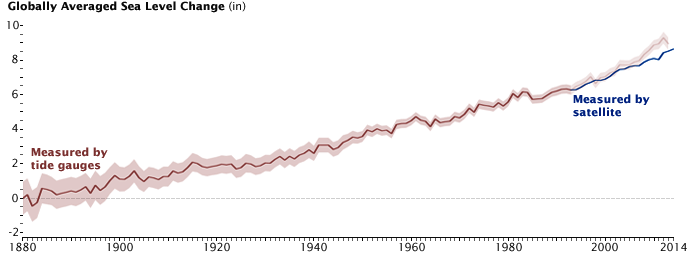
1. Global sea levels have already risen by 8 inches (200 mm) since 1880.
The chart above was produced by NASA’s Earth Observatory, based on data from the U.S. National Oceanic and Atmospheric Administration (NOAA) and Australia’s Commonwealth Scientific and Industrial Research Organization (CSIRO). Most of those historical data come from tide-gauge measurements, which are now complemented by satellite observations.
2. Not only are sea levels rising; the rate of their rise is rising.
Average global sea-level rise is now 3.41 mm per year, but the rate varies widely by location. (Image: NASA GSFC)
On average, sea levels rose by 1.4 mm from 1900 to 2000. The yearly pace had surpassed 3 mm by 2010, and now it’s up to 3.4 mm per year.
3. That’s the fastest sea-level rise Earth has experienced in 3,000 years.
If not for surging carbon dioxide in the atmosphere, sea levels should have only risen about an inch or two last century, and might have even fallen. Instead, thanks to the highest CO2 levels at any point in human history, global sea levels rose by 5.5 inches (14 cm) between 1900 and 2000. That’s the fastest oceanic advance in 27 centuries, according to a study published Feb. 22, and it’s still speeding up.
“The 20th century rise was extraordinary in the context of the last three millennia — and the rise over the last two decades has been even faster,” says lead author Robert Kopp, a climate scientist at Rutgers University, in a statement.
“Scenarios of future rise depend upon our understanding of the response of sea level to climate changes,” adds co-author Benjamin Horton. “Accurate estimates of sea-level variability during the past 3,000 years provide a context for such projections.”
4. Every vertical inch of sea-level rise moves the ocean 50 to 100 inches inland.
Rising seas worsen regular flooding — like this 2015 high tide in Miami Beach — for many coastal cities. Miami is in the midst of a five-year, $400 million effort to upgrade its stormwater pump program. (Photo: Joe Raedle/Getty Images)
5. That’s already causing flood problems in many big coastal cities.
As the ocean invades coastal cities, the first signs of trouble are often urban saltwater floods. These can also happen naturally, though, so to determine the influence of rising seas, a new report by Climate Central models “alternative histories simulating the absence of anthropogenic climate change” at 27 U.S. tide gauges.
Out of 8,726 days since 1950 when unaltered water levels exceeded the National Weather Service thresholds for local “nuisance” floods, 5,809 didn’t exceed those thresholds in the alternative histories. “In other words,” the report explains, “human-caused global sea level rise effectively tipped the balance, pushing high-water events over the threshold, for about two-thirds of the observed flood days.”
Coastal flooding days have more than doubled in the U.S. since the 1980s, according to the report, in places ranging from Miami, Virginia Beach and New York to San Francisco, Seattle and Honolulu. According to a 2014 report, at least 180 floods will strike Annapolis, Maryland, during high tides every year by 2030 — sometimes twice a day. The same will be true for about a dozen other U.S. cities by 2045, not to mention many other low-lying urban areas around the world.
Whether you’re on board with celebrating a “traditional” Valentine’s Day this year—chocolates, cards, romance—or not, this year should be the year we also show some extra love to the animals in our lives. Whether we focus on our own companion animals or forgotten creatures out there in the world who also need compassion, this Valentine’s Day could be the start of a new tradition. Here are a few ideas to really bring the love to our furry and feathered friends this year:
1. Plan a trip to an animal sanctuary
Animal sanctuaries are wonderful places to visit solo, with your partner or with the kids. Most, if not all, states have at least one farmed animal sanctuary where pigs, cows, goats, chickens, geese, horses and many others have found a permanent home after being rescued on the way to slaughter or from their terrifying lives in the animal industries. There are few ways to connect with an animal and appreciate all they have been through in their lives that shine brighter than spending time petting a goat or cuddling a pig.
There are also other types of sanctuaries open to the public with different types of animals to behold, such as bats, tortoises, exotic birds, wolves and wild cats. The difference between reputable and respectable animal sanctuaries and zoos is, in many cases, the dedication to the animals’ needs. Some zoos may have great conservation programs, yet any profit-driven establishment who puts animals on display in unnatural living environments and social groupings does not have the animals’ true interests at heart. Sanctuaries strive toward giving the animals the best lives they can have—public observation is not at the heart of the matter. By supporting reputable animal sanctuaries, you are showing immense love and compassion to animals.
2. Dine on a meatless meal
To have a truly animal-friendly Valentine’s Day, don’t serve any of them on your plate! By choosing to dine on a plant-based meal full of fresh vegetables, hearty legumes, sweet fruits, wholesome grains and satisfying nuts and seeds, you are showing the animals the utmost respect. Try these Valentine’s recipe ideas, ethical wine suggestions and delicious vegan chocolate truffles for the big day! And, if you are interested in reducing the amount of animal products you consume beyond V-Day, visit the Meatless Monday website to learn how to tip the scales gradually toward regular vegan meals.
3. Reach out to an animal in need
Do you have a friend who could use a dogsitter for an upcoming trip? Does your local animal shelter or adoption agency need an extra hand with walking the dogs, cleaning cages and spending time with furry friends? Have you spoiled your own companion critter lately with a new toy, extra play time or some homemade treats? Valentine’s Day is the perfect time to extend our love to our own companion animals and to those around us who also need a little extra love. The rewards from reaching out to a pet in need are tenfold what we expend putting forth the effort. Use this February as an excuse to spend more time with some critters!
This dog is serious about keeping the title of ‘man’s best friend.’ (Photo: Best Friends Animal Society)
Dogs have lived alongside us for thousands of years, earning the reputation as “man’s best friend” for good reason. But while some people may be quick to dismiss a dog’s devotion as simply a relationship based on need, experts say that’s just not true.
“Dogs have developed the strongest ability of all animals on Earth to form affectionate bonds with humans,” says Dr. Frank McMillan D.V.M., director of well-being studies at Best Friends Animal Society, an organization helping adopters find loving companions. “Dogs don’t just love us — they need us, but not just for food and physical care. They need us emotionally. This is why the attachment bond a dog feels for his human is one of deep devotion and is, as has been often stated, unconditional.”
But how exactly does a dog say, “I love you”? Read on to find out.
Your dog wants to be close to you.
If your dog is always in your lap, leaning against you or following you room to room, it’s clear your pooch is attached to you.
“A dog’s affection is most evident in their desire to be physically close to you. This can sometimes appear to be a clinginess, and it isn’t always easy to distinguish healthy positive clinginess from insecurity, but in both cases your dog is deeply attached to you,” McMillan says.
Your dog gazes into your eyes.
When you and your pup share a long look, your dog is “hugging you with his eyes,” according to Brian Hare, a professor at Duke University who studies canine cognition, and research shows that this “hug” has a profound effect on both man and animal.
When scientists at Japan’s Azabu University took urine samples from dogs and their owners before and after 30 minutes of interacting, they found that the pairs that spent the most time gazing into each others’ eyes showed significantly higher levels of the hormone oxytocin, the same hormonal response that bonds us to human infants. “It’s an incredible finding that suggests that dogs have hijacked the human bonding system,” Hare told Science.
Loving glances like this can say a lot. (Photo: Best Friends Animal Society)
Your dog excitedly greets you.
Does your pup jump up, wag his tail and barely seem able to contain his excitement when you arrive home? If so, that’s a sure sign of affection.
“This becomes even more obvious when your dog learns, like Pavlov’s dogs, that some sound signals your upcoming arrival, like the garage opener or sound of your car, and they show excitement upon hearing that sound,” McMillan says.
Your dog sleeps with you.
Dogs are pack animals that often huddle together at night for warmth and protection, so when your dog snuggles up with you, it means he considers you to be part of the family. And these canine cuddles may even help you get a better night’s sleep.
You are your dog’s safe haven.
“Much affection in animals and humans is based on how much you can be relied on as a source of comfort and support in scary situations,” McMillan says. “If your dog seeks your comfort during thunderstorms, car rides, vet visits or other frightening occurrences, then you are seeing another aspect of her attachment bond to you.”
Your dog ‘reads’ you and reacts accordingly.
A close bond with your dog may enable him to sense your mood and respond with affection. “Many dogs who sense that you are upset or not feeling well will demonstrate their affection by spending even more time by your side. They might give you licks or rest their head or paws on some part of your body,” McMillan says.
A cuddly canine can make the day a little better. (Photo: Brian Goodman/Shutterstock)
Your dog yawns when you yawn.
If you’ve ever yawned after witnessing another person’s yawn, you’re aware how contagious the act can be. This contagious yawning is unique to only a few species, and man’s best friend is one of them.
Researchers have even found that not only are dogs more likely to yawn after watching familiar people yawn, but also that dogs will yawn when hearing only the sound of a loved one’s yawn. So if your canine companion yawns in response to your yawns, odds are good that his affection for you enables him to empathize with you.
Your dog focuses on you.
It’s not unusual for dogs to delight in positive attention from virtually anyone, but just because your pooch loves on everyone, doesn’t mean he doesn’t love you most. Pay attention to how your dog acts when in a room full of people. If he stays focused on you or ignores others while awaiting your return, you know you hold a special place in your dog’s heart.
Your dog forgives you.
“Part of the affectionate feelings your dog has for you shows up in their willingness to forgive you for things you do that make them feel bad, such as raising your voice, or misplacing your frustration on your dog by ignoring them,” McMillan says. “Forgiveness is your dog’s attempt to maintain the loving bond they share with you.”
However, even if your canine best friend doesn’t show affection in these ways, it certainly doesn’t mean your pooch doesn’t love you. Just as some people can care deeply without expressing their feelings, so can your pup.
“Be sure not to go through the list above and think that because your dog shows very few or even none of these things, he or she doesn’t love you. Odds are, love is very much there. After all, we’re talking about a dog here,” McMillan says.
And how can you show your dog some love? Engage in playtime, take a long walk, bake some yummy dog treats, or give your pup a homemade toy. Above all, McMillan says the best thing you can do is simply give your dog more of you because that’s what man’s best friend wants most of all.
ooOOoo
Finally, enjoy this fabulous video. (Thanks Sue Dreamwalker)
Published on Oct 20, 2014
As humans animals can be also friends. If animals live together they became often friends. Friendship between different species can be cold as unlikely animals friendship. In this you can see friendship between dogs and cats, Lion tiger and bear friends, Baby Chick and Chihuahua best friends, cat and own friendship etc.
So many loving relationships! So many lessons for us to learn from our dogs!


















 Learning from Dogs