Tag: Learning

Trust, truth and community, Pt. 3.

How a very ancient concept has modern attributes.

One might be forgiven for thinking that community is an odd bed-fellow with trust and truth.  Many might think that faith would be a more logical third leg, so to speak.

However, I hope to show that in today’s world where trust and truth are beleaguered qualities a rethinking of community is critically vital for the long-term health of mankind.

Community

Can’t resist a third look-up in Roget’s Thesaurus.

community noun

Persons as an organised body: people, public, society.

For me two words jump out from that definition: persons; organised.

The challenge is that the word organised is easily interpreted as an organisation with leaders and followers.  But that’s not how community is regarded in the context of this third essay.

“No man is an island”, John Donne wrote in 1624.

This is a quotation from John Donne (1572-1631). It appears in Devotions upon emergent occasions and seuerall steps in my sicknes – Meditation XVII, 1624:

“All mankind is of one author, and is one volume; when one man dies, one chapter is not torn out of the book, but translated into a better language; and every chapter must be so translated…As therefore the bell that rings to a sermon, calls not upon the preacher only, but upon the congregation to come: so this bell calls us all: but how much more me, who am brought so near the door by this sickness….No man is an island, entire of itself…any man’s death diminishes me, because I am involved in mankind; and therefore never send to know for whom the bell tolls; it tolls for thee.”

Thus for the vast majority of people on the face of this planet, we are linked to others and how we live our lives is fundamentally influenced by those others about us.  In a past life, I lived in the village of Harberton in South Devon.  The population of Harberton was 300 persons.
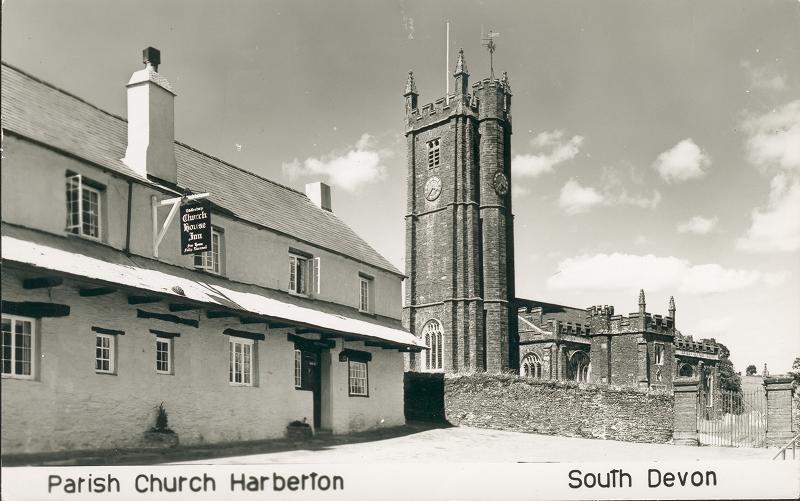
An E. M. Morison (Totnes) postcard, bearing a 3p stamp, which gives a sending date between Feb 1971 and Sept 1973.

Now I was lucky when I moved into Harberton because my two sisters, Rhona and Corinne, had lived in the area for many years and it was easy for me to be positioned as ‘the brother’.  Nevertheless, the way that the village embraced all newcomers was wonderful and within a very short time one felt a settled member of the community.

Same for Jean and me as relative newcomers to our property just 4 miles from Merlin, Oregon. All of our neighbours have embraced us and helped us understand this new rural life that we have embarked on.  We feel part of the local community.

Yet it doesn’t stop there.

Obviously, I’m a WordPress user!  Learning from Dogs is a WordPress blog!  But were you aware of the size of the WordPress community? (As of now!)

How many posts are being published?

Users produce about 44.5 million new posts and 56.7 million new comments each month.

How many people are reading blogs?

Over 409 million people view more than 14.7 billion pages each month.

Even my funny little blog has 959 followers!

What that figure doesn’t reveal is how many of my followers have offered support, openness and real loving friendship. None better demonstrated than by the comments left by readers when I announced the recent death of Dhalia.

Think of the way that untold numbers of internet users rely on that ‘worldwide web’ for referrals, opinions or knowledge about anything ‘under the sun’.

So while there might be many aspects of our new technological world that create unease, the opportunities for having ‘virtual’ friends to complement our social friends make this era unprecedented.

I would go so far as to say this. That the way that knowledge and information can be shared around the world in no time at all may be our ultimate protection against those who would seek to harm us and this planet.

How to close these essays? Perhaps no better than as follows:

On Wednesday evening we were joined by neighbours, Dordie and Bill.  My post on truth came up in discussion. Bill mentioned that he had read about a person who had spent many years studying the texts of all the world’s major religions.  What had emerged was that across all those great religions there was a common view as to what the long-term health and survival of societies requires.

It is this: the telling of truth and the keeping of promises!
 

Cutest, or smartest? You decide.

Misa Minnie being promoted as the world’s smartest puppy.

After getting up at 3am to let Dhalia out for a pee and then waking to find that George had died, I wasn’t really in the mood for a deep and meaningful post for today.

So I have used an item emailed to me by our neighbours, Dordie and Bill, that seemed fun to share with you.

First, watch the video.

then want to know more?

Well you could drop into Misa’s Facebook page or read what appeared in the Huffington Post in the middle of January:

We’ve seen dogs doing tricks you wouldn’t believe — but we’ve never seen a dog look this cute while doing them.

Misa Minnie is a 1-year-old Yorkie pup who has been trained by her owner. At just 18 weeks old, she began performing a wide array of tricks and has now racked up more than 15,000 YouTube fans.

A video from last June resurfaced on Yahoo! this week showing Misa at 31 weeks mastering over two dozen commands.

Misa could easily get by on her looks alone — but with her talent, this little Yorkie really is the whole package.

See you tomorrow, I hope!

Immediate concern? Try this!

Talk about extreme ends of the spectrum!

Yesterday, I posted about the prediction that in four billion years the Milky Way galaxy would collide with the Andromeda galaxy.  I called the post Not of immediate concern.

Today, I am writing about something that is of immediate concern. That is if you regard the next couple of decades as ‘immediate’.

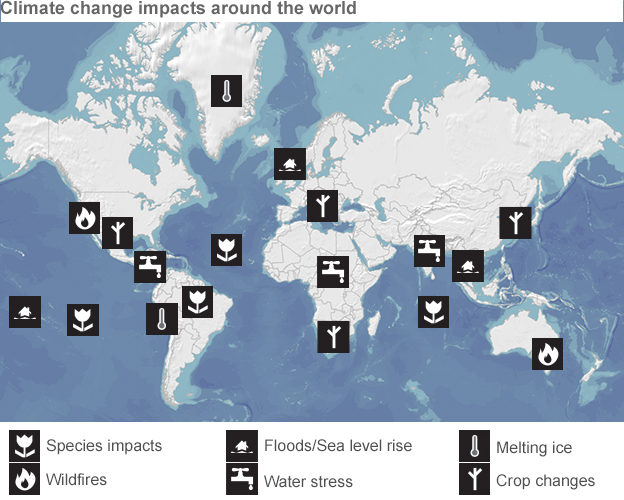
The post is prompted by an item that was published on the BBC News website two days ago.  It carried the title Climate inaction catastrophic – US

Climate inaction catastrophic – US

By Matt McGrath
Environment correspondent, BBC News, Yokohama, Japan

The costs of inaction on climate change will be “catastrophic”, according to US Secretary of State John Kerry.

Mr Kerry was responding to a major report by the UN which described the impacts of global warming as “severe, pervasive and irreversible”.

He said dramatic and swift action was required to tackle the threats posed by a rapidly changing climate.

Our health, homes, food and safety are all likely to be threatened by rising temperatures, the report says.

Scientists and officials meeting in Japan say the document is the most comprehensive assessment to date of the impacts of climate change on the world.

In a statement, Mr Kerry said: “Unless we act dramatically and quickly, science tells us our climate and our way of life are literally in jeopardy. Denial of the science is malpractice. There are those who say we can’t afford to act. But waiting is truly unaffordable. The costs of inaction are catastrophic.”

Putting to one side the mild irony of a representative of the US Government wringing his hands about what mankind is doing to our climate, the report is valuable and potentially significant.

The report was from the Intergovernmental Panel on Climate Change (IPCC) which is, as their website explains:

The Intergovernmental Panel on Climate Change (IPCC) was established by the United Nations Environmental Programme (UNEP) and the World Meteorological Organization (WMO) in 1988 to assess the scientific, technical and socio-economic information relevant for the understanding of human induced climate change, its potential impacts and options for mitigation and adaptation.

Watch this 5-minute video of Stanford professor Dr. Chris Field, co-chair of that IPCC working group, addressing some of the key questions raised by this latest report.  In particular, focus on Dr. Field discussing the potential of the loss of the Greenland ice cap around 3 min 30 seconds.

Back to the BBC report (which you should read in full!).  Back to Dr. Chris Field being quoted as saying:

I think the really big breakthrough in this report is the new idea of thinking about managing climate change as a problem in managing risks. Climate change is really important but we have a lot of the tools for dealing effectively with it – we just need to be smart about it.

BBC climate-change-impacts_v2

It would be easy to get into the mindset that humanity is not going to change its ways in time.

But, then again, the pace of growing awareness about what the changes are that we all need to make, and make relatively soon, is dramatic.

Maybe, just maybe, this will turn out alright!

Fingers-crossed1

For all the young people in the world, I do so hope!


Nostalgia isn’t what it used to be!

The sirens of past lives take some silencing.

Going to relate to you a true story.

In 1968 I emigrated to Australia; to the city of Sydney.  It was an easy move in many ways.  For before I left I was working in the sales office of British Visqueen Ltd in Stevenage in Hertfordshire. ‘BVL’ were part of Imperial Chemical Industries (ICI).

On Day Three of my new life in Sydney I noticed that ICIANZ (Australia & New Zealand) had their headquarters building on Macquarie Street near North Circular Quay.  On impulse I went in and two hours later had been offered a job in the sales office of ICI’s Inorganic Chemicals Division.

From the window of my office I had a stupendous view of the Sydney Harbour Bridge. This is a picture taken the other side of the Bridge looking back at the office complex to the right of the Sydney Opera House; the office block partially obscured by the top curve of the bridge.

Sydney_Harbour_Bridge

Anyway, back to the story.

I was dating a Finnish woman who with her sister and parents had emigrated from Finland some years previously.  That woman’s name was Britta and later we were married and then upon returning to England in 1970 we had two children; a son and a daughter. In Australia I didn’t miss England and when back in England I didn’t miss Australia.

I was 26 when we returned to England.

Fast forward forty-four years to now.

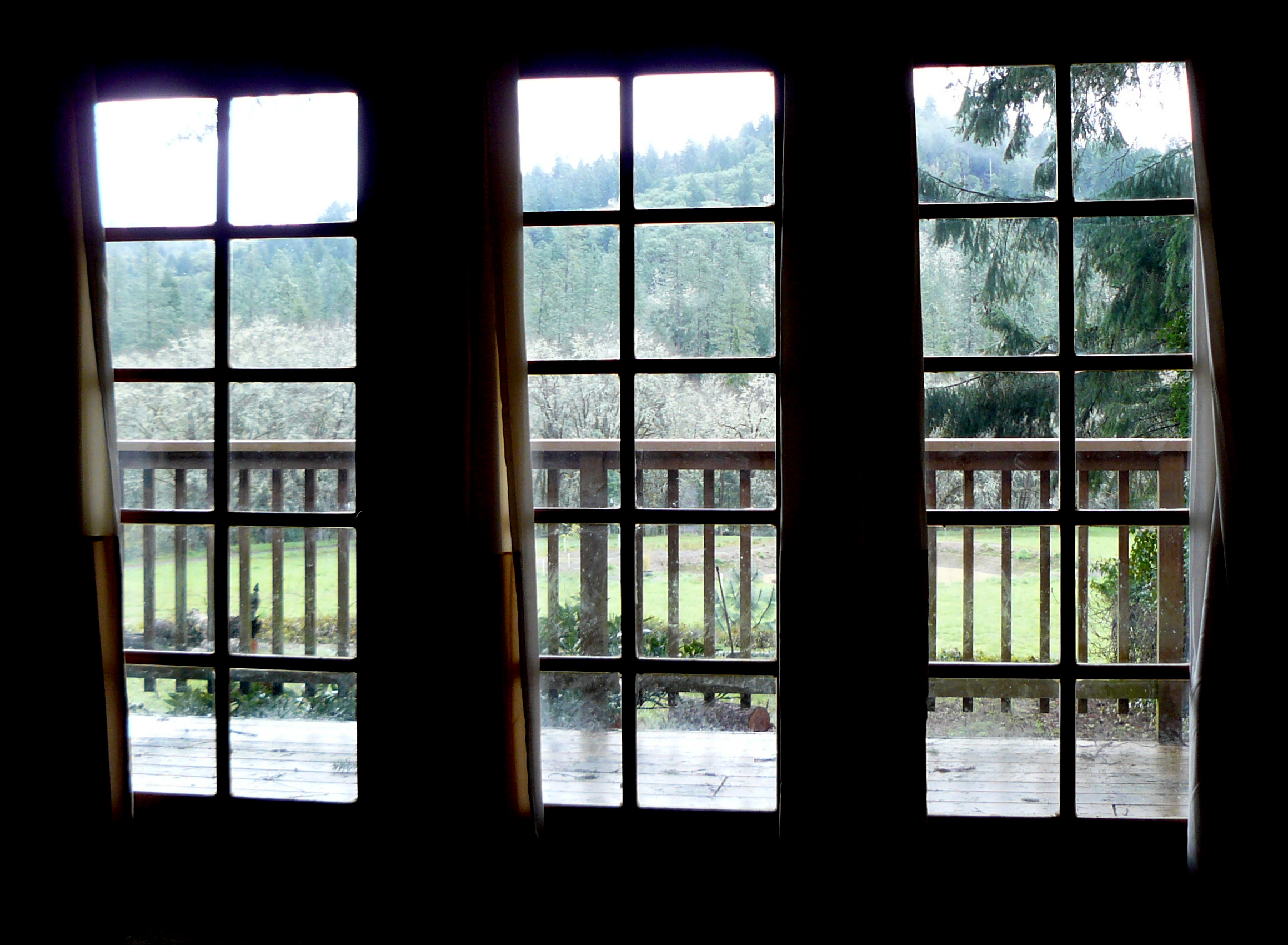
This is the view through our bedroom window in the morning when Jean and I awake.

Morning

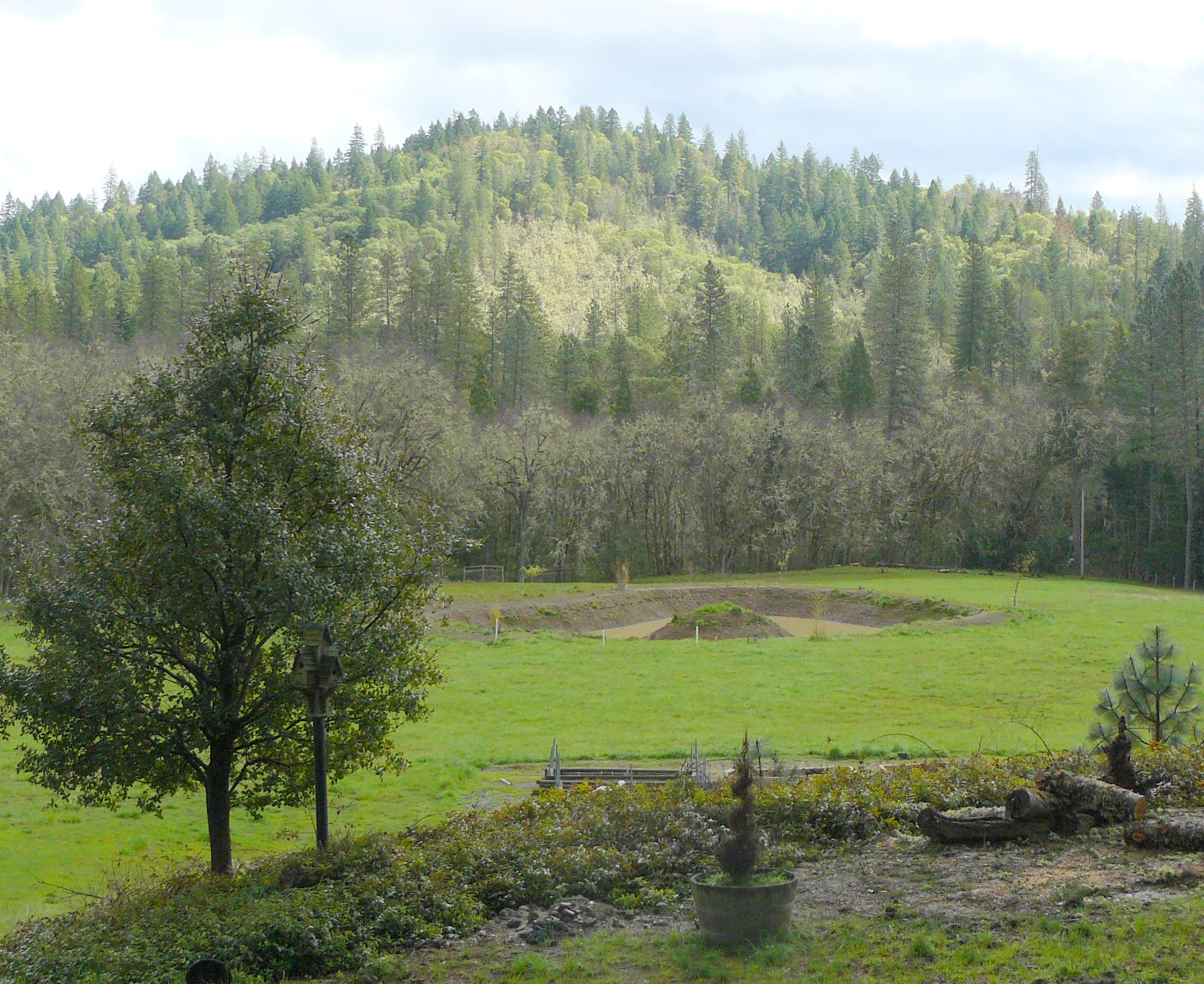
This is another view of the same scene but taken from outside the windows.

Morning2

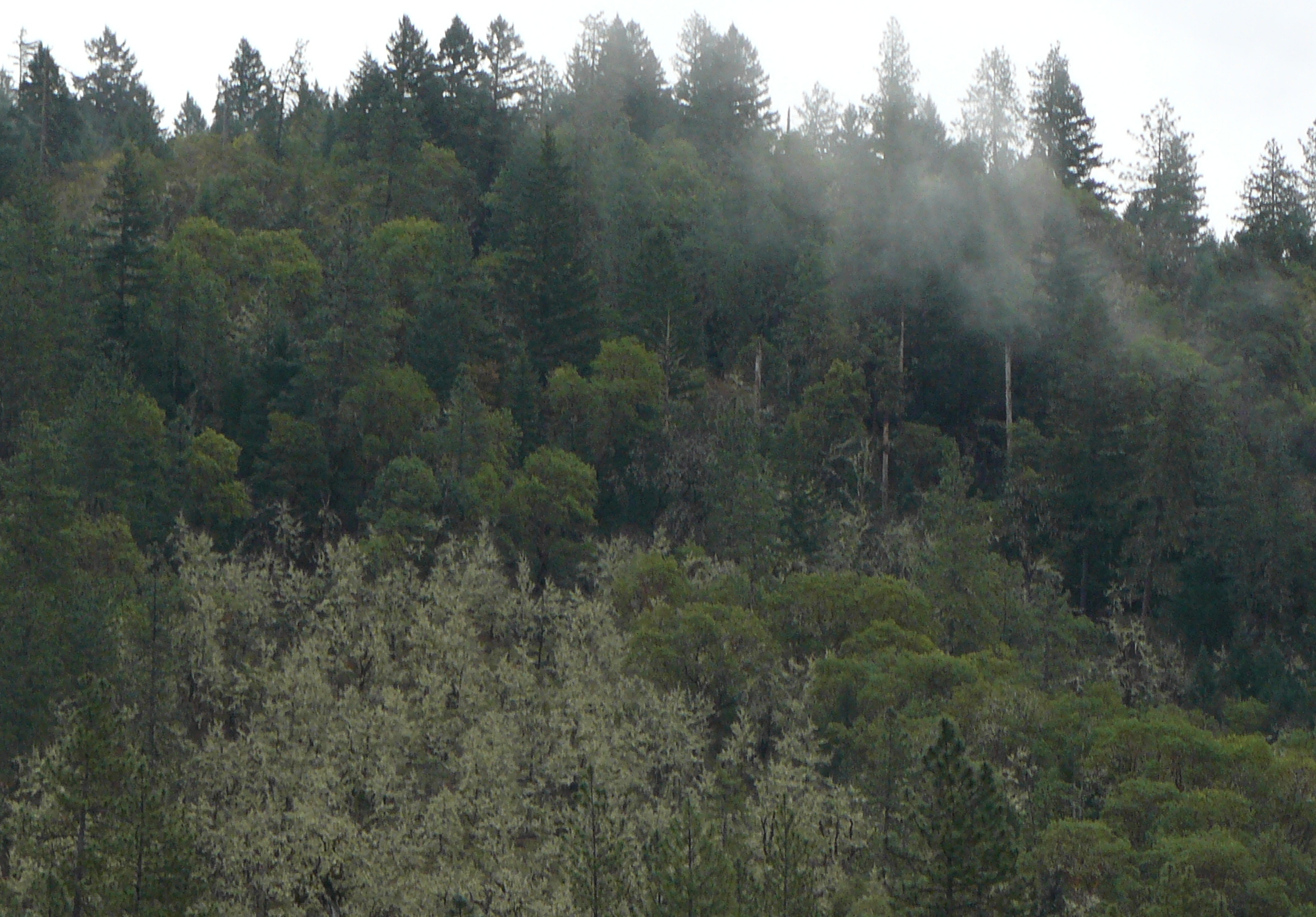
When the air is really moist and there are clouds hanging low over the ridge, it’s common to see mist swirling through the trees.

Morning mist

It is a beautiful place to live, for us and for all our animals …. yet …. we don’t feel perfectly settled.

Back to Britta’s parents.  After they had been living in Australia for quite a few years, in Brisbane in those days, and all settled with jobs and their own house, they still didn’t feel perfectly settled.  So they gave up their jobs, sold the house and transported themselves and their belongings all the way back to Helsinki, Finland.

Only to find that in less than three months that they had made a ghastly mistake and so, yes you know what’s coming, they transported themselves and all their belongings all the way back to Australia; this time settling in Sydney.

OK, to the point of this tale.

In many, many ways this life that Jean and I have here in Oregon is better than anything we have previously experienced.

Yet, there are times when I hear the sirens of Devon calling out to me and for Jean there are times when she hears the sirens of Mexico calling out to her; Jean lived in San Carlos, Mexico for twenty-five years, off and on, with her late American husband, Ben, who died in 2005.

I’m 70 in November this year.

What does it all mean?

When Jean and I were living in Payson, Arizona we were talking one day to a woman who in previous times had been a personal counsellor.  She asked how we were settling in.  We mentioned that we were not yet settled.  The woman went on to say that people over the age of 60 frequently had a much more difficult time adjusting to major moves and changes in their lives than younger persons.

Jean and I wouldn’t rewind our lives for all the tea in China but what, dear reader, do you think?

Anyone out there the ‘wrong’ side of 60 who can relate to this?


Not your average jokes!

Those who know the answers are invited to share them with me!

This has been doing the online rounds but it’s still a good week-end post.

20jokes

Oh, and trust me.  Because I’m the one posting this, don’t assume I know all the answers – far from it!

You all have a good week-end!

A short story – The Kiss.

The power of the short story.

Funny how things run at times!

Back on the 20th, just six days ago, I published a post under the title of Oregon wolves, and book writing!  Frankly, it was a bit of a hotch-potch of a post but it did include a reference to Melinda Roth’s book Mestengo, that Jean adored and I was finding delightful before ‘circumstances’ caused me to put the book to one side.  For ‘circumstances’ read an email from the said Melinda.  That, in turn, was the result of a comment that Melinda left on that post, namely:

Just read and re-read your draft of Chapter 23. Extraordinary. I hope you’re not going to leave us hanging… (sending you a private email to further make my point).The draft of Chapter 23 is good, good stuff. I found myself totally caught up without even knowing what came before.

It would be wrong for me to share the whole of that email without Melinda’s prior permission but I am comfortable in revealing this:

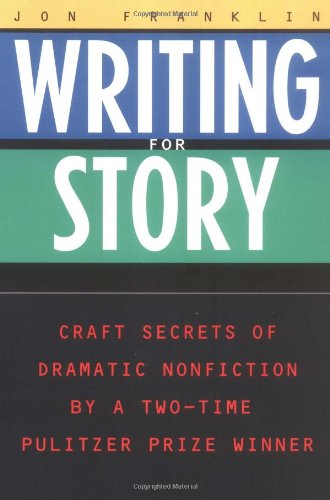
Another book you might consider (not that you have time if you’re going to get this book finished) is “Writing for Story” by Jon Franklin:

This a a very quick read, and I highly recommend it. There are a million books out there about writing, but this one gets straight to the point in a business-like manner and gives THE best advice about how to structure a non-fiction (or fiction) book. The author has won two Pulitzer prizes and uses his two winning pieces as examples – line by line – of how he structures a story.

This book is my bible.  One day I was a ho-hum journalist writing mediocre stories. Then I read this book and the first story I wrote afterwards – following his guidelines – became a finalist for the Penn/Faulkner award. I don’t credit myself for this: I credit Jon Franklin and his book.

41I1HXek2iL

Jon Franklin’s book arrived last Monday and I’m already half-way through reading it.  Wow, what a fantastic book.  Because it sets out the power of the art of the short story, or more accurately, the power of the narrative non-fiction story.  From page 23:

Then, in the ’60s, Truman Capote, a novelist, short-story writer, and playwright, performed a literary experiment that opened the way for a new kind of literature. Capote recognized and accepted the public’s growing interest in nonfiction but objected to the genre’s traditional dry style.  What would happen, he asked, if a true story were told in the form of a novel.

If you go to Jon’s website, there’s a link to one of his short stories, Mrs. Kelly’s Monster, that is in the book.  Do read it.  Trust me, you will be impressed, enthralled and inspired.

So the logic and power of Jon’s argument slammed me full in the face. And, if you will forgive me, offered some comfort to this tyro author struggling with his first book; a nonfictional book.  Because this approach of nonfiction drama resonated with me.  For way back in the late 60s I had worked as a freelance journalist for a Finnish magazine, KotiPosti, writing about Finns all across Australia (long story in itself!) and much more by luck than anything else, had written stories in the style of a ‘true story told in the form of a novel.’

Moving on over 40 years, to when Jean and I were living in Payson, Arizona, we both attended a creative writing class held at the local college.  One of my stories that came out of that class was published not so long ago on Learning from Dogs: Messages from the Night.

Which is all a long preamble to say that one of the many, many things that Jean and I share includes ‘putting pen to paper’ – story writing.

The following short story was also written by Jean when we were attending that writing course in Payson. Enjoy. I know you will.

ooOOoo

The Kiss

by

Jean Handover

She sat at the end of the bar.  Her misery was palpable.  An invisible shroud that hunched her shoulders and bent her head over the glass of wine.  She peered into the pale liquid like it were a pool to drown in.

She was pretty in a faded way.  Trying hard; skirt a little too short, blouse a little too low and blood red lipstick.  Dark for a pinched mouth.  A slim body the way I liked it!  All around were drunken revellers whilst she remained in a bubble.  I wanted to take her in my arms and crush her to my body and burst that bubble.

Hoisting my beer, I ambled to the stool beside her.  She didn’t stir.  Seemed unaware of my presence.  I looked at our reflections in the mirror opposite.  Then at Rose the barmaid.  Rose of the buzzcut and tattoos.  The tattoo on her neck.  Then a small voice, “Why would anyone have lips tattooed on their neck?”

“Guess that’s where Rose likes to be kissed,” I said, taking a gulp of my beer and casting a glance in her direction.

“Yeah, that is a nice place for a kiss.”

She turned and a small smile twitched her lips.  “I shouldn’t have come here.  I’m not used to this scene,” she said.

“How long have you been divorced?” I asked.

“How can you tell I’m divorced?” she replied.

“Your ring finger has a wide indent.”

She fanned her fingers and looked.  “Dead giveaway, isn’t it,” she wanely replied.

“What happened?” I asked.

“He came home one night and said he’d found someone else!”

“Younger woman?” I asked.

“No worse, a younger man!”

“Oops!” I said.

She swivelled in the stool and faced the crowd.  The shroud was slipping perceptively.  I finished my beer and beckoned for Rose to bring us another round.  The divorcee was prettier that I thought at first.  Her hand pushed a lock of hair behind an ear and trailed down her neck, then smoothing her skirt rested on a rounded knee.  A fluid sensuous motion.  I wanted to touch that hand.

“Oh God, no,” she gasped.  Eyes large and face suddenly flushed.  “It’s him with the boyfriend.  They’ve just come in.”

“Don’t worry, Babe.  Let’s just walk right past and get out of here.”

I took her hand and as we strolled past the two men I gently leaned over and kissed her on the neck.  On the same place as Rose’s tattoo.

My lips lingered and with my arm around her waist, we drifted out into the night.

“That felt so good, what’s your name?” I asked.

“Elizabeth.  What’s yours?” she asked.

“Melissa.”

Copyright © 2012, 2014 Jean Susan Handover

ooOOoo

Dogs and humans – fascinating research.

Serendipity, or just coincidence?

Yesterday, I published a post and called it Dogs and wolves – fascinating research.  Then blow me down in yesterday’s online BBC News, there was an article headlined: Dogs’ brain scans reveal vocal responses  This is how it opened.

Dogs’ brain scans reveal vocal responses

By Rebecca Morelle, Science reporter, BBC World Service

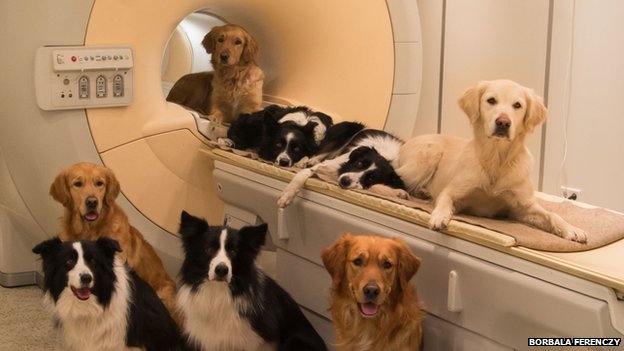
Pet dogs took part in the MRI scanning study.

Devoted dog owners often claim that their pets understand them. A new study suggests they could be right.

By placing dogs in an MRI scanner, researchers from Hungary found that the canine brain reacts to voices in the same way that the human brain does.

Emotionally charged sounds, such as crying or laughter, also prompted similar responses, perhaps explaining why dogs are attuned to human emotions.

The work is published in the journal Current Biology.

Lead author Attila Andics, from the Hungarian Academy of Science’s Eotvos Lorand University in Budapest, said: “We think dogs and humans have a very similar mechanism to process emotional information.”

Eleven pet dogs took part in the study; training them took some time.

Going across to that Current Biology link, one reads:

Summary

During the approximately 18–32 thousand years of domestication [1], dogs and humans have shared a similar social environment [2]. Dog and human vocalizations are thus familiar and relevant to both species [3], although they belong to evolutionarily distant taxa, as their lineages split approximately 90–100 million years ago [4]. In this first comparative neuroimaging study of a nonprimate and a primate species, we made use of this special combination of shared environment and evolutionary distance. We presented dogs and humans with the same set of vocal and nonvocal stimuli to search for functionally analogous voice-sensitive cortical regions. We demonstrate that voice areas exist in dogs and that they show a similar pattern to anterior temporal voice areas in humans. Our findings also reveal that sensitivity to vocal emotional valence cues engages similarly located nonprimary auditory regions in dogs and humans. Although parallel evolution cannot be excluded, our findings suggest that voice areas may have a more ancient evolutionary origin than previously known.

Back to the BBC news item.

The canine brain reacted to voices in the same way that the human brain does.

“There were 12 sessions of preparatory training, then seven sessions in the scanner room, then these dogs were able to lie motionless for as long as eight minutes. Once they were trained, they were so happy, I wouldn’t have believed it if I didn’t see it.”

For comparison, the team looked at the brains of 22 human volunteers in the same MRI scanners.

The scientists played the people and pooches 200 different sounds, ranging from environmental noises, such as car sounds and whistles, to human sounds (but not words) and dog vocalisations.

The researchers found that a similar region – the temporal pole, which is the most anterior part of the temporal lobe – was activated when both the animals and people heard human voices.

“We do know there are voice areas in humans, areas that respond more strongly to human sounds that any other types of sounds,” Dr Andics explained.

“The location (of the activity) in the dog brain is very similar to where we found it in the human brain. The fact that we found these areas exist at all in the dog brain at all is a surprise – it is the first time we have seen this in a non-primate.”

Emotional sounds, such as crying and laughter also had a similar pattern of activity, with an area near the primary auditory cortex lighting up in dogs and humans.

Likewise, emotionally charged dog vocalisations – such as whimpering or angry barking – also caused a similar reaction in all volunteers,

Dr Andics said: “We know very well that dogs are very good at tuning into the feelings of their owners, and we know a good dog owner can detect emotional changes in his dog – but we now begin to understand why this can be.”

However, while the dogs responded to the human voice, their reactions were far stronger when it came to canine sounds.

They also seemed less able to distinguish between environmental sounds and vocal noises compared with humans.

About half of the whole auditory cortex lit up in dogs when listening to these noises, compared with 3% of the same area in humans.

Commenting on the research, Prof Sophie Scott, from the Institute of Cognitive Neuroscience at University College London, said: “Finding something like this in a primate brain isn’t too surprising – but it is quite something to demonstrate it in dogs.

“Dogs are a very interesting animal to look at – we have selected for a lot of traits in dogs that have made them very amenable to humans. Some studies have show they understand a lot of words and they understand intentionality – pointing.”

But she added: “It would be interesting to see the animal’s response to words rather than just sounds. When we cry and laugh, they are much more like animal calls and this might be causing this response.

For the full report, as it was posted on the BBC website, click here.

Plus, do watch this five-minute video abstract.

Published on Feb 20, 2014

The video presents the first study to compare brain function between humans and any non-primate animal. Scientists at MTA-ELTE Comparative Ethology Research Group in Hungary found that dogs and humans use similar neural mechanisms to process social information in voices. The fact that dogs can be trained to lie motionless during fMRI tests opens up the space for a new branch of comparative neuroscience.

Paper in Current Biology: http://dx.doi.org/10.1016/j.cub.2014….

Group home page: http://mta-etologia.elte.hu/

The first study to compare brain function between humans and any non-primate animal shows that dogs have dedicated voice areas in their brains just as people do. Dog brains, like those of people, are also sensitive to acoustic cues of emotion, according to a study in the Cell Press journal Current Biology.

The findings suggest that voice areas evolved at least 100 million years ago, the age of the last common ancestor of humans and dogs, the researchers say. It also offers new insight into humans’ unique connection with our best friends in the animal kingdom, perhaps explaining how our two species have lived and worked together so effectively for tens of thousands of years.

“Our findings suggest that dogs and humans not only share a similar social environment, but they also use similar brain mechanisms to process social information,” said Atilla Andics of MTA-ELTE Comparative Ethology Research Group in Hungary. “This may help the successfulness of vocal communication between the two species.”

Andics and his colleagues trained eleven dogs to lay motionless in an fMRI brain scanner. That made it possible to run the very same neuroimaging experiment on dog and human participants — something that had never been done before. They captured both dogs’ and humans’ brain activities while they listened to dog and human sounds, ranging from whining or crying to playful barking or laughing.

The images show that dog and human brains include voice areas in similar locations. Not surprisingly, the voice area of dogs responds more strongly to other dogs, while that of humans responds more strongly to other humans. The researchers also noted striking similarities in the ways the dog and human brain processes emotionally loaded sounds. In both species, an area near the primary auditory cortex lit up more with happy sounds than unhappy ones. Andics said they were most struck by the common response to emotion across species.

There were some differences too: in dogs, 48 percent of all sound-sensitive brain regions respond more strongly to sounds other than voices. That’s in contrast to humans, in which only three percent of sound-sensitive brain regions show greater response to non-vocal versus vocal sounds.

The study is the first step to understanding how it is that dogs can be so remarkably good at tuning into the feelings of their human owners. “This method offers a totally new way of looking at neural processing in dogs,” Andics said. “At last we begin to understand how our best friend is looking at us and navigating in our social environment.”

Dogs and wolves – fascinating research.

Something new to learn every day!

I have been saving this report for a few weeks.  Following yesterday’s great news about the latest concerning wolves in Oregon, today seemed a perfect follow-on with a report first published in online journal PLOS ONE. However, what follows is a full republication of the report as I read it on the Science Daily website.

ooOOoo

Teaching young wolves new tricks: Wolves are considerably better imitators than dogs

Date: January 31, 2014

Source: Veterinärmedizinische Universität Wien

Summary: Although wolves and dogs are closely related, they show some striking differences. Scientists have undertaken experiments that suggest that wolves observe one another more closely than dogs and so are better at learning from one another. The scientists believe that cooperation among wolves is the basis of the understanding between dogs and humans.

Wolves are considerably better imitators than dogs. Credit: Walter Vorbeck
Wolves are considerably better imitators than dogs.
Credit: Walter Vorbeck

Although wolves and dogs are closely related, they show some striking differences. Scientists from the Messerli Research Institute at the University of Veterinary Medicine, Vienna have undertaken experiments that suggest that wolves observe one another more closely than dogs and so are better at learning from one another. The scientists believe that cooperation among wolves is the basis of the understanding between dogs and humans.

Their findings have been published in the online journal PLOS ONE.

Wolves were domesticated more than 15,000 years ago and it is widely assumed that the ability of domestic dogs to form close relationships with humans stems from changes during the domestication process. But the effects of domestication on the interactions between the animals have not received much attention. The point has been addressed by Friederike Range and Zsófia Virányi, two members of the University of Veterinary Medicine, Vienna (Vetmeduni Vienna) who work at the Wolf Science Center (WSC) in Ernstbrunn, Niederösterreich.

Wolves copy other wolves solving problems

The scientists found that wolves are considerably better than dogs at opening a container, providing they have previously watched another animal do so. Their study involved 14 wolves and 15 mongrel dogs, all about six months old, hand-reared and kept in packs. Each animal was allowed to observe one of two situations in which a trained dog opened a wooden box, either with its mouth or with its paw, to gain access to a food reward. Surprisingly, all of the wolves managed to open the box after watching a dog solve the puzzle, while only four of the dogs managed to do so. Wolves more frequently opened the box using the method they had observed, whereas the dogs appeared to choose randomly whether to use their mouth or their paw.

Watch closely …

To exclude the possibility that six-month old dogs fail the experiment because of a delayed physical or cognitive development, the researchers repeated the test after nine months. The dogs proved no more adept at opening the box than they were at a younger age. Another possible explanation for the wolves’ apparent superiority at learning is that wolves might simply be better than dogs at solving such problems. To test this idea, the researchers examined the animals’ ability to open a box without prior demonstration by a dog. They found that the wolves were rarely successful. “Their problem-solving capability really seems to be based on the observation of a dog performing the task,” says Range. “The wolves watched the dog very closely and were able to apply their new knowledge to solve the problem. Their skill at copying probably relates to the fact that wolves are more dependent on cooperation with conspecifics than dogs are and therefore pay more attention to the actions of their partners.”

The researchers think that it is likely that the dog-human cooperation originated from cooperation between wolves. During the process of domestication, dogs have become able to accept humans as social partners and thus have adapted their social skills to include interactions with them, concomitantly losing the ability to learn by watching other dogs.

—-

Story Source: The above story is based on materials provided by Veterinärmedizinische Universität WienNote: Materials may be edited for content and length.

—-

Journal Reference:

  1. Friederike Range, Zsófia Virányi. Wolves Are Better Imitators of Conspecifics than DogsPLoS ONE, 2014; 9 (1): e86559 DOI: 10.1371/journal.pone.0086559

ooOOoo

So if you, like me, are one of many people who believe that your dog knows what you are thinking, then we need to thank the wolf!

The scent of danger.

A reflection on our reptilian brains.

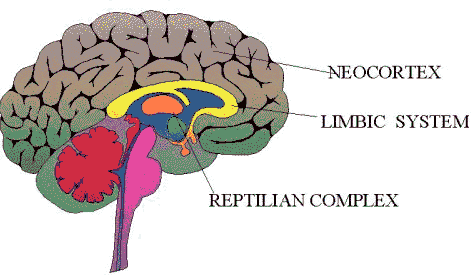
Now of all the things I am not, I am neither a biologist nor a scientist of any description.  However, general knowledge told me years ago that the human brain is composed of three areas, as the following diagram shows.

The constituents of the human brain.

A quick web search brings up THE EVOLUTIONARY LAYERS OF THE HUMAN BRAIN, from which I quote:

The first time you observe the anatomy of the human brain, its many folds and overlapping structures can seem very confusing, and you may wonder what they all mean. But just like the anatomy of any other organ or organism, the anatomy of the brain becomes much clearer and more meaningful when you examine it in light of the evolutionary processes that created it.

The most efficient model for understanding the brain in terms of its evolutionary history is the famous triune brain theory developed by Paul MacLean. According to this theory, the following three distinct brains emerged successively in the course of evolution and now co-inhabit the human skull:

The reptilian brain, the oldest of the three, controls the body’s vital functions such as heart rate, breathing, body temperature and balance. Our reptilian brain includes the main structures found in a reptile’s brain: the brainstem and the cerebellum. The reptilian brain is reliable but tends to be somewhat rigid and compulsive.

The limbic brain emerged in the first mammals. It can record memories of behaviours that produced agreeable and disagreeable experiences, so it is responsible for what are called emotions in human beings. The main structures of the limbic brain are the hippocampus, the amygdala, and the hypothalamus. The limbic brain is the seat of the value judgments that we make, often unconsciously, that exert such a strong influence on our behaviour.

The neocortex first assumed importance in primates and culminated in the human brain with its two large cerebral hemispheres that play such a dominant role. These hemispheres have been responsible for the development of human language, abstract thought, imagination, and consciousness. The neocortex is flexible and has almost infinite learning abilities. The neocortex is also what has enabled human cultures to develop.

These three parts of the brain do not operate independently of one another. They have established numerous interconnections through which they influence one another. The neural pathways from the limbic system to the cortex, for example, are especially well developed.

I’m well into reading the book Waking The Tiger: Healing Trauma authored by Peter A. Levine.  As early as Chapter One, Peter Levine explains [my emphasis]:

The involuntary and instinctual portions of the human brain and nervous system are virtually identical to those of mammals and even reptiles. Our brain, often called the ‘triune brain,’ consists of three integral systems. The three parts are commonly known as the ‘reptilian brain’ (instinctual), the ‘mammalian or limbic brain (emotional), and the ‘human brain or neo-cortex’ (rational). Since the parts of the brain that are activated by a perceived life threatening situation are the parts we share with animals, much can be learned by studying how certain animals, like the impala, avoid traumatization. To take this one step further, I believe that the key to healing traumatic symptoms in humans lies in our being able to mirror the fluid adaptation of wild animals as they ‘shake out’ and pass through the immobility response and become fully mobile and functional.

Unlike wild animals, when threatened, we humans have never found it easy to resolve the dilemma of whether to fight or flee. This dilemma stems, at least in part, from the fact that our species has played the role of both predator and prey. Prehistoric peoples, though many were hunters, spent long hours each day huddled together in cold caves with the certain knowledge that they could be snatched up at any moment and torn to shreds.

Anyway, to get back to what triggered today’s post.

If you read yesterday’s post you will recall me chatting with Jon Lavin and Jon reminding me that humans are drawn to positive messages.  But in stark contrast, the news media industry excels in promoting ‘doom and gloom’.  Why is this?  Why are we so fascinated by danger?

Well here’s my theory.

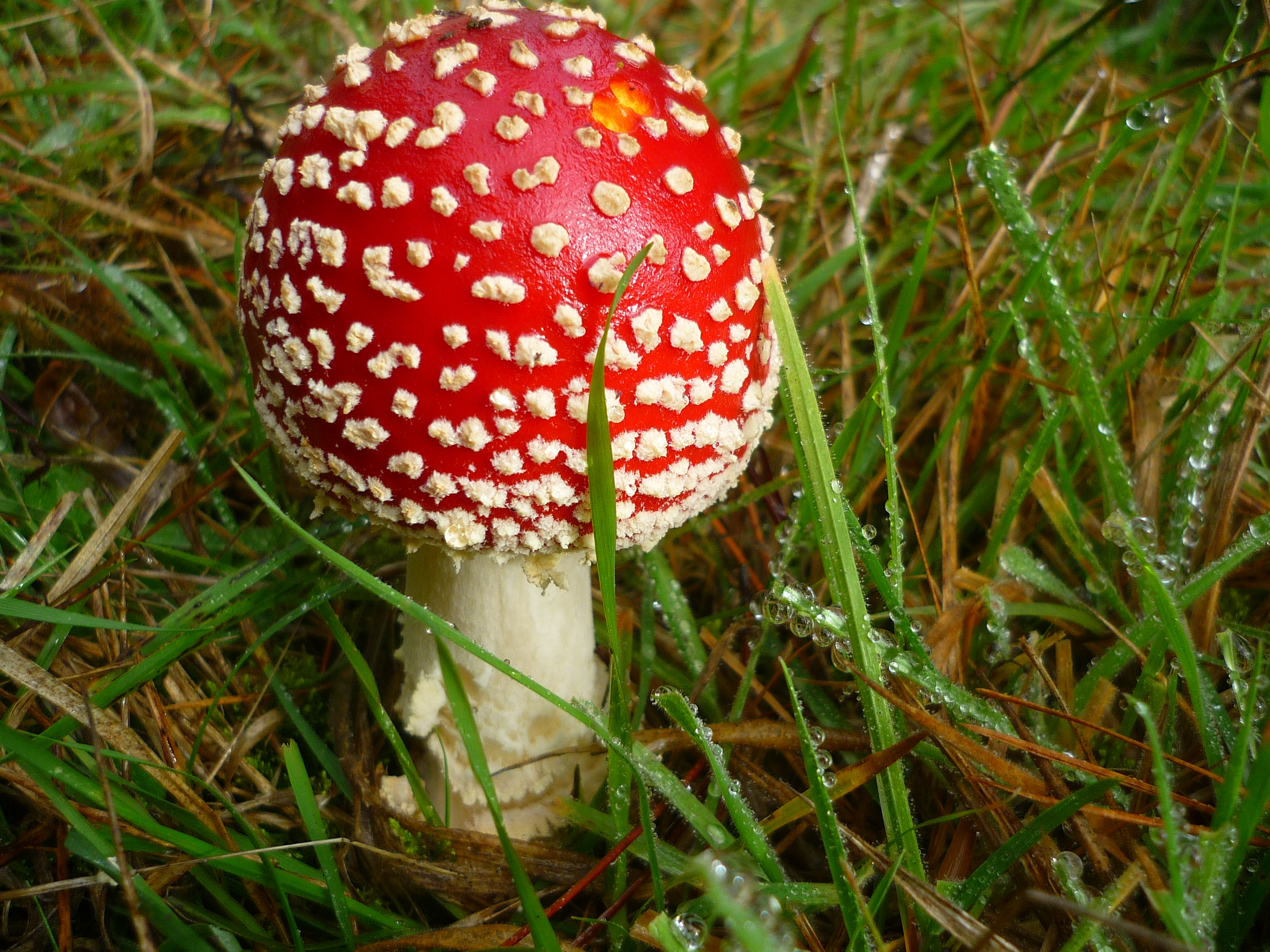
That is our evolution would not have succeeded if early man didn’t become pretty smart at identifying animal behaviours and plants and fruits that had the capacity to harm or even kill.  For example, what parent hasn’t made it a priority to teach their children the difference between harmful fungi and edible mushrooms.  Indeed to the extent that most of us would think long and hard before eating any fungi found in the wild unless we were 150% certain it was edible.  Look at the following picture.  Your instinct tells you if it’s safe to eat or not – it’s not!

Amanita muscaria photo © Michael Wood

So early man became over-sensitised to dangers to his health for his own good and continued existence. While modern man functions in ways almost unrecognisable from early man, that good old reptilian brain still is doing it’s best to protect us (flight, fight or freeze).  Think how we all respond to a sudden alarming sound, such as a gun shot or a scream, to know that the old reptilian brain is still alive and well.

Thus while all of us hate negativity we all seem to have this fascination with doom and gloom – just in case it helps us and our loved ones survive.

Back to Jon Lavin.  He makes it very clear that anything more than a small amount of ‘doom and gloom’ speaking to our consciousness increases the odds of depression and introversion.

Thus the message is that we humans should allow our Neocortex to tell our Reptilian ‘neighbour’ to go easy on the bad news, go and open a beer and watch the world go by! Whoops! Watch the world go by with a smile!

Oh, and Happy Valentine’s Day to you all.

20:20 self-awareness.

How something so fundamental as humans talking with each other can so often be mysterious.

When I composed this sub-heading, I wasn’t sure of what word to use to end the sentence.  Some of the words that sped through my mind were: complex, distorted, difficult, obtuse and …. well, you get the message.

The single biggest problem in communication is the illusion that it has taken place.” George Bernard Shaw is reputed to have once said!

Today’s essay on the challenges of speaking clearly to another, perhaps better described as communicating in a clear and unambiguous fashion, came out of a recent conversation with Jon Lavin, a good friend from my Devon days.  (Jon offers services for business owners and entrepreneurs under his business banner of The People Workshop.)

Jon was explaining that the number one hurdle for businesses that are managing change, and for so many businesses managing change is practically a constant, is having clear communications within the team.

Seems clear enough to me! 😉

Yet, what we hear and what we say are both modified, frequently unconsciously, by past events, experiences and trauma.  That being the case, then it is key, critically so, that we achieve the best possible self-awareness.  Because it is only through an understanding of our past that we come to learn of our sensitivities and our associated ‘tender spots’ and their potential for ‘pulling our strings’.  Here’s a personal story.

In 1956, when I was 12, I experienced a trauma that was interpreted by my consciousness as emotional rejection.  By the age of 14 that sensitivity to rejection had descended into my subconscious.  For fifty years, that sensitivity remained hidden yet continued to influence my life in many unseen ways, not all of them negatively by a long measure. In 2007 a period of counselling revealed that hidden emotional rejection; brought it to the surface.  It changed beyond imagination how I felt, how I behaved, how I was.  Nonetheless, that sensitivity to rejection is still there, albeit now visible.  Thus when I hear or experience something that tickles that sensitivity I still react.  But because I can now see and feel myself reacting, I can sidestep the emotional strings.

The following is a short, twenty-minute, documentary film about fear.  Do watch it.  The message that we are so profoundly a product of our past is beautifully presented.