The widely reported but nonetheless wonderful story of a man and an eagle.
This was sent to me by Dan Gomez but I very quickly found information all over the ‘web’. After reading many accounts, I decided to use the version of the story that was in Dan’s email.
oooOOOooo
Freedom and Jeff Guidry
Love and trust across the species gap.
Freedom and I have been together 11 years this summer. She came in as a baby in 1998 with two broken wings. Her left wing doesn’t open all the way even after surgery, it was broken in 4 places. She’s my baby.
When Freedom came in she could not stand and both wings were broken. She was emaciated and covered in lice. We made the decision to give her a chance at life, so I took her to the vet’s office. From then on, I was always around her. We had her in a huge dog carrier with the top off, and it was loaded up with shredded newspaper for her to lay in. I used to sit and talk to her, urging her to live, to fight; and she would lay there looking at me with those big brown eyes. We also had to tube feed her for weeks.
This went on for 4-6 weeks, and by then she still couldn’t stand. It got to the point where the decision was made to euthanize her if she couldn’t stand in a week. You know you don’t want to cross that line between torture and rehab, and it looked like death was winning. She was going to be put down that Friday, and I was supposed to come in on that Thursday afternoon. I didn’t want to go to the center that Thursday, because I couldn’t bear the thought of her being euthanized; but I went anyway, and when I walked in everyone was grinning from ear to ear. I went immediately back to her cage; and there she was, standing on her own, a big beautiful eagle. She was ready to live. I was just about in tears by then. That was a very good day.
We knew she could never fly, so the director asked me to glove train her. I got her used to the glove, and then to Jesse’s, and we started doing education programs for schools in western Washington.
We wound up in the newspapers, radio (believe it or not) and some TV. Miracle Pets even did a show about us.
In the spring of 2000, I was diagnosed with non-Hodgkin’s lymphoma. I had stage 3, which is not good (one major organ plus everywhere), so I wound up doing 8 months of chemo. Lost the hair – the whole bit. I missed a lot of work. When I felt good enough, I would go to Sarvey and take Freedom out for walks. Freedom would also come to me in my dreams and help me fight the cancer. This happened time and time again.
Fast forward to November 2000.
The day after Thanksgiving, I went in for my last checkup. I was told that if the cancer was not all gone after 8 rounds of chemo, then my last option was a stem cell transplant. Anyway, they did the tests; and I had to come back Monday for the results. I went in Monday, and I was told that all the cancer was gone.
So the first thing I did was get up to Sarvey and take the big girl out for a walk. It was misty and cold. I went to her flight and we went out front to the top of the hill. I hadn’t said a word to Freedom, but somehow she knew. She looked at me and wrapped both her wings around me to where I could feel them pressing in on my back (I was engulfed in eagle wings), and she touched my nose with her beak and stared into my eyes, and we just stood there like that for I don’t know how long. That was a magic moment. We have been soul mates ever since she came in. This is a very special bird.
On a side note: I have had people who were sick come up to us when we are out, and Freedom has some kind of hold on them. I once had a guy who was terminal come up to us and I let him hold her. His knees just about buckled and he swore he could feel her power course through his body. I have so many stories like that..
I never forget the honor I have of being so close to such a magnificent spirit as Freedom.
A reposting of an article by Jon Lavin, first published on the 3rd July, 2010.)
Conscientiousness isn’t all it’s cracked out to be!
(Foreword from Paul.)
Jon is one of those rare individuals who not only has been committed to a path of self-awareness for more than 30 years but who has also studied incredibly hard so as to be able to help others and do so from a base of real competence, as his own Blog describes.
But then I realised the great strength in what Jon has written. It is this.
There are many notable teachers to whom thousands upon thousands have turned to for a deeper understanding of what life is all about. As far back as time itself, teachers have surfaced and given spiritual guidance to those that come in need. But it’s very difficult to read or listen to these great teachers and connect with the fact that they were born, as we are all born, with nothing. And all of them, like many of us, went through Hell on wheels to come out the other side with a greater self-awareness and a deeper understanding of the real truths in nature. Like all of us who wish to rise above our present place they first acknowledged their own frailties. It is the starting point.
So, let me get to the point. Jon has the awareness and understanding to offer real help to those that seek answers that are currently beyond reach. Jon’s article is an wonderful illustration that he experiences the same fears and feelings of helplessness that you and I feel. You and I and Jon and all of humanity are much more closely connected than we realise.
Paul H.
oooOOOooo
To see in is to see out!
I’ve been running my own business for about 12 years now. In the beginning it started because I had a thirst for wanting to make a difference in small business in our local area and a passion for wanting to do it through working with people directly, on their behaviours. Still have, really.
I think this came as a form of acknowledgement to the few exceptional people managers I experienced while I was employed, and the all too common, terrible ones.
I was also mentored by a group of people to whom no developmental tool was barred. My eyes were well and truly opened to how a change of view could change outcomes.
The final boot up the backside was redundancy in the late 90s. I was all ready to go and just needed a kick.
My work ethic, trained at home and then through an engineering apprenticeship, was to conscientiously work hard and try hard and to treat people the way you want to be treated. Nothing wrong with that. I assumed automatic reward would follow as long as I did those things.
Over time I wised up and became a bit less idealistic and a little more politically aware but carried on in much the same way.
Much later I found myself embarking on a whole new adventure, with a lovely wife and family, all dependent on me, with a few contacts to start getting work from!
It took a year before the first jobs came in that didn’t necessitate robbing the almost non-existent savings and redundancy payment just to keep food on the table. Then, work slowly picked up and it started to get quite good for a one-man band. We were able to go on holiday once a year, camping, but still great, and then abroad.
All the time, I beavered away, trying hard, being very conscientious, as I’d been brought up to be, but slowly getting very stressed.
Time was when it took Friday night to de-stress, then 3 days, then 10 days and recently, not at all.
So faced with this present downturn, which is likely to go on for much longer than any of the others I’ve seen and survived, I’m wondering just what new strategy to adopt. Money is already getting very tight and everything is feeling very ‘hand to mouth’. Can’t really see one month in front of the other.
I notice our local farmer who I went to school with but didn’t really know.
I’ve got degrees, lived abroad, can speak Finnish fluently, (what use is that, I hear you say!), and can turn my hand to most things, but I still feel quite dis-empowered and at a bit of a loss.
My farmer friend is always smiling, he’s got a flock of geese he’s fattening up, the same with his beef cattle, does livery for half a dozen horses or so, has fields planted with various cereal crops, and has his finger in lots of different pies – and definitely does not look stressed. He is also renting his land plus another farm.
I honestly don’t know what to make of this all except for a few really important things – the importance of diversification, relationships and appreciating what you’ve got, especially people things, here, in the now.
I have also come to the realisation that I still haven’t cracked the main thing with being self-employed, and that is replacing fear with trust.
It’s been said by various enlightened people that we see a reflection of the world we hold in mind. Going forward into this brave new world I would like to see opportunities rather than fear, I will diversify into things which make more use of my wide range of talents, and I will swap fear for trust.
(A reposting of an article by Jon Lavin, first published on the 9th October, 2009.)
These are hard times for millions – transformation is the only practical option.
I’ve been working with most of my clients recently through painful transformation brought about by the recession.
An interesting metaphor really because, since the first wave of uncertainty in the UK banking system triggered panic, I have been picking up on that uncertainty.
That uncertainty feels like it’s stalking the globe at the moment; one has been aware of an underlying fear that was difficult to name and source in me. It has been rather like a deep river in that whilst the surface feels slow moving, currents are moving things powerfully below.
For example, we now are the proud owners of 6 Light Sussex chickens. Our youngest son, Sam, and I have dug up the back lawn and planted vegetables and built a poly-tunnel. We are also planning to install a wood burning cooker. Right back down to the base of Maslow’s pyramid.
Maslow’s Pyramid of Needs
These feelings have brought about such change everywhere and I wonder seriously whether we will ever return to what was, indeed, would we want to?
I might not have mentioned it in previous Posts but as well as an engineering background, in latter years, I have focussed on the interpersonal and success in business founded on quality relationships, integrity and, vitally, awareness.
To inform this, some 6 years ago, I embarked on an MA in Core Process Psychotherapy, primarily to work on myself so that I could be the best I could be in my relationships in and out of work.
The point I’m trying to make is that the same panic I notice in many of the companies I work in, and in me, is based on fear of the unknown and on a lack of trust in abundance in all it’s forms.
We get more of what we focus on. So we can choose to focus on the constant news of more difficulties, hardship and redundancies or, we can focus on what is working. In the workplace it has been pulling people together across functions and sites and pooling resources and ideas.
When we realise we’re not doing this alone it’s amazing how much lighter a load can feel and how much more inspired we feel. I also notice how humour begins to flow and what a powerful antidote for doom and gloom that is.
Transformation is never easy but the rewards exceed the effort put in ten fold.
So what is it going to be? Are we all going to bow down to the god of Doom & Gloom, fear and anxiety, heaping more and more gifts around it; as most media focusses on, or are we going to start noticing and focussing on the other neglected god of relationship; joy, trust, abundance and light?
Whatever the future holds for us, a belief in our inherent ability to adapt and change and focus on the greater good rather than fear, anxiety, greed and selfishness is the only sustainable way forward.
By Jon Lavin
Footnote from Paul: Considering that this was first published nearly four years ago, the level of uncertainty across the world seems practically undiminished!
(A reposting of an article by Jon Lavin, first published on the 11th September, 2009.)
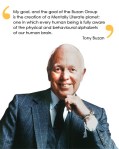
The journey into inner space is just as fascinating as the one into outer space.
Tony Buzan
Many, many years ago, 1973 to be precise, an English author, Tony Buzan, was involved in presenting a series on BBC television called Use Your Head. Tony released a book to accompany the television series. There is not a lot that I remember about that book but one thing I never forgot. That was the number of neurons in the brain, 10 to the power 200, give or take. I will return to this aspect in a later Post but now to the main point of this, my introductory Post.
I was working with a telephone coaching client this week who I’ve been with for over a year now.
He differs from my normal clients in that he’s paralysed from the shoulders down. About 8 years ago he was involved in a horrendous car accident which 99% of us would probably not have survived. He was in hospital for 18 months and now with the aid of his PAs (Personal Assistants), as he calls them, who get him up in the morning and put him to bed in the evening, he manages on his own.
He’s been working on a novel for sometime now and his optimism and faith in his own inherent sense of well-being is truly inspirational. He works at the novel every moment he can.
He has had to overcome many other setbacks in life but still manages to live a life which is far fuller than most able bodied people.
He frequently gives motivational talks and says things to me that wake me up from the trance state that I seem to occupy too much of the time, generally worrying about things that statistically are highly unlikely to happen. He is one of the most awake people I have ever come across.
I’m reading a book at the moment called, “Journey of Souls”, by Michael Newton, Phd. His research carried out on numerous clients under hypnosis has shown that we choose the conditions of our lives.
In order to learn the maximum amount in life, we might opt to experience life in a body that only barely functions in order to learn to overcome extreme difficulties and gain a fresh insight into what is really important.
The book is analytical to a certain extent so suits my engineer’s mind but certainly encourages reflection on decisions we make, their impact on others and the level of integrity of those decisions. The book reminds me frequently of my coaching client.
By Jon Lavin
(John may be contacted at jon.lavin (at) peopleworkshop(dot)co(dot)uk – PH)
Footnote: Recently we were driving back after being a week away. We were on the motorway (Freeway to North Americans), quite relaxed and looking forward to being home soon.
Out of nowhere, a car 70 to 100yds in front suddenly swerved violently to the left then back to the right, hit the central metal reservation, bounced off again and, as we drove past, missed the side of our car by a few yards. This whole drama unfolded in a matter of an instant in time.
As if in slow motion, I steered the car to the inside lane and drove past – at 75mph. We were so shaken up that we were 1/4 of a mile on before I looked in the rear-view mirror and saw cars stopping and people getting out. The few seconds that this all happened in are now etched in my mind.
I wonder if it has to be like this to truly wake us from our trance?
This is not a single topic blog. But the last few days have brought such a wealth of marvellous stuff that I couldn’t resist this final, for the time being, post on the benefits of slowing down, of taking a break – meditation, in other words.
First, and I wish I could remember from whence it came, I found this essay by Bertrand Russell In Praise of Idleness It’s a wonderful piece of writing from one of the great masters of the art. Take this extract from just the first paragraph, (and the photo insertion is from me!):
Bertrand Russell (18 May 1872 – 2 February 1970)
I think that there is far too much work done in the world, that immense harm is caused by the belief that work is virtuous, and that what needs to be preached in modern industrial countries is quite different from what always has been preached. Everyone knows the story of the traveler in Naples who saw twelve beggars lying in the sun (it was before the days of Mussolini), and offered a lira to the laziest of them. Eleven of them jumped up to claim it, so he gave it to the twelfth. This traveler was on the right lines. But in countries which do not enjoy Mediterranean sunshine idleness is more difficult, and a great public propaganda will be required to inaugurate it. I hope that, after reading the following pages, the leaders of the YMCA will start a campaign to induce good young men to do nothing. If so, I shall not have lived in vain.
Then from out of the Transition Network stables came this interview by Rob Hopkins with Sophy Banks on the Power of Not Doing Stuff. Just going to pick out a couple of exchanges that really struck me.
Sophy, I’m sure you get asked the question lots of times, but how would you describe Inner Transition ? What’s Inner Transition for you?
I gave a talk about Inner Transition in Canada just recently, and someone said “what I want from the talk is, what’s the most succinct story? What’s the E=mc² of Inner Transition?” The way that I’m talking about that at the moment is to say the absolute core of Inner Transition is that in our groups, within ourselves, in our relationships, in what we’re doing in our communities, how can we be creating a culture that supports us to be in a state of feeling resourced, feeling empowered, feeling seen and appreciated? With the understanding that when we have those kind of external conditions, we find ourselves in a state where we’re the most open to new ideas, the most open to connection, the most able to build relationships with people who are different from us.
That’s the core of it, to understand that internally we can be in different inner states, we can be in a state where we feel stressed and closed and driven or whatever, or we can be in a state where we’re open and creative and learning and available. That’s one way of framing Inner Transition, how do we keep recreating that?
Part of it, I think, is when we’re all in that state of being open and creative and connected with each other and with ourselves, we make the best decisions. We’re able to take the longest and the widest view, we’re able to see the consequences of what we do, so there’s also something which has really been resonating for me. That’s not only the process we need for Transition, that’s the end-state we want to get to. Part of what’s not working in our culture is that lots of the people with a lot of power who are making really key decisions are in a state of constant stress and pressure and having to make very narrow decisions, decisions based on very narrow viewpoints.
oooo
One of the expressions you’ve been using increasingly over the last couple of years is “healthy human culture” and this idea that that’s ultimately the aim of Transition, to enable that and to create that. What does that mean? Can you define “healthy human culture”?
This is where my enquiry took me. I got really interested in seeing polarities and dualities – people have been doing that for centuries – about our culture and calling it dualistic. I came across Riane Eisler’s work. She talks about basically two kinds of human culture. One is based on partnership and one is based on domination. I got really interested in that and the question what if that’s true? It’s a big proposition.
If that’s true, what’s underneath that and what is it about what goes on inside us that we’re constructed, the way we’ve evolved, that causes that to be so, that there are these two stable states? I feel like I’ve been looking at lots of different territories, I’m really interested in trauma and how that affects us in the creation of the unconscious that comes through trauma.
This whole thing about how we create unintended consequences. The idea that anybody could have sat down and designed the consequences that we’re living with is inconceivable. However dysfunctional people were and however much they’re interested in wealth or power or anything, I just don’t believe that anybody intended it to be like this. How do we get this as a by-product of something that’s natural and…just who we are, who we’ve evolved to be.
So for me, the question around “healthy human culture” is one of the inner. What’s the inner state of a culture that creates partnership, learns to live within its resources, that’s oriented towards joyful, pleasurable existence, that has a belief about ourselves as humans that we’re trustworthy and generous and want good things for the future, good things for our children. What I see very very strongly: in a lot of the depth work that I’ve done, what I see is when you peel away a lot of the damage, what you find is a profound and I could say universal. In my experience (I haven’t worked with the psychopaths and the most damaged people) but that sense that if we’re healed and whole what we want is to love each other and do good in the world.
Then there’s another state we could be in, which comes back to your first question, where we feel under-resourced, disempowered, under attack. There’s not enough and I’m taught that other people are selfish, violent and greedy so I need to fight for what I can get. In order to have status I’ve got to have stuff, I’ve got to prove myself. With that goes a whole lot of very difficult feelings.
I’m very interested in that idea, that in unhealthy culture we have a whole lot of unmanageable feelings centred around shame and not being good enough that we then disown – I can’t deal with that in myself, I’ll put it on to you, I’ll find somebody else to have that experience and then I’ll watch it in them and feel OK about myself. It’s really interesting to look at cultures of domination and colonialism and capitalism and power-over as being driven by the need to not feel stuff myself, but grab enough power so that I can do it to somebody else.
The whole driver for those things is a psychological state of splitting and projection. When I bring that back to me and what culture I create in my relationships and my groups, you see it out in those big systems in the world but it’s also a very precise way of understanding and discerning what culture do I make in this room with these people, around splitting and projection or unity.
That’s quite a big answer! The short answer is “healthy human culture” is that one where we reel resourced, empowered, connected, appreciated and safe. Those seem to be the 5 things. If we have those, we are in that state of openness and availability and connection and learning and receptivity and then taking good action instead of action that creates a problem somewhere else in the system.
It really is a fascinating and thought-provoking interview. Go and read it in full, or better still, find somewhere to sit and relax, close your eyes and listen to it.
Moving on.
There was an article in Nature about the Brain: Neuroscience: Idle minds – Neuroscientists are trying to work out why the brain does so much when it seems to be doing nothing at all.
For volunteers, a brain-scanning experiment can be pretty demanding. Researchers generally ask participants to do something — solve mathematics problems, search a scene for faces or think about their favoured political leaders — while their brains are being imaged.
But over the past few years, some researchers have been adding a bit of down time to their study protocols. While subjects are still lying in the functional magnetic resonance imaging (fMRI) scanners, the researchers ask them to try to empty their minds. The aim is to find out what happens when the brain simply idles. And the answer is: quite a lot.
Again, a very important read so do go across and read it in full. Because, you will come to this:
Zen and the art of network maintenance
Raichle favours the idea that activity in the resting state helps the brain to stay organized. The connections between neurons are continually shifting as people age and learn, but humans maintain a sense of self throughout the upheaval. Spontaneous activity might play a part in maintaining that continuity. “Connections between neurons turn over in minutes, hours, days and weeks,” says Raichle. “The structure of the brain will be different tomorrow but we will still remember who we are.”
Or perhaps the activity is part of the reshaping process, tweaking connections while we idle. Several teams have reported changes in resting connectivity after language and memory tasks and motor learning. Chris Miall, a behavioural brain scientist at the University of Birmingham, UK, and his colleagues have shown that spontaneous activity at rest can be perturbed by what has just happened. The team scanned volunteers at rest, and then asked them to learn a task involving using a joystick to track a moving target. When the participants were scanned at rest again, the team could see the effects of motor learning in the resting networks. That study, and subsequent work along the same lines, suggests that “the brain is not only thinking about supper coming up, but it’s also processing the recent past and converting some of that into long-term memories”, says Miall. The network changes are specific to the tasks performed.
So, hopefully, anyone who has read this post and who would like to slow down, to practise the art of doing nothing, will be eager to learn how. Well, keep reading!
There are lots and lots of ways to meditate. But our concern is not to find a perfect form of meditation — it’s to form the daily habit of meditation. And so our method will be as simple as possible.
1. Commit to just 2 minutes a day. Start simply if you want the habit to stick. You can do it for 5 minutes if you feel good about it, but all you’re committing to is 2 minutes each day.
2. Pick a time and trigger. Not an exact time of day, but a general time, like morning when you wake up, or during your lunch hour. The trigger should be something you already do regularly, like drink your first cup of coffee, brush your teeth, have lunch, or arrive home from work.
3. Find a quiet spot. Sometimes early morning is best, before others in your house might be awake and making lots of noise. Others might find a spot in a park or on the beach or some other soothing setting. It really doesn’t matter where — as long as you can sit without being bothered for a few minutes. A few people walking by your park bench is fine.
4. Sit comfortably. Don’t fuss too much about how you sit, what you wear, what you sit on, etc. I personally like to sit on a pillow on the floor, with my back leaning against a wall, because I’m very inflexible. Others who can sit cross-legged comfortably might do that instead. Still others can sit on a chair or couch if sitting on the floor is uncomfortable. Zen practitioners often use a zafu, a round cushion filled with kapok or buckwheat. Don’t go out and buy one if you don’t already have one. Any cushion or pillow will do, and some people can sit on a bare floor comfortably.
5. Start with just 2 minutes. This is really important. Most people will think they can meditate for 15-30 minutes, and they can. But this is not a test of how strong you are at staying in meditation — we are trying to form a longer-lasting habit. And to do that, we want to start with just a two minutes. You’ll find it much easier to start this way, and forming a habit with a small start like this is a method much more likely to succeed. You can expand to 5-7 minutes if you can do it for 7 straight days, then 10 minutes if you can do it for 14 straight days, then 15 minutes if you can stick to it for 21 straight days, and 20 if you can do a full month.
6. Focus on your breath. As you breathe in, follow your breath in through your nostrils, then into your throat, then into your lungs and belly. Sit straight, keep your eyes open but looking at the ground and with a soft focus. If you want to close your eyes, that’s fine. As you breathe out, follow your breath out back into the world. If it helps, count … one breath in, two breath out, three breath in, four breath out … when you get to 10, start over. If you lose track, start over. If you find your mind wandering (and you will), just pay attention to your mind wandering, then bring it gently back to your breath. Repeat this process for the few minutes you meditate. You won’t be very good at it at first, most likely, but you’ll get better with practice.
And that’s it. It’s a very simple practice, but you want to do it for 2 minutes, every day, after the same trigger each day. Do this for a month and you’ll have a daily meditation habit.
Now to the close.
Beautifully rendered thanks to Terry Hershey. For on his website there is this:
When I pause, I put myself in a new or different environment. When I pause, I create spaces–or sanctuaries–in which renewal can be born. When I pause, I allow my soul to savor, relish, value, honor, welcome, see, celebrate, wonder, and to experience grace.
In the wake of yesterday’s post about the power of meditation, this recent TED Talk seemed a perfect way to end the week.
Published on Jul 16, 2013
You don’t need to plan an exotic trip to find creative inspiration. Just look up, says Gavin Pretor-Pinney, founder of the Cloud Appreciation Society. As he shares charming photos of nature’s finest aerial architecture, Pretor-Pinney calls for us all to take a step off the digital treadmill, lie back and admire the beauty in the sky above.
Want to learn a little more about the different types of cloud? Then go here. Want to learn more about the Cloud Appreciation Society? More details here.
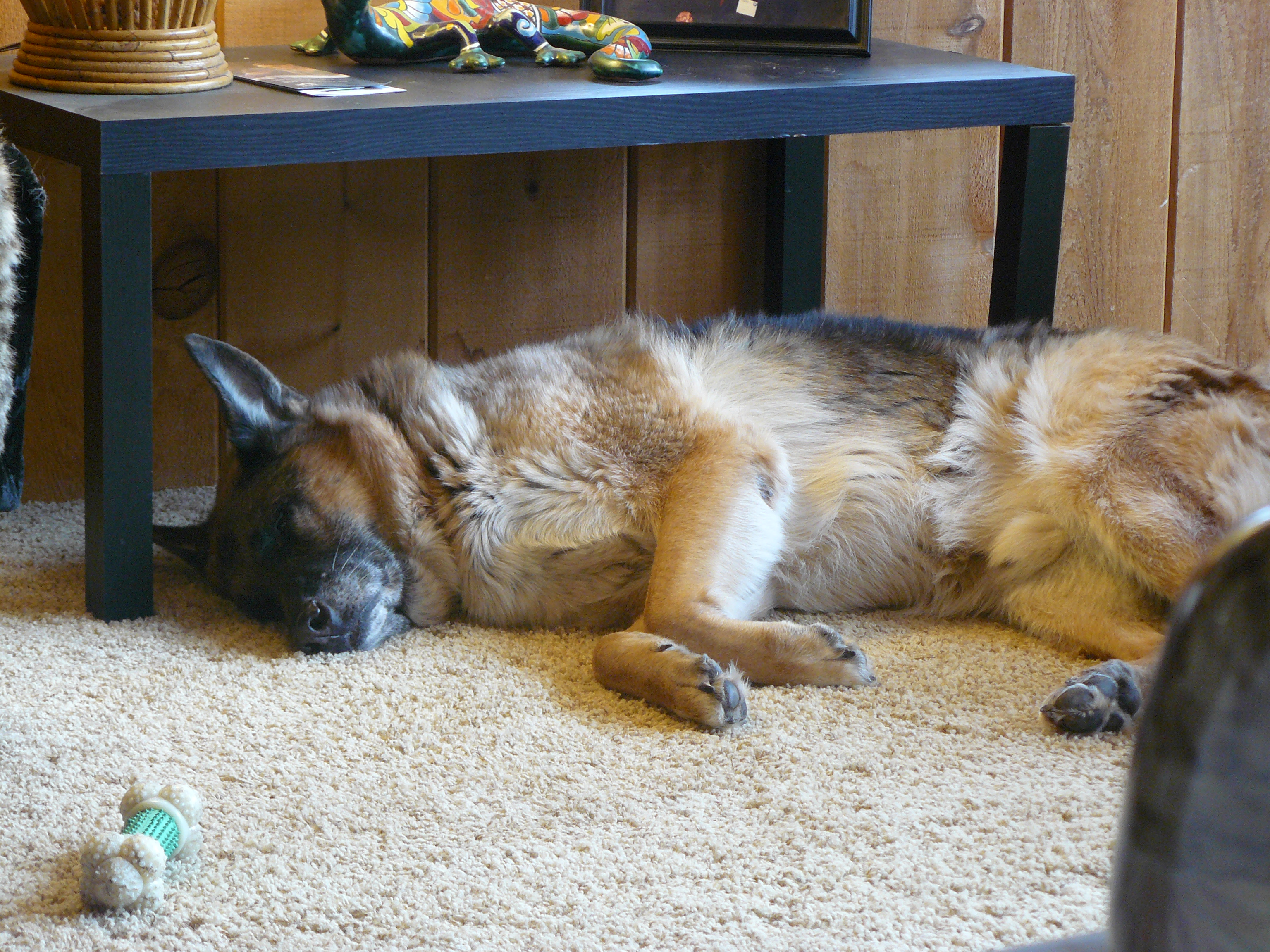
And who knows, you may even see your dog in those clouds!
Owning a dog really makes a measurable and positive difference to health outcomes!
Yesterday, I republished a post from October, 2010 which included the story of Ricochet. In that post, I mentioned a graphic that had been sent to me by ZocDoc. I had been sent an email that in part read:
Hey Paul,
I work for ZocDoc, a doctor’s appointment website (not for dogs yet!). I just stumbled upon your blog, because you wrote about the healing power of dogs. We’ve just launched an infographic called “the healing power of dogs” and since you also have the post on your site I thought that this should be interesting to your readership and possibly help adoption.
I hadn’t heard of the company but very quickly the About Us page explained the background. Now in fairness, that email was all about promoting a commercial organisation. Nevertheless, it seemed such a useful and enjoyable graphic that I agreed to publish it.
Whatever one’s view is about the significance of CO2 levels in the Earth’s atmosphere, this blog is about integrity. As the byline states, “Dogs are integrous animals. We have much to learn from them.” Regular readers (and thank you for being one) know that this blog ranges far and wide in pursuit of stories, essays and examples of integrity, all the more better when they involve a dog!
All dog owners know that one of the prime things we can learn from our dogs is the ability to remain in the present. No, more than that! To value and cherish the present. Dogs manage this in an effortless manner, in a way that humans can only dream of achieving.
This came to me as a result of a recent post on Damn the Matrix, Mike Stasse’s fascinating blog. The post was about what we humans regret at the end of our days, which I will come to in a moment.
Mike had taken the theme from a recent book by Australian author Bronnie Ware. Her website is here from where one learns:
Picture from The Sunday Mail (Qld)
Bronnie Ware is an inspiring and creative soul from Australia.
Through her work Bronnie weaves delightful tales of real life observations and experience. Using gentleness, honesty, and humour, Bronnie celebrates both the strength and vulnerability of human nature. Her message is a positive and inspiring one.
Bronnie is the author of the full-length memoir, The Top Five Regrets of the Dying– A Life Transformed by the Dearly Departing, released worldwide, with translations in 27 languages. She also runs an online personal growth and songwriting course, has released two albums of original songs, and writes a well-loved blog called Inspiration and Chai.
Every challenge brings its own gifts. Sometimes though it is not always easy to see those gifts at first. Suffering and wounds can blind us. We have all been there. It is at times like these that Inspiration and Chai is needed. Inspiration to soothe the heart. Chai to soothe the body.
Even during happier cruising chapters, being inspired is still a beautiful thing. It keeps us going. It reminds us of what we already know.
Inspiration and Chai is an ongoing journey. The aim of this site is to share inspirational stories and motivational thoughts and for it to reach more and more people in need, seekers on their path. It is a positive environment to revisit whenever you feel it calling. It is also somewhere for me to share my love of story telling and to share memories of life.
Jean is no stranger to the death of a dog. Over her many years of rescuing dogs Jean has seen far too many deaths. I have been living with Jean since 2008. In that short time five of our dogs have died.
Of course, we have no idea of what goes through a dog’s mind in those last stages of life. Dogs appear to embrace death in an uncomplicated way but we will never know for sure.
What about humans? On Bronnie’s blogsite there is a post under the title of Regrets of the dying. Whatever age you are, read what Bonnie wrote and ponder:
REGRETS OF THE DYING
For many years I worked in palliative care. My patients were those who had gone home to die. Some incredibly special times were shared. I was with them for the last three to twelve weeks of their lives.
People grow a lot when they are faced with their own mortality. I learnt never to underestimate someone’s capacity for growth. Some changes were phenomenal. Each experienced a variety of emotions, as expected, denial, fear, anger, remorse, more denial and eventually acceptance. Every single patient found their peace before they departed though, every one of them.
When questioned about any regrets they had or anything they would do differently, common themes surfaced again and again. Here are the most common five:
1. I wish I’d had the courage to live a life true to myself, not the life others expected of me.
This was the most common regret of all. When people realise that their life is almost over and look back clearly on it, it is easy to see how many dreams have gone unfulfilled. Most people had not honoured even a half of their dreams and had to die knowing that it was due to choices they had made, or not made.
It is very important to try and honour at least some of your dreams along the way. From the moment that you lose your health, it is too late. Health brings a freedom very few realise, until they no longer have it.
2. I wish I didn’t work so hard.
This came from every male patient that I nursed. They missed their children’s youth and their partner’s companionship. Women also spoke of this regret. But as most were from an older generation, many of the female patients had not been breadwinners. All of the men I nursed deeply regretted spending so much of their lives on the treadmill of a work existence.
By simplifying your lifestyle and making conscious choices along the way, it is possible to not need the income that you think you do. And by creating more space in your life, you become happier and more open to new opportunities, ones more suited to your new lifestyle.
3. I wish I’d had the courage to express my feelings.
Many people suppressed their feelings in order to keep peace with others. As a result, they settled for a mediocre existence and never became who they were truly capable of becoming. Many developed illnesses relating to the bitterness and resentment they carried as a result.
We cannot control the reactions of others. However, although people may initially react when you change the way you are by speaking honestly, in the end it raises the relationship to a whole new and healthier level. Either that or it releases the unhealthy relationship from your life. Either way, you win.
4. I wish I had stayed in touch with my friends.
Often they would not truly realise the full benefits of old friends until their dying weeks and it was not always possible to track them down. Many had become so caught up in their own lives that they had let golden friendships slip by over the years. There were many deep regrets about not giving friendships the time and effort that they deserved. Everyone misses their friends when they are dying.
It is common for anyone in a busy lifestyle to let friendships slip. But when you are faced with your approaching death, the physical details of life fall away. People do want to get their financial affairs in order if possible. But it is not money or status that holds the true importance for them. They want to get things in order more for the benefit of those they love. Usually though, they are too ill and weary to ever manage this task. It is all comes down to love and relationships in the end. That is all that remains in the final weeks, love and relationships.
5. I wish that I had let myself be happier.
This is a surprisingly common one. Many did not realise until the end that happiness is a choice. They had stayed stuck in old patterns and habits. The so-called ‘comfort’ of familiarity overflowed into their emotions, as well as their physical lives. Fear of change had them pretending to others, and to their selves, that they were content. When deep within, they longed to laugh properly and have silliness in their life again.
When you are on your deathbed, what others think of you is a long way from your mind. How wonderful to be able to let go and smile again, long before you are dying.
Life is a choice. It is YOUR life. Choose consciously, choose wisely, choose honestly. Choose happiness.
I hesitated to write anything more because that last sentence should be the one that continues to resonate.
So just a reflection on how easy it is for a dog to wag its tail – dogs so easily choose happiness.
A week ago I published a post called On quietness. It was predominantly comprised of a republication of a much earlier item written by Jon Lavin.
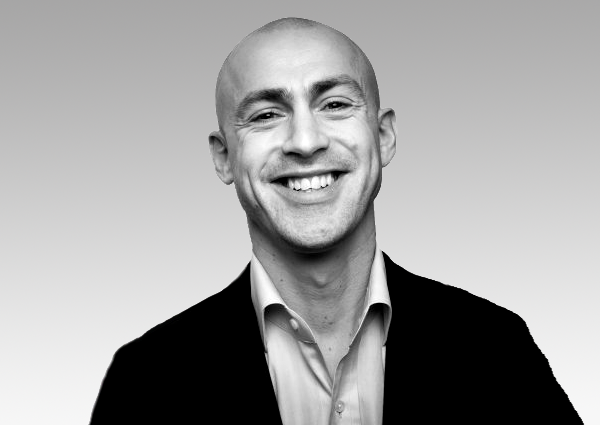
However, in the way that things happen, shortly after that post (last Friday’s one) was published I came across this TED video of Andy Puddicome.
I’ll say no more – enjoy the video. (Beautifully delivered in ten minutes, by the way!)
When is the last time you did absolutely nothing for 10 whole minutes? Not texting, talking or even thinking? Mindfulness expert Andy Puddicombe describes the transformative power of doing just that: Refreshing your mind for 10 minutes a day, simply by being mindful and experiencing the present moment. (No need for incense or sitting in strange positions.)
oooOOOooo
“Most people assume that meditation is all about stopping thoughts, getting rid of emotions, somehow controlling the mind. But actually it’s … about stepping back, seeing the thought clearly, witnessing it coming and going.” (Andy Puddicombe)
Andy Puddicombe wants you to take a break — not just from work, but from your own mind, which is so full of anxieties about the world and anxieties about its own anxieties. To help you do that, Puddicombe, a former Buddhist monk, co-founded Headspace, a project to make meditation more accessible to more people in their everyday lives. Puddicombe also writes prolifically for the Huffington Post and the Guardian, on the benefits of mindful thinking for healthy living.
oooOOOooo
So as someone who seems to have real trouble relaxing, I mean real relaxation in the letting go sense, I’m flirting with the idea of committing 10 minutes of meditation each day. Andy offers a charmingly easy way of doing this, as you will discover if you go to his website Headspace. Here’s a quote from the ‘What is Headspace‘ page.
Here at Headspace we’re on a mission to get as many people in the world as possible to take 10 minutes out of their day, to practice a simple and easy-to-learn meditation technique. And if you like the way it makes you feel, then we’d love to show you how to make that a life-long skill.
This is meditation for modern life – simple, scientifically-proven techniques, that you can use every day to experience a healthier and happier mind.
Those articles published by the Guardian as referred to above may be found here: The Guardian, if you want to browse around some more.
Stay tuned as to the outcome of me and meditation; I’ll share with it you via Learning from Dogs. Let’s face it, dogs are very good at chilling out for ten minutes! Oh dear, something else to learn from our doggies!
I published a wonderfully funny piece yesterday sent to me by Lindy C. from Devon. Today, another precious senior’s tale sent to me by Richard Maugham, he of the Understanding Europe post.
oooOOOooo
An elderly man is stopped by the police around 2 a.m. and is asked where he is going at this time of night.
He replies, “I’m on my way to a lecture about alcohol abuse and the effects it has on the human body, as well as smoking and staying out late.”
The police officer asks, “Really? Who’s giving that lecture at this time of night?”


 An interesting metaphor really because, since the first wave of uncertainty in the UK banking system triggered panic, I have been picking up on that uncertainty.



 Learning from Dogs