Tag: Economist

The power in these words.

Day three of recognising the passing of 400 ppm atmospheric CO2.

In nearly four years of writing for Learning from Dogs, I can’t recall devoting three days of posts to a single subject. To put that into context, today’s post is number 1,683 since the first one was published on July 15th, 2009; not all of them from the brain of yours truly by any means you understand!

Today, I’m going to feature a recent essay written by George Monbiot finishing up three days of ‘reporting’ on the deeply disturbing, but fully anticipated, news that the planet’s atmosphere has reached a concentration of 400 ppm CO2.

Last Monday, I published What legacy do we wish to leave for others?

Then yesterday, a post under the title of 400 ppm, as the BBC reported it.  I closed with a reference to a remark made by Professor Sir Brian Hoskins, director of the Grantham Institute for Climate Change at Imperial College London; the remark being “A greater sense of urgency was needed.

I wrote that those wishy-washy words were pathetic.  That we needed the sort of words that George Monbiot penned a few days ago in the Guardian newspaper.  There it was entitled “Climate milestone is a moment of symbolic significance on road of idiocy“.

But I think the title that Mr. Monbiot chose to use on his own blog was far more apt: Via Dolorosa.  (Note that I haven’t formally requested permission to republish the essay but trust that the following is acceptable to both Mr. Monbiot and the Guardian newspaper.)

Here’s how it opened:

Via Dolorosa

May 10, 2013

Corruption and short-termism are pushing us along the path of sorrows.

By George Monbiot, published on the Guardian’s website, 10th May 2013

The records go back 800,000 years: that’s the age of the oldest fossil air bubbles extracted from Dome C, an ice-bound summit in the high Antarctic. And throughout that time there has been nothing like this. At no point in the pre-industrial record have concentrations of carbon dioxide in the air risen above 300 parts per million. 400 is a figure that belongs to a different era.

The difference between 399 and 400ppm is small, in terms of its impacts on the world’s living systems. But this is a moment of symbolic significance, a station on the Via Dolorosa of environmental destruction. It is symbolic of our collective failure to put the long term prospects of the natural world and the people it supports above immediate self-interest.

The symbolic significance of the planet’s atmospheric concentrations of CO2 passing 400ppm  is that, I hope, with all the hope that my heart can summon up, it will bring us back from the brink.  Then one ponders about this possibility as Monbiot’s next paragraph unfolds:

The only way forward now is back: to retrace our steps along this road and to seek to return atmospheric concentrations to around 350 parts per million, as the 350.org campaign demands. That requires, above all, that we leave the majority of the fossil fuels which have already been identified in the ground. There is not a government or an energy company which has yet agreed to do so.

“not a government or an energy company … has yet agreed to do so.”

I’m going to repeat that again, with emboldening; “not a government or an energy company … has yet agreed to do so.

In fact, one could reasonable argue that having any hope for a turning back is utterly naive. Look what the essay goes on to say:

Just before the 400-mark was reached, Shell announced that it will go ahead with its plans to drill deeper than any offshore oil operation has gone before: almost three kilometres below the Gulf of Mexico.

A few hours later, Oxford University opened a new laboratory in its department of earth sciences. The lab is funded by Shell. Oxford says that the partnership “is designed to support more effective development of natural resources to meet fast-growing global demand for energy.” Which translates as finding and extracting even more fossil fuel.

The European Emissions Trading Scheme, which was supposed to have capped our consumption, is now, for practical purposes, dead. International climate talks have stalled; governments such as ours now seem quietly to be unpicking their domestic commitments. Practical measures to prevent the growth of global emissions are, by comparison to the scale of the challenge, almost non-existent.

As an example of the scale of the hypocrisy in which we are all immersed, last week’s The Economist magazine carried a full-age advertisement from Chevron on page 5 under the banner of ‘Protecting The Planet Is Everyone’s Job – We agree‘ and going on to explain:

We go to extraordinary lengths to protect the integrity of the places where we operate.  Places all over the world, like Australia’s Barrow Island.  It’s home to hundreds of native species of wildlife, including wallabies, ospreys, and perenties.

We’ve been producing energy on the island for more than 40 years, and it remains a Class A Nature Reserve.

Didn’t take me two moments to find this image:
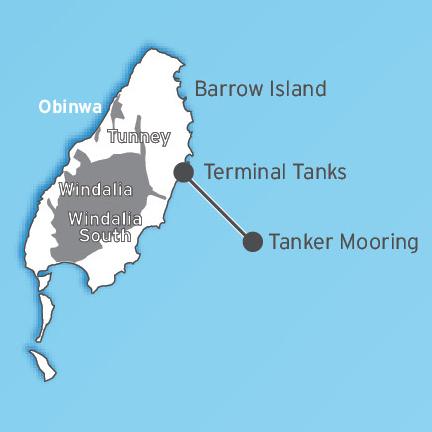
Barrow Island, Australia.  Taken from the Chevron Australia website.
Barrow Island, Australia. Taken from the Chevron Australia website.

To my mind this advertisement completely misses the point; deliberately or otherwise.  Chevron and all other oil producing companies in the world are endangering the future of the entire planet by continuing to ‘produce energy’, aka oil.  Period. Full stop.

Or to put it in the words of George Monbiot’s essay:

The problem is simply stated: the power of the fossil fuel companies is too great. Among those who seek and obtain high office are people characterised by a complete absence of empathy or scruples, who will take money or instructions from any corporation or billionaire who offers them, and then defend those interests against the current and future prospects of humanity. This new mark reflects a profound failure of politics, worldwide, in which democracy has quietly been supplanted by plutocracy. Without a widespread reform of campaign finance, lobbying and influence-peddling and the systematic corruption they promote, our chances of preventing climate breakdown are close to zero.

Thus the final sentence in GM’s essay carries a deep sadness.

So here we stand at a waystation along the road of idiocy, apparently determined only to complete our journey.

http://www.monbiot.com

Why are we not seeing, hearing and reading words of a similar weight and power from just about every ‘opinion maker’ in the world?

Why not?  Why not?

A coating of thought!

Evidence that supports the notion that deliberation is really rather a good idea!

In the issue of The Economist, the July 7th edition, there was a rather intriguing article from the pen of Schumpeter entitled,

In praise of procrastination

that proposes that the world of speed and instant decisions is much less efficient than giving things a decent ‘coating of thought’.

Here’s an extract from the article that makes this point,

These thoughts have been inspired by two (slowly savoured) works of management theory: an obscure article in the Academy of Management Journal by Brian Gunia of Johns Hopkins University; and a popular new book, “Wait: The Art and Science of Delay”, by Frank Partnoy of University of San Diego. Mr Gunia and his three co-authors demonstrated, in a series of experiments, that slowing down makes us more ethical. When confronted with a clear choice between right and wrong, people are five times more likely to do the right thing if they have time to think about it than if they are forced to make a snap decision. Organisations with a “fast pulse” (such as banks) are more likely to suffer from ethical problems than those that move more slowly. (The current LIBOR scandal engulfing Barclays in Britain supports this idea.) The authors suggest that companies should make greater use of “cooling-off periods” or introduce several levels of approval for important decisions.

Readers who want to read Brian Gunia’s research article may find it in full here.  Details of Frank Partnoy’s book are here.

Then the day after reading that copy of The Economist, this came into my ‘inbox’ from the Big Think website,

The Lost Art of Thinking Before You Act

Megan Erickson on July 8, 2012, 12:00 AM

What’s the Big Idea?

Philosopher Slavoj Žižek is fundamentally anti-capitalist, and yet, the man who describes himself as a “complicated Marxist” also expresses palpable irritation at the idea that capitalists are nothing more than egomaniacal psychopaths. In a recent interview with Big Think, he told us that although he’s highly critical of capitalism in his work, when asked about it in public, he’s tempted to detail all the things that are great about it.

Political critiques that don’t account for the passion of the individual capitalist are flawed, he says, because capitalism is as much an ethical as it is an economic system. “It’s not true when people attack capitalists as egotists. ‘They don’t care.’ No! An ideal capitalist is someone who is ready, again, to stake his life, to risk everything just so that production grows, profit grows, capital circulates. His personal or her personal happiness is totally subordinate to this. This is what I think Walter Benjamin, the great Frankfurt School thinker, had in mind when he said capitalism is a form of religion.”

There’s a video interview with Slavoj Zizek in that Big Think article that isn’t available on YouTube, so to watch that video and read the full article, do go here and enjoy!

But there are other videos of Slavoj Zizek (anyone know how to pronounce his name??) on YouTube and I selected this one as possibly being of wider interest.

Philosopher Slavoj Zizek argues environmentally conscious consumers are desperate for simple tasks they can perform to alleviate their guilt, so they do things like purchase overpriced organic produce. Zizek also highlights Starbucks, which he suggests attracts customers by appealing to their sense of altruism.

Complete video is here – Slavoj Zizek: Catastrophic But Not Serious.  It’s over two hours long but strikes me as two hours of very educational viewing from The Graduate Center, City University of New York.

Footnote:

Having completed this Post, I looked for a relevant photograph to head up the article.  The one I chose came just by chance from the website of Ideas Champions, innovation consultants.  Indeed the photo came from this article Creating Time to Innovate which included this paragraph,

Aspiring innovators don’t need pep talks. They need TIME. Time to think. And time to dream. Time to collaborate. And time to plan. Time to pilot. And time to test. Time to tinker. And time to tinker again.

Fancy that!  Think I’ll go and lie down and have a good think!

Steve Jobs, RIP

The man who put a ding in the universe!

Regular readers of Learning from Dogs know that my pattern is to write a single article each day with a focus on something light and airy over the week-end.  But I’m making an exception this Sunday, for two reasons.  The first was that I spent a couple of hours yesterday catching up on this week’s The Economist and especially liked the tribute to Steve Jobs; a small extract is below with a link to the full article.  The second reason was that friend, Neil K. in South Devon, sent me a lovely graphical tribute that I wanted so much to share with you.

So, first to The Economist article,

Steve Jobs

The magician

The revolution that Steve Jobs led is only just beginning

Oct 8th 2011 | from the print edition

Steve Jobs

WHEN it came to putting on a show, nobody else in the computer industry, or any other industry for that matter, could match Steve Jobs. His product launches, at which he would stand alone on a black stage and conjure up an “incredible” new electronic gadget in front of an awed crowd, were the performances of a master showman. All computers do is fetch and shuffle numbers, he once explained, but do it fast enough and “the results appear to be magic”. Mr Jobs, who died this week aged 56, spent his life packaging that magic into elegantly designed, easy-to-use products.

Read the full article on The Economist website.  The article finishes, thus,

Mr Jobs was said by an engineer in the early years of Apple to emit a “reality distortion field”, such were his powers of persuasion. But in the end he conjured up a reality of his own, channelling the magic of computing into products that reshaped entire industries. The man who said in his youth that he wanted to “put a ding in the universe” did just that.

Copyright © 2011 The Economist

Next, the graphical tribute received from Neil K.,

You may have seen this but what a simple and effective way to celebrate the passing of great man…  N

Dogs, humans and hope

A new book about dogs by John Bradshaw offers a theme for today.

Yesterday, I mentioned an article from the current issue of The Economist.  Also in that issue was a review of a new book from John Bradshaw, called Dog Sense: How the New Science of Dog Behaviour Can Make You a Better Friend to Your Pet.  You can read the review here. But in terms of the theme of today’s post, read this paragraph from that review,

Dogs are not like nicely brought-up wolves, says the author, nor are they much like people despite their extraordinary ability to enter our lives and our hearts. This is not to deny that some dogs are very clever or that they are capable of feeling emotion deeply. But their intelligence is different from ours. The idea that some dogs can understand as many words as a two-year-old child is simply wrong and an inappropriate way of trying to measure canine intellect. Rather, their emotional range is more limited than ours, partly because, with little sense of time, they are trapped almost entirely in the present. Dogs can experience joy, anxiety and anger. But emotions that demand a capacity for self-reflection, such as guilt or jealousy, are almost certainly beyond them, contrary to the convictions of many dog owners.

That last sentence is key, “But emotions that demand a capacity for self-reflection, such as guilt or jealousy, are almost certainly beyond them, contrary to the convictions of many dog owners.

So in yesterday’s post, when I wrote about the terrible uncertainty that millions and millions of humans must be experiencing, there is no useful metaphor available to link this human idea to how the dogs feel; as John Bradshaw writes, this level of reflection is just beyond them.

We hug a dog (or any animal) to escape from matters complex.  As Sue Miller wrote so beautifully, “I was taken up by them [pets] and their life and energy, by what they needed and asked of me.  I let go of everything difficult or complex in my life.  As I was driving home, I thought of all this, and it seemed to me that I’d chosen work which offered me daily the presence of pure innocence, a forgiveness for all my human flaws.”

So accept the gift of pure innocence that our pets give us.

But what ‘gift’ can we humans accept that relates to the very complex world that we humans see all around us?

What about hope?  Let’s accept the gift of hope.  As I wrote recently in an email to a friend (before the London riots burst upon our consciousness),

‘Hope’ is going to be the key message over the coming weeks and months because the feeling that the ‘end of the world is nigh’ is incredibly strong, well it is to me!

Of course, the ‘end of the world’ feeling is, as you well know from me, really the end of an era.  But an era where for decades money has equalled power; ergo money has equalled control.

Now the speed of change must be terrifying to millions across the world.  So out of that terror must come a new order, a new way of understanding that how we have treated our planet is a busted model and that it is time, indeed the 11th hour as it were, to find that new order, of love and sustainability with our planet, both in earthly and spiritual ways.

We must have faith in the hope that we are living through the chaotic transition from an era of greed and destruction to one where we have a future that goes on for thousands of years.

A self-affirmation
For today, I am in charge of my life.
Today, I choose my thoughts.
Today, I choose my attitudes.
Today, I choose my actions and behaviours.
With these, I create my life and my destiny.

What exactly is the truth?

What makes an open society function healthily?.

I suspect very few of you regular readers will recall that in 2009 (24th June to be precise) I ran a very short article under a similar title.  This is what was published.

A simple heading but, in truth, a very complex subject.  This was brought home by a recent article in The Economist by Bagehot.  That is “Politicians frequently lie. So does everyone else. Why all the fuss?”

Bagehot writes a Blog so those who don’t read the newspaper can read the rest of his thesis here.

Here’s some of that essay by Bagehot,

On lying

Jun 30th 2009, 14:43 by Bagehot

THE WORD “lie” means something very specific. It doesn’t mean a misleading statement, or an exaggeration, or a half-truth: it is a falsehood advanced intentionally and knowingly. That is why, in my column last week, I wrote that probably only Tony Blair and his crew could know whether they “lied” about Iraq’s weapons of mass destruction. Only they can know what was in their heads, and how far their public utterances diverged from their inner convictions. For that reason the question of lying over Iraq seems to me a bit of a red herring and distraction. What can be proved about their sloppiness and embellishments, and has been, is bad enough.

Lying is back in the news this week. Gordon Brown stands accused by various newspapers and columnists of deliberately misleading the public about the government’s fiscal position. Ditto Ed Balls, the prime minister’s henchman, who evidently doesn’t take kindly to having his integrity impugned in this way. David Cameron is a bit more periphrastic, knowing that in political parlance the “l” word is a nuclear accusation; but he came pretty close to it yesterday with his talk of “a thread of dishonesty” running through Mr Brown’s premiership.

There are (at least) two big questions provoked by this revived interest in lying. First and most obviously, are Mr Brown, Mr Balls and others really and indisputably liars? Do the fiscal figures they cite and twist in any way support the interpretation they put on them–at least enough to make it credible that they believe what they are saying, even if no-one else does? If so, they may not be lying. They may be over-optimistic, incompetent or deluded. But they are not obviously liars.

Just re-read those last few sentences, “Do the fiscal figures they cite and twist in any way support the interpretation they put on them–at least enough to make it credible that they believe what they are saying, even if no-one else does? If so, they may not be lying. They may be over-optimistic, incompetent or deluded. But they are not obviously liars.

Delay your judgement for just a few minutes while we go to this next item.  This next item is a recent essay from John Maudlin, the financial expert, about the latest jobs report in the US.

What Happened to the Jobs?

By John Mauldin

July 7, 2011

The US jobs report came out this morning, and it was simply dismal. This week we look at not only the jobs report but also “what-if” proffers for the US and global economies. There’s a lot to cover, so let’s jump in.

First, there were only 18,000 jobs created in June, the lowest since September 2010. While private employment rose by 57,000, government workers dropped by 39,000, continuing a trend as governments at all levels work to cut their budgets. Long-time readers know I think it is important to look at the direction of the revisions, and we got no help. May was revised down by 29,000 jobs and April a further down 15,000.

I saw some headlines and talking heads in the mainstream media saying the poor number was due to “seasonals,” and I just shook my head. If you are that reflexively bullish when presented with what was clearly a bad report, how can you be taken seriously? You know who you are. And then Philippa Dunne of the Liscio Report sent the following note. She is one of the best data mavens there is on jobs and employment.

John M. then includes quite a long extract from Philippa’s note. You can read it and the rest of John’s article here.  Here’s how that extract from Philippa Dunne ends,

Also, there is no adjustment to the headline number – the sectors are adjusted separately (96 different industries at the 3-digit NAICS level, to be precise) and the total is the sum of those components. The whole argument is bogus.

Notice that last sentence, “The whole argument is bogus.” [My emboldening, Ed.]

OK, clearly not lying, in the strict definition of the term.  But still delay your judgement.

Back on the 25th June this year, I wrote a piece with the title of Lying is OK, that’s official! Duh!  I stated very clearly that lying is wrong!  Mind you, one could at least congratulate Jean Claude Juncker for honestly admitting being a liar. (Jean Claude Juncker is the Prime Minister of Luxembourg and the head of the Eurogroup council of eurozone finance ministers.)  Here’s that video clip with Juncker admitting that when it’s serious one has to lie!  (Listen carefully, the words are quietly spoken.)

Finally, I have long followed Yves Smith’s excellent Blog, Naked Capitalism. Just yesterday, Yves wrote a powerful piece,

MONDAY, JULY 11, 2011

More Proof That Obama is Herbert Hoover

Not only is Obama assuring that he will go down as one of the worst Presidents in history, but for those who have any doubts, he is also making it clear that his only allegiance is to the capitalist classes and their knowledge worker arms and legs.

It’s an angry essay that has, at it’s heart, an anger at the lack of true representative government, remember the one that Abraham Lincoln had in mind when he wrote, “Government of the people, by the people, for the people, shall not perish from the Earth.

Yves concludes in that article thus,

Even knowing how dedicated to bad ends Obama is, I still feel like I’ve walked into a parallel universe. He’s now determined to make these horrific entitlement cuts a sign of his manhood. This is “Change” for sure, to a more brutal, grasping, dog eat dog society, all administered by self serving elites. They will in the end reap the whirlwind they are creating, but not before it mows a path of destruction through our social order.

Right, time to draw it all together.

Despite my chest-beating on the subject of politicians and leaders deliberately lying in that recent piece about Juncker, there’s something much more fundamental.  What defines lying is really not that important.  It’s whether or not we trust that our leaders are doing their best for their constituents, to the best of their abilities.

Whether you support left-leaning or right-leaning policies is unimportant; indeed political differences and the ability to vote for one’s beliefs is at the heart of an open democracy.

But if we don’t trust that our leaders are doing their best for our country then that causes the destruction of faith.  If we do not have faith in those that lead us then the breakdown of a civilised social order becomes a very real risk.

These are such difficult times impacting us across so many fronts. Scarily, one seems to find many who have lost much faith in their leaders.

That, my friends, is the truth.

Anthropocene era gaining legs

We really may be on the verge of a new geological period.

Just a couple of weeks ago, on the 16th May, I wrote an article called The Anthropocene period.  It was based on both a BBC radio programme and a conference called “The Anthropocene: A New Epoch of Geological Time?”

So imagine my surprise when I collected this week’s copy of The Economist from my mail-box last Saturday.  The cover page boldly illustrated a lead article within, as this picture shows.

US edition, May 28th

The leader is headlined, ‘Humans have changed the way the world works.  Now they have to change the way they think about it, too.’  The first two paragraphs of that leader explain,

THE Earth is a big thing; if you divided it up evenly among its 7 billion inhabitants, they would get almost 1 trillion tonnes each. To think that the workings of so vast an entity could be lastingly changed by a species that has been scampering across its surface for less than 1% of 1% of its history seems, on the face of it, absurd. But it is not. Humans have become a force of nature reshaping the planet on a geological scale—but at a far-faster-than-geological speed.

A single engineering project, the Syncrude mine in the Athabasca tar sands, involves moving 30 billion tonnes of earth—twice the amount of sediment that flows down all the rivers in the world in a year. That sediment flow itself, meanwhile, is shrinking; almost 50,000 large dams have over the past half- century cut the flow by nearly a fifth. That is one reason why the Earth’s deltas, home to hundreds of millions of people, are eroding away faster than they can be replenished.

There’s also a video on The Economist website of an interview with Dr. Erle Ellis, associate professor of geography and environmental systems at the University of Maryland.  That video link is here.

That Economist lead article concludes,

Recycling the planet

How frightened should people be about this? It would be odd not to be worried. The planet’s history contains many less stable and clement eras than the Holocene. Who is to say that human action might not tip the planet into new instability?

Some will want simply to put the clock back. But returning to the way things were is neither realistic nor morally tenable. A planet that could soon be supporting as many as 10 billion human beings has to work differently from the one that held 1 billion people, mostly peasants, 200 years ago. The challenge of the Anthropocene is to use human ingenuity to set things up so that the planet can accomplish its 21st-century task.

Increasing the planet’s resilience will probably involve a few dramatic changes and a lot of fiddling. An example of the former could be geoengineering. Today the copious carbon dioxide emitted to the atmosphere is left for nature to pick up, which it cannot do fast enough. Although the technologies are still nascent, the idea that humans might help remove carbon from the skies as well as put it there is a reasonable Anthropocene expectation; it wouldn’t stop climate change any time soon, but it might shorten its lease, and reduce the changes in ocean chemistry that excess carbon brings about.

More often the answer will be fiddling—finding ways to apply human muscle with the grain of nature, rather than against it, and help it in its inbuilt tendency to recycle things. Human interference in the nitrogen cycle has made far more nitrogen available to plants and animals; it has done much less to help the planet deal with all that nitrogen when they have finished with it. Instead we suffer ever more coastal “dead zones” overrun by nitrogen-fed algal blooms. Quite small things, such as smarter farming and better sewage treatment, could help a lot.

For humans to be intimately involved in many interconnected processes at a planetary scale carries huge risks. But it is possible to add to the planet’s resilience, often through simple and piecemeal actions, if they are well thought through. And one of the messages of the Anthropocene is that piecemeal actions can quickly add up to planetary change.

We are living in interesting times!

Finally, more of Dr. Ellis may be watched on the following YouTube video.

50 years; just like that!

A memorable event fifty years ago, this day!

President John F. Kennedy's May 25, 1961 Speech before a Joint Session of Congress

On the 25th May, 1961, President John Kennedy summoned a joint session of Congress and asked America to commit itself to a goal – that of landing a man on the moon and returning him safely to Earth before the decade was out.

There’s a good link on the NASA site to the speech.

Plus a very good analysis of these 50 years in the Lexington column in last week’s The Economist.  As Lexington’s Notebook blog puts it,

That Kennedy speech plus 50

May 19th 2011, 15:47 by Lexington

MY print column this week notes that it is half a century next week since John Kennedy called for sending a man to the moon and returning him safely to Earth. The bottom line, I think:

If we can send a man to the moon, people ask, why can’t we [fill in the blank]? Lyndon Johnson tried to build a “great society”, but America is better at aeronautical engineering than social engineering. Mr Obama, pointing to competition from China, invokes a new “Sputnik moment” to justify bigger public investment in technology and infrastructure. It should not be a surprise that his appeals have gone unheeded. Putting a man on the moon was a brilliant achievement. But in some ways it was peculiarly un-American—almost, you might say, an aberration born out of the unique circumstances of the cold war. It is a reason to look back with pride, but not a pointer to the future.

A fascinating period!

Edward Stobart, RIP.

Sad to read the loss of a giant of the UK’s hauliers.

I have no personal knowledge or experience of Eddie Stobart’s haulage firm.  But as someone who for many years operated as a salesman in the UK, with the associated high annual car mileages, seeing Eddie Stobart trucks on the road was a familiar experience.

This week’s copy of The Economist carried an obituary telling of the death, at the young age of 56, of Edward Stobart.

A Stobart truck, always spotlessly clean.

The UK Independent newspaper carried a report of Eddie’s death on the 31st March, as well as the BBC.  Here’s a flavour of the Independent’s report.

Edward Stobart, the trucking legend who brought the phenomenon of “Stobart spotting” to Britain’s motorways, has died from heart problems at the age of 56.

Mr Stobart turned his father Eddie’s agricultural seeds business into a multimillion-pound haulage empire and quirk of British culture.

“Edward built Eddie Stobart into the iconic brand and business we know today,” his brother William Stobart, who now runs the business, told staff yesterday with “great sadness and regret”.

Edward Stobart took over the business in the late 1960s and within a decade spotting the green-and-red livery of Eddie Stobart lorries had become a favourite way to while away long journeys.

As a sign of the company’s cult appeal, Twitter was flooded with condolences and messages of appreciation within minutes of the announcement of Mr Stobart’s death in hospital in Coventry

Great man, great entrepreneur, great loss.

Eddie Sobart.