Category: Writing

Wow!

I am republishing a post by Patrice Ayme!

But first I want to publish a comment left by me on Tuesday morning.

This is (marginally) beyond my intellect. But I understood sufficient to be amazed by the incredible facts of the vastness of space.

We live just far enough away from the nearest town so that the electric lights do not interfere with the night sky.

When we have a clear moonless night I stand on our rear deck and look up at the stars and become lost, in the sense that I do not think, in gazing and gazing and g….. and g…. and ..

The vastness of space!

Now to the article.

ooOOoo

Abstract: Modern cosmological theories of the 2010s are incredibly precise. Those Lambda Cold Dark Matter (ΛLCDM) theories have a problem: the acceleration of the expansion of the universe computed in our cosmic neighborhood disagrees with the acceleration of the expansion computed using what is viewed as the early universe. It is a question of 73 locally versus 68 early on. But these are accelerations…

Only SQPR has something deep to say about this situation, because in that theory “Dark Energy” augments with time (so the local Hubble constant should be higher than any old one…) .

***

In the first half of the 20C a number of European and US astronomers, including Hubble, a lawyer turned astronomer using the world’s most powerful telescope (in California), established that the universe was expanding. Isolated galaxies, and giant clusters of galaxies, were observed to separate from each other. When Hubble announced the expansion (which had been guessed by some of his European colleagues), he got a number that was so high that the universe was younger than the Sun. That was corrected by Baade, a German astronomer. 

***

DARK MATTER:

Meanwhile, in 1933 Fritz Zwicky, a Swiss at Caltech, studying the giant Coma cluster of more than 1,000 galaxies, saw that they were moving too fast for the observed mass, and announced Dunkle Materie, Dark Matter. Nobody liked that, and ignoring it was facilitated by what was viewed as Zwicky’s insufferable, eccentric personality (as all people of exceptional intellect). Fritz also coined the term “supernova” while fostering the concept of neutron stars.(Zwicky also pushed for “Tired Light” theory (which SQPR predicts)… what was viewed as a major irritant by the Big Bangists…) 

A generation later, Vera Rubin, an astronomer at Carnegie, confirmed after studying 60 galaxies and Andromeda with a state of the art spectrometer, that, well, the galaxies rotated too much like plates (and not just like vortices)… confirming Zwicky’s Dark Matter. She was not ignored, although a woman and a mother to boot. A major observatory coming on line at high altitude in the Atacama desert bears her name. It’s not called the Zwicky. Maybe Zwicky should have claimed to be a woman?

***

DARK ENERGY:

Dark Energy is the name given to whatever is causing the accelerating expansion of the universe. Here’s a quick presentation of what We (Sort of) Know:

In the late 1990s, astronomers studying distant supernovae discovered that the universe’s expansion is speeding up, not slowing down. This was unexpected—gravity, a constant force towards the center of mass (whatever that is!) should be pulling everything together, slowing the expansion down. Something must be pushing it apart (another explanation -not usually considered- would be that gravity weakens over ultra-cosmological distances… as SQPR would have it).

That “something” supposedly pushing galactic clusters apart, is what we call Dark Energy. It’s not directly observed, but, like many things in science, inferred from its effects. How Much of the Universe Is It?

According to the reigning current models (like Lambda-CDM), the universe is roughly: 68% dark energy, 27% dark matter… and 5% regular matter (you, me, stars, planets, etc.)

***

What Might Dark Energy Be? There are a few theoriescharacterized by a parcimony of imagination:

Cosmological Constant (Λ) – Einstein originally added this to his equations of general relativity. It represents a constant energy density filling space uniformly. Einstein put it in to prevent the equation representing gravitation in the universe to collapse the universe gravitationally. As a prima donna, he later claimed that to be his “greatest mistake”, as otherwise he, Einstein The Great Again, would have “predicted” the expansion of the universe. In any case, the Cosmological Constant (Λ) explains nothing, it’s just a description of behavior (but supposes a few things one may be able to contradict)..

Quintessence – Turning the  constant Λ into a dynamic field, evolving over space and time.

Modified Gravity – Maybe gravity doesn’t work quite the way we think on cosmic scales, and we don’t need a “dark energy” at all. The problem is that the “official” MONDs (MOdified Newtonian Dynamics) were devised to explain Dark Matter in galaxies… But they failed. 

***

The only proposed theory that is not just a description of behavior, is SQPR, Sub Quantic, Physical Reality.y Is Dark Energy So Weird:

The energy density of dark energy stays constant (or nearly so), even as the universe expands.

This means more space = more dark energy, which further accelerates expansion.

In SQPR this is directly explained by the weakening of gravity as the carrier bosons are ripped apart…Because the Quantum Interaction is not of infinite range…

*** 

73 – 68 = 5… 5 km/s per Megaparsec…Let’s meditate on this. Over a billion years, if we have two objects the distance of which augments at 15,000 km/s. It turns out that affects severely the famed high precision of the age of the universe… which I always took with a bucket of salt

higher Hubble constant affects key cosmic stats — assuming a flat universe with ΛCDM (standard model). These numbers are approximate and based on best-fit ΛCDM calculations — exact values depend on details like matter/dark energy density. The difference might not seem huge in light-years, but in cosmology, even a 5% shift is massive — it changes how we model the early universe, galaxy formation, and fundamental physics.

Hubble Constant (H₀) 67 km/s/Mpc (Planck satellite): Age of Universe ~13.8 billion years; Radius of Observable Universe ~46.5 billion light-years; Diameter ~93 BLY

At the higher 73 km/s/Mpc ( from Local data), the age of the universe is only ~13.0 billion years, the observable radius  ~43.8 billion light-years, its diameter, ~87.6 BLY

***

Astronomy has long led towards new physics. F = ma, the crucial “2nd law” of mechanics was discovered by Buridan, circa 1340 CE, by mentally exploring what happened to a falling body (I read Buridan directly and made that conclusion myself). Then Buridan suggested that his first law (no force, no change of impetus; implicitly considers them to be vectors) implied that planets would keep rotating indefinitely… Then of course there was the synthesis in the 17C from Kepler to Newton… Observing the satellites of Jupiter and their twenty minute delay when they are the furthest from Earth, gave the speed of light..

Supposing that the Quantum Interaction which teleports quantum states does so at finite speed, gives Dark Matter and Dark Energy….

 Is a very simple modification… but quite at odds from the way physicists learn Quantum Physics.

Anyway, the mildly called “Hubble Tension” is turning into the “Hubble Crisis”. Good, With enough crises, we may get somewhere…

Patrice Ayme 

Please contemplate below with what the scandal started, the Coma Cluster of 1,000+ galaxies… Zwicky computed that the visible mass would have to be multiplied by 400 to hold the cluster together…

ooOOoo

The absolute vastness of space!
A guide to staying fulfilled in later life.

This article in The Conversation spoke to me!

So it is the 1st April and, here in Oregon, we had over half-an-inch of rain yesterday; Spring hasn’t yet arrived!

I’m at the age where I think much more about dying than I used to, say, ten years ago. Frankly, I’m not ready to go yet!

So when I saw this article from The Conversation I wanted to share it with you.

ooOOoo

Want to stay healthier and fulfilled later in life? Try volunteering

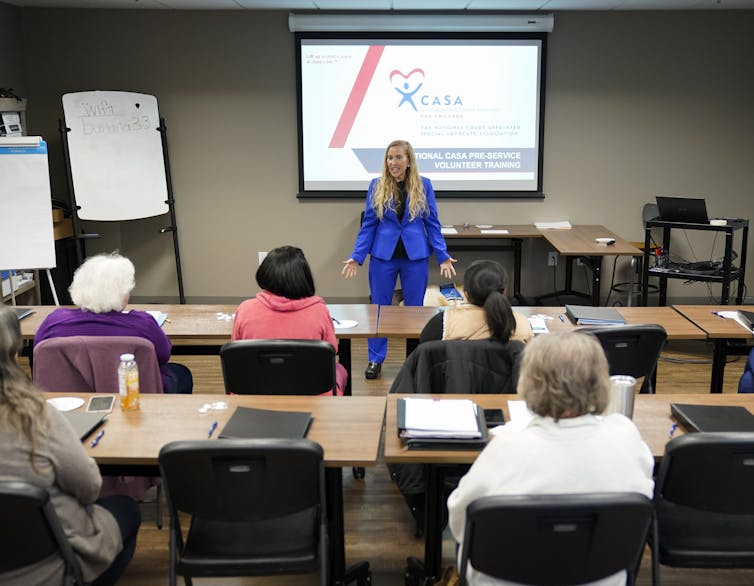
New volunteers get trained in Lexington, Ky., to help out at CASA of Lexington in April 2023. AP Photo/Joshua A. Bickel

Cal J. Halvorsen, Washington University in St. Louis and Seoyoun Kim, University of Michigan

As gerontologistssocial scientists who study aging populations – we envision a future in which older people leave a doctor’s visit with a prescription to go volunteer for something.

Does that sound far-fetched? There’s scientific research backing it up.

Good for your health

While spending more than a dozen years researching what happens when older adults volunteer with nonprofits, including churches, we’ve found that volunteers consider themselves to be in better health than their peers who don’t. In addition, their blood pressure is lower, and they appear to be aging more slowly than other people of the same age.

Other researchers have found that volunteering is associated with a lower risk of having a heart attack.

The mental health benefits are just as striking.

Volunteering is tied to having fewer symptoms of depression and being more satisfied with your life. It often brings an instant boost in mood – along with a deeper sense of meaning and purpose.

Even engaging in what’s known as “informal helping” – lending a hand to friends, neighbors or community members in need, without getting paid or participating in an organized program – can help you in similar ways.

There are also health benefits for those who start volunteering much earlier in life.

Children and teens who volunteer tend to have better health and lower levels of anxiety and fewer behavioral problems than those who don’t volunteer.

Changing demographics

The number of U.S. adults at least 62 years old – the earliest age at which you can claim Social Security retirement benefits – has grown by nearly 35 million since 2000, while the number of children and teens under 18 has fallen by nearly 1.5 million. There are now about 76 million Americans over 62 and 71 million under 18.

This change has been gradual. Following a long-term demographic shift, record numbers of Americans are reaching retirement age.

Benefits for society and the economy

The benefits of volunteering aren’t just for the volunteers themselves.

The total value of the hours of unpaid work volunteers put in totals an estimated US$170 billion each year, according to AmeriCorps, the federal agency focused on national and community service.

And participating in community service programs can lead to better job prospects for volunteers, that same agency has found.

AmeriCorps Seniors, which focuses on engaging volunteers ages 55 and older, runs programs that offer major benefits to their communities. These include the Foster Grandparent program, which connects older adult mentors to children, and the Senior Companion program, which connects volunteers to older adults seeking some help to continue living independently in their own homes.

A current AmeriCorps Seniors pilot program is helping adults 55 and up, who can have more trouble landing new jobs than younger people, gain new job skills through their community service.

People of all ages can get together through volunteering. Some organizations intentionally encourage this kind of intergenerational cooperation, including CoGenerate and Generations United.

Rebuilding communities

Researchers have also found that volunteering may increase trust within a community, especially when it brings together people from different backgrounds.

It can strengthen “social cohesion,” a term researchers use to describe how much people bond and help each other, and reduce prejudice.

Volunteers’ views on social issues may change through their work, too: More than 4 in 5 adults over 55 who tutored public school students to strengthen their reading skills in the national Experience Corps program, for example, stated that their views on public education evolved as a result. Those volunteers expressed more support for public education and said they’d be more likely to vote in favor of spending on schools.

An American pastime

Our findings are backed by science, but they also have roots in American history.

Alexis de Tocqueville – a French philosopher and diplomat who arrived in the United States in 1831 to study the new nation’s penal system – was so impressed by the scale of volunteering in the U.S. that he wrote about it in his 1835 book “Democracy in America.”

Tocqueville observed that “Americans of all ages, all conditions, all minds” were likely to unite in many kinds of groups or associations.

More recently, former U.S. Surgeon General Vivek Murthy has said that volunteering can strengthen communities, and that “community is a powerful source of life satisfaction and life expectancy.”

If you aren’t volunteering today, here are a few ideas to help you begin.

Start small. Try joining an organization or association in your community, taking part in neighborhood cleanups or volunteering at your local senior center, animal shelter or museum. Love gardening? You can take care of local parks, conservation areas, community gardens and more.

Once you’re ready for a bigger commitment, consider becoming a mentor through programs such as OASIS Intergenerational Tutoring or Big Brothers Big Sisters.

And consider a more extensive level of commitment to organizations or causes you care deeply about. This might include joining a nonprofit board of directors, volunteering more hours, or taking on a volunteer leadership role.

At a time when trust is eroding and divisions seem insurmountable, volunteering offers something rare: an evidence-backed way to reconnect with communities, institutions and each other.

Reach out to your favorite nonprofit, visit Volunteer.gov or VolunteerMatch.org, or connect with a nonprofit resource center, a regional United Way or a community foundation to find volunteer opportunities near you.

Cal J. Halvorsen, Associate Professor of Social Work, Washington University in St. Louis and Seoyoun Kim, Associate adjunct of Sociology, University of Michigan

This article is republished from The Conversation under a Creative Commons license. Read the original article.

ooOOoo

The challenge is I no longer have a driver’s license. Plus Jean has Parkinson’s Disease. But if there is a way to overcome these obstacles and doing some volunteering then that would be a very positive way ahead.

My dear friend, Richard.

Richard’s funeral was last Thursday.

Julie, his partner, sent me the Order of Service, held on the 20th, that I have published on LfD today.

(Click on the link to see the complete Order.)

UPDATE: Here is the service, sent to me on Sunday by Julie.

ooooo

In Loving Memory and to 

Celebrate the Life of

Richard Julian Maugham

28th October 1946 – 9th February 2025

————–

Entrance Music – 

Theme from Out of Africa (Flying Scene)

By John Barry

——————–

A very warm welcome as we unite in both love and friendship to say, not just goodbye, but more importantly to pay tribute and to celebrate the life of Richard Julian Maugham.

———————-

Richard was a true character, one of a kind, sociable, funny and a wonderful raconteur who led a varied and interesting life which we will hear more about shortly but even then, we will barely scratch the surface of all he was, but I hope when you leave here this afternoon that you will do so with a real sense of having shared in something special, for a friendly, popular and unique individual.

——————-

Reflection Music

We start today by playing a song from one of Richard’s favourite bands The Eagle’s, please sit back, listen and enjoy – ‘It’s Your World Now’ 

——————

Eulogy

The word Eulogy refers to a tribute of somebody’s life and it’s a pleasure for me share these words on behalf of Richard’s family and friends.

Richard was welcomed into this world on 28th October 1946 to parents Phylis and Lesley, born in Chiswick he would join his elder sister Vivienne who aged 4 was quizzed if she would prefer a brother or sister, prompting her response ‘I don’t really mind as long as it’s NOT a boy!’

But fortunately, it didn’t matter as Richard and Vivienne forged a wonderful relationship over the years and although not spending a lot of time together early on, Vivienne has such fond memories of cycling together with a picnic to the local swimming pool and also their cycle trips out with their dad too, Vivienne still recalls seeing Richard with his legs pedalling rapidly as he sped across the ground on the popular child’s bike of that era nicknamed the ‘fairycycle’.  

They both appreciated their safe and secure upbringing enjoying quiet Christmas’s together with a few close relatives and even when their paths took them in different directions, they remained good friends with a great rapport and comfortable in each other’s company. Richard was always very fond of his sister but also couldn’t wait for her to get married and leave home so he could inherit her bedroom however after waiting patiently for this happen his plan was scuppered when his grandma moved in instead! This gave Vivienne a little chuckle at the time having been pestered constantly to tie the knot.

Growing up in Twickenham, Richard passed his eleven plus with ease and attended the best Boy’s Grammer School in the area which would certainly hold him in good stead throughout his career, Richard was sharp as a knife, a confident lad and already showing signs of having the gift of the gab plus a real knack of making friends, with some of you here today as his lifelong friends for over 65 years namely Ken and Robin who formed part of the group known as the Young Pretenders, all meeting annually in the summer for the past 30 years and to Richard this was a very important and a valued friendship group that he held with a great deal of affection. 

Richard’s career path would typify his character a hard worker, charming, good with people and a fantastic communicator but the ideal person equipped to give us the best insight into Richard’s background is one of his best friends Tony, who shared these wonderful memories with me about the various sides to Richard having meet him in 1968 when working together in the Olivetti Sales and Management Training Centre in Haslemere. Tony was there to replace Richard or Dick as he was known then and to create a smooth transition within the workplace. But little did anyone know just what an impact this would have on the 2 of them and their future as friends, Tony for the first 3 months or so watched his every move, listened to his advice and even copied his jokes especially as they both shared the same sense of humour! Tony mused that Richard was your true dapper gentlemen, always extremely smartly dressed and often took on the role as Tony’s personal shopper, costing Tony a fortune in the process but it ensured he looked the part too, ready for their many nights out in Guildford or Haslemere and needless to say with that gift of the gab again, his looks and witty personality they had some memorable and extremely fun times through the years, Tony even recalls the time they attended the Cannes Film Festival, staying in a slightly sleazy apartment they nevertheless donned their best evening suits and walked the red carpet, a treasured memory.

This chance meeting at Olivetti really was the start of something very special, even when Richard went off to become a manager in Croydon and his career took him on a different pathway via some office supplies companies, a spell in Oman in the Middle East which certainly left an impression on him and onto roles in the car industry with Audi and VW as part of the Inchcape Group, Tony will forever remember the fond memories of their shared flats, shared holidays, shared clothing  and a shared love of being just little rascals when together, so as you can imagine Tony was beyond proud when Richard asked him to be his Best Man when he married Jane in 1986, returning the compliment when Tony married as well some years later.

But Tony wasn’t the only lifelong friend that Richard would make during his salesmen years, for in 1982, whilst both selling the Commodore ‘PET’, he would encounter a fellow salesman, Paul, meeting in the Petjet, the private small jet owned by Jack Tramiel, the CEO of Commodore, they hit it off immediately while travelling to the Hannover International Fair.

Richard and Paul took the pilots out for dinner that evening which inspired Paul to start gliding and later power flying, Richard flew on many occasions with Paul, as both being members of a private aircraft club, they would often hire a plane to fly to Jersey or Scotland but one memorable flight was their trip to visit Tony, who had recently relocated to South West France, flying to Bergerac airport they stayed a few nights enjoying Tony’s hospitality before flying back home. 

Richard by now had also developed a passion for all things aeronautical, often visiting air shows in later years and was visibly moved to tears whilst witnessing a Spitfire fly past when attending a Remembrance celebration at Seagry near Chippenham, a very special moment for him.

Paul’s friendship with Richard would continue to grow, living in Oregon now, he still recalls that meeting Richard in the way he did gave him a gift that he has treasured forevermore and a cherished relationship that also included meeting The Prince of Wales, this whilst both volunteering for the Prince’s Trust Charity where they helped many young people start their own businesses, one in particular being a gardening venture which Richard being the type of generous person he was duly employed the appreciative couple to work on his own garden, cementing Richard’s thoughtful and helpful approach to others.

Working until he was 77 years old, Richard will always be known as a hard worker, a great salesman, a fantastic speaker and presenter who was highly thought off across all his companies he graced but it was never all work and no play for Richard, helped by being a self-confessed petrol head, not only from working in the trade but also from the pure joy he experienced in his leisure pastimes with his passion for cars, watching the Monaco Grand Prix with a friend in the 70’s to his own Ferrari and Formula 3 Race Track Driving Experiences that he absolutely adored were just 2 of his highlights, as well as owning a MGB and Porsche that he loved. 

Approaching his 60’s, Richard would also find love again, introduced by a friend, he met a lovely lady, Julie who subsequently relocated to Wiltshire to be with Richard. They would also go on to purchase a property in South West France to renovate, named Mason DeFrere which was once part of a Friary, used by the monks to study and pray whilst it was also located not far from his friend Tony and his wife Caroline, travelling regularly to France they enjoyed many good times, strolling around the markets and spending quality time as a foursome together. 

Richard and Julie also enjoyed a shared love of music, at times Richard could be moved to tears demonstrating a real sensitive side to him not often seen but he could lose himself to the tunes of The Eagles or Hollies and seeing live music from the likes of Fleetwood Mac, Eric Clapton, Tony Bennett, Simply Red and Billy Joel are particular fond memories for Julie. 

Julie appreciated Richard’s sharp wit which was often fuelled by his love of the radio programme recently chaired by Jack Dee called ‘I’m sorry I haven’t a clue’, he would cry with laughter and often use the one liners himself to entertain his friends, he was an out and out ‘wordsmith’ loving his crosswords and an avid reader of the humorous dictionary ‘Meaning of Liff’ which again would have him in stitches and characterised his sense of humour perfectly.

Richard and Julie relocated to Essex to be closer to her son and grandchildren but Richard’s heart always remained in Wiltshire so a decision was made for him to return and continue to spend time with his friends, he had always professed that his Parkinson diagnosis would not define him but as the time moved on and following a fall, he was very much grateful to his wonderful friends Gillie and Colin who visited every other day and remained by his side as he sadly lost his battle last month.

We have lost a truly respected and loved man who gave so much to so many and lived a full life surrounded by people who cared for him, so we can be comforted in the knowledge that he has left us all with some treasured memories of time spent in his company.  

Thank you, Richard 

——————–

Reflection Music

How we love by Beth Neilson Chapman

We have shared some lovely memories and I have no doubt you will all have you own personal memories from times spent with Richard, we would now like to give you a little time to reflect on those while we listen to a lovely tune by Beth Neilson Chapman

——————

Poem

I would now like to share a poem chosen by Julie especially for today’s service and dedicated to Richard and his love of aviation – 

High Flight

Oh! I have slipped the surly bonds of Earth

And danced the skies on laughter-silvered wings;

Sunward I’ve climbed, and joined the tumbling mirth of sun-split clouds – and done a hundred things you have not dreamed of—wheeled and soared and swung high in the sunlit silence.

Hov’ring there, I’ve chased the shouting wind along, and flung my eager craft through footless halls of air ….

Up, up the long, delirious, burning blue

I’ve topped the wind-swept heights with easy grace

Where never lark, or even eagle flew—

And, while with silent lifting mind I’ve trod

The high untrespassed sanctity of space,

Put out my hand, and touched the face of God.

——————-

Tributes

I would now like to invite Ken and Robin to share their tributes to their special friend while we hear in the background a popular song of Richard’s by The Hollies

——————

Farewell

“We are all visitors to this time, this place. We are just passing through. Our purpose here is to observe, to learn, to grow, to love…and then we return home.”

Richard, we have heard the impact that you had on so many people. Your character, humour and individuality that were so much a feature of your life will live on in our memories and create a beautiful legacy of love for your family and friends for much longer than the acute desolation we are feeling here today. 

Richard it is with such sadness we say goodbye to you, but we thank you so much for every little gift you have contributed to this life.

But most of all we thank you for your love and for your friendship; your warmth and care, and for your kind and humble heart.

We thank you Richard for everything you were and all that you gave, and may you now forever rest in peace with the certain knowledge that you were, are, and will always be, dearly loved and terribly missed. 

Farewell Richard Farewell

——————

“Always remember you matter, you’re important and you are loved, and you bring to this world things no one else can.”   

——————–

Exit Music

Don’t Stop Thinking About Tomorrow 

By Fleetwood Mac

oooo

Now a selection of my photos.

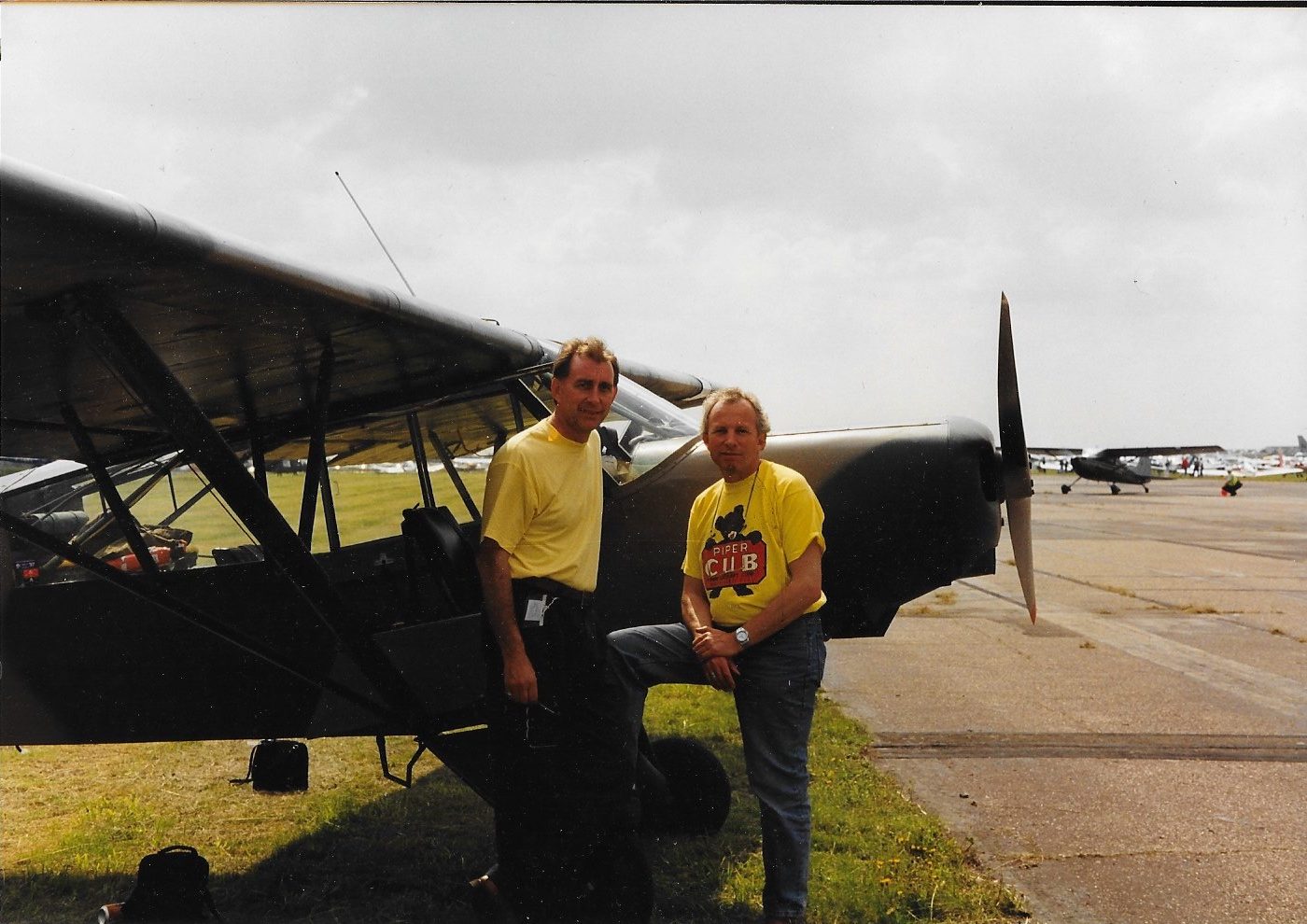
Richard and me by the Piper Super Cub, registration R151.

oooo

Richard and Alex, my son, in front of G-BPAS, a TB20, at another air show.

oooo

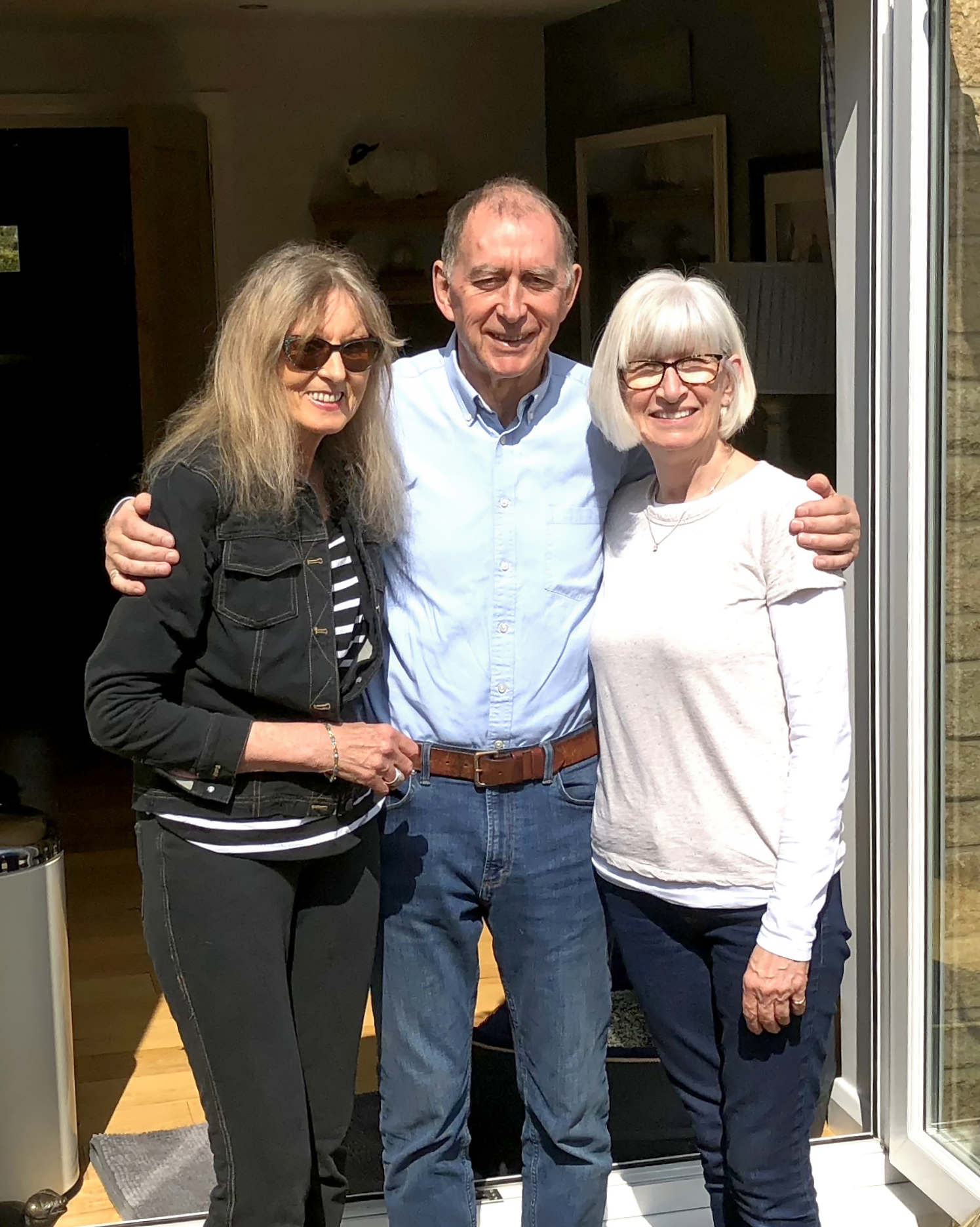
Jeannie, Richard and Julie.

oooo

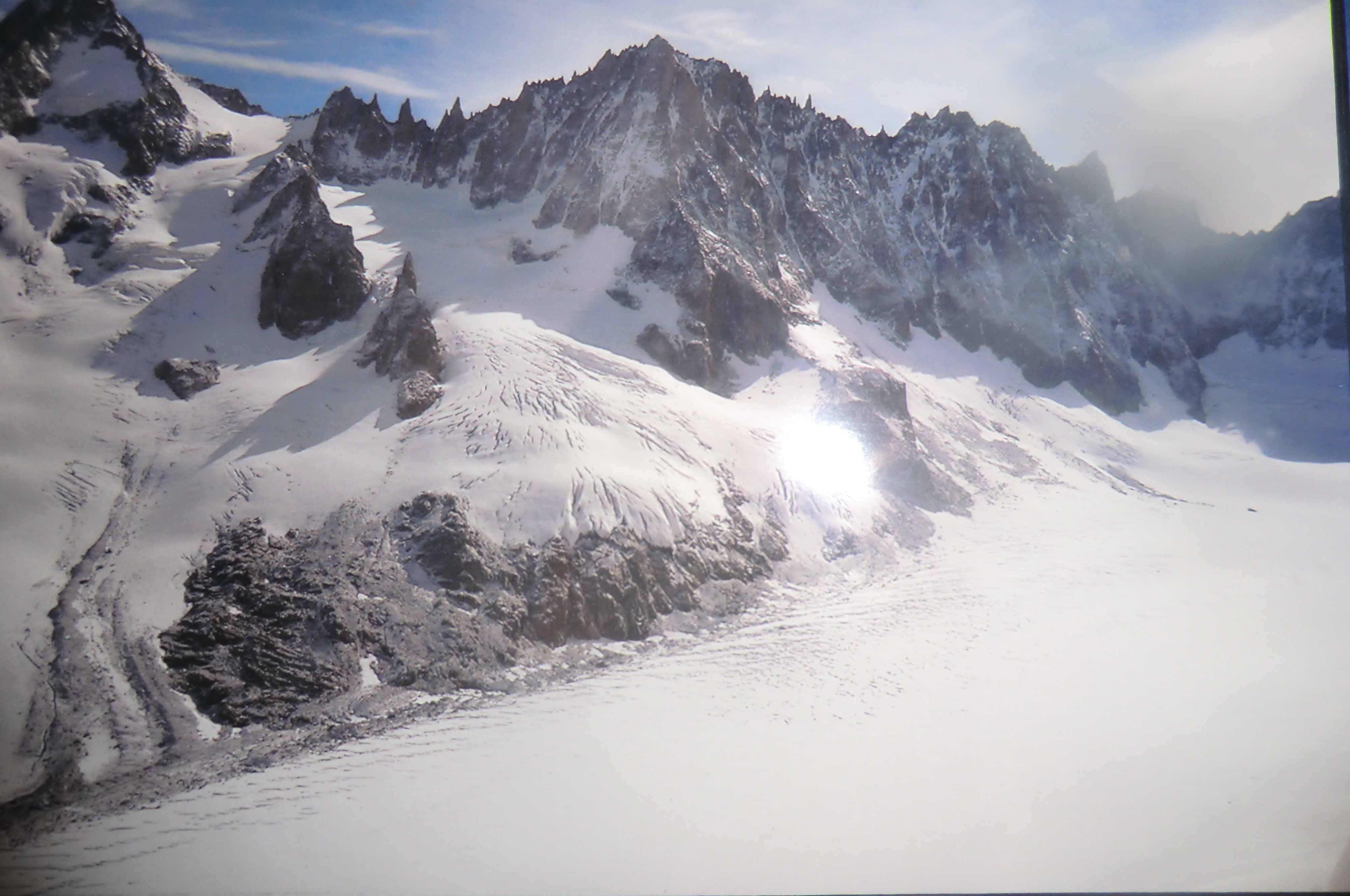
R151 taking me and Richard to see Mont Blanc. It was the 25th August, 2006.

oooo

Another view of the same valley; again the 25th August, 2006.

oooo

The final photograph of Richard and me meeting the then Prince of Wales.

Background to the friendship.

(Previously published on LfD.)

I first met Richard Maugham when we were being treated to a private jet flight to the Hannover International Fair in 1982, some 43 years ago. We were both English and I was living in Tollesbury, Essex, near Colchester and Richard living near Ealing, West London.

The common thread was that all the passengers were major sellers of the Commodore ‘PET’.

Richard and I hit it off straight away. Richard was a fellow salesman. I was ex-IBM Office Products Division and Richard was ex-Olivetti.

Both of us also volunteered for the Prince’s Youth Business Trust, a charity headed by Prince of Wales, as he was then, helping young people start their own business.

My tribute to Richard who will always be missed.

The US decline in butterflies

The natural world is quite remarkable!

This article was published in The Conversation last Thursday, the 6th March, 2025.

Where we live in rural Southern Oregon is glorious and photos of our locale have been published before. However, I wanted to share this article with you all.

ooOOoo

Butterflies declined by 22% in just 2 decades across the US – there are ways you can help save them

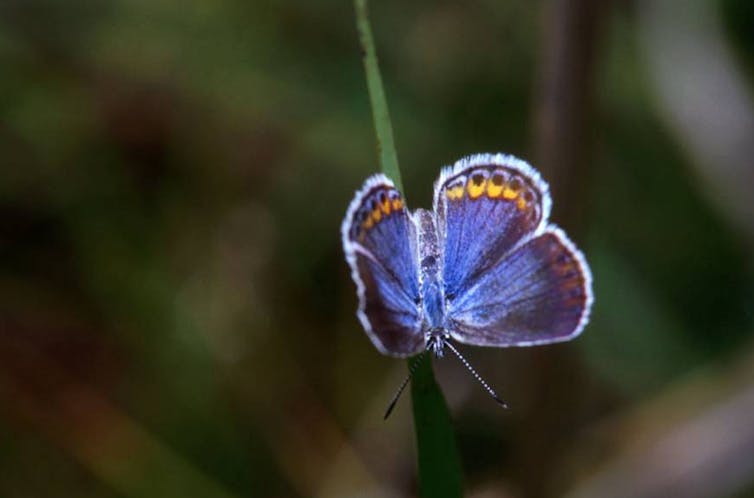
The endangered Karner blue butterfly has struggled with habitat loss. U.S. Fish and Wildlife Service

Eliza Grames, Binghamton University, State University of New York

If the joy of seeing butterflies seems increasingly rare these days, it isn’t your imagination.

From 2000 to 2020, the number of butterflies fell by 22% across the continental United States. That’s 1 in 5 butterflies lost. The findings are from an analysis just published in the journal Science by the U.S. Geological Survey’s Powell Center Status of Butterflies of the United States Working Group, which I am involved in.

We found declines in just about every region of the continental U.S. and across almost all butterfly species.

Overall, nearly one-third of the 342 butterfly species we were able to study declined by more than half. Twenty-two species fell by more than 90%. Only nine actually increased in numbers.

An orange butterfly with black webbing and spots sits on a purple flower.
West Coast lady butterflies range across the western U.S., but their numbers have dropped by 80% in two decades. Renee Las Vegas/Wikimedia Commons, CC BY

Some species’ numbers are dropping faster than others. The West Coast lady, a fairly widespread species across the western U.S., dropped by 80% in 20 years. Given everything we know about its biology, it should be doing fine – it has a wide range and feeds on a variety of plants. Yet, its numbers are absolutely tanking across its range.

Why care about butterflies?

Butterflies are beautiful. They inspire people, from art to literature and poetry. They deserve to exist simply for the sake of existing. They are also important for ecosystem function.

Butterflies are pollinators, picking up pollen on their legs and bodies as they feed on nectar from one flower and carrying it to the next. In their caterpillar stage, they also play an important role as herbivores, keeping plant growth in check.

A closeup of a caterpillar eating a leaf.
A pipevine swallowtail caterpillar munches on leaves at Brookside Gardens in Wheaton, Md. Herbivores help keep plant growth in check. Judy Gallagher/Wikimedia Commons, CC BY

Butterflies can also serve as an indicator species that can warn of threats and trends in other insects. Because humans are fond of butterflies, it’s easy to get volunteers to participate in surveys to count them.

The annual North American Butterfly Association Fourth of July Count is an example and one we used in the analysis. The same kind of nationwide monitoring by amateur naturalists doesn’t exist for less charismatic insects such as walking sticks.

What’s causing butterflies to decline?

Butterfly populations can decline for a number of reasons. Habitat loss, insecticides, rising temperatures and drying landscapes can all harm these fragile insects.

A study published in 2024 found that a change in insecticide use was a major factor in driving butterfly declines in the Midwest over 17 years. The authors, many of whom were also part of the current study, noted that the drop coincided with a shift to using seeds with prophylactic insecticides, rather than only spraying crops after an infestation.

The Southwest saw the greatest drops in butterfly abundance of any region. As that region heats up and dries out, the changing climate may be driving some of the butterfly decline there. Butterflies have a high surface-to-volume ratio – they don’t hold much moisture – so they can easily become desiccated in dry conditions. Drought can also harm the plants that butterflies rely on.

Only the Pacific Northwest didn’t lose butterfly population on average. This trend was largely driven by an irruptive species, meaning one with extremely high abundance in some years – the California tortoiseshell. When this species was excluded from the analyses, trends in the Pacific Northwest were similar to other regions.

A butterfly on a leaf
The California tortoiseshell butterfly can look like wood when its wings are closed, but they’re a soft orange on the other side. Walter Siegmund/Wikimedia Commons, CC BY-SA

When we looked at each species by its historical range, we found something else interesting.

Many species suffered their highest losses at the southern ends of their ranges, while the northern losses generally weren’t as severe. While we could not link drivers to trends directly, the reason for this pattern might involve climate change, or greater exposure to agriculture with insecticides in southern areas, or it may be a combination of many stressors.

There is hope for populations to recover

Some butterfly species can have multiple generations per year, and depending on the environmental conditions, the number of generations can vary between years.

This gives me a bit of hope when it comes to butterfly conservation. Because they have such short generation times, even small conservation steps can make a big difference and we can see populations bounce back.

The Karner blue is an example. It’s a small, endangered butterfly that depends on oak savannas and pine barren ecosystems. These habitats are uncommon and require management, especially prescribed burning, to maintain. With restoration efforts, one Karner blue population in the Albany Pine Bush Preserve in New York rebounded from a few hundred individuals in the early 1990s to thousands of butterflies.

Similar management and restoration efforts could help other rare and declining butterflies to recover.

What you can do to help butterflies recover

The magnitude and rate of biodiversity loss in the world right now can make one feel helpless. But while national and international efforts are needed to address the crisis, you can also take small actions that can have quick benefits, starting in your own backyard.

Butterflies love wildflowers, and planting native wildflowers can benefit many butterfly species. The Xerces Society for Invertebrate Conservation has guides recommending which native species are best to plant in which parts of the country. Letting grass grow can help, even if it’s just a strip of grass and wildflowers a couple of feet wide at the back of the yard.

Butterflies on wildflowers in a small garden.
A patch of wildflowers and grasses can become a butterfly garden, like this one in Townsend, Tenn. Chris Light, CC BY-SA

Supporting policies that benefit conservation can also help. In some states, insects aren’t considered wildlife, so state wildlife agencies have their hands tied when it comes to working on butterfly conservation. But those laws could be changed.

The federal Endangered Species Act can also help. The law mandates that the government maintain habitat for listed species. The U.S. Fish and Wildlife Service in December 2024 recommended listing the monarch butterfly as a threatened species. With the new study, we now have population trends for more than half of all U.S. butterfly species, including many that likely should be considered for listing.

With so many species needing help, it can be difficult to know where to start. But the new data can help concentrate conservation efforts on those species at the highest risk.

I believe this study should be a wake-up call about the need to better protect butterflies and other insects – “the little things that run the world.”

Eliza Grames, Assistant Professor of Biological Sciences, Binghamton University, State University of New York

This article is republished from The Conversation under a Creative Commons license. Read the original article.

ooOOoo

Thank you, Eliza, for promoting this article.

If only one person is inspired to make the changes Eliza recommends then republishing this article has been a success.

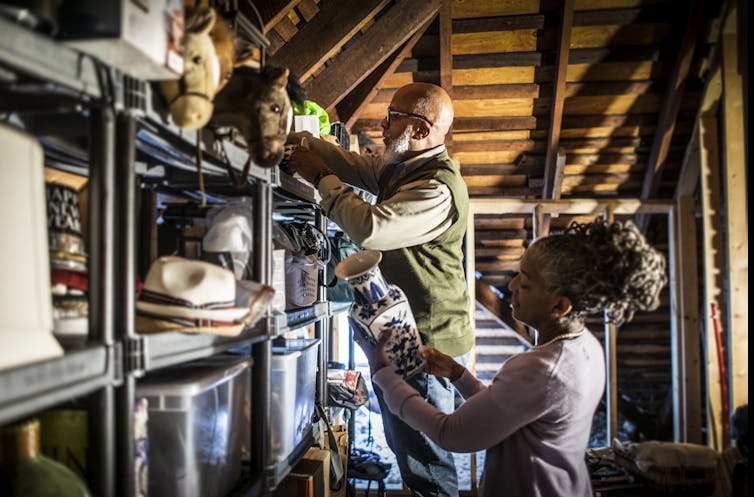
An article on decluttering

And it isn’t all that one might expect!

Jeannie and I are at opposite ends of the scale, so to speak. The older I get the more I want everything in the same place, primarily because I cannot remember where I previously put something.

Jeannie loves putting stuff anywhere because she can recall where it is!

So an article in The Conversation was fascinating.

ooOOoo

Decluttering can be stressful − a clinical psychologist explains how personal values can make it easier

Asking how discarding an item fits with a person’s goals can help them decide whether to keep it. MoMo Productions via Getty Images

Mary E. Dozier, Mississippi State University

I recently helped my mom sort through boxes she inherited when my grandparents passed away. One box was labeled – either ironically or genuinely – “toothpick holders and other treasures.” Inside were many keepsakes from moments now lost to history – although we found no toothpick holders.

My favorite of the items we sorted through was a solitary puzzle piece, an artifact reflecting my late grandmother’s penchant for hiding the final piece to a jigsaw puzzle just to swoop in at the last moment and finish it.

After several hours of reminiscing, my mom and I threw away 90% of what we had sorted.

“Why did I keep this?” is a question I hear frequently, both from my family and friends and from patients. I am a licensed clinical psychologist whose research focuses on the characterization, assessment and treatment of hoarding disorder, particularly for adults 60 years of age or older. As such, I spend a great deal of my time thinking about this question.

What drives the need to keep stuff?

Hoarding disorder is a psychiatric condition defined by urges to save items and difficulty discarding current possessions. For adults with “clinically severe” hoarding disorder, this leads to a level of household clutter that impairs daily functioning and can even create a fire hazard. In my professional experience, however, many adults struggle with clutter even if they do not meet the clinical criteria for hoarding disorder.

Holding on to things that have sentimental value or could be useful in the future is a natural part of growing older. For some people, though, this tendency to hold on to objects grows over time, to the point that they eventually do meet criteria for hoarding disorder. Age-related changes in executive function may help explain the increase in prevalence of hoarding disorder as we get older; increasing difficulty with decision-making in general also affects decisions around household clutter.

The traditional model behind hoarding disorder suggests that difficulty with discarding comes from distress during decision-making. However, my research shows that this may be less true of older adults.

When I was a graduate student, I conducted a study in which we asked adults with hoarding disorder to spend 15 minutes making decisions about whether to keep or discard various items brought from their home. Participants could sort whatever items they wanted. Most chose to sort paper items such as old mail, cards or notes.

We found that age was associated with lower levels of distress during the task, such that participants who were older tended to feel less stressed when making the decision about what to keep and what to discard. We also found that many participants, particularly those who were older, actually reported positive emotions while sorting their items.

In new research publishing soon, my current team replicated this finding using a home-based version of the task. This suggests that fear of making the wrong decision isn’t a universal driver of our urge to save items.

In fact, a study my team published in August 2024 with adults over 50 with hoarding disorder suggests that altruism, a personality trait of wanting to help others, may explain why some people keep items that others might discard. My colleagues and I compared our participants’ personality profiles with that of adults in the general population of the same gender and age group. Compared with the general population, participants with hoarding disorder scored almost universally high on altruism.

Altruism also comes up frequently in my clinical work with older adults who struggle with clutter. People in our studies often tell me that they have held onto something out of a sense of responsibility, either for the item itself or to the environment.

“I need it to go to a good home” and “my grandmother gave this to me” are sentiments we commonly hear. Thus, people may keep things not out of fear of losing them but because saving them is consistent with their values. https://www.youtube.com/embed/JNVjPM1cIbg?wmode=transparent&start=0 Your values can help guide which possessions should stay in your life and which ones should go.

Leaning into values

In a 2024 study, my team demonstrated that taking a values-based approach to decluttering helps older adults to decrease household clutter and increases their positive affect, a state of mind characterized by feelings such as joy and contentment. Clinicians visited the homes of older adults with hoarding disorder for one hour per week for six weeks. At each visit, the clinicians used a technique called motivational interviewing to help participants talk through their decisions while they sorted household clutter.

We found that having participants start with identifying their values allowed them to maintain focus on their long-term goals. Too often, people focus on the immediate ability of an object to “spark joy” and forget to consider whether an object has greater meaning and purpose. Values are the abstract beliefs that we humans use to create our goals. Values are whatever drives us and can include family, faith or frivolity.

Because values are subjective, what people identify as important to keep is also subjective. For example, the dress I wore to my sister’s wedding reminded me of a wonderful day. However, when it no longer fit I gave it away because doing so was more consistent with my values of utility and helpfulness: I wanted the dress to go to someone who needed it and would use it. Someone who more strongly valued family and beauty might have prioritized keeping the dress because of the aesthetics and its link to a family event.

Additionally, we found that instead of challenging the reasons a person might have for keeping an item, it is helpful to instead focus on eliciting their reasons for discarding it and the goals they have for their home and their life.

Tips for sweeping away the old

My research on using motivational interviewing for decluttering and my observations from a current clinical trial on the approach point to some practical steps people can take to declutter their home. Although my work has been primarily with older adults, these tips should be helpful for people of all ages.

Start with writing out your values. Every object in your home should feel value-consistent for you. For example, if tradition and faith are important values for you, you might be more inclined to hold onto a cookbook that was made by the elders at your church and more able to let go of a cookbook you picked up on a whim at a bookstore.

If, instead, health and creativity are your core values, it might be more important to hold onto a cookbook of novel ways to sneak more vegetables into your diet.

Defining value-consistent goals for using your space can help to maintain motivation as you declutter. Are you clearing off your desk so you can work more efficiently? Making space on kitchen counters to bake cookies with your grandchildren?

Remember that sometimes your values will conflict. At those moments, it may help to reflect on whether keeping or discarding an object will bring you closer to your goals for the space.

Similarly, remember that values are subjective. If you are helping a loved one declutter, maintain a curious, nonjudgmental attitude. Where you might see a box filled with junk, your grandmother might see something filled with “toothpick holders and other treasures.”

For additional resources and information on hoarding disorder, visit the International OCD Foundation website.

Mary E. Dozier, Assistant Professor of Psychology, Mississippi State University

This article is republished from The Conversation under a Creative Commons license. Read the original article.

ooOOoo

Prof. Mary Dozier makes some powerful, and cogent, statements in this article. Especially that one’s values are subjective. Nevertheless, I think I should write out my values and see what they tell me.

Our human language!

Namely a universal law.

I was attracted to an article that I read in The Conversation last a week ago.

It also taught me that we humans speak according to Zipf’s Law. I had not previously heard of this law.

So let me republish the article with the full permission of The Conversation.

ooOOoo

Whalesong patterns follow a universal law of human language, new research finds

A humpback whale mother and calf on the New Caledonian breeding grounds. Mark Quintin

Jenny Allen, Griffith University; Ellen Garland, University of St Andrews; Inbal Arnon, Hebrew University of Jerusalem, and Simon Kirby, University of Edinburgh

All known human languages display a surprising pattern: the most frequent word in a language is twice as frequent as the second most frequent, three times as frequent as the third, and so on. This is known as Zipf’s law.

Researchers have hunted for evidence of this pattern in communication among other species, but until now no other examples have been found.

In new research published today in Science, our team of experts in whale song, linguistics and developmental psychology analysed eight years’ of song recordings from humpback whales in New Caledonia. Led by Inbal Arnon from the Hebrew University, Ellen Garland from the University of St Andrews, and Simon Kirby from the University of Edinburgh, We used techniques inspired by the way human infants learn language to analyse humpback whale song.

We discovered that the same Zipfian pattern universally found across human languages also occurs in whale song. This complex signalling system, like human language, is culturally learned by each individual from others.

Learning like an infant

When infant humans are learning, they have to somehow discover where words start and end. Speech is continuous and does not come with gaps between words that they can use. So how do they break into language?

Thirty years of research has revealed that they do this by listening for sounds that are surprising in context: sounds within words are relatively predictable, but between words are relatively unpredictable. We analysed the whale song data using the same procedure.

Photo of a humpback whale breaching from the water.
A breaching humpback whale in New Caledonia. Operation Cetaces

Unexpectedly, using this technique revealed in whale song the same statistical properties that are found in all languages. It turns out both human language and whale song have statistically coherent parts.

In other words, they both contain recurring parts where the transitions between elements are more predictable within the part. Moreover, these recurring sub-sequences we detected follow the Zipfian frequency distribution found across all human languages, and not found before in other species.

Whale song recording (2017) Operation Cetaces 916 KB (download)

A chart showing the different frequencies of sound in whale song.
Close analysis of whale song revealed statistical structures similar to those found in human language. Operation Cetaces

How do the same statistical properties arise in two evolutionarily distant species that differ from one another in so many ways? We suggest we found these similarities because humans and whales share a learning mechanism: culture.

A cultural origin

Our findings raise an exciting question: why would such different systems in such incredibly distant species have common structures? We suggest the reason behind this is that both are culturally learned.

Cultural evolution inevitably leads to the emergence of properties that make learning easier. If a system is hard to learn, it will not survive to the next generation of learners.

There is growing evidence from experiments with humans that having statistically coherent parts, and having them follow a Zipfian distribution, makes learning easier. This suggests that learning and transmission play an important role in how these properties emerged in both human language and whale song.

So can we talk to whales now?

Finding parallel structures between whale song and human language may also lead to another question: can we talk to whales now? The short answer is no, not at all.

Our study does not examine the meaning behind whale song sequences. We have no idea what these segments might mean to the whales, if they mean anything at all.

Photo of whale backs and tails visible above the surface of the sea.
A competitive pod of humpback whales on the New Caledonian breeding grounds. Operation Cetaces

It might help to think about it like instrumental music, as music also contains similar structures. A melody can be learned, repeated, and spread – but that doesn’t give meaning to the musical notes in the same way that individual words have meaning.

Next up: birdsong

Our work also makes a bold prediction: we should find this Zipfian distribution wherever complex communication is transmitted culturally. Humans and whales are not the only species that do this.

We find what is known as “vocal production learning” in an unusual range of species across the animal kingdom. Song birds in particular may provide the best place to look as many bird species culturally learn their songs, and unlike in whales, we know a lot about precisely how birds learn song.

Equally, we expect not to find these statistical properties in the communication of species that don’t transmit complex communication by learning. This will help to reveal whether cultural evolution is the common driver of these properties between humans and whales.

Jenny Allen, Postdoctoral research associate, Griffith University; Ellen Garland, Royal Society University Research Fellow, School of Biology, University of St Andrews; Inbal Arnon, Professor of Psychology, Hebrew University of Jerusalem, and Simon Kirby, Professor of Language Evolution, University of Edinburgh

This article is republished from The Conversation under a Creative Commons license. Read the original article.

ooOOoo

The research scientists have led to a prediction: … we should find this Zipfian distribution wherever complex communication is transmitted culturally. Humans and whales are not the only species that do this.

Fascinating!

Nutrition advice

An article on educating us on avoiding misinformation.

Many articles on nutrition are full of errors and for the lay person there’s no easy way to understand what is correct, or not.

That’s why a recent article appealed to me and I thought it worth sharing.

ooOOoo

Nutrition advice is rife with misinformation − a medical education specialist explains how to tell valid health information from pseudoscience

If a health claim about a dietary intervention sounds too good to be true, it probably is. Mizina/iStock via Getty Images Plus

Aimee Pugh Bernard, University of Colorado Anschutz Medical Campus

The COVID-19 pandemic illuminated a vast landscape of misinformation about many topics, science and health chief among them.

Since then, information overload continues unabated, and many people are rightfully confused by an onslaught of conflicting health information. Even expert advice is often contradictory.

On top of that, people sometimes deliberately distort research findings to promote a certain agenda. For example, trisodium phosphate is a common food additive in cakes and cookies that is used to improve texture and prevent spoilage, but wellness influencers exploit the fact that a similarly named substance is used in paint and cleaning products to suggest it’s dangerous to your health.

Such claims can proliferate quickly, creating widespread misconceptions and undermining trust in legitimate scientific research and medical advice. Social media’s rise as a news and information source further fuels the spread of pseudoscientific views.

Misinformation is rampant in the realm of health and nutrition. Findings from nutrition research is rarely clear-cut because diet is just one of many behaviors and lifestyle factors affecting health, but the simplicity of using food and supplements as a cure-all is especially seductive.

I am an assistant professor specializing in medical education and science communication. I also train scientists and future health care professionals how to communicate their science to the general public.

In my view, countering the voices of social media influencers and health activists promoting pseudoscientific health claims requires leaning into the science of disease prevention. Extensive research has produced a body of evidence-based practices and public health measures that have consistently been shown to improve the health of millions of people around the world. Evaluating popular health claims against the yardstick of this work can help distinguish which ones are based on sound science.

A white person's hands holding a smartphone with screen showing a health app, next to a cup of coffee.
To parse pseudoscientific claims from sound advice about health and nutrition, it’s crucial to evaluate the information’s source. tadamichi/Getty Images

Navigating the terrain of tangled information

Conflicting information can be found on just about everything we eat and drink.

That’s because a food or beverage is rarely just good or bad. Instead, its health effects can depend on everything from the quantity a person consumes to their genetic makeup. Hundreds of scientific studies describe coffee’s health benefits and, on the flip side, its health risks. A bird’s-eye view can point in one direction or another, but news articles and social media posts often make claims based on a single study.

Things can get even more confusing with dietary supplements because people who promote them often make big claims about their health benefits. Take apple cider vinegar, for example – or ACV, if you’re in the know.

Apple cider vinegar has been touted as an all-natural remedy for a variety of ailments, including digestive issues, urinary health and weight management. Indeed, some studies have shown that it might help lower cholesterol, in addition to having other health benefits, but overall those studies have small sample sizes and are inconclusive.

Advocates of this substance often claim that one particular component of it – the cloudy sediment at the bottom of the bottle termed “the mother” – is especially beneficial because of the bacteria and yeast it contains. But there is no research that backs the claim that it offers any health benefits.

One good rule of thumb is that health hacks that promise quick fixes are almost always too good to be true. And even when supplements do offer some health benefits under specific circumstances, it’s important to remember that they are largely exempt from Food and Drug Administration regulations. That means the ingredients on their labels might contain more or less of the ingredients promised or other ingredients not listed, which can potentially cause harms such as liver toxicity.

It’s also important to keep in mind that the global dietary supplements industry is worth more than US$150 billion per year, so companies – and wellness influencers – selling supplements have a financial stake in convincing the public of their value.

Misinformation about nutrition is nothing new, but that doesn’t make it any less confusing.

How nutrition science gets twisted

There’s no doubt that good nutrition is fundamental for your health. Studies consistently show that a balanced diet containing a variety of essential nutrients can help prevent chronic diseases and promote overall well-being.

For instance, minerals such as calcium and iron support bone health and oxygen circulation in the blood, respectively. Proteins are essential for muscle repair and growth, and healthy fats, like those found in avocados and nuts, are vital for brain health.

However, pseudoscientific claims often twist such basic facts to promote the idea that specific diets or supplements can prevent or treat illness. For example, vitamin C is known to play a role in supporting the immune system and can help reduce the duration and severity of colds.

But despite assertions to the contrary, consuming large quantities of vitamin C does not prevent colds. In fact, the body needs only a certain amount of vitamin C to function properly, and any excess is simply excreted.

Companies sometimes claim their supplement is “scientifically proven” to cure illness or boost brain function, with no credible research to back it up.

Some companies overstate the benefits while underplaying the hazards.

For example, wellness influencers have promoted raw milk over pasteurized milk as a more natural and nutritious choice, but consuming it is risky. Unpasteurized milk can contain harmful bacteria that leads to gastrointestinal illness and, in some cases, much more serious and potentially life-threatening diseases such as avian influenza, or bird flu.

Such dietary myths aren’t harmless. Reliance on nutrition alone can lead to neglecting other critical aspects of health, such as regular medical checkups and lifesaving vaccinations.

The lure of dietary myths has led people with cancer to replace proven science-backed treatments, such as chemotherapy or radiation, with unproven and misleading nutrition programs.

How to spot less-than-solid science

Pseudoscience exploits your insecurities and emotions, taking advantage of your desire to live the healthiest life possible.

While the world around you may be uncertain and out of your control, you want to believe that at the very least, you have control over your own health. This is where the wellness industry steps in.

What makes pseudoscientific claims so confusing is that they use just enough scientific jargon to sound believable. Supplements or powders that claim to “boost immunity” often list ingredients such as adaptogens and superfoods. While these words sound real and convincing, they actually don’t mean anything in science. They are terms created by the wellness industry to sell products.

I’ve researched and written about reliable ways to distinguish science facts from false health claims. To stay alert and find credible information, I’d suggest you follow a few key steps.

First, check your emotions – strong emotional reactions, such as fear and anger, can be a red flag.

Next, check that the author has experience or expertise in the field of the topic. If they’re not an expert, they might not know what they are talking about. It’s always a good idea to make sure the source is reputable – ask yourself, would this source be trusted by scientists?

Finally, search for references that back up the information. If very little or nothing else exists in the science world to back up the claims, you may want to put your trust in a different source.

Following these steps will separate the facts from fake news and empower you to make evidence-based decisions.

Aimee Pugh Bernard, Assistant Professor of Immunology and Microbiology, University of Colorado Anschutz Medical Campus

This article is republished from The Conversation under a Creative Commons license. Read the original article.

ooOOoo

Sound advice for the majority of us!

Winter is here!

A lovely guest post from Pratyush S.

Pratyush has been very patient with me. He first contacted me regarding sending in a guest post many months ago. At first I thought it was a spam email and then realised that was a mistake. Then stuff my end got in the way, and so on.

But I’m delighted to publish this today, and should add that Pratyush is based in India!

ooOOoo

Winter is here — When you have a golden retriever at home.

Golden Retrievers are great family dogs with a lovely personality, good intelligence, and adaptability. Golden Retrievers are built for colder climates and have plenty of thick, insulating double coats to keep them warm; however, special considerations should still be taken in winter weather to promote the health, comfort, and happiness of your Golden. Below is a complete guide outlining things to be aware of when looking after Golden Retrievers in winter.

Keep Their Paw Pads Safe From Cold and Salt

Although Golden Retrievers enjoy an outdoor adventure, winter can be tough on the pads of their sensitive paws. Winter storms bring snow and ice, which lead to dry skin, cracking and irritation — not to mention the damage from road salt. When they return from walks, be sure to wash their paws properly to get rid of salt or other chemicals. You can apply a paw balm to protect and moisturize your puppy’s paws, make sure you opt for a non-toxic product. Depending on how cold it gets where you live, you may resort to dog booties for their feet when they go outside.

Change Their Diet with the Seasons

Golden Retrievers are energetic, active dogs, and if they’re out in the cold playing during winter, they might need a boost in energy levels. This additional energy expenditure may require you to make minor adjustments in their calorie intake. Over feeding allows them to gain weight, so, consult your Veterinarian to make any alternate diet plan. And they have free fresh water forever, as well during chills when dehydration is possible.

Keep Them Warm Indoors

Golden Retrievers do have a thick double coat which insulates them against the cold but they still need an indoor space to feel warm and comfortable. Give them a warm bed in a wind-free part of your home. If your floors are tiled or wooden, place a blanket or mat under them when they sleep for additional warmth. Do not shave or trim coats too short in winter, it is their natural protection against the cold.

Limit Bathing During Winter

Now, bathing your Golden Retriever too often in winter will remove the natural oils on your dog’s skin which can cause drying of the skin and irritations. Rather, give them a bath only when needed and use a conditioning dog shampoo that helps restore their skin. If your kitty has a bath, be sure to dry them off well so that they don’t catch a chill. Until they are allowed to roam free, blow them dry using a pet safe hair dryer on low or towel drying set properly.

Monitor Their Time Outdoors

Golden Retrievers love to romp and play in the snow, however too much time spent out in freezing conditions can cause hypothermia or frostbite. Do not leave them outside too long and keep an eye on them for signs that they may be feeling cold like shivering or lifting their feet off the ground. On very cold days, keep them busy with something indoors, puzzle toys or activities.

Regular Grooming is Essential

The thick coat of a Golden Retriever can mat and tangle in winter weather. Grooming is also a great way to keep the insulation quality of their coat intact and helps to avoid skin problems. Groom at least three times a week to minimize loose fur, matting,and spread natural oils. Look for any possible drying or skin irritation and when in doubt contact your vet.

Ensure Proper Exercise

Golden Retrievers are energetic dogs that enjoy getting out, and they still need exercise in the winter. On the flip side — snowy or slick conditions may elevate the risk of injuries. Keep them on a leash so they cannot run onto frozen surfaces and only walk in safe areas. If you cannot take them outdoors for exercise, make opportunities indoors to play– fetch or hide-and-seek can help expend some energy.

Watch for Signs of Illness

Cold climates could contribute to Golden Retrievers developing a cold or respiratory infection. Look out for any coughing, sneezing or lethargy. If you observe unusual behavior or signs of illness, take action and contact your veterinarian. Make sure they are vaccinated against seasonal diseases.

Offer Enrichment and Mental Stimulation

When the weather grows chilly, it can restrain outdoor actions that need to be carried out in the hot sun so exercise for a Golden Retriever should be maintained indoor as well. Keep their mind active with interactive toys, treat-dispensing puzzles or by teaching them new tricks. Physical exercise is very important, especially during the colder season when outdoor playtime becomes scarce, but so does mental stimulation.

Watch Over Older Dogs

For older Golden Retrievers, the cold can aggravate any existing joint problems e.g. arthritis. Keep them a warm, cozy resting space and try orthopedic beds to relieve them of joint problems. Consider discussing with your vet promoting joint health, supplements that help in the cold months or medications.

Conclusion

Taking care of a Golden Retriever in winter is all about comfort, health and happiness. However, though their double coat does provide some protection against the cold, they need you to help them get through winter safely and comfortably. With the right protection for their paws, some diet changes, and keeping them warm and active, your golden retriever can enjoy the winter just like humans. Take good care of them and they will love the winter season as much as you do!

ooOOoo

There is great advice in this guest post and for anyone with Golden Retrievers this post is spot on. To be honest, the advice presented is applicable to all breeds of dogs.

Thank you, Pratyush

This article is so beautiful!

I subscribe to The Dodo and read this article last Wednesday!

This may be Columbia and a long way from where a great number of people live but it is still a most beautiful story.

ooOOoo

Kind Man Living On Streets Adopts Every Stray Dog He Comes Across

“They’re everything to me” 💕

By Ashley Ortiz, Published on Dec 27, 2024.

They say that home is where the heart is, and that couldn’t be more true for a man named Rubén and his pack of rescued dogs.

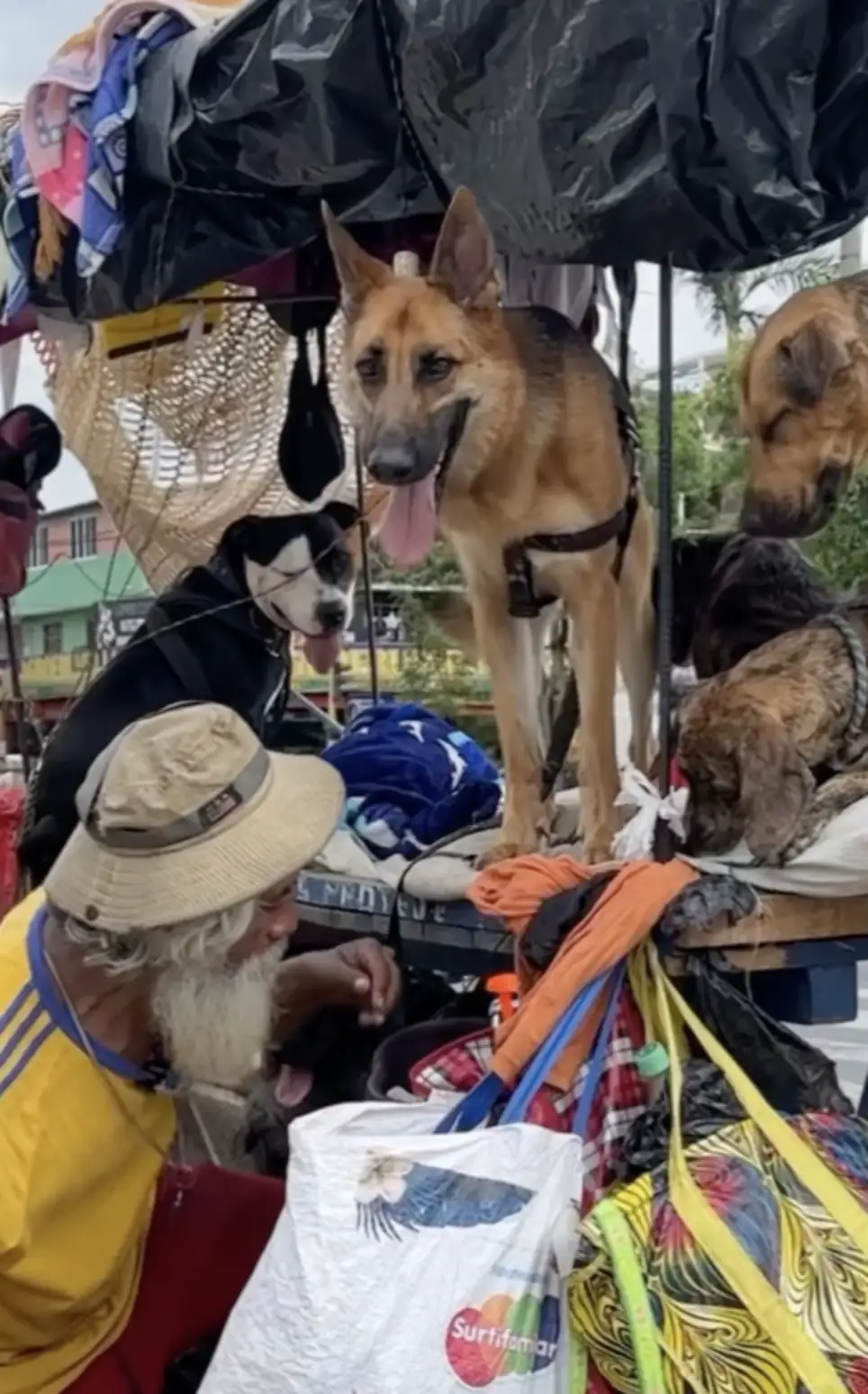
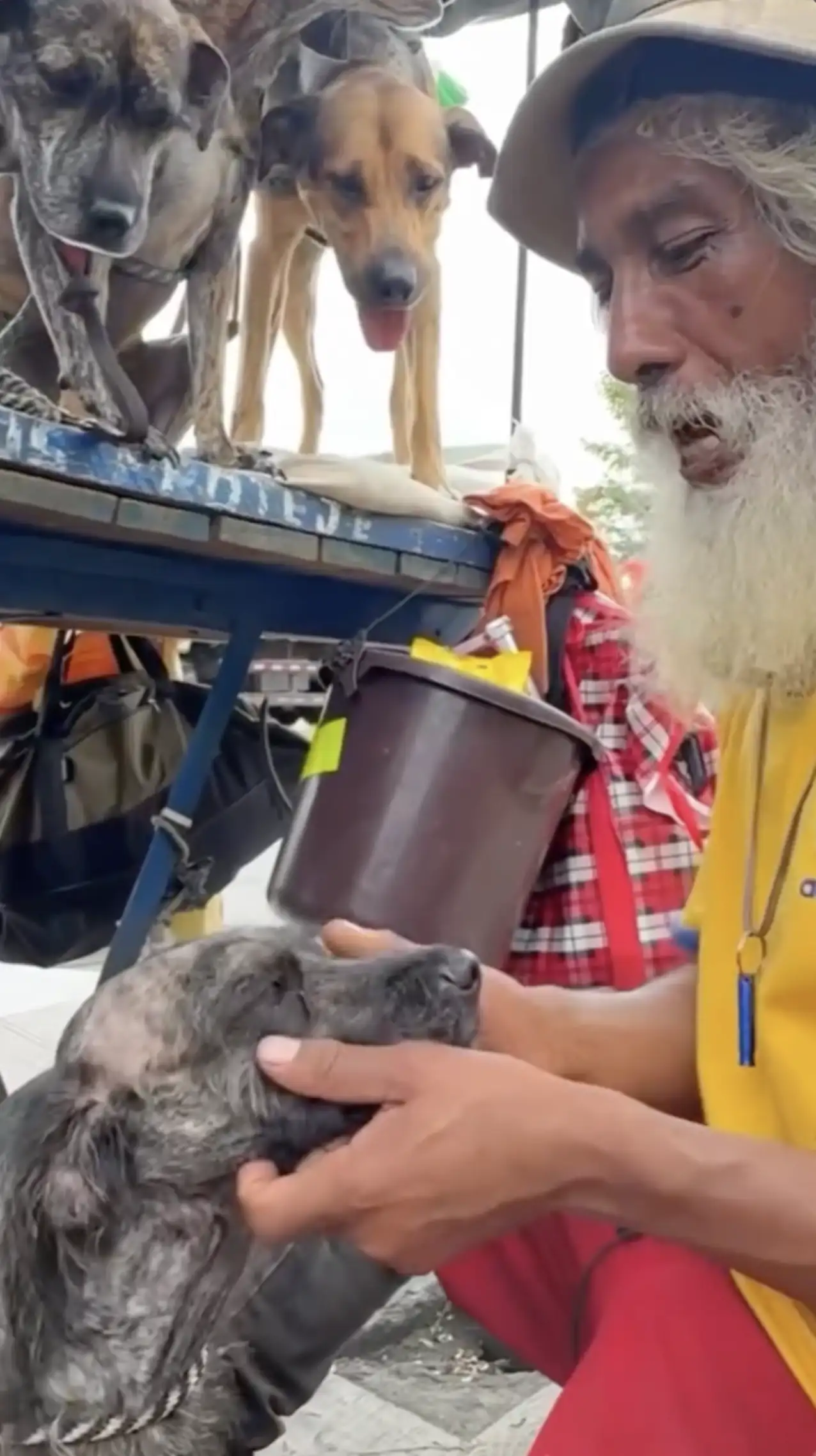
Despite not having a home of his own, Rubén, who goes by Noé, is dedicated to sharing his space and resources with every homeless dog in his Colombian city. Whether they’ve been left behind at a stop light or abandoned in an apartment, Noé believes in giving each dog he meets a second chance at love.

“They are living beings,” Noé said in an interview with IguanaTV. “They are everything to me.”

Noé’s pack is ever-growing, as he readily collects abandoned dogs of all ages and sizes. While it all started with just one dog, his furry family is now large enough to require a double-decker push cart.

Each dog has their own unique backstory, but they’re all loved by Noé just the same.

“This is Rocky. They left him tied up there at that traffic light,” Noé said. “These two girls are named Ears and Cheeks. I’ve had them since they were little. They were also abandoned.”

Rocky, Ears and Cheeks ride on the top level of the push cart with their siblings, a pit bull named Tyson and a German shepherd named Shakira. Below them, senior pups Tembleque, Parkinson and Morochito happily take in the world around them.

“These dogs down below are the oldest,” Noé said. “Little Morochito here was left for me while I was sleeping outside of [the store].”

The pups may have heartbreaking pasts, but their sadness has faded since being adopted by Noé. When they’re not actively traveling around the city with their beloved dad, the pack of dogs can usually be found enjoying a fresh meal made by Noé.

“I buy them milk, carrots and oats, and I combine them with ground meat and seeds,” Noé said. “I make them a hearty meal so that they eat well.”

Seeing the pups lap up their meals brings joy to Noé, even when he hasn’t eaten yet.

“They eat first,” Noé said. “My food is less important to me.”

Once the pups have finished eating, Noé usually snacks on an arepa and some coffee before heading off with his pack again. With his dogs by his side, Noé feels a sense of purpose and peace.

“The dogs keep me busy and give me a reason to wake up every day,” Noé said. “They don’t care if I’m bearded, toothless, dirty or clean. They only care that I’m by their side.”

This growing companionship is beyond fulfilling for Noé. Even on his most challenging days, Noé knows he can always lean on his beloved pack of rescued dogs for unconditional support.

“A dog’s love is the best there is,” Noé said.

ooOOoo

The two photographs are presented by INSTAGRAM/@IGUANATV. (And the article is published with the kind permission of The Dodo.)

One can’t do better than repeat that last sentence: “A dog’s love is the best there is,”.

Well said, Rubén!

Critical thinking!

Thinking it through thanks to a recent issue of Skeptical Inquirer.

Melanie Trecer-King is the creator of Thinking is Power and the associate professor of biology at the Massasoit Community College, where she teaches a science course designed to equip her students with essential critical thinking, information literacy, and science literacy skills.

The article was published in the November/December, 2024 issue of the magazine. I believe it is free to share.

ooOOoo

Most people agree that critical thinking is an important skill that should be taught in schools. And most educators think they teach critical thinking. I know I did. After all, I was a science educator, and science is critical thinking. Isn’t it?

For years, I taught general-education biology, a course commonly taken by undergraduates who aren’t science majors. And while I love biology, I grew more and more frustrated with the content. I asked myself: If I had one semester to teach the average student what they need to know about the process of science and critical thinking, what would it look like?

Thankfully, my college allowed me to replace my traditional introductory biology course with a course titled Science for Life, designed to teach critical thinking, information literacy, and science literacy skills (Trecek-King 2022). Since my conversion, I’ve been sharing my new path with anyone who will listen about the value of teaching critical thinking.

Yet conversations with Bertha Vazquez, director of education for the Center for Inquiry, gave me pause. In a recent podcast conversation with the two of us and Daniel Reed (of the West Virginia Skeptics Society), Vazquez was adamant. Educators do teach critical thinking: the Next Generation Science Standards (NGSS) require students to ask questions, plan and carry out investigations, analyze and interpret data, construct explanations, and engage in arguments from evidence.

As a science communicator, I constantly fight misconceptions around certain terms. Theory and skepticism are prime examples. So imagine my surprise (and embarrassment) when I realized that, as a critical thinking educator, I had overlooked an important first step in critical thinking: defining terms. The irony.

What Is Critical Thinking?

While we can all agree that it’s important to teach critical thinking, there’s not always agreement on what we mean by the term.

In his book Critical Thinking, Jonathan Haber (2020) explains how the concept emerged and some of the ways it’s currently defined. John Dewey, in his 1910 work How We Think, proposed one of the first modern definitions of reflective thinking, describing it as an “active, persistent, and careful consideration of any belief” (Dewey 1910, 6).

In his 1941 dissertation, Edward Glaser identified three components of critical thinking: “(1) an attitude of being disposed to consider in a thoughtful way the problems and subjects that come within the range of one’s experiences, (2) knowledge of the methods of logical inquiry and reasoning, and (3) some skill in applying those methods” (Glaser 1941, 5–6). That same year, Glaser and Goodwin Watson published the Watson-Glaser Tests of Critical Thinking (now the Watson-Glaser Critical Thinking Appraisal), a widely used standardized test for assessing critical thinking skills.

Critical thinking’s “big bang” moment, according to Haber, came in the early 1980s when the state of California (Harmon 1980, 3) mandated that all students in its university system complete a course that teaches “an understanding of the relationship of language to logic, leading to the ability to analyze, criticize and advocate ideas, reason inductively and deductively, and reach factual or judgmental conclusions based on sound inferences drawn from unambiguous statements of knowledge or belief.”

And the Delphi Report (Facione 1990, 2), in which Peter Facione worked with critical thinking experts to create a consensus definition, concludes that critical thinking is a “purposeful, self-regulatory judgment which results in interpretation, analysis, evaluation, and inference, as well as explanation of the evidential, conceptual, methodological, criteriological, or contextual considerations upon which that judgment is based.”

From these (and many other) definitions, Haber identifies three interconnected parts of critical thinking: knowledge of critical thinking components, such as logic and argumentation; the skills to put the knowledge to use in real-world situations; and the dispositions needed to prioritize critical thinking honestly and ethically.

This problem-solving view of critical thinking forms the basis of many of the current educational standards, including the NGSS and Common Core, which ask students to think deeply within a specific domain. And it is one scientists themselves use when trying to understand issues.

These are worthy educational goals to be sure. However, in my experience teaching general-education biology, I’ve come to realize that this approach is incomplete.

If critical thinking requires deep knowledge, then our ability to analyze topics is limited to areas in which we possess sufficient expertise. Pedagogy that encourages “independent” thinking outside these areas can have the unintended consequence of teaching students to overestimate their abilities. The best minds know they can’t know everything. Even experts rely on other experts and sources.

Additionally, in the classroom, students are provided with reliable content from which to critically analyze. In the “real world,” these guardrails are nonexistent. Not only is misinformation ubiquitous, disinformation purveyors exploit our biases and emotions to manipulate our reasoning.

And finally, we can’t address science misinformation, from evolution to vaccines to climate change, by giving students more content knowledge. We don’t fall for science denial and pseudoscience because we don’t have the facts but because of our emotions, desires, identities, and biases.

I now have a better understanding of what my colleague and friend Andy Norman means when he says that critical thinking suffers from a branding problem.

Yes, And …?

Using the above definition(s), I was teaching my biology students how to think critically. For example, I didn’t just ask them to memorize the stages of mitosis but to explore the mutations that could disrupt the cell cycle and lead to cancer. But to what end? If (or when) my former students are touched by cancer, will they remember how proto-oncogenes and tumor suppressor genes can lead to unregulated cell growth? Is that even what they need to know? I argue that, especially for students who aren’t going to be scientists, it’s far more important to teach students how and why the process of science results in reliable knowledge … and how to find it.

My Science for Life course and my Thinking Is Power resource are both based on the same premise. Knowledge may be power, but there’s too much to know. Even more, knowledge is a process; it’s not just what we know but how we know. It’s not just a noun but a verb. When we need reliable knowledge, can we find it and use it to make wiser decisions? And how do we know what information to ignore?

As a science educator, I want my students to understand how the process of science produces knowledge and why it’s reliable. Why aren’t comments such as “it worked for me” or “I know what I saw” sufficient evidence? I’ve come to realize that an essential—and often overlooked—ingredient is why we need science in the first place.

Richard Feynman famously said, “The first principle is that you must not fool yourself, and you are the easiest person to fool.” Science is how we correct for this tendency toward self-deception. That’s why I spend the first third of the semester exploring how we come to our beliefs, the limits of our perception and memory, the importance of skepticism, the cognitive biases that can lead our thinking astray, and the logical fallacies we use to convince ourselves (and others) that our conclusions are justified.

Influential voices in the skeptical community played a crucial role in shaping the ingredients of critical thinking I use in Science for Life and Thinking Is Power, which include the following:

  • Being aware of our limitations: Understanding that our perception and memory are flawed, and the biases and heuristics our brains rely on to make fast and easy decisions can lead us astray.
  • Arguing with evidence and logic: Using arguments that are well-structured and supported by evidence. This includes understanding how the different types of arguments work (i.e., deductive, inductive, and abductive) and avoiding logical fallacies.
  • Thinking about our thinking (metacognition): Actively examining and questioning our own thought processes—including the source of our knowledge, assumptions, intuitions, motivations, emotions, and biases—and how they might influence our judgments.
  • Embracing nuance and uncertainty: Avoiding the black-or-white thinking that can lead to oversimplified conclusions and accepting that our knowledge is never perfect or complete.
  • Seeking objectivity: Actively working to counter the limitations that prevent us from accurately understanding the world. This includes seeking diverse perspectives, separating our identity from our beliefs, and prioritizing accuracy over ego.
  • Having curiosity and open-mindedness: Possessing a desire to learn and understand by asking questions and seeking out information, even if it contradicts what we want to believe.
  • Maintaining healthy skepticism: Balancing gullibility and doubt and proportioning our beliefs to the available evidence. And remembering that claims made without evidence can be dismissed without evidence and extraordinary claims require extraordinary evidence.
  • Exhibiting intellectual humility: Recognizing the limitations of our knowledge, being open to the expertise of others, and being willing to change our minds with evidence.

In my experience, giving students this foundation is essential for helping them become better consumers of information and science. Without an awareness that our emotions and existing beliefs can drive our reasoning, search engines and low-quality sources become tools to confirm our biases. And without an understanding of how our identities and worldviews can alter our standards of evidence, pseudoscience and science denial provide cover for what we want or don’t want to believe.

The logic of science’s practices, from carefully controlling experimental variables to making the findings available to other experts for scrutiny and replication, falls into place once students understand the problems it’s addressing. Simply put, science is our shield against self-deception.

Now instead of asking students to think critically about the biology of cancer, I teach them how to evaluate sources to find reliable information, how to recognize pseudoscientific “treatments,” and how their need for hope and answers makes them vulnerable to misinformation.

The Take-Home Message

I have no doubt that most educators teach critical thinking. But for pedagogical and communication purposes, it would be beneficial to clarify what we mean—and just as importantly to ask ourselves what we want our students to learn.

The dominant view of critical thinking in education is problem-solving in specific domains, which is absolutely a valuable skill. However, many skeptics view critical thinking as good thinking in a broader sense. My own teaching shifted toward this latter framework after I realized that problem-solving skills are insufficient without a foundation in better thinking. We may be born with the ability to think, but we must be taught to think well, and our primate brains aren’t adapted to today’s tidal wave of misinformation.

I’m grateful to the skeptical community for challenging my assumptions about critical thinking and my friend Bertha Vazquez for encouraging me to think more deeply about the good work science educators do in their classrooms every day. This article is the result of my attempt to reconcile what critical thinking means to educators and what it means to skeptics, and my hope is that it opens a conversation about how we can better serve our students. Maybe it will even start a critical thinking revolution, especially in science education.

Let the critical thinking revolution begin!

Acknowledgments

My thanks go to those on this brief list of skeptical thinkers/authors who’ve influenced my understanding of critical thinking: James Alcock, Timothy Caulfield, John Cook, Brian Dunning, Julia Galef, Adam Grant, David Robert Grimes, Jon Guy, Harriet Hall, Guy Harrison, Daniel Kahneman, David McRaney, Steven Novella, Carl Sagan, Michael Shermer, and Carol Tavris.

Special thanks to Bertha Vazquez, Daniel Pimentel, Andy Norman, Daniel Reed, and Jon Guy for their helpful feedback on this article.

References

Dewey, John. 1910. How We Think. Lexington, MA: D.C. Heath and Company.

Facione, Peter A. 1990. Critical Thinking: A Statement of Expert Consensus for Purposes of Educational Assessment and Instruction—The Delphi Report. Millbrae, CA: California Academic Press.

Glaser, Edward M. 1941. An Experiment in the Development of Critical Thinking. New York, NY: Teachers College, Columbia University.

Haber, Jonathan. 2020. Critical Thinking. Cambridge, MA: The MIT Press.

Harmon, Harry. 1980. Executive Order No. 338: General Education-Breadth Requirements. The California State University and Colleges.

Trecek-King, Melanie. 2022. Teach skills, not facts. Skeptical Inquirer 46(1): 39–42.

ooOOoo

I hope others have read this fascinating article and repeat the statement: ‘While we can all agree that it’s important to teach critical thinking, there’s not always agreement on what we mean by the term.’

Whatever, the article was superb.