A pet‑friendly homeless shelter pilot reduced the rate of homelessness among the people it helped in California.
This was an article published on the 16th March by The Conversation. It shows how the homeless shelters benefit from being pet-friendly. It’s sort of obvious but then again not common-sense.
ooOOOO
A pet‑friendly homeless shelter pilot reduced the rate of homelessness among the people it helped in California
A homeless woman in Los Angeles holds her dog after a free veterinary visit in 2024. Mario Tama/Getty Images
California’s Department of Housing and Community Development established this pilot program in 2019. Its goals were straightforward: to make homeless shelters more accommodating to people with pets – mostly dogs – so that people living on the streets don’t have to choose between staying in shelters or abandoning their pets.
The program disbursed US$15.75 million between 2020 and 2024 to 37 organizations across the state. The funding allowed shelters to build kennels or other pet-friendly spaces, provide pet food and supplies, and offer basic veterinary care. It also covered the costs of staffing and maintaining insurance required to operate pet-friendly shelters.
We found that the program helped 4,407 people experiencing homelessness keep their pets while getting support. Many were able to enter shelters, and their animals received needed veterinary care. A total of 886 people ultimately moved into permanent housing with their pets – a higher success rate than the statewide average for homeless people in California.
Theoretically, this funding should have reduced the number of pet owners living on the streets. Yet since 2019, the year the program began, the number of homeless people in Los Angeles with dogs and other pets has increased.
Since 2017, I’ve led the USC research team that produces the annual homeless count estimates for Los Angeles. The U.S. Department of Housing and Urban Development requires this exercise for any city seeking federal funding for homelessness services.
Before the pandemic, we generally found that roughly 1 in 8 people did. We also found that nearly half of homeless pet owners had been turned away from a homeless shelter because it couldn’t accommodate their animal.
Despite programs like California’s Pet Assistance and Support program, my research team has found that the share of people living on the streets of Los Angeles who say they have a pet increased to roughly 1 in 5 by 2025.
Share of homeless people in LA with pets is rising
The percentage of homeless people in Los Angeles with pets rose from 12% in 2017 to 20% in 2024 and 2025, according to an annual census.
Bar chart showing that the percentage of homeless people in Los Angeles with pets has grown since 2017.
5101520%201720182019202020212022202320242025
Need for more pet-friendly programs
We still don’t know why the share of homeless people with pets has gotten so much larger.
The Weingart Tower, where some of Los Angeles’ formerly homeless people reside and receive social services, has a small dog park. Grace Hie Yoon/Anadolu via Getty Images
The number of homeless people in Los Angeles has fallen by more than 4% since 2023 to just over 72,000 people in 2025. But based on my research findings, I would expect the number of people living on the city’s streets – with and without pets – to rise over time unless more affordable housing becomes available.
And growth in the homeless population may be hard to avoid without more efforts like California’s Pet Assistance and Support Program – on a larger scale than the pilot we studied.
This past Christmas, I helped my parents choose a water filter. The latest “smart” models all came with a smartphone app that promised to monitor filter life, track water quality and automatically request service. Yet my father, age 75, and mother, 67, were quick to reject them in favor of a nondigital model.
“Every time it updates or I forget how to use it, we’ll have to call you,” my dad said.
As an only child living 8,000 miles (12,875 kilometers) away, I didn’t need convincing. My parents are aging in place and don’t need traditional caregiving – they cook, drive and manage their home just fine. Instead, I provide what I call technology caregiving: helping them with their digital activities of daily living, from online banking to booking theater tickets.
But as the tech industry shifts toward artificial intelligence agents and generative user interfaces – promising to make devices smarter than ever – I am bracing for this invisible workload to become heavier, not lighter. In addition to being a technology caregiver, I’m a computer scientist who studies human-computer interaction.
Technology caregiving
Technology caregiving is the act of helping someone use digital tools. While this isn’t entirely new – people have long helped grandparents program VCRs and connect parents’ desktop computers to the internet – the stakes have changed.
Today, digitization is ubiquitous. Helping with these tools is no longer just occasional unpaid tech support – it is a form of continuous caregiving essential for maintaining independence. For example, even the simple act of clipping coupons has gone digital – marginalizing older adults who are unable to navigate store apps to access these discounts.
People often view older adults as resistant to technology, but recent years – particularly since the COVID-19 pandemic – have shattered that myth. While gaps in internet access and device ownership remain, they are no longer major barriers to technology access.
Today’s seniors are not tech-averse, but constant updates and interface changes make using technology more difficult for them. Jose Luis Raota/Moment via Getty Images
The emerging crisis is not about access, but effective use. Many older adults are now online and willing to use these tools, but they require frequent help from family, friends or communities.
The innovation tax
The problem isn’t just that devices and apps are getting complex; it’s that they are constantly changing. Frequent software updates and shifting interfaces can be frustrating for all users, but they turn familiar tools into foreign concepts for older adults.
This unpredictability is about to accelerate. Take generative user interfaces, which designers can use to dynamically generate an interface in minutes. Pair them with AI agents, and the system can assume the designer’s role, taking independent actions based on how it perceives a user’s intent or need.
If the “Pay Bill” button is in a different place every third time you open a particular app because an AI decided to optimize the interface, you might feel perpetually incompetent if you can’t quickly locate it. While the industry calls this personalization, for an older adult it is a moving target.
This relentless pace of change – even when intended to be helpful – is directly at odds with age-related cognitive changes. And this dynamic is continuing with the new generation of seniors. They may be more eager to adopt new tools than the last, but wanting to use technology is not the same as being able to use it when the rules are constantly changing.
To navigate a brand new or shifting interface, your brain relies on fluid intelligence: the ability to reason, solve novel problems and ignore distractions on the fly. Unlike the knowledge that people accumulate over time, fluid intelligence naturally declines with age.
When an app updates or an AI optimizes a layout, it forces the user to discard their hard-won mental models and start over. For an older adult, this isn’t just a minor inconvenience; it is a taxing job for their working memory.
As an older adult participant in a study my colleagues and I conducted put it:
“I had a computer on my desk in 1980, OK, when nobody else did. So this is not a foreign language, but the changes that are made with little to no explanation and then things that you knew how to do have either changed or disappeared completely, that is the stuff that absolutely drives me, and I will tell you, every other older adult in America nuts.”
Help the helper
I believe that the way forward is to stop treating tech support as an afterthought and start designing for the technology caregiver. Digital literacy training for seniors and encouraging designing technologies for all users are important but not enough; it’s important to build tools that share the burden.
Busy dog owners juggling moves, new jobs, breakups, new babies, or a new roommate often notice something unsettling: a dog who once seemed “fine” starts acting differently. These life changes affecting pets can quietly reshape household dynamics, disrupting routines that help dogs feel safe and understood. When a familiar schedule shifts, pet emotional well-being can wobble, and routine disruption may show up as clinginess, restlessness, accidents, barking, withdrawal, or other behavioral changes in pets. Knowing that these reactions are often signals, not “bad behavior”, gives dog owners a clearer, kinder way to respond.
Why Routine Keeps Dogs Feeling Secure
Dogs build comfort from repeated patterns like meal times, walks, and who comes and goes. When those patterns change, many dogs feel unsure, and their bodies switch into “alert mode.” That stress can look like pacing, panting, whining, hiding, barking, extra licking, stomach upset, or sudden accidents.
This matters because a disrupted routine can shake a dog’s emotional stability, even if nothing “bad” is happening. When you read these shifts as stress signals, you can respond with support instead of frustration. That protects trust and often prevents small issues from becoming long-term habits.
Think of a dog’s day like a familiar map. If the map suddenly changes, your dog may try different behaviors to find safety again, including sticking close or acting jumpy. With this lens, simple strategies can restore calm during moves, new family members, or schedule changes.
Use These 8 Transition Tactics to Keep Your Dog Calm
Big changes can make even a confident dog feel wobbly, because the predictable patterns they rely on suddenly shift. These tactics keep the message consistent: “You’re safe, and I’ve got you,” even when everything else looks different.
Protect the “non‐negotiables” schedule: Pick 2–3 anchors that stay steady no matter what, usually breakfast, one walk, and bedtime. Cornell’s Riney Canine Health Center recommends you schedule your dog’s meals and other daily needs so your dog can predict what’s coming. If your life is chaotic during a move or a new baby, keep those anchors consistent and let the “flex” stuff (like extra play) vary.
Pack and unpack in “scent-safe” zones: During moving week, choose one room as your dog’s calm base camp. Set up a bed, water, and a worn T‐shirt that smells like you, and keep that room off-limits to loud packing whenever possible. On arrival, unpack your dog’s things first so the new space immediately includes familiar smells and routines.
Teach a comfort cue before you need it: Pick one simple cue such as “mat” or “settle,” then practice for 1–2 minutes a few times a day when things are calm. Reward your dog for lying on a blanket or bed while you sit nearby, then gradually add tiny distractions (standing up, opening a drawer). When life changes, you’ll have a practiced “go relax here” skill instead of trying to invent calm in the moment.
Introduce new people with sideways bodies and short wins: For visitors, roommates, or a new partner, ask the person to ignore your dog at first, no reaching, no hovering, no face-to-face staring. Have them toss treats past your dog so your dog can approach and retreat without pressure. Keep the first few meetings to 5–10 minutes, then take a break before your dog gets overwhelmed.
Run “baby practice” or “new family member” rehearsals: If a baby or new pet is coming, rehearse the sounds and movements now. Play baby noises softly during meals, walk around holding a doll or bundled blanket, and reward calm behavior. This kind of prep matters because how much they must learn during major transitions is easy for humans to underestimate.
Buffer work-schedule changes with a mini routine: If you’re leaving earlier or coming home later, shift by 10–15 minutes every couple of days rather than all at once when you can. Add a predictable “departure ritual” (quick potty, 2 minutes of gentle play, food puzzle) and a predictable “reunion ritual” (calm greeting, then outside). This prevents your comings and goings from feeling random, one of the biggest routine disruptors.
Use environmental enrichment to drain stress, not hype it up: Stress often looks like restlessness, pacing, or clinginess, so give your dog a job that uses their brain and nose. Try scatter-feeding in a snuffle spot, a simple cardboard “find it” game, or a frozen food toy during the loudest parts of the day. Choose calming enrichment over high-arousal games when your dog is already on edge.
Aim for “slightly easier than your dog can handle today”: When your dog is anxious, progress is tiny and steady: one step closer to the new stroller, one extra minute in the new yard, one calmer greeting. If your dog freezes, hides, or won’t take treats, the challenge is too big, back up and make it simpler. That gentle pacing helps your dog rebuild trust in their environment, which makes it much easier to keep a steady week of routines going.
Habits That Build Security During Big Life Shifts
When change is unavoidable, consistency becomes communication. These practices help you read your dog’s behavior with more empathy, reinforce trust through predictable patterns, and build emotional resilience a little at a time.
Three-Pillar Daily Check
● What it is: Do a 60-second scan of physical wellness, cognitive wellness, and nervous system wellness.
● How often: Daily
● Why it helps: You catch stress early and meet needs before behavior escalates.Predictable Decompression Walk
● What it is: Take a low-key sniff walk with no training goals and lots of choice.
● How often: Daily
● Why it helps: Sniffing releases tension and helps your dog feel oriented.Two-Minute Connection Rep
● What it is: Do two minutes of gentle play, grooming, or hand-feeding with full attention.
● How often: Daily
● Why it helps: Micro-bonding reduces clinginess and builds confidence in you.One New Thing, Then Easy
● What it is: Add one small novelty, then follow with a familiar, simple activity.
● How often: 3 times weekly
● Why it helps: Your dog learns change predicts safety, not overwhelm.Adjustment Notes Log
● What it is: Track sleep, appetite, and triggers during the adjustment period.
● How often: Weekly
● Why it helps: Patterns guide smarter tweaks to your routine and environment.Common Questions About Dogs and Big Life ChangesQ: How can moving to a new home affect my dog’s emotional well-being and daily routine? A: A move can unsettle your dog’s sense of safety, so you may see whining, pacing, or accidents while they learn the new map of home. Many dogs may adjust within a few weeks, especially with familiar feeding, potty, and walk times. Next steps: track what seems to trigger stress and tighten the routine around those moments.Q: What are effective strategies to help my dog adjust when our household dynamics change, such as welcoming a new baby? A: Your dog may become clingy or reactive because attention, sounds, and scents suddenly change. Keep key rituals steady, add a calm “safe zone,” and reward relaxed behavior near baby related items at a distance your dog can handle. Track triggers like crying or visitors, then adjust the daily plan in tiny, repeatable steps.Q: In what ways do changes in my work schedule impact my dog’s stress levels and behavior?
A: Shifts in your hours can raise uncertainty, which often shows up as barking, restlessness, or door watching. Set predictable alone time practice, use a consistent pre departure cue, and increase enrichment that does not rely on you being home. If problems cluster at certain times, log them and reorganize exercise, potty breaks, and quiet time around that pattern.
Q: What signs indicate that my dog is struggling with transitions, and how can I support them?
A: Look for appetite changes, sleep disruption, increased startle, hiding, sudden accidents, or new shadowing behavior. Support starts with ruling out pain or illness, then simplifying the environment and rewarding calm choices. Your best two moves are to track triggers for a week and revise the routine plan based on what your notes reveal.
Q: If I feel overwhelmed balancing pet care with pursuing a new healthcare career path, what resources can help me manage both effectively?
A: Feeling stretched is common, especially when you are building a new identity and schedule. Create a short, written care checklist for mornings and evenings, then ask a trusted friend, family member, or qualified pet professional to cover specific tasks during peak stress weeks. For your own transition, consider flexible, structured learning options like this resource and time blocking so your dog’s essentials stay steady while you grow.
Make One Gentle Routine Shift to Help Your Dog Adjust
Big life changes can leave dogs confused, clingy, or out of sorts, even when everything looks “fine” on the surface. The steadier path is empathetic pet care: notice what your dog is communicating, keep support predictable, and focus on proactive pet well-being rather than waiting for stress to spiral. Over time, supporting pets through change this way often means fewer meltdowns, faster settling, and a calmer home for everyone. When life shifts, your dog needs clarity and kindness more than perfection. Choose one strategy to start this week, and stick with it long enough to see your dog’s body and behavior soften. That steady care strengthens the human-animal bond and builds resilience for whatever comes next.
ooOOoo
This is a guest post from Penny Martin. It is very comprehensive, especially for dog owners who are very busy people
For many years I lived in South Devon, England. I never thought twice about hedgerows because they were so common.
Then today I read an article in The Economist about Brexit and the one thing that was favourable was this “Brexit delivers a win for British wildlife.“
Here’s a small extract from the magazine:
No other country matches the rich heritage of hedgerows that weave across the damp (ideal for hedges) British Isles. Since the Bronze Age, Britons have reared sheep and cattle and have used hedges to mark the boundaries of fields and keep livestock in place. Some of these ancient bushes still stand. In West Penwith, one such prehistoric hedge, a gurgoe, might be over 4,000 years old. Most, though, were planted in the 18th century, when landowners enclosed the commons, an event that turned the country into a chequerboard of small, irregular fields. America, by contrast, passed a law prohibiting private landowners from enclosing public land in 1885, protecting its open ranges.
Here in Oregon hedges are not so common. But I did some research as to the cause and came upon this article by Oregon State University.
I trust it may be shared with you.
ooOOoo
A Guide to Hedgerows: Plantings That Enhance Biodiversity, Sustainability and Functionality
We see them at the edges of farm fields or along roads: long rows of trees, shrubs, flowers and grasses known as hedgerows. They are living fences with the ability to grow food, shelter wildlife, save water, manage weeds and look beautiful all year round.
Hedgerows are sometimes called shelter belts, windbreaks or conservation buffers. These layers of plant life enhance the beauty, productivity and biodiversity of a landscape.
Hedgerows originated in medieval Europe and are enjoying a modern resurgence. People in England planted hawthorn cuttings and allowed them to grow about 6 feet. They were bent and trained to fill gaps in the trees, yielding a living fence. They called these fences “hagas” or hedges, form the word “hawthorn.” As the birds settled in the hawthorns and dropped seeds. more plants sprung up. Today, many farms in England are surrounded by ancient hedgerows that shelter beneficial organisms and conserve soil and water.
Hedgerow plantings were uncommon in the early United States. In the 1930s, the U.S. Department of Agriculture’s Shelterbelt Program briefly supported planting trees for windbreaks to prevent soil erosion in the Midwest. Today, as interest surges in sustainable farming methods, more people are turning to this age-old practice.
Hedgerows can serve several ecological functions. Among their many benefits, hedgerows:
Enhance ecological biodiversity.
Offer food for livestock, humans and wildlife.
Provide habitat for beneficial insects and pollinators.
Facilitate water conservation.
Provide windbreaks.
Help manage invasive weeds.
Provide erosion control and improve soil health.
Support the health of aquatic habitats.
Enhance carbon sequestration.
Create borders and privacy screens.
Reduce noise, dust, chemical drift and other types of pollution.
Diversify farm income.
Generate year-round beauty.
Let’s look at these benefits in detail.
Benefits of hedgerows
Enhance ecological biodiversity
Biodiversity describes the variety of life forms within a specific ecosystem and the relationship of these organisms to one another and the broader environment. Hedgerows can be designed to attract a wide variety of mammals, birds, reptiles, amphibians, insects and plants, many of which offer beneficial relationships to each other. They also create more edges, or “ecotones,” between different habitats, which increases species diversity. Trees and shrubs provide shelter for larger mammals, and nesting sites and perches for raptors, which are important predators of rodents. Dense or thorny shrub thickets can offer songbirds a refuge to escape predators as well as a place to nest. The diverse composition and structure of a hedgerow creates a functional habitat where species experience vital interconnections with one another and the environment.
Offer food for livestock, humans and wildlife
Hedgerows provide undisturbed refuge for species of all kinds, creating wildlife corridors, travel lanes or habitat islands. Hedgerows help protect wildlife from predators and provide sheltered access to riparian zones or other water sources. These corridors are especially important in fragmented landscapes, such as fields where only a single crop is grown. Hedgerows provide shade to reduce heat stress and help to block wind currents. These measures support a healthier wildlife population. Berry-producing plants encourage insectivores, such as birds, that also prey upon common crop pests. The hedgerow habitat creates cover for wildlife so they can feed, nest and care for their young.
Provide habitat for beneficial insects and pollinators
Planting a variety of flowering trees, shrubs, forbs and perennial plants provides insect habitat, and nectar and pollen sources throughout the year for beneficial insects and pollinators. Plants in the family Umbelliferae attract parasitic wasps; predator flies such as hover flies, lacewings and ladybeetles; and true bugs, like ambush or minute pirate bugs. Flowering plants in this family include coriander, dill, fennel, parsnip, parsley and carrots. These plants are useful in the kitchen and are also very attractive to pollinators. Over 75% of successful production of food requires pollination. Increasing plant habitat for pollinator species improves fruit set, size and quality, as well as general biodiversity. Pollinator habitat also attracts beneficial insects, which prey on many crop pests. Increasing the numbers of beneficial insects can help farmers manage crop pests and cut down on insecticide use.
Facilitate water conservation
Hedgerows retain water and reduce evaporation by reducing wind speed and providing cover over the ground surface. Plants also catch and store water in their root systems, leaves and branches, slowing the rate of excess rainwater entering waterways and reducing the risk of flooding. Decaying matter from the roots, stems and branches of hedgerow plants increase the organic matter in the soil over time. This increases the soil’s ability to absorb and retain water. Planting hedgerows on hillsides helps conserve water and soil by reducing erosion. If planting near adjacent cropland, periodic root pruning can reduce competition for nutrients and water.
Provide windbreaks
Properly designed hedgerows can reduce wind speed by as much as 75% and improve crop performance. This is especially effective when plantings reach a density of 40%–50% and are planted perpendicular to the prevailing wind. Wind-resistant trees usually have flexible, wide-spreading, strong branches and low centers of gravity. Wind-tolerant shrubs often have small, thick or waxy leaves or very narrow leaves or needles, to help control moisture loss. Wind can disturb pollination and damage fruit and flowers when plant parts thrash against each other. During times when soil is exposed, a windbreak can protect topsoil from erosion. Crops under wind stress also put energy into growing stronger roots and stems, resulting in smaller yields and delayed maturity. Strong winds also cause lodging of grain and grass crops, bending the stems and making harvest more difficult. Winds dry out crops on the field edges, increasing pests such as two-spotted spider mites.
Help manage invasive weeds
Hedgerows planted along roads or between crop fields may prevent weed seeds from blowing into the field. The weed seed pods collect on hedgerow plants, where a farmer could remove and burn them. Hedges can prevent millions of weed seeds from entering the crop field. As hedgerows mature, these plantings displace invasive weeds. If well maintained, this weed management lasts the lifetime of the hedgerow.
Provide erosion control and improve soil health
Rain, irrigation, clean cultivation and vacant field borders can all increase erosion potential in an agricultural system.
Hedgerow plantings can significantly reduce the amount of soil erosion on a landscape. They can also provide a barrier to filter out pollutants, such as pesticides, and slow down sediments and organic material that can flow from farm fields into waterways. This is accomplished by increasing the surface water infiltration rate and improving soil structure around the root zone. This, in turn, decreases fertilizer runoff from farm fields. The biomass that plants shed acts as a soil conditioner and can enhance plant growth. In urban or suburban environments, hedges similarly reduce pollutants from neighboring sites.
Support aquatic habitat
Hedgerows can provide shade to riparian areas. Shade reduces water temperatures, prevents water evaporation and improves watershed quality. Though many factors influence watershed temperatures, studies have proven that lowland streams bordered by trees and tall shrubs exhibit cooler temperatures. The hedgerow’s latitude, stream aspect, leaf density and the height of its vegetation from the water surface all affect water temperature.
Enhance carbon sequestration
During photosynthesis, trees, shrubs and grasses absorb carbon dioxide from the atmosphere, allowing the carbon to become part of the plant’s tissue. As plants die or shed tissue — either through natural processes or pruning — the carbon that was stored in the plant breaks down and enters the soil. Plants store relatively large amounts of carbon in their biomass, helping to offset some of the effects of climate change. A tree can absorb as much as 48 pounds of carbon dioxide per year and can sequester, or store, 1 ton of carbon dioxide by the time it reaches 40 years old.
Create borders and privacy screens along roads and between properties
Hedgerows are attractive borders and can block undesirable views. Evergreens offer year-round screening. When selecting plants, consider the height at maturity for optimum screening. Evergreens can be pruned to control height and density. Plant a diverse mix of species to help protect against damage from a single pest or disease.
Reduce noise, dust, chemical drift and other types of pollution
As hedgerows mature and become dense, they can create barriers to reduce noise, dust, chemical drift and other pollutants. Open canopy trees are effective barriers to dust and pesticides; air and particles slowly filter through them instead of depositing clouds of pollutants on the other side of the hedge.
Plant hedges as close as possible to any areas where pollutants are a concern. This can help alleviate neighborhood conflicts where agriculture intersects with urban areas.
Hedgerows can act to contain contaminants from urban or suburban environments and keep them from entering agricultural areas.
Diversify farm income
Trees, shrubs and herbaceous plants in a hedgerow can also serve as sources of income. Potential products include nuts, fruits, berries, leaves, flowers, seeds, bark and medicinal herbs. You can grow plants to be propagated as seeds, rootstock, cuttings and transplants. Other potential crops are nursery stock and floral materials, including ferns, broadleaf evergreens, flowers and willows grown for craft material and furniture. You can grow fruits, berries and nuts for food. Hedgerows can shelter bees and encourage a higher pollination rate. Consider planting trees for secondary wood products such as lumber, veneer, firewood, chips for bedding and mulch. Game birds such as quail, pheasant and sage grouse are attracted to hedgerows. Managed hunting can provide a potential source of food and off-season revenue for landowners.
Generate year-round beauty
Hedgerows in the landscape add continuous beauty. You can design a hedge for year-round interest, considering the color and texture of leaves and bark, bloom color and timing, and the general growth habit or form of plants.
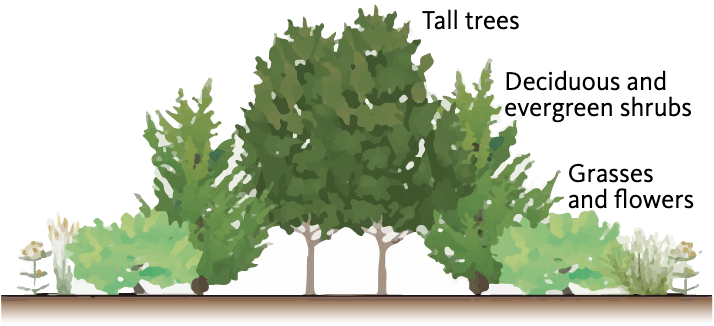
Hedgerow design Graphic: Kerry Wixted with graphics from Tracey Saxby, IAN Image Library, courtesy of the Integration and Application Network, University of Maryland Center for Environmental Science
Whether in rural or urban settings, the principles of planning a hedgerow are the same: Evaluate the site, determine what you would like to accomplish with the plantings, match the right plant with the right place, and properly prepare the site.
Design
There are many essential components to consider when designing a multifunctional hedgerow. The first step is to observe the site where the hedge is to be planted and take into consideration the ecological and environmental conditions listed below. These elements influence the design, plant selection, location and the size of the area to be planted. Although a single line of trees will provide some benefits, four or more rows of plants are optimal for windbreaks, water and soil conservation, wildlife habitat and general biodiversity. When it works for the situation, place plants tallest at maturity in the center row, with shorter ones inter-planted between and along the edges. A diverse selection of plant sizes and characteristics is most beneficial. When possible, orient rows perpendicular to prevailing winds.
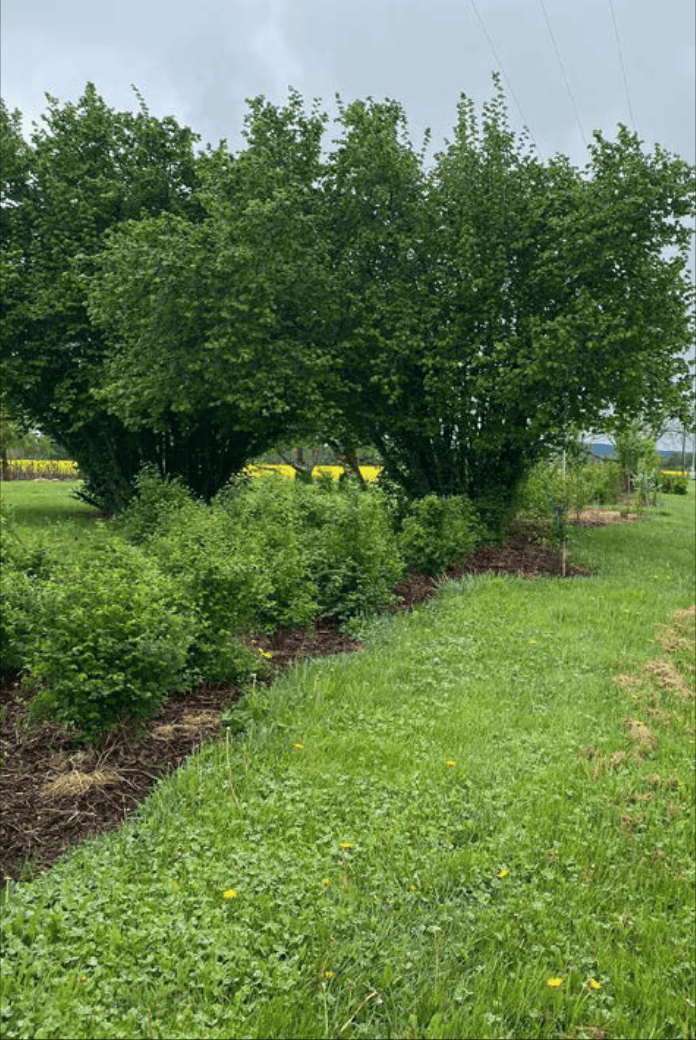
Hedgerows following land contours create meandering lines on the landscape, producing a natural appearance and larger buffer for wildlife habitat. If the goal is to attract pollinator species, reserve approximately one half-acre for every 40 acres planted in crops.
Plant selection
Plant a wide variety of multi-tiered plants for maximum habitat. Avoid varieties that are susceptible to common pests and diseases and choose plants that are non-invasive. Some perennial species such as blackberry can provide excellent wildlife habitat and food crops but are highly invasive and require frequent maintenance. See the plant lists on page 7 for plantings suited to the Pacific Northwest.
When selecting plants, consider the conditions plants need to survive in specific habitats:
Range: place of origin (indigenous, native/non-native).
Hardiness zones: frost dates.
Light requirements: sun or shade.
Size of plants at maturity, growth.
Soil type (pH, fertility, erosion concerns).
Drainage.
Water movement and moisture needs.
Planting time.
Bloom time: seasonal interest.
Day length.
Productivity.
Tolerance to heat, cold, salt, drought, pollution, wind and wild or domestic animals.
Evergreen or deciduous.
Plant structure: form or shape, texture, leaf and bark type.
Edible or poisonous: what parts.
Insect and disease resistance.
Plant size, costs and availability.
Maintenance needed.
Allellopathy: a chemical inhibitor of one plant to another which can impact germination or plant growth.
Ultimately, place plants together that have similar soil, water, sun and drainage needs.
General planting recommendations:
Plant trees and shrubs about 6 to 8 feet apart in rows 8 to 10 feet apart.
Plant one or two rows of tall trees flanked by a row or two of shrubs. A 20-foot wide hedgerow can have two rows of shrubs flanking a row of trees.
Hedgerows work best for wildlife when they are wider than 20 feet.
Depending on the site’s prevailing winds, a winter windbreak could have at least two rows of evergreen trees and a row of deciduous trees or shrubs. A summer windbreak could have at least one row of tall deciduous trees and a row of deciduous shrubs.
Make sure the planting holes are deep and wide enough to accept and cover the roots of each plant. Be sure to water in each new planting.
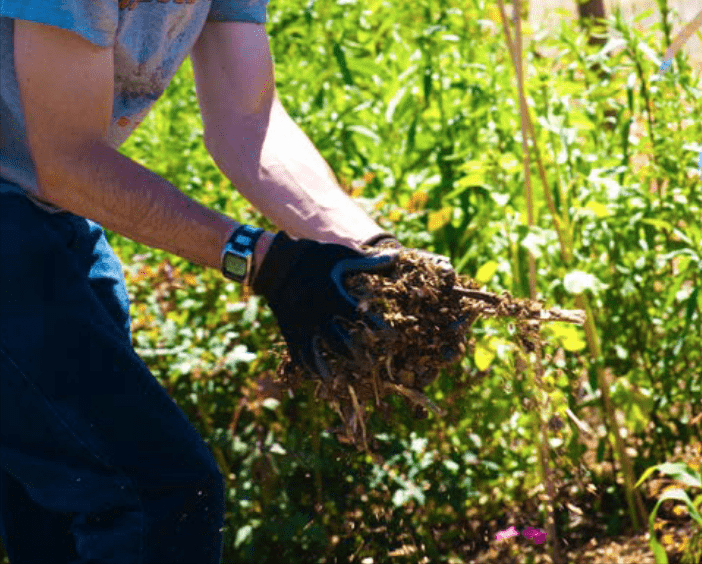
In a small area, place a 3-inch layer of straw mulch or cardboard around each tree and shrub after planting to discourage weeds and encourage plant survival.
Soil preparation
Soil preparation is one of the keys to plant survival. On a smaller site, an easy way to establish planting areas in existing grass or pasture is to apply a thin layer of compost or manure, followed by several layers of cardboard, and mulch such as straw or leaves. Worms are attracted to the manure and will work over the winter to decompose grasses and fertilize the soil. However, this method may not be practical on a large scale. In this instance, prepare the area for planting by tilling the ground in spring and planting an early cover crop such as crimson clover, followed by buckwheat. In late summer, till or disc in the cover crop and replant an overwintering cover crop such as crimson clover, field peas or vetch. Cover crops improve soil fertility, reduce weeds, stabilize the soil and attract beneficial insects. Till again the following spring and install the first set of plantings for the hedgerow.
Another option for sites with high weed pressure is solarization. Closely mow the ground and put down UV-stabilized anti-condensation greenhouse plastic in midsummer for several weeks to kill the weeds. After solarization, remove the plastic and follow with a fall planting.
Planting time
In more temperate environments, fall planting allows roots to become established before foliage emerges and gives plants the benefit of winter rains. In extreme cold climates, early spring may be the ideal time for planting. At the time of planting, apply amendments such as compost or manure as a top dressing.
Irrigation
To increase the success rate of your hedgerow planting, provide supplemental water for the first two or three years. Irrigate once a week during the heat of the summer during the first year. For the second year, water every two weeks. In the third year, irrigate once a month. Irrigation needs depend on the location and the plants selected. Be sure to water deeply to encourage deep root growth. Most hedgerow plantings may not survive if they do not get supplemental water in the first few years. Water can be supplied by swales, furrows, flood, drip irrigation or hand watering. If the hedgerow is next to cropland, overhead irrigation from the crop can be extended to water the hedge.
Keeping out weedy plants and destructive wildlife
One of the biggest challenges in establishing a hedgerow is keeping unwanted plants from taking over the new plantings. There are a variety of techniques to inhibit these weedy plants. The simplest method is to leave alleys between plant rows for mowing, cultivation or mulching until plants are well established. Ideally, an area 6 to 8 feet wide around the hedgerow should be mowed, flailed or tilled for weed management, fire protection and rodent control. It is also important to mulch heavily with a minimum of 3 inches of leaves, straw, sawdust or cardboard around each plant. As plants mature, they will eventually shade out most annual weeds. This is the ideal time to infill with low-growing, shade-tolerant plants.
If needed, protect plants from beaver and nutria with hardware cloth, and use partially buried plastic-coated cardboard or tubing around tree trunks to protect from voles and mice. If applying pesticides, follow the label in order to protect riparian zones along rivers, creeks and ponds from contamination.
Managing a hedgerow in the first few years is similar to managing a crop. Good weed management during establishment results in less labor to control weeds in seasons to come.
Cost of establishment
Planting hedgerows does not have to be expensive. Seedling plants are available at low cost, and you can propagate new plants from existing plantings. The larger the plant, the sooner it will reach maturity, which is especially important in creating a fast-growing privacy screen. This can be achieved by purchasing dormant bareroot plants and 1-gallon potted plants or larger. Remember, these larger plants will most likely require summer irrigation. Government programs are available to assist landowners with hedgerow development. Many counties have tax exemption programs for riparian lands, along with wildlife habitat conservation and management programs. See “Incentive programs to help with hedgerow establishment” and Estimated Costs To Establish Pollinator Hedgerows, in “Resources,” pages 9–10.
Conclusion
A hedgerow is a long-term commitment. With proper planning and care, it will take approximately four to eight years to establish a hedgerow and 30 or more years for it to reach maturity. To encourage success, draft a plan with planting installments for each year, depending on your goals and budget.
Hedgerows in rural agricultural or urban settings provide many benefits that increase over time, including the opportunity for supplemental income. With benefits for wildlife, humans and the planet, hedgerows are a practice that has stood the test of time.
Hedgerow plants
Hedgerows can contain native and non-native plants, although plants should not be invasive. The following trees, shrubs, groundcovers and perennial plants are appropriate for hedgerows in the Pacific Northwest. Remember to consider proper site selection and plant requirements. Plants that tolerate wet soil are indicated by an asterisk (*).
Sun-tolerant plants under 25 feet
Arbutus unedo Strawberry tree
Aronia Chokeberry Schubert
Baccharis pilularis consanguinea Coyote brush
Ceanothus velutinus Tobacco brush
Cornus stolonifera Red twig dogwood
Diospyros kaki Japanese persimmon
Diospyros virginiana American persimmon
Elaeagnus multiflora Goumi
Elaeagnus umbellata Autumn olive
Ficus carica Fig
Fuchsia magellanica Hardy fuschia
Lonicera caerulea Blue honeyberry
Lonicera involucrata Twinberry
Malus fusca West Coast crabapple
Malus sp. Apple
Morus Mulberry
Myrica pensylvanica Bayberry
Oemleria cerasiformis Osoberry
Philadelphus lewisii Mock orange
Prunus avium Cherry
Prunus domestica Plum
Pyrus pyrifolia Asian pear
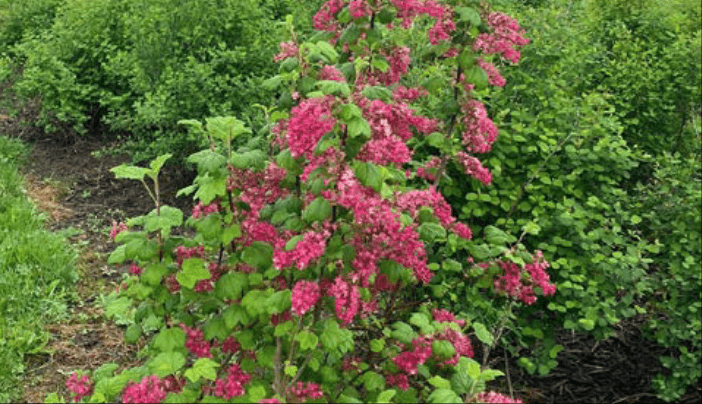
Ribes sanguineum Red-flowering currant
Ribes divaricatum Black gooseberry*
Ribes nigrum Black currant*
Rosa nutkana Nootka rose
Salix fluviatilis Columbia River willow*
Salix hookeriana Hooker’s willow*
Sambucus cerulea Blue elderberry*
Spiraea douglasii Western spiraea*
Vaccinium corymbosum Blueberry*
Vaccinium ovatum Evergreen huckleberry
Viburnum opulus Highbush cranberry
Sun-tolerant plants 25+ feet tall
Abies grandis Grand fir
Acer macrophyllum Bigleaf maple
Alnus rubra Red alder*
Arbutus menziesii Madrone
Asimina Pawpaw
Calocedrus decurrens Incense-cedar
Castanea Chestnut
Chrysolepis chrysophylla Golden chinkapin
Diospyros virginiana Persimmon
Fraxinus latifolia Oregon ash*
Juglans regia English walnut
Picea species Spruce
Pinus ponderosa Ponderosa pine
Populus trichocarpa Black cottonwood
Prunus subcordata Klamath plum*
Pseudotsuga menziesii Douglas-fir
Quercus garryana Oregon white oak
Robinia pseudoacacia Black locust
Thuja plicata Western redcedar
Groundcovers
Fragaria chiloensis Strawberry
Gaultheria shallon Salal
Mahonia nervosa Oregon grape
Polystichum munitum Sword fern
Vaccinium vitis idaea Lingonberry
Vines
Lonicera Honeysuckle
Akebia Five-fingered akebia*
Plants for pond edges
Typha latifolia Cattail*
Ledum glandulosum Labrador tea
Plants that tolerate shade
Chrysolepis chrysophylla Golden chinkapin
Cornus nuttallii Western flowering dogwood*
Corylus cornuta Hazel*
Physocarpus capitatus Ninebark
Polystichum munitum Sword fern
Sambucus racemosa Red elderberry*
Prunus virginiana Chokecherry
Plants for partial shade to shade
Acer circinatum Vine maple *
Amelanchier alnifolia Serviceberry
Berberis aquifolium Oregon grape
Gaultheria shallon Salal
Cornus stolonifera Red-osier dogwood
Holodiscus discolor Oceanspray
Lonicera involucrata Twinberry
Oemleria cerasiformis Indian plum
Philadelphus lewisii Mock orange
Rhamnus purshiana Cascara sagrada
Taxus brevifolia Western yew*
Vaccinium ovatum Evergreen huckleberry
Edge plantings
Achillea millefolium Yarrow
Arctostaphylos uva-ursi Kinnikinnick
Berberis nervosa Cascade Oregon grape
Calendula officinalis Calendula
Cichorium intybus Chicory
Foeniculum vulgare Fennel
Fragaria chiloensis Wild strawberry
Gaultheria shallon Salal
Lavandula angustifolia English lavender
Medicago sativa Alfalfa
Nuts
Carya illinoinensis Northern pecans
Carya ovata Shagbark hickory
Castanea Chestnuts
Ginkgo biloba Gingko
Juglans ailantifolia Heartnut
Juglans regia English Walnut
Xanthoceras sorbifolium Yellowhorn
Plants for arid environments
Plantings around vineyards
Some flowering plants attract specific kinds of beneficials, for example, carnivorous flies (Oregon sunshine), predatory bugs (stinging nettle) and Anagrus wasps (sagebrush). Research shows trends of reduced pest abundance and increased beneficial insect diversity and abundance in vineyards with a diversity of native flowering plants compared to vineyards lacking native plants.
Incentive programs to help with hedgerow establishment
Conservation Reserve Enhancement Program
In exchange for removing environmentally sensitive land from production and establishing permanent resource-conserving plant species, farmers and ranchers are paid an annual rental rate along with other federal and state incentives. This program is administered through the USDA Farm Service Agency and local Soil and Water Conservation districts.
Environmental Quality Incentives Program
This program provides financial and technical assistance to agricultural producers in order to address natural resource concerns and deliver environmental benefits such as improved water and air quality, conserved ground and surface water, reduced soil erosion and sedimentation or improved or created wildlife habitat. The program is administered through the USDA Natural Resources Conservation Service via local field offices.
Guard, J.B. Wetland Plants of Oregon and Washington. 2010. Lone Pine Publishing.
Imhoff, D. and R. Carra. Farming With The Wild: Enhancing Biodiversity on Farms and Ranches. 2011. Sierra Club Books.
Kruckenberg, A. Gardening With Natives of the Pacific Northwest. 1982. University of Washington Press.
Lee-Mäder, E., J. Hopwood, M. Vaughan, S. Hoffman Black and L. Morandin. Farming with Native Beneficial Insects: Ecological Pest Control Solutions. 2014. Storey Publishing.
Link, R. Landscaping for Wildlife in the Pacific Northwest. 1999. University of Washington Press,
Mader, E., M. Shepherd, M. Vaughan, S. Black, G. LeBuhn, Attracting Native Pollinators. 2011. The Xerces Society for Invertebrate Conservation.
Martin, A., H.S. Zim, A.L. Nelson. American Wildlife and Plants: A Guide To Wildlife Food Habits. 1951. Dover Publications.
Pendergrass, K., M. Vaughan and J. Williams. Plants for Pollinators in Oregon.2007. USDA Natural Resources Conservation Service and The Xerces Society for Invertebrate Conservation,
Merlin Oregon, Gateway To The Wild & Scenic Rogue River
The little hamlet of Merlin is located northwest of Grants Pass and is the home base for many outfitters and fishing guides. This and the fact that Merlin is close to the 84-mile segment of the Rogue River set aside by Congress under the National Wild and Scenic Rivers Act of 1968, is why Merlin is known as the “Gateway To The Wild & Scenic Rogue River.”
Located nearby is the famous Hellgate Canyon (on Galice Hwy.) where Rooster Cogburn with John Wayne and many other Westerns were filmed. Above Merlin is Grave Creek, the starting point for the 32 mile “wild” section of the Rogue River.
Great Fishing and rafting on the white waters are but some of the activities available in the Merlin area. One of the best hiking trails around is the famous Rogue River Wild and Scenic Trail which starts at Grave Creek above Merlin and runs downstream 40 miles through the Wild and Scenic section of the Rogue River to Foster Bar.
Located in Merlin Oregon, (PH: picture of tree on Sunday) this tree is Oregon’s 2nd oldest apple tree. It was planted by the Haines family in the either 1852 or 1854 (accounts vary), the tree stood throughout the Indian wars. The fighting began in 1855 when white vigilantes attacked a group of peaceful Indians-mostly women, children and elderly men-(at present day Eagle Point). Under the direction of a man who titled himself Major James A. Lupton, a group of ” hair brained enthusiast and professed ruffians” butchered the Indians, according to A.G. Walling’s story “A History Of Southern Oregon,” published in 1884.
The Indians in the area struck back, working their way down the Rogue River and attacking white homesteads. Their thirst for vengeance had not been quenched by the time they reached Merlin, according to the recently published “An Arrow In The Earth”: General Joe Palmer and the Indians of Oregon.”
Although Haines tried to fight off the Indians, they were one family against a band of angry warriors. When volunteers arrived to help, according to contemporary accounts, they found Mr. Haines and his young son murdered at the home site. The Indians took Mrs. Haines and her daughter captive, presumed to have been thrown into Hellgate Canyon on the Rogue River. Taking in account that white accounts of Indian atrocities were nearly always exaggerated.
The tree was reported to have died in August, 1973, a few months after Josephine County Commissioners held a ceremony celebrating its antiquity. But three years later, branches of the old three were still alive, and the State Forestry Department declared it a historic site.
A special thanks to Marilyn Luttrell, who over the years has looked after and help raise money to protect this historical tree and site.” We thank you Marilyn”
Life
Peters’s father, known as Umpqua Joe, was a member of the Grave Creek band of the Umpqua people who was known for warning settlers and miners in the Grants Pass area of an impending attack from local Indians in 1855.
Peters’s father was reportedly allowed to stay on his land after the end of the Rogue River Wars rather than be removed to a reservation. Mary Peters, popularly known as “Indian Mary” – not to be confused with a different Native American woman also living in Oregon during the same period (Kalliah Tumulth, a WatlalaChinook) and also known as “Indian Mary”– lived on the land where her father had operated a ferry to transport miners and supplies in Southern Oregon until his death on November 13, 1886. After his death, Peters applied for a claim for the land under the Dawes Act, also known as the “Indian Homestead Act.” Eight years later, she received a little more than 72 acres.
Her 25-year land deed has often been described as the smallest Indian reservation in the United States. In 1958, the land was converted by Josephine County to Indian Mary Park, named after Peters.
She continued to operate her father’s ferry business after his death. In 1894 she leased the ferry to William Massie and moved with her two surviving daughters to Grants Pass. She moved to Salem in 1920 to be near her daughters. Peters died in 1921 and is buried in Salem‘s City View Cemetery.
I was browsing the internet over the last weekend and came across this account of Historical Merlin. I trust it is alright to republish the article. It was originally published by the Merlin North Valley Business Association.
A new railroad station in this location in 1883 was called “Jump Off Joe” for a local stream. The station was renamed Merlin in October 1886. The name came from a railroad civil engineer who named it for the Merlins he saw in the area.
“McAllister” post office was established about a mile north of Merlin in 1885, then moved to the vicinity of the railroad station and renamed Merlin in 1891.[1]
On the original application for a post office on October 11, 1885, the name “McAllister” is crossed out and Brandt is used. The name was changed back to McAllister on November 23, 1885. The name was later changed to Merlin–after the Pigeon Hawks in the area–on March 21, 1891.
The founder of Merlin was postmaster John C. Lanterman in 1885; the first post office was established on November 23, 1885. The first Merlin townsite was platted by Sarah E. Lanterman and registered in the courthouse on March 31, 1888, as the town of Azalia. Also stated on the platt, “Streets and alleys donated” (lot owners usually had to pay for streets and alleys, as well as, maintain them). In 1905 the Merlin township was founded by A.B. Cousins and the Merlin Land Development Company. This platt enlarged the original townsite of Azalia considerably.
J.W. Mitchell, pioneer merchant, purchased property in the center of the Azalia subdivision in 1888 and constructed a large mercantile store and was the leading merchant until the main part of the town burned in October of 1915, thus ending 27 years as Merlin’s leading merchant.
The Southern Pacific Railroad established the Jump-Off Joe Station in the early 1880’s. The name Merlin came from a railroad employee named David Loring after seeing the area inhabited by pigeon hawks also known as merlins. Mr. Loring’s imagination is also responsible for naming several other towns as well, including the city of Medford. Postmaster Lanterman changed the name of the post office to Merlin on March 21, 1891. Following Lanterman as postmaster were George A. Guild, followed by his daughter, Mattie. Ruth Lendberg was postmaster from 1930 to 1967, serving seven presidents. Mrs. Lendberg’s little green house served as the post office and it still stands with flagpole on Pleasant Valley Road, just down the street from the present day post office.
Merlin had two school districts in 1886: the Jump Off Joe School District had 54 children educated at a cost of $77.00; the Louse Creek School District had 26 pupils with a cost of $63.00. These two districts combined to form Merlin School District #24 in May of 1894. There was a brick school house built in 1912 on the spot where the present day elementary school sits. A bell from an older school was placed in the brick building and when it was demolished in 1963, it was given to the Merlin Community Baptist Church where it hangs today.
Merlin expanded rapidly after the townsite was platted in 1905. There was a grocery store, a three-story hotel, daily train stops, and even a hanging dentist sign guaranteeing no pain. But once again tragedy struck when on the morning of October 24, 1915 a fire destroyed a block of buildings including the post office and the train depot.
There is an interesting letter addressed to Debbie Lard who has done much on preserving the history of Merlin. This letter tells how it was in 1911 traveling to Grants Pass. Long time resident Ted Stiewig tells of a trip to see the Barnum and Bailey Circus in Grants Pass. At that time, Mr. Stiewig was about four years old and lived in Rand, just past Galice. He describes taking Massie’s stagecoach at 6:30 in the morning, stopping at Indian Mary’s ranch at about 12 noon to change horses, then arriving at the train depot in Merlin at about 2:00 in the afternoon. Since the train didn’t arrive until 6:30 p.m., they would stay and have lunch and dinner at Massie’s Hotel in Merlin before departing for Grants Pass.
Mr. Stiewig also describes going to Grants Pass with his friends while living in Merlin. After taking the train to Grants Pass and finding entertainment playing the pool halls, they would make sure they had at least 25 cents for train fare left between them so they could “ride the blinds;” that is, they would jump between the cars unseen. One friend would pay so the train would be sure to stop in Merlin on the way back so they all could jump off.
ooOOoo
Part Two of the history of Merlin will be published tomorrow and the photographs in the article will be published next Sunday.
It might come as a surprise to learn that the brain responds to training in much the same way as our muscles, even though most of us never think about it that way. Clear thinking, focus, creativity and good judgment are built through challenge, when the brain is asked to stretch beyond routine rather than run on autopilot. That slight mental discomfort is often the sign that the brain is actually being trained, a lot like that good workout burn in your muscles.
Think about walking the same loop through a local park every day. At first, your senses are alert. You notice the hills, the trees, the changing light. But after a few loops, your brain checks out. You start planning dinner, replaying emails or running through your to-do list. The walk still feels good, but your brain is no longer being challenged.
Routine feels comfortable, but comfort and familiarity alone do not build new brain connections.
For decades, scientists believed that the brain’s ability to grow and reorganize, called neuroplasticity, was largely limited to childhood. Once the brain matured, its wiring was thought to be largely fixed.
But that idea has been overturned. Decades of research show that adult brains can form new connections and reorganize existing networks, under the right conditions, throughout life.
The takeaway is simple: Repetition keeps the brain running, but novelty pushes the brain to adapt, forcing it to pay attention, learn and problem-solve in new ways. Neuroplasticity thrives when the brain is nudged just beyond its comfort zone.
Tasks that stretch your brain just beyond its comfort zone, such as knitting and crocheting, can improve cognitive abilities over your lifespan – and doing them in a group setting brings an additional bonus for overall health. Dougal Waters/DigitalVision via Getty Images
The reality of neural fatigue
Just like muscles, the brain has limits. It does not get stronger from endless strain. Real growth comes from the right balance of challenge and recovery.
When the brain is pushed for too long without a break – whether that means long work hours, staying locked onto the same task or making nonstop decisions under pressure – performance starts to slip. Focus fades. Mistakes increase. To keep you going, the brain shifts how different regions work together, asking some areas to carry more of the load. But that extra effort can still make the whole network run less smoothly.
Neural fatigue is more than feeling tired. Brain imaging studies show that during prolonged mental work, the networks responsible for attention and decision-making begin to slow down, while regions that promote rest and reward-seeking take over. This shift helps explain why mental exhaustion often comes with stronger cravings for quick rewards, like sugary snacks, comfort foods or mindless scrolling. The result is familiar: slower thinking, more mistakes, irritability and mental fog.
This is where the muscle analogy becomes especially useful. You wouldn’t do squats for six hours straight, because your leg muscles would eventually give out. As they work, they build up byproducts that make each contraction a little less effective until you finally have to stop. Your brain behaves in a similar way.
Likewise, in the brain, when the same cognitive circuits are overused, chemical signals build up, communication slows and learning stalls.
Overdoing any task, whether it be weight training or sitting at the computer for too long, can overtax the muscles as well as the brain. Halfpoint Images/Moment via Getty Images
Sleep is the brain’s night shift. While you rest, the brain takes out the trash through a special cleanup system called the glymphatic system that clears away waste and harmful proteins. Sleep also restores glycogen, a critical fuel source for brain cells.
During REM sleep, the stage of sleep linked to dreaming, the brain replays patterns from the day to consolidate memories. This process is critical not only for cognitive skills like learning an instrument but also for physical skills like mastering a move in sports.
The most important lesson from this science is simple. Your brain is not passively wearing down with age. It is constantly remodeling itself in response to how you use it. Every new challenge and skill you try, every real break, every good night of sleep sends a signal that growth is still expected.
You do not need expensive brain training programs or radical lifestyle changes. Small, consistent habits matter more. Try something unfamiliar. Vary your routines. Take breaks before exhaustion sets in. Move your body. Treat sleep as nonnegotiable.
So the next time you lace up your shoes for a familiar walk, consider taking a different path. The scenery may change only slightly, but your brain will notice. That small detour is often all it takes to turn routine into training.
The brain stays adaptable throughout life. Cognitive resilience is not fixed at birth or locked in early adulthood. It is something you can shape.
If you want a sharper, more creative, more resilient brain, you do not need to wait for a breakthrough drug or a perfect moment. You can start now, with choices that tell your brain that growth is still the plan.
That last section of the article is most powerful. I’m speaking of the section that is headed Train, recover, repeat.
The human brain notices when even small changes to our normal routine occur. Also that exercise strengthens the brain plus our brains stay adaptable throughout our lives. Amazing!
I subscribe to a number of services and one of them is Super Age. Part of their story is shown here:
“Super Age is a new media brand at the intersection of longevity science, culture, and the power of mindset to redefine what’s possible in this one extraordinary life, because thriving is about living well, living longer, and living boldly with intention.”
Jean and I certainly agree with that, as do many, many senior folk. I trust Super Age will not mind if I reproduce in full a recent article that they published.
ooOOoo
You already know not to scroll before bed or down a latte at 4 p.m., but did you know your dinner plate might be sabotaging your sleep?
Emerging research shows that what we eat directly influences how well we sleep, from how fast we fall asleep to how long we stay in deep, restorative sleep. Certain nutrients act as natural sleep aids, while others disrupt your body’s circadian rhythms or blood sugar balance. The good news? A few strategic shifts can help your body rest better, night after night.
5 Sleep-Friendly Nutrients to Add to Your Diet
What you eat in the hours leading up to bedtime can either support your body’s natural sleep cycles or short-circuit them. Specific nutrients work behind the scenes to regulate hormones, calm the nervous system, and stabilize your blood sugar while you rest. Here are five research-backed nutritional strategies to help you fall asleep faster, sleep more deeply, and wake up feeling restored.
1. Magnesium for Muscle Relaxation and Deeper Sleep
Magnesium helps quiet the nervous system, supports slow-wave (deep) sleep, and significantly increases sleep time while decreasing early morning awakening.
THE FOODS:
Add leafy greens (spinach, Swiss chard, collard greens), almonds, cashews, avocado, chickpeas, lentils and pumpkin, flax, and chia seeds like pumpkin to your daily meals.
2. Tryptophan to Increase Sleep Time
Tryptophan is an amino acid that helps the brain produce serotonin, which is then converted into melatonin, the hormone that signals it’s time to sleep. Research shows that tryptophan increases total sleep time, reduces waking time, and number of awakenings.
THE FOODS:
Kidney beans, chickpeas, red lentils, chicken, turkey, rice, eggs, oats, pumpkin seeds, and even tofu are natural sources.
3. Omega-3 Fatty Acids Essential fats to Support Circadian Health
4. Fiber-Rich Carbohydrates Stabilize Blood Sugar Overnight
These support overnight glucose stability, which leads to deeper sleep by promoting slow-wave sleep and reducing REM-related arousals.
THE FOODS:
Lentils, steel-cut or rolled oats, barley, sweet potatoes, quinoa, berries,
5. Melatonin to Improve Sleep Onset and Quality
Melatonin is a hormone naturally produced by the body to signal that it’s time to sleep. Levels rise in the evening and fall in the morning, helping to regulate your circadian rhythm. Your body’s internal clock that regulates sleep and wake cycles. Eating foods that contain small amounts of melatonin may help support this cycle and improve sleep onset and quality, especially when consumed in the evening.
THE FOODS:
Tart cherries, kiwi, walnuts, pistachios, (Eggs, salmon, yogurt and oats, provide tryptophan, B6, magnesium, and zinc. A mineral important for immune function and wound healing which your brain needs to make melatonin).
Bonus: Your Gut, Your Sleep: Why Microbiome Health Matters.
Your gut and brain are in constant communication via the gut-brain axis and the two-way communication between your digestive system and brain plays a key role in sleep regulation. A healthy gut microbiome supports the production of sleep-promoting neurotransmitters like serotonin and GABA,modulates inflammation and influences circadian rhythm through microbial metabolites such as short-chain fatty acids.
A 2025 review in the Journal of Food Science highlights how prebiotics, probiotics and fermented foods can enhance sleep by improving microbiome composition and supporting these neurochemical pathways. Though more large-scale human trials are needed, the emerging science is promising. Here’s how you should load your plates with during the day to support your microbiome:
Fiber-rich foods like leafy greens, berries, garlic, oats, and whole grains to nourish beneficial gut bacteria.
Fermented foods like yogurt, kefir, kimchi, and sauerkraut to introduce sleep-supportive probiotics.
By feeding your body the nutrients it needs to regulate melatonin, balance blood sugar, and calm the nervous system, you create the perfect internal environment for consistent, rejuvenating rest. Think of it as a nightly investment in longevity, cognition, and metabolic health—served with a side of quinoa.
Check out our Super Age Sleep Guide for more tips on improving the quality of your sleep.
ooOOoo
I wonder how many people are affected by a poor diet, and, more importantly, want to amend what they eat especially for their dinner.
Super Age in general publish sensible articles and this is down to an impressive group of scientific advisors. More details here!
The science of looking at other worlds is amazing.
With so much going wrong, primarily politically, in the world, I just love turning to news about distant places; and by distant I mean hugely so. That is why I am republishing this item from The Conversation about other stars.
ooOOoo
NASA’s Pandora telescope will study stars in detail to learn about the exoplanets orbiting them
Exoplanets are worlds that orbit other stars. They are very difficult to observe because – seen from Earth – they appear as extremely faint dots right next to their host stars, which are millions to billions of times brighter and drown out the light reflected by the planets. The Pandora telescope will join and complement NASA’s James Webb Space Telescope in studying these faraway planets and the stars they orbit.
I am an astronomy professor at the University of Arizona who specializes in studies of planets around other stars and astrobiology. I am a co-investigator of Pandora and leading its exoplanet science working group. We built Pandora to shatter a barrier – to understand and remove a source of noise in the data – that limits our ability to study small exoplanets in detail and search for life on them.
Observing exoplanets
Astronomers have a trick to study exoplanet atmospheres. By observing the planets as they orbit in front of their host stars, we can study starlight that filters through their atmospheres.
These planetary transit observations are similar to holding a glass of red wine up to a candle: The light filtering through will show fine details that reveal the quality of the wine. By analyzing starlight filtered through the planets’ atmospheres, astronomers can find evidence for water vapor, hydrogen, clouds and even search for evidence of life. Researchers improved transit observations in 2002, opening an exciting window to new worlds.
When a planet passes in front of its star, astronomers can measure the dip in brightness, and see how the light filtering through the planet’s atmosphere changes.
For a while, it seemed to work perfectly. But, starting from 2007, astronomers noted that starspots – cooler, active regions on the stars – may disturb the transit measurements.
In 2018 and 2019, then-Ph.D. student Benjamin V. Rackham, astrophysicist Mark Giampapa and I published a series of studies showing how darker starspots and brighter, magnetically active stellar regions can seriously mislead exoplanets measurements. We dubbed this problem “the transit light source effect.”
Most stars are spotted, active and change continuously. Ben, Mark and I showed that these changes alter the signals from exoplanets. To make things worse, some stars also have water vapor in their upper layers – often more prominent in starspots than outside of them. That and other gases can confuse astronomers, who may think that they found water vapor in the planet.
In our papers – published three years before the 2021 launch of the James Webb Space Telescope – we predicted that the Webb cannot reach its full potential. We sounded the alarm bell. Astronomers realized that we were trying to judge our wine in light of flickering, unstable candles.
The birth of Pandora
For me, Pandora began with an intriguing email from NASA in 2018. Two prominent scientists from NASA’s Goddard Space Flight Center, Elisa Quintana and Tom Barclay, asked to chat. They had an unusual plan: They wanted to build a space telescope very quickly to help tackle stellar contamination – in time to assist Webb. This was an exciting idea, but also very challenging. Space telescopes are very complex, and not something that you would normally want to put together in a rush.
Pandora breaks with NASA’s conventional model. We proposed and built Pandora faster and at a significantly lower cost than is typical for NASA missions. Our approach meant keeping the mission simple and accepting somewhat higher risks.
What makes Pandora special?
Pandora is smaller and cannot collect as much light as its bigger brother Webb. But Pandora will do what Webb cannot: It will be able to patiently observe stars to understand how their complex atmospheres change.
By staring at a star for 24 hours with visible and infrared cameras, it will measure subtle changes in the star’s brightness and colors. When active regions in the star rotate in and out of view, and starspots form, evolve and dissipate, Pandora will record them. While Webb very rarely returns to the same planet in the same instrument configuration and almost never monitors their host stars, Pandora will revisit its target stars 10 times over a year, spending over 200 hours on each of them. https://www.youtube.com/embed/Inxe5Bgarj0?wmode=transparent&start=0 NASA’s Pandora mission will revolutionize the study of exoplanet atmospheres.
With that information, our Pandora team will be able to figure out how the changes in the stars affect the observed planetary transits. Like Webb, Pandora will observe the planetary transit events, too. By combining data from Pandora and Webb, our team will be able to understand what exoplanet atmospheres are made of in more detail than ever before.
After the successful launch, Pandora is now circling Earth about every 90 minutes. Pandora’s systems and functions are now being tested thoroughly by Blue Canyon Technologies, Pandora’s primary builder.
About a week after launch, control of the spacecraft will transition to the University of Arizona’sMulti-Mission Operation Center in Tucson, Arizona. Then the work of our science teams begins in earnest and we will begin capturing starlight filtered through the atmospheres of other worlds – and see them with a new, steady eye.