Category: Writing

This is just beautiful

Just a short post!

One can’t imagine what it was like for this poor dog that was placed in a garbage can. But then along comes a perfect Princess and rescues the poor animal.

And so the dog found in the trash learns how to walk again with the help of her foster family — now she runs on the beach!

Dear, sweet Billie and what a terrific job this lady did. From a family of dogs, of course!

Yet another dog lover!

The Dodo has a brilliant story.

There are so many kind people across the world and so many of those people are kind towards dogs.

Take this story for instance. It is about a Canadian woman who had placed dogs at the top of her care list and had been doing it for a number of years.

It was an article recently published in The Dodo and republished here.

ooOOoo

Woman Builds The Most Adorable Café For Her Neighborhood Dogs

“This is something they can do to bring a little joy to their day” ❤️️

By Lily Feinn

Published on 23rd April, 2021

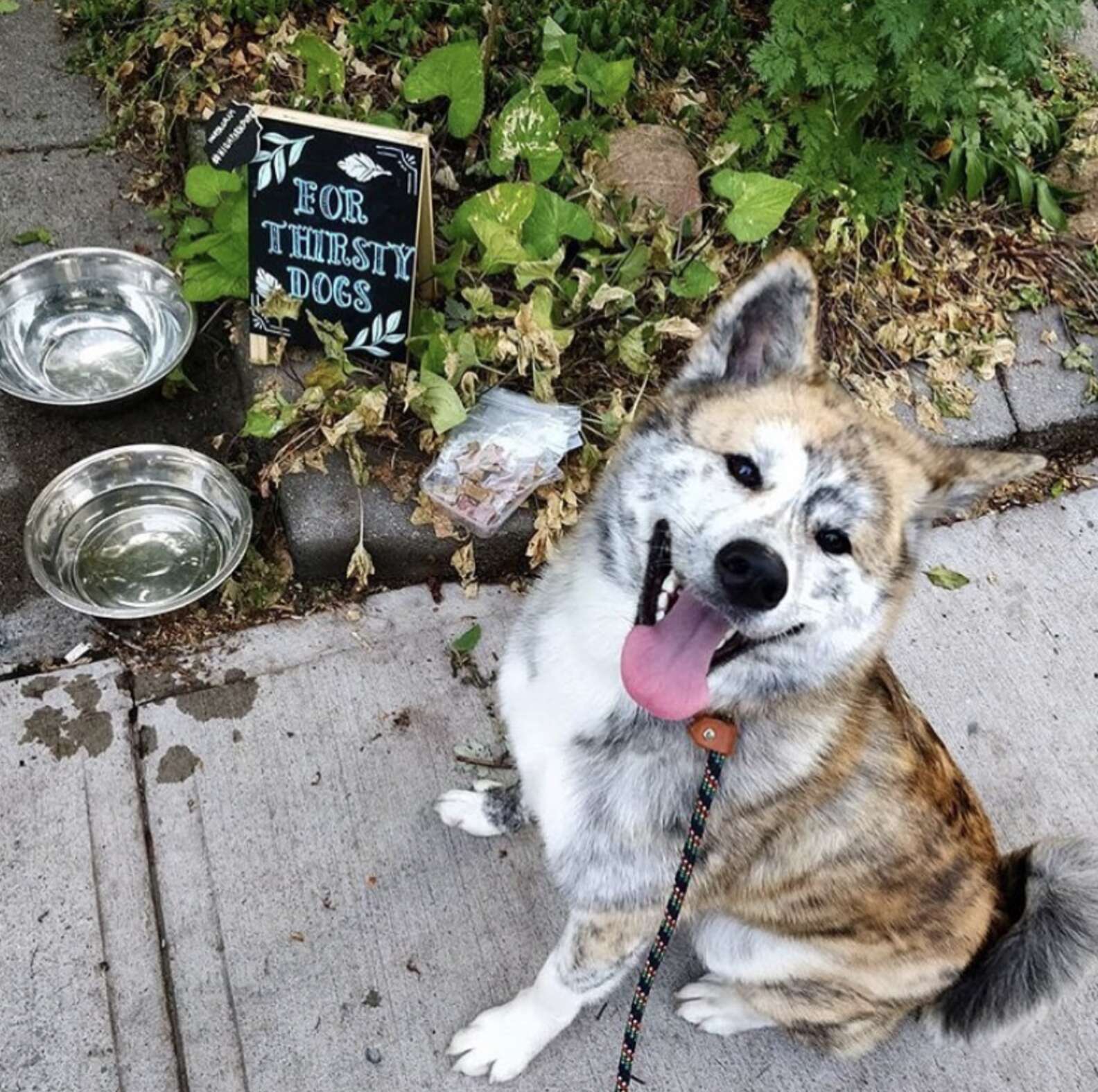
Kaya Kristina lives right next door to High Park, one of Toronto’s most popular public gardens. Six years ago, the animal lover noticed that many of the pups in her neighborhood looked like they could use a little pick-me-up after running around outside. 

“On hot days, I noticed some of the dogs coming home from the park looked thirsty and tired,” Kristina told The Dodo. “I thought I should put out some water and a sign that said, ‘For thirsty dogs.’”

INSTAGRAM/HIGHPARKPUPS

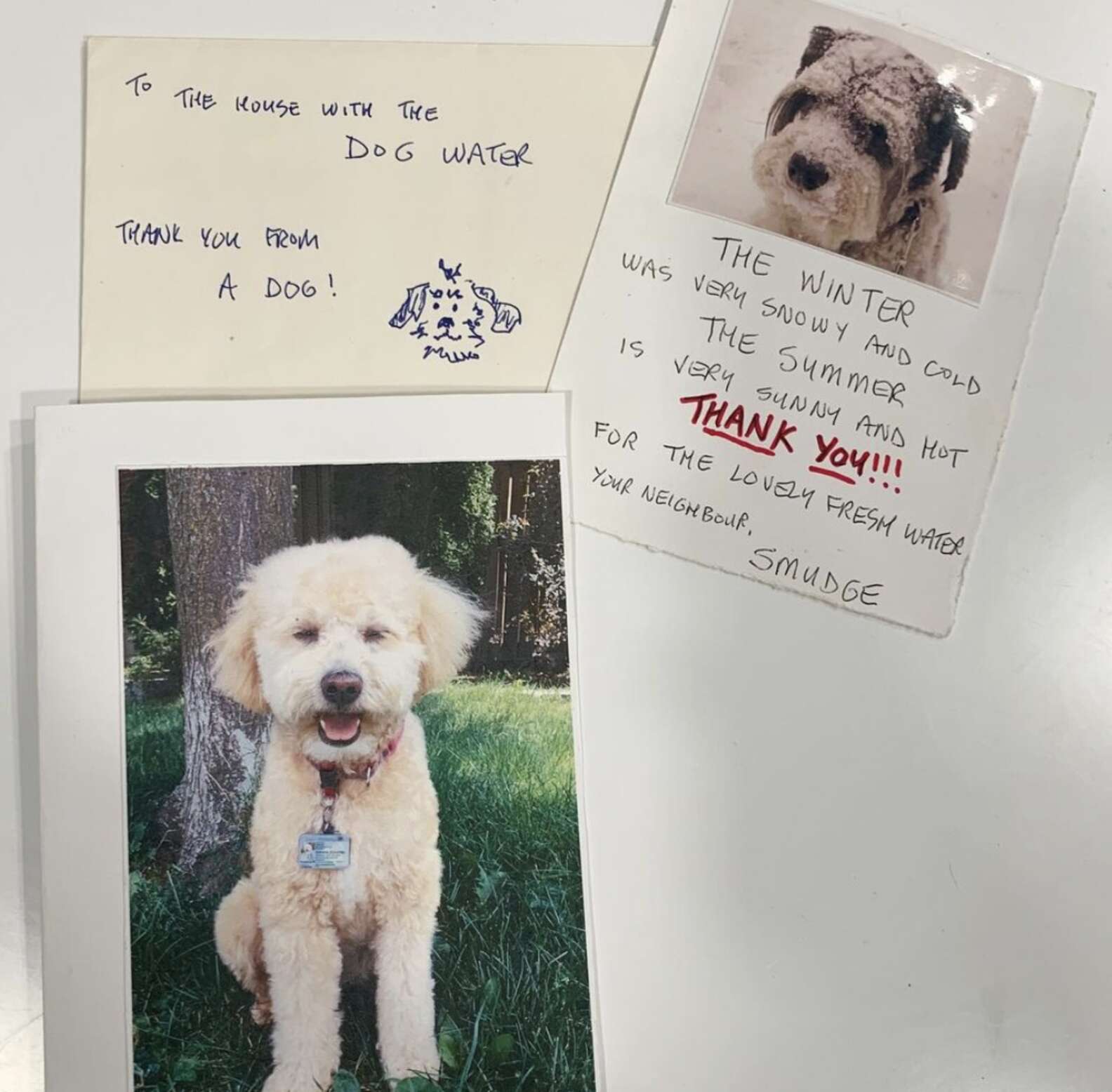
Her act of kindness didn’t go unnoticed for long. “One day, I got a card from someone in my mailbox,” Kristina said. “It had a pic of their dog on the front and it was written from the point of view of the dog saying thank you for the water. I put the pic up on my fridge and it made me really happy.”

INSTAGRAM/HIGHPARKPUPS

For years, Kristina continued to supply local dogs with water and she continued to receive little messages in return. Then, when the pandemic struck last year, Kristina decided to up her game. She decided to leave some treats on her front lawn for all her furry neighbors to safely enjoy during lockdown.

And StarPups Coffee was born.

INSTAGRAM/HIGHPARKPUPS

“I made a bunch of mini treat bags, made a little menu so people knew what they were giving their dog and put a little stand out with options,” Kristina said. “It was so cute seeing the dogs go by and pulling their owners to my house to go get a snack.”

Kristina provides water, Milk-Bones and specialty all-natural treats made in Canada. And the parade of dogs enjoying them has provided hours of entertainment for her while being cooped up inside.

INSTAGRAM/HIGHPARKPUPS

Regular visitors began swinging by the café every day, so Kristina started an Instagram account as a way to build a little community around the watering hole.

“I thought of all the people living alone during COVID and how their mental health was suffering,” Kristina said. “I thought, ‘Most people are complaining about their husbands and kids driving them nuts being home all together. But do they think about their single friends who only have pets?’ I wanted to give those people something to look forward to and make them feel special.”

INSTAGRAM/HIGHPARKPUPS

One day, Kristina went outside and found that her entire café setup was missing. Someone had stolen StarPups overnight, and Kristina was heartbroken. She posted about it on her Instagram — and, to her surprise, the community she had fostered over the months and years stepped up to help.

“That evening, when I got home, my mailbox was full of cards, notes, photos of people’s dogs, Pet Valu gift cards and even a sweet drawing of my dog,” Kristina said. “It turned out to be a good thing, because I had felt so isolated all year with COVID, and now I felt like I had an army of friends.”

INSTAGRAM/HIGHPARKPUPS

Encouraged by the show of support, Kristina built another StarPups Coffee for the neighborhood dogs to enjoy. And Kristina is currently working on building a more permanent setup on her lawn, which will be weatherproof so that no dogs will have to walk away disappointed when it rains or snows.

Now that Ontario has entered back into lockdown, the little front yard café is doing more business than ever before. “One of the few things that’s still allowed is walking your dog,” Kristina said. “So many people are struggling mentally and physically, so this is something they can do to bring a little joy to their day.”

ooOOoo

This is a very beautiful story and just goes to show that Kristina rose to the occasion with returns and rewards far beyond what she may have anticipated. I have said it many times before but nonetheless will say it again: Dogs are the most delightful of animals. They form bonds with us humans that is unmatched by any other animal. Let’s just let this story above sink into our deeper selves.

More than that, they bring out the very best in people!

A Reunion to break one’s heart.

Tyler is reunited with his dog.

I have a folder where I put items that I think would make a good post. I have 1,139 items at present. Now many of them have been shared with you but by no means all of them. They are a constant reminder of the many ways in which the dog has, and is, the perfect companion for us humans.

Take this story that was published in The Dodo in March.

ooOOoo

This Boy’s Reunion With His Dog Will Totally Make Your Day

They never thought they’d see each other again ❤️

By Lily Feinn, Published on the 26th March, 2021

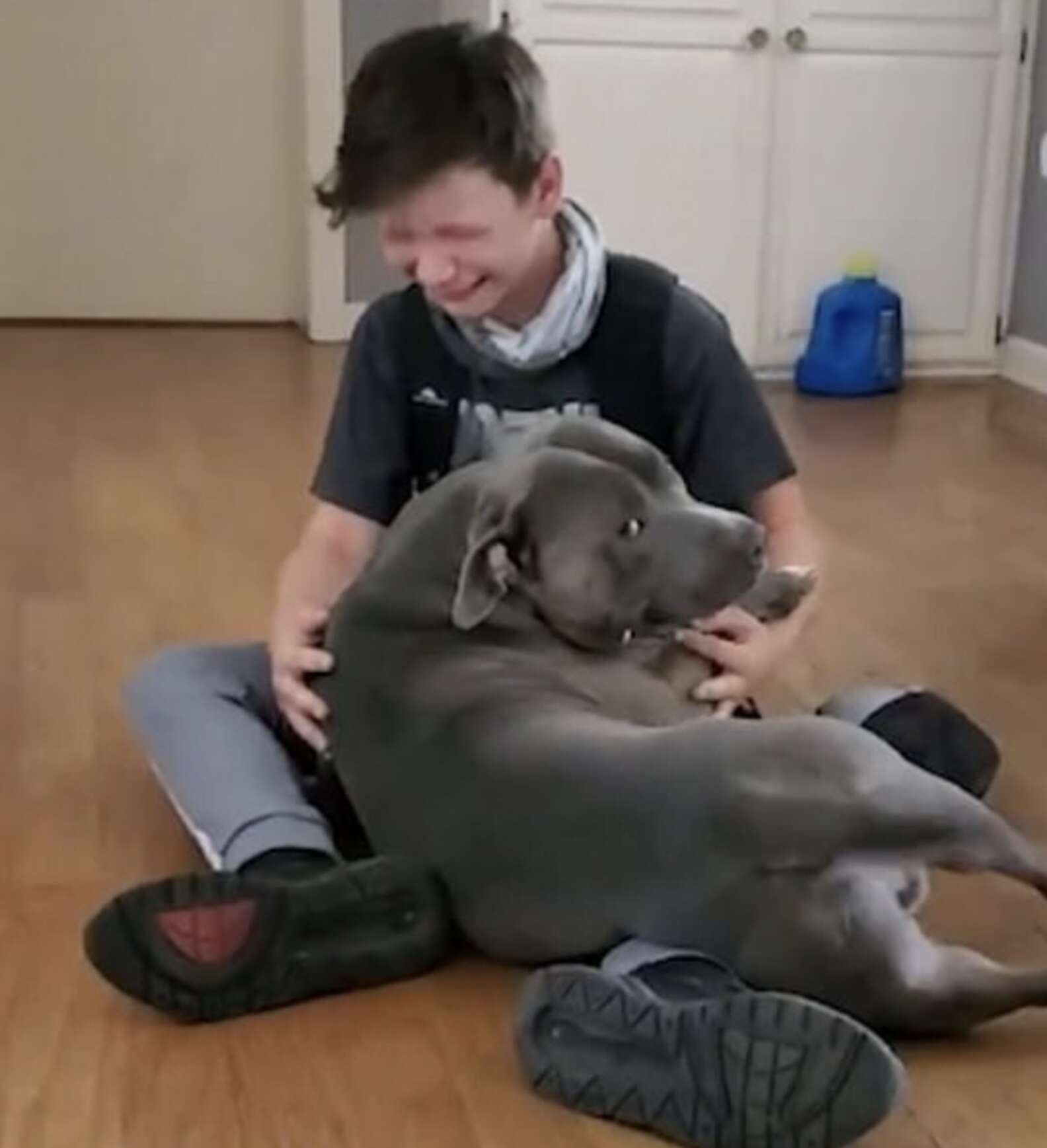
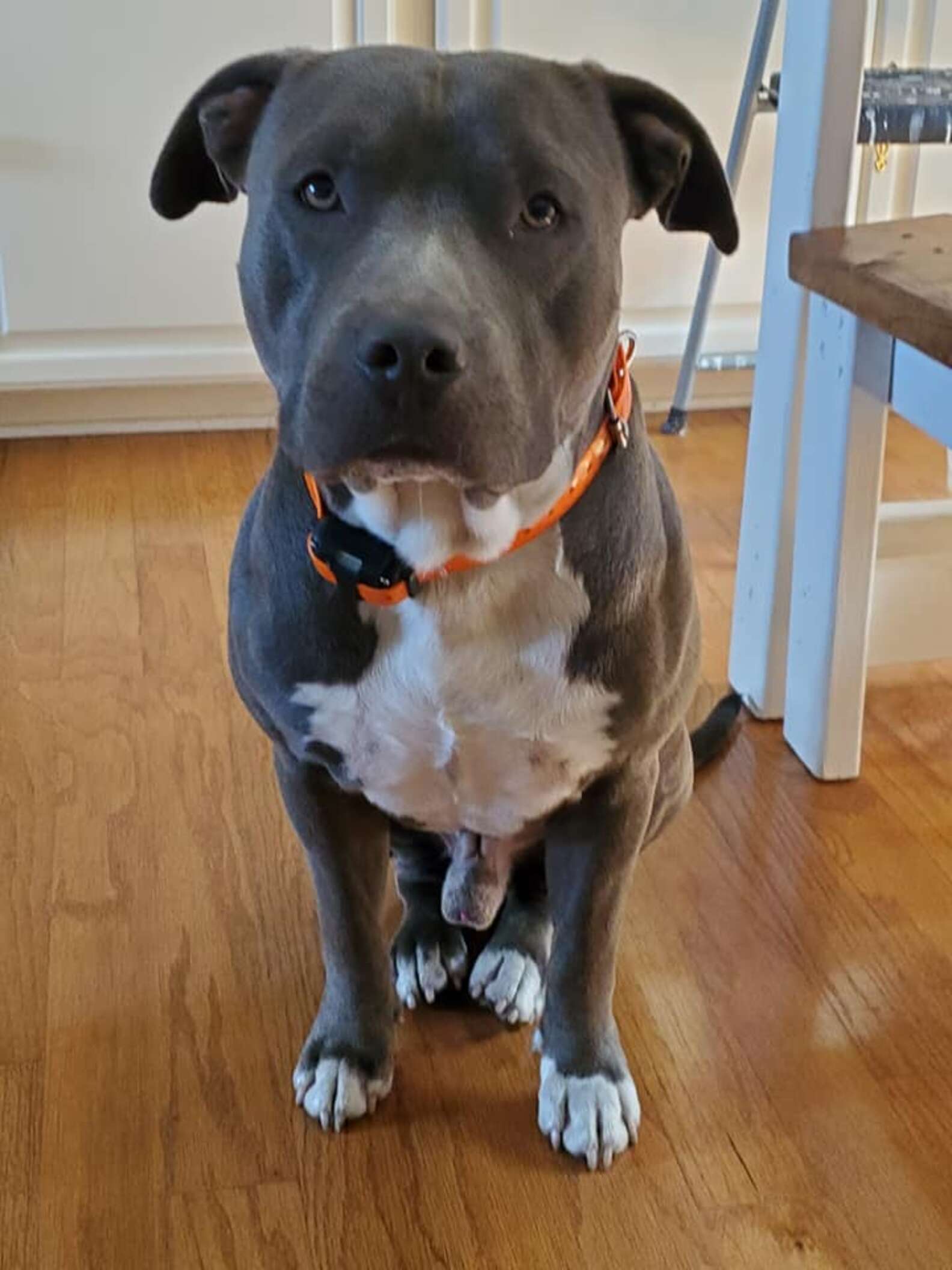
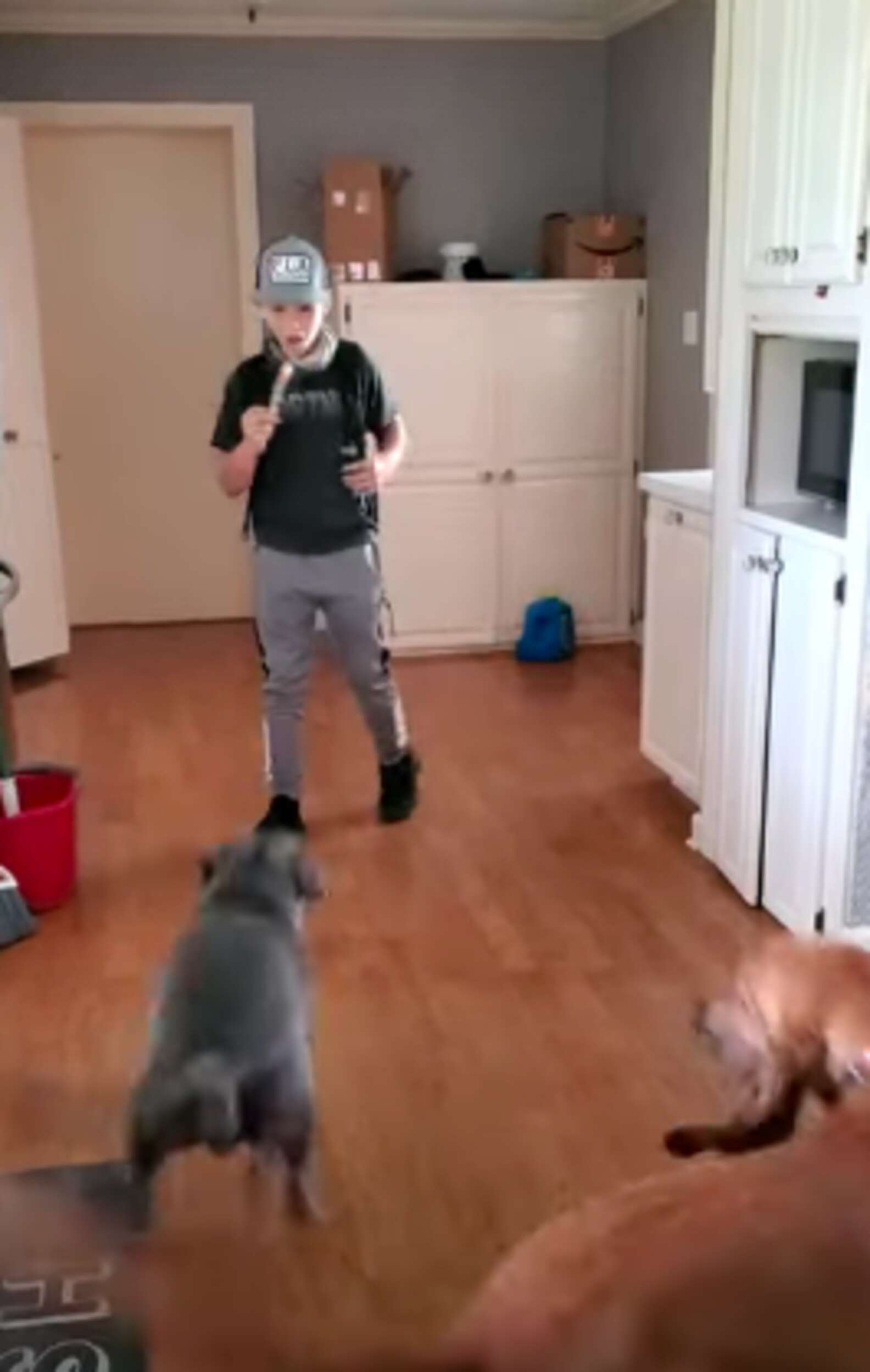
Earlier this month, a 10-year-old boy named Tyler Bandy got the best present he could ask for. As he walked in the door, he was immediately overwhelmed by love and kisses from an old friend — his dog, Bruiser.

STORYFUL/JAMIE BANDY

In January, Bruiser, a gray and white pit bull, was on a walk when he ran after a rabbit and got lost.

The Bandy family did everything they could to try and locate Bruiser. They posted fliers around their Florida neighborhood, posted on Facebook, put out old clothes in front of their home so he could smell them and repeatedly checked their local animal control.

FACEBOOK/JAMIE BANDY

But as the weeks passed and no leads were found, the family was “starting to lose hope,” according to Tyler’s mom, Jamie Bandy.“

That’s when the phone rang,” the Highlands County Sheriff’s Office wrote on Facebook. “Turns out their dog had been picked up by somebody on their way to Highlands County and, after a couple of months, it wound up in the hands of our animal services folks.”

STORYFUL/JAMIE BANDY

A staff member at animal services thought the pup looked familiar and, after some digging on social media, she found out why. Bruiser was returned to his parents, but they kept his arrival secret so that they could surprise Tyler.

“To say Bruiser had a joyous homecoming would be putting it lightly,” the Highlands County Sheriff’s Office said. 

You can watch the emotional reunion here:

Tyler was shocked when he came home and saw Bruiser, and both were overjoyed. Tyler immediately started sobbing and hugging his best friend, while Bruiser showered him with licks, wagging his tail as hard as possible.

“[Tyler] was simply overcome when his parents surprised him with his best friend,” the Highlands County Sheriff’s Office said. “The two have been inseparable since.”

ooOOoo

Just another account of a young boy reunited with his dog. But then so much more than that. In this young man’s mind he had lost the one dear creature in his life. Perhaps made worse because Bruiser just disappeared one day. It was what we adults call unfinished business.

Then after a number of weeks fate stepped in and Bruiser was returned and Bruiser and Tyler were reunited. I am going to repeat that sentence towards the end of the piece which shows the response of Bruiser and Tyler. It just doesn’t get any better. “Tyler immediately started sobbing and hugging his best friend, while Bruiser showered him with licks, wagging his tail as hard as possible.”

Beautiful!

What goes around comes around!

Another account of dogs bonding with humans.

Chernobyl is a name that anyone born before, say, 1970 will associate with a terrible nuclear accident in Russia.

As Wikipedia put it:

The Chernobyl disaster was a nuclear accident that occurred on Saturday 26 April 1986, at the No. 4 reactor in the Chernobyl Nuclear Power Plant, near the city of Pripyat in the north of the Ukrainian SSR in the Soviet Union. It is considered the worst nuclear disaster in history both in terms of cost and casualties, and is one of only two nuclear energy accidents rated at seven—the maximum severity—on the International Nuclear Event Scale, the other being the 2011 Fukushima Daiichi nuclear disaster in Japan. The initial emergency response, together with later decontamination of the environment, ultimately involved more than 500,000 personnel and cost an estimated 18 billion Soviet rubles—roughly US$68 billion in 2019, adjusted for inflation.

But recently BBC Future spoke of the bond that the guards and the abandoned dogs made.

Read it below: (Unfortunately you will have to go here to view the stunning photographs because the BBC prevents them being republished! But it is still a very interesting article.)

ooOOoo

The guards caring for Chernobyl’s abandoned dogs

The descendants of pets abandoned by those fleeing the Chernobyl disaster are now striking up a curious relationship with humans charged with guarding the contaminated area.

It wasn’t long after he arrived in the irradiated landscape of the Chernobyl Exclusion Zone that Bogdan realised his new job came with some unexpected companions. From his first days as a checkpoint guard in Chernobyl, he has shared the place with a pack of dogs.

Bogdan (not his real name) is now in his second year of working in the zone and has got to know the dogs well. Some have names, some don’t. Some stay nearby, others remain detached – they come and go as they please. Bogdan and the other guards feed them, offer them shelter, and occasionally give them medical care. They bury them when they die.

All the dogs are, in a sense, refugees of the 1986 disaster in which Reactor No. 4 at the Chernobyl Nuclear Power Plant exploded. In the aftermath, tens of thousands of people were evacuated from the Ukrainian city of Pripyat. They were told to leave their pets behind. (Read more about the long-term toll of the Chernobyl disaster.)

Soviet soldiers shot many of the abandoned animals in an effort to prevent the spread of contamination. But, undoubtedly, some of the animals hid and survived. Thirty-five years later, hundreds of stray dogs now roam the 2,600km (1,000 sq mile) Exclusion Zone put in place to restrict human traffic in and out of the area. Nobody knows which of the dogs are directly descended from stranded pets, and which may have wandered into the zone from elsewhere. But they are all dogs of the zone now.

Their lives are perilous. They are at risk from radioactive contamination, wolf attacks, wildfires and starvation, among other threats. The dogs’ average lifespan is just five years, according to the Clean Futures Fund, a non-governmental organisation that monitors and provides care for dogs living within the Exclusion Zone.

That dogs inhabit this ruined place is well known – some of them have even become minor celebrities on social media. Clean Futures Fund co-founder Lucas Hixson, who gave up a research career to look after the animals, offers virtual tours of the Exclusion Zone featuring the dogs.

But less is known about the local workers who interact with these canines on a daily basis.

Jonathon Turnbull, a PhD candidate in geography at the University of Cambridge, realised it might be worth collecting these people’s stories.

“If I wanted to know the dogs,” he says, “I needed to go to the people who know them best – and that was the guards.”

What he discovered is a heart-warming story of the guards’ relationship with the animals they encounter in this abandoned environment – a tale that provides insights into the deep bond between humans and dogs.

The guards sometimes go to the trouble of helping the dogs by pulling out ticks embedded in their skin, or by giving them rabies injections

For instance, the guards have given several of the dogs nicknames. According to Turnbull, there’s Alpha, whose name refers to a type of radiation, and Tarzan, a dog well-known to Chernobyl tourists, who can do tricks on command and who lives near the famous Duga radar installation built by the Soviets. Then there is Sausage – a short, fat dog that likes to warm herself in the winter by lying on heating pipes. These pipes serve one of the buildings used by workers in the Exclusion Zone who are part of ongoing efforts to decommission and decontaminate the ruined power plant.

Access to the Chernobyl Exclusion Zone requires a permit, so guards are tasked with controlling checkpoints on roads in and out of the area. People who dodge these checkpoints to trespass in the Exclusion Zone are known as “stalkers”. Guards report them to the police.

When Turnbull, who lives in Ukraine’s capital Kyiv, started making regular visits to the zone, he met Bogdan, and other checkpoint guards. They were reluctant to talk at first so he had to win them over. Then he offered them to chance to take part in his research, which he says was a “turning point”. His idea was to give the guards disposable cameras and ask them to take pictures of the dogs – not posed portraits but scenes of everyday life. The guards only had one other request – “please, please – bring food for the dogs”. So Turnbull did.

The photos taken by the guards revealed how much they had developed companionships with the wandering dogs of the Exclusion Zone.

Turnbull published some of the resulting images and material from interviews with the guards in a paper in December. More recently, he interviewed one of the study participants again on behalf of BBC Future. The guard in question has asked not to be identified to avoid disciplinary action at work, so we refer to him here by the pseudonym “Bogdan”.

When Bogdan walks around the abandoned streets of the zone to check for stalkers, the dogs happily accompany him, he says. They always appear eager to see whether he, or a passing tourist, might be carrying food. Should a companion dog get distracted or run off to chase an animal, it always eventually returns to Bogdan, he adds.

You might also like:

The loyalty goes both ways. Turnbull says the guards sometimes go to the trouble of helping the dogs by pulling out ticks embedded in their skin, or by giving them rabies injections.

Wolves, dogs and other animals could in theory carry radioactive contamination, or genetic mutations potentially passed on by breeding, to places outside the Exclusion Zone

Monitoring who comes and goes from the Exclusion Zone sometimes makes for a dull occupation. But there are always dogs nearby.

At some checkpoints, the guards have more or less adopted some of the animals. They feed them and give them shelter. But not all are so tame. During his research, one guard told Turnbull, “We can’t inject Arka because she bites.”

Another participant spoke of one dog that was even more difficult to approach. It refuses to be touched at all. “You should just give her a pan [of food] and go. She waits until you leave and then she eats,” the guard explained.

The dogs sometimes bark at strangers on first sight, that’s their nature, says Bogdan. But so long as they don’t feel threatened, they sometimes calm down and wag their tails. Occasionally it even seems as though they’re smiling, he adds.

Generally, visitors to Chernobyl are advised not to touch the dogs, for fear that the animals may be carrying radioactive dust. It’s impossible to know where the dogs roam and some parts of the Exclusion Zone are more contaminated than others.

There is wildlife living in the Chernobyl Exclusion Zone besides dogs. In 2016, Sarah Webster, a US government wildlife biologist who was working at the University of Georgia at the time, and colleagues published a paper in which they revealed how mammals, from wolves to boars and red foxes, had colonised the Exclusion Zone. Camera trap data showed that the animals’ numbers were not noticeably lower in those areas where radioactive contamination is higher.

Animals living in the Exclusion Zone are not necessarily confined there. A later studyby Webster and colleagues, published in 2018, detailed the movements of a wolf tagged with a GPS device. It travelled 369km (229 miles) from its home range in the zone, taking a long arc to the south-east, then north-east again, eventually entering Russia.

Wolves, dogs and other animals could in theory carry radioactive contamination, or genetic mutations potentially passed on by breeding, to places outside the Exclusion Zone.

“We know it’s happening but we don’t understand the extent or the magnitude,” says Webster.

Turnbull says the guards do not generally worry about radiation, though they might occasionally use dosimeters to check a dog over.

It actually seems as though the dogs, through the companionship they offer, end up reassuring those who interact with them regularly, says Greger Larson, an archaeologist who studies animal domestication at the University of Oxford and who was not involved in Turnbull’s research.

“They’re kind of putting themselves in the shoes of the dogs,” he suggests, referring to the guards. “If the dog is fine, that means you’re fine.”

But in truth, this may only be a false sense of security.

“It’s an uncanny environment,” notes Turnbull. “You can’t see the danger. You’re constantly aware that it might be there but everything looks normal.”

Despite the fact that the dogs could pose a risk in terms of radioactivity, guards like Bogdan instead emphasise the benefits of having them around. For example, he claims to know dogs that bark in noticeably different ways depending on what they have spotted in the distance – a human stranger, a vehicle, a wild animal. Because of these helpful warning signals, Bogdan thinks of the dogs as “assistants”.

What’s happening in the Exclusion Zone is an echo of interactions with dogs that are known to have occurred within human civilisations for thousands of years, says Larson.

“We find this for the last 15,000 years or more, this is what people do, they make very close associations with not just dogs but a lot of domestic animals […] to sort of say, ‘this is our attachment to the landscape’,” he explains.

All over the world, there are dogs that inhabit a similar, in-between state – not quite fully domesticated, not quite fully wild. These are the feral dogs that roam cities and industrial areas looking for food, the ones that may become to some extent adopted by people but still wouldn’t be considered pets.

Chernobyl’s dogs also live in this sort of space, on the edge of domestication, but there is a difference argues Webster, who has participated in a separate study of Turnbull’s in the past.

“The Exclusion Zone is very different in that it’s abandoned by humans,” she says. “The only people in that landscape on a day-to-day basis, really, are the guards.” As such, the dogs’ opportunities for befriending humans are very limited.

While the outside world remains fascinated by the dogs, and their story, for many guards the connection runs much deeper. Bogdan says he is often asked why the dogs ought to be allowed to stay in the Exclusion Zone. “They give us joy,” he replies. “For me personally, this is a kind of symbol of the continuation of life in this radioactive, post-apocalyptic world.”

ooOOoo

What is so fascinating is that this interaction between the dogs and the people is an echo of the first interaction between hunter/gatherers and wolves of, perhaps, 25,000 years ago or more. And the guards of today and the dogs, whom Larson calls his assistants, are perfectly bonded.

It just goes to show that ‘what goes around comes around’!
This is very sweet!

There is something about a baby!

I must admit to leaving preparing a post until late in the day. I was going to leave it blank but then decided that this was such a sweet story that it had to be shared with you all!

ooOOoo

Dog Loves Listening To Her Baby Brother In Mom’s Belly

She won’t stop wagging her tail ❤️️

By Caitlin Jill Anders

Published on the 16th April, 2021

Avon has always been a very hyper dog, but recently she’s gotten a little calmer — and that’s because she suddenly realized that her mom is pregnant. 

“I think she first noticed I was pregnant when I was around 14 [to] 15 weeks because she would normally jump around so much, but she started being more gentle,” Shea Haugen, Avon’s mom, told The Dodo. 

SHEA HAUGEN

Now, Avon loves to rest her head on her Mom’s belly — because she loves listening to her baby brother moving around inside. 

“She definitely lays her head down to listen to him and she gets really excited when he kicks,” Haugen said. “Typically that’s when her tail starts wagging uncontrollably.”

The dog who used to be so hyper and moving around all the time could now lay with her head on mom’s belly and listen to her baby brother forever, and that’s what true love looks like. Avon can’t wait to meet the newest member of her family, and her mom has a feeling he can’t wait to meet her, too. 

“Funny enough, my baby boy seems to like [giving] her a good kick whenever she lays her head on my tummy,” Haugen said. 

Very soon, Avon is going to be a big sister. In the meantime, she’ll keep following Mom around and laying her head on her belly, proving to everyone what an incredible big sister she’s going to be.

ooOOoo

There’s no question at all that the bond between dogs and humans is so, so special.

I’m sorry but I have to dash now!

It’s not just us who are social

How about plants!

Yes, a deeply interesting post from The Conversation website shows how plants thrive by communicating and much more.

Now this post doesn’t have a dog within sniffing distance but I still wanted to share it with you.

ooOOoo

Plants thrive in a complex world by communicating, sharing resources and transforming their environments

April 14, 2021. 

By Beronda L. Montgomery

Professor of Biochemistry and Molecular Biology & Microbiology and Molecular Genetics; Interim Assistant Vice President of Research & Innovation, Michigan State University.

As a species, humans are wired to collaborate. That’s why lockdowns and remote work have felt difficult for many of us during the COVID-19 pandemic. 

For other living organisms, social distancing comes more naturally. I am a plant scientist and have spent years studying how light cues affect plants, from the very beginning of a plant’s life cycle – the germination of seeds – all the way through to leaf drop or death. In my new book, “Lessons from Plants,” I explore what we can learn from the environmental tuning of plant behaviors. 

One key takeaway is that plants have the ability to develop interdependence, but also to avoid it when being connected could be damaging. Generally, plants are constantly communicating and engaged with other organisms in their ecosystems. But when these ongoing connections threaten to cause more harm than good, plants can exhibit a form of social distancing.

The power of connection and interdependence

When conditions are good, most plants are networkers. The vast majority of plants have fungi that live on or within their roots. Together, the fungi and roots form structures known as mycorrhizae, which resemble a netlike web.

Mycorrhizae increase their host plants’ ability to absorb water and nutrients, such as nitrogen and phosphate, through their roots. In return, the plants share sugars that they produce through photosynthesis with their fungal partners. Thus, the fungi and host plants are powerfully interconnected, and depend on one another to survive and thrive. 

Mycorrhizal connections can link multiple plants in a functioning network. When plants produce more sugars than they need, they can share them via this interconnected root-fungal network. By doing so, they ensure that all plants in the community have access to the energy they need to support their growth.

Put another way, these connections extend beyond a single host plant and its fungal partner. They create communitywide relationships and interdependent networks of plants and fungi. Factors in the external environment, such as the amount of light available for photosynthesis and the composition of soil around the plants, fine-tune the connections in these networks.

Mycorrhizhae also serve as communication channels. Scientists have documented that plants pass defensive chemicals, such as substances that promote resistance against insect pests, to other plants via fungal networks. These connections also allow a plant that has been attacked by aphids or other such pests to signal to neighboring plants to preemptively activate their own defense responses.

Mycorrhizhae are living communities of plant roots and fungi that benefit mutually from their relationship.

When it’s safer to keep your distance

Sharing resources or information that helps other plants ward off danger is a valuable example of the power of connectedness and interdependence in plant ecosystems. Sometimes, however, surviving requires plants to disconnect. 

When environmental cues such as light or nutrients become scarce enough that a host plant can produce enough sugars through photosynthesis to support only its own growth, staying actively interconnected in a larger community network could be dangerous. Under such conditions, the host plant would lose more from sharing limited sugar supplies than it would gain from the network in water and nutrients. 

At times like these, plants can limit mycorrhizal connections and development by restricting how many materials they exchange with their fungal partners and avoiding making new connections. This is a form of physical distancing that protects the plants’ ability to support themselves when they have limited energy supplies so they can survive for the long term. 

When conditions improve, plants can resume sharing with their fungal partners and establish additional connections and interdependence. Once again, they can benefit from sharing resources and information about the ecosystem with their extended plant and fungal communities.

Recognizing kin and collaboration

Social distancing isn’t the only trick plants use to make their way in the world. They also recognize related plants and tune their abilities to share or compete accordingly. When the plants that are interconnected by a fungal network are close genetic relatives, they share more sugars with the fungi in that network than they do when the other plants are more distantly related.

Prioritizing kin may feel highly familiar to us. Humans, like other biological organisms, often actively contribute to help our kin survive. People sometimes speak of this as working to ensure that the “family name” will live on. For plants, supporting relatives is a way to ensure they carry on their genes. 

Plants can also transform aspects of their environment to better support their growth. Sometimes essential nutrients that are present in soil are “locked up” in a form that plants can’t absorb: For example, iron can become bound up with other chemicals in forms very similar to rust. When this happens, plants can excrete compounds from their roots that essentially dissolve these nutrients into a form that the plants can readily use

Plants can transform their environments in this way either individually or collectively. Plant roots can grow in the same direction, in a collaborative process known as swarming that is similar to bee swarms or bird flocks. Such swarming of roots enables the plants to release a lot of chemicals in a particular soil region, which frees up more nutrients for the plants’ use.

Trees use fungal networks to send one another messages – and some species hijack the system to sabotage their rivals.

Better together

Behaviors like mycorrhizal symbiosis, kin recognition and collaborative environmental transformation suggest that overall, plants are better together. By staying in tune with their external environment, plants can determine when working together and fostering interdependence is better than going it alone. 

When I reflect on these tunable connections and interdependence between plants and fungi, I draw constant inspiration – especially during this pandemic year. As we make our way in a constantly changing world, plants offer all kinds of lessons for humans about independence, interdependence and supporting each other.

ooOOoo

I agree with Professor Montgomery. Who would have though it! Plants do indeed offer strong social lessons for us humans. Maybe that explains why trees, especially trees, have such a profound, beautiful appeal to yours truly as well as many other people.

Going to close with a photograph taken of our trees and pond here at home.

They are communicating!

Beyond the Call of Duty

A little coyote pup is rescued by a policeman.

I am republishing a post from The Dodo. It is dated May, 2019 but the actions, feelings and results are timeless.

Have a read of it yourself.

ooOOoo

Kind Cop Goes Above And Beyond For A Lonely Little Coyote Pup

He found a friend when he needed it most ❤

By Stephen Messenger

Published on 5/9/2019

Stop in the name of the awww.

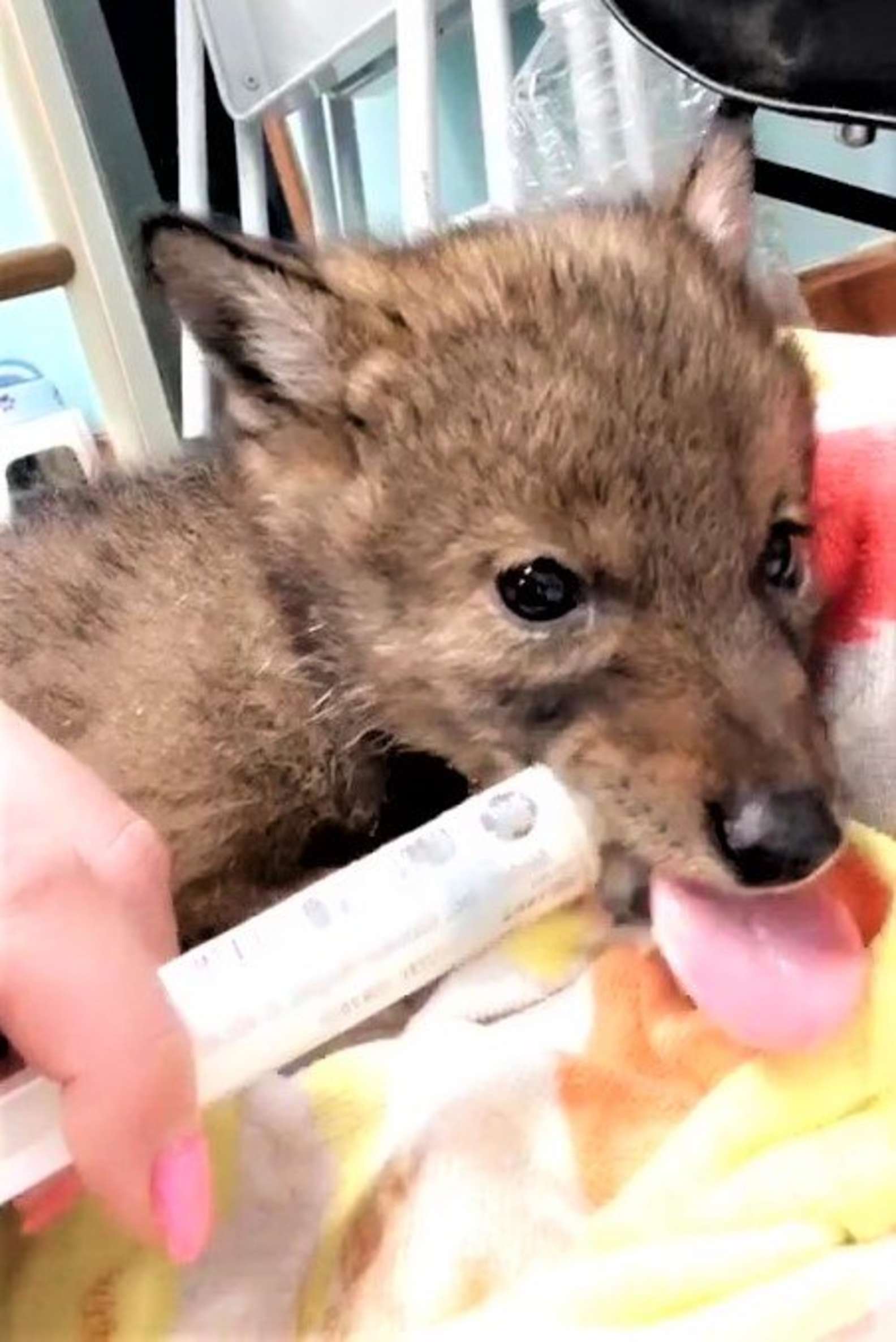
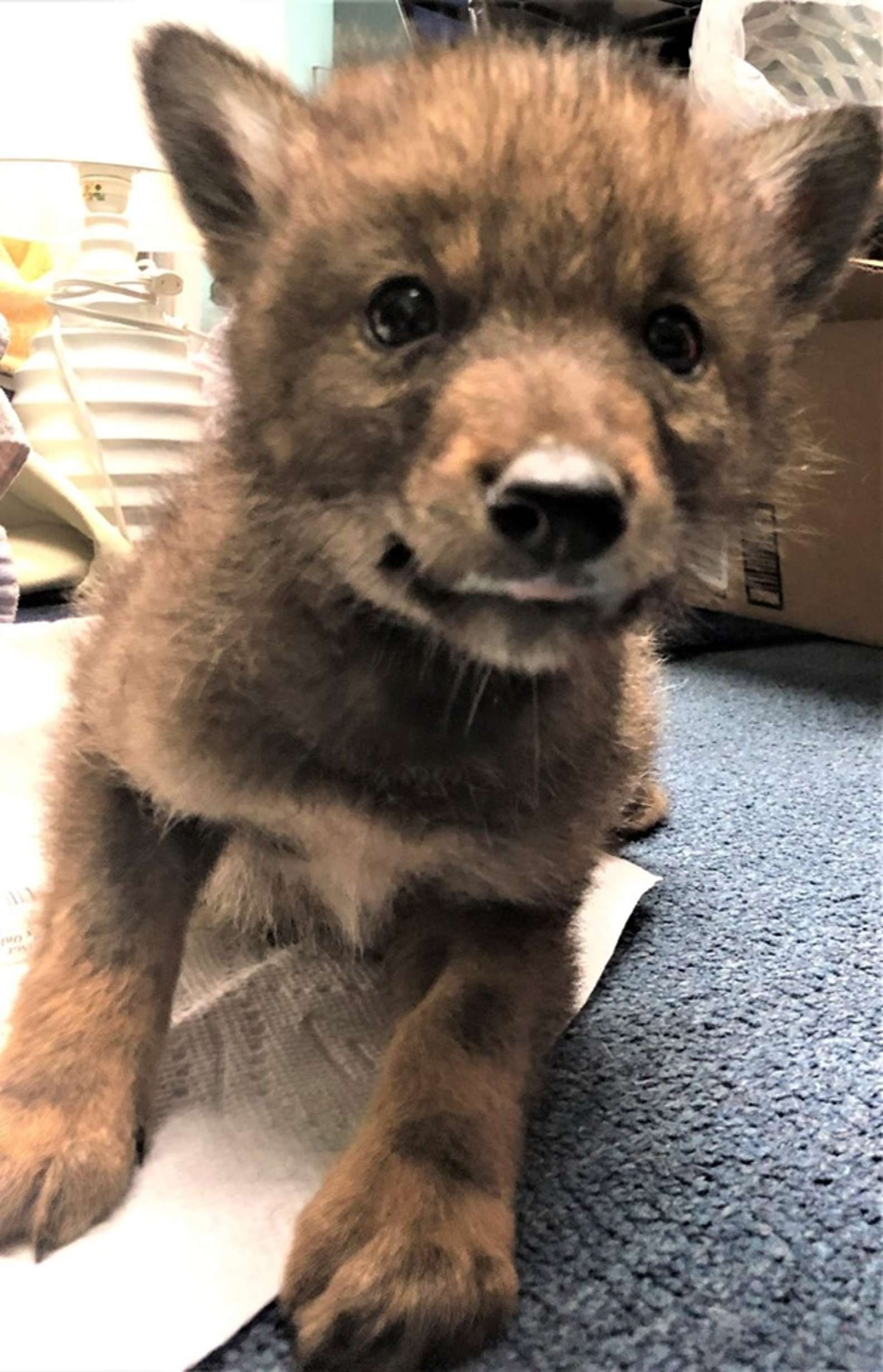
This week, a Massachusetts State Police trooper did just that — coming to the aid of a helpless young coyote pup who’d been found stranded all alone along a busy roadway.

MASSACHUSETTS STATE POLICE

Seeing that the pup’s mother was nowhere in sight, trooper Carlo Mastromattei contacted Lisa Cutting, owner of Ocean View Kennels, for help in safely removing the animal from that perilous spot.

The pup was now out of immediate danger, but Mastromattei’s kindhearted actions didn’t end there.

MASSACHUSETTS STATE POLICE

At that late hour, all nearby wildlife rehab facilities were apparently closed. So, the trooper then decided to go above and beyond his call of duty in order to keep the little coyote safe until morning.

Mastromattei brought the pup home, where he and his girlfriend kept him cozy and fed through the night.

MASSACHUSETTS STATE POLICE

The next day, Mastromattei brought the coyote to the Tufts Wildlife Clinic for a checkup. Fortunately, he was found to be in good health — thanks in no small part to the trooper having rescued him in time.

MASSACHUSETTS STATE POLICE

According to the Massachusetts State Police, the young coyote has since been placed under the care of a wildlife rehabilitator. With any luck, he’ll continue gaining his strength until he’s old enough to be released back into the wild to live life as nature intended.

For their efforts, those involved in the pup’s rescue are getting some much-deserved praise from police officials, who wrote in a post:

“The Department offers its sincere thanks to Trooper Mastromattei, his girlfriend, Ocean View Kennels, and Tufts for their compassionate care for this beautiful little creature.”

ooOOoo

I would like to bet that Carlo Mastromattei has a dog at home. For this compassion shown by Carlo Mastromattei is surely brought about by having a dog or two in his life.

I guess we will never know but my bet stands.

The pain of letting go.

Dogs ought to live far longer!

I have spoken before of the bond that we humans make with our dogs, and vice versa, and the love that flows from such a bond.

But they don’t live long enough! And the end of their lives is a very difficult period for us.

Doug Goodman writes a blog. He is also an accomplished author.

Recently Doug wrote about the most difficult decision he had to make. Doug kindly gave me permission to republish his article.

ooOOoo

The Difficult Decision to Euthanize Ryder.

By Doug Goodman, April 20th, 2021

Unfortunately, all dogs die. There’s no easy way to do this, but it’s a fact of life as a pet owner. For me, the key decision was when is the right time to do it? I don’t want to wait too long so that Ryder suffers, but I’d feel guilty putting Ryder down too early.

We’ve talked about this many times, in fact. Often on walks or long rides in the car, my wife and I go through the bullets, like a checklist of emotional redemption. There are many “easy” decisions when owning a dog: which food? That bag of Purina over there. When do you pick up after the dog? At least twice a week in the spring and summer, sometimes every other day. Should you pet the dog? Well, it’s a German Shepherd, so if it wants to be petted, you better do it now because it may not want to be petted the rest of the day.

Deciding to euthanize is nothing so simple.

Years ago when we went through end-of-life with Mojo, a veterinarian recommended as a litmus test to pick the three things the dog enjoys most in life. When the dog can no longer do one or especially two of those things, it’s time to euthanize.

But that litmus test doesn’t apply to all dogs, and certainly not to Ryder. She’s always been a peculiar dog. She likes her backyard and playing with Koda, and she likes to eat*. She still does those things. For me, it is a pain factor based on arthritis and lack of mobility. People will talk about the dignity of life for a dog, and I think there is some truth to that. I remember laying in bed one day and Mojo walking in and telling me he was ready. A few months later, he again looked at me, and his eyes were full of truth. He wasn’t happy, he didn’t like this anymore. He was ready. Sometimes Ryder gives me that look, but I’m not sure. She’s always had a pained, scared-of-the-world emotion in her eyes.

But there is “pained” and there is “pain.” Ryder can’t put in words her suffering, so it’s up to me to observe her closely. Over the past few months, and certainly over the past year, my family and I have noticed changes to her behavior, physicality, and mental state:

-She had urination problems. She was diagnosed as a UTI and corrected. Alone, this is not a sign that she is close to dying, but I believe it may be a sign of the severity of her back arthritis. She’s not cleaning herself. This is especially troubling considering…

-She has problems holding in poop. Sometimes she’s sitting there, laying in it, and she doesn’t realize she’s pooped herself. Often, she can’t make it through the night without releasing her bowels in the house. If she isn’t able to clean herself, and she isn’t aware that she is going to the bathroom, this can lead to discomfort and additional UTIs.

-She stopped climbing the stairs. This was a subtle one because our dogs aren’t allowed upstairs. But last week we had a major thunderstorm, and as anyone who owns German Shepherds can attest, GSDs only want to be right next to you when the thunder booms and the lightning crashes. Koda busted down the dog gate and ran upstairs for solace. Ryder, who is usually the first one to bump against the bedroom door until we wake up, stayed downstairs and didn’t attempt coming to us. At least, I didn’t see her attempt it. She may have tried, failed, and gone back downstairs. That’s a first in her lifetime, and she wouldn’t have stayed down there if she didn’t absolutely have to remain on the first floor.

-She is stumbling. She often stumbles in the house, especially walking inside and out. She has fallen doing little playful jumps at my daughter. I’ve seen her fall to the floor and not be able to stand for thirty seconds or more.

-This will sound weird, but she sits a lot, and not on purpose. One of the things she does is get in the way of her people (helloooo, herding dog). She backs out when she realizes I want to get through. Now, she backs out, and her butt falls down, and she stares at me like “That wasn’t supposed to happen. What do I do now? Sorry!” until she can get back up.

-She is whining and yelping. This is the big one. My dogs don’t whine or yelp for no reason. They aren’t talkative dogs. For the past year, though Ryder will yelp when roughhousing with Koda. She wants to jump on him, but she’s incapable. Lately, she’s really reduced her roughhousing. Additionally, Koda is being a son of a bitch about this. A few days ago I noticed they were playing their favorite game of “I’ve got a thing and you don’t.” I posted about this when during one of these games, Ryder knocked the poop out of Koda. That old chestnut. But this last time when Koda wanted the random stick, he bumped her rear with his chest so that she went down. I scolded him, he didn’t understand, and eventually Ryder dropped the stick and guarded it with strong play-snaps. Koda wasn’t going to take any further action to take the prized random stick, but the fact that he knows to exploit this indicates to me that one day we could find out he’s hurt her, perhaps broken her back from bumping her, and now you have to put down Ryder immediately in your backyard. Nobody wants that. 

So we have elected to euthanize Ryder. 

Damn, there’s a lot of finality in that statement. She is a family member, and we lover her very much. I picked her up from the tiny town of Buda, Texas and drove her three or four hours back to Houston. She never liked car rides after that. We have a lot of memories with that dog, some I’m sure I will share in the coming weeks, but for now, I want to focus on the decision.

We are reaching out to companies that can euthanize at home. With all of Ryder’s fears, it seems like the best option. Of course, home euthanasias are the popular choice in the pandemic. Earlier in 2020, some of the vets we looked to wouldn’t allow owners to be present for euthanasias. So we will see if we can make the home euthanasia happen.

In the meantime, I give her half an aspirin to help with the pain, and my daughter purchased some CBD-infused peanut butter, too. We’ve had her on joint vitamins, but that only goes so far. We do as much as we can to keep Ryder comfortable, but it’s clear that she’s in near-constant pain and that her hips/back have greatly reduced function. She is an eleven and a half year old GSD, old for one. So as difficult as it is to decide to euthanize, I know that it is a necessary part of ownership. If I’m willing to own a dog, I must be willing to take care of it throughout it’s life, not just the happy puppy parts, but all of it, including her last days. 

*Ryder only eats infrequently over the past few weeks. It is one of her three joys: play, eating, and protection/perimeter walking, and I would argue that food is her highest joy, so not eating is a big clue that her time is soon.

ooOOoo

I met Jean in 2007 in Mexico. Jean was rescuing street dogs, looking after them for a while, and then finding homes for them in the USA; primarily Arizona. I was then living in Devon, England together with my German Shepherd, Pharaoh. Jean loves all dogs irrespective of size. I moved out to Mexico, with Pharaoh, permanently in 2008. Living with so many dogs around the home quickly brought an awareness of the integrity of dogs, of their ability to love unconditionally, and I started this blog in 2009.

Now Jean and I live in Southern Oregon. Indeed we have been here since 2012. We are down to six dogs: Cleo; Brandy; Sheena; Oliver; Pedi and Sweeny. That means we have had many dogs die in the past. I still miss Pharaoh who died in 2017. Or rather it should be said that the decision to euthanise him was in June, 2017.

In the end we have to make that final decision for our beloved dogs. It is, frankly, so much better than leaving dogs to die because the last few weeks or days can be very brutal.

So we know only too well what Doug is going through. Our thoughts are with Doug and Ryder.

The love for a dog and its rewards

What a hero!

Time after time we read about the special bond between humans and dogs. And unlike us humans dogs seem to completely forget times in their past when they were treated cruelly.

Take this story of a dog that was an absolute hero.

ooOOoo

Dog Spots A Boy Being Swept Out To Sea And Rushes To Help Him

By Lily Feinn Published on 22nd March, 2021

Max was never trained to be a hero, but when the moment called for it, the Staffordshire terrier/bulldog mix answered the call.

Before Jamie and Rob Osborn adopted Max, he was a neglected pup. He lived mostly outside and was never taken out for walks. But the love of his new parents quickly changed the wary dog.

FACEBOOK/ROBERT OSBORN

“When we got him, he was a bit antisocial,” Jamie Osborn told The Dodo. “If we were patting him too much, he’d get up and walk away. These days, Max is a completely different dog. He’s always happy! He’s really loving and gives us lots of love and affection.”

Max now lives inside as part of the family in Port Noarlunga, Australia. He loves sleeping in bed with his 11-year-old brother, Nev, and — most of all — splashing around in the water.

In the summer, Max spends most of his time at the beach with his family. “We have kayaks and he likes to swim along with us as we paddle, so we got him a life jacket so he wouldn’t get too worn out,” Osborn said. “Rob likes to surf and snorkel, so Max can often be seen at the beach hanging with the surfers waiting for a wave.”In January, Max was enjoying a quiet day at the beach with his dad and brother when something went wrong. A young boy got caught in the current and started to panic. Instead of swimming parallel to the shore to escape the current, he tried to swim against the current and quickly got stuck. Rob spotted the boy and called out to Max for help.

FACEBOOK/JAMIE OSBORN

“Max was just swimming around, wearing his life jacket, having a great time when the young boy got into trouble,” Osborn said. “Rob had the boy call Max over. Max was just doing what he loves best — swimming.”
Max obediently swam over to the struggling boy and let him grab ahold of his life jacket. The pup fought the current and towed him back to the safety of the beach.

Later, Max acted as lifeguard yet again. “One of Nev’s friends also found it a bit tough, so he went back and got her, too,” Osborn wrote on Facebook.

Max was declared a hero — but he doesn’t know it. All he knows is that he’s getting a lot more pets and treats, and is happier than ever.

ooOOoo

Isn’t this a terrific story! Max is a real star and hero. But then so are many, many other dogs. All they need is love from us humans and then they bond with us for life.

No end to the insights into our dogs!

Some dogs are always jealous

The fact that some dogs get jealous from time to time is nothing new. Our own Cleo, a female GSD, is especially jealous of some of our other dogs.

Cleo as a puppy

But researchers have found dogs exhibit three human-like signatures of jealous behaviour and I want to share the details with you.

ooOOoo

Your Dog Gets Jealous Just Imagining You With Another Canine, Study Finds

By Mary Jo DiLonardo, April 13th, 2021

Dog owners recognize jealousy when they see it. Edoma / Getty Images

To the surprise of no dog owner anywhere, a new study finds that dogs get jealous.

You may know the feeling when you’re out on a walk and stop to pet another pooch. Your dog may bark or whine, or even come in between you and the offending canine.

New research published in the journal Psychological Science finds that dogs exhibit these types of jealous behaviors even when they only imagine their owner is interacting with another dog.1 In the case of this study, the perceived rival was an artificial dog.

In the past, some scientists have insisted jealousy is strictly a human trait and people are merely projecting emotions on their pets.1

“​I think it is natural for dog owners to project a range of human thoughts and emotions onto their pets,” lead author Amalia Bastos, a Ph.D. candidate at the University of Auckland in New Zealand, tells Treehugger.

Bastos cites a study published in 2008 in the journal Cognition and Emotion where 81% of dog owners said their pets get jealous. But as much as pet owners love their animals, they are sometimes wrong about them, she says.2

That same study found that 74% of dog owners reported their pets feel guilty after misbehaving.2 But several studies have found that what people see as a “guilty look” is merely dogs responding to getting in trouble from their owners, whether they actually misbehaved or not.3,4

“Anecdotes from dog owners are interesting and can inspire fascinating research into dog intelligence and behavior, but it is important that this is taken only as a starting point for rigorous science before we can make such claims,” Bastos says.

She adds: “Work on dog jealousy to date is more promising than for guilt: our study shows that dogs exhibit three signatures of human jealous behavior. However, we caution that the fact that dogs display jealous behavior does not necessarily mean that they experience jealousy as we do.”

For the study, researchers set up an experiment where 18 dogs imagined their owners interacting with either a realistic-looking stuffed dog or a similarly sized fleece-covered cylinder that looked nothing like a dog. The fake dog played the role of a potential rival while the cylinder was a control.1

First, the dogs watched the stuffed dog next to their owner. Then, a barrier was placed between the dog and the stuffed animal so they could no longer see the potential rival. The dogs pulled strongly on their leashes when their owners appeared to be petting the fake dog behind the barrier. In a second experiment, the dogs pulled on the leashes with less force when the owners appeared to be petting the fleece cylinder.1

“We developed a novel methodology whereby we could directly measure the amount of force a dog used to pull on its lead,” Bastos explains. “This provided the first easily quantifiable, objective measure of how strongly dogs attempt to approach a jealousy-inducing interaction between their owner and a social rival.”

This is called the “approach response” as the dog tries to get closer to the owner and the potential rival. It’s also how babies and kids respond when they are jealous, Bastos says.

“The approach response is a straight-forward and clean measure which happens to be the single most universal reaction to jealousy-inducing situations in human infants and children,” she says. “Although infants and children show a range of behaviors when observing their mothers interact with another infant — including but not limited to attacking the rival, crying, seeking physical contact with the mother, throwing a tantrum, or screaming — almost all react primarily by approaching the jealousy-inducing interaction.”

Researchers were able to measure the actual strength of the approach response rather than relying on inconsistent behaviors like barking, whining, growling, or attempting to bite, which would vary among dogs.1

The Canine Subjects Showcased Jealousy Signatures 

The researchers found the dogs exhibited three human-like signatures of jealous behavior.1

These findings were different from earlier research because it’s the first to show dogs can mentally represent — or imagine — social interactions that they can’t directly see, Bastos says.

“We know this because when their owners appeared to pet a fake dog the dogs could not see behind an opaque barrier, they reacted with an approach response, which is a common jealous behaviour in humans. This suggests that dogs could mentally simulate what their owners must have been doing out of their direct line of sight,” she says.

It also showed that, like humans, dogs reacted more strongly when their owners interacted with a potential rival than with an inanimate object. And the reactions happened due to the interaction, and not when the owner and the rival were in the same room but not interacting.1

“Previous studies confounded jealous behavior with play, interest, or aggression because they never tested dogs’ reactions to the owner and the social rival being present in the same room but not interacting,” Bastos says.

“In our control condition, where owners petted a fleece cylinder, the fake dog was still present nearby,” she adds. “Dogs did not try to approach it as they did when they were being petted by the owner, showing that the interaction itself triggered their approach response, and therefore this is caused by jealous behaviour.”

Although this research is the first step, more research is necessary to figure out if dogs experience jealousy the same way people do.1

“There is still much work to be done to establish what dogs subjectively experience while exhibiting jealous behaviours, and this is a very difficult question to answer scientifically,” Bastos says. “We may never have an answer!”

ooOOoo

The researchers went to some lengths to show that the dogs were able to detect real interaction with another dog rather than a fake dog. The video is very interesting and I hope you are able to watch it.