Dogs are not always happy as we know with the loss of our Sheena. Because the other dogs felt the loss inexplicably. But in the main they are happy, happy animals. Unlike us humans who have lots of things to contend with. I say this because in the last twenty-four hours we have had the sudden explosion of fire down in Northern California, the McKinney blaze, which has grown very rapidly.
California’s Governor Gavin Newsom has declared a state of emergency over the fire, which began on Friday afternoon before rapidly exploding in size due to a combination of dry fuel after a drought, strong winds and lightning strikes.
Around 650 firefighters are battling to contain the fire, officials say, but with little success. Sheriffs said on Sunday evening that it was “0% contained”.
As a result, more than 2,000 inhabitants of the area around the Klamath National Forest are being forced to evacuate their homes. Rescue teams have been aiding hikers who had been on the national park’s trails.
The China 2 fire, that is part of the group of California fires, is about 55 miles due south of home. Far enough not to panic but not far enough not to get us to check our evacuation preparations.
We hope that we are not evacuated in the next few weeks because of fire!
Here is a delightful dog article courtesy of The Dodo.
ooOOoo
Dog Dances In The Rain After 175 Days Stuck In Shelter
“The absolute joy in his eyes and the feeling of freedom was wonderful to watch.”
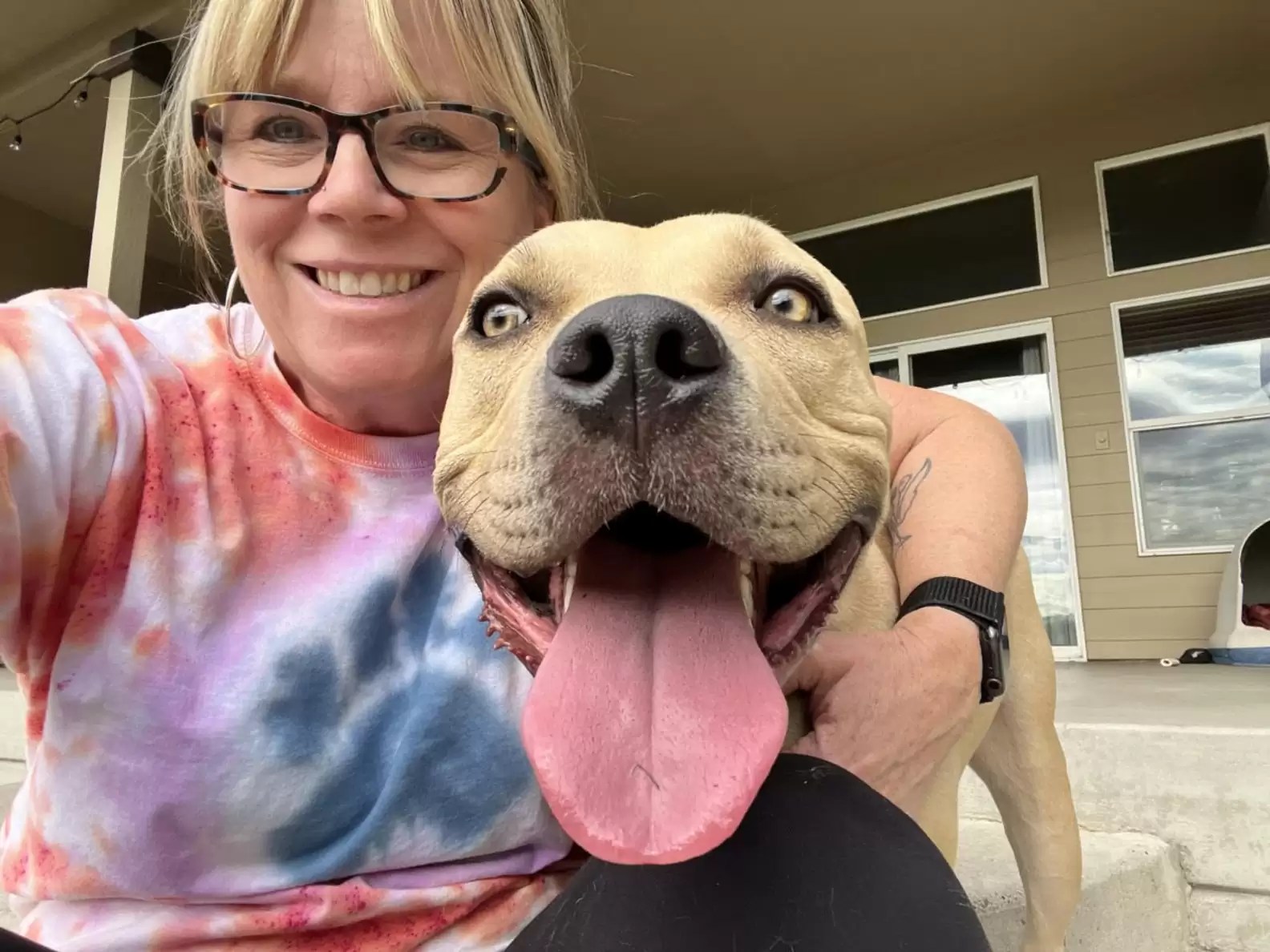
When staff members from Forgotten Dogs Rescue pulled Rambo from a shelter and placed him with a foster family, they had no idea how much the pittie mix would love the feeling of freedom.
It was raining outside, but that wasn’t going to stop him. After 175 days, Rambo was finally out of the shelter, and he was so happy that he started running and dancing in the rain.
“I cried happy tears when his foster mom sent me the video,” Julie Saraceno, a shelter volunteer, told The Dodo. “That was his second day in his foster home, and the absolute joy in his eyes and the feeling of freedom was wonderful to watch.”
When Rambo went from a small concrete kennel to a large grass-covered yard, he couldn’t believe his eyes.
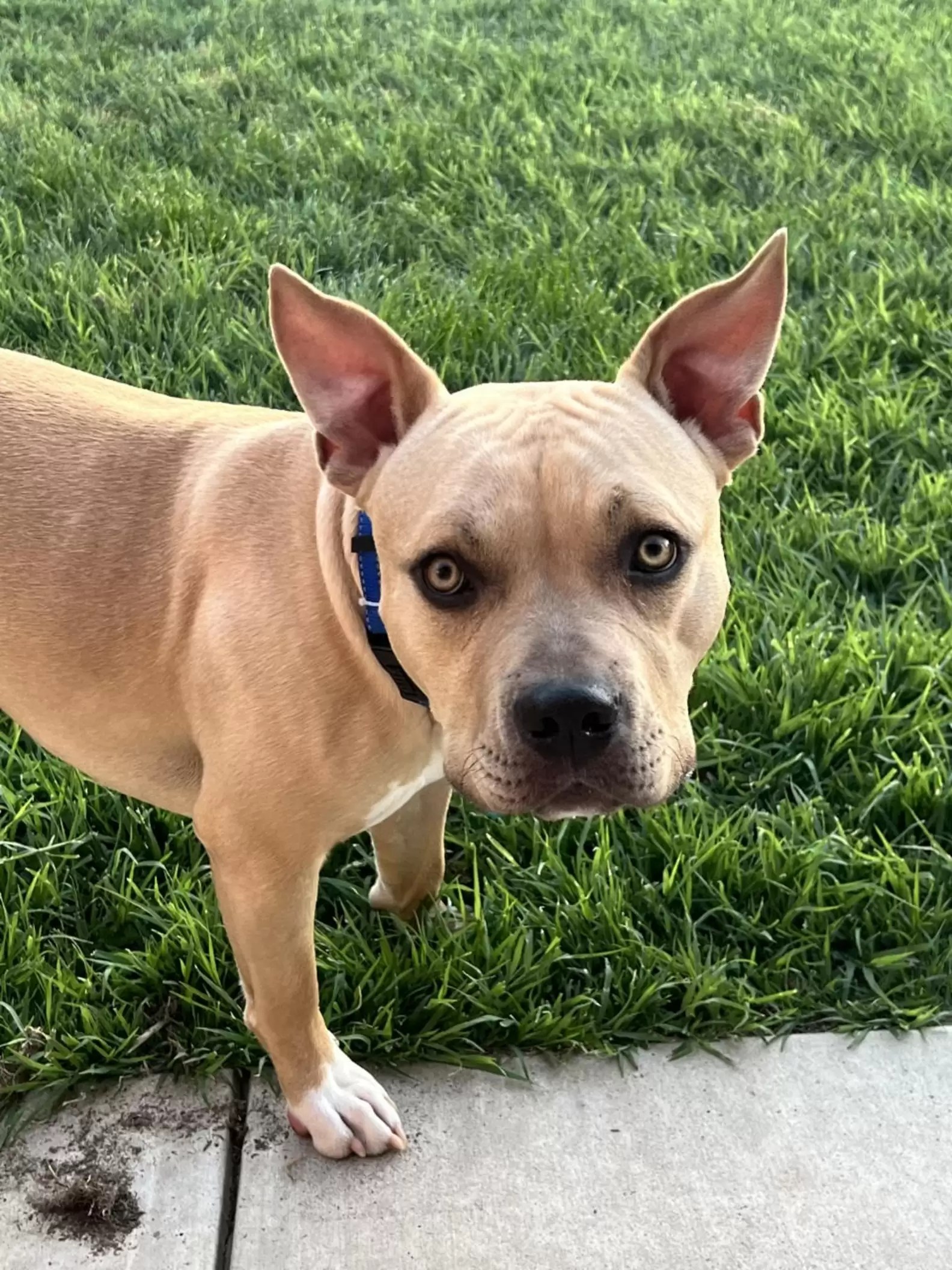
The young dog with beautiful, big eyes has an exuberance that shows. He loves other dogs and cats, and while he’s certainly high energy, he’s also always willing to snuggle on the couch.
“He is the sweetest guy to the people he considers his crew,” Saraceno said.
Rambo, who was originally found roaming the streets of Kennewick, Washington, as a stray, is working every day to become more confident and less fearful. Through his work with a trainer, he has learned obedience, how to meet strangers and lots of other skills that have made him a good boy.
Once Rambo finishes his training, he’ll be ready to meet potential fits for his forever home, ideally one where there’s space for him to exercise all his energy.
Pretty soon, Rambo won’t have to jump at every opportunity to get outside. He’ll have a yard — and a family — all his own.
ooOOoo
(The first photograph was taken by Julie Saraceno and the last two were taken by Billie Wensveen.)
Six months in a shelter! That must have been a real joy for Rambo when he was let out. Correction: It was a real joy because that was how Rambo expressed himself.
Another very useful guest post from Penny Martin who is becoming a very regular contributor to this place. This time Penny writes about being on a budget, aren’t we all, but still keeping your dog safe and happy.
Six Ways to Make Your Home and Yard Dog-Friendly on a Budget
By Penny Martin.
Dogs add many wonderful things to their owners’ lives; however, owning a dog can be a drain on your bank account. According to statistics, the average American dog owner spends $1,480 per year on dog expenses. These tips can help you make your home and yard more dog-friendly without breaking the bank.
1. Add a Fence
Dogs need exercise, a place to go to the bathroom and a chance to sniff around and be a dog. However, if you don’t have a yard with a secure fence, it isn’t safe to allow your dog outside without a leash. Even a well-trained dog may run off to chase a squirrel, greet a strange dog or go exploring. This puts your dog at risk of being hit by a car, getting in a fight with another dog or animal or becoming lost. Adding a fence to your yard allows you to enjoy time with your pet off leash without risking your pet’s safety.
2. Add a Backyard Pool
Not every dog loves to swim, but many do. You can give your dog a place to cool off and have some fun without spending a lot of money by purchasing a wading pool or a small stock tank. If you think your dog would enjoy more than splashing around, search for a dog-friendly place in your area where you can inexpensively take your dog to swim. However, don’t just toss your pup into the deep end. Not all dogs are natural swimmers. Many facilities that have pools for dogs offer swimming lessons.
3. Create Shady Spots
Dogs love to run and play and on hot days they can easily overheat. Help your dogs stay cool by making sure they have plenty of shady spots to hang out. One inexpensive way to do this is to purchase a portable awning. You can set the awning up anywhere in your yard and put it away when you no longer need it. Trees are also a good source of shade, but it is important to keep your trees maintained.
4. Remove Dead Trees and Branches
Dead trees create a safety hazard and provide a home for pests. Have a professional local tree service remove any dead trees and branches in your yard before they cause an injury or accident. Do not try to remove the tree yourself. Professionals have the right gear, tools and safety training to remove the tree safely and without damaging your property. Read online reviews before you reach out to contractors. Get at least three estimates and make sure to ask whether stump grinding and disposal are included in the price.
5. Buy Trash Cans With Lids
Trash cans are smelly, full of tasty food and plenty of stuff to shred. It is no wonder that most dogs love to root through them. However, spoiled food, sharp objects or toxic materials can injure or sicken your dog. Avoid this problem by purchasing trash cans with lids that lock.
6. Remove Dangerous Plants
Many plants can be harmful to dogs who ingest them. Research the plants in your yard and remove any that could cause a problem.
Owning dogs is not a cheap endeavor. However, you can make your home safe and comfortable for them without spending all your savings by adding a fence and pool, creating shady spots, removing dead trees, purchasing garbage cans with lockable lids, and getting rid of poisonous plants.
ooOOoo
Here at home, because we live in a rural location, dead trees and branches are an ever-present problem. Luckily our dogs don’t seem to be drawn to them but the issue of pests is a different matter. We have thirteen acres of which half is forest and it is all too much for a contractor. Correction: It is all too expensive for us!
For the wider audience of readers this, I am sure, offers very good advice and is another great post from Penny.
Another item about the James Webb Space Telescope (JWST).
I make no apologies for returning to the JWST in just a week after publishing my first article about the telescope. For I found the latest article, again published on The Conversation, to be incredible and that was all I needed to share it with you.
ooOOoo
To search for alien life, astronomers will look for clues in the atmospheres of distant planets – and the James Webb Space Telescope just proved it’s possible to do so
Published July 14th, 2022.
By Chris Impey University Distinguished Professor of Astronomy, University of Arizona and
Daniel Apai Professor of Astronomy and Planetary Sciences, University of Arizona.
We are two scientists who study exoplanets and astrobiology. Thanks in large part to next-generation telescopes like James Webb, researchers like us will soon be able to measure the chemical makeup of atmospheres of planets around other stars. The hope is that one or more of these planets will have a chemical signature of life.
There are many known exoplanets in habitable zones – orbits not too close to a star that the water boils off but not so far that the planet is frozen solid – as marked in green for both the solar system and Kepler-186 star system with its planets labeled b, c, d, e and f. NASA Ames/SETI Institute/JPL-Caltech/Wikimedia Commons
Habitable exoplanets
Life might exist in the solar system where there is liquid water – like the subsurface aquifers on Mars or in the oceans of Jupiter’s moon Europa. However, searching for life in these places is incredibly difficult, as they are hard to reach and detecting life would require sending a probe to return physical samples.
Theoretical calculations suggest that there are around 300 million potentially habitable planets in the Milky Way galaxy alone and several habitable Earth-sized planets within only 30 light-years of Earth – essentially humanity’s galactic neighbors. So far, astronomers have discovered over 5,000 exoplanets, including hundreds of potentially habitable ones, using indirect methods that measure how a planet affects its nearby star. These measurements can give astronomers information on the mass and size of an exoplanet, but not much else.
Every material absorbs certain wavelengths of light, as shown in this diagram depicting the wavelengths of light absorbed most easily by different types of chlorophyll. Daniele Pugliesi/Wikimedia Commons, CC BY-SA
Looking for biosignatures
To detect life on a distant planet, astrobiologists will study starlight that has interacted with a planet’s surface or atmosphere. If the atmosphere or surface was transformed by life, the light may carry a clue, called a “biosignature.”
For the first half of its existence, Earth sported an atmosphere without oxygen, even though it hosted simple, single-celled life. Earth’s biosignature was very faint during this early era. That changed abruptly 2.4 billion years ago when a new family of algae evolved. The algae used a process of photosynthesis that produces free oxygen – oxygen that isn’t chemically bonded to any other element. From that time on, Earth’s oxygen-filled atmosphere has left a strong and easily detectable biosignature on light that passes through it.
When light bounces off the surface of a material or passes through a gas, certain wavelengths of the light are more likely to remain trapped in the gas or material’s surface than others. This selective trapping of wavelengths of light is why objects are different colors. Leaves are green because chlorophyll is particularly good at absorbing light in the red and blue wavelengths. As light hits a leaf, the red and blue wavelengths are absorbed, leaving mostly green light to bounce back into your eyes.
The pattern of missing light is determined by the specific composition of the material the light interacts with. Because of this, astronomers can learn something about the composition of an exoplanet’s atmosphere or surface by, in essence, measuring the specific color of light that comes from a planet.
This method can be used to recognize the presence of certain atmospheric gases that are associated with life – such as oxygen or methane – because these gasses leave very specific signatures in light. It could also be used to detect peculiar colors on the surface of a planet. On Earth, for example, the chlorophyll and other pigments plants and algae use for photosynthesis capture specific wavelengths of light. These pigments produce characteristic colors that can be detected by using a sensitive infrared camera. If you were to see this color reflecting off the surface of a distant planet, it would potentially signify the presence of chlorophyll.
Telescopes in space and on Earth
It takes an incredibly powerful telescope to detect these subtle changes to the light coming from a potentially habitable exoplanet. For now, the only telescope capable of such a feat is the new James Webb Space Telescope. As it began science operations in July 2022, James Webb took a reading of the spectrum of the gas giant exoplanet WASP-96b. The spectrum showed the presence of water and clouds, but a planet as large and hot as WASP-96b is unlikely to host life.
However, this early data shows that James Webb is capable of detecting faint chemical signatures in light coming from exoplanets. In the coming months, Webb is set to turn its mirrors toward TRAPPIST-1e, a potentially habitable Earth-sized planet a mere 39 light-years from Earth.
Webb can look for biosignatures by studying planets as they pass in front of their host stars and capturing starlight that filters through the planet’s atmosphere. But Webb was not designed to search for life, so the telescope is only able to scrutinize a few of the nearest potentially habitable worlds. It also can only detect changes to atmospheric levels of carbon dioxide, methane and water vapor. While certain combinations of these gasses may suggest life, Webb is not able to detect the presence of unbonded oxygen, which is the strongest signal for life.
Even using the most powerful telescopes of the coming decades, astrobiologists will only be able to detect strong biosignatures produced by worlds that have been completely transformed by life.
Unfortunately, most gases released by terrestrial life can also be produced by nonbiological processes – cows and volcanoes both release methane. Photosynthesis produces oxygen, but sunlight does, too, when it splits water molecules into oxygen and hydrogen. There is a good chance astronomers will detect some false positives when looking for distant life. To help rule out false positives, astronomers will need to understand a planet of interest well enough to understand whether its geologic or atmospheric processes could mimic a biosignature.
The next generation of exoplanet studies has the potential to pass the bar of the extraordinary evidence needed to prove the existence of life. The first data release from the James Webb Space Telescope gives us a sense of the exciting progress that’s coming soon.
The James Webb Space Telescope is the first telescope able to detect chemical signatures from exoplanets, but it is limited in its capabilities. NASA/Wikimedia Commons
ooOOoo
So despite the advances in technology that resulted in the JWST it will still not be possible to detect unbonded oxygen; a sure indicator of life. It will be able to detect many other fascinating aspects of stars and planets beyond the Milky Way. I do not know if “The first data release…” relates to software or whether further launches of Mk 2 ‘JWST’ will be required. I will try and find out!
When Maile Trist checked her email last week, she opened up a message she assumed was a prank. Her beloved dog, a senior Chihuahua named Jazzy, was at the Cowley County Humane Society after being found wandering around a nearby rock quarry.
The email didn’t make sense to Trist because Jazzy had passed away two years ago.
When Trist first met Jazzy at San Diego Humane Society four years ago, she ignored the “Do not pet” sign on her cage. Somehow she knew they’d have a connection.
“I came across my gorgeous girl, I stuck my hand in the cage, and she automatically walked right up to me, tail wagging, and put her head in my hand,” Trist told The Dodo. “I started crying because I had found my dog!”
Two years passed, and Trist moved from California to Kansas. Overwhelmed with the move and a new full-time job, she felt she didn’t have enough time to give to Jazzy. So she asked a dog-loving couple she was friendly with to watch her pup until she got settled.
However, when Trist tried to get back in touch with the couple, they ignored her calls and deleted their social media accounts. She couldn’t find them anywhere. Then, six months later, Trist’s fiancé managed to track them down and asked for Jazzy back.
“The lady told him she had died three months prior,” Trist said. “About a year and half went by, and lots and lots of grieving. I felt horrible for ever giving her to them because I thought I wasn’t there for her last moments.”
Trist thought she’d never see her beloved dog again, but luckily, Jazzy had a microchip. And when she got the news that Jazzy had been located, she dropped everything to be with her dog again.
“I automatically headed home from my job and got in the car and headed to her,” Trist said. “I was crying on and off the whole way there, which was almost a three-hour drive. I couldn’t believe she was still alive and I had no idea how she ended up that far away, but in those moments, I did not care.”
When Trist arrived at the shelter, and watched Jazzy walk towards her again, she couldn’t hold back her tears.
Jazzy recognized her mom immediately, and her little tail started wagging uncontrollably.
“She kind of went to sniff around, but came right back to me and gave me even more kisses,” Trist said. “She would not leave my lap or my arms the whole car ride home, either.”
Now, Jazzy is home and the little dog is not letting her mom out of her sight ever again.
“She’s been so, so happy ever since and she will not leave my side or let me go anywhere without her,” Trist said. “And I feel the same way!”
What exactly happened to the senior dog remains a mystery, but what’s important is that she’s safe and ready to spend her golden years in comfort, surrounded by her loving family.
“She’s a little more white than she was from the last time I saw her, and her hips are a little more sore,” Trist said, “but she’s still the same old lady she was before, and I’m so glad she stayed loving through these last two years.”
(All photographs by Maile Trist.)
ooOOoo
Yet another example of the love between people and their dogs. I would like to say that it doesn’t get any better than that but I would be wrong. It is a perfect case of unconditional love and there are hundreds and hundreds of other stories out there.
Hopefully a few of them will be featured on Learning from Dogs!
Over at The Dodo is an item that I want to share with you. And my apologies for keeping my own comments really short; it is a hectic couple of hours here.
ooOOoo
Random Dog Crashes Pool Party And Everyone Is Overjoyed
“He floated around the pool, got pets and kisses, went swimming and had a great time!”
A bunch of friends were having a pool party when they noticed two dogs hanging around outside the fence on the edge of the yard. The dogs seemed like they wanted to come in, so a bunch of partygoers went over to investigate. One of the dogs had a tag, so they decided to let the dogs into the yard to hang out until they could track down their owners.
The dogs ran into the yard, and while one of them was a little shy, the other immediately decided he was joining the party.
“At that point, some of us were on the deck, some in the pool, and some out in the yard,” Jennifer Motes, one of the partygoers, told The Dodo. “The golden was down to party right away and immediately started running around, wagging its tail, going up to everyone and getting pets. The shepherd was much more timid, kinda stayed in the yard for a bit, but then when she saw her friend up on the deck with us, she eventually came up there too.”
The golden retriever, who they later found out is named Stoker, clearly knew how to have a good time. He didn’t hesitate to join the fun and ran around playing fetch, begging for food, stealing shoes and eventually even hopping into the pool with everyone.
“Some of the people in the pool had slid the innertube raft over to the edge and Stoker climbed right on,” Motes said. “He floated around the pool, got pets and kisses, went swimming and had a great time! The shepherd never was brave enough to go in the pool, she just walked around and watched us, let some of us pet her and she chased after Stoker.”
As the dogs partied, someone was able to get in touch with Stoker’s dad, who said the other dog belonged to his neighbor and that she and Stoker were best friends who played together all the time. Apparently, the pair had run off together in search of a party, and they’d certainly succeeded in that endeavor.
The dogs were there for a few hours before they got picked up — and the party hosts made sure to emphasize that they’re absolutely welcome to come back anytime they want.
The only thing that can make a pool party even better is dogs, and Stoker and his best friend were more than happy to make that dream come true.
One cannot imagine a dog without a tail. One can’t imagine a dog’s tail that doesn’t wag for much of the time. So why do our dogs wag their tails? Sam Schwab answers the question.
When coming home after being away all day, it can be super sweet to be greeted at the door by your dog wagging her tail.
Dogs use their tails to communicate a range of emotions to humans and other dogs, including both positive emotions, like happiness or excitement, and negative ones, like frustration or anger.
“In general terms, dogs wag their tails because their level of excitement or agitation has gone up,” Irith Bloom, a professional certified dog trainer and owner of The Sophisticated Dog in Los Angeles, told The Dodo. “So a wagging tail could mean the dog is excited, frustrated, angry or happy, for example — and that’s just a partial list!”
The Dodo spoke with Bloom to understand the meaning of your dog’s tail wagging and to get some tips for interpreting your dog’s tail language.
She’s happy
Dogs will wag their tails when they’re happy to see someone — which is usually what most people assume a dog is feeling when they wag their tail (though, this isn’t always the case).
To know if your dog is happy when she’s wagging her tail, pay close attention to the position of your dog’s tail and her body language.
If your dog’s whole body seems relaxed in general while wagging her tail, she’s most likely communicating happiness. “If the dog’s tail is wagging in a loose, relaxed arc, and the dog’s body is also loose or even wiggly, odds are the dog is happy to see you,” Bloom said.
A quick wag, or a tail wagging in circles really fast, can also mean your dog’s happy. “Sometimes dogs wag their tails really fast in these situations, too, and their tail may even move a little like a propeller,” Bloom said.
You should also consider context: If you’re returning home after being out, or your dog sees someone she likes, the tail wagging is most likely due to happiness.
In one study, researchers found that dogs who wagged their tails more to the right side of their bodies were more relaxed, while dogs who wagged their tails to the left side of their bodies were more stressed, alert and anxious. (So, next time your dog wags her tail, check to see if it skews to either side!)
She’s excited
You might also see dogs wagging their tails when they’re really excited.
“Among other things, dogs may wag their tails when they are looking forward to something,” Bloom said.
You’ll commonly see your dog wagging her tail out of excitement when she’s waiting for a treat, meeting new dogs or playing fetch.
When your dog’s excited, her whole body will pretty much zero in on the object of her excitement, but her body language won’t be too tense.
“If a dog’s tail is moving fast, the rest of the body is ready for action but not ‘tight,’ and the dog is focused on something like a ball, they are probably looking forward to playing,” Bloom said.
She’s agitated
A wagging tail doesn’t always mean a dog is happy — sometimes it means she’s feeling agitated.
“A lot of people are surprised to learn that dogs sometimes also wag their tails when they are upset or angry,” Bloom said.
If a dog’s tail starts wagging out of anger, she could easily become aggressive, so it’s important to back away from the pup or leave the situation if that happens.
“I cannot tell you how many people have told me they were bitten by a dog whose tail was wagging!” Bloom said. “It’s important to remember that a wagging tail does not mean a friendly dog.”
You’ll be able to tell if a dog is wagging her tail out of anger if her tail and overall body language are very tense.
“If the dog’s tail is wagging slowly and stiffly, though, look to see if the dog’s muscles look tight or if their face seems tense,” Bloom said. “You might notice that their mouth is tightly closed or their brow is furrowed.”
An aggressive dog might also be more vocal. “They might also be growling or snarling,” Bloom said.
“Any of these behaviors, even when the tail is wagging, mean that the tail wag is more about being agitated or angry than happy and welcoming, so be sure to keep your distance!” Bloom added.
Be careful when meeting a new dog for the first time
Paying attention to a dog’s body language (as well as the context of the situation) can give you valuable insight into how a dog is feeling — and if the tail wagging means aggression.
“To figure out what a tail wag means, look at the whole dog’s body, but keep in mind that not every dog’s body language will be the same,” Bloom said.
You should have a good idea of what your own dog looks like when she’s happy, but since it can be difficult to tell the emotions of an unfamiliar dog, you should always be very careful when meeting a new dog for the first time.
According to Bloom, in these situations, you should let the dog approach you first and not vice versa.
“It bears repeating: A wagging tail does NOT mean a friendly dog,” Bloom said. “Sometimes it’s hard for even an expert to tell what a dog’s body language is saying, so it’s a good idea to let dogs decide whether or not they want to approach you instead of invading their space.”
Why do dogs have tails, anyway?
In addition to using their tails to communicate with people and dogs around them, dogs use their tails for movement and balance.
“Dogs use their tails for balance,” Bloom said. “They do this both in everyday activities and when moving fast, like during a game of fetch.”
Tails can also assist your dog in completing a turn while she runs: Her front legs turn in one direction, while her back legs continue moving forward, and her tail moves with the front legs to keep her body on course.
“Watch your dog’s tail movement when they make a fast turn to see an example of how the dog’s tail helps keep the dog’s body in balance!” Bloom said.
Dog tails are super important for your pup and play a huge role in how they communicate. So next time you see your dog’s tail wagging, you’ll know that there might be more going on than meets the eye, and you should always check your dog’s body language to get the full picture.
ooOOoo
I think that is a comprehensive review of the subject and, hopefully, some out there learnt some more about dogs’ tails.
For people who want to delve more deeply into the subject there’s an excellent study over on Current Biology, from which I take this small extract:
Left-right asymmetries in behavior associated with asymmetries in the brain are widespread in the animal kingdom and the hypothesis has been put forward that they may be linked to animals’ social behavior. Dogs show asymmetric tail-wagging responses to different emotive stimuli the outcome of different activation of left and right brain structures controlling tail movements to the right and left side of the body.
Penny writes about starting your own business but in my experience any person who is devoted to their job, be it self-employed or not, should read what Penny has to say.
(Apologies for forgetting a post last Tuesday)
ooOOoo
Five Recommendations for Balancing Time With a New Pet While Starting a Business
Whether your new pet purrs, barks, neighs, squawks or something in between, welcoming a new animal into your home brings a little more love into your life. However, extra chores come hand-in-hand with a new pet. Add in the fact that you are starting a business and all the to-do lists can feel daunting. To ensure you have time to grow your company and bond with your pet, follow these five tips.
1. Stock Up on Supplies
Time is extremely valuable when getting a company off the ground; the last thing you want chipping away at your precious time is numerous trips to the stores for your animal. To prevent this, set aside time each week to make a list of the food, toys, treats, bedding, and any other items your pet requires.
Note which stores you need to visit for all the supplies. Take a few hours to go to each shop to make sure your pet has everything he or she needs for the week.
2. Revamp Your Space
Starting a company comes with lots of stress; turning your home into a fresh and vibrant space helps relieve this tension. A clean home makes it easier to be effective at work and relax during off-hours. Plus, revamping your rooms gives you the opportunity to create a special space for your animal to feel safe and cozy.
Create a productive and positive atmosphere by cleaning and decluttering your house. Open windows to let in fresh air and sunlight. According to one study, nearly every participant felt less anxiety and depression and had better focus when exposed to sunlight. So scrub those windows and let in some light!
3. Remove Distractions
During your room makeovers, remove as many distractions from your office space as possible. TVs, video games, social media, and music can all be distracting when trying to work and waste valuable time that could be spent bonding with your new pet.
Do not put a TV or game console in the office. If you like background noise but find it tends to interrupt your workflow, put on a calming playlist, such as instrumental songs or sounds of nature.
While you probably need your phone during office hours, do your best to resist games and social media during this time. Update your phone’s layout so the tempting apps are not visible, or download an app, such as Forest, that encourages you to focus during work hours.
4. Save Time With Invoicing Software
Invoicing software can be a lifesaver for busy small business owners. Rather than spending hours creating invoices by hand, by choosing invoicing software, you can simply enter your customers’ information into the software and let it do the rest. The software will generate professional-looking invoices that you can send to your customers electronically. Not only does this save you time, but it also allows you to get paid faster. In addition, most invoicing software comes with built-in accounting features that make it easy to track your expenses and keep tabs on your profitability. If you’re not using invoicing software, you’re needlessly wasting valuable time that could be better spent growing your business and spending more time with your new pet.
5. Schedule Time for Important Tasks
Having important tasks scheduled in your planner makes certain you have time to get them done. Perhaps your fuzzy, furry, or fluffy friend needs weekly grooming. Instead of doing it “when you have time,” schedule a specific period during the week to wash and clean your pet.
When it comes to your company and your pet, you do not have to choose one over the other. Make time for both by grabbing all the supplies you need, refreshing your home, removing distractions, utilizing invoicing software, and making time for crucial tasks.
This is good advice from Penny and I would applaud her.
If I was to pick out one piece of advice above all others it has to be the one about scheduling, or planning as I prefer to call it. When you are really busy the only way to stay on top of everything, and that includes time with your dog, is to plan.
Finally, I asked Penny to tell me a little more about herself. This is what she said:“Penny Martin is an advocate for rescue dogs. Her goal is to inform people of what to expect and how to react to their dog so that the relationship always retains love. She created fureverfriend.info to help new owners prepare themselves for new furry friends“
Here we are on the last day of June and I am going to share a post with you in a few minutes. But I just wanted ahead of that to muse about the passing of time. I’m 77 and who knows how long I have to go before I die. Luckily Oregon is one of the States that has a right do die statute on the books. It is a strange phenomena this business of time. It is a constant but from a personal point of view it seems to be anything but that. Twenty or thirty years ago one thought that time was almost limitless. Now it seems very fragile and restless.
This thought comes to me because of Pebbles. Apparently he is the oldest living dog. Here is the story courtesy of The Dodo.
ooOOoo
A New ‘Oldest Living Dog’ Has Just Claimed The Title
The toy fox terrier is living the good life in South Carolina.
Turns out there’s competition when it comes to who’s truly the oldest living dog. A toy fox terrier named Pebbles just unseated TobyKeith, a 21-year-old Chihuahua, who held the title for only a month.
When news broke in April of TobyKeith’s appointment, Pebbles’ pet parents, Bobby and Julie Gregory of Taylors, South Carolina, realized their dog was even older than TobyKeith. So, the couple decided to apply for the title, and at 22 years, 50 days old, Pebbles was officially crowned “Oldest Dog Living” by Guinness World Records.
In response to Pebbles’ new status, Julie Gregory told Guinness World Records, “We are truly honored. Pebbles has been with us through everything; ups and downs, good times and bad, and she has always been the beacon of our lives.”
Weighing in at 4 pounds, the brand-new oldest living dog winner was adopted over 20 years ago, and according to the Gregorys, it was love at first sight. Originally looking for a larger dog, the couple came across Pebbles in their search for a new pet.
“She was jumping and barking so much at Bobby that he had no choice but to pick her up and check her out,” Julie Gregory said.
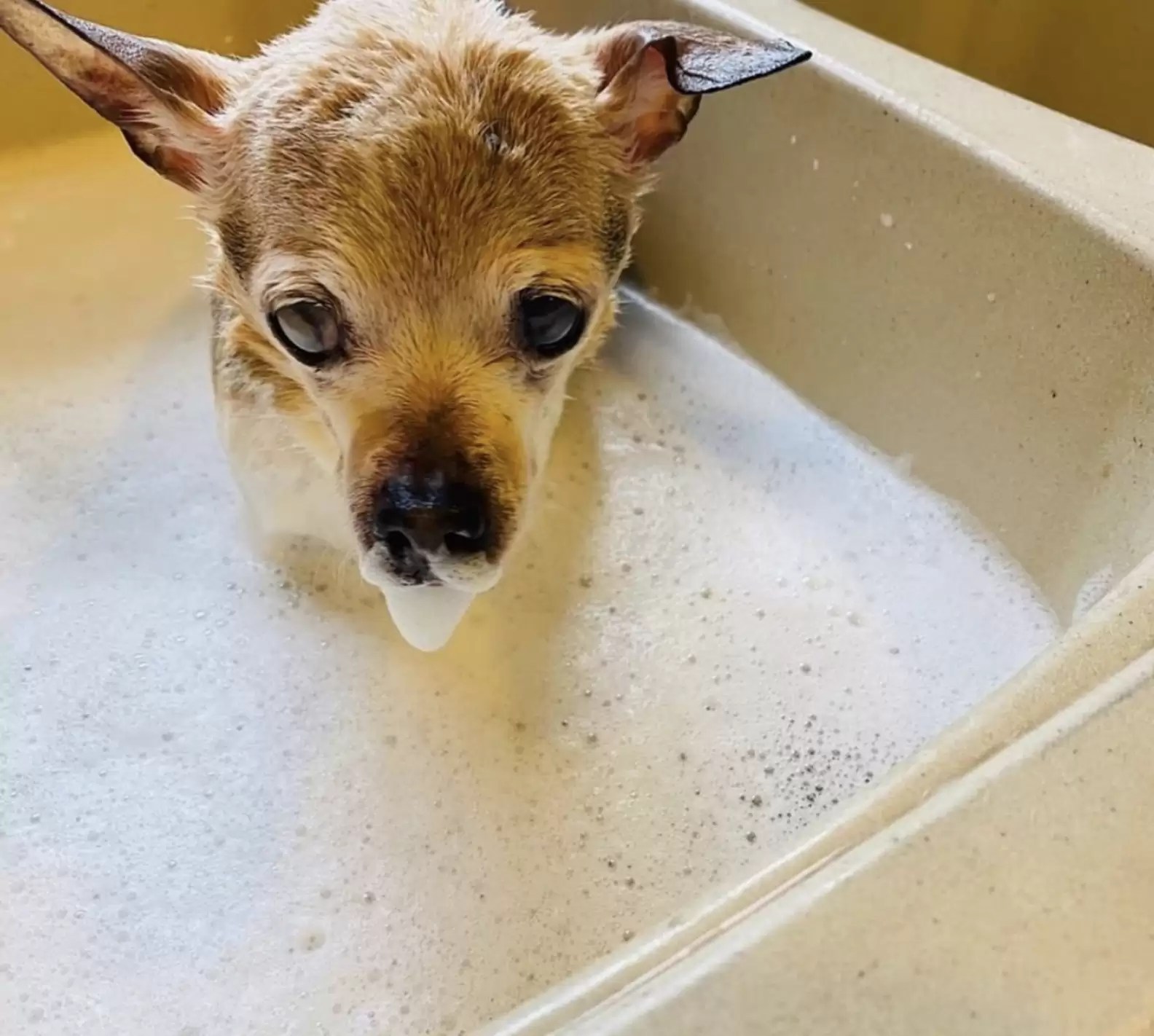
Flash forward over two decades later, Pebbles was already wearing an unofficial crown before Guinness World Records made it official. The much-loved terrier enjoys sleeping in (and staying up late!), snuggling underneath blankets, listening to country music and taking warm baths — a bubble bath was even part of her 22nd birthday celebration!
Pebbles has enjoyed a wonderful life thanks to good health and lots of love and attention from her pet parents. While she did enjoy snacking on some ribs and dog-friendly cake for her birthday, in general, Pebbles sticks to a healthy diet and is in good health for her advanced age.
Pebbles’ mom said that her secret to supporting pet longevity is to treat each animal, “like family, because they are. Give them a happy, positive environment as much as possible, good clean food, and proper healthcare.”
That pretty much sums it up, right? We like Gregory’s thinking. And by the way, no matter your pup’s age, we think it’s safe to say that all dogs should get to wear a crown, just for being awesome (we’re looking at you, TobyKeith).
ooOOoo
(All photographs Instagram/Pebbles_Since_2000)
Twenty-two! Huge congratulations to Pebbles and her Mom and Dad.
We watched recently a documentary on Netflix about the special attributes of our pets. It was very good but one thing that we learnt was that dogs have on the tips of their snouts an area that can pick up warmth. Because when dogs are tiny puppies and still blind they find their mothers’ teats by homing in on the warmth of the mother’s body.
Many people are aware of the scenting ability of the dog. To quote: “While humans have about five million olfactory receptors in their noses, dogs are said to have around 300 million.”
(Read that article that I linked above for it is very good.)
ooOOoo
Senior Dog Patiently Waits For Boops In The Same Place Day After Day
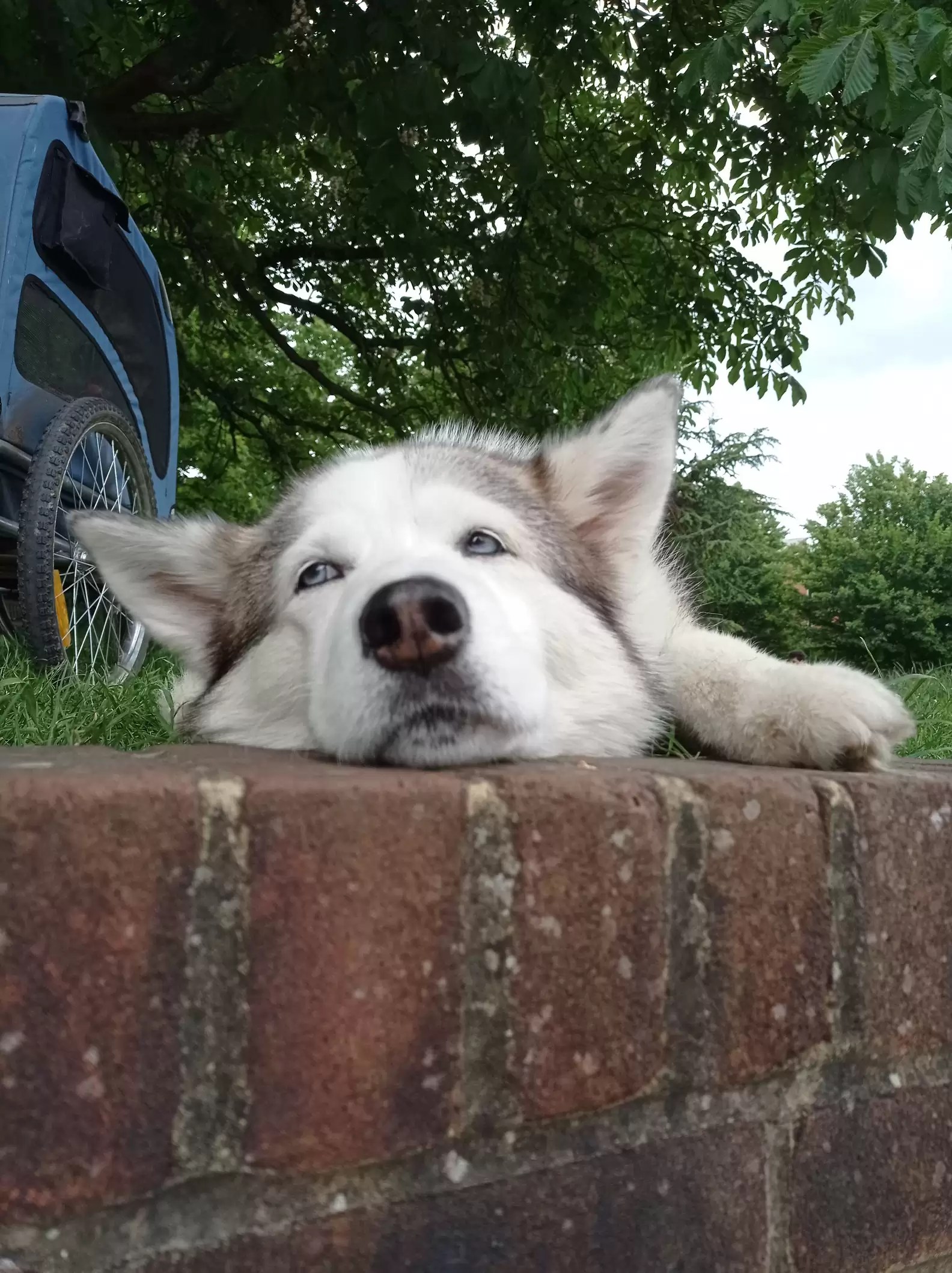
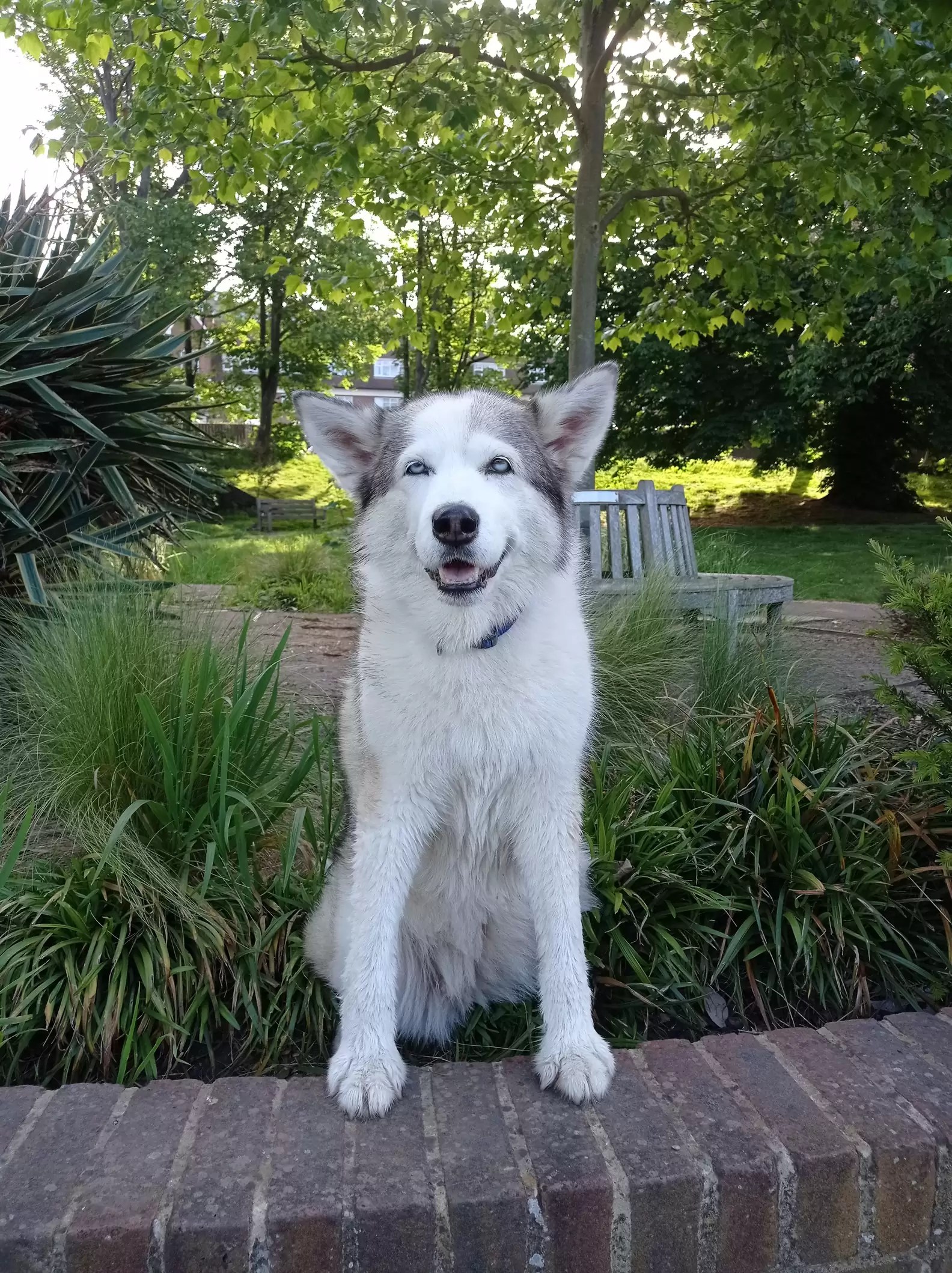
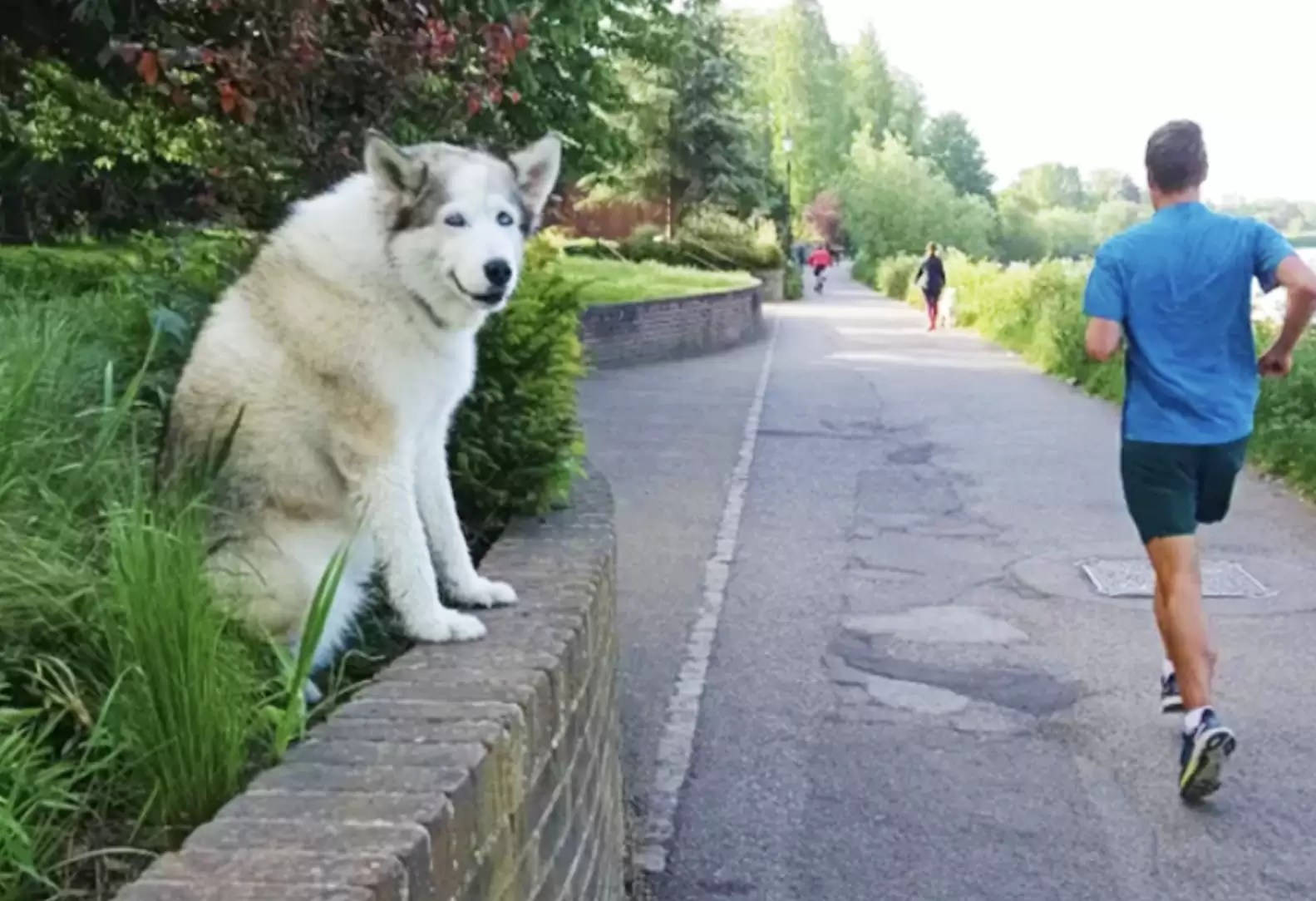
One of Hime’s favorite pastimes is a simple one: sit near a nature path and patiently wait for nose boops. The 13-year-old Siberian husky figured out long ago that, eventually, she’ll get what she came for.
“She likes that spot so she can watch the world go by,” David Nagadhana, Hime’s dad, told The Dodo. “But she has other strategies.”
Hime, who was adopted as a puppy, hitches a ride in Nagadhana’s bike trailer to get to the best petting spots.
“I cycle her because of her arthritis,” Nagadhana said. “Gentle in her old age, [Hime] looks for affection anywhere she can find it.”
The husky’s place of choice is by the Thames in Richmond, England, but Nagadhana takes her wherever she seems happiest.
“She loves finding new and interesting and exciting locations so that she may proceed to nap in them,” Nagadhana said. “She finds it relaxing enough to nod off on occasion.”
Nagadhana and Hime do everything together, and it won’t stop anytime soon.
“She was there for me when life ground to a halt during the pandemic,” Nagadhana said. “I’ll be there for her until the end. Raising dogs is like a rainbow. Puppies are the joy at one end, old dogs are the treasure at the other.”
Needless to say, Hime gets endless boops from her favorite person: Dad.
(All photographs by DAVID NAGADHANA.)
ooOOoo
One turns to the American Kennel Club for information about the breed, as in the Siberian Husky, and this is what is found:
Siberian Husky, a thickly coated, compact sled dog of medium size and great endurance, was developed to work in packs, pulling light loads at moderate speeds over vast frozen expanses. Sibes are friendly, fastidious, and dignified. The graceful, medium-sized Siberian Husky’s almond-shaped eyes can be either brown or blue ‘and sometimes one of each’, and convey a keen but amiable and even mischievous expression. Quick and nimble-footed, Siberians are known for their powerful but seemingly effortless gait. Tipping the scales at no more than 60 pounds, they are noticeably smaller and lighter than their burly cousin, the Alaskan Malamute. As born pack dogs, they enjoy family life and get on well with other dogs. The Sibe’s innate friendliness render them indifferent watchdogs. These are energetic dogs who can’t resist chasing small animals, so secure running room is a must. An attractive feature of the breed: Sibes are naturally clean, with little doggy odor.
I am republishing an item from the American Kennel Club on the subject.
Oliver has a very special relationship with me. Plus Jean loves him just as much. That is not to say that he isn’t very friendly with other humans that he knows but there’s something that I have trouble putting into words when it comes to the bond between me and Oliver.
It is very, very special and truly magical.
I am reminded of this bond between Oliver and me because of a post that I want to republish.
Emotional support dogs (ESAs) are pets and not service dogs.
Mental health professionals prescribe emotional support animals under the law.
Airlines are no longer required to accommodate emotional support animals.
Every dog owner knows there are many benefits to having a dog, from getting themselves out for exercise to receiving loyal companionship. However, for some people with mental or emotional conditions, the presence of a dog is critical to their ability to function normally on a daily basis. The pet provides emotional support and comfort that helps them deal with challenges that might otherwise compromise their quality of life. These pets are known as emotional support animals (ESAs).
What Is an Emotional Support Dog?
Although all dogs offer an emotional connection with their owner, to legally be considered an emotional support dog, also called an emotional support animal (ESA), the pet needs to be prescribed by a licensed mental health professional to a person with a disabling mental illness. A therapist, psychologist, or psychiatrist must determine that the presence of the animal is needed for the mental health of the patient. For example, owning a pet might ease a person’s anxiety or give them a focus in life. The dogs can be of any age and any breed.
Emotional Support Dog vs. Service Dogs
ESAs provide support through companionship and can help ease anxiety, depression, and certain phobias. However, they are not service dogs, and ESA users do not receive the same accommodations as service dog users.
A service dog, such as a guide dog or psychiatric service dog, is generally allowed anywhere the public is allowed; ESAs are not. For example, ESAs generally cannot accompany their owners into restaurants or shopping malls.
The Americans With Disabilities Act (ADA) defines service animals as “dogs that are individually trained to do work or perform tasks for people with disabilities.” The act clearly states that animals that simply provide emotional comfort do not qualify as service animals. Some state and local laws have a broader definition, so be sure to check with local government agencies to learn if ESAs qualify for public access in your area.
The key difference between a service dog and an emotional support dog is whether the animal has been trained to perform a specific task or job directly related to the person’s disability. For example, service dogs are trained to alert a hearing-impaired person to an alarm or guide a visually impaired person around an obstacle or provide pressure on someone with PTSD who is suffering from a panic attack.
Behaviors such as cuddling on cue, although comforting, do not qualify. The tasks need to be specifically trained to mitigate a particular disability, not something instinctive the dog would do anyway.
Emotional Support Dogs Are Not Psychiatric Service Dogs
There are service dogs, known as psychiatric service dogs that require extensive training to work specifically with people whose disability is due to mental illness. These dogs detect the beginning of psychiatric episodes and help ease their effects. Although this sounds similar to the role of an ESA, the difference between a psychiatric service dog and an ESA is again in the tasks performed by the dog and the training received to perform these tasks.
Psychiatric service dogs (recognized by the ADA as service dogs) have been trained to do certain jobs that help the handler cope with a mental illness. For example, the dog might remind a person to take prescribed medications, keep a disoriented person in a dissociative episode from wandering into a hazardous situation such as traffic or perform room searches for a person with post-traumatic stress disorder. If it is simply the dog’s presence that helps the person cope, then the dog does not qualify as a psychiatric service dog.
Housing Accommodations for Individuals Who Use Emotional Support Dogs
Individuals who use ESAs are provided certain accommodations under federal law in the areas of housing and air travel. The Fair Housing Act includes ESAs in its definition of assistance animals. Under the act, people cannot be discriminated against due to a disability when obtaining housing. Rules such as pet bans or restrictions are waived for people who have a prescription for an ESA, and they cannot be charged a pet deposit for having their ESA live with them.
Are Emotional Support Dogs Allowed on Flights?
In December 2020, the United States Department of Transportation (DOT) announced final revisions to its Air Carrier Access Act (ACAA). The final rule, effective in January 2021, defines a service animal as a dog, regardless of breed or type, that is individually trained to do work or perform tasks for the benefit of a qualified individual with a disability, including a physical, sensory, psychiatric, intellectual, or other mental disability. This change in the DOT’s definition of “service animal” aligns closely with the definition that the Department of Justice uses under the federal Americans with Disabilities Act.
The changes also clarify that emotional support animals (ESAs), comfort animals, companionship animals, animals being trained to be service animals, and species other than dogs are not considered to be “service animals” under the new DOT definition. Instead, airlines may recognize and accommodate emotional support animals as pets. For most airlines, the new no-fly policy for ESAs started on January 11. Some airlines now require passengers with service dogs to complete a DOT-authorized form prior to travel that confirms their training, health, and certification.
In the past, the AKC has expressed concern for safety with the previous recognition of ESAs as service animals, including the growing number of people misrepresenting their pets as service animals.
Emotional support dogs can perform an important role in the life of a person with mental or emotional conditions. When people who do not have a disability abuse the system by misrepresenting a pet as an ESA to obtain special accommodation, they undermine important accommodations for individuals with a legitimate need for this assistance.
ooOOoo
This is a valuable article in my opinion and, I am sure, in the opinion of many others. It clarifies the legal position of dogs that are not, however loving the animal is to you, legally-defined as service dogs.
It may seem trivial for those not in the category of requiring a dog that is a service dog but I am certain that for those who definitely do require such an animal this clarification was necessary.
Meantime I will stick with our Oliver, our Brandy, our Sheena, our Cleo, and our Pedi.











 Learning from Dogs


.jpg#/media/File:Cows_eating_grass_(42882305160).jpg)
