Category: Writing

And the other guest post!

This time from Penny Martin.

Penny wanted me to post this guest post from her a little earlier than the ‘chosen’ date. So, I am publishing it today!

ooOOoo

Tips and Tricks for Multistate Living with a Pet

As a senior, you get the best of both worlds by spending half the year in one state and half in another.  But sometimes, things can get a little hectic along the way, especially when you own two homes in independent living communities and a pet on top of it. There may be days when your stress levels rise as you try to cope with everything. That’s why Learning from Dogs has assembled some handy tips and tricks to smooth out multistate living for you and your pet.

Saving Money

One of your first considerations may be to save some money as you switch from one home to the other. You might, for instance, register your cars and purchase auto insurance in a state that is less expensive. Do the same for health insurance and even pet insurance to save extra money. You might also stock up on nonperishable and freezer items for each house when your budget allows so that you’ll have supplies on hand when you transfer between homes. Finally, consider replacing double cable services with streaming options. This way, you can watch all your favorite shows whenever and wherever you want without paying for access in two states.

Staying Organized

It can be quite difficult to stay organized when you’re splitting your time between two different homes, but you can if you get in the habit of making lists. Keep a running tab of your possessions and current supplies, like food and cleaning products, at both homes. This way, you’ll know what you have and what you need to bring with you. If you find yourself overwhelmed by clutter, don’t be afraid to use a storage unit. There are plenty of self-storage options in San Diego, and you can check prices and reviews in advance.

When it comes to your pet’s needs, you might do well to have a set of care items like harnesses, crates, cat trees, and litter boxes at both homes. This way, you won’t have to drag things back and forth. When you’re shopping for pet supplies, be sure to read online reviews from customers but also from veterinarians and other animal experts so that you can ensure the quality of the products and the health and safety of your pet. 

Keeping Your Pet Healthy

Dividing time between two homes in two different states can be stressful for your pet, so make sure you take care of your pet’s health. Find a trustworthy veterinarian in both locations, and take your pet for frequent checkups each time you settle into a new place. Make sure your pet has proper flea and tick prevention for both environments, and find a good pet sitter in both locations, too. 

Also, consider pet insurance to help defray vet costs. One state may actually offer less expensive pet insurance policies than another — although you may find it more expensive in many ways — so shop around for the best policy. Research coverage options, prices, deductibles, limitations, and provider reputations before choosing a policy that is right for you and your pet. 

Living Well in Two States

Multistate living can be a challenge, but it can also be a delightful experience for you and your pet. Use the tips above to save money, stay organized, keep your pet healthy, and enjoy the best of both worlds.

Learning from Dogs serves as a reminder of the values of life and the power of unconditional love – as so many, many dogs prove each and every day. Click here to get involved!

Image via Pexels

ooOOoo

It was exceedingly kind of Penny to promote this blog and I am grateful for the links.

It is a very useful guest post and I hope that many people find it of value. It would be nice to hear from people who have read Penny’s post.

That’s all from me!

Remembering the Queen and her Corgis

It seems fitting to share this!

Until Her Majesty is laid to rest next Monday it is impossible just to come up with a topic that has nothing to do with her. That’s my feeling (and I am sticking to it)! 😉

Voice of America is a website that I recently came across and they appear to allow the republication of their stories. On September 12th, they published an article about the the Queen and her Corgis and it is shared with you all.

ooOOoo

A Queen and Her Corgis: Elizabeth Loved Breed Since Childhood

Britain’s Queen Elizabeth II, left, looks at a Corgi dog as British television presenter Paul O’Grady, second right, looks on during a visit to Battersea Dogs and Cats Home in London on March 17, 2015.

LONDON — 

For many people around the world, the word corgi is forever linked to Queen Elizabeth II. 

Princess Diana once called them a “moving carpet” always by her mother-in-law’s side. Stubby, fluffy little dogs with a high-pitched bark, corgis were the late queen’s constant companions since she was a child. She owned nearly 30 throughout her life, and they enjoyed a life of privilege fit for a royal pet. 

Elizabeth’s death last week has raised public concerns over who will care for her beloved dogs. But Sky News reported Sunday, according to a palace spokesman, the corgis will live with Prince Andrew and his ex-wife Sarah Ferguson. 

“One of the intriguing things people are wondering about at the funeral is whether a corgi is going to be present,” said Robert Lacey, royal historian and author of “Majesty: Elizabeth II and the House of Windsor.” “The queen’s best friends were corgis, these short-legged, ill-tempered beasts with a yap that doesn’t appeal to many people in Britain but was absolutely crucial to the Queen.” 

Puppy love

Elizabeth’s love for corgis began in 1933 when her father, King George VI, brought home a Pembroke Welsh corgi they named Dookie. Images of a young Elizabeth walking the dog outside their lavish London home would be the first among many to come over the decades. 

When she was 18 she was given another and named it Susan, the first in a long line of corgis to come. Later there were dorgis — a dachshund and corgi crossbreed — owned by the queen. Eventually they came to accompany her in public appearances and became part of her persona. 

Throughout Elizabeth’s 70 years on the throne, the corgis were by her side, accompanying her on official tours, reportedly sleeping in their own room at Buckingham Palace with daily sheet changes, and occasionally nipping the ankles of the odd visitor or royal family member. 

Three of them even appeared alongside the queen as she climbed into James Bond’s waiting helicopter in the spoof video that opened the 2012 Summer Olympics in London. 

Royal treatment

British author Penny Junor documented the dogs’ feisty lives in a 2018 biography “All the Queen’s Corgis.” 

She writes that Elizabeth walked and fed the dogs, chose their names, and when they died, buried them with individual plaques. Care for the corgis had fallen largely on the queen’s trusted dressmaker and assistant Angela Kelly and her page Paul Whybrew. 

The corgis were also present when the queen welcomed visitors at the palace, including distinguished statesmen and officials. When the conversation lulled, Elizabeth would often turn her attention to her dogs to fill the silence. 

“She was also concerned about what would happen to her dogs when she is no longer around,” Junor wrote, noting that some royal family members did not share her fondness for the corgis. 

After the death of her corgi Willow in 2018, it was reported that the queen would not be getting any more dogs. 

But that changed during the illness of her late husband, Prince Philip, who died in 2021 at age 99. She turned once again to her beloved corgis for comfort. On what would have been Philip’s 100th birthday last year, the queen was given another dog. 

In addition to her human family, Elizabeth is survived by two corgis, a dorgi, and a cocker spaniel.

ooOOo

It is clear from all the news and tributes presented following Her Majesty’s death on September 8th that she had a very special affection for her Corgis. As does Jean for all our dogs!

What a difference a week makes!

It all makes sense now.

Photo by Salmen Bejaoui

Do what you can, with what you have, where you are.” “Believe you can and you’re halfway there. It is hard to fail, but it is worse never to have tried to succeed.

“It is not the critic who counts; not the man who points out how the strong man stumbles, or where the doer of deeds could have done them better.”

This famous quotation by Teddy Roosevelt (1858-1919), the 26th President of the USA, seems apt for today’s post.

Exactly one week ago I published a post called Musings from a 77 year old! I wrote that the future was uncertain. Summed up at one point by me writing: “I have no idea of the global changes that are afoot and how they will affect us in Merlin. Indeed, I have no idea how long I have to live.

Margaret (from Tasmania) was one of the many people who responded. She included a video interview of Meg Wheatley by Michael Shaw. It is an hour long. Last Friday afternoon Jean and I watched it in full and it was incredibly interesting. Thank you very much, dear Margaret.

But before I present Meg’s video again I want to show you another video. It is a talk by Richard Grannon about the collapse of our civilisation. Now Richard Grannon is an author, YouTuber and life coach so one needs to remain impartial to his views, certainly before one does further research. But in the 46-minute talk I think there is much sense in what he says. See for yourself:

Moving on! The interview of Meg Wheatley is very good indeed. It’s a broad look at the issues and problems governing society but done in such a way that the people who watch her will also take away a number of tools for avoiding depression and anxiety. Meg places great store on the Hopi Native American Indians: “The Hopi maintain a complex religious and mythological tradition stretching back over centuries.

Meg quotes one of the more famous Hopi prophecies, that is reproduced below:

This could be a good time! There is a river flowing now very fast. It is so great and swift that there are those who will be afraid. They will try to hold on to the shore. They will feel they are being torn apart and will suffer greatly. Know the river has its destination. The elders say we must let go of the shore, push off into the middle of the river, keep our eyes open, and our heads above the water.

And I say, see who is in there with you and celebrate. At this time in history, we are to take nothing personally, least of all ourselves. For the moment that we do, our spiritual growth and journey come to a halt.

The time of the lone wolf is over. Gather yourselves! Banish the word ’struggle’ from your attitude and your vocabulary. All that we do now must be done in a sacred manner and in celebration.

We are the ones we’ve been waiting for.

Photo by Lucas Ludwig 

Here is that Meg Wheatley interview. (It is an hour long but very interesting; please watch it!)

I want to pick up the topic that was at the end of her interview; that of societal collapse. How would one define it? I chose Wikipedia for a reference.

Societal collapse (also known as civilizational collapse) is the fall of a complex human society characterized by the loss of cultural identity and of socioeconomic complexity, the downfall of government, and the rise of violence.[1]Possible causes of a societal collapse include natural catastrophe, war, pestilence, famine,  economic collapse,  population decline, and mass migration. A collapsed society may revert to a more primitive state, be absorbed into a stronger society, or completely disappear.

Virtually all civilizations have suffered such a fate, regardless of their size or complexity, but some of them later revived and transformed, such as China, India, and Egypt. However, others never recovered, such as the Western and Eastern Roman Empires, the Maya civilization, and the Easter Island civilization.[1] Societal collapse is generally quick[1] but rarely abrupt.[2] However, some cases involve not a collapse but only a gradual fading away, such as the British Empire since 1918.[3]

Anthropologists, (quantitative) historians, and sociologists have proposed a variety of explanations for the collapse of civilizations involving causative factors such as environmental change, depletion of resources, unsustainable complexity, invasion, disease, decay of social cohesion, rising inequality, secular decline of cognitive abilities, loss of creativity, and misfortune.[1][4] However, complete extinction of a culture is not inevitable, and in some cases, the new societies that arise from the ashes of the old one are evidently its offspring, despite a dramatic reduction in sophistication.[4] Moreover, the influence of a collapsed society, such as the Western Roman Empire, may linger on long after its death.[5]

The study of societal collapse, collapsology, is a topic for specialists of historyanthropologysociology, and political science. More recently, they are joined by experts in cliodynamics and study of complex systems.[6][4]

The article is much more extensive than I have quoted above and for anyone deeply interested then I do recommend you going to the article and reading it extensively.

Now Meg is of the opinion that it is too late to turn back but next Tuesday I want to talk to you about Sir David Attenborough’s film A Life on our Planet. That he believes there is a chance to undo the harm we are causing to the planet; through rewilding.

Until then!

Volunteering at animal shelters.

Another great post from Penny Martin.

Once again I am delighted to publish another post from Penny. This is a relatively short post but nevertheless of supreme importance.

With no more ado from me, here it is:

ooOOoo

Protecting Our Pets: Resources for Volunteering at Animal Shelters

By Penny Martin

August 10th, 2022

If animal welfare is close to your heart, you might want to consider helping out at a pet shelter for abandoned or unwanted animals. There are always a number of charities in the USA and beyond looking for eager volunteers. 

Before You Apply

Animal welfare work can be challenging for an individual, even if you’re just volunteering. It’s important to take precautions before you commit to your decision.

  • Read about the experience of working at a shelter to better understand the challenges and obstacles you might encounter.
  • Often, volunteers need to undergo training, orientation, and background checks before they’re allowed to contribute.
  • Connect with your local shelters on social media to see the kind of work they do and whether there are opportunities to volunteer.

Organizations

Shelters for abandoned and neglected pets are frequently found throughout the country. If you want to do your part, the logical first step is to locate one close to you.

  • Institutions like Guide Star have been established to hold animal rescue services accountable and ensure they are being maintained properly.
  • Take some time to learn about the listed charities in your area.
  • If you find an abandoned pet and you’re not aware of shelters in your area, try reaching out to American Humane.

Ways to Help

If you’re unable to volunteer in person, there are still plenty of ways to get involved and do your part.

  • There’s good work to be done online via social media and you can help out by engaging in discussion and sharing posts about missing or unwanted pets.
  • If you have any spare supplies that you’re willing to donate, these can make a profound impact on the lives of animals. 
  • If you’re purchasing supplies to donate, read expert reviews to choose the highest-quality products.
  • If the existing organizations don’t meet your concerns, you could try forming your own nonprofit.
  • You can create Facebook ads for free to secure donations and get the word out about your nonprofit. 

Unfortunately, across the USA and beyond, there are a great many pets in need of our help but even small acts of kindness can take us a significant way towards eradicating the problem altogether. Reach out to your local shelter and see how you can help.

Read the Learning from Dogs book for a reminder of the unconditional love dogs give us every day. 

Image by Pexels

ooOOoo

Once again, a big thank you to Penny and also my thanks for the link to Learning from Dogs.

For those of you that are considering helping out then Penny’s post might offer the advice you require.

This is one quick-thinking man!

He saves the life of a dog.

This is a story from Peru. But world-wide our fondness and love for dogs is beyond measure.

ooOOoo

Quick-Thinking Man Saves Life Of Dog Falling From Building

“She didn’t stop wagging her tail out of happiness.”

By Stephen Messenger

Published on the 7th July, 2022

The other day, after a two-week-long stint working in the field, John Alexander Palomino Bendives was looking forward to finally relaxing in the apartment he shares with his mother and four dogs in Peru.

But, before he could even get inside the building, Bendives was called into action once more — to save the life of his beloved dog Mina.

When Bendives, along with his girlfriend, got to the front of his apartment building, their arrival didn’t go unnoticed. High above, in his family’s fourth-story rooftop apartment, Mina and the other pups were peering down over the railing, excited to see him home.

Bendives would be up to greet them in a few seconds. But that was apparently just a bit too long to wait for Mina.

Having either lost her balance and slipped or misjudged the distance and leapt, Mina began falling to the street below. Thankfully, quick-thinking Bendives took notice — and was able to catch her in his arms.

Bendives was able to save Mina from what may have been certain death — to his great relief. And to hers.

“She was OK, unharmed,” Bendives told The Dodo. “Mina was happy and grateful. She didn’t stop wagging her tail out of happiness.”

All his pups were thrilled that Bendives was finally home. Mina, clearly, just a bit too much so.

Bendives said this scary incident has the family planning to make some changes: “We are looking at putting up a mesh [barrier] on the roof so that they can continue to sit up there, but without the risk of falling again.”

Now that the unthinkable happened — and disaster narrowly avoided — it’s the least they could do.

“I love my pets very much,” Bendives said. “They always receive me with a lot of love and emotion. The time I spend at home, I try to spend as much time as possible with them.”

ooOOoo

(Both photographs by John Bendives.)

Another wonderful story of a life-saving act on behalf of Bendives and his saving of his dog, Mina. Four stories high is no laughing matter and Snr. Bendives certainly saved Mina from serious injury and probably death.

Literally hundreds of times every day, with the vast majority of the stories unreported, we humans save the lives of dogs!

Just wonderful!

Another happy dog!

Dogs are so perfect in their expressions!

Dogs are not always happy as we know with the loss of our Sheena. Because the other dogs felt the loss inexplicably. But in the main they are happy, happy animals. Unlike us humans who have lots of things to contend with. I say this because in the last twenty-four hours we have had the sudden explosion of fire down in Northern California, the McKinney blaze, which has grown very rapidly.

California’s Governor Gavin Newsom has declared a state of emergency over the fire, which began on Friday afternoon before rapidly exploding in size due to a combination of dry fuel after a drought, strong winds and lightning strikes.

Around 650 firefighters are battling to contain the fire, officials say, but with little success. Sheriffs said on Sunday evening that it was “0% contained”.

As a result, more than 2,000 inhabitants of the area around the Klamath National Forest are being forced to evacuate their homes. Rescue teams have been aiding hikers who had been on the national park’s trails.

The China 2 fire, that is part of the group of California fires, is about 55 miles due south of home. Far enough not to panic but not far enough not to get us to check our evacuation preparations.

We hope that we are not evacuated in the next few weeks because of fire!

Here is a delightful dog article courtesy of The Dodo.

ooOOoo

Dog Dances In The Rain After 175 Days Stuck In Shelter 

“The absolute joy in his eyes and the feeling of freedom was wonderful to watch.”

By Maeve Dunigan

Published on the 1st July, 2022

When staff members from Forgotten Dogs Rescue pulled Rambo from a shelter and placed him with a foster family, they had no idea how much the pittie mix would love the feeling of freedom.

It was raining outside, but that wasn’t going to stop him. After 175 days, Rambo was finally out of the shelter, and he was so happy that he started running and dancing in the rain.

“I cried happy tears when his foster mom sent me the video,” Julie Saraceno, a shelter volunteer, told The Dodo. “That was his second day in his foster home, and the absolute joy in his eyes and the feeling of freedom was wonderful to watch.”

When Rambo went from a small concrete kennel to a large grass-covered yard, he couldn’t believe his eyes.

The young dog with beautiful, big eyes has an exuberance that shows. He loves other dogs and cats, and while he’s certainly high energy, he’s also always willing to snuggle on the couch.

“He is the sweetest guy to the people he considers his crew,” Saraceno said.

Rambo, who was originally found roaming the streets of Kennewick, Washington, as a stray, is working every day to become more confident and less fearful. Through his work with a trainer, he has learned obedience, how to meet strangers and lots of other skills that have made him a good boy.

Once Rambo finishes his training, he’ll be ready to meet potential fits for his forever home, ideally one where there’s space for him to exercise all his energy.

Pretty soon, Rambo won’t have to jump at every opportunity to get outside. He’ll have a yard — and a family — all his own.

ooOOoo

(The first photograph was taken by Julie Saraceno and the last two were taken by Billie Wensveen.)

Six months in a shelter! That must have been a real joy for Rambo when he was let out. Correction: It was a real joy because that was how Rambo expressed himself.

As I called this post: Another Happy Dog.

Keeping your dog safe and happy.

Without breaking the bank!

Another very useful guest post from Penny Martin who is becoming a very regular contributor to this place. This time Penny writes about being on a budget, aren’t we all, but still keeping your dog safe and happy.

ooOOoo

Image: Pexels

Six Ways to Make Your Home and Yard Dog-Friendly on a Budget

By Penny Martin.

Dogs add many wonderful things to their owners’ lives; however, owning a dog can be a drain on your bank account. According to statistics, the average American dog owner spends $1,480 per year on dog expenses. These tips can help you make your home and yard more dog-friendly without breaking the bank.

1. Add a Fence

Dogs need exercise, a place to go to the bathroom and a chance to sniff around and be a dog. However, if you don’t have a yard with a secure fence, it isn’t safe to allow your dog outside without a leash. Even a well-trained dog may run off to chase a squirrel, greet a strange dog or go exploring. This puts your dog at risk of being hit by a car, getting in a fight with another dog or animal or becoming lost. Adding a fence to your yard allows you to enjoy time with your pet off leash without risking your pet’s safety.

2. Add a Backyard Pool

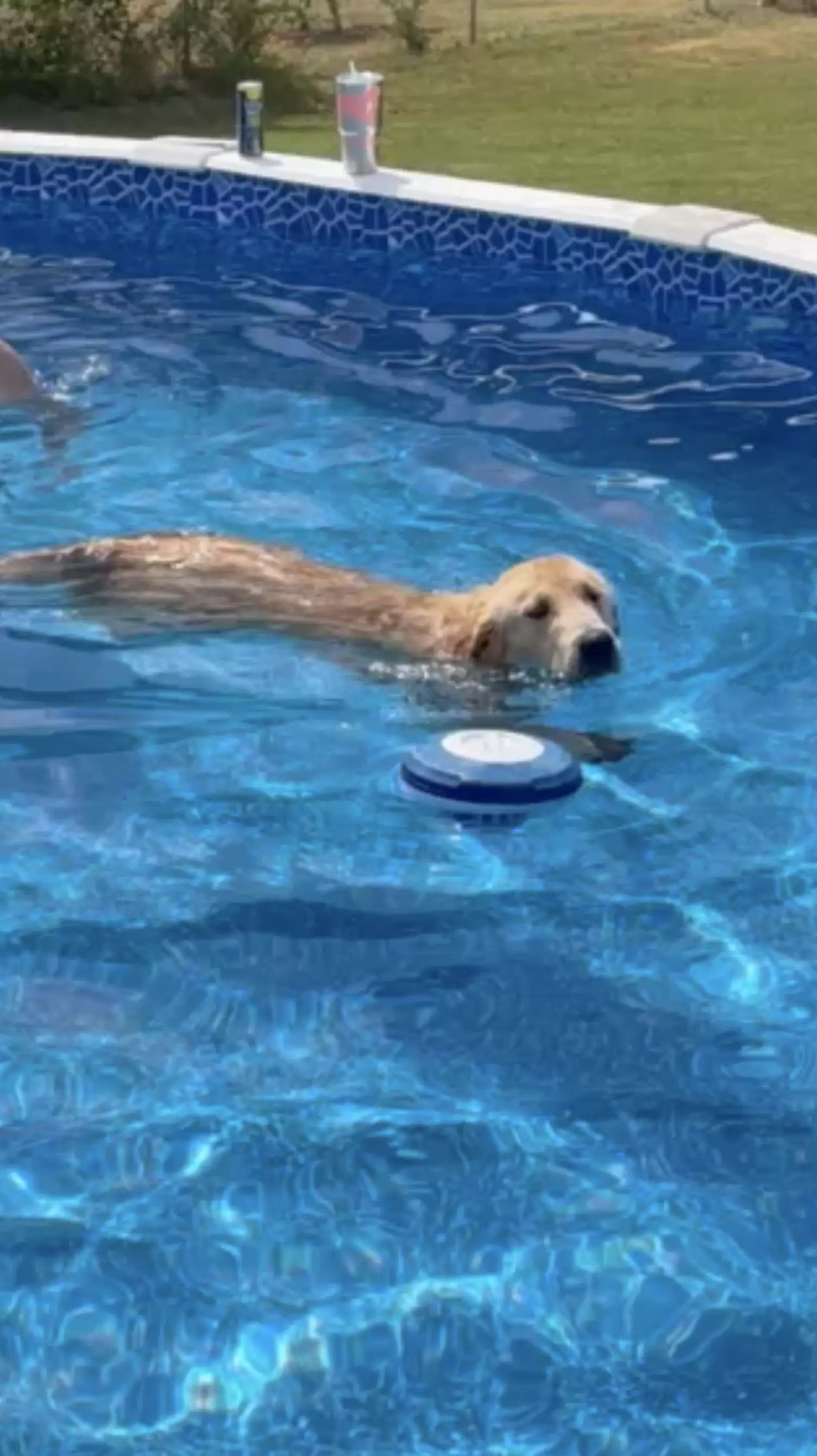
Not every dog loves to swim, but many do. You can give your dog a place to cool off and have some fun without spending a lot of money by purchasing a wading pool or a small stock tank. If you think your dog would enjoy more than splashing around, search for a dog-friendly place in your area where you can inexpensively take your dog to swim. However, don’t just toss your pup into the deep end. Not all dogs are natural swimmers. Many facilities that have pools for dogs offer swimming lessons.

3. Create Shady Spots

Dogs love to run and play and on hot days they can easily overheat. Help your dogs stay cool by making sure they have plenty of shady spots to hang out. One inexpensive way to do this is to purchase a portable awning. You can set the awning up anywhere in your yard and put it away when you no longer need it. Trees are also a good source of shade, but it is important to keep your trees maintained.

4. Remove Dead Trees and Branches

Dead trees create a safety hazard and provide a home for pests. Have a professional local tree service remove any dead trees and branches in your yard before they cause an injury or accident. Do not try to remove the tree yourself. Professionals have the right gear, tools and safety training to remove the tree safely and without damaging your property. Read online reviews before you reach out to contractors. Get at least three estimates and make sure to ask whether stump grinding and disposal are included in the price.

5. Buy Trash Cans With Lids

Trash cans are smelly, full of tasty food and plenty of stuff to shred. It is no wonder that most dogs love to root through them. However, spoiled food, sharp objects or toxic materials can injure or sicken your dog. Avoid this problem by purchasing trash cans with lids that lock. 

6. Remove Dangerous Plants

Many plants can be harmful to dogs who ingest them. Research the plants in your yard and remove any that could cause a problem.

Owning dogs is not a cheap endeavor. However, you can make your home safe and comfortable for them without spending all your savings by adding a fence and pool, creating shady spots, removing dead trees, purchasing garbage cans with lockable lids, and getting rid of poisonous plants.

ooOOoo

Here at home, because we live in a rural location, dead trees and branches are an ever-present problem. Luckily our dogs don’t seem to be drawn to them but the issue of pests is a different matter. We have thirteen acres of which half is forest and it is all too much for a contractor. Correction: It is all too expensive for us!

For the wider audience of readers this, I am sure, offers very good advice and is another great post from Penny.

Searching for alien life

Another item about the James Webb Space Telescope (JWST).

I make no apologies for returning to the JWST in just a week after publishing my first article about the telescope. For I found the latest article, again published on The Conversation, to be incredible and that was all I needed to share it with you.

ooOOoo

To search for alien life, astronomers will look for clues in the atmospheres of distant planets – and the James Webb Space Telescope just proved it’s possible to do so

Published July 14th, 2022.

By Chris Impey University Distinguished Professor of Astronomy, University of Arizona and

Daniel Apai Professor of Astronomy and Planetary Sciences, University of Arizona.

The ingredients for life are spread throughout the universe. While Earth is the only known place in the universe with life, detecting life beyond Earth is a major goal of modern astronomy and planetary science.

We are two scientists who study exoplanets and astrobiology. Thanks in large part to next-generation telescopes like James Webb, researchers like us will soon be able to measure the chemical makeup of atmospheres of planets around other stars. The hope is that one or more of these planets will have a chemical signature of life.

There are many known exoplanets in habitable zones – orbits not too close to a star that the water boils off but not so far that the planet is frozen solid – as marked in green for both the solar system and Kepler-186 star system with its planets labeled b, c, d, e and f. NASA Ames/SETI Institute/JPL-Caltech/Wikimedia Commons

Habitable exoplanets

Life might exist in the solar system where there is liquid water – like the subsurface aquifers on Mars or in the oceans of Jupiter’s moon Europa. However, searching for life in these places is incredibly difficult, as they are hard to reach and detecting life would require sending a probe to return physical samples.

Many astronomers believe there’s a good chance that life exists on planets orbiting other stars, and it’s possible that’s where life will first be found.

Theoretical calculations suggest that there are around 300 million potentially habitable planets in the Milky Way galaxy alone and several habitable Earth-sized planets within only 30 light-years of Earth – essentially humanity’s galactic neighbors. So far, astronomers have discovered over 5,000 exoplanets, including hundreds of potentially habitable ones, using indirect methods that measure how a planet affects its nearby star. These measurements can give astronomers information on the mass and size of an exoplanet, but not much else.

Every material absorbs certain wavelengths of light, as shown in this diagram depicting the wavelengths of light absorbed most easily by different types of chlorophyll. Daniele Pugliesi/Wikimedia CommonsCC BY-SA

Looking for biosignatures

To detect life on a distant planet, astrobiologists will study starlight that has interacted with a planet’s surface or atmosphere. If the atmosphere or surface was transformed by life, the light may carry a clue, called a “biosignature.”

For the first half of its existence, Earth sported an atmosphere without oxygen, even though it hosted simple, single-celled life. Earth’s biosignature was very faint during this early era. That changed abruptly 2.4 billion years ago when a new family of algae evolved. The algae used a process of photosynthesis that produces free oxygen – oxygen that isn’t chemically bonded to any other element. From that time on, Earth’s oxygen-filled atmosphere has left a strong and easily detectable biosignature on light that passes through it.

When light bounces off the surface of a material or passes through a gas, certain wavelengths of the light are more likely to remain trapped in the gas or material’s surface than others. This selective trapping of wavelengths of light is why objects are different colors. Leaves are green because chlorophyll is particularly good at absorbing light in the red and blue wavelengths. As light hits a leaf, the red and blue wavelengths are absorbed, leaving mostly green light to bounce back into your eyes.

The pattern of missing light is determined by the specific composition of the material the light interacts with. Because of this, astronomers can learn something about the composition of an exoplanet’s atmosphere or surface by, in essence, measuring the specific color of light that comes from a planet.

This method can be used to recognize the presence of certain atmospheric gases that are associated with life – such as oxygen or methane – because these gasses leave very specific signatures in light. It could also be used to detect peculiar colors on the surface of a planet. On Earth, for example, the chlorophyll and other pigments plants and algae use for photosynthesis capture specific wavelengths of light. These pigments produce characteristic colors that can be detected by using a sensitive infrared camera. If you were to see this color reflecting off the surface of a distant planet, it would potentially signify the presence of chlorophyll.

Telescopes in space and on Earth

It takes an incredibly powerful telescope to detect these subtle changes to the light coming from a potentially habitable exoplanet. For now, the only telescope capable of such a feat is the new James Webb Space Telescope. As it began science operations in July 2022, James Webb took a reading of the spectrum of the gas giant exoplanet WASP-96b. The spectrum showed the presence of water and clouds, but a planet as large and hot as WASP-96b is unlikely to host life.

However, this early data shows that James Webb is capable of detecting faint chemical signatures in light coming from exoplanets. In the coming months, Webb is set to turn its mirrors toward TRAPPIST-1e, a potentially habitable Earth-sized planet a mere 39 light-years from Earth.

Webb can look for biosignatures by studying planets as they pass in front of their host stars and capturing starlight that filters through the planet’s atmosphere. But Webb was not designed to search for life, so the telescope is only able to scrutinize a few of the nearest potentially habitable worlds. It also can only detect changes to atmospheric levels of carbon dioxide, methane and water vapor. While certain combinations of these gasses may suggest life, Webb is not able to detect the presence of unbonded oxygen, which is the strongest signal for life.

Animals, including cows, produce methane, but so do many geologic processes. Jernej Furman/Wikimedia CommonsCC BY

Is it biology or geology?

Even using the most powerful telescopes of the coming decades, astrobiologists will only be able to detect strong biosignatures produced by worlds that have been completely transformed by life.

Unfortunately, most gases released by terrestrial life can also be produced by nonbiological processes – cows and volcanoes both release methane. Photosynthesis produces oxygen, but sunlight does, too, when it splits water molecules into oxygen and hydrogen. There is a good chance astronomers will detect some false positives when looking for distant life. To help rule out false positives, astronomers will need to understand a planet of interest well enough to understand whether its geologic or atmospheric processes could mimic a biosignature

The next generation of exoplanet studies has the potential to pass the bar of the extraordinary evidence needed to prove the existence of life. The first data release from the James Webb Space Telescope gives us a sense of the exciting progress that’s coming soon.

The James Webb Space Telescope is the first telescope able to detect chemical signatures from exoplanets, but it is limited in its capabilities. NASA/Wikimedia Commons

ooOOoo

So despite the advances in technology that resulted in the JWST it will still not be possible to detect unbonded oxygen; a sure indicator of life. It will be able to detect many other fascinating aspects of stars and planets beyond the Milky Way. I do not know if “The first data release…” relates to software or whether further launches of Mk 2 ‘JWST’ will be required. I will try and find out!

Doggy comes back from the dead!

A beautiful, fabulous story!

There is no end to the amazing stories that one comes across about people and their dogs. Take this recent story from The Dodo.

ooOOoo

Dog Who ‘Died’ Runs Into Mom’s Arms When She Sees Her At Shelter

Such a beautiful reunion ❤️

By Lily Feinn

Published on the 10th June, 2022

When Maile Trist checked her email last week, she opened up a message she assumed was a prank. Her beloved dog, a senior Chihuahua named Jazzy, was at the Cowley County Humane Society after being found wandering around a nearby rock quarry.

The email didn’t make sense to Trist because Jazzy had passed away two years ago.

When Trist first met Jazzy at San Diego Humane Society four years ago, she ignored the “Do not pet” sign on her cage. Somehow she knew they’d have a connection.

“I came across my gorgeous girl, I stuck my hand in the cage, and she automatically walked right up to me, tail wagging, and put her head in my hand,” Trist told The Dodo. “I started crying because I had found my dog!”

Two years passed, and Trist moved from California to Kansas. Overwhelmed with the move and a new full-time job, she felt she didn’t have enough time to give to Jazzy. So she asked a dog-loving couple she was friendly with to watch her pup until she got settled.

However, when Trist tried to get back in touch with the couple, they ignored her calls and deleted their social media accounts. She couldn’t find them anywhere. Then, six months later, Trist’s fiancé managed to track them down and asked for Jazzy back.

“The lady told him she had died three months prior,” Trist said. “About a year and half went by, and lots and lots of grieving. I felt horrible for ever giving her to them because I thought I wasn’t there for her last moments.”

Trist thought she’d never see her beloved dog again, but luckily, Jazzy had a microchip. And when she got the news that Jazzy had been located, she dropped everything to be with her dog again.

“I automatically headed home from my job and got in the car and headed to her,” Trist said. “I was crying on and off the whole way there, which was almost a three-hour drive. I couldn’t believe she was still alive and I had no idea how she ended up that far away, but in those moments, I did not care.”

When Trist arrived at the shelter, and watched Jazzy walk towards her again, she couldn’t hold back her tears.

Jazzy recognized her mom immediately, and her little tail started wagging uncontrollably.

“She kind of went to sniff around, but came right back to me and gave me even more kisses,” Trist said. “She would not leave my lap or my arms the whole car ride home, either.”

Now, Jazzy is home and the little dog is not letting her mom out of her sight ever again.

“She’s been so, so happy ever since and she will not leave my side or let me go anywhere without her,” Trist said. “And I feel the same way!”

What exactly happened to the senior dog remains a mystery, but what’s important is that she’s safe and ready to spend her golden years in comfort, surrounded by her loving family.

“She’s a little more white than she was from the last time I saw her, and her hips are a little more sore,” Trist said, “but she’s still the same old lady she was before, and I’m so glad she stayed loving through these last two years.”

(All photographs by Maile Trist.)

ooOOoo

Yet another example of the love between people and their dogs. I would like to say that it doesn’t get any better than that but I would be wrong. It is a perfect case of unconditional love and there are hundreds and hundreds of other stories out there.

Hopefully a few of them will be featured on Learning from Dogs!

A pool party with a difference

Dogs are such fun!

Over at The Dodo is an item that I want to share with you. And my apologies for keeping my own comments really short; it is a hectic couple of hours here.

ooOOoo

Random Dog Crashes Pool Party And Everyone Is Overjoyed 

“He floated around the pool, got pets and kisses, went swimming and had a great time!”

By Caitlin Jill Anders

Published on the 24th June, 2022

A bunch of friends were having a pool party when they noticed two dogs hanging around outside the fence on the edge of the yard. The dogs seemed like they wanted to come in, so a bunch of partygoers went over to investigate. One of the dogs had a tag, so they decided to let the dogs into the yard to hang out until they could track down their owners.

The dogs ran into the yard, and while one of them was a little shy, the other immediately decided he was joining the party.

“At that point, some of us were on the deck, some in the pool, and some out in the yard,” Jennifer Motes, one of the partygoers, told The Dodo. “The golden was down to party right away and immediately started running around, wagging its tail, going up to everyone and getting pets. The shepherd was much more timid, kinda stayed in the yard for a bit, but then when she saw her friend up on the deck with us, she eventually came up there too.”

The golden retriever, who they later found out is named Stoker, clearly knew how to have a good time. He didn’t hesitate to join the fun and ran around playing fetch, begging for food, stealing shoes and eventually even hopping into the pool with everyone.

“Some of the people in the pool had slid the innertube raft over to the edge and Stoker climbed right on,” Motes said. “He floated around the pool, got pets and kisses, went swimming and had a great time! The shepherd never was brave enough to go in the pool, she just walked around and watched us, let some of us pet her and she chased after Stoker.”

As the dogs partied, someone was able to get in touch with Stoker’s dad, who said the other dog belonged to his neighbor and that she and Stoker were best friends who played together all the time. Apparently, the pair had run off together in search of a party, and they’d certainly succeeded in that endeavor.

The dogs were there for a few hours before they got picked up — and the party hosts made sure to emphasize that they’re absolutely welcome to come back anytime they want.

The only thing that can make a pool party even better is dogs, and Stoker and his best friend were more than happy to make that dream come true.

ooOOoo

(All pictures are by Jennifer Motes.)