Category: Writing

Past times

Blogging for many years goes so well with poor recall!

When I was browsing through posts over the last seven years, looking for articles about cats in support of yesterday’s post, I was amazed at reading so many items that had completely slipped my mind! One in particular, going back to October, 2010, was so wonderful that it just had to be shared with you again. It was sent to me by long-term friend Chris Snuggs. It will put a smile on your face!

ooOOoo

Cats and Dogs!

As a follow-up to Paul’s post on cats, I found this on the internet, but there was no reference to the author. Whoever it was does, however, deserve the credit rather than me, who am merely a transferer on to a wider public of such gems as I stumble across during my surfing.

If anyone knows who wrote this I would be more than delighted to acknowledge his or her genius.

Peek into a dog’s diary …

8:00 am – Dog food! My favorite thing
9:30 am – A car ride! My favorite thing!
9:40 am – A walk in the park! My favorite thing!
10:30 am – Got rubbed and petted! My favorite thing!
12:00 pm- Lunch! My favorite thing!
1:00 pm – Played in the yard! My favorite thing!
3:00 pm – Wagged my tail! My favorite thing!
5:00 pm – Milkbones! My favorite thing!
7:00 pm – Got to play ball! My favorite thing!
8:00 pm – Wow! Watched TV with the people! My favorite thing!
11:00 pm – Sleeping on the bed! My favorite thing!

Peek into a cat’s diary …

Day 983 of my captivity. My captors continue to taunt me with bizarre little dangling objects. They dine lavishly on fresh meat, while the other inmates and I are fed hash or some sort of dry nuggets. All though I make my contempt for the rations perfectly clear, I nevertheless must eat something in order to keep up my strength. The only thing that keeps me going is my dream of escape. In an attempt to disgust them, I once again vomit on the carpet.

Today I decapitated a mouse and dropped its headless body at their feet. I had hoped this would strike fear into their hearts, since it clearly demonstrates what I am capable of. However, they merely made condescending comments about what a “good little hunter” I am. Bastards.

There was some sort of assembly of their accomplices tonight. I was placed in solitary confinement for the duration of the event. However, I could hear the noises and smell the food. I overheard that my confinement was due to the power of “allergies.” I must learn what this means, and how to use it to my advantage.

Today I was almost successful in an attempt to assassinate one of my tormentors by weaving around his feet as he was walking. I must try this again tomorrow — but at the top of the stairs.

I am convinced that the other prisoners here are flunkies and snitches. The dog receives special privileges. He is regularly released – and seems to be more than willing to return. He is obviously retarded. The bird has got to be an informant. I observe him communicate with the guards regularly. I am certain that he reports my every move. My captors have arranged protective custody for him in an elevated cell, so he is safe, for now……….

Just chilling out …

Cats in Physics

1 – Law of Cat Inertia: A cat at rest will tend to remain at rest, unless acted upon by some outside force – such as the opening of cat food, or a nearby scurrying mouse.

2 – Law of Cat Motion: A cat will move in a straight line, unless there is a really good reason to change direction.

3 – Law of Cat Magnetism: All blue blazers and black sweaters attract cat hair in direct proportion to the darkness of the fabric.

4 – Law of Cat Thermodynamics: Heat flows from a warmer to a cooler body, except in the case of a cat, in which case all heat flows to the cat.

5 – Law of Cat Stretching: A cat will stretch to a distance proportional to the length of the nap just taken.

6 – Law of Cat Sleeping: All cats must sleep with people whenever possible, in a position as uncomfortable for the people involved as is possible for the cat.

7 – Law of Cat Elongation: A cat can make her body long enough to reach just about any counter top that has anything remotely interesting on it.

8 – Law of Cat Acceleration: A cat will accelerate at a constant rate, until he gets good and ready to stop.

9 – Law of Dinner Table Attendance: Cats must attend all meals when anything good is served.

10 – Law of Rug Configuration: No rug may remain in its naturally flat state for very long.

11 – Law of Obedience Resistance: A cat’s resistance varies in proportion to a human’s desire for her to do something.

12 – First Law of Energy Conservation: Cats know that energy can neither be created nor destroyed and will, therefore, use as little energy as possible.

13 – Second Law of Energy Conservation: Cats also know that energy can only be stored by a lot of napping.

14 – Law of Refrigerator Observation: If a cat watches a refrigerator long enough, someone will come along and take out something good to eat.

15 – Law of Electric Blanket Attraction: Turn on an electric blanket and a cat will jump into bed at the speed of light.

16 – Law of Random Comfort Seeking: A cat will always seek, and usually take over, the most comfortable spot in any given room.

17 – Law of Bag / Box Occupancy: All bags and boxes in a given room must contain a cat within the earliest possible nanosecond.

18 – Law of Cat Embarrassment: A cat’s irritation rises in direct proportion to her embarrassment times the amount of human laughter.

19 – Law of Milk Consumption: A cat will drink his weight in milk, squared, just to show you he can.

20 – Law of Furniture Replacement: A cat’s desire to scratch furniture is directly proportional to the cost of the furniture.

21 – Law of Cat Landing: A cat will always land in the softest place possible.

22 – Law of Fluid Displacement: A cat immersed in milk will displace her own volume, minus the amount of milk consumed.

23 – Law of Cat Disinterest: A cat’s interest level will vary in inverse proportion to the amount of effort a human expends in trying to interest him.

24 – Law of Pill Rejection: Any pill given to a cat has the potential energy to reach escape velocity.

25 – Law of Cat Composition: A cat is composed of Matter + Anti-Matter + It Doesn’t Matter.

26 – Law of cat reading: Cats pretend to be really short sighted and evince the need to read a newspaper by lying on it while you are attempting to read it.

27 – Law of cat antipathy: Any cat will immediately sense a person who doesn’t like cats and go and sit on their lap.

28 – Law of cat confinement: A cat will always have its kittens in the warmest possible place, usually in your bed while you are sleeping.

29 – Law of Sleeping: A cat sleeps every day for 24 hours minus the time it takes to wheedle food out of you and eat it ..

By Chris Snuggs

ooOOoo

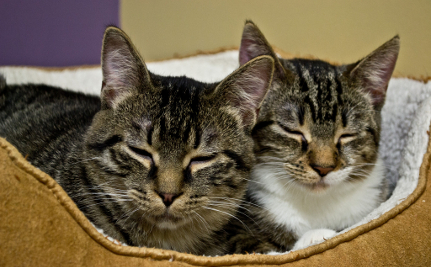
Isn’t that just gorgeous!

Let’s hear it for (shelter) cats.

Just to demonstrate that Learning from Dogs isn’t wall-to-wall about dogs!

Over the years that I have been writing in this place it has been mentioned before that as well as us having our dogs we also have cats. When Jeannie and I moved up from Mexico to the USA in 2010 we came with six cats, all of them cats that Jean had rescued off local streets down in San Carlos, Mexico.

Four years ago, when we moved up from Arizona to this present home here in Merlin, Southern Oregon, we built a cat run that was attached to the garage. Then about a year ago we brought what was now four cats into the house. The cats are in their own rooms during the day but mingle with the ‘living room’ group of dogs in the evening. The cats are not let outside for we fear that they would be grabbed by a passing coyote or similar before they learnt to return home in the evening.

All of which is my preamble to an article that was published a month ago over on the Care2 Causes site, and is republished here within Care2’s terms.

ooOOoo

10 Reasons to Adopt a Shelter Cat

3010560.largeBy: s.e. smith June 9, 2016

About s.e. Follow s.e. at @realsesmith

Once every eight seconds, an unwanted cat or dog is euthanized somewhere in the United States thanks to pet overpopulation and limited shelter capacity. No one likes to think about that reality, but you can do your small part to help. In addition to supporting organizations that promote an aggressive national spay and neuter policy, facilitate no-kill shelter transitions and work with communities to address specific issues like feral cat colonies, you can adopt a shelter cat (or dog!).

If you’re thinking of adding a cat to your life (and really, why stop with one?), here are ten compelling reasons to consider a shelter cat over one from a breeder or a pet store.

10. Shelter cats come in all shapes, sizes and colors.

If you want a kitten, shelters are usually overflowing with them, especially during spring kitten season. If you’re interested in an adolescent feline or even a more mature companion, shelters have those too. In fact, many are really excited by potential adopters who want to take on an older kitty, because mature cats tend to linger in shelters longer because many people prefer kittens. If you’re looking for a cat to accompany an older adult or someone who’s not as mobile, a mellow older cat might be a great fit.

9.  Shelter cats are ready to go!

They’re spayed or neutered, immunized, dewormed, microchipped and assessed for behavioral issues by the skilled staff at the shelter. They’ve also been trained to use the litterbox in most cases, so you don’t have to worry about an awkward and potentially smelly transition to living at your house. Many also come with a certificate for a free first visit to the vet, and some shelters have a take-home package with food, toys and other goodies. You’re all set up for your first year of pet ownership, and your pet will be healthy, because the shelter has a vested interest in keeping its animals happy and healthy, while pet stores and unscrupulous breeders do not.

8.  Shelter staff can help you pick the perfect companion.

Adopting an animal is a big commitment, and not all cats are the same. If you come in with your family, the shelter staff can get to know you, introduce you to some prospects, and help with the matchmaking process. They’re motivated to make sure cats find their forever homes, and they won’t lead you astray when it comes to, well, rescuing a stray. Shelter staff can also provide you with information about the adjustment period if you’ve never had a cat before.

7. Turns out you can teach an old cat new tricks.

(Note that when she’s tired of it, she’s not afraid to make her opinion known!)

6. Set an example!

There are a lot of myths about cats living in animal shelters, like claims that they’re damaged, feral or broken in some way. In fact, the vast majority of unwanted animals are happy, healthy and well-adjusted, they just need loving homes to get comfortable and let their personalities come up. By adopting a shelter cat, you can encourage other people to do the same; talking about your positive experiences and introducing people to your cat will help reduce the stigma about adopting from a rescue group.

If you want to adopt a special-needs animal, you’re certainly welcome to. Shelters are particularly choosy when it comes to homing out cats with medical problems, but they are always happy to hear people are interested, committed and ready to give a cat with some extra needs a home to share.

5. Adult cats are low maintenance.

If you want a cat in your life but you don’t have a lot of time for teaching a kitten how to use the litterbox, stay away from the toilet paper roll, and stop wreaking havoc on your shoes, an adult cat is definitely for you. Adult cats already know the lay of the land and they tend to settle into routines quickly, making them great housemates. And if you travel a lot, consider adopting cats as a pair so they can keep each other company. A shelter often has a pair of cats whom they’d love to see go out together because they’re relatives or they’ve developed a close bond.

4. You’ll feel better.

Companion animals offer a number of mental health benefits. Having a pet of any species around can make people feel happier and more balanced, and the routine of caring for and interacting with a pet like a cat can improve mood and reduce the sense of isolation. Cats are especially great companion animals for people who don’t have the energy or ability to care for a dog, but still want someone around the house to keep them company.

3. Shelter cats have varied personalities.

Cats are incredibly diverse, personality-wise. They can be shy and outgoing, playful or more reserved, fascinated by sinks or horrified by water. If you haven’t had the pleasure of having a cat in your life yet, a shelter cat might totally change the way you view these delightful animals.

Check out some of the personalities on display at the Los Alamos Animal Shelter:

2. Don’t support animal cruelty.

Pet stores source their animals from a variety of places, and those cute kittens in the window might come from an abusive kitten mill where cats endure horrible conditions to produce animals for the pet trade. The sale of companion animals in general promotes the continued existence of exploitative breeders that view cats as cash drawers, not living beings. By turning away from companion animals offered for sale and choosing to adopt, you’ll be voting with your wallet. And that adoption fee? Will be a lot lower than buying an animal from a petstore or breeder.

1. You’ll save a life.

Even if your local shelter is no-kill (which is great! consider an extra donation to help them with operational costs), adopting shelter cats to get them out of the shelter system and into living homes reduces the strain on shelters and frees up space for more homeless animals. No-kill shelters often rescue from facilities that euthanize, so by adopting from them, you’re opening up another slot for a kitty who’d otherwise be on death row. If you live in an area where there is a kill shelter or where animal care and control adopts out animals, please consider looking there first for a new cat. Some organizations maintain “kill lists” published by shelters, listing animals slated for euthanasia within the next few days, and you might find your new companion on just such a list.

ooOOoo
 Even if just one person who reads this makes a commitment to take on a shelter cat it will be one less cat on a ‘kill list’.

Affairs of the heart.

Warning: Emotional post coming up!

This is the second time I have used Affairs of the Heart as a title to a post. The previous time was January 20th, 2012 (and I’m republishing that post tomorrow). How time flies!

Indeed, in a little over two week’s time, on July 15th, all you dear, dear readers and I will be celebrating me writing this blog for seven years! Indeed, how time flies!

Yesterday, John Zande from down in Brazil, another great friend of this place, posted a comment that included a most powerful video. His comment was, “Not sure if this link will work, but this is a lovely story of an adoption that saved a life.

Sue Dreamwalker watched the video and responded:

John that was one amazing video, still wiping away tears.. Thank you.. Through our choices we CAN make Changes in our lives..:-)❤

I then followed Sue with this comment, written at 05:45 local time (PDT) yesterday:

John, Jean awoke just a few moments ago and I have just played your video in front of us both. It is so beautiful and important that I want some time to fully compose my response. Plus Jean and I need some time to stop weeping!

Just had this idea to feature your video and my reply as tomorrow’s post.

Thank you, John, for sharing this. Thank you so much.

Even if you watched this video yesterday do watch it again before continuing. Same applies to those that haven’t yet watched it. Do that now! 🙂

So now we head for my emotional response to that video.

Change is inevitable. Another word for change would be time. Time is the most fundamental principle of the Universe. Call it the Arrow of Time. It flows only in one direction. From order to disorder.
Or to put it in the words of physics (my emboldening in 2.2):
en·tro·py
ˈentrəpē/
noun
noun: entropy; plural noun: entropies; symbol: S
  1. 1.
    Physics
    a thermodynamic quantity representing the unavailability of a system’s thermal energy for conversion into mechanical work, often interpreted as the degree of disorder or randomness in the system.
  2. 2.
    lack of order or predictability; gradual decline into disorder.
    “a marketplace where entropy reigns supreme”
    synonyms: deterioration, degeneration, crumbling, decline, degradation, decomposition, breaking down, collapse; More

Entropy – “the gradual decline into disorder.

It has to be that way. For evolution is a product of the decline of one variant of life (plant, animal, insect, higher order ‘animals’, etc. ) and a new aspect of that life emerging (or not). That’s how it has to be for the beauty of life, the beauty of life in all its forms (even including politicians! 😉 ). Life is a function of a “gradual decline into disorder“.

I’m not a religious person, nor is Jean, and do not believe in any form of afterlife. When I die that’s it.

I was born in 1944. I am ageing. I have suffered some brain atrophy that means that my recall is terrible. I know that the ageing process is going to continue. It scares me. At least it motivates me to keep as physically and mentally fit as I can.

I have tried hard most of my life to stay fit, physically and mentally. I’m only now aware of the reward of such an attitude.

But I haven’t been emotionally fit. In the sense of not truly knowing who I am and what my values are. That darkness was illuminated for me in the Summer of 2007, thanks to Jon.

That very moving video of Eric and Peety speaks of Eric being saved by Peety. I so deeply understand Eric.

For in December, 2007, just a few months after Jon (as in being the best we can be) made me fully aware of my distorted view of myself I travelled out to Mexico and met Jean and all her dogs.

Jean has saved me. Directly from the love, companionship and  intimate friendship that she offers me. But Jean has also saved me indirectly. By that I mean from me living my daily life these last nearly ten years surrounded by the most beautiful dogs that one could imagine. Those dogs, each one of them in their own special way, also offering me love, companionship and intimate friendship.

Prior to December, 2007 I didn’t know how to feel my true emotions and, in consequence, didn’t know how to express them. Jean and the dogs have enabled me to feel my true emotions, and to express them.  Dozens of things pain me and it’s rare day when I don’t have the odd weep or two. However, dozens of things please me each day and now bring out a laugh, or a giggle. Even better, dozens of times each day I am loved by our dogs and the gift that goes with that love is me feeling so beautifully accepted; accepted in an utterly unconditional manner.

The love given to me from our dogs and the love from my beautiful Jean make it so easy for me to be good to myself. That love, from Jeannie and the dogs, has been a gift to me beyond my imagination.

I have hanging on my office wall a framed print of a poem by Roy Croft. I gave it to Jeannie on the first anniversary of our marriage. I want to share Roy Croft’s words with you. For they so beautifully describe the gift of love I receive from Jean. But in a way that I suspect Mr. Croft didn’t imagine when he first penned his poem, his words also so beautifully describe the gift of love I receive from our dogs.

ooOOoo

“Love” by Roy Croft

I love you,

Not only for what you are,
But for what I am
When I am with you.

oo

I love you,
Not only for what
You have made of yourself,
But for what
You are making of me.
I love you
For the part of me
That you bring out;
I love you
For putting your hand
Into my heaped-up heart
And passing over
All the foolish, weak things
That you can’t help
Dimly seeing there,
And for drawing out
Into the light
All the beautiful belongings
That no one else had looked
Quite far enough to find.

oo

I love you because you
Are helping me to make
Of the lumber of my life
Not a tavern
But a temple;
Out of the works
Of my every day
Not a reproach
But a song.

oo

I love you
Because you have done
More than any creed
Could have done
To make me good
And more than any fate
Could have done
To make me happy.
You have done it
Without a touch,
Without a word,
Without a sign.
You have done it
By being yourself.
Perhaps that is what
Being a friend means,
After all.

ooOOoo

If you have read my post through to the end, thank you!

Solace.

The stranger the times the more we need to ‘ground’ ourselves.

Without doubt these are incredibly strange and unsettling times. For the United Kingdom, for the USA, for the British Commonwealth, for Scotland, for Gibraltar; and for many other places.

When we are faced with unsettling periods then it is essential to ‘ground’ ourselves, and there are many effective ways of doing this.

One way that always works for me is to gaze into a clear, night sky. The night sky over one’s head is captivating beyond words. Perhaps I should have written that it is captivating beyond my words.

Not so for Sue Dreamwalker. Just read this most beautiful poem that Sue published a little over two weeks ago. Republished here with Sue’s kind permission.

(And to demonstrate how your’s truly is becoming a forgetful old fart when I read this out to Jeannie last night she reminded me that I had already published it! It’s worthy of another showing!)

ooOOoo

Mother Gaia ~ The Blue Dot.

11 Jun 2016

Three Sisters Glen Coe Scotland

How many times have you gazed at the stars?

To ask the question of whom we are

This Blue Dot in the vastness of space

Have you questioned the existence of the Human Race?

~~

Did we really evolve from Neanderthal Man?

From Ape to Human imagine if you can

Woolly Mammoths along with Sabre Tooth Tigers

Ice Ages and Floods, Volcanoes and Fires

~~

Mountains crashing, rising from ocean floors

Fossils created into stony forms

Petrified wood in glaciers saved

While Crystals grow beneath deep dark cave

~~

How many times have you asked ‘Who am I?’

As you gaze longingly at the starlit sky

So many treasures now upon this Blue Dot

So sad that we’ve evolved, but we also forgot

~~

That we Humans just like the Dinosaur race

Could soon disappear without a trace

As our superior brains seemed to have lost the plot

Of our coexistence within this amazing Blue Dot

~~

As we pollute our Mother who brings such life

While we rage in greed creating more strife

We poison our land modifying crops

Caring less and less until the last Bee drops

~~

Long after we’re gone as the planets realign

A new dawn will break over the memory of mankind

His legacy I’m sure one day will be discovered

As some future traveller his fossils will uncover.

~~

But it’s never too late to alter our future

When we live in harmony and learn to nurture

Holding onto LOVE and Letting go of Hate

We can all help our Blue Planet Regenerate.

Copyright Sue Dreamwalker 2016.

ooOOoo

Just meditate on those thoughts for a while without doing anything else.

Brexit – now what happens?

Here’s what is going to happen.

In the run-up to the EU referendum by the UK this Brit was tempted several times to offer an opinion on what I thought was the best decision. But I resisted. (I was qualified to vote as an overseas voter and had voted for Remain.)

My resistance was because it seemed inappropriate to pass any form of opinion before the die had been cast, so to speak. I hadn’t been living in the country for over eight years and, inevitably, was out of touch with feelings.

The Conversation blogsite yesterday had a series of articles on the aftermath of the Brexit decision but the one that seemed most useful to share with you all was an article by Gavin Barrett,  a Professor of European Constitutional and Economic Law at University College in Dublin. For many readers, including me, both within and without the UK this seemed a valuable primer.

ooOOoo

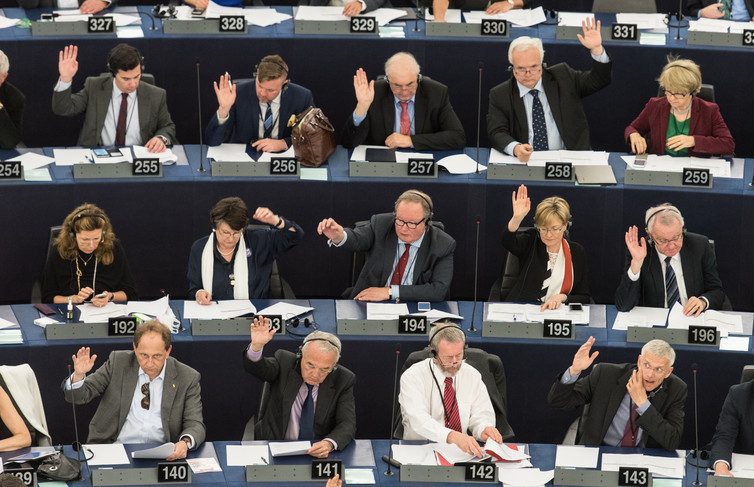
Britain votes to leave the EU, Cameron quits – here’s what happens next

June 23, 2016 11.41pm EDT

image-20160624-30267-wvhvty
Leave ahead. Anthony Devlin / PA Wire

Author

Four-legged healing marvels.

Day Two of the healing power of our wonderful dogs.

In yesterday’s post I wrote:

I was reminded of the incredible healing power of our dogs in a recent article published by author Deborah Taylor-French.

Before going on to that article let me say a little more about Deborah. Most easily done by offering what is detailed in her bio:

Deborah Taylor-French, M.A.

Deborah writes mysteries full of dogs,  positive dog leadership and animal rescue. Deborah was awarded and served as a guest artist for California’s Artists in the Schools.  As an arts educator, Deborah has led over a hundred residences and teacher workshops. 

 An active member of Redwood Writers, Deborah continues to serve as Author Support Facilitator.  Redwood Writers is the largest branch of the California Writers ClubThe true story of Sydney’s adoption, “Punk Rocker With A Poodle Brain” is published in “Vintage Voices Four Part Harmony.” Her fiction and memoir published in eight volumes of the  Redwood Writers Anthology

Deborah was also very supportive over my book and wrote an endorsement:

In “Learning From Dogs” author Paul Handover returns us to our origins where we find how early humans and dogs mutual survival and social relations. Visit the rich evidence of man and dog’s co-evolution. Dive into this man and species adventure. Reading this changes out perspective on dogs, wolves and humankind. Most importantly, “Learning From Dogs” values life on planet earth while offering ideas on peaceful co-evolution. Handover holds out a hand to readers, a hand called hope. A gem of a book.

So, all in all, it is a delight to be able to republish a recent article that Deborah published over on her place that you will all love reading.

ooOOoo

Six ways dogs help us heal

  1. Dogs show empathy.
  2. Dogs give us affection.
  3. Dogs give us their complete attention.
  4. Dogs give us physical comforting. They snuggle and lie in our laps.
  5. Dogs live in the moment, sharing enthusiasm and joy.
  6. Dogs possess sensory abilities  beyond our sensory capacity.

They hear into the distance beyond our hearing range. Dogs alert us to the approach of other people and animals. With their gift of night vision, dogs often guide us, just go camping with your dog or walk a dog at night.

Examples: Therapy dogs of every kind help the blind, the mobility challenged plus visit the sick and in-firmed. Dogs sniff out cancerous tumors, this field is now being explored by science with the goal of creating a laboratory replica of how dogs detect cancer. Many dog lovers witness their dogs seeking out members coping with illness. The world over has many truth stories of dogs comforting the sick or dying.

Dogs sensing seizeures before they happen so they can maneuver their person to a safe position, such as sitting or lying down.

img_4463Give back to dogs

Want to help homeless dogs and cats but can’t adopt?

Click here and visit The Animal Rescue Site. Through this site you can download an app, which gives money to feed needy shelterless pets. This app is called Pet to Give. Just like its title, every pet gives a selected shelterless funds to feed dogs and cats.

Check out the Greater Good. I like it because they respect my time. When I signed up for email updates, I learned that I could put in vacation holds on email updates. This is the only site informational source that I have never unsubscribed from.

Please share to spread the ways dogs heal us. In this terrible time following the mass murder in Orlando, Florida, I hope we all will spread loving kindness and healing.

Don’t have a dog right now?

No problem. Make dog friends.

If you do not have a dog, take some fresh sugar snap peas (cut or break them up for small dogs) sit in a park. As dog walkers if their dog is friendly with new people. Once the dog’s person says it’s okay to greet the dog, LET THE DOG COME TO YOU. A friendly dog will wag his or her tail and slink up to sniff your hand. After you have a relaxed connection, ask the dog’s person if you can give him or her a treat. Show them the snap peas. Hold one in the palm of your hand and let the dog eat off your hand like a dinner plate. There you go. You’ve made a good friend. Now go make another.

For eight years we lived in an apartment and could not have any pets. I missed having a dog so much. Most dog lovers know that pain and will be sympathetic. Dogs always have enough love for everyone.

ooOOoo

Hope you loved this as much as Jean and I did.

Please come back tomorrow where we continue the theme of the ways in which our dogs comfort us.

Our healing dogs!

Is it me or is the world becoming crazier each new day!

What with the ‘Remain/Leave’ EU referendum coming up in my old country and Presidential politics in my new country it seems these days as though the need for healing is growing in leaps and bounds. Thank goodness for being able to hug a dog or two (and Jean) to be reminded of what matters most of all.

I was reminded of the incredible healing power of our dogs in a recent article published by author Deborah Taylor-French. That will be republished tomorrow, with Deborah’s kind permission. However, I wanted to make this message last for more than a single post and to achieve that I’m republishing a guest post that appeared in this place towards the end of last year.

But first my introduction to that guest post.

Forget about the big world out there, be loved by our dogs.

Monday’s post about the precariousness of man’s future on this planet if we don’t prevent the melting of the Antarctic ice sheet was a bit gloomy, however true it might be. The gloom continued with yesterday’s post about the VW scandal illustrating the “unethical culture endemic in business”.

So what a nice change to think about the way that our pets keep us bright, cheerful and healthy.

All of which is my way of introducing a guest post from Vee Cecil. Now I am fairly cautious about guest posts from those who want to promote their businesses, for obvious reasons. But Vee’s essay is so lovely that it truly deserves to be shared.

Firstly, here is the email that Vee sent me back in August,

Hi!

In the U.S., 91 percent of pet owners say they consider their pet to be a member of the family. And for good reason! Our pets are constant sources of comfort and companionship.

What many pet owners may not realize is how great their furry family members are for their physical and mental health. For example, studies have shown that pet owners have lower blood pressure than people who don’t have pets and that being around pets also makes us “less anxious and less stressed.” And that’s just the beginning. There are many other wonderful health benefits that result from owning a pet.

May I write an article for learningfromdogs.com on this topic? The article will be approximately 500 words, unique to your site, and complete with resources.

Please let me know – I am always looking to spread the word about how we can be healthier and happier and having a pet is a great way to achieve both!

Best,
Vee

Here then is that article.

ooOOoo

Feeling Under the Weather? Learn More About the Amazing Healing Powers of Pets

HappyTailsAsk any dog owner and you’ll find out just how remarkable a dog can be. They can turn a terrible day into an amazing one with one lick of the face or wag of the tail. But more and more studies are showing that our four-legged friends might be even more awesome than we previously thought.

As The Washington Post explains, research is showing that being around dogs can help us feel better and less stressed, while also improving our physical health. For example, the article cites studies which found that our pets can lead to “lower blood pressure, lower resting heart rates and less risk of hypertension.”

And that’s not all. Here are four other health issues and how dogs help their human companions:

Cancer. As this CBSNews.com article explains, a recent study at Mount Sinai Beth Israel found that therapy dogs had a very positive impact on patients receiving chemo therapy. The patients showed improvements in “emotional well-being and quality of life.” The director of the program that provided the therapy dogs also noted that patients felt less stressed and anxious. The article notes that this was a ground-breaking study as the impact of therapy dogs on cancer patients hadn’t been examined before.

Alzheimer’s Disease. Therapy dogs are also proving to be extremely helpful for patients with Alzheimer’s. In this article, a man with early on-set Alzheimer’s explains how his therapy dog helps him with daily tasks. Through the help of his therapy dog, the man says his stress and anxiety levels have significantly reduced.

Surgery recovery. Chances are if you were recovering from a painful surgery you wouldn’t turn down a snuggle from a pet. But, as The Telegraph shows, researchers have found that pets can do more than just provide you with a little tender loving care. A study led by a researcher from Loyola University found that pet therapy can reduce the amount of pain patients experience after surgery. In fact, according to the article, the patients in the study, who had had joint replacement surgery, “needed 50 per cent less pain medication if they used pet therapy.”

Diabetes. And perhaps most remarkable of all is what therapy dogs can be trained to do for diabetics. In this case, dogs put their acute sense of smell to good use. As this article explains, dogs exhibiting a better-than-average sense of smell can be trained to help diabetics. Once trained these dogs use their sense of smell to detect signs of hypoglycemia and low blood sugar (based on their human companion’s breath). They’re also trained to get a sugary food for their diabetic, get help if the person goes into diabetic shock, and more.

As more research is conducted to see the benefits of not only service dogs, but pets too, it will be interesting to see how dogs are woven into more medical treatments. They are truly amazing creatures, who can help us mind, body, and soul.

***

Vee Cecil keeps busy by being a wellness coach, personal trainer and bootcamp instructor in Kentucky. She also recently launched a blog where she shares her passion for health by writing about her favorite tips, activities and recipes.

ooOOoo

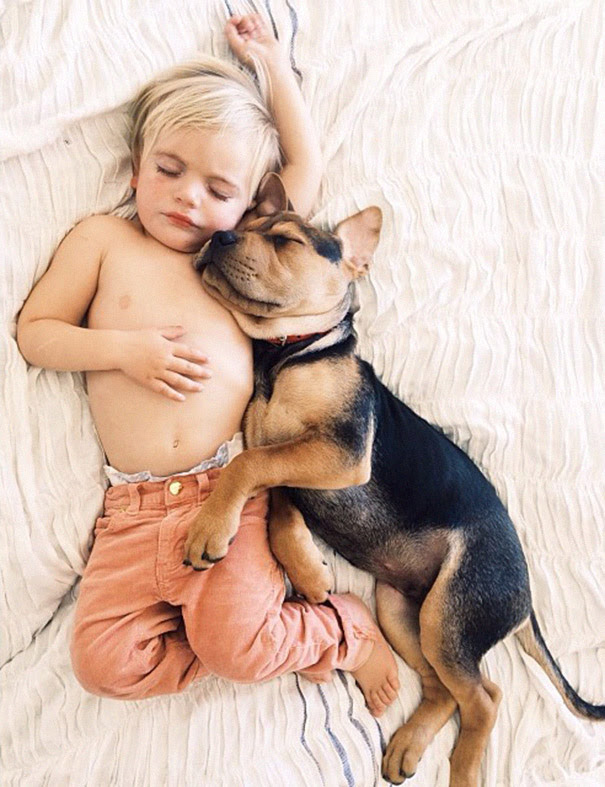
If proof was needed of the quality of a relationship that can exist between a person and a dog then just look at the following photograph.

Theo11It has healing power stamped all over it; for the young boy and the Shepherd Dog!

Reflections on Father’s Day.

Not exclusively the domain of the male human species!

As most of you know yesterday was Father’s Day. But offering memorial pictures of our recently deceased Hazel was far more important.

Nonetheless, I had seen an item published over on the Care2 site that I wanted to share with you. Namely, that amazing dads are also a feature of the animal kingdom. Granted, not all animals but nevertheless of sufficient importance to attract the attention of The Smithsonian. Or in their words:

Most mammal dads wouldn’t exactly win the “Best Father of the Year” award.

 Engaged fathers—those who care for their offspring or bring home the bacon so their female mates can focus on childcare—are present in only about 10 percent of mammal species. But for the rare few who do stick around, the rewards can be myriad: new research finds that parenting efforts pay big dividends for offspring and mates alike. Stay-at-home dads appear to boost reproductive success among their mates by enabling them to breed more frequently and produce larger litters, according to a study published this week in the journal Nature Communications.

Read the full story here.
Back to that Care2 article. It was published last Saturday and is happily shared with you all.

ooOOoo

10 Amazing Dads From the Animal Kingdom

3095002.largeBy: Alicia Graef June 18, 2016

About Alicia Follow Alicia at @care2causes

Editor’s note: This post is a Care2 favorite, back by popular demand. It was originally posted on June 14, 2014. Enjoy!

Not all non-human animal dads are cut out for family life, but there are a number of species who have become known for their role as fathers who deserve a salute, from giant water bugs who carry dozens of eggs on their backs to males who actually get pregnant and dads who operate solo as single parents. This Father’s Day, it’s time to celebrate some of the amazing dads from the animal kingdom who go above and beyond when it comes raising and protecting their young.

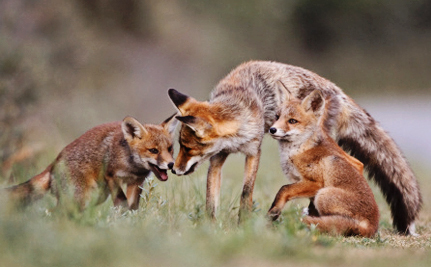
Red Fox

Male red foxes aren’t just loving mates, but excited and protective fathers. They take on the task of providing food for their mates every few hours for about a month after she gives birth. Then they take on the role of teacher – but teachers who like to take time out to play. Even when it’s time to get serious and teach their young how to start finding their own food, fox dads help them out and make sure they don’t really go hungry by hiding it near their dens.

3095002.largeEmperor Penguin

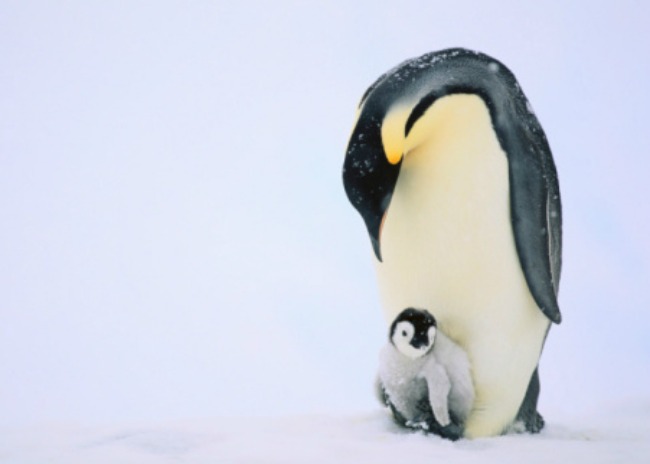
After females lay a single precious egg, Emperor penguin dads take over the responsibility of incubating it by balancing it precariously on their feet and keeping it warm under their feathers in the frigid Antarctic weather while mothers go off to feed. Dads can go for about two months without eating until the egg hatches, at which point he will feed it before mother’s return to give them a break from baby-duty.

Emperor Penguin Protecting Offspring from the Cold

Sea Horse

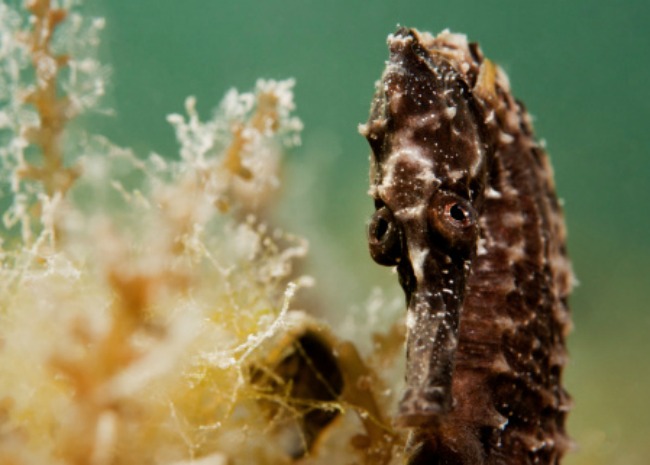
Seahorses, who are also known to mate for life, have reverse roles; the females compete for males, and the males don’t just play a role in pregnancy, but actually get pregnant. Females deposit their eggs in the male’s pouch, where he fertilizes and carries them until tiny baby seahorses emerge fully developed. According to Science Daily, the process of male pregnancy is unique to the fish family Syngnathidae, which also includes pipefish and sea dragons.

Black seahorse among seaweed

Spotted Sandpiper

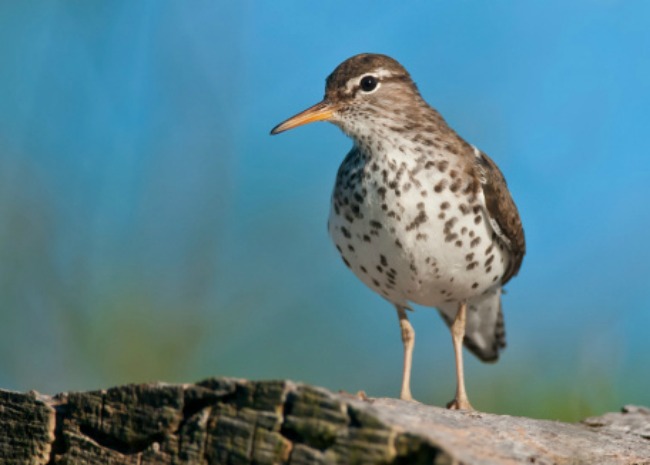
It doesn’t happen every time, but sandpipers have been found to reverse roles where female sandpipers establish and defend territory, while taking on multiple male partners. After luring a male to mate with and laying her eggs, she takes off to find another mate. Dad meanwhile stays to incubate the eggs and becomes the primary caregiver for the young for the first few weeks of their lives.

Spotted Sandpiper
Spotted Sandpiper

Gray Wolf

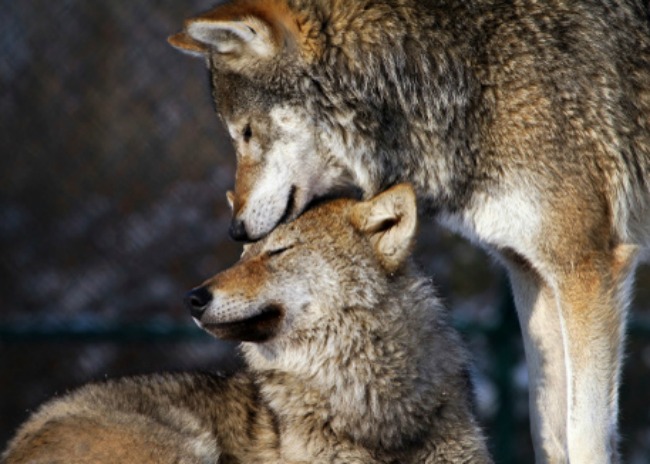
Despite the myths surrounding wolves that make them out to be villains, alpha male are loving, loyal and protective mates, fathers and leaders. Also known to mate for life, males who breed will guard their partners and pups while they’re in the den and take on the responsibility of finding everyone food. Even as pups grow older, dads will take on the role of teacher, helping them learn their role in the pack and the world.

mother and son
Mother and son

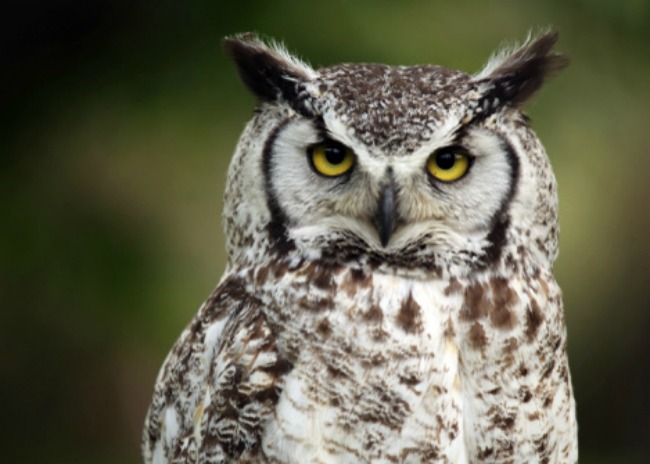
Great Horned Owl

Great horned owl dads are the stereotypical breadwinners in their families. After finding the perfect home with their mates, male great horned owls take on the role of provider by hunting enough to feed himself and his mate, who is bigger than he is, before taking on the added responsibility of hunting for their young when they hatch.

Grumpy Owl
Grumpy Owl

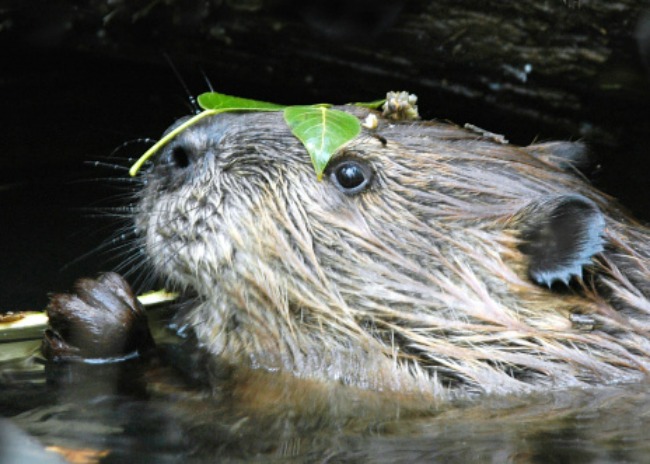
North American Beaver

Beaver dads are devoted family men, handymen and providers in the animal world. They mate for life and take on a co-parenting role in raising their young until they’re about 2-years-old, while helping care for them and teaching them how to become successful ecosystem engineers before they go off and start families of their own.

In 2012, a beaver in Martinez, Calif., known as “Dad” raised fears about what would happen to his young after his mate died from an infection, but he showed us he could do it all as a single father of three.

Beaver Wearing Leaf
Beaver Wearing Leaf

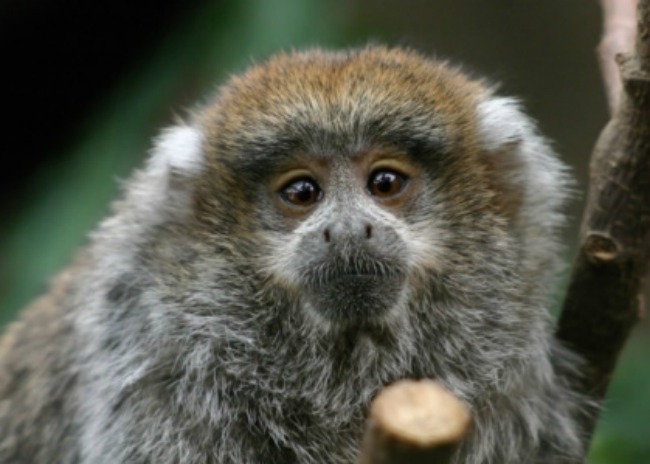
Titi Monkey

Male titi monkeys, who are known for monogamous relationships, are also known for the strong bond they build with their young as primary caregivers. Except for time spent with mom nursing, babies spend the rest of their time being carried around, cared for and protected by their fathers for the first few months of their lives.

Titi Monkey
Titi Monkey

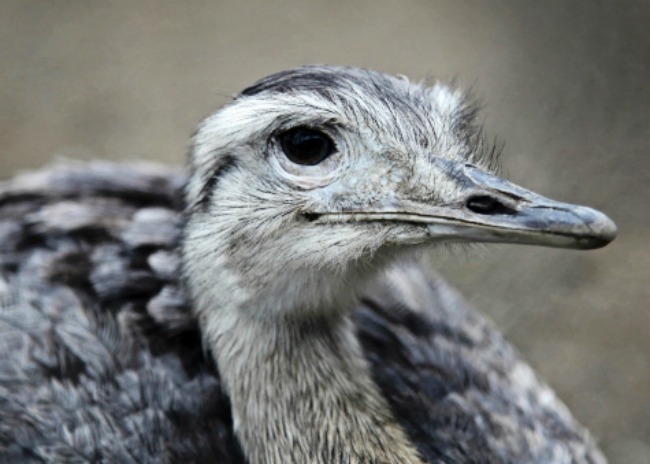
Rhea

As members of a polygamous species, male rheas have a lot of partners, but when it comes to child-rearing these dads pull their weight and then some. Males can have up to a dozen or so female partners who all lay eggs in a nest he builds before they leave. Males then take on the role of incubating and guarding what can be more than 50 eggs for close to two months before taking on the role of a single parent after they hatch. Males have also been known to adopt orphaned chicks who have been separated from their brood.

Nandu Greater Rhea
Nandu Greater Rhea

Darwin’s Frog

Darwin’s frog dads, who are native to South America, have come up with a neat and bizarre way to protect their offspring from predators. While they breed like other amphibians, where females lay eggs in the water that are fertilized by males, the males of this species take the fertilized eggs into their mouths, store them in their vocal sacs and keep them there until they’re fully developed frogs — at which point he throws them up.

Photo credit: Thinkstock

ooOOoo

So tomorrow is June 21st or Mid-Summer’s Day.

Except that the precise moment of the Summer Solstice is later today or Monday, June 20, 2016 at 3:34 PM PDT to be exact. In universal time (UTC) that is Monday, June 20, 2016 at 22:34 UTC.

However, it is a rather special solstice and all will be explained in tomorrow’s post, albeit a little under nine hours after the event!

See you tomorrow!

A Eulogy for Hazel.

This dear, precious dog!

Back in March, 2014 when I was writing a series of posts about our dogs, I published a Meet the dogs – Hazel post. This eulogy consist mainly of what I wrote then, with a few minor changes to bring it up to date, and a closing thought.

Hazel

I first met Jean in Mexico; namely, in San Carlos, Sonora, Mexico to be precise. Just a few days before Christmas, 2007. At that time, Jean had 16 dogs, all of them rescues off the streets in and around San Carlos. Jean was well-known for rescuing Mexican feral dogs.

In September, 2008 I travelled out to Mexico, via London-Los Angeles, with my Pharaoh. Jean and I have been together ever since. In February, 2010, because we wanted to be married and to be married in the USA, we moved from San Carlos to Payson, in Arizona; some 80 miles North-East of Phoenix.

One morning, just a few days before we were due permanently to leave San Carlos and move our animals and belongings the 513 miles (827 km) to Payson, AZ, Jean went outside the front of the San Carlos house to find a very lost and disorientated black dog alone on the dusty street. The dog was a female who in the last few weeks had given birth to puppies that had been weaned. Obvious to Jean because the dog’s teats were still somewhat extended.

The dog had been abandoned outside in the street. A not uncommon happening because many of the local Mexicans knew of Jean’s rescues over many years and when they wanted to abandon a dog it was done outside Jean’s house. The poor people of San Carlos sometimes resorted to selling the puppies for a few Pesos and casting the mother dog adrift.

Of course the dog was taken in and we named her Hazel. Right from Day One Hazel was the most delightful, loving dog and quickly attached herself to me.

The truest of love between a man and a dog!

Of all the dogs that we have here at home, and, trust me, many are extremely loving, my relationship with Hazel was precious beyond description. She was in Pharaoh’s ‘group’ (Pharaoh, Cleo, Sweeny, Pedy and Brandy) so slept in our bedroom at night. Most nights Hazel was tucked up against me.

Plus frequently during the day Hazel would take an interest in what I was doing, as the next photograph illustrates.

Hazel taking an interest in my potterings.
Hazel taking an interest in my potterings; March 2014.

If ever one wanted an example of the unconditional love that a dog can offer a human, then Hazel was that example. Precious creature.

ooOOoo

Just stay with me for a little longer.

Recently there was a documentary on the BBC about Koko the gorilla and how many hand signs Koko had learnt. As Wikipedia explains (in part):

Hanabiko “Koko” (born July 4, 1971) is a female western lowland gorilla who is known for having learned a large number of hand signs from a modified version of American Sign Language (ASL).

Her caregiver, Francine “Penny” Patterson, reports that Koko is able to understand more than 1,000 signs of what Patterson calls “Gorilla Sign Language” (GSL). In contrast to other experiments attempting to teach sign language to non-human primates, Patterson simultaneously exposed Koko to spoken English from an early age. Reports state that Koko understands approximately 2,000 words of spoken English, in addition to the signs.

The reason why I mention this is at the end of the programme it is stated that Koko’s ability to communicate shows very clearly that she is capable of feelings and emotions. Indeed, the way that Koko hugs Penny is very moving.

The presenter of the BBC programme concludes how things have changed over all the years from the birth of Koko some 45 years ago to today. As in back in the ’70s’ the idea that animals had emotions was just not accepted whereas nowadays there is mounting evidence that many warm-blooded animals have emotions; are capable of emotional feelings.

Why do I mention this?

For there isn’t one shred of doubt in the minds of Jean and me that Hazel was full of feelings of love and affection towards her human friends.

That is the epitaph with which Hazel will be remembered! This is her legacy.

Picture of Hazel taken in the last twenty-four hours.
Picture of Hazel taken in March, 2014.

Of dogs and play.

Part Two of Professor Bekoff’s essay.

I sitting in front of my PC writing this in what will be, by the time you read this, yesterday afternoon. One way and another it was quite an emotional day sharing the sad news of Hazel’s death with so many both in this blogging place and where we live here in Merlin, North-West of Grants Pass, Oregon.

So not going to say any more about Hazel until I have collected my thoughts about our vet’s response to Hazel’s death and what may flow from that. I should be able to post that update tomorrow.

For today, let me offer you Part Two of Marc Bekoff’s essay. Part One was yesterday.

ooOOoo

Butts and Noses: Secrets and Lessons from Dog Parks (Concluding Part)

Dog parks are gold mines of information about the behavior of dogs and humans

Post published by Marc Bekoff Ph.D. on May 16, 2015 in Animal Emotions

Are dogs really our best friends and are we really their best friends?

I’m asked these questions a lot and I always say it’s simply not so that dogs are “unconditional lovers.” They discriminate among humans just like we discriminate among dogs. And, while dogs might love “too much,” they’re very careful about to whom they open up. So, sometimes — perhaps very often — dogs are our best friends and we are their best friends but we all know of picky dogs and the horrific abuse to which dogs are subjected.

Are dogs really free at a dog park?

I often hear something like, “Oh I love coming to the dog park because my dog is so free” – and then she’s/he’s called back constantly when he plays too roughly or strays too far. People surely differ in how much control they exert, but some just don’t give their dog the opportunity to play, sniff, and hump. Control freaks often abound and they don’t realize it. Patrick Jackson, in the essay to which I referred above, writes about how “caretakers become ‘control managers’ who must negotiate problems related to a variety of dog behaviors, especially mounting, aggression, and waste management.” He’s right on the mark, but there are also those who get upset when play gets a bit rough, even when the dogs obviously are enjoying themselves.

Do dogs display dominance?

Yes, they do, just like many other animals. There is major confusion and mistakes among many “dog people” about what dominance really means, and dogs, like numerous other animals, do indeed use various forms of dominance in their social interactions. However, this does not mean that dominance is equated with overt aggression and physical harm nor that we need to dominate them in order to live in harmony with them (for more on this topic and the fact that dominance is not a myth please see this essay and and and references therein).

Why do dogs mount and hump?

Here are some of the statements I hear about dog mounting and humping: “Oh my God, my dog was fixed to stop this stuff.” “Oh, that’s easy, it’s always to dominate the other dog.” “Domination.” “Dogs are hyper-sexual because of domestication.” There are many reasons why dogs hump and there’s not a single answer (please see this essay and references therein).

Do Dogs feel shame and guilt?

While I hear numerous stories about shame and guilt, the simple and most correct answer is that we really don’t know. While we’re not all that good at reading guilt this does not mean that they do not feel guilt (please see this essay and references therein).

Do dogs get jealous?

Yes they do and a study published in 2014 showed this to be the case (please see this essay and references therein). I often hear very compelling stories about jealousy in dogs.

Do dogs get bored?

Yes, of course they do, just as do many other mammals, especially those living in various conditions of captivity. It’s clear that researchers and zoo administrators, for example, recognize that animals get bored, hence the numerous enrichment programs that are designed to relieve the animals’ boredom. The detailed research of Francois Wemelsfelder is a wonderful place to begin to learn about boredom in animals (see also the essays listed here).

Do dogs suffer from PTSD and other psychological disorders?

Yes they do as do many other animals.

Do dogs mind being used as service dogs or in animal assisted therapy?

Because dogs are such a variable lot, it’s impossible to say something like, “Of course they do.” The correct answer is that because dogs vary in personality and temperament there are some who would mind it and some who won’t. I’ve met many in each camp and I’m sure many readers have as well.

Are there Attention Deficit Dogs (ADD’s)?

I often hear people say that their dogs don’t hear them or that they ignore them most of the time. While there are many reasons why this might be so, it’s entirely possible that there are dogs who get so excited they simply don’t respond to their human’s requests. But, it’s also possible that some dogs do suffer from attention deficit disorder and hyperactivity.

How often does social play escalate into serious aggressive encounters?

We all know that play behavior predominates at dog parks and that dogs have fun when they play (see also) and that play is very contagious. Dogs play socially with one another, often involving objects, and they also play alone with objects or just go berserk on their own because it feels good. Dogs can play very roughly and still be in control and there are distinct “rules of social play” that help to keep even a vigorous interaction well within bounds so that there’s really little or no worry that play will escalate into aggression. Nonetheless, I hear this statement a lot: “Oh whenever dogs play it turns into aggression.” It doesn’t. My own observations suggest that it seems escalation happens more in large groups in which dogs can’t read one another’s subtle signals that “this still is play,” but it is very rare. Dogs can be rather fair. I want to say a bit more on this topic because it seems to be major reason why dogs are called back to their human or that humans break up rough-and-tumble play.

Although my students and I haven’t kept detailed records on this aspect of play for dogs, we all agree that play didn’t turn into serious fighting in more than around 2% of the 1000s of play bouts we’ve observed. Current observations at dog parks around Boulder, Colorado support our conclusion. And, for the approximately 1000 play bouts that my students and I observed in wild coyotes, mainly youngsters, on only about five occasions did we see play fighting escalate into serious fighting. Along these lines, Shyan, Fortune, and King (2003) discovered that fewer than 0.5% of play fights in dogs developed into conflict, and only half of these were clearly aggressive encounters. In this case our intuitions were right on the mark. Of course, there may be dogs who simply bite too hard or slam too hard into their play partners when they get highly aroused and lost in play, and this results in an aggressive encounter of varying intensity. But that is the exception rather than the rule, for play fighting only very rarely escalates into real fighting. Because play is a foundation of fairness there is a good deal of cooperation among the players as they negotiate the ongoing interaction so that it remains playful. I think one can make a good case for their having a theory of mind. Nonetheless, we still need more data on this aspect of play as well.

Do older dogs play less than younger dogs?

While this is true of wild animals who have to work harder to survive and to thrive, older dogs play a lot when they can and we really need more data on this question.

Do dogs have a theory of mind?

We don’t know. While some studies suggest they don’t, we need more “naturalistic” research especially when dogs are socially interacting. Because play is a foundation of fairness and there is a good deal of cooperation among the players as they negotiate the ongoing interaction so that it remains playful. Perhaps dogs even know what their playmates are thinking and feeling. Do they have a theory of mind? While I think so, we still need more data on this aspect of play as well.

Why do dogs roll and writhe on their back?

It could be to impart an odor. A wild canid known as the raccoon dog who lives in South America has a scent gland on its back. Dogs might also roll on their back to mask their own odor. And, of course, it might feel really good so why not do it? I love watching dogs writhe on their back and they look like they’re in doggie heaven.

Do dogs have a sense of time? The “two minute warning”

We really don’t know much at all about the dog’s sense of time. Yet, people often use what I call the “two minute warning” and ask their dog if it’s okay if they leave in 2 minutes, or people tell their dog something like, “You have 5 minutes more to play with your friends before we go to the store.” They also ask their dog, “What the hell took you so long, I’ve been calling you for minutes?” or “Where were you when I called you?” I can well imagine the dog thinking something like, “Huh?”

Why do dogs snort?

While there are physical reasons why dogs snort, recent research shows that dogs sort odors in their nose, forcing out those that aren’t relevant or salient, hence the snort and often a good deal of snot (for more on the fascinating dog’s nose please see this essay and this.

Why do dogs try to pee and nothing comes out?

This is called “dry marking” and we know that lifting a leg as if the dog is peeing serves as a visual signal to tell others he is. Often a dog will “dry mark” and then pee a few seconds later, so it’s clear their bladder isn’t empty. A study I did years ago with some students showed that dogs do this more often when there are other dogs around who can see them and then pee a bucket.

Why do dogs scratch the ground after they pee or poop?

They do this for a number of possible reasons and there isn’t a simple answer to this question.

Poop central: Why do people talk so much about dog poop at dog parks?

People also talk about poop a lot as if they’re freer to do so with their dog. Matthew Gilbert notes, “poop was more of a thing at the park than I had expected.” (p. 66) He also talks about a “stray bowel movement” as a “voluminous and frozen still life” (p, 67). Dog poop is a ripe area for future research.

Why do dogs stick their noses into butts, groins, and ears?

It’s a way of greeting and social investigation, but there haven’t been any studies of which I’m aware that provide any details about why they do this, even to their dog friends or humans. It’s been suggested that some animals might pick up information on the food others have eaten.

Are there breed specific odors?

Many people report that on their first encounter with other dogs, members of the same breed prefer one another and treat breed members differently from individuals of different breeds. There’s been some discussion that there may be a common odor to members of the same breed. However, my reading of available information is that we really know little about this question right now.

Do dogs know what they look like?

While dogs know what they smell like, they don’t know what they look like, or might they? Research done on birds in the 1960s suggests that they might learn their own color from reflections in water. So, I suppose dogs might know what they look like if they’ve seen their own reflection, but we need much more research about this question.

Why do dogs circle before lying down?

Dogs do not always circle before lying down, as some authors claim. They likely do it to flatten or soften the ground, and may also be looking around to see who’s around before they relax. In a study some of my students did years ago they reported that the dogs they watched circled around 65% of the time, but more detailed studies are needed.

Why does the hair on a dog’s back stand up?

This is called piloerection (sort of like goose bumps) and indicates that a dog is highly aroused but not necessarily aggressive. Many other species, including birds, show the same (sympathetic nervous system) response.

Dogs and humans: Why do people open up at dog parks?

Dogs can easily serve as icebreakers and social catalysts. People often open up at dog parks and talk to friends about things they likely don’t talk about in other arenas. They seem to feel safe among kinfolks. Some people began talking to me about pretty personal stuff within a minute of meeting them such as a woman who decided that she didn’t like her BFF because of how she treated a dog she just rescued, and a woman who, after meeting someone for around 10 seconds, decided that the woman wasn’t a good dog owner because she was suffering from bipolar disorder but didn’t know it! Some people – men and women, alike – have told me that dogs are social magnets and make it easy to meet other people who also are out with their canine BFF. These discussions often have very interesting “conclusions.” Enough on that for now …

Why do dogs eat grass?

There are many reasons and Stanley Coren has written a good myth-debunking essay on this. He notes that dogs do not eat grass to cause vomiting to relieve stomach distress. While it’s possible that some dogs do, we need a lot more research on this question.

More questions for a future essay

The list of questions can go on and on, and some questions I’ll consider in the future include: Why do dogs chase their tail? Why do dogs bark and what sort of barks are there? Why do dogs bark and howl at sirens? Why does my dog hoard tennis balls? Are dogs territorial as are wolves? Why do dogs pee/scent mark so much? Why do dogs sniff pee so much even when it’s their friends’ pee? Why do males sometimes squat when they pee and why do females sometimes lift their leg? Do dogs have a sense of self? Studies of “yellow snow” suggest they do. Are they conscious? (Of course they are, and scientists agree.) Why do dogs sniff and eat frozen turds? Why do dogs eat gooey feces? Why do dogs dig holes and then lie in them? Why do dogs scrape their butt on the ground? Why do people openly disparage their dog and then tell them they love them? (I often hear something like, “Oh, he’s really retarded, but I love him” or “You are so fat!” or “My goodness, your breath stinks!). Do dogs pick up on these mixed signals?“ Do dogs have a “little dog” complex? Do dogs make and use tools? (They do.) Why do dogs drink filthy water? How do dogs pick their mates? Do dogs dream? Do dogs get heartburn? Do dogs sweat? Do dogs understand baby talk? (People are well known to talk to dogs as if they’re infant humans.) What does “feral” mean? How did wolves become dogs? (Please see essays by Mark Derr.) What’s the difference between a socialized animal and a domesticated animal? (A wolf who likes humans is a socialized wolf. A domesticated wolf is a dog.) Do dogs really live in the moment? (No, their past clearly influences their behavior — just ask anyone who’s rescued an abused dog — and they think about the future — just watch a dog waiting for a frisbee or a ball to be thrown and watch them track the trajectory, although tracking might not be conscious, even in humans.)

Where to from here? There are many holes in the database and dog parks are gold mines of information.

It’s important to stress that there here are many holes in the database, and people find this very surprising because of many popular dog books that purport to “tell it like it is,” as if there are facts about this or that question. Dog parks are wonderful places for studies in dog-dog ethology and anthrozoology, the study of human-animal interactions, and I hope this essay will stimulate people to conduct formal studies and encourage citizen scientists to share their stories that can be used to generate further more systematic studies.

Studies in dog parks, that some may call “too uncontrolled,” may also shed light on questions that are being debated among different groups of researchers, for example, whether dogs follow human gazing or pointing and how well they perform these activities, or if dogs have a theory of mind. And, let’s face it, some laboratory studies also are rather uncontrolled, mainly because dogs are such a mixed bag of participants as might be the researchers themselves. Watching animals in their “natural habitats,” and dog parks might qualify as such, has shed much light on various aspects of behavior that are difficult to study in captivity or in other more controlled environs. Although many lab studies of dogs are likely more controlled than those conducted on free-running dogs, many people have seen behavior patterns that warrant reinvestigation in more ecologically relevant situations.

I continue to learn a lot about dog and human behavior when I visit dog parks. People often feel free to offer advice even when they knew who I am and what I do for a living. But, on a number of occasions, I chose to keep some distance to determine if their comments and explanations to other people (and often to the dogs) differ from when they know I’m around. For the most part, they did not. For example, I’ve been told that “familiar dogs definitely play differently from unfamiliar dogs,” that “humping is always about dominance,” that “dogs know what other dogs are thinking and feeling and they also know the same about people,” and that “know-it-all researchers ought to get off their butts and out of the ivory tower and watch dogs in the field.” On a few occasions some people made it clear that I had a lot to learn about dogs and they could teach me some valuable lessons. When I agreed, they were very surprised, and over the years I’ve had many interesting discussions that have made me re-evaluate what we know and don’t know about dog behavior and dog-human interactions. Concerning two of the areas above, we actually don’t know if familiar dogs play differently from unfamiliar dogs (I’ve got a student studying this) and, as I mentioned above, there’s not just one explanation for humping. Anyway …

There are numerous research projects just waiting to be done as we watch dogs romp here and there and have fun, meet old friends and strangers, and negotiate social relationships with other dogs and humans. I’m aware that I may have missed some studies so I hope readers will send me the details and share them in the comments section for this essay.

Dog behavior, in all of its kaleidoscopic forms, is an incredibly exciting field of research

Dogs openly share with us a lot about what they know and what they’re thinking and feeling, and we just have to be keen enough and patient enough to figure it all out. Dogs also are wonderful social catalysts and social magnets and they can help us learn a lot about ourselves. The arena of inquiry about dog-dog behavior and dogs and their humans truly is deep and boundless and there are numerous opportunities for studies at dog parks, where dogs frolic and sometimes cower and have to learn to deal with a wide variety of social situations with other dogs and humans, and at other places where dogs and humans congregate. And, as I mentioned before, talking about “the dog” can often be misleading and perilous.

Dog behavior, in all of its kaleidoscopic forms, is an incredibly exciting field of research, and I really look forward to seeing further studies of the above and other questions. When people tell me they’re having trouble coming up with a research project I humbly ask them if they’ve thought about dogs, and then the conversation gets going and going and going ….

Marc Bekoff’s latest books are Jasper’s story: Saving moon bears (with Jill Robinson), Ignoring nature no more: The case for compassionate conservation, Why dogs hump and bees get depressed, and Rewilding our hearts: Building pathways of compassion and coexistence. The Jane effect: Celebrating Jane Goodall (edited with Dale Peterson) has recently been published. (marcbekoff.com; @MarcBekoff)

ooOOoo

Take care all you good people and all your lovely animals.