Category: Water

A dog’s journey!

A guest post from a dear friend!

Many years ago I found myself teaching at a unit attached to Exeter University. I was teaching sales and marketing. I can’t remember clearly the events that produced the meeting between myself and Chris Snuggs. But I recall the outcome.

Chris was the director of studies at a French institute named ISUGA. Let me borrow from their website:

The ISUGA Europe-Asia International BBA Bachelor’s degree is a 4-year cursus following the Baccalaureate or High School diploma which combines studying International Business and Marketing with learning an Asian or English language and comprising university exchange stays, as well as internships in French and International businesses.

ISUGA is located in Quimper, Western Brittany relatively close to Devon in England where I was living.

In Chris’ words: “It must have been through them that we got your name when we needed someone to teach Selling. Now I come to think of it, we HAD someone lined up for a whole week and he CANCELLED on us, so you were a last-minute replacement.”

For quite a few years I went across to Quimper to teach for Chris. Mainly by ferry from Plymouth to Roscoff. During the summer months I flew to Quimper from Exeter in our group-owned TB20. (The picture below is of the type only not our aircraft.)

A Socata TB20

Since that day we have remained in reasonable contact and I regard Chris as good friend.

A few days ago Chris published on his blog his account of his journey from Quimper back to Ramsgate, in east Kent. It was hilarious and I asked Chris if I could publish it and share with everyone.

Chris not only said yes but insisted on improving it (his words) including expanding it to what it is below.

So with no further ado, here is Chris’ post.

ooOOoo

“A DOG’s Travel Across Northern France” … as in “Doddering Old Git”

I am officially a “Senior Citizen”, but as such prefer much of what passes for “The Good Old Days” when in this case we were called “Old Age Pensioners” – MUCH less PC and wokeish AND more realistic – but DOGS sounds much better (and more informative) than OAPs.

A simple trip to Blighty to see the family for XMAS was not supposed to be a saga, but it turned out to be one: 

Like ET, I was going home, though not quite as far – though it probably seemed like it.

I got about 3 hours sleep max Thursday night/Friday morning; worried about oversleeping even though I had THREE electronic wake-up devices.

I got up at 04:30 to finalize packing and clean up (the worst of) my mess.

I went out into the street in front of the house at 06:45 to await the taxi – it was raining, albeit not heavily.

The taxi was 5 minutes late, but the driver didn’t apologize. (I was going to say “woman driver” but I believe that sex differentiation is no longer allowed.)

I tried to help her (it, hir, shim?) load my heavy suitcase into *** boot (car, not footwear).

I lightly touched the car with the suitcase, and shim said: “Mind my car. Your suitcase is too heavy.”

I nearly said: “So are you, but it’s probably your hormones or your genes.” but decided that discretion was the better part of insult as I had to catch a train ……

We got to the station in plenty of time, only for me then to find that the train was due to go from platform C (usually it’s A as you leave the entrance hall).

I then found out/remembered that there is no lift at Quimper station. “This is not going to be my day,” I thought …

As I approached the stairs down to the access tunnel, I pretended to be a Doddery Old Git on the point of collapse (no comments please) and a nice young man helped me with the case.

Same procedure with a different bloke to go up to platform C. I actually tried this ploy with a pretty young lady first, but just got a funny look ….

Eventually got onto the right and very crowded train; my “This is not a gasmask” COVID mask was very reassuring as the virus probably had a field day circulating the carriage. I got some more funny looks, but two people asked me where I got my mask, so I am thinking of merchandising them ….

Got to Paris 4 hours later – showed a railway worker my little map where the taxi was supposed to be waiting and he pointed me in direction X saying authoritatively: “Tout au bout.” (“right at the end” for those who left school at 14).

Seemed a bit iffy to me (I vaguely remembered having gone somewhere else the last time I had done the journey, but couldn’t remember where. Does that happen to you?), but I followed his directions in the obviously-idiotic belief that someone actually working in a place would know where the taxis would be.

Of course, there was no sign of a taxi area at the distant far end of the HUGE Montparnasse Station, so I asked another railway bod.

He pointed in the 180° opposite direction and said the same as the first bloke, so I had to retrace my steps and go another 200 metres past where I had started to one of the no doubt multiple exits.

On exiting I was surrounded by some Middle Eastern gentlemen (without beards as it happens) who were desperate to take me somewhere.

I told them I had booked a taxi already and they suddenly lost interest.

I then got a call on my posh new mobile, but as with every other mobile I have ever owned it is specifically designed so that one cannot easily answer a call – first there is always some other leftover screen on the thing which by the time you have got rid of the caller has given up, and second you have to SWIPE to even see a green button which you then press – and I don’t know who invented SWIPE but hanging, drawing and quartering while being burned alive in oil over a period of several hours would be a suitable punishment.

This was all way beyond me, so I missed the call.

Miraculously, however, I did manage to call back and it was in fact the driver.

After two or three calls in each direction we managed to find each other physically as well as phonally.

We set off for La Gare du Nord, which should be about 15 minutes max by road – but it took us an hour and a quarter … (This was Paris in the rain on Friday at lunchtime – but I did learn a few new French swearwords from the driver.)

Fortunately, I had plenty of time between trains and so managed to find and embark on my TER to Calais.

This was an uneventful trip except that I was opposite a young mother with an inquisitive baby who kept looking at me for some reason (the baby not the woman ….).

I thought about playing with the baby but did not want to be arrested as a paedophile. I did plonk a small orange on the little table between us thinking she might want to play with it, but I got a funny look from her mother …. so I picked it up (the orange not the baby) and ate it – getting more funny looks. Strange … I get that all the time.

There was no internet on the TER so I tried to doze, but dozing with a high-decibel baby one metre away is a skill I have not yet mastered – and probably never will.

Arrived at Calais station – it took me 10 minutes to find the lift to get to the exit: in fact, one has to be led across an actual line by a railway bod and then take the lift – which is conveniently hidden.

But once outside the station I got a taxi right away. (a rare plus chalked up!)

I was dropped at the port outside a little hut marked “Billets”: (“tickets” for the linguistically-challenged).

This was weird – there used to be a big hall full of foot-passengers, but it has all changed – there IS a big hall, but it is empty except for two WWI biplanes. “Perhaps they want to fly us over?” I thought.

Went into the ticket office to be told my boat was cancelled (no explanation was offered) and they would try to get me on the next one. I never did understand why they would “try” (there was hardly anyone else there), but it seems they had to wait for a phone call.

It was a very small cabin with four guichets (Would you like a French dictionary for XMAS?) and three simple chairs, on one of which – after having my particulars scrutinized and recorded – I was invited to sit – which I did, not sure whether I should show appreciation or keep going with the scowl I could feel coming on ….

Behind the desks several women came and went, but spent all the time yacking to one another about women stuff while three of us sat waiting in stony and in my case exhausted silence (it was by now 18:00 and I had been up since 04:30).

I eventually got up and complained, something that comes naturally to we DOGs. I said I did not understand the delay, that I needed a coffee and a toilet break and that the least they could do was install some beds in their little office for those in my situation (and condition) who had to wait overnight for information about getting on a replacement ferry. I wanted to add a question about whether they had been trained in defibrillation techniques but by then I had run out of breath.

The charming young lady smiled and said they had none of the things that might alleviate my stress (adding the word “understandable” would have been nice) but that the large hall opposite might be open, and if not she could lend me a key to open it and visit the convenience.

I couldn’t be bothered to try to work out why she wouldn’t know whether the hall was open or not and that what I in fact most urgently needed was to get out of there without bothering with keys I would probably lose – which I did.

I then walked round the large hall three or four times admiring the WWI planes and wondering if the Red Baron had ever flown one of them. The fresh air and exercise refill renewed the oxygen supply to my needy brain.

I eventually staggered back to the ticket office and sat down on my hard chair again. I was tempted to feign a loud snore but as with the taxi driver in the morning decided that discretion was the better part of valour.

15 minutes later a phone call came and I was summoned to the guichet and given my ticket.

“Great,” I thought. “At last we can get outta here.”

THEN she told us that in 40 minutes someone would come to drive us to the boat.

I was fast losing the will to live, but thought that another dose of circling the large airplane hall might at least get my blood circulating again.

I told her where I was going and mentioned the hall and the planes (to be fair she did laugh at my joke about flying us across the Channel), but said: “That’s all run by the Chamber of Commerce.”, and of course we all know that no lunacy is beyond THAT organization.

I left after asking if she could send out a rescue party if I did not return – and she smiled again …. Smiles don’t of course achieve anything practical but they do at least make the pain somewhat more tolerable. 

I came back half an hour later, having admired the bi-planes once again and wondered whether the Red Baron had ever flown one – and indeed a lady driver soon turned up as predicted to drive us to the boat. (another rare plus chalked up …)

We had to go up and down two or three kerbs (nowhere lowered for people to wheel their too-heavy suitcases) and eventually got onto a bus.

Had to go up a multiply-zig-zagged ramp to get onto the boat, but I played the Doddery Old Git card again and someone helped with my case.

I had thought of taking my walking-stick on this trip to boost the DOG sympathy factor, but could not work out how I could possibly carry it simultaneously with the rest of my baggage.

I asked a boatbod what time we would be leaving and then arrive in Dover, and he said: “in 15 minutes and 20:00.”

40 minutes later we still had not left, so I asked someone else when we would be leaving and was told in 15 minutes.

We actually left 30 minutes later, and I decided that being 100% wrong in a prediction was not actually that bad as these things go.

When I asked yet anOTHER bod WHY there had been another delay he just rolled his eyes and said something about the Captain which I didn’t understand – but was past caring. 

Ten minutes later I asked the next available bod what time we would arrive in Dover and was told 20:30.

This was well past the time my taxi was booked, so I called to inform Eddy, the driver.

Fortunately, making calls on mobiles is easier than receiving them, so that was OK.

On the boat I got talking to a foot-passenger couple (there were only EIGHT of us!).

They were very nice and I gave them Taxi Supremo Andy’s phone number as they had nothing arranged for their arrival.

When we eventually got to Dover, there were no more checks (even though they made us walk through a maze of corridors in the totally empty border-control and customs instead of going straight to the taxi area – maybe they were filming us secretly?) and we eventually got to where I hoped to find Eddy the Driver.

However, there are huge roadworks going on just inside the port entrance and all the usual roads are blocked off and/or rerouted.

There was of course no sign of Eddy – OR any other taxis. Foot-passengers have a VERY low priority …..

Grateful for my phone once again, I called Eddy who said he was ALREADY in the port but had got lost.

Taxi-drivers getting lost is a bit ominous, so I assumed he was even more of a DOG than I am. Still, we DOGs have to stick together …..

I told him where we were ….. right near the entrance just past the roundabout at the bottom of the long clifftop descent to the port. For those who know Dover this is the easiest part of the entire port (or indeed of England) to find …..

Three exchanged calls later we finally met up physically as well as phonally – which was a reminder of Paris. In future, I am going to fix a GPS signal to myself and ensure my driver has military-standard tracking equipment. Perhaps Nathalie can arrange that?

Eddy was as suspected a bit of a DOG – but like me, very nice …… I asked if he could drop off my friends from the boat at Dover railway station before taking me back to Ramsgate – which he agreed to.

So we took them up the road to the station, where they unloaded their stuff from the boot.

I did think about getting out to check they didn’t take any of my four bits of luggage, but I was very tired and also thought that it would be impossible to confuse the grotty things I was carrying with any of their posh stuff from Parisian shops.

They gave Eddy an extra £8 for the slight detour. As I said they were very nice even if the lady’s perception and memory banks were highly undeveloped.

We then at last set off for Ramsgate, but Eddy took a wrong turn and we ended up driving towards Canterbury.

It takes a really advanced stage of dodderation to get lost driving from Dover to Ramsgate, so I will be contacting “The Guinness Book of Records”.

I decided against advising Eddy to do a U-turn in the pitch dark, and after driving four miles up a dual-carriageway we eventually got to a roundabout, retraced our wheels and made our way back to Dover.

Miraculously finding the right road to Ramsgate this time, we set off on the last lap. By now I was desperately hanging onto life by a thread.

Halfway to Ramsgate Eddy got a call from Taxiboss Andy’s Missus:

“The couple you dropped off at the station just rang; it seems they have got a package belonging to one of the other passengers.” ME! NO, I AM NOT MAKING THIS UP …..

…. but they were nice people and apparently said they would wait at the station for us to come and pick up the bag.

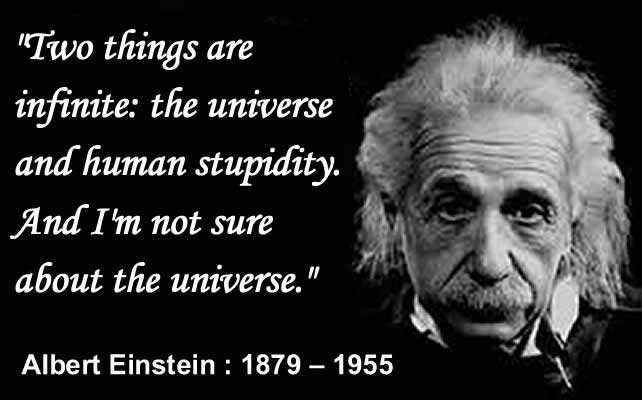
I tried to keep calm, but remembered Einstein’s famous dictum. (SEE BELOW)

We stopped to check the boot and I saw that they had taken a plastic bag with two boxes of wine for my sister Maggie and another box of boiled eggs and fishsticks essential for my diet.

I asked Eddy if he minded going back, and he agreed to instantly – even without being promised any more dosh.

So back we went to the station, picked up the bag and Eddy collected another £10 for his trouble. (As I said, nice people …)

Off we set for Ramsgate again, and this time Eddy did not get lost ……. even we DOGs are capable of learning.

I eventually got to Ramsgate around 22:30 instead of the anticipated 20:00 – and of course I felt obliged to give Eddy a generous tip even though he DID get lost twice. Actually, everything in France had gone pretty smoothly as planned; it only went really tits-up when we got to Dover. I of course blame BREXIT ……

How was your day?

PS No insult to real dogs is intended in this account. As we know, if the world were ruled by dogs we would all be safer and happier, though the absence of tv and the internet would be a shame.

PPS I was fortunate to be able to employ Paul for brief periods over a number of years to teach business students about Selling and Marketing during my time as Director of Studies of a business school in France. His teaching was highly impressive, but even more so his habit of flying his own plane to Quimper. In this and many other ways he was and remains unique. As I told the students: “Listen to Paul’s advice and one day you will fly your own plane.”
ooOOoo

Marvellous.

Thank you, Chris!

The end of our present behaviours!

What is happening to Earth’s climate needs attention NOW!

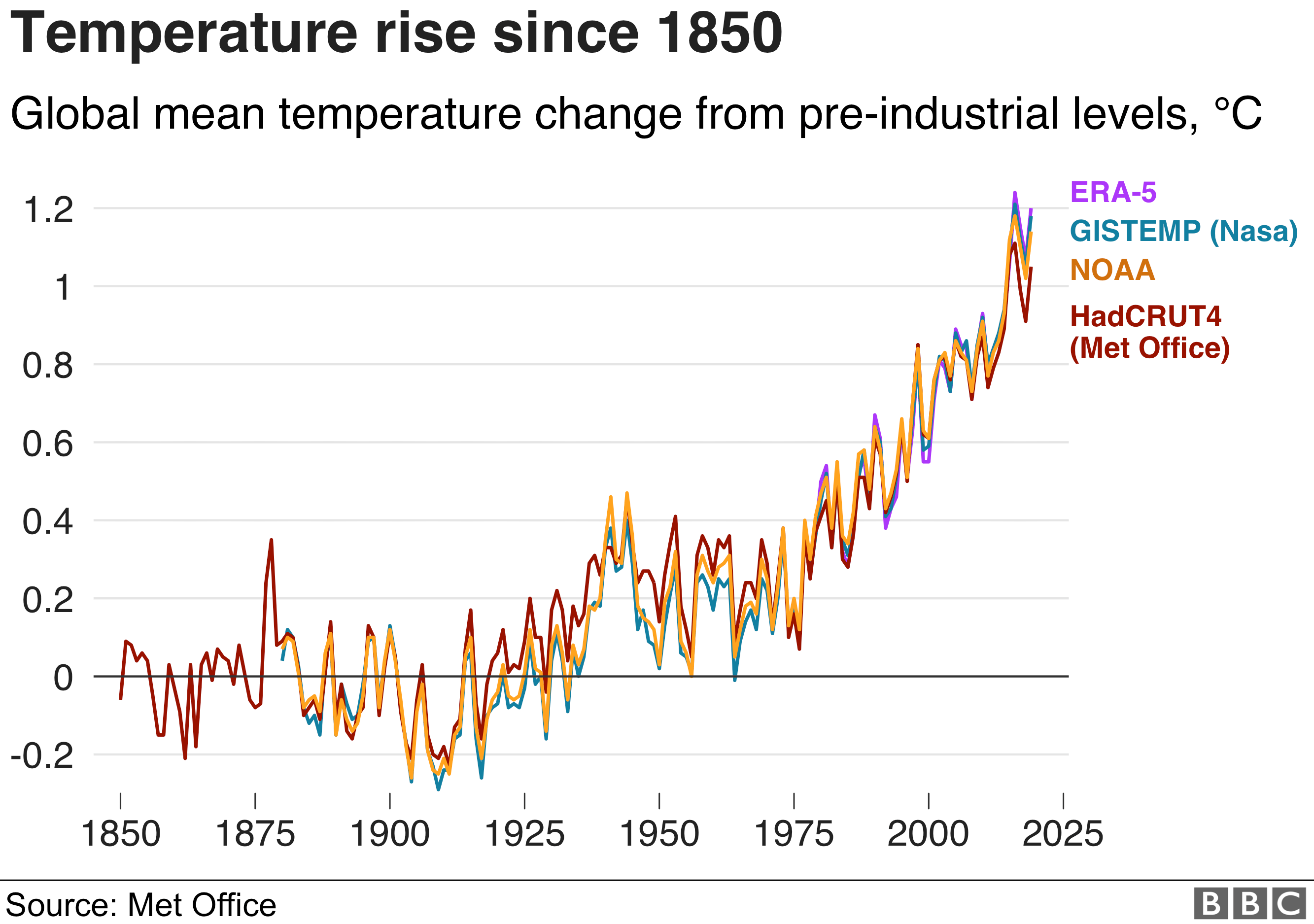
Two charts recently from the BBC News.

The 10 years to the end of 2019 have been confirmed as the warmest decade on record by three global agencies. 

According to Nasa, Noaa and the UK Met Office, last year was the second warmest in a record dating back to 1850. The past five years were the hottest in the 170-year series, with the average of each one more than 1C warmer than pre-industrial.

The Met Office says that 2020 is likely to continue this warming trend.2016 remains the warmest year on record, when temperatures were boosted by the El Niño weather phenomenon.

This is the reality.

It affects every part of the world and it affects everyone. BUT! We, as in you and me, and everyone else, still haven’t got it.

The recent COP26 was progress and, especially, the next convention being held in a year’s time is important. But it is a long way from where we need to be. A very long way.

Patrice Ayme is someone that I follow and there have been times when I have gladly republished his posts. With his permission I should add.

Recently he published a post called Cataclysmic Seven Degree Centigrade Rise and I wanted to share it with you. Here is is:

ooOOoo

CATACLYSMIC SEVEN DEGREES CENTIGRADE RISE

Abstract: Expected rise of temperature in mountains correspond to a seven degree C rise. This informs global heating: in the long run, it will also be 7C. Large systems (Antarctica, Greenland) have greater thermal inertia, so their temperatures rise slower… But they will rise as much. In other words the so-called “forcing” by man-made greenhouse gases (which corresponds to 600 ppm of CO2) is universal, but the smaller the system, the faster the temperature rise

****

Geographical systems with little thermal inertia (mountain glaciers) show an accelerated rate of heating of these parts which is only compatible with a seven (7) degrees rise in Celsius by 2100… A rise the IPCC of the UN considers impossible… But INERTIA says that it IS happening. The first thing this implies is that most forests will burn… worldwide. Then the ice shelves in Antarctica will follow.

TEMPS RISING ULTRA FAST IN MOUNTAINS

Anybody familiar with mountains worldwide know that temperatures are rising extremely fast: large glaciers I used to know have completely disappeared.. As in Chacaltaya, Bolivia. Or Portage, Alaska. The closest glacier to an Alpine village I went to as a child has been replaced by a larch forest (melezes)… One reason for this is that mountains are smaller in frozen mass than immense ensembles like Greenland and Antarctica. Moreover, the mountains’ permafrost is not as cold.  

From 1984 to 2017, the upper reaches of the fires in the Sierra Nevada of California rose more than 1,400 feet. Now the temperature in the lower atmosphere decreases by 7C every 1,000 meters. There are many potential factors to explain why fires go higher (although some contradict each other). To avoid paralysis by analysis, I will assume the rise in fires is all due to temperature rise. So what we have here is a 2.5C rise in 33 years.

….FROM SMALLER THERMAL INERTIA:

Mountain thermal capacity is accordingly reduced relative to those of Greenland and Antarctica. The proportionality factors are gigantic. Say the permafrost of a mountain range is of the order of 10^4 square kilometers, at a depth of one kilometer (typical of the Sierra Nevada of California or the Alps at a temp of -3C. By comparison, Antarctica is 14x 10^6 sq km at a depth of 4 kilometers of permafrost at a temp of -30C. Thinking in greater depth reveals the proportions to be even greater: individual mountains are of the order of square kilometers. This means that (using massively simplified lower bounds), Antarctica has a mass of cold which is at least 4 orders of magnitude higher than a mountain range: to bring Antarctica to seriously melt, as mountain ranges are right now, would require at least 10,000, ten thousand times, as much heat (or maybe even a million, or more, when considering individual mountains).  

As it is, mountains are exposed to a heat bath which makes their permafrost unsustainable. From their small thermal inertia, mountains warm up quickly. Greenland and Antarctica, overall, are exposed to the same bath, the same “forcing”, but because they are gigantic and gigantically cold, they resist more: they warm up, but much slower (moreover as warmer air carries more snow, it snows more while Antarctica warms up).

I have looked, in details at glaciologists records, from the US to Europe… Everywhere glaciologists say the same thing: expect a rise of the permafrost line of 1,000 meters… That corresponds to a SEVEN DEGREE CENTIGRADE RISE. Basically, while glaciers were found down to 2,500 meters in the Alps (some can still be seen in caves)… Expect that, in a few decades, none will occur below 3,500 meters… Thus speak the specialists, the glaciologists…

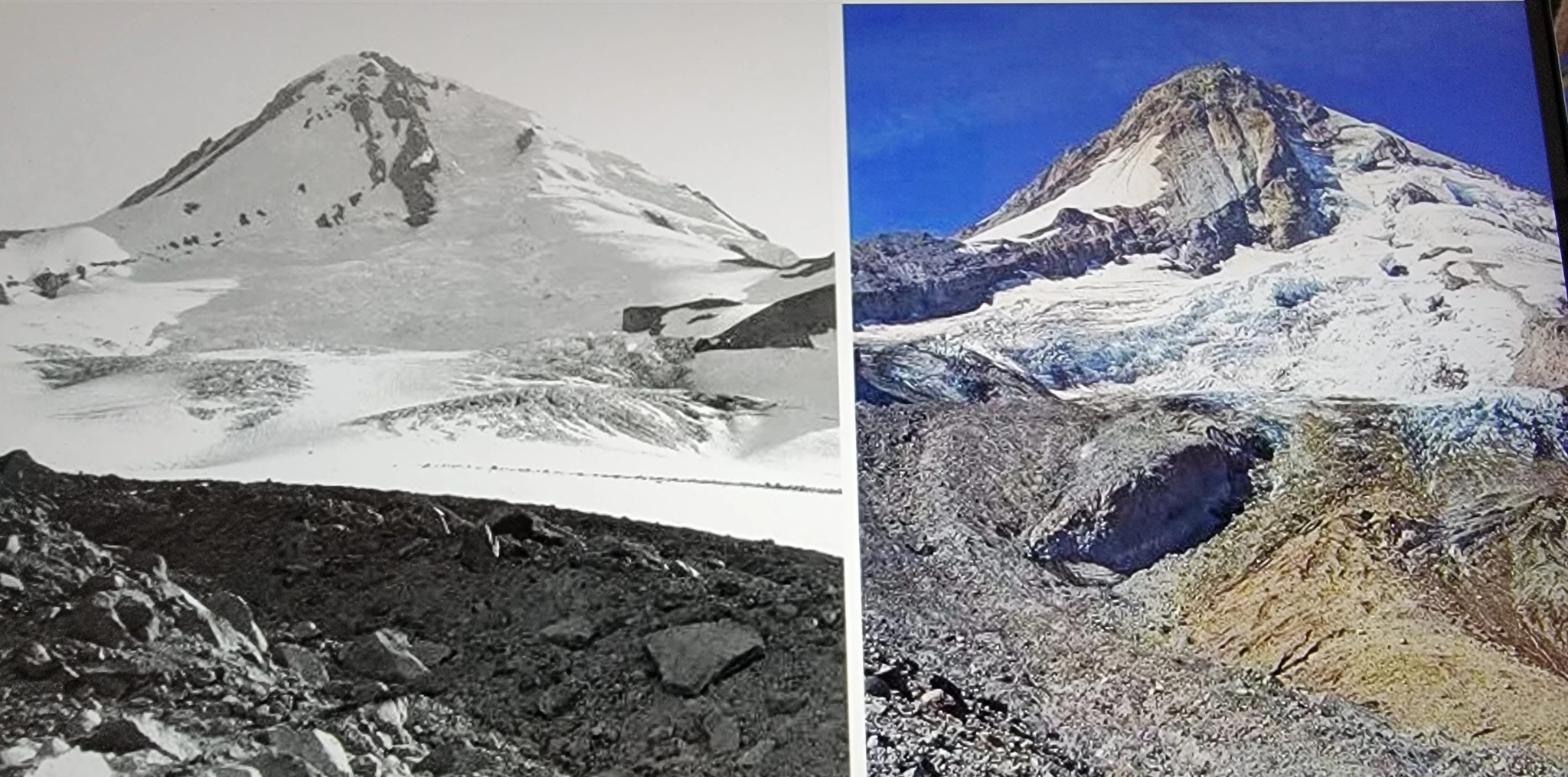
Mount Hood, Oregon, in August 1901 on the left, and August 2015, on the right. The Eliot glacier, front and center, which used to sprawl for miles, is in the process of disappearing completely.

What is happening then, when most climate scientists speak of holding the 1.5 C line (obviously completely impossible, even if humanity stopped emitting CO2 immediately)???… Or when they admit that we are on a 2.7C future in 2100? Well, those scientists have been captured by the establishment… They say what ensure their prosperous careers… At a global rise of 2.7 C, we get a migration of the permafrost line of around 500 kilometers towards the poles… Catastrophic, yes, but still, Antarctica will not obviously start to melt, big time. 

At 7C, the melting of the surrounding of Antarctica, including destabilization of West Antarctica, and the Aurora and Wilkes Basin can’t be avoided… They hold around 25 meters of sea level rise….

If it came to light that a seven degree centigrade rise is a real possibility, authorities would turn around and really do some things, which may destabilize the worldwide plutocratic establishment: carbon tariffs are an obvious example. Carbon tariffs could be imposed next week… and they would have a big impact of the CO2 production. So why are carbon tariffs not imposed? Carbon tariffs would destabilize the deindustrialization gravy train: by employing who are basically slaves in poor countries, plutocrats make themselves ever wealthier, while making sure there would be no insurrection at home… A trick already used in imperial Rome, by the Senatorial aristocracy/plutocracy. That would be highly effective… By the way, without saying so, of course, and maybe even unwittingly, this is basically what Trump had started to do…

The devil has these ways which the commons do not possess…

That would stop the crafty, dissembling nonsense that countries such as France are at 4.6 tons per capita of CO2 emissions per year… That’s only true when all the CO2 emitted to produce the goods the French need is NOT counted.. including deforestation in Brazil to grow soybean. With them counted, one gets to 11 tons or so, more than double… The wonderful graph of CO2 emissions collapsing in Europe is the same graph as collapsing industrial production…

The devil has these ways the commons have not even detected…

Carbon tariffs would be a way to solve two wrongs in one shot: the wrong of deindustrialization, of corrupt pseudo-leaders not putting the most advanced countries, their own countries, first… And the wrong of producing too much CO2.

Little fixes will go a long way, as long as they incorporate hefty financing fundamentally researching new energy (it does not really matter which type, as long as it is fundamental…)

Patrice Ayme

ooOOoo

Now this isn’t some academic treatise that doesn’t affect the likes of you and me. This is, as I have said, the harsh reality of NOW!

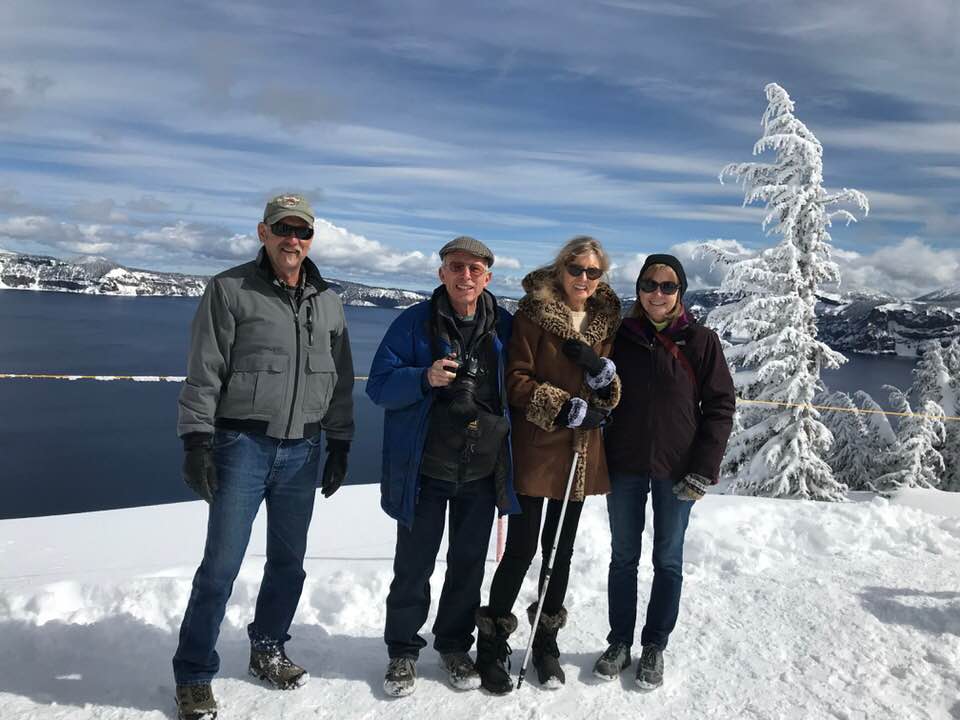
Here’s a photo of me and Jeannie together with Andy and Trish taken in March, 2018. On the edge of Crater Lake.

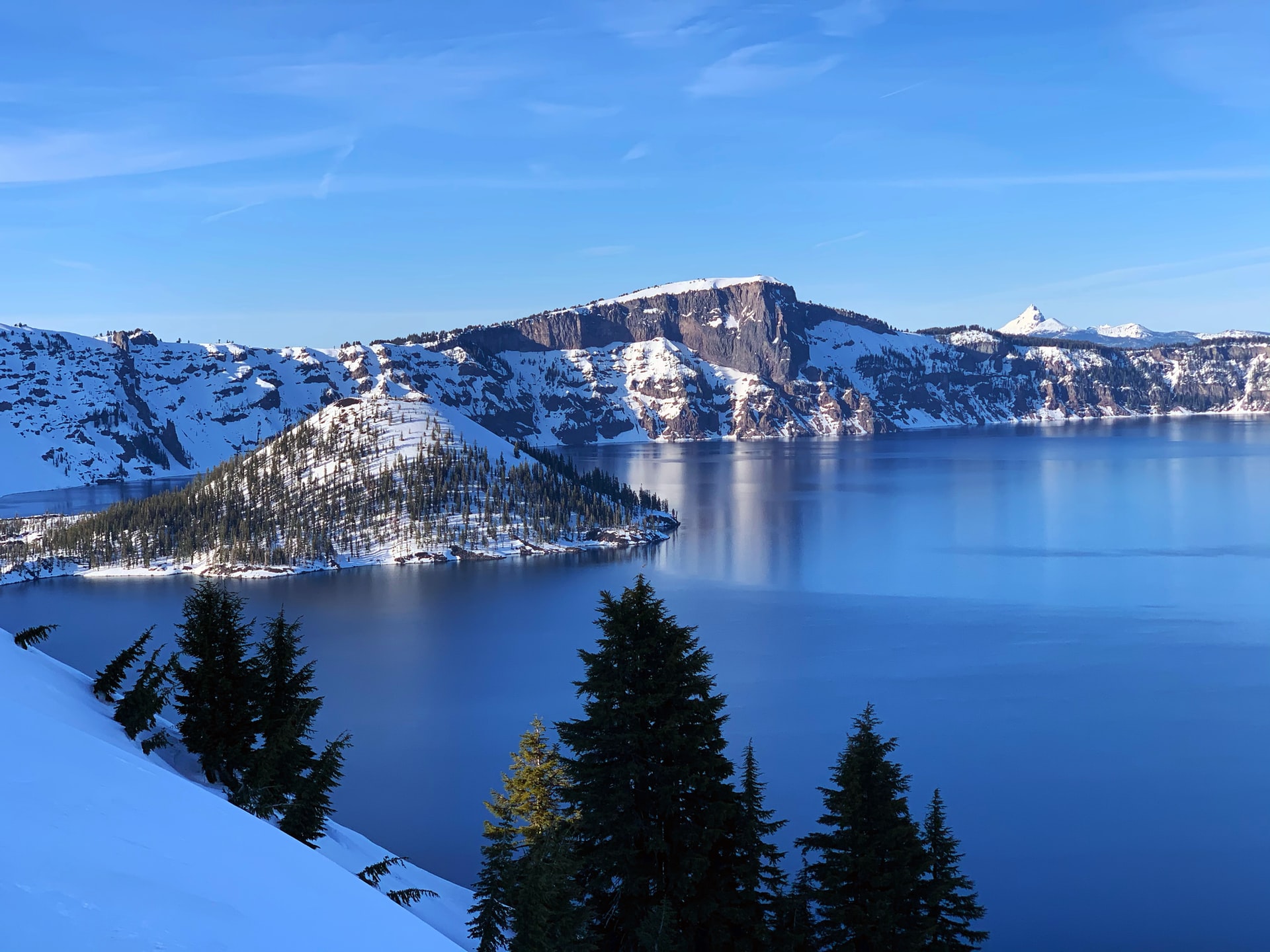
Then this is a stock photograph of Crater Lake taken in March, 2020.

Taken by Valerie Little

Not a great deal of difference but the trees in the photo above aren’t encased in snow as is the tree in the 2018 photo.

Now there is important news to bring you from COP 26. On Sunday Boris Johnson said:

Scientists say this would limit the worst impacts of climate change.

During a Downing Street news conference, Mr Johnson said: 

  • “We can lobby, we can cajole, we can encourage, but we cannot force sovereign nations to do what they do not wish to do”
  • “For all our disagreements, the world is undeniably heading in the right direction”
  • The “tipping point has been reached in people’s attitudes” – with leaders “galvanised and propelled by their electorates”
  • But “the fatal mistake now would be to think that we in any way cracked this thing”

Mr Johnson said that despite the achievements of the summit, his reaction was “tinged with disappointment”.

He said there had been a high level of ambition – especially from countries where climate change was already “a matter of life and death”. 

And “while many of us were willing to go there, that wasn’t true of everybody”, he admitted. But he added the UK could not compel nations to act. “It’s ultimately their decision to make and they must stand by it.”

That point about attitudes is interesting. Who would have thought, say, five years ago, that attitudes had changed so dramatically by late-2021.

One hopes that we will come to our collective senses but I can’t see the CO2 index being returned to its normal range without machines taking the excessive CO2 out of the atmosphere. Because, as was quoted on The Conversation nearly a year ago:

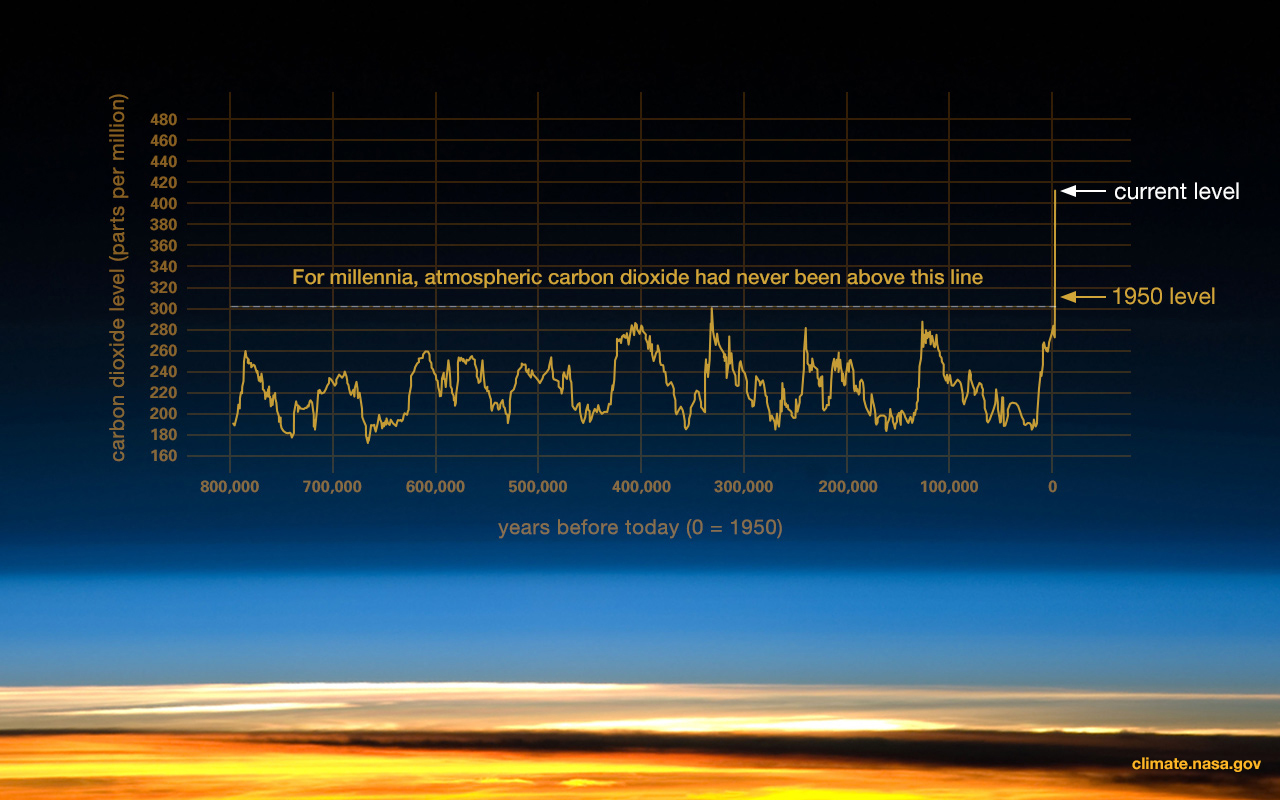
On Wednesday this week, the concentration of carbon dioxide in the atmosphere was measured at at 415 parts per million (ppm). The level is the highest in human history, and is growing each year.

Finally, my daughter, Maija, and my son-in-law, Marius, had a child some ten years ago. He is my grandson and I left England before he was born. He is Morten and he is a bright young spark.

Morten

Morten and all the hundreds of thousands of young persons like him are going to have to deal with the world as they find it!

How Wolves Change Rivers

This is a brilliant and very informative video.

I have long followed George Monbiot and was delighted to find that he is the narrator on this video. The film was shot by Sustainable Human, an organisation that I hadn’t come across before. But I will look more closely at their website.

It is not long but it is full of surprises.

When wolves were reintroduced to Yellowstone National Park in the United States after being absent nearly 70 years, the most remarkable “trophic cascade” occurred. What is a trophic cascade and how exactly do wolves change rivers? George Monbiot explains.

There you go!

The Isle of Mull

A guest post.

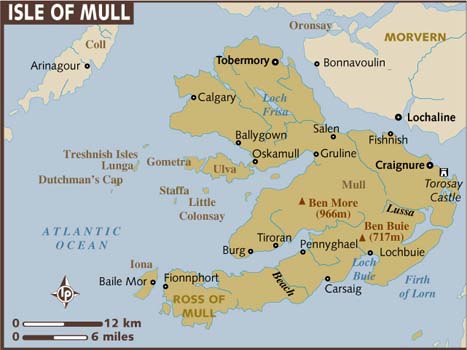
With a difference in that the guest author is my son, Alex. Recently Alex and his partner, Lisa, went on a trip to the Isle of Mull. But I will let Alex continue in his own words after I have explained a little more about the island. And where better to start than with the opening paragraphs of an article on the Isle of Mull from Wikipedia.

The Isle of Mull[6] (Scottish Gaelic An t-Eilean Muileachpronounced [ən ‘tjelan ˈmuləx]) or just Mull (English and Scots[mʌl]Scottish GaelicMuile[ˈmulə] (listen)) is the second-largest island of the Inner Hebrides (after Skye) and lies off the west coast of Scotland in the council area of Argyll and Bute. Covering 875.35 square kilometres (338 sq mi), Mull is the fourth-largest island in Scotland – and also in the United Kingdom as a whole.

The island’s 2020 population was estimated at 3,000.[7] In the 2011 census, the usual resident population was 2,800.[2] In 2001, it was 2,667.[8] (In the summer, these numbers are augmented by an influx of many tourists.) Much of the year-round population lives in colourful Tobermory, the island’s capital, and, until 1973, its only burgh.

There are two distilleries on the island: the Tobermory distillery (formerly called Ledaig), which is Mull’s only producer of single malt Scotch whisky;[9] and another one located in the vicinity of Tiroran, which produces Whitetail Gin (having opened in 2019, it was the island’s first new distillery in 220 years). The isle is host to numerous sports competitions, notably the annual Highland Games competition, which is held in July. It also has at least four castles, including the towering keep of Moy Castle. A much older stone circle lies beside Lochbuie, on the south coast.

ooOOoo

This is now from Alex:

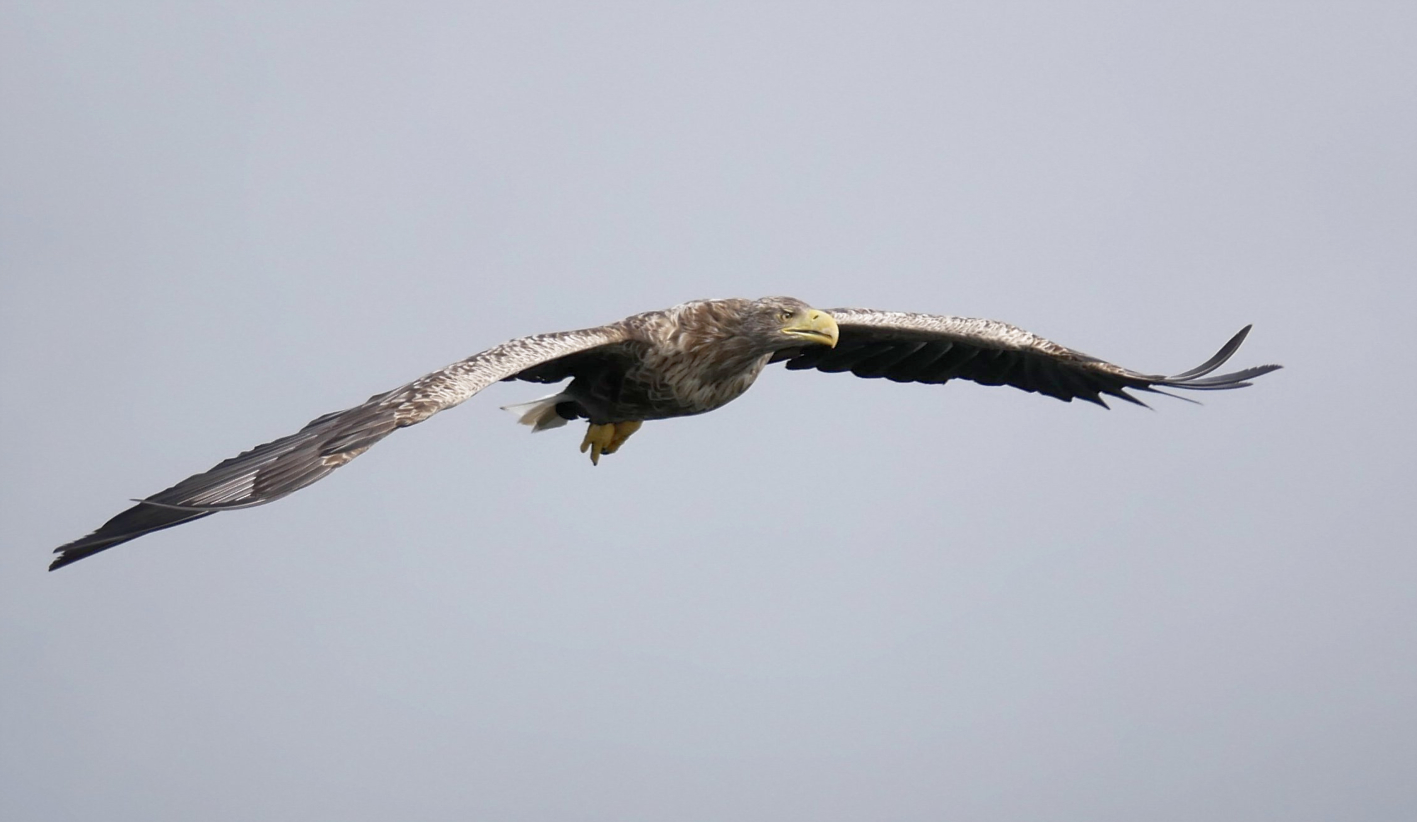
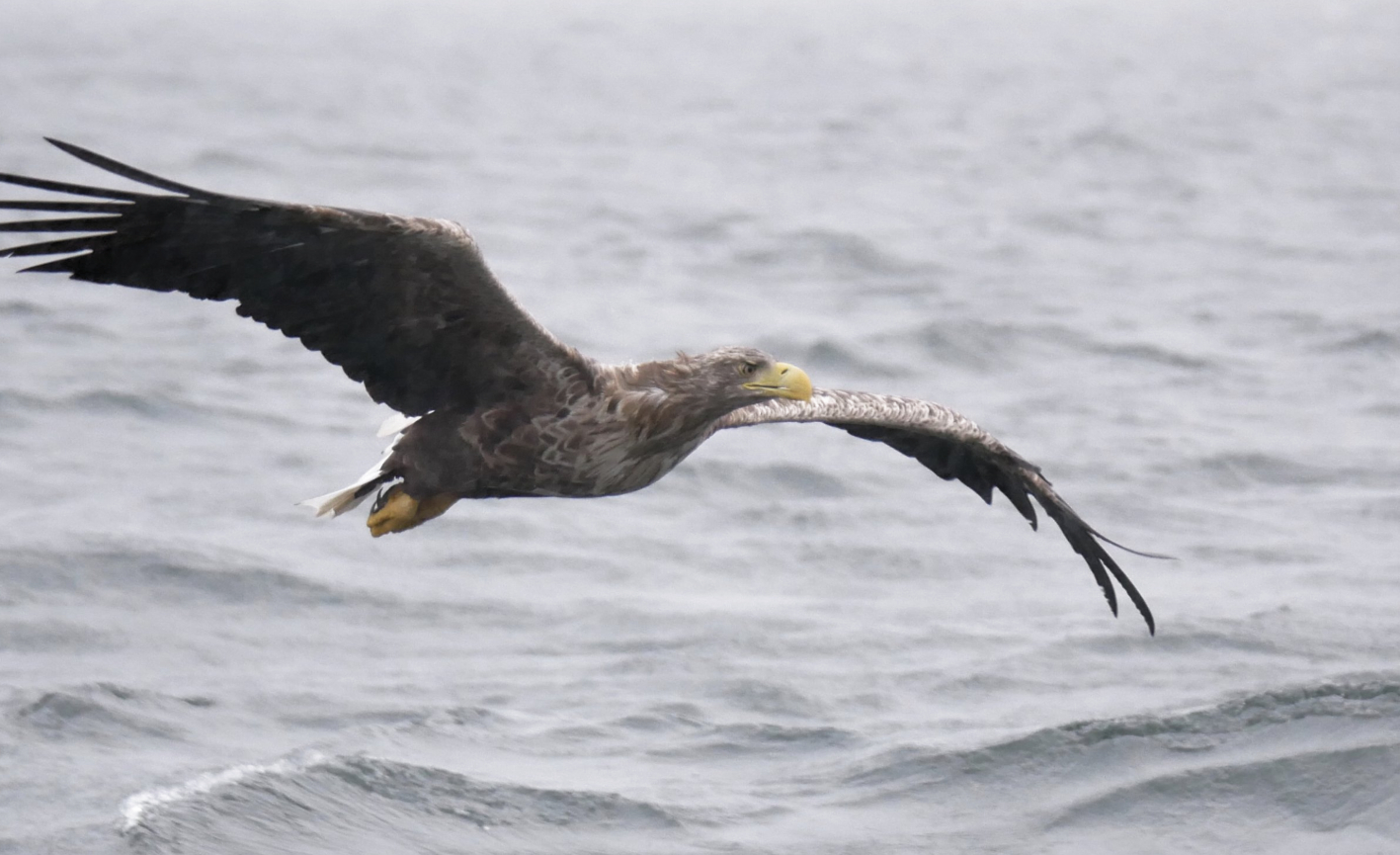
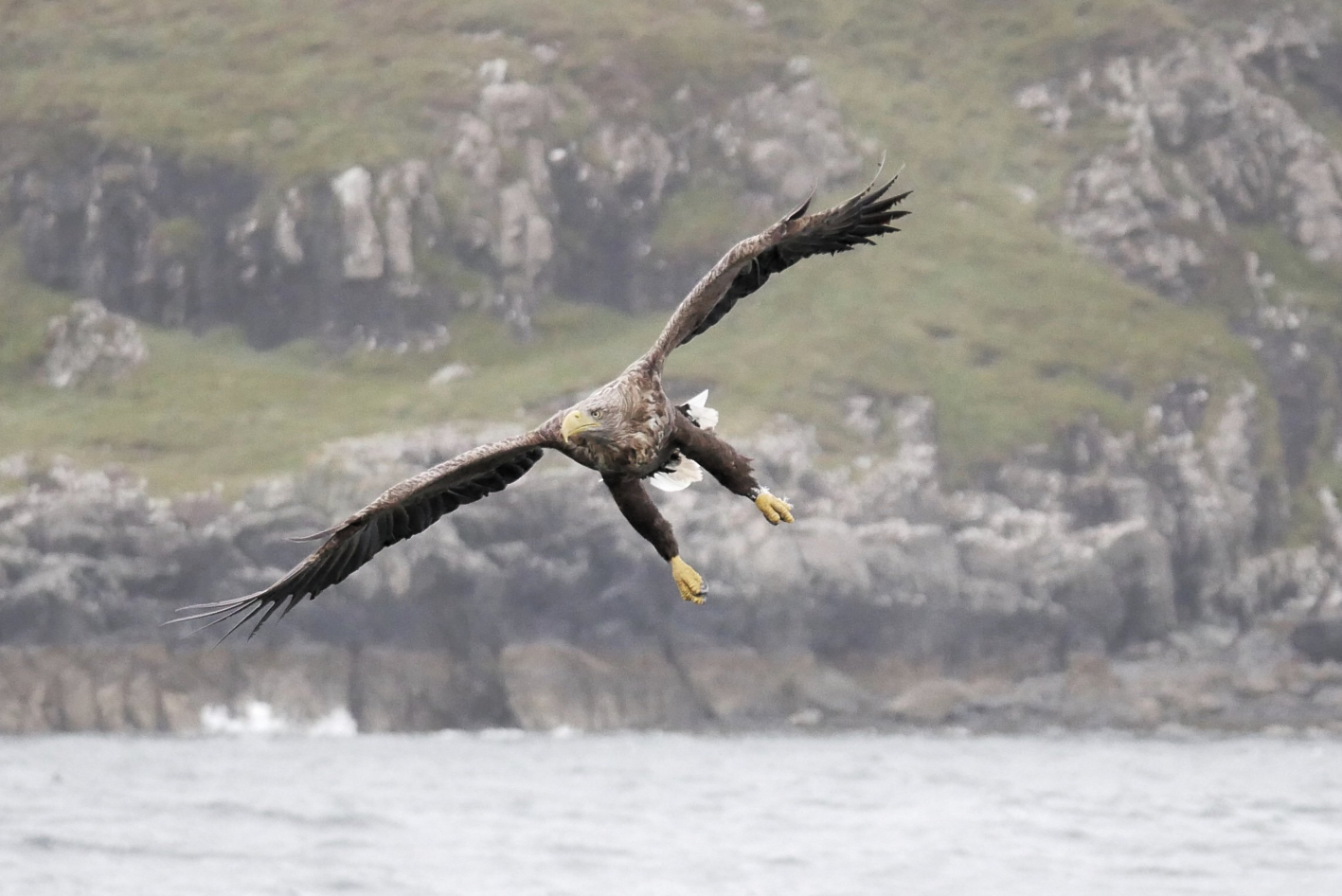
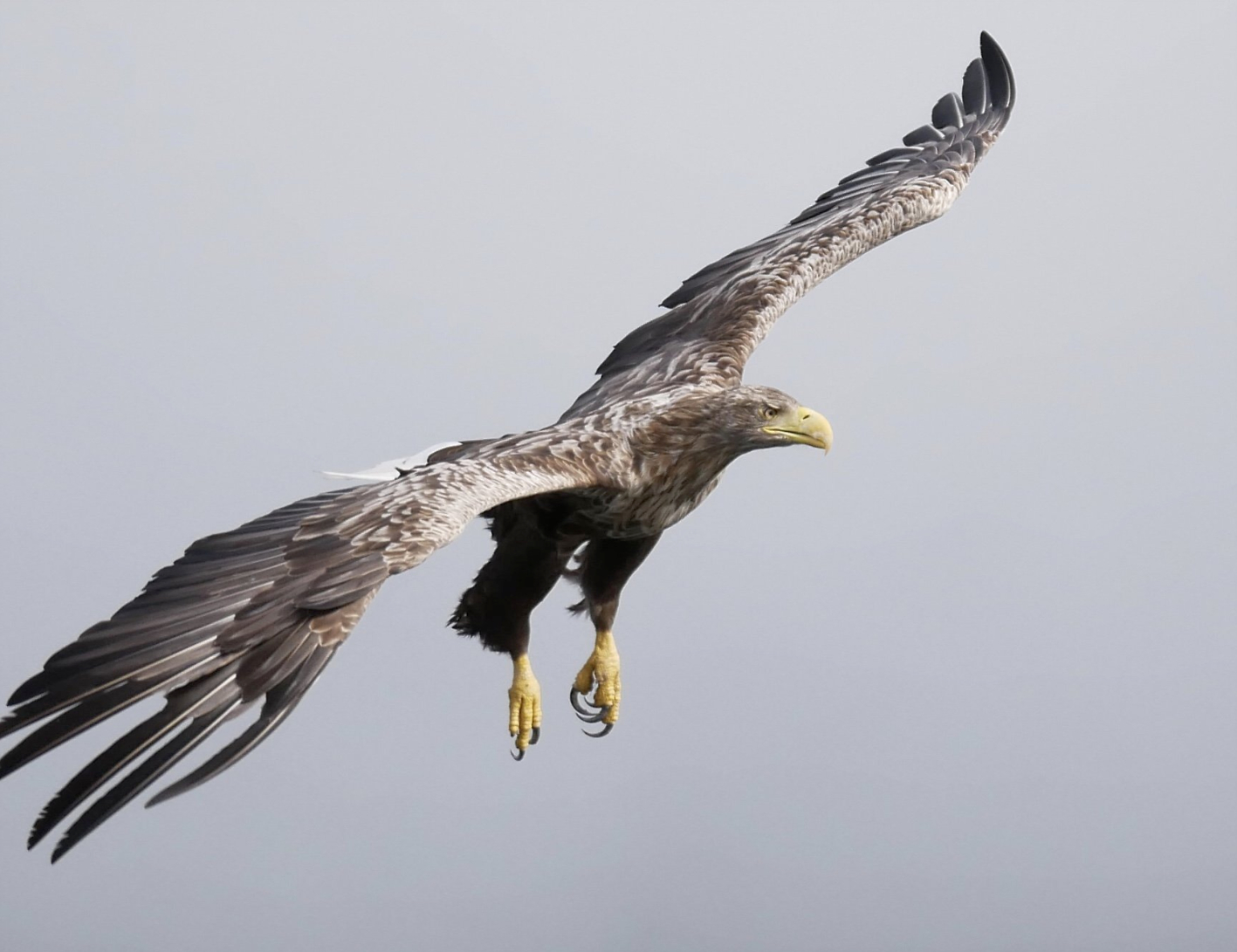
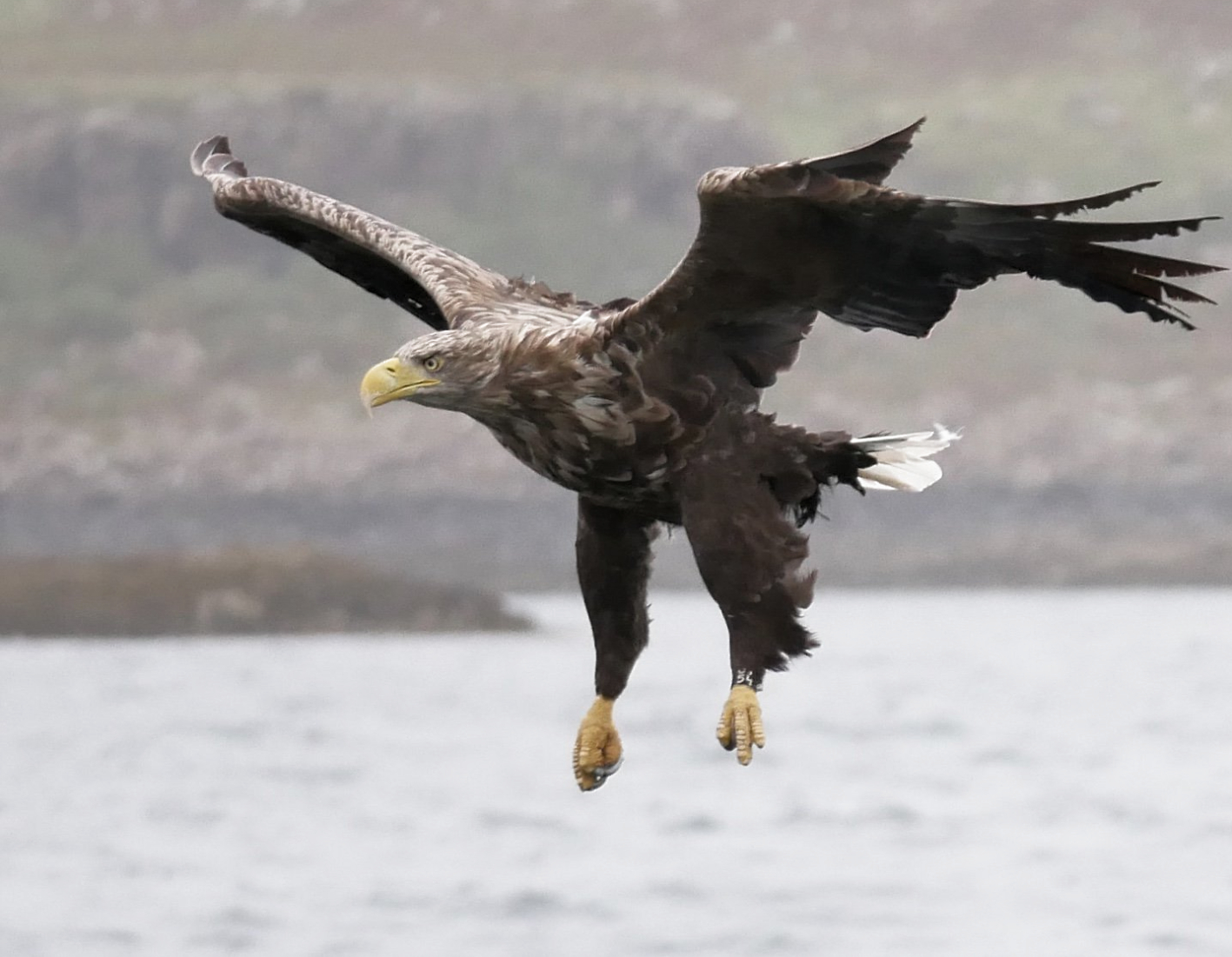
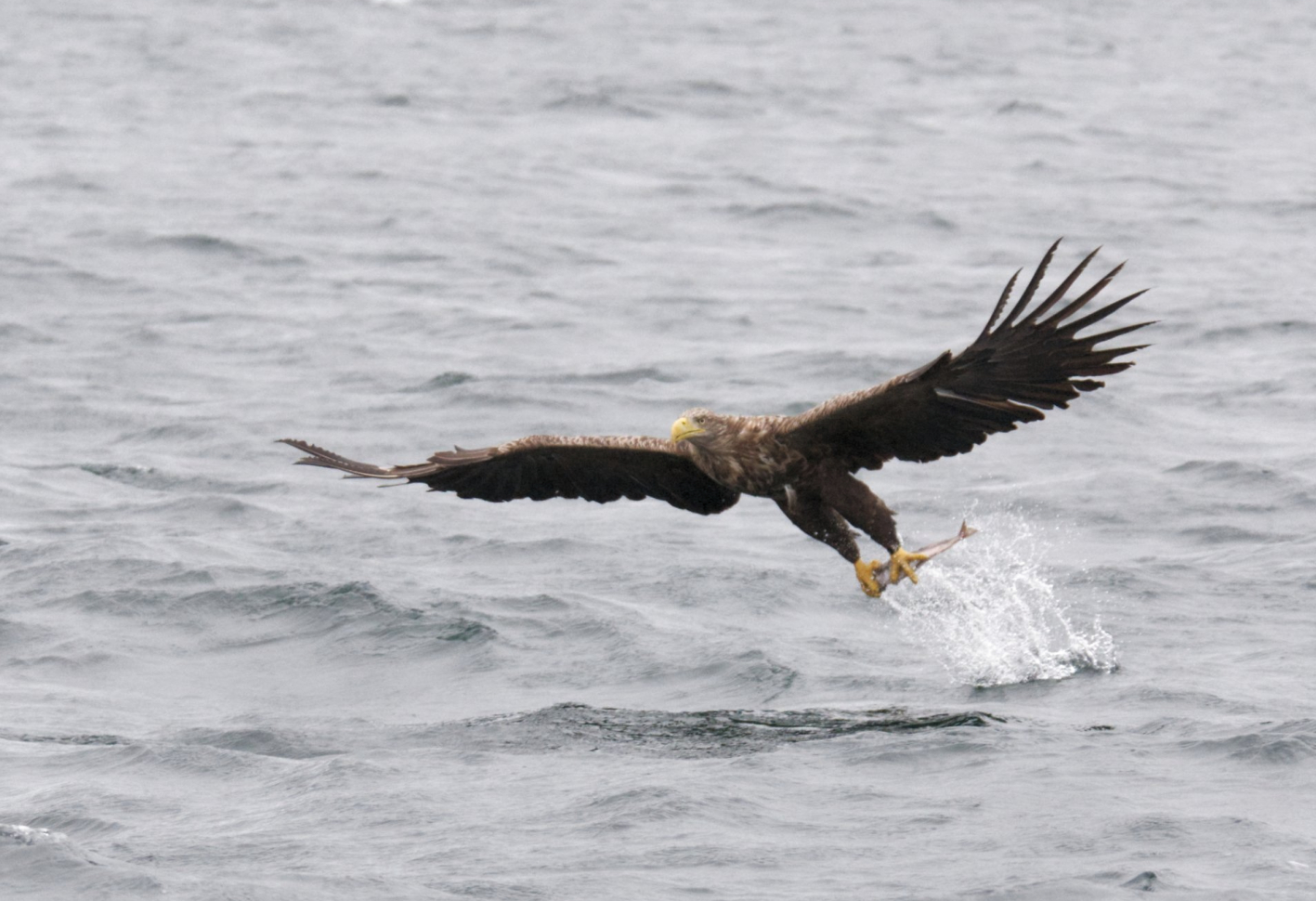
We decided to go to the Isle of Mull after reading about the amazing wildlife it has to offer. It’s famous for its white tailed eagles, which are the largest eagle in the U.K. and fourth largest in the world, with an average wingspan of 7-8ft and a perched height of 1m. After securing a place on a Mullcharters.com eagle photography boat trip, we waited with excitement as the boat left the small harbour at Ulva ferry in force 5 winds and intermittent rain showers, cruising out of the harbour, we where very lucky to spot an Otter swimming along.

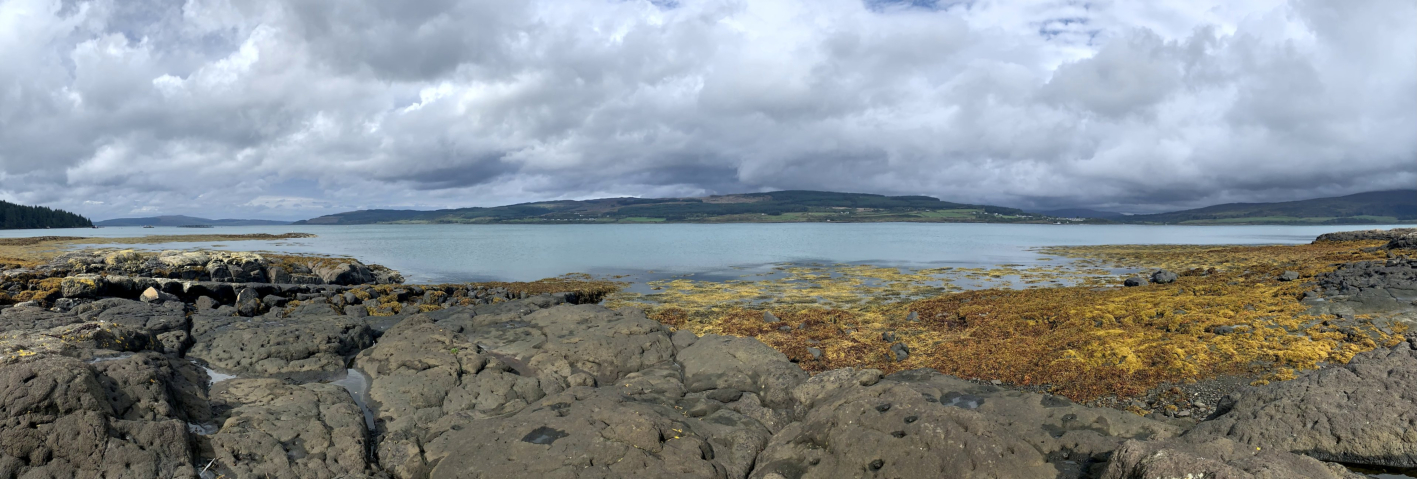
On reaching Loch Na Keal, we where told to keep an eye out for an eagle approaching, they apparently recognise the boat from around 1-2 miles away and know that it offers them an opportunity to get some free fish! It wasn’t long before looming out of the distance, a white tailed eagle appeared and started circling the boat, one of the boats crew told us he was going to throw a fish out and exactly where he was throwing it, so we could aim our cameras in that direction, we where treated to the amazing spectacle of an adult white tailed eagle swooping down to collect its fish, which was about 20-30ft away. This enabled us to get some excellent pictures of the eagle picking up its fish on numerous occasions, we saw at least six different birds on the trip and at one point had two pairs of eagles overhead the boat. Even with the challenging conditions, we all managed to get some excellent photos, it’s just a shame we didn’t get any sun to really show the eagles colours off.

oooo

oooo

oooo

oooo

oooo

oooo

oooo

oooo

oooo

To round off these wonderful photographs, here are two of an otter. They are notoriously difficult to photograph.

oooo

ooOOoo

What a wonderful journey for Alex and Lisa. The camera was a Panasonic Lumix G85 with Leica 100-400 lens.

Senior dogs

We are all on the same journey!

Well here we are in October! No reason why it is so but sensation wise when one gets into the senior years time seems to go faster. Wonder if it is the same for our four-legged friends.

A recent post courtesy of The Dodo spoke of this, in a roundabout way.

ooOOoo

Dog Walker Finds A Mysterious Box With A Heartwarming Message On It

“I thought it was an incredible gesture.”

By Lily Feinn, Published on the 16th September, 2021.

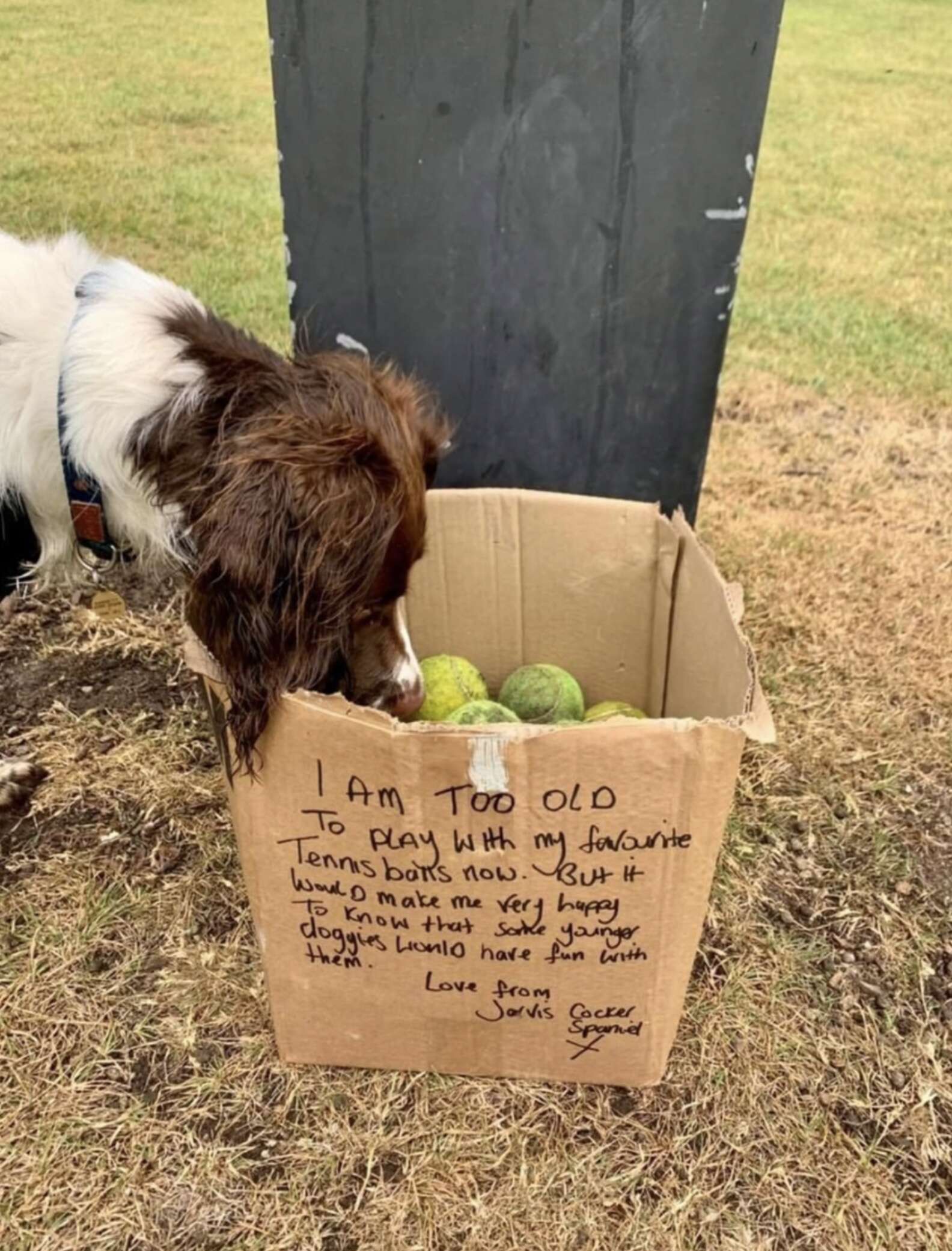
Last week, Kayley Drewitt was walking a dog in Ely Country Park when she stumbled across a cardboard box in the grass. Drewitt runs The Animal Ark Pet Services and spends a lot of time outside with her clients’ dogs — but she’d never seen anything like this in the park before.

“I was curious at first,” Drewitt told The Dodo. “Once we had approached it and I read the message written on the side of it, I couldn’t believe it. I had never seen anything like that before.”

“I thought it was an incredible gesture,” she added. “Something really heartwarming.”

INSTAGRAM/THE ANIMAL ARK

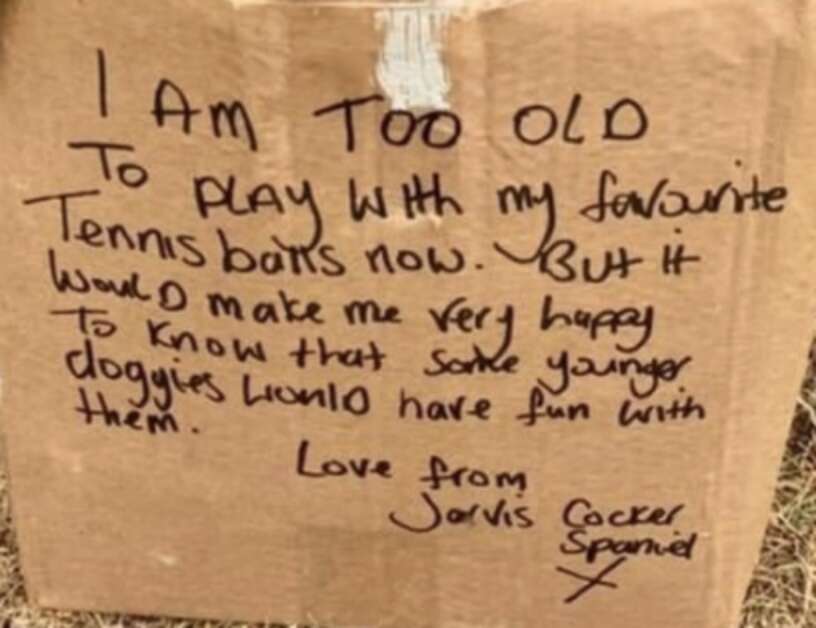
Written in Sharpie on the side of the box was a message reading: “I am too old to play with my favorite tennis balls now. But it would make me very happy to know that some younger doggies would have fun with them. Love from Jarvis.

INSTAGRAM/THE ANIMAL ARK

The dog Drewitt was walking didn’t need to read the message to know exactly what to do. He stuck his nose in the box and pulled out a ball.

“We played fetch for quite a while [and] he tried out lots of different balls,” Drewitt said.

INSTAGRAM/THE ANIMAL ARK

Drewitt was so touched by the sweet gesture that she snapped a few pictures of the box of donated balls and posted them on social media. “I wanted to thank [Jarvis’ owner] and make other dog owners aware of this lovely idea,” Drewitt said.

Her social media post quickly gained attention, and Jarvis’ mom reached out to let Drewitt know how happy seeing other dogs playing with the balls made her feel.

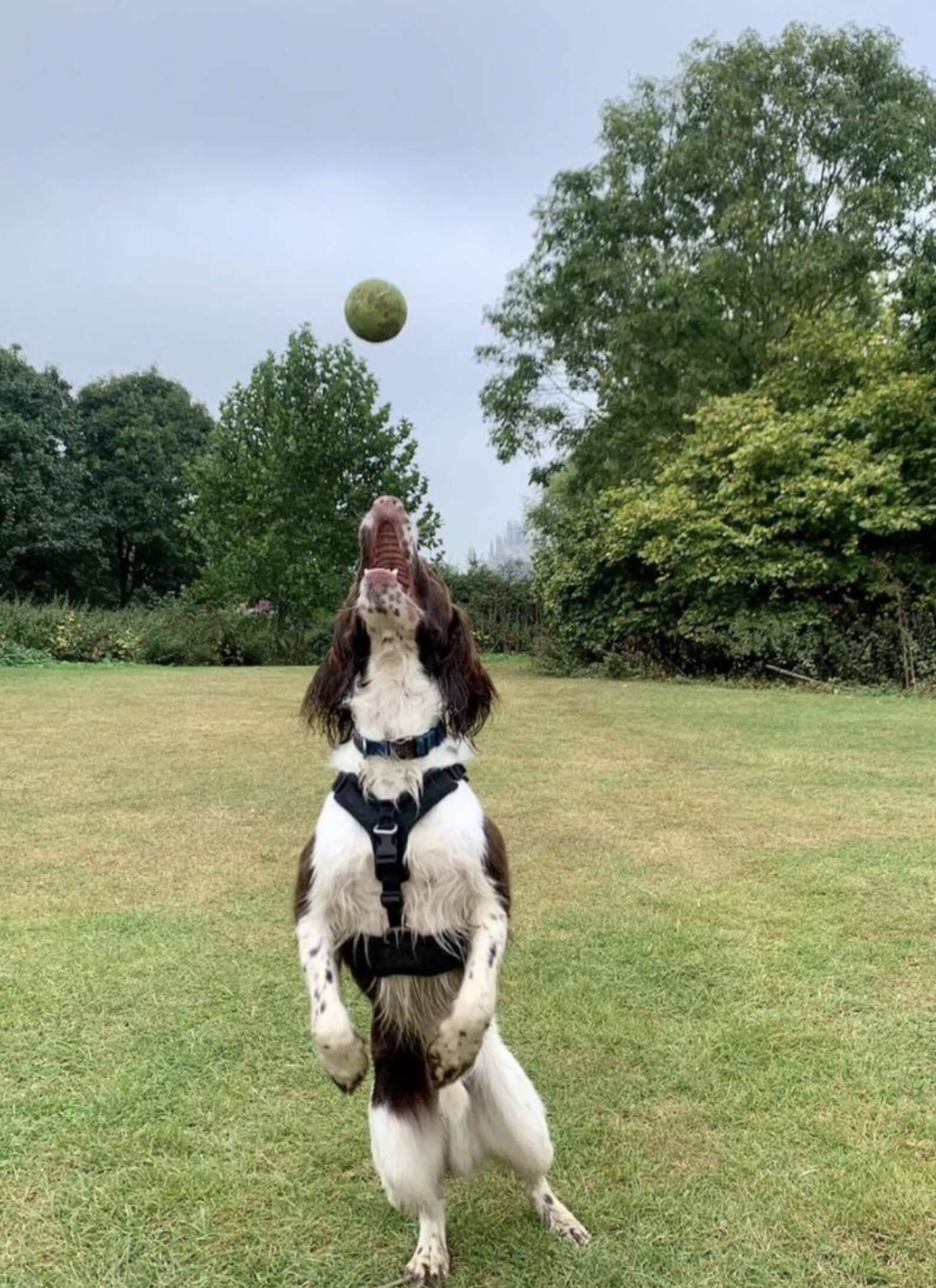
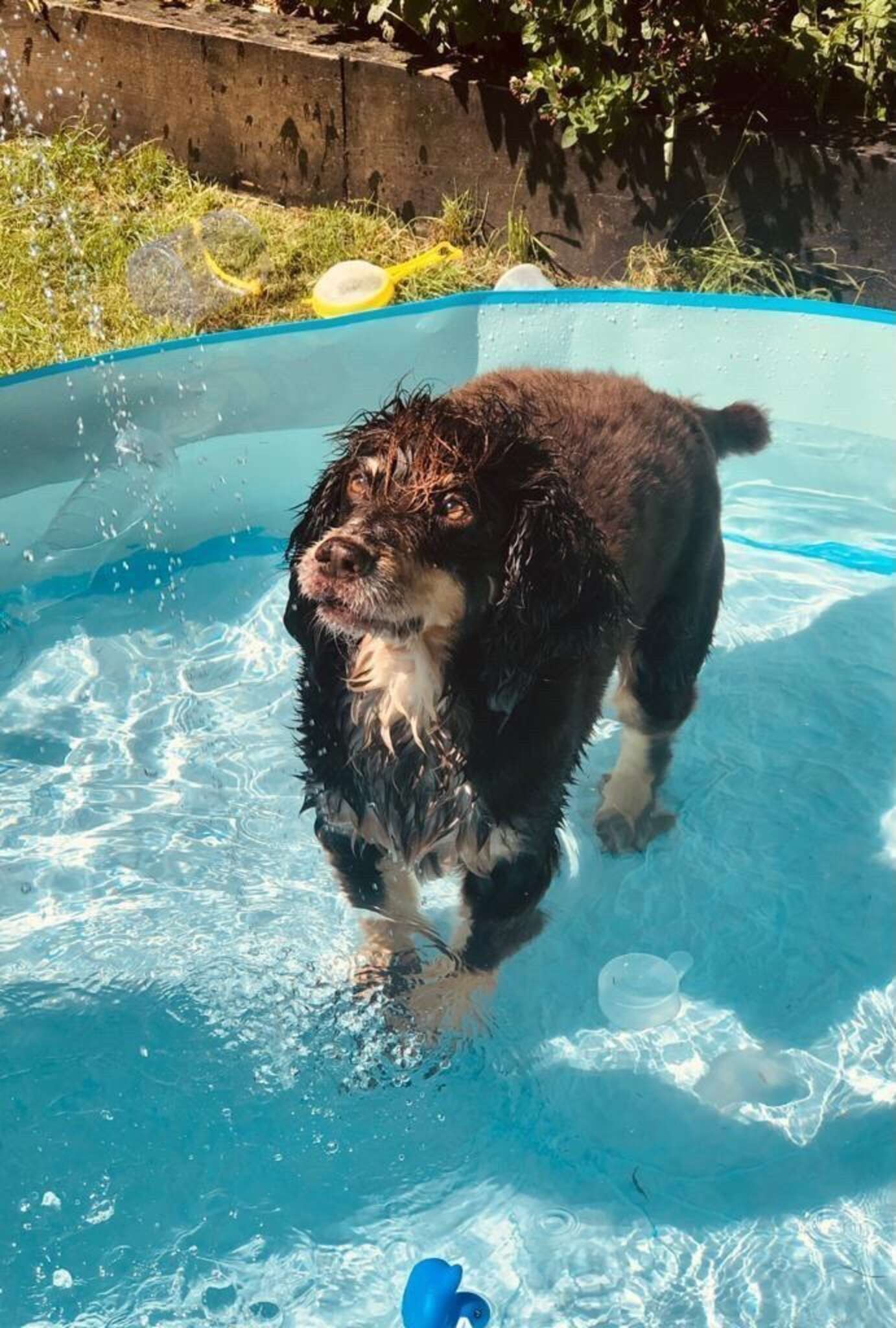
Jarvis, a cocker spaniel, is nearly 11 and has severe arthritis. He can’t play like he used to, but his mom knew he’d want someone to enjoy his beloved tennis balls.

KAYLEY DREWITT

Jarvis may no longer be able to chase balls, but the senior pup still loves to socialize and will get a special surprise on his next trip to the park.

“We have agreed to meet up for a dog walk sometime soon,” Drewitt said, “so Jarvis can meet some of the younger dogs now benefiting from all the balls he’s gifted.”

ooOOoo

Time after time people do wonderful things connected to dogs. Dogs are so perfect and the phrase unconditional love really does have meaning when it comes to our dogs.

Now that’s not to say that people who do not have dogs don’t do wonderful things. But it is my guess that dogs help bring out the best in humans.

Protect Pipe Fork

Please, let me use the power of the internet to spread the word!

On the face of it this has nothing to do with dogs. Or does it? Because the stream and the forest will most certainly be favourite walks for people and their dogs. (Indeed a very quick search online brought up the following picture🙂

Why Your Dog Will Love A Trip To Klamath As Much As You Do.

So this post is to drum up support for this critically important area. Please also sign the petition. Thank you.

ooOOoo

Protect Pipe Fork

Pipe Fork is a compelling example of lush, mature riparian forest in the Klamath-Siskyou Bioregion of Southern Oregon. Pipe Fork Creek originates from pure-water springs nestled in ancient forest on the east flank of Grayback Mountain, and flows cold and clear and abundantly year-round through a narrow canyon wilderness into the Williams Valley. There it provides generously for farms and homes as well as for rich spawning and nursery grounds vital to chinook and coho salmon. 

Designated a Research Natural Area (RNA) of Critical Environmental Concern by the Bureau of Land Management, the upper reaches of Pipe Fork have also been nominated for designation as a Federal Wild and Scenic River. Rare Pacific fishers and martens, spotted owls, elk, bear, and many other animals, as well as numerous species of rare plants, live in the undisturbed forests of the RNA. 

Josephine County has had plans to sell a 320-acre parcel right next to the BLM RNA that encompasses both sides of Pipe Fork, and to clearcut 114 acres on the north side of the creek. The devastation that would result from clearcutting on the steep slopes above Pipe Fork would do lasting damage to the sensitive riparian forest and would greatly diminish the quality and quantity of water that flows into the Williams Valley. 

But we will not let this happen! We are determined and optimistic that by all of us working together, this precious place will be saved for the benefit of present and future generations.

Williams Community Forest Project invites you to watch our brand new 7-minute film showcasing the wonders of Pipe Fork and our efforts to preserve it, and to sign the petition at the bottom of the page. Please share this page with like-minded friends and family, allies and colleagues! 

Pristine Waters 4K from Wise Oak Productions on Vimeo.

ooOOoo

Now go to the link below which has what I published above but more importantly has the petition. Please sign it!

Protect Pipe Fork

Thank you!

What is done to save a dog!

A firefighter gives a dog CPR.

This was recently sent to me on my mobile by Dan. It goes back about four years but it is still wonderful.

Enjoy!

Wonderful!

Dogs are very precious!

Time marches on!

So we are now at the last day of July!

In many ways this has been a strange month in a somewhat strange year! No, more than that! We are at last seeing climate change come to the fore in terms of topics. Yves Smith, who produces Naked Capitalism (and it’s a great blog) had an item on climate change recently. Here’s an extract:

Yves here. As many of you know, I am considerably frustrated with Green New Deal advocates, because I see them as selling hopium. They act as if we can preserve modern lifestyles as long as we throw money, some elbow grease, and a lot of new development (using current dirty infrastructure to build it) at it. We’re already nearing the point where very bad outcomes, like widespread famines and mass migrations due to flooding, are baked in. And even that take charitably assumes that a rump of what we consider to be civilization survives.

There were many replies from a variety of people; I loved this one from Tom Stone:

A rational response to this crisis is not politically or societally feasible.

And the crisis is here, now.

The changes are not linear, a concept many of the people I talk to about climate change have difficulty accepting.

Large parts of the SF Bay Area are going to be heavily impacted (It’s my stomping ground, so I’m familiar with it) by salt water intrusion, levee failure, lack of water to to changing precipitation patterns in the Sierra’s…

A lot of Bay Area Housing is built on fill or in low lying areas, those homes will start to be abandoned within a decade if current trends continue.

Add the devastation from the inevitable Earthquake on the Hayward Fault which our local and State Governments are totally incapable of dealing with and it is going to be a godawful mess.

I looked at the Disaster planning for a quake on the Hayward Fault some years ago and all of the assumptions are for a “Best Case” scenario.

The quake won’t come in October during a drought and a high wind event, it won’t come at the wrong time of day, it won’t come in the spring during a high water period when Levee’s are stressed…

The Bay areas disaster response center was built in the 1950’s to withstand a nuclear attack, it is underground and was built smack dab in the middle of the Hayward Fault.

Have I mentioned that 20 years after 9/11 the various emergency responders do not have a commonality in their communications gear?

The more people that read this and other article the better.

Plus I am going to include my reply:

Your piece, Yves, that you published from Rolf was excellent and so was Tom Stone’s comment above. The scale of the issue is immense but at least climate change has now become a mainstream topic, and rightly so. National Geographic magazine published a special edition in May, 2020 to commemorate the anniversary of the fiftieth Earth Day. I think it was 1962 when Rachel Carson published Silent Spring. So we can’t complain that this isn’t a new issue. But whether or not we make it to the one hundred anniversary of that first Earth Day depends on the myriad of actions that we, as in all of us, including especially our leaders and politicians, make NOW! Let me spell it out. NOW means within the next 5 years at the latest. I am 76 and a passionate advocate of a change in mass behaviors. For I have a single grandson, Morten, living with his parents back in England who is 10. I fear for his future and for the future of all of his age.

Anyway, to get back to the article about dogs that I wanted to share with you. It is from Treehugger.

ooOOoo

This 13-Year-Old Dog Has a Home Again

It’s heartbreaking when senior pets lose their families.

By Mary Jo DiLonardo

Mary Jo DiLonardo

Published July 29th, 2021

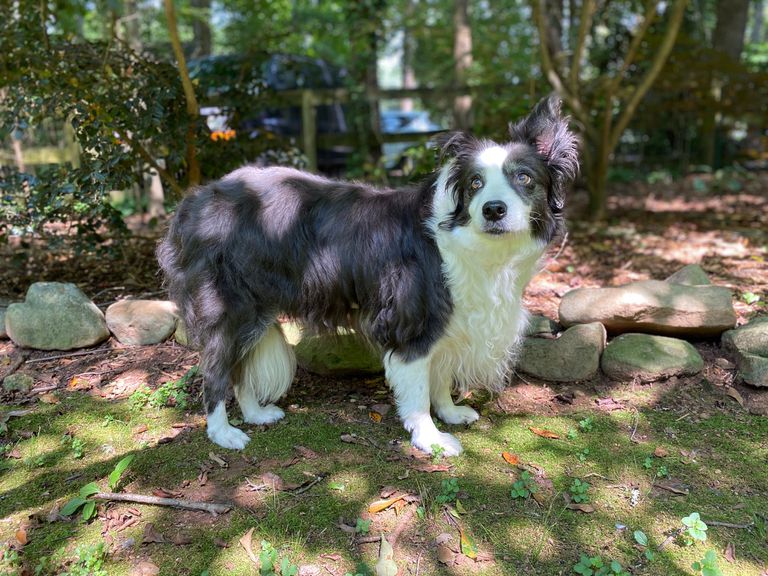
Magdalen in her new yard. Mary Jo DiLonardo

This weekend, my husband and I were the last step in a transport to get a dog to her new home. 

Typically, when we have a new dog in the backseat, it’s a raucous foster puppy (or two) in a crate. There’s usually barking and tumbling and playing until the motion of the car lulls them to sleep.

But this passenger was a much different story.

Magdalen is a 13-year-old border collie. Her owner gave her up temporarily when he was sick, but when he fully recuperated a few months later, he said he didn’t want her back. He had her since she was a puppy but now had no place for her.

The family who had given her a temporary home had children and other dogs and was unable to give her a permanent home. When Speak St. Louis, the rescue I work with, was contacted about the border collie, they offered to take her in. 

She went to the groomer for her very matted coat and to the vet for a basic health check.

The spa visit made her look (and no doubt, feel) much better. But the vet didn’t have great news. She had to have surgery for mammary masses and her mouth was swollen with all sorts of dental issues. One surgery later and she had six masses removed. Two teeth fell out during cleaning and 11 more had to be extracted.

Fortunately, the growths were benign and she slowly began to recover. 

Stressed and Resigned

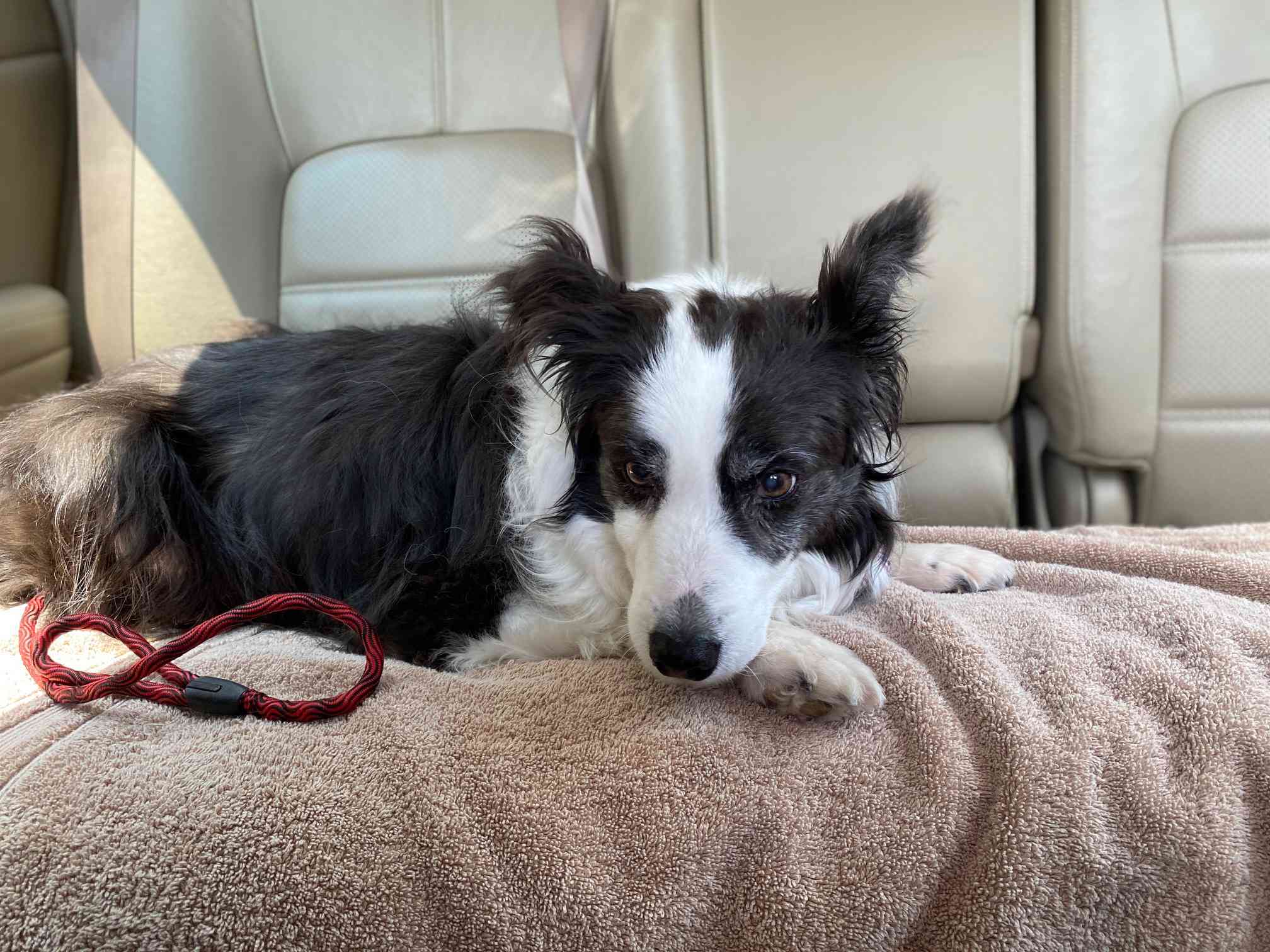
Magdalen barely moved on the ride to her new home. Mary Jo DiLonardo

On the trip home, the sweet senior looked so resigned in our backseat. The last kind transporter gently lifted her from her car and placed her in ours, where she barely moved as she re-settled herself.

She had just spent several weeks in the care of a wonderful foster parent where she recuperated from her surgery and from being left by her family. 

I’m sure at this point she was just shut down and stressed and quietly rolling with whatever happened to her. She took the pieces of kibble we offered but her tail didn’t wag because it was tucked mostly between her legs.

It was heartbreaking to know that not so long ago she was someone’s pet and she was discarded.

It’s understandable that her owner needed some temporary help when he was sick and overwhelmed. But I can’t imagine why he wouldn’t have wanted her back now. I think of my own dog and dogs we’ve lost to old age in the past. They’re family and they stay that way forever.

Dogs aren’t disposable.

Why People Give Up Senior Pets 

Senior pets often end up in shelters and with rescues when their owners die and no one in the family is able to take them in. 

Or some people give them up when they become harder to care for. Seniors can have more health problems and often people can’t afford the costs. They also aren’t as fun as their younger counterparts, and sometimes get cranky or snippy around children.

For rescues and shelters, it’s much easier to get a cute, bouncy puppy adopted than a less active senior that might come with health baggage and who might only be with the family for a few years.

A survey by PetFinder found that “less adoptable” pets like seniors or special needs animals spend nearly four times as long on the adoption site before they find a home.1

But older dogs have lots of benefits. Unlike puppies, they usually arrive housebroken. Sure, there are the occasional accidents as they figure things out, but they mostly know they are supposed to potty outside.

Senior dogs won’t chew your furniture or your fingers. They don’t bounce off the walls and wake you up in the middle of the night to go outside. They don’t need as much exercise as younger dogs but will revel in all the attention you want to give them.

Mary Jo DiLonardo

As for Magdalen, she is coming out of her shell in her new home. She was adopted by a good friend of mine who is a dog trainer. She has a soft heart for seniors and a passion for brainy border collies.

Because the pup is very driven by food, her new mom is going to try nosework with her. That’s an activity where she can sniff out treats in all sorts of hidden places. That will give her a job and a hobby—and lots of food!

Magdalen doesn’t have her tail between her legs anymore and the resident dogs are figuring out that she’s here to stay. But the key is for her to understand that this is now her forever home and no one will ever leave her again.

ooOOoo

Of the six dogs we have here at home three are old. But they still remain happy and carefree which is a little different to yours truly who, as much as he tries very hard not to do so, worries about the big things in life and, frankly, the biggest of them all is climate change.

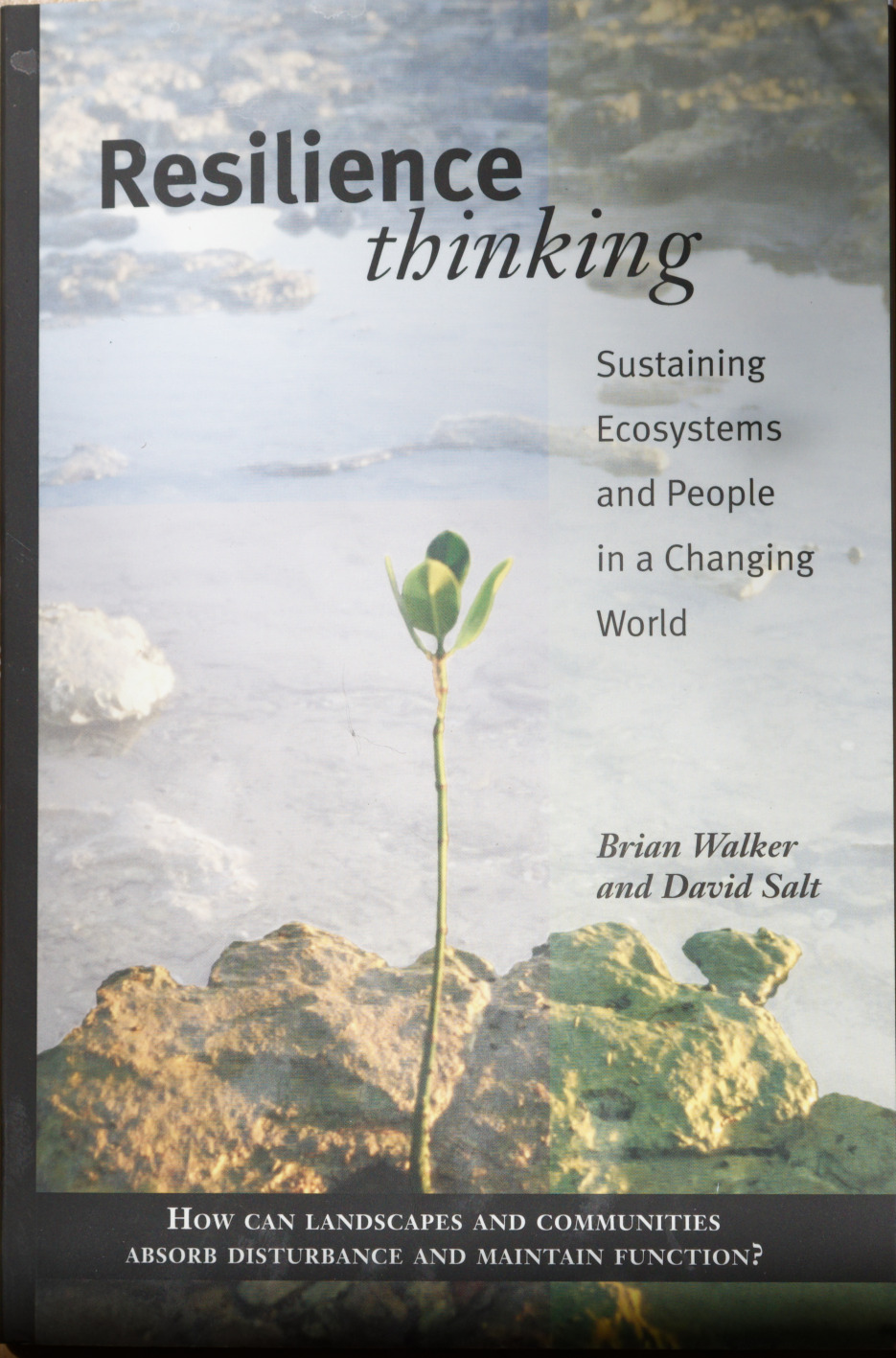
Resilience Thinking – a review

A book to make one think anew.

Let me make myself absolutely clear about this book, indeed I can do no better than to publish part of an email that I sent to the authors last Saturday:

To say that I was inspired by what you wrote is an understatement. More accurately it has changed my whole understanding of this planet, of the natural order of things, of the politics of the Western world, of vast numbers of us humans, and how precarious is our world just now. It has opened my eyes radically, and I thought before that I was fairly in touch with things.

Resilience is a simple idea but in its application has proved to be anything such. On page 2 the authors set out as they saw it The Drivers of Unsustainable Development. Here’s how that section develops:

Our world is facing a broad range of serious and growing resource issues. Human-induced soil degradation has been getting worse since the 1950s. About 85 percent of agriculture land contains areas degraded by erosion, rising salt, soil compaction, and various other factors. It has been estimated (Wood et al. 2000) that soil degradation has already reduced global agricultural productivity by around 15 percent in the last fifty years. In the last three hundred years, topsoil has been lost at a rate of 200 million tons per year; in the last fifty years it has more than doubled to 760 million tons per year.

As we move deeper into the twenty-first century we cannot afford to lose more of our resource base. The global population is now expanding by about 75 million people each year. Population growth rates are declining, but the world’s population will still be expanding by almost 60 million per year in 2030. The United Nations projections put the global population at nearly 8 billion in 2025. In addition, if current water consumption patterns continue unabated, half the world’s population will live in water-stressed river basins by 2025.

The Food and Agriculture Organization of the United Nations (FAO) 2004 Annual Hunger Report estimates that over 850 million people suffer from chronic hunger. Hunger kills 5 million children every year.

It goes on ….!

Now I want to quote from the end of the book, from their section on Resilience Thinking.

In our opening chapter we observed that there were many pathways into resilience thinking and suggested readers not worry too much if the finer details of a resilience framework are a bit obscure. We emphasized that what is of much more importance is an appreciation of the broader themes that underpin such a framework. Those broader themes revolve around humans existing within linked social and ecological systems. These are complex adaptive systems, and attempts to control or optimize parts of such systems without consideration of the responses that this creates in the broader system are fraught with risk. Much of this book has been spent on attempting to explore the consequences of such an approach.

In the broadest sense, optimizing and controlling components of a system in isolation of the broader system results in a decline in resilience, a reduction in options, and the shrinkage of the space in which we can safely operate. Resilience thinking moves us the other way.

It is our hope that readers who are persuaded of this basic premise will be encouraged to explore the inevitable consequences of such thinking. Even if you are not completely clear on the basins of attractions, thresholds, and adaptive cycles, if the concepts of ecological resilience and dynamic social-ecological systems have any resonance then you are in a better position to appreciate what is happening to the world around you.

The phrase complex adaptive system was new to me but intuitively I got what the authors meant. As they state on page 35: The three requirements for a complex adaptive system are:

  • That it has components that are independent and interacting,
  • There is some selection process at work on those components (and on the results of local interactions),
  • Variation and novelty are constantly being added to the system (through components changing over time or new ones coming in),

This was my eye-opener. It was now obvious that many processes, especially in nature, that I had hitherto regarded as constant were changing albeit usually on a timescale of many decades sometimes centuries.

And the other conclusion that was inescapable was that we humans were largely responsible for those changes because we couldn’t see the longterm consequences of what we were doing.

As I remarked in a previous post :

David writes that firstly carbon dioxide is not like other pollutants, for example like air particulants.  Then later goes on to say:

The second difference is that climate change is irreversible.

As Joe Romm notes in a recent post, New York Times columnist Joe Nocera slipped up in his latest column and referred to technology that would “help reverse climate change.” I don’t know whether that reflects Nocera’s ignorance or just a slip of the pen, but I do think it captures the way many people subconsciously think about climate change. If we heat the planet up too much, we’ll just fix it! We’ll turn the temperature back down. We’ll get around to it once the market has delivered economically ideal solutions.

But as this 2009 paper in Nature (among many others) makes clear, it doesn’t work that way:

This paper shows that the climate change that takes place due to increases in carbon dioxide concentration is largely irreversible for 1,000 years after emissions stop. Following cessation of emissions, removal of atmospheric carbon dioxide decreases radiative forcing, but is largely compensated by slower loss of heat to the ocean, so that atmospheric temperatures do not drop significantly for at least 1,000 years. [my emphasis]

My last piece in this review is to republish a graph that is shown on the NASA Global Climate Change website:

For all our sakes, dogs and humans and many other species, let us all please change our behaviours! Soon!

Back to the book: It is a remarkable book!

I will close with quoting one of the praises shown on the back cover. This one by Thomas Homer-Dixon, professor of political science, University of Toronto, and director of the Trudeau Centre for Peace and Conflict Studies.

Resilience Thinking is an essential guidebook to a powerful new way of understanding our world – and of living resiliently with it – developed in recent decades by an international team of ecologists. With five clear and compelling case studies drawn from regions as diverse as Florida, Sweden, and Australia, this book shows how all highly adaptive systems – from ecologies to economics – go through regular cycles of growth, reorganization, and renewal and how our failures to understand the basic principles of resilience have often led to disaster. Resilience Thinking gives us the conceptual tools to help us cope with the bewildering surprises and challenges of our new century.

Please, if you can, think about reading it.

COP 26

Alok Sharma on why COP26 is our best chance for a greener future.

I wanted to share the eight-minute video that appeared on TED Talks. But it hasn’t appeared on YouTube as yet.

But the link is embedded above so if you don’t want to watch the slightly longer version (just 22 minutes) then that is fine.

I will share the words that came with the TED Talks video.

Something powerful is happening around the world. The issue of climate change has moved from the margins to the mainstream, says Alok Sharma, the President-Designate of COP26, the United Nations climate conference set to take place in November 2021 in Glasgow, Scotland. He unpacks what this shift means for the world economy and the accelerating “green industrial revolution” — and lays out the urgent actions that need to happen in order to limit global temperature rise.

Plus on the speaker, Alok Sharma.

Alok Sharma is a British politician, Cabinet Minister and President-Designate of COP26, the United Nations Climate Change Conference being held in Glasgow from 31 October until 12 November.

Sharma was previously UK Secretary of State for Business, Energy and Industrial Strategy. Before that, he was UK Secretary of State for International Development. He has also served in ministerial roles in the Department of Work and Pensions, Department for Communities and Local Government, and at the Foreign and Commonwealth Office. Prior to politics, he worked in finance.

Please watch the video for all our sakes.

For the sake of our dogs, and for the sake of everyone on this planet.