Stranded orca saved by volunteers who kept it cool for hours until high tide
A pump and sheets were used to keep whale alive near Hartley Bay on B.C.’s North Coast
By Maryse Zeidler, CBC News Posted: Jul 23, 2015 7:20 AM PT – Last Updated: Jul 24, 2015 5:35 AM PT
An orca that was stranded on some rocks was kept alive for eight hours by a dedicated team of whale researchers and volunteers on the North Coast of B.C.
“She cried often, which tore at our hearts, but as the tide came up there were many cheers as this whale was finally free,” said in a Facebook post from the group The Cetacean Lab.
Early Wednesday morning, the group received a call from a colleague about the beached orca, which was stuck on some rocks at low tide.
“We decided the best thing to do would be to keep her cool, that meant to put water on her body and we used blankets and sheets,” said Hermann Meuter, a co-founder of Cetacean Lab.
“It was the only thing we could do.”
Meuter said they could see the orca’s behaviour change as they began to help her.
“At first she was stressed, you could see that her breathing was getting a little faster,” said Meuter.
But after about 15 to 20 minutes, she began to calm down.
“I think she knew that we were there to help her,” said Meuter.
Around 4 p.m. PT, the tide began to rise and the orca was able to start freeing herself.
“It took her about 45 minutes to negotiate how best to get off the rocks,” said Meuter. “We all just kept our distance at that point.”
When she swam away, the orca was quickly reunited with her pod, which was nearby.
Metuer said members of the World Wildlife Fund and the Git G’at Guardians from Hartley Bay were also on the scene helping to free the animal.
“We all cared about this whale and we were just very lucky to give that whale another chance,” said Meuter.
ooOOoo
There are photographs to view on that CBS News item plus this video (wish it could have been longer) was also included in Maryse Zeidler’s report.
Well done to everyone who helped save this magnificent animal.
(I’m conscious that many recent posts have been more of me republishing stuff than being creative on my own account. Blame it on ‘the book’: my first edit is now complete and the next stage is sending the manuscript out to those who have volunteered to proof-read the book.)
I saw this article on Mother Nature Network and it struck me immediately as being full of common-sense and well worth sharing with you.
ooOOoo
How to build the perfect backyard for dogs
Learn which plants are hardy, which are poisonous, and how to create a beautiful but functional layout.
Designing your garden with your dog in mind will prevent an infinite number of headaches down the road. (Photo: upixa/Shutterstock)
A dog and a healthy, beautiful backyard don’t often go hand in hand. The amount of wear and tear a dog throws at a garden can leave it in tatters. But it doesn’t have to be this way! With a bit of planning and a careful selection of plants able to hold up to whatever dogs spray at them, your backyard can be both a haven for humans and a paradise for your pups.
Here are helpful strategies for planning out a yard and a list of plants to use or to avoid.
7 tips for dog-friendly garden design
Build raised beds for the more sensitive plants or for any fruits and vegetables you may want to grow. Add in some fencing or netting around the boxes to protect them if your dog is still tempted to hop up and snoop around in them.
Build a dog-friendly path around the yard. This will guide your dog through the garden and minimize the detours into the flowerbeds. You may want to start by watching where your dog goes on his own, and creating the path along that route. That way you aren’t trying to train your dog to go somewhere he doesn’t normally want to go, and you aren’t frustrated when your dog goes where he wants to anyway.
Providing pathways for your dogs will show them where they’re allowed to run and will help keep them out of more sensitive areas of the garden. (Photo: Julius Elias/Shutterstock)
Discourage digging through design. If your dog sometimes digs holes, you can help keep your garden beds safe by making them raised beds. However, if your dog is a relentless digger and no part of the yard is safe, then consider building an area where your dog can do anything he’d like within that space, including dig. This could be a fenced area that has a sand box, where the outlet of digging is welcomed.
Create a designated area for bathroom breaks. This will of course require training your dog to use it, but the time and effort spent in training will counter any time and money spent in replacing dead plants.
Provide places to sun. Many dogs love to sunbathe and might pick the sunniest spot in the middle of your favorite bed of flowers. Avoid a dog selecting his own area by providing one for him instead. A small deck, or a few paving stones in a pretty design, or even an area with bark chips will be a welcoming place for your dog to lie down, out of the way of the plants.
Create shaded areas to keep your pet comfortable. Yards are the perfect place to hang out in the sun, but on hot days it can feel pretty miserable without relief with a little shade. Plant trees or tall shrubs where your dog can enjoy a cool break from playing in the sun.
If you have a water feature, make sure the water is drinkable and free of chemicals.
Safe and hardy plants for dogs
After figuring out a few design elements to make your yard a place where both dogs and humans can feel comfortable, it’s time to review your plant selection. There are a fair number of plants that are resistant to dog urine. By placing these plants in the areas your dog frequents, you can reduce how much replanting you need to do as well as keep your yard looking fresh and healthy.
Many herbs are not only safe but also healthy for dogs. But you’ll still want to protect them from your dog by growing them in a raised bed or pots. (Photo: Jamie Hooper/Shutterstock)
Luckily, the herbs you likely want to have in your kitchen garden are also healthy for dogs. If you like cooking with these savory staples, you’ll be happy to know they’re more than welcome in your dog-friendly garden! The five best options include:
Basil — antioxidant, antiviral and antimicrobial properties
Oregano — helps digestive problems including diarrhea and gas
Parsley — a source of flavonoids, antioxidants and vitamins
Peppermint — soothes upset stomachs, reduces gas and nausea, and helps with travel sickness
Rosemary — high in iron, calcium and Vitamin B6
Groundcovers are a great alternative to a grassy lawn. Many varieties can withstand abuse from dogs better than any grasses. Great options include:
Carpet bugle
Elfin thyme
Kinnikinick
Miniature stonecrop
Silver carpet
Snow in summer
Winter creeper
Another staple for a dog-friendly yard are urine-resistant plants. Here are a few suggestions:
Bears breech
Burkwood osmanthus
Doublefile viburnum
Feather reed grass
Holly fern
Japanese spindle tree
Mexican sage
New Zealand flax
Redtwig dogwood
Snowball viburnum
Spider plants
Sword fern
Plants poisonous to dogs
Even if they look pretty, there are quite a few plants you should avoid having in your yard because ingesting them can mean illness or death for your pet. It doesn’t mean you can’t have these plants around; it just means you’ll want to plant them in areas your dog can’t access, such as fenced-off portions of the yard or in hanging baskets out of reach. University of California, Davis put together a list of the 12 plants that cause the most visits to their vet hospital. They include:
Aloe vera
All species of amaryllis
Anemone
Asparagus fern
Chrysanthemums
Cycads (including Sago palm and cardboard palm)
Cyclamen
Daffodil
Jade plants
Lilies
Lily of the valley
Philodendrons
The ASPCA provides a full list of plants toxic to dogs. Reviewing this list before planting will help prevent trips to the vet in the future.
Be sure to double check if the plants you’re adding to your garden are toxic to dogs. While some dogs stay out of the plants, others may munch on anything they feel like, which could lead to a trip to the vet’s office. (Photo: Dora Zett/Shutterstock)
Other things your dog could, but shouldn’t eat
Which mulch you select could be important to your dog’s health. Cocoa mulch, made of cocoa bean shells, is a by-product of chocolate production and can be toxic. Most dogs aren’t going to eat mulch and if they do, they probably wouldn’t eat enough to cause a problem. However, if you have a dog that seems to dine on anything and everything, you may want to consider using something like shredded pine instead.
Much like eating mulch, ingesting large amounts of fertilizer can be unhealthy or even life-threatening for your pet. Be sure to use all-natural fertilizers, follow the directions and make sure that your pet isn’t allowed into the fertilized area within the suggested waiting period after application.
Compost piles are a great addition to any garden but depending on what you’re tossing in them, they can also pose problems for pets. Coffee grinds, moldy food and certain types of fruit and vegetables are toxic to dogs. In addition, fungal toxins can grow within the compost piles that can cause problems for your pet’s health and overall immunity if consumed. It’s a good idea to keep your compost in a bin that is off limits to your dog.
It is also a smart idea to ditch the chemical herbicides and pesticides. Not only are they terrible for the environment but they can also have disastrous effects on pets, including causing cancer.
ooOOoo
This is so brimful of good advice that it deserves to be shared as widely as possible.
I ran out of writing time yesterday so looked for a quick and easy post to offer you.
Not that that undervalues what is presented; far from it!
George Monbiot’s essays are frequently on topics that concern him and rightly so. However, last Thursday George published an essay that offers real hope to those that want to see an end to the ceaseless news of lost species. It is called Otter Joy and is published with George Monbiot’s kind permission.
ooOOoo
Otter Joy
The return of Britain’s otters offers a glimpse of rewilding’s great rewards
By George Monbiot, published on the Guardian’s website, 7th May 2015
I spent last week travelling with my family across the Scottish Highlands, meeting land managers to discuss possibilities of rewilding. The speed of change there is astonishing, and opportunities for a mass restoration of living systems are emerging faster than I could have imagined even a year ago. I’ll be writing about this in a few weeks, when Rewilding Britain is launched.
But for now I want to talk not about the practicalities of rewilding but about its essence: the reason why this idea excites and inspires me so much that I’ve chosen to devote much of the rest of my life to it.
During our tour across the Highlands we stopped for a few days in the village of Shieldaig, at the head of a sea loch on the west coast. We took a cottage overlooking Shieldaig Island, partly because, for the past few years, white-tailed eagles have been nesting there. After becoming extinct in Britain in 1916, this magnificent bird, bigger than a golden eagle, was reintroduced to the island of Rum in 1975. It has been spreading slowly along the west coast. (It could have moved further across Scotland were it not for shooting and poisoning by grouse estates and others). This is one of the species I would love to see returning to much of the rest of Britain.
Unfortunately, the eagles have chosen another place to nest this year. But there were other returning species to see. I woke one morning when it was still dark, and lay in bed until I heard the song thrush in the sycamore behind the cottage start to sing. I slipped out as the light began to rise over the hills.
There’s a path that leads out of the village, winding north over the headlands and around the small bays of Loch Shieldaig. The willow warblers in the trees along the path had started to sing, and from behind the crest of a hill I heard the cry of an unfamiliar raptor – listening later to recordings, I felt it might have been a white-tailed eagle. There was not a tremor of wind and the air was clear. I could see the promontories and islands stepping away for many miles across a polished sea.
As I came over a low ridge, I noticed a disturbance in the water below me, a few metres from the shore. I dropped into the heather and watched. A moment later, two small heads broke from the sea, then the creatures arced over and disappeared again.
After another moment, the larger one – the dog otter – scrambled out of the water with something thrashing in its mouth. He dropped it onto the rocks, gripped it again, then chewed it up. Then the bitch emerged from the sea beside him, also carrying something, that she dispatched just as quickly. They plunged in again, and I watched the trails of bubbles they made as they rummaged round the roots of the kelp that filled the shallow bay.
When they emerged once more, each with a fish in its mouth, I was able to identify the quarry. They were catching rocklings: small, very slippery fish of the same olive-brown as the kelp. Over the next half hour, each of them caught about fifteen. I marvelled at their ability to grab such difficult prey. I loved the slick, swift movements with which they dived and dolphined and twisted underwater. It looked to me like an expression of pure joy.
Hiding among the rocks and heath, I could keep ahead of the otters without being seen, as they foraged round the coast. As the cliffs became lower, I found myself coming ever closer to them. Then, though I don’t know why, the otters emerged from the water without fish, shook themselves out, and climbed up the rocks, long low bodies undulating, towards me. The dog grunted and huffed while his mate made a high whickering noise. They kept raising their heads and staring in my direction. But as I was buried in the heather and they have weak eyesight, I doubt they could have seen me. Soon they were standing about 20 or 30 feet away, raising their bristly little faces to smell the air. I could hear them panting.
Then they turned and rippled back down the rocks, slipped into the water with scarcely a splash and started hunting round the coast once more. Soon they disappeared around a cliff I couldn’t negotiate.
I walked back elated, recharged with wonder and enchantment. A week later, the feeling still buoys me up.
While many species in this country are in rapid decline, the otter is among the few whose prospects are improving. This is partly because it’s no longer hunted, and partly because of a reduction in the organochlorine insecticides that accumulated up the food chain. But, especially in England, it still inhabits just a fraction of its former range.
Otters are an adaptable species that, given the chance, can quickly recolonise the habitats from which they have been excised. Their hesitant return sharpens the hopes of those of us who want a wilder Britain, who strive for the re-establishment of magnificent, enthralling wildlife that you don’t have to travel halfway around the world to see.
Already otters are beginning to appear in a few towns and cities. As they become accustomed to their protected status, they’re likely to become less shy and easier to watch, bringing nature’s wonders closer to the lives of people who have become disconnected from the living planet. If our advocacy of the widespread return to Britain of animals such as beavers, boar and lynx succeeds (and one day, perhaps, of wolves, bison, pelicans, bluefin tuna and whales of several species), the opportunities for re-enchantment will begin to blossom in places that are currently little more than wildlife deserts.
Everyone should be able to experience such marvels, and to step outside the ordered, regulated, predictable world of our own making, that sometimes seems to crush the breath out of us.
2011 has proved another record breaking year for breeding pairs of Scotland’s largest bird of prey. White-tailed eagles soared to new heights despite heavy storms throughout the 2011 breeding season.
Conservationists, and many sea eagle enthusiasts, had been concerned that the high winds felt across Scotland in May could have had a detrimental impact on breeding white-tailed eagles at the vulnerable part of the season when most nests contain small chicks. Indeed, some nests failed including that of BBC Springwatch star, nicknamed “Itchy”, who experts fear lost his chicks in the storm.
However, the bad weather failed to blow the species off course. Recent survey figures for the 2011 breeding season reveal that there were 57 territorial pairs in Scotland, an increase of 10 per cent on the previous year. A total of 43 young fledged successfully from these nests.
George’s essay also mentioned the Scottish sea otter.
On Monday I published a post Hope Has A Place. It was based upon the hauntingly beautiful track of the same name from Enya. Then yesterday, serendipitously, came The watering hole. Both of those posts, although miles apart in terms of content, nonetheless seemed to subscribe to a common theme. That being that the more that everyday people, good common folk from all around the world, share their feelings, the more likely that those self-same people will make a difference. A positive difference!
Now don’t get me wrong! By presenting these recent posts I am not setting myself up to be anything other than just another everyday person and dog lover who just happens to enjoy sharing stuff via this blog.
Regular readers of this place will recall that a week ago I celebrated Earth Day with a post called Our beautiful, life-giving trees. It included this picture:
We must sing for our trees.
Then on the following day in a post called Now life-giving geese (by the way, the five baby goslings are doing really well!) I included this photograph:
And sing for them at all ages!
Yesterday morning I received the latest post from Sue Dreamwalker. It was an impassioned plea to do something and to stop the madness. Sue, in turn, had republished the post that had appeared on Endless Light and Love.
The theme that seems to be developing this week, unplanned I should hasten to add, is that it is all too easy to be overwhelmed by the scale of change that has to take place, must take place, if this generation (I’m a 1944 baby) can die knowing that it will be alright in the end. Because it is my generation that has been responsible, has created the circumstances, for the end of life as we have all known it if nothing is done, and done in the next decade or two.
So to trees.
Our trees are both a symbol for and an indicator of the overall health of our planet.
To close off this part of my two-day post, please watch this short video.
Uploaded on Apr 1, 2015
Trees give us beauty, shade, food, clean water, oxegen, medicine, housing, fresh air, habitat and happiness. For the cost of a craft beer, or a couple of cups of coffee you can protect a specific threatened forest. Each Stand for Trees certificate offsets 1 ton of carbon from the atmosphere while providing income to local forest communities. Income that supports education, healthcare, clean water and sustainable livelihoods. Trees stand for us, isn’t it time we stand for trees?
Tomorrow, I will return to hope. Perhaps better written, return with hope.
This game of blogging would have no meaning at all if it were not for the networking and sharing of so many ideas, thoughts and feelings unlimited by geographical distances. The ‘Likes’ and responses to my Hope Has A Place story yesterday meant so much.
I was trawling through my folder looking for something that felt good to publish after yesterday and came across the following that was sent in by dear friend, Dan Gomez, about a month ago.
ooOOoo
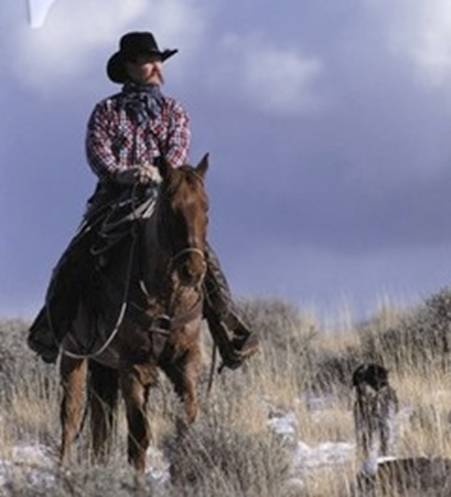
An old cowboy was riding his trusty horse followed by his faithful dog along an unfamiliar road. The man was enjoying the new scenery, when he suddenly remembered dying, and realized that the dog beside him had been dead for years, as had his horse. Confused, he wondered what was happening, and where the trail was leading them.
After a while, they came to a high, white stone wall that looked like fine marble. At the top of a long hill, it was broken by a tall arch topped by a golden letter “H” that glowed in the sunlight.
Standing before it, he saw a magnificent gate in the arch that looked like mother-of-pearl, and the street that led to the gate looked like gold.
He rode toward the gate and as he got closer he saw a man at a desk to one side. Parched and tired out by his journey, he called out, “Excuse me, where are we?“
“This is Heaven, sir,” the man answered.
“Wow! Would you happen to have some water?” the old cowboy asked.
“Of course, sir. Come right in, and I’ll have some ice water brought right up.”
As the gate began to open, the cowboy asked, “Can I bring my partners, too?”
“I’m sorry; sir, but we don’t accept pets.”
The cowboy thought for a moment, then turned back to the road and continued riding, his dog trotting by his side.
After another long ride, at the top of another hill, he came to a dirt road leading through a ranch gate that looked as if it had never been closed. As he approached the gate, he saw a man inside, leaning against a tree and reading a book.
“Excuse me,‘ he called to the man. “Do you have any water?”
“Sure, there’s a pump right over there. Help yourself.”
“How about my friends here?” the cowboy gestured to his dog and his horse.
“Of course! They look thirsty, too,” said the man.
The three of them went through the gate, and sure enough, there was an old-fashioned hand pump with buckets beside it. The cowboy filled a cup and the buckets with wonderfully cool water and took a long drink, as did his horse and dog.
When they were full, he walked back to the man who was still standing by the tree. “What do you call this place?” he asked.
“This is Heaven,” the man answered.
“That’s confusing, the man down the road said that was Heaven, too.”
“Oh, you mean the place with the glitzy, gold street and fake pearly gates? That’s hell.”
The cowboy retorted, “Doesn’t it make you angry when they use your name like that?”
“Not at all. Actually, we’re happy they screen out the folks who would leave their friends behind.”
ooOOoo
Dan’s email went on to include this:
Sometimes, we wonder why friends forward things to us without writing a word. Maybe this explains it? When you’re busy, but still want to keep in touch, you can forward emails. When you have nothing to say, but still want to keep in contact, you can forward jokes. When you have something to say, but don’t know exactly how to say it, you can forward stuff.
A ‘forward’ lets you know that you’re still remembered, still important, still cared about.
So the next time you get a ‘forward’, don’t think of it as just another joke. Realize that you’ve been thought of today and that your friend on the other end just wanted to send you a smile.
PS: You’re welcome at my watering hole anytime.
Let me underline Dan’s PS by saying that all of life’s humans and creatures are welcome here!
Or, to be more precise, any form of post for today.
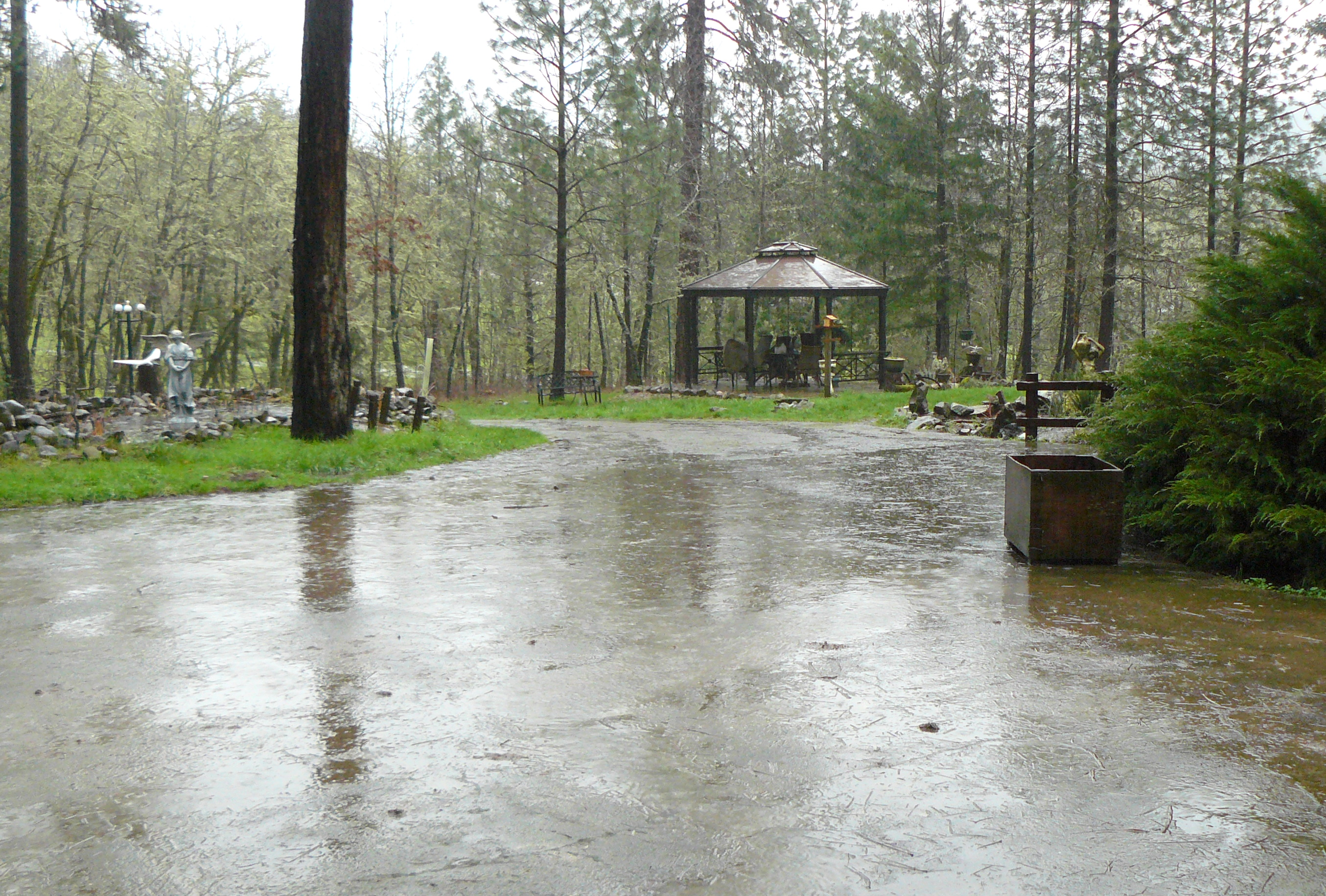
The weather forecast for Southern Oregon for yesterday included very significant rain.
They were not wrong.
By the time I sat down to think about Saturday’s post, around 2pm, we had already had 3.2 inches of rain (8.1 cm) and our attention, understandably, was on more important matters, such as the integrity of our driveway bridge over Bummer Creek.
So if you will forgive me, I’ll just offer a few pictures and leave it at that.
Starting with a picture that Jean expressly said I couldn’t publish!
I shall probably be denied access to the bedroom after showing you all how my wife likes to dress up!
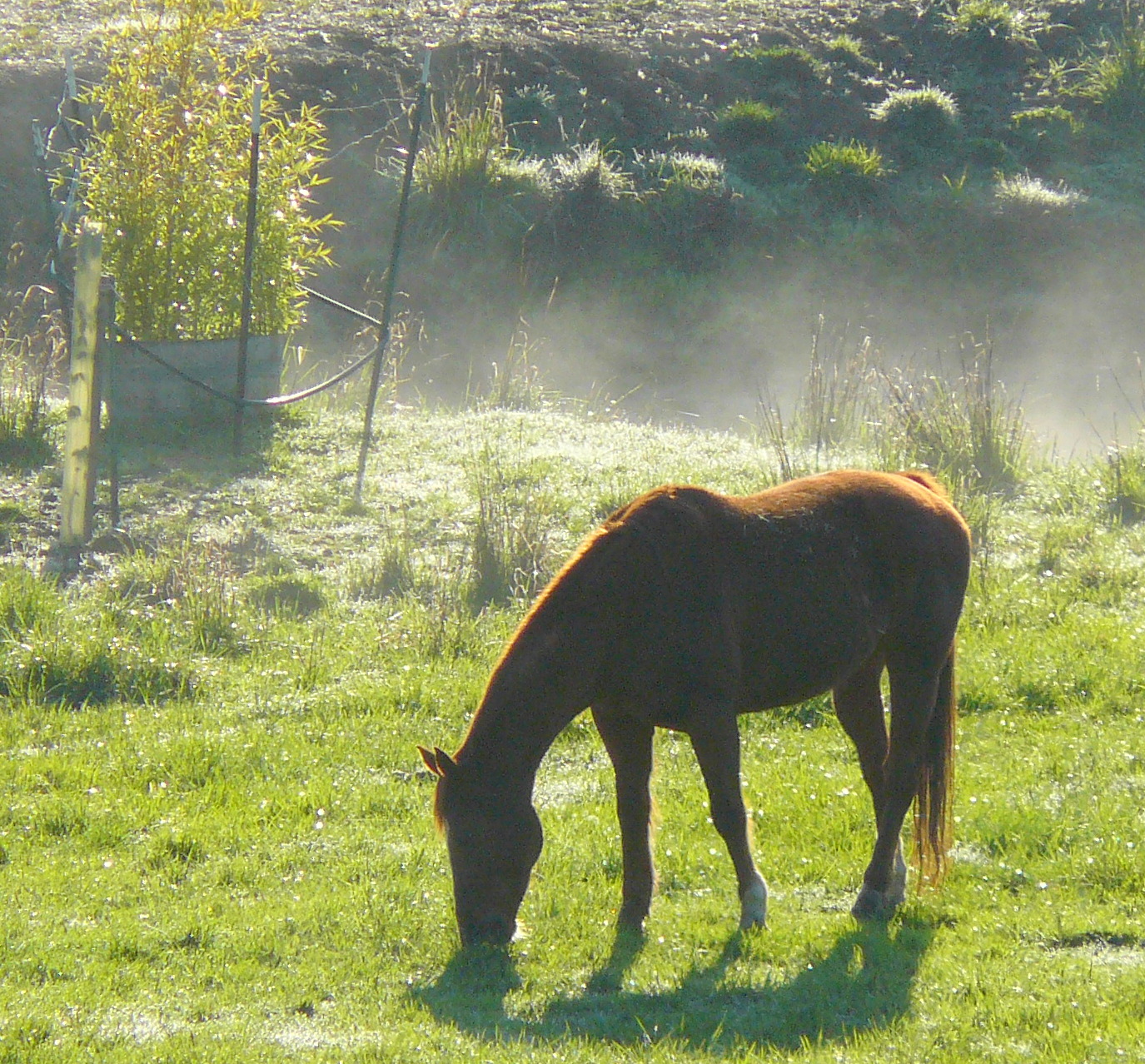
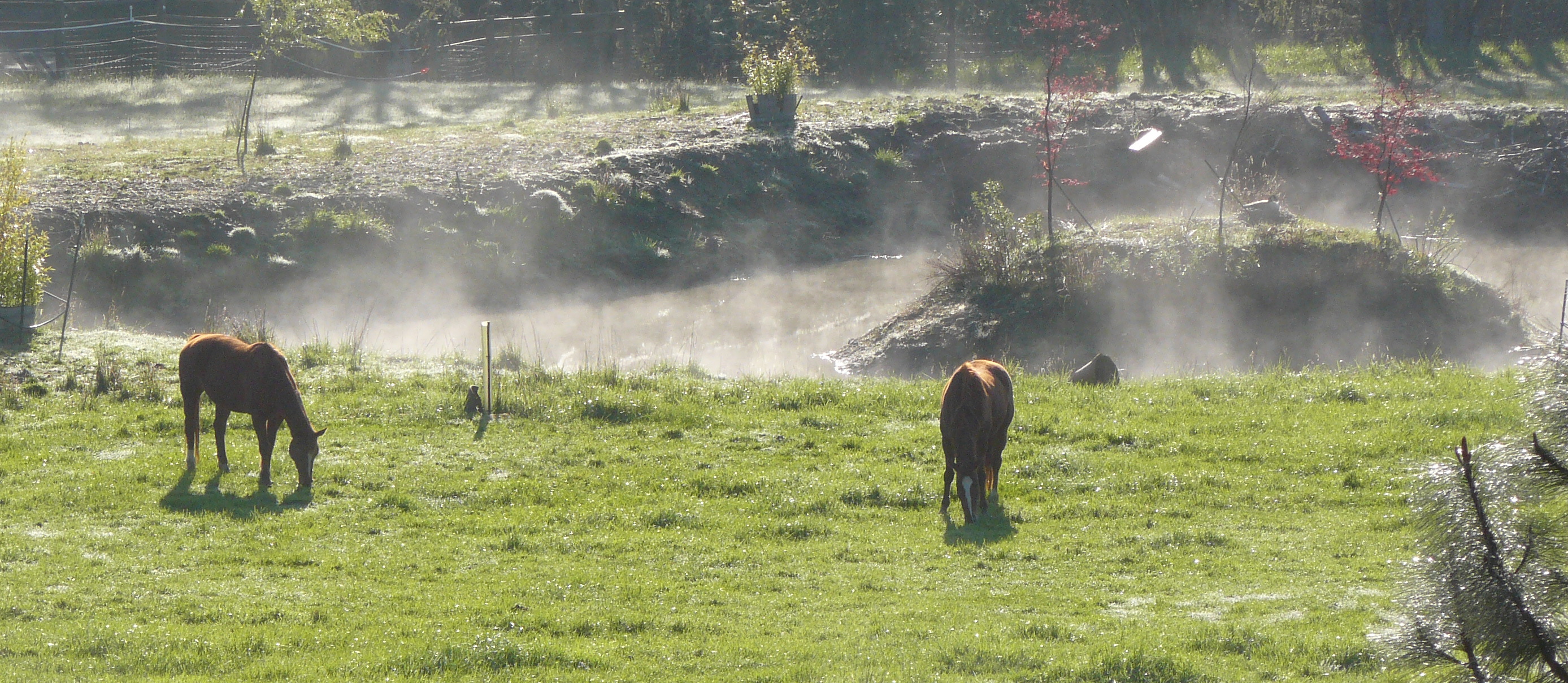
What lucky horses to have such a devoted ‘Mum’ that feeds them every morning; whatever the weather.
Only one way in or out: over the bridge!
Neighbours who have been here much longer than us say they haven’t seen so much rain fall in such a short time.
Bummer Creek in full flood – this photograph is of the Creek just 50 yards upstream of the bridge.
This is an old dam for irrigation purposes. One doesn’t want to reflect too long that a cubic yard of water weighs a ton!
Luckily the house (off picture to the right) and immediate surroundings are elevated.
So that’s it for today.
Another picture parade for tomorrow assuming I haven’t been lynched by my lovely wife for showing that earlier photograph.
The history of power, control, those who wield it, and where it has taken us all.
There is a real pain in me as I start into today’s post. A pain that comes from agonising over whether or not to write in this vein. A pain that has its roots in me being forced to accept that global politics, money and power-plays are much worse than I ever wanted to believe.
What, you must be asking, has got me plunging so far into this dark place? When just twenty-four hours ago I was writing of peace, calm and deep meditation?
Simply a film!
A film that was uploaded by the BBC a few days ago exclusively on to their BBC iPlayer platform.
The film is called Bitter Lake and here’s the trailer.
The full film is 2 hours, 20 minutes long. (But note that the film is age-restricted for obvious reasons.)
I can’t encourage you to watch it. For if you do, the world may never seem the same to you.
But Jeannie and I did watch it and think it should be shared widely. And, yes, it has changed the world for us.
Here’s how it is described by Adam Curtis and the BBC.
Published on Jan 26, 2015
Shown exclusively on the BBC iPlayer service in the UK
This upload is for those outside of the UK
Politicians used to have the confidence to tell us stories that made sense of the chaos of world events.
But now there are no big stories and politicians react randomly to every new crisis – leaving us bewildered and disorientated.
And journalism – that used to tell a grand, unfurling narrative – now also just relays disjointed and often wildly contradictory fragments of information.
Events come and go like waves of a fever. We – and the journalists – live in a state of continual delirium, constantly waiting for the next news event to loom out of the fog – and then disappear again, unexplained.
And the formats – in news and documentaries – have become so rigid and repetitive that the audiences never really look at them.
In the face of this people retreat from journalism and politics. They turn away into their own worlds, and the stories they and their friends tell each other.
I think this is wrong, sad, and bad for democracy – because it means the politicians become more and more unaccountable.
I have made a film that tries to respond to this in two ways.
It tells a big story about why the stories we are told today have stopped making sense.
But it is also an experiment in a new way of reporting the world. To do this I’ve used techniques that you wouldn’t normally associate with TV journalism. My aim is to make something more emotional and involving – so it reconnects and feels more real.
BBC iPlayer has given me the opportunity to do this – because it isn’t restrained by the rigid formats and schedules of network television. It’s a place you can go to experiment and try out new ideas.
It is also liberating – both because things can be any length, and also because it allows the audience to watch the films in different ways.
The film is called Bitter Lake. It is a bit of an epic – it’s two hours twenty minutes long.
It tells a big historical narrative that interweaves America, Britain, Russia and Saudi Arabia. It shows how politicians in the west lost confidence – and began to simplify the stories they told. It explains why this happened – because they increasingly gave their power away to other forces, above all global finance.
But there is one other country at the center of the film.
Afghanistan.
This is because Afghanistan is the place that has repeatedly confronted politicians, as their power declines, with the terrible truth – that they cannot understand what is going on any longer. Let alone control it.
The film shows in detail how all the foreigners who went to Afghanistan created an almost totally fictional version of the country in their minds.
They couldn’t see the complex reality that was in front of them – because the stories they had been told about the world had become so simplified that they lacked the perceptual apparatus to see reality any longer.
And this blindness led to a terrible disaster – support for a blatantly undemocratic government, wholesale financial corruption and thousands of needless deaths.
A horrific scandal that we, in our disconnected bubble here in Britain, seem hardly aware of. And even if we are – it is dismissed as being just too complex to understand.
But it is important to try and understand what happened. And the way to do that is to try and tell a new kind of story. One that doesn’t deny the complexity and reduce it to a meaningless fable of good battling evil – but instead really tries to makes sense of it.
I have got hold of the unedited rushes of almost everything the BBC has ever shot in Afghanistan. It is thousands of hours – some of it is very dull, but large parts of it are extraordinary. Shots that record amazing moments, but also others that are touching, funny and sometimes very odd.
These complicated, fragmentary and emotional images evoke the chaos of real experience. And out of them I have tried to build a different and more emotional way of depicting what really happened in Afghanistan.
A counterpoint to the thin, narrow and increasingly destructive stories told by those in power today.
And I must include this comment from the relevant page on BBC Blogs:
Quite simply one of the best films I’ve ever watched. The theme and content made so many connections linking events of the last 40 years. It’s perhaps time to reflect on power ,control and those who wield it . The official narrative is not our narrative , we have a choice to decide what we believe . Time to reflect and make that choice.
Thanks for such an informing film.
Just at the moment there seems to be an incredible explosion of awareness about the need to change. Won’t say anymore other than from the day of the Winter Solstice, less that two weeks away, I will be publishing a number of posts about this new awareness and the implications, the positive implications, for the coming years.
To set the tone, I am republishing an article that appeared on the website of the organisation Nature Needs Half. I am grateful for their permission to so do.
Conservation group promoting an ambitious new proposal for wilderness protection
During the last half century conservationists around the world have won some impressive victories to protect wild places. Here in the US, the Wilderness Act preserves some 110 million acres of public land. Private holdings by groups like The Nature Conservancy safeguard tens of millions of additional acres. The idea of protecting ecosystems from industrial development has spread around the world. There’s the Mavuradonha Wilderness in Zimbabwe, the El Carmen ecosystem in northern Mexico, Kissama National Park in Angola, and the Tasmanian Wilderness in Australia, to name just a few stunning parks and preserves; UNESCO’s world heritage list includes 197 sites of special beauty and/or biodiversity.
Photo by Trey Ratcliff Nature Needs Half has set out an unbelievable challenge: to formally, legally set aside one half of Earth’s land and water as interconnected natural areas.
But conservation biologists now recognize that these sanctuaries are limited in what they can accomplish precisely because they are special — which is to say, rare. Parks and preserves are all too often islands of biological integrity in a sea of human development. To really protect natural systems, healthy biomes need to be the rule, not the exception.
To achieve that vision, The WILD Foundation, a multinational NGO based in Boulder, Colorado, is pushing a bold concept called “Nature Needs Half.” In a world in which even the wealthiest governments routinely abdicate their responsibilities toward future generations and the environment, Nature Needs Half has set out an unbelievable challenge: to formally, legally set aside one half of Earth’s land and water as interconnected natural areas.
This is, of course, a hugely ambitious endeavor, opposing as it does the assumption that Earth’s resources are here to be exploited solely by humans. We live in what some have called the “Anthropocene,” the Age of Man, a world in which every aspect of physical being, from the oceanic depths to the troposphere, has been radically altered by humankind. Rivers are being dammed, forests leveled, oceans emptied and wildlife eradicated. It’s not a pretty picture, but as an empiric truth it’s difficult to refute. Consider a few facts:
The long-term acidification of the oceans by our ongoing buildup of industrial carbon dioxide is killing off coral reefs around the world, resulting in the loss of a critical barrier to storm surge and further endangering coastal areas at heightened risk from rising seas and stronger and more frequent storms.
Hydropower is increasingly being developed in South America, South Asia and sub-Saharan Africa, preventing the migration of anadromous fishes and destroying the elaborate flood-regime ecosystems of biomes like the Amazon.
The accelerating rate of animal and plants extinctions under the twin hammers of climate change and habitat loss is being compared to Earth’s five other extinction events that followed catastrophic geophysical change such as meteor impact or sudden tectonic shifts. In the case of the sixth great extinction, however, the root cause is purely biotic: us. Either from directly causing species decline through poaching, habitat conversion and the introduction of competitive exotic species, or by indirectly altering ecosystems through our industrial assault on the planet’s atmosphere, one in eight birds, one in four mammals, one in five invertebrates, one in three amphibians, and half of the world’s turtles are facing the eternal night of extinction.
Given those facts, the Nature Needs Half goal is startling in the grandiosity of its vision and the ambitious range of its projects. It is also, in a word, fair. “Half the world for humanity, half for the rest of life, to make a planet both self-sustaining and pleasant,” is how eminent naturalist E.O. Wilson explains the idea in his book The Future of Life. Other endorsers include marine explorer Sylvia Earle and the Zoological Society of London. And while the scope and scale of Nature Needs Half is unprecedented, conservation groups such as the World Wildlife Fund recognize that connecting biodiverse “hotspots” must guide preservation efforts.
The stated goal of Nature Needs Half is “to ensure that enough wild areas of land and water are protected and interconnected (usually at least about half of any given ecoregion) to maintain nature’s life-supporting systems and the diversity of life on Earth, to ensure human health and prosperity, and to secure a bountiful, beautiful legacy of resilient, wild nature.” Underlying this objective is the assumption that humanity, despite its often destructively “unnatural” behavior, is inescapably a part of life on Earth, and that efforts to preserve and protect untrammeled wilderness areas are ultimately means of assuring that the ecosystem services people depend upon are available to us in the distant future. We’re all in this together, and the sooner H. sapiens gets that through its pointy little head, the better off we’ll all be.
How is “protected” defined? The International Union for the Conservation of Nature defines it quite flexibly: “A protected area is a clearly defined geographical space, recognized, dedicated and managed, through legal or other effective means, to achieve the long term conservation of nature with associated ecosystem services and cultural values.” Thus any number of means may be put into play to preserve land, from conservation easements in Virginia to armed ranger patrols in Namibia; what matters is the end result, namely the retention of naturally functioning ecosystems over time.
During the past two decades scientists have determined that the planet’s ecoregions need at least 50 percent ecological integrity, and in some cases more, to ensure the survival of their biological productivity over the long term. (In plain language, “ecological integrity” means that an area’s biodiversity and basic processes are mostly intact.) The goals of Nature Needs Half simply echo the empirical scientific reality: to function over time the world’s biomes need at least half of their structural integrity preserved from human alteration. We are currently falling short of that. A recent report from Yale’s Environmental Performance Index states that just17 percent of Earth’s terrestrial areas and inland waters, and less than 10 percent of marine areas, are currently protected (though for many parks and refuges in poorer countries this protection is often illusory), while about 43 percent remains relatively open and undeveloped, with low human populations and generally undamaged ecosystems.
Nature Needs Half is pursuing its aim in two simultaneous directions: the protection of at least half of the planet’s mostly intact contiguous wilderness areas — concentrating on Eurasian boreal forests, the Amazon basin and Antarctica — and the identification and protection of those fragments or hotspots of abundant biodiversity that have become isolated islands in a sea of human activity.
The aims of Nature Needs Half are precisely the kind of bold approach, rooted in cutting-edge science, which our increasingly desperate times call for. In an Anthropocene of radical climate change and accelerating species extinctions, nothing less than a grand vision of what might yet be achieved will bring about the preservation of our remaining unspoiled landscapes. As the most farsighted wilderness preservation program on Earth, Nature Needs Half promises to be the kind of revolutionary undertaking that, if its aims are fully or even mostly achieved, will be looked back on centuries from now as perhaps the most important attainment in modern human history.
William H. Funk
William H. Funk is a freelance writer, documentary filmmaker and environmental lawyer living in Virginia’s Shenandoah Valley. His work explores the confluences of the natural world, history, culture, law and politics, and as an attorney he has had broad experience with land preservation and endangered species. He may be contacted at williamfunk3@icloud.com or williamhfunk.weebly.com
ooOOoo
Rather puts my next book chapter, Community, into perspective; that chapter being published in thirty minutes time.











 Learning from Dogs