Or, to be more precise, any form of post for today.
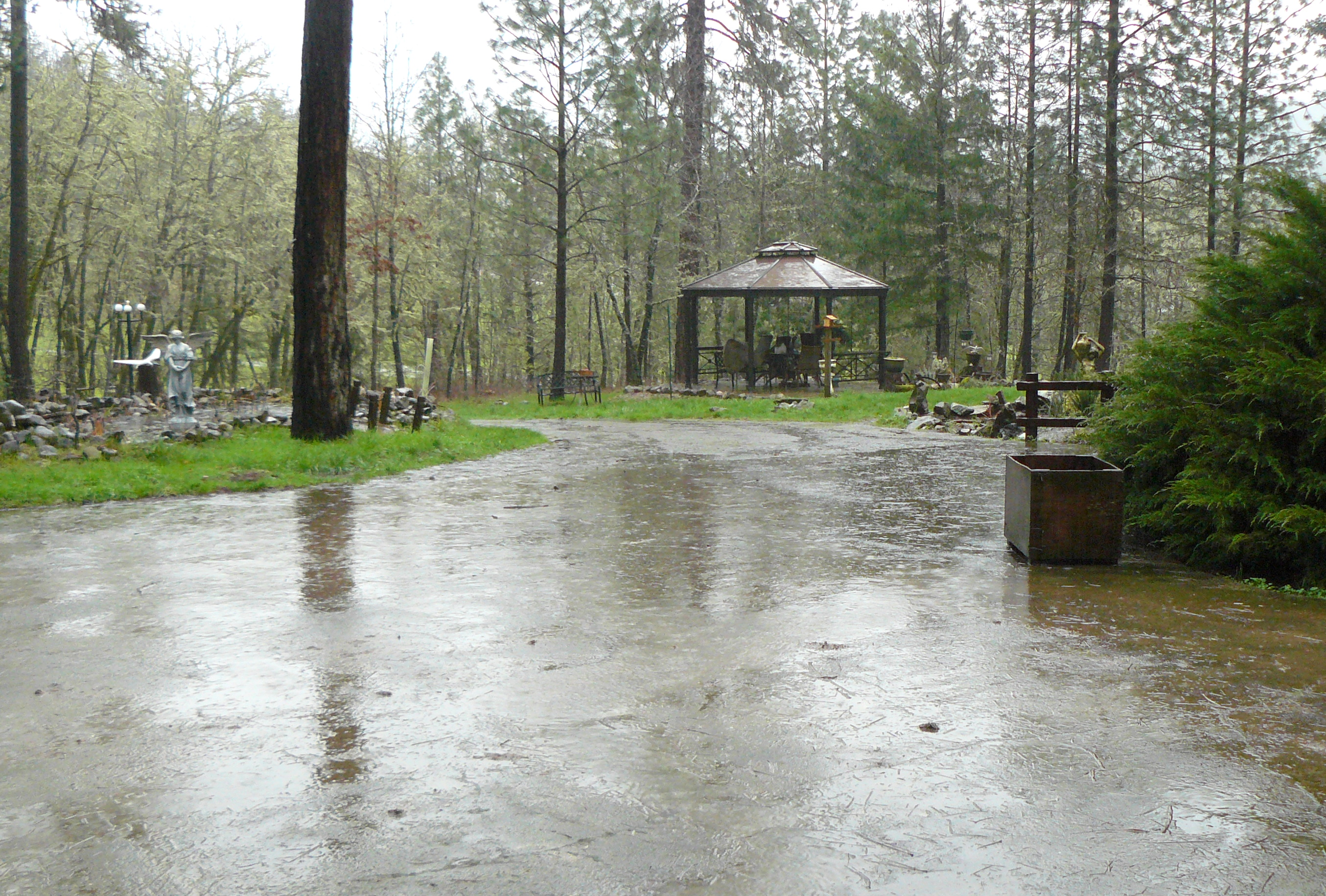
The weather forecast for Southern Oregon for yesterday included very significant rain.
They were not wrong.
By the time I sat down to think about Saturday’s post, around 2pm, we had already had 3.2 inches of rain (8.1 cm) and our attention, understandably, was on more important matters, such as the integrity of our driveway bridge over Bummer Creek.
So if you will forgive me, I’ll just offer a few pictures and leave it at that.
Starting with a picture that Jean expressly said I couldn’t publish!
I shall probably be denied access to the bedroom after showing you all how my wife likes to dress up!
What lucky horses to have such a devoted ‘Mum’ that feeds them every morning; whatever the weather.
Only one way in or out: over the bridge!
Neighbours who have been here much longer than us say they haven’t seen so much rain fall in such a short time.
Bummer Creek in full flood – this photograph is of the Creek just 50 yards upstream of the bridge.
This is an old dam for irrigation purposes. One doesn’t want to reflect too long that a cubic yard of water weighs a ton!
Luckily the house (off picture to the right) and immediate surroundings are elevated.
So that’s it for today.
Another picture parade for tomorrow assuming I haven’t been lynched by my lovely wife for showing that earlier photograph.
The history of power, control, those who wield it, and where it has taken us all.
There is a real pain in me as I start into today’s post. A pain that comes from agonising over whether or not to write in this vein. A pain that has its roots in me being forced to accept that global politics, money and power-plays are much worse than I ever wanted to believe.
What, you must be asking, has got me plunging so far into this dark place? When just twenty-four hours ago I was writing of peace, calm and deep meditation?
Simply a film!
A film that was uploaded by the BBC a few days ago exclusively on to their BBC iPlayer platform.
The film is called Bitter Lake and here’s the trailer.
The full film is 2 hours, 20 minutes long. (But note that the film is age-restricted for obvious reasons.)
I can’t encourage you to watch it. For if you do, the world may never seem the same to you.
But Jeannie and I did watch it and think it should be shared widely. And, yes, it has changed the world for us.
Here’s how it is described by Adam Curtis and the BBC.
Published on Jan 26, 2015
Shown exclusively on the BBC iPlayer service in the UK
This upload is for those outside of the UK
Politicians used to have the confidence to tell us stories that made sense of the chaos of world events.
But now there are no big stories and politicians react randomly to every new crisis – leaving us bewildered and disorientated.
And journalism – that used to tell a grand, unfurling narrative – now also just relays disjointed and often wildly contradictory fragments of information.
Events come and go like waves of a fever. We – and the journalists – live in a state of continual delirium, constantly waiting for the next news event to loom out of the fog – and then disappear again, unexplained.
And the formats – in news and documentaries – have become so rigid and repetitive that the audiences never really look at them.
In the face of this people retreat from journalism and politics. They turn away into their own worlds, and the stories they and their friends tell each other.
I think this is wrong, sad, and bad for democracy – because it means the politicians become more and more unaccountable.
I have made a film that tries to respond to this in two ways.
It tells a big story about why the stories we are told today have stopped making sense.
But it is also an experiment in a new way of reporting the world. To do this I’ve used techniques that you wouldn’t normally associate with TV journalism. My aim is to make something more emotional and involving – so it reconnects and feels more real.
BBC iPlayer has given me the opportunity to do this – because it isn’t restrained by the rigid formats and schedules of network television. It’s a place you can go to experiment and try out new ideas.
It is also liberating – both because things can be any length, and also because it allows the audience to watch the films in different ways.
The film is called Bitter Lake. It is a bit of an epic – it’s two hours twenty minutes long.
It tells a big historical narrative that interweaves America, Britain, Russia and Saudi Arabia. It shows how politicians in the west lost confidence – and began to simplify the stories they told. It explains why this happened – because they increasingly gave their power away to other forces, above all global finance.
But there is one other country at the center of the film.
Afghanistan.
This is because Afghanistan is the place that has repeatedly confronted politicians, as their power declines, with the terrible truth – that they cannot understand what is going on any longer. Let alone control it.
The film shows in detail how all the foreigners who went to Afghanistan created an almost totally fictional version of the country in their minds.
They couldn’t see the complex reality that was in front of them – because the stories they had been told about the world had become so simplified that they lacked the perceptual apparatus to see reality any longer.
And this blindness led to a terrible disaster – support for a blatantly undemocratic government, wholesale financial corruption and thousands of needless deaths.
A horrific scandal that we, in our disconnected bubble here in Britain, seem hardly aware of. And even if we are – it is dismissed as being just too complex to understand.
But it is important to try and understand what happened. And the way to do that is to try and tell a new kind of story. One that doesn’t deny the complexity and reduce it to a meaningless fable of good battling evil – but instead really tries to makes sense of it.
I have got hold of the unedited rushes of almost everything the BBC has ever shot in Afghanistan. It is thousands of hours – some of it is very dull, but large parts of it are extraordinary. Shots that record amazing moments, but also others that are touching, funny and sometimes very odd.
These complicated, fragmentary and emotional images evoke the chaos of real experience. And out of them I have tried to build a different and more emotional way of depicting what really happened in Afghanistan.
A counterpoint to the thin, narrow and increasingly destructive stories told by those in power today.
And I must include this comment from the relevant page on BBC Blogs:
Quite simply one of the best films I’ve ever watched. The theme and content made so many connections linking events of the last 40 years. It’s perhaps time to reflect on power ,control and those who wield it . The official narrative is not our narrative , we have a choice to decide what we believe . Time to reflect and make that choice.
Thanks for such an informing film.
Just at the moment there seems to be an incredible explosion of awareness about the need to change. Won’t say anymore other than from the day of the Winter Solstice, less that two weeks away, I will be publishing a number of posts about this new awareness and the implications, the positive implications, for the coming years.
To set the tone, I am republishing an article that appeared on the website of the organisation Nature Needs Half. I am grateful for their permission to so do.
Conservation group promoting an ambitious new proposal for wilderness protection
During the last half century conservationists around the world have won some impressive victories to protect wild places. Here in the US, the Wilderness Act preserves some 110 million acres of public land. Private holdings by groups like The Nature Conservancy safeguard tens of millions of additional acres. The idea of protecting ecosystems from industrial development has spread around the world. There’s the Mavuradonha Wilderness in Zimbabwe, the El Carmen ecosystem in northern Mexico, Kissama National Park in Angola, and the Tasmanian Wilderness in Australia, to name just a few stunning parks and preserves; UNESCO’s world heritage list includes 197 sites of special beauty and/or biodiversity.
Photo by Trey Ratcliff Nature Needs Half has set out an unbelievable challenge: to formally, legally set aside one half of Earth’s land and water as interconnected natural areas.
But conservation biologists now recognize that these sanctuaries are limited in what they can accomplish precisely because they are special — which is to say, rare. Parks and preserves are all too often islands of biological integrity in a sea of human development. To really protect natural systems, healthy biomes need to be the rule, not the exception.
To achieve that vision, The WILD Foundation, a multinational NGO based in Boulder, Colorado, is pushing a bold concept called “Nature Needs Half.” In a world in which even the wealthiest governments routinely abdicate their responsibilities toward future generations and the environment, Nature Needs Half has set out an unbelievable challenge: to formally, legally set aside one half of Earth’s land and water as interconnected natural areas.
This is, of course, a hugely ambitious endeavor, opposing as it does the assumption that Earth’s resources are here to be exploited solely by humans. We live in what some have called the “Anthropocene,” the Age of Man, a world in which every aspect of physical being, from the oceanic depths to the troposphere, has been radically altered by humankind. Rivers are being dammed, forests leveled, oceans emptied and wildlife eradicated. It’s not a pretty picture, but as an empiric truth it’s difficult to refute. Consider a few facts:
The long-term acidification of the oceans by our ongoing buildup of industrial carbon dioxide is killing off coral reefs around the world, resulting in the loss of a critical barrier to storm surge and further endangering coastal areas at heightened risk from rising seas and stronger and more frequent storms.
Hydropower is increasingly being developed in South America, South Asia and sub-Saharan Africa, preventing the migration of anadromous fishes and destroying the elaborate flood-regime ecosystems of biomes like the Amazon.
The accelerating rate of animal and plants extinctions under the twin hammers of climate change and habitat loss is being compared to Earth’s five other extinction events that followed catastrophic geophysical change such as meteor impact or sudden tectonic shifts. In the case of the sixth great extinction, however, the root cause is purely biotic: us. Either from directly causing species decline through poaching, habitat conversion and the introduction of competitive exotic species, or by indirectly altering ecosystems through our industrial assault on the planet’s atmosphere, one in eight birds, one in four mammals, one in five invertebrates, one in three amphibians, and half of the world’s turtles are facing the eternal night of extinction.
Given those facts, the Nature Needs Half goal is startling in the grandiosity of its vision and the ambitious range of its projects. It is also, in a word, fair. “Half the world for humanity, half for the rest of life, to make a planet both self-sustaining and pleasant,” is how eminent naturalist E.O. Wilson explains the idea in his book The Future of Life. Other endorsers include marine explorer Sylvia Earle and the Zoological Society of London. And while the scope and scale of Nature Needs Half is unprecedented, conservation groups such as the World Wildlife Fund recognize that connecting biodiverse “hotspots” must guide preservation efforts.
The stated goal of Nature Needs Half is “to ensure that enough wild areas of land and water are protected and interconnected (usually at least about half of any given ecoregion) to maintain nature’s life-supporting systems and the diversity of life on Earth, to ensure human health and prosperity, and to secure a bountiful, beautiful legacy of resilient, wild nature.” Underlying this objective is the assumption that humanity, despite its often destructively “unnatural” behavior, is inescapably a part of life on Earth, and that efforts to preserve and protect untrammeled wilderness areas are ultimately means of assuring that the ecosystem services people depend upon are available to us in the distant future. We’re all in this together, and the sooner H. sapiens gets that through its pointy little head, the better off we’ll all be.
How is “protected” defined? The International Union for the Conservation of Nature defines it quite flexibly: “A protected area is a clearly defined geographical space, recognized, dedicated and managed, through legal or other effective means, to achieve the long term conservation of nature with associated ecosystem services and cultural values.” Thus any number of means may be put into play to preserve land, from conservation easements in Virginia to armed ranger patrols in Namibia; what matters is the end result, namely the retention of naturally functioning ecosystems over time.
During the past two decades scientists have determined that the planet’s ecoregions need at least 50 percent ecological integrity, and in some cases more, to ensure the survival of their biological productivity over the long term. (In plain language, “ecological integrity” means that an area’s biodiversity and basic processes are mostly intact.) The goals of Nature Needs Half simply echo the empirical scientific reality: to function over time the world’s biomes need at least half of their structural integrity preserved from human alteration. We are currently falling short of that. A recent report from Yale’s Environmental Performance Index states that just17 percent of Earth’s terrestrial areas and inland waters, and less than 10 percent of marine areas, are currently protected (though for many parks and refuges in poorer countries this protection is often illusory), while about 43 percent remains relatively open and undeveloped, with low human populations and generally undamaged ecosystems.
Nature Needs Half is pursuing its aim in two simultaneous directions: the protection of at least half of the planet’s mostly intact contiguous wilderness areas — concentrating on Eurasian boreal forests, the Amazon basin and Antarctica — and the identification and protection of those fragments or hotspots of abundant biodiversity that have become isolated islands in a sea of human activity.
The aims of Nature Needs Half are precisely the kind of bold approach, rooted in cutting-edge science, which our increasingly desperate times call for. In an Anthropocene of radical climate change and accelerating species extinctions, nothing less than a grand vision of what might yet be achieved will bring about the preservation of our remaining unspoiled landscapes. As the most farsighted wilderness preservation program on Earth, Nature Needs Half promises to be the kind of revolutionary undertaking that, if its aims are fully or even mostly achieved, will be looked back on centuries from now as perhaps the most important attainment in modern human history.
William H. Funk
William H. Funk is a freelance writer, documentary filmmaker and environmental lawyer living in Virginia’s Shenandoah Valley. His work explores the confluences of the natural world, history, culture, law and politics, and as an attorney he has had broad experience with land preservation and endangered species. He may be contacted at williamfunk3@icloud.com or williamhfunk.weebly.com
ooOOoo
Rather puts my next book chapter, Community, into perspective; that chapter being published in thirty minutes time.
Like many who read yesterday’s post about this possibly being an age of loneliness I was struck by a terrible sense of sadness in George Monbiot’s words. Take these sentences:
Three months ago we read that loneliness has become an epidemic among young adults. Now we learn that it is just as great an affliction of older people. A study by Independent Age shows that severe loneliness in England blights the lives of 700,000 men and 1.1m women over 50, and is rising with astonishing speed.
Ebola is unlikely ever to kill as many people as this disease strikes down. Social isolation is as potent a cause of early death as smoking 15 cigarettes a day; loneliness, research suggests, is twice as deadly as obesity. Dementia, high blood pressure, alcoholism and accidents – all these, like depression, paranoia, anxiety and suicide, become more prevalent when connections are cut. We cannot cope alone.
It’s my proposition that not being able to cope with being alone derives from being unable to be fully at peace with oneself.
Yet, as dogs remind us so incredibly well, the ability to be on one’s own, to allow the brain to quieten down, to meditate in other words, is essential to our mental well-being. It is an essential part of the journey to find and like oneself. (I hasten to add that I write this without the benefit of any relevant professional knowledge!)
I am a neuropsychologist and have written and taught about the essential inner skills of personal well-being, psychological growth, and contemplative practice – as well as about relationships, family life, and raising children.Probably like you, there’s been a lot of to-ing and fro-ing in my life these days. Change can be interesting, exciting, and fun – but after awhile you start to long for something quieter, more stable.
A couple of weeks ago, the Just One Thing newsletter was all about stillness. It is republished below.
ooOOoo
Just One Thing (JOT) is the free newsletter that suggests a simple practice each week for more joy, more fulfilling relationships, and more peace of mind.
A small thing repeated routinely adds up over time to produce big results.
Things keep changing. The clock ticks, the day unfolds, trees grow, leaves turn brown, hair turns gray, children grow up and leave home, attention skitters from this to that, the cookie is delicious but then it’s all gone, you’re mad about something for awhile and then get over it, consciousness streams on and on and on.
Many changes are certainly good. Most people are glad to put middle school behind them. I’m still happy about shifting thirty years ago from single to married. Painkillers, flush toilets, and the internet seem like pretty good ideas. It’s lovely to watch grass waving in the wind or a river passing. Fundamentally, if there were no change, nothing could happen, reality would be frozen forever. I once asked my friend Tom what he thought God was and he said “possibility.”
On the other hand, many changes are uncomfortable, even awful. The body gets creaky, and worse. We lose those we love and eventually lose life itself. Families drift apart, companies fail, dictators tighten their grip, nations go to war. The planet warms at human hands, as each day we pour nearly a billion tons of carbon into the atmosphere. Countless species go extinct. As William Yeats wrote: “Things fall apart; the centre cannot hold.”
And change itself is often – maybe innately – stressful. When you really open to the fact always in front of our noses that each moment of now decays and disappears in the instant it arises – it can feel rather alarming. Life and time sweep us along. As soon as something pleasant occurs in the mind’s flow we reach for it but whoosh it passes away right through our fingers leaving disappointment behind. Inherently, anything that changes is not a reliable basis for enduring contentment and fulfillment.
Yet it is also true that some things remain always the same. In their stillness you can find a refuge, an island in the stream of changes, a place to stand for perspective and wisdom about events and your reactions to them, a respite from the race, quiet amidst the noise. Perhaps even find a sense of something transcendental, outside the frame of passing phenomena.
How?
Stillness, a sense of the unchanging, is all around, and at different levels. Look for it, explore its effects on you, and let it sink in.
For example, it’s not the ultimate stillness, but there is that lovely feeling when the house is quiet and you’re sitting in peace, the dishes are done and the kids are fine (or the equivalent), and you can really let down and let go. In your character, you have enduring strengths and virtues and values; situations change, but your good intentions persist. In relationships, love abides – even for people who drive you crazy!
More subtly, there is the moment at the very top of a tossed ball’s trajectory when it’s neither rising nor falling, the pause before the first stroke of the brush, that space between exhalation and inhalation, the silence in which sounds occur, or the discernible gap between thoughts when your mind is quiet.
In your mind there is always an underlying calm and well-being that contains emotional reactions, like a riverbed that is still even as the flood rushes over it (if you’re not aware of this, truly, with practice you can find and stabilize a sense of it). There is also the unchanging field of awareness, itself never altered by the thoughts passing through it.
More abstractly, 2+2=4 forever; the area of a circle will always be pi times the radius squared; etc. The fact that something has occurred will never change. The people who have loved you will always have loved you; they will always have found you lovable. Whatever is fundamentally true – including, ironically, the truth of impermanence – has an unchanging stillness at its heart. Things change, but the nature of things – emergent, interdependent, transient – does not.
Moving toward ultimate matters, and where language fails, you may have a sense of something unchangingly transcendental, divine. Or, perhaps related, an intuition of that which is unconditioned always just prior to the emergence of conditioned phenomena.
Wherever you find it, enjoy stillness and let it feed you. It’s a relief from the noise and bustle, a source of clarity and peace. Give yourself the space, the permission, to be still – at least in your mind – amidst those who are busy. To use a traditional saying:
May that which is still be that in which your mind delights.
We all need a reminder of the many good things happening in our world!
It’s common knowledge that homo sapiens is wired to react to the threat of danger in a rapid manner. But while the danger of a bear or a lion jumping on us from out of the trees is much diminished in the 21st century, our fear-response circuits are still alive and active. One of the fundamental reasons why so much of the media ‘sells’ stories via alarmist headlines.
Thus it was a real delight to come across a magazine with the simple, yet powerful, brand name of YES!
Cover of the current issue of YES!
Even better than coming across YES! was receiving a complimentary subscription for Jean and me! (Thanks John H!) Jean and I took to the magazine immediately. Not only because of an active blog but also because of their support for sharing their content. I quote:
Reprints & Reposts
We want you to pass along the work of YES! Magazine. All we ask is that you follow these easy steps:
Text
For all material designated Creative Commons (cc):
(as used herein, material means the text of the articles, and does not mean titles, images, or illustrations)
Use the same byline information that we have placed at the end of the article. For reposts, keep links intact.
Material is free except for commercial use.
Do not alter, change, or add to the material.
Please notify us that you are reprinting by sending an email to reprints [at] yesmagazine.org.
We have adopted Creative Commons licensing beginning with our issue #44. We readily grant reprint permission for earlier copyrighted material, upon request. Just ask us at reprints [at] yesmagazine.org. We occasionally reprint or excerpt material that is copyrighted by others, and this material is NOT included in the Creative Commons license.
The Buy Nothing Project began as an experimental hyper-local gift economy on Bainbridge Island, WA; in just 8 months, it has become a social movement, growing to over 25,000 members in 150 groups, in 4 countries. Our local groups form gift economies that are complementary and parallel to local cash economies; whether people join because they’d like to quickly get rid of things that are cluttering their lives, or simply to save money by getting things for free, they quickly discover that our groups are not just another free recycling platform. A gift economy’s real wealth is the people involved and the web of connections that forms to support them. Time and again, members of our groups find themselves spending more and more time interacting in our groups, finding new ways to give back to the community that has brought humor, entertainment, and yes, free stuff into their lives. The Buy Nothing Project is about setting the scarcity model of our cash economy aside in favor of creatively and collaboratively sharing the abundance around us.
How does the Buy Nothing Project work? Using the free platform provided by Facebook Groups, Buy Nothing Project members can easily participate with their local group. Our rules are simple: “Post anything you’d like to give away, lend, or share amongst neighbors. Ask for anything you’d like to receive for free or borrow. Keep it legal. Keep it civil. No buying or selling, no trades or bartering, we’re strictly a gift economy.” The transparency of Facebook groups’ design allows our members to see mutual friends they share with relative strangers, and to build trust based on real-life connections visible through personal profile information. This trust allows groups to grow quickly and encourages people to both give freely and ask for what they need; everything from toilet paper roll springs to rides home from the doctor; burial sites for beloved pets to freshly-baked bread and casseroles have been given freely; our members share things mundane and meaningful in equal measure, and throughout it all connect with each other by means of the shared personal stories and chatting encouraged by the platform. We rely on our co-founders’ daily guidance and direction for the development of our nascent culture, assisted by a team of volunteer local administrators who have on-the-ground knowledge of their communities.
Why the Buy Nothing Project? The Buy Nothing Project is brought to you by the creators of Trash Backwards (www.trashbackwards.com,) an app that helps you with the last of the 3 Rs, “Reusing” and “Recycling” the everyday things in your life. The Buy Nothing Project addresses the first of the 3 R’s, “Reduce” as well as the lesser-known Rs “Refuse” and “Rethink.” Participating in a local Buy Nothing Project group allows individuals and communities to reduce their own dependence on single-use and virgin materials by extending the life of existing items through gifting and sharing between group members. Rethinking consumption and refusing to buy new in favor of asking for an item from a neighbor may make an impact on the amount of goods manufactured in the first place, which in turn may put a dent in the overproduction of unnecessary goods that end up in our landfills, watersheds, and our seas. It most certainly creates connections between people who see each other in real life, not just online, leading to more robust communities that are better prepared to tackle both hard times and good by giving freely. The Trash Backwards app, blog articles, and Buy Nothing Project groups are diverting more materials from our landfills and oceans than we can possibly quantify as hundreds of items are rehomed each day.
The Buy Nothing Project Strengthens Communities.
Our Statistics:
With over 25,000 members and growing every day, we have a captive audience in each of our groups. Most members visit the group pages several times a day and many literally spend hours there, commenting, reading posts, while posting their own gifts and wants.
Our Trash Backwards blog, app, and the Buy Nothing Project website garner over 50,000 unique visitors per month. With 7,000 followers on Pinterest and 3,775 “likes” on our Facebook Pages, we have enough sway to bring significant traffic to our sites whenever we upload news or new blog posts.
Funding:
With funding to staff our core project, PR, legal help, design, and developers, the Buy Nothing movement will grow quickly, spreading the joys of gift economy giving and receiving. The world is ready for this experimental model of sharing our possessions and talents to help others, but the endeavor needs its basic operational costs covered to foster the movement even further.
Isn’t that a fabulous idea!
I’m determined to start a local group here in Merlin, Oregon.
My final item of good news, that I’m sure many others read about, was:
A declaration announced as part of a UN summit on climate change being held in New York also pledges to halve the rate of deforestation by the end of this decade and to restore hundreds of millions of acres of degraded land.
The Guardian newspaper released the news, as follows:
UN climate summit pledges to halt the loss of natural forests by 2030
New York declaration on forests could cut carbon emissions equivalent of taking all the world’s cars off the road
PEKANBARU, SUMATRA, INDONESIA – JULY 11: A forest activist inspects land clearing and drainage of peat natural forest located on the concession of PT RAPP (Riau Andalan Pulp and Paper), a subsidiary of APRIL group which is being developed for a pulp and paper plantation at Pulau Padang, Kepulauan Meranti district on July 11, 2014 in Riau province, Sumatra, Indonesia. The Nature Climate Change journal has reported that Indonesia lost 840,000 hectares of natural forest in 2012 compared to 460,000 hectares in Brazil despite their forest being a quarter of the size of the Amazon rainforest. According to Greenpeace, the destruction of forests is driven by the expansion of palm oil and pulp & paper has increased the greenhouse gas emissions, pushing animals such as sumatran tigers to the brink of extinction, and local communities to lose their source of life. (Photo by Ulet Ifansasti/Getty Images)
Governments, multinational companies and campaigners are pledging to halt the loss of the world’s natural forests by 2030.
A declaration announced as part of a UN summit on climate change being held in New York also pledges to halve the rate of deforestation by the end of this decade and to restore hundreds of millions of acres of degraded land.
Backers of the New York declaration on forests claim their efforts could save between 4.5bn and 8.8bn tonnes of carbon emissions per year by 2030 – the equivalent of taking all the world’s cars off the road.
The UK, Germany and Norway have pledged to enter into up to 20 programmes over the next couple of years to pay countries for reducing their deforestation, which could be worth more than £700m.
Companies such as Kellogg’s, Marks & Spencer, Barclays, Nestle, the palm oil giant Cargill, Asia Pulp and Paper and charities including the RSPB, WWF and the International Union for Conservation of Nature (IUCN) have signed the declaration.
The declaration’s supporters say ending the loss of the world’s natural forests will be an important part of limiting global temperature rises to 2C, beyond which the worst impacts of climate change are expected to be felt.
It comes after analysis suggests that land use change such as deforestation accounts for around 8% of the world’s carbon emissions, with carbon dioxide released when trees are felled and burned to free up land for agriculture or development.
“Forests represent one of the largest, most cost-effective climate solutions available today,” the declaration says.
“Action to conserve, sustainably manage and restore forests can contribute to economic growth, poverty alleviation, rule of law, food security, climate resilience and biodiversity conservation.”
Signatories to the declaration are committing to a number of steps to halt forest loss, including backing a private sector goal of eliminating deforestation from producing agricultural products such as palm oil, soy, paper and beef by no later than 2020.
They are also seeking to support alternatives to deforestation which is caused by subsistence farming and the need for wood fuel for energy and reward countries that reduce forest emissions.
Cargill promises to stop chopping down rainforests. This is huge.
By Nathanael Johnson
Everything I’ve been reading about the U.N. Climate Summit had been making me pretty gloomy, until I read about the New York Declaration on Forests.
The first notice was a press release from the Rainforest Action Network informing me that Cargill, the agribusiness giant, had pledged “to protect forests in all of Cargill’s agricultural supply chains and to endorse the New York Declaration on Forests.” Cargill has a big handprint — they have soy silos in Brazil and palm oil plants in Malaysia. So as of now, if you want to carve a farm out of the jungle, you’re going to get the cold shoulder from a company that is a prime connector to world markets.
And this isn’t limited to hot-button crops like soy and oil palm. Here’s what Cargill’s CEO Dave MacLennan said at the U.N.: “We understand that this sort of commitment cannot be limited to just select commodities or supply chains,” said MacLennan. “That’s why Cargill will take practical measures to protect forests across our agricultural supply chains around the world.”
It’s not just Cargill. Kellogg’s, Unilever, Nestle, Asia Pulp and Paper, General Mills, Danone, Walmart, McDonalds, and many other corporations have committed to the New York Declaration on Forests. But, here’s why Cargill is interesting: It’s making a concrete pledge, while the actual declaration is pretty mushy at this point. The declaration calls for ending forest loss by 2030. And, to quote a U.N. brief: “It also calls for restoring forests and croplands of an area larger than India. Meeting these goals would cut between 4.5 and 8.8 billion tons of carbon pollution every year — about as much as the current emissions of the United States.” Or about as much as taking all the cars in the world off the roads — that’s another comparison I’ve seen. The details are supposed to be hammered out in time for the 2015 convention in Paris.
So as much as you, I and hundreds of thousands of others get battered with ‘gloom and doom’ stories every single day, we do need to balance that out from time-to-time with the good things around us. Also every single day.
The drought that this part of Oregon has been experiencing has had one obvious effect: the availability of good hay is rapidly diminishing. With four horses to feed and our own pasture just about eaten out, we need a few more tons before the rains arrive around the end of the year: fingers crossed! We have been frantically trying to find some.
What, you may ask, has this to do with Learning from Dogs? Only that by the time I sat down yesterday to write today’s post, I was squeezed in terms of writing a longer post, and had less than an hour to spare before driving up to Glendale to look at some second-cutting hay for sale.
Then a recent email from a long-term friend in Australia saved the day. It was from Amanda Smith and is reproduced just as she sent it to me; that in turn had been sent to Amanda from a friend of hers. It’s a delightful tale.
ooOOoo
Koalas Like the Beach As Well.
This occurred on a walk along Flinders Beach on North Stradbroke Island in Queensland a couple of days ago.
The Koalas seem fairly tame over here. We passed two sitting in she-oak trees each about two metres off the ground. They were not spooked at all by the attention we gave them.
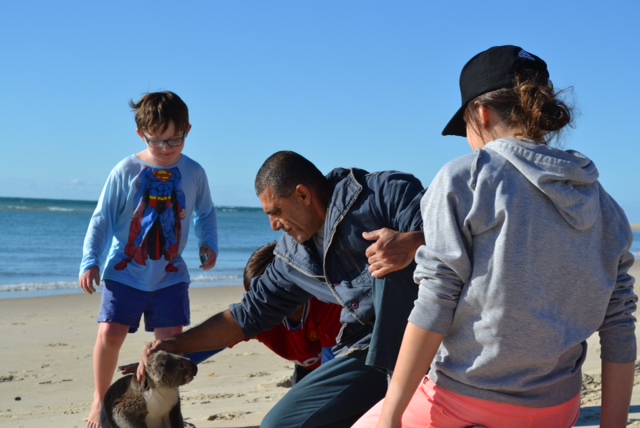
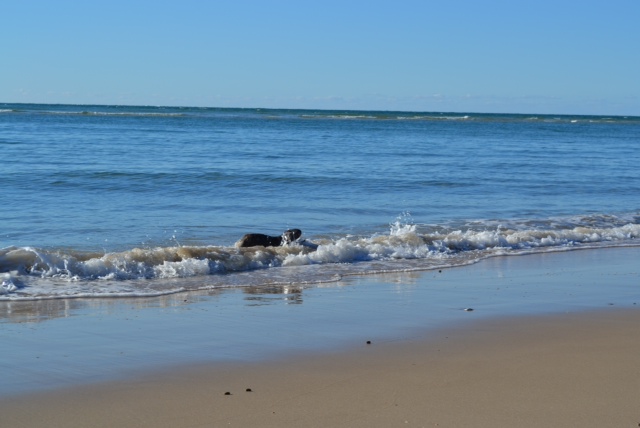
Then, about half way along the beach, we saw this young fellow actually running up and down the beach and playing around the kids like a puppy.
oooo
oooo
oooo
After the koala allowed itself to be stroked and petted by us humans, it decided to go for a swim!
oooo
oooo
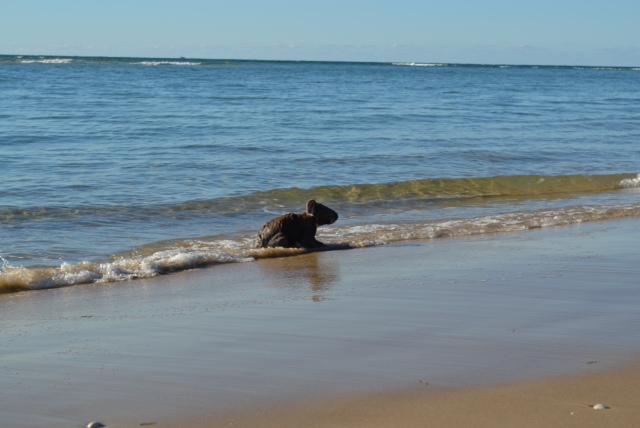
Then the little chap went about twenty metres into the sea, swam around for a good half-hour fascinating onlookers, before coming back to the beach.
oooo
oooo
The little chap then took a while to recover from his swim.
We have never heard of or seen this behaviour before: a koala who likes to “play” with humans, and swim in the ocean.
Unbelievable stuff, something we will always remember.
My draft book of the same name as this blog is slowly coming together and I’m at the 30,000-word mark. A while ago, John Hurlburt, a good friend of this blog, was chatting to me and he spoke about the “interconnectedness of all conscious life”. It immediately appealed to me as a chapter in the book.
But while it was obvious to me that all conscious life is connected, for some time I struggled to achieve any clarity about what I wanted to write. Seeing that proverb kicked off the journey towards clarity.
Thus, today, I wanted to share the steps of that journey so far.
Over on the Skeptical Science blogsite there is a post, dated 15th April, 2010, with the title of Earth’s five mass extinction events. The author, John Cook, opens:
As climate changes, a major question is whether nature can adapt to the changing conditions? The answer lies in the past. Throughout Earth’s history, there have been periods where climate changed dramatically. The response was mass extinction events, when many species went extinct followed by a very slow recovery. The history of coral reefs gives us an insight into the nature of these events as reefs are so enduring and the fossil record of corals is relatively well known (Veron 2008). What we find is reefs were particularly impacted in mass extinctions, taking many millions of years to recover. These intervals are known as “reef gaps”.
Figure 1: Timeline of mass extinction events. The five named vertical bars indicate mass extinction events. Black rectangles (drawn to scale) represent global reef gaps and brick-pattern shapes show times of prolific reef growth (Veron 2008).
So what, one might ask?
Well, forget about millions of years ago. Just 12 days ago, there was a news item released by Stanford University. It read in full:
July 24, 2014
Stanford biologist warns of early stages of Earth’s 6th mass extinction event
Stanford Biology Professor Rodolfo Dirzo and his colleagues warn that this “defaunation” could have harmful downstream effects on human health.
The planet’s current biodiversity, the product of 3.5 billion years of evolutionary trial and error, is the highest in the history of life. But it may be reaching a tipping point.
In a new review of scientific literature and analysis of data published in Science, an international team of scientists cautions that the loss and decline of animals is contributing to what
Elephants and other large animals face an increased risk of extinction in what Stanford Biology Professor Rodolfo Dirzo terms “defaunation.” (Claudia Paulussen/Shutterstock)
appears to be the early days of the planet’s sixth mass biological extinction event.
Since 1500, more than 320 terrestrial vertebrates have become extinct. Populations of the remaining species show a 25 percent average decline in abundance. The situation is similarly dire for invertebrate animal life.
And while previous extinctions have been driven by natural planetary transformations or catastrophic asteroid strikes, the current die-off can be associated to human activity, a situation that the lead author Rodolfo Dirzo, a professor of biology at Stanford, designates an era of “Anthropocene defaunation.”
Across vertebrates, 16 to 33 percent of all species are estimated to be globally threatened or endangered. Large animals – described as megafauna and including elephants, rhinoceroses, polar bears and countless other species worldwide – face the highest rate of decline, a trend that matches previous extinction events.
Larger animals tend to have lower population growth rates and produce fewer offspring. They need larger habitat areas to maintain viable populations. Their size and meat mass make them easier and more attractive hunting targets for humans.
Although these species represent a relatively low percentage of the animals at risk, their loss would have trickle-down effects that could shake the stability of other species and, in some cases, even human health.
For instance, previous experiments conducted in Kenya have isolated patches of land from megafauna such as zebras, giraffes and elephants, and observed how an ecosystem reacts to the removal of its largest species. Rather quickly, these areas become overwhelmed with rodents. Grass and shrubs increase and the rate of soil compaction decreases. Seeds and shelter become more easily available, and the risk of predation drops.
Consequently, the number of rodents doubles – and so does the abundance of the disease-carrying ectoparasites that they harbor.
“Where human density is high, you get high rates of defaunation, high incidence of rodents, and thus high levels of pathogens, which increases the risks of disease transmission,” said Dirzo, who is also a senior fellow at the Stanford Woods Institute for the Environment. “Who would have thought that just defaunation would have all these dramatic consequences? But it can be a vicious circle.”
The scientists also detailed a troubling trend in invertebrate defaunation. Human population has doubled in the past 35 years; in the same period, the number of invertebrate animals – such as beetles, butterflies, spiders and worms – has decreased by 45 percent.
As with larger animals, the loss is driven primarily by loss of habitat and global climate disruption, and could have trickle-up effects in our everyday lives.
For instance, insects pollinate roughly 75 percent of the world’s food crops, an estimated 10 percent of the economic value of the world’s food supply. Insects also play a critical role in nutrient cycling and decomposing organic materials, which helps ensure ecosystem productivity. In the United States alone, the value of pest control by native predators is estimated at $4.5 billion annually.
Dirzo said that the solutions are complicated. Immediately reducing rates of habitat change and overexploitation would help, but these approaches need to be tailored to individual regions and situations. He said he hopes that raising awareness of the ongoing mass extinction – and not just of large, charismatic species – and its associated consequences will help spur change.
“We tend to think about extinction as loss of a species from the face of Earth, and that’s very important, but there’s a loss of critical ecosystem functioning in which animals play a central role that we need to pay attention to as well,” Dirzo said. “Ironically, we have long considered that defaunation is a cryptic phenomenon, but I think we will end up with a situation that is non-cryptic because of the increasingly obvious consequences to the planet and to human wellbeing.”
The coauthors on the report include Hillary S. Young, University of California, Santa Barbara; Mauro Galetti, Universidade Estadual Paulista in Brazil; Gerardo Ceballos, Universidad Nacional Autonoma de Mexico; Nick J.B. Isaac, of the Natural Environment Research Council Centre for Ecology and Hydrology in England; and Ben Collen, of University College London.
For more Stanford experts on ecology and other topics, visit Stanford Experts.
It hardly requires any imagination to realise that what we humans need in order to live, air, food, and clean water, is utterly dependant on us humans caring for the planet that sustains us. It’s all too easy just to take for granted that we will always have air, food and clean water. Now go back and read that last sentence from Professor Dirzo. [my emphasis]
We tend to think about extinction as loss of a species from the face of Earth, and that’s very important, but there’s a loss of critical ecosystem functioning in which animals play a central role that we need to pay attention to as well. Ironically, we have long considered that defaunation is a cryptic phenomenon, but I think we will end up with a situation that is non-cryptic because of the increasingly obvious consequences to the planet and to human wellbeing.
The tracks we leave! H’mmm.
Let me move on in my journey.
Over on the EarthSky blogsite there was an item about the mysterious giant crater that appeared suddenly in Siberia.
Mystery crater in Yamal peninsula probably caused by methane release
Thawing permafrost likely allowed methane gas to be released, creating the large hole in permafrost found in northern Russia, says the Russian team that investigated it.
UPDATE July 31, 2014.
Stories are popping up fast in various media this afternoon about a likely source of a reported, mysterious hole in permafrost in the Yamal region of northern Russia. This hole was
The first mysterious crater spotted by helicopter in the Yamal region of northern Russia. Image via Nature.
spotted by a helicopter pilot in mid-July; reindeer herders reported a second hole some days later. Eric Holthaus of Slate said that there is now:
… new (and definitive) evidence … that the Siberian holes were created via methane released from warming permafrost.
The evidence has come via the journal Nature, which published a story on its website today (July 31) featuring the findings of Andrei Plekhanov, a senior researcher at the Scientific Centre of Arctic Studies in Salekhard, Russia, and his team. This is the team that was sent in to investigate the first hole shortly after it was found. Holthaus said:
That team measured methane concentrations up to 50,000 times standard levels inside the crater.
The story in Nature said:
Air near the bottom of the crater contained unusually high concentrations of methane — up to 9.6% — in tests conducted at the site on 16 July … Plekhanov, who led an expedition to the crater, says that air normally contains just 0.000179% methane …
Plekhanov and his team believe that it is linked to the abnormally hot Yamal summers of 2012 and 2013, which were warmer than usual by an average of about 5°C. As temperatures rose, the researchers suggest, permafrost thawed and collapsed, releasing methane that had been trapped in the icy ground.
Holthaus pointed out:
Last week, the New York Times’ Andrew Revkin interviewed a Russian scientist who had also visited the hole and came to similar conclusions.
This newly reported evidence, just coming to light today, seems particularly scary given the story earlier this week about what the University of Stockholm called “vast methane plumes” found by scientists aboard the icebreaker Oden, which is now exploring and measuring methane release from the floor of the Arctic Ocean.
Build-up and release of gas from thawing permafrost most probable explanation, says Russian team.
My last step in the journey about our interconnectedness involves water.
Water scarcity may be the most underrated resource issue the world is facing today.
Seventy percent of world water use is for irrigation.
Each day we drink nearly 4 liters of water, but it takes some 2,000 liters of water — 500 times as much — to produce the food we consume.
1,000 tons of water is used to produce 1 ton of grain.
Between 1950 and 2000, the world’s irrigated area tripled to roughly 700 million acres. After several decades of rapid increase, however, the growth has slowed dramatically, expanding only 9 percent from 2000 to 2009. Given that governments are much more likely to report increases than decreases, the recent net growth may be even smaller.
The dramatic loss of momentum in irrigation expansion coupled with the depletion of underground water resources suggests that peak water may now be on our doorstep.
Today some 18 countries, containing half the world’s people, are overpumping their aquifers. Among these are the big three grain producers — China, India, and the United States.
Saudi Arabia is the first country to publicly predict how aquifer depletion will reduce its grain harvest. It will soon be totally dependent on imports from the world market or overseas farming projects for its grain.
While falling water tables are largely hidden, rivers that run dry or are reduced to a trickle before reaching the sea are highly visible. Among this group that has limited outflow during at least part of the year are the Colorado, the major river in the southwestern United States; the Yellow, the largest river in northern China; the Nile, the lifeline of Egypt; the Indus, which supplies most of Pakistan’s irrigation water; and the Ganges in India’s densely populated Gangetic basin.
(The rest of this important article including the many useful links may be read here.)
Now, despite the despondent theme of the contents of this post, I am not beating a ‘doom and gloom’ drum. What I am trying to point out is that we are all interconnected. Not just all of mankind but all conscious life. Ergo, the destruction of natural habitats, the loss of every species, even the unwarranted killing of a wild animal is, in a very real and tangible way, the destruction of our habitat, the loss of our species and the unwarranted killing of future generations of homo sapiens.
It seems that whichever way we look the interconnectedness of all conscious life is staring us full in the face. The utter madness of mankind’s group blindness is beyond comprehension.
It takes an ancient proverb from a people that lived in harmony with the planet to speak the truth. We ignore it at our peril.
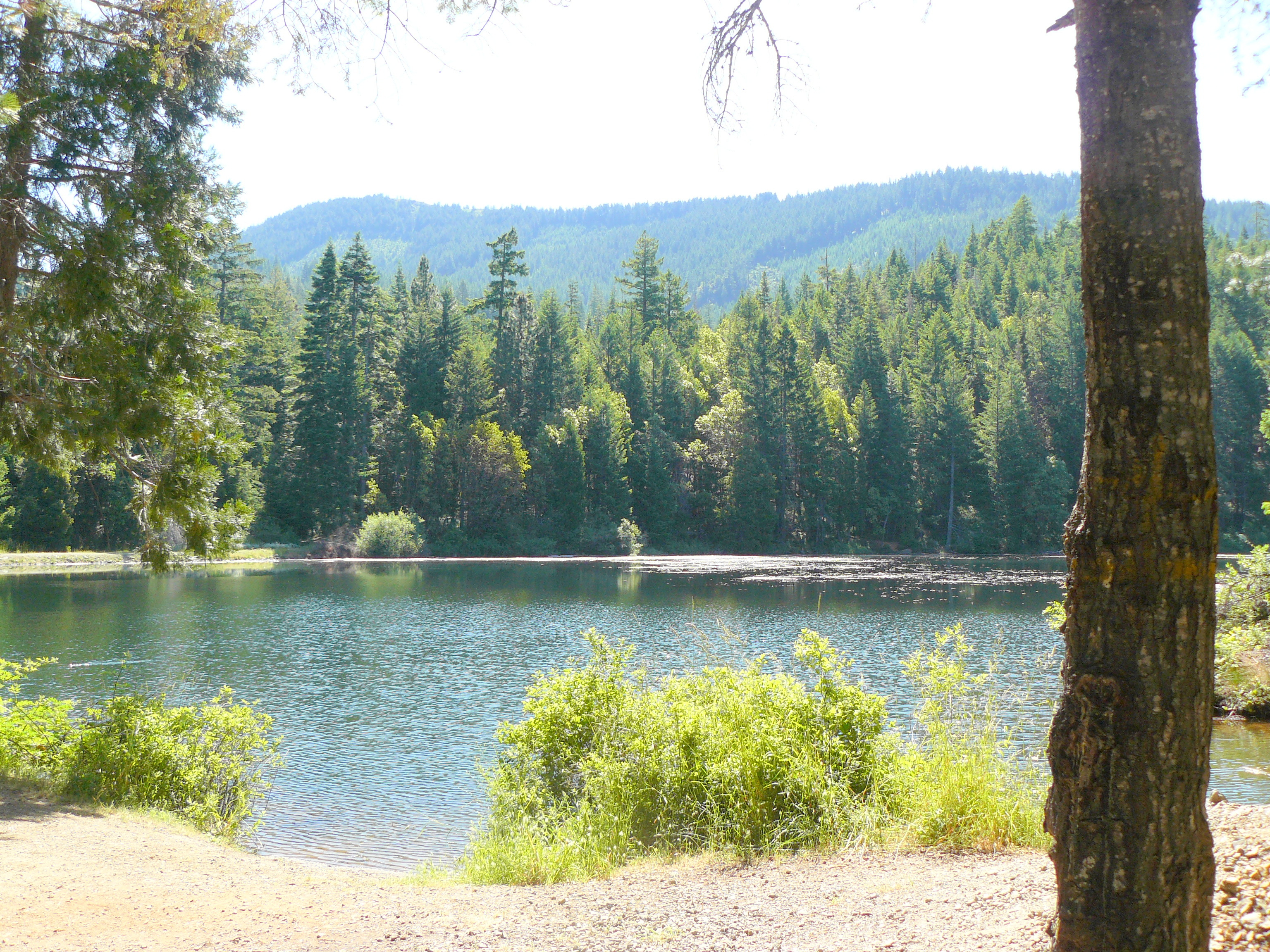
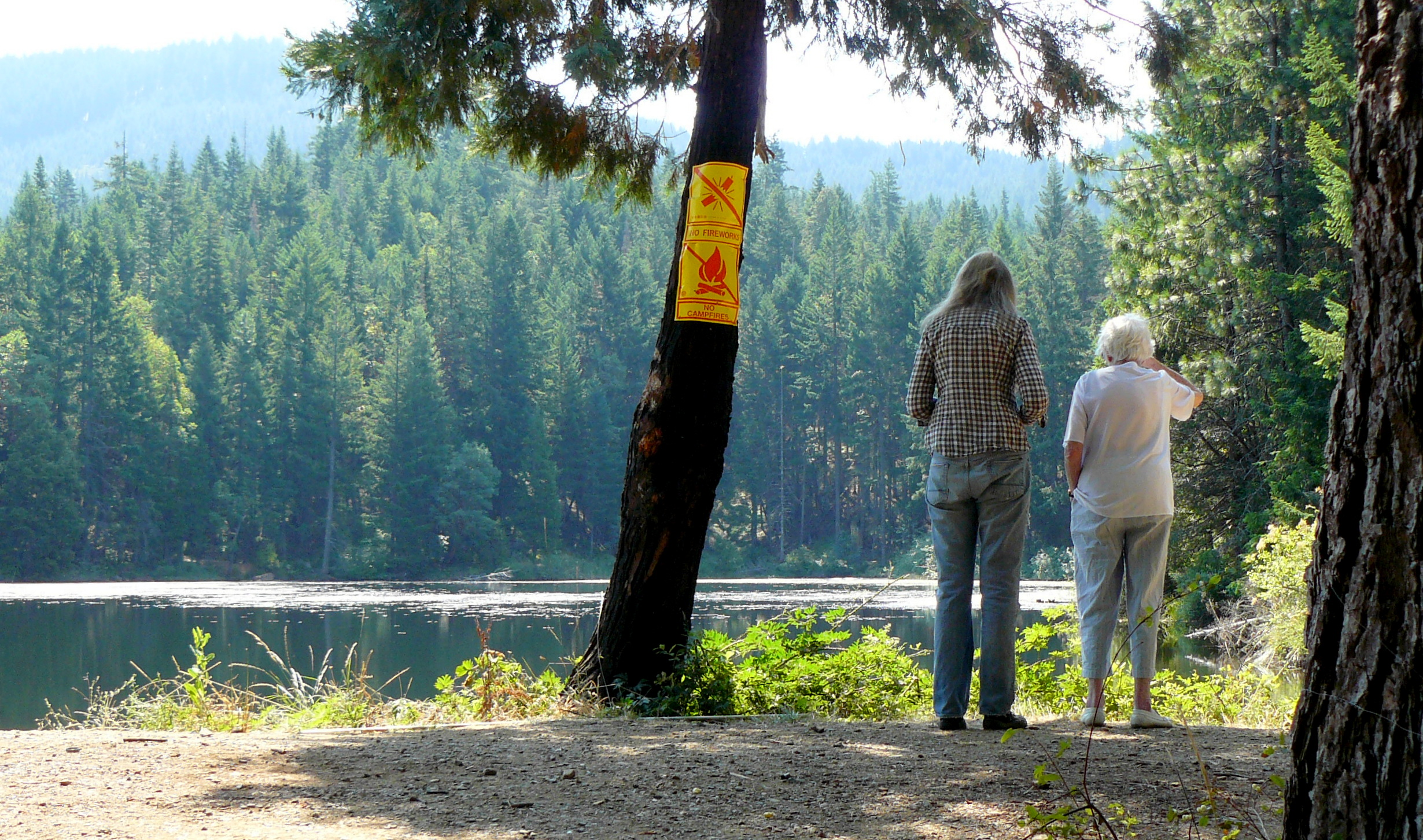
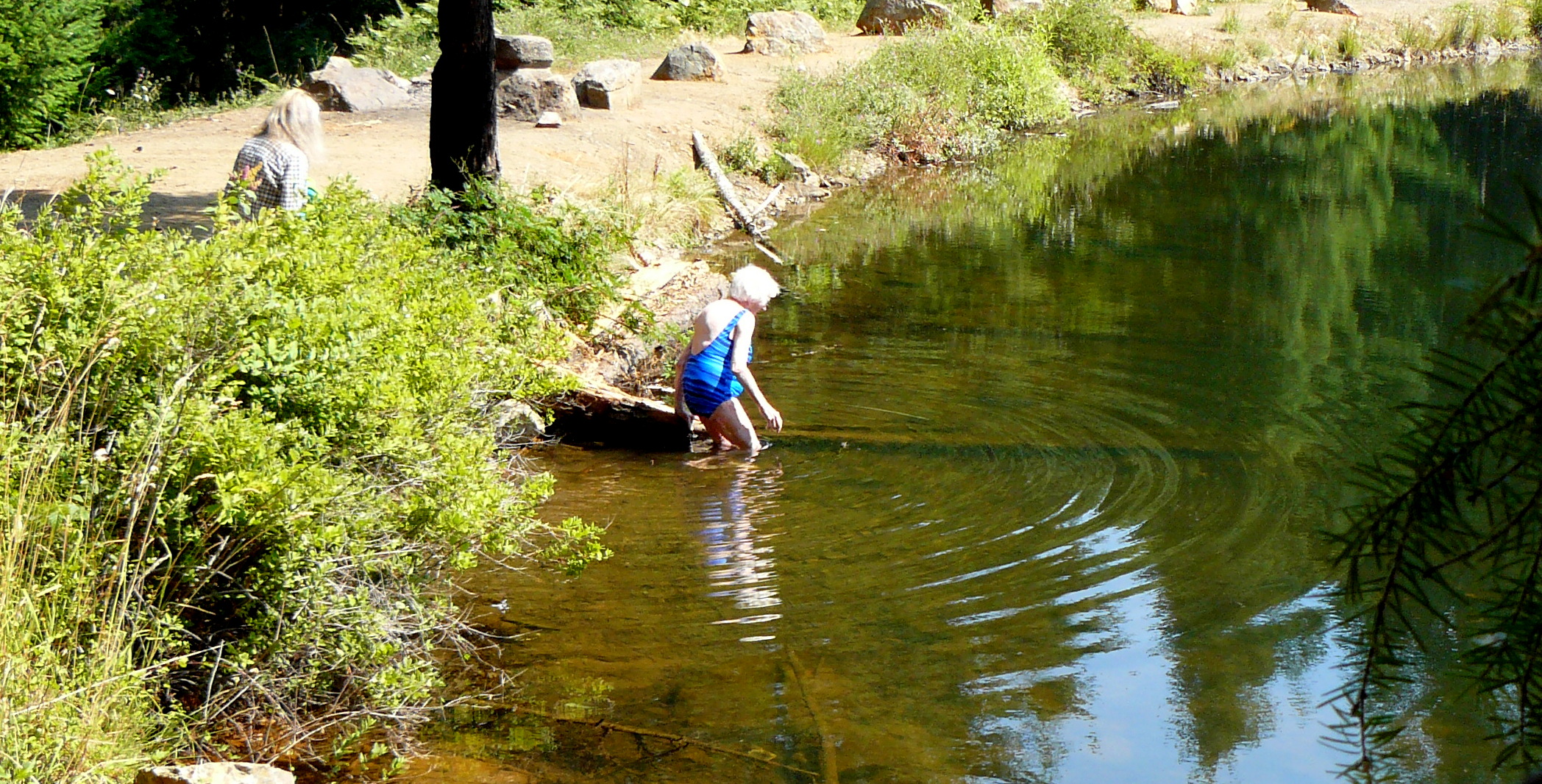
Many of you will know that Elizabeth, my mother from North-West London, is staying with us for a short while. Last Friday, it was decided to drive the 20 miles to the North and along Speaker Road into BLM land and thence up to Secesh Reservoir. This beautiful spot was previously written about in June when we first went to find Secesh. It seemed a perfect spot to take my mother.
Secesh Reservoir.
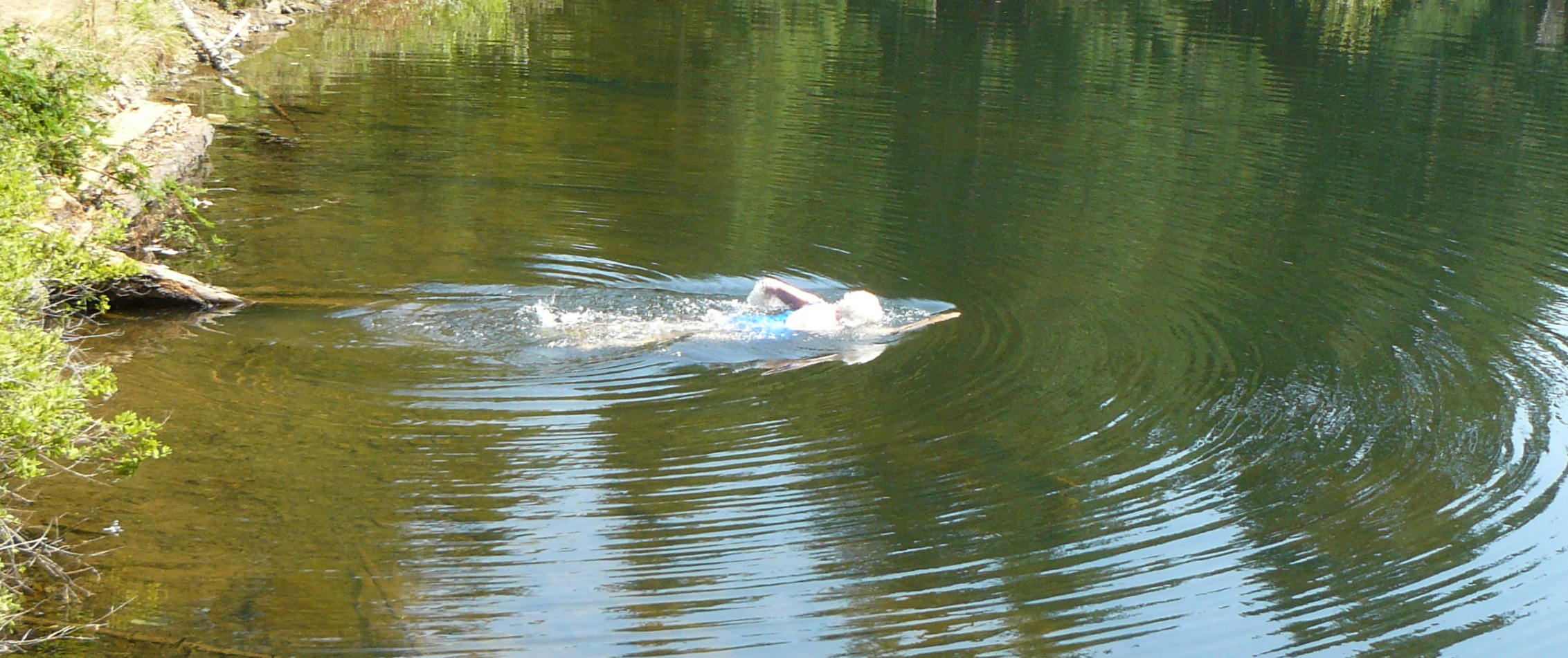
What neither Jean nor I had anticipated was that my mother was determined to swim in Secesh; the remote reservoir is at an altitude of 2,870 feet.
Checking out the best way in!
oooo
Gently does it!
oooo
And away we go!
oooo
Fearless!
oooo
And safely back to the shore.
oooo
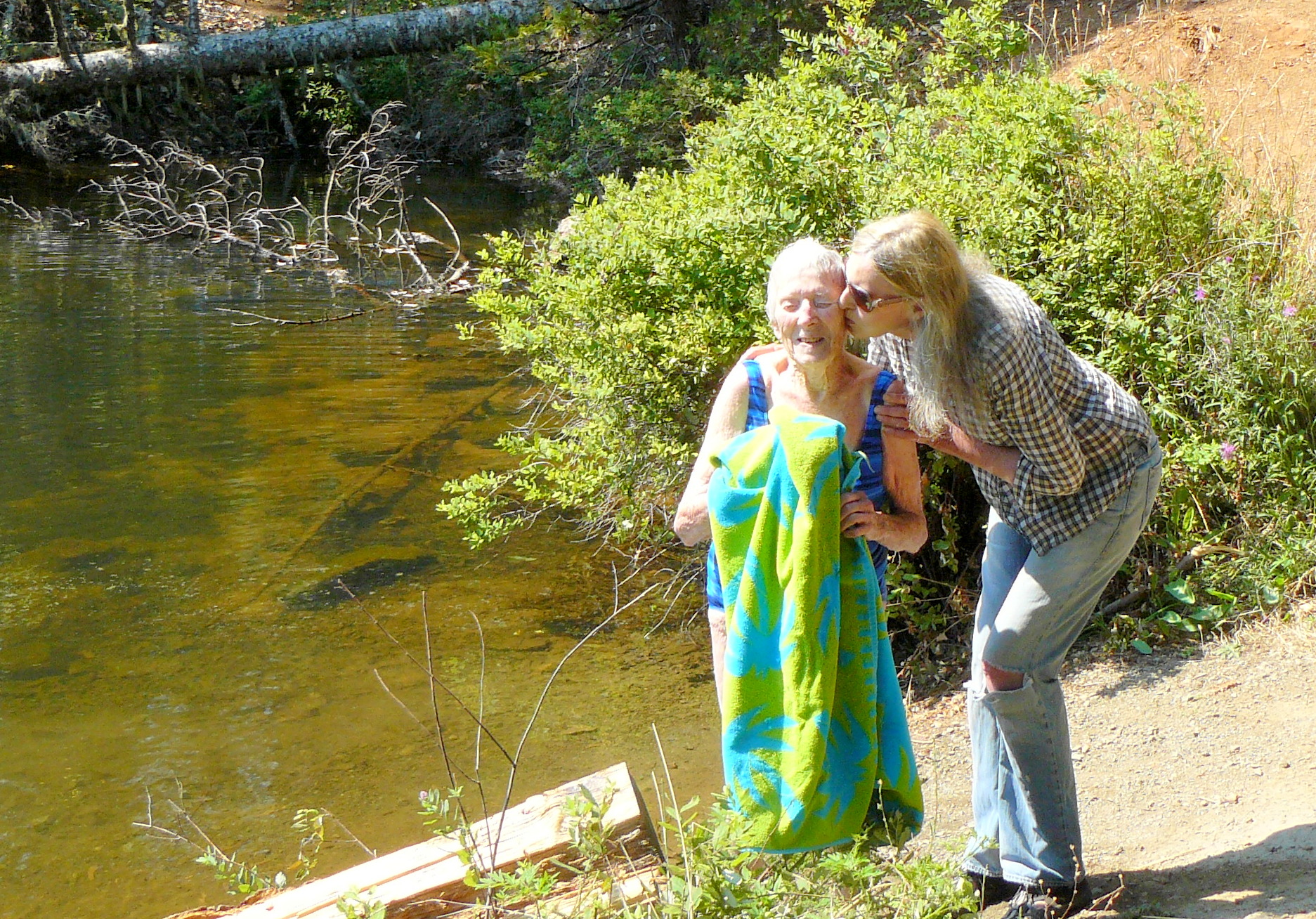
Jean expressing her love and admiration.
oooo
All good things come to a close.
oooo
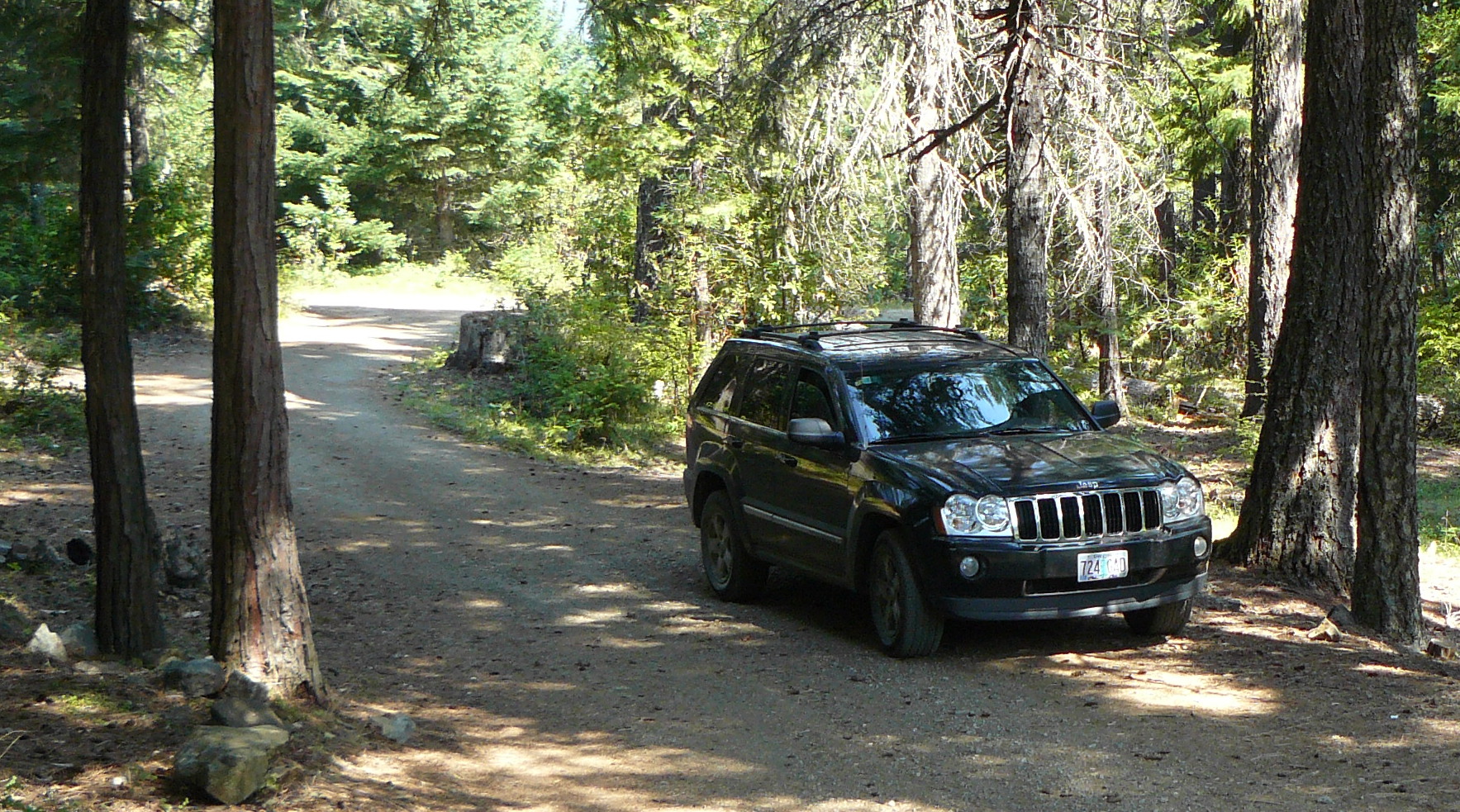
Pity about the traffic noise! 😉
Oh, nearly forgot to mention that Elizabeth was born in 1919! That’s 94, by the way!
As I said in the sub-title, this takes some beating!













 Learning from Dogs