Category: tourism

Oregon

A dip into this remarkable State.

Just fancied a change from two days of Democratic Deficit. So today’s post is a brief overview of the US State that Jean and I live in, together with our animals, the State of Oregon.

Now it’s easy to look up a Wikipedia reference to Oregon but what really caught my eye was as a result of a recent visit to the local Grants Pass office of the Bureau of Land Management.  We had gone there to purchase a $5 permit that allows us to go on to BLM land and harvest our own Christmas Tree!

In the Grants Pass office were a number of brochures of scenic attractions in Oregon and we picked up one describing the Rogue-Umpqua National Scenic Byway.  Just a quick browse reminded us of Oregon’s stunning and dramatic scenery. Just wanted to share some images.

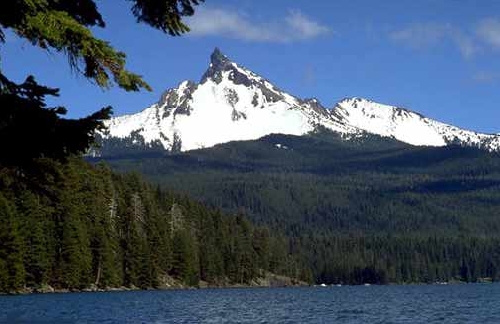
Mount Thielsen

Mt. Thielsen
Mt. Thielsen

The Mount Thielsen trail is described here.

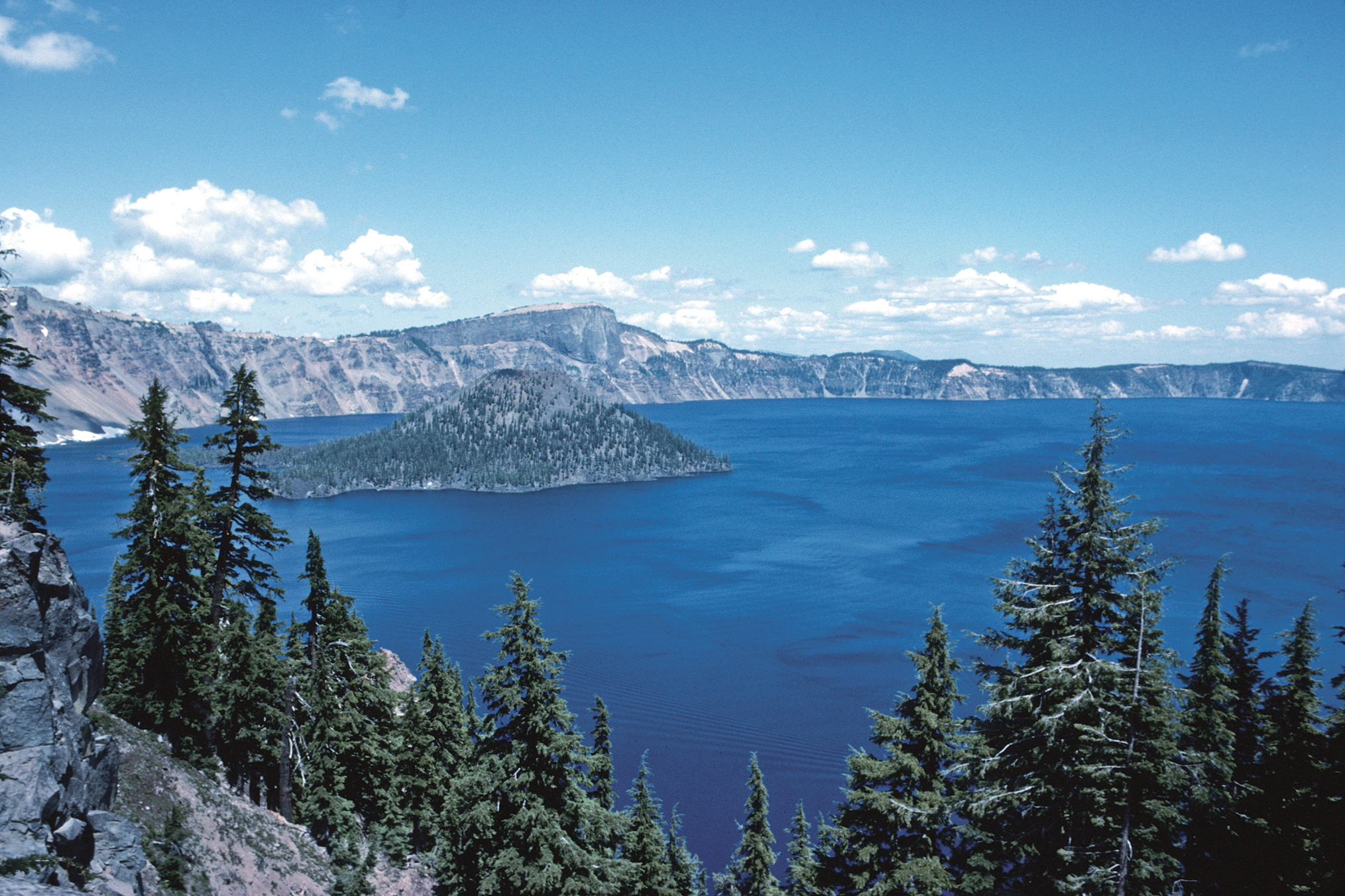
Crater Lake

At a depth of 1,932 feet Crater Lake is the deepest lake in the United States.  It was formed more than 7,500 years ago when the Mount Mazama volcano erupted and then collapsed back in on itself.

Crater Lake showing Wizard Island.

As Wikipedia describes the lake,

The lake partly fills a nearly 2,148-foot (655 m)-deep caldera[1] that was formed around 7,700 (± 150) years ago[2] by the collapse of the volcano Mount Mazama. Human interaction is traceable back to the indigenous Native Americans witnessing the eruption of Mount Mazama. There are no rivers flowing into or out of the lake; the evaporation is compensated for by rain and snowfall at a rate such that the total amount of water is replaced every 250 years. At 1,943 feet (592 m), the lake is the deepest in the United States, and the seventh[3] or ninth deepest in the world, depending on whether average or maximum depth is measured.[4]

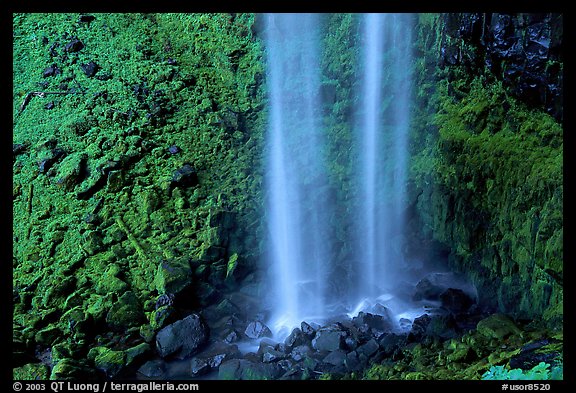
Watson Falls

The base of Watson Falls.

The website EveryTrail describes Watson Falls:

Watson Falls is the third highest waterfall in Oregon at 272 feet. It is the most beautiful waterfall along the North Umpqua River Valley. You will cross a wooden bridge below the falls that will put you right into the lower rapids with an amazing view of the falls as they roar over the basalt lava cliffs ahead.

Someone who goes under the handle of HikingTheWest posted this video on YouTube about 6 weeks ago.

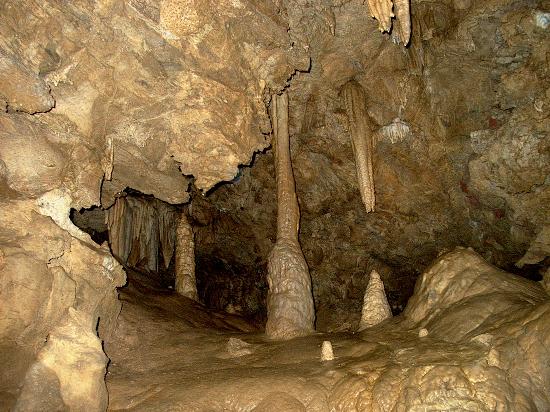
Oregon Caves

These caves are an Oregon National Monument with full details on the US National Park Service’s website.  That website explains:

Nestled deep inside the Siskiyou Mountains, the caves formed as rainwater from the ancient forest above dissolved the surrounding marble and created one of the world’s few marble caves. The highly complex geology found on the Monument contributes to the unusual and rare plants and animals found nowhere else but here.

A view of the inside of the caves.

There are many good videos of the Oregon Caves on YouTube so do have a browse if you want to.  This one caught my eye, especially as it was filmed in January, 2013..

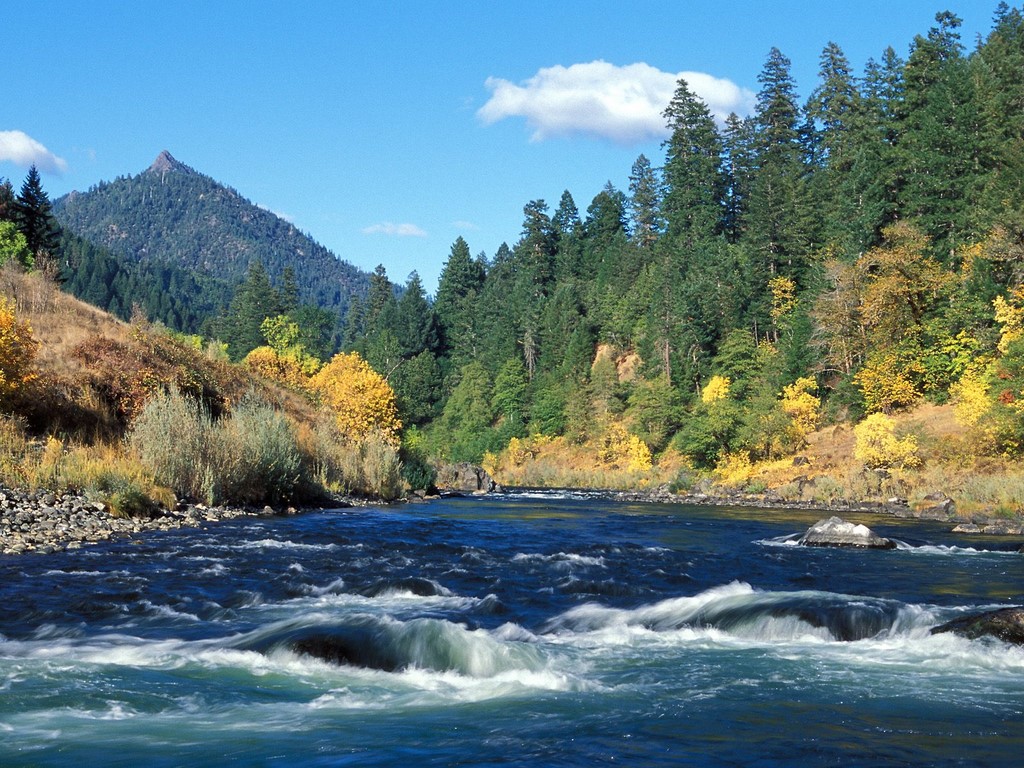
Rogue River

The Rogue River
The Rogue River

Final sight for today, the Rogue River runs close by Grants Pass, our nearest town to where we live.  Again there is a Wikipedia entry from which one learns that, “Although the Rogue Valley near Medford is partly urban, the average population density of the Rogue watershed is only about five people per square mile (12 per km2).”

Just reflecting on that last paragraph, a simple calculation reveals that the State of Oregon has a population of around 3.9 million people with an land area of 98,300 square miles.  Thus the population density of Oregon is 39.6 persons per square mile.  To put that into perspective, our neighbouring Californians to the South enjoy a population density of 238 persons per square mile!

Jean and I are very lucky to be living in such a beautiful part of Southern Oregon.

The book! Chapter Ten.

Steadily working towards the climax in Philip’s life.

Tomorrow in Chapter Eleven, Philip’s life comes apart, in spades.  Thus today’s chapter produces the contrast of a sweet life, running smoothly to create the appropriate backdrop to tomorrow.

Having been very unhappy with my feelings about this ‘write a novel in a month’ as expressed on Tuesday in my introduction to Chapter Nine, today I’m much more contented.  The thick end of 34,000 words are now down on ‘paper’ and yet another pep talk from an experienced, published author really spoke to me.  In fact, I’m going to repost that talk here:

Dear Novelist,

Okay, here we are: more than halfway through, right in the thick of it. Probably at this point the last thing you want is a big lecture on Writing and How You’re Supposed to Do It. So I’m not even going to talk about writing.

Instead I’m going to talk about a metaphor for writing. Better, right?

Let’s say you’re not a writer hard at work on your first novel. Let’s say you’re a Tribute who’s just been selected for the Hunger Games. You’re freaking out because you’re facing almost certain death in the Arena. And instead of a published author, I’m going to be that drunk guy who’s supposed to be telling you how to survive.

It’s a good fit. Like Woody Harrelson, I am short and bald. And I like a drink. I may be drunk right now, who knows? But more important, I’ve done this before and lived. So I’m here to tell you: it is survivable.

Writing Requires Nerve

Which brings me to my first point. Writing a novel belongs to that category of thing—like surviving the Hunger Games, and eating an entire large pizza by yourself—that appears to be impossible but actually isn’t. I’ve written four of them, with another coming out next year, and every time around halfway through, I get to a point where I say to myself: let’s admit it, this just isn’t going to happen. Given the number of words I have written, and the number of words I have left to write, and the rate at which I am currently producing words, and the crappiness of said words, it is mathematically and physically impossible that I will ever finish this book. It’s like the arrow in Zeno’s paradox: it’ll never get there.

But the thing is, the books do get there. It astounds me every time, but the books get done. How? It’s not about having some triumphant breakthrough moment. Being a novelist is a matter of keeping at it, day after day, just putting words after other words. It’s a war of inches, where the hardest part is keeping your nerve. The number one reason why people who want to write novels don’t is that they lose their nerve and quit.

So heads up: once you get in that Arena, Tributes are going to be biting the dust to the left and right of you, and it’ll be because they’ve lost their nerve. But that won’t happen to you. You’re going to keep your nerve. If talent exists, that is talent.

Writing Comes with Doubt

So, you are a Tribute for the Hunger Games but you don’t feel confident. You feel like crap. Like you have no idea what you’re doing. Sometimes you pick up your bow and arrow or your throwing knives and you’re like, I don’t even remember how these damn things work. Why? Why are you different? What is wrong with you?

So this is point number two: nothing is wrong with you. You’re not different. Everybody feels as bad as you do: this is just what writing a novel feels like. To write a novel is to come in contact with raw, primal feelings, hopes and longings and psychic wounds, and try to make a big public word-sculpture out of them, and that is a crazy hard thing to do. When you look at other people’s published novels, they seem gleaming and perfect, like the authors knew what they wanted to do from the start and just did it. But trust me: they didn’t know.

What you’re feeling is not only normal: it’s a good sign. A writer—someone once said—is a person for whom writing is difficult. That resistance you’re feeling is proof that you’re digging deep. To write a novel is to lose your way and find it over, and over, and over again.

A lousy draft proves nothing. Rough drafts are rough—everybody’s are. Being a writer isn’t like being a musician. You don’t have to get it right every day. The wonderful thing about being a writer is, you only have to get it right once. That’s all anyone will ever see. The only bad draft is the one that doesn’t get finished.

So get back at it. Let the others lose heart and give up. You stay out there in the woods. The weapons of a writer, James Joyce once wrote, are silence, exile, and cunning, and probably he wasn’t thinking of the Hunger Games when he wrote that—probably—but it fits the metaphor. While Tributes are falling left and right, you will fashion man-traps from ninja stars, steal weapons from the fallen, and bide your time, and when you’re ready you will come out of those woods like an avenging angel of death.

Forget that stuff about the odds being ever in your favor. What does that even mean? Screw the odds. There are no odds. You’re a writer, and writers make their own odds.

I’ll see you in the Victors’ Village.

Lev

Lev Grossman is the author of the bestselling novels The Magicians and The Magician King

So to Chapter Ten.

oooOOOooo

Learning from Dogs

Chapter Ten

Well, as is the way of things, 2005 came to an end, moved on to 2006 and before Philip could really get his head around it, the end of January was in sight. It was a New Year but in so many other ways nothing really seemed to change, either locally or internationally.  Philip was disgusted with the state of the world at so many levels; the tragedy of the conflict in Iraq being just one example of a political system that seemed broken beyond repair.  Locally, house prices were still ramping upwards and there was a sense that inflation rates were starting to rise.  But, hey ho, most people seemed to be enjoying the party.

Philip was enjoying this period of his life as well; immensely so.  There was just the right balance of mentoring to offer both a regular income and a variety of interesting engagements.  His relationship with Pharaoh was fulfilling to an extent that he could never have before imagined. Plus the sessions over at Angela’s place were clearly stimulating for Pharaoh, and a joy for Philip because of this unanticipated aspect of owning a teaching dog.  He had been undertaking some coaching for a youth opportunities organisation in Plymouth, a real and pragmatic effort to reduce the high levels of youth unemployment that had been a hallmark of the city of Plymouth for some time now.  Last, but by no means least, he and Maggie seemed to be much more settled in their relationship.

Thus the weeks became months and Winter gave way to Spring, possibly the most delightful time of the year for South Devon, especially for those who lived in this part of England.

It was on such a beautiful Spring day in May, in fact the Monday of the late Spring Bank Holiday in May, with he and Maggie having an afternoon tea by the raised flower beds directly in front of the house, when he heard his office telephone ringing. Ever the salesman who could never let a phone ring unanswered, Paul stepped the ten paces inside to his office room and picked up the receiver.

“Hallo.”

“Philip, is that you, it’s Jonathan.”

“Hallo, Jonathan, this is a nice surprise, how are you?”

“Good thanks.  In fact very good. Because last Friday was the end of my relationship with Cowdrays.”

Philip could hear the excitement in Jonathan’s voice.

“I know I shouldn’t have called you on a Bank Holiday but didn’t want to wait until tomorrow and find you were away from your desk.”

“Jonathan, it’s not a problem at all.  One of the things that all of us find out, those who run their own businesses, and find out pretty quickly, is that the concept of nine-to-five is dead and buried.  Are you ready for us to get together?”

“Yes, any time over the next couple of weeks, your place or mine.”

“Great. Just hang on a moment while I look at my diary.  What I will say is that while you had indicated preferring that we worked over at your place, the first few sessions will be easier on me over here.  That’s because I will have close-to-hand reference materials that almost certainly will be relevant to you.”

There was a pause as Philip looked at his diary.

“How about the morning of the fifth of June, in other words a week from today?  Say ten o’clock?”

There was a return pause before Jonathan replied by saying that it was perfect.

Philip asked, “Jonathan, how are you with dogs? Because Pharaoh is usually free to be around the house and just loves being in my office when I am chatting to someone.”

“Not a problem at all, I’m very fond of dogs and especially German Shepherd dogs,” came Jonathan’s reply.

“Fantastic,” and Philip went to add, “In fact he will have just turned three-years-old; his birthday is June 3rd.  See you in a week’s time. Take care.”

That first meeting with Jonathan came upon Philip almost before he could breath.  He wasn’t sure if it was an age thing but the days, in particular, and time in general just seemed to fly past now.

As Philip had expected, working with Jonathan was quite unlike any of his previous mentoring engagements.  Because previously whoever he was working with was involved in a business that was dealing with a tangible product or service.  Thus even back to the days when he endeavoured to assist an accountant, rather poorly if he recalled, at least the product, while not something you could hold in your hand, was something that didn’t touch on people’s sensitivities.  Philip smiled at that recollection thinking there might be some humour around the idea of whether or not accountants upset people. No, back to his main line of thought.

What Jonathan was presenting to his potential customers, was entirely concerned with the delicate and complex issue of human relationships; nothing more, nothing less.

Slowly over their next four meetings, what became clearer and clearer to Philip was that the route to finding new clients for Jonathan, the way to develop his business on his own account, was to direct a really appropriate open question, and salesmen do so love open questions, to the prospective client, to the professional person, along the lines of, ‘when you reflect on the relationships around you within your business life, what strengths and weaknesses come to mind?’

It all seemed to be in line with Jonathan’s ambitions and Philip’s only regret was that between his and Jonathan’s commitments elsewhere, their meetings frequently were interspaced by a couple of weeks, at times more.

Thus it was at the end of their meeting on the 16th August when sharing diaries, looking for the next mutually convenient date, Philip had to say to Jonathan, “I’m afraid September is going to be a challenge as Maggie and I have decided to take a holiday.  Somewhere in the Mediterranean; possibly Turkey.”

Jonathan looked up from scanning the pages of his diary in anticipation of Philip’s next sentence.

“Can’t be sure of the dates just now, because we haven’t booked kennel space for Pharaoh, but within the next week that should all be settled and flight tickets arranged.”

Jonathan replied, “Give me a ring when you know your dates and we’ll pencil in our next session to suit us both.”

That was agreed.

Philip and Maggie’s vacation dates were soon arranged, Pharaoh’s kennel space booked, and before they knew it, they were winging their way to a two-week vacation in the coastal town of Kaş, in Turkey.

It was a beautiful holiday.  Philip mused that in ways that were beyond his grasp the holiday was more relaxing, more intimate and more bonding than anything he and Maggie had ever done since they had married back in the year 2000.  Philip was conscious that the relationship between him and Maggie had had its ups and downs.  For a start there was a big age gap; he was eighteen years Maggie’s elder.  Then something about their backgrounds exacerbated that age gap at times. Almost as though Maggie was young for her age and Philip the reverse.  Perhaps that was the result of them both having very different backgrounds.  He losing his father suddenly when he had just turned twelve-years-old and not long after that trauma his mother remarrying.  Whereas Maggie having, indeed still having, a very strong family relationship with her parents who obviously put close family ties above all else.  Philip also found it slightly odd that there was a smaller age gap between him and Maggie’s father and mother, David and Gwen, than between him and Maggie.

Maggie and he had first met when he had been speaking at an engagement arranged by the South Devon Business Advisory Council back in 1998. The event was promoting the benefits of running one’s own business and Philip had been talking about sales and marketing for the budding entrepreneur.

During the next session break, Maggie had come up to him, offered some flattering words about how much she had learnt, and then asked if she could meet him later on to get some feedback on her own business ideas.

Philip had arranged to visit her at her small home, where she lived alone, Maggie being divorced from her first husband.  Her two-up, two-down terraced home was in the coastal town of Exmouth, not so far South-East of Exeter.  One meeting became two meetings became a dinner out and, inevitably, became him staying the night.  It all lead to them wanting to live together with, subsequently, them choosing to purchase the converted stone barn in Harberton. Maggie’s financial situation meant that it was Philip who financed the purchase initially with the agreement between them being that later on, when Maggie wanted to buy into the property, her name would be added to the deed.

So their cultural, age and background differences, including financial differences had offered their challenges but Maggie let him more-or-less run his life as he wanted to and she could be very attentive to him especially between the sheets.  They had married on the 14th February, Valentine’s Day, in the year 2000 and that had been that.

That’s what made their Turkish holiday so outstanding.  Maggie’s attentiveness towards him harked back to those days of flirting and love-making back in 1998 and 1999. By the time they were boarding the coach for the three-hour return to Dalaman Airport and their flight back to Gatwick Airport in England, Philip sensed that his disquiet that Maggie had married him for his money had evaporated and that this was a genuinely loving relationship that just happened to be between two persons with an unusually large age gap.

Back to Devon and life quickly picked up its regular patterns and routines.  September closed and led in a very blustery October, well certainly a very blustery start to the month.  Jonathan and he resumed their meetings, still over at Harberton, and October ushered in a cold but clear start to November.

They were meeting on November 20th and during their session, there was a pause. Jonathan was looking intently at Philip, who seemed to have slipped away somewhere in his mind, and quietly spoke, “Philip, are you OK? You and I have spent quite a few hours together now and, well, how can I put this, you are not in your usual place today.”

Philip started back with a bit of a shock.  “Oh, sorry, don’t know why, but all of a sudden it struck me that exactly one month from today, the 20th December, it will be the fiftieth anniversary of my father’s death, on December 20th, 1956.”

There was a silence between them.

“Sorry, Jonathan, let’s get back to what we were discussing.”

1,817 words. Copyright © 2013 Paul Handover
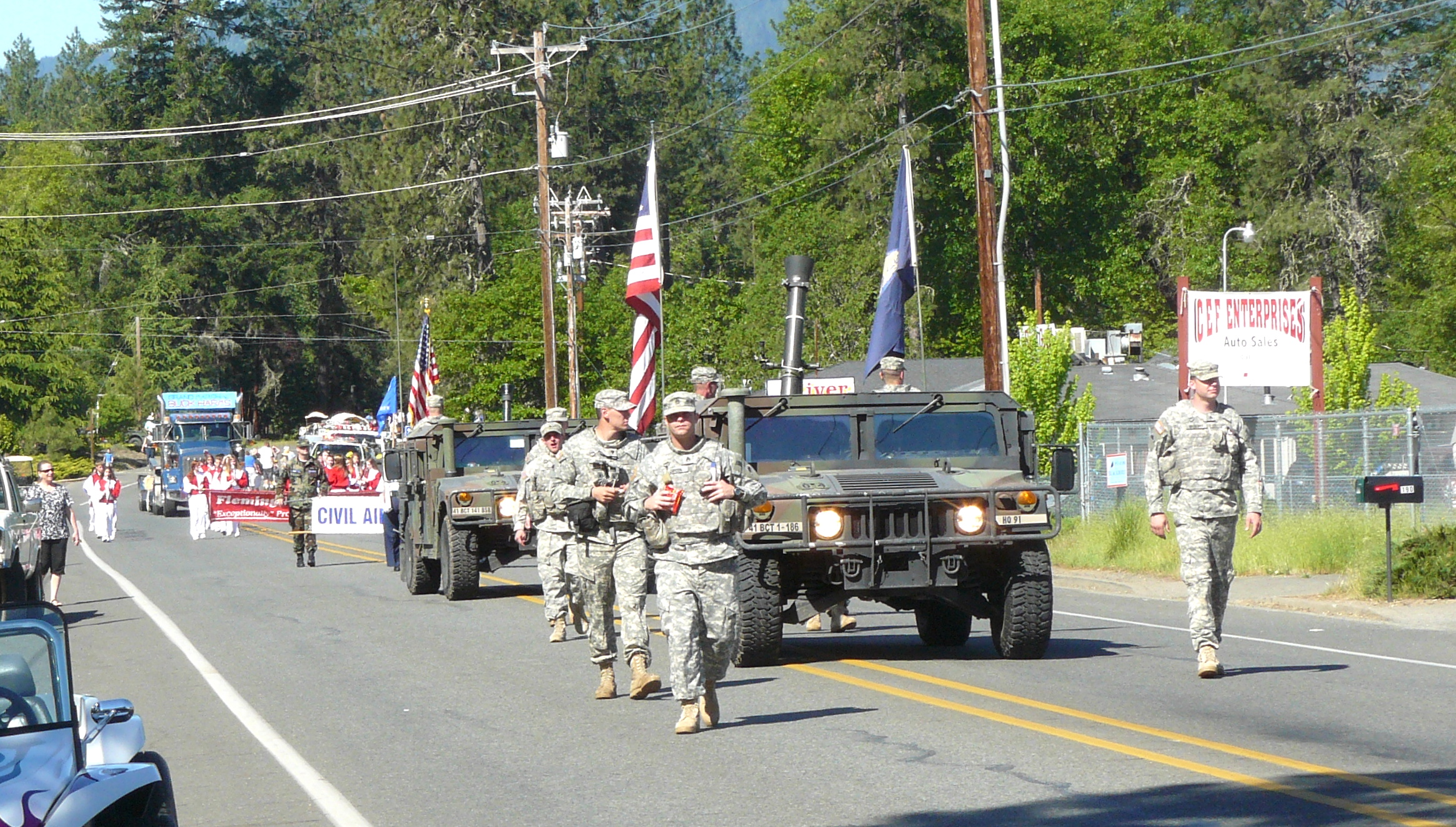
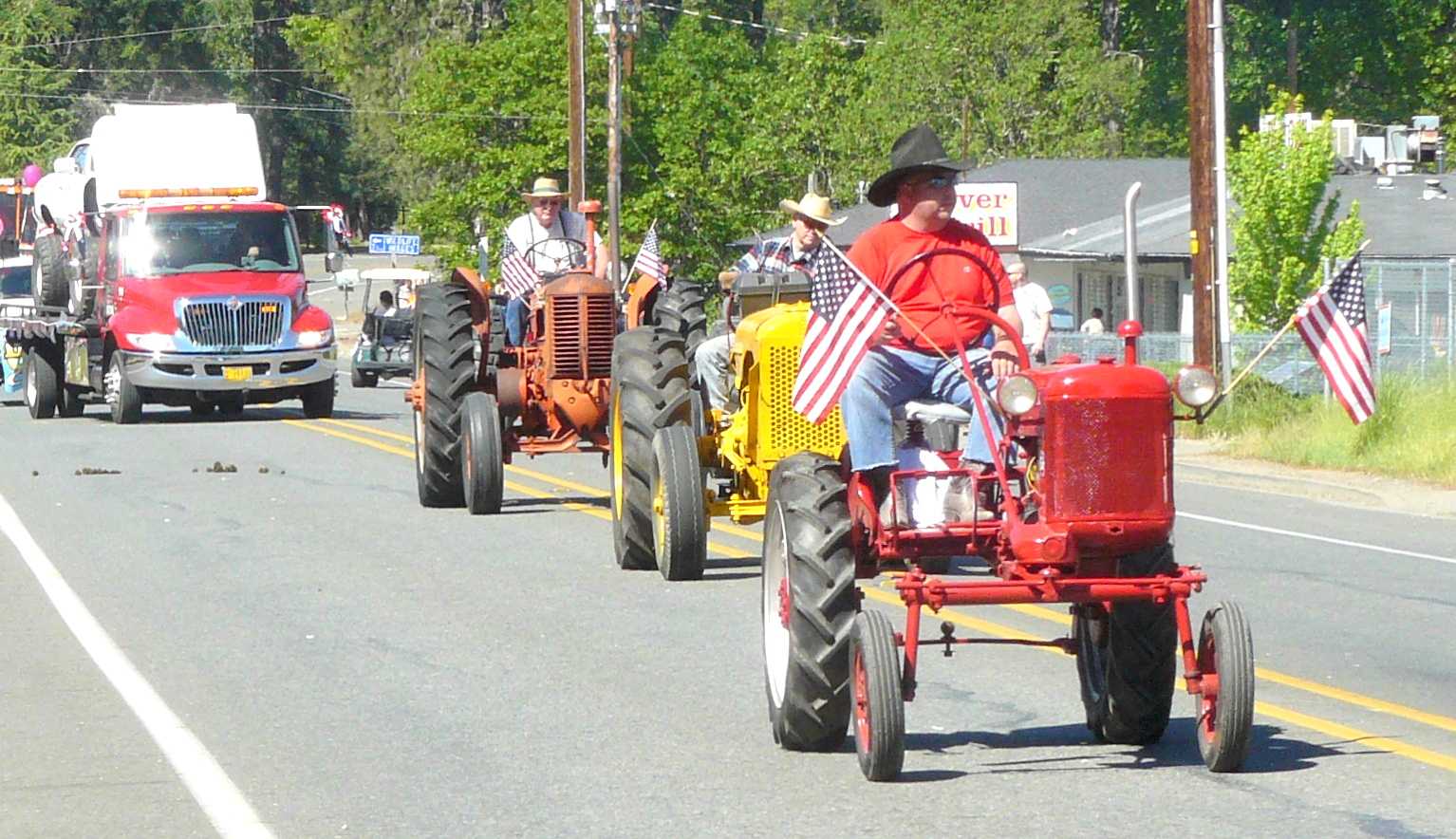
Merlin Parade, May 4th

Community.

Just three photographs from our first experience yesterday of Merlin’s May Parade.  We live just 3 miles from Merlin in Southern Oregon.

P1120943

oooo

Old and New.
Old and New.

oooo

Great effort for such a small community.

To the Sea of Cortez.

Journey to the Sea of Cortez.

John Steinbeck
John Steinbeck

I feel very guilty as I didn’t make a note of where I came across this film.  Whoever highlighted the film, thank you!  It’s truly beautiful.  So, please, settle yourself down and be enthralled.

In March 1940, the author John Steinbeck and his friend, marine biologist Ed Ricketts, sailed down the coast of California and Mexico to the Sea of Cortez. “The abundance of life here gives one an exuberance,” they wrote, “a feeling of fullness and richness.

Their stated purpose was to document the creatures that inhabit shallow waters and tide pools on the margins of the Sea of Cortez. But it became much more. In these mysterious, phosphorescent waters they sought an understanding of mankind’s relationship to the natural world and a wellspring of hope for a world headed toward war.

Looking beyond the events of the day, the two friends foresaw our rising impact on the oceans and the devastating impact that over fishing would have on this rich sea. And yet, in their journey, they encountered a periodic cooling of the eastern Pacific Ocean known as La Niña that can still set off an explosion of life.

Can the story of their journey inspire new efforts to preserve the Sea of Cortez? Down along the shores of western Mexico, the wind blows hot and dry. Beyond these barren landscapes, cold currents rush up from the deep and the ocean literally boils with life.

Following their journey down to the Sea of Cortez in March of 1940, John Steinbeck and Ed Ricketts searched for a way to describe what they saw. “Trying to remember this place,” they wrote, “is like trying to re-create a dream. It is fierce and hostile and sullen. The stone mountains pile up to the sky and there is little fresh water. But we know we must go back if we live, and we don’t know why.

The Sea of Cortez is one of the most diverse marine ecosystems on the planet. It’s shaped by the cool waters of the California Current flowing into the warm tropics and by a complex undersea terrain that rises up along a chain of islands and sea mounts. It was the shorelines, between the desert and the deep, that drew John Steinbeck, the author, and Ed Ricketts, a marine biologist and expert on coastal ecosystems.

Ricketts’ book, “Between Pacific Tides,” is a classic study of the inter-tidal zones of the California coastline and the myriad creatures that live in shallow pools, clinging to rocks to sift the rich nutrients carried in by the tides. Steinbeck and Ricketts sought to extend this work to the Sea of Cortez and to explore ideas at the core of their friendship. They shared a belief that man’s fate, like that of the animals they saw, is linked to the health of the natural world. [Ed. my emphasis]

Ricketts is said to have inspired some of Steinbeck’s most memorable characters, including Doc in Cannery Row, and the preacher Jim Casy in The Grapes of Wrath, published a year before their voyage. Set against the backdrop of drought and economic depression, the book describes the dustbowl conditions that gripped the American heartland in the 1930’s. “Now the wind grew strong and hard and it worked at the rain crust in the corn fields. Little by little the sky was darkened by the mixing dust, and carried away. The wind grew stronger. The rain crust broke and the dust lifted up out of the fields and drove gray plumes into the air like sluggish smoke.

In most years, southerly winds carry moisture into the midsection of the country from the Gulf of Mexico. In the 1930’s, according to a recent NASA study, those winds were diverted by a build up of warm water in the Western Atlantic and by a periodic cooling of the Eastern Pacific known as La Niña. This combination robbed the region of rain.

By the time Steinbeck and Ricketts began their journey, the historic backdrop had shifted to war. Fighting had engulfed Europe and was spreading to the western Pacific. While the United States was still officially neutral, American companies had begun supplying arms to the allied effort. In early 1940, John Steinbeck used money he earned from “The Grapes of Wrath” to hire a sardine boat called the Western Flyer. From Monterrey, California, he, his wife Carol, Ed Ricketts and a four-man crew headed south, charting a course along the Mexican coastline.

By all accounts, the journey was filled with adventure, camaraderie, and a sense of wonder at the diversity of living things they encountered. Over a six-week period, the two friends wrote journal entries, took notes on conversations, and catalogued specimens they collected on the way. They compiled these writings into a book: “Sea of Cortez, A Leisurely Journal of Travel and Research,” later changed to “The Log From the Sea of Cortez.”

The work amounts to a search for a way to understand nature, and humanity at large, in a world steadily coming apart at the seams.

Ed Ricketts
Ed Ricketts

The film was released last Feb 28, 2013. Directed by Thomas Lucas, the Producers were John Friday, Thomas Lucas and Adam Ravetch.

oooOOOooo

Will end with a couple of personal reflections.  First is that when I was invited out to Mexico for Christmas 2007 by Suzann and Don, I travelled to San Carlos, Mexico on the Eastern shores of the Sea of Cortez.  San Carlos is a little under 300 miles south of the Arizonan border with Mexico and was where Jean had been living for many years.  Meeting Jean changed my life forever!  Here’s a picture of the Sea of Cortez through the rear door of Jean’s house in San Carlos.

Not the longest walk in the world to the beach!

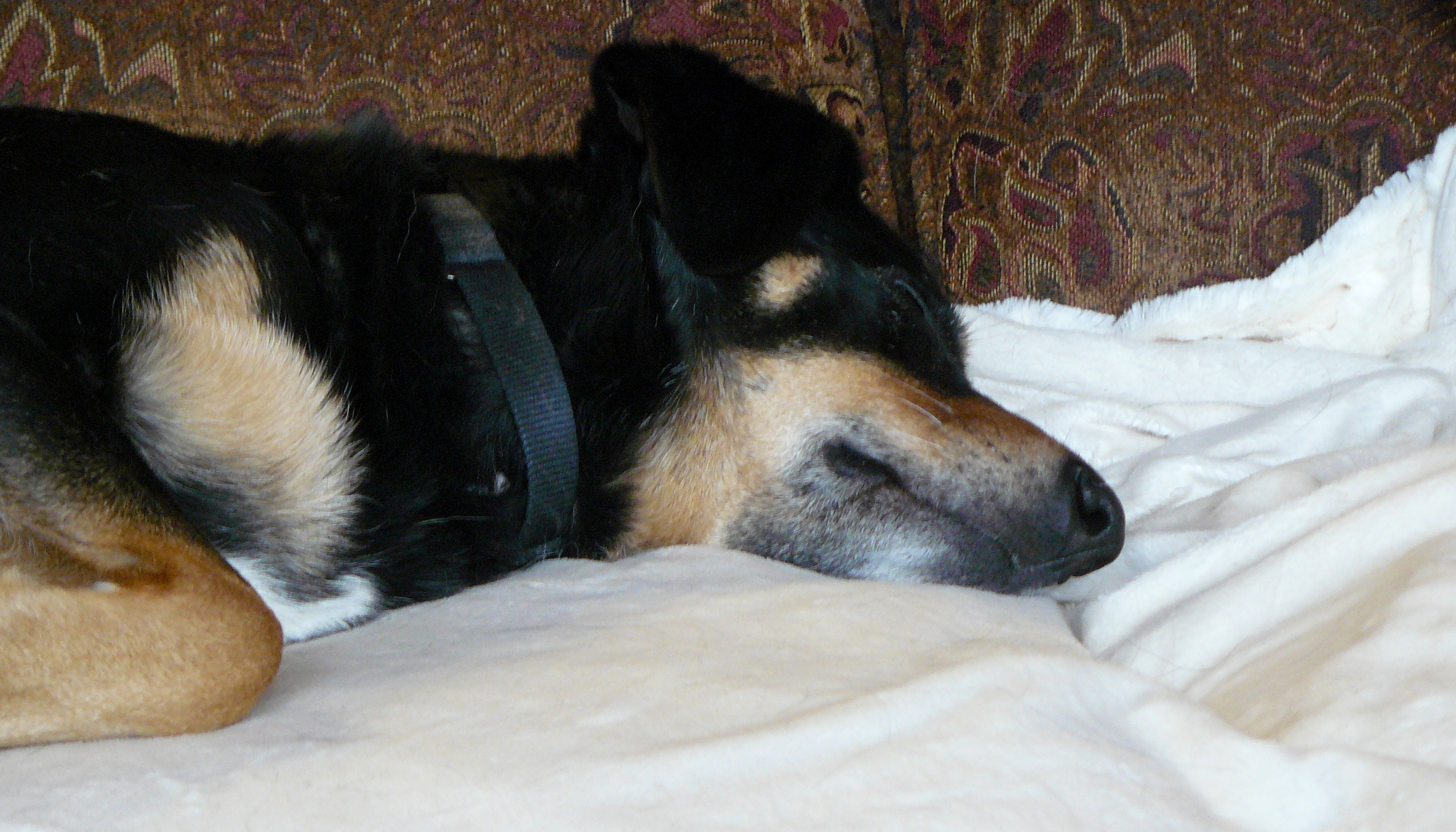
Second reflection is about dogs. Jean had spent many years rescuing Mexican feral dogs and finding homes for them; hundreds of them over her time in San Carlos.  We brought 13 of those dogs with us when we moved to Arizona and 9 came to Oregon.  Below is Hazel, one of the five remaining Mexican ‘rescue’ dogs that are still with us in Oregon.

Hazel doing what she does so well - sleeping.
Hazel doing what she does so well – sleeping.

Off to Oregon

Dear Readers of Learning from Dogs.

Today, Jeannie and I are off on a trip to Oregon.

Oregon State

We expect to be away for about the next 10 or 11 days.

While there are a number of new posts that will come out during this period, rather than have quiet days with nothing being posted, some days I will be republishing posts from the last three years; hopefully most of them new to your eyes.

Inevitably, responding promptly to comments will be tough.

Which is why I am so grateful to Martin Lack of Lack of Environment who graciously agreed to keep an eye on things while we are away.

The Punch Bowl Falls, Columbia River, Oregon

Dear George!

The sad story of the death of Lonesome George, a giant tortoise.

When you’re gone, you’re gone, it is said.  But in the case of this example of the beauty of Mother Nature, the idea of being gone is as final as it comes; George was the last of his species.

Here’s how the BBC reported the story,

Last Pinta giant tortoise Lonesome George dies

Staff at the Galapagos National Park in Ecuador say Lonesome George, a giant tortoise believed to be the last of its subspecies, has died.

Scientists estimate he was about 100 years old.

Park officials said they would carry out a post-mortem to determine the cause of his death.

With no offspring and no known individuals from his subspecies left, Lonesome George became known as the rarest creature in the world.

For decades, environmentalists unsuccessfully tried to get the Pinta Island tortoise to reproduce with females from a similar subspecies on the Galapagos Islands.

Park officials said the tortoise was found dead in his corral by his keeper of 40 years, Fausto Llerena.

While his exact age was not known, Lonesome George was estimated to be about 100, which made him a young adult as the subspecies can live up to an age of 200.

Lonesome George was first seen by a Hungarian scientist on the Galapagos island of Pinta in 1972.

Environmentalists had believed his subspecies(Chelonoidis nigra abingdoni) had become extinct.

Lonesome George became part of the Galapagos National Park breeding programme.

After 15 years of living with a female tortoise from the nearby Wolf volcano, Lonesome George did mate, but the eggs were infertile.

He also shared his corral with female tortoises from Espanola island, which are genetically closer to him than those from Wolf volcano, but Lonesome George failed to mate with them.

He became a symbol of the Galapagos Islands, which attract some 180,000 visitors a year.

Galapagos National Park officials said that with George’s death, the Pinta tortoise subspecies has become extinct.

They said his body would probably be embalmed to conserve him for future generations.

Tortoises were plentiful on the Galapagos islands until the late 19th century, but were later hunted for their meat by sailors and fishermen to the point of extinction.

Their habitat furthermore suffered when goats were introduced from the mainland.

The differences in appearance between tortoises from different Galapagos islands were among the features which helped the British naturalist Charles Darwin formulate his theory of evolution.

Some 20,000 giant tortoises of other subspecies still live on the Galapagos.

Continuing the tribute, Chris Mazzarella had some stunning photographs on his wonderful photographic blogsite Fast Forward. (Do take a look!) I held my breath and asked Chris for permission to republish his article and was delighted to be given his approval.  Thanks Chris, thanks very much.

oooOOOooo

An Ode To George

To pay tribute to our late friend Lonesome George, I thought it would be appropriate to write a post in celebration of turtles. George was the last tortoise of the subspecies Chelonoidis nigra abingdoni from Pinta Island in the Galapagos. Sadly George passed yesterday at the tender age of 100 years. This could be considered middle aged for the tortoise who’s counterparts can live beyond 200 years.

This is easily the smallest one I’ve seen all year. To give you some perspective, this lily pad is about eight inches across.

In Vermont, we have seven species of turtles, and I run into many of them while kayaking around the state. The one I see most often is the painted turtle. I spot these guys by the dozen basking in the sun while I’m paddling throughout the northeast. They are very cooperative subjects, but will head for a swim if you get too close. I don’t like spoiling anyone’s sunbath so I do my best to keep a respectable distance out on the water.

You can check out the biggest turtle I’ve seen all year in an April post entitled Snappers.

I’ve read that snapping turtles are the most common turtle in Vermont, yet I do not see quite as many in my travels. When I do see them, they are usually trolling underwater, covered in algae.

I have encountered a few snappers above the surface this year. I found this old guy lounging on a log in Bradford, Vermont a few days ago.

One of the rarer species of turtle I encountered this spring was a wood turtle in Magalloway Brook. I didn’t have much time to prepare for this shot before he launched off the log and into the water. It was a brief meeting, but certainly a memorable one as this is the only wood turtle I’ve ever photographed.

While turtles are not known for their speed they do offer unique challenges for photographers, particularly when shooting in the sun. Their reflective carapace makes them easy to spot, but difficult to expose for. A polarizing filter is sometimes necessary to reduce the glare on their wet shells. While this will help, the ideal situation is to shoot them under overcast skies.

Another thing to keep in mind is the angle of your shot. The kayak makes a great vehicle for wildlife photography because it keeps you low on the water. I often try to shoot wildlife at eye level. This gives you the same perspective from which the animal views the world. It’s much more interesting than a bird’s eye view, for example, and embodies the subject with the sense of pride that it deserves.

George’s passing marks the end of an important legacy, as the Galapagos turtles played a very important role in the foundation of Darwin’s theory of Natural Selection.

To learn more and see photos of George check out this great article by Jess Zimmerman at Grist.org.

We salute you George!

oooOOOooo

What stunningly beautiful photographs.  Once again, Chris, thanks for your permission to republish your Ode.

Finally, going back to 2009 there’s a BBC video of Simon Reeve visiting Lonesome George while visiting the Galapagos islands.

Göbekli Tepe

The most amazing ancient site, possibly in the world.

I know this is a bit of a giant leap from yesterday’s Post but bear with me.  A short while ago, my friend Suzann sent me a link to some information about the archaeological site in Eastern Turkey known as Göbekli Tepe.  Suzann, as many regular readers will know, was the person who caused me to meet Jeannie back in December 2007 when Su invited me to spend Christmas with her and Don, her husband, at their home down in San Carlos, Mexico.

Before I go on to write about Göbekli Tepe let me also muse on another fascinating connection between Suzann and me.  That is that Su and I were sharing the same waters in the Eastern Mediterranean around 1991.  Here’s an extract from a recent email from Su.,

Don’s brother’s boat was Hana Ho.from Honolulu, Hawaii, a Tayana 55…gorgeous thing! They sailed in the Med for years around that time…it is possible you could have run into them…..

When we first flew in to Cyprus June of 1991, Bob’s boat was up on the hard. It took another 5 days to finish, and we had to climb straight up and down a steep, rickety ladder each time we went out, because we slept on the boat every night….was it ever hot and muggy! and no bathroom facilities in use!! But had a lovely time in Cyprus and really got out and saw things there. Delicious food!!

Then we sailed over toward the Turkey/Syrian border area and then gunk-holed west along the coast, ending up at Izmer, after visiting places like Antalya, Kekova Roads,Fethiya and the magnificent Rock Tombs, Marmaris, Bodrum, Kisadasi, Ephesus to name a few….

I, too, was living on a yacht, over-wintering in Cyprus, and cruising the Turkish and Greek coasts during the summer.  Anyway, enough of these musings.

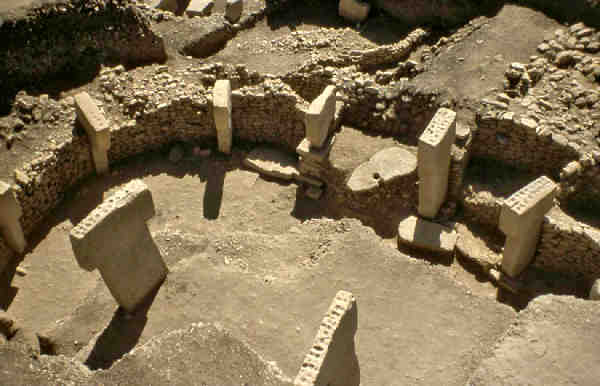
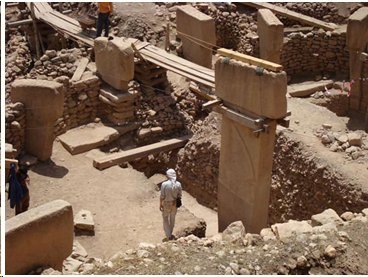
A scene from Gobekli Tepe

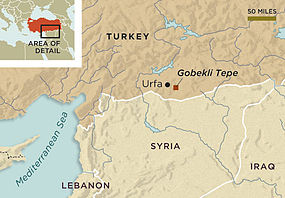
Göbekli Tepe is old.  I mean seriously old.  For example, I’m very familiar, being an Englishman, with the mystery and antiquity of Stonehenge.  But even the revised estimates of Stonehenge’s age, now believed to be 3,000 B.C., don’t measure up to the age of Göbekli Tepe.

The Smithsonian website explains much in a fascinating article about Gobekli Tepe, (do click on that link as the Smithsonian article is extremely interesting).

Six miles from Urfa, an ancient city in southeastern Turkey, Klaus Schmidt has made one of the most startling archaeological discoveries of our time: massive carved stones about 11,000 years old, crafted and arranged by prehistoric people who had not yet developed metal tools or even pottery. The megaliths predate Stonehenge by some 6,000 years. The place is called Gobekli Tepe, and Schmidt, a German archaeologist who has been working here more than a decade, is convinced it’s the site of the world’s oldest temple.

[my italics]

Imagine, there are fewer years between today and the building of Stonehenge than there are between the construction of Göbekli Tepe and Stonehenge!  Think about that!

Anyway, enjoy this video,

and if that grabs your interest then there is a longer 25-minute radio broadcast by Klaus Schmidt that is on YouTube, see below:

German archeologist Klaus Schmidt, from the German Archaeological Institute, who has been working as the head archeologist at Göbekli Tepe, a temple site located in southeastern Turkey close to the boarder to Syria. Klaus has been excavating there since 1994 and he joins us to talk about the excavation work, and to give us his impressions and theories about the site and the people who built it and worshiped at this ancient temple site. The temple is believed to have been erected in the 10th millennium BC (about 11,500 years ago). It is believed to be the oldest human-made place of worship, it’s even been called the Garden of Eden. Only about 3-5% of the site has been excavated so far, which has unveiled several stone circle rooms, only one of which has been dug down to the floor. As many as 20 such structures are thought to exist under the ground at the site, these have been detected by radar scans. These stone circles have large T-shaped pillars, some of the heaviest stones weigh up to 50 tons. The monoliths are decorated with carved reliefs of animals, abstract pictograms, sacred symbols and similarities to Neolithic cave paintings have been pointed out. The carefully carved figurative reliefs depict lions, bulls, boars, foxes, gazelles, donkeys, snakes and other reptiles, insects, arachnids, and birds, particularly vultures and water fowl. Göbekli Tepe means “Hill with a potbelly” although there already exists other interpretations of the name, connected to the word “Zep Tepi” or “The First Time” a period in beliefs of a mythological golden age when the gods lived amongst humanity together with half-divine offsprings of gods and humans. Is Göbekli Tepe the Garden of Eden? June 24, 2010

If you want more to read then I can do no better than recommend the article that Suzann linked to in her email.  It’s here and it starts thus,

Gobekli Tepe: 12,000 Years Old and Rewriting Human History

“This time what came first was the temple and then the city.”

– Klaus Schmidt, Ph.D., German Archaeological Institute

12,000-year-old circles of limestone columns weighing from 7 to 15 tons or more have been excavated in Gobekli Tepe, Turkey, about 6 miles northeast of Urfa.

Older than Egypt, Sumeria and Stonehenge, 40 standing T-shaped columns have so far been uncovered in four circles 98 feet (30 meters) in diameter. To date, no metal tools have been found since meticulous digging and dating began in 1994. Only 5% of the temple complex in repeating circles has been uncovered.

Ground-penetrating radar surveys indicate there might be at least 250 more standing stones in 18 still-buried circles. Finely honed reliefs and some 3-dimensional sculptures on the limestone columns depict boars, foxes, lions, birds, snakes, scorpions, vultures, reptiles, humans and other figures.

You’ll have to read the rest of the article here.

Sort of puts the history of man into perspective!

Payson, Arizona

A Sunday interlude

Despite the fact that Jean and I and our animals have lived in Payson for a little over two years, it never crossed my mind to give all you readers a glimpse of this part of the world.

So to remedy that, here’s the Town of Payson tourism website.

The photograph below is a view from the Mogollon Rim that overlooks Payson.

A view to die for!

The WikiPedia entry for Payson is here.

And to close, here’s a short video of the Tonto Natural Bridge that is a short distance from Payson.

Bringing in the New Year

A couple of stupendous spectacules!

Neil K. from South Devon sent me these, a little too late to put in my NY Post that came out yesterday.  But they were too good to leave to next week-end so here they are.  First Berlin.

Beginning with a countdown on a giant hourglass and a greeting from an “Android,” LG’s huge presentation took viewers on a thrilling 3D ride that included — among other things — whales, ice skaters, giant octopi and steaming jungles.

Second London.

One of the most amazing firework displays ever!