There was a recent TED Talk that really made me sit up and think. Before I introduce the talk, let me offer a personal view. I’m speaking about the changing nature of the Earth’s climate.
On balance I believe that the climate of our planet is changing and, again on balance, I believe that mankind’s activities especially with regard to CO2 emissions are the primary cause.
But here’s the rub! I’m not a scientist.
So when scientist Gavin Schmidt, a climate scientist no less, recently gave a twelve-minute TED Talk about the complexity of Planet Earth’s climate I found it compelling.
Here is is.
Published on May 1, 2014
You can’t understand climate change in pieces, says climate scientist Gavin Schmidt. It’s the whole, or it’s nothing. In this illuminating talk, he explains how he studies the big picture of climate change with mesmerizing models that illustrate the endlessly complex interactions of small-scale environmental events.
Then just two days later, on May 3rd, Alex Jones, he of the blog The Liberated Way, posted Unpredictable nature, that I have the pleasure in republishing in full. Read it and then reflect on Alex’s post and the talk given by Gavin Schmidt.
ooOOoo
Unpredictable nature
Posted on May 3, 2014 Nature is always full of surprises.
Amber the fox reflects the unpredictable face of nature showing up in my garden by surprise on random days.
I went camping and woke to frost on the ground. I wrote yesterday that summer had arrived in Britain. A pool of water from recent rains had frozen over.
One thing you quickly learn about nature is its unpredictability. Everything in nature has its own free will, and will determine its own unpredictable path regardless of what humanity thinks. Those that are able to let go of control enjoy a nature full of surprises.
ooOOoo
Thanks to the modern-day internet, it takes only a moment to find a relevant quotation to close today’s post.
“It is always wise to look ahead, but difficult to look further than you can see.” Sir Winston Churchill.
Musings on truth and the corrosive nature of fear.
Yesterday, in Part One, I explored how easy it is to signal to the public that they are not to be trusted. I used the case of PayPal’s changes to their ‘privacy’ policy which, as Wolf Richter wrote, only partially tongue-in-cheek perhaps, made “the NSA, which runs the most expansive spying dragnet in history, is by comparison a group of choirboys.”
Truth
Again, back to Roget’s Thesaurus.
truth noun
1. Correspondence with fact or truth: accuracy, correctness, exactitude, exactness, fidelity, veraciousness, veracity
2. Freedom from deceit or falseness: truthfulness, veracity
So that’s all clear then!
If only it was that easy. So many aspects of our modern lives are exposed to complex issues. None more complex than, of course, the issue of humans having a damaging effect on the planet’s climate. Or if one wants something more esoteric then try the origins of the universe. (So far as the former is concerned, then my personal belief is that mankind is damaging the global climate. But do I have the scientific background to support that belief? No Sir!)
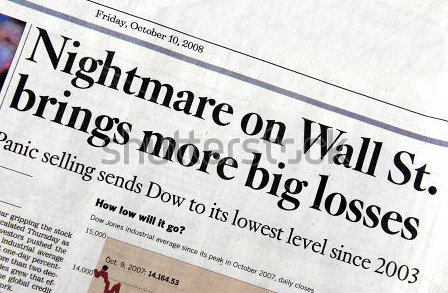
However, one thing that our complex society does offer is the opportunity to spread fear. Indeed, fear pervades popular culture and the media. I picked up that theme from an essay published by David L. Altheide and R. Sam Michalowski of Arizona State University.
Fear pervades popular culture and the news media. Whether used as a noun, verb, adverb, or adjective, an ongoing study finds that the word “fear” pervades news reports across all sections of newspapers, and is shown to move or “travel” from one topic to another. The use of fear and the thematic emphases spawned by entertainment formats are consistent with a “discourse of fear,” or the pervasive communication, symbolic awareness and expectation that danger and risk are a central feature of the effective environment. A qualitative content analysis of a decade of news coverage in The Arizona Republic and several other major American news media (e.g., the Los Angeles Times, and ABC News) reveals that the word “fear” appears more often than it did several years ago, particularly in headlines, where its use has more than doubled. Comparative materials obtained through the Lexis/Nexis information base also reveals that certain themes are associated with a shifting focus of fear over the years (e.g., violence, drugs, AIDS), with the most recent increases associated with reports about children. Analysis suggests that this use of fear is consistent with popular culture oriented to pursuing a “problem frame” and entertainment formats, which also have social implications for social policy and reliance on formal agents of social control.
No passion so effectually robs the mind of all its powers of acting and reasoning as fear. [my italics]
That last sentence offers the words of Edmund Burke, the Irish statesman and author from over 200 years ago. So, perhaps, nothing changes in this regard!
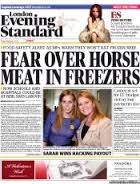
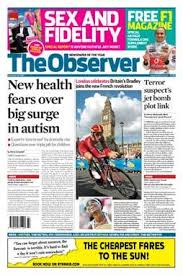
In my old country, the British press love to sell their newspapers on the back of fear. Here are some examples of lurid front pages.
oooo
oooo
However, it doesn’t end there. Fear of the unknown, of forces beyond our control, are behind the incredible number of conspiracy theories, many of them quite famous. WikiPedia lists dozens of them. One that was voiced by friends of ours concerned HAARP, which is an acronym for High Frequency Active Auroral Research Program. It was a perfectly legitimate research programme, one that was unclassified, albeit a program that was shut down in July, 2013.
But that didn’t stop it being regarded by many as deeply suspicious, “Many conspiracy theories surround HAARP. Some theorists believe that it is being used as a weather-controlling device that can trigger catastrophic events, such as floods, hurricanes, etc. Others believe that the government uses HAARP to send mind-controlling radio waves to humans.” Taken from here.
As it happens, this was a programme that I was acquainted with back in my UK days.
OK, time to round this off.
This new, digital world allows the sharing and spreading of information in a manner unimaginable from, say, 25 years ago. It has many positive attributes, as I will touch upon in tomorrow’s post. But it also has the power to spread fear and misinformation. In a world that is becoming more complex and more uncertain year by year, it takes effort by every one of us to stop, think and check on anything that has the potential to upset one.
It takes the power of community to keep us rooted in the stuff of our daily lives, to live calmly and stay in touch with the truth. More on the power of community tomorrow.
Today, and the next two days, I want to offer you three essays under the theme of Trust, truth and community.
As is so often the case, there was a series of outwardly unconnected experiences that seemed, well to my eyes anyway, to speak to a theme. You will have to wait until Friday to judge whether or not you agree with me!
Trust
This first essay was motivated by two disparate events: One very local and one as far removed from being local as one could imagine.
But first, what do we mean by trust? Roget’s Thesaurus defines the word (in part):
trust noun
Absolute certainty in the trustworthiness of another: belief, confidence, dependence, faith, reliance.
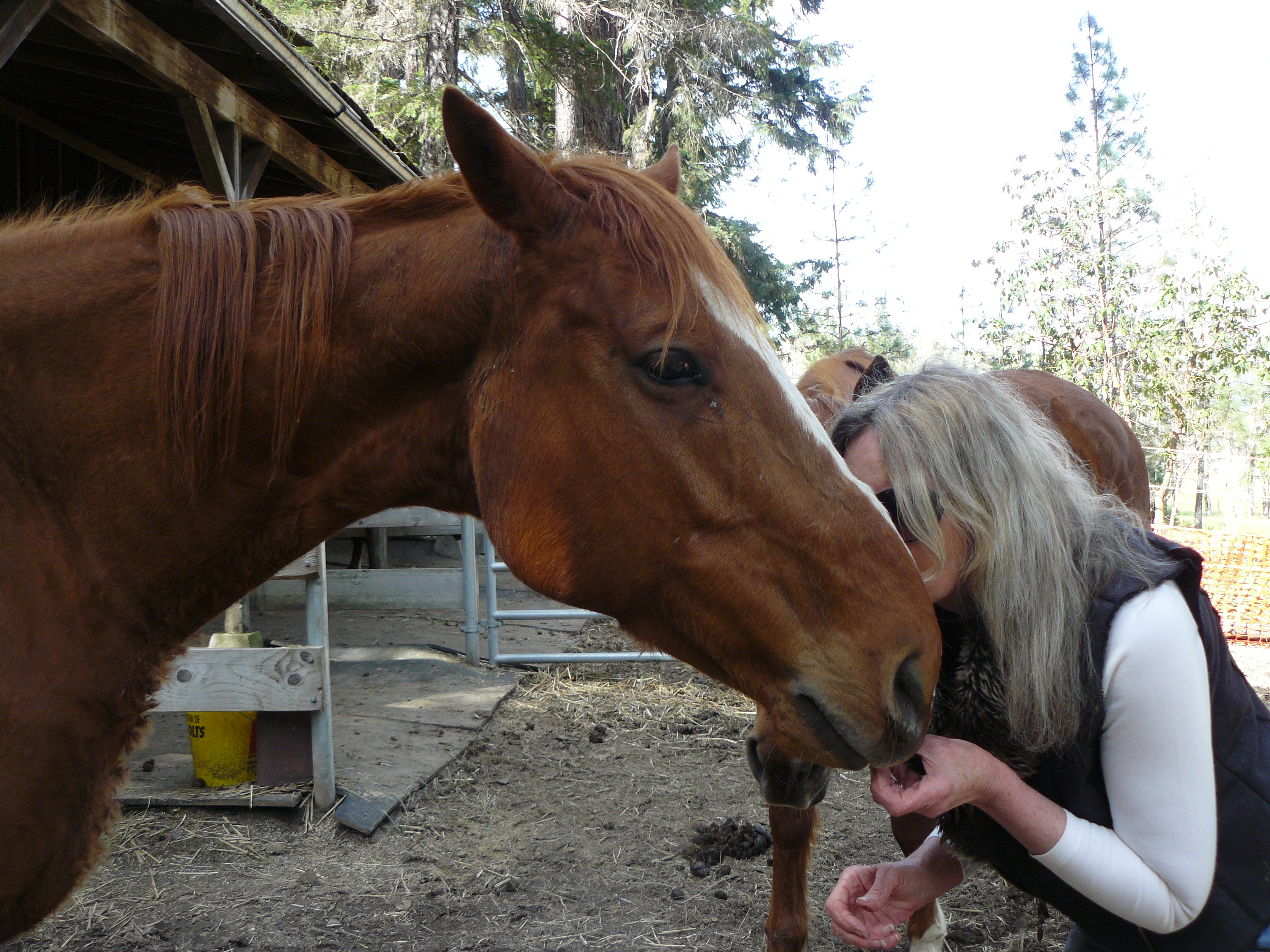
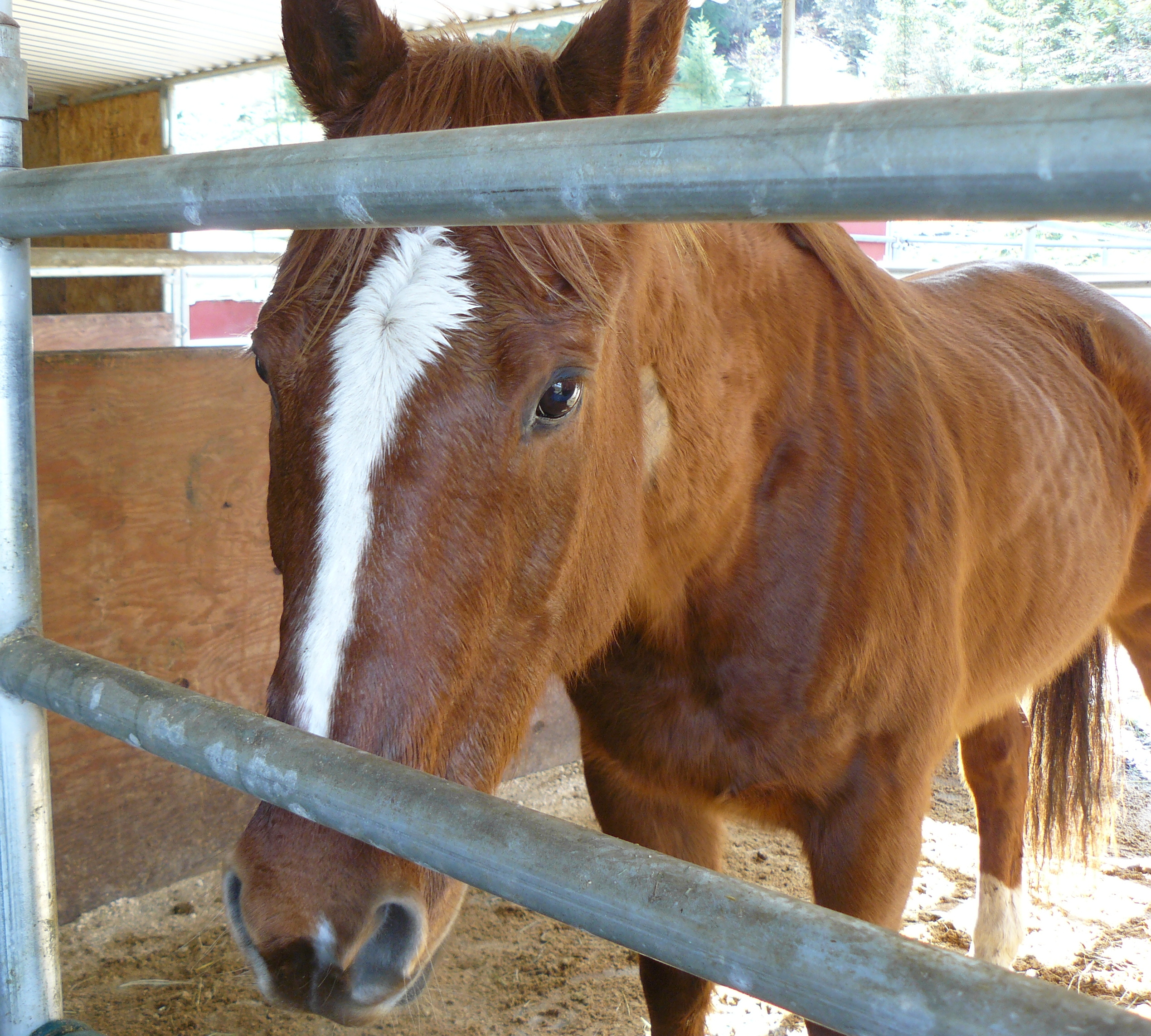
You will recall that just over three weeks ago, we welcomed two horses to our pastures; Ranger and Ben. Both horses had previously been treated badly by humans, especially Ben who had been starved and beaten by his ex-owners.
In the early days, Ben was very cautious of any sudden movement by me and would back away from any contact from me other than being offered a food treat.
But in just three weeks, Ben has gone a huge way towards trusting Jean and me.
Taken yesterday afternoon.
oooo
My face is closer than three inches to Ben’s nose.
oooo
Both Ben and Ranger in the background are now very comfortable with Jean and me.
Now, I don’t know about you, but my guess is that if a human had experienced the degree of cruelty from the hands of another person that these horses had, it would take very much longer than three weeks for that human victim to regain the same level of trust that Ben and Ranger now offer. Indeed, many persons would harbour anger and distrust forever.
That was the local example of trust
Now to the ‘non-local’ example of trust. It involves PayPal.
You must read it in full, especially if you are a PayPal user. Thanks to Wolf, I can offer you his opening paragraphs:
I Just Got PayPal’s New Absolutely-No-Privacy-Ever Policy
TUESDAY, APRIL 1, 2014 AT 1:00AM
Sunday, when people had other things to do and weren’t supposed to pay attention, PayPal sent its account holders an innocuous-sounding email with the artfully bland title, “Notice of Policy Updates.” PayPal didn’t want people to read it – lest they come away thinking that the NSA, which runs the most expansive spying dragnet in history, is by comparison a group of choirboys.
The email started with corporate blah-blah-blah on privacy, that PayPal was “constantly” changing things “to give you more of what you want and improve your experience using us.”
Do read the rest of the essay here. Here’s a comment from a reader of Wolf’s essay, republished with Wolf’s permission:
Concerning: I Just Got PayPal’s New Absolutely-No-Privacy-Ever Policy
I will relate an experience I had regarding Pay Pal that I believe has some relevance to your blog on Pay Pal’s privacy policy.
I am a retired old geezer living in NY State. About 4 years ago I looked at Ebay’s bidding process to place a bid on an item I wanted. However I discovered that I could not make such a bid without subscribing to pay pal. I provided pay pal with the information it required and made my bid. My bid was exceeded by other bids and I did not get the item. My credit card was not used at that time and I never used Ebay or pay pal after that.
Because I did not respond to ongoing emails from the 2 companies I believed that I had no further connection to either of them and that my single failed bid was the end of our relationship.
Then about 2-3 years ago I received a couple of emails from Best Buy: one thanking me for opening a new account, and the other thanking me for purchasing an expensive electronic item.
When I opened up that new Best Buy account I discovered that my address was stated to be in California in care of a person named Pham Pham and that the credit card that was used was one that had recently expired although the number was still in use on a subsequently issued card. I checked all my credit cards online and found that the charge was not pending. I also took some other measures to protect myself. Within hours I received another email from Best Buy cancelling the order because payment was not made by my credit card company.
This incident took a strange turn a couple of days later. Initially I had no idea as to the source of the credit information leak. But then 2-3 days afterwards I received an email from Pay Pal requesting an update of the credit card information in my Pay Pal account. Pay Pal’s email request for updated credit information so soon after the online theft attempt may be just a coincidence, but in my mind there is an undisclosed connection. Of course I have not complied with Pay Pay’s requests. To this day no company has informed me that their accounts were hacked and that my credit information was stolen.
If, when you have read Wolf’s report in full, you feel, as I do, that the time has come to cut the relationship with PayPal then go for it. Because only a customer base that is ‘voting with their feet’ will deliver the message.
What is that message?
Simply, if organisations want to be trusted by their customers, those organisations must behave with integrity. Now I am not accusing PayPal of a lack of integrity but it goes beyond that. It goes to operating with a genuine sensitivity for what is correct. PayPal’s privacy policy is anything but that. There are parts of their ‘new’ policy that stink of gross insensitivity to their feelings for their customers. Read it in full courtesy of Wolf Richter
Oh, want to know how to close a PayPal account?
To close your Payflow account:
If your partner is PayPal, VeriSign or CyberCash contact PayPal Merchant support at 1-888-883-9770 or via email at payflow-support@paypal.com. Be sure to include your login ID.
If your partner is with a Payflow partner, reseller, or merchant bank you will need to contact the partner, reseller, or bank directly to close your Payflow account.
For additional information, contact PayPal Merchant support at 1-888-883-9770 or via email at payflow-support@paypal.com.
Note: Once your Payflow account is terminated, you cannot access the PayPal Manager or any account data. If you need access to this data, you will be charged a fee.
If you are trying to close your PayPal account and not a Payflow account do the following:
Log in to your PayPal account.
Click Profile at the top of the page.
Click Close Account in the Account Information column and follow the steps listed.
My PayPal account was closed at 15:10 PDT yesterday.
Perhaps PayPal should take note of how humans witness trust offered by our dear animals!
Milky Way galaxy heading for a collision – in about 4,000,000,000 years!
As with huge numbers of others who come to this blog, the night sky has always been of incredible fascination to me. To reinforce that fact, one of the favourite posts on Learning from Dogs for the last three years has been The night sky above published back on the 27th March, 2011. If you haven’t read it, do pop across and do so as the title is misleading in terms of the post.
As seen on Cosmos … the collision and merger between our Milky Way galaxy and the nearby Andromeda galaxy 4 billion years from now.
The video below illustrates what NASA scientists announced in 2012 – and what the Cosmos TV series featured in 2014 – that the nearby Andromeda galaxy will collide and merge with our Milky Way galaxy 4 billion years from now. The video (from the Hubble Space Telescope news center) is from a series of photo illustrations, showing the predicted merger between our two titan spiral galaxies, as seen in Earth’s sky. Will Earth as a planet survive long enough to see this? A word about that at the end of this post.
The video lost a lot for me by not carrying a commentary. But no problem as one was found that did have a ‘voice-over’. However, the article photographs were stunning. For example:
This series of photo illustrations shows the predicted merger between our Milky Way galaxy and the neighboring Andromeda galaxy. Via NASA; ESA; Z. Levay and R. van der Marel, STScI; T. Hallas, and A. Mellinger
A description of what’s happening in the images above:
First Row, Left: Present day.
First Row, Right: In 2 billion years the disk of the approaching Andromeda galaxy is noticeably larger.
Second Row, Left: In 3.75 billion years Andromeda fills the field of view.
Second Row, Right: In 3.85 billion years the sky is ablaze with new star formation.
Third Row, Left: In 3.9 billion years, star formation continues.
Third Row, Right: In 4 billion years Andromeda is tidally stretched and the Milky Way becomes warped.
Fourth Row, Left: In 5.1 billion years the cores of the Milky Way and Andromeda appear as a pair of bright lobes.
Fourth Row, Right: In 7 billion years the merged galaxies form a huge elliptical galaxy, its bright core dominating the nighttime sky.
The sequence is inspired by dynamical computer modeling of the inevitable future collision between the two galaxies.
Further on in the article one reads:
This illustration shows the collision paths of our Milky Way galaxy and the Andromeda galaxy. The galaxies are moving toward each other under the inexorable pull of gravity between them. Also shown is a smaller galaxy, Triangulum, which may be part of the smashup. Via NASA; ESA; A. Feild and R. van der Marel, STScI.
Will Earth survive long enough to see this merger of galaxies, as depicted in the video above? Earth as a planet might, but life on Earth – probably not. Astronomers say that the luminosity, or intrinsic brightness, of our sun will steadily increase over the next 4 billion years. As the sun’s luminosity increases, the amount of solar radiation reaching the Earth will also increase. It’s possible that – around 4 billion years from now – the increase in the Earth’s surface temperature will cause a runaway greenhouse effect, perhaps similar to that going on now on the planet next door, Venus, whose surface is hot enough to melt lead. No one expects to find life on Venus. Likewise, life on Earth will probably not exist 4 billion years from now. What’s more, our sun is expected to become a red giant star eventually. A probable fate of the Earth is absorption by the sun in about 7.5 billion years, after our sun has entered the red giant phase and expanded to cross Earth’s current orbit.
Anyhow, I mentioned that I found a better video on YouTube than the one included in the original article, and that is now presented.
Rather puts the grunt and grind of daily life into perspective! 😉
Or, perhaps I should have written that sub-heading, “Adding a gloss to what are mostly bright days!”.
What on earth am I rabbeting on about?
From time to time on Learning from Dogs I have touched on the topic of democracy. The most recent post of any relevance was on the 27th January this year in a post called Unconditional love. In essence that blog post was recording an email exchange between Martin Lack, Chris Snuggs and Patrice Ayme. Let me reproduce a part of that ‘discussion’:
Paul: Chris/Martin, To my way of thinking, there is a more fundamental issue at work. That is the corrupting effect of power. I’m certain you know the famous saying. Thus whatever fine motives propel a person to enter politics, that person seems unable to avoid the call of power and its corrupting effect. The only hope is that key countries, and none so key as the USA, evolve a better, more representative, political process. Otherwise, I fear for the coming years.
Patrice: I agree with Paul 100%. I saw the call of power. Unimaginable. People just get insane. There are also filtering systems to insure they get that way (it starts right away with one week retreats in extremely posh resorts; does not matter if you are capitalist, socialist, blueist, reddist, ecologist, independentist, etc.).
Chris: Agreed. It has been clear time and time again throughout history. Well, so much is obvious, but WHAT TO DO about it?
A) We must end the practice of having career politicians: you serve a maximum of TEN years, at the end of which you go.
B) Inherited wealth allowing the building up of immensely powerful family dynasties over generations must be ended. It is simply untenable. The rich-poor gap is getting obscene everywhere, and money is of course power. My “Abolish inheritance” idea will be wildly unpopular because we are naturally acquisitive and “greedy” and of course would hit those with most to lose who also therefore have the most power.
Patrice: With all due respect, Chris and Martin sound rather naïve… Huge wealth and power is where it’s at. And it attracts to politics first, foremost, and soon uniquely, those it attracts most, namely the basest sort.
Without in any way of knowing in a reliable manner, as in statistically reliable, the attitudes of folk, nonetheless there is no question that a huge number of the ordinary folk that live around us here in Merlin, Joesephine County, Oregon and others that one meets in the course of being ‘out and about’ are worried; frequently deeply worried.
Worried about the “Huge wealth and power ..” and the gross inequalities that flow from that.
So with that in mind, consider the pleasant surprise offered me when I read the day’s roundup from the Permaculture Research Institute email distribution and it included:
The Missing Part of the Internet – Collaborative Decision-Making Made Easy with Loomio
The world needs a better way to make decisions together
“The new era of digital democracy is one source of hope. New formats for web-based participation, like Loomio, and enablers of grassroots engagement… are flourishing.” —The Huffington Post
Democracy isn’t just about politics — it’s people getting together and deciding how things should be. It’s a skill we can practice with people wherever we are: in our workplaces, our schools, and our communities.
Loomio is a user-friendly tool for collaborative decision-making: not majority-rules polling, but actually coming up with solutions that work for everyone. We’re a small team in New Zealand, and we’ve built a prototype that people are already doing great things with. Now we’re crowdfunding so we can build the real thing: a new tool for truly inclusive decision-making.
It was but a hop and a skip to go to the Loomio website and read:
The world needs a better way to make decisions together.
Help us build it.
Loomio is free and open software for anyone, anywhere, to participate in decisions that affect them
and then with a further mouse-click on the Crowdfunding link to read:
THE WORLD NEEDS A BETTER WAY TO MAKE DECISIONS TOGETHER.
Democracy isn’t just about politics – it’s people getting together and deciding how things should be. It’s a skill we can practice with people wherever we are: in our workplaces, our schools, and our communities.
Loomio is a user-friendly tool for collaborative decision-making: not majority-rules polling, but actually coming up with solutions that work for everyone. We’re a small team in New Zealand, and we’ve built a prototype that people are already doing great things with. Now we’re crowdfunding so we can build the real thing: a new tool for truly inclusive decision-making.
At this point, I should declare an involvement. Jean and I decided to donate a modest amount. Thus it is not from an impartial position that I close today’s post with the following video. Bet you will be impressed!
If you enjoyed that video then do watch the following TED Talk.
Published on Aug 4, 2013
Ben Knight is part of a cooperative social enterprise building Loomio, an online tool for collaborative decision-making being used by thousands of people in more than 20 countries. Ben will be picking through ideas around how technology can enable everyday democracy.
A few days ago, dear friend Suzann, sent me an item about a wonderful new light aircraft. (It was Su and Don who invited me to Mexico in December, 2007 that resulted in me and Jeannie meeting!)
Before I explain what Su sent me, allow me a few moments of nostalgia.
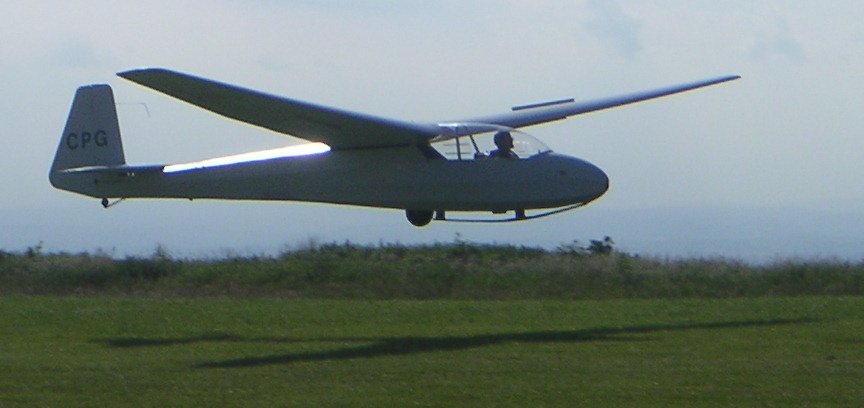
‘K7’ glider.
I have a gliding (sailplaning in US speak) log book that has the following entry at the top of page 1:
Flights 1 & 2. June 7th 1981. K7 dual seat glider. Rattlesden Gliding Club, Suffolk. Winch launch. Total flight time 12 minutes.
Those flights started a love affair with flying.
I have a powered-flight log book that has the following entry at the top of page 1.
March 3rd, 1984. Cessna 150. Reg: G-BGAF. Capt: Martin Lowe. Ipswich Airport – local flight 1325 – 1355. Exercises 4,5.
I continued glider flying, becoming an instructor along the way, until my last flight, flight number 1,424, on the 19th December, 1992; again from Rattlesden.
I continued power flying until the 4th August, 2008, a short time before I left the UK to be with Jean in Mexico. My last flight was in a Piper Super Cub, registration R-151, a flight of 1 hr 40 mins from Kemble returning to Watchford Farm, where the Cub was based.
My son, Alex, shared my love of flying as a young man and is now a Senior Captain with a British airline.
G-EWFN, a Socata TB20.
Anyway, all of which is a rather long preamble to this.
What a fabulous aircraft! The relevant website is, unsurprisingly, the Air-Cam site.
(Come back on Monday for some more recollections about flying the Piper Super Cub!)
Never a day where there isn’t something new to learn; and an opportunity to make a difference.
What prompted the heading and sub-heading of today’s post?
Well, I’ll tell you (you knew I was going to, didn’t you!)
I have mentioned Melinda Roth before on Learning from Dogs, most recently on February, 20th in a post called Oregon wolves, and book writing.
I have also previously mentioned Strawberry Mountain Mustangs back on the 18th February, in a post called The lone Ranger. That was where we spoke of visiting Darla and Troy who own Strawberry Mountain Mustangs, near Roseburg in Oregon and coming to the decision, the very happy decision, to adopt Ranger; whom we hope to welcome to our home in Merlin in about 10 days time.
Ranger
Anyway, Darla was made aware of Melinda’s blog, Anyone Seen My (BLEEP)ing Horse? and left the following comment to one of Melinda’s posts, that comment from Darla being reproduced in full. Please read and absorb Darla’s comments because of the power of her words in relation to saving horses. Plus, later on there’s a plea from me for a competent web-programmer who could help Darla. But, please read on:
Hello Melinda!
What a wonderful blog… there are no words, but sometimes I guess when a mutual passion is shared, you don’t necessarily need them, do you? Thank you for sharing this.
It’s been a great honor to meet Paul & Jean, and we are working toward getting Ranger delivered to them in the coming weeks. While he is not a “mustang” in the common sense of the word, he is a rescue, once abandoned in the Ochoco National Forest, brought here for rehabilitation and care. He’s a sweet, kind gentle soul whose eyes will sometimes give you the hint of the abuse he suffered some time during his past. Now, more often than not, he lets his guard down and will melt into you for the treats and scratches that used to be so foreign to him.
By adopting Ranger, Paul & Jean open up a space for a more critical rescue to come in. Maybe a wild one, they seem to find their way here – often after being abused or mishandled by their first adopter – as you have seen. Those animals are not the clean slate that comes from the desert and they have often learned what it takes to survive against the humans who don’t understand them. Other times, we will get a wild one who’s heart will always be wild, who was never meant to survive in captivity, and we work hard to find a suitable sanctuary for those animals to live out there days. And… we also get those amazing beings who seem to forgive us all for our actions, and seem to meld into what we expect of them – and except for that glimmer in the eye – they seem to forget the wide open spaces. My boy Buddy was that way. (Read about him on our sadly outdated website… http://www.strawberrymountainmustangs.com)
If it’s not a wild one, it will surely then be a starving creature at death’s door, sent to us by one of the law enforcement agencies we work with. Regardless of breed, we’ll take them in. Make them well, learn “who” they are, and try to find them their human. Sometimes it takes months, sometimes years. We’re in no rush.
I look forward to some day meeting you. I sent Paul some links to information about the Sheldon wild herds, a group that is very near and dear to me. Maybe he can share them with you? Sadly, Fish & Wildlife plans to have them completely eliminated this year I believe.
Take care,
Darla
Melinda replied:
What an honor to have you comment here. And what beautiful words. I wish I could do what you do… I will visiting your site and hope to speak with you soon.
That reply from Melinda prompting this further comment from Darla (my emphasis, by the way).
I get the feeling you DO, do what I do. It takes a village. You may not be “hands on” – but you know horses. You spread the word. You encourage rescue. All of that IS what rescue IS. Don’t discount a bit of it just because you aren’t hanging out your shingle as a rescue organization. I appreciate the thought, but we’re all in this together.
Hope you found Buddy’s story – The Reason – and enjoyed it. The rest of the website is out of date since our web designer became ill. I’m not tech savvy, and prefer to be in the barn anyway…so there it sits.
That short sentence from Darla inspired me to write today’s post – hence the post title.
Born in the Nevada desert with a pedigree written in the sands, he was as pure as the air he breathed.
From the inside out, he was pure gold; soft and gentle, yet tough enough to survive the brutality that would have faced him in the wild. He belonged to Mother Nature & no one else, but he CHOSE me.
His amber eyes shone and melted the toughest of souls. If the eyes didn’t do the trick, a persistant lick would. He won over the heart of even the toughest cowboy.
Towering at 16.2 hands, some would call him a giant. I called him my friend.
He won no races, no ribbons, no trophies. Instead he won hearts. He never competed in a halter class. Instead he spent his time visiting elderly at assisted living centers. That was where he chose to stand at attention, perfectly still, for those in the wheelchairs to judge him.
He wasn’t a reining champion. He did no fancy rollbacks, sliding stops or quick turn arounds. Instead he chose to move carefully, cautiously and slowly so that he didn’t dislodge the rider from his back. Whether they were 2, or 62, Buddy took care of them. I think he earned more high points this way than any national champion ever could have.
Saddles and bridles didn’t fit. Maybe they were never meant to? After all, he had much more important things to do with his short life. Instead we went bareback and with a halter and lead. We didn’t need anything more. We had each other.
Buddy was a wild horse from the Sheldon National Wildlife Refuge in Nevada. His heritage was cavalry, old stock run by ranchers for our military. It was in his blood to serve, to protect. He did just that.
The lives he saved are countless. Mine was just the first. He showed me what true passion is, that there was more to life than a paycheck and that even a small town girl could make a difference.
Buddy went on to save hundreds of equine lives as well, many of them the wild horses on Sheldon. Lawmakers and the media have learned about the inadequacies of a poorly run adoption program there and the danger our wild horses are in. He also brought us the quiet survivors of abuse and neglect cases. The malnourished, the broken, the beaten and the forgotten. He stood back and watched them all come in, for us to care for and mend, and he waited patiently for his turn to shine.
Webster’s dictionary defines legend as: a person or thing that inspires. I struggled with the term I wanted to use when writing this. Was Buddy an icon? An idol? A legend? After reading the definition, it became clear. He was my dream, my hope, my love, my reason and my inspiration. He is, and will forever be, my legend.
Darla Clark September 8th, 2007
Buddy: The legacy
Buddy’s legacy lives on at Strawberry Mountain Mustangs, the rescue founded because of him and so many like him. Wild horses who roam on Fish & Wildlife, Forest Service, National Park or reservation lands have no federal protection under the Wild Horse and Burro act of 1971. Please help us save a part of American History. These are OUR living legends. Now we must honor them, and Buddy, by protecting them.
In Buddy’s memory, we are erecting a much needed hay storage barn. We’ve lost several ton of hay to mold already this year. The hay barn will protect the hay and keep our rescue horses safe from any illness caused by hay affected by inclimate weather. Will you help continue Buddy’s work? Please, give whatever you can to help carry on Buddy’s legacy. Buddy made a difference; you can, too.
ooOOoo
So here’s another great way you can really help.
Did you pick up what Darla wrote in her subsequent reply to Melinda? Here it is again:
The rest of the website is out of date since our web designer became ill. I’m not tech savvy, and prefer to be in the barn anyway…so there it sits.
The Strawberry Mountain website is not a complex one. Darla deserves support in so many ways. OK, are you a web programmer or do you know one? If not, could you share this post as widely as you can. Because there must be someone out there who could offer Darla some pro-bono help so that her website is updated. The many horses under Darla’s care deserve the best ‘voice’ in the universe.









 Learning from Dogs